

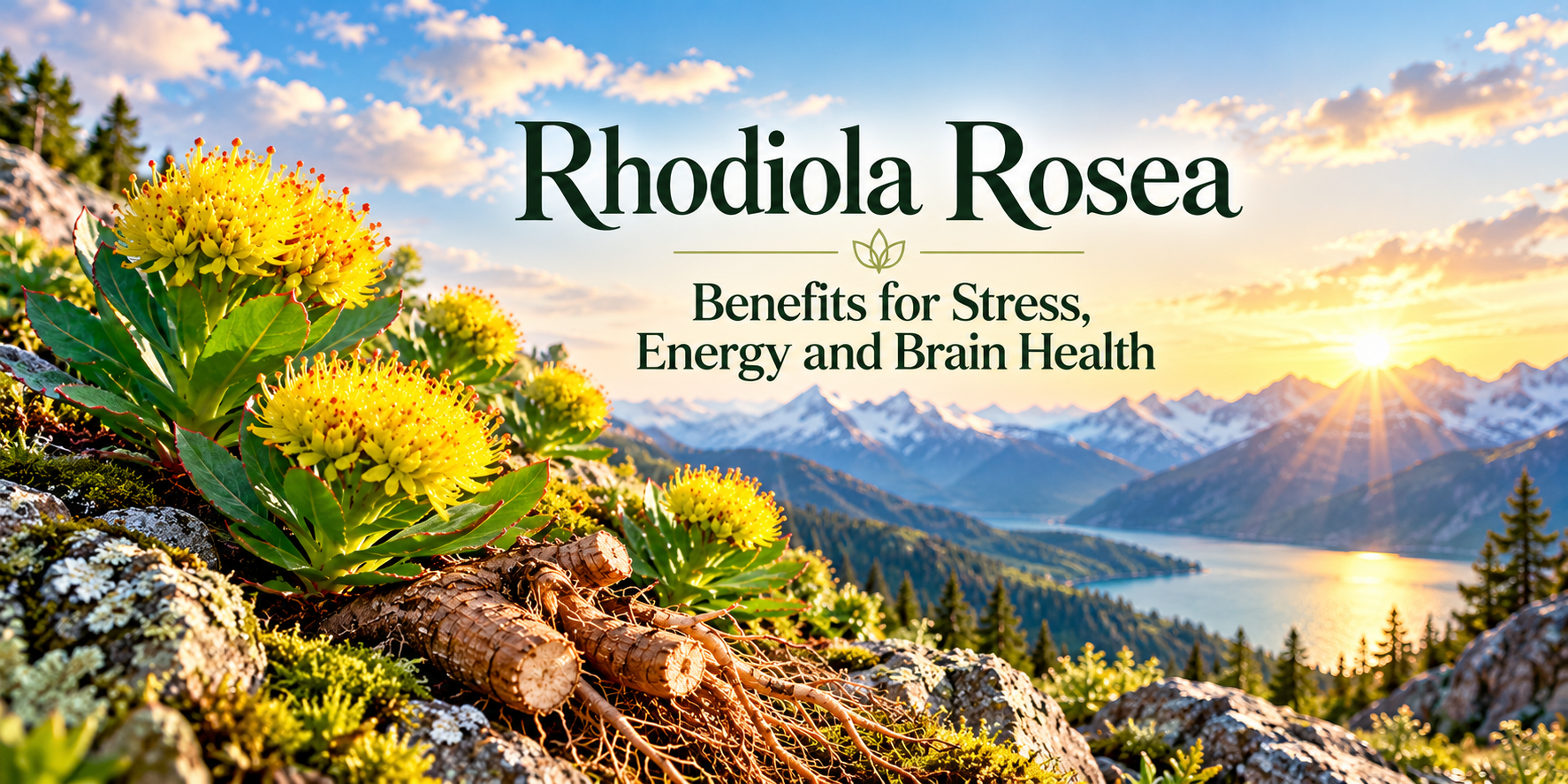
High in the mountains, where the air is crisp, the growing seasons are short, and the landscape demands extraordinary resilience, a remarkable flowering plant has quietly flourished for generations.
Its name is Rhodiola rosea.
Known as golden root, roseroot, and Arctic root, this hardy botanical has a long history of traditional use for vitality, stamina, and the ability to meet life's physical and mental demands.
Its delicate flowers rise above rocky soil, while thick underground roots and rhizomes store the resources that help sustain the plant through challenging conditions.
Within those roots lies a fascinating collection of natural compounds that have attracted the attention of modern researchers.
Scientists have investigated Rhodiola's relationship with stress-related fatigue, concentration, emotional well-being, physical endurance, cellular energy, antioxidant activity, and the biological systems involved in maintaining resilience.
What makes Rhodiola especially interesting is how closely these areas of wellness are connected.
Our thoughts require energy. Our muscles depend on cellular communication. Our hormones respond to daily experiences, and our nervous system continually adjusts to the changing world around us.
Rhodiola invites us to explore these remarkable connections and discover why a small mountain plant has become such an intriguing subject in modern botanical science.
What Is Rhodiola Rosea?
Rhodiola rosea is a perennial flowering plant belonging to the Crassulaceae family, a group of plants known for their ability to thrive in demanding environments.
It grows naturally in cold and mountainous regions of Europe, Asia, and North America.
The plant produces fleshy leaves and clusters of small flowers, often yellow or golden in appearance.
Its thick roots and underground stems, known as rhizomes, store nutrients that help sustain the plant from one growing season to the next.
These underground structures contain many of the compounds that have attracted scientific interest.
Rhodiola is commonly known by several names:
Golden root
Rose root or roseroot
Arctic root
Rosenroot
King's crown
The name roseroot comes from the rose-like fragrance sometimes released when the freshly cut root is exposed.
Rhodiola's traditional history spans northern Europe and parts of Asia, where preparations made from its roots were associated with stamina, endurance, and vitality.
Modern scientific investigation has built upon this historical interest, examining how the plant's chemical constituents interact with human physiology.
A Remarkable History of Traditional Medicinal Use
Rhodiola's story begins long before modern laboratories began studying its chemical compounds.
For generations, people living in cold northern regions and mountainous environments valued plants that could survive difficult growing conditions.
Rhodiola became one of the botanicals associated with physical stamina and the ability to endure demanding circumstances.
In parts of Scandinavia, Rhodiola was traditionally associated with strength and endurance.
Across northern Asia and regions of Russia, preparations made from the root were used in traditional practices involving fatigue, work capacity, and vitality.
These historical uses helped inspire scientific investigations during the twentieth century.
Researchers in the former Soviet Union became particularly interested in plants that might influence physical performance and the body's responses to stress.
This work contributed to the development of the adaptogen concept.
As botanical research expanded, scientists began investigating Rhodiola's effects on mental performance, fatigue, stress-related symptoms, and exercise endurance.
An important modern milestone came through the European Medicines Agency, or EMA.
The EMA's Committee on Herbal Medicinal Products recognizes certain Rhodiola rosea root and rhizome preparations as traditional herbal medicines for the temporary relief of stress symptoms, including fatigue and feelings of weakness.
This recognition reflects longstanding medicinal use and the plausibility of the traditional application.
It connects generations of botanical knowledge with modern medicinal assessment.
Why Rhodiola Is Known as an Adaptogen
Rhodiola is one of the plants most frequently associated with the concept of adaptogens.
An adaptogen is a natural substance proposed to help the body respond to physical, mental, or environmental demands while maintaining healthy function.
The human body is continually adapting.
Our heart rate changes with activity. Hormones follow daily rhythms. The brain processes information, and muscles adjust their energy requirements according to movement.
These processes help maintain homeostasis.
Homeostasis is the body's ability to regulate its internal conditions while responding to changes in the surrounding environment.
Adaptogenic research investigates whether certain botanical compounds influence the biological pathways involved in these adjustments.
Rhodiola is particularly interesting because researchers have examined its possible effects on stress signaling, nervous system activity, cellular energy, and protective biological mechanisms.
Rather than focusing on a single organ or process, much of this research explores how different systems communicate.
This makes Rhodiola a fascinating subject for understanding the relationship between resilience, energy, and whole-body wellness.
The Natural Compounds That Make Rhodiola Unique
Rhodiola rosea contains a complex collection of naturally occurring substances.
Researchers have identified phenolic compounds, flavonoids, organic acids, and specialized constituents that contribute to the plant's chemical profile.
Among the most extensively studied are rosavins and salidroside.
Rosavins
Rosavins include three related compounds:
Rosavin
Rosin
Rosarin
These compounds are especially important in identifying and standardizing Rhodiola rosea extracts.
Standardization means that an extract is prepared or tested to contain a specified concentration of selected chemical markers.
Rosavins help distinguish authentic Rhodiola rosea preparations from certain other species within the Rhodiola genus.
Researchers are also investigating their possible contribution to the plant's biological activities.
Salidroside
Salidroside is another prominent compound found in Rhodiola.
It has attracted substantial interest for its possible effects on cellular energy regulation, oxidative stress, inflammatory signaling, and nerve-cell protection.
Many experimental studies involving salidroside examine how cells respond to demanding conditions.
Salidroside also occurs in other Rhodiola species, making botanical identification especially important when evaluating supplements.
Tyrosol and other plant constituents
Rhodiola contains tyrosol and numerous additional compounds.
Scientists continue exploring how these substances behave individually and together.
The chemistry of a complete botanical extract can differ from that of an isolated compound, making the exact preparation an important part of research.
Whole Rhodiola Extracts and Isolated Salidroside
One of the most important distinctions in Rhodiola research involves the difference between studying a complete botanical extract and studying an isolated compound.
A whole-root or rhizome extract contains a mixture of naturally occurring constituents.
Depending on the preparation, these may include rosavins, salidroside, tyrosol, flavonoids, and other plant compounds.
An isolated salidroside preparation focuses on one specific molecule.
Researchers study isolated compounds to better understand their biological activities and the pathways they may influence.
For example, laboratory studies involving salidroside have investigated mitochondrial function, antioxidant signaling, and cellular protection.
Clinical studies involving standardized Rhodiola rosea extracts examine the combined effects of the preparation administered to participants.
These approaches answer different scientific questions.
A finding involving isolated salidroside provides insight into that compound's activity.
A finding involving a standardized Rhodiola extract provides information about the preparation used in the study.
The distinction becomes especially valuable when comparing research findings, supplement labels, and claims about Rhodiola's possible benefits.
Rhodiola Rosea and the Body's Stress Response
Stress is a natural biological response that helps the body adjust to changing circumstances.
When we encounter a demanding situation, the brain communicates with the nervous system, endocrine system, and other organs to coordinate an appropriate response.
Heart rate may increase. Attention may sharpen. Energy becomes available to support activity.
One of the systems involved is the hypothalamic-pituitary-adrenal axis, commonly called the HPA axis.
This network connects three important structures.
Hypothalamus
A region of the brain that helps coordinate essential bodily functions, including temperature, hunger, sleep, and hormonal communication.
Pituitary gland
A small gland that releases hormones influencing other glands and tissues throughout the body.
Adrenal glands
Glands located above the kidneys that produce hormones involved in metabolism, blood pressure, and responses to stress.
Together, these structures help coordinate the body's response to physical and psychological demands.
Researchers are investigating whether Rhodiola influences signaling within this network and related stress-response pathways.
Human clinical studies have explored its potential relationship with fatigue, concentration, and perceived stress.
These investigations provide some of the most interesting evidence behind Rhodiola's traditional association with resilience.
What a Clinical Trial Discovered About Stress-Related Fatigue
One particularly interesting study examined Rhodiola rosea in 60 adults experiencing stress-related fatigue.
The randomized, double-blind, placebo-controlled trial evaluated a standardized Rhodiola extract known as SHR-5.
Participants were divided into two groups.
One group received 576 mg of the standardized extract daily, while the other received a placebo.
The study lasted 28 days.
Researchers measured several outcomes, including fatigue symptoms, mental health, attention, and the cortisol response after waking.
Compared with the placebo group, participants receiving Rhodiola showed improvements in burnout-related fatigue scores and selected measures of attention.
The researchers also observed a difference in the cortisol awakening response.
These findings are especially interesting because they connect three areas of human experience: fatigue, mental performance, and physiological stress responses.
The study was relatively small, but it provides a meaningful example of how researchers have investigated Rhodiola in people experiencing prolonged demands.
Rhodiola and Cortisol: Understanding the Connection
Cortisol is a hormone produced by the adrenal glands.
It plays an essential role in regulating metabolism, blood sugar, immune activity, and daily energy rhythms.
Cortisol naturally follows a circadian pattern.
Levels generally rise around waking and change throughout the day as the body responds to activity, rest, and other demands.
The rise in cortisol after waking is known as the cortisol awakening response.
This response is one way the body prepares for the activities of the day.
In the 60-person Rhodiola trial, researchers observed changes in this response among participants receiving the standardized extract.
The finding has encouraged interest in Rhodiola's possible influence on stress-related hormonal signaling.
Researchers continue exploring how these effects may relate to fatigue and adaptation.
Healthy cortisol activity involves appropriate timing, regulation, and responsiveness to the body's needs.
Rhodiola and Mental Fatigue
Mental fatigue is an experience many people recognize.
It may develop after prolonged concentration, demanding work, emotional stress, frequent interruptions, or extended periods of decision-making.
Someone experiencing mental fatigue may find it harder to concentrate, organize information, or maintain motivation.
Rhodiola has been studied in people performing mentally demanding tasks and in individuals experiencing stress-related exhaustion.
Several clinical trials have reported improvements in selected fatigue or cognitive-performance measures.
One particularly interesting investigation involved physicians working night shifts.
What Researchers Observed in Physicians Working Night Duty
A clinical trial involving 56 young physicians examined the effects of Rhodiola rosea extract during night-duty work.
Researchers evaluated several aspects of mental performance, including attention, short-term memory, calculation, associative thinking, and perception.
Participants receiving Rhodiola showed improvements in a composite measure of mental performance during the initial two-week treatment period.
This study is interesting because it examined people performing real-world work under demanding conditions.
Night shifts can place unusual demands on concentration, alertness, and recovery.
The findings helped inspire further investigation into Rhodiola's relationship with mental endurance and fatigue.
The study also illustrates the value of examining botanical compounds in everyday situations rather than relying exclusively on laboratory experiments.
Rhodiola, Concentration, and Mental Clarity
Mental clarity involves several interconnected brain functions.
Attention
Attention allows us to focus on relevant information while managing distractions.
Working memory
Working memory allows us to temporarily hold and use information.
Following instructions while completing a task is one familiar example.
Processing speed
Processing speed describes how efficiently the brain receives, interprets, and responds to information.
Mental endurance
Mental endurance refers to the ability to sustain cognitive effort over time.
Perceived mental energy
This describes the subjective experience of feeling alert, engaged, and capable of completing mentally demanding activities.
Researchers have explored Rhodiola's relationship with several of these functions.
Some clinical findings suggest improvements in attention and fatigue-related performance, particularly during periods of stress.
These outcomes help explain why Rhodiola has attracted interest among researchers studying cognitive performance under demanding conditions.
Rhodiola Rosea and Emotional Well-Being
The relationship between stress and emotional well-being is another important area of Rhodiola research.
The brain communicates through specialized cells called neurons.
Neurons exchange information using electrical signals and chemical messengers known as neurotransmitters.
Several neurotransmitters have attracted attention in experimental Rhodiola research.
Serotonin
Serotonin participates in processes involving mood, sleep, and emotional regulation.
Dopamine
Dopamine contributes to motivation, reward-related learning, movement, and goal-directed behavior.
Norepinephrine
Norepinephrine helps regulate attention, alertness, and responses to demanding situations.
Laboratory studies suggest that certain Rhodiola compounds may influence pathways associated with these neurotransmitters.
Small human trials have also examined Rhodiola extracts in relation to mood-related symptoms.
One exploratory study compared Rhodiola rosea, sertraline, and placebo in adults experiencing mild to moderate depressive symptoms.
The trial found numerical improvements in symptoms across treatment groups, with fewer reported adverse events in the Rhodiola group than in the sertraline group. Differences in antidepressant effectiveness were statistically inconclusive.
The findings contributed to scientific interest in Rhodiola's possible relationship with emotional well-being.
Further research may help clarify which individuals and outcomes are most relevant to this botanical.
Rhodiola and Physical Energy
Energy is essential to nearly every process in the human body.
Muscles require energy for movement. The brain requires energy for communication. The heart continuously uses energy to maintain circulation.
Rhodiola's traditional association with stamina has inspired researchers to investigate whether its compounds influence physical performance.
Studies have examined aerobic endurance, time to exhaustion, exercise-related fatigue, and recovery markers.
These investigations connect the plant's traditional reputation with measurable aspects of exercise physiology.
What the 2025 Exercise Research Discovered
A systematic review and meta-analysis published in 2025 examined 26 randomized controlled trials involving 668 healthy participants.
The average participant age was approximately 22 years, and the average supplementation period was 33 days.
Researchers examined several measurements associated with endurance and physical performance.
Maximum oxygen consumption
VO₂ max measures the maximum amount of oxygen the body can use during intense exercise.
It reflects the combined ability of the lungs, cardiovascular system, and muscles to deliver and use oxygen.
Across 11 studies, the researchers reported a favorable standardized effect size of 0.32.
Time to exhaustion
Time to exhaustion measures how long someone can continue physical activity at a specified intensity.
Across seven studies, the pooled findings favored Rhodiola supplementation, with an effect size of 0.38.
Time-trial performance
Time trials measure how quickly participants complete a particular activity or distance.
Five studies contributed to this outcome, with pooled results favoring Rhodiola supplementation.
These effect sizes are statistical measures used to compare study outcomes. They describe the magnitude of an observed effect rather than a percentage improvement.
The researchers also investigated antioxidant capacity, muscle-strain markers, and lactate measurements.
The pooled findings favored Rhodiola supplementation for several of these outcomes.
The studies involved different preparations, doses, exercise methods, and participant groups. Some also examined other Rhodiola species or specialized formulations.
For this reason, the findings are most appropriately understood as evidence concerning the preparations studied.
Together, the results provide an encouraging foundation for continued investigation into Rhodiola and exercise endurance.
Rhodiola and Exercise Recovery
Recovery is an essential part of physical activity.
After exercise, the body restores energy reserves, regulates fluid balance, and repairs tissues that experienced physical strain.
Researchers have examined several blood markers associated with these processes.
Creatine kinase
Creatine kinase is an enzyme involved in cellular energy processes.
Its concentration in the blood may increase following demanding exercise, particularly when muscle tissue experiences strain.
Lactate
Lactate is produced during normal energy metabolism.
It serves as both a fuel and a signaling molecule, and its concentration changes according to exercise intensity and metabolic conditions.
Antioxidant capacity
Antioxidant capacity describes aspects of the body's ability to manage reactive molecules produced during metabolism.
The 2025 meta-analysis reported favorable pooled changes in creatine kinase, lactate, and several antioxidant-related measurements.
These findings suggest that certain Rhodiola preparations may influence selected physiological responses to exercise.
Researchers continue investigating how these changes relate to recovery experiences, training status, and performance.
Rhodiola, Mitochondria, and Cellular Energy
One of the most fascinating areas of Rhodiola research takes place deep within the body's cells.
Every moment, cells perform countless activities that require energy.
Muscles contract. Nerve cells communicate. Tissues maintain their structure, and the body continually replaces and repairs cellular components.
Much of this work depends on mitochondria.
Mitochondria are specialized structures that help convert nutrients into usable energy.
A major form of this energy is stored in a molecule called adenosine triphosphate, or ATP.
ATP supplies energy for essential cellular activities.
Researchers have investigated whether salidroside and other Rhodiola compounds influence mitochondrial function.
Laboratory studies have reported effects on pathways involved in energy regulation, oxidative stress responses, and cellular maintenance.
One pathway of particular interest involves AMP-activated protein kinase, commonly abbreviated AMPK.
AMPK acts as an energy sensor within cells.
When energy conditions change, AMPK helps coordinate processes that influence energy production and use.
Experimental research suggests that salidroside can influence AMPK-related signaling in certain biological models.
These discoveries offer valuable insight into how plant compounds may interact with the body's energy-regulating systems.
Rhodiola and Antioxidant Activity
The human body naturally produces reactive molecules during metabolism.
These molecules participate in normal cellular communication and immune activity.
The body also maintains sophisticated protective systems that help regulate their activity.
Oxidative stress occurs when reactive molecules overwhelm these protective systems.
Scientists are interested in how oxidative stress influences cellular function and tissue health.
Rhodiola contains compounds that have been studied for their possible influence on antioxidant defense pathways.
Two important enzymes in this research are superoxide dismutase and catalase.
Superoxide dismutase
This enzyme helps convert certain reactive oxygen molecules into forms that can be managed by other protective systems.
Catalase
Catalase helps break down hydrogen peroxide into water and oxygen.
Laboratory studies have explored how salidroside influences these and other protective pathways.
The 2025 exercise meta-analysis also reported favorable changes in several antioxidant-related measurements.
These included total antioxidant capacity, superoxide dismutase activity, and malondialdehyde.
Malondialdehyde is a marker associated with oxidative damage to fats.
The findings contribute to scientific interest in Rhodiola's relationship with cellular protection and exercise-related oxidative stress.
Rhodiola and Inflammatory Balance
Inflammation is an essential part of the body's protective and repair systems.
When tissues experience injury or encounter harmful microorganisms, immune cells coordinate responses that help protect the body.
Chemical messengers called cytokines participate in this communication.
Researchers are interested in how inflammatory signaling is regulated and how prolonged activation may influence cellular health.
Rhodiola compounds have been investigated for their possible effects on several inflammatory pathways.
One frequently studied pathway involves nuclear factor kappa B, or NF-κB.
This group of proteins helps regulate genes involved in immune and inflammatory responses.
Laboratory studies suggest that salidroside may influence NF-κB signaling under certain experimental conditions.
Human exercise studies have also measured inflammatory markers.
The 2025 meta-analysis found that pooled changes in interleukin-6 and C-reactive protein were statistically inconclusive.
Together, these findings show how laboratory and clinical research examine different aspects of inflammatory biology.
Rhodiola and Brain-Cell Protection
The brain is one of the body's most energy-demanding organs.
Its cells rely on continuous energy production, precise chemical communication, and protective mechanisms that maintain healthy function.
Researchers have investigated salidroside in experimental models involving nerve-cell stress and injury.
Some laboratory findings suggest effects on mitochondrial activity, oxidative stress, inflammatory pathways, and cellular survival mechanisms.
This area of investigation is known as neuroprotection.
Neuroprotection refers to biological processes that help preserve the structure and function of nerve cells.
Scientists are exploring whether Rhodiola compounds influence pathways associated with cellular maintenance and neurological resilience.
Much of this work remains at the laboratory and animal-research stage.
These discoveries provide a foundation for future investigations into brain health and the biological processes involved in protecting nervous tissue.
Rhodiola Rosea and Healthy Aging
Healthy aging involves maintaining the physical, mental, and emotional abilities that support a fulfilling life.
Movement, memory, restorative sleep, metabolic health, and social connection all contribute to well-being throughout adulthood.
At the cellular level, aging involves numerous interconnected processes.
Scientists study mitochondrial function, oxidative stress, inflammation, cellular repair, and the body's ability to respond to changing demands.
Several of these processes overlap with pathways being investigated in Rhodiola research.
Experimental studies have examined how salidroside and other compounds influence cellular maintenance and stress-response mechanisms.
Some laboratory models have also explored pathways associated with longevity.
This research is especially interesting because it connects botanical chemistry with the broader science of maintaining healthy cellular function.
Human research into Rhodiola and aging is still developing, with much of the direct clinical evidence focused on fatigue, mental performance, and physical endurance.
Rhodiola and Metabolic Wellness
Metabolism includes the chemical processes through which the body converts nutrients into energy, maintains tissues, and supports essential functions.
Blood sugar regulation, fat metabolism, and cellular energy production are all part of this intricate network.
Researchers have investigated whether salidroside influences metabolic signaling pathways.
Some laboratory and animal studies suggest possible effects involving glucose metabolism, mitochondrial activity, and AMPK signaling.
These findings have encouraged interest in Rhodiola's potential relationship with metabolic wellness.
Human clinical research in this area is still emerging.
The most useful connection for readers is understanding how cellular energy, physical activity, and stress responses participate in overall metabolic health.
Rhodiola and Weight Management
Body weight is influenced by numerous interconnected factors, including nutrition, movement, sleep, hormones, genetics, and daily circumstances.
Stress can also influence appetite, eating patterns, and physical activity.
Because Rhodiola has been studied for stress-related fatigue and endurance, researchers have explored whether its compounds may influence processes associated with energy metabolism.
Experimental investigations have examined pathways involved in glucose use, fat metabolism, and cellular energy regulation.
Human research directly examining Rhodiola for weight management remains limited.
Its most meaningful connection to this subject currently comes through research into stress, physical endurance, and metabolic signaling.
Rhodiola Rosea for Women and Men
Stress resilience, mental energy, and physical stamina are important throughout adult life.
Women and men share many of the same biological stress-response pathways, although individual experiences vary according to hormones, sleep, activity levels, health, and life circumstances.
Rhodiola studies have included both women and men.
Research has primarily focused on fatigue, cognitive performance, mood-related symptoms, and exercise outcomes.
Sex-specific responses and hormonal effects remain subjects for further investigation.
This makes Rhodiola's broader research into energy and resilience relevant to readers with a wide range of wellness interests.
Rhodiola, Sleep, and Daily Energy Rhythms
The body follows remarkable daily rhythms.
Sleep, wakefulness, hormone release, digestion, body temperature, and mental alertness all change throughout the day.
These patterns are coordinated by the circadian system.
Stress and insufficient sleep can influence how energetic or mentally clear a person feels.
Rhodiola is often described as an energizing botanical.
Some people experience increased alertness, which is one reason Rhodiola preparations are commonly taken earlier in the day.
Researchers continue examining how stress-related fatigue, daily energy rhythms, and botanical compounds interact.
Rhodiola is primarily studied for daytime fatigue and performance rather than as a direct sleep aid.
Its relationship with sleep is an interesting part of the larger connection between activity, recovery, and stress resilience.
Rhodiola Compared With Other Adaptogenic Botanicals
Rhodiola is one of several plants commonly discussed in adaptogenic research.
Each has its own botanical identity, traditional history, chemical composition, and scientific evidence.
Rhodiola and Ashwagandha
Ashwagandha, or Withania somnifera, has been studied for stress-related outcomes and sleep.
Rhodiola has received particular attention for mental fatigue, concentration, and physical endurance.
Rhodiola contains rosavins and salidroside, while ashwagandha contains compounds known as withanolides.
Rhodiola and Holy Basil
Holy basil, also called tulsi, has a long history of traditional use.
Modern research has examined its possible relationship with stress, emotional well-being, and metabolic health.
Its chemical profile and research history differ from those of Rhodiola.
Rhodiola and Bacopa Monnieri
Bacopa monnieri is particularly associated with research involving memory and cognitive function.
Rhodiola's cognitive research has focused more heavily on mental fatigue and performance during demanding conditions.
These differences make each botanical an interesting subject for further learning.
Understanding Rhodiola Supplements
Rhodiola is available in several supplement forms, including capsules, tablets, powders, and liquid extracts.
The quality and chemical composition of a preparation are important considerations.
Botanical identity
A product intended to contain Rhodiola rosea should identify the botanical species clearly.
Other Rhodiola species may contain different concentrations of characteristic compounds.
Plant part
Many traditional and researched preparations use the root or rhizome.
Standardized extracts
Some Rhodiola rosea extracts are standardized to approximately 3% rosavins and 1% salidroside.
These percentages describe the concentrations of selected chemical markers.
For example, a 200 mg extract standardized to 3% rosavins contains approximately 6 mg of rosavins.
The same extract standardized to 1% salidroside contains approximately 2 mg of salidroside.
Standardization helps describe a product's chemical composition.
Independent quality testing
Testing can help verify botanical identity, ingredient concentrations, and the presence of contaminants.
These details are useful because different preparations may vary substantially in their chemical profiles.
What Amounts of Rhodiola Have Researchers Studied?
Human clinical trials have used a variety of Rhodiola preparations and dosing schedules.
Many studies involving standardized extracts have investigated daily amounts around 200–400 mg.
Other studies have used different amounts.
For example, the 60-person stress-related fatigue trial examined 576 mg daily of standardized SHR-5 extract over 28 days.
Research periods have ranged from single-dose investigations to studies lasting several weeks or months.
The European Medicines Agency's traditional-use guidance is specific to particular herbal preparations and advises adults to seek medical advice if symptoms persist beyond two weeks.
These research amounts provide context for understanding clinical studies rather than a universal dosing recommendation.
The preparation, individual circumstances, and intended use all matter when considering a botanical supplement.
How Long Does Rhodiola Take to Work?
Researchers have investigated Rhodiola over different periods.
Some exercise studies have examined responses following a single dose or a short supplementation period.
Other trials have evaluated stress-related fatigue, concentration, and emotional well-being over several weeks.
For example, the 60-person fatigue trial measured outcomes after 28 days.
The night-duty physician study examined mental performance during a two-week treatment period.
These investigations suggest that the timing of measurable effects may vary according to the preparation and outcome being studied.
Individual experiences can also differ.
Using Rhodiola Wisely
Rhodiola has generally been tolerated in short-term clinical studies, with some investigations extending to approximately 12 weeks.
Reported side effects include headache, dizziness, dry mouth, restlessness, and difficulty sleeping.
Some individuals experience Rhodiola as stimulating.
Medication interactions deserve attention, particularly with antidepressants and medicines affecting blood pressure or blood sugar.
A published case report described a rapid, irregular heartbeat in a person who combined Rhodiola with an antidepressant.
People taking psychiatric medications, especially antidepressants, should review Rhodiola use with a qualified healthcare professional.
Individuals with bipolar disorder should also seek professional guidance because stimulating or mood-altering substances may affect mood stability.
Research on use during pregnancy and breastfeeding is limited, and longer-term safety continues to be studied.
Understanding these considerations helps readers make informed decisions that reflect their individual health circumstances.
Frequently Asked Questions About Rhodiola Rosea
What is Rhodiola rosea best known for?
Rhodiola is best known for its traditional association with stamina and its modern research involving stress-related fatigue, mental performance, and physical endurance.
Why is Rhodiola called golden root?
Golden root is one of the plant's traditional common names, reflecting the appearance and longstanding cultural identity of its underground structures.
What is an adaptogen?
An adaptogen is a natural substance proposed to influence the body's ability to respond to physical, mental, or environmental demands.
What makes Rhodiola different from other herbs?
Rhodiola contains characteristic compounds, including rosavins and salidroside, and has a research history centered on stress-related fatigue, mental performance, and endurance.
What have human studies discovered about Rhodiola and stress?
Some clinical trials have reported improvements in fatigue-related symptoms and selected measures of attention. A 60-person study also observed changes in the cortisol awakening response.
Can Rhodiola support mental clarity?
Researchers have investigated Rhodiola in relation to attention, concentration, mental fatigue, and cognitive performance. Several studies have reported favorable findings in selected measures.
Does Rhodiola increase energy?
Some human studies suggest improvements in perceived fatigue and certain aspects of physical or mental performance.
Does Rhodiola affect cortisol?
A clinical trial involving 60 adults reported a difference in the cortisol awakening response following supplementation with standardized Rhodiola extract. Researchers continue investigating the significance of this finding.
Is Rhodiola a stimulant?
Rhodiola is generally described as an adaptogenic botanical. Some people experience energizing or activating effects.
Can Rhodiola support emotional well-being?
Small clinical studies have examined Rhodiola in relation to mood and stress-related symptoms. The findings provide a foundation for further investigation.
Can Rhodiola improve exercise endurance?
A 2025 meta-analysis involving 26 randomized trials reported favorable pooled results for several endurance-related measurements.
What are rosavins?
Rosavins are a group of characteristic compounds that help identify and standardize Rhodiola rosea extracts.
What is salidroside?
Salidroside is a naturally occurring plant compound investigated for its possible influence on cellular energy, oxidative stress, and protective biological pathways.
Can Rhodiola support brain health?
Researchers are studying Rhodiola compounds in relation to nerve-cell protection, mitochondrial function, and cellular stress responses.
Can Rhodiola support healthy aging?
Experimental research has explored Rhodiola compounds in relation to cellular maintenance and biological processes associated with aging. Human research is continuing.
Does Rhodiola support weight management?
Research has explored metabolic pathways and the relationship between stress, energy, and physical activity. Direct human evidence for weight-management benefits remains limited.
When is Rhodiola commonly taken?
Because some people find it energizing, Rhodiola is commonly taken earlier in the day.
How much Rhodiola has been studied?
Many clinical trials have investigated standardized extracts in the range of approximately 200–400 mg daily, with some studies examining other amounts and formulations.
Can Rhodiola be used daily?
Clinical trials have investigated daily supplementation over several weeks. Appropriate use depends on the preparation and individual health circumstances.
A Golden Root With an Extraordinary Story
There is something remarkable about a plant that thrives in demanding mountain environments and becomes the subject of scientific research into human resilience.
Rhodiola rosea has traveled a fascinating path from traditional botanical practices to modern laboratories investigating stress signaling, cognitive performance, cellular energy, and physical endurance.
Its roots contain compounds that have inspired questions about how living systems adapt, recover, and maintain function.
The human body is continually responding to the world around it.
Every moment, cells produce energy. The nervous system communicates. Hormones coordinate activity. Muscles respond to movement, and countless biological processes work together to sustain life.
Rhodiola research offers another opportunity to appreciate this extraordinary coordination.
Its story continues to unfold through human clinical trials, botanical chemistry, and emerging discoveries about cellular health.
From its golden roots to the intricate compounds within them, Rhodiola rosea reminds us that the natural world holds remarkable possibilities for scientific exploration.
And sometimes, one of the most fascinating discoveries begins with a small flowering plant growing high among the mountains.
Explore More Natural Wellness Topics
L-Theanine for Calm, Focus, and Mental Clarity
Explore the relationship between relaxation, attention, and cognitive performance.
Holy Basil for Stress, Calm, Sleep, Metabolic Health, and Whole-Body Wellness
Discover another traditional botanical studied for stress-related wellness and physiological balance.
Bacopa Monnieri for Memory, Brain Health, Focus, Stress Support, and Cognitive Wellness
Learn about research involving memory, cognitive function, and traditional botanical use.
Phosphatidylserine for Brain Health, Memory, Focus, Stress Support, and Healthy Aging
Explore the role of phosphatidylserine in cell membranes, brain function, and cellular communication.
Glycine for Sleep, Calm, Brain Health, and Whole-Body Wellness
Discover the many roles of glycine in nervous system signaling, protein formation, and metabolic function.