

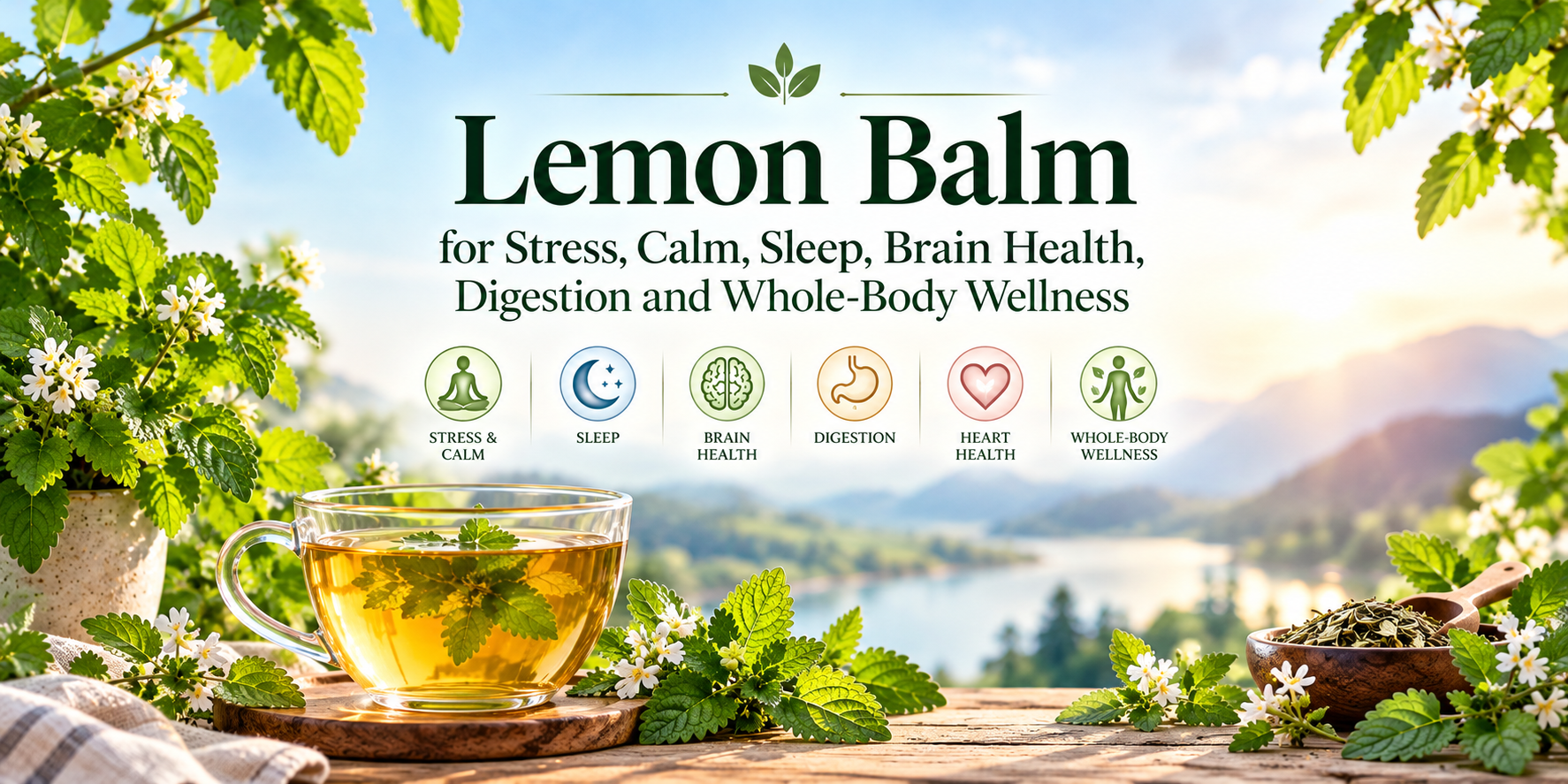
There is something beautifully refreshing about lemon balm. Its soft green leaves release a delicate citrus fragrance, its tiny flowers welcome honeybees, and its long history reflects generations of appreciation for this remarkable herb.
Known scientifically as Melissa officinalis, lemon balm belongs to the mint family and has been treasured for centuries in herbal preparations associated with relaxation, emotional balance, restful sleep, and digestive comfort.
Today, modern science is revealing even more reasons to appreciate this familiar plant.
Researchers are exploring lemon balm's natural compounds for their potential influence on the nervous system, sleep quality, memory, concentration, cardiovascular health, metabolism, skin wellness, and women's health.
Human clinical studies have reported encouraging findings involving stress, sleep quality, emotional well-being, and certain cholesterol measurements. Laboratory discoveries are also helping scientists understand how the plant's natural chemistry interacts with biological processes throughout the body.
Perhaps the most fascinating part of lemon balm's story is how these areas of wellness connect.
The brain communicates with the digestive system. Emotional experiences influence sleep. The heart responds to signals from the nervous system. And throughout the body, countless natural processes work together to maintain balance.
From a fragrant cup of herbal tea to carefully studied botanical extracts, lemon balm offers a beautiful example of how traditional plant knowledge and modern scientific discovery can enrich our understanding of health and well-being.
What Is Lemon Balm?
Lemon balm is a fragrant perennial herb belonging to the Lamiaceae family, which also includes mint, rosemary, sage, and basil.
Its botanical name, Melissa officinalis, reflects both its identity and its historical importance.
The word Melissa comes from the Greek word for honeybee. Lemon balm produces small, delicate flowers that attract bees and other pollinators, giving the plant a longstanding connection with gardens and beekeeping.
Originally native to parts of Europe, western Asia, and the Mediterranean region, lemon balm is now cultivated throughout many parts of the world.
Its leaves are bright green, gently textured, and pleasantly aromatic. When crushed, they release a fresh lemon fragrance that makes the plant easy to recognize.
Although lemon balm belongs to the mint family, its flavor is more citrus-like than minty.
The leaves are commonly used in herbal teas, culinary preparations, capsules, tinctures, and concentrated botanical extracts.
Researchers are particularly interested in the plant's polyphenols, flavonoids, aromatic constituents, and other naturally occurring compounds that may influence biological signaling pathways.
A Beautiful History of Traditional Herbal Use
Lemon balm has appeared in European and Mediterranean herbal traditions for centuries.
Historical herbal writings describe its use in preparations associated with emotional comfort, relaxation, digestive well-being, and general vitality.
The leaves were commonly steeped in hot water to create fragrant infusions or combined with other botanicals in traditional herbal preparations.
Lemon balm also became an ingredient in aromatic waters and herbal blends.
Its popularity reflects an understanding that remains meaningful today: emotional experiences and physical comfort are closely connected.
A demanding day can influence appetite, digestion, concentration, or the ability to fall asleep. Likewise, peaceful surroundings and restorative sleep can contribute to a greater sense of well-being.
Traditional herbal practices frequently approached these experiences as interconnected parts of everyday life.
Modern researchers are now investigating the biological pathways that may help explain some of lemon balm's longstanding applications.
Natural Compounds That Make Lemon Balm Special
Lemon balm contains a remarkable collection of naturally occurring plant compounds.
These include polyphenols, flavonoids, triterpenes, and aromatic substances that contribute to the plant's fragrance, flavor, and biological activity.
Rosmarinic Acid
Rosmarinic acid is one of the most extensively studied compounds in lemon balm.
It belongs to a group of natural plant substances called polyphenols, which are also found in many fruits, vegetables, herbs, and other plant foods.
Rosmarinic acid has demonstrated antioxidant activity in laboratory experiments and is being investigated for its possible influence on nervous system signaling and inflammatory pathways.
One particularly interesting discovery involves its interaction with an enzyme responsible for breaking down GABA, an important neurotransmitter in the brain.
Flavonoids
Lemon balm contains flavonoids, including luteolin derivatives and related compounds.
Flavonoids are natural plant substances that participate in antioxidant activity and cellular communication.
Researchers are exploring their relationships with oxidative stress, inflammatory signaling, and cellular protection.
Aromatic Compounds
Lemon balm's refreshing citrus fragrance comes partly from volatile compounds such as citral and citronellal.
These aromatic substances contribute to the plant's distinctive scent and have demonstrated biological activity in experimental research.
Triterpenes
Lemon balm also contains triterpenes, including ursolic acid and oleanolic acid.
These compounds are being investigated for their possible effects on inflammatory pathways and nervous system-related processes.
Together, these constituents create a complex botanical profile that continues to inspire scientific investigation.
Lemon Balm and the Brain's Natural Calming System
The brain is constantly communicating.
Every thought, memory, movement, sensation, and emotional experience involves nerve cells exchanging information.
These cells communicate through chemical messengers called neurotransmitters.
Some neurotransmitters encourage activity, while others help regulate and balance that activity.
One of the brain's most important balancing messengers is gamma-aminobutyric acid, commonly called GABA.
GABA is the primary inhibitory neurotransmitter in the central nervous system.
In everyday language, this means GABA helps regulate nerve activity and contributes to the brain's ability to maintain a balanced state.
GABA signaling is involved in relaxation, sleep, emotional regulation, and many other neurological functions.
Researchers have discovered that certain compounds found in lemon balm can inhibit an enzyme called GABA transaminase in laboratory experiments.
This enzyme normally helps break down GABA.
By influencing the enzyme's activity, lemon balm compounds may affect processes involved in GABA regulation.
Rosmarinic acid appears to be an important contributor to this activity, while ursolic acid and oleanolic acid have also demonstrated relevant effects under experimental conditions.
These discoveries provide a fascinating possible explanation for lemon balm's longstanding association with calmness.
Scientists are continuing to investigate how these laboratory findings relate to the effects observed in people.
Lemon Balm for Stress and Emotional Balance
Stress is part of the body's natural response to changing circumstances.
When the brain recognizes a challenge, it coordinates activity throughout the nervous system and endocrine system.
This response can influence breathing, heart rate, muscle tension, digestion, concentration, and emotional experience.
The ability to return toward a balanced state after a demanding experience is an important part of everyday wellness.
Lemon balm has attracted scientific interest for its potential influence on calmness, emotional regulation, and stress-related responses.
In a controlled study involving healthy adults, researchers examined standardized lemon balm extracts during laboratory-induced stress.
Participants receiving a 600 mg dose reported increased calmness, while measurements also indicated reduced alertness.
A 300 mg dose produced a different pattern, including improvements in the speed of certain mathematical tasks without reducing accuracy.
These findings suggest that lemon balm may influence the balance between relaxation and mental performance, with effects varying according to the preparation and amount studied.
What Clinical Research Reveals About Anxiety and Mood
A 2021 systematic review and meta-analysis examined randomized clinical trials involving lemon balm and psychological symptoms.
The combined findings indicated improvements in anxiety and depressive symptom scores compared with placebo.
The pooled standardized effect for anxiety symptoms was approximately −0.98, while the effect for depressive symptoms was approximately −0.47.
A standardized effect allows researchers to compare results from studies using different measurement scales.
The findings were encouraging, although the trials varied in their populations, methods, and formulations.
Together, these investigations suggest that lemon balm may influence certain aspects of emotional regulation and psychological well-being.
Lemon Balm and Everyday Emotional Well-Being
Emotional well-being involves more than responding to occasional stress.
It includes the ability to experience positive emotions, adapt to challenges, maintain concentration, and participate meaningfully in everyday life.
Researchers have begun examining lemon balm through this broader perspective.
Clinical investigations have explored changes in perceived stress, mood, emotional distress, sleep quality, and quality-of-life measurements.
One area of research involves specialized lemon balm extracts combined with phospholipids.
Phospholipids are naturally occurring molecules that form important parts of cell membranes. In certain botanical formulations, they are used to help improve the delivery of plant compounds.
Scientists are investigating whether these preparations may influence the absorption and biological availability of lemon balm's polyphenols.
Early findings involving specialized extracts have encouraged continued research into the relationship between lemon balm, emotional comfort, and everyday functioning.
This research is especially interesting because emotional well-being and physical wellness influence one another throughout the day.
Lemon Balm for Restful Sleep
Sleep is one of the body's most important restorative processes.
During sleep, the brain organizes information, supports memory, regulates signaling systems, and coordinates numerous physiological activities.
The body also carries out essential processes involving immune function, metabolism, tissue maintenance, and hormonal regulation.
Sleep occurs in repeating cycles that include non-rapid-eye-movement sleep and rapid-eye-movement sleep, commonly called REM sleep.
Deep non-REM sleep, also known as slow-wave sleep, is associated with restorative processes and important aspects of brain function.
REM sleep contributes to memory, emotional processing, and other neurological activities.
Healthy sleep involves a coordinated pattern of these stages throughout the night.
Lemon balm has traditionally been enjoyed as an evening herbal tea, and modern researchers have examined its potential relationship with sleep quality.
A Fascinating 2024 Clinical Study
A randomized, double-blind, placebo-controlled crossover study published in 2024 investigated a specially formulated lemon balm extract in adults experiencing sleep difficulties.
In a crossover study, participants receive different treatments during separate study periods, allowing researchers to compare responses within the same individuals.
The study reported encouraging improvements in several sleep-related measurements.
Average Insomnia Severity Index scores were approximately 6.8 during lemon balm supplementation compared with 9.7 during placebo treatment.
The Insomnia Severity Index is a questionnaire used to measure the severity and effects of sleep difficulties. Lower scores indicate fewer reported symptoms.
Researchers also reported that approximately 87% of participants experienced improved sleep quality during the lemon balm treatment period, compared with approximately 30% during placebo treatment.
Sleep-stage measurements suggested an average increase of approximately 15% in slow-wave sleep duration and a decrease of approximately 10% in REM sleep duration.
These findings are particularly interesting because they include both participants' experiences of sleep and measurements of sleep architecture.
Sleep architecture refers to the organization and progression of sleep stages throughout the night.
Researchers continue to investigate the significance of changes in individual sleep stages, since healthy sleep depends on a coordinated balance of different stages.
Interestingly, the study found improvements in sleep-related measurements without significant changes in anxiety scores.
This suggests that lemon balm's relationship with sleep may involve biological pathways extending beyond its perceived calming effects.
The study used a specialized lemon balm preparation designed to improve the delivery of its active polyphenols.
Other human studies have examined lemon balm alone or in combination with herbs such as valerian.
Together, these findings make sleep quality one of the most promising areas of modern lemon balm research.
The Relationship Between Calmness and Rest
Restful sleep involves more than the number of hours spent in bed.
Sleep quality can be influenced by how easily someone falls asleep, how frequently they awaken, and how refreshed they feel the following morning.
Emotional tension and elevated mental activity can influence these experiences.
Because lemon balm is being investigated for its calming effects, researchers are interested in whether it may support the transition from daytime alertness toward nighttime relaxation.
The traditional practice of preparing a warm herbal infusion can also become part of a peaceful evening routine.
Comfortable lighting, a quiet environment, and consistent sleep habits help create conditions that support the body's natural preparation for rest.
Lemon balm offers a botanical connection to these broader practices of nighttime wellness.
Lemon Balm for Memory, Focus and Cognitive Wellness
The brain depends on several interacting systems to support learning, memory, concentration, and decision-making.
One important system involves acetylcholine, a neurotransmitter that plays a role in attention, learning, and memory.
Researchers have investigated whether lemon balm compounds influence acetylcholine-related signaling.
Laboratory experiments suggest that certain constituents may interact with parts of the cholinergic system, the network of nerve cells and pathways that use acetylcholine.
Human studies have examined lemon balm's effects on memory tasks, attention, information processing, and subjective mental performance.
Some investigations have reported improvements in selected cognitive measurements.
Other studies have observed changes in alertness or processing speed, suggesting that different doses and formulations may influence cognitive functions in different ways.
This relationship is particularly interesting because relaxation and concentration often interact.
A calmer mental state may help someone focus when stress has been distracting.
At the same time, tasks requiring rapid responses depend on maintaining sufficient alertness.
Understanding this balance is an important part of ongoing lemon balm research.
Lemon Balm and Healthy Brain Aging
Scientists have also investigated lemon balm in the context of age-related cognitive changes.
One area of interest involves rosmarinic acid and its possible influence on neurotransmitter signaling, oxidative stress, and inflammatory pathways.
A small clinical trial examined a rosmarinic-acid-rich lemon balm preparation in people with mild Alzheimer's dementia over approximately 24 weeks.
Researchers measured cognitive performance alongside behavioral and emotional symptoms.
The study suggested improvements in certain neuropsychiatric symptoms, while the main cognitive assessments showed less consistent changes.
Neuropsychiatric symptoms can include changes in mood, behavior, emotional regulation, and other psychological experiences associated with neurological conditions.
These findings highlight the importance of studying different dimensions of brain health.
Memory, attention, emotional comfort, sleep, and behavioral well-being are related, yet distinct aspects of neurological function.
Lemon balm remains an intriguing botanical in this field because its natural compounds interact with several pathways relevant to brain function.
Lemon Balm and the Gut-Brain Connection
The digestive system and nervous system communicate continuously.
This relationship is commonly called the gut-brain axis.
Communication occurs through nerves, hormones, immune signals, and other biological pathways.
One important component is the vagus nerve, which helps carry information between the brain and several internal organs, including parts of the digestive tract.
This connection helps explain why emotional experiences can influence digestion.
Stress may change intestinal movement, appetite, or the way digestive sensations are perceived.
Likewise, digestive comfort can contribute to a greater sense of overall well-being.
Lemon balm has traditionally been used for occasional digestive complaints, including bloating, gas, and abdominal tension.
Researchers have investigated whether its compounds may influence smooth muscle activity within the digestive tract.
Smooth muscle is the involuntary muscle tissue responsible for helping move food and other materials through the digestive system.
Certain experimental findings suggest that lemon balm may have antispasmodic properties.
An antispasmodic effect involves reducing certain types of involuntary muscle contractions.
Traditional Recognition for Digestive Comfort
The European Medicines Agency's herbal medicine committee recognizes lemon balm leaf for traditional medicinal use in relieving mild symptoms of mental stress, aiding sleep, and relieving mild digestive complaints such as bloating and gas.
This recognition reflects the herb's longstanding documented use, while modern clinical trials investigate its measurable effects in people.
It also highlights the connection between two of lemon balm's most familiar applications: relaxation and digestive comfort.
For generations, people have enjoyed lemon balm tea after meals or during quiet moments, appreciating both its pleasant flavor and its traditional association with physical and emotional ease.
Lemon Balm for Heart Health, Cholesterol and Metabolic Wellness
The cardiovascular system responds continuously to signals from the nervous system, hormones, and surrounding environment.
During stressful experiences, the body may temporarily increase heart rate or blood pressure as part of its natural adaptive response.
Researchers have investigated whether lemon balm may influence cardiovascular measurements through its effects on stress-related pathways, antioxidant activity, and other biological processes.
Metabolism is another important part of this research.
Metabolism includes the processes through which the body transforms nutrients into energy, maintains blood glucose levels, and regulates the use and storage of fats.
Lemon balm has attracted particular interest for its possible influence on lipid metabolism.
Lipids are fats and fat-like substances that perform important functions throughout the body.
Cholesterol contributes to cell membrane structure and serves as a building block for several essential substances.
Triglycerides provide a form of stored energy.
Researchers examine blood lipid measurements because their concentrations and patterns provide information about cardiovascular and metabolic health.
What Human Clinical Studies Have Found
A 2020 systematic review and meta-analysis examined seven randomized controlled trials involving lemon balm and cardiometabolic outcomes.
The combined findings indicated reductions in total cholesterol and systolic blood pressure among participants receiving lemon balm preparations.
Systolic blood pressure is the top number in a blood pressure reading. It represents pressure in the arteries when the heart contracts.
A separate meta-analysis published in 2024 examined five randomized controlled trials involving a total of 302 participants.
The combined findings indicated statistically significant reductions in three important blood lipid measurements:
Total cholesterol
LDL cholesterol
Triglycerides
LDL refers to low-density lipoprotein, a particle that transports cholesterol through the bloodstream.
The analysis also examined HDL cholesterol, which participates in transporting cholesterol from tissues toward the liver. The combined results showed no statistically significant change in HDL.
These findings are encouraging because they come from human clinical trials rather than laboratory experiments alone.
The studies involved different populations and botanical preparations, and the total number of participants was relatively small.
Importantly, these findings describe changes in measured blood lipid levels. Researchers are continuing to investigate their longer-term significance for cardiovascular health and whether the results remain consistent across larger populations.
The results provide an interesting new dimension to lemon balm's traditional reputation as an herb associated with comfort and well-being.
Lemon Balm, Antioxidants and Cellular Wellness
Every day, the body carries out countless chemical reactions necessary for producing energy, maintaining tissues, and supporting life.
Some of these reactions generate reactive molecules, including free radicals.
These molecules participate in normal biological signaling and other essential functions.
However, when reactive molecules become excessive relative to the body's protective systems, oxidative stress can develop.
Oxidative stress may affect proteins, cell membranes, and other biological structures.
The body maintains natural antioxidant defenses to help regulate these processes.
Lemon balm contains several compounds with antioxidant activity, particularly rosmarinic acid and certain flavonoids.
Laboratory studies have demonstrated that these substances can participate in antioxidant reactions and influence pathways associated with cellular stress.
Researchers are also investigating how lemon balm compounds interact with inflammatory signaling.
Inflammation is a natural protective response that helps the body respond to injury, infection, and other challenges.
When inflammatory activity becomes persistent or poorly regulated, it may contribute to various health concerns.
Experimental research suggests that certain lemon balm compounds may influence some of these pathways.
These discoveries help explain why lemon balm is being studied across several areas of whole-body wellness.
Lemon Balm and Women's Wellness
Women's wellness involves changing biological needs throughout different stages of life.
Hormonal fluctuations can influence sleep, mood, energy, physical comfort, and emotional experiences.
Lemon balm has attracted research interest for several aspects of women's health, including menstrual comfort, premenstrual symptoms, and menopausal well-being.
A systematic review published in 2023 examined 15 studies involving lemon balm and obstetric or gynecological health.
The review identified promising findings across several areas, although study methods and quality varied.
Menstrual Comfort
During menstruation, the body produces natural compounds called prostaglandins.
Prostaglandins help regulate uterine contractions, which are part of the normal menstrual process.
Stronger contractions may contribute to menstrual discomfort.
Researchers have investigated lemon balm preparations for their possible influence on menstrual pain and related experiences.
Some clinical studies have reported improvements in pain-related measurements.
These findings have encouraged further investigation into lemon balm's potential relationship with smooth muscle activity, pain perception, and emotional comfort.
Premenstrual Wellness
Premenstrual experiences can include changes in mood, sleep, physical comfort, and energy.
Researchers have explored lemon balm for its possible influence on certain premenstrual symptoms.
Some studies have reported improvements in symptom scores, suggesting a potential role for further clinical investigation.
Menopause and Emotional Well-Being
During menopause, changes in hormone levels can influence sleep quality, emotional well-being, and physical comfort.
Lemon balm has been examined in studies involving these experiences, sometimes alone and sometimes in combination with other botanicals.
The results have varied, but the relationship between relaxation, sleep, and emotional wellness continues to make lemon balm an interesting subject for women's health research.
Lemon Balm and Skin Wellness
Lemon balm has also been studied for topical applications.
One of the better-known research areas involves cold sores, which are commonly caused by herpes simplex virus type 1.
Cold sores are small, fluid-filled blisters that typically appear around the lips or mouth.
Laboratory studies have found that certain lemon balm extracts can interfere with herpes simplex viruses under experimental conditions.
Human clinical studies have also examined topical lemon balm preparations.
Some investigations have reported improvements in discomfort, swelling, or lesion-related measurements.
Researchers are particularly interested in how compounds within lemon balm extracts may interact with viral particles and local inflammatory processes.
These findings are especially interesting because they involve topical preparations applied directly to the affected area.
The concentration and formulation of the product influence how its compounds interact with the skin.
Scientists are also investigating lemon balm's antioxidant constituents and their possible relevance to broader skin wellness.
Lemon Balm Tea and Traditional Herbal Infusions
One of the most familiar ways to enjoy lemon balm is as an herbal tea.
The leaves release their delicate citrus aroma when steeped in hot water, creating a mild, fragrant infusion.
Lemon balm tea has traditionally been enjoyed during quiet moments, after meals, or as part of an evening routine.
The European herbal monograph describes traditional medicinal infusions prepared using approximately 1.5 to 4.5 grams of cut lemon balm leaf in about 150 milliliters of boiling water, one to three times daily, for adults and adolescents older than 12.
These quantities describe traditional herbal preparations and provide useful context for understanding established medicinal use.
The strength of an infusion can vary according to the amount of leaf used, water temperature, steeping time, and quality of the herb.
Fresh and dried leaves may also differ in their concentrations of particular constituents.
Lemon balm tea offers a traditional botanical experience, while standardized extracts provide researchers with a way to study more precisely measured preparations.
Culinary Uses of Lemon Balm
Lemon balm's gentle citrus flavor makes it a versatile culinary herb.
Fresh leaves can add a refreshing botanical note to beverages, fruit dishes, salads, and other recipes.
They may also be used to flavor infused water, herbal blends, and homemade culinary preparations.
Because lemon balm's aroma is delicate, fresh leaves are often especially enjoyable when added near the end of food preparation.
The herb pairs naturally with citrus fruits, berries, and other fresh ingredients.
Its culinary versatility offers another way to appreciate lemon balm beyond its traditional medicinal applications.
Growing Lemon Balm at Home
Lemon balm is a perennial herb that can thrive in many garden environments.
It generally prefers well-drained soil and grows in full sun or partial shade, depending on the climate.
In warmer regions, afternoon shade can help protect the leaves from intense heat.
The plant can be grown in garden beds or containers.
Its fragrant foliage makes it a pleasant addition to herb gardens, while its flowers provide a food source for bees and other pollinators.
Regular harvesting can encourage fresh leafy growth.
Lemon balm can spread readily through seeds and plant growth, so container cultivation may be useful where garden space is limited.
Fresh leaves can be enjoyed soon after harvesting, while dried leaves can be stored for later use.
Harvesting and Storing Lemon Balm
Lemon balm leaves are commonly harvested during the growing season.
Many gardeners prefer collecting healthy leaves before or around flowering, when the plant's fragrance can be especially pleasant.
Leaves intended for drying are typically placed in a well-ventilated area away from direct sunlight.
Gentle drying helps preserve their aromatic qualities.
Once thoroughly dried, the leaves can be stored in an airtight container away from excessive heat, moisture, and light.
Proper storage helps maintain the herb's fragrance and overall quality.
Lemon Balm Capsules and Standardized Extracts
Lemon balm supplements are available in several forms.
Some capsules contain powdered leaves, while others contain concentrated extracts.
A concentrated extract is produced by using a solvent, such as water or alcohol, to obtain selected compounds from plant material.
Manufacturers may then concentrate and dry the resulting preparation.
Some extracts are standardized to contain a specified percentage or amount of rosmarinic acid.
Standardization helps provide greater consistency in the concentration of selected constituents.
However, lemon balm contains many compounds, so two products with identical rosmarinic acid amounts may still differ in their overall chemical composition.
Researchers are also investigating specialized delivery systems designed to influence the absorption of certain plant compounds.
Absorption refers to the movement of substances from the digestive tract into the body.
Bioavailability describes the proportion of an administered substance that reaches the circulation and becomes available for biological activity.
These differences help explain why the results of one clinical study may vary from those involving another lemon balm preparation.
Understanding Lemon Balm Dosages in Scientific Studies
Clinical researchers have examined lemon balm using different doses, preparations, and treatment schedules.
Some studies have tested single doses of 300 mg or 600 mg of standardized extracts.
Other investigations have examined daily use over several weeks.
The results depend on more than the number of milligrams listed on a label.
Important factors include the plant material used, extraction method, concentration of active compounds, and formulation.
For example, 500 mg of powdered lemon balm leaves may contain a different concentration of active compounds than 500 mg of a concentrated extract.
Researchers have yet to establish a single therapeutic dosage for every proposed application of lemon balm.
Understanding the exact preparation studied helps readers interpret scientific findings more accurately.
Choosing a Quality Lemon Balm Product
The quality of a botanical product begins with accurate identification.
Lemon balm should be identified by its scientific name, Melissa officinalis.
Clear labeling may also indicate whether the product contains leaves, powdered plant material, or a concentrated extract.
For standardized extracts, information about measured constituents can help explain the product's composition.
Independent testing may provide additional confidence regarding ingredient identity, purity, and potential contaminants.
Storage conditions also matter.
Exposure to moisture, excessive heat, and prolonged light can affect the quality of dried botanical materials.
Products with clear ingredient information, appropriate packaging, and transparent manufacturing practices make it easier for consumers to understand what they are selecting.
Lemon Balm Safety and Thoughtful Use
Lemon balm has generally been well tolerated in short-term human studies.
Reported effects have included occasional headache, dizziness, digestive discomfort, and reduced alertness.
Because some preparations may promote drowsiness, their effects may be increased when combined with alcohol or medications that cause sedation.
Laboratory and animal research has raised questions about possible effects on thyroid-related signaling, although the significance of these findings in humans remains uncertain.
People using thyroid medications or managing thyroid conditions may benefit from discussing concentrated lemon balm preparations with a qualified healthcare professional.
Reliable safety information about medicinal-strength lemon balm during pregnancy and breastfeeding remains limited.
Research into long-term daily use is also less extensive than research involving shorter periods.
The National Institutes of Health's LiverTox resource considers lemon balm an unlikely cause of clinically apparent liver injury.
Overall, available research presents lemon balm as a generally well-tolerated botanical in studied settings, while highlighting the value of understanding different preparations and individual circumstances.
Frequently Asked Questions About Lemon Balm
What is lemon balm best known for?
Lemon balm is best known for its traditional association with relaxation, restful sleep, and digestive comfort. Modern research has expanded interest into stress responses, emotional wellness, cognitive function, cardiovascular health, and cellular wellness.
Does lemon balm help with stress?
Several human studies have reported improvements in calmness or stress-related measurements following the use of certain lemon balm preparations. Research suggests that its natural compounds may influence biological pathways involved in nervous system regulation.
Can lemon balm help with anxiety?
A systematic review and meta-analysis of clinical trials found improvements in anxiety symptom scores among participants receiving lemon balm compared with placebo. Researchers continue to investigate which preparations and dosages provide the most consistent results.
Can lemon balm improve sleep quality?
Some clinical studies have reported improvements in sleep-related measurements. A 2024 controlled study involving a specialized lemon balm extract found improvements in perceived sleep quality and certain sleep-stage measurements.
Does lemon balm make you sleepy?
Some preparations may reduce alertness or promote relaxation. The effects appear to vary with dose, formulation, and individual response.
What is the connection between lemon balm and GABA?
Laboratory studies suggest that certain lemon balm compounds may influence an enzyme involved in breaking down GABA. GABA is a neurotransmitter that helps regulate nerve activity and contributes to the brain's natural balancing systems.
What is rosmarinic acid?
Rosmarinic acid is a natural polyphenol found in lemon balm and several other herbs. It has antioxidant properties and is being studied for its possible influence on nervous system and inflammatory pathways.
Can lemon balm improve memory and focus?
Human studies have observed changes in selected attention and cognitive measurements. Researchers are investigating how different preparations influence mental performance, alertness, and memory-related signaling.
Is lemon balm good for heart health?
Clinical research has identified encouraging findings involving total cholesterol and systolic blood pressure. A 2024 meta-analysis also reported reductions in LDL cholesterol and triglycerides across several trials.
Can lemon balm support healthy cholesterol levels?
Some randomized controlled trials have reported improvements in cholesterol measurements. Researchers are continuing to study how lemon balm compounds may influence lipid metabolism.
Can lemon balm help with menstrual discomfort?
Some clinical studies have reported improvements in menstrual pain and premenstrual symptom measurements. These findings have encouraged further investigation into lemon balm and women's wellness.
Is lemon balm good for digestion?
Lemon balm has a long history of traditional use for mild digestive discomfort, including bloating and gas. Experimental research suggests possible effects on smooth muscle activity.
Can lemon balm be used on the skin?
Topical lemon balm preparations have been investigated for cold sores. Some clinical studies have reported improvements in discomfort and other symptom measurements.
What is the difference between lemon balm tea and lemon balm extract?
Tea is prepared by steeping the leaves in water, while extracts may contain concentrated amounts of selected plant compounds. Their chemical compositions and strengths can differ substantially.
How quickly does lemon balm work?
Some human studies have measured responses within hours of a single dose, while others have examined changes after several weeks of daily use. The timing depends on the preparation and outcome being studied.
Can lemon balm be used daily?
Traditional herbal preparations and certain clinical studies have involved daily use. The suitability of longer-term concentrated supplementation depends on individual circumstances, product strength, and possible interactions.
Is lemon balm the same as lemongrass?
Lemon balm and lemongrass are different plants. Lemon balm belongs to the mint family and is scientifically known as Melissa officinalis. Lemongrass belongs to the grass family. Both have citrus-like fragrances, but their botanical characteristics differ.
Can lemon balm be grown at home?
Yes. Lemon balm is a perennial herb that grows well in many garden settings. It generally prefers well-drained soil and can grow in full sun or partial shade, depending on climate.
Why is lemon balm being studied for so many different wellness applications?
Lemon balm contains several biologically active compounds that interact with different laboratory pathways. Researchers are investigating whether these properties contribute to measurable effects on stress, sleep, cognition, digestion, metabolism, and cellular wellness.
The Remarkable Nature of Lemon Balm
Lemon balm brings together centuries of botanical tradition and a growing body of scientific discovery.
Its delicate fragrance and familiar green leaves offer a welcoming introduction to a much larger story involving the brain, nervous system, digestion, sleep, cardiovascular health, and the remarkable ways our bodies maintain balance.
Researchers continue to investigate its natural compounds, particularly rosmarinic acid, and their potential influence on neurotransmitter signaling, antioxidant activity, emotional well-being, and metabolic processes.
Human studies have provided encouraging findings involving stress, sleep, cholesterol, blood pressure, and selected aspects of women's wellness.
Emerging research continues to explore its possible relationships with memory, cellular protection, skin health, and healthy aging.
Perhaps one of lemon balm's most fascinating qualities is how it invites us to appreciate the connections within the body.
A peaceful state of mind can influence how we experience the day. Restful sleep supports the mind and body. The digestive system communicates with the brain. The heart responds to signals from the nervous system. Countless biological processes work together to sustain health and vitality.
And within the leaves of a humble garden herb, scientists continue to discover compounds that may interact with some of these extraordinary systems.
Lemon balm reminds us that nature's familiar gifts can hold remarkable possibilities.
Sometimes, the most meaningful discoveries begin with something beautifully simple: a fragrant green leaf, a quiet moment of curiosity, and a deeper appreciation for the extraordinary intelligence of the living world.
Related Wellness Reading
Continue exploring natural ingredients that support relaxation, restorative sleep, cognitive wellness, and whole-body balance.