

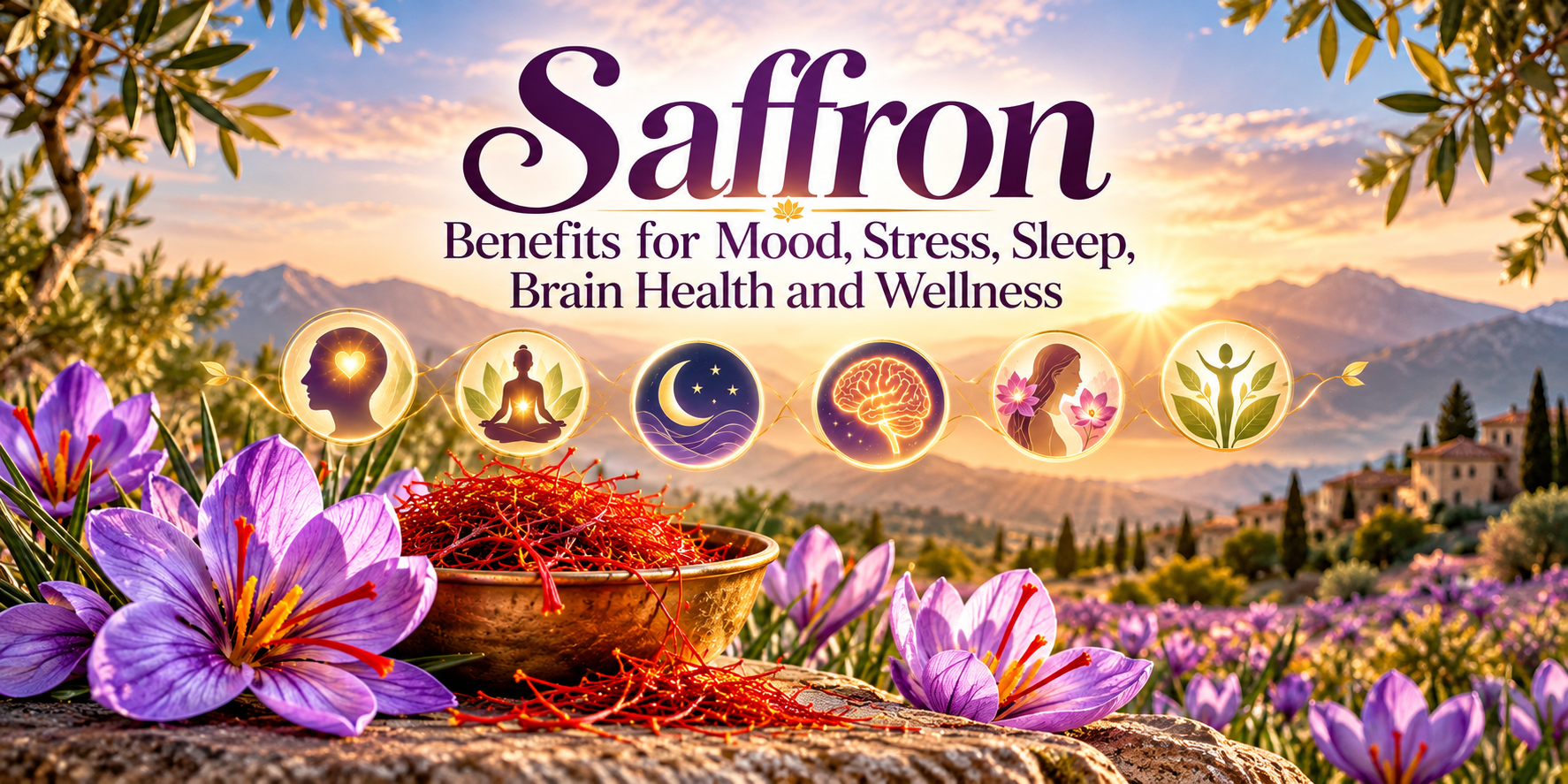
Within the heart of a delicate purple flower are three brilliant crimson threads, each carrying a remarkable collection of natural compounds that have fascinated people for thousands of years.
Those threads become saffron, one of the world's most treasured botanicals.
Known for its radiant golden color, distinctive fragrance, and rich history, saffron has traveled through ancient cultures, traditional wellness practices, and generations of culinary traditions. Today, it is also the subject of a growing collection of human clinical studies exploring its relationship with emotional well-being, stress resilience, restorative sleep, memory, women's wellness, and metabolic health.
What makes saffron particularly fascinating is the connection between its natural chemistry and the body's intricate biological systems.
Its compounds are being studied for their influence on neurotransmitter signaling, cellular protection, and the processes that help the brain and body function together.
Modern research has produced especially encouraging findings for mood, sleep, and premenstrual wellness. Other investigations are opening new possibilities in cognitive health, blood sugar regulation, cardiovascular function, and vision.
Saffron offers a beautiful example of how a small part of the natural world can hold an extraordinary story of human discovery.
What Is Saffron?
Saffron comes from Crocus sativus, a perennial flowering plant belonging to the iris family, Iridaceae.
The plant produces violet-purple blossoms with three vivid red stigmas at their center.
A stigma is the part of a flower that receives pollen. These delicate structures are carefully harvested and dried to produce the crimson saffron threads used in foods, beverages, and botanical preparations.
Each flower produces only three stigmas, making saffron one of the most labor-intensive spices in the world.
Producing a kilogram of dried saffron may require approximately 150,000 or more flowers, depending on growing conditions and harvesting practices.
This extraordinary process has helped make saffron a symbol of value and careful craftsmanship throughout history.
Saffron has been cultivated and treasured across Persia, the Mediterranean, the Middle East, and parts of Asia for thousands of years.
Its uses have included cooking, perfumes, dyes, ceremonial traditions, and botanical wellness preparations.
Traditional practices have associated saffron with emotional balance, digestive comfort, menstrual wellness, and vitality.
Modern scientific investigation is now exploring the natural compounds that may help explain some of these longstanding interests.
Natural Compounds That Make Saffron Remarkable
Saffron contains a complex collection of plant constituents.
Four compounds are especially important to its identity: crocin, crocetin, safranal, and picrocrocin.
Together, they contribute to saffron's vibrant color, distinctive aroma, characteristic flavor, and biological activity.
Crocin and the Beauty of Golden Pigments
Crocin is one of saffron's most recognizable compounds.
It belongs to the carotenoid family, a group of natural pigments responsible for many of the yellow, orange, and red colors found throughout the plant world.
When saffron threads are placed in warm water, crocins create the beautiful golden color associated with saffron tea and traditional dishes.
Researchers have investigated crocin for its antioxidant properties and possible effects on nervous-system function and cellular communication.
An especially interesting feature of crocin is what happens during digestion.
Much of the crocin consumed orally is transformed into crocetin before absorption.
This process illustrates how the body interacts with botanical compounds, changing them into forms that can circulate and participate in biological activity.
Crocetin and Cellular Health
Crocetin is closely related to crocin and has attracted attention for its possible effects on cellular protection and metabolic processes.
Researchers are exploring how crocetin interacts with oxidative balance and cellular energy pathways.
These processes are important throughout the body, including in the brain, heart, and other metabolically active tissues.
Safranal and Saffron's Distinctive Aroma
Safranal is an aromatic compound that contributes much of saffron's characteristic fragrance.
It develops during the drying and processing of saffron stigmas.
Experimental research has investigated safranal in relation to nervous-system signaling, relaxation-associated pathways, and antioxidant activity.
These findings contribute to scientific interest in saffron's possible relationship with mood and sleep.
Picrocrocin and Saffron's Flavor
Picrocrocin contributes to saffron's characteristic bitter taste.
During drying and processing, it also participates in the formation of safranal.
The relationship among these compounds shows how a plant's natural chemistry changes from flower to finished spice.
Saffron's biological interest comes from this complex collection of constituents, each contributing to a larger botanical picture.
Saffron and Emotional Wellness
Emotional well-being is one of the most extensively investigated areas of saffron research.
Our emotions arise from interactions among the brain, nervous system, hormones, sleep patterns, physical health, personal experiences, and environment.
Within the brain, nerve cells communicate using chemical messengers called neurotransmitters.
These messengers participate in regulating mood, motivation, attention, memory, and many other functions.
Saffron has attracted scientific attention because its natural compounds appear to influence several pathways involved in emotional regulation.
Human clinical trials have explored saffron preparations in adults experiencing low mood, depressive symptoms, anxiety symptoms, and emotional distress.
A systematic review and meta-analysis published in 2026 examined 34 randomized controlled trials involving 1,769 participants.
The researchers found encouraging improvements in certain self-reported measures of depression and anxiety.
The Beck Depression Inventory, a questionnaire measuring depressive symptoms, showed an average improvement of approximately 4.4 points compared with control groups.
The Beck Anxiety Inventory showed an average improvement of approximately 5.1 points.
These questionnaires assess experiences such as sadness, worry, nervousness, reduced interest, and physical symptoms associated with emotional distress.
The review found moderately certain evidence for improvements on these self-reported scales. Other assessment methods produced more varied findings, giving researchers valuable directions for future studies.
Together, these results suggest saffron may have a meaningful complementary role in supporting emotional well-being.
How Saffron May Influence Mood
Researchers are exploring several biological pathways that may contribute to saffron's effects.
Serotonin signaling
Serotonin is a neurotransmitter involved in mood, sleep, appetite, and emotional regulation.
Experimental research suggests that saffron constituents may influence serotonin-related communication within the nervous system.
Dopamine and motivation
Dopamine participates in motivation, learning, attention, movement, and reward processing.
Some experimental findings suggest saffron compounds may influence dopamine-related pathways.
Neuroplasticity
Neuroplasticity describes the brain's remarkable ability to adapt, learn, and reorganize its connections.
Researchers are investigating whether saffron influences signaling pathways associated with neuronal growth and adaptability.
Cellular protection
The brain requires substantial energy to function.
Saffron's carotenoid compounds are being studied for their possible influence on healthy cellular processes.
These mechanisms provide a fascinating foundation for understanding saffron's growing role in emotional-wellness research.
Saffron and the Connection Between Mood and the Body
Emotional experiences involve the entire body.
Changes in mood can influence sleep, appetite, energy, concentration, and physical tension.
Likewise, sleep quality, nutrition, physical activity, and hormonal changes can influence emotional well-being.
This relationship helps explain why researchers are increasingly interested in approaches that examine several biological systems together.
Saffron's clinical findings offer an interesting example.
Studies investigating emotional wellness frequently examine additional outcomes such as stress, sleep quality, and daily functioning.
These connections suggest that saffron's potential effects may involve overlapping biological pathways rather than a single isolated process.
Saffron for Stress and Emotional Resilience
Stress is part of the body's natural ability to respond to changing circumstances.
When we encounter a challenge, the brain coordinates changes in attention, breathing, heart rate, and energy availability.
One important part of this process is the hypothalamic-pituitary-adrenal axis, commonly called the HPA axis.
This communication network connects the brain with the adrenal glands.
The adrenal glands produce hormones including cortisol, which helps regulate metabolism, immune activity, daily energy patterns, and the response to stress.
Researchers have investigated saffron for its possible influence on perceived stress and emotional tension.
A randomized clinical trial published in 2025 found that adults receiving standardized saffron extract reported improvements in perceived stress alongside improvements in sleep.
These findings are especially interesting because they offer insight into the relationship between emotional well-being and restorative rest.
Understanding Emotional Resilience
Emotional resilience is the ability to adapt to challenges, recover from difficult experiences, and regain a sense of balance.
It involves flexibility rather than constant positivity.
The nervous system continuously responds to the world around us, adjusting attention, energy, and emotional responses as circumstances change.
Supportive relationships, restorative sleep, movement, nourishing foods, and meaningful daily routines all contribute to resilience.
Saffron's emerging research adds another dimension to the scientific exploration of emotional wellness.
Saffron and Restorative Sleep
Sleep is one of the body's most remarkable biological processes.
During sleep, the brain organizes information, supports memory formation, and coordinates essential functions involved in physical and emotional recovery.
Sleep also contributes to immune regulation, metabolism, cellular maintenance, and the ability to respond to everyday challenges.
Saffron has become an increasingly interesting subject in sleep research.
Several randomized clinical trials have investigated whether standardized saffron preparations influence insomnia symptoms, sleep quality, and the feeling of being refreshed after rest.
A systematic review of five randomized trials involving 379 participants reported encouraging findings for sleep-related outcomes.
A larger clinical trial published in 2025 provided additional insight.
What a 2025 Sleep Study Discovered
The study enrolled 165 adults reporting moderate insomnia.
Participants were assigned to one of three groups:
20 milligrams of standardized saffron extract daily
30 milligrams of standardized saffron extract daily
Placebo
The study lasted four weeks.
Researchers evaluated insomnia symptoms, sleep quality, perceived stress, emotional well-being, and daytime functioning.
Participants receiving saffron experienced greater improvements in insomnia symptoms than those receiving placebo.
Sleep quality improved after approximately three weeks, with the benefits continuing through the fourth week.
Both saffron groups also experienced reductions in perceived stress.
The researchers observed that the 20-milligram preparation performed comparably to the 30-milligram preparation on several outcomes.
This illustrates an important principle in botanical research: the characteristics of an extract and the biological response matter as much as the quantity consumed.
Why Might Saffron Support Sleep?
Several explanations are being explored.
Emotional regulation
Stress and emotional tension can influence the body's ability to settle into restful sleep.
Saffron's possible effects on emotional well-being may contribute to a more favorable sleep experience.
Nervous-system signaling
Neurotransmitters help coordinate the transitions between wakefulness and sleep.
Saffron compounds may influence some of these communication pathways.
Restorative processes
Healthy sleep supports memory consolidation, emotional processing, and cellular maintenance.
Researchers are interested in whether improvements in perceived sleep quality translate into broader improvements in daily well-being.
Sleep satisfaction
Sleep quality involves more than the number of hours spent in bed.
It also includes ease of falling asleep, continuity of sleep, and how refreshed a person feels in the morning.
Saffron research is helping scientists explore these different dimensions of rest.
Saffron and Brain Health
The human brain contains billions of nerve cells connected through an extraordinary communication network.
These connections allow us to remember experiences, learn new skills, recognize patterns, solve problems, and understand the world around us.
Maintaining cognitive health involves supporting the biological processes that make these abilities possible.
Saffron has attracted scientific interest for its possible influence on memory, learning, and cognitive function.
Cognition refers to the mental processes involved in thinking, understanding, remembering, and making decisions.
Human clinical trials have investigated saffron in people experiencing mild cognitive impairment and Alzheimer's disease.
Mild cognitive impairment describes measurable changes in memory or thinking that are greater than expected with normal aging while many everyday abilities remain intact.
Some small randomized studies have reported improvements in cognitive assessment scores among participants receiving saffron preparations.
Other studies have compared saffron with conventional cognitive medications and observed similar average scores on certain assessments over the study periods.
These findings have encouraged continued investigation into saffron's relationship with brain function.
How Memory Works
Memory involves several remarkable stages.
Encoding
The brain receives information and transforms some of it into patterns of neural activity.
Consolidation
Certain memories become stronger and more stable over time.
Sleep plays an important role in this process.
Storage
Information is maintained through networks of connected nerve cells.
Retrieval
The brain accesses stored information when it is needed.
These processes depend on healthy communication between neurons.
The specialized connections where nerve cells communicate are called synapses.
Researchers are investigating whether saffron compounds influence pathways involved in synaptic function, neuronal communication, and cellular protection.
Saffron and Neuroplasticity
Neuroplasticity is the brain's ability to change and adapt.
Every time we learn something new, practice a skill, or form a memory, networks within the brain participate in this remarkable process.
One protein involved in neuronal health is brain-derived neurotrophic factor, commonly called BDNF.
BDNF supports the survival, growth, and adaptability of nerve cells.
Experimental studies have explored whether saffron compounds influence pathways associated with BDNF and neuronal function.
These investigations offer a fascinating direction for understanding saffron's potential relationship with learning, memory, and healthy cognitive aging.
Saffron and Healthy Aging
Healthy aging involves maintaining vitality, independence, emotional well-being, and physical and cognitive function throughout life.
The brain, heart, muscles, metabolism, immune system, and nervous system all contribute to this process.
Saffron's potential relevance to healthy aging comes from several overlapping areas of research.
Its mood and sleep studies explore aspects of everyday quality of life.
Its cognitive investigations examine processes associated with memory and thinking.
Its metabolic research evaluates blood sugar and cardiovascular markers.
And its natural compounds continue to attract scientific interest for their roles in cellular protection.
These areas reflect the interconnected nature of human wellness and the importance of supporting health throughout the lifespan.
Saffron and Women's Wellness
Saffron has a longstanding place in women's wellness traditions.
Modern clinical research has explored its potential influence on premenstrual syndrome, emotional changes associated with the menstrual cycle, and menstrual comfort.
Premenstrual syndrome, commonly called PMS, includes recurring physical and emotional symptoms that appear during the latter part of the menstrual cycle.
These may include irritability, mood changes, fatigue, bloating, breast tenderness, and difficulty concentrating.
Hormonal changes occur naturally throughout the menstrual cycle, while individual responses to these changes vary.
Researchers have investigated whether saffron may influence some of the biological processes associated with premenstrual symptoms.
A systematic review and meta-analysis published in 2026 reported statistically significant improvements in PMS symptoms among women receiving saffron.
The pooled standardized effect size was approximately -0.64, indicating a moderate improvement across the included studies.
This is an encouraging finding because PMS can involve several interconnected physical and emotional experiences.
Researchers are exploring whether saffron's influence on neurotransmitter signaling and other biological pathways contributes to these improvements.
Saffron and Menstrual Comfort
Menstrual discomfort is influenced by several biological processes.
One important factor is the production of prostaglandins.
Prostaglandins are signaling molecules involved in inflammation, blood flow, and muscle contractions.
During menstruation, they help coordinate contractions of the uterus.
Higher prostaglandin activity can contribute to stronger contractions and greater discomfort.
Clinical studies have investigated saffron for its possible influence on menstrual pain, also called dysmenorrhea.
A 2026 meta-analysis initially found an improvement in menstrual-pain scores across the included studies.
The pain findings were more variable than those for PMS, making this an interesting area for additional research.
Together, these studies offer valuable insight into saffron's potential relationship with women's emotional and physical wellness.
Saffron and Blood Sugar Balance
Blood glucose is one of the body's most important sources of energy.
After carbohydrates are digested, glucose enters the bloodstream.
The pancreas produces insulin, a hormone that helps regulate how glucose moves into many of the body's tissues.
The liver, muscles, digestive system, and other organs also participate in maintaining glucose balance.
Researchers have investigated saffron for its possible influence on metabolic health.
A meta-analysis involving 25 randomized trials and 1,486 participants with metabolic syndrome or related conditions reported modest improvements in fasting blood glucose and HbA1c.
Fasting blood glucose measures the amount of sugar in the bloodstream after a period without food.
HbA1c reflects average glucose exposure over approximately two to three months.
The pooled findings included an average reduction of approximately 6.7 mg/dL in fasting glucose and approximately 0.25 percentage points in HbA1c compared with control groups.
These changes provide measurable evidence of saffron's potential influence on certain aspects of glucose regulation.
Saffron and Metabolic Function
Metabolism refers to the many chemical processes that allow the body to obtain, transform, store, and use energy.
These processes involve hormones, enzymes, cellular signaling, and interactions among multiple organs.
Researchers are exploring whether saffron compounds influence glucose metabolism through effects on oxidative balance and other cellular pathways.
Some studies have also investigated insulin sensitivity, which describes how effectively cells respond to insulin.
Findings across metabolic measurements have varied, suggesting that saffron's effects may differ according to the population, preparation, and outcome being studied.
This research offers another interesting perspective on the relationship between botanical compounds and whole-body wellness.
Saffron and Cardiovascular Wellness
The cardiovascular system includes the heart, blood vessels, and the circulation that delivers oxygen and nutrients throughout the body.
Cardiovascular health depends on coordinated regulation of blood pressure, blood-vessel function, cholesterol metabolism, and many other processes.
Clinical studies have investigated saffron's potential effects on several cardiovascular measurements.
Some pooled analyses have reported modest improvements in total cholesterol and blood pressure.
Cholesterol is a fat-like substance essential for cell membranes and the production of certain hormones.
It travels through the bloodstream in particles called lipoproteins.
Low-density lipoprotein, or LDL, transports cholesterol to tissues.
High-density lipoprotein, or HDL, participates in transporting cholesterol back toward the liver.
Researchers have examined how saffron may influence these measurements and the cellular processes associated with vascular health.
The findings are most encouraging for selected markers, while other measurements have shown smaller or more variable changes.
These investigations contribute to the broader study of saffron and metabolic wellness.
Saffron and Eye Health
The eye is one of the body's most sophisticated sensory organs.
Light enters the eye and reaches the retina, a thin layer of specialized tissue at the back.
The retina contains photoreceptors that respond to light and help convert visual information into electrical signals.
These signals travel through the optic nerve to the brain.
The macula is a small region near the center of the retina responsible for sharp, detailed central vision.
Researchers have investigated saffron's potential relationship with retinal function, particularly in people experiencing age-related macular degeneration.
Age-related macular degeneration affects the macula and can influence central vision.
Small clinical trials have examined saffron preparations in people with this condition.
Some studies have reported encouraging changes in measurements of retinal function.
Researchers are especially interested in crocin and crocetin because of their antioxidant properties and possible influence on retinal cells.
These findings have opened another fascinating area of saffron research.
Saffron, Antioxidants, and Cellular Protection
Every cell in the body carries out countless chemical reactions.
These reactions support energy production, growth, repair, communication, and other essential functions.
Some reactions generate molecules called reactive oxygen species.
These molecules participate in normal cellular signaling and immune defense.
When their production exceeds the body's ability to regulate them, oxidative stress can occur.
The body maintains natural antioxidant systems that help manage these processes.
Saffron contains carotenoid compounds that have demonstrated antioxidant activity in experimental research.
Scientists are investigating how these compounds interact with cellular pathways involved in protection and maintenance.
This research contributes to our understanding of saffron's possible effects across several body systems.
Saffron and Inflammatory Balance
Inflammation is an essential part of the body's protective and repair processes.
When tissues are injured or the immune system identifies a potential threat, inflammatory signaling helps coordinate a response.
Immune cells release chemical messengers called cytokines.
Cytokines help regulate immune activity, inflammation, and tissue repair.
Researchers have investigated saffron compounds for their possible influence on several inflammation-related pathways.
Experimental findings suggest that crocin, crocetin, and other constituents may affect certain signaling processes involved in inflammatory regulation.
Scientists continue exploring how these effects may relate to the outcomes observed in human clinical studies.
Saffron and Digestive Wellness
Saffron has appeared in traditional preparations associated with digestion and digestive comfort.
Its distinctive bitter and aromatic compounds have contributed to its culinary and botanical uses for generations.
Modern investigations have explored saffron's relationship with gastrointestinal processes and cellular signaling.
Human research in this area is still developing, making it an interesting subject for future investigation.
Saffron's culinary history also offers an accessible way to appreciate its flavor, fragrance, and cultural significance.
Ways to Enjoy Saffron
Saffron can be experienced in several forms, each offering a different connection to this remarkable plant.
Whole saffron threads
Whole threads are dried stigmas harvested from Crocus sativus.
They are used in rice dishes, soups, stews, breads, desserts, and beverages.
When steeped in warm liquid, they release their characteristic golden color and distinctive aroma.
Ground saffron
Ground saffron is made by processing dried threads into a powder.
It offers convenience in cooking and can be incorporated into a variety of recipes.
Saffron tea
Saffron tea is prepared by steeping saffron threads in warm water.
The resulting infusion contains water-extractable compounds from the plant.
Its strength and composition depend on the amount of saffron, water temperature, steeping time, and preparation method.
Standardized saffron extracts
Clinical trials frequently use concentrated saffron extracts manufactured under controlled conditions.
Some extracts are standardized to particular chemical markers or compounds.
Standardization helps researchers maintain consistency between batches and better understand the relationship between a preparation and its observed effects.
Isolated saffron compounds
Some experimental studies investigate purified crocin, crocetin, or other saffron constituents.
These investigations help scientists explore the biological activities of individual compounds.
What Amounts of Saffron Have Researchers Studied?
Human clinical trials have investigated a range of saffron preparations and amounts.
Many mood-related studies have used approximately 15 to 30 milligrams of saffron extract daily.
Sleep studies have examined standardized extracts containing 20 or 30 milligrams daily.
Some cognitive-health investigations have also used approximately 30 milligrams daily.
These quantities describe the preparations used in research.
The concentration of individual compounds can vary considerably among extracts, making product composition an important part of interpreting study findings.
Culinary saffron, tea, standardized extracts, and purified compounds can provide different combinations and amounts of constituents.
How Long Does Saffron Take to Show Benefits?
The timeline depends on the outcome being studied.
Mood-related clinical trials commonly evaluate participants over approximately six to eight weeks.
Some sleep studies have reported improvements after three to four weeks.
Metabolic studies often follow participants for several weeks or months to evaluate changes in blood sugar and related markers.
Cognitive studies may use longer observation periods to assess memory and thinking-related outcomes.
These timelines provide useful insight into how saffron has been studied and when researchers have measured changes.
Why Saffron Quality Matters
Saffron's extraordinary value makes authenticity and quality especially important.
Genuine saffron comes from the dried stigmas of Crocus sativus.
Quality can be influenced by growing conditions, harvesting practices, drying methods, storage, and processing.
Whole saffron threads have a characteristic shape and rich crimson color.
Their aroma reflects the presence of volatile compounds, including safranal.
Their golden coloring strength is associated with crocins.
Because saffron is valuable, products can sometimes be mixed with other plant material, dyes, or lower-quality ingredients.
Understanding quality helps readers appreciate the differences among culinary products and research preparations.
Understanding Saffron Quality Standards
The international ISO 3632 standard provides methods for evaluating saffron spice.
It examines characteristics associated with color, aroma, flavor, and purity.
These assessments help evaluate the quality of saffron as a spice.
For supplements, additional considerations include ingredient identity, extract standardization, manufacturing practices, and independent laboratory testing.
Clear labeling of the botanical name, plant part, extract amount, and standardization details helps readers understand the product's composition.
Saffron Safety and Thoughtful Use
Saffron has a long history of culinary use, and ordinary food quantities are generally well tolerated.
Clinical trials using commonly studied supplemental preparations have also generally reported good short-term tolerability.
Some participants experience mild effects such as digestive discomfort, nausea, or headache.
Concentrated extracts contain different amounts of active constituents than typical culinary servings, making preparation and dosage important considerations.
Very high doses can cause serious toxicity.
Pregnancy and breastfeeding call for particular care with concentrated saffron preparations because safety information is limited and higher amounts may influence uterine activity.
People using medications for mood, blood clotting, blood pressure, or blood glucose can benefit from reviewing possible interactions with a qualified healthcare professional before beginning concentrated supplementation.
Understanding the form, amount, and intended use helps place saffron within a thoughtful approach to wellness.
Frequently Asked Questions About Saffron
What are the main wellness benefits being studied for saffron?
Saffron is being investigated for mood, emotional well-being, stress, sleep quality, premenstrual symptoms, cognitive function, blood sugar regulation, cardiovascular markers, retinal function, and cellular health.
Human research is particularly encouraging for mood, sleep, and certain aspects of women's wellness.
Can saffron support a positive mood?
Randomized clinical trials have reported improvements in certain measures of depressive symptoms and emotional well-being.
Researchers are exploring how saffron may influence neurotransmitter signaling and other biological pathways involved in emotional regulation.
Can saffron help with anxiety?
Some clinical studies have reported improvements in self-reported anxiety symptoms.
These findings have encouraged continued investigation into saffron's relationship with emotional wellness.
Does saffron support stress resilience?
Human studies have reported improvements in perceived stress.
Researchers are exploring how these effects may relate to emotional regulation, nervous-system activity, and restorative sleep.
Can saffron improve sleep quality?
Several randomized clinical trials have reported improvements in insomnia symptoms and perceived sleep quality.
A 2025 study involving 165 adults found improvements after several weeks of standardized saffron extract use.
Does saffron make people sleepy?
Saffron's possible sleep benefits may involve emotional regulation and nervous-system signaling.
Its effects can differ from those of conventional sedative substances.
Is saffron beneficial for memory?
Small clinical studies have investigated saffron's effects on cognitive function in people experiencing cognitive impairment.
The findings have encouraged continued research into memory-related pathways and brain health.
Can saffron support healthy aging?
Researchers are studying saffron's possible effects on cellular protection, cognitive function, mood, sleep, and metabolic markers.
These areas are relevant to maintaining wellness and quality of life throughout the years.
Does saffron support women's wellness?
Clinical studies have reported encouraging findings for certain premenstrual symptoms.
Researchers are also exploring saffron's potential influence on menstrual comfort.
Can saffron support blood sugar balance?
Pooled clinical research has reported modest improvements in fasting glucose and HbA1c in certain study populations.
These findings suggest potential effects on metabolic regulation.
Is saffron beneficial for eye health?
Small clinical studies have investigated saffron in people with age-related macular degeneration.
Researchers are interested in its carotenoid compounds and their possible relationship with retinal function.
Does saffron contain antioxidants?
Yes. Saffron contains natural compounds, including crocin and crocetin, that demonstrate antioxidant activity in experimental research.
Is saffron the same as turmeric?
Saffron and turmeric are different plants.
Saffron comes from the stigmas of Crocus sativus, while turmeric comes from the underground rhizome of Curcuma longa.
Both have rich golden coloring, but they contain different characteristic compounds and have distinct culinary and research histories.
Is saffron tea the same as a saffron supplement?
Saffron tea is an infusion prepared from saffron threads.
Supplements may contain concentrated extracts standardized to particular compounds.
Their concentrations and chemical profiles can differ.
How long has saffron been used?
Saffron has been cultivated and valued for thousands of years.
Its history includes culinary, cultural, ceremonial, artistic, and traditional wellness uses across several regions of the world.
Why is saffron so expensive?
Each flower produces only three stigmas.
Harvesting and drying these delicate structures require extensive manual labor, and large numbers of flowers are needed to produce relatively small quantities of saffron.
Saffron and the Extraordinary Possibilities of Nature
Saffron is a beautiful reminder of how much complexity can exist within the smallest parts of the natural world.
Three delicate crimson threads carry natural compounds that scientists are investigating across numerous areas of human biology.
Its story stretches across cultures and centuries, connecting botanical traditions with modern scientific discovery.
Today, human research has produced encouraging findings for emotional well-being, stress, restorative sleep, and certain aspects of women's wellness.
Other investigations are exploring its relationship with memory, metabolic balance, cardiovascular function, retinal health, and cellular protection.
Each study adds another piece to our understanding of this extraordinary flower.
And perhaps that is one of the most inspiring aspects of saffron.
Something so small, so delicate, and so easily overlooked contains a world of intricate chemistry and biological possibility.
From a violet blossom to a golden infusion, saffron invites us to appreciate the remarkable relationship between plants, the human body, and the continuing discoveries of science.
Its beauty captures our attention.
Its history connects us with generations before us.
And its unfolding research reminds us that the natural world still holds so much waiting to be understood.
Continue Exploring Natural Wellness
Rhodiola Rosea
Explore this adaptogenic botanical and the research investigating stress resilience, mental fatigue, and emotional well-being.
L-Theanine
Discover the amino acid studied for calm attention, relaxation, and sleep quality.
Glycine
Learn about this amino acid and its roles in nervous-system signaling, sleep, and whole-body wellness.
Melatonin
Explore the hormone involved in circadian rhythms and the body's natural sleep-wake cycle.
Lion's Mane
Discover the mushroom attracting research interest for brain health, cognitive function, and nerve-related biological pathways.
Choline
Learn about this essential nutrient and its roles in memory, cellular health, and nervous-system communication.