

The Remarkable Connection Between the Heart, Brain, Emotions, and the Wonder of Human Life
Within every human heart exists something extraordinary: an intricate network of nerve cells capable of receiving information, processing signals, and helping regulate the rhythm of life.
The heart is far more than a muscle that circulates blood. It has its own nervous system, communicates continuously with the brain, responds to emotional and physical experiences, and participates in the remarkable coordination that sustains life.
And the wonders of circulation do not end within the chest. Even the muscles of our legs participate in moving blood through the body, performing a pumping action so important that the calves are sometimes called our second heart.
For centuries, people have associated the heart with love, courage, compassion, intuition, faith, and wisdom. We speak of listening to our hearts, opening our hearts, and feeling something deep within our hearts.
Modern science is revealing fascinating discoveries about the physical heart that give us even more reasons to appreciate this extraordinary organ.
Researchers have identified specialized neurons within the heart, discovered complex communication networks connecting the heart and brain, and uncovered new details about how cardiac nerve cells help regulate heart function.
Even more remarkably, scientists are learning that the heart's nervous system contains different types of neurons and supporting cells, each contributing to a sophisticated biological partnership.
The heart is not simply receiving instructions from the brain.
It is actively participating in the ongoing regulation of the body.
And with every new discovery, we gain another glimpse into the magnificent complexity of human life.
The Heart Has Its Own Nervous System
Deep within and around the heart is a specialized network called the intrinsic cardiac nervous system, sometimes described as the heart's little brain.
The word intrinsic means belonging naturally to something. In this case, it refers to the nerve cells and communication pathways associated with the heart itself.
This network includes neurons, nerve fibers, supporting cells, and clusters of nerve cells called ganglia.
A neuron is a specialized cell that receives and transmits information through electrical and chemical signals.
A ganglion is a collection of nerve cell bodies that helps organize and process those signals.
Within the heart, groups of ganglia connect through networks of nerve fibers, forming structures known as ganglionated plexuses.
These networks help regulate cardiac activity, allowing the heart to respond to changing physiological conditions.
Rather than functioning as a passive organ, the heart participates in its own regulation through a complex relationship among local nerve circuits, electrical activity, and communication with the brain.
How Many Neurons Are in the Human Heart?
One of the most fascinating discoveries is that the human heart contains tens of thousands of neurons.
An often-repeated estimate suggests approximately 40,000 neurons. Other anatomical research has reported estimates ranging from approximately 43,000 to 94,000.
These numbers come from different anatomical studies and methods of counting nerve cells. They are reported estimates rather than a universally established number for every human heart.
What matters most is not the exact count.
It is the remarkable organization of those neurons.
They form interconnected networks capable of participating in local information processing and cardiovascular regulation.
Some nerve clusters are positioned near regions involved in regulating heart rate, while others influence electrical conduction and activity within different areas of the heart.
The heart possesses an elaborate neural system of its own, operating as part of the body's larger nervous system.
Why Scientists Call It the Heart's Little Brain
The phrase little brain of the heart describes the heart's ability to process certain information locally rather than relying entirely on instructions from the brain.
For many years, scientists believed that cardiac nerve clusters primarily acted as relay stations, passing signals from the brain to the heart.
Modern research has revealed a more sophisticated arrangement.
The intrinsic cardiac nervous system contains several types of neurons with different responsibilities.
Sensory neurons help detect information about conditions within the heart and contribute to the nervous system's ability to monitor cardiac activity.
Motor neurons transmit signals that influence cardiac function, including aspects of heart rate and electrical conduction.
Interneurons connect and coordinate information among other nerve cells, helping form local circuits capable of integrating signals.
Together, these neurons create a system that does more than simply transmit messages.
It can participate in local reflexes, coordinate neural activity, and help the heart adapt to changing conditions.
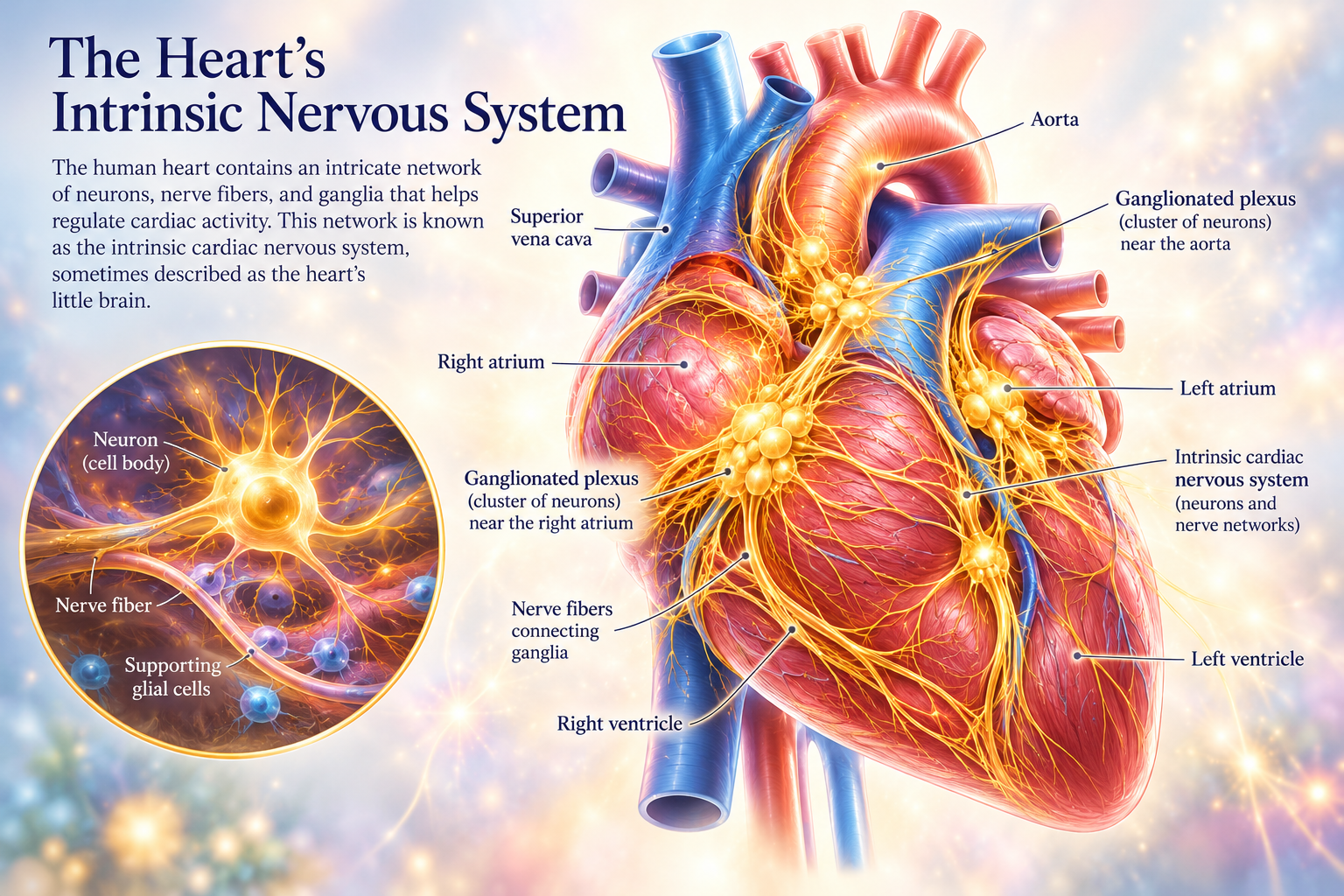
The human heart contains an intricate network of neurons, nerve fibers, and ganglia that helps regulate cardiac activity. This network is known as the intrinsic cardiac nervous system.
The heart's nervous system performs specialized biological information processing. It does not think, reason, or create conscious experiences in the way the brain does.
Its remarkable capabilities involve local regulation, communication, and adaptation.
The heart does not need to be a second conscious brain to be extraordinary.
How the Heart Creates Its Own Beat
One of the heart's most remarkable abilities is that it can generate the electrical impulses needed to initiate its own rhythm.
This ability comes from specialized cardiac cells.
Within the upper portion of the heart is a small region called the sinoatrial node, often shortened to SA node.
It acts as the heart's natural pacemaker.
Specialized cells in this region spontaneously generate electrical impulses.
These impulses travel through the heart's electrical conduction system, coordinating the contraction of its chambers.
The upper chambers, called atria, receive blood.
The lower chambers, called ventricles, pump blood toward the lungs and throughout the body.
The electrical system helps these chambers work together in a coordinated sequence.
The natural pacemaker and intrinsic cardiac nervous system have different but complementary functions.
The pacemaker initiates the heartbeat.
The nervous system helps regulate the heart's activity and responses to changing demands.
The heart therefore possesses both an electrical system capable of generating a rhythm and a neural network that helps regulate its performance.
This partnership is one of the extraordinary features of cardiac biology.
The Body's Second Hearts: A Remarkable Discovery Within Our Legs
The human body contains another fascinating feature that reveals just how beautifully our circulatory system works.
Although we have one anatomical heart, the muscles in our legs perform a pumping function so important that the calf muscles are sometimes called the body's second heart.
Every time we walk, rise onto our toes, or move our ankles, muscles in the lower legs contract and relax.
These movements help push blood through the veins and back toward the heart.
The process is known as the calf muscle pump.
How the Calf Muscles Help Circulation
Two important muscles involved in this process are the gastrocnemius and soleus.
The gastrocnemius forms much of the visible shape of the calf, while the soleus lies deeper within the lower leg.
As these muscles contract, they compress nearby veins and help move blood upward.
Inside many of those veins are remarkable one-way valves that help prevent blood from flowing backward.
When the muscles relax, the veins refill, preparing for the next movement.
The result is a coordinated pumping action that supports the return of blood toward the heart.
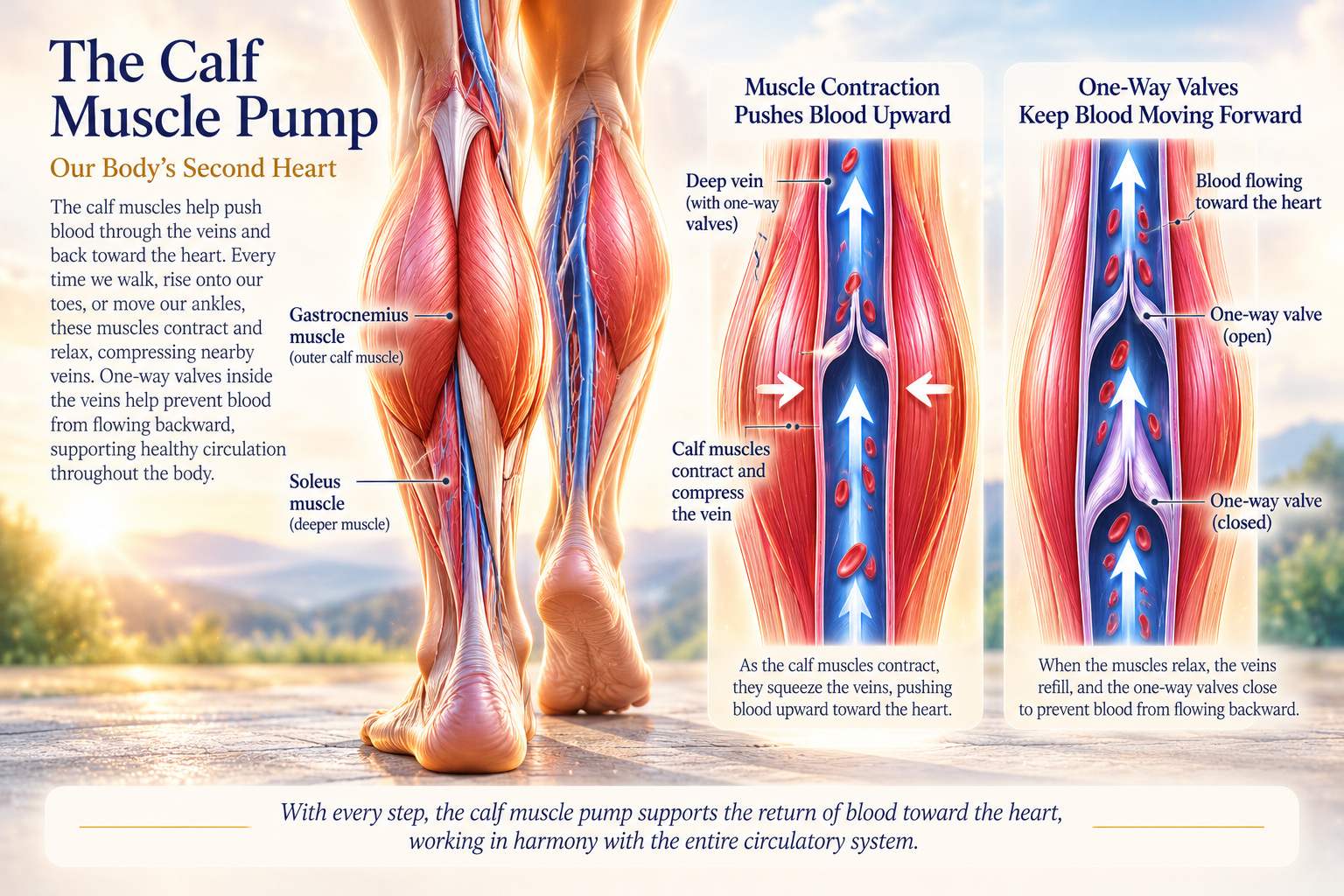
The calf muscle pump helps return blood from the legs toward the heart. As the calf muscles contract, they compress nearby veins, while one-way valves help maintain the upward direction of blood flow.
This is especially important when we are standing because blood returning from the lower body must travel upward against gravity.
The calf muscle pump helps reduce pressure in the lower-leg veins during movement and supports healthy venous circulation.
The Soleus Muscle and Its Remarkable Role
The soleus deserves special attention because it plays an important role in both movement and posture.
Located beneath the gastrocnemius, the soleus helps control movement at the ankle and supports the body during standing and walking.
It contains a high proportion of muscle fibers suited for sustained activity, allowing it to contribute to posture and repeated movements over extended periods.
The soleus is also closely associated with deep veins within the calf.
When the muscle contracts, it helps compress these veins and propel blood upward.
This pumping action is particularly valuable because blood returning from the lower legs must travel against gravity when we are upright.
The soleus does not create a heartbeat or replace the heart's pumping function.
Instead, it contributes to a remarkable system of muscular assistance that supports venous circulation.
The deeper we look into ordinary human movement, the more extraordinary it becomes.
Every Step Supports a Remarkable Partnership
The feet, calves, and thighs all participate in helping blood return from the lower body.
Research has shown that the calf pump is particularly powerful, while the muscles of the feet and thighs contribute to the overall process.
Even the coordinated activity of muscles at the front and back of the lower leg plays a role.
This means something as ordinary as walking activates a sophisticated partnership among muscles, veins, valves, and the cardiovascular system.
Our legs do not contain additional anatomical hearts, but their pumping action helps the heart accomplish its extraordinary work.
It is another beautiful example of how different parts of the body cooperate to sustain life.
The heart provides the central driving force of circulation.
The muscles of the legs help blood make its journey home.
And with every step, the remarkable coordination of the human body becomes part of our everyday experience.
The Heart and Brain Are in Constant Conversation
The heart and brain are connected through an elaborate communication system known as the brain-heart axis.
This relationship involves nerves, chemical messengers, sensory information, and cardiovascular feedback.
The brain influences the heart.
The heart and cardiovascular system also send information back to the brain.
This communication continues throughout the day and night, whether we are working, resting, exercising, laughing, praying, or sleeping.
Much of this communication involves the autonomic nervous system.
This system regulates many functions that occur without conscious effort, including heartbeat, digestion, blood pressure, and certain aspects of breathing.
Two major branches help regulate the heart.
The sympathetic nervous system supports increased cardiac activity when the body needs to respond to physical demands.
The parasympathetic nervous system helps regulate heart activity during rest and recovery.
These systems continually adjust their influence rather than simply switching on and off.
The Vagus Nerve and the Heart
The vagus nerve is an important communication pathway between the brain and several internal organs.
Its cardiac branches help influence heart rate through parasympathetic signaling.
When vagal activity affecting the heart increases, heart rate may slow.
During exercise or excitement, changes in autonomic activity can allow the heart to beat faster.
The vagus nerve is also part of a broader network carrying sensory information from internal organs toward the brain.
The result is an ongoing conversation that helps the body adapt to changing circumstances.
Specialized sensory receptors also help monitor cardiovascular conditions.
For example, baroreceptors detect changes in the stretching of blood vessel walls associated with blood pressure.
Signals from these receptors travel to the brain through sensory nerves.
The brain uses this information to help regulate heart rate and blood-vessel activity.
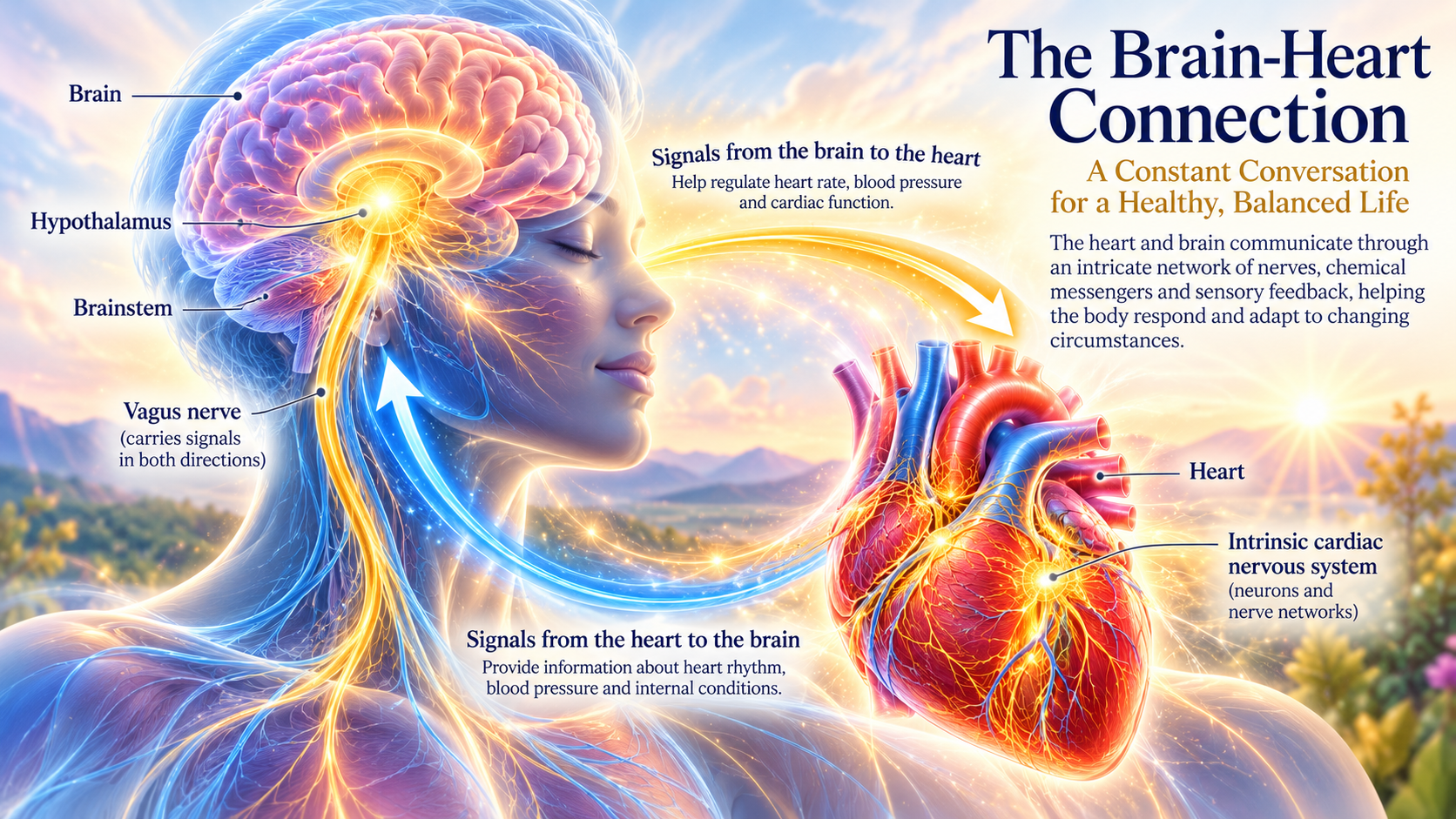
The heart and brain communicate through an intricate network of nerves and cardiovascular feedback pathways. The vagus nerve is an important part of this ongoing two-way communication.
Rather than operating as separate organs, the heart and brain participate in an integrated partnership that helps maintain life.
The Heart and Our Emotional Experiences
Consider the physical sensations that accompany some of life's most meaningful moments.
The excitement of receiving wonderful news.
The anticipation of seeing someone you love.
The peaceful feeling of sitting outdoors on a beautiful morning.
The joy of hearing a familiar voice.
During these experiences, changes may occur in breathing, heart rate, muscle tension, and autonomic nervous system activity.
Our emotional lives and physical bodies are deeply connected.
Emotions involve complex interactions among brain networks, hormones, memory, attention, and bodily signals.
When we experience excitement, the heart may beat faster.
During peaceful moments, heart rate may gradually decrease.
During intense emotional experiences, the heartbeat may become especially noticeable.
These changes are part of the body's natural responses to experience.
The heart does not independently create emotions, but it participates in how emotions are physically expressed and experienced.
Interoception and the Awareness of Our Inner World
Scientists use the term interoception to describe how the nervous system senses and interprets information from inside the body.
This includes sensations associated with heartbeat, breathing, temperature, hunger, and other internal conditions.
Interoception helps us recognize what is happening within us.
For example, a faster heartbeat might accompany excitement before a celebration.
The same physical sensation might occur before an important conversation.
The brain interprets these sensations alongside memories, expectations, and the surrounding situation.
This means our emotional experiences emerge through interactions between the body and brain.
The heart participates in that process through its cardiovascular activity and the signals associated with it.
When Emotions Have a Powerful Physical Effect
The connection between emotions and cardiovascular function is more than a poetic idea.
Scientists have identified measurable relationships between intense emotional experiences and changes in heart activity.
One particularly interesting example is takotsubo cardiomyopathy, commonly called broken heart syndrome.
This condition can occur following intense emotional or physical stress.
It involves temporary changes in the heart muscle's pumping function and can produce symptoms resembling a heart attack.
Researchers believe stress-related biological responses play an important role, although the precise mechanisms are still being investigated.
The condition illustrates how closely the brain, nervous system, hormones, and cardiovascular system are connected.
Our thoughts, feelings, and physical responses are not isolated from one another.
They participate in the remarkable complexity of human life.
Heart Rate Variability and the Beauty of Adaptation
The heart's rhythm contains another fascinating feature.
Although the heartbeat may seem perfectly regular, the time between individual beats naturally varies.
Scientists call this heart rate variability, or HRV.
Heart rate measures how many times the heart beats in a minute.
Heart rate variability measures small differences in the intervals between heartbeats.
For example, someone with a heart rate of approximately 60 beats per minute does not necessarily have a heartbeat at exactly one-second intervals.
The intervals naturally change.
HRV reflects aspects of the relationship between the heart and autonomic nervous system.
It can be influenced by breathing, physical activity, sleep, stress, recovery, age, and individual health.
Under comparable resting conditions, certain HRV measurements can provide useful information about autonomic regulation.
There is no single ideal HRV value for everyone.
The meaning depends on the person, the measurement, and the circumstances.
What makes HRV so interesting is that it reveals how responsive the heart's rhythm can be.
The heartbeat is not simply a mechanical repetition.
It is part of a dynamic biological system that continually adjusts.
The Natural Relationship Between Breathing and Heartbeat
During breathing, heart rate often increases slightly during inhalation and decreases during exhalation.
This pattern is called respiratory sinus arrhythmia.
Despite its name, it is commonly a normal physiological phenomenon.
It reflects interactions among breathing, vagal activity, and heart rhythm.
The relationship reveals another beautiful example of coordination within the body.
Breathing and heartbeat are distinct rhythms, yet they continually influence one another.
Heart Coherence and the Rhythm of Calm
The term heart coherence is often used to describe organized patterns of heart rate variability, particularly during slow, regular breathing.
When breathing becomes steady, heart rate may rise and fall in a more rhythmic pattern.
This reflects interactions among breathing, cardiovascular regulation, and the autonomic nervous system.
Heart coherence describes a measurable pattern of cardiovascular activity rather than a separate energy produced by the heart.
Research provides meaningful insight into this relationship.
A systematic review and meta-analysis examining 223 studies found that voluntary slow breathing increased certain measures of vagally mediated heart rate variability.
These changes were observed during breathing exercises, immediately afterward, and following repeated practice.
This provides scientific support for the relationship between slow breathing and cardiovascular autonomic regulation.
The Body's Natural Resonance
Researchers also study a phenomenon called cardiovascular resonance.
Resonance occurs when a system responds especially strongly to a particular rhythm.
For many adults, breathing at approximately six breaths per minute can produce pronounced, coordinated fluctuations in heart rate and blood pressure.
The exact rhythm varies among individuals.
This process involves cardiovascular reflexes and the natural relationship between breathing and heart rhythm.
It is a fascinating example of how different physiological systems can coordinate their activity.
Prayer, Gratitude, and Peaceful Reflection
Many people experience a sense of peace during prayer, meditation, gratitude, or quiet contemplation.
These experiences may involve changes in attention, emotional state, breathing, and muscle tension.
Those changes can influence cardiovascular activity.
For someone who practices prayer, the experience may also carry profound spiritual meaning through connection with God.
For another person, meditation or quiet reflection may provide a meaningful opportunity to become more present.
The physiological experience can be studied through measurable changes in the body, while the personal meaning may extend far beyond those measurements.
The Heart Produces an Electromagnetic Field
Every heartbeat involves electrical activity.
Charged particles move across the membranes of cardiac muscle cells, creating electrical signals that help coordinate contraction.
These signals can be recorded through an electrocardiogram, commonly called an ECG or EKG.
Electrical activity also produces magnetic fields.
Scientists use a technique called magnetocardiography to detect the extremely weak magnetic fields produced by the heart.
Specialized sensors measure these signals, allowing researchers to study aspects of cardiac electrical activity.
The heart's magnetic field is a genuine, measurable physical phenomenon.
It is much weaker than the Earth's surrounding magnetic field, which is why specialized instruments are needed to detect it reliably.
Could the Heart's Field Connect Us With Others?
The possibility that cardiac electromagnetic activity contributes to interactions between people has inspired scientific questions and spiritual reflection.
Researchers continue to investigate physiological synchronization and the many ways people influence one another.
The existence of the heart's magnetic field is well established.
Direct transmission of emotions, intentions, or thoughts through that field has not been scientifically demonstrated.
Yet human connection influences our physiology through many recognizable pathways.
A familiar voice can bring comfort.
A warm embrace can create a feeling of closeness.
Shared laughter can influence breathing and emotional experience.
A moment of compassion can change the atmosphere of a conversation.
Human connection is already remarkable through the pathways science can observe.
And the study of these relationships continues to reveal new layers of understanding.
New Discoveries About the Heart's Hidden Neural Network
Modern research is uncovering remarkable details about the specialized cells within the heart.
Scientists are no longer studying the intrinsic cardiac nervous system as one uniform collection of nerve cells.
They are investigating different neuronal populations, electrical properties, chemical messengers, and supporting cells.
These discoveries are changing how researchers understand local cardiac regulation.
Human Cardiac Neurons Have Distinctive Characteristics
Researchers have compared cardiac neurons across different species to better understand their electrical activity and organization.
A 2025 comparative study examined intrinsic cardiac neurons from humans, pigs, and mice.
The researchers identified differences in cellular structure and electrical signaling among the species.
One pattern, called tonic firing, involves repeated electrical impulses during sustained stimulation.
Another pattern, called phasic firing, involves a more limited response.
In the human neurons examined, tonic firing was especially common.
These differences help scientists understand how neurons process information and respond to stimulation.
They also show why studying human cardiac tissue is important.
Although animal research provides valuable discoveries, the precise characteristics of cardiac neurons can vary among species.
A Remarkable Discovery Involving Rhythm-Related Neurons
In December 2024, researchers published a study in Nature Communications examining the intrinsic cardiac nervous system of zebrafish.
Using advanced techniques, including analysis of individual cells and electrical recordings, scientists identified several distinct types of cardiac neurons.
One particularly interesting discovery involved neurons with rhythm-generating characteristics resembling those found in certain networks of the central nervous system.
These findings suggest that local cardiac neural circuits may have sophisticated roles in regulating heart rhythm.
How Rhythm-Related Neurons Differ From the Heart's Pacemaker
The discovery becomes even more interesting when we consider the difference between cardiac neurons and the heart's natural pacemaker cells.
The sinoatrial node contains specialized cardiac muscle cells that generate electrical impulses and initiate the heartbeat.
These pacemaker cells are not neurons.
The rhythm-related neurons identified in the zebrafish research belong to the heart's nervous system.
They display electrical properties suggesting that neural circuits may contribute to the coordination and regulation of cardiac rhythms.
This distinction reveals two different aspects of the heart's remarkable design.
One system generates the electrical impulses that initiate the heartbeat.
Another contains neural circuits that help regulate cardiac activity.
The research was performed in zebrafish, and further work is needed to understand how similar mechanisms operate in humans.
Nevertheless, the discovery offers a fascinating new direction for cardiac neuroscience.
Glial Cells and the Heart's Supporting Network
Neurons are not the only important cells within the heart's nervous system.
Researchers are also investigating specialized supporting cells called glia.
Glial cells are found throughout nervous systems and perform important functions that help neurons operate effectively.
Different types of glia can help maintain the environment surrounding nerve cells, support communication, and influence neural activity.
Scientists have identified different glial cell populations associated with cardiac nerves and ganglia.
Research published in 2025 explored how these cells contribute to the organization and function of the heart's nervous system.
Researchers are investigating how cardiac glia interact with neurons, influence autonomic regulation, and participate in changes associated with cardiovascular disease.
Additional experimental research in animals has identified specialized glial populations that appear to interact closely with cardiac muscle activity.
These discoveries suggest that the heart's neural environment involves more than neurons alone.
It includes supporting cells, chemical signaling, and complex interactions that help maintain cardiac function.
For many years, glial cells received less attention than neurons.
Modern research increasingly recognizes their importance in nervous system function.
Within the heart, these discoveries may eventually improve our understanding of cardiac regulation and certain cardiovascular disorders.
The more scientists investigate, the more intricate the heart's hidden neural network becomes.
What Heart Transplantation Reveals About the Heart's Independence
Heart transplantation offers a remarkable example of the heart's ability to generate its own rhythm.
During transplantation, the donor heart's original external nerve connections are interrupted.
Yet the transplanted heart can continue beating because its natural pacemaker cells generate electrical impulses independently.
Immediately following transplantation, the heart no longer receives the same direct autonomic nerve signals it received before surgery.
This can change how quickly the heart responds to exercise and other physiological demands.
Circulating hormones and the heart's intrinsic mechanisms still influence its activity.
Over time, some transplant recipients experience partial regrowth of nerve connections.
This process is called reinnervation.
The extent and timing of reinnervation vary from person to person.
Heart transplantation helps illustrate the difference between the heart's natural electrical pacemaker and its communication with the broader nervous system.
The heart can generate a rhythm without continuous instructions from the brain.
At the same time, its normal regulation benefits from complex communication with the rest of the body.
Independence and connection exist together within this extraordinary organ.
Can the Heart Remember?
The idea that the heart may possess some form of memory has fascinated people for generations.
Stories about heart transplant recipients experiencing changes in preferences, emotions, or personality have contributed to this curiosity.
To explore the subject meaningfully, it helps to understand that memory can describe several different biological processes.
Neural plasticity refers to the ability of neurons to change their activity and connections in response to repeated signals and changing conditions.
The heart's nervous system can undergo adaptive changes that influence how its neural circuits respond to physiological demands.
These changes represent forms of biological adaptation.
Cellular memory refers to lasting effects that previous conditions can have on cells through changes in gene regulation, signaling pathways, and other molecular processes.
This is different from remembering a childhood experience, recognizing a loved one, or recalling a personal event.
Reports of unusual experiences following heart transplantation have inspired questions about whether the heart might retain aspects of the donor's identity.
These personal accounts can be deeply meaningful to those who experience them.
However, scientific research has not established that a transplanted heart transfers the donor's autobiographical memories or personality.
Major surgery, medication, recovery, emotional adjustment, and the profound experience of transplantation can all influence how a person feels and experiences life.
The heart's ability to adapt through neural and cellular mechanisms remains fascinating in its own right.
How the Heart's Nervous System May Shape Future Medicine
The intrinsic cardiac nervous system is becoming an important area of cardiovascular research.
Scientists are investigating how particular nerve networks influence abnormal heart rhythms and other cardiac conditions.
One area of interest is neuromodulation.
Neuromodulation involves influencing nerve activity to change physiological function.
Researchers are studying techniques that affect cardiac autonomic pathways in an effort to improve the regulation of heart activity.
One specialized technique is called cardioneuroablation.
This catheter-based procedure targets selected cardiac nerve regions involved in certain abnormal heart rhythms or reflex responses.
A catheter is a thin, flexible tube that can be guided through blood vessels to reach the heart.
Researchers are continuing to evaluate which patients may benefit, how effective these approaches are over time, and how best to perform them.
These developments demonstrate why studying the heart's own nervous system matters.
Understanding its neurons, local circuits, and supporting cells may contribute to future treatments.
The discoveries are not only revealing how the heart functions.
They are opening new possibilities for cardiovascular research and medicine.
Human Connection and the Rhythm of Life
Human beings are profoundly connected through relationships, communication, and shared experiences.
Our interactions can influence our emotional states and physiological responses.
Consider the comfort of hearing someone say, "I'm here."
The joy of laughing with a friend.
The peaceful feeling of sitting beside someone you love.
The warmth of a thoughtful gesture.
During these moments, the brain and nervous system respond to social and emotional information.
Changes may occur in breathing, heart rate, muscle tension, and other bodily processes.
Researchers use the term physiological synchrony to describe situations in which aspects of people's physiological activity become coordinated over time.
This can occur during certain shared activities.
For example, people singing together may synchronize aspects of their breathing.
Their cardiovascular rhythms may also show patterns of coordination.
These findings offer a fascinating glimpse into how shared experiences can influence the body.
Human connection is not only something we think about.
It is something we experience through our whole being.
Listening to the Heart and Understanding Inner Wisdom
Throughout human history, the heart has represented an important part of our inner lives.
People speak of knowing something in their hearts, following their hearts, or experiencing a change of heart.
These expressions reflect the meaningful relationship between emotion, awareness, and personal values.
Listening to the heart can be understood as paying attention to our emotional experiences and the values that guide our choices.
It may involve recognizing what brings us joy, what inspires compassion, and what feels deeply meaningful.
Bodily sensations can contribute to this awareness.
A faster heartbeat, a sense of warmth, or a change in breathing may become part of how we recognize an emotional response.
Yet the meaning of those sensations depends on the circumstances.
The heart's nervous system does not independently determine whether a decision is right or wrong.
Our choices involve perception, memory, reasoning, experience, and personal values.
The deeper wisdom may come from bringing these parts of ourselves together.
Quiet moments can create opportunities to become more aware of our thoughts and feelings.
Prayer, contemplation, time outdoors, and peaceful reflection may help us consider what truly matters.
For some people, this includes listening for God's guidance.
For others, it involves recognizing their values, purpose, and inner sense of direction.
The heart remains a powerful symbol of sincerity, compassion, and the qualities we choose to nurture within ourselves.
The Spiritual Meaning of the Heart
Long before scientists discovered cardiac neurons or developed instruments capable of measuring the heart's electrical activity, the heart held a special place in human spiritual traditions.
It became a symbol of love, courage, devotion, compassion, and the inner life.
Across cultures, people have used the heart to describe the qualities that give human existence meaning.
The Heart in Christian Scripture
In the Bible, the heart frequently represents the inner person, including thoughts, intentions, desires, and spiritual character.
Proverbs 4:23 teaches the importance of guarding the heart because the course of life flows from it.
This teaching speaks to the importance of what we nurture within ourselves.
Our values influence our choices.
Our beliefs can shape our expectations.
Our compassion can influence how we treat others.
Our faith can offer hope, meaning, and direction.
These are spiritual reflections rather than descriptions of cardiac anatomy, yet they speak to something deeply meaningful about human life.
The Heart as a Place of Love and Compassion
Love is not confined to one organ.
It involves complex processes throughout the brain and body, as well as the relationships and choices through which we express it.
Yet the heart remains one of humanity's most enduring symbols of love.
We give from the heart.
We welcome others into our hearts.
We describe generosity as wholehearted.
We speak of heartfelt gratitude and heartfelt prayer.
These expressions remind us that the heart represents something much larger than its physical function.
It symbolizes the qualities that make life meaningful.
Faith and the Wonder of Creation
For those who see life through faith, the extraordinary design and coordination of the human body can inspire profound gratitude toward God.
Every heartbeat becomes an opportunity to appreciate the life we have been given.
The heart's neural network, electrical activity, muscular contractions, and communication with the brain reveal layers of biological complexity that continue to inspire scientific discovery.
For others, these same discoveries may inspire awe for the natural world and the remarkable processes that sustain life.
Wonder welcomes many perspectives.
And the human heart offers an extraordinary reason to experience it.
Everyday Ways to Appreciate the Heart-Body Connection
The relationship between the heart, brain, and nervous system can become more meaningful when we recognize it in everyday life.
Enjoying moments of peaceful breathing
Breathing comfortably and naturally can create an opportunity to notice the present moment.
Slow, relaxed breathing can influence heart rhythm and autonomic regulation.
The experience can simply be one of comfort and awareness.
Practicing gratitude
Gratitude invites attention toward the meaningful parts of life.
It may involve appreciating a relationship, a beautiful sunrise, a kind gesture, or an answered prayer.
These moments can influence emotional experience and create opportunities for reflection.
Spending time with people who bring joy
Supportive relationships contribute to emotional well-being.
Conversation, laughter, affection, and shared experiences can become meaningful parts of everyday life.
Moving the body
Physical activity supports cardiovascular function and helps the body maintain its ability to respond to changing demands.
Walking, gardening, dancing, and other enjoyable activities can bring movement naturally into daily life.
Movement also activates the calf muscle pump, supporting the return of blood from the lower body toward the heart.
Appreciating restorative rest
Sleep provides important opportunities for physiological regulation and recovery.
The heart continues its work throughout the night, adapting to the body's changing needs.
Making room for prayer and stillness
Quiet reflection can offer space for gratitude, awareness, and spiritual connection.
For those who pray, these moments may provide an opportunity to draw closer to God.
For others, stillness may offer time to reconnect with personal values and a sense of peace.
Each of these experiences invites us to appreciate the remarkable relationship between the heart, body, and the life we experience.
Frequently Asked Questions
Does the heart really have its own nervous system?
Yes. The heart contains an intrinsic cardiac nervous system made up of neurons, nerve fibers, ganglia, and supporting cells. This network helps regulate cardiac activity and communicates with the broader nervous system.
Why is the heart called the little brain?
Scientists sometimes use this phrase because the heart contains local neural circuits capable of receiving and processing certain physiological signals. It is a description of specialized biological regulation, not independent conscious thought.
How many neurons are in the human heart?
The human heart contains tens of thousands of neurons. Reported anatomical estimates vary, with some studies suggesting approximately 43,000 to 94,000 neurons. The precise number depends on the methods and structures examined.
Can the heart beat without the brain?
Yes. Specialized pacemaker cells can generate electrical impulses without direct instructions from the brain. The heart still requires oxygen, nutrients, and appropriate physiological conditions to function.
Do humans have second hearts in their legs?
Humans have one anatomical heart, but the calf muscles are sometimes called the body's second heart because their contractions help push blood through the veins toward the chest. One-way valves help maintain the direction of blood flow, while the feet and thighs also contribute to venous circulation.
What makes the soleus muscle important?
The soleus is a deep calf muscle involved in standing, walking, and ankle movement. Its contractions help compress veins in the lower leg, supporting the return of blood toward the heart.
Why is walking important for circulation in the legs?
Walking activates the muscles of the feet and lower legs, helping compress veins and move blood toward the heart. The calf muscle pump is particularly important for supporting venous return when we are upright.
Does the heart send signals to the brain?
Yes. Cardiovascular sensory information travels toward the brain through several neural pathways. This feedback contributes to the regulation of circulation and the brain's awareness of internal bodily conditions.
Can the heart influence our emotions?
Cardiovascular signals contribute to the brain's interpretation of the body's internal state. These signals can influence emotional experience, while emotions can also affect heart rate and cardiovascular activity.
What is heart rate variability?
Heart rate variability measures natural differences in the time intervals between successive heartbeats. It provides information about aspects of autonomic nervous system regulation.
What is heart coherence?
Heart coherence generally describes organized patterns of heart rate variability, often associated with slow, steady breathing and cardiovascular resonance. It is a measurable physiological pattern rather than a separate energy generated by the heart.
Does the heart have an electromagnetic field?
Yes. The electrical activity of the heart produces an extremely weak magnetic field that can be measured using specialized scientific equipment.
Can the heart communicate emotions through its magnetic field?
Direct emotional communication through the heart's magnetic field has not been established scientifically. Human connection can influence physiological activity through well-studied pathways involving social interaction, perception, and the nervous system.
Can a transplanted heart beat without its original nerve connections?
Yes. A transplanted heart can continue generating its own electrical rhythm. Its response to autonomic signals changes following transplantation, and some nerve connections may gradually regrow.
Can the heart store memories?
The heart's nervous system can undergo adaptive changes, and cells can retain biological effects of previous conditions. However, there is no established evidence that the heart stores personal memories in the same way as the brain.
Are scientists discovering new types of cells in the heart?
Researchers continue to identify and characterize specialized neurons and glial cells associated with the heart's nervous system. These discoveries are improving our understanding of cardiac regulation.
Can prayer and meditation influence heart rhythms?
Prayer and meditation may influence breathing, attention, emotional state, and autonomic regulation. These changes can affect heart rate and heart rate variability.
What is the spiritual meaning of the heart?
Across many traditions, the heart symbolizes love, compassion, courage, sincerity, faith, and the inner life. Its spiritual meaning reflects human beliefs and experiences rather than a single anatomical function.
The Extraordinary Gift Within Every Heart
There is something magnificent about the human heart.
Before we learn its anatomy, understand its electrical activity, or discover the remarkable neurons woven into its structure, it has already been working faithfully within us.
Through our earliest moments, through years of growth and discovery, through ordinary days and extraordinary experiences, the heart continues its work.
It responds when we move.
It adjusts when we rest.
It participates in the physical expression of joy, excitement, and emotion.
It communicates with the brain through intricate pathways that scientists are still working to understand.
And hidden within its structure is a neural network more sophisticated than researchers once imagined.
Even beyond the heart itself, the body participates in circulation through an extraordinary partnership.
With every step, the muscles of the legs help move blood toward the chest.
The feet, calves, veins, and one-way valves contribute to the ongoing journey of blood through the body.
The heart reminds us that life is sustained through connection.
Its cells communicate.
Its nerves coordinate.
Its electrical system creates rhythm.
Its relationship with the brain helps the body respond to the changing world.
Its partnership with the muscles and vessels throughout the body supports the continuous movement of blood.
Every part contributes to the greater whole.
And perhaps there is a meaningful reflection within that remarkable cooperation.
We, too, are shaped by connection.
By the love we share.
By the compassion we offer.
By the relationships we nurture.
By the faith, gratitude, and hope we carry into each new day.
The heart does not need to think independently to inspire wisdom.
Its extraordinary design already offers a lesson in responsiveness, cooperation, and the beauty of being alive.
There is still so much to discover about the human heart.
And that may be one of the most wonderful parts of this story.
Even something as familiar as our own heartbeat can contain mysteries that invite us to keep learning, wondering, and appreciating the gift of life.
Every heartbeat is a reminder that something extraordinary is happening within us, every moment of every day.
Continue Exploring the Wonders of Human Life
Vagus Nerve: Explore the remarkable communication pathways connecting the brain, heart, and other organs.
Intuition: Discover how awareness, experience, and inner reflection contribute to understanding ourselves.
The Sacred Meaning of the Human Voice: Explore the relationship between sound, expression, and human connection.
Why Singing Together Changes Us: Learn how shared rhythm, breathing, and music can influence our experience of connection.
Awe: What Wonder Does to the Mind, Body and Soul: Discover how wonder influences attention, emotion, and our appreciation of life.
The Observer Within: Explore the power of awareness and our ability to notice thoughts, emotions, and experiences.