

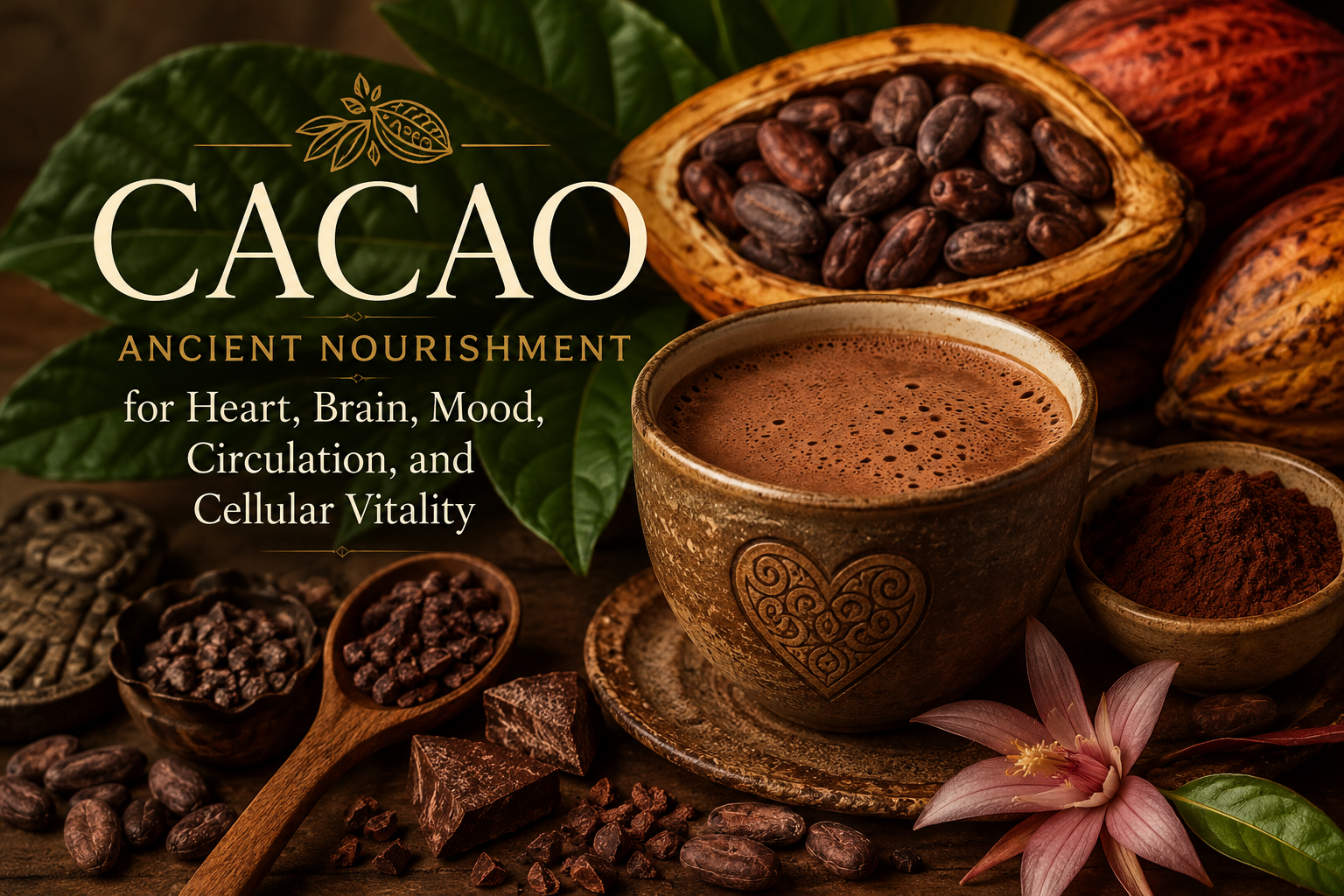
Cacao: Ancient Nourishment for Heart, Brain, Mood, Circulation, and Cellular Vitality
Explore cacao benefits for heart health, circulation, brain function, mood, energy, blood sugar, gut health, women, men, and cellular vitality.
Long before chocolate became a sweet confection, cacao was known as a valuable seed, a nourishing drink, a ceremonial offering, and a plant of cultural importance.
Cacao comes from the fruit of the Theobroma cacao tree, an evergreen native to the tropical regions of the Americas. Its pods grow directly from the trunk and larger branches, holding seeds surrounded by a pale, sweet pulp. Those seeds become what we commonly call cacao beans.
The botanical name Theobroma is often translated as “food of the gods.” The name reflects the deep respect once given to cacao throughout ancient Mesoamerican cultures, where it was prepared with water, spices, corn, flowers, and other ingredients. These traditional drinks were often earthy, bitter, aromatic, and entirely different from the heavily sweetened hot chocolate familiar today.
Pure cacao still carries that older character. It is dark, mineral-rich, slightly bitter, deeply fragrant, and naturally complex. Within the seed are flavanols, procyanidins, theobromine, fiber, healthy fats, and essential minerals that help explain why cacao continues to attract scientific interest.
Modern research has explored cacao in relation to cardiovascular health, blood-vessel function, circulation, blood pressure, insulin sensitivity, cognition, mood, intestinal microbes, exercise response, oxidative balance, and healthy aging. The results are strongest when researchers study cacao products that preserve meaningful amounts of flavanols rather than chocolate products built mainly around sugar.
Cacao belongs to an unusual category of foods. It can nourish the body, brighten the senses, encourage ritual, and satisfy the desire for something rich and pleasurable. Its deepest value appears when we return to the actual seed beneath the candy and understand what it carries.
From Cacao Pod to Cacao Powder
Every form of cacao begins inside a colorful pod growing on the cacao tree.
Once the pods are harvested and opened, the beans and their surrounding pulp are removed. The beans are commonly fermented for several days. Fermentation helps develop the familiar chocolate aroma and flavor while changing the seed’s natural chemistry. The beans are then dried, cleaned, and prepared for further processing.
Roasting deepens flavor and reduces moisture. The outer shells are removed, leaving pieces of the cacao seed known as nibs. When those nibs are ground, their natural fat begins to melt, creating a thick paste called cacao liquor, cacao mass, or cacao paste. Despite the word liquor, this preparation contains no alcohol.
Cacao paste contains both cacao solids and cacao butter. When it is pressed, much of the fat separates as cacao butter, leaving a firm cake that can be ground into cacao or cocoa powder.
This journey produces several familiar foods:
Cacao nibs are crushed pieces of the cacao bean. They retain fiber, cacao solids, and natural cacao butter.
Cacao powder contains concentrated cacao solids after much of the natural fat has been removed.
Cacao paste contains the whole ground bean, including its solids and fat.
Cacao butter is the pale, aromatic fat naturally found in cacao.
Dark chocolate generally combines cacao solids, cacao butter, and sugar.
Milk chocolate contains cacao ingredients along with milk and a larger proportion of sugar.
White chocolate is made from cacao butter without the darker cacao solids that contain most of the flavanols.
The terms cacao and cocoa are often used inconsistently. Some companies use cacao for products processed at lower temperatures and cocoa for roasted products, but the name alone cannot reveal the product’s flavanol content, nutrient density, or quality. Processing methods, ingredient lists, cacao percentage, added sugar, sourcing, and testing provide far more useful information.
Why Cacao Is More Than Its Mineral List
Cacao is often celebrated for magnesium, yet magnesium represents only one piece of a much larger nutritional story.
The seed contains copper, iron, magnesium, manganese, phosphorus, potassium, zinc, fiber, protein, natural fat, and numerous plant compounds. These nutrients participate in energy production, oxygen transport, muscle contraction, nerve communication, connective-tissue formation, immune activity, and antioxidant protection.
Cacao is especially rich in copper and manganese. Copper helps the body form connective tissue, produce energy, support iron metabolism, and maintain normal nervous and immune function. Manganese assists enzymes involved in metabolism, bone formation, and protection from oxidative stress.
Iron supports hemoglobin and the transportation of oxygen, while magnesium contributes to hundreds of enzyme reactions involving muscles, nerves, glucose metabolism, energy, and cardiovascular function.
The amount of each nutrient depends on the cacao product and serving size. A spoonful of cacao can enrich the diet, while larger portions supply more minerals, calories, stimulatory compounds, and natural plant substances. Cacao works best as a meaningful addition to a varied diet rather than being expected to carry an entire nutritional need by itself.
Its greatest strength may come from the way its nutrients and polyphenols work together.
Cacao Flavanols and the Language of Blood Vessels
Among cacao’s most studied compounds are flavanols, particularly epicatechin and catechin, along with larger polyphenols called procyanidins.
These compounds are important because they can influence the endothelium, the delicate inner lining of the blood vessels. The endothelium helps regulate circulation, vascular tone, blood clotting, inflammation, and the movement of substances between the bloodstream and surrounding tissues.
A healthy endothelium responds to the body’s changing needs. It helps vessels relax when muscles require more oxygen, adjusts blood flow during activity, and participates in the regulation of blood pressure.
Cacao flavanols can support the production and availability of nitric oxide. Nitric oxide is a signaling molecule that tells the smooth muscle around blood vessels to relax. As vessels relax, blood can move more freely, allowing oxygen and nutrients to reach the heart, brain, muscles, skin, and other tissues.
Clinical studies and research reviews have found that flavanol-rich cacao can improve flow-mediated dilation, a measure of how effectively blood vessels widen in response to increased blood flow. Research has also found modest improvements in blood pressure, insulin response, and several other cardiometabolic markers. The size of these changes varies according to the person, cacao product, flavanol dose, study duration, and existing health status.
The important lesson is broader than a single blood-pressure number. Cacao appears to communicate with the vascular system through several connected pathways, supporting the flexibility and responsiveness that healthy circulation requires.
Heart Health and Cardiovascular Resilience
The heart depends on more than its own strength. It relies on the condition of the entire vascular network.
Flexible arteries reduce the workload placed on the heart. Healthy endothelial function helps regulate the movement of blood. Balanced platelet activity supports normal clotting without excessive activation. Effective glucose regulation protects vessels from long-term metabolic strain.
Cacao flavanols have been investigated across all these areas.
Research suggests that flavanol-rich cacao may support blood-vessel relaxation, healthy blood pressure, protection of circulating fats from oxidative damage, and balanced platelet function. Some studies have also reported favorable changes in insulin sensitivity and selected cholesterol measures.
Cacao butter adds another interesting dimension. It contains oleic acid, the monounsaturated fat also found in olive oil, along with stearic acid and palmitic acid. Stearic acid is a saturated fatty acid, but human metabolism appears to handle it differently from several other saturated fats. It tends to have a more neutral effect on blood cholesterol than saturated fats such as myristic acid.
This does not make every chocolate product equally supportive. A high-cacao product with modest sugar has a different nutritional character from a confection dominated by sugar, refined fats, and a small amount of cacao.
The large COSMOS trial studied a standardized cocoa-flavanol extract in older adults. The supplement did not produce a statistically significant reduction in the trial’s primary measure of total cardiovascular events, although researchers observed fewer cardiovascular deaths in the cocoa-extract group. That secondary finding remains an important area for continued research rather than a final answer.
Cacao’s most reasonable place in cardiovascular wellness is as a flavanol-rich food within a larger pattern that includes movement, restorative sleep, balanced blood sugar, adequate minerals, deeply colored plant foods, healthy fats, and regular opportunities for the nervous system to settle.
Circulation Throughout the Body
Circulation is often discussed only in relation to the heart, but blood flow touches every part of the human experience.
The brain requires continuous oxygen and glucose. Muscles need blood flow during movement and recovery. The digestive system depends on circulation to absorb and transport nutrients. The skin receives oxygen, moisture, hormones, and building materials through tiny vessels. Sexual response also depends partly on healthy vascular signaling and the ability of blood vessels to relax.
By supporting nitric oxide and endothelial function, cacao flavanols may contribute to this whole-body circulation.
Some people experience pure cacao as a spreading warmth, particularly when it is consumed as a warm drink. Part of this experience may come from temperature and ritual, while theobromine and cacao’s vascular compounds may also contribute.
Better circulation is not simply about forcing more blood through the body. It is about helping vessels respond appropriately, opening and narrowing according to the needs of each tissue. Cacao’s potential value lies in supporting that adaptability.
Brain Function, Memory, and Mental Endurance
The brain is one of the most metabolically demanding organs in the body. It requires an uninterrupted supply of oxygen and glucose and depends on healthy blood vessels for nourishment and waste removal.
Because cacao flavanols affect vascular function, researchers have explored whether they may also influence cerebral blood flow and cognitive performance.
Human studies have reported improvements in selected measures of attention, processing speed, working memory, executive function, and mental performance after cacao-flavanol consumption. Some studies have found benefits during mentally demanding tasks or periods of fatigue, when the brain is under greater pressure to maintain focus.
Longer-term research has also produced encouraging findings in some older adults, particularly those experiencing mild age-related changes or metabolic concerns. Improved insulin sensitivity and vascular function may contribute to these effects because brain health is closely connected to metabolic and circulatory health.
The evidence is varied. Some well-designed studies have found little cognitive change, especially among healthy adults who already function at a high baseline level. This tells us that cacao’s effects are influenced by age, overall diet, vascular condition, flavanol intake, sleep, stress, and individual biology.
Cacao may offer its greatest cognitive value as steady support rather than dramatic stimulation. A small serving can provide theobromine, modest caffeine, flavanols, aroma, flavor, and a sense of alert presence without necessarily creating the sharp intensity associated with a strong cup of coffee.
Theobromine and Cacao’s Distinctive Energy
Theobromine is one of the compounds that gives cacao its recognizable character.
It belongs to the methylxanthine family, which also includes caffeine. Theobromine is generally milder as a central nervous system stimulant, yet its effects may last longer. It can influence alertness, smooth muscle, circulation, and the sensation of physical energy.
Cacao does contain caffeine, but usually in smaller amounts than coffee. The exact quantity varies according to cacao variety, growing conditions, fermentation, processing, and serving size.
Together, theobromine and caffeine may create a gentler, more sustained lift. Many people experience cacao as brightening rather than jolting. It can feel useful before writing, studying, creative work, walking, stretching, meditation, or a morning routine.
This experience changes with the dose. A teaspoon or two of cacao powder creates a different effect from a large ceremonial serving made with several ounces of cacao paste. The larger preparation contains more theobromine, caffeine, fat, calories, minerals, and polyphenols.
Individual sensitivity matters. For one person, a warm cacao drink creates peaceful focus. For another, the same serving may feel overly activating or interfere with sleep. Learning the body’s comfortable range allows cacao’s energy to remain supportive.
Mood, Pleasure, and the Gut-Brain Conversation
Cacao has a longstanding relationship with pleasure, affection, celebration, and emotional warmth.
Some of this relationship comes from flavor and aroma. The human brain responds strongly to sensory experiences associated with comfort and reward. The smell of cacao, the warmth of a cup held between the hands, the creamy texture of cacao butter, and the slight bitterness beneath sweetness all contribute to the experience.
Cacao also contains compounds that may influence circulation, alertness, and brain signaling. Theobromine can provide mild stimulation, while flavanols may support blood flow to the brain.
Researchers are also examining cacao through the gut-brain axis. The intestinal microbiome communicates with the nervous system through immune signals, microbial metabolites, hormones, and the vagus nerve. Because cacao polyphenols reach the colon and interact with intestinal microbes, they may influence this larger conversation.
In a randomized study of healthy adults, daily consumption of 85 percent dark chocolate was associated with improved mood and changes in the gut microbiome. The study was relatively small, yet it opened an intriguing window into the way a polyphenol-rich food may influence both intestinal ecology and emotional experience.
Cacao may be especially meaningful when it replaces a habit built around excessive sugar. A lightly sweetened cacao drink can satisfy the desire for richness while providing fiber, minerals, and plant compounds. Paired with protein or healthy fat, it can become a grounding part of breakfast or an afternoon pause.
The ritual also matters. Preparing cacao slowly can interrupt the rush of the day. The experience invites the senses back into the present moment, giving nourishment a chance to become more than mechanical consumption.
Digestion, Fiber, and the Gut Microbiome
Cacao powder and cacao nibs contain dietary fiber. This fiber adds bulk to stool, supports regular movement through the intestines, and provides material that can be used by members of the gut microbiome.
The polyphenols in cacao also take an interesting journey through digestion. Only part of them is absorbed in the small intestine. Many continue into the colon, where bacteria transform them into smaller compounds that may then enter the circulation.
This relationship works in both directions. The microbiome changes cacao polyphenols, and cacao polyphenols may influence the microbiome.
Human research has found that flavanol-rich cacao can affect populations of intestinal bacteria, including increases in certain Lactobacillus and Bifidobacterium groups in some studies. More recent research continues to examine changes involving butyrate-producing bacteria and the integrity of the intestinal environment.
Butyrate is a short-chain fatty acid produced when certain microbes ferment fiber and other compounds. It serves as an important fuel for the cells lining the colon and participates in immune regulation and intestinal-barrier health.
Cacao’s digestive effects vary from person to person. Its fiber may encourage regularity, while its fat and stimulatory compounds can feel rich in larger quantities. Commercial chocolate may also contain milk, emulsifiers, large amounts of sugar, or sugar alcohols that affect digestion differently from pure cacao.
Reflux-sensitive individuals may discover that large servings, late-evening use, or rich chocolate preparations feel uncomfortable. Others may find that a small amount of cacao powder mixed into oatmeal, yogurt, or a smoothie sits beautifully.
The form, serving size, and accompanying ingredients often matter as much as the cacao itself.
Blood Sugar, Insulin Sensitivity, and Metabolic Wellness
Pure cacao has a naturally low sugar content. Chocolate becomes a high-sugar food when manufacturers add generous amounts of sweetener.
This distinction is central to understanding cacao’s metabolic effects.
Cacao flavanols have been studied for their influence on insulin sensitivity, endothelial function, glucose metabolism, and oxidative stress. Meta-analyses of randomized trials have reported favorable changes in selected cardiometabolic markers, including insulin resistance, triglycerides, and HDL cholesterol.
Healthy insulin sensitivity allows cells to respond effectively to insulin and receive glucose from the bloodstream. When this communication becomes less efficient, the pancreas must release more insulin, and blood glucose may remain elevated for longer periods. Over time, this can affect the heart, blood vessels, nerves, kidneys, eyes, and energy regulation.
Cacao may support this system through several pathways. Flavanols may help blood vessels respond to insulin, influence cellular signaling, and reduce some of the oxidative and inflammatory strain associated with metabolic imbalance.
The complete food context remains important. Unsweetened cacao stirred into plain yogurt, chia pudding, oatmeal, or a protein smoothie is very different from a large chocolate beverage containing refined sugar and syrup.
For people watching glucose levels, cacao can become a powerful flavor tool. Cinnamon, vanilla, berries, coconut, nut butter, and a small pinch of salt can create richness with far less sweetener. Fiber, protein, and healthy fat slow digestion and help the meal feel more satisfying.
Cacao’s bitterness can also retrain the palate. As the tongue becomes familiar with deeper flavors, extreme sweetness may gradually become less necessary.
Oxidative Stress and Cellular Protection
Every cell produces reactive molecules as part of normal metabolism. Exercise, immune activity, environmental exposures, stress, and energy production can all increase this activity.
The body has its own antioxidant systems designed to maintain balance. Nutrients and plant compounds from food help support those systems.
Cacao polyphenols are often described as antioxidants, but their role is more sophisticated than directly neutralizing every reactive molecule. They can influence enzymes, cell receptors, gene expression, inflammatory signals, mitochondrial activity, and the body’s own protective pathways.
Research suggests that cacao compounds may help protect lipids from excessive oxidation, support endothelial health, and influence inflammatory activity. These effects may contribute to cacao’s broader relationship with cardiovascular, metabolic, and neurological wellness.
Cellular protection works best through diversity. Cacao belongs beside berries, grapes, colorful vegetables, herbs, spices, tea, coffee, nuts, seeds, legumes, and other polyphenol-rich foods. Each plant brings a different collection of compounds, giving the body a larger library of protective signals.
Cacao does not need to carry the entire antioxidant conversation. Its strength comes from being one distinctive voice within a rich plant-centered chorus.
Inflammation and Immune Regulation
Inflammation is part of the body’s natural intelligence. It helps respond to injury, infection, and cellular damage. Problems arise when inflammatory signaling remains elevated longer than the situation requires.
Cacao polyphenols have been studied for their ability to influence inflammatory messengers, oxidative balance, endothelial activity, and immune-cell communication. Laboratory and animal studies have revealed several possible pathways, while human research has found changes in selected markers under certain conditions.
The gut microbiome may also contribute. A balanced intestinal community helps educate the immune system, supports the intestinal barrier, and produces metabolites that influence inflammation throughout the body.
Cacao may therefore support immune balance indirectly as well as directly. Its fiber feeds intestinal activity, its polyphenols interact with microbes, and its minerals participate in enzyme and immune functions.
The goal of immune wellness is thoughtful regulation. The body must respond when help is needed and return to balance when the work is finished. Cacao’s role belongs within this larger terrain of nourishment, sleep, movement, stress regulation, sunlight, hydration, and dietary variety.
Muscles, Exercise, and Recovery
Movement increases the demand for oxygen, glucose, and blood flow. The cardiovascular system must rapidly adjust to supply active muscles and carry away heat and metabolic byproducts.
Because cacao flavanols support nitric oxide signaling and vascular function, researchers have investigated whether they may improve exercise performance or recovery.
Studies have examined muscle oxygenation, blood flow, oxidative stress, fatigue, cardiovascular response, and post-exercise recovery. Results remain mixed. Some research suggests benefits in vascular function or exercise-related signaling, while other trials find little change in performance itself.
This distinction matters. A food may support the systems surrounding exercise without producing a dramatic increase in speed, strength, or endurance.
Cacao also contributes magnesium, copper, iron, potassium, carbohydrates, and natural fat, depending on the form. These nutrients participate in energy production, oxygen transport, muscle contraction, nerve activity, and recovery.
A small cacao drink can fit before a walk, dance session, strength workout, or morning of physical work. After exercise, cacao can be combined with protein and carbohydrates in yogurt, milk, oats, or a smoothie.
Traditional chocolate milk has often been used as a recovery drink because it supplies fluid, carbohydrates, and protein. A homemade version using cacao and controlled sweetness allows the cacao flavor and nutritional quality to remain at the center.
Skin, Microcirculation, and the Body’s Outer Barrier
The skin depends on circulation for oxygen, nutrients, hydration, and repair.
Human studies have explored flavanol-rich cacao in relation to skin blood flow, hydration, density, texture, and resistance to ultraviolet stress. Some research suggests that regular intake of high-flavanol cacao may support microcirculation and help the skin respond more effectively to environmental exposure.
Cacao butter serves the skin from the outside. Its stable fatty-acid profile and rich texture make it a familiar ingredient in body butters, balms, soaps, and moisturizers. It helps soften the skin and reduce moisture loss by forming a protective layer over the surface.
Topical cacao butter cannot provide the same flavanols as consuming cacao solids, and eating cacao does not replace sun protection. These are different pathways of support.
Together, cacao solids and cacao butter reveal how much of the seed has value. The dark solids supply polyphenols and minerals, while the pale butter provides nourishment, texture, and protection.
Women’s Health
Cacao can speak to several areas of women’s wellness at once, including mood, circulation, energy, cravings, mineral intake, metabolic health, and the transition through menopause.
Chocolate cravings around the menstrual cycle are often reduced to a simple demand for magnesium, but the experience is more layered. Hormonal changes can influence appetite, mood, stress sensitivity, sleep, energy, and the brain’s reward pathways. Cultural habits and emotional associations also shape the desire for chocolate.
Pure cacao offers a way to meet that desire with more of the seed’s original nourishment. It contributes magnesium, iron, copper, fiber, polyphenols, and deep flavor. A warm cacao drink or a small portion of high-cacao dark chocolate may feel satisfying without requiring an enormous amount of sugar.
Iron is especially important for women who menstruate, although cacao alone may not supply enough to restore low iron stores. Pairing plant sources of iron with vitamin C-rich foods helps improve absorption. Berries, kiwi, citrus, or other fruits can pair beautifully with cacao.
Cacao’s vascular compounds may also hold value as women age. One controlled study found that flavonoid-rich cocoa increased brachial artery diameter and blood-flow volume, with a reduction in arterial stiffness observed particularly among the women in the study.
During menopause and the years that follow, cardiovascular and metabolic health become increasingly important. Changes in estrogen can influence blood vessels, cholesterol, insulin sensitivity, body composition, bone turnover, sleep, and temperature regulation.
Cacao can complement a menopause-supportive pattern that includes adequate protein, resistance exercise, mineral-rich foods, fiber, sunlight, restorative sleep, and regular movement. Its flavanols support the vascular conversation, while its flavor can make nutritious foods easier to enjoy consistently.
Pregnancy and breastfeeding bring different considerations. Cacao contains both theobromine and caffeine, so total stimulant intake should include coffee, tea, chocolate, cacao drinks, medications, and energy products. Modest food portions often fit comfortably into a balanced diet, while concentrated ceremonial preparations deliver considerably larger amounts.
Women managing pregnancy-related blood-pressure concerns, medication use, pronounced stimulant sensitivity, or persistent reflux benefit from individualized guidance about concentrated cacao.
Men’s Health
Men’s wellness is deeply connected to vascular health, metabolic stability, muscle maintenance, sleep, and cardiovascular resilience.
Because cacao flavanols support endothelial function and nitric oxide signaling, they may contribute to the circulatory foundation involved in heart health, physical performance, brain function, and sexual response.
Healthy erectile function depends partly on blood vessels relaxing and allowing sufficient blood flow. Cacao is best understood as one food that supports vascular wellness rather than as an immediate sexual-performance product.
Its larger value appears through consistency. Replacing a heavily sweetened dessert with a small serving of dark chocolate, adding unsweetened cacao to oatmeal, or blending it into a protein-rich smoothie can increase polyphenol intake while reducing reliance on less nourishing sweets.
Cacao may also complement exercise and muscle recovery. Combined with yogurt, milk, nuts, seeds, oats, or fruit, it adds flavor, minerals, and plant compounds to a substantial meal.
Men often carry cardiovascular and metabolic changes for years before symptoms become obvious. Blood pressure, waist circumference, glucose regulation, smoking status, movement, sleep, and stress patterns remain central. Cacao can strengthen the quality and enjoyment of that larger foundation.
Cacao and Healthy Aging
Healthy aging depends on maintaining circulation, cognition, muscle, metabolic flexibility, digestive resilience, and meaningful engagement with life.
Cacao touches several of these pathways at once.
Its flavanols support blood-vessel function. Its minerals participate in energy and enzyme systems. Its fiber and polyphenols interact with the gut microbiome. Its theobromine may offer gentle mental energy. Its rich taste helps nourishing foods feel rewarding.
The social and ritual dimensions also belong here. Food does more than provide isolated nutrients. Preparing and sharing a warm cacao drink can create connection, slow the pace of the day, and keep pleasure present within a health-conscious life.
Aging well is rarely the result of one dramatic intervention. It emerges from small practices repeated over time. Cacao may become one of those practices when it is chosen with care and woven into a life that values movement, nourishment, curiosity, sleep, purpose, and human connection.
Cacao and Cancer Research
Cacao polyphenols have been studied in laboratory and animal models for their effects on oxidative stress, inflammation, cell signaling, cell-cycle regulation, angiogenesis, and programmed cell death.
These studies help researchers understand how cacao compounds interact with cellular environments. Some experiments have found that specific cacao polyphenols can influence pathways involved in abnormal cell growth and inflammatory activity.
Human research is still developing. The current evidence supports continued scientific investigation and the inclusion of cacao among many polyphenol-rich foods within a balanced diet.
Cancer develops through a complex interaction of genetics, age, environmental exposures, immune activity, metabolism, hormones, infections, and lifestyle factors. No individual food can carry that entire landscape.
For people receiving cancer care, cacao may still have a place as a nourishing food when it fits comfortably with digestion, appetite, medications, and the treatment plan. Concentrated extracts and supplements deserve separate evaluation because their effects and doses differ from ordinary food use.
The value of this research lies in understanding cacao’s cellular activity without asking the seed to become something it was never meant to be. It is a rich plant food with biologically active compounds and a meaningful place within a diverse pattern of nourishment.
Understanding the Different Research Lanes
Cacao research becomes easier to understand when the evidence is separated into distinct lanes.
Human Research
Human trials have studied blood-vessel function, blood pressure, insulin sensitivity, cognition, mood, exercise response, skin circulation, gut microbes, and cardiovascular outcomes.
The strongest and most consistent findings involve endothelial function and selected cardiovascular markers. Cognitive, mood, metabolic, and microbiome results are encouraging but vary across studies.
Animal Research
Animal studies allow researchers to explore cacao’s effects on the brain, metabolism, inflammation, intestinal microbes, liver function, and cellular signaling in greater detail.
These studies reveal possible mechanisms and help shape future human trials.
Cell and Laboratory Research
Laboratory studies examine direct interactions between cacao compounds, enzymes, immune signals, oxidative processes, and different cell types.
The concentrations used in laboratory experiments may be higher than those reached through ordinary food intake, so these studies provide mechanisms and possibilities rather than direct dietary instructions.
Traditional Knowledge
Traditional use carries information of another kind.
It shows that human beings have lived with cacao for centuries, learning how to cultivate it, ferment it, prepare it, share it, and include it in ceremonial and everyday life.
Traditional knowledge reveals meaning, preparation, relationship, and cultural continuity. Modern science examines measurable biological effects. Together, they offer a fuller understanding of cacao than either approach can provide alone.
Cacao Powder, Cocoa Powder, Nibs, and Dark Chocolate
Choosing cacao becomes much easier once the forms are understood.
Natural Cacao or Cocoa Powder
Natural powder contains cacao solids after much of the butter has been removed. It retains fiber, minerals, and varying amounts of flavanols.
It has a naturally acidic, bitter, deeply chocolate flavor and works well in drinks, oatmeal, smoothies, yogurt, baking, and savory dishes.
Dutch-Processed Cocoa
Dutch processing treats cocoa with an alkalizing agent to reduce acidity and create a smoother, darker flavor.
The process can substantially lower flavanol content. Dutch cocoa may still provide minerals and flavor, but people choosing cacao primarily for polyphenols may prefer a natural, non-alkalized powder.
Cacao Nibs
Nibs contain the crushed bean with its fiber and natural cacao butter intact.
They provide a crunchy texture and an intensely bitter chocolate flavor. Nibs work well in yogurt, oatmeal, trail mixes, granola, chia pudding, baked foods, and smoothies.
Cacao Paste
Cacao paste contains the whole ground bean and becomes liquid when warmed.
It creates a rich drink because it includes both cacao solids and cacao butter. Ceremonial cacao is commonly prepared from this form.
Dark Chocolate
Dark chocolate combines cacao solids and cacao butter with sugar and sometimes vanilla, lecithin, or other ingredients.
A higher cacao percentage usually means more cacao and less room for sugar, although brands vary. A 70 to 85 percent dark chocolate often provides a useful balance of cacao flavor and moderate sweetness.
Milk and White Chocolate
Milk chocolate offers a sweeter, creamier experience with less cacao.
White chocolate contains cacao butter without the dark cacao solids, giving it a different nutrient and polyphenol profile.
All these forms can bring pleasure, but cacao powder, nibs, paste, and high-cacao dark chocolate carry more of the seed’s original character.
Choosing a High-Quality Cacao Product
A beautiful package tells a story, but the ingredient list tells the truth.
For cacao powder, look for cacao or cocoa as the only ingredient. Natural, non-alkalized powder generally preserves more flavanols than Dutch-processed powder.
For dark chocolate, look for cacao solids or cacao mass near the beginning of the ingredient list. Cacao butter is the natural fat of the bean. A shorter ingredient list often makes it easier to understand exactly what the product contains.
Sugar content deserves attention. Higher-percentage dark chocolate generally contains less sugar, but checking the nutrition panel provides the clearest answer.
Sourcing and testing also matter. Cacao can contain cadmium absorbed from the soil, while lead may enter during growing, drying, transport, or processing. Levels vary according to origin and manufacturing practices.
This is a quality issue rather than a reason to remove cacao from the table. Choosing companies that publish independent testing, rotating brands and origins, keeping portions reasonable, and eating a varied diet create a thoughtful approach.
Children, pregnant women, and people consuming cacao in large daily amounts have additional reason to prioritize tested products.
Ethical sourcing is another part of cacao’s full story. The cacao industry has faced serious concerns involving poverty, labor conditions, child labor, and environmental damage. Certifications and transparent sourcing do not solve every problem, but they can help consumers support companies working toward fairer relationships with farmers and more responsible growing practices.
A truly nourishing cacao product should respect the people and land that brought it into being.
How to Use Cacao Wisely
Cacao does not require a complicated protocol.
A smaller serving allows its flavor and effects to be felt without overwhelming the body. Many people begin with one or two teaspoons of cacao powder, one tablespoon of nibs, or a small piece of dark chocolate.
Cacao can be added to:
Oatmeal or overnight oats
Plain yogurt or kefir
Chia pudding
Smoothies
Warm milk or plant milk
Nut or seed butter
Homemade granola
Energy bites
Protein shakes
Chili and mole-inspired dishes
Coffee or coffee alternatives
Cinnamon, vanilla, cardamom, ginger, cayenne, coconut, berries, dates, banana, and a small pinch of salt all work beautifully with cacao.
Protein, fiber, and healthy fat create a steadier experience. Cacao blended with yogurt, chia, nuts, seeds, oats, or milk becomes more sustaining than cacao mixed mainly with sugar.
Morning and early afternoon are comfortable times for many people. Those who are sensitive to stimulants may find that evening cacao delays sleep.
Hydration also matters. Cacao contains fiber and naturally occurring compounds that the body must process. A well-hydrated system generally handles rich, concentrated foods more comfortably.
Ceremonial Cacao
Ceremonial cacao has grown in popularity as people rediscover cacao’s ancient associations with ritual, connection, reflection, and community.
It is usually made from cacao paste rather than defatted powder. This means the drink retains the natural cacao butter and delivers a richer texture, more calories, and a greater amount of cacao per serving.
A ceremonial serving may contain several times more cacao than an ordinary cup made with one or two teaspoons of powder. The experience can therefore feel considerably stronger.
Theobromine and caffeine may increase alertness, warmth, circulation, and sensory intensity. The cacao butter creates fullness, while the ritual surrounding the drink may deepen attention and emotional presence.
A ceremony does not need an enormous serving to carry meaning. Intention, preparation, music, prayer, reflection, gratitude, community, and silence can all shape the experience.
People new to concentrated cacao often do well beginning gently. The body does not need to be pushed to prove that an experience is sacred.
Finding the Amount That Works for Your Body
Cacao is widely enjoyed, yet individual responses vary.
A serving larger than the body prefers may produce a noticeable heartbeat, restlessness, headache, digestive discomfort, reflux, shakiness, frequent urination, or difficulty sleeping.
These responses are often related to theobromine, caffeine, serving size, timing, and personal sensitivity.
Migraine response is highly individual. Some people associate chocolate with headaches, while others tolerate pure cacao comfortably. Sleep loss, dehydration, stress, hormonal changes, skipped meals, and added ingredients may all influence the experience.
People with recurrent calcium-oxalate kidney stones may need to consider cacao’s oxalate content within the full diet. Adequate hydration and consuming calcium-containing foods with meals may influence oxalate absorption, but individual stone-prevention guidance should reflect the person’s medical history and urine testing.
Those managing significant reflux may prefer smaller servings earlier in the day and may tolerate cacao powder differently from rich dark chocolate.
Cacao and chocolate must be kept away from dogs and several other animals. Theobromine is metabolized very differently by pets and can cause serious poisoning.
The purpose of wise use is simple: enough cacao to receive its richness while leaving the body comfortable.
Medications and Individual Health Needs
Food-level cacao fits easily into many diets. Concentrated daily servings and cacao extracts deserve closer attention.
People using stimulant medications may experience stronger alerting effects when cacao is added. Those using blood-pressure medications may wish to monitor how large, regular flavanol servings affect them. People taking medications that influence clotting, heart rhythm, or monoamine metabolism can discuss concentrated cacao with a pharmacist or clinician.
Pregnancy, breastfeeding, cardiovascular conditions, pronounced stimulant sensitivity, persistent reflux, recurrent kidney stones, and complex medication plans all benefit from an individualized approach.
This guidance allows cacao to remain a nourishing food while honoring the full context of the person using it.
A Simple Soul2222 Cacao Drink
Warm one cup of milk or an unsweetened plant beverage over gentle heat.
Whisk in:
One to two teaspoons of natural cacao powder
One-quarter teaspoon of cinnamon
A small splash of vanilla
A tiny pinch of mineral-rich salt
Sweetener according to taste
For a creamier and more sustaining drink, add a teaspoon of almond butter, tahini, coconut cream, or ground chia.
For gentle warmth, add a pinch of ginger, cardamom, or cayenne.
Let the drink warm without bringing it to a hard boil. Pour it into a favorite cup and allow the aroma to rise before taking the first sip.
Cacao does not need to become liquid frosting to feel generous. Its bitterness, fragrance, warmth, and depth are part of the gift.
Frequently Asked Questions
What is the difference between cacao and cocoa?
Both come from the same plant. Companies often use cacao for less heavily processed products and cocoa for roasted or alkalized products, but labeling is inconsistent. The ingredient list, processing method, cacao percentage, sugar content, and quality testing provide the most useful information.
Is cacao healthier than chocolate?
Cacao powder, nibs, and paste contain more of the original seed and usually less added sugar. Dark chocolate can also be a meaningful source of cacao compounds when it contains a high percentage of cacao and a modest amount of sugar.
Does cacao contain caffeine?
Yes. Cacao contains caffeine along with a larger amount of theobromine. Both influence alertness, although theobromine generally feels gentler and may last longer.
Is cacao good for the heart?
Flavanol-rich cacao has been associated with improved endothelial function, greater nitric oxide availability, and modest changes in blood pressure and other cardiovascular markers. Product quality, serving size, overall diet, and personal health all shape the result.
Can cacao improve circulation?
Cacao flavanols support nitric oxide signaling, which helps blood vessels relax and respond to changing demands. This may support circulation to the heart, brain, muscles, skin, and other tissues.
Can cacao support brain health?
Human studies have found improvements in selected measures of attention, working memory, processing speed, and mental performance, although results vary. Cacao’s effects on cerebral blood flow and vascular health may contribute to its cognitive potential.
Does cacao help mood?
Cacao may support mood through sensory pleasure, gentle stimulation, cerebral circulation, ritual, and interaction with the gut microbiome. A human trial using 85 percent dark chocolate reported improved mood alongside changes in intestinal bacteria.
Is cacao a prebiotic?
Cacao contains fiber and polyphenols that interact with gut microbes. Human studies suggest flavanol-rich cacao can influence certain beneficial bacterial groups, although the exact response varies among individuals.
Is cacao high in magnesium?
Cacao is a useful source of magnesium and also provides copper, iron, manganese, phosphorus, potassium, and zinc. The exact contribution depends on the product and serving size.
Can cacao help blood sugar?
Unsweetened cacao flavanols have shown favorable effects on insulin sensitivity and selected metabolic markers in clinical research. Added sugar changes the overall effect, making unsweetened or lightly sweetened preparations especially valuable.
Can cacao be eaten every day?
Many people enjoy a modest serving daily. Choosing tested products, rotating brands, moderating sugar, staying aware of stimulant effects, and maintaining dietary variety create a balanced routine.
What percentage of dark chocolate should I choose?
Dark chocolate containing around 70 to 85 percent cacao often provides a strong cacao flavor with less sugar than lower-percentage products. The nutrition panel and ingredient list help reveal the full picture.
Is ceremonial cacao stronger than cacao powder?
Ceremonial cacao is usually made from whole cacao paste and commonly prepared in larger quantities. It contains the natural cacao butter and often delivers more theobromine, caffeine, calories, and polyphenols than an ordinary cacao-powder drink.
Can cacao interfere with sleep?
Cacao can feel stimulating because it contains theobromine and caffeine. People who are sensitive to these compounds often sleep better when cacao is enjoyed in the morning or early afternoon.
Why does cacao sometimes cause a noticeable heartbeat?
Theobromine and caffeine can increase alertness and make the heartbeat feel more noticeable, especially after a large or concentrated serving. Reducing the amount and enjoying cacao earlier in the day often creates a gentler experience.
Is cacao safe for pets?
Cacao and chocolate are dangerous for dogs and several other animals because they process theobromine very slowly. All cacao products should be stored securely away from pets.
The Deeper Gift of Cacao
Cacao carries the memory of the forest, the labor of cultivation, the transformation of fermentation, and the patient work of human hands.
It begins inside a living pod as a pale seed surrounded by sweet fruit. Through time, heat, air, and careful preparation, it develops the dark aroma recognized around the world.
Within that transformation are compounds that speak to circulation, cognition, metabolism, digestion, energy, and cellular resilience. There is also something less easily measured: cacao’s ability to gather people, mark a pause, awaken the senses, and bring richness into an ordinary moment.
The deepest relationship with cacao is built through understanding.
It means knowing the difference between the seed and the candy. It means appreciating the flavanols while also seeing the farmer, the soil, and the long journey behind the cup. It means choosing quality, using an amount the body welcomes, and allowing pleasure to remain connected to nourishment.
Cacao does not need to be exaggerated to be extraordinary.
It already carries minerals, fiber, natural fat, vascular compounds, ancient history, deep flavor, and the power to turn a quiet cup into a moment of presence.
Sometimes wellness arrives crisp and green.
Sometimes it arrives warm, dark, fragrant, and rooted in the fertile earth.
Continue Exploring Wellness
Probiotics
Magnesium
Hawthorn for Heart and Circulation Support
The Healing Power of Nature
Wellness Pathways ↑
Explore more deeply researched, grounded, and life-giving pages throughout the Soul2222 Wellness Library.
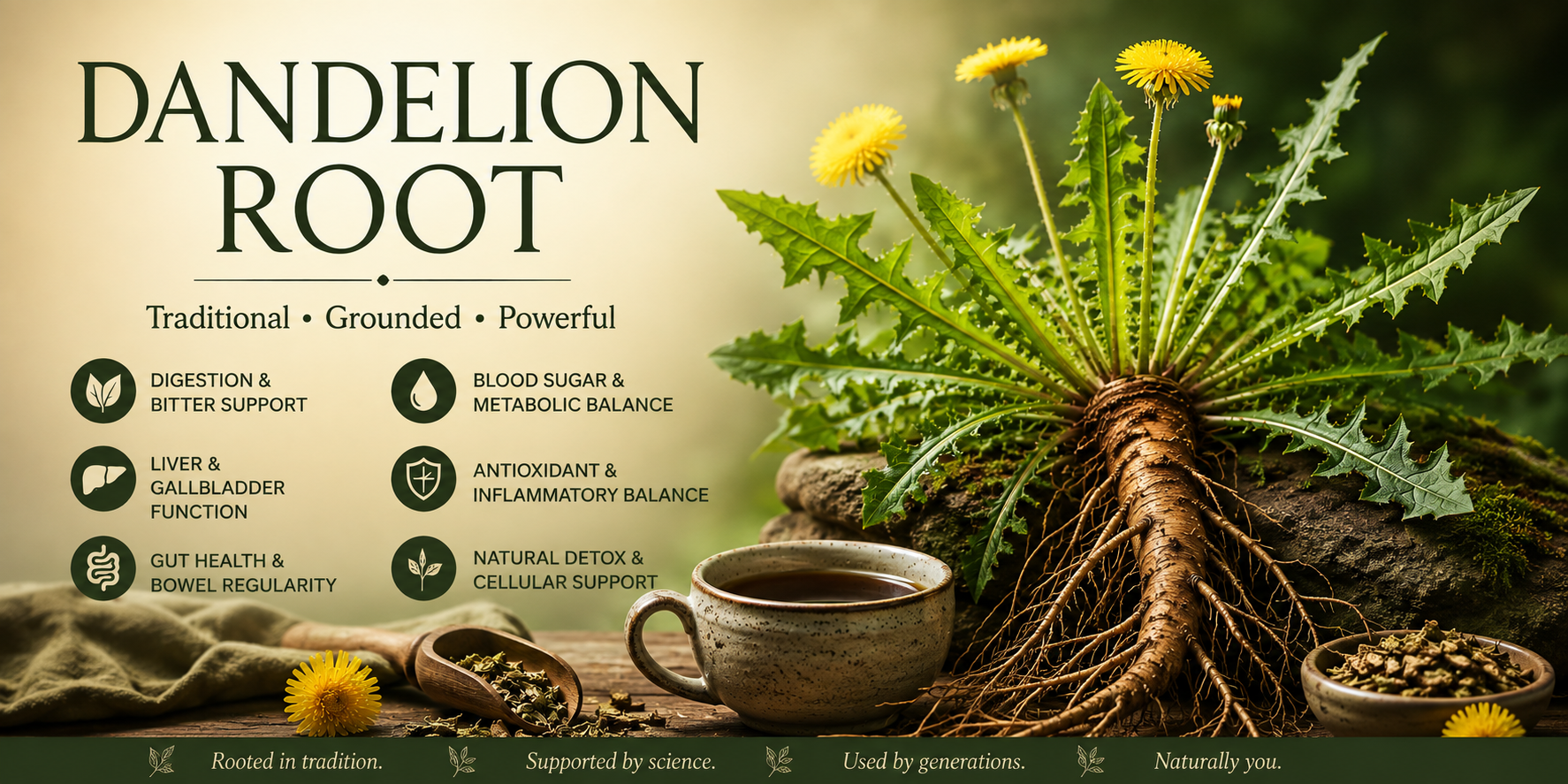
Dandelion Root: Deep Traditional Support for Digestion, Liver Function, Blood Sugar, and Inner Cleansing
Explore dandelion root benefits for digestion, liver and gallbladder support, gut bacteria, bowel regularity, blood sugar, inflammation, and metabolic wellness. Learn how to use dandelion root tea, roasted root, tinctures, and powders wisely.
Dandelion is one of the most familiar plants in the world, yet familiarity has often hidden its depth.
It grows through sidewalk cracks, open fields, garden edges, and compacted soil. Its bright flowers follow the sun, its leaves provide food, and its long taproot reaches deep beneath the surface. That root anchors the plant, stores nourishment, and allows dandelion to return even after the visible growth has been removed.
For generations, people have gathered dandelion root as food, medicine, and a traditional wellness tonic. It has been roasted into a dark coffee-like drink, simmered into bitter tea, preserved in tinctures, ground into powders, and included in herbal formulas for digestion, liver and gallbladder support, bowel regularity, appetite, skin clarity, and metabolic wellness.
The root’s strength comes from the way several actions meet inside one plant. Its bitterness helps awaken digestion. Its inulin feeds certain beneficial intestinal bacteria. Its phenolic compounds and triterpenes interact with antioxidant and inflammatory pathways. Its traditional connection with bile and elimination places it within a much larger story about how the body receives nourishment, processes what it needs, and releases what has finished its work.
Dandelion root is both humble and complex. It offers more than a passing “detox” trend. It belongs to an older understanding of wellness in which digestion, liver function, bowel movement, blood sugar, skin, energy, and circulation are connected rather than treated as separate islands.
The Root Beneath the Golden Flower
Dandelion’s botanical name is Taraxacum officinale. It belongs to the Asteraceae family, which also includes chicory, chamomile, sunflower, artichoke, calendula, and milk thistle.
The entire plant is usable, but each part carries a somewhat different emphasis.
The young leaves have traditionally been eaten as bitter spring greens and are more commonly associated with minerals and urinary flow. The flowers have been used in foods, syrups, wines, oils, and skin preparations. The root is denser and richer in stored carbohydrates, including inulin, and has become especially associated with digestive bitterness, liver and gallbladder wellness, bowel regularity, and metabolic research.
Traditional European herbalists often used dandelion root during seasonal transitions, especially in spring. After months of heavier foods and reduced access to fresh greens, bitter roots and leaves were welcomed back into the diet to awaken appetite, digestion, and elimination.
Traditional Chinese herbal practices have used dandelion species within a broader system concerned with heat, swelling, inflammation, and stagnation. Dandelion also appears in Middle Eastern, Indigenous, and folk herbal traditions, where different parts of the plant have been used for digestive discomfort, liver concerns, skin eruptions, urinary flow, and general vitality.
These traditions did not all use dandelion in exactly the same way. What they shared was the recognition that this common plant carried meaningful biological activity.
What Dandelion Root Contains
Dandelion root does not depend upon one famous compound. Its activity comes from a broad matrix of naturally occurring substances that work together.
The root contains inulin and other carbohydrates, phenolic acids, flavonoids, triterpenes, plant sterols, sesquiterpene lactones, and antioxidant compounds. Chicoric acid, chlorogenic acid, caffeic acid derivatives, taraxasterol, and related plant constituents have received particular scientific attention.
These compounds may influence digestion, microbial fermentation, oxidative balance, inflammatory signaling, glucose metabolism, lipid metabolism, and cellular communication.
The amount of each compound changes according to the soil, plant species, root age, harvest season, drying process, roasting temperature, and extraction method. Raw root tea, roasted dandelion coffee, whole-root powder, alcohol tincture, and concentrated laboratory extract should therefore be understood as related preparations rather than identical products.
Whole-root powder preserves more of the plant’s fiber. A filtered tea contains water-soluble compounds while leaving much of the insoluble material behind. Alcohol tinctures extract a different range of compounds, and roasting deepens the flavor while changing portions of the original chemistry.
This is one reason people may experience different results from different forms of dandelion root.
The Wisdom of Bitter Taste
Modern diets are filled with sweetness, saltiness, richness, and manufactured flavor, while bitterness has been steadily pushed toward the edge of the plate.
Dandelion root brings bitterness back.
Bitter taste has a purpose. Receptors that recognize bitterness are found in the mouth and throughout parts of the digestive system. When a bitter substance touches the tongue, it helps signal that food and complex plant compounds are arriving.
Saliva begins breaking down food and preparing it for swallowing. The stomach receives signals related to digestive activity. The liver, gallbladder, pancreas, and intestines become part of the preparation. Appetite and intestinal movement may also be influenced.
This helps explain the traditional custom of taking bitter herbs shortly before meals.
A small amount of dandelion root tea or tincture before eating may be especially appealing when appetite feels dull, digestion feels slow, or meals create prolonged heaviness. Taken after a meal, a warm cup may help settle the transition from eating into digestion.
Capsules still deliver plant material, but they largely bypass the experience of bitterness in the mouth. For people seeking dandelion root primarily as a digestive bitter, tasting the root through tea or tincture may be part of its value.
Digestion That Begins Before the First Bite
Digestion involves far more than the stomach.
It begins with sight, scent, anticipation, and taste. It continues through chewing, stomach acid, digestive enzymes, bile, pancreatic secretions, intestinal movement, microbial fermentation, nutrient absorption, and bowel elimination.
Dandelion root has traditionally been used near the beginning of this chain. Its bitterness helps invite the digestive system into readiness rather than waiting until food has already arrived and begun to feel heavy.
This may be valuable for people who experience sluggish digestion, reduced appetite, a sense that food sits for too long, or discomfort after rich meals. The root’s traditional role is especially connected with digestive preparation and movement rather than simply covering symptoms after they appear.
Dandelion root also contains inulin, a fermentable fiber that passes through much of the upper digestive tract before reaching the colon. There, certain bacteria can use it as food.
This gives the root a second digestive identity. It works not only through bitter signaling but also through the living microbial community inside the intestine.
Inulin, Beneficial Bacteria, and the Gut Environment
Inulin is a naturally occurring prebiotic fiber found in dandelion root, chicory root, onions, garlic, asparagus, Jerusalem artichokes, and several other plants.
Prebiotics and probiotics play different roles. Probiotics provide live microorganisms. Prebiotics provide fermentable material that selected microorganisms can use.
When intestinal bacteria ferment inulin, they create short-chain fatty acids and other metabolic products. These compounds help nourish cells in the colon, influence the intestinal environment, support the protective lining of the gut, and communicate with immune and metabolic pathways.
The gut microbiome is deeply individual. Two people can drink the same tea or take the same powder and have very different experiences.
Someone whose microbiome handles inulin comfortably may notice improved bowel regularity or digestive satisfaction. Someone with a sensitive digestive system may initially experience bloating, pressure, gurgling, or gas.
This reaction is especially relevant for people who already struggle with onions, garlic, chicory, or other high-inulin foods. Irritable bowel syndrome, small intestinal bacterial overgrowth, and sensitivity to fermentable carbohydrates can make whole-root powder or large servings more challenging.
A filtered tea may feel gentler because much of the fiber remains outside the cup. Whole-root powder delivers considerably more of the fermentable material. Beginning with a modest amount gives the body time to answer before the serving is increased.
Liver Function and the Work of Transformation
The liver performs one of the body’s most intricate forms of quiet labor.
Blood arriving from the digestive system carries nutrients, plant compounds, medications, hormones, alcohol, and metabolic byproducts. The liver evaluates, transforms, stores, packages, and directs these substances. It helps regulate glucose, processes fats, stores certain vitamins and minerals, produces proteins, and creates bile.
Dandelion root’s traditional reputation as a liver herb is closely connected to digestion and bile.
Rather than imagining the root as something that washes the liver clean, it is more accurate to understand it as a plant traditionally used to support the processes surrounding liver function: digestive signaling, bile production and movement, antioxidant balance, fat metabolism, and elimination through the intestines.
Modern laboratory and animal research has strengthened interest in this traditional use. Dandelion extracts and compounds have been studied for their influence on oxidative stress, inflammatory signaling, lipid accumulation, protective enzymes, and several forms of experimentally induced liver injury.
These findings reveal that the root contains compounds capable of interacting with liver-related pathways. Human clinical research has much more ground to cover, especially for conditions such as fatty liver disease, hepatitis, cirrhosis, medication-related injury, and alcohol-related liver disease.
For everyday wellness, dandelion root fits most naturally as part of a liver-supportive pattern that includes balanced blood sugar, adequate protein, fiber-rich food, hydration, movement, restorative sleep, and responsible alcohol use.
The root may support the terrain. The full lifestyle shapes the landscape.
Bile, Gallbladder Function, and the Digestion of Fats
Bile is made by the liver and stored in the gallbladder between meals. When food containing fat enters the small intestine, bile helps break larger fat droplets into smaller ones so digestive enzymes can work more effectively.
This process supports the absorption of fats and fat-soluble nutrients, including vitamins A, D, E, and K.
Traditional herbal language often describes dandelion root as a cholagogue, an herb used to encourage bile movement. This helps explain why it has been associated with heaviness after rich meals, reduced appetite, sluggish digestion, and bowel irregularity.
Bile also serves as one route through which the body moves cholesterol and selected metabolic compounds into the intestines for elimination. Healthy bowel movement then becomes part of the same story. Digestion, liver processing, bile, the gallbladder, and the colon are not separate chapters. They are pages bound into one book.
People with a functioning digestive pathway may find that gentle bitter support fits comfortably into this process.
Known gallstones, bile duct obstruction, gallbladder attacks, jaundice, fever with upper abdominal pain, pale stools, or severe pain beneath the right ribs require medical attention. Concentrated herbs that influence digestive secretions should be approached carefully when the normal pathway may be narrowed or blocked.
Bowel Regularity and the Art of Release
Dandelion root’s traditional relationship with regularity comes from several possible directions at once.
Bitterness helps prepare digestive activity. Bile supports fat digestion and contributes to intestinal movement. Inulin feeds selected gut bacteria and may help improve stool consistency or frequency. Warm fluids themselves can support hydration and the body’s natural morning or post-meal bowel reflex.
Dandelion root is generally understood as a supportive digestive herb rather than a forceful stimulant laxative. Its role is more about restoring rhythm than creating urgency.
This may make it useful for occasional sluggishness connected with heavy eating, low fiber intake, disrupted routines, or a digestive system that feels slow to begin its work.
The appropriate amount matters. Large quantities of whole-root powder may bring too much fermentable fiber at once. Concentrated tinctures may feel more stimulating than tea. A cup that supports one person’s regularity may leave another person with cramping or loose stool.
A helpful response feels like improved function, not digestive upheaval.
Blood Sugar, Insulin, and Metabolic Balance
Dandelion root has drawn growing interest in metabolic research.
Chicoric acid, chlorogenic acid, inulin, and other constituents have been studied for possible effects on glucose handling, digestive enzymes, insulin-related signaling, oxidative stress, and the way the liver and tissues process energy.
Laboratory and animal studies suggest several possible pathways. Dandelion compounds may influence how quickly certain carbohydrates are broken down, how glucose enters or is used by cells, how the liver stores and releases energy, and how oxidative stress affects metabolic tissues.
Inulin may also contribute indirectly. Gut microbes and the short-chain fatty acids they produce participate in communication involving appetite, glucose regulation, intestinal health, and inflammatory balance.
These mechanisms make dandelion root scientifically interesting, but they do not create a predictable medication-like effect in every person.
Its most grounded role is within a larger metabolic pattern. Replacing a sweetened coffee drink with unsweetened roasted dandelion root removes a source of added sugar. Supporting bowel regularity and microbial diversity may improve the digestive environment. Bitter flavor may also help rebalance a palate trained to expect sweetness throughout the day.
People who use insulin or blood-sugar-lowering medication should pay attention to their glucose response when adding concentrated dandelion products. Even a traditional herb can become part of the equation when several glucose-lowering influences are combined.
Cholesterol, Triglycerides, and the Handling of Fat
Dandelion’s connection with fat metabolism is closely tied to the liver, bile, blood sugar, and digestion.
Animal and laboratory studies have explored possible effects on cholesterol, triglycerides, liver fat accumulation, oxidative damage to lipids, and genes involved in fat metabolism. The root’s plant sterols, phenolic compounds, fiber, and influence on bile-related pathways may all contribute to this area of interest.
The human evidence is still developing, which makes it premature to assign dandelion root a dependable cholesterol-lowering number.
Its practical value may be cumulative and indirect.
An unsweetened roasted-root beverage can replace sugary drinks. Prebiotic fiber may support the intestinal environment. Bitter compounds can encourage digestive readiness. Better glucose regulation, movement, sleep, and food quality all influence the way the body stores and uses fat.
Dandelion root becomes one instrument within that larger metabolic orchestra rather than being asked to play every part alone.
Antioxidant Protection and Inflammatory Balance
Every cell participates in chemical reactions that generate reactive molecules. The body uses its own antioxidant systems to keep these molecules in balance, but chronic stress, unstable blood sugar, smoking, alcohol, nutrient deficiency, illness, environmental exposures, and inadequate sleep can increase oxidative strain.
Dandelion contains phenolic acids, flavonoids, triterpenes, and other compounds that have shown antioxidant activity in laboratory studies.
Antioxidant activity can help protect fats, proteins, membranes, and genetic material from certain forms of oxidative damage. Dandelion compounds have also been studied for their ability to influence inflammatory messengers and cellular signaling pathways.
Inflammation itself is a natural part of defense and repair. The goal is balance: enough inflammatory activity to respond when needed, followed by the ability to resolve that response.
Dandelion root’s compounds appear capable of interacting with this balance in experimental models. The strength of any effect in everyday human use depends upon the preparation, dose, absorption, individual biology, and reason for taking it.
This is meaningful emerging science, even though it does not translate into a guaranteed treatment for every inflammatory concern.
Kidneys, Urinary Flow, and the Difference Between Root and Leaf
Dandelion is widely described as a diuretic herb, but the plant part deserves attention.
The leaf has the strongest traditional association with increased urinary flow. A small human study using fresh dandelion leaf extract found a short-term increase in urination frequency and fluid output. The study was small and brief, but it remains one of the better-known pieces of human dandelion research.
Those results belong to the leaf preparation used in the study. They should not be automatically transferred to pure dandelion root.
Many commercial teas and herbal formulas combine root and leaf, which can blur the distinction. Someone using a blended product may notice more urinary activity than someone drinking pure roasted-root tea.
This matters for people taking prescription diuretics, managing kidney disease, restricting potassium or fluid, or experiencing swelling related to heart, liver, or kidney conditions.
Swelling that appears suddenly, continues to worsen, affects breathing, or occurs alongside chest pain deserves medical assessment. Fluid movement is a body function with many possible causes, not simply something to push away.
Heart and Circulatory Wellness
Dandelion root’s possible contribution to cardiovascular wellness is most likely woven through several supporting pathways rather than one dramatic action.
Blood sugar balance, lipid metabolism, oxidative protection, liver function, hydration, body weight, and the health of blood vessels all influence cardiovascular well-being.
Laboratory and animal research has explored dandelion in relation to blood pressure, cholesterol, triglycerides, vascular signaling, and oxidative stress. Human evidence for dandelion root alone is still limited.
The leaves are a more concentrated food source of potassium and minerals than a filtered root beverage. Powdered whole root may retain more minerals than tea, but the amount varies by product and serving.
For many people, the most practical heart-friendly contribution may come from substitution. A warm cup of pure roasted dandelion root can provide a satisfying ritual without caffeine or large amounts of sugar. That simple shift can reduce reliance on heavily sweetened beverages while preserving the comfort of a dark, roasted drink.
People using blood pressure medication, prescription diuretics, anticoagulants, or antiplatelet medication should discuss concentrated dandelion products with a qualified healthcare professional.
Skin Clarity and the Gut-Liver-Skin Connection
Traditional herbalists frequently viewed the skin as connected with digestion, bowel regularity, liver function, nutrition, blood sugar, and inflammatory balance.
Dandelion root was included in traditional formulas for blemished, irritated, congested, or dull-looking skin. This did not necessarily mean that the root was acting directly upon the skin. It was often used to support the internal processes believed to influence what appeared on the surface.
Modern understanding gives this traditional connection new dimensions.
The gut microbiome communicates with the immune system. Blood sugar and insulin can influence hormones and oil production. The liver helps process hormones and metabolic compounds. Bowel regularity supports the removal of material that has entered the digestive tract. Nutrient absorption helps provide the raw materials needed for skin repair.
Dandelion root has not been clinically established as a treatment for acne, eczema, psoriasis, or other skin conditions. Its potential contribution lies in supporting some of the foundations that can influence skin health.
For some people, clearer skin may follow improvements in digestion, blood sugar, food quality, hydration, or regular elimination. Dandelion root can be one thoughtful part of that deeper approach.
The Gut-Liver-Immune Conversation
The immune system communicates constantly with the digestive tract and liver.
A large amount of immune activity is positioned along the intestinal barrier, where the body must distinguish between nourishment, harmless microbes, and possible threats. The liver also receives blood directly from the digestive tract and helps process microbial products, nutrients, and foreign compounds.
Dandelion root touches this conversation through prebiotic fiber, antioxidant constituents, digestive signaling, and its traditional relationship with liver function.
Laboratory studies have found antimicrobial and immune-modulating activity in dandelion extracts and isolated compounds. Researchers have examined effects involving bacteria, fungi, viruses, inflammatory messengers, and immune-cell signaling.
These findings reveal biological potential rather than proving that an ordinary cup of tea will prevent or clear an infection.
The immune system benefits from nourishment, adequate sleep, healthy barriers, balanced microbial communities, and appropriate inflammatory responses. Dandelion root may contribute to this wider environment, especially through the gut and liver pathways that quietly shape immune communication every day.
Energy Without Caffeine
Pure dandelion root naturally contains no caffeine.
When the root is roasted, it develops a dark, earthy, slightly bitter flavor that can resemble coffee, toasted grain, or roasted nuts. This makes it valuable for people who enjoy the depth and ritual of coffee but want to reduce caffeine or enjoy a similar drink later in the day.
Dandelion root does not create the rapid stimulation associated with caffeine. Its contribution to energy is more indirect.
Heavy digestion can leave a person feeling tired, foggy, or weighed down after meals. Poor bowel regularity can create its own sense of sluggishness. Blood sugar swings can produce alternating surges and crashes. A beverage that supports digestion while replacing a sugary or highly caffeinated drink may help create steadier daily rhythms.
Roasted dandelion root can be enjoyed plain or blended with cinnamon, ginger, cacao, chicory, cardamom, milk, or unsweetened plant milk.
Commercial products labeled “dandelion coffee” vary widely. Some contain only roasted dandelion root, while others include coffee beans, black tea, yerba mate, barley, rye, chicory, or sweeteners. Reading the ingredient label keeps the experience aligned with the reason it was chosen.
Weight and Metabolic Wellness
Dandelion root is sometimes marketed as a rapid weight-loss or belly-flattening herb. Its true value is more substantial than a temporary movement on the scale.
Diuretic activity can reduce water weight for a brief period, especially when leaf is included. Water loss and fat loss are entirely different processes.
Dandelion root’s deeper metabolic interest comes from its possible influence on digestion, glucose handling, liver fat metabolism, oxidative balance, gut microbes, and beverage choices.
A bitter drink may also help retrain the palate away from constant sweetness. As the taste buds become more familiar with earthy, bitter, and roasted flavors, intensely sweet drinks may become less necessary for satisfaction.
Weight wellness is shaped by food quality, energy intake, muscle, movement, hormones, sleep, stress, medication, health conditions, and genetics. Dandelion root can support selected parts of that landscape while the larger pattern does the lasting work.
Women’s Wellness
Dandelion root frequently appears in women’s herbal blends for monthly bloating, skin clarity, digestion, bowel regularity, and liver support.
The liver helps process hormones after they have completed their work. Those compounds are then prepared for movement through bile, urine, or other pathways. The intestines and microbiome also participate in hormone metabolism and elimination.
This creates a reasonable foundation for the traditional inclusion of digestive and liver herbs in women’s wellness routines.
Direct human research on dandelion root for premenstrual symptoms, menopause, polycystic ovary syndrome, estrogen balance, fertility, or menstrual regulation remains limited. Its strongest present role is foundational: supporting digestion, bowel regularity, glucose balance, microbial nourishment, and normal liver function.
Pregnancy and breastfeeding deserve additional care because concentrated medicinal use has not been studied well enough to establish clear safety. Food-level exposure and concentrated extracts are different experiences, and professional guidance helps keep that distinction clear.
Men’s Wellness
Men benefit from the same central pathways supported by dandelion root: digestive readiness, bowel regularity, liver function, blood sugar balance, lipid metabolism, and antioxidant protection.
These areas become increasingly important as metabolic strain accumulates over time. Abdominal weight gain, elevated blood sugar, liver fat, high triglycerides, digestive sluggishness, and cardiovascular risk often overlap rather than arriving separately.
Dandelion root has also appeared in laboratory research involving prostate, colon, stomach, liver, and other cell models. These studies help scientists explore the behavior of plant compounds, but they do not establish dandelion root as a treatment for prostate enlargement, prostate cancer, or other male health conditions.
Men taking medication for blood pressure, diabetes, blood clotting, fluid retention, kidney disease, or liver conditions should review concentrated dandelion products with their healthcare provider.
Cancer Research and the Importance of Context
Dandelion root has received considerable attention in cancer research because concentrated extracts have affected the growth, survival, metabolism, and signaling of certain cancer cells in laboratory studies.
Research has examined colorectal cancer, leukemia, gastric cancer, pancreatic cancer, melanoma, and other cell models. Some experiments have found activation of programmed cell-death pathways, changes in mitochondrial function, reduced proliferation, or altered signaling associated with cancer-cell survival.
This work is scientifically important. It can help identify compounds, pathways, and extract combinations worthy of further investigation.
The environment of a laboratory dish is very different from the human body.
Laboratory cells may be exposed directly to an extract at concentrations that cannot be reached through an ordinary cup of tea. Human digestion, absorption, liver metabolism, circulation, tumor structure, immune activity, genetics, medication, and overall health all influence what happens after an herb is swallowed.
Different studies have also produced different results depending on the plant part, cell line, preparation, and concentration. This is why the entire research picture matters more than one exciting headline.
Dandelion root belongs within the category of promising preclinical research. It has not reached the point where tea, capsules, tinctures, or homemade extracts can be treated as established cancer therapies.
People undergoing chemotherapy, radiation, immunotherapy, hormone therapy, targeted therapy, or surgery should bring all herbs and supplements to the attention of the oncology team. Plant products can influence digestion, blood sugar, hydration, liver metabolism, bleeding, and treatment tolerance even when their effect on a tumor remains uncertain.
Honoring the research means taking it seriously enough to describe it accurately.
What the Evidence Currently Shows
Dandelion root carries three distinct forms of evidence, and each contributes something different.
Traditional Experience
Traditional use is strongest in the areas of digestive bitterness, appetite, liver and gallbladder support, bowel regularity, seasonal tonic practices, skin formulas, and general elimination.
Generations of use can reveal patterns worth preserving and studying. Tradition also reflects different preparations, cultural frameworks, and individual observations rather than standardized clinical trials.
Laboratory and Animal Research
This is currently the largest research lane.
Studies have examined antioxidant activity, inflammatory pathways, glucose and lipid metabolism, liver protection, digestive conditions, microbial activity, and cancer-cell signaling.
These studies help explain how the root may work and where future human research may be valuable.
Human Research
Direct human evidence for dandelion root remains limited.
The small human study frequently mentioned for urinary flow used fresh dandelion leaf extract. Human trials establishing dandelion root as a treatment for diabetes, fatty liver disease, high cholesterol, cancer, digestive disease, or obesity are still lacking.
This does not erase the root’s traditional value or biological activity. It defines the level of certainty currently available.
Dandelion root can be respected as a nourishing bitter herb with meaningful traditional use and promising science without being forced into claims that research has not yet completed.
Raw Root, Roasted Root, Tea, Powder, and Extracts
The form of dandelion root changes the experience.
Raw Dried Root
Raw dried root is earthy, bitter, and plant-forward. It is often simmered as a decoction because roots require more time in hot water than delicate flowers or leaves.
Its stronger bitterness may make it especially appealing before meals or within traditional digestive formulas.
Roasted Dandelion Root
Roasting creates darker, nuttier, more coffee-like flavors. The result is often smoother and easier to enjoy as a daily beverage.
Roasting changes portions of the plant chemistry, so roasted root should be seen as a flavorful preparation with its own character rather than an exact duplicate of raw root.
Filtered Tea or Decoction
Tea provides warmth, hydration, bitterness, and water-soluble plant compounds. It leaves behind much of the root’s solid fiber, which may make it more comfortable for people sensitive to inulin.
Whole-Root Powder
Powder preserves more of the whole root, including its prebiotic fiber. It can be added to smoothies, foods, or warm beverages.
Because the fiber remains present, powder may create more fermentation, gas, or bloating than filtered tea.
Tincture
Alcohol or glycerin tinctures provide a concentrated, portable preparation. A tincture may preserve a clearer bitter taste when placed directly on the tongue.
The extraction ratio and serving size vary widely by product.
Capsules
Capsules provide convenience and avoid the flavor. They may be useful for people who strongly dislike bitter tea, although they bypass much of the taste-based digestive experience.
Concentrated Extracts
Extracts may deliver larger amounts of selected plant compounds than ordinary food or tea. This can increase both potential activity and the importance of medication review, dosing care, and product quality.
How to Prepare Dandelion Root Tea
A traditional root decoction uses gentle simmering rather than a quick steep.
Place approximately 1 to 2 teaspoons of dried cut dandelion root into 8 to 12 ounces of water. Bring the water to a gentle simmer, cover the pot, and allow the root to simmer for about 10 to 15 minutes. Strain the tea and drink it slowly.
A longer simmer creates a stronger, more bitter cup.
For digestive bitterness, a smaller serving may be taken shortly before a meal. For after-meal comfort, it can be enjoyed warm once eating is complete. Roasted root can be prepared in a similar way or brewed according to the product instructions.
People new to dandelion root may prefer a lighter cup at first. Strength can always be increased after the body has had a chance to respond.
Creating a Dandelion Root Coffee Ritual
Roasted dandelion root offers a satisfying ritual without requiring caffeine.
It can be prepared in a saucepan, French press, reusable tea filter, or coffee-style brewer depending on the size of the roasted pieces. Some people combine it with roasted chicory for greater depth, cinnamon for warmth, cacao for richness, or ginger for added digestive character.
A small amount of milk or unsweetened plant milk can soften the bitterness. Vanilla, cardamom, or nutmeg can create a more aromatic cup.
For people transitioning away from coffee, blending roasted dandelion root with gradually decreasing amounts of regular coffee can preserve the familiar flavor while lowering caffeine over time.
The result is more than a substitute. It can become its own grounding practice: dark, warm, earthy, and free from the demand for stimulation.
Choosing a Quality Dandelion Root Product
A trustworthy label should clearly identify Taraxacum officinale and specify that the root is being used.
It should also explain whether the root is raw or roasted and list every additional ingredient. Tinctures should provide an extraction ratio or meaningful serving information. Powders and capsules should identify the amount of root or extract per serving.
Quality manufacturers may also test for identity, microbial contamination, heavy metals, and pesticide residues. Lot numbers and expiration or best-by dates help support traceability.
Harvesting wild dandelion can be rewarding when the growing area is known to be clean.
Avoid roots from roadsides, industrial ground, pet areas, chemically treated lawns, and soil that may contain lead, herbicides, or other contaminants. Dandelion’s deep taproot draws from its environment, which makes the quality of that environment part of the finished preparation.
How to Use Dandelion Root Wisely
Begin with a modest amount and observe the body’s response.
Notice digestion, bowel movement, gas, appetite, urination, energy, blood sugar, and overall comfort. The goal is improved rhythm and function rather than a dramatic reaction.
People prone to heartburn may find dandelion root easier to tolerate with or after food. Those sensitive to inulin may prefer filtered tea over powder. People using it as a digestive bitter may choose a small amount before meals.
Dandelion belongs to the Asteraceae family. People with strong reactions to ragweed, chamomile, chrysanthemums, daisies, marigolds, or related plants may have a greater chance of sensitivity.
Concentrated products deserve added attention when used with:
Insulin or diabetes medication
Prescription diuretics
Anticoagulant or antiplatelet medication
Blood pressure medication
Lithium
Cancer treatment
Medications with narrow dosing ranges
Multiple herbs that influence blood sugar or fluid balance
Pregnancy, breastfeeding, significant kidney disease, serious liver disease, bile duct obstruction, active gallbladder attacks, unexplained jaundice, severe abdominal pain, or active ulcer symptoms are situations where personalized professional guidance becomes especially valuable.
Possible signs that an amount is too strong include increased gas, abdominal pressure, loose stool, heartburn, nausea, excessive urination, lightheadedness, rash, itching, or an unexpected change in blood sugar.
These reactions are useful information. Reducing the amount or pausing use honors the body more than pushing through discomfort under the belief that stronger symptoms must mean deeper cleansing.
Dandelion Root Questions and Answers
What is dandelion root traditionally used for?
Dandelion root has traditionally been used to support appetite, digestion, liver and gallbladder function, bowel regularity, elimination, skin clarity, and general seasonal wellness.
Its bitterness and prebiotic inulin help explain several of these uses.
Is dandelion root the same as dandelion leaf?
They come from the same plant but provide different concentrations of compounds and different traditional actions.
The leaf is more closely associated with minerals and urinary flow. The root is more strongly associated with digestive bitterness, inulin, liver and gallbladder wellness, bowel regularity, and metabolic research.
Does dandelion root cleanse the liver?
The liver carries out its own complex processing and detoxification work.
Dandelion root may support the digestive and metabolic environment surrounding that work through bitterness, bile-related activity, antioxidant compounds, bowel regularity, and traditional liver use.
The most helpful understanding is support rather than mechanical cleansing.
Can dandelion root help sluggish digestion?
Its bitter taste can help signal digestive readiness, making it a traditional choice for reduced appetite, heaviness after meals, or digestion that feels slow.
Persistent pain, vomiting, difficulty swallowing, unexplained weight loss, blood in the stool, or ongoing digestive symptoms deserve medical evaluation.
Is dandelion root a prebiotic?
Whole dandelion root contains inulin, a fermentable prebiotic fiber that can feed certain beneficial intestinal bacteria.
Filtered tea generally provides less fiber than consuming the whole powdered root.
Can dandelion root support bowel regularity?
It may help through digestive signaling, bile movement, warm fluid intake, microbial fermentation, and prebiotic fiber.
The response depends on the preparation and the individual. Large servings may create gas or loose stool in people sensitive to inulin.
Does dandelion root make people urinate more?
Dandelion leaf has the stronger traditional and human-research connection with urinary flow.
Root-and-leaf blends may have a more noticeable diuretic effect than pure dandelion root preparations.
Can dandelion root support blood sugar?
Laboratory and animal studies suggest that dandelion compounds may interact with glucose metabolism, insulin signaling, digestive enzymes, and oxidative balance.
Human clinical evidence remains limited. People using insulin or diabetes medication should monitor their response carefully when adding concentrated products.
Is dandelion root helpful for fatty liver wellness?
Preclinical research has explored effects involving liver fat accumulation, oxidative stress, inflammatory signaling, and protective enzymes.
Dandelion root is best positioned as supportive nourishment within a broader liver-friendly pattern rather than a proven treatment for fatty liver disease.
Does dandelion root lower cholesterol?
Animal and laboratory research suggests possible effects on cholesterol, triglycerides, bile, and fat metabolism.
Human trials have not yet established a reliable cholesterol-lowering effect from dandelion root.
Is roasted dandelion root caffeine-free?
Pure roasted dandelion root is naturally caffeine-free.
Products marketed as dandelion coffee may also contain real coffee, black tea, yerba mate, or other caffeinated ingredients, so the full ingredient list matters.
Can dandelion root replace coffee?
It can replace the flavor, warmth, and ritual for many people, although it does not reproduce caffeine’s stimulating effect.
Its roasted, earthy flavor makes it especially useful in the morning, after meals, or as an evening beverage.
Can dandelion root be used every day?
Many people enjoy dandelion root tea or roasted beverages regularly.
Daily concentrated extracts require more attention to medication use, gallbladder health, kidney function, pregnancy, blood sugar, and individual tolerance.
Is dandelion root being researched for cancer?
Yes. Laboratory studies have examined concentrated dandelion root extracts in several cancer-cell models and have identified interesting effects on cell growth and death signaling.
This remains preclinical research. Human evidence has not established dandelion root as a cancer treatment.
Can dandelion root be used during cancer treatment?
Herbal products should be discussed with the oncology team before use during treatment.
Concentrated dandelion products may influence digestion, blood sugar, hydration, bleeding, liver metabolism, or medication handling.
What is the best time to drink dandelion root tea?
For digestive bitterness, a small serving may be taken shortly before a meal.
For after-meal support, it may be enjoyed once eating is complete. Roasted root can also be used as a morning or evening coffee alternative.
People who notice increased urinary activity may prefer to drink it earlier in the day.
A Root That Teaches Depth
Dandelion does not ask permission from perfect soil.
It sends its root downward, gathers nourishment from the hidden layers, loosens the earth around it, and returns in gold.
That root is the reason the plant survives cutting, drought, compacted ground, and changing seasons. What appears above the surface is only part of its strength.
Dandelion root offers the body a similarly grounded form of support. Its bitterness invites digestion to awaken. Its fiber feeds part of the inner microbial world. Its compounds participate in antioxidant, metabolic, and inflammatory pathways. Its traditional relationship with the liver, bile, and bowels reminds us that receiving nourishment and releasing what has finished its work are equally important.
Its value does not depend upon miracle language.
Dandelion root is valuable because it connects systems that modern wellness conversations often separate. Digestion influences energy. The microbiome influences immune communication. The liver influences blood sugar, fats, hormones, and elimination. Bile connects the liver to the intestines. Regular bowel movement completes part of the process.
A warm cup of dandelion root tea can therefore become more than a beverage. It can be a return to bitterness, rhythm, and depth.
The plant has been beneath our feet for generations, quietly carrying its golden flowers above one of nature’s most enduring roots.
Wellness Pathways ↑
Continue exploring the connected foundations of wellness through pages on liver support, gut health, natural bitters, blood sugar balance, healthy digestion, bowel regularity, hydration, and the nourishing intelligence of plants.
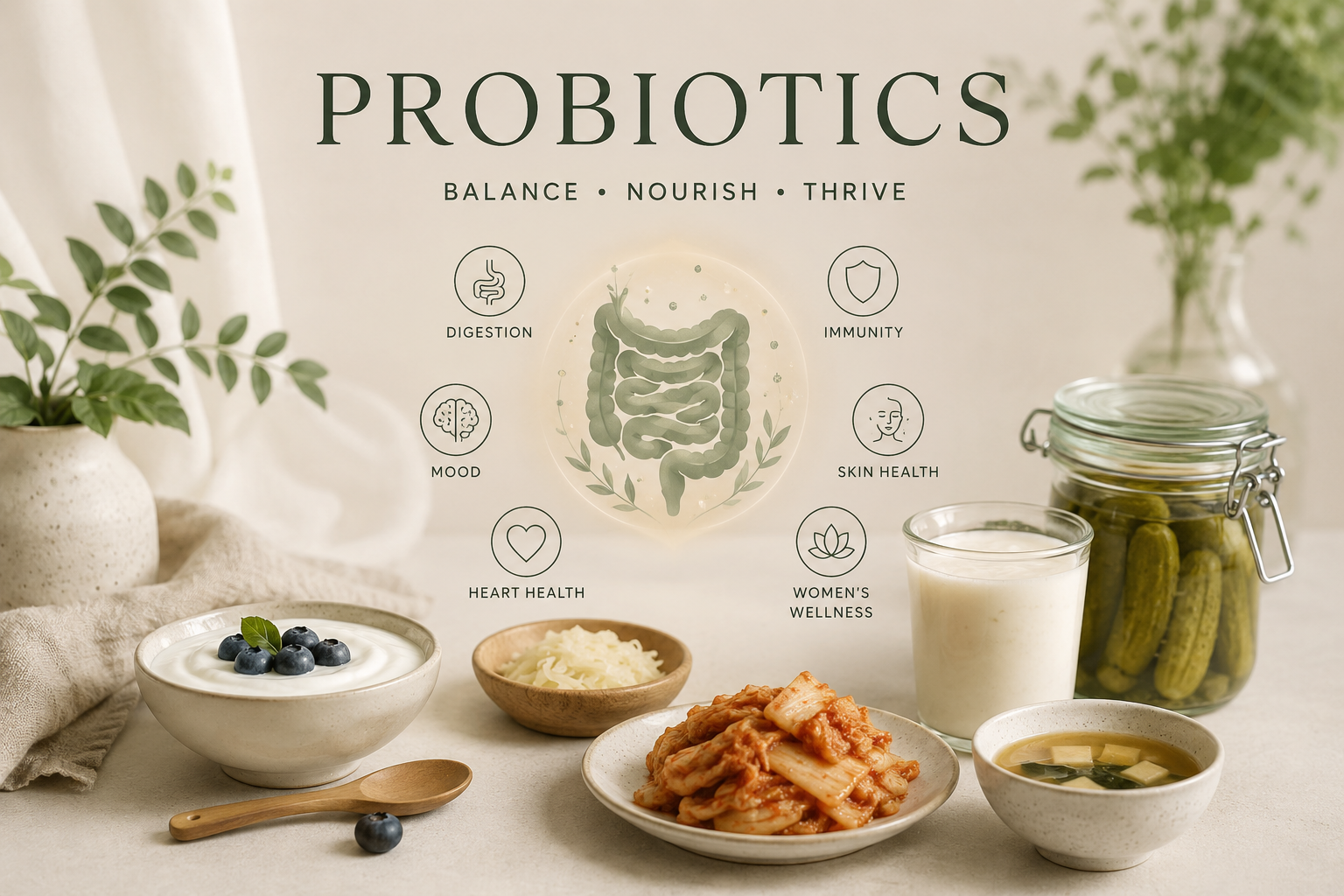
Probiotics: Living Support for Digestion, Immunity, Metabolism, and Microbial Balance
Explore how probiotics support digestion, immunity, women’s health, metabolism, skin, heart health, and the gut-brain connection, with guidance on strains, fermented foods, CFUs, prebiotics, and wise use.
The human body is a living community.
Trillions of microorganisms live throughout the digestive tract, mouth, skin, respiratory passages, reproductive system, and other areas of the body. These organisms form complex ecosystems that help digest food, produce useful compounds, communicate with immune cells, support vulnerable tissues, influence metabolism, and protect the spaces they inhabit.
The largest and most closely studied of these communities is the gut microbiome. Far from being a passive collection of bacteria, the gut microbiome behaves like an active inner environment. Its inhabitants transform fiber, interact with bile acids, influence the intestinal lining, participate in vitamin production, and send chemical messages throughout the body.
Probiotics are selected living microorganisms that provide a health benefit when consumed in an effective amount. They may come from fermented foods or concentrated supplements, and their usefulness depends on much more than the number of bacteria printed on a label. The organism, strain, dose, purpose, product quality, and individual using it all matter.
This is one of the most important truths about probiotics: they are not one single remedy.
A strain studied for antibiotic-associated diarrhea may differ from one selected for vaginal microbial balance. A formula created for bowel regularity may behave differently from one researched for immune support. Even two organisms belonging to the same species may have different abilities.
Understanding probiotics therefore begins with understanding the living world they are entering.
Understanding the Microbiome
The microbiome develops and changes throughout life.
Birth, feeding patterns, childhood environment, food, travel, medications, sleep, physical activity, illness, hormonal changes, stress, aging, and contact with the natural world all help shape the organisms living within and around the body.
These organisms interact with one another constantly. Some specialize in breaking down particular fibers. Some create acids that influence the intestinal environment. Others produce compounds used by neighboring microbes. Many communicate with the immune system or compete for space and nourishment with organisms that could become disruptive when allowed to multiply too freely.
A healthy microbiome is best understood as a resilient ecosystem.
Resilience allows the microbial community to adjust when food changes, stress increases, illness occurs, or medication alters the internal environment. The exact microbial pattern varies from one person to another, which is why there is no single perfect microbiome that everyone must reproduce.
Diversity can be valuable because a varied ecosystem has more ways to perform essential work. Yet diversity alone does not tell the whole story. The activity of the organisms, the compounds they produce, the condition of the intestinal lining, and the way the immune system responds are equally important.
Probiotics enter this living network as temporary workers, messengers, competitors, and collaborators.
Many probiotic organisms do not establish permanent residence. They travel through the digestive tract, interact with resident microbes, create beneficial compounds, influence immune signals, and then leave. Their temporary stay can still create a meaningful effect.
A visitor does not need to move into the house to brighten the room.
What Makes a Probiotic a Probiotic
The word probiotic is often used loosely, but scientifically it has a specific meaning. A probiotic is a living microorganism shown to provide a health benefit when supplied in an adequate amount.
Common probiotic groups include:
Lactobacillus-related species
Bifidobacterium species
Saccharomyces boulardii, a beneficial yeast
Bacillus species, many of which form hardy spores
Selected strains from several other bacterial groups
The full identity of a probiotic includes its genus, species, and strain.
For example:
Lactobacillus rhamnosus GG
Lactobacillus identifies the genus.
Rhamnosus identifies the species.
GG identifies the strain.
The strain functions almost like an individual résumé. It tells researchers which exact organism was tested and helps consumers determine whether the product in front of them resembles the one used in a study.
A label that lists complete strain names gives the reader valuable information. A label that simply says “probiotic blend” leaves much of the story hidden.
The number of living organisms is commonly measured in colony-forming units, abbreviated as CFU. Products may contain millions or billions of CFUs, yet a larger number does not automatically produce a better result. Some well-researched strains work at moderate amounts, while other formulations use higher doses.
The strength of a probiotic lies in the match between the organism, amount, and intended purpose.
Digestion, Fermentation, and Daily Comfort
Digestive health is the most familiar area of probiotic use because the digestive tract houses an enormous microbial population.
When food reaches the large intestine, gut microbes begin transforming fibers and resistant starches that human digestive enzymes could not fully break down earlier in the digestive process. This fermentation creates gases, organic acids, and short-chain fatty acids that affect the intestinal environment.
The three most widely discussed short-chain fatty acids are:
Butyrate
Acetate
Propionate
Butyrate is especially important because cells lining the colon use it as a source of energy. Short-chain fatty acids also participate in immune regulation, appetite signaling, glucose metabolism, mineral absorption, and communication between the gut and other parts of the body.
Selected probiotics may support this environment by interacting with resident microbes, encouraging useful fermentation patterns, producing acids, strengthening competition against disruptive organisms, and supporting the intestinal lining.
For some people, this may translate into steadier bowel habits, improved stool consistency, less digestive discomfort, or a greater sense of balance after illness, travel, dietary change, or medication use.
Digestive symptoms are rarely created by one factor alone. Bloating, constipation, diarrhea, abdominal discomfort, and food sensitivity can be influenced by:
Microbial imbalance
Intestinal movement
Hydration
Fiber intake
Meal timing
Stress
Thyroid function
Bile flow
Stomach acid
Digestive enzymes
Medication use
Pelvic-floor coordination
Individual food tolerance
This explains why one probiotic may feel helpful to one person and ineffective or uncomfortable to another. The digestive system is a network, and the microbial community is one important part of it.
Bloating, Gas, and Adjustment
Gas is a natural result of microbial fermentation. The amount, location, and comfort of that gas depend on which foods are being fermented, where the fermentation occurs, how quickly the intestines move, and which organisms are present.
Some people experience temporary bloating when beginning a probiotic. This may happen as the digestive environment adjusts or because the formula contains added prebiotic fibers such as inulin or fructooligosaccharides.
A gentle introduction can make the process more comfortable:
Begin with a lower amount.
Take the product every other day at first.
Introduce one digestive supplement at a time.
Choose a simpler formula when digestion is highly sensitive.
Pay attention to added fibers and sweeteners.
Track changes in comfort, stool pattern, and energy.
Persistent discomfort may signal that the strain, amount, added ingredients, or entire product is a poor match.
The body does not award medals for finishing a supplement that makes it miserable.
Constipation and Bowel Regularity
Constipation can involve infrequent bowel movements, hard stools, straining, incomplete emptying, or slow intestinal transit.
Certain Bifidobacterium and Lactobacillus strains have been studied for supporting bowel frequency and stool consistency. Their effects may involve microbial fermentation, short-chain-fatty-acid production, intestinal movement, water balance within the stool, and communication with the intestinal nervous system.
Probiotics work best when the rest of the digestive foundation is supported.
That foundation includes:
Adequate water
Soluble and insoluble fiber
Magnesium and other minerals
Regular movement
Consistent meals
Healthy thyroid function
Nervous-system balance
Bile production and release
Pelvic-floor coordination
A probiotic can introduce helpful organisms. Fiber-rich foods give many gut microbes something useful to transform, while movement and hydration help the digestive tract carry its contents forward.
Diarrhea and Digestive Recovery
Diarrhea can follow infection, medication use, travel, dietary changes, inflammation, or a temporary disturbance in microbial balance.
Selected probiotic strains may help support stool consistency, strengthen the intestinal environment, and shorten the course of certain diarrheal illnesses. Their usefulness depends on the cause of the diarrhea, the strain selected, the age and health of the individual, and how quickly support begins.
Hydration and electrolyte replacement are especially important because diarrhea can quickly deplete water, sodium, potassium, and other minerals.
Blood in the stool, high fever, severe pain, weakness, dehydration, neurological symptoms, or symptoms that continue longer than expected deserve prompt medical attention.
Probiotics During and After Antibiotics
Antibiotics are essential medicines that target bacteria responsible for infections. Their effects may also reach beneficial organisms living in the digestive tract.
The resulting shift can lead to loose stools, abdominal discomfort, urgency, altered digestion, or a temporary loss of microbial stability.
Selected probiotics have been studied for reducing the likelihood of antibiotic-associated diarrhea. Frequently researched organisms include particular strains of:
Lactobacillus rhamnosus
Lactobacillus casei
Bifidobacterium species
Saccharomyces boulardii
Bacterial probiotics are commonly taken a few hours apart from the antibiotic so the medication has less opportunity to affect the probiotic organisms.
Saccharomyces boulardii is a yeast and therefore has a different relationship with antibacterial medication. Antifungal medication can affect it.
Timing, age, health status, antibiotic type, strain, and product quality all influence the result. The digestive ecosystem may also continue changing after the antibiotic course ends, making nourishing food and diverse fibers valuable parts of recovery.
Irritable Bowel Syndrome
Irritable bowel syndrome, commonly called IBS, may involve abdominal pain, bloating, constipation, diarrhea, urgency, or alternating bowel patterns.
The condition can reflect changes in intestinal movement, visceral sensitivity, gut-brain communication, immune signaling, microbial activity, food fermentation, and nervous-system response.
Because IBS has several patterns and many contributing influences, probiotic research has produced varied results. Some strains and combinations have improved particular symptoms in certain groups, while broad recommendations remain difficult because products differ greatly.
Someone with constipation-predominant IBS may need a different approach from someone experiencing frequent diarrhea. A person whose symptoms are driven by intense fermentation may respond differently from someone whose primary challenge is slow movement or stress-related sensitivity.
A thoughtful approach may include:
Identifying the main symptom pattern
Choosing strains researched for that pattern
Beginning with a modest amount
Avoiding heavy added prebiotics when fermentation is intense
Tracking symptoms over several weeks
Considering food, stress, sleep, and intestinal movement alongside the probiotic
This is an area where precision matters more than microbial spectacle.
The best product is rarely the bottle with the loudest bacterial orchestra. It is the formula whose players understand the music.
Small Intestinal Bacterial Overgrowth
Small Intestinal Bacterial Overgrowth, or SIBO, involves excessive or altered microbial activity within the small intestine.
The small intestine naturally contains microorganisms, but their number and location are more controlled than in the colon. When movement slows, anatomy changes, digestive secretions become impaired, or other underlying factors arise, microbes may multiply or ferment food earlier than intended.
Symptoms may include:
Abdominal bloating
Gas
Diarrhea
Constipation
Pain or pressure
Food sensitivity
Nutrient deficiencies
Feeling excessively full after meals
The role of probiotics in SIBO remains individualized. Some people report greater comfort with selected organisms, while others experience stronger fermentation and prefer a simpler approach.
Added prebiotic fibers deserve particular attention because they can provide rapid fuel for microbial fermentation.
Supporting intestinal movement, meal spacing, stomach acid, digestive secretions, bile flow, and the underlying reason for the overgrowth may be as important as selecting a probiotic.
Inflammatory Bowel Conditions
Inflammatory bowel diseases such as ulcerative colitis and Crohn’s disease involve ongoing immune activity within the digestive tract. Pouchitis can occur after certain intestinal surgeries and also has an important microbial component.
Probiotics have been studied most successfully in selected cases of pouchitis and ulcerative colitis, where particular multi-strain formulations may help support remission or complement established treatment.
Results in Crohn’s disease have generally been less encouraging.
These conditions involve far more than the presence or absence of beneficial bacteria. Genetics, intestinal-barrier function, immune regulation, diet, medication, surgery, and environmental influences all contribute.
For someone managing inflammatory bowel disease, the most appropriate product depends on the diagnosis, disease activity, immune status, surgical history, current medication, and previous reactions.
The Intestinal Barrier and Immune System
The intestinal lining is one of the body’s most active points of contact with the outside world.
Every meal brings nutrients, microorganisms, plant compounds, food proteins, and environmental material into the digestive tract. The intestinal barrier must allow useful substances to pass into the body while keeping disruptive organisms and irritating compounds within the digestive passage.
This barrier is formed by:
Intestinal cells
Tight junctions between those cells
Protective mucus
Immune compounds
Digestive secretions
Resident microbes
Beneficial organisms help maintain this environment. Some produce acids that discourage less desirable microbes. Others support mucus production, influence tight-junction proteins, encourage short-chain-fatty-acid production, or communicate directly with immune cells.
A large amount of immune activity takes place along the digestive tract. This location allows the immune system to monitor what enters the body and learn when to tolerate, investigate, or respond.
Selected probiotics may influence:
Antibody activity
Immune-cell communication
Inflammatory signaling
Intestinal-barrier integrity
Resistance to microbial overgrowth
Responses to certain digestive and respiratory infections
The gut and immune system are close partners, continually exchanging information across one of the busiest borders in the body.
Inflammation and Whole-Body Communication
Inflammation is part of the body’s defense and repair system. It helps respond to infection, injury, and tissue stress.
Microbial balance can influence inflammation through the intestinal barrier, immune-cell activity, short-chain fatty acids, bile acids, and other microbial compounds.
Selected probiotics may help encourage healthier inflammatory communication by:
Supporting the intestinal lining
Encouraging beneficial fermentation
Competing with disruptive organisms
Modifying microbial metabolites
Influencing immune-cell signals
Supporting healthy bile-acid activity
These actions help explain why probiotic research has expanded beyond digestion into metabolism, cardiovascular health, skin, mood, and healthy aging.
The microbiome is housed largely within the digestive tract, but its chemical conversations travel far beyond it.
Metabolic Health and Blood Sugar
The gut microbiome participates in appetite signaling, energy use, glucose regulation, insulin sensitivity, fat storage, bile-acid metabolism, and inflammatory balance.
Probiotic and synbiotic formulas have been studied in people with:
Insulin resistance
Type 2 diabetes
Metabolic syndrome
Elevated triglycerides
Higher LDL cholesterol
Excess abdominal weight
Metabolic fatty liver changes
Some clinical research has found modest improvements in fasting blood glucose, insulin sensitivity, lipid measurements, waist size, or inflammatory markers.
The size of the benefit varies according to the strains used, duration, eating pattern, age, physical activity, existing metabolic health, and overall lifestyle.
Probiotics may support metabolic health through several gentle pathways at once. They can influence bile acids, microbial metabolites, intestinal-barrier strength, and inflammation while participating in the wider digestive ecosystem.
They work more like quiet internal advisors than tiny weight-loss contractors arriving with hard hats and clipboards.
A strong metabolic foundation still includes fiber-rich foods, sufficient protein, movement, sleep, minerals, and steady meal patterns.
Heart and Circulatory Health
The digestive tract, liver, and cardiovascular system communicate through bile acids, cholesterol metabolism, inflammatory signals, and compounds created by microbes.
Certain probiotic strains have been studied for their potential to support:
Total cholesterol balance
LDL cholesterol
Triglycerides
Blood pressure
Glucose regulation
Healthy inflammatory activity
Some organisms may bind or transform bile acids. Because the body uses cholesterol to create new bile, changes in bile-acid recycling may influence cholesterol metabolism.
Other strains may act through short-chain fatty acids, glucose regulation, or inflammatory pathways.
These effects tend to be modest and work best as part of a wider circulatory foundation that includes movement, hydration, nourishing fats, minerals, sleep, and appropriate medical care.
The Gut-Brain Axis
The digestive system and brain communicate continuously through a network known as the gut-brain axis.
This network includes:
The vagus nerve
The intestinal nervous system
Stress hormones
Immune messengers
Microbial metabolites
Neurotransmitter-related pathways
Gut microbes interact with compounds connected to serotonin, dopamine, gamma-aminobutyric acid, tryptophan, short-chain fatty acids, and cortisol.
This does not mean that all of these brain chemicals are created in the gut and delivered directly to the brain. The relationship is more intricate. Microbial activity can influence the ingredients, immune signals, nerve messages, and metabolic pathways involved in brain function and emotional regulation.
Researchers sometimes use the term psychobiotic for probiotics or prebiotics studied for mood, stress, sleep, or cognition.
Clinical research has explored probiotics in relation to:
Stress resilience
Anxiety symptoms
Depressive symptoms
Mental fatigue
Sleep quality
Cognitive performance
Results differ by strain and study, yet the larger relationship between digestive health and nervous-system health has become increasingly clear.
Stress can alter intestinal movement, stomach acid, appetite, sleep, immune signaling, and microbial composition. Digestive inflammation and microbial compounds may then influence the body’s stress response.
A troubled digestive system can make the entire world feel louder.
Supporting the gut may quiet one source of biological static and give the nervous system a steadier place from which to respond.
Prayer, meditation, slow breathing, restful sleep, gentle movement, time outdoors, regular meals, and supportive relationships can all help shape the internal environment in which the microbiome lives.
The microbiome listens to the life being lived around it.
Women’s Microbiome Health
A woman’s microbiome changes through every stage of life.
Hormones, menstruation, sexual activity, pregnancy, childbirth, breastfeeding, antibiotics, stress, diet, perimenopause, and menopause all influence microbial communities.
Women’s microbial health includes several connected environments:
The gut microbiome
The vaginal microbiome
The urinary microbiome
The oral microbiome
The skin microbiome
These communities interact with immunity, hormone metabolism, inflammation, digestion, blood-sugar regulation, and reproductive health.
Bringing these subjects together reveals a fuller picture. Probiotics for women extend far beyond a single “feminine health” capsule. Different life stages and concerns call for different organisms, routes of use, and levels of evidence.
Vaginal Microbial Balance
A healthy vaginal microbiome is often rich in Lactobacillus species.
These organisms produce lactic acid, helping maintain an acidic environment that supports healthy vaginal tissue and discourages the overgrowth of many disruptive microbes.
The composition of the vaginal microbiome varies naturally between individuals and across life stages. Menstruation, antibiotics, hormonal changes, pregnancy, sexual activity, hygiene products, and menopause may all alter this environment.
Selected oral and vaginal Lactobacillus strains have been studied for supporting:
Bacterial-vaginosis treatment and recovery
Recurrent vaginal imbalance
Restoration after antibiotics
Vaginal comfort
Yeast-associated symptoms
Healthy Lactobacillus populations
The clearest promise lies in using strains selected for vaginal health, especially as part of appropriate care for a correctly identified condition.
Burning, odor, discharge, itching, pain, or recurring irritation may arise from bacterial vaginosis, Candida overgrowth, hormonal dryness, sexually transmitted infections, skin conditions, or other causes.
Accurate identification allows probiotics to be used with greater purpose.
Urinary-Tract Health
The urinary and vaginal microbial environments are closely connected.
Healthy Lactobacillus populations may help create conditions that discourage bacteria associated with urinary infections from establishing themselves near the urethra.
Researchers are studying probiotics for their ability to:
Support healthy urinary microbial balance
Reduce bacterial attachment
Encourage recovery after antibiotics
Support women with recurrent urinary concerns
Strengthen the surrounding vaginal environment
Hydration, regular urination, pelvic-floor health, hormonal balance, and timely treatment remain important. Symptoms such as burning, urgency, pelvic pain, blood in the urine, fever, or back pain deserve medical attention because an infection can move toward the kidneys.
Pregnancy, Infancy, and Early Microbial Development
During pregnancy, the mother’s microbial health becomes part of the baby’s earliest environment.
Microbial development continues through birth, feeding, skin contact, home surroundings, outdoor exposure, medication use, and the gradual introduction of solid foods.
Researchers have studied selected probiotics during pregnancy and early life for:
Maternal digestive comfort
Vaginal microbial balance
Antibiotic-associated disruption
Infant digestive patterns
Colic
Eczema risk
Immune development
Outcomes depend heavily on the organism, dose, timing, and population studied.
Pregnancy is a time for precise product selection. Premature infants, medically vulnerable babies, and people with complex pregnancies need specialized guidance because live microorganisms can behave differently in fragile immune systems.
Menopause and Healthy Aging
Changing estrogen levels during perimenopause and menopause influence vaginal tissue, urinary comfort, bone metabolism, glucose regulation, and microbial communities.
A reduction in estrogen may alter vaginal Lactobacillus populations and increase susceptibility to dryness, irritation, urinary symptoms, or shifts in vaginal pH.
The gut microbiome also interacts with estrogen metabolism through a collection of microbial activities sometimes called the estrobolome.
Researchers are exploring whether probiotics and prebiotics can support:
Vaginal microbial balance
Urogenital comfort
Digestive regularity
Healthy blood-sugar regulation
Lipid balance
Inflammatory regulation
Mineral absorption
Bone metabolism
Healthy aging
This field is still developing, but it highlights how closely hormone health and microbial health are connected.
Probiotics may become one useful part of a broader foundation that includes resistance exercise, protein, vitamin D, magnesium, vitamin K, mineral-rich foods, restful sleep, and individualized hormone care.
Men’s Health
Men also possess microbial communities that influence digestion, metabolism, immune function, skin, oral health, urinary health, and reproductive biology.
Research is exploring connections between the gut microbiome and:
Prostate health
Urinary comfort
Testosterone metabolism
Fertility
Sperm quality
Cardiovascular risk
Blood-sugar regulation
Exercise recovery
The microbiome may influence male health through inflammatory activity, nutrient processing, hormone metabolism, and intestinal-barrier function.
Specific probiotic recommendations for prostate health, testosterone, or fertility are still emerging. Broader digestive, metabolic, and immune support remains the strongest current role.
Skin and the Gut-Skin Axis
The skin has its own microbial ecosystem, yet it also responds to signals generated within the digestive tract.
The relationship between gut microbes, immunity, inflammation, hormones, and skin is often called the gut-skin axis.
Probiotics have been studied in relation to:
Eczema
Atopic dermatitis
Acne
Rosacea
Skin-barrier strength
Hydration
UV-related stress
Inflammatory skin patterns
Certain strains used during pregnancy or early childhood have shown promise in reducing eczema risk in selected groups.
Research involving acne, rosacea, skin aging, and oral probiotic supplements continues to expand.
The skin often displays messages written far beneath its surface. Digestive balance, immune communication, hormones, sleep, stress, and nourishment may all influence what eventually becomes visible.
Oral and Respiratory Health
The mouth contains one of the most diverse microbial ecosystems in the body.
Oral probiotics are usually delivered through lozenges, gums, powders, or dissolving tablets so the organisms remain in contact with oral tissues.
They are being studied for:
Gum health
Dental plaque
Breath freshness
Cavity-associated bacteria
Oral Candida balance
Throat health
Respiratory support
The mouth is the front gate of the digestive system. Saliva, dental hygiene, mineral status, hydration, nasal breathing, food choices, and whole-body microbial balance all help shape this environment.
Some probiotic strains have also been studied for reducing the frequency or duration of common respiratory illnesses. These effects are strain-specific and may involve immune signaling along mucosal surfaces.
Liver Health
The liver receives blood directly from the digestive tract through the portal circulation.
This creates a close relationship between the condition of the intestinal environment and the substances reaching the liver.
Microbial metabolites, bile acids, intestinal permeability, and inflammatory compounds may all influence liver function.
Probiotics and synbiotics are being studied for supporting:
Liver-enzyme balance
Fat metabolism
Insulin sensitivity
Intestinal-barrier strength
Bile-acid activity
Healthy inflammatory signaling
Research involving metabolic fatty liver changes has produced encouraging results in selected groups.
The larger foundation remains essential and includes blood-sugar care, movement, reduced alcohol exposure, healthy body composition, nourishing food, medication awareness, and medical evaluation.
Cancer Research and Treatment Support
The microbiome has become an important area of cancer research because microbes interact with immunity, inflammation, estrogen metabolism, nutrition, and treatment response.
Scientists are studying how microbial patterns may influence:
Immune surveillance
Inflammatory signaling
Estrogen processing
Chemotherapy-related diarrhea
Mucositis
Nutrient absorption
Immunotherapy response
Infection risk
Recovery during treatment
Selected probiotics are being studied for reducing particular digestive complications associated with cancer treatment.
This is also an area where safety requires careful attention. Cancer treatments can alter white blood cell counts, intestinal integrity, catheter use, and resistance to infection.
Anyone receiving treatment should coordinate probiotic use with the oncology team so the strain, dose, immune status, current blood counts, treatment plan, and product quality can be considered together.
Fermented Foods and Traditional Nourishment
Humans have worked with fermentation for thousands of years.
Fermentation uses microorganisms to transform sugars, starches, and other food components. The process can create acids, gases, new flavors, transformed nutrients, enzymes, and microbial compounds.
Foods that may contain living cultures include:
Yogurt labeled with live and active cultures
Kefir
Raw refrigerated sauerkraut
Refrigerated fermented pickles
Kimchi
Cultured cottage cheese
Cultured buttermilk
Natto
Kombucha
Selected traditionally fermented cheeses
Miso added after high-heat cooking is complete
Heating, baking, filtering, and pasteurization may remove living organisms, while other products of fermentation remain.
Sourdough bread offers a useful example. The living starter organisms do not survive baking, but fermentation has already transformed portions of the grain and created organic acids.
Fermented foods and probiotic supplements serve different purposes.
Fermented foods provide nourishment, flavor, organic acids, transformed food compounds, and varied microbial exposure.
Supplements provide identified organisms in measured amounts for a more specific purpose.
Both can support a microbiome-friendly life when they fit the person’s needs and tolerance.
Prebiotics, Synbiotics, and Postbiotics
Probiotics are only one part of the microbial-support story.
Prebiotics are compounds used by beneficial microorganisms in ways that support health.
Common prebiotic foods include:
Garlic
Onions
Leeks
Asparagus
Chicory root
Jerusalem artichokes
Oats
Barley
Beans
Lentils
Green bananas
Apples
Flaxseed
Cooked and cooled potatoes
Cooked and cooled rice
A wide variety of fruits and vegetables
Prebiotic compounds include inulin, resistant starch, fructooligosaccharides, galactooligosaccharides, and several forms of soluble fiber.
People with highly sensitive digestion may prefer to introduce fermentable fibers slowly. Rapid increases can create gas, pressure, and discomfort when the microbial community receives more fuel than the digestive system comfortably handles.
More fiber is not always more enlightened.
Sometimes it is simply more gas.
Synbiotics combine probiotic organisms with prebiotic compounds. Some formulas are designed so the included fiber directly nourishes the included strains. Others provide broader support for the resident microbiome.
Postbiotics are preparations of inactive microorganisms or their components that still provide a health benefit.
Postbiotic preparations may contain:
Peptides
Enzymes
Cell-wall components
Organic acids
Short-chain fatty acids
Microbial signaling compounds
Because postbiotics do not rely on keeping organisms alive, they may offer advantages in stability, storage, and use in settings where live organisms require greater caution.
Choosing a Probiotic with Purpose
The supplement aisle can make probiotics look like a contest in which the largest number wins.
A useful product begins with a clearer question:
What is the probiotic being chosen to support?
A strong label should identify:
The genus
The species
The strain
The CFU amount
The intended use
Storage instructions
Expiration or best-use date
Manufacturer information
Look for strains studied for the intended purpose.
A product containing one well-researched strain may offer more value than a crowded formula filled with organisms selected mainly to create an impressive label.
Also consider whether the CFU amount is guaranteed through expiration. Some products list the amount present when the supplement was manufactured, even though living organisms naturally decline over time.
Third-party quality testing can add another layer of confidence by helping verify identity, purity, and potency.
Single-Strain and Multi-Strain Formulas
Single-strain products offer precision.
They may provide:
Clearer research support
Easier symptom tracking
More specific dosing
Strong alignment with one goal
Multi-strain products may provide:
Several mechanisms of action
Activity across different digestive environments
Broader microbial interaction
Cooperative effects between organisms
The number of strains matters less than the reasoning behind their selection.
A carefully designed community can be valuable. A random microbial crowd may simply create a busier label.
Refrigerated and Shelf-Stable Products
Some probiotics require refrigeration, while others remain stable at room temperature.
Shelf stability depends on:
The strain
Spore formation
Freeze-drying
Packaging
Moisture control
Oxygen exposure
Manufacturing quality
Storage temperature
Bacillus spores and certain freeze-dried organisms may tolerate room-temperature storage especially well.
Shelf-stable still means protected from heat and moisture.
A bottle left in a hot vehicle may become an expensive jar of microbial memories.
When and How to Take Probiotics
Timing recommendations vary.
A label may suggest taking the product:
With a meal
Shortly before eating
Between meals
In the morning
At bedtime
Several hours apart from antibiotics
Food may buffer stomach acid and improve survival for certain organisms. Other strains and capsule designs are created to tolerate digestive conditions effectively.
Consistency usually matters more than discovering one perfect minute.
A sensible trial involves choosing one purpose, using the product consistently, and observing the response.
Some changes may appear within several days, especially changes in stool consistency or antibiotic-related digestion. Other goals may require several weeks.
Observe:
The original symptom or health goal
Changes in bowel habits
Bloating or discomfort
Energy and general well-being
New reactions
Continued benefit
The role of food and lifestyle
Some people use probiotics temporarily after antibiotics, illness, or travel.
Others continue a particular product because it provides steady digestive, vaginal, or immune support.
Purpose and response guide duration more intelligently than habit alone.
How to Use Probiotics Wisely
Healthy adults generally tolerate probiotics well.
Temporary gas, bloating, fullness, or changes in stool may occur during the adjustment period.
Greater care is appropriate for people with:
Severely weakened immunity
Critical illness
Central venous catheters
Recent major surgery
Severe pancreatitis
Short bowel syndrome
Significant intestinal injury
Recurrent bloodstream infections
Intensive cancer treatment
Premature infancy
Complex medical conditions during pregnancy
In these situations, a qualified professional can help determine whether a live microbial product is appropriate and which strain, amount, and form offer the best fit.
Thoughtful selection transforms probiotics from a random supplement experiment into purposeful microbial support.
Building a Microbiome-Friendly Life
A resilient microbiome grows from the life surrounding it.
Supportive habits include:
Eating a wide variety of plant foods
Including fermented foods when tolerated
Consuming several forms of fiber
Staying hydrated
Moving regularly
Sleeping consistently
Spending time outdoors
Supporting recovery from stress
Maintaining oral health
Eating sufficient protein
Receiving adequate minerals
Allowing comfortable space between meals
Using antibiotics thoughtfully
Different organisms prefer different fibers, resistant starches, colors, and plant compounds.
Variety helps feed a wider microbial community.
Instead of searching for one magical food, build a table where many helpful microbes can find dinner.
What Probiotic Research Reveals
Probiotic research is becoming increasingly precise.
The clearest findings are connected to specific strains, formulations, doses, populations, health conditions, and treatment periods.
Selected probiotics have meaningful research support in areas such as:
Antibiotic-associated diarrhea
Certain acute diarrheal illnesses
Selected vaginal microbial conditions
Pouchitis
Some digestive symptoms
Particular immune and respiratory outcomes
Digestive recovery
Selected metabolic measurements
Research continues to expand in:
Mood and cognition
Sleep
Skin health
Healthy aging
Menopause
Fertility
Liver health
Weight management
Cancer-treatment support
Personalized microbiome care
The future will likely move away from the broad instruction to “take a probiotic.”
Recommendations may become increasingly based on a person’s symptoms, microbial patterns, diet, age, medications, immune status, and the exact organism needed.
The microbiome is a living ecosystem filled with countless conversations.
Probiotic science is learning how to enter those conversations with greater wisdom.
Frequently Asked Questions
What do probiotics do?
Probiotics introduce selected living microorganisms that may support digestion, microbial balance, intestinal-barrier strength, immune communication, and other health processes.
Their activity depends on the strain, amount, and reason for use.
Do probiotics permanently colonize the gut?
Many probiotic organisms remain temporarily.
During their passage, they may create useful compounds, influence immune signals, interact with resident organisms, and support the intestinal environment.
Temporary activity can still be valuable.
Should probiotics be taken every day?
Some products are designed for daily use, while others are used for a shorter period after antibiotics, illness, travel, or digestive disruption.
The intended purpose, product directions, and personal response help determine the schedule.
Is a higher CFU count better?
The most useful amount depends on the strain and goal.
A moderate dose of a well-researched organism may offer greater value than a very high amount of loosely identified bacteria.
Are more probiotic strains better?
A thoughtfully developed multi-strain formula may offer broad activity.
A single researched strain may provide greater precision for a particular concern.
The reasoning behind the formula matters more than the length of the ingredient list.
Can probiotics cause bloating?
Temporary gas, fullness, or bloating may occur as the digestive environment adjusts.
Beginning with a lower amount, introducing the product slowly, or choosing a formula without added prebiotic fiber may improve comfort.
Can probiotics be taken during antibiotic treatment?
Selected strains may help reduce antibiotic-associated digestive disruption.
Bacterial probiotics are commonly taken several hours apart from the antibiotic. The exact organism and timing matter.
Are fermented foods better than supplements?
They offer different strengths.
Fermented foods provide nourishment, organic acids, transformed nutrients, and varied microbial exposure.
Supplements provide identified strains in measured amounts for targeted support.
Does yogurt contain probiotics?
Yogurt labeled with live and active cultures contains living organisms.
The strains and amounts vary between products.
Is kombucha a probiotic?
Raw kombucha contains living microorganisms, although the species and amounts vary between products and batches.
Kombucha may also contain sugar, caffeine, organic acids, and small amounts of alcohol.
Can probiotics support weight management?
Certain strains have been associated with modest changes in waist measurements, glucose regulation, lipid levels, or body weight.
The strongest foundation remains nourishing food, movement, sleep, stress support, and metabolic care.
Can probiotics support vaginal and yeast balance?
Selected Lactobacillus strains may support a healthy vaginal environment and encourage microbial balance.
Recurring symptoms deserve accurate identification because several conditions can create similar discomfort.
Can children take probiotics?
Selected strains have been studied in children for digestive and immune support.
Age, health status, dose, strain, and medical history all matter. Premature infants and medically vulnerable children require specialized guidance.
Can probiotics survive stomach acid?
Many probiotic organisms are selected or formulated to tolerate digestive conditions.
Spore formation, freeze-drying, protective capsules, food timing, and manufacturing quality may improve survival.
Can probiotics be taken with prebiotics?
Yes. A deliberately paired probiotic and prebiotic product is known as a synbiotic.
People with sensitive digestion may feel more comfortable introducing fermentable fibers gradually.
Do probiotics need refrigeration?
Storage requirements depend on the organism and product.
Some need refrigeration, while others remain stable at room temperature. The label should provide clear storage instructions.
Can probiotics support immunity?
Selected strains may influence immune-cell communication, antibody activity, intestinal-barrier health, and responses to certain digestive or respiratory infections.
These effects remain closely connected to the exact strain and amount.
A Living Relationship Within
The microbiome reveals something extraordinary about the human body: health is built through relationship.
The body nourishes its microbes.
The microbes transform food, communicate with immunity, support vulnerable tissues, and create compounds that influence the wider human system.
Probiotics can strengthen this relationship when they are selected with precision and used thoughtfully.
Their greatest promise lies in understanding which living allies may help restore balance, support resilience, and encourage a healthier internal environment.
The goal is a thriving inner ecosystem capable of adapting, communicating, and finding its way back toward harmony.
Wellness Pathways ↑
Continue exploring gentle, grounded ways to support digestion, immunity, nourishment, and whole-body balance through the Wellness Pathways ↑.
Vanilla: Fragrant Support for Calm, Antioxidant Protection, and Whole-Body Wellness
Explore vanilla’s calming aroma, antioxidant compounds, traditional uses, emerging wellness research, quality differences, and nourishing ways to enjoy it.
Vanilla is often treated as something simple, familiar, and sweet, yet the plant behind that beloved fragrance carries a much richer story.
True vanilla comes from the cured seed pods of tropical climbing orchids, primarily Vanilla planifolia. Inside those dark, slender pods lives a complex collection of aromatic and plant-based compounds, including vanillin, vanillic acid, p-hydroxybenzaldehyde, p-hydroxybenzoic acid, ferulic acid derivatives, anisyl alcohol, and hundreds of smaller constituents that work together to create genuine vanilla’s deep floral, woody, creamy, and gently spicy character.
Vanillin is the compound most closely connected with vanilla’s recognizable aroma, but a real vanilla bean contains far more than vanillin alone. The complete pod carries an intricate botanical spectrum that gives natural vanilla its fuller fragrance, deeper flavor, and more complex relationship with the senses.
Researchers have become increasingly interested in vanillin and related vanilla compounds because laboratory and animal studies suggest antioxidant, anti-inflammatory, neuroprotective, antimicrobial, metabolic, cardiovascular, liver-supportive, and cellular effects. Human research is strongest in areas involving aroma, emotional response, sensory comfort, memory association, appetite, and the way pleasant fragrances influence the nervous system.
Vanilla’s wellness value therefore reaches in several directions at once. It is a traditional food and aromatic plant. It is a source of biologically active plant compounds. It can help nourishing foods feel more satisfying. Its fragrance can shape mood, memory, appetite, relaxation, and emotional atmosphere. It can also reduce the need for excessive sweetness by helping foods taste richer and more complete.
Vanilla does not need to become an exotic supplement to be meaningful. Much of its beauty lives in the way it quietly enriches ordinary life: warm oats, fresh fruit, a calming evening drink, a familiar recipe, a peaceful room, or a scent that helps the body recognize that it is time to soften.
A Tropical Orchid with an Extraordinary Story
Vanilla is the fruit of an orchid, making it one of the most unusual spices in the world.
Vanilla planifolia originated in Mexico and parts of Central America, where Indigenous peoples cultivated and valued it long before it became internationally known. The Totonac people of present-day Mexico are closely connected with vanilla’s early cultivation and cultural history. Vanilla was traditionally paired with cacao and used in culinary, aromatic, ceremonial, and restorative preparations.
The Aztecs later incorporated vanilla into cacao beverages, creating deeply flavored drinks associated with nourishment, culture, ceremony, and status. Spanish explorers carried knowledge of vanilla to Europe, where its fragrance eventually became prized in beverages, sweets, perfumes, medicines, and luxury foods.
Although vanilla vines could grow in other tropical regions, they initially struggled to produce pods outside their native habitat because the local pollinators that naturally fertilized the flowers were absent.
That changed in the 1800s when Edmond Albius, a young enslaved man on Réunion Island, developed an effective method of hand-pollinating the vanilla flower. His discovery transformed vanilla cultivation and helped make global production possible.
Even today, producing genuine vanilla requires patience, timing, and human skill. Each flower opens for only a brief period and must be pollinated at precisely the right time. Once the pods form, they require months of growing before harvest. The freshly harvested beans have little resemblance to the fragrant vanilla known around the world. Their aroma develops through a lengthy curing process that may include heating, sweating, drying, conditioning, sorting, and careful storage.
What seems effortless in a bottle is actually the result of an intricate relationship among orchid, climate, soil, timing, pollination, curing knowledge, and human hands.
Understanding this process changes the way vanilla is seen. It is not simply a sweet flavor. It is the finished expression of one of agriculture’s most labor-intensive and aromatic plants.
The Natural Compounds Behind Vanilla’s Wellness Potential
Natural vanilla contains hundreds of aromatic and nonaromatic constituents. Their exact concentrations vary according to species, growing region, climate, soil, harvest maturity, curing method, storage conditions, and extraction process.
Vanillin is the most heavily studied compound. It is a phenolic aldehyde that appears capable of interacting with oxidative, inflammatory, metabolic, cellular, and neurological pathways. Vanillic acid and other phenolic compounds also contribute to scientific interest in vanilla.
Whole beans, vanilla bean powder, pure vanilla extract, and vanilla paste can contain a wider range of vanilla-derived constituents than isolated synthetic vanillin. That broader botanical spectrum contributes not only to flavor but also to the way genuine vanilla is perceived by the brain.
Scent is not experienced through one molecule alone. The olfactory system receives a combined pattern of aromatic signals. The brain then interprets that pattern alongside memories, expectations, emotions, environment, and personal preference.
This is one reason pure vanilla often feels deeper, rounder, and more emotionally evocative than a simplified artificial flavor. Genuine vanilla contains its dominant note, but it also contains the quieter background notes that give the aroma dimension.
Antioxidant Protection and Cellular Wellness
The body produces reactive oxygen species during normal metabolism. Physical exertion, emotional stress, environmental exposures, inflammation, illness, poor sleep, and other forms of strain can increase oxidative activity.
Oxidation is a natural part of life, and the body maintains its own antioxidant defenses to keep this activity in balance. Plant compounds found in colorful foods, herbs, spices, cacao, fruits, vegetables, nuts, seeds, and botanical flavorings can contribute to the wider dietary network that supports cellular protection.
Vanillin has demonstrated antioxidant and free-radical-scavenging activity in laboratory models. Researchers have observed effects involving reactive oxygen species, lipid oxidation, cellular antioxidant enzymes, and pathways associated with oxidative stress.
Vanillic acid and other vanilla-related phenolic compounds are also being studied for their antioxidant properties. These findings help explain why vanilla has attracted attention in research involving the brain, liver, kidneys, heart, metabolism, skin, and cellular aging.
Culinary vanilla is normally used in small amounts, so it should be understood as one supporting thread within a larger antioxidant-rich way of eating. Its everyday strength often appears through partnership.
Vanilla pairs beautifully with berries, cacao, apples, pears, cherries, oats, chia seeds, flaxseed, nuts, cinnamon, nutmeg, yogurt, and many other nutrient-rich foods. It can make these foods feel richer and more satisfying without requiring large amounts of sugar.
A little vanilla folded into berries or stirred into oatmeal may contribute only a modest amount of plant compounds, but it can make nourishing food more desirable. That practical effect matters. A healthy food only helps when someone is willing to prepare it, enjoy it, and return to it.
Inflammation and Whole-Body Signaling
Inflammation is part of the body’s natural defense and repair system. It helps respond to injury, infection, and tissue stress. When inflammatory signaling remains elevated beyond its useful purpose, however, it can place a greater burden on cells and tissues.
Experimental research suggests that vanillin may influence several important pathways involved in inflammatory activity.
Laboratory studies have reported effects involving NF-kB, MAPK signaling, nitric oxide production, cyclooxygenase-2, and inflammatory messengers such as interleukin-1 beta, interleukin-6, and tumor necrosis factor-alpha.
These pathways are connected with many areas of health, including joint comfort, immune regulation, metabolic function, brain health, cardiovascular wellness, oral tissues, liver function, and the body’s response to injury.
Most condition-specific research involving vanillin remains within laboratory or animal models. Those studies do not tell us that ordinary culinary vanilla will reproduce concentrated experimental results, but they do reveal something important: vanilla’s signature compound is biologically active and capable of communicating with meaningful cellular pathways.
Vanilla can also support a lower-inflammatory lifestyle through the foods it helps people enjoy.
A little vanilla can deepen the flavor of oatmeal, chia pudding, plain yogurt, smoothies, fruit, homemade nut milk, and lightly sweetened snacks. It allows flavor to come from aroma, spice, fruit, texture, and natural richness rather than depending entirely on refined sugar.
That practical role may be less dramatic than laboratory research, but it is immediately available and can influence everyday eating habits over time.
Vanilla, the Brain, and Emotional Comfort
Scent has a remarkably direct relationship with the brain.
Odor molecules activate receptors in the nose that communicate with regions involved in memory, emotion, behavior, appetite, attention, and threat perception. This close connection helps explain why a fragrance can change the emotional atmosphere of a room before the conscious mind has fully identified it.
Vanilla is commonly associated with warmth, nourishment, familiarity, comfort, home, celebration, baking, affection, and rest. These responses may arise from both the natural character of the aroma and the personal memories attached to it.
For one person, vanilla may bring back the feeling of a family kitchen. For another, it may recall holidays, childhood, a grandparent, a favorite café, a comforting perfume, or a peaceful evening routine. These associations become part of the way the nervous system receives the scent.
Human fragrance research suggests that pleasant aromas can influence self-reported anxiety, mood, sensory comfort, social behavior, attention, and emotional perception in certain environments. The response remains personal, and the fragrance must be genuinely enjoyable to the individual.
A subtle natural vanilla aroma may help create a warmer and more welcoming setting. A strong artificial fragrance may feel overwhelming, especially for people with scent sensitivities, migraines, asthma, nausea, or reactive nervous systems.
Vanilla works best as an invitation rather than a fogbank.
A split vanilla bean, a warm drink containing pure vanilla, a freshly baked nourishing recipe, or a gently scented product can create a soft sensory cue. When paired with journaling, prayer, reading, quiet music, warm lighting, or slow breathing, the entire experience may become part of a calming ritual.
The fragrance, memory, warmth, taste, environment, and rhythm of the moment work together. Vanilla becomes more than a smell. It becomes a recognizable emotional setting.
Stress, Relaxation, and the Nervous System
The nervous system is continually gathering information about the environment.
Light, sound, temperature, facial expressions, clutter, movement, scent, hunger, pain, and social interactions all contribute to the body’s sense of whether a space feels demanding, uncertain, peaceful, familiar, or welcoming.
Pleasant scent can become one small but meaningful part of that message.
Vanilla’s rounded aroma is widely used in homes, hospitality settings, body products, perfumes, and calming spaces because many people perceive it as warm and approachable. It can soften the sensory edges of a room and help create a feeling of familiarity.
The greatest benefit may come through repetition.
When the same gentle vanilla aroma is used during a peaceful routine, the brain may begin associating that scent with the experience surrounding it. Over time, the fragrance can become a cue connected with reading, prayer, rest, study, reflection, or bedtime.
A calming vanilla ritual might include preparing a warm drink, dimming the lights, turning off stimulating media, listening to quiet music, and sitting down with a book or journal. The nervous system learns through patterns. Repeated sensory sequences can help the body recognize what comes next.
Vanilla can also be used more simply:
Add pure vanilla to warm milk or unsweetened plant milk.
Stir it into rooibos, cacao, coffee, or herbal tea.
Use a split vanilla bean to scent a small area naturally.
Prepare baked apples, pears, oats, or chia pudding in the evening.
Pair vanilla with cinnamon, nutmeg, chamomile, almond, banana, or cacao.
Use a properly formulated vanilla body product as part of a familiar evening routine.
The goal is not to overpower the senses. It is to create a soft environmental signal the body can recognize and enjoy.
Memory, Learning, and Sensory Association
Smell is closely connected with autobiographical memory.
Aroma information reaches areas of the brain involved in emotion and memory with fewer processing steps than many other sensory signals. This is why a scent can unexpectedly bring back a person, place, kitchen, season, celebration, or earlier chapter of life with striking emotional clarity.
Vanilla may support memory indirectly by becoming a consistent sensory marker.
Using the same subtle fragrance while studying, writing, reading, practicing music, praying, or learning a skill can help the brain associate that aroma with the activity. Returning to the scent later may help recreate part of the emotional or attentional state connected with the original experience.
This is not the same as vanilla directly increasing intelligence or treating memory loss. It is an intentional use of context, routine, and scent association.
Vanilla can also make unfamiliar nutritious foods feel more recognizable. A plain yogurt, protein drink, chia pudding, or bowl of oats may feel more inviting when it carries a familiar aroma.
In this way, vanilla can help bridge the space between an established preference and a new healthy habit.
Sleep and Evening Rhythms
Vanilla is frequently used in evening drinks, bedroom fragrances, bath products, and comfort foods because its aroma fits naturally into the transition from activity to rest.
Its most practical sleep-related value may come from rhythm and association.
The body does not move from a busy day into deep rest through one ingredient alone. Sleep is shaped by light exposure, daily movement, stress, caffeine, meal timing, temperature, hormones, emotional state, and the consistency of evening routines.
Vanilla can support that wider rhythm by becoming part of a familiar sequence.
Dimming the lights, reducing stimulating media, preparing a warm vanilla-spiced drink, listening to gentle music, and breathing slowly can create a recognizable pattern that marks the end of the active day.
Good evening pairings include:
Vanilla and chamomile
Vanilla and cinnamon
Vanilla and nutmeg
Vanilla and cacao
Vanilla and rooibos
Vanilla and warm milk
Vanilla and unsweetened plant milk
Vanilla and oats
Vanilla and banana
Vanilla and almond
Vanilla and a small amount of raw honey
People who experience nighttime reflux, blood sugar fluctuations, or sensitivity to sweet foods may feel best with lightly sweetened or unsweetened preparations.
A warm drink does not need to become dessert in a mug. Vanilla can provide enough aromatic richness to help simple ingredients feel complete.
Pain, Physical Comfort, and Recovery Research
Vanillin has been studied in animal models involving inflammatory pain, nerve-related discomfort, oxidative stress, and pain signaling.
Researchers have proposed that its antioxidant and anti-inflammatory actions may influence pathways involved in physical discomfort. Some experimental findings also suggest possible interactions with signaling systems connected with pain perception.
This remains an early area of research, especially when compared with vanilla’s long history as a culinary and aromatic plant.
Vanilla may also contribute to physical comfort through the sensory environment surrounding pain.
Pain is not experienced only at the site of an injury or irritated tissue. The nervous system, sleep quality, emotional stress, environment, fear, muscle tension, and sensory overload can all influence how demanding discomfort feels.
A warm vanilla beverage, nourishing meal, soothing bath product, or familiar aroma may help create a calmer atmosphere during periods of physical strain. This does not remove the reason for pain, but it can make the experience surrounding it feel less harsh.
That supportive role can exist alongside medical evaluation, physical therapy, rest, movement, heat, cold, medication, or any other care appropriate to the underlying cause.
Heart and Circulatory Wellness
Vanilla-related compounds are being investigated for their effects on oxidative stress, inflammation, lipid oxidation, vascular signaling, and tissue protection.
Animal studies have explored vanillin in models involving cardiovascular strain and oxidative injury. Researchers are interested in whether its antioxidant activity may help protect lipids, proteins, blood vessels, and heart tissue from oxidative damage.
Human condition-specific research remains limited, but vanilla’s immediate cardiovascular value may be found in the kitchen.
Vanilla can increase the perception of sweetness and richness without automatically requiring more sugar, syrup, or heavy cream. This can help people build flavor into foods that support metabolic and heart health.
Try vanilla in:
Unsweetened oatmeal
Plain Greek yogurt
Chia pudding
Berry compote
Homemade nut milk
Coffee or tea
Smoothies
Mashed sweet potatoes
Baked apples or pears
Homemade granola
Protein drinks
Nut and seed mixtures
When vanilla helps someone reduce highly sweetened flavorings and enjoy more whole foods, it supports a broader pattern that is friendlier to blood vessels, blood sugar regulation, and cardiovascular wellness.
The benefit comes from the entire pattern. Vanilla helps make that pattern more enjoyable.
Blood Sugar and Metabolic Research
Vanillin is receiving growing attention in metabolic research.
Cell and animal studies suggest that it may influence insulin signaling, glucose transport, oxidative stress, inflammatory pathways, AMPK activity, and GLUT4 movement within cells. Researchers have also explored potential protective effects in tissues exposed to prolonged high blood sugar.
These findings are promising and help explain why vanillin remains of interest in research involving metabolism and diabetes-related tissue stress.
There is also an important practical distinction between vanilla itself and foods labeled vanilla.
Vanilla ice cream, flavored coffee creamer, syrup, cake, cookies, candy, and sweetened yogurt may contain large amounts of added sugar. The presence of vanilla flavor does not transform those foods into blood sugar-supportive choices.
Pure vanilla can be used very differently.
Because aroma strongly influences the perception of sweetness, vanilla may allow some recipes to taste satisfying with less added sugar. It can be combined with cinnamon, berries, ripe banana, apples, dates, cacao, coconut, almond, roasted sweet potato, or nutmeg to create layers of flavor.
When reducing sugar in a familiar recipe, lowering it gradually often works better than removing it all at once. Slightly increasing vanilla, spices, fruit, or natural texture can help rebuild the complexity that sweetness previously provided.
The palate adjusts more comfortably when flavor remains abundant.
Digestive Comfort, Appetite, and the Gut
Vanilla has a long history of culinary use and has also appeared in traditional preparations associated with digestive uneasiness, appetite, and restoration.
Its aroma and flavor may influence digestion through anticipation, salivation, appetite, enjoyment, and nervous-system signaling.
Digestion begins before the first bite.
The sight, smell, and expectation of enjoyable food help prepare the body to eat. Saliva production, digestive secretions, stomach activity, and other aspects of the cephalic phase of digestion can begin in response to sensory cues.
A pleasant aroma can therefore become part of the body’s preparation for nourishment.
Vanilla may also make plain or soft foods more appealing when appetite is low. It can be added to oatmeal, rice pudding, yogurt, smoothies, protein drinks, mashed banana, soft baked fruit, homemade custard, or warm milk.
People with sensitive stomachs may prefer vanilla incorporated into cooked food, alcohol-free vanilla, or vanilla bean powder rather than a larger amount of uncooked alcohol-based extract.
Scientists are also studying how plant phenolics interact with intestinal bacteria. Vanillin and related compounds have shown antimicrobial effects against selected organisms in laboratory studies. Within the digestive tract, these compounds may be transformed by gut microbes, absorbed, broken down, or influenced by the surrounding diet and microbial community.
This area is still developing, but vanilla already has a practical place in gut-friendly meals.
It improves the flavor of fiber-rich foods such as oats, chia seeds, flaxseed, berries, apples, pears, nuts, and fermented yogurt. Vanilla helps the supportive foods arrive at the table wearing better clothes.
Oral, Liver, Kidney, and Tissue Research
Vanillin has been investigated in laboratory models involving oral bacteria, periodontal cells, inflammation, oxidative stress, and tissue repair.
Experimental findings suggest possible effects on inflammatory mediators and processes connected with tissue restoration. This work may eventually contribute to specialized oral-care materials or formulations.
For ordinary use, culinary vanilla is best enjoyed in food and drinks rather than applied directly to the gums, teeth, or mouth. Alcohol-based extract can irritate sensitive tissue.
Vanilla may still support oral wellness indirectly by making lower-sugar foods and drinks more enjoyable.
The liver is another area of scientific interest. Animal studies have examined vanillin in models of liver injury and oxidative stress, reporting changes involving antioxidant defenses, inflammatory activity, lipid oxidation, and markers associated with liver tissue strain.
Kidney research has also explored vanillin in connection with oxidative stress and tissue injury. Researchers are interested in whether antioxidant and anti-inflammatory activity may help protect delicate tissues exposed to metabolic or chemical stress.
These studies are part of a developing research landscape. Ordinary culinary vanilla is used in much smaller amounts than isolated compounds used in experimental models.
For people with kidney or liver conditions, the larger food or drink matters more than the small amount of vanilla it contains. Sugar, sodium, dairy, alcohol, mineral additives, and overall dietary needs should be considered according to the individual situation.
Brain Protection and Neuroinflammation
Neuroinflammation refers to immune and inflammatory activity within the brain and nervous system.
In appropriate amounts, this activity supports protection and repair. When it becomes prolonged or poorly regulated, it may contribute to cellular strain.
Cell studies suggest that vanillin may influence the production of several inflammatory compounds in activated brain immune cells. Researchers have observed effects involving nitric oxide, inflammatory cytokines, COX-2, MAPK pathways, and NF-kB signaling.
Animal and cellular studies have also explored vanillin in relation to oxidative damage, memory, neurological injury, and neuroprotective mechanisms.
This is one of the more fascinating dimensions of vanilla’s story.
A compound best known for its place in dessert is being examined for how it communicates with some of the body’s most consequential cellular pathways.
These findings remain primarily experimental, but they expand the understanding of vanilla far beyond flavor.
Antimicrobial and Food-Protection Research
Vanillin has demonstrated antibacterial and antifungal activity against selected organisms under laboratory conditions.
Researchers have explored whether it can influence microbial membranes, biofilms, bacterial communication, and the activity of certain antimicrobial compounds. Results vary according to the organism, concentration, environment, and combination being studied.
This complexity makes vanillin interesting for future applications involving food preservation, coatings, oral-care products, packaging, microbial control, and specialized materials.
In the home kitchen, vanilla remains a flavoring. It should not replace refrigeration, safe food handling, dental care, wound care, or appropriate treatment for infection.
Its antimicrobial research belongs to the scientific story without needing to be exaggerated into a household remedy.
Cancer and Cellular Research
Vanillin and related compounds have been studied in cancer-cell and animal research.
Investigations have examined possible effects involving oxidative stress, inflammation, DNA damage, cell-cycle regulation, abnormal cell growth, programmed cell death, invasion, migration, angiogenesis, and sensitivity to other compounds.
Results differ according to the cell type, concentration, delivery method, and experimental design. Much of the research involves isolated vanillin at concentrations far beyond those found in ordinary culinary use.
This work may eventually help researchers better understand cellular vulnerabilities and future therapeutic designs. It should not be interpreted as evidence that vanilla extract, vanilla foods, or vanilla fragrance treat cancer.
Vanilla may still have practical value for people going through cancer treatment.
Treatment can change taste and smell, reduce appetite, produce metallic flavors, or make familiar foods difficult to tolerate. A mild vanilla flavor may make certain protein drinks, smoothies, oatmeal, yogurt, custard, or soft foods easier to enjoy.
Taste and fragrance preferences can change throughout treatment. Some people may find vanilla comforting, while others may temporarily become sensitive to it.
Its role here is supportive, culinary, and individual.
Exercise, Recovery, and Everyday Energy
Direct human research on vanilla and exercise performance remains limited.
Vanillin’s antioxidant and inflammatory effects have led researchers to explore its possible role in cellular stress, tissue protection, and recovery-related pathways, primarily in laboratory and animal studies.
Vanilla’s most useful contribution to active living may once again be practical.
Adding it to a smoothie, yogurt bowl, overnight oats, protein drink, or homemade energy bite can improve flavor without relying entirely on added sugar.
Vanilla pairs well with foods that provide the protein, complex carbohydrates, healthy fats, antioxidants, and minerals needed for recovery.
A balanced vanilla recovery smoothie might include:
Unsweetened milk or plant milk
Plain yogurt or another quality protein source
Banana or berries
Chia seeds, flaxseed, or nut butter
Cinnamon
Pure vanilla
A small pinch of natural salt when appropriate
The strength comes from the entire meal. Vanilla helps make the nourishment worth returning to.
Skin, Fragrance, and Healthy Aging
Oxidative stress and inflammation influence the appearance and function of skin over time.
Vanillin and vanilla-related compounds are being studied for antioxidant, anti-inflammatory, antimicrobial, and tissue-supportive properties. Laboratory findings have created interest in their possible use in cosmetic formulations, wound-related materials, and products designed to protect against oxidative damage.
For topical use, a properly formulated vanilla product is generally a better choice than culinary extract. Culinary vanilla extract often contains alcohol and concentrated aromatic compounds that may feel drying or irritating on sensitive skin.
Vanilla-infused oil is also different from vanilla essential oil.
True vanilla does not readily produce a conventional steam-distilled essential oil. Products sold under that name may actually be absolutes, oleoresins, CO2 extracts, fragrance oils, infused oils, or diluted aromatic blends.
People with eczema, fragrance allergies, migraines, asthma, reactive skin, or scent sensitivities may benefit from patch testing and careful ingredient labels.
A product can smell natural and still be irritating. Quality, concentration, carrier ingredients, and personal sensitivity all matter.
Women’s, Men’s, and Relational Wellness
Vanilla’s potential benefits for women and men largely overlap.
It can help make nourishing foods more enjoyable, support calming sensory routines, create familiar associations around sleep, enrich appetite, contribute small amounts of plant phenolics, and add flavor without requiring excessive sugar.
Vanilla has also been described historically as an aphrodisiac.
Its role in intimacy may be more sensory and emotional than hormonal. Aroma can influence attraction, memory, mood, comfort, and emotional openness. Food, fragrance, warmth, touch, setting, and personal history all help shape the atmosphere in which closeness unfolds.
A scent connected with comfort and pleasure may help create a warmer relational environment, but scent preferences remain deeply individual.
Vanilla does not create intimacy by itself. It can, however, become part of the sensory language surrounding affection, hospitality, nourishment, and connection.
How Vanilla Changes the Experience of Sweetness
Flavor is created through a combination of taste, smell, temperature, texture, appearance, expectation, and memory.
Vanilla’s aroma is strongly associated with sweet foods. Because of this learned connection, adding vanilla can make a food seem sweeter, richer, and more complete even when the amount of sugar remains unchanged.
This creates an important practical opportunity.
Reducing sugar without replacing flavor can leave a recipe tasting flat. Vanilla helps rebuild depth. Cinnamon, nutmeg, cacao, almond, coconut, fruit, toasted nuts, and a small pinch of natural salt can strengthen the effect.
When lowering sugar in a familiar recipe, reduce it gradually and slightly increase aromatic spices or vanilla. The palate often adapts more easily when flavor remains generous.
Vanilla can be especially helpful in oatmeal, yogurt, coffee, smoothies, chia pudding, baked fruit, homemade nut milk, granola, muffins, and lightly sweetened desserts.
The purpose is not to remove every enjoyable food from life. It is to let aroma, texture, fruit, spice, and genuine ingredients do more of the work.
Vanilla Bean, Extract, Paste, Powder, and Vanillin
Each form of vanilla offers a different experience.
Whole Vanilla Beans
Whole pods provide the fullest botanical and aromatic character.
Split the pod lengthwise and scrape out the tiny seeds. Both the seeds and the pod can be used to infuse milk, oatmeal, custard, yogurt, fruit, coffee, tea, or homemade extract.
A used pod can sometimes be rinsed, dried thoroughly, and placed in sugar, salt, tea, or coffee to gently perfume it.
Pure Vanilla Extract
Pure vanilla extract is made by drawing aromatic compounds from cured vanilla beans into alcohol and water.
It offers convenience, a broad aroma profile, and good dispersal in both baked and unbaked foods. Because it is concentrated, only a small amount is normally needed.
Alcohol-Free Vanilla
Alcohol-free products may use glycerin, water, or another food-grade carrier.
These can be useful for people avoiding alcohol or for uncooked recipes in which an alcohol flavor would remain noticeable.
Read the label to determine whether the product contains real vanilla-bean extractives or only added flavoring.
Vanilla Bean Paste
Vanilla paste generally combines extract with vanilla seeds and a thickener or sweetener.
It works well when visible vanilla specks and a fuller texture are desired. Sugar content, gums, and other additives vary among products.
Vanilla Bean Powder
True vanilla powder may be made from finely ground dried vanilla beans.
Some products called vanilla powder are primarily sugar, starch, maltodextrin, or another carrier with added flavor. Look for a short and transparent ingredient list.
Natural Vanilla Flavor
Natural vanilla flavor may contain ingredients derived from vanilla along with other natural flavoring substances.
It can provide an enjoyable flavor but may differ from the fullness of pure extract or whole ground beans.
Artificial Vanilla and Synthetic Vanillin
Synthetic vanillin recreates vanilla’s dominant aromatic molecule but provides a simpler profile than a cured vanilla pod.
It may be produced from guaiacol, lignin-related materials, or other industrial sources. The main vanillin molecule may be chemically similar, while genuine vanilla contains many additional aromatic compounds.
Artificial vanilla is inexpensive, stable, and widely used in packaged food. Pure vanilla generally offers a more layered aroma, especially in foods that are uncooked or only lightly heated.
Understanding Vanilla Origins and Flavor Profiles
Vanilla varies according to species, origin, climate, soil, and curing tradition.
Bourbon or Madagascar Vanilla
Usually made from Vanilla planifolia, this style is rich, creamy, deep, and familiar.
The word Bourbon refers to a historic geographic designation associated with islands in the Indian Ocean. It does not mean the vanilla contains bourbon whiskey.
Mexican Vanilla
Mexican vanilla may carry spicy, woody, cacao-like, earthy, or smoky notes.
Choose products with transparent ingredient labels, particularly when purchasing inexpensive imported flavorings.
Tahitian Vanilla
Tahitian vanilla, often associated with Vanilla × tahitensis, tends to be floral, fruity, perfumed, and delicate.
It may contain notes reminiscent of cherry, anise, flowers, or ripe fruit.
Ugandan Vanilla
Ugandan vanilla is often dark, bold, earthy, chocolate-like, and rich.
Indonesian Vanilla
Indonesian vanilla may have woody, smoky, earthy, or dried-fruit notes that pair especially well with cacao, coffee, and deeper baked flavors.
Different vanillas are not simply better or worse than one another. Each offers its own aromatic character and may suit different recipes.
How to Use Vanilla Wisely
Vanilla is generally used in small culinary amounts.
Common ways to enjoy it include:
Add ¼ to 1 teaspoon of extract to oatmeal, yogurt, or chia pudding.
Blend vanilla into smoothies or protein drinks.
Stir it into coffee, cacao, rooibos, or warm milk.
Add it to overnight oats.
Use scraped vanilla bean in fruit compote.
Combine vanilla with cinnamon when reducing sugar.
Add it to homemade granola or nut butter.
Flavor baked apples, pears, peaches, or sweet potatoes.
Use a whole pod to infuse milk or cream.
Add vanilla powder to dry baking mixtures.
Blend vanilla with berries, banana, almond, cacao, or coconut.
Vanilla extract is concentrated and usually contains alcohol. Small culinary amounts provide the intended experience.
More is rarely necessary. Too much vanilla can become bitter, medicinal, or overwhelming.
Even vanilla knows when it has stayed too long at the party.
Choosing a Quality Vanilla Product
A quality vanilla product should clearly state what it contains.
Pure vanilla extract commonly lists vanilla-bean extractives, water, and alcohol. Some products may also contain sugar, glycerin, or corn syrup. These ingredients do not automatically indicate poor quality, but they should be clearly identified.
For vanilla bean powder, look for actual ground vanilla beans rather than a flavored carbohydrate powder.
Choose whole beans that are:
Flexible rather than brittle
Dark brown to nearly black
Glossy or slightly oily
Strongly aromatic
Free from visible mold
Stored in airtight packaging
A pale crystalline coating may sometimes be natural vanillin rather than mold. Vanillin crystals are generally dry, sparkly, and evenly distributed. Mold is more likely to appear fuzzy, irregular, patchy, or musty.
Store vanilla beans in an airtight container in a cool, dark place. Check them periodically and allow brief air exchange when needed.
Sensitivities and Considerations
Most people tolerate vanilla well in ordinary food amounts.
Standard vanilla extract contains alcohol unless labeled alcohol-free. People who prefer complete avoidance can choose whole beans, true vanilla powder, or alcohol-free preparations.
Strong fragrances may be uncomfortable for people with scent sensitivities, migraines, asthma, nausea, or sensory reactivity.
Vanilla and vanillin can occasionally cause skin irritation or contact sensitivity. Culinary extract should not be treated as a skin-care product.
Undiluted extract may irritate the mouth, stomach, or skin because of its alcohol content and concentration.
Vanilla-flavored packaged foods may contain substantial amounts of sugar, dairy, preservatives, artificial coloring, or other added ingredients. The complete ingredient list tells more than the word vanilla on the front of the package.
Concentrated vanillin supplements are very different from culinary vanilla and may not share the same safety profile.
The sap of living vanilla orchids may irritate the skin of agricultural workers or people handling cut vines. This is different from using cured beans or food-grade extract.
Understanding the Evidence
Vanilla’s wellness story includes several distinct but valuable forms of evidence.
Human Evidence
Human research is strongest in areas involving fragrance, sensory perception, emotional response, appetite, anxiety in specific settings, memory association, and the broader effects of pleasant aromas.
Condition-specific human research involving vanilla or vanillin remains limited.
Animal Research
Animal studies have explored inflammation, oxidative stress, mood, pain, metabolic health, liver protection, neurological function, cardiovascular strain, kidney injury, and tissue protection.
These studies help researchers identify possible mechanisms and guide future investigation.
Laboratory Research
Cell and biochemical studies have found antioxidant, anti-inflammatory, antimicrobial, neuroprotective, metabolic, and anticancer activity.
These experiments often use isolated compounds and concentrated amounts that differ considerably from ordinary culinary exposure.
Traditional and Culinary Use
Vanilla has centuries of cultural, culinary, and aromatic use.
Its enduring strengths include flavor, fragrance, appetite support, emotional association, food enjoyment, and its ability to make simple nourishing ingredients feel complete.
Each evidence lane contributes something different. Keeping them clear allows vanilla to be appreciated with both depth and honesty.
Frequently Asked Questions
Is vanilla healthy?
Pure vanilla contains aromatic and phenolic plant compounds, although it is normally consumed in small amounts.
Its greatest everyday value may come from enhancing nourishing foods, supporting sensory comfort, and helping recipes taste satisfying with less added sugar.
Is vanilla extract the same as vanilla?
Vanilla is the orchid and its cured seed pod.
Vanilla extract is a concentrated preparation made by drawing aromatic compounds from cured beans into alcohol and water or another carrier.
Is vanillin natural?
Vanillin occurs naturally in cured vanilla beans and in smaller amounts in other plants.
It can also be manufactured synthetically. Genuine vanilla contains vanillin along with a much wider range of aromatic compounds.
Can vanilla support a calmer mood?
A pleasant vanilla fragrance may support a calmer emotional atmosphere for people who enjoy the scent.
It may be especially useful as part of a familiar relaxation ritual, warm drink, quiet environment, or evening routine.
Can vanilla support sleep?
Vanilla’s warm fragrance may support the transition into rest by becoming part of a consistent evening pattern.
Its value comes through repetition, emotional association, sensory comfort, and the environment created around bedtime.
Does vanilla have antioxidant properties?
Vanillin, vanillic acid, and other vanilla-related compounds demonstrate antioxidant activity in experimental research.
Culinary vanilla is best viewed as one contributor within a varied, plant-rich diet.
What does research say about inflammation?
Vanillin has shown anti-inflammatory activity in laboratory and animal studies, including effects on several major inflammatory pathways.
Human research is still developing.
Can vanilla support blood sugar balance?
Experimental studies suggest that vanillin may influence glucose, insulin, oxidative, and inflammatory pathways.
In everyday food preparation, pure vanilla may also help reduce added sugar by increasing the perception of sweetness and flavor satisfaction.
Is vanilla extract meant to be consumed directly?
Vanilla extract is designed to be used in small amounts as a concentrated flavoring.
Adding it to food or drinks provides the intended culinary experience.
Does cooking remove the alcohol from vanilla extract?
Cooking can reduce alcohol, but the amount remaining depends on temperature, cooking time, surface area, and the recipe.
Alcohol-free vanilla, vanilla powder, and whole beans are available for complete avoidance.
Is artificial vanilla the same as pure vanilla?
Artificial vanilla usually provides isolated vanillin or a simplified flavor profile.
Pure vanilla extract and whole beans contain a broader collection of aromatic compounds.
Can vanilla be used on the skin?
Properly formulated vanilla skin products are preferable to culinary extract.
Culinary extract often contains alcohol and may be drying or irritating to sensitive skin.
Is vanilla essential oil real?
Vanilla does not typically produce a conventional steam-distilled essential oil.
Products marketed under that name may actually be absolutes, oleoresins, extracts, infused oils, fragrance oils, or diluted aromatic blends.
Can children enjoy vanilla?
Vanilla used normally in foods is widely enjoyed by children.
Alcohol-based extract should be stored securely and used only in appropriate culinary amounts. Alcohol-free options are also available.
Can vanilla be used during pregnancy?
Vanilla used in ordinary culinary amounts is very different from concentrated supplements or intensive fragrance exposure.
People experiencing severe nausea, fragrance sensitivity, or allergies may prefer milder preparations.
What is the healthiest way to use vanilla?
Use pure vanilla to enrich whole or minimally processed foods such as oats, yogurt, berries, chia pudding, smoothies, baked fruit, nuts, and unsweetened drinks.
Let its aroma create enough depth that the recipe does not have to depend entirely on sugar.
A Fragrance Worth Rediscovering
Vanilla has been hidden in plain sight.
Its aroma is so familiar that it is easy to forget the orchid, hand pollination, long curing process, cultural history, and intricate chemistry behind it.
Vanilla carries more than sweetness.
It carries memory.
It changes the emotional shape of food.
It can make nourishment feel warmer, help simple ingredients feel abundant, and give the nervous system a familiar sensory place to land.
Its most dramatic biological possibilities remain within developing research. Its everyday gifts are already available.
A scraped bean stirred into warm oats.
A little extract folded into berries.
A fragrant cup held between both hands at the end of the day.
A familiar recipe prepared with care.
A gentle aroma that marks the transition from activity into rest.
Wellness is built through nutrients, movement, sleep, medical care, relationships, emotional stability, and the daily patterns that sustain life. It is also strengthened by what helps good food feel inviting, what makes nourishing habits easier to continue, and what turns an ordinary moment into something the body and spirit are willing to receive.
Vanilla belongs in that fuller story.
Wellness Pathways ↑
Continue exploring gentle, grounded ways to nourish the body, settle the nervous system, and strengthen whole-person wellness through the Wellness Pathways ↑
DMSO: Deep-Acting Support for Pain, Inflammation, Circulation, and Tissue Comfort
Explore DMSO for pain, inflammation, arthritis, swelling, circulation, nerve comfort, interstitial cystitis, tissue research, product purity, side effects, and thoughtful topical use.
Dimethyl sulfoxide, better known as DMSO, is one of the most unusual compounds to enter modern medicine, laboratory science, veterinary care, and independent wellness use.
Its story began far from the medicine cabinet. DMSO became commercially available through the wood-pulp industry and was valued first as a remarkably versatile solvent. Scientists later discovered that it could pass through skin and biological membranes with unusual efficiency. That discovery opened an entirely different chapter.
Researchers began asking whether DMSO could do more than dissolve substances. Could it reach inflamed tissue? Could it influence pain, swelling, circulation, cellular stress, scar formation, or nerve sensitivity? Could it carry certain medicines through the skin? Could it help protect living cells during freezing?
Those questions created decades of research, controversy, clinical experimentation, public enthusiasm, and medical caution.
Today, DMSO holds an unusual but legitimate place in health science. A sterile prescription form is used medically for interstitial cystitis. DMSO is also deeply established in cryopreservation, where it helps protect cells and tissues from freezing damage. It is used in pharmaceutical formulations, laboratory research, veterinary medicine, and investigations involving pain, inflammation, connective tissue, complex regional pain syndrome, skin disorders, circulation, neurological injury, and cellular behavior.
The evidence is stronger in some areas than in others, but the compound itself is far from ordinary.
DMSO is powerful because it moves beyond the surface. Understanding that ability helps explain nearly everything else about it, including its potential benefits, unusual sensations, distinctive odor, product-quality concerns, and the care required when applying it to the body.
What Is DMSO?
DMSO is an organosulfur compound whose full chemical name is dimethyl sulfoxide.
It is usually a clear, colorless liquid with a high ability to mix with water, oils, and many other substances. This versatility makes it valuable in chemistry because compounds that resist dissolving in ordinary liquids may dissolve readily in DMSO.
Commercial DMSO is often connected with lignin, a tough structural material found in trees. Lignin is separated during wood-pulp manufacturing, and DMSO can be produced and purified through controlled industrial processes.
Although its origins are connected with trees and wood processing, finished DMSO is a refined chemical compound. The quality of a product depends less on whether it is marketed as “natural” and more on how it was manufactured, purified, tested, packaged, and intended to be used.
DMSO belongs to a family of sulfur-containing compounds. Sulfur is present throughout human biology and contributes to proteins, enzymes, connective tissue, antioxidant systems, and cellular communication. DMSO should not be understood simply as a nutritional sulfur supplement, however. Its behavior is more active and more penetrating than that of common sulfur supplements.
Its defining characteristic is the ability to move through biological barriers.
Why DMSO Moves So Readily Through Tissue
Human skin is designed to protect the inner body from the outside world. Its outer layers help limit the entrance of water, microorganisms, chemicals, and foreign substances.
DMSO interacts with this barrier in a distinctive way.
Its molecular structure allows it to associate with both water-based and fat-based environments. This gives it the ability to pass through the skin and interact with cell membranes more readily than many ordinary topical ingredients.
After topical application, some people notice a garlic-like taste in the mouth within minutes. This surprising experience illustrates how rapidly the compound can move beyond the point of application and enter broader circulation.
DMSO has therefore been studied as a transdermal carrier, meaning it may help selected substances move through the skin. Pharmaceutical researchers have used this property to improve the delivery of certain medications to deeper tissues.
This same quality makes the condition of the skin and the purity of everything touching it especially important. DMSO may interact with substances present in lotions, perfumes, essential oils, dyes, cleaning residues, pesticides, topical medicines, or unclean applicators.
Clean handling is not merely a precaution placed around DMSO. It is part of understanding how DMSO works.
From Industrial Solvent to Medical Research
DMSO was first synthesized during the nineteenth century, but its medical possibilities attracted widespread attention during the 1960s.
Researchers observed that it moved rapidly through the skin and appeared to affect pain, inflammation, swelling, and tissue response. Studies began exploring its possible use for arthritis, injuries, burns, scleroderma, bladder disorders, scar tissue, and other conditions.
Interest grew quickly.
Patients reported relief. Physicians and researchers described unusual effects. Athletes and veterinarians began using it for injured muscles, joints, tendons, and swollen tissues. The public increasingly viewed DMSO as a substance with broad healing potential.
Scientific concern developed when certain high-dose animal studies produced changes in the lenses of the eyes. Research restrictions followed, and the early momentum surrounding DMSO slowed considerably.
Later investigation found that these animal findings did not translate in a simple or consistent way to human eye injury. Research resumed, although DMSO never fully regained the large-scale pharmaceutical attention it had attracted during its early years.
Part of the challenge was practical. DMSO was inexpensive, widely available, difficult to patent in its basic form, and already surrounded by claims that extended far beyond the evidence. It occupied an awkward position between promising medicine, common industrial chemical, veterinary tool, and popular alternative remedy.
That complicated history still shapes how people view it today.
Yet DMSO did earn a clear medical role. In the United States, sterile prescription DMSO is approved for the symptomatic relief of interstitial cystitis when placed directly into the bladder.
Its scientific importance also continued to grow through another field entirely: the preservation of living cells.
DMSO and Interstitial Cystitis
Interstitial cystitis, also called bladder pain syndrome, is a chronic condition involving bladder pressure, pain, urinary urgency, frequent urination, and pelvic discomfort.
The bladder lining normally helps protect deeper tissue from irritating substances within urine. In interstitial cystitis, that protective environment may become disrupted, and inflammation, nerve sensitivity, pelvic-floor tension, or altered bladder signaling may contribute to ongoing symptoms.
A sterile 50 percent DMSO prescription solution, known as RIMSO-50, can be introduced directly into the bladder through a catheter. The solution remains there for a specified period before being released through urination.
This route places DMSO directly against the bladder lining.
Its therapeutic effects may involve several actions working together. DMSO may help reduce local inflammation, influence pain transmission, relax smooth muscle, affect collagen, improve blood movement through the tissue, and quiet some of the hypersensitivity associated with chronic bladder pain.
The complete mechanism remains more complex than any single action, but interstitial cystitis represents DMSO’s most firmly established therapeutic use in human medicine in the United States.
This treatment is different from applying a general DMSO product to the skin. Prescription bladder instillation uses a sterile pharmaceutical preparation, a controlled concentration, and professional administration.
The distinction allows readers to appreciate the significance of DMSO’s medical use without assuming that every product or method has been studied in the same way.
Pain Relief and the Nervous System
Pain is not created by one process alone.
It can arise from inflammation, tissue damage, pressure, reduced circulation, muscle guarding, nerve irritation, altered pain signaling, or a nervous system that has become unusually sensitive after prolonged injury.
DMSO has attracted interest because it may influence several of these pathways at once.
Research suggests that DMSO can affect peripheral nerve conduction and pain signaling. It may also reduce the activity of inflammatory compounds that increase nerve sensitivity. By influencing swelling and local tissue pressure, it may ease another source of discomfort surrounding an injured or inflamed area.
Some people describe a rapid soothing effect after topical use. Others experience warmth, tingling, temporary burning, or little noticeable change. The response depends on concentration, formulation, application area, tissue condition, and individual sensitivity.
DMSO’s value for pain may be particularly relevant when discomfort is connected with inflammation, swelling, connective-tissue stress, or nerve irritation.
Temporary pain reduction can create meaningful relief. It may help a person move more comfortably, sleep more easily, or participate more fully in rehabilitation.
At the same time, pain carries information. A tendon, ligament, joint, or muscle may feel better before its deeper structure has completed healing. DMSO fits best into recovery when comfort and function improve together rather than when relief is used to force injured tissue beyond its present capacity.
Inflammation, Free Radicals, and Tissue Stress
Inflammation is one of the body’s central repair systems.
After injury or irritation, blood flow changes, immune cells enter the area, chemical messengers rise, and fluid moves into the tissue. These processes help contain damage and begin repair.
When inflammation becomes excessive, persistent, or poorly regulated, the same response can contribute to pain, swelling, stiffness, and tissue stress.
DMSO has demonstrated several anti-inflammatory actions in laboratory and experimental research. It may influence prostaglandins, cytokines, immune-cell activity, vascular behavior, and the movement of fluid within tissue.
One of its most discussed properties is its ability to interact with hydroxyl radicals.
Hydroxyl radicals are highly reactive molecules that can damage lipids, proteins, cell membranes, and genetic material. They may rise during trauma, restricted blood flow, intense inflammation, radiation exposure, and other forms of oxidative stress.
DMSO has been studied as a scavenger of these reactive molecules. This antioxidant activity may help explain why researchers have investigated it in tissue injury, trauma, swelling, neurological damage, ischemia, and complex regional pain syndrome.
Its action is broader than that of a simple topical numbing ingredient. DMSO appears to interact with the tissue environment itself, including fluid balance, oxidative stress, inflammatory signaling, membranes, and nerves.
This does not mean every laboratory effect will produce a noticeable clinical result. It does reveal why one compound has inspired research across such a wide variety of conditions.
Arthritis, Joint Stiffness, and Mobility
Osteoarthritis is often described as the wearing away of cartilage, but the full condition involves far more.
Cartilage changes occur alongside inflammation of the joint lining, bone remodeling, stiffness, muscle guarding, altered movement, connective-tissue tension, and changes in pain sensitivity. Some people experience mild structural changes with significant pain, while others have advanced joint changes with relatively modest symptoms.
DMSO has been investigated as a topical support for osteoarthritis because it can penetrate tissue and may influence pain, inflammation, swelling, and local mobility.
Studies of plain DMSO have produced mixed results. Some participants reported improvement in pain or function, while other studies found limited or clinically modest benefit. The number and quality of trials remain too limited for a firm conclusion about DMSO as a stand-alone osteoarthritis treatment.
That uncertainty should not erase the experiences of people who find it helpful. It means the response appears to vary, and the evidence has not yet identified precisely who is most likely to benefit, which concentration is most useful, or how long an effect may last.
DMSO also appears in some topical diclofenac formulations.
Diclofenac is a nonsteroidal anti-inflammatory medicine. In these formulations, DMSO helps deliver diclofenac through the skin and into the tissues surrounding the joint. Clinical results from those products demonstrate the practical value of DMSO as a penetration enhancer, although the pain-relieving effect cannot be attributed to DMSO alone.
For someone living with joint discomfort, DMSO may offer a layer of localized support. The fullest approach to joint health may also include strength, mobility, healthy movement patterns, weight management when appropriate, sleep, nutrition, and attention to the mechanical cause of the pain.
DMSO can support the conversation without being asked to carry the entire weight of it.
Muscles, Tendons, Ligaments, and Physical Recovery
DMSO has a long history among athletes, trainers, horse owners, veterinarians, and people managing musculoskeletal injuries.
Sprains, strains, bruises, tendon irritation, and overworked muscles often involve a combination of inflammation, fluid accumulation, microvascular changes, tissue tension, and pain sensitivity.
DMSO’s potential effects on swelling, oxidative stress, circulation, and pain made it an appealing topical option long before modern recovery products filled store shelves.
Veterinary experience, particularly in equine care, played a major role in DMSO’s reputation. Horses frequently experience tendon, ligament, joint, and muscular injuries, and veterinarians have used DMSO in selected situations to address inflammation or swelling and to assist with medication delivery.
Human experiences followed a similar pattern. People have applied DMSO to sore knees, shoulders, backs, hands, feet, bruises, and overused muscles in search of faster relief.
Clinical research for many of these uses is less extensive than the history of practical use. That does not make the history meaningless. It places it in a different evidence lane: long-standing observation supported by plausible biological mechanisms, but still awaiting stronger and more consistent human trials.
The most useful question is often not whether DMSO “works” for every injury. It is whether its properties match the problem being addressed.
An inflamed, swollen, painful area may respond differently than a complete tendon tear, unstable joint, fracture, infection, or structural compression. Relief is most valuable when the nature of the injury is understood.
Complex Regional Pain Syndrome
Complex regional pain syndrome, or CRPS, is a severe pain condition that may develop after an injury, fracture, surgery, nerve trauma, or period of immobilization.
The pain can become far greater than expected from the original injury. The affected area may develop burning, intense sensitivity, swelling, color changes, temperature differences, abnormal sweating, stiffness, weakness, and reduced movement.
CRPS involves more than injured tissue. Changes may occur in the immune system, circulation, peripheral nerves, spinal cord, brain, and the way the nervous system processes sensory information.
DMSO has been studied in CRPS because oxidative stress and inflammatory free radicals may contribute to the condition.
European studies have evaluated topical 50 percent DMSO as a free-radical scavenger, sometimes comparing it with the antioxidant N-acetylcysteine. Some studies reported improvement in symptoms, and DMSO became one of the topical approaches considered in certain CRPS treatment pathways.
The research remains limited, and outcomes are not uniform. Still, CRPS represents one of the more substantial areas of organized human investigation into topical DMSO.
The studies also reveal an important truth: DMSO was generally used as part of broader care.
CRPS treatment may include physical or occupational therapy, gradual desensitization, movement restoration, pain management, psychological support, nervous-system regulation, and attention to circulation and function.
DMSO may contribute antioxidant and local tissue support, but the larger recovery process asks the nervous system and the affected limb to relearn safety, movement, and normal sensory processing.
Swelling, Edema, and Local Circulation
Swelling is more than excess water.
After injury or inflammation, fluid can accumulate between cells. This raises tissue pressure and may compress small blood vessels, nerves, muscles, and connective structures. The area can feel tight, heavy, tender, warm, or difficult to move.
DMSO has historically been used in situations involving localized traumatic swelling.
Experimental research suggests that it may influence vascular tone, capillary behavior, blood-cell flexibility, inflammatory signaling, and the movement of fluid through tissue. These actions may improve the environment around an injured area and reduce the pressure that adds to discomfort.
This connection between inflammation and circulation is important.
Blood carries oxygen, nutrients, hormones, immune cells, and repair materials into tissue. It also helps remove carbon dioxide and metabolic waste. When swelling and inflammation disrupt microcirculation, recovery may become slower or more uncomfortable.
DMSO’s possible influence on the microvascular environment helps explain its investigation in trauma, ischemia, edema, organ preservation, and other conditions involving stressed tissue.
The meaning of swelling depends on its cause. Local swelling after a sprain tells a different story than sudden swelling in one leg, widespread fluid retention, rapidly spreading redness, or swelling connected with heart, kidney, liver, or vascular disease.
DMSO is best honored as a targeted compound whose usefulness depends on matching it to the right situation.
Nerve Discomfort and Neuropathic Pain
Nerve pain may feel like burning, electrical shocks, pins and needles, deep aching, numbness, extreme sensitivity, or pain from contact that would normally feel harmless.
DMSO has local analgesic properties and may influence how peripheral nerves transmit pain signals. Its anti-inflammatory and antioxidant actions may also affect the tissue surrounding irritated nerves.
These properties have created interest in nerve injuries, neuropathic pain, CRPS, and conditions where inflammation and abnormal nerve signaling overlap.
Some people report that DMSO quiets a painful area quickly. Others find that sensitive nerves respond with more tingling or burning.
Neuropathy can develop from diabetes, nerve compression, nutritional deficiencies, autoimmune illness, infection, medication effects, spinal conditions, circulation problems, or direct trauma. A topical product may influence the symptom without revealing its origin.
The larger value of the nerve section is therefore understanding both possibilities at once: DMSO may provide meaningful local comfort, and the pattern of nerve pain may still contain information the body needs the reader to notice.
Skin, Collagen, Scars, and Connective Tissue
DMSO has been studied in dermatology because it penetrates the skin, affects inflammation, and may influence collagen and connective tissue.
Collagen gives structure to skin, fascia, tendons, ligaments, blood vessels, and many other tissues. During healing, the body lays down new collagen to repair damage. The organization and amount of that collagen affect whether tissue remains flexible or becomes thickened, hardened, or scarred.
Researchers have explored topical DMSO in scleroderma, scar tissue, inflammatory skin conditions, ulcers, herpes infections, and other dermatologic concerns.
The evidence differs considerably between conditions. Some findings are based on older studies, small groups, case reports, or laboratory work. Modern reviews continue to describe DMSO as an interesting dermatologic agent because it combines penetration-enhancing, anti-inflammatory, analgesic, antimicrobial, and antioxidant properties.
Its relationship with damaged skin is complex.
The same penetration that makes DMSO scientifically valuable can create greater sensitivity when the skin barrier is already disrupted. A closed, intact area of skin presents a different environment than a burn, ulcer, surgical incision, infected wound, or diabetic sore.
This is why DMSO’s potential in dermatology deserves precision rather than a single rule applied to every skin condition.
Wound Healing and Tissue Repair Research
Wound healing unfolds through overlapping stages.
The body first stops bleeding and begins an inflammatory response. Immune cells remove damaged material and help defend the area. New tissue then forms, blood vessels grow, collagen is laid down, and the wound gradually remodels.
DMSO has properties that could influence several parts of this process. It may affect inflammation, oxidative stress, microcirculation, cellular membranes, collagen, and the movement of fluid through damaged tissue.
Laboratory and animal research has therefore investigated DMSO in burns, trauma, wounds, and tissue injury.
Human wound care requires a more detailed view.
A clean minor wound, chronic pressure ulcer, diabetic foot ulcer, infected lesion, surgical incision, radiation injury, and vascular wound all heal under different conditions. Blood supply, bacterial burden, moisture balance, tissue depth, immune function, and nutrition can determine whether a wound closes normally or becomes chronic.
DMSO may eventually prove useful within selected wound-care protocols, but the route, concentration, formulation, wound type, and stage of healing all matter.
The subject is too important for either blanket enthusiasm or blanket dismissal. The research remains a living field.
Cancer Research and Cellular Behavior
DMSO appears throughout cancer research, but several different roles are often folded together.
First, DMSO is widely used as a laboratory solvent. Many experimental medicines and plant compounds dissolve poorly in water, so researchers dissolve them in a small amount of DMSO before adding them to cultured cells.
Second, DMSO is used to preserve cancer cells, stem cells, bone marrow cells, and other biological materials during freezing.
Third, DMSO itself can influence cell behavior under certain laboratory conditions.
Studies have reported effects on cellular differentiation, gene expression, growth, oxidative stress, membrane function, and programmed cell death. In some experimental models, DMSO has encouraged immature or abnormal cells to become more differentiated, meaning they take on more specialized characteristics.
These findings are biologically intriguing.
Cancer in the human body, however, exists within a complex environment of blood vessels, immune cells, hormones, metabolism, connective tissue, and genetic variation. A response seen in isolated cells does not automatically reveal how a tumor or a person will respond.
DMSO’s present place in cancer science is strongest as a research solvent, cryoprotective agent, and experimental compound whose cellular effects continue to be investigated.
Its role in cancer research is worthy of inclusion because it teaches the reader something larger: DMSO does more than pass through tissue. It can interact with cellular processes in ways science has not fully mapped.
Anyone receiving chemotherapy, radiation, immunotherapy, or topical cancer treatment should place DMSO use within the oncology team’s knowledge. Its ability to alter penetration and interact with treatment areas makes coordination especially valuable.
Brain, Spinal Cord, and Neurological Research
The brain and spinal cord are especially vulnerable to swelling, oxidative stress, reduced blood flow, and secondary inflammation after injury.
When neurological tissue is damaged, the original event may be followed by a cascade of additional injury. Free radicals rise, cell membranes become unstable, fluid accumulates, blood flow changes, and inflammatory signaling may extend tissue damage beyond the first impact.
DMSO has been investigated in laboratory and animal models of traumatic brain injury, spinal cord injury, stroke, and ischemic damage because it may influence several parts of this cascade.
Researchers have studied its ability to scavenge hydroxyl radicals, reduce edema, stabilize membranes, affect circulation, and protect cells from secondary stress.
These studies belong primarily to experimental medicine. Routes of administration, doses, timing, and monitoring used in neurological research differ greatly from topical wellness use.
Even so, this body of research broadens the reader’s understanding of DMSO. Scientists have not studied it merely because it creates a warming sensation on sore joints. They have studied it because its effects on membranes, oxidative stress, inflammation, and tissue penetration may reach deep into fundamental biological processes.
Cryopreservation and the Protection of Living Cells
One of DMSO’s most important and firmly established scientific uses occurs in cryopreservation.
Living cells contain water. When cells are frozen, that water can form sharp ice crystals that damage membranes and disrupt internal structures.
DMSO helps protect cells during freezing by reducing damaging ice formation and altering how water behaves as temperature falls.
This allows scientists and medical teams to preserve stem cells, bone marrow products, reproductive cells, embryos, laboratory cell lines, and other biological materials for later use.
In stem-cell transplantation, harvested cells may be frozen in a solution containing DMSO. When the preserved cells are later infused into the patient, DMSO enters the body along with them.
This can produce a strong garlic-like or creamed-corn odor in the breath and body. Some patients may also experience nausea, changes in blood pressure, headache, or other temporary infusion reactions, particularly when larger amounts are involved.
Cryopreservation is one of the clearest demonstrations of DMSO’s scientific importance. It protects living material during conditions that would otherwise destroy it.
This role does not prove every topical wellness claim, but it confirms that DMSO is woven deeply into modern biomedical practice.
DMSO and MSM
DMSO and methylsulfonylmethane, commonly known as MSM, are related sulfur compounds.
The body can metabolize some DMSO into dimethyl sulfone, which is another name for MSM.
Despite this connection, the two substances behave differently.
MSM is commonly taken as a dietary supplement or used in topical wellness products. It is studied primarily for joint comfort, exercise recovery, oxidative stress, connective tissue, and sulfur support.
DMSO is a much stronger solvent and penetration enhancer. It moves through skin more readily and may carry selected substances with it.
This difference gives them distinct places in wellness.
Someone seeking gentle, everyday nutritional sulfur support may be drawn toward MSM. Someone exploring DMSO is working with a compound whose carrier properties and biological activity require a cleaner, more deliberate process.
Research on both compounds for osteoarthritis remains limited. Their chemical relationship does not mean that evidence for one can automatically be transferred to the other.
Why DMSO Creates a Garlic-Like Taste and Odor
One of DMSO’s most recognizable effects is the sudden appearance of a garlic-like taste or smell.
This can occur even when DMSO is applied far from the mouth.
After entering the body, DMSO can be metabolized into other sulfur-containing compounds, including dimethyl sulfide and dimethyl sulfone.
Dimethyl sulfide is volatile, meaning it can leave the body through the breath and skin. It produces the distinctive sulfurous odor commonly compared with garlic, oysters, creamed corn, or cooked cabbage.
The taste may appear within minutes. The smell may be noticed by the person using DMSO or by others nearby. Depending on the amount, route, and individual metabolism, it may last for several hours and sometimes longer.
This response is not evidence that the product contained garlic or that it has spoiled. It is part of the way the body processes DMSO.
Some people find the odor mildly amusing. Others consider it the greatest practical drawback of use.
Product Purity Matters
DMSO’s ability to penetrate tissue makes product quality especially important.
A bottle marked “99.9 percent pure” may sound reassuring, but percentage alone does not tell the entire story.
Purity also involves the types of contaminants tested, the manufacturing environment, the intended application, the container, storage conditions, and whether fragrances, botanical extracts, preservatives, or other substances have been added.
Laboratory-grade DMSO may be manufactured to rigorous chemical standards, but those standards are designed for laboratory use. Industrial products may be intended for manufacturing, cleaning, extraction, or processing. Veterinary products are produced and labeled for animal care.
A product intended for human topical use should clearly identify its manufacturer, concentration, ingredients, intended use, packaging, and handling directions.
The clearest product is usually the easiest to evaluate. Mystery blends, vague purity claims, damaged containers, and products transferred into unmarked bottles remove information the reader needs.
DMSO’s power does not call for fear. It calls for knowing exactly what is being used.
Containers, Crystallization, and Storage
DMSO is a strong solvent and may interact with certain plastics, adhesives, inks, coatings, rubber materials, and synthetic components.
For this reason, concentrated DMSO is often packaged in glass or in carefully selected compatible materials.
Glass is frequently preferred by consumers because it reduces questions about whether the solvent may draw unwanted compounds from an unsuitable plastic container.
The manufacturer’s packaging and storage guidance should remain the primary reference.
DMSO also has an unusually high freezing point. Pure DMSO may begin to crystallize at about 65°F, or 18°C.
A bottle may therefore become cloudy, form clear crystals, or solidify in a cool room. This is a normal physical property and does not necessarily indicate damage or contamination.
Gentle warming according to the product’s instructions can return it to liquid form. High heat is unnecessary, and microwaving may heat unevenly or damage the container.
How to Use DMSO Wisely
DMSO benefits from simplicity.
Before topical use, the application area should be clean and free of lotions, fragrances, cosmetics, sunscreen, essential oils, liniments, cleaning chemicals, pesticides, medication residue, and dirt.
Hands and applicators should also be clean.
This preparation matters because DMSO may increase the movement of certain compounds through the skin. A substance that behaves safely on the surface may behave differently when carried into deeper tissue.
For the same reason, homemade combinations deserve thought.
Essential oils, herbs, minerals, topical medicines, or other active ingredients may become more irritating or more systemically available when combined with a strong penetration enhancer. A professionally designed formula provides more information about compatibility and concentration than an improvised mixture.
A small-area trial allows the skin’s response to be observed before a larger region is treated. Warmth or mild tingling may occur. Significant burning, persistent redness, blistering, or a spreading rash signals that the application should stop.
The area should be allowed to dry before being covered by clothing or fabric. Clean, loose material is preferable to tight synthetic clothing, dyed fabric, adhesive coverings, or plastic wrap while the product remains wet.
Concentration also matters.
A stronger concentration may increase penetration and skin irritation without creating a proportionally greater benefit. The most appropriate strength depends on the formulation, application area, purpose, and individual response.
DMSO is most wisely used when the reader knows what problem is being addressed and can observe whether function, comfort, and healing are truly improving.
Medication and Treatment Considerations
Because DMSO can alter penetration through the skin, it may influence the absorption of topical medicines and other compounds present at the application site.
This becomes especially important around medicated creams, pain patches, hormone products, transdermal prescriptions, chemotherapy agents, and skin treatments.
DMSO may also have systemic effects after absorption. People using blood-thinning medicines, antiplatelet drugs, sedatives, multiple prescriptions, or complex treatments benefit from discussing DMSO with a clinician or pharmacist who understands the full medication picture.
During cancer treatment, before surgery, or while managing serious chronic illness, communication becomes even more valuable. The goal is to understand how DMSO might fit into the existing plan rather than introducing an unknown variable.
Medication awareness does not take away from DMSO. It recognizes that biologically active compounds deserve the same thoughtful coordination as other meaningful therapies.
Possible Reactions and What They Mean
Many reported DMSO reactions are temporary and related to dose, concentration, route, or skin sensitivity.
The most recognizable effects include garlic-like taste, breath, or body odor. Skin warmth, redness, dryness, itching, flaking, or burning may also occur.
Some people experience headache, dizziness, nausea, digestive discomfort, or drowsiness, particularly with greater systemic exposure.
A broad review of human DMSO studies found that gastrointestinal and skin reactions were the most commonly reported adverse effects. Most were temporary, and reactions appeared more frequently as exposure increased.
This dose relationship matters. DMSO is a substance where more is not automatically better.
Strong burning, blistering, facial swelling, widespread hives, difficulty breathing, faintness, or rapidly worsening symptoms require prompt attention.
The reader does not need to fear every sensation. The reader does need to distinguish between a mild expected response and a sign that the body is being pushed too far.
Pregnancy, Breastfeeding, and Children
Human research on DMSO during pregnancy, breastfeeding, and childhood remains limited.
These life stages involve rapidly developing tissue, changing metabolism, and different patterns of vulnerability. DMSO’s ability to cross membranes and carry other substances adds another layer of uncertainty.
Medical guidance allows the reason for use, formulation, route, concentration, and alternatives to be considered together.
This is an area where respect for the compound and respect for the developing body point in the same direction: greater precision.
Understanding the Evidence Without Losing the Value
DMSO has several evidence lanes, and each tells a different part of the story.
Its approved prescription role in interstitial cystitis is established. Its use as a laboratory solvent, pharmaceutical carrier, and cryoprotective agent is also firmly embedded in science and medicine.
Human studies provide varying levels of support for CRPS, localized pain, connective-tissue conditions, dermatologic uses, and osteoarthritis. Some results are encouraging, while others are mixed or based on studies too small to settle the question.
Laboratory and animal research extends much further. Scientists have investigated DMSO in oxidative stress, inflammation, edema, ischemia, trauma, neurological injury, cell differentiation, cancer biology, wound response, microcirculation, and organ preservation.
Traditional and practitioner experience adds another layer. Veterinarians, athletes, complementary practitioners, and individuals have used DMSO for decades in situations involving bruising, swelling, joint pain, muscle soreness, tendon discomfort, and injury.
These lanes should not be collapsed into one another.
A laboratory mechanism is not the same as a successful human treatment. A long history of practical use is not the same as a randomized clinical trial. An approved bladder treatment does not automatically validate every topical claim.
Yet no single lane tells the entire story either.
Together, they reveal a compound with established scientific importance, meaningful therapeutic possibilities, unfinished clinical questions, and a history rich enough to deserve serious attention.
DMSO Questions and Answers
Is DMSO natural?
DMSO is an organosulfur compound that can be produced through processes connected with wood pulp and lignin.
Commercial DMSO is refined and purified through controlled chemical manufacturing. Its quality depends more on purity, testing, packaging, and intended use than on whether it is described as natural or synthetic.
Is DMSO approved by the FDA?
A sterile 50 percent prescription DMSO solution is approved in the United States for the symptomatic relief of interstitial cystitis when placed directly into the bladder.
General topical DMSO products are separate from this prescription bladder treatment.
How quickly does DMSO enter the body?
DMSO can pass through the skin rapidly. Some people notice a sulfurous or garlic-like taste within minutes of topical application.
The speed and amount absorbed depend on concentration, formulation, application area, skin condition, and contact time.
Can DMSO help pain?
DMSO may influence pain signaling, inflammation, nerve conduction, swelling, oxidative stress, and circulation within local tissue.
Some people report rapid temporary relief, while others experience less benefit. The response varies with the cause of pain and the way the product is used.
Can DMSO help inflammation?
Laboratory research demonstrates several anti-inflammatory and antioxidant actions.
DMSO may influence inflammatory messengers, immune activity, oxidative stress, vascular behavior, and tissue fluid. Human evidence differs by condition, but these mechanisms help explain its continuing therapeutic investigation.
Can DMSO help arthritis?
DMSO has been studied for osteoarthritis and localized joint pain.
Some studies reported improvement, while others found limited benefit. The research remains too small and inconsistent for a firm conclusion, although some individuals find it useful for local comfort and mobility.
Can DMSO help swollen tissue?
DMSO has historically been used for localized swelling after injury.
Its potential effects on inflammation, fluid movement, microcirculation, and oxidative stress may help reduce tightness or pressure in selected situations.
The cause of swelling remains important because traumatic swelling, infection, vascular disease, and generalized fluid retention require different approaches.
Can DMSO help nerve pain?
DMSO may affect peripheral nerve conduction and local pain signaling.
It has been investigated in CRPS and other painful conditions involving inflammation or nerve sensitivity. It may provide comfort while the source of neuropathic pain is identified and addressed.
Why does DMSO make the breath smell like garlic?
The body metabolizes DMSO into sulfur-containing compounds, including dimethyl sulfide.
Dimethyl sulfide can leave through the lungs and skin, producing a garlic-like, sulfurous, or creamed-corn odor.
Can DMSO carry other substances through the skin?
Yes. Its ability to enhance penetration is one of its defining properties.
This is why clean skin, clean hands, appropriate containers, simple formulations, and awareness of topical medicines matter.
Can DMSO be mixed with essential oils?
DMSO may increase the penetration of active compounds in essential oils.
This can intensify both their desired effects and their potential to irritate tissue. Professionally formulated combinations offer more control than casual home mixtures.
Can DMSO be placed on a wound?
Research has explored DMSO in wound response and tissue repair, but wounds differ greatly.
Burns, surgical incisions, infected wounds, diabetic ulcers, and pressure injuries require careful evaluation because tissue condition, circulation, bacteria, and healing stage all influence the outcome.
Can DMSO be taken by mouth?
Oral use creates broader systemic exposure and requires careful attention to purity, dose, interactions, and formulation.
This route belongs within knowledgeable professional guidance rather than informal experimentation.
Is veterinary DMSO the same as human DMSO?
Both may contain dimethyl sulfoxide, but manufacturing standards, testing, packaging, additives, and intended use can differ.
A product should be used within the setting for which it was manufactured and labeled.
Is stronger DMSO more effective?
A higher concentration increases penetration but may also increase irritation and systemic exposure.
The most useful concentration depends on the purpose, body area, formulation, tissue condition, and individual sensitivity.
Can DMSO treat cancer?
DMSO has important roles in cancer laboratories and cell preservation. It can also influence cellular behavior in experimental models.
These findings have not established self-administered DMSO as a human cancer treatment. Its strongest present role in cancer science remains research, medication preparation, and cryopreservation.
Why did the DMSO turn solid?
Pure DMSO may freeze or crystallize at approximately 65°F, or 18°C.
A cool room can therefore cause crystals or solidification. Gentle warming according to the manufacturer’s instructions usually returns it to liquid form.
Should DMSO burn?
Mild warmth or tingling may occur.
Strong burning, blistering, persistent redness, or worsening irritation suggests that the concentration, formulation, skin condition, or amount may be unsuitable.
A Compound Worth Understanding Fully
DMSO cannot be understood through a single label.
Calling it merely an industrial solvent ignores its medical use, cryopreservation role, pharmaceutical importance, and decades of biological research.
Calling it a universal remedy ignores the uneven clinical evidence and the importance of formulation, concentration, purity, and context.
The fuller truth is far more interesting.
DMSO is a deeply penetrating sulfur compound capable of interacting with membranes, inflammatory pathways, nerves, circulation, oxidative stress, collagen, and cellular behavior.
It has helped protect stem cells from freezing damage. It has been placed directly into the bladder to relieve interstitial cystitis. It has been investigated for CRPS, pain, swelling, arthritis, skin conditions, wounds, neurological injury, circulation, and cancer-cell behavior.
Some of these uses are firmly established. Some are promising. Some remain experimental. Others are carried forward primarily through practical experience and the observations of people who have used DMSO for decades.
Its unfinished research story does not make it insignificant.
It makes DMSO a compound that still holds unanswered questions alongside real and remarkable properties.
DMSO’s ability to move beyond the surface is the thread running through its entire story. It explains its medical potential, its carrier effect, its unusual taste and odor, its role in cell preservation, and the clean handling it deserves.
Used thoughtfully, DMSO may offer meaningful support for selected people and conditions.
More importantly, understanding it allows the reader to see beyond both the hype and the hesitation.
DMSO does not need to be exaggerated to be impressive.
Its actual story is already extraordinary.
Boswellia: Ancient Support for Joints, Inflammation, and Mobility
Discover how Boswellia serrata, the resin known as frankincense, may support joint comfort, mobility, healthy inflammation, digestion, breathing, and healthy aging. Explore its history, benefits, research, dosage, safety, and how to choose a quality Boswellia supplement.
Boswellia carries the strength of a tree that learned how to survive where life is dry, rugged, and demanding.
When the bark of the Boswellia tree is carefully cut, it releases an aromatic gum resin that hardens into golden droplets.
Boswellia is the tree, frankincense is its precious resin, and Boswellia supplements are made from that resin, often as standardized extracts rich in beneficial boswellic acids.
Many people recognize frankincense from biblical history, sacred incense, perfumes, or essential oils without realizing that Boswellia is the tree behind it.
Others take Boswellia supplements for joint comfort and mobility without knowing they are using a concentrated form of the same ancient resin known as frankincense.
That connection brings together history, faith, traditional medicine, and modern wellness research in one remarkable plant.
Boswellia serrata, sometimes called Indian frankincense or shallaki, is especially respected for helping the body maintain a healthier inflammatory response.
Its strongest modern evidence is connected with osteoarthritis, joint stiffness, discomfort, and reduced mobility.
Researchers have also explored its possible influence on digestion, breathing, immune balance, metabolic health, brain function, skin, cardiovascular wellness, and early cancer research.
Boswellia does not simply shut down every inflammatory signal.
Inflammation is part of the body’s intelligence.
It helps the body respond to injury, infection, physical strain, and tissue stress.
The difficulty begins when inflammatory pathways remain overactive, become poorly regulated, or fail to settle after their work is complete.
Boswellia appears to help calm certain inflammatory pathways while supporting the body’s ability to move, recover, and regain balance.
What Is Boswellia?
Boswellia is a genus of trees and shrubs native to regions of India, North Africa, and the Middle East.
Several species produce the aromatic resin known as frankincense, including:
Boswellia serrata
Boswellia sacra
Boswellia carterii
Boswellia frereana
Boswellia serrata is the species most commonly used in modern oral supplements and clinical research.
The resin contains naturally occurring plant compounds, including:
Boswellic acids
Acetylated boswellic acids
AKBA, or acetyl-11-keto-beta-boswellic acid
KBA, or 11-keto-beta-boswellic acid
Terpenes
Essential oils
Polysaccharides
Boswellic acids are among the most studied compounds in Boswellia resin.
AKBA has received particular attention because of its influence on inflammatory enzymes and signaling pathways.
The amount of total boswellic acids and AKBA can vary widely between products.
This helps explain why one Boswellia supplement may feel noticeably different from another, even when the front labels display similar capsule amounts.
Some products contain powdered whole resin.
Others contain concentrated extracts standardized for specific compounds.
The quality of the extract, the absorption method, and the amount of active boswellic acids may matter more than the total milligrams printed on the bottle.
The Ancient Story of Frankincense
Frankincense has traveled through human history as medicine, fragrance, sacred offering, trade treasure, and symbol of reverence.
Ancient trade routes carried Boswellia resin from Arabia, India, and northeastern Africa into Egypt, Greece, Rome, and lands surrounding the Mediterranean.
It was burned in temples, used in spiritual ceremonies, blended into perfumes, applied to the body, and included in traditional preparations for discomfort, wounds, breathing difficulties, digestive distress, and inflammatory conditions.
Frankincense also holds deep biblical significance.
It was among the gifts brought to Jesus by the Magi and was used in sacred incense and religious offerings.
Its fragrance became associated with prayer, holiness, devotion, and honor.
In Ayurveda, Boswellia serrata is known as shallaki.
Traditional practitioners have used its resin to support joints, breathing, digestion, circulation, and recovery from inflammatory conditions.
The modern Boswellia capsule may seem ordinary, but behind it stands a long botanical history written in resin, desert air, medicine, worship, and trade.
Boswellia and Frankincense Are Connected but Not Identical Products
Boswellia is the tree.
Frankincense is the resin produced by the tree.
Boswellia supplements are generally made from that resin.
Frankincense essential oil is also made from the resin, but it is a different preparation with a different chemical profile.
Frankincense essential oil contains aromatic compounds released during steam distillation.
The boswellic acids studied for joint and inflammatory support remain primarily in the resin and are not present in meaningful amounts in ordinary steam-distilled essential oil.
This means frankincense essential oil should not be expected to provide the same internal benefits demonstrated in clinical studies of standardized Boswellia extracts.
Both products come from the same botanical source, but they carry different parts of the plant’s chemistry.
Boswellia extract is usually chosen for joint, inflammatory, and internal wellness support.
Frankincense essential oil is more commonly used for fragrance, aromatherapy, spiritual practice, and diluted topical application.
How Boswellia Works in the Body
Boswellia influences several biological pathways connected with inflammation, pain signaling, oxidative stress, and tissue breakdown.
The 5-Lipoxygenase Pathway
One of Boswellia’s most studied actions involves an enzyme called 5-lipoxygenase, often shortened to 5-LOX.
This enzyme participates in the production of leukotrienes.
Leukotrienes are inflammatory signaling molecules involved in:
Joint inflammation
Airway constriction
Mucus production
Digestive inflammation
Immune activity
Certain allergic responses
Boswellic acids, especially AKBA, appear to help regulate this pathway.
This is one reason Boswellia has been studied for joints, asthma, inflammatory bowel conditions, and other concerns involving leukotriene activity.
NF-kB Signaling
Boswellia may also influence nuclear factor kappa B, usually shortened to NF-kB.
NF-kB acts like a cellular switchboard for inflammatory activity.
When repeatedly activated, it can increase the production of inflammatory messengers and enzymes.
Laboratory research suggests boswellic acids may help reduce excessive NF-kB signaling.
The strength and clinical importance of this effect may vary by extract, dose, and condition.
Inflammatory Enzymes and Cytokines
Boswellia has been studied for its possible influence on:
Tumor necrosis factor alpha
Interleukin-1 beta
Interleukin-6
Cyclooxygenase enzymes
Matrix metalloproteinases
Elastase
Reactive oxygen species
These pathways can contribute to cartilage breakdown, swelling, pain sensitivity, tissue irritation, and chronic inflammatory stress.
Cartilage and Connective Tissue
Some Boswellia extracts may help protect cartilage by reducing enzymes involved in the breakdown of collagen and connective tissue.
This does not mean Boswellia can rebuild every damaged joint.
It suggests that its value may extend beyond temporary comfort by helping create a more favorable environment for movement and tissue preservation.
Boswellia for Joint Comfort and Mobility
Joint support is where Boswellia’s evidence is strongest.
Human clinical trials and research reviews suggest standardized Boswellia extracts may help improve:
Knee pain
Joint stiffness
Walking comfort
Physical function
Flexibility
Mobility
Pain during movement
Daily activity
Boswellia is especially well known for its use in osteoarthritis.
Some studies report improvements in pain, stiffness, and joint function within several weeks.
Other studies show more modest effects.
The variation likely reflects differences in product quality, study design, dose, standardization, and absorption.
Osteoarthritis
Osteoarthritis involves more than worn cartilage.
It can include:
Low-grade inflammation
Changes within the joint lining
Cartilage breakdown
Bone remodeling
Muscle weakness
Reduced movement
Pain sensitization
Boswellia may support several pieces of this picture by helping regulate inflammatory pathways and reducing substances involved in tissue breakdown.
Some people notice greater comfort within a few weeks.
Others may need six to twelve weeks of consistent use before deciding whether a product is helping.
The response may depend on:
The Boswellia species
The extraction method
The amount of boswellic acids
The AKBA concentration
The delivery system
The condition of the joint
Body weight
Activity level
Muscle strength
Sleep quality
The presence of other inflammatory conditions
Rheumatoid and Autoimmune Joint Conditions
Boswellia is sometimes used by people with rheumatoid arthritis and other autoimmune joint conditions because of its anti-inflammatory and immune-modulating actions.
The research here is less established than it is for osteoarthritis.
Autoimmune joint disease can damage joints even when symptoms temporarily feel quieter.
Boswellia may serve as complementary support within a broader plan that protects long-term joint structure and function.
Pain, Stiffness, and Everyday Movement
Boswellia may be especially valuable when discomfort creates a cycle.
Pain reduces movement.
Reduced movement weakens the muscles that protect the joint.
Weaker support places more strain on the joint.
Greater strain makes movement feel even less inviting.
By easing discomfort and stiffness, Boswellia may help reopen the door to walking, stretching, strengthening, gardening, dancing, and other forms of movement that keep the body capable.
Boswellia does not replace movement.
It may make movement more possible.
That distinction is where much of its practical value lives.
Boswellia for Exercise and Physical Recovery
Exercise temporarily increases inflammatory signaling, especially after unfamiliar or demanding activity.
That response helps initiate repair and adaptation.
The goal is not to erase it completely.
Boswellia may be useful for active adults who experience persistent joint irritation, exercise-related stiffness, or discomfort that interferes with consistent movement.
Potential areas of support include:
Post-exercise joint comfort
Mobility after strenuous activity
Comfort during repetitive movement
Recovery from everyday physical strain
Maintaining an active lifestyle with age
Research specifically focused on athletic performance remains limited.
Boswellia’s established joint and inflammatory actions still make it an interesting option for people trying to stay active without allowing minor aches to quietly shrink their world.
Digestive and Intestinal Support
The digestive tract contains one of the body’s largest immune interfaces.
It must distinguish between food, friendly organisms, harmful organisms, environmental substances, and the body’s own tissues.
When that immune conversation becomes disordered, intestinal inflammation may persist.
Boswellia has been traditionally used for digestive complaints and has been studied in inflammatory bowel conditions.
Ulcerative Colitis and Chronic Colitis
Small human studies have reported benefits in people with chronic colitis and ulcerative colitis.
Reported improvements have included better symptom control and remission in some participants.
The available studies are relatively small, and larger modern trials are still needed before Boswellia’s role can be clearly defined.
Potential mechanisms include:
Regulation of leukotriene production
Reduced inflammatory signaling
Support for the intestinal lining
Influence on oxidative stress
Modulation of immune activity
Crohn’s Disease
Research in Crohn’s disease has produced less encouraging results.
A longer-term randomized trial found Boswellia was well tolerated but did not perform better than placebo for maintaining remission.
This reveals an important truth.
A plant may have meaningful anti-inflammatory properties without producing the same results in every inflammatory condition.
Boswellia’s digestive potential remains worthy of research, but the evidence is mixed rather than settled.
General Digestive Comfort
Boswellia is also included in some digestive formulas for:
Occasional intestinal discomfort
Bloating associated with irritation
Food-related digestive sensitivity
Irritable bowel symptoms
Inflammatory digestive patterns
These uses draw from traditional practice and early research rather than strong proof for every digestive complaint.
Respiratory and Airway Support
Leukotrienes are deeply involved in airway inflammation.
They can contribute to:
Airway tightening
Mucus production
Swelling
Allergic responses
Difficulty moving air comfortably
Because Boswellia influences leukotriene pathways, researchers have explored it for asthma and other inflammatory respiratory conditions.
Small studies suggest it may help improve breathing symptoms or reduce reliance on rescue medication in some people when used alongside standard care.
The overall evidence remains limited.
Boswellia has not been established as a substitute for inhalers or emergency respiratory treatment.
Potential respiratory uses being explored include:
Asthma support
Allergic airway inflammation
Chronic inflammatory breathing patterns
Mucus regulation
Exercise-related airway irritation
Breathing problems can change quickly.
A supplement belongs in the supportive lane, while prescribed inhalers and urgent breathing plans remain accessible when needed.
Boswellia and Immune Balance
Boswellia is frequently described as an anti-inflammatory herb, but immune balance is a more complete description.
The immune system must be able to rise when needed and settle when the work is done.
Boswellic acids may influence:
White blood cell signaling
Inflammatory cytokines
Leukotriene production
Antibody-related responses
Tissue infiltration by immune cells
Oxidative stress
This creates interest in Boswellia for conditions involving excessive or prolonged immune activation.
Boswellia should not automatically be viewed as an immune stimulant.
Its actions appear more connected with modulation and regulation than simply pushing immune activity higher.
Heart and Circulatory Wellness
Chronic inflammatory stress can affect the blood vessels, heart muscle, metabolism, and circulation.
Laboratory and animal research suggests Boswellia may influence:
Oxidative stress
Vascular inflammation
Lipid metabolism
Platelet activity
Endothelial function
Inflammatory injury to heart tissue
Traditional Ayurvedic use also includes circulatory and cardiovascular applications.
Human evidence remains limited.
Boswellia has not been established as a direct treatment for heart disease, high blood pressure, or abnormal cholesterol.
Its most realistic role may be indirect.
By supporting inflammatory balance, joint comfort, mobility, and physical activity, Boswellia may help protect some of the daily habits that contribute to cardiovascular wellness.
People taking anticoagulant or antiplatelet medication should review concentrated Boswellia extracts carefully because of possible effects on bleeding and platelet activity.
Blood Sugar and Metabolic Health
Inflammation, oxidative stress, liver function, muscle activity, and insulin signaling all influence metabolic health.
Boswellia has been studied for possible effects on:
Fasting blood sugar
Insulin sensitivity
Hemoglobin A1c
Triglycerides
Cholesterol
Inflammatory markers
Oxidative stress
The findings are mixed.
Some small studies have reported improvements in certain blood sugar or lipid measurements.
Other studies found that Boswellia performed no better than control treatment.
The metabolic research is interesting but remains too limited for firm conclusions.
Boswellia may eventually prove useful as part of a larger metabolic strategy, especially where chronic inflammation is involved.
For now, its clearest value still rests with joints, mobility, and inflammatory balance rather than direct blood sugar control.
Brain, Memory, and Nervous System Research
The nervous system is highly responsive to inflammation and oxidative stress.
Preclinical research has explored Boswellia and boswellic acids for:
Memory
Learning
Cognitive decline
Neuroinflammation
Oxidative damage
Brain injury
Alzheimer’s disease pathways
Mood-related inflammatory signaling
Animal studies have produced interesting results.
Strong human evidence for memory enhancement or dementia support has not yet been established.
Brain Swelling After Radiation
One of Boswellia’s more unusual areas of human research involves cerebral edema, or swelling in the brain, following radiation treatment for brain tumors.
A small randomized clinical trial found that Boswellia serrata reduced radiation-associated brain swelling in some patients.
This highly specialized use belongs under medical supervision because brain swelling and cancer treatment require coordinated clinical care.
Skin and Topical Boswellia
Boswellia appears in some creams, oils, serums, and topical joint products.
It has been explored for:
Localized joint discomfort
Skin inflammation
Redness
Photoaging
Fine lines
Radiation-related skin irritation
Psoriasis-related pathways
Wound support
Topical evidence is much thinner than oral joint research.
Boswellia creams may offer localized comfort, but the amount of active compounds and the ability to reach deeper tissues can vary greatly between products.
Frankincense essential oil and concentrated Boswellia extract are also different products.
Essential oil contains aromatic volatile compounds.
Standardized Boswellia extracts are designed to deliver boswellic acids from the resin.
A beautiful scent does not guarantee a meaningful AKBA content.
The chemistry matters.
Women’s and Men’s Wellness
Boswellia may support women and men through many of the same whole-body pathways.
These include:
Joint mobility
Knee and back comfort
Exercise recovery
Inflammatory balance
Digestive health
Healthy aging
Physical independence
Daily movement
Midlife and older adulthood can bring changes in joint comfort, cartilage, muscle strength, weight distribution, and inflammatory balance.
Boswellia may be helpful when stiffness begins to interfere with walking, exercise, gardening, household work, or sleep.
The strongest benefits may come when it is combined with strength training, adequate protein, healthy body composition, restorative sleep, and regular movement.
Pregnancy and Breastfeeding
Reliable safety information during pregnancy and breastfeeding is limited.
Traditional herbal use does not always tell us how a concentrated modern extract will behave.
Pregnant or breastfeeding women should receive individualized guidance before using Boswellia supplements, especially high-potency or multi-ingredient formulas.
Boswellia and Cancer Research
Boswellia has earned a place in early cancer research because laboratory and animal studies suggest its compounds may interact with pathways involved in inflammation, cell division, programmed cell death, angiogenesis, invasion, and tumor survival.
Laboratory studies have examined boswellic acids in connection with:
Breast cancer
Colorectal cancer
Leukemia
Prostate cancer
Pancreatic cancer
Brain tumors
Liver cancer
Ovarian cancer
Melanoma
Preclinical research suggests certain boswellic acids may influence:
Apoptosis, or programmed cell death
Tumor-cell proliferation
Angiogenesis
Metastatic signaling
NF-kB activation
Cell-cycle regulation
Inflammatory enzymes
Resistance pathways
Much of this work has taken place in cells or animals.
These findings help researchers understand possible mechanisms.
They do not establish Boswellia as a cancer treatment.
Early Human Breast Cancer Research
A small early-stage study gave a Boswellia serrata extract to women between breast cancer diagnosis and surgery.
Researchers found the extract was generally well tolerated and observed preliminary changes in a tumor-proliferation marker.
Those findings created a reason for larger studies.
They should be viewed as the beginning of further investigation rather than definitive evidence.
Cancer-Related Swelling and Treatment Support
Boswellia has also been studied for:
Brain swelling after radiation
Radiation-related skin reactions
Inflammatory symptoms during cancer care
Quality-of-life support
These areas differ from directly attacking a tumor.
They explore whether Boswellia may help the body tolerate certain consequences of cancer or treatment.
Anyone in active cancer treatment should share the exact Boswellia product with the oncology team.
Concentrated plant compounds may interact with medicines, bleeding risk, liver enzymes, radiation plans, or surgery timing.
Human Evidence, Animal Research, and Traditional Wisdom
Boswellia’s story contains three distinct evidence lanes.
Human Evidence
The clearest human evidence supports:
Knee osteoarthritis
Joint pain and stiffness
Mobility
Physical function
Smaller or mixed human studies have explored:
Ulcerative colitis
Chronic colitis
Crohn’s disease
Asthma
Diabetes
Brain swelling after radiation
Cancer-related skin reactions
Breast cancer proliferation markers
Animal and Laboratory Research
Preclinical research has explored:
Cartilage protection
Autoimmune inflammation
Cancer pathways
Brain health
Memory
Liver protection
Kidney protection
Metabolic health
Cardiovascular inflammation
Skin disorders
Antimicrobial activity
These findings help explain possible mechanisms and guide future human trials.
They do not guarantee that the same effect will occur in the human body at supplement doses.
Traditional Use
Traditional medicine has used Boswellia for:
Arthritis
Joint swelling
Pain
Asthma
Coughs
Digestive inflammation
Wounds
Skin conditions
Circulatory complaints
General inflammatory disorders
Tradition gives researchers a map.
Modern studies determine which roads lead somewhere dependable.
Forms of Boswellia
Boswellia products may look similar while delivering very different amounts of active compounds.
Whole Gum Resin
Traditional preparations may use powdered or processed Boswellia gum resin.
Whole resin contains a broad range of naturally occurring compounds.
It may provide less predictable amounts of boswellic acids than a standardized extract.
Standardized Extract
Standardized extracts are made to contain a stated percentage of boswellic acids.
Labels may list:
Total boswellic acids
AKBA
KBA
Beta-boswellic acids
A branded extract
Enhanced absorption technology
A product standardized to total boswellic acids is not necessarily the same as a product standardized specifically for AKBA.
Enhanced-Absorption Extracts
Boswellic acids are not absorbed especially well in their natural form.
Some manufacturers use:
Lecithin or phospholipids
Oils
Micellar delivery
Specialized extraction methods
Modified-release systems
Concentrated AKBA formulas
A smaller amount of a highly concentrated, enhanced-absorption extract may deliver more usable boswellic acids than several hundred milligrams of ordinary powdered resin.
The extract name, standardization, and absorption method may matter more than the capsule weight alone.
This makes direct milligram comparisons surprisingly slippery.
The label may shout 1,000 milligrams while the bloodstream receives only a whisper.
Topical Preparations
Boswellia creams and gels are applied to joints or skin.
They may be useful for localized comfort, but topical products have less clinical evidence and may contain many additional ingredients.
Frankincense Essential Oil
Frankincense essential oil is distilled from Boswellia resin.
It is primarily used for fragrance, aromatherapy, spiritual practice, and diluted topical application.
It should not be assumed to provide the same boswellic acid content or internal effects as an oral Boswellia serrata extract.
Choosing a High-Quality Boswellia Supplement
Look beyond the size of the number on the front label.
A thoughtful product should identify:
The Boswellia species
The plant material used
The amount per serving
The percentage of total boswellic acids
The AKBA content when applicable
The extraction or delivery method
All additional ingredients
The manufacturer or distributor
Lot or batch information
Independent testing when available
Helpful Quality Signs
Third-party testing
Clear standardization
Transparent sourcing
Contaminant testing
Reasonable serving directions
Minimal unnecessary fillers
A certificate of analysis available from the company
Accurate spelling of Boswellia serrata
Questions Worth Asking
How much of the product is actual Boswellia extract?
How much is whole resin powder?
Is the extract standardized?
What does the standardization measure?
Has the product been tested for heavy metals, microbes, pesticides, and solvents?
Is the formula designed to improve absorption?
Does the label identify every ingredient?
A proprietary blend that hides the amount of each ingredient makes it harder to know whether Boswellia is present in a meaningful quantity.
How to Use Boswellia Wisely
There is no single universal Boswellia dose because extracts differ greatly in concentration and absorption.
Clinical studies have used a wide range of formulations and doses.
General supplement products commonly provide approximately:
100 to 250 milligrams of a highly concentrated or enhanced extract
250 to 500 milligrams of a standardized extract per dose
Larger amounts when using less concentrated resin preparations
Oral Boswellia serrata extracts around 1,000 milligrams daily have been used safely in several clinical trials lasting several months.
Some studies have used higher amounts for shorter periods.
Product strength and standardization matter greatly.
Begin With the Product, Not a Random Number
Read the standardized extract information and follow the serving instructions for that specific formula.
Two capsules containing different extracts may be botanical strangers wearing the same green coat.
Take It With Food
Taking Boswellia with a meal may reduce stomach discomfort.
A meal containing healthy fat may also support the absorption of its fat-soluble compounds, depending on the formulation.
Give It Time
For joint support, a reasonable personal trial may last four to twelve weeks.
Track:
Morning stiffness
Comfort on stairs
Walking distance
Sleep disruption from pain
Use of occasional pain relievers
Ability to exercise
Recovery after activity
Clear observations are more useful than the vague feeling that something might be doing something somewhere.
Consistency Matters
Boswellia is generally used consistently rather than only on the most uncomfortable days.
Its effects appear connected with ongoing regulation of inflammatory pathways rather than an immediate numbing action.
Introduce One New Product at a Time
When several supplements begin together, it becomes difficult to identify which one helped, which one caused a reaction, or which one merely took credit while another did the work.
Combining Boswellia With Other Wellness Supports
Boswellia is often paired with:
Turmeric or curcumin
Ginger
Bromelain
Omega-3 fatty acids
Collagen
Glucosamine
Chondroitin
MSM
Hyaluronic acid
Devil’s claw
Vitamin D
Magnesium
These combinations may support overlapping aspects of inflammation, cartilage, connective tissue, and movement.
More ingredients do not automatically create a better formula.
A combination product should provide meaningful amounts rather than sprinkling botanical confetti across the label.
Boswellia and Turmeric
Boswellia and turmeric are popular partners because they influence different inflammatory pathways.
Curcumin is often associated with NF-kB, COX enzymes, oxidative stress, and inflammatory cytokines.
Boswellic acids are especially known for influencing 5-lipoxygenase and leukotriene activity.
Together, they may offer broader inflammatory support.
The strength of the combination depends on the quality and dose of both extracts.
Side Effects and Body Signals
Boswellia is generally well tolerated in human studies.
Possible effects include:
Nausea
Loose stool
Constipation
Abdominal discomfort
Heartburn
Headache
Itching
Skin rash
Allergic reaction
Boswellia has not been clearly linked to liver injury in available human evidence.
Long-term monitoring remains more limited than short-term research.
Reduce the amount, pause the product, or seek guidance when new symptoms clearly begin after starting it.
A supplement should support the body’s conversation, not shout over it.
Medication and Procedure Considerations
Extra planning is wise for people using:
Warfarin
Other anticoagulants
Antiplatelet medications
Frequent anti-inflammatory medication
Immune-modifying drugs
Cancer treatments
Medications with a narrow therapeutic range
Multiple prescriptions
Boswellia may influence platelet activity or bleeding risk.
Clinical interaction data remain incomplete.
Before surgery, dental extraction, or another invasive procedure, share all supplements with the medical team.
The team may recommend pausing Boswellia beforehand depending on the procedure, medication history, and product strength.
A Whole-Body Boswellia Routine
Boswellia works best as part of a life that continues sending the body signals of strength and repair.
A supportive rhythm may include:
Regular walking
Gentle mobility work
Strength training
Adequate protein
Colorful plant foods
Omega-3-rich foods
Restorative sleep
Morning light
Healthy body composition
Time in nature
Prayer or meditation
Stress regulation
Hydration
Meaningful social connection
For joint wellness, muscle is living protection.
Strong hips, legs, core muscles, and upper-body support can reduce the burden placed on vulnerable joints.
Boswellia may calm part of the inflammatory weather.
Movement helps rebuild the shelter.
Frequently Asked Questions
What is Boswellia most commonly used for?
Boswellia is most commonly used for joint pain, stiffness, osteoarthritis, mobility, and inflammatory support.
Its strongest human evidence is connected with knee osteoarthritis and joint function.
Is Boswellia the same as frankincense?
Boswellia is the tree genus that produces frankincense resin.
Boswellia supplements are generally made from that resin.
Frankincense essential oil also comes from the resin but contains a different chemical profile and should not be expected to provide the same boswellic acids studied in oral Boswellia extracts.
Why is Boswellia called Indian frankincense?
Boswellia serrata grows primarily in India and produces an aromatic resin related to the frankincense resins used throughout the Middle East and Africa.
The name Indian frankincense helps distinguish the species while honoring the resin’s wider history.
How long does Boswellia take to work?
Some people notice joint comfort within one or two weeks.
Many studies evaluate results after four to twelve weeks.
The time needed depends on the extract, dose, absorption, condition, and individual response.
Can Boswellia be taken every day?
Boswellia is commonly taken daily.
Clinical trials have used oral Boswellia extracts for several months with generally good tolerability.
Long-term use is best reviewed periodically, especially when medications or health conditions are involved.
Should Boswellia be taken with food?
Taking Boswellia with food may reduce digestive discomfort and may improve absorption of certain formulations.
Follow the directions for the specific extract.
What is AKBA?
AKBA stands for acetyl-11-keto-beta-boswellic acid.
It is one of Boswellia’s most studied active compounds and is known for influencing the 5-lipoxygenase inflammatory pathway.
Is more AKBA always better?
A higher AKBA amount may increase potency.
The best formula also depends on absorption, total boswellic acids, dose, extraction method, and the condition being supported.
More concentrated is not always more appropriate for every person.
Can Boswellia help arthritis?
Boswellia has its strongest research support in osteoarthritis, particularly knee pain, stiffness, mobility, and physical function.
Evidence for rheumatoid arthritis is less developed.
Can Boswellia help back pain?
Boswellia may support inflammatory discomfort and mobility.
Back pain can also arise from muscle strain, disc problems, nerve irritation, arthritis, fractures, or organ-related pain.
Its usefulness depends on what is creating the discomfort.
Can Boswellia help inflammation throughout the body?
Boswellia affects several inflammatory pathways and may provide broader support.
Its clearest proven benefits remain condition-specific rather than evidence that it reduces every form of inflammation throughout the body.
Can Boswellia help digestive inflammation?
Small studies have reported benefits in chronic colitis and ulcerative colitis.
A Crohn’s disease trial found good tolerability but no superiority over placebo.
The digestive evidence is promising in some areas but mixed overall.
Can Boswellia help asthma?
Small studies and mechanistic research suggest Boswellia may support inflammatory airway conditions.
It should be used as complementary support rather than as a replacement for prescribed inhalers or an emergency breathing plan.
Can Boswellia be combined with turmeric?
Boswellia and turmeric are frequently combined because they influence overlapping but distinct inflammatory pathways.
Review the full formula to make sure both ingredients are present in meaningful, clearly identified amounts.
Does Boswellia affect the liver?
Boswellia has not been clearly linked to liver injury in available human evidence.
People with liver disease or those using multiple medications may still benefit from individualized guidance and periodic monitoring.
Does Boswellia thin the blood?
Boswellia may influence platelet or clotting activity.
Human interaction data remain limited.
People taking blood thinners, those with bleeding disorders, and anyone preparing for a procedure should review its use carefully.
Can Boswellia be used during pregnancy?
Concentrated Boswellia supplements do not have enough reliable pregnancy safety data to support routine use without individualized guidance.
Can Boswellia cure cancer?
Boswellic acids have shown interesting effects in laboratory, animal, and early human research.
Boswellia has not been established as a stand-alone cancer treatment.
Its most developed cancer-related uses involve early research on tumor pathways and supportive research involving radiation-related swelling or skin effects.
Is frankincense essential oil the same as Boswellia extract?
No.
Both come from Boswellia resin, but they contain different compounds.
Frankincense essential oil contains aromatic volatile compounds.
Standardized Boswellia extract contains boswellic acids studied for joint and inflammatory support.
The Deeper Wisdom of Boswellia
Boswellia comes from a wounded tree.
The resin appears where the bark has been opened, flowing outward before gradually becoming a hardened, fragrant treasure.
There is something quietly powerful in that transformation.
The wound does not become the end of the story.
It becomes the place where protection gathers.
Within the human body, Boswellia offers a similar kind of support.
It may help quiet inflammatory signals that have remained active too long, allowing movement to feel more possible and daily life to become less defined by stiffness.
Its greatest gift may not be dramatic.
It may be the return of ordinary freedoms.
Walking farther.
Rising more easily.
Sleeping with less interruption.
Climbing the stairs without planning every step.
Moving through the day with greater confidence.
Wellness is often rebuilt through these small restorations.
One comfortable movement opens the door to another, and the body remembers that life was made to move.
Wellness Pathways ↑
Continue exploring natural ways to support inflammatory balance, comfortable movement, connective tissue, and whole-body strength.
Suggested internal links:
Turmeric
Bromelain
Vitamin D
Magnesium
Walking
Dancing
Sleep and the Wisdom of the Body
The Healing Power of Nature
The Quiet Strength of Prayer
Explore more gentle, grounded wellness pages in the Wellness Pathways ↑
Quercetin: Plant-Powered Support for Inflammation, Immunity, Allergies, and Cellular Health
Explore quercetin benefits for allergies, inflammation, immunity, circulation, blood sugar, respiratory health, antioxidant defense, supplements, and safety.
Quercetin is one of the most abundant protective flavonoids found throughout the plant kingdom, appearing naturally in onions, apples, berries, capers, cherries, grapes, leafy greens, herbs, buckwheat, tea, and many other foods.
Inside the plant, quercetin helps defend against ultraviolet light, oxidation, insects, microbes, temperature changes, physical damage, and other environmental stresses. Inside the human body, researchers have discovered another remarkably broad story.
Quercetin has attracted scientific interest for its influence on antioxidant defenses, inflammatory signaling, mast cells, histamine, immune regulation, blood vessels, glucose metabolism, mitochondrial function, respiratory health, cellular communication, and abnormal cell biology.
This wide reach makes more sense when we remember that the human body does not operate as a collection of isolated systems.
Inflammation influences circulation. Circulation influences the brain. Metabolic health influences the kidneys and heart. The digestive system interacts with immunity. Mitochondria provide energy throughout nearly every tissue. Oxidative stress can affect cells wherever it develops.
Quercetin intersects with several of these foundational biological pathways at once.
That is why one plant compound can appear in research concerning allergies, cardiovascular health, blood sugar, respiratory health, exercise recovery, neurological function, immunity, and cancer biology without those subjects being unrelated.
Quercetin is not simply an “allergy supplement.”
It is part of a much larger story about the protective chemistry of plants and the ways plant compounds interact with human physiology.
What Quercetin Is
Quercetin belongs to the flavonoid family of naturally occurring plant compounds.
More specifically, it is classified as a flavonol, a subgroup of polyphenols found in many colorful fruits, vegetables, herbs, grains, and beverages.
Plants manufacture flavonoids partly for their own protection. These compounds can help plants respond to sunlight, oxidation, insects, microbes, drought, environmental stress, and physical injury.
When humans eat quercetin-rich foods, the molecule enters an intricate digestive and metabolic process.
Some quercetin is absorbed through the small intestine. Some continues into the colon, where gut microorganisms transform it into smaller compounds. The intestinal wall and liver also convert absorbed quercetin into metabolites that circulate throughout the bloodstream.
This is important because quercetin does not have to remain in its original chemical form to influence the body.
Its metabolites may continue participating in antioxidant defenses, inflammatory signaling, blood-vessel activity, cellular metabolism, and communication between tissues.
The story of quercetin is therefore not only about how much is consumed.
It is also about digestion, absorption, gut microbes, metabolism, formulation, and the biological environment into which quercetin enters.
An Ancient Relationship Hidden Inside Modern Science
Quercetin itself was not identified until the era of modern chemistry, but humans have consumed quercetin-rich plants for thousands of years.
Onions, berries, apples, grapes, herbs, tea, buckwheat, elderberries, and many other quercetin-containing plants have long belonged to traditional foodways and botanical practices.
People did not know the molecular name quercetin.
They simply knew that certain plants were nourishing, strengthening, cleansing, soothing, restorative, or useful during particular seasons and circumstances.
Modern science allows us to look inside those plants and begin identifying some of the chemistry that may have contributed to their traditional value.
Quercetin is only one piece.
An onion also contains sulfur compounds and prebiotic fibers. Berries bring anthocyanins and vitamin C. Tea supplies catechins and other polyphenols. Apples provide fiber and numerous plant compounds alongside quercetin.
This complexity is one reason whole foods remain such an important foundation.
Nature rarely delivers one isolated molecule.
It delivers communities of compounds.
Foods Naturally Rich in Quercetin
Quercetin appears throughout the plant kingdom, although levels can change considerably depending on the variety of plant, growing conditions, sunlight, maturity, storage, and cooking method.
Some particularly useful dietary sources include:
Capers
Red and yellow onions
Shallots
Apples with the peel
Elderberries
Cranberries
Blueberries
Blackberries
Raspberries
Dark cherries
Red and purple grapes
Kale
Broccoli
Asparagus
Leafy greens
Tomatoes
Hot peppers
Cilantro
Dill
Fennel
Buckwheat
Green tea
Black tea
Capers are among the richest commonly consumed sources.
Onions are especially valuable because they are inexpensive, versatile, widely available, and naturally rich in quercetin. Red and yellow onions generally provide considerably more than white varieties.
Much of an onion's quercetin is concentrated toward its outer layers, which means peeling away numerous usable layers may remove some of its flavonoid content.
Apples provide another accessible source, particularly when the peel is eaten.
Berries bring quercetin together with anthocyanins, while tea combines it with catechins and other polyphenols.
Instead of thinking about quercetin only as something inside a capsule, it can be helpful to recognize how easily this plant compound can become part of everyday nourishment.
Quercetin and Oxidative Balance
Oxidation is a normal part of being alive.
Cells produce reactive molecules while making energy. The immune system produces them while confronting pathogens. Exercise temporarily increases oxidative activity. Tissue repair, metabolism, and exposure to the environment all create oxidative signals.
These molecules are not automatically harmful.
In controlled amounts they participate in signaling, adaptation, immune defense, and repair.
Problems develop when oxidative activity begins exceeding the body's ability to regulate and neutralize it.
This state is commonly called oxidative stress.
Persistent oxidative stress can affect cellular membranes, proteins, fats, blood vessels, mitochondria, enzymes, DNA, and normal cell communication.
Quercetin is widely studied because it appears to participate in antioxidant protection at several levels.
It can interact directly with reactive molecules, but its importance may extend beyond behaving as a simple antioxidant.
Research suggests that quercetin can influence some of the body's own defense pathways, including those connected with glutathione, superoxide dismutase, catalase, mitochondrial protection, lipid oxidation, cellular detoxification enzymes, and Nrf2 signaling.
Nrf2 is particularly interesting because it acts somewhat like an internal cellular defense coordinator. When appropriately activated, it can increase production of enzymes that help cells respond to oxidative and chemical stress.
This creates a more sophisticated picture of antioxidant wellness.
The objective is not to eliminate oxidation.
The body needs oxidative signals.
The goal is resilience: creating an internal environment capable of producing, controlling, and resolving oxidative activity appropriately.
Inflammation and the Body's Protective Intelligence
Inflammation is another process that is frequently portrayed as purely harmful when it is actually essential to survival.
Inflammation allows the body to recognize injury, confront infection, recruit immune cells, remove damaged material, and begin tissue repair.
Healthy inflammation rises when it is needed and quiets when the work is complete.
Difficulty begins when inflammatory signals remain elevated for too long or become disproportionate to the situation.
Quercetin has been extensively investigated for its influence on inflammatory communication.
Research has examined pathways involving NF-kappa B, cytokines, prostaglandins, cyclooxygenase enzymes, lipoxygenase activity, tumor necrosis factor, interleukins, mast cells, and oxidative stress.
Laboratory and animal research consistently demonstrates significant anti-inflammatory activity.
Human findings are more variable, which is not especially surprising.
Inflammation is not one disease or one pathway.
It may arise from infection, metabolic dysfunction, autoimmune activity, environmental exposures, tissue injury, digestive problems, disrupted sleep, chronic stress, obesity, or numerous other circumstances.
Different people may therefore respond differently depending on the source of the inflammatory activity, their health status, their diet, the formulation of quercetin used, the dose, and the length of supplementation.
Quercetin may be best understood not as an inflammatory “off switch,” but as a compound capable of influencing the biological conversation surrounding inflammation.
Seasonal Allergies, Histamine, and Mast Cells
Seasonal allergy support is one of the best-known uses of quercetin.
It is sometimes called a natural antihistamine, although that description only captures part of what researchers are investigating.
Mast cells are immune cells positioned throughout the skin, lungs, digestive tract, blood vessels, and connective tissues.
They contain histamine and numerous other chemical messengers.
When mast cells perceive a threat, they can release these substances into the surrounding tissue.
Pollen, mold, dust, foods, medications, insect venom, and other triggers can stimulate this response in susceptible individuals.
Histamine itself is not an enemy.
It participates in digestion, immune defense, blood-vessel regulation, wakefulness, and nervous-system communication.
Problems arise when too much is released, when it is cleared inefficiently, or when immune cells react excessively to harmless environmental substances.
This can contribute to symptoms such as:
Sneezing
Itchy or watery eyes
Nasal congestion
Runny nose
Sinus discomfort
Flushing
Itching
Skin reactions
Digestive discomfort
Environmental sensitivities
Quercetin has demonstrated mast-cell-stabilizing activity in laboratory research and may influence the release of histamine, leukotrienes, prostaglandins, and inflammatory cytokines.
Human research is smaller but encouraging.
Clinical studies using quercetin or enhanced-absorption quercetin preparations have reported improvement in selected seasonal allergy symptoms, including sneezing, eye irritation, nasal symptoms, and allergy-related quality of life.
This helps explain why quercetin frequently appears in natural seasonal-support formulas.
Its potential value may come from influencing the immune response surrounding histamine rather than merely blocking one chemical messenger after it has already been released.
Quercetin and Vitamin C
Quercetin and vitamin C are frequently combined, but their partnership begins in nature rather than in a supplement factory.
Many foods naturally provide both.
Vitamin C contributes to immune activity, collagen production, tissue repair, antioxidant protection, iron absorption, blood-vessel integrity, and normal histamine metabolism.
Quercetin contributes flavonoid activity involving oxidative balance, inflammatory signaling, immune regulation, mast cells, circulation, and cellular protection.
Vitamin C may also help preserve quercetin after it interacts with oxidative molecules.
Foods providing some combination of these nutrients include berries, apples, peppers, tomatoes, kale, broccoli, citrus fruits, leafy greens, and herbs.
The partnership can be especially interesting during seasonal allergy periods or times of increased immune demand.
Heart and Circulatory Health
Some of quercetin's most interesting human research involves cardiovascular health.
The cardiovascular system is much more than the heart.
Healthy circulation requires responsive blood vessels, healthy endothelial cells, balanced inflammatory signaling, appropriate clotting activity, oxygen delivery, kidney regulation, and coordinated communication between the nervous system and vascular system.
Quercetin has been studied for its potential influence on:
Blood pressure
Endothelial function
Nitric oxide
Blood-vessel relaxation
Oxidized LDL
Cholesterol metabolism
Platelet activity
Vascular inflammation
Arterial stiffness
Cardiac mitochondrial function
The endothelium is the thin cellular lining inside blood vessels.
Although delicate, it performs enormous work.
The endothelium helps determine when vessels widen or constrict, participates in clotting regulation, influences blood pressure, controls immune-cell movement, and helps nutrients and oxygen reach tissues.
Oxidative stress, high blood sugar, smoking, chronic inflammation, and metabolic dysfunction can gradually interfere with endothelial health.
Quercetin's antioxidant and inflammatory actions may help explain why researchers continue studying it in vascular health.
Human clinical reviews have found measurable reductions in systolic blood pressure in some populations using quercetin supplementation.
Other research has reported improvements in selected cholesterol markers, insulin, inflammatory markers such as C-reactive protein, and aspects of vascular health, although findings have not been identical across studies.
That variation matters.
It tells us quercetin is biologically active while also reminding us that cardiovascular wellness cannot be reduced to one supplement.
Quercetin-rich foods naturally strengthen the broader cardiovascular diet by contributing potassium, fiber, vitamin C, polyphenols, sulfur compounds, and other protective nutrients.
Blood Sugar, Insulin, and Metabolic Health
Quercetin is also being studied in metabolic health.
Metabolism includes far more than body weight.
It encompasses the ability to produce, store, move, and use energy.
Blood sugar, insulin, liver function, appetite signals, fat-cell activity, mitochondrial function, inflammation, circulation, and pancreatic function are all connected to metabolic health.
Laboratory and animal studies suggest quercetin may influence glucose uptake, insulin signaling, pancreatic beta-cell protection, liver glucose production, fat metabolism, oxidative stress, inflammatory pathways, advanced glycation, and mitochondrial function.
Researchers have also investigated its potential role in complications associated with prolonged metabolic dysfunction, including kidney, nerve, blood-vessel, and wound-healing changes.
Human findings have been mixed but increasingly interesting.
Clinical reviews have reported improvements in fasting blood glucose in some people with metabolic syndrome, while other research has detected improvements in insulin or selected metabolic measurements without consistent changes across every outcome.
This is an important distinction.
The human evidence does not suggest that quercetin simply “fixes blood sugar.”
It suggests that a plant flavonoid capable of influencing oxidative stress, inflammation, circulation, glucose signaling, and mitochondria may have meaningful metabolic effects in certain populations.
That deserves continued investigation.
Kidney Health and Diabetic Complication Research
The kidneys filter the bloodstream continuously while helping regulate fluid balance, minerals, blood pressure, acid-base balance, and removal of metabolic waste.
Kidney tissue has substantial energy requirements and contains an extensive network of tiny blood vessels.
For these reasons, it can be particularly vulnerable to prolonged high blood pressure, elevated blood sugar, oxidative stress, and chronic inflammation.
Quercetin has been studied experimentally in relation to kidney inflammation, oxidative damage, fibrosis, glomerular protection, mitochondrial health, diabetic kidney changes, and blood-pressure-related kidney stress.
Most of this research remains preclinical.
It should therefore be viewed as an important research direction rather than an established treatment.
People with impaired kidney function should also approach concentrated quercetin supplements more thoughtfully because metabolism and clearance can differ when kidney function is reduced.
Quercetin obtained through ordinary food remains the gentler form of exposure.
Brain, Nerves, and Neurological Research
The brain consumes an extraordinary amount of oxygen and energy relative to its size.
Its dependence on circulation and mitochondrial energy makes brain tissue particularly sensitive to metabolic dysfunction, oxidative stress, inflammation, blood-sugar instability, and vascular health.
Quercetin has been explored in research involving neuroinflammation, mitochondrial protection, brain-derived neurotrophic factor, memory pathways, oxidative defenses, blood-brain-barrier integrity, and protection of nerve cells.
Experimental studies have investigated quercetin in models related to Alzheimer's disease, Parkinson's disease, stroke, depression, cognitive decline, and environmental neurotoxicity.
Much of this work remains laboratory or animal research.
Bioavailability is also an important issue.
Ordinary quercetin is not absorbed uniformly, and the amount ultimately reaching neurological tissue may depend on gut microbes, metabolism, formulation, and the metabolites produced after ingestion.
Even before direct neurological uses are established, quercetin's influence on circulation, metabolic health, inflammation, mitochondria, and oxidative balance provides an important biological connection to brain wellness.
The brain receives the consequences of what happens throughout the body.
Respiratory and Lung Wellness
Every breath connects the internal body with the outside environment.
Along with oxygen, the respiratory tract encounters pollen, dust, smoke, microorganisms, chemicals, and countless environmental particles.
The lungs must defend themselves while remaining sufficiently calm to exchange gases efficiently.
Quercetin has been investigated for its influence on airway inflammation, mast cells, histamine release, oxidative stress in lung tissue, mucus regulation, bronchial reactivity, allergic airway responses, and immune activity during respiratory infections.
Laboratory and animal findings are particularly substantial in allergic airway models.
Human respiratory research is more limited, but quercetin's relationship with mast cells, inflammatory signaling, oxidative stress, and immunity makes this an understandable area of continued interest.
Respiratory wellness also demonstrates why quercetin cannot be neatly placed into only one category.
Its potential relationship with lung health overlaps with its relationship to allergies, immunity, circulation, and inflammation.
Immune Defense and Immune Balance
The immune system has an extraordinarily difficult assignment.
It must recognize genuine threats and respond powerfully enough to protect the body while avoiding excessive damage to healthy tissue.
This requires regulation, not simply stimulation.
Quercetin has been studied for its influence on mast cells, macrophages, neutrophils, T cells, B cells, cytokines, antibody-related signaling, and several regulatory immune pathways.
That is why quercetin is often described as immune-modulating rather than simply immune-stimulating.
More immune activity is not always better.
A well-functioning immune system needs appropriate activation followed by appropriate resolution.
Quercetin appears particularly interesting because its effects may involve the intensity and coordination of certain immune signals rather than indiscriminately pushing immune activity upward.
This connection is especially visible in allergy research, where the challenge is often excessive immune reactivity rather than inadequate immune activity.
Quercetin and Viral Research
Quercetin has also attracted considerable scientific attention in antiviral research.
Laboratory investigations have explored its possible influence on viral attachment, cellular entry, viral enzymes, replication, protein activity, oxidative stress, inflammatory signaling, immune responses, and interactions involving zinc.
Different lines of research have included influenza viruses, coronaviruses, rhinoviruses, hepatitis viruses, and other pathogens.
Enhanced-absorption quercetin preparations have also reached limited human investigation.
Laboratory antiviral activity, however, does not guarantee that the same effect will occur inside a human body.
Concentrations achievable in isolated cells may not always be achievable through ordinary food or standard supplementation, and living human tissues involve layers of metabolism and immune activity that do not exist in a laboratory dish.
The evidence nevertheless remains scientifically meaningful.
Quercetin possesses antiviral and immune-regulating properties worthy of investigation, while its exact ability to prevent or treat individual viral illnesses in humans remains an evolving area of research.
The Gut Microbiome and Digestive Health
Quercetin's relationship with the digestive system works in both directions.
The intestine determines how much quercetin is released from food, transformed, absorbed, and ultimately circulated.
At the same time, quercetin may influence the intestinal environment.
Research has explored its relationship with intestinal-barrier integrity, tight junctions, digestive inflammation, oxidative stress, mucus protection, intestinal immune signaling, and the gut microbiome.
Not all consumed quercetin is absorbed immediately.
Some travels to the colon, where intestinal microorganisms convert it into smaller phenolic metabolites.
Some of those metabolites can then enter circulation.
This means the gut microbiome may influence how an individual responds to quercetin.
Two people could consume similar amounts yet produce different metabolite patterns because their intestinal microbial communities are different.
This gives another reason to favor a varied plant-rich diet.
Vegetables, berries, herbs, legumes, whole grains, resistant starches, and natural fibers provide quercetin while simultaneously nourishing the microorganisms involved in metabolizing plant compounds.
Liver Health and Natural Detoxification
The liver is one of the body's great transformation organs.
It processes nutrients, hormones, medications, environmental compounds, metabolic byproducts, and countless other substances.
Quercetin has been investigated for effects involving liver antioxidant enzymes, glutathione, fat metabolism, mitochondrial protection, inflammatory signaling, and cellular detoxification pathways.
Experimental research has also explored alcohol-related liver stress, fatty liver changes, and chemical or medication-related oxidative injury.
Quercetin may influence enzyme systems involved in the processing of substances entering the body.
This is one reason it has become interesting in detoxification research.
It is also one reason concentrated quercetin supplements deserve greater consideration when medications are being used.
The liver does not require aggressive “cleansing.”
Its enormous natural workload is better supported through adequate nutrition, protein, minerals, fiber, hydration, movement, sleep, and limiting unnecessary exposures.
Quercetin-rich foods fit naturally into that foundation.
Mitochondria and Cellular Energy
Mitochondria are widely called the energy centers of cells, but energy production is only part of their work.
They also participate in calcium regulation, oxidative signaling, immunity, heat production, adaptation to stress, and programmed cell death.
Quercetin has been studied for potential effects on mitochondrial biogenesis, antioxidant protection, energy-producing enzymes, mitochondrial membranes, and removal of damaged cellular components.
This area of research may provide one of the strongest connecting threads across the quercetin story.
The brain requires mitochondria.
So do the heart, muscles, immune cells, liver, kidneys, and endocrine tissues.
When mitochondrial function is compromised, the consequences can appear in many different systems.
When cellular energy production and mitochondrial resilience are supported, the benefits can similarly ripple outward.
This helps explain why quercetin's seemingly unrelated fields of investigation may actually be connected at a deeper cellular level.
Exercise, Endurance, and Recovery
Exercise deliberately challenges the body.
Muscles experience temporary oxidative stress and microscopic tissue disruption. Inflammatory signals rise. Energy demand increases dramatically.
These processes help stimulate adaptation.
Quercetin has been investigated for mitochondrial development, oxygen utilization, endurance, exercise-related inflammation, muscle soreness, oxidative stress, immunity following intense exercise, and recovery.
Early experimental studies generated considerable excitement around quercetin's possible effects on mitochondrial biogenesis and endurance.
Human performance studies have been less consistent.
Large improvements in athletic performance have not been reliably demonstrated.
That does not necessarily make quercetin irrelevant for active people.
Its potential contribution may lie more in the broader environment surrounding exercise: circulation, immune resilience, oxidative balance, cellular energy, and recovery.
It is also worth remembering that the temporary oxidative activity produced during exercise is part of how the body becomes stronger.
The objective is nourishment and adaptation, not eliminating every stress signal.
Cancer Research and Abnormal Cell Biology
One of the most substantial emerging areas of quercetin research involves abnormal cell biology and cancer.
Quercetin has been studied extensively in laboratory and animal models because it can interact with numerous pathways involved in cellular growth, survival, energy use, inflammation, and programmed cell death.
Researchers have investigated possible effects involving:
Cell-cycle regulation
Apoptosis
Autophagy
Oxidative signaling
Inflammation
Angiogenesis
DNA protection
Cellular energy metabolism
Tumor-cell migration
Invasion
Drug resistance
Sensitivity to selected cancer therapies
Communication within the tumor microenvironment
Experimental research has included models involving breast, colon, prostate, lung, liver, pancreatic, ovarian, blood, skin, and brain cancers.
In various laboratory settings, quercetin has demonstrated an ability to influence cell division, encourage programmed cell death, alter cellular signaling, and interfere with some of the biological strategies abnormal cells use for survival.
These findings are important.
Preclinical research is not meaningless simply because it occurs before large human trials.
Laboratory science allows researchers to uncover mechanisms, identify molecular targets, compare concentrations, and determine whether a compound deserves further investigation.
At the same time, laboratory activity and clinical treatment are different levels of evidence.
Tumors inside the human body exist within an extraordinarily complex environment involving blood supply, hormones, immunity, genetics, metabolism, medications, and surrounding tissues.
Quercetin therefore remains a subject of cancer research rather than an established standalone cancer therapy.
Its interactions with drug metabolism and oxidative pathways are also important during active cancer treatment because some compounds can theoretically enhance, reduce, or otherwise change how particular therapies behave.
The cancer research belongs within the quercetin story because it is substantial and biologically fascinating.
It simply deserves to be identified clearly as an evolving research field.
Men's and Women's Wellness
Many of quercetin's fundamental actions apply equally to men and women.
Circulation, metabolic health, immune regulation, mitochondrial function, inflammatory balance, respiratory resilience, and antioxidant defenses are shared biological needs.
Researchers have also explored quercetin in areas involving reproductive and hormone-responsive tissues.
Experimental research includes prostate tissue, sperm quality, testicular oxidative stress, ovarian function, polycystic ovary syndrome, endometriosis, menopause-associated metabolic changes, reproductive-tissue inflammation, and hormone-responsive cancers.
Much of this work remains experimental.
Quercetin may influence several hormonal and cellular signaling pathways, making the subject more complicated than describing it as a male or female hormone supplement.
Its larger value again appears to lie in the cellular environment it may help influence.
Food Quercetin Versus Supplemental Quercetin
Food and supplements can both provide quercetin, but they are not biologically identical experiences.
An apple provides quercetin together with water, fiber, vitamin C, minerals, natural sugars, and numerous polyphenols.
An onion delivers quercetin alongside sulfur compounds and prebiotic fibers.
Berries provide anthocyanins.
Tea brings catechins.
Supplements concentrate quercetin into amounts that may be difficult to obtain from ordinary meals.
Food generally offers lower amounts, companion nutrients, fiber, microbiome support, frequent exposure, and a lower likelihood of medication-level interactions.
Supplements offer higher concentrations, more controlled amounts, specialized formulations, and the possibility of greater tissue exposure.
Neither approach needs to replace the other.
For everyday nourishment, quercetin-rich foods create an excellent foundation.
For specific purposes, concentrated supplemental forms may sometimes be considered with attention to formulation, medications, kidney function, and individual circumstances.
Understanding Quercetin Absorption
One challenge with quercetin is that ordinary supplemental quercetin has relatively low and variable absorption.
That does not mean it is ineffective.
It means absorption depends on several factors, including chemical form, meal composition, gut microbes, digestive health, individual metabolism, dose, and delivery system.
Supplemental forms can include:
Quercetin aglycone
Quercetin dihydrate
Isoquercitrin
Enzymatically modified isoquercitrin
Quercetin phytosome
Liposomal quercetin
Micellar formulations
Quercetin combined with phospholipids
Quercetin with vitamin C
Quercetin with bromelain
Isoquercitrin is quercetin attached to a sugar molecule that can improve water solubility.
Enzymatically modified versions are designed to increase dispersibility and absorption even further.
Phytosome formulas associate quercetin with phospholipids, helping the compound move through the digestive environment more efficiently.
Liposomal and micellar technologies pursue a similar goal using different delivery systems.
Because absorption can vary dramatically, the number of milligrams printed on the label does not tell the entire story.
A smaller amount of a highly absorbable formulation may create greater exposure than a much larger amount of standard quercetin.
Quercetin and Bromelain
Quercetin is frequently paired with bromelain, a collection of protein-digesting enzymes derived primarily from pineapple stems.
The combination is often used in formulations designed for seasonal allergies, sinus comfort, respiratory support, swelling, tissue recovery, and inflammatory balance.
Quercetin contributes flavonoid, antioxidant, mast-cell, and inflammatory activity.
Bromelain contributes enzyme-related actions and has independently been studied in swelling, mucus, tissue recovery, inflammatory signaling, and digestion.
The combination is biologically interesting, although human research does not establish every use commonly associated with the pairing.
Bromelain may also influence platelet activity, making medication considerations particularly important when concentrated quercetin-bromelain products are used.
How to Use Quercetin Wisely
The easiest place to begin is food.
Quercetin-rich plants do not need to be treated as unusual medicinal ingredients.
They can become part of ordinary meals.
Simple combinations include apples with berries and walnuts, red onions in salads, roasted onions with herbs, kale with citrus, broccoli with garlic and dill, capers with vegetables or fish, buckwheat with berries, tomato-onion-cilantro salsa, and green or black tea.
Supplemental amounts used in human studies vary substantially.
Research has used doses ranging from relatively small amounts to approximately 1,000 milligrams per day, depending on formulation and purpose.
That range should not be interpreted as one universal dose.
Enhanced-absorption formulations may behave differently from ordinary quercetin.
A person's appropriate amount can also depend on body size, intended use, diet, digestive tolerance, medication use, kidney function, formulation, and length of supplementation.
When using a supplement, beginning toward the lower portion of the manufacturer's suggested range provides an opportunity to observe individual tolerance.
Taking standard quercetin with food may improve digestive comfort.
Choosing a Quality Quercetin Supplement
A good supplement label should make it easy to understand exactly what is being taken.
Look for clear identification of:
The form of quercetin
The amount per serving
Additional active ingredients
Vitamin C or bromelain amounts when present
Allergen information
Manufacturer information
Suggested use
Batch or lot identification
Expiration or best-use date
Independent testing when available
Be cautious with products that bury several active ingredients inside proprietary blends without stating individual amounts.
Claims of improved absorption should also explain the delivery method.
Words such as “maximum,” “advanced,” or “ultra” do not reveal very much.
Terms such as phytosome, liposomal, micellar, isoquercitrin, or phospholipid complex describe actual formulation strategies and provide more useful information.
When Additional Care Matters
Quercetin from ordinary foods is generally well tolerated.
Concentrated supplements can occasionally cause digestive discomfort, nausea, reflux, headache, tingling, constipation, or diarrhea.
Tolerance may depend on the dose, formulation, meal timing, and individual sensitivity.
Quercetin can also influence drug-metabolizing enzymes, transport proteins, platelet activity, blood pressure, and blood sugar.
Additional consideration is appropriate for people using blood-thinning or antiplatelet medications, blood-pressure medication, diabetes medication, transplant medications, selected antibiotics, cancer therapies, medications with narrow therapeutic ranges, or several prescription drugs at the same time.
People with significantly impaired kidney function, organ transplants, pregnancy, breastfeeding, or active cancer treatment also have additional reasons to review concentrated supplementation carefully.
This does not diminish quercetin's value.
It reflects something important about plant medicine:
A compound capable of producing meaningful biological activity deserves thoughtful use.
Understanding the Evidence
Quercetin research becomes easier to understand when it is separated into several evidence lanes.
Established Nutritional Value
Quercetin is naturally present in fruits, vegetables, herbs, grains, and tea.
Quercetin-rich foods supply it together with fiber, vitamins, minerals, and numerous companion phytonutrients.
Regularly eating a varied range of plant foods remains the most established way to bring quercetin into everyday wellness.
Meaningful Human Research
Human research has produced promising findings involving seasonal allergy symptoms, systolic blood pressure, selected metabolic measurements, insulin, fasting blood glucose in some populations, cardiovascular markers, and inflammatory measurements.
Results vary according to formulation, dose, study population, duration, and health status.
Variation does not mean nothing happened.
It helps researchers determine where quercetin may have its strongest effects.
Extensive Laboratory and Animal Research
Experimental research has documented quercetin activity involving mast cells, histamine, inflammation, respiratory tissue, mitochondria, brain and nerve cells, kidney tissue, liver pathways, glucose metabolism, reproductive tissues, immune signaling, viral processes, and abnormal cell biology.
This evidence cannot automatically be translated into a human treatment claim.
It does, however, provide a substantial scientific foundation for continued research.
Traditional and Food-Based Wisdom
People were eating and using quercetin-rich plants long before the molecule had a name.
Traditional use cannot prove every modern biological claim, but it provides an important historical context.
Human beings have had a relationship with these plants for generations.
Science is now beginning to identify some of the chemistry hidden inside that relationship.
Frequently Asked Questions
What is quercetin most commonly used for?
Quercetin is commonly used for seasonal allergy support, histamine balance, antioxidant protection, inflammatory regulation, immune support, cardiovascular wellness, circulation, and metabolic health.
Research also extends into respiratory, digestive, neurological, mitochondrial, reproductive, viral, and cancer biology.
Is quercetin a natural antihistamine?
Quercetin is frequently described this way because laboratory research shows that it can influence mast cells and histamine release.
Its activity is broader than simply blocking histamine. It may also affect leukotrienes, cytokines, oxidative stress, and other immune signals involved in allergic responses.
What foods contain the most quercetin?
Capers are exceptionally rich.
Red and yellow onions, shallots, apples with their peel, elderberries, berries, kale, broccoli, asparagus, cherries, grapes, herbs, buckwheat, green tea, and black tea are also useful sources.
Does cooking destroy quercetin?
Cooking can change quercetin levels.
Boiling may move some quercetin from food into cooking water. Roasting, steaming, and sautéing may preserve more depending on the food and method.
Using cooking liquid can also help retain compounds that migrated into the water.
Both raw and cooked plant foods can contribute meaningful amounts.
Can quercetin be taken every day?
Quercetin-containing foods can easily be eaten regularly.
Daily supplemental use is a different question because supplemental amounts are much more concentrated.
Appropriate use depends on formulation, amount, medications, kidney function, purpose, tolerance, and duration.
Is quercetin better with vitamin C?
They complement one another and naturally coexist in many foods.
Vitamin C contributes antioxidant, vascular, immune, tissue-repair, and histamine-related activity, while quercetin contributes additional flavonoid, mast-cell, inflammatory, and cellular effects.
Why is bromelain often combined with quercetin?
Bromelain brings enzyme-related activity involving tissue swelling, mucus, digestion, recovery, and inflammatory signaling.
Together, quercetin and bromelain are frequently used in products designed for sinus, seasonal allergy, respiratory, and inflammatory support.
Can quercetin lower blood pressure?
Human research suggests quercetin supplementation can modestly reduce systolic blood pressure in some populations, particularly where elevated blood pressure or metabolic risk is already present.
The response is not identical in everyone.
Can quercetin support blood sugar?
Human research is mixed but promising.
Some clinical reviews have reported reductions in fasting glucose or improvements in insulin-related measurements, particularly among people with metabolic abnormalities.
Its potential influence on glucose metabolism, inflammation, mitochondria, and oxidative stress remains an active area of research.
Does quercetin support heart health?
Quercetin has been studied for blood pressure, endothelial function, nitric oxide signaling, cholesterol metabolism, platelet activity, oxidative stress, and vascular inflammation.
Quercetin-rich foods also bring additional cardiovascular nutrients such as fiber, potassium, vitamin C, and other polyphenols.
Can quercetin support inflammation?
Quercetin demonstrates considerable anti-inflammatory activity in laboratory and animal research.
Human outcomes vary because inflammation has many possible causes and studies differ considerably in dose, formulation, duration, and participant health.
Can quercetin help with seasonal allergies?
Human research suggests that some quercetin preparations may improve selected symptoms including sneezing, eye irritation, nasal discharge, and allergy-related quality of life.
Mast-cell stabilization and regulation of histamine and inflammatory messengers are among the mechanisms being investigated.
Does quercetin support immunity?
Quercetin interacts with several types of immune cells and immune-signaling pathways.
Its research is more accurately described as immune-modulating than simply immune-stimulating because it may influence the regulation and intensity of certain immune responses.
Is quercetin being researched for viruses?
Yes.
Laboratory research has examined quercetin in numerous viral processes, and limited human research has investigated certain enhanced-absorption formulations.
Its role in specific viral illnesses remains under investigation.
Does quercetin support brain health?
Experimental research has investigated quercetin in neuroinflammation, mitochondrial health, memory pathways, circulation, oxidative protection, and nerve-cell survival.
Human neurological evidence remains much less developed.
Can quercetin improve athletic performance?
Human studies have not consistently demonstrated large improvements in athletic performance.
Its broader influence on recovery, circulation, mitochondria, immunity, and oxidative balance may still be relevant to active individuals.
Is quercetin being studied for cancer?
Yes.
Quercetin has an extensive body of laboratory and animal research involving abnormal cell division, apoptosis, angiogenesis, metabolism, inflammatory signaling, invasion, migration, and treatment resistance.
These findings have made quercetin an important research compound, although it is not established as a standalone cancer treatment.
Does quercetin support digestive health?
Research suggests quercetin may influence intestinal-barrier integrity, oxidative stress, digestive inflammation, microbial balance, and intestinal immune activity.
Gut microorganisms also transform quercetin into metabolites that may produce biological effects elsewhere in the body.
Can quercetin interact with medications?
Yes.
Because quercetin can influence drug-metabolizing enzymes, transport proteins, platelet activity, blood pressure, and blood glucose, concentrated supplemental amounts can potentially interact with certain medications.
Food sources generally create much lower exposure.
The Protective Intelligence Hidden in Plants
Quercetin offers a remarkable example of how much biology can be contained inside ordinary food.
It lives in the crimson layers of an onion.
It hides beneath an apple's peel.
It appears among the dark pigments of berries, the green structure of kale, the sharpness of capers, the fragrance of herbs, and the leaves that become tea.
Its presence across so many areas of research is not evidence that scientists are attaching one plant compound to every imaginable condition.
It reflects how interconnected the human body truly is.
Blood vessels nourish the brain.
The gut communicates with the immune system.
Mitochondria power the heart and muscles.
Metabolism influences circulation.
Inflammation affects nearly every tissue.
Mast cells inhabit the lungs, skin, digestive tract, and blood vessels.
Oxidative stress can travel through an entire biological system.
Quercetin intersects with several of these shared pathways.
Some of what we know about it is firmly established.
Some is supported by human trials.
Some comes from extensive laboratory and animal research.
And some remains an unfinished scientific story.
That does not diminish quercetin.
It makes it worth continuing to study.
And beneath all of the mechanisms, supplements, formulations, and research papers lies an extraordinarily practical lesson:
Eat the onion.
Keep the peel on the apple.
Enjoy the berries.
Use herbs generously.
Remember the capers.
Drink the tea.
Fill the plate with plants of different colors.
Long before quercetin was given a scientific name, nature had already woven it into food.
Modern research is simply beginning to understand how much was hidden there all along.
Continue the Journey
Explore more natural wellness support:
Vitamin C
Bromelain
Elderberry
Wellness Pathways ↑
Explore more gentle, grounded wellness pages in the Wellness Pathways ↑
Lemon Juice
Explore lemon juice benefits for hydration, immunity, skin, kidney stones, digestion, constipation, iron absorption, blood sugar, and safe daily use.
Bright Citrus Support for Hydration, Immunity, Digestion, and Kidney Health
Lemon juice brings remarkable usefulness to a very simple glass.
Freshly squeezed from the fruit of the lemon tree, Citrus limon, it provides vitamin C, citric acid, citrate, flavonoids, and other naturally occurring plant compounds.
For centuries, lemons have been used to flavor and preserve food, prepare refreshing drinks, support nourishment during long journeys, and make water more inviting.
Today, lemon juice is widely associated with hydration, immunity, skin health, digestion, kidney-stone prevention, iron absorption, blood-sugar support, and morning wellness routines.
Its strongest value rests in several well-grounded benefits.
Lemon juice is a low-calorie way to encourage hydration, increase vitamin C intake, support collagen production and immune function, improve the absorption of iron from plant foods, and provide citrate that may help protect against certain painful kidney stones.
It may also support morning digestive movement, regular bowel habits, and a more gradual glucose response to certain starch-heavy meals.
The real power of lemon juice lies in how many healthy habits it can quietly strengthen at once.
What Lemon Juice Contains
Fresh lemon juice is mostly water, yet it carries several important nutrients and plant compounds.
These include:
Vitamin C
Citric acid
Citrate
Citrus flavonoids
Antioxidant plant compounds
Small amounts of potassium
Small amounts of folate
Natural aromatic compounds
Lemon juice contains very little fat or protein and only a modest amount of natural sugar.
It is also naturally low in calories when used without added sweeteners.
Whole lemons and lemon juice offer slightly different strengths.
The juice delivers vitamin C, citrate, flavor, and plant compounds, while much of the fruit’s fiber remains in the pulp, membranes, and peel.
Using some of the pulp can preserve more of the whole fruit’s nutritional value.
The Foundational Benefits of Lemon Juice
Lemon juice can support wellness in several connected ways.
It may:
Make water more appealing
Encourage better hydration
Increase vitamin C intake
Support normal immune activity
Assist collagen production
Help maintain healthy skin and connective tissue
Improve plant-based iron absorption
Supply citrate for urinary health
Support certain kidney-stone prevention plans
Encourage digestive movement
Support morning bowel regularity
Add antioxidants with very few calories
Brighten nutritious meals
Replace heavily sweetened drinks
Lemon juice earns its place through practical usefulness.
One squeeze can support hydration, nutrition, flavor, and meal quality all at once.
Hydration and Lemon Water
Water supports nearly every major system in the body.
It contributes to:
Circulation
Kidney filtration
Digestion
Bowel regularity
Temperature regulation
Joint lubrication
Mental alertness
Normal blood pressure
Nutrient transport
Waste removal
Many people struggle to drink enough water because plain water feels uninteresting.
Lemon can transform that experience.
Its fresh aroma and bright flavor may make water easier to enjoy throughout the day. When lemon encourages someone to drink more consistently, that simple habit can support energy, digestion, kidney function, and overall wellness.
Lemon water also provides a modest amount of vitamin C and citrate.
When it replaces soda, sweet tea, energy drinks, sugary juice beverages, or heavily sweetened coffee, it may reduce daily sugar and calorie intake while strengthening hydration.
Vitamin C and Antioxidant Support
Vitamin C is one of lemon juice’s most valuable nutrients.
The body uses vitamin C for:
Collagen production
Wound healing
Healthy skin structure
Blood-vessel integrity
Cartilage
Connective tissue
Immune-cell activity
Antioxidant protection
Improved absorption of nonheme iron
Vitamin C helps protect cells and tissues from oxidative stress.
It also contributes to enzyme activity throughout the body and helps regenerate other antioxidants.
Because the human body must receive vitamin C through food or supplementation, citrus fruits can become an important part of daily nourishment.
Fresh lemon juice can make a meaningful contribution to vitamin C intake, especially when it is used alongside peppers, kiwi, berries, broccoli, leafy vegetables, oranges, tomatoes, and other vitamin C-rich foods.
Freshness matters because vitamin C gradually declines with prolonged storage, heat, light, and exposure to air.
Immune Function and Seasonal Wellness
Vitamin C supports multiple parts of the immune system.
It helps immune cells perform their protective work and contributes to the strength of the skin and tissues that form part of the body’s natural defenses.
Lemon juice can support the nutritional foundation required for healthy immune activity.
During cold and flu season, warm water or herbal tea with lemon may also provide hydration, comfort, and a soothing ritual.
Honey can be added for adults and children over one year of age when a gentler coating effect is desired.
When the throat is highly irritated, a more diluted preparation may feel more comfortable.
Skin Health and Collagen Production
Vitamin C is essential for collagen production.
Collagen provides structure and strength to:
Skin
Blood vessels
Gums
Tendons
Ligaments
Cartilage
Bones
Connective tissues
Regularly including vitamin C-rich foods supports healthy skin, tissue repair, blood-vessel structure, and normal wound healing.
Lemon juice also contains flavonoids and antioxidant compounds that contribute to the body’s defense against oxidative stress.
Its skin-supporting role comes primarily through nutrition.
Fresh lemon belongs beautifully in water, meals, dressings, and food preparations. Direct skin application is far harsher because concentrated acidity can irritate sensitive tissue and may react with sunlight.
Kidney Stones and the Protective Power of Citrate
Kidney-stone support is one of the most meaningful uses of lemon juice.
Lemon juice contains high levels of citric acid and citrate.
Citrate can bind with calcium in the urine, leaving less calcium available to join with oxalate or phosphate and form crystals.
It may also help prevent small crystals from enlarging or clumping together.
This is especially relevant for people who develop calcium oxalate stones or have low urinary citrate, a condition known as hypocitraturia.
Lemon juice may support kidney-stone prevention by:
Increasing citrate intake
Binding with calcium in the urine
Discouraging crystal growth
Reducing crystal clumping
Encouraging greater fluid consumption
Increasing urine volume
Helping dilute stone-forming minerals
Human studies have found that lemon juice and lemon-based beverages can raise urinary citrate in some stone formers.
Some studies have also shown improvements in urine volume, an important protective factor because more diluted urine gives minerals fewer opportunities to concentrate and form stones.
Lemon water may therefore offer two forms of support at once:
Citrate
Hydration
This combination makes it especially useful within a broader kidney-stone prevention plan.
Kidney-Stone Types and Individual Needs
Kidney stones can form from different materials.
Common types include:
Calcium oxalate
Calcium phosphate
Uric acid
Struvite
Cystine
Lemon juice is most often used for calcium-based stones and low urinary citrate.
The best plan depends on stone composition, urine pH, urinary citrate, sodium intake, calcium balance, oxalate exposure, uric acid, medication use, and total fluid intake.
Some people receive strong benefit from dietary citrate, while others need a more standardized citrate treatment such as potassium citrate.
Testing provides the clearest guide.
When stone analysis and urine results are available, lemon juice can be used with far greater precision.
Lemon Juice Amounts Used in Research
Research amounts have varied.
Some studies have used approximately 2 to 4 ounces of lemon juice per day, usually divided and diluted in water.
Other studies have used lemonade preparations or beverages designed to provide a measured quantity of citrate.
For general wellness, a practical starting amount may be:
1 to 2 tablespoons of fresh lemon juice
8 to 16 ounces of water
The amount can be adjusted according to taste, digestive comfort, dental health, and personal purpose.
People using lemon juice specifically for recurring kidney stones may benefit from guidance based on their urine chemistry and stone type.
Improving Iron Absorption
One of lemon juice’s most valuable nutritional roles is helping the body absorb iron from plant-based foods.
Iron supports:
Red-blood-cell production
Oxygen transport
Energy production
Muscle function
Brain activity
Immune function
Pregnancy
Fetal development
Beans, lentils, spinach, kale, tofu, seeds, quinoa, and fortified grains contain nonheme iron.
This form of iron is more sensitive to the composition of the meal and is often absorbed less efficiently than heme iron from animal foods.
Vitamin C changes nonheme iron into a more soluble form that the digestive tract can absorb more easily.
It also helps counteract some compounds in plant foods that naturally interfere with iron absorption.
Helpful pairings include:
Lemon juice over spinach or kale
Lemon dressing on lentil salad
Lemon stirred into beans
Lemon juice added to hummus
Lemon over quinoa and vegetables
Lemon with tofu or tempeh
Lemon juice added to fortified grains
Lemon with pumpkin seeds or sesame-based foods
This can be especially useful for:
Vegetarians
Vegans
Women with heavy menstrual periods
Pregnant women
Adolescents
Endurance athletes
People rebuilding iron stores through food
Anyone who depends heavily on plant-based iron
Lemon juice contains only a small amount of iron itself.
Its strength lies in helping the body receive more iron from the rest of the meal.
Lemon Juice and Anemia Support
Pairing vitamin C with iron-rich foods may help protect against nutrition-related iron deficiency.
Anemia can also develop from many different causes, including:
Heavy menstrual bleeding
Pregnancy
Inadequate iron intake
Poor absorption
Chronic inflammation
Kidney disease
Vitamin B12 deficiency
Folate deficiency
Internal bleeding
Inherited blood conditions
Persistent fatigue, pale skin, dizziness, headaches, shortness of breath, weakness, rapid heartbeat, unusual cravings, or restless legs may signal the need for blood testing.
Lemon juice can strengthen an iron-rich meal and support better absorption.
Testing can reveal whether additional iron or a different form of support is needed.
Digestion and Stomach Function
The aroma, acidity, and sharp flavor of lemon can stimulate the senses before food is swallowed.
Lemon juice may increase salivation and influence digestive secretions.
Its acidity may also affect the early digestion of starch and the way certain meals move through the stomach.
Some people find diluted lemon juice refreshing before or after meals.
Others tolerate it best when it is heavily diluted or consumed with food.
A person’s response can vary with reflux, gastritis, mouth sensitivity, meal composition, and the concentration of the drink.
Gentler dilution often makes the difference between refreshing and irritating.
Warm Lemon Water and Morning Digestion
Warm lemon water has a long history as a morning wellness practice.
After several hours of sleep, drinking water helps restore fluid and awaken normal digestive activity.
Warm beverages may encourage the gastrocolic reflex, the natural increase in colon movement that often occurs after eating or drinking.
Adding lemon may:
Make water more enjoyable
Stimulate the senses
Increase salivation
Encourage a regular morning routine
Support hydration after sleep
Prepare the body for breakfast
Promote digestive movement
The benefit comes from the combination of water, warmth, timing, and consistency.
Lemon adds flavor, vitamin C, and citrate to that foundation.
Constipation and Bowel Regularity
Warm lemon water may support bowel regularity by increasing morning fluid intake and encouraging digestive movement.
Adequate hydration helps maintain softer stool and allows dietary fiber to work more effectively.
For some people, a regular glass of warm lemon water may help:
Replenish fluids after sleep
Encourage a morning bowel movement
Support softer stool
Establish a consistent digestive rhythm
Reduce constipation connected to low fluid intake
Lemon juice contains little fiber once the pulp is removed.
For stronger bowel support, it works best alongside:
Vegetables
Whole fruit
Beans
Lentils
Whole grains
Chia seeds
Flaxseed
Adequate magnesium
Regular movement
Consistent hydration
A dependable morning ritual can become a quiet signal to the digestive system that the day has begun.
Blood Sugar and Starch Digestion
Early human research suggests that lemon juice may influence the blood-sugar response to certain starch-heavy meals.
In small studies involving bread, lemon juice reduced the height of the early blood-glucose peak and delayed the time at which that peak occurred.
Researchers have proposed that lemon’s acidity may temporarily reduce the activity of salivary alpha-amylase, the enzyme that begins breaking down starch in the mouth.
This may slow the early stages of starch digestion.
The finding is especially interesting when lemon juice is used as part of a balanced meal containing:
Protein
Fiber
Vegetables
Healthy fat
Minimally processed carbohydrates
Lemon juice may contribute to a gentler glucose response, especially when it replaces sweetened sauces or drinks.
People managing diabetes, insulin resistance, metabolic syndrome, or polycystic ovary syndrome can view lemon as a supportive food within a complete eating pattern.
Liver Health and Natural Cleansing Pathways
The liver continuously processes hormones, medications, alcohol, metabolic byproducts, environmental compounds, and nutrients absorbed from food.
The kidneys, lungs, intestines, skin, and lymphatic system also contribute to the body’s natural cleansing pathways.
Lemon water may support this larger system indirectly by:
Encouraging hydration
Replacing sugary drinks
Supporting whole-food meals
Contributing vitamin C
Adding antioxidant plant compounds
Making vegetables and nourishing foods more appealing
The liver responds to the full pattern of daily life.
Hydration, movement, sleep, adequate protein, balanced blood sugar, nutrient-rich food, and thoughtful use of alcohol and medications all matter.
Lemon can become one bright piece of that larger support system.
Heart and Circulatory Wellness
Vitamin C supports collagen production, including the collagen required for healthy blood-vessel structure.
Lemon juice also contains flavonoids and other plant compounds being studied for their effects on:
Oxidative stress
Inflammation
Endothelial function
Blood-vessel signaling
Cholesterol metabolism
Blood pressure
The strongest cardiovascular value may come from the way lemon juice improves the flavor of whole foods and replaces heavily sweetened beverages.
It pairs naturally with fish, beans, lentils, greens, vegetables, olive oil, herbs, and mineral-rich foods.
That makes it useful within a heart-supportive eating pattern.
Weight Management
Lemon water may support weight management when it replaces higher-calorie beverages.
It can reduce intake of:
Soda
Sweet tea
Sweetened lemonade
Energy drinks
Sugary coffee drinks
Large servings of juice
It may also make water easier to drink during physical activity and throughout the day.
Its value comes through hydration, substitution, flavor, and consistency.
A sustainable weight-supporting pattern still rests on adequate nourishment, protein, fiber, movement, sleep, and balanced meals.
Lemon water fits beautifully inside that pattern because it is refreshing, inexpensive, and easy to repeat.
Cancer Research and Citrus Compounds
Lemons contain vitamin C, flavonoids, limonoids, and other compounds being studied for antioxidant, anti-inflammatory, and anticancer activity.
Laboratory research has found that isolated citrus compounds can influence:
Oxidative stress
Cell signaling
Inflammation
Cell proliferation
Programmed cell death
These findings help scientists identify promising biological pathways.
Whole-food citrus belongs naturally within a varied diet rich in fruits, vegetables, herbs, legumes, and other plant foods.
For someone undergoing cancer treatment, lemon may be useful for flavor, hydration, vitamin C intake, or making food more appealing when it is comfortable.
A heavily irritated mouth, throat, or digestive tract may call for gentler flavors until sensitivity improves.
Antimicrobial Properties
Lemon juice’s acidity and natural compounds can inhibit certain microorganisms in laboratory and food-preparation settings.
This helps explain its long history in cooking, preservation, and household use.
Its most dependable role remains culinary.
It can brighten foods, balance flavor, and support safe recipes when used within established food-handling and preservation methods.
Support Across Life Stages
The central benefits of lemon juice are widely shared across men and women.
These include:
Hydration
Vitamin C intake
Antioxidant support
Collagen production
Plant-based iron absorption
Kidney-stone support
Replacement of sugary drinks
Contribution to heart-supportive meals
Some life stages create additional needs.
Women with heavy menstrual periods may benefit from pairing lemon with iron-rich plant foods.
Pregnant women may find lemon water easier to drink when plain water tastes unpleasant, and the scent may feel soothing during mild nausea.
Adolescents and endurance athletes may benefit from both hydration support and improved iron absorption.
People with a history of kidney stones may use lemon water as part of a more individualized prevention plan.
The most useful role depends on the person’s diet, health history, symptoms, and daily routine.
Oral Health and Tooth Enamel
Lemon’s fresh flavor can make the mouth feel cleaner, but its acidity can soften tooth enamel when exposure is frequent or prolonged.
Enamel protects the inner layers of the teeth and deserves careful support.
Helpful habits include:
Diluting lemon juice well
Drinking it within a reasonable period
Avoiding constant sipping throughout the day
Using a straw when practical
Rinsing the mouth with plain water afterward
Allowing saliva time to neutralize the mouth
Waiting approximately 30 to 60 minutes before brushing
These simple steps allow people to enjoy lemon water while reducing unnecessary acid exposure.
Fresh Lemon Juice, Bottled Juice, and Lemonade
Fresh Lemon Juice
Fresh lemon juice offers bright flavor and usually contains no added sugar or preservatives.
It is best used reasonably soon after squeezing because vitamin C gradually declines with heat, light, air exposure, and prolonged storage.
Bottled Lemon Juice
Bottled lemon juice offers convenience and still provides citric acid and citrate.
Products may contain:
Preservatives
Sulfites
Lemon oil
Added flavor
Juice from concentrate
Reading the label helps identify the simplest option.
Lemonade
Lemonade can provide real lemon juice, yet many varieties also contain substantial added sugar.
Unsweetened or lightly sweetened lemon water usually fits hydration, kidney support, and everyday wellness more naturally.
Lemon-Flavored Products
Drink mixes, flavor drops, candies, sodas, and powders may taste like lemon while containing very little actual fruit.
The ingredient list reveals whether the product provides real lemon juice or mainly flavoring, acids, and sweeteners.
Lemon Juice Compared With Whole Lemons
Whole lemon pulp provides fiber that strained juice largely leaves behind.
Fiber supports:
Bowel regularity
Healthy gut bacteria
Cholesterol management
Satiety
More gradual carbohydrate absorption
Metabolic wellness
Using some of the pulp gives lemon water or recipes a fuller nutritional profile.
The yellow zest also contains concentrated aromatic compounds and flavonoids.
When using the peel, wash the lemon thoroughly before cutting or grating it.
How to Use Lemon Juice Wisely
Lemon juice can be enjoyed throughout the day.
Practical uses include:
Adding it to still water
Adding it to sparkling mineral water
Squeezing it over leafy greens
Stirring it into lentils or beans
Adding it to hummus
Using it in salad dressing
Brightening vegetable soup
Squeezing it over fish
Adding it to herbal tea
Pairing it with plant-based iron
Using it in marinades
Freezing small portions
Adding it to homemade electrolyte drinks
Combining it with herbs and olive oil
A simple starting amount for lemon water is:
1 to 2 tablespoons of fresh lemon juice
8 to 16 ounces of water
The best amount is one that tastes pleasant, supports the intended purpose, and feels comfortable for the stomach, mouth, and teeth.
A Simple Everyday Lemon Water Recipe
Combine:
12 to 16 ounces of water
1 tablespoon of fresh lemon juice
Stir and enjoy within a reasonable period.
Optional additions include:
Fresh mint
Cucumber
Fresh ginger
Crushed berries
Sparkling mineral water
A small pinch of unrefined salt during heavy sweating
For a gentler flavor, add more water.
A Plant-Based Iron-Supporting Meal
Combine:
Lentils or beans
Leafy greens
Bell pepper
Olive oil
Fresh herbs
Seeds
Fresh lemon juice
The lentils, greens, and seeds provide plant-based iron.
The bell pepper and lemon provide vitamin C, helping the body absorb more of that iron.
This is where lemon juice truly shines.
It becomes a bright partner that helps the rest of the meal work better.
Frequently Asked Questions
Is lemon juice healthy to drink every day?
Yes, it can fit naturally into a healthy daily routine when it is diluted and well tolerated. Daily use may support hydration, vitamin C intake, citrate intake, and healthier beverage choices.
Does lemon water boost immunity?
Lemon juice provides vitamin C, which supports immune-cell activity, tissue protection, and the body’s normal defenses.
Is lemon juice good for the skin?
Its vitamin C supports collagen production, wound healing, connective tissue, and antioxidant protection.
Can lemon juice help prevent kidney stones?
Its citrate may help prevent certain calcium-based stones by binding with calcium and discouraging crystals from growing or clumping together. Hydration adds another important layer of protection.
How much lemon juice should be used for kidney-stone support?
Studies have used different amounts, sometimes approximately 2 to 4 ounces daily in divided and diluted servings. Individual needs vary according to stone type, urine chemistry, digestive comfort, and dental health.
Does lemon juice help iron deficiency?
Vitamin C improves the absorption of nonheme iron from plant foods. Adding lemon juice to beans, lentils, greens, seeds, tofu, and fortified grains can strengthen the meal’s iron value.
Can warm lemon water help constipation?
Warm lemon water may encourage morning hydration, digestive movement, and softer stool. It works best alongside adequate fiber, magnesium, movement, and daily fluid intake.
Does lemon juice improve digestion?
Its aroma, acidity, and flavor may stimulate salivation and digestive activity. Dilution and meal timing can make it more comfortable for sensitive stomachs.
Does lemon juice lower blood sugar?
Small human studies suggest lemon juice may reduce and delay the early glucose peak after certain starch-heavy meals. It may be useful within a balanced meal containing protein, fiber, vegetables, and healthy fat.
Does lemon water support the liver?
Lemon water supports hydration and may replace sugary drinks while contributing vitamin C and plant compounds. These habits can strengthen a broader liver-supportive lifestyle.
Does lemon juice make the body alkaline?
Lemon may influence urinary chemistry after metabolism. Blood pH remains tightly regulated by the lungs, kidneys, and buffering systems.
Does lemon water support weight management?
It may support weight goals by replacing higher-calorie beverages, encouraging hydration, and becoming part of a consistent daily routine.
Is bottled lemon juice as beneficial as fresh?
Bottled lemon juice can still provide citrate and acidity. Fresh juice usually offers brighter flavor and a more predictable whole-food experience.
Can lemon juice affect tooth enamel?
Frequent acid exposure can soften enamel. Good dilution, limited sipping time, rinsing with water, and waiting before brushing can reduce the risk.
Should lemon water be consumed on an empty stomach?
It can be consumed with or without food. People with sensitive stomachs often find it gentler when diluted well or used with a meal.
Is warm lemon water better than cold lemon water?
Both can support hydration and citrate intake. Warm water may feel soothing, while cold water may feel more refreshing.
The Larger Wellness Picture
Lemon juice is a useful and generous food.
It can help water taste better.
It can encourage hydration.
It can increase vitamin C intake.
It can support immune activity and collagen production.
It can help the body absorb iron from plant foods.
Its citrate may help protect against certain painful kidney stones.
It may support morning digestive movement and bowel regularity.
It may influence how the body initially digests some starch-heavy meals.
It can brighten beans, greens, vegetables, soup, fish, and simple whole-food meals with very few calories.
Lemon juice does not need exaggerated promises to matter.
Its value is already strong.
Sometimes wellness begins with one bright squeeze, one nourishing meal, and one glass of water that finally gets finished.
Wellness Pathways ↑
Explore more gentle, grounded wellness pages in the Wellness Pathways ↑
Tea Tree Oil
Explore tea tree oil benefits for acne, dandruff, minor cuts, athlete’s foot, nail fungus, insect bites and natural repellent use, plus carrier oils and dilution guidance.
Fresh, sharp, earthy, and intensely cleansing, tea tree oil carries the unmistakable presence of a plant that came prepared to work.
Derived from the leaves and small branches of the Australian tree Melaleuca alternifolia, tea tree oil has become one of the world’s most recognizable essential oils. Its reputation rests on a concentrated collection of plant compounds with antimicrobial, antifungal, anti-inflammatory, cleansing, deodorizing, and skin-supportive properties.
Tea tree oil is commonly found in preparations for acne, dandruff, itchy scalp, athlete’s foot, fungal-prone nails, minor cuts and scrapes, insect bites, body odor, razor bumps, congested hair follicles, and household cleaning. Modern research has also examined its activity against oral microorganisms, mites, lice, wound-related organisms, biofilms, and selected viruses.
The strongest human evidence currently surrounds acne, dandruff, and certain athlete’s-foot preparations. Many other uses grow from a combination of traditional knowledge, laboratory findings, early clinical research, and generations of practical topical use.
Tea tree oil does not come from the Camellia sinensis plant used to make green, black, white, or oolong tea. It is a concentrated essential oil intended primarily for external preparations and should never be swallowed.
What Is Tea Tree Oil?
Tea tree oil is produced by steam-distilling the leaves and terminal branches of Melaleuca alternifolia. During distillation, steam passes through the plant material and releases its volatile aromatic compounds. As the steam cools, the essential oil separates from the water and is collected.
The finished oil may appear clear, nearly colorless, or pale yellow. Its medicinal, woody, camphor-like aroma is strong and immediately recognizable.
More than 100 naturally occurring compounds may be present in tea tree oil. Its precise chemical profile can vary according to the genetics of the plant, climate, soil, harvest timing, distillation method, storage conditions, and exposure to heat, light, air, and age.
One of its most important compounds is terpinen-4-ol, which is strongly associated with tea tree oil’s antimicrobial and anti-inflammatory activity. Other constituents may include gamma-terpinene, alpha-terpinene, alpha-terpineol, terpinolene, para-cymene, alpha-pinene, and 1,8-cineole.
Although individual compounds attract scientific attention, tea tree oil does not function as a single isolated chemical. It works as a complex botanical mixture in which many volatile constituents interact with one another. The full oil is an orchestra of plant compounds rather than one lonely trumpet attempting to carry the entire concert.
Traditional Australian Knowledge
Tea tree oil’s story did not begin inside a modern cosmetic laboratory.
First Nations Australians traditionally used leaves from Melaleuca alternifolia and related plants for wounds, burns, insect bites, skin concerns, respiratory complaints, and everyday wellness needs. Leaves could be crushed and placed directly on the skin, soaked in water, or prepared as washes and infusions.
These traditional preparations were not identical to the highly concentrated essential oil sold today. Steam distillation gathers volatile compounds from a substantial amount of plant material and concentrates them into a small bottle. A few drops of modern tea tree oil can therefore represent far more plant material than a simple crushed-leaf preparation.
Modern scientific research does not replace this traditional history. It offers another way to understand the biological activity behind what Indigenous communities had already observed through direct experience with the plant.
How Tea Tree Oil Works
Tea tree oil is not valuable merely because it smells clean. Its natural compounds can interact with microbial membranes, inflammatory pathways, skin oils, and the surface environment of the skin and scalp.
This broad activity explains why the oil appears in such a wide range of personal-care products. Its usefulness comes from several overlapping qualities rather than from one single effect.
Antibacterial Activity
Laboratory research has shown that tea tree oil can act against numerous bacteria. Its compounds may interact with bacterial cell membranes, increase membrane permeability, disturb cellular balance, and interfere with processes the organism needs to remain stable.
This activity has encouraged the use of tea tree oil in preparations for acne-associated bacteria, minor skin cleansing, follicle congestion, body and foot odor, scalp care, oral-hygiene research, wound-related organisms, and household surfaces.
The strength of the effect depends on the microorganism, concentration, formula, exposure time, freshness of the oil, storage conditions, and condition of the skin.
Antifungal Activity
Tea tree oil has also demonstrated activity against dermatophytes, yeasts, and other fungi in laboratory studies. These include organisms associated with athlete’s foot, ringworm, fungal nail changes, Candida-related concerns, dandruff-associated Malassezia, and warm, damp areas of the body.
Tea tree compounds appear able to alter fungal membranes and interfere with fungal growth and survival. This helps explain why tea tree oil is frequently included in foot sprays, nail preparations, scalp shampoos, soaps, body washes, and topical fungal-care products.
Anti-Inflammatory Activity
Terpinen-4-ol and other tea tree compounds may influence inflammatory signaling. This may help explain the oil’s use for inflamed blemishes, scalp itching, dandruff, insect bites, minor redness, razor irritation, and localized surface swelling.
The formula matters greatly. A carefully prepared product may help calm irritated-looking skin. An overly concentrated, poorly dispersed, or oxidized oil may create additional irritation instead.
Antioxidant Activity
Tea tree oil and several of its constituents have demonstrated antioxidant activity in laboratory research. Antioxidants interact with unstable molecules associated with oxidative stress and may contribute to tea tree oil’s broader skin-supportive and anti-inflammatory profile.
This area of evidence remains primarily laboratory-based, but it adds another layer to the understanding of the oil’s biological complexity.
Biofilm Research
Some bacteria and fungi organize themselves into communities called biofilms. Within a biofilm, microorganisms surround themselves with a protective matrix that helps them attach to surfaces and withstand environmental stress.
Tea tree oil has been investigated for activity against certain bacterial and fungal biofilms. This research may eventually prove relevant to recurring microbial imbalance, nail concerns, wound-care formulations, dental plaque, skin colonization, and household surface cleaning.
Much of the biofilm evidence remains laboratory-based, yet it helps explain why tea tree oil continues to attract scientific interest beyond basic surface cleansing.
Tea Tree Oil for Acne and Blemish-Prone Skin
Acne does not develop from one cause alone. It may involve excess sebum, blocked pores, abnormal skin-cell shedding, inflammation, acne-associated bacteria, hormones, genetics, stress, friction, and skin or hair products.
Tea tree oil may help address several portions of this picture at once, particularly the bacterial, inflammatory, and oily components.
In a clinical trial comparing a 5% tea tree oil gel with a 5% benzoyl peroxide lotion, both preparations significantly reduced inflamed and non-inflamed acne lesions. Tea tree oil worked more gradually, but participants using it reported fewer unwanted effects such as dryness, burning, itching, and stinging.
A later randomized, placebo-controlled trial also found that a 5% tea tree oil gel improved mild-to-moderate acne.
Tea tree preparations may be particularly useful for inflamed pimples, whiteheads, blackheads, oily skin, congested pores, occasional breakouts, beard-area blemishes, chest and back acne, and mild bumps following shaving.
Tea Tree Oil Compared With Benzoyl Peroxide
Tea tree oil is sometimes described as being equal to benzoyl peroxide, but the fuller picture is more useful.
Both preparations improved acne in the comparative study. Tea tree oil acted more slowly, while benzoyl peroxide produced improvement more quickly. However, fewer unwanted skin effects were reported among participants using tea tree oil.
This distinction may matter to people whose skin becomes tight, flaky, irritated, or uncomfortable with stronger acne products. Tea tree oil is not automatically gentle simply because it is botanical, but a well-formulated preparation may provide a more tolerable option for some skin types.
Choosing an Acne Formula
Prepared facial products commonly contain approximately 2% to 5% tea tree oil and may be sold as gels, washes, serums, spot preparations, cleansing pads, or body washes.
For a homemade oil-based spot preparation, lightweight carriers such as jojoba or grapeseed oil may feel more comfortable than heavier oils. Coconut oil offers moisturizing and antimicrobial fatty acids, but it can feel too rich for some acne-prone faces.
The ideal carrier depends on the individual. Clear-looking skin still needs a healthy moisture barrier, and tea tree oil can become drying when applied too frequently.
Tea Tree Oil for Dandruff and Itchy Scalp
Dandruff can involve Malassezia yeast, excess scalp oil, inflammation, accelerated skin-cell turnover, product buildup, sensitivity, weather changes, stress, and hormonal shifts.
Tea tree oil’s antifungal, cleansing, and anti-inflammatory qualities make it particularly suited to oily, itchy, flaky scalps.
In a randomized controlled trial, participants used a shampoo containing 5% tea tree oil for four weeks. Dandruff severity improved by approximately 41%, compared with about 11% in the placebo group. The tea tree group also experienced meaningful improvement in itching and scalp greasiness.
Tea tree shampoo may therefore be helpful for dandruff, greasy flakes, scalp itching, excess oil, buildup, scalp odor, mild follicle congestion, and yeast-associated scalp imbalance.
Tea Tree Oil and Hair Growth
Tea tree oil is frequently promoted as a direct hair-growth oil, but its most grounded contribution may come through improving the environment around existing follicles.
A scalp affected by heavy buildup, itching, oiliness, dandruff, or microbial imbalance may be uncomfortable and difficult to maintain. By helping reduce those concerns, tea tree oil may create a cleaner, calmer scalp environment.
Carrier oils can add another layer of support. Jojoba, coconut, argan, grapeseed, avocado, and castor oil may contribute moisture, conditioning, softness, scalp-massage benefits, and improved manageability.
Tea tree oil has not been firmly established as a direct stimulant of new hair growth. Its strength lies in supporting the scalp conditions in which existing hair can be cared for more effectively.
Tea Tree Oil for Minor Cuts, Scratches, and Scrapes
Traditional tea tree use includes wounds and burns, while modern research has explored its activity against wound-related bacteria, inflammation, odor, and biofilms.
In an appropriately diluted formula, tea tree oil may be useful around small superficial cuts, shallow scrapes, minor scratches, shaving nicks, and tiny areas of broken surface skin. It may help cleanse the surrounding area, limit microbial growth, reduce unpleasant odor, calm localized inflammation, and support a cleaner environment.
A gentle carrier oil can also help keep the surrounding skin from becoming dry and cracked.
For a tiny superficial scratch or scrape, a mild preparation may be made with one teaspoon of jojoba, sunflower, or fractionated coconut oil and one drop of tea tree oil. Only a very small amount is needed.
Tea tree oil should not be poured undiluted into deep tissue or used to saturate a large wound. Deep punctures, animal bites, severe burns, heavily contaminated wounds, widening redness, pus, red streaking, fever, or increasing pain require more complete care.
This distinction does not diminish tea tree oil’s value. It keeps a powerful botanical working within situations where its concentration and delivery can be controlled.
Tea Tree Oil and Wound-Care Research
Modern wound-care research has explored tea tree oil for antimicrobial activity, inflammatory signaling, surface colonization, wound odor, biofilms, cleansing preparations, and dressing formulations.
A healthy healing environment requires more than simply reducing microorganisms. Developing tissue also needs protection from excessive irritation, appropriate moisture, oxygen exchange, support for the skin barrier, and protection from repeated contamination.
Tea tree oil may therefore be most useful when incorporated into a controlled cream, gel, wash, dressing, or carefully diluted oil preparation rather than being applied as an uncontrolled amount of concentrated essential oil.
Tea Tree Oil for Athlete’s Foot
Athlete’s foot, or tinea pedis, is a fungal condition that commonly develops between the toes, along the soles, or around the edges of the feet. It may produce itching, burning, peeling, scaling, cracking, redness, blisters, moist white skin between the toes, and odor.
Tea tree oil has been studied at several concentrations.
In one randomized trial, preparations containing 25% and 50% tea tree oil produced greater clinical improvement than placebo. The fungal-clearance rate was approximately 64% in the 50% group, compared with about 31% in the placebo group.
An earlier study using a 10% tea tree cream found meaningful improvement in itching, burning, scaling, and inflammation. However, that lower concentration did not clear fungal cultures as effectively as the conventional antifungal used in the study.
Together, these findings show why concentration and formulation matter. Lower concentrations may improve comfort and visible symptoms. Higher concentrations may deliver stronger antifungal activity, but they may also increase the likelihood of irritation.
Supporting the Feet
A topical product cannot correct every condition that allows fungi to thrive. Moisture, heat, shared surfaces, damp footwear, and repeated exposure can keep the cycle going.
Feet should be dried carefully, especially between the toes. Damp socks should be changed, shoes should be rotated, and footwear should be allowed to dry fully. Breathable shoes may reduce trapped moisture, while sandals can offer protection in shared showers and locker rooms.
Towels, socks, shoes, and nail tools should not be shared. Nail tools should be cleaned regularly.
A tea tree and virgin coconut oil blend may be helpful on dry, peeling areas because coconut oil adds moisture and barrier support. Heavy oil should not be packed between toes that remain wet or macerated. A lighter gel, spray, lotion, or powder may work better there.
People with diabetes, reduced sensation, poor circulation, deep cracks, or foot wounds should treat changes in the feet with particular care.
Tea Tree Oil for Ringworm
Ringworm is a superficial fungal skin condition caused by dermatophytes. It may appear as a circular or expanding rash with a raised or scaly edge, itching, redness, central clearing, or several connected rings.
Tea tree oil has demonstrated laboratory activity against several dermatophytes associated with fungal skin conditions. A properly diluted preparation may be used on a small area of intact external skin.
However, not every ring-shaped rash is ringworm. Eczema, psoriasis, contact reactions, tick-related rashes, and other skin conditions can appear similar. A rapidly expanding, painful, widespread, facial, or uncertain rash deserves closer identification.
Tea Tree Oil for Fungal-Prone Nails
Fungal nail changes may cause a nail to become thick, brittle, crumbly, distorted, discolored, lifted from the nail bed, surrounded by flaky skin, or difficult to trim.
Tea tree oil has demonstrated activity against nail-related dermatophytes in laboratory research, and its use for fungal nails has been explored in small human studies.
Nails are challenging because the organism may live beneath or within the dense nail plate. A surface application must remain in contact with the area over a long period, and visible improvement requires patience.
Tea tree oil may be especially useful for early nail changes, mild surface involvement, surrounding skin care, long-term nail routines, and keeping nail tools clean.
A thicker blend containing tea tree oil, virgin coconut oil, and castor oil can remain on the nail longer than a thin preparation. A healthy toenail may take 12 to 18 months to grow completely from the base to the tip.
Not every thick or discolored nail is fungal. Repeated injury, psoriasis, eczema, aging, bacterial growth, and circulation changes may produce similar changes.
Tea Tree Oil for Yeast-Associated Skin Concerns
Tea tree oil has demonstrated laboratory activity against several yeasts, including species of Candida and Malassezia.
This may make it useful in appropriately formulated products for dandruff, oily scalp, external skin folds, yeast-prone areas, warm skin where moisture collects, and the skin surrounding the nails.
Tea tree oil should remain on external skin. It should not be inserted internally or applied to delicate mucous membranes.
Tea Tree Oil for Insect Bites
Tea tree leaves were traditionally used for insect bites, and the oil remains common in modern outdoor skin products.
Its cleansing and anti-inflammatory qualities may help calm minor itching, localized redness, swelling, surface irritation, and the urge to scratch.
A small roller made with jojoba or fractionated coconut oil can be convenient for outdoor use. A professionally formulated aloe-based tea tree gel may also provide a cooling sensation after a bite.
Essential oil does not dissolve evenly in plain aloe gel or water. A water-based product requires a suitable dispersing ingredient.
Tea Tree Oil as an Insect Deterrent
Tea tree oil’s strong aroma and volatile compounds have attracted interest as botanical insect deterrents.
Laboratory and animal research suggests that tea tree oil and related Melaleuca preparations may possess repellent, insecticidal, or acaricidal activity against certain mosquitoes, ticks, flies, mites, and other biting insects.
Its aroma may interfere with an insect’s ability to locate or remain comfortably near the skin. However, botanical repellents do not all perform the same way.
Their strength depends on the concentration, carrier, insect species, wind, temperature, perspiration, water exposure, amount applied, and frequency of reapplication. Essential oils evaporate relatively quickly, so their effects may not last as long as registered long-wearing repellents.
Tea tree oil can still be honored as a plant-based outdoor option while recognizing that a homemade blend may not provide the same predictable duration of protection as a standardized product.
A simple outdoor roller may contain one tablespoon of jojoba or fractionated coconut oil and six to nine drops of tea tree oil. Apply lightly to small areas of exposed skin, avoiding the eyes, mouth, broken skin, and freshly shaved areas.
Physical protection remains important in places with heavy mosquito or tick activity. Long sleeves, long pants, socks, closed footwear, light-colored clothing, avoidance of dense brush, and careful skin checks all add meaningful protection.
Tea tree oil may also appear in professional outdoor formulas with citronella, cedarwood, geranium, lavender, clove, thyme, or lemon eucalyptus.
Tea Tree Oil for Body and Foot Odor
Fresh sweat is not always strongly odorous. Body odor often develops when microorganisms on the skin break down components of sweat and natural oils.
Tea tree oil’s cleansing and antimicrobial qualities make it a popular ingredient in deodorants, foot sprays, shoe sprays, soaps, body washes, cleansing wipes, and athletic body products.
Tea tree oil does not have to stop the body from sweating in order to be useful. Its role is to create a cleaner surface environment that is less favorable to certain odor-producing microorganisms.
Tea Tree Oil for Razor Bumps and Follicle Care
Hair follicles may become irritated or congested after shaving, waxing, sweating, friction, tight clothing, product buildup, repeated touching, or hot-tub exposure.
Tea tree oil may help cleanse the skin and calm mild localized follicle irritation. It is frequently included in after-shave products, beard oils, body washes, blemish gels, chest and back sprays, scalp products, and external bikini-line preparations.
Products used in sensitive areas should remain on external skin and away from internal tissue.
Tea Tree Oil for Oral Care
Tea tree oil has demonstrated activity against organisms associated with dental plaque, gum irritation, bad breath, and oral microbial imbalance.
It should never be swallowed, and placing loose drops into water does not create an evenly diluted mouthwash. Anyone choosing tea tree oil for oral hygiene should use a properly formulated commercial product and spit it out completely.
Persistent gum bleeding, tooth pain, facial swelling, loose teeth, or oral sores deserve dental attention.
Tea Tree Oil and Head Lice
Laboratory and small human studies have examined tea tree oil, sometimes combined with lavender oil or other ingredients, for head lice and their eggs.
Tea tree compounds may affect lice or interfere with egg hatching under certain conditions. However, pure essential oil should not be poured directly across a child’s scalp.
A prepared lice product provides better control over concentration and distribution. Physical removal with a fine-toothed comb remains an important part of lice care.
Tea Tree Oil and Demodex Mites
Demodex mites naturally live in human hair follicles, especially around the face and eyelashes. Higher numbers may sometimes be associated with eyelid irritation, blepharitis, rosacea-like symptoms, or itching around the lashes.
Tea tree oil and terpinen-4-ol have been studied in professionally formulated eyelid products.
Products used around the eyes must be specifically designed for eyelid hygiene. Homemade tea tree mixtures should never be placed inside the eye, along the waterline, directly on the eye surface, or on irritated eyelid tissue.
Tea Tree Oil and Viral Research
Laboratory studies have examined tea tree oil and its compounds against selected enveloped viruses, including herpes simplex virus. Some experiments have reported reduced viral activity when tea tree compounds were used during certain stages of viral contact.
This remains an early research lane. Laboratory findings have not established an ideal human concentration, delivery method, timing, or predictable outcome.
Concentrated tea tree oil may also feel painful or irritating on lips, cold sores, and already damaged skin.
Tea Tree Oil and Respiratory Wellness
Tea tree oil is sometimes diffused or inhaled for its sharp, penetrating aroma. The scent may make a room feel fresher and contribute to the sensory experience of open breathing.
Human inhalation research is much less developed than topical research. Heavy diffusion in a small enclosed room may irritate sensitive airways.
Greater care is appropriate around asthma, chronic lung conditions, fragrance sensitivity, young children, birds, cats, and other sensitive animals. Ventilation matters, and steam inhalation should never involve placing the face close to boiling water.
Tea Tree Oil and Cancer Research
Tea tree oil and terpinen-4-ol have been examined in laboratory and animal models involving inflammation, oxidative stress, cell signaling, abnormal cell growth, and programmed cell death.
Some experiments have reported effects on selected cancer-cell lines or animal tumor models. These findings may help researchers identify plant compounds worthy of further study, but they do not establish a human cancer application or dose.
Tea tree oil may still play an ordinary personal-care role during illness through carefully selected products for intact skin, oily areas, scalp flaking, foot odor, or other routine concerns.
Skin affected by radiation, surgery, medical adhesives, treatment reactions, or fragile healing tissue requires an individualized approach.
Carrier Oils Give Tea Tree Blends Their Foundation
Carrier oils are plant-based, non-volatile oils generally extracted from seeds, fruits, nuts, or kernels. They safely carry concentrated essential oils onto the skin.
A carrier oil reduces the essential-oil concentration, improves spreading, slows evaporation, helps the blend remain on the desired area, reduces irritation, moisturizes the skin, and supports the skin barrier.
Carrier oils also contribute their own fatty acids, antioxidants, plant nutrients, textures, and absorption patterns. They are not empty space inside a recipe. They become part of the finished botanical formula.
Jojoba Oil
Jojoba is technically a liquid wax rather than a conventional oil. Its structure resembles some of the wax esters naturally present in human sebum.
It is lightweight, stable, smooth-spreading, and less greasy than many heavier oils. Jojoba is particularly useful for acne-prone skin, facial blemishes, beard-area care, scalp treatments, outdoor rollers, and small skin preparations.
Its light texture makes it one of the most versatile tea tree carriers for the face.
Sweet Almond Oil
Sweet almond oil is smooth, nourishing, and absorbent. It works well in general body oils, massage blends, hand and foot preparations, scalp treatments, and formulas for dry skin.
Its mild aroma and soft texture make it suitable for many skin types. People with almond or tree-nut allergies may prefer another carrier.
Virgin Coconut Oil
Virgin coconut oil is especially valuable because it brings beneficial properties of its own. It contains fatty acids such as lauric, capric, caprylic, myristic, and palmitic acid.
Coconut oil may moisturize dry skin, reduce moisture loss, support the skin barrier, soften rough areas, coat cracked heels, and contribute antimicrobial fatty-acid compounds.
When combined, tea tree oil contributes concentrated antimicrobial, antifungal, anti-inflammatory, and cleansing compounds, while coconut oil distributes the essential oil and adds moisture, surface protection, and fatty-acid support.
Virgin coconut oil is particularly useful for dry feet, cracked heels, fungal-prone skin, nail preparations, dry body skin, scalp masks, elbows, and knees. It may feel too heavy for oily or acne-prone facial skin.
Fractionated Coconut Oil
Fractionated coconut oil remains liquid at room temperature. It has a lighter feel, very little scent, easy spread, long shelf life, and less greasiness than virgin coconut oil.
It works well in outdoor rollers, body oils, massage preparations, scalp blends, foot applications, and general tea tree dilution.
Virgin and fractionated coconut oils do not contain the same fatty-acid profile. Virgin coconut oil offers a richer whole-oil composition, while fractionated coconut oil offers lightness, convenience, and stability.
Grapeseed Oil
Grapeseed oil is thin, lightweight, and fast-spreading. It is often selected for oily skin, acne-prone skin, facial spot blends, scalp care, outdoor rollers, and lightweight body oils.
Although frequently described as non-comedogenic, individual skin responses vary. Grapeseed oil may also oxidize more quickly than highly stable carriers, so it should be stored carefully and used while fresh.
Castor Oil
Castor oil is thick, slow-moving, and deeply coating. Its dense texture helps a tea tree preparation remain on a nail, rough heel, beard area, or other small targeted location.
It is commonly blended with lighter oils such as jojoba, grapeseed, sweet almond, or fractionated coconut oil.
Castor oil has a long traditional connection with scalp and hair care. Its conditioning action may improve softness and appearance, although direct human evidence for new hair growth remains limited.
Argan Oil
Argan oil contains vitamin E compounds, fatty acids, plant sterols, and antioxidants. It is often used for facial hydration, dry or mature-looking skin, beard care, scalp moisture, frizz, damaged-looking hair, and dry ends.
An argan and tea tree combination may be especially useful when the scalp needs cleansing support without sacrificing moisture.
Avocado Oil
Avocado oil is rich, thick, and deeply conditioning. It works well for dry skin, mature-looking skin, rough body areas, cracked heels, scalp massage, hair masks, and dry hair.
Because of its heavier texture, avocado oil may be better suited to the body, feet, scalp, and hair than to very oily facial skin.
Sunflower Seed Oil
Sunflower seed oil is rich in linoleic acid and may help support the skin barrier while reducing moisture loss.
It is useful for dry body skin, larger application areas, minor surface-skin blends, massage preparations, and skin that finds coconut oil too heavy.
Matching the Carrier to the Purpose
For acne-prone facial skin, jojoba, grapeseed oil, or a professionally formulated lightweight gel may work well.
For minor superficial scratches, jojoba, sunflower, or fractionated coconut oil can provide a gentle foundation.
For dry feet and cracked heels, virgin coconut oil, avocado oil, sweet almond oil, or castor oil blended with a lighter carrier may provide richer support.
For athlete’s foot, coconut oil may suit dry, peeling areas, while a lighter prepared gel or spray may be more appropriate between moist toes.
For fungal-prone nails, virgin coconut oil, castor oil, jojoba, or a coconut-and-castor combination may help the preparation remain in contact with the nail.
For scalp care, jojoba offers lightness, argan offers moisture, grapeseed suits oily scalps, avocado provides deep conditioning, fractionated coconut oil spreads easily, and castor oil gives a thicker texture.
For outdoor use, fractionated coconut oil, jojoba, grapeseed oil, and sweet almond oil are easy to spread.
For dry or mature-looking skin, argan, avocado, sweet almond, jojoba, and virgin coconut oil may provide greater conditioning.
Tea Tree Oil Dilution Guide
Essential-oil drops vary in size, so drop-based formulas are always approximate.
For one teaspoon, or approximately five milliliters, of carrier oil:
1% dilution is approximately 1 drop.
2% dilution is approximately 2 drops.
3% dilution is approximately 3 drops.
5% dilution is approximately 5 drops.
For one tablespoon, or approximately fifteen milliliters, of carrier oil:
1% dilution is approximately 3 drops.
2% dilution is approximately 6 drops.
3% dilution is approximately 9 drops.
5% dilution is approximately 15 drops.
A 1% to 2% dilution offers a gentle starting point for general skin use. Human acne studies have commonly used prepared 5% gels, while dandruff research has used a 5% shampoo.
Athlete’s-foot trials have examined much stronger 25% and 50% preparations. These concentrated research formulas should not be confused with casual everyday dilution.
The appropriate concentration depends on the body area, size of the application area, purpose, carrier, skin sensitivity, frequency of use, and whether the product will be washed off or left on the skin.
Practical Tea Tree Oil Blends
Lightweight Facial Spot Blend
Combine one teaspoon of jojoba oil with one or two drops of tea tree oil. Apply a very small amount to an occasional blemish.
Minor Scratch or Scrape Blend
Combine one teaspoon of jojoba or sunflower oil with one drop of tea tree oil. Apply sparingly around a clean, superficial area.
Foot and Heel Blend
Combine one tablespoon of virgin coconut oil with three to six drops of tea tree oil. Apply to clean, thoroughly dried feet.
Nail Care Blend
Combine two teaspoons of virgin coconut oil, one teaspoon of castor oil, and six to nine drops of tea tree oil. Apply to the nail plate, nail edges, and surrounding intact skin.
Lightweight Scalp Blend
Combine one tablespoon of jojoba or fractionated coconut oil with three to six drops of tea tree oil. Massage a small amount into the scalp before shampooing.
Outdoor Roller
Combine one tablespoon of jojoba or fractionated coconut oil with six to nine drops of tea tree oil. Apply lightly to small areas of exposed skin and reapply as needed.
After-Bite Blend
Combine one teaspoon of jojoba or fractionated coconut oil with one or two drops of tea tree oil. Apply sparingly to a small bite on intact skin.
Water Does Not Dilute Essential Oil
Tea tree oil does not dissolve evenly in plain water.
Adding drops to water may make the mixture appear diluted, but the essential oil remains separated in concentrated droplets. The same problem occurs when tea tree oil is added directly to plain aloe gel, witch hazel, hydrosols, bathwater, homemade mouthwash, or water-based sprays.
A stable water-based product requires an appropriate solubilizer, emulsifier, or professionally prepared base.
Shaking the container may disperse the droplets temporarily. It does not create a permanent or dependable dilution.
Patch Testing
Before applying a new tea tree preparation across a larger area, place a small amount on intact skin and leave the area undisturbed.
Observe the skin for 24 to 48 hours. Watch for burning, redness, itching, swelling, blistering, or an expanding rash. Stop using the preparation if irritation develops.
A successful patch test cannot guarantee that sensitivity will never develop later, especially after repeated exposure.
Freshness and Oxidation
Tea tree oil changes when exposed to oxygen, light, heat, time, repeated opening, or poor storage.
Oxidized tea tree oil is more likely to produce irritation or allergic contact dermatitis than fresh oil.
Store tea tree oil in a dark glass bottle with the cap tightly closed. Keep it away from direct sunlight, heat, hot vehicles, children, and pets. A cool, dry location is generally best.
Writing the opening date on the bottle can prevent a forgotten vial from quietly turning into an archaeological artifact.
Discard tea tree oil that has become thick, sticky, much darker, unusually harsh-smelling, noticeably altered, or difficult to dispense.
Choosing a Quality Tea Tree Oil
A quality product should clearly identify Melaleuca alternifolia or tea tree leaf oil on the label. It may also provide the distillation method, country of origin, batch number, best-use date, storage directions, and ingredient transparency.
Independent testing and a GC-MS report can offer additional information about the oil’s chemical composition.
Products labeled only as fragrance oil, perfume oil, tea tree scent, or nature-identical fragrance may smell similar without containing genuine tea tree essential oil.
Tea Tree Oil Around Children
Children may touch a treated area, rub their eyes, or place their fingers in their mouths.
Keep bottles securely stored and choose carefully diluted, age-appropriate products. Avoid casual use across large body areas, on infant skin, near the eyes, on a child’s hands or face, on broken skin, or anywhere the child may lick the product.
Tea Tree Oil Around Pets
Concentrated tea tree oil can be toxic to dogs, cats, and other animals when swallowed, heavily inhaled, or applied directly to the fur or skin.
Homemade tea tree flea and tick preparations should not be applied to pets. Bottles, diffusers, soaked cloths, spills, cotton balls, and cleaning mixtures should remain beyond their reach.
Possible signs of significant exposure may include weakness, poor coordination, tremors, drooling, lethargy, vomiting, or collapse.
Birds are especially sensitive to airborne oils and fragrances.
Tea Tree Oil During Pregnancy and Breastfeeding
Research on frequent tea tree oil use during pregnancy and breastfeeding remains limited.
A modest amount of a carefully diluted topical product may be acceptable for many adults, but extensive or highly concentrated use deserves greater consideration.
Tea tree oil should not be applied on or near the nipple, where an infant may lick the skin, across large areas, or on broken tissue. Treated hands should be washed before handling an infant.
Knowing When the Skin Is Asking for More Attention
Tea tree oil is a valuable natural tool, but the appearance of the skin does not always reveal the entire story.
Rapidly spreading redness, increasing warmth, severe pain, fever, pus, foul drainage, red streaking, deep swelling, eye or facial involvement, puncture wounds, deep burns, significant blistering, or repeatedly returning conditions require closer attention.
The same is true for persistent scalp sores, patchy hair loss, unexplained thick or discolored nails, changing skin growths, foot wounds in a person with diabetes, or a rash that worsens with treatment.
The purpose is not to diminish natural care. It is to recognize when the body has raised its voice.
Frequently Asked Questions
What are the main benefits of tea tree oil?
Tea tree oil is valued primarily for its antimicrobial, antifungal, anti-inflammatory, cleansing, and deodorizing properties. Its most recognized uses include acne, dandruff, itchy scalp, athlete’s foot, fungal-prone nails, minor cuts and scrapes, insect bites, odor control, follicle care, and outdoor preparations.
Can tea tree oil help acne?
Human studies using 5% tea tree oil gels have reported improvement in mild-to-moderate acne. A comparative trial found that both 5% tea tree oil and 5% benzoyl peroxide improved inflamed and non-inflamed lesions.
Is tea tree oil as effective as benzoyl peroxide?
Both preparations improved acne in the comparative study. Tea tree oil worked more slowly, but participants using it reported fewer unwanted effects such as dryness, burning, itching, and stinging.
Does tea tree oil help dandruff?
A clinical trial found that shampoo containing 5% tea tree oil improved dandruff severity by approximately 41% over four weeks, compared with approximately 11% for the placebo shampoo. It also improved itching and scalp greasiness.
Can tea tree oil be used on minor cuts?
A properly diluted tea tree preparation may be used around small superficial cuts, scratches, and scrapes. It should not be poured undiluted into deep or heavily damaged tissue.
Can tea tree oil help athlete’s foot?
Human trials have reported improvement in athlete’s-foot symptoms. A 50% preparation also produced a higher fungal-clearance rate than placebo in one trial.
Can tea tree oil help ringworm?
Tea tree oil has demonstrated laboratory activity against dermatophytes associated with fungal skin conditions. A properly diluted preparation may be used on a small area of intact external skin.
Can tea tree oil clear nail fungus?
Tea tree oil may support early or mild fungal-prone nail concerns. Because the nail plate forms a dense barrier, visible improvement may require many months of consistent care.
Is coconut oil a good carrier for tea tree oil?
Yes. Coconut oil moisturizes, supports the skin barrier, and contributes fatty-acid compounds while distributing the tea tree oil. It may be particularly useful for feet, nails, dry skin, and scalp preparations.
Which carrier oil is best for acne?
Jojoba and grapeseed oil are often good starting choices because they are lightweight and spread easily. A professionally prepared gel may offer an even lighter facial formula.
Can tea tree oil repel mosquitoes and ticks?
Tea tree oil and related essential-oil preparations have demonstrated insect-deterrent and acaricidal activity in laboratory and animal research. Performance depends on concentration, formulation, weather, perspiration, insect species, and reapplication.
Can tea tree oil soothe insect bites?
Tea tree leaves were traditionally used for insect bites. A diluted preparation may help cleanse the area and calm minor itching, redness, and localized irritation.
Can tea tree oil be mixed with aloe vera?
Tea tree oil can be used in a properly formulated aloe-based gel. Plain aloe does not reliably disperse essential oil without an appropriate solubilizer or emulsifier.
Can tea tree oil be placed directly in bathwater?
No. Tea tree oil floats in concentrated droplets on the surface. A prepared bath product or suitable dispersing base is needed for more even distribution.
Can tea tree oil be swallowed?
No. Tea tree oil can be poisonous when swallowed and may cause confusion, drowsiness, weakness, poor coordination, difficulty walking, or loss of consciousness.
In the United States, Poison Control can be reached at 1-800-222-1222.
Why did my tea tree oil begin irritating my skin?
The oil may have oxidized through exposure to air, heat, light, or age. The preparation may also be too concentrated, or sensitivity may have developed after repeated use.
A Focused Botanical With Real Strength
Tea tree oil has remained one of the best-known essential oils because its usefulness is practical, concentrated, and recognizable.
It may support clearer-looking skin, calmer blemishes, a fresher scalp, reduced dandruff, minor surface-skin care, cleaner feet, athlete’s-foot routines, fungal-prone nails, odor control, insect-bite relief, outdoor preparations, and razor or follicle care.
Its strength becomes more useful when paired with wisdom.
Choose a fresh, genuine oil. Match the carrier to the purpose. Select a concentration suited to the skin, application area, and intended use.
Most importantly, remember that the carrier oil is not merely transportation. It brings its own texture, nourishment, protection, and botanical gifts to the finished formula.
Wellness Pathways ↑
Explore more gentle, grounded wellness pages in the Wellness Pathways ↑

Sleep and the Wisdom of the Body
Discover how sleep restores the brain and body, how many hours you need, and how sleep cycles, screens, shift work, insomnia, and modern life affect rest.
Sleep is one of the most powerful expressions of the body’s natural intelligence.
At night, the outside world grows quieter, the eyes close, and conscious activity begins to soften. Yet inside the body, an extraordinary transformation is underway.
The brain sorts and strengthens memories. Hormones follow their nighttime rhythms. The immune system coordinates its defenses. Muscles and tissues enter periods of restoration. The heart receives relief from the demands of the day. The brain’s fluid-clearance systems become more active, helping remove metabolic waste that accumulated during waking hours.
Sleep is not an empty stretch of time between one day and the next.
It is a living biological state in which the body protects, repairs, regulates, reorganizes, and renews itself.
Every night, sleep reveals something profound: the body knows how to work even when the conscious mind becomes still.
Sleep Is an Active State of Restoration
Sleep was once described as a passive condition, as though the body simply shut down for several hours.
Modern sleep research has revealed something very different.
While some systems slow, many others shift into specialized patterns of activity. Brain waves change. Hormones rise and fall. Body temperature adjusts. Heart rate and blood pressure move through natural cycles. Immune signaling changes. Memories are processed, and the brain prepares itself for another day of learning and decision-making.
The sleeping body is not inactive.
It is operating under a different set of instructions.
The Natural Architecture of Sleep
Sleep unfolds in cycles rather than remaining the same throughout the night.
Each cycle includes non-rapid eye movement sleep, known as non-REM sleep, and rapid eye movement sleep, known as REM sleep. Most people move through several cycles during a night, although their timing and composition vary.
Stage 1 Non-REM Sleep
Stage 1 is the light transition between wakefulness and sleep.
Muscles begin to relax. Breathing becomes steadier. Brain activity starts to change, and awareness of the room gradually fades.
People can usually be awakened easily during this stage. Some experience a sudden muscle movement or the sensation of falling as the body crosses the threshold into sleep.
Stage 2 Non-REM Sleep
During Stage 2, the body settles more firmly into sleep.
Heart rate slows, body temperature begins to drop, eye movements stop, and the brain produces characteristic bursts of electrical activity.
People generally spend more time in Stage 2 than in any other stage of sleep.
This stage helps prepare the body for deeper sleep and contributes to learning, memory, and the organization of information.
Stage 3 Non-REM Sleep
Stage 3 is often called deep sleep or slow-wave sleep.
Brain waves become slower and more synchronized. Heart rate, breathing, and blood pressure generally decrease. Muscles relax deeply, and it becomes harder to awaken.
Deep sleep is closely associated with physical restoration, immune regulation, energy recovery, and the release of growth hormone. It is usually more abundant earlier in the night.
This is one reason the first several hours of sleep can feel so physically renewing.
REM Sleep
REM sleep is the stage most strongly associated with vivid dreaming, although dreams can occur during other stages.
During REM sleep, brain activity becomes more similar to waking activity. The eyes move rapidly beneath the eyelids, breathing becomes less regular, and most voluntary muscles are temporarily inhibited so the body does not act out ordinary dreams.
REM sleep appears to support emotional processing, learning, creativity, memory integration, and the ability to connect new information with previous experiences.
As the night continues, REM periods generally become longer. Cutting sleep short in the early morning can therefore reduce part of the night’s REM-rich sleep.
What Sleep Does for the Brain
The brain may appear quiet from the outside, but sleep is one of its busiest forms of maintenance.
Throughout the day, the brain receives an enormous stream of information. Conversations, sights, decisions, emotions, movements, problems, and experiences all leave traces.
Sleep helps determine what will be strengthened, reorganized, integrated, or allowed to fade.
Memory and Learning
Sleep is deeply involved in memory consolidation, the process through which newly acquired information becomes more stable and accessible.
Different stages of sleep appear to support different forms of memory, including:
Facts and knowledge
Physical skills
Emotional memories
Pattern recognition
Problem-solving
Language learning
Spatial memory
A person may study something during the day, but some of the brain’s most important work with that information happens later, during sleep.
Learning does not end when the book closes.
The sleeping brain continues arranging the shelves.
Focus, Judgment, and Reaction Time
Insufficient sleep can make the mind feel foggy, but its effects go beyond ordinary tiredness.
Sleep loss can affect:
Attention
Concentration
Judgment
Reaction time
Emotional control
Decision-making
Accuracy
Coordination
The ability to notice mistakes
A sleepy brain may underestimate how impaired it has become. This is especially important when driving, operating equipment, making financial decisions, or completing work that requires precision.
Sleep deficiency is not merely a personal discomfort.
It can become a safety issue.
Emotional Processing
Sleep helps the brain process emotional experiences.
After adequate sleep, people are often better able to place difficult events into perspective, regulate reactions, and respond thoughtfully rather than impulsively.
Poor sleep can make ordinary frustrations feel sharper. It may increase irritability, emotional sensitivity, anxiety, and the tendency to interpret situations negatively.
This does not mean every difficult emotion is caused by poor sleep.
It means sleep helps provide the neurological steadiness needed to meet life with greater clarity.
The Brain’s Nighttime Clearing System
One of the most fascinating areas of sleep research involves the glymphatic system.
The glymphatic system is a fluid-transport and waste-clearance pathway within the brain. It helps move cerebrospinal fluid through brain tissue and assists in removing metabolic waste products.
Among the substances being studied are amyloid-beta and tau, proteins associated with neurodegenerative disease when they accumulate abnormally.
Scientists are still investigating how this system works in humans and how sleep quality may influence long-term brain health. The biology is more complex than the popular phrase “the brain detoxes at night,” but the larger truth remains remarkable: sleep appears to support the brain’s own systems of clearance and maintenance.
While the conscious mind rests, the brain tends its inner environment.
Sleep and the Nervous System
The nervous system continually moves between activation and restoration.
During the day, the sympathetic nervous system helps support alertness, movement, problem-solving, and responses to challenge.
During restful sleep, parasympathetic activity becomes more influential, especially during non-REM sleep.
This shift allows many parts of the body to move into a calmer biological state.
Heart rate slows. Blood pressure generally falls. Breathing becomes more regular. Muscle tension decreases. The body no longer needs to maintain the same degree of outward alertness.
Healthy sleep helps restore balance after the stimulation and demands of waking life.
A nervous system that never receives enough deep rest may remain more reactive, strained, or easily overwhelmed.
Sleep and the Heart
The heart works continuously from before birth until the end of life.
Sleep gives it a nightly period of reduced demand.
During non-REM sleep, heart rate and blood pressure generally decrease. REM sleep brings more variability, but the overall nighttime pattern provides an important rhythm of cardiovascular recovery.
Healthy sleep supports:
Blood-pressure regulation
Heart-rate variability
Blood-vessel function
Metabolic health
Inflammatory balance
Nervous-system regulation
Insufficient sleep has been associated with a higher risk of high blood pressure, heart disease, heart attack, and stroke.
These conditions have many possible causes, but sleep is increasingly recognized as one of the foundations of cardiovascular health.
Sleep is not the only thing the heart needs, but it is one of the ways the heart receives relief.
Sleep and the Immune System
The immune system does not simply switch on when an infection appears.
It constantly surveys the body, communicates between tissues, remembers previous threats, regulates inflammation, and coordinates repair.
Sleep and immune function are closely linked in both directions.
Immune activity can influence sleep, which helps explain why illness often brings fatigue and an increased desire to rest. Sleep, in turn, influences both innate and adaptive immune defenses.
Adequate sleep supports:
Immune-cell communication
Antibody responses
Regulation of inflammatory signals
Formation and programming of immune cells
Development and coordination of immune memory
Recovery during illness
One poor night does not dismantle the immune system.
Repeated sleep deprivation, however, can disrupt immune regulation and contribute to a more inflammatory internal environment.
Rest during illness is not laziness.
It is part of the body’s coordinated response.
Sleep, Inflammation, and Pain
Inflammation is an essential part of immune defense and tissue repair.
The goal is not to eliminate inflammation entirely. The body needs the ability to create inflammation when appropriate and resolve it when the work is complete.
Sleep helps regulate that balance.
Persistent sleep disruption has been associated with changes in inflammatory signaling and immune activity.
The relationship between pain and sleep is often circular.
Pain can make it difficult to fall asleep, stay asleep, or reach deep sleep.
Poor sleep can then increase pain sensitivity.
This pattern is seen in many conditions, including:
Arthritis
Fibromyalgia
Migraine
Back pain
Neuropathy
Menstrual pain
Injury recovery
Autoimmune conditions
When the brain is sleep-deprived, pain-processing networks may become more reactive while the systems that help regulate pain become less effective.
Improving sleep may not remove the underlying cause of pain, but it can help reduce one of the forces that amplifies it.
Sleep and Hormonal Rhythm
Hormones do not circulate at identical levels all day and night.
Many follow circadian rhythms, sleep-dependent patterns, or both.
Sleep interacts with hormones involved in:
Stress
Growth and repair
Appetite
Blood-sugar control
Reproduction
Metabolism
Thyroid function
Fluid balance
Wakefulness and sleepiness
Growth hormone, cortisol, melatonin, insulin, leptin, ghrelin, estrogen, progesterone, and testosterone are among the hormones closely connected with sleep and circadian timing.
Melatonin
Melatonin is produced primarily by the pineal gland in response to darkness.
It helps signal that biological night has arrived and assists with the timing of circadian rhythms and sleep.
Melatonin is not a switch that forces the body unconscious.
It acts more like a timing message telling the body that the nighttime portion of its internal cycle has begun.
Cortisol
Cortisol is often called a stress hormone, but it also plays essential roles in metabolism, immune regulation, blood pressure, and energy availability.
Under a healthy circadian pattern, cortisol generally rises toward morning, helping prepare the body to awaken and become active.
Levels normally fall later in the day as the body moves toward nighttime rest.
Irregular schedules, chronic stress, nighttime light exposure, and insufficient sleep can disturb this rhythm.
Growth Hormone
A substantial portion of daily growth-hormone secretion occurs during deep sleep, especially in the earlier part of the night.
Growth hormone supports growth in children and contributes to tissue repair, metabolism, muscle maintenance, and bone health throughout life.
This is one reason deep sleep is closely associated with physical recovery.
Leptin and Ghrelin
Leptin and ghrelin help regulate appetite and energy balance.
Leptin contributes to signals of fullness and stored energy.
Ghrelin helps stimulate hunger.
Sleep restriction has been associated in some studies with changes in appetite signaling, increased hunger, and stronger interest in calorie-dense foods, although individual responses vary.
This helps explain why a tired body may ask for quick energy, sugar, or larger portions the following day.
It is not always a failure of willpower.
Sometimes the body is attempting to compensate for missing restoration.
Sleep, Blood Sugar, and Metabolism
Sleep influences how the body uses glucose and responds to insulin.
Insulin allows glucose to move from the bloodstream into cells, where it can be used or stored.
Insufficient or fragmented sleep can reduce insulin sensitivity, alter appetite signals, increase stress-hormone activity, and make blood-sugar regulation more difficult.
Poor sleep can also change food choices and reduce the energy available for physical activity, creating several overlapping pathways through which sleep affects metabolic health.
Long-term insufficient sleep is associated with a higher risk of obesity and type 2 diabetes.
Sleep alone does not determine weight or blood sugar.
Genetics, food quality, movement, medications, stress, hormones, and health conditions all matter.
Yet sleep belongs in the conversation because metabolism is not only about what happens at the table.
It is also about what happens overnight.
Sleep and Body Weight
The relationship between sleep and body weight is complex.
Short or poor-quality sleep may influence:
Hunger and fullness signals
Blood-sugar regulation
Cravings
Reward responses to food
Energy expenditure
Motivation to exercise
Muscle recovery
Stress levels
Late-night eating opportunities
A person who remains awake for more hours also has more time in which to eat.
At the same time, a tired brain may become more responsive to highly rewarding foods and less inclined toward planning or restraint.
This does not mean that everyone who sleeps poorly will gain weight, or that weight concerns can be solved simply by going to bed earlier.
It means sleep is part of the metabolic landscape.
Sleep and Physical Repair
Sleep supports muscle recovery, tissue repair, coordination, strength, and physical resilience.
Exercise creates controlled stress within muscle tissue. Recovery allows the body to respond by repairing, rebuilding, and adapting.
Healthy sleep contributes to:
Muscle repair
Physical performance
Coordination
Reaction time
Strength recovery
Motivation to move
Reduced risk of fatigue-related injury
Bone is also living tissue.
It is continually being broken down and rebuilt through a process called remodeling. Hormones, nutrition, physical activity, age, and circadian rhythms all help regulate this process.
Collagen-rich structures, including tendons, ligaments, cartilage, and skin, also depend on ongoing tissue repair.
Nighttime rest helps create the conditions in which rebuilding can proceed.
Sleep and the Digestive System
The digestive system follows daily rhythms.
Gut movement, digestive secretions, microbial activity, appetite signals, liver metabolism, and intestinal-barrier function all interact with the circadian system.
Irregular sleep and meal timing may disturb these rhythms.
Poor sleep has been associated with concerns such as:
Reflux
Irritable bowel symptoms
Altered appetite
Blood-sugar instability
Changes in gut microbial patterns
Increased inflammatory signaling
Digestive discomfort can then interfere with sleep, creating another two-way cycle.
Allowing time between a heavy meal and bedtime may help some people sleep more comfortably.
However, going to bed extremely hungry can also be disruptive.
The body generally appreciates rhythm, moderation, and enough time to complete the work of digestion.
Sleep and the Liver and Kidneys
The liver helps manage nutrients, blood sugar, cholesterol, hormones, medications, and metabolic byproducts.
Many liver functions follow circadian patterns influenced by light, food timing, activity, and sleep.
This does not mean the liver only works at night.
It works around the clock.
However, consistent sleep and meal timing help coordinate the liver’s metabolic rhythms with the rest of the body.
The kidneys also follow daily rhythms.
During normal sleep, urine production generally decreases, helping the body remain asleep for longer periods. Hormones involved in fluid balance adjust overnight, while blood pressure normally dips.
Frequent nighttime urination may have many possible causes, including:
Fluid timing
Medications
Bladder conditions
Diabetes
Sleep apnea
Prostate enlargement
Hormonal changes
Kidney concerns
When it happens regularly, it deserves attention rather than being dismissed as an unavoidable part of getting older.
Sleep and Breathing
Breathing naturally changes during sleep.
It becomes slower and more regular during many periods of non-REM sleep, while REM sleep can bring greater variability.
For most people, these changes are normal.
For others, sleep reveals breathing difficulties that may not be obvious during the day.
Obstructive sleep apnea occurs when the upper airway repeatedly narrows or closes during sleep.
This can cause drops in oxygen, brief awakenings, loud snoring, gasping, morning headaches, dry mouth, and severe daytime sleepiness.
Because the awakenings may be extremely brief, a person can believe they slept all night while receiving very little restorative sleep.
Loud snoring is not always sleep apnea.
However, snoring combined with gasping, witnessed breathing pauses, or persistent daytime exhaustion should be evaluated.
Sleep and the Skin
The skin is an active organ with its own circadian rhythms.
Blood flow, temperature, barrier function, oil production, immune activity, and cellular repair vary across the day and night.
Sleep supports the biological conditions involved in skin maintenance and recovery.
Poor sleep may contribute to:
Dull appearance
Increased sensitivity
Slower barrier recovery
More visible signs of fatigue
Greater inflammatory activity
Reduced resilience to environmental stress
No amount of skin care can fully substitute for sleep.
Creams work on the surface.
Sleep influences the terrain beneath it.
Sleep Across the Stages of Life
Sleep needs and sleep patterns change across life.
Women’s Hormonal Changes
Women may experience changes in sleep across the menstrual cycle, pregnancy, postpartum recovery, perimenopause, and menopause.
Shifting estrogen and progesterone levels can influence:
Body temperature
Mood
Breathing
Restless legs
Nighttime waking
Sleep depth
Dreaming
Stress sensitivity
During pregnancy, discomfort, reflux, frequent urination, fetal movement, and changes in breathing can disrupt sleep.
After childbirth, infant care and hormonal changes can create substantial sleep loss.
During perimenopause and menopause, hot flashes, night sweats, urinary symptoms, mood changes, and temperature changes may repeatedly interrupt sleep.
Women’s sleep concerns should not be dismissed as overthinking or an inability to relax.
The body may be moving through real biological changes that deserve understanding and support.
Men’s Health
Sleep influences testosterone rhythms, fertility, metabolic health, cardiovascular function, physical recovery, and emotional regulation.
Persistent sleep restriction or fragmented sleep may interfere with testosterone production.
Poor sleep may also affect sperm quality, sexual function, motivation, mood, and physical recovery.
Men are also at increased risk for obstructive sleep apnea, particularly when snoring, nasal obstruction, alcohol use, a larger neck circumference, or excess weight are present.
Healthy sleep is part of maintaining strength, not an interruption of it.
Children
Children do not simply need more sleep because they are smaller.
They need more sleep because their brains and bodies are developing rapidly.
Sleep supports:
Growth
Learning
Emotional regulation
Immune health
Memory
Attention
Behavior
Physical coordination
Sleep deficiency in children can look different from sleep deficiency in adults.
Instead of appearing quiet and tired, a child may become unusually active, impulsive, irritable, emotional, or unable to concentrate.
Teenagers
Teenagers experience a natural shift in circadian timing that often makes them feel sleepy later at night and more inclined to wake later in the morning.
This biological shift can clash sharply with early school schedules.
Insufficient sleep in teenagers may affect:
Mood
School performance
Driving safety
Athletic recovery
Appetite
Mental health
Impulse control
Immune function
A teenager who struggles to fall asleep early may not simply be refusing bedtime.
The body’s internal clock may genuinely be running later.
Older Adults
Sleep patterns often change with age.
Older adults may fall asleep earlier, wake earlier, spend less time in deep sleep, and experience more nighttime awakenings.
Health conditions, pain, medication effects, reduced daytime activity, and changes in circadian signaling can also affect sleep.
These changes do not mean older adults no longer need meaningful sleep.
Healthy sleep continues to support memory, balance, immune function, metabolism, emotional well-being, cardiovascular health, physical recovery, and independence.
The Amount of Sleep the Body Needs
Sleep needs vary by age, health, activity, genetics, pregnancy, recovery demands, stress, and individual biology.
For most healthy adults, approximately seven to nine hours of actual sleep each night is a useful range.
Seven hours is generally the lower edge rather than the perfect amount for everyone. Some people feel clear and fully restored after seven to eight hours. Others consistently need closer to nine.
General daily recommendations include:
Newborns ages 0 to 3 months: 14 to 17 hours
Infants ages 4 to 12 months: 12 to 16 hours, including naps
Toddlers ages 1 to 2 years: 11 to 14 hours, including naps
Preschool children ages 3 to 5 years: 10 to 13 hours, including naps
School-age children ages 6 to 12 years: 9 to 12 hours
Teenagers ages 13 to 17 years: 8 to 10 hours
Adults ages 18 to 64 years: generally 7 to 9 hours
Adults ages 65 and older: generally 7 to 8 hours
These ranges are helpful guides, not rigid commands.
A child in a growth spurt, a pregnant woman, an athlete in intense training, or a person recovering from illness may temporarily need more.
The body does not read a chart and stop restoring itself when the recommended number appears.
It responds to the demands being placed upon it.
How to Know Whether Sleep Is Truly Restorative
The goal is not simply to remain in bed for a certain number of hours.
The goal is to receive enough quality sleep for the brain and body to complete their restorative work.
A person is more likely to be receiving enough sleep when they:
Wake with reasonable energy
Can begin the day without repeatedly pressing the alarm
Remain alert through most of the day
Concentrate and make decisions clearly
Do not regularly fall asleep unintentionally
Recover reasonably well from exercise and daily activity
Experience relatively stable mood, appetite, and patience
Do not require excessive caffeine simply to function
Can drive, work, and complete tasks without fighting sleepiness
Some morning grogginess is normal.
The brain may need several minutes to move fully from sleep into wakefulness, especially when someone awakens from deep sleep.
Regularly waking exhausted after seven to nine hours, however, may suggest that sleep quality is being disrupted.
When the Body May Need More Sleep
Sleep needs are not fixed every night.
The body may temporarily ask for more sleep during:
Illness
Injury recovery
Pregnancy
Postpartum recovery
Intense physical training
Heavy emotional stress
Recovery from prolonged sleep loss
Periods of rapid growth
Hormonal transitions
Travel across time zones
Recovery from surgery
Physically demanding work
Sleeping longer during recovery is not always oversleeping.
Sometimes it reflects the body’s attempt to restore what has been depleted.
How Human Sleep Patterns Have Changed
The modern picture of healthy sleep often looks very specific.
Go to bed, remain asleep for approximately eight hours, and wake in the morning without interruption.
Human sleep has not always been described that way.
Historical writings from parts of preindustrial Europe contain references to a “first sleep” and a “second sleep.”
People sometimes slept for several hours, awakened for a quiet interval, and then returned to sleep until morning.
The pattern may have looked something like this:
A first sleep lasting roughly three to four hours
A calm waking period lasting about one to two hours
A second sleep lasting another three to four hours
During the interval, people might pray, tend the fire, reflect on dreams, talk quietly, complete small household tasks, or spend time with a spouse.
This does not prove that every person in every culture followed the same pattern.
Human sleep has always been shaped by season, climate, work, caregiving, culture, safety, food availability, and the length of the night.
Still, the historical evidence suggests that segmented nighttime sleep was familiar and apparently common in at least some preindustrial communities.
Why Sleep Patterns Changed
Before electric lighting, evenings were generally darker.
Candles, oil lamps, fireplaces, and moonlight provided some illumination, but they did not create the bright indoor environment found in modern homes.
As artificial lighting expanded, people could work, read, socialize, shop, and remain active much later into the evening.
Bedtime gradually shifted.
Urban schedules changed.
Industrial work created more rigid expectations around when people should sleep and wake.
Over time, sleep became increasingly compressed into one consolidated nighttime block.
Modern society did not necessarily discover the only correct way to sleep.
It organized sleep around a new world of clocks, electric light, work shifts, school schedules, transportation, and evening entertainment.
Segmented Sleep and Disrupted Sleep Are Not the Same
Segmented sleep may be one natural possibility for the human body.
A person may sleep for several hours, wake calmly, remain quietly awake for a short time, and then return naturally to sleep.
Disrupted sleep is different.
A person may wake repeatedly because of discomfort, gasping, panic, noise, racing thoughts, pain, overheating, or the need to urinate. Returning to sleep is difficult, and the person feels exhausted the next day.
The difference is not merely whether someone wakes.
The difference is why they wake, how long they remain awake, how easily sleep returns, and how they feel during the day.
There is not strong evidence that planned first-and-second sleep is healthier than one continuous period of good-quality sleep.
The better pattern is the one that provides enough total sleep, adequate deep and REM sleep, regular timing, physical restoration, and good daytime function.
Sleep in the Modern World
The human body still carries ancient biological rhythms, but it now attempts to follow them within a world that rarely becomes completely dark, quiet, or unavailable.
Work can continue through the night.
Messages arrive at every hour.
Entertainment has no closing time.
Lights turn midnight into a dim imitation of afternoon.
Modern life has not erased the body’s need for sleep.
It has simply become very skilled at negotiating against it.
Phones, Streaming, and the Vanishing Bedtime
Screens can influence sleep through light exposure, but light is only part of the story.
Phones, tablets, games, social media, work platforms, and streaming services can also delay sleep by keeping the mind active and quietly consuming time.
Modern digital content often has no natural edge. Another video begins automatically. Another message appears. Another page refreshes. The night is nibbled away in five-minute pieces until an hour has vanished.
Screens may affect sleep through:
Light reaching the eyes
Emotional stimulation
Notifications
Work messages
Endless scrolling
Autoplay
Late-night conflict or comparison
Delayed bedtime
Bringing daytime demands into the bed
The problem is not only blue light.
It is also what the screen persuades the brain to keep doing.
Social Jet Lag and Daylight Saving Time
Social jet lag occurs when a person follows one sleep schedule on work or school days and a dramatically different schedule on free days.
For example, someone may wake at 6:00 a.m. Monday through Friday but sleep until 11:00 a.m. on the weekend.
The extra sleep may feel necessary because of accumulated sleep debt, yet the large shift can also move the body’s internal clock later.
Seasonal clock changes can create a smaller but similar disruption. Moving the clock forward or backward changes social time instantly, while the body’s internal clock adjusts more gradually.
The body can adapt to many schedules.
What it struggles with is repeatedly receiving contradictory instructions.
Shift Work and Overnight Schedules
Night work asks the body to remain alert during biological night and attempt sleep during the brighter, noisier hours of the day.
Shift work and long work hours can disturb circadian rhythms, shorten recovery time, increase fatigue, and raise the risk of mistakes and injuries.
Helpful strategies may include:
Protecting a consistent sleep window whenever possible
Making the daytime bedroom dark, quiet, and cool
Using eye masks, blackout curtains, fans, or earplugs
Asking household members to protect daytime sleep
Limiting unnecessary errands after a night shift
Using planned naps when appropriate
Managing light exposure according to the work schedule
Avoiding drowsy driving after overnight work
No sleep strategy can make rotating shifts biologically effortless.
The goal is to reduce the collision between the work schedule and the body’s clock.
Sleep Trackers, Watches, and Rings
Depending on the device, consumer sleep technology may estimate sleep duration, wakefulness, movement, heart rate, breathing-related patterns, and sleep stages.
These devices may help reveal broad patterns such as:
Bedtime drift
Short sleep duration
Irregular wake times
Changes after alcohol or illness
Whether a routine appears to help
Trends across several weeks
However, a watch or ring does not measure sleep in the same way as a clinical sleep study.
A sleep score is an estimate, not a verdict.
Someone may wake feeling refreshed, look at a poor score, and suddenly decide they must be exhausted. Another person may receive a glowing score while struggling to remain awake through the afternoon.
The tracker should be one clue among several.
Daytime alertness, mood, concentration, physical recovery, symptoms, and overall function still matter.
Chronic Insomnia
Occasional poor sleep is common.
Chronic insomnia is different.
Insomnia can involve persistent difficulty falling asleep, staying asleep, returning to sleep after waking, or waking earlier than intended despite having adequate opportunity and conditions for sleep.
It also affects how a person feels or functions during the day.
Insomnia may begin after grief, illness, pain, hormonal changes, trauma, work stress, caregiving, travel, or a period of repeated sleep loss.
Even after the original cause improves, the brain can begin associating the bed with effort, worry, calculation, and wakefulness.
This is why chronic insomnia is not always solved by adding another pillow, supplement, or bedtime tea.
Cognitive Behavioral Therapy for Insomnia
Cognitive behavioral therapy for insomnia, commonly called CBT-I, is a structured treatment for persistent insomnia.
It may include:
Learning how sleep pressure and circadian rhythms work
Reducing fear and catastrophic thinking about sleep
Rebuilding the connection between bed and sleep
Adjusting time spent awake in bed
Strengthening a consistent wake time
Using relaxation practices
Addressing behaviors that perpetuate insomnia
CBT-I does not tell someone that poor sleep is imaginary.
It recognizes that the brain can learn wakefulness just as it can learn sleep, and it helps rebuild the conditions in which sleep can return more naturally.
Melatonin, Sleep Gummies, and Sleep Medicines
Melatonin is a hormone made by the body in response to darkness.
Supplemental melatonin may be useful in certain situations involving circadian timing, including jet lag and some delayed sleep schedules.
It should not be treated as a universal knockout pill.
Timing, dose, age, medications, and the reason for use matter.
Products marketed for sleep may contain melatonin, magnesium, valerian, herbs, antihistamines, amino acids, or mixtures of several ingredients.
The word “natural” does not automatically mean:
Appropriate for every person
Free from interactions
Safe during pregnancy
Safe for children
Suitable for long-term nightly use
Accurately measured
Free from next-day effects
Prescription sleep medicines may be useful in carefully selected situations, but they can also cause next-day drowsiness, impaired alertness, falls, unusual behavior, or interactions with alcohol and other sedating substances.
The goal is not simply unconsciousness.
It is safe, restorative sleep and healthy daytime function.
Natural Ways to Support Healthy Sleep
Sleep cannot always be commanded.
It can, however, be supported.
The body responds to rhythm, light, movement, nourishment, temperature, and the quiet signals that tell it the day is coming to an end. Healthy sleep often begins long before the head reaches the pillow.
Begin With a Steady Morning
A consistent wake time helps anchor the body’s circadian rhythm.
Waking at roughly the same time each day gives the brain a dependable signal about when the day begins. Over time, this can strengthen the natural rise of alertness in the morning and help sleepiness arrive more predictably at night.
Morning light adds another powerful cue.
Spending time outdoors after waking allows natural light to reach the eyes and helps the body recognize that daytime has begun. There is no need to stare directly at the sun. Simply stepping outside, opening the day to natural light, and allowing the body to meet the morning can help reinforce healthy circadian timing.
Let the Body Move Through the Day
Movement helps the body build healthy sleep pressure.
Walking, strength training, dancing, gardening, stretching, and other forms of activity can support deeper and more regular sleep. Movement also helps regulate stress, circulation, blood sugar, body temperature, and nervous-system balance.
The goal is not exhaustion.
It is giving the body a full day to live before asking it to rest.
Create a Gentle Bridge Into Night
The body may need time to move from activity into stillness.
A quiet evening routine can become a familiar message that the work of the day is ending.
That transition may include:
Prayer
Quiet reading
Gentle stretching
Breathwork
A warm bath
Soft music
Journaling
Gratitude
Meditation
Preparing the room for rest
The routine does not need to be elaborate.
Its value often comes from repetition.
When the same calming actions are practiced night after night, the body begins to recognize them as signs that sleep is approaching.
Soften the Evening Environment
Bright lighting, difficult conversations, urgent work, frightening media, and endless scrolling can keep the nervous system alert.
The mind may be physically in bed while the rest of the day is still rushing through it.
Reducing stimulation does not mean avoiding real life. It means giving the body enough space to step out of daytime intensity.
Some matters do not need to be solved before sleep.
Some become clearer after the brain has had time to rest.
Allow Caffeine and Alcohol to Clear
Caffeine blocks adenosine, a chemical that helps create sleep pressure.
Its effects can last for many hours, even when someone feels accustomed to it. Coffee, tea, chocolate, energy drinks, pre-workout products, and certain medications may all influence nighttime sleep.
Alcohol can create initial drowsiness, but it may disrupt sleep later in the night. It can reduce sleep quality, increase waking, worsen snoring, and aggravate sleep apnea.
Falling asleep quickly is not always the same as sleeping deeply.
Give the Body Time to Digest
Large or heavy meals immediately before bed can contribute to reflux, discomfort, overheating, or restlessness.
Allowing some space between dinner and sleep may help the digestive system complete more of its work before the body settles for the night.
At the same time, going to bed extremely hungry can also make sleep difficult.
A small, balanced snack may be appropriate when hunger is genuine.
The body usually responds best to moderation rather than extremes.
Make the Bedroom Feel Like a Place of Rest
The sleep environment quietly shapes the quality of the night.
A supportive bedroom is generally:
Dark
Quiet
Comfortable
Cool enough for the body to release heat
Protected from unnecessary interruptions
White noise, a fan, earplugs, blackout curtains, supportive bedding, or an eye mask may help when the environment cannot be fully controlled.
The goal is not to create a perfect room.
It is to remove enough friction that the body can settle.
Meet Wakefulness With Calm
Waking during the night does not automatically mean the night has gone wrong.
Sometimes the body is simply moving between sleep cycles. Sometimes the mind needs a few quiet minutes before sleep returns.
Trying to force sleep can create more alertness.
When someone has been awake for a while and frustration begins to rise, it may help to leave the bed briefly, keep the lights low, and do something calm until sleepiness returns.
That might include prayer, slow breathing, gentle reading, or simply sitting quietly.
Sleep responds more readily to patience than pressure.
The body does not need to be argued into rest.
It needs enough safety, rhythm, and quiet to remember how.
Foods and Nutrients That Support Sleep Biology
No single food guarantees sleep, but the body needs adequate nutrition to produce neurotransmitters, regulate blood sugar, maintain muscles, and support circadian hormones.
Nutrients involved in sleep-related biology include:
Magnesium
Vitamin B6
Folate
Iron
Zinc
Copper
Vitamin D
Omega-3 fatty acids
Protein and amino acids
Complex carbohydrates
Magnesium contributes to normal nerve and muscle function.
Iron deficiency can contribute to fatigue and is associated with restless legs in some people.
Vitamin D status has been studied in relation to sleep, although the relationship is complex.
A nourishing diet supports the body’s sleep systems, but supplements should not be used blindly.
More is not always better, and the underlying cause of poor sleep matters.
Sleep and Grounding
Some people report sleeping more comfortably when using grounding sheets or spending time in direct contact with the earth.
Proposed explanations include changes in electrical potential, nervous-system activity, stress regulation, and inflammatory signaling.
The research base remains limited, and many studies have been small.
Grounding should therefore be presented as a supportive wellness practice rather than a guaranteed treatment for insomnia.
For those who notice a meaningful difference, that experience still matters.
Comfort, relaxation, temperature, ritual, and a sense of connection can all influence sleep.
Prayer, Gratitude, and the Evening Mind
The mind often becomes loud when the world becomes quiet.
Concerns held at a distance during the day may appear the moment the head reaches the pillow.
Prayer can offer a place to set down what cannot be solved before morning.
It can shift the inner conversation from control toward trust, from repetition toward release, and from fear toward remembrance of God’s presence.
Gratitude also changes the emotional tone of the night.
Prayer is often associated with asking, but it can also include thanking God for protection, provision, strength, lessons, people, opportunities, and the life still unfolding.
A peaceful bedtime prayer might be as simple as:
“Thank You for carrying me through this day. I release what I cannot finish tonight. Give my body rest, my mind peace, and my spirit renewed strength for tomorrow.”
Rest can become an act of trust.
Sleep and Cancer Research
Researchers are studying how sleep, circadian rhythms, inflammation, immune function, metabolism, hormone signaling, and cancer biology may intersect.
The circadian clock influences cell division, DNA repair, metabolism, immune responses, and other processes relevant to cancer development.
Experimental research suggests circadian disruption can alter some of these pathways, although human cancer risk is influenced by many interacting factors.
Sleep problems are also common among people undergoing cancer treatment.
Pain, stress, medications, hospital routines, hot flashes, breathing difficulties, and treatment side effects may all contribute.
Healthy sleep supports many systems the body relies upon during prevention, treatment, recovery, and everyday life.
When Sleep Problems Deserve Further Attention
Occasional difficult nights are part of being human.
Persistent sleep problems are different.
Consider seeking professional evaluation when there is:
Loud habitual snoring
Gasping or choking during sleep
Witnessed breathing pauses
Severe daytime sleepiness
Falling asleep while driving
Persistent insomnia
Morning headaches
Restless or crawling sensations in the legs
Frequent nighttime panic
Acting out dreams
Repeated sleepwalking
Sudden loss of muscle control
Unexplained nighttime movements
Ongoing nightmares after trauma
Regularly waking with chest pain or breathlessness
Sleep problems lasting for weeks or months
Sometimes the problem is not that a person has forgotten how to sleep.
Sometimes the body is asking for help.
Frequently Asked Questions About Sleep
How many hours of sleep do adults need?
Most adults need approximately seven to nine hours each night.
Some feel fully restored near the lower end of the range, while others consistently need closer to nine.
Sleep quality, health, age, stress, activity, and recovery demands all influence the amount needed.
How do I know whether I am getting enough sleep?
A person receiving enough sleep is generally able to wake with reasonable energy, remain alert through the day, think clearly, regulate mood, recover from physical activity, and function without excessive caffeine or unintentional dozing.
The quality of the following day can reveal whether the night was truly restorative.
Why do I feel tired after eight hours of sleep?
Time in bed does not always equal restorative sleep.
Sleep apnea, pain, restless legs, alcohol, medications, noise, hormonal changes, frequent waking, depression, anxiety, or irregular sleep timing can reduce sleep quality.
Some people also naturally need more than eight hours.
Is it normal to wake during the night?
Yes.
Brief awakenings can be normal, especially between sleep cycles.
Some historical populations also appear to have followed a first-sleep and second-sleep pattern with a peaceful waking interval between them.
The concern is waking frequently, remaining awake for long periods, or experiencing symptoms such as gasping, pain, panic, night sweats, or an urgent need to move the legs.
Did people historically sleep in two separate periods?
Historical evidence suggests segmented sleep was familiar and apparently common in parts of preindustrial Europe.
People sometimes experienced a first sleep, a calm waking interval, and a second sleep.
The pattern was not necessarily followed by every culture or every individual, but it demonstrates that one continuous eight-hour block is not the only sleep arrangement the human body has known.
Is segmented sleep healthier than continuous sleep?
There is not enough evidence to say segmented sleep is healthier.
For most people, the best pattern is the one that provides enough total sleep, adequate deep and REM sleep, regular timing, and good daytime functioning.
A peaceful two-part sleep pattern may be healthy for some people.
Repeated waking caused by pain, breathing problems, hot flashes, stress, or other symptoms is different and may need attention.
Should I try to recreate first sleep and second sleep?
There is no need to deliberately split healthy, continuous sleep.
If the body naturally wakes once and returns to sleep without distress, that may simply be an individual rhythm.
The historical pattern is useful mainly because it shows that waking during the night is not automatically abnormal.
Does sleep before midnight count more?
Sleep is not magically worth double before midnight.
However, deep sleep is usually more concentrated in the earlier part of a person’s biological night.
Someone following a regular nighttime schedule may receive more deep sleep earlier and more REM sleep toward morning.
Can I train my body to need less sleep?
Most people cannot safely train themselves to need substantially less sleep.
They may become accustomed to feeling tired or stop noticing the full extent of impairment, but this does not mean the biological need has disappeared.
Are naps healthy?
Naps can improve alertness and mood, especially after an unusually short night.
A brief early-afternoon nap may be helpful for some people.
Long or late naps can reduce nighttime sleep pressure and make insomnia worse in others.
Why do I feel more awake at bedtime?
Several factors can create a nighttime second wind, including bright light, stress hormones, stimulating activities, caffeine, an inconsistent schedule, or missing the body’s earlier window of sleepiness.
Some people also have a naturally later circadian rhythm.
Why do I wake at the same time every night?
Repeated waking may reflect sleep-cycle timing, a segmented sleep rhythm, stress, temperature changes, hormones, pain, alcohol metabolism, reflux, sleep apnea, noise, or a learned pattern.
The clock time alone usually does not reveal the cause.
Can lack of sleep make me crave sugar?
Yes.
Sleep restriction can affect appetite signaling, blood-sugar control, stress activity, and reward pathways in the brain.
A tired body may seek quick energy through sugar or highly refined carbohydrates.
Does the body heal faster during sleep?
Many repair-related processes are supported during sleep, including growth-hormone release, immune coordination, protein synthesis, and nervous-system recovery.
Healing occurs throughout the day as well, but sleep helps create a biological environment favorable to restoration.
Can too much sleep be unhealthy?
Regularly needing unusually long sleep may sometimes reflect illness, depression, medication effects, sleep apnea, inflammation, or poor sleep quality.
Long sleep itself may not be the cause.
It can be a sign that something else is affecting the body.
Is snoring harmless?
Occasional light snoring may be harmless.
Loud, habitual snoring accompanied by gasping, choking, breathing pauses, headaches, high blood pressure, or daytime sleepiness may indicate sleep apnea and should be evaluated.
Are sleep trackers accurate?
Sleep trackers can help reveal broad patterns in bedtime, wake time, and sleep duration.
Their estimates of deep sleep, REM sleep, wakefulness, and sleep efficiency may be less accurate and can vary by device and person.
A tracker should offer clues, not overrule symptoms, daytime function, or medical evaluation.
Can worrying about sleep make insomnia worse?
Yes.
Fear, clock-watching, repeated calculations, and pressure to achieve perfect sleep can increase alertness and strengthen the association between bed and wakefulness.
What is CBT-I?
CBT-I is cognitive behavioral therapy for insomnia.
It is a structured treatment that helps people strengthen sleep timing, reduce conditioned wakefulness, address fear about sleep, and rebuild a healthier relationship between the bed and sleep.
Does melatonin treat insomnia?
Melatonin may help with certain circadian-timing problems, but it is not a universal treatment for chronic insomnia.
Timing, dose, age, medications, and the reason for use matter.
Can evening screen use affect sleep?
Yes.
Screens may affect sleep through bright light exposure, emotional stimulation, endless content, notifications, and delayed bedtime.
The problem is not only blue light.
It is also what the screen persuades the brain to keep doing.
The Deeper Wisdom of Sleep
Sleep asks for something modern life does not always value.
Surrender.
It asks the mind to stop directing every moment.
It asks the body to become still.
It asks unfinished work to remain unfinished.
It asks tomorrow to wait.
This may be why rest can feel difficult even when the body is exhausted.
Sleep requires a temporary release of control.
Yet every night, the body demonstrates that not everything depends on conscious effort.
The heart continues beating.
The lungs continue breathing.
Cells continue communicating.
The brain continues sorting.
The immune system continues watching.
The body does not abandon its work when the mind goes quiet.
It enters another kind of work, guided by rhythms older and wiser than the modern clock.
Human beings have not always slept in one perfectly uninterrupted block.
Some slept in a first sleep and a second sleep.
Some rested during the day.
Some followed the changing length of the seasons.
Today, many sleep beside phones, under electric light, around shifting work schedules, and beneath the watchful eye of devices that assign the night a score.
Yet beneath all that modern machinery, the ancient request remains unchanged.
The body needs enough time to release the day.
Sleep is not wasted time.
It is not weakness.
It is not an empty space in which nothing is being accomplished.
Sleep is one of the body’s most faithful forms of care.
When we honor it, we are not stepping away from life.
We are allowing life within us to renew itself.
Wellness Pathways ↑
Sleep is connected with light, movement, nourishment, prayer, breathing, and the natural rhythms of the day.
Explore more gentle, grounded wellness resources:
Morning Light
Magnesium
Grounding
The Quiet Strength of Prayer
Simple Breathwork for Calm, Energy, and Lung Support
Meditation That Strengthens the Soul
Explore more gentle, grounded wellness pages in the Wellness Pathways ↑

Sunlight and the Living Body
A warm, honest look at how natural sunlight supports the brain, skin, mood, sleep, and the body's rhythms — rooted in both science and wonder.
How Natural Sunlight Influences the Brain, Skin, Cells, Circulation, Metabolism, Mood, Sleep, Vision, and the Rhythms of Life
Sunlight does much more than brighten the world around us.
It enters the eyes and helps the brain recognize the time of day. It reaches the skin and begins biological reactions. It influences sleep, mood, circulation, hormones, immune activity, body temperature, and the way the body organizes its daily work.
Different wavelengths of sunlight interact with the body in different ways. Ultraviolet light acts primarily within the skin. Visible light delivers powerful timing signals through the eyes. Red and near-infrared wavelengths can travel farther into living tissue than ultraviolet light.
As researchers look more closely, they are discovering that sunlight may communicate with the body through pathways involving the brain, skin, blood vessels, cells, metabolism, and the quiet conversation between tissues.
The human body is not merely illuminated by sunlight.
It is listening to it.
Sunlight Is More Than Vitamin D
Vitamin D is one of the best-known benefits associated with sunlight. When ultraviolet B radiation reaches exposed skin, it begins a process through which the body produces vitamin D — a nutrient that supports calcium absorption, bones, muscles, immune function, and many other biological processes.
But the relationship between sunlight and health cannot be reduced to one nutrient. Researchers are also investigating sunlight-related pathways involving:
Circadian timing
Nitric oxide release
Blood-vessel relaxation
Mood and alertness
Immune signaling
Body-temperature regulation
Mitochondrial activity
Skin physiology
Developing eyesight
Metabolic regulation
Fat-cell communication
This helps explain why getting vitamin D from food or a supplement doesn't reproduce every biological signal created when natural daylight reaches the eyes and skin.
Vitamin D is an important chapter. It is not the whole story.
Sunlight Was Once Part of the Hospital
Long before modern medicine developed antibiotics and advanced treatments, many hospitals were designed with sunlight at the center of care.
During the late nineteenth and early twentieth centuries, tuberculosis hospitals — often called sanatoriums — were built to bring patients into daily contact with fresh air and natural light. These buildings commonly included large windows that filled patient rooms with light, open-air porches and balconies, rooftop sun decks, beds that could be rolled outdoors, and surroundings that connected patients with nature.
Patients were often brought outside each day, sometimes for extended periods, to rest quietly in the sunlight.
At the time, physicians understood healing as something that involved more than treatment alone. They created environments where the body could rest, recover, and respond within natural conditions — light, air, rhythm, and stillness.
Modern medicine has changed dramatically since then, but this history still carries meaning. It reflects a time when healing was approached as a partnership between care and environment, where sunlight was not an afterthought but part of the setting in which recovery was believed to unfold.
Sunlight, Daylight, and Ultraviolet Radiation
Sunlight is the broad spectrum of energy arriving from the sun. Daylight includes both direct sunlight and light scattered through the environment. Ultraviolet radiation is one portion of sunlight that affects the skin and eyes.
Outdoor daylight — even in shade or under clouds — can be far brighter than indoor lighting. The body can benefit from daylight without needing to burn.
Sunlight Is a Spectrum
Sunlight contains ultraviolet, visible, red, and infrared wavelengths, and each interacts with the body differently.
Ultraviolet supports vitamin D production but can damage skin with excess, unprotected exposure. Visible light regulates circadian rhythm through the eyes. Red and near-infrared light are being studied for their possible cellular and mitochondrial effects — an area of research that is still developing.
The Eyes Help the Body Read the Sky
Light entering the eyes communicates with the brain's central clock, helping regulate sleep, hormones, metabolism, and daily biological timing.
The eyes are not only helping us see. They are helping the body understand when it is.
Sun-Gazing at Sunrise and Sunset
Sun-gazing is an ancient practice connected to sunrise and sunset, when the sun is low on the horizon and its light is softer and filtered.
People often describe calm, clarity, reflection, and a deeper awareness of rhythm during this time of day. It isn't about intensity — it's about presence, and about pausing long enough to notice the light change.
Outdoor Light and Developing Eyes
Time outdoors is associated with a reduced likelihood of childhood myopia. Natural outdoor light appears to support healthy visual development in ways indoor lighting does not fully replicate.
Sunlight and the Daily Body Clock
Daylight supports wakefulness. Darkness supports sleep. The body responds to rhythm — and consistent exposure to natural light and darkness helps that rhythm stay steady.
The Body Has More Than One Clock
Clocks exist throughout the body — not only in the brain, but in the liver, muscles, and skin. Sunlight helps coordinate digestion, energy, hormones, repair, and rest across all of them, keeping the body's many systems working in sync with one another.
Sunlight, Alertness, and Mood
Sunlight supports mood and mental clarity, and its benefits often arrive alongside other things that lift us — movement, fresh air, nature, and open space. It's difficult to separate the light from the life that tends to happen around it.
Sunlight and Sleep
Daytime light exposure strengthens nighttime rest. A body that receives clear, bright signals during the day tends to fall into deeper, more consistent sleep once darkness comes.
Sunlight and Body Temperature
Sunlight helps guide the body's daily temperature rhythm, one of many quiet cues that tell the body when to be active and when to rest.
Your Skin Is a Living Communication Organ
Skin does more than cover the body — it responds actively to sunlight through immune, hormonal, and cellular pathways, translating light into signals the rest of the body can use.
Sunlight and Mitochondria
Light may influence cellular energy and signaling at the mitochondrial level. This is an active and growing area of research, and scientists are still working to understand the full extent of these effects.
Can Sunlight Affect Fat Cells?
Emerging research suggests fat tissue may respond to light-related signals in the body. This reflects communication between systems, not a simple or direct path to fat loss.
Sunlight and Nitric Oxide
Sunlight may support circulation by prompting the release of nitric oxide, a compound involved in relaxing blood vessels.
Sunlight and the Heart
Sunlight supports cardiovascular health, though often indirectly — through circulation, rhythm, and the movement that tends to come with time outdoors.
Sunlight and the Immune System
Sunlight helps modulate immune activity, playing a supporting role in how the body regulates its own defenses.
When Light Becomes Medicine
Controlled light exposure is already used in medical settings today, through phototherapy for certain skin conditions and light-based treatments for seasonal mood changes — a modern echo of the sanatorium era.
Sunlight and Hormonal Rhythms
Sunlight helps organize hormone timing throughout the day, contributing to the body's larger rhythm of alertness, rest, and repair.
Sunlight and Folate
Ultraviolet exposure may influence folate levels in the skin under certain conditions — a reminder that light's effects on the body run in more than one direction.
Sunlight and Eye Health
Daylight supports healthy eyes, though direct, prolonged UV exposure still calls for protection, such as sunglasses that block UV rays.
Sunlight Through Glass
Window light helps, but most glass filters out a significant portion of the sunlight's benefit. Time outdoors offers the fuller experience.
Sunlight and Indoor Life
Modern life has quietly reduced how much natural light most people receive each day. Recognizing this is often the first step toward inviting more of it back in.
How to Enjoy Sunlight Wisely
Awareness, timing, and balance matter. Gentle, regular exposure — especially in the morning and late afternoon — paired with sensible protection during peak midday hours, allows the body to receive sunlight's benefits without unnecessary risk to the skin.
If it's been a while since your skin has seen regular sun, it helps to ease back in rather than spend a full afternoon outside all at once. Starting with about 15 to 20 minutes of exposure at a time gives the skin a chance to build its own natural tolerance and begin developing a protective tan, rather than burning. As the skin adjusts over days and weeks, that window can gradually lengthen.
The right amount of time still varies from person to person — it depends on skin tone, the strength of the sun where you live, and the time of day. Fair skin generally needs more caution and shorter early sessions than deeper skin tones. When in doubt, start short, watch how your skin responds, and let it guide you from there.
Sunlight Is Not a Tanning Bed
Artificial UV is not the same as natural sunlight. Natural light arrives as a full spectrum, alongside the timing cues, air, and movement that tend to come with being outdoors — something artificial light cannot fully replace.
A Faith-Centered View of Sunlight
Sunlight has sustained life since the beginning.
Plants turn toward it. Seasons move beneath it. Human beings wake, work, grow, gather, and measure their days by its presence.
Sunlight is part of creation, and like many things in creation, it carries both beauty and purpose. It provides warmth, light, rhythm, and direction. It helps guide the body through the day and supports life on many levels within the body itself.
When received with awareness, sunlight becomes more than something we simply experience. It becomes something that sustains, guides, and quietly supports the living body — a daily reminder that we are part of a world that was thoughtfully made, ordered, and alive with rhythm.
Sometimes wellness is not about adding something new. Sometimes it is about returning to what has always been there.
The sky. The light. And the quiet understanding that we were never meant to live apart from either.
A Gentle Return to the Sky
The body remembers the sun.
And perhaps part of wellness is simply stepping back into that relationship.
Frequently Asked Questions About Sunlight and the Body
Is sunlight only good for vitamin D? No. While vitamin D is the most well-known benefit, sunlight also plays a role in circadian timing, circulation, mood, immune activity, body temperature, and cellular function — signals that a supplement alone cannot fully reproduce.
How long should I be in the sun to get the benefits? It depends on your skin tone, the sun's strength where you live, and the time of day. If it's been a while since regular sun exposure, starting with about 15 to 20 minutes at a time allows the skin to gradually build tolerance and develop a protective tan rather than burn. That window can lengthen slowly as your skin adjusts.
Does sunlight through a window count? Only partially. Most window glass filters out a significant portion of sunlight's benefit, so time outdoors offers a fuller experience than light through glass.
What is sun-gazing, and is it the same as staring at the sun? Sun-gazing traditionally refers to viewing the sun when it's low on the horizon at sunrise or sunset, when its light is softer and filtered. It's associated with calm and reflection rather than intensity.
Can sunlight affect sleep? Yes. Bright light exposure during the day helps regulate the body's internal clock, which in turn supports deeper, more consistent rest at night.
Is a tanning bed the same as natural sunlight? No. Natural sunlight delivers a full spectrum of light along with the timing cues, fresh air, and movement that often come with being outdoors — elements artificial UV cannot replace.
Is sunlight safe for the skin? Sunlight can be enjoyed safely with awareness and balance — gentle exposure during morning and late-afternoon hours, sensible protection during peak midday sun, and easing in gradually if your skin hasn't seen regular sun in a while.
Why does outdoor time matter for children's eyes? Time outdoors is associated with a reduced likelihood of childhood myopia, and natural light appears to support healthy visual development.
Wellness Pathways ↑
Continue the journey through
Morning Light
Vitamin D
Sleep
Nature
Walking
Grounding
Folate
Prayer
Iron
Iron supports oxygen, blood, energy, heart, brain, pregnancy, and metabolism. Learn about deficiency, foods, absorption, testing, supplements, and overload.
The Mineral That Carries Oxygen, Builds Blood, and Powers the Body
Iron is an essential mineral the body needs to make hemoglobin and myoglobin, two proteins responsible for transporting and storing oxygen.
Hemoglobin is found inside red blood cells. It collects oxygen from the lungs and carries it to the heart, brain, muscles, organs, and tissues.
Myoglobin is found primarily inside muscle tissue. It stores and releases oxygen within the muscles, including the heart muscle, helping them produce energy and continue working.
Iron also supports mitochondrial energy production, brain development, immune activity, hormone production, DNA synthesis, physical growth, pregnancy, and the formation of healthy red blood cells.
Healthy iron levels help support:
Oxygen transport throughout the body
Red blood cell formation
Cellular energy production
Heart and cardiovascular function
Muscle strength and endurance
Brain function, focus, and memory
Neurotransmitter production
Immune defense
Healthy pregnancy and fetal development
Growth, repair, and recovery
When iron stores become too low, the body may struggle to transport and use oxygen efficiently. Fatigue, weakness, shortness of breath, brain fog, reduced endurance, restless legs, hair shedding, heart palpitations, and iron-deficiency anemia may follow.
Iron must also remain carefully balanced.
Too little iron can reduce oxygen delivery and cellular energy. Too much iron can accumulate in organs, increase oxidative stress, and damage the liver, pancreas, joints, heart, and other tissues.
Iron is not simply a mineral associated with blood. It is part of the body’s oxygen-delivery, energy-production, and repair systems.
What Iron Does in the Body
Iron participates in some of the body’s most fundamental biological processes.
It supports:
Hemoglobin production
Oxygen transport
Red blood cell formation
Muscle oxygen storage through myoglobin
Mitochondrial energy production
Heart muscle function
Brain development
Cognitive performance
Neurotransmitter production
Immune-cell activity
Hormone synthesis
DNA production
Cell growth and repair
Healthy pregnancy
Fetal brain development
Physical endurance
Exercise recovery
Temperature regulation
Most of the body’s iron is found in hemoglobin inside red blood cells.
Additional iron is stored primarily in the liver, spleen, bone marrow, and muscles. Iron also travels through the bloodstream attached to transferrin, a protein that delivers it to tissues where it is needed.
The body recycles much of its iron from aging red blood cells. Iron is still lost through menstruation, bleeding, pregnancy, childbirth, blood donation, and the natural shedding of skin and intestinal cells.
The body does not have an efficient pathway for eliminating large amounts of excess iron. Absorption, transport, storage, and recycling must therefore remain carefully regulated.
Oxygen Transport Throughout the Body
Iron is a central component of hemoglobin.
Hemoglobin allows red blood cells to collect oxygen in the lungs and deliver it throughout the body. Every organ depends on this continuous oxygen supply.
When iron becomes insufficient, the body may eventually produce fewer red blood cells or red blood cells containing too little hemoglobin.
Reduced oxygen delivery may contribute to:
Persistent fatigue
Physical weakness
Shortness of breath
Dizziness
Headaches
Pale skin
Pale inner eyelids
Cold hands and feet
Rapid heartbeat
Reduced exercise tolerance
Difficulty completing ordinary tasks
Every breath brings oxygen into the lungs, but iron helps move that oxygen to the places where life, thought, movement, and repair are happening.
Energy and Muscle Function
Iron supports physical energy through several connected pathways.
Hemoglobin delivers oxygen to muscle tissue.
Myoglobin stores and releases oxygen inside the muscles.
Iron-containing proteins within the mitochondria help cells convert nutrients and oxygen into adenosine triphosphate, or ATP, the usable energy that powers cellular activity.
Healthy iron levels support:
Muscle performance
Physical endurance
Exercise capacity
Movement
Recovery after activity
Mitochondrial energy production
Normal oxygen use inside muscle tissue
Reduced fatigue when deficiency is present
Low iron can make ordinary movement feel disproportionately difficult.
A person may notice heavy legs, an unusual loss of stamina, breathlessness while climbing stairs, slower recovery, or a decline in exercise performance even before full anemia develops.
Brain Health, Focus, and Mood
The brain depends on a steady supply of oxygen and energy.
Iron supports oxygen delivery to brain tissue, mitochondrial activity, myelin development, and the production and regulation of neurotransmitters.
Iron participates in pathways involving dopamine, serotonin, and other chemical messengers associated with:
Attention
Motivation
Learning
Memory
Movement
Sleep
Mood
Emotional regulation
Low iron may contribute to:
Brain fog
Poor concentration
Mental fatigue
Irritability
Reduced attention
Low motivation
Memory difficulties
Slower thinking
Changes in mood
Iron is especially important during pregnancy, infancy, childhood, and adolescence because the brain and nervous system are developing rapidly during these stages.
Iron Deficiency Can Begin Before Anemia
Iron deficiency and iron-deficiency anemia are connected, but they are not the same condition.
Iron deficiency often develops in stages.
First, stored iron begins to fall. Ferritin may decline while hemoglobin remains within the laboratory reference range.
As deficiency progresses, less iron becomes available for muscles, enzymes, mitochondria, the brain, and red blood cell production.
Eventually, hemoglobin may fall enough for iron-deficiency anemia to be diagnosed.
A person can therefore have depleted iron stores and noticeable symptoms without being classified as anemic. This is commonly described as iron deficiency without anemia.
Possible signs include:
Persistent fatigue
Low stamina
Reduced exercise performance
Difficulty concentrating
Brain fog
Irritability
Low motivation
Headaches
Dizziness
Lightheadedness
Feeling unusually cold
Shortness of breath
Heart pounding or racing
Restless legs
Poor sleep
Hair shedding
Weak or brittle nails
Cracks at the corners of the mouth
A sore or smooth tongue
Pale skin
Slow recovery after activity
Cravings for ice or nonfood substances
Persistent cravings for ice are known as pagophagia and can be a recognizable sign of iron deficiency.
These symptoms are not exclusive to low iron.
Thyroid disorders, folate or vitamin B12 deficiency, sleep conditions, chronic inflammation, infections, medications, blood sugar disturbances, and other health concerns can create similar patterns.
Testing helps distinguish low iron from its many look-alikes.
Iron-Deficiency Anemia
Iron-deficiency anemia develops when the body does not have enough iron to make adequate hemoglobin.
Red blood cells may become smaller and contain less hemoglobin than normal, reducing their ability to transport oxygen.
Possible symptoms include:
Significant fatigue
Weakness
Shortness of breath
Dizziness
Headaches
Pale skin
Rapid heartbeat
Chest discomfort
Cold hands and feet
Poor exercise tolerance
Difficulty concentrating
Brittle or spoon-shaped nails
Unusual cravings
Iron can decline gradually, allowing a person to adapt to lower energy over time. Some people do not realize how depleted they have become until their iron status begins to improve.
Not Every Anemia Is Caused by Iron Deficiency
Iron deficiency is one of the most common causes of anemia, but it is not the only one.
Anemia may also result from:
Vitamin B12 deficiency
Folate deficiency
Vitamin A deficiency
Chronic kidney disease
Chronic inflammation or infection
Thalassemia and other inherited blood disorders
Bone marrow disorders
Red blood cells breaking down too quickly
Cancer and cancer treatment
Certain medications
Other chronic illnesses
Different forms of anemia require different treatment.
Taking iron for anemia that is not caused by iron deficiency may fail to correct the problem and could contribute to unnecessary iron accumulation.
A complete blood count, ferritin, transferrin saturation, medical history, and additional testing when needed can help identify the cause.
Why Iron Levels Become Low
Low iron is not always caused by eating too little iron.
Deficiency may develop when the body loses more iron than it absorbs, cannot absorb iron efficiently, or requires more iron than usual.
Blood Loss
Blood loss is one of the most important causes of iron deficiency.
Possible sources include:
Heavy or prolonged menstrual bleeding
Bleeding after childbirth
Gastrointestinal bleeding
Stomach or intestinal ulcers
Hemorrhoids
Colon polyps
Surgery
Injury
Frequent nosebleeds
Repeated blood donation
Medications that contribute to digestive bleeding
Unexplained iron deficiency in men, postmenopausal women, or anyone without an obvious source of blood loss deserves proper evaluation.
Iron supplements may refill the tank, but they cannot repair a continuing leak.
Looking Beyond Low Iron
Digestive blood loss should be considered when iron deficiency or iron-deficiency anemia has no clear explanation.
Possible causes include:
Peptic ulcers
Gastritis
Helicobacter pylori infection
Celiac disease
Crohn’s disease
Ulcerative colitis
Colon polyps
Colorectal cancer
Hemorrhoids
Long-term use of medications that irritate the digestive tract
Men and postmenopausal women with iron-deficiency anemia commonly require evaluation for gastrointestinal blood loss.
Premenopausal women may also need digestive evaluation when menstrual bleeding does not fully explain the deficiency, digestive symptoms are present, or iron repeatedly falls despite treatment.
Replacing iron is important, but identifying why it was lost is equally important.
Increased Need
Iron requirements rise during periods of rapid growth, increased blood production, and greater physical demand.
Needs may be higher during:
Pregnancy
Infancy
Childhood growth
Adolescence
Recovery after significant blood loss
Endurance training
Frequent blood donation
Reduced Absorption
A person may consume iron but absorb too little.
Absorption may be affected by:
Celiac disease
Crohn’s disease
Ulcerative colitis
Atrophic gastritis
Low stomach acid
Helicobacter pylori infection
Bariatric surgery
Stomach surgery
Chronic diarrhea
Intestinal damage
Persistent digestive inflammation
Certain medications
Dietary Patterns
Low intake may occur when meals contain few iron-rich foods or when total food intake is inadequate.
Vegetarian and vegan diets can provide meaningful amounts of iron, but plant-based nonheme iron is generally absorbed less efficiently than heme iron from animal foods.
Plant-based diets benefit from intentional food choices, vitamin C pairings, varied protein sources, and attention to substances that may interfere with absorption.
Parasites and Chronic Infection
Certain parasites can contribute to blood loss, reduced nutrient absorption, or both.
Hookworms can attach to the intestinal lining and feed on blood, contributing to iron loss over time.
Other parasitic infections may affect nutrient absorption or create inflammation that changes how iron is used.
Chronic infection and inflammation can also increase hepcidin, reducing intestinal iron absorption and holding iron inside storage cells.
Hepcidin and Iron Regulation
Hepcidin is a hormone produced primarily by the liver and is one of the body’s most important regulators of iron.
It acts as an iron gatekeeper.
When hepcidin rises, it blocks a protein called ferroportin. Ferroportin normally releases iron from intestinal cells and storage cells into the bloodstream.
Higher hepcidin means:
Less iron is absorbed from food
Less stored iron is released
Less iron may be available for red blood cell production
Hepcidin may rise with:
Infection
Chronic inflammation
Chronic kidney disease
Some cancers
Higher iron stores
It generally falls when the body needs more iron, such as during deficiency, blood loss, pregnancy, or increased red blood cell production.
Functional Iron Deficiency
Functional iron deficiency occurs when the body has iron in storage but cannot release or use enough of it.
Ferritin may appear normal or elevated while transferrin saturation and available iron remain low.
This pattern may occur with:
Chronic kidney disease
Heart failure
Diabetes with inflammation or kidney complications
Inflammatory bowel disease
Chronic infection
Autoimmune or inflammatory conditions
Cancer
This helps explain why taking more oral iron does not always solve the problem.
Sometimes the issue is not how much iron is present, but whether the body can access it.
Ferritin, Hemoglobin, and Iron Testing
Hemoglobin alone does not provide a complete picture of iron status.
A broader evaluation may include:
Complete blood count
Hemoglobin
Hematocrit
Mean corpuscular volume
Mean corpuscular hemoglobin
Ferritin
Serum iron
Total iron-binding capacity
Transferrin
Transferrin saturation
Reticulocyte count
C-reactive protein
Other markers of inflammation
Ferritin
Ferritin is a protein that stores iron and is commonly used as a marker of the body’s iron reserves.
Ferritin may begin falling before hemoglobin changes.
However, ferritin can rise during:
Infection
Inflammation
Liver disturbance
Obesity
Metabolic dysfunction
Certain chronic illnesses
A normal or elevated ferritin result does not always rule out iron deficiency when inflammation is present.
There is also no single ideal ferritin number that applies to every person and condition.
Interpretation may change with:
Age
Pregnancy
Recent infection
Inflammation
Kidney disease
Heart failure
Cancer
Liver disease
Laboratory methods
Ferritin is most useful when interpreted in context rather than compared with a universal online target.
Serum Iron
Serum iron measures iron circulating in the blood at a particular time.
It can fluctuate according to:
Meals
Supplements
Time of day
Illness
Inflammation
Recent iron treatment
It is usually interpreted alongside ferritin, transferrin, total iron-binding capacity, and transferrin saturation.
Transferrin Saturation
Transferrin saturation estimates how much of the blood’s iron-transport protein is carrying iron.
It provides insight into how much iron is available for transport and use.
Ferritin and transferrin saturation are especially important when inflammation, chronic illness, kidney disease, diabetes, cancer, or heart failure may complicate iron status.
Complete Blood Count
A complete blood count may reveal changes in:
Red blood cell size
Hemoglobin content
Red blood cell number
Hematocrit
Overall blood production
These changes often become more apparent as iron deficiency progresses.
Laboratory results should be interpreted alongside symptoms, inflammation, menstrual patterns, pregnancy, digestive health, diet, blood loss, medical history, and the reason the tests were ordered.
Small Red Blood Cells Do Not Always Mean Low Iron
Iron deficiency commonly causes red blood cells to become smaller, producing a low mean corpuscular volume, or MCV.
However, a low MCV can also occur with thalassemia trait and other inherited hemoglobin conditions.
People with these conditions may have small red blood cells even when their iron stores are adequate.
Ferritin, transferrin saturation, family history, ancestry, and hemoglobin testing may help distinguish iron deficiency from an inherited blood disorder.
Iron should not be taken solely because an MCV result is low.
Confirming whether iron stores are actually depleted helps prevent unnecessary supplementation and iron accumulation.
When Iron Screening May Be Considered
Iron testing may be useful during life stages or circumstances in which deficiency is more likely.
Common screening or testing points include:
Around 12 months of age
During pregnancy
After significant blood loss
With heavy menstrual bleeding
With frequent blood donation
When persistent fatigue, pica, restless legs, hair shedding, or reduced endurance is unexplained
With chronic kidney disease
With heart failure
With inflammatory bowel disease
With diabetes and kidney complications
When anemia or small red blood cells appear on a complete blood count
The exact tests needed depend on age, symptoms, health history, and the reason deficiency is suspected.
Iron and Cardiovascular Health
Iron is essential to the cardiovascular system because the heart must receive oxygen, generate energy, and contract continuously throughout life.
The heart’s constant work creates an enormous demand for oxygen and cellular energy, both of which depend partly on iron.
Iron supports cardiovascular function through:
Hemoglobin and oxygen delivery
Myoglobin inside heart muscle
Mitochondrial energy production
Red blood cell formation
Normal cardiac muscle metabolism
Oxygen Delivery to the Heart
Hemoglobin carries oxygen from the lungs to the heart and the rest of the body.
When iron deficiency reduces hemoglobin or available iron, oxygen delivery may become less efficient.
The heart may attempt to compensate by beating faster or pumping more forcefully.
Possible signs include:
Rapid heartbeat
Heart palpitations
Shortness of breath
Reduced exercise tolerance
Weakness
Dizziness
Chest discomfort
Unusual fatigue
Feeling winded during normal activity
Myoglobin also helps store and release oxygen inside cardiac muscle cells, supporting the heart’s ability to contract repeatedly.
Iron and Cardiac Energy Production
Heart cells contain large numbers of mitochondria because the heart must generate energy every second of every day.
Iron-containing proteins inside the mitochondria help create ATP, the cellular energy that powers each heartbeat.
When iron becomes deficient, the heart and skeletal muscles may struggle to generate energy efficiently even before severe anemia develops.
This may contribute to:
Poor stamina
Heavy legs
Weakness
Breathlessness
Reduced exercise capacity
Slower recovery
Iron Deficiency and Heart Failure
Iron deficiency is common among people living with heart failure and can occur with or without anemia.
It may develop because of:
Chronic inflammation
Reduced food intake
Poor intestinal absorption
Digestive blood loss
Kidney dysfunction
Medication effects
Increased physiological demand
Functional iron deficiency
Low available iron can affect heart muscle, skeletal muscle, and cellular energy production.
In people with heart failure, iron deficiency may contribute to:
Reduced exercise capacity
Greater breathlessness
Muscle weakness
Lower energy
Poorer physical function
Reduced quality of life
Increased risk of hospitalization
Because hemoglobin alone can miss iron deficiency, ferritin and transferrin saturation are often included in the evaluation.
Intravenous Iron and Heart Failure
Intravenous iron may be considered for selected people with heart failure and documented iron deficiency.
It may be used when:
Oral iron is poorly absorbed
Oral iron causes significant digestive discomfort
Inflammation limits normal absorption
Deficiency is substantial
Oral treatment has not restored iron availability
In selected heart-failure populations, intravenous iron may improve symptoms, exercise capacity, physical function, and quality of life. It may also reduce some heart-failure hospitalizations.
It is not an automatic treatment for every person with heart disease.
The decision depends on heart-failure type, symptoms, ferritin, transferrin saturation, kidney function, medications, and the complete medical picture.
Iron Overload and Heart Damage
Too much iron can also harm the cardiovascular system.
Excess iron may accumulate inside heart tissue and increase oxidative stress.
This can contribute to:
Heart palpitations
Abnormal rhythms
Atrial or ventricular arrhythmias
Cardiomyopathy
Weakening of the heart muscle
Reduced pumping ability
Heart failure
Possible causes include:
Hereditary hemochromatosis
Repeated blood transfusions
Certain inherited blood disorders
Excessive iron supplementation
Conditions that increase intestinal iron absorption
Healthy iron status is not achieved by assuming that more iron creates more energy.
The heart needs enough iron to carry oxygen and power its cells, but not so much that iron begins damaging the tissue it was meant to support.
Iron, Diabetes, and Metabolic Health
Iron and glucose metabolism are closely connected.
The body needs iron to transport oxygen, build red blood cells, support mitochondrial energy production, and help cells perform normal metabolic work.
Too little available iron can contribute to anemia, exhaustion, weakness, reduced exercise capacity, and impaired cellular energy.
Too much stored iron may increase oxidative stress and interfere with:
Insulin signaling
Pancreatic function
Liver health
Glucose regulation
For people with diabetes, the goal is not simply to increase iron. It is to determine whether iron is deficient, poorly available, adequately balanced, or accumulating excessively.
Diabetes and the Risk of Anemia
People living with diabetes may develop anemia for several reasons.
Possible contributors include:
Iron deficiency
Diabetic kidney disease
Reduced erythropoietin production
Chronic inflammation
Gastrointestinal blood loss
Poor dietary intake
Reduced intestinal absorption
Certain medications
Vitamin B12 deficiency
Folate deficiency
Functional iron deficiency
The kidneys normally produce erythropoietin, a hormone that signals the bone marrow to make red blood cells.
When diabetic kidney disease reduces kidney function, erythropoietin production may decline.
Anemia in a person with diabetes is therefore not always caused by insufficient iron intake alone.
Fatigue, Brain Fog, and Exercise Capacity
Iron deficiency and anemia reduce the blood’s ability to deliver oxygen to tissues.
For someone living with diabetes, this may add another layer of fatigue to the demands of blood sugar regulation.
Possible effects include:
Chronic exhaustion
Weakness
Brain fog
Poor concentration
Shortness of breath
Heavy or tired muscles
Reduced exercise capacity
Slower recovery
Heart palpitations
Correcting confirmed iron deficiency can support red blood cell production, oxygen delivery, energy, and physical capacity.
Fatigue in diabetes can also arise from blood sugar changes, kidney disease, thyroid imbalance, dehydration, sleep problems, medications, infection, and other nutrient deficiencies.
Iron should be tested rather than assumed to be the cause.
Iron, Mitochondria, and Glucose Metabolism
Iron-containing proteins are essential parts of mitochondrial energy production.
Correcting a genuine deficiency supports normal mitochondrial function and may improve physical energy and exercise tolerance.
Iron replacement should not be presented as a stand-alone treatment for insulin resistance or diabetes.
Blood sugar management still depends on nutrition, activity, sleep, stress regulation, medication when needed, and kidney and liver health.
Iron Deficiency Can Affect HbA1c
Iron deficiency and anemia can alter HbA1c readings.
Iron-deficiency anemia may sometimes cause HbA1c to appear higher than expected for a person’s actual glucose levels. Other conditions that shorten red blood cell survival may make HbA1c appear lower.
Treating iron deficiency can also change HbA1c because the age and turnover of red blood cells change.
When anemia, iron deficiency, or kidney disease is present, HbA1c may need to be interpreted alongside:
Fasting blood glucose
Home glucose readings
Continuous glucose monitoring
Fructosamine or glycated albumin when appropriate
Complete blood count
Ferritin
Transferrin saturation
A change in HbA1c after iron treatment does not automatically mean blood sugar control has improved or worsened.
Iron, Diabetes, and Kidney Health
Diabetic kidney disease is an important cause of anemia.
The connection may involve:
Reduced erythropoietin production
Chronic inflammation
Functional iron deficiency
Reduced iron absorption
Blood loss during dialysis
Frequent blood testing
Shortened red blood cell survival
Evaluation may include:
Complete blood count
Hemoglobin
Ferritin
Transferrin saturation
Reticulocyte count
Kidney function
Vitamin B12
Folate
Oral iron may be appropriate for some people. Intravenous iron may be used when oral iron is poorly absorbed, poorly tolerated, or unable to meet the person’s needs.
Iron Balance and Diabetes Complications
Anemia and disturbed iron metabolism are often found alongside diabetic kidney disease and diabetic retinopathy.
Anemia can reduce oxygen delivery and place additional strain on the:
Heart
Blood vessels
Kidneys
Eyes
Muscles
Other tissues
This does not mean iron supplements alone prevent kidney or eye complications.
Protecting the body from diabetes complications still depends on the larger plan, including:
Blood glucose management
Blood pressure control
Kidney monitoring
Regular eye examinations
Appropriate medication
Nutrition
Physical activity
Identifying and treating anemia
High Iron Stores and Diabetes Risk
Excess iron can accumulate in the liver and pancreas.
High iron stores may contribute to:
Oxidative stress
Insulin resistance
Liver dysfunction
Pancreatic beta-cell injury
Reduced insulin production
Abnormal glucose regulation
People with hereditary hemochromatosis and other iron-overload conditions have a greater risk of developing diabetes.
Elevated ferritin does not always mean iron overload. Ferritin may also rise because of inflammation, infection, liver disease, obesity, or metabolic dysfunction.
Transferrin saturation and the broader laboratory picture remain important.
Iron and Restless Legs
Iron deficiency is strongly connected with restless legs syndrome.
Restless legs may feel like:
Crawling or pulling sensations
Tingling deep inside the legs
An irresistible urge to move
Discomfort that worsens while resting
Symptoms that become stronger at night
Temporary relief from walking or stretching
Brain iron regulation appears to play a role even when hemoglobin is normal.
Ferritin and transferrin saturation may therefore be useful when restless legs symptoms are persistent.
Iron supplementation should still be guided by testing because restless legs can have several causes.
Iron, Hair, Skin, and Nails
Hair follicles are metabolically active and depend on oxygen, nutrients, hormones, and healthy blood flow.
Low iron stores may contribute to diffuse hair shedding in some people.
Other possible contributors include:
Thyroid imbalance
Stress
Illness
Hormonal changes
Insufficient protein
Zinc deficiency
Medications
Inherited hair-loss patterns
Iron deficiency may also be associated with:
Pale skin
Pale inner eyelids
Pale nail beds
Brittle nails
Spoon-shaped nails
Cracks at the corners of the mouth
A sore or unusually smooth tongue
Hair grows in cycles, so improvement may take time after the underlying deficiency has been corrected.
Iron and Thyroid Function
Iron supports enzymes involved in thyroid hormone production.
Low iron may coexist with:
Fatigue
Feeling cold
Hair shedding
Weakness
Brain fog
Reduced exercise tolerance
These symptoms overlap with low thyroid function, and both conditions can occur together.
Persistent fatigue, cold intolerance, hair changes, menstrual changes, or low energy may warrant evaluation of both thyroid function and iron status.
Iron and Menstrual Health
Menstruation is one of the most common pathways of iron loss.
The risk of deficiency rises with:
Heavy menstrual flow
Bleeding that lasts many days
Passing large clots
Changing menstrual products very frequently
Bleeding between periods
Uterine fibroids
Adenomyosis
Endometriosis
Bleeding disorders
A copper intrauterine device in some users
Heavy menstrual bleeding should not be dismissed as merely inconvenient when it drains iron month after month.
Restoring iron may correct the deficiency, but it does not resolve the cause of excessive bleeding.
Both sides of the problem deserve attention.
Iron During Pregnancy
Iron needs rise substantially during pregnancy.
The mother’s body must:
Expand its blood volume
Make additional red blood cells
Support placental development
Deliver oxygen to the developing baby
Support fetal brain development
Prepare for blood loss during childbirth
Adequate iron supports:
Maternal blood production
Maternal energy
Placental function
Fetal growth
Brain and nervous system development
Healthy birth weight
Oxygen delivery to mother and baby
Recovery after childbirth
Insufficient iron during pregnancy can increase the likelihood of iron-deficiency anemia, severe fatigue, low birth weight, preterm birth, and reduced iron stores in the baby.
Dietary Needs, Prevention, and Treatment Are Different
The recommended dietary allowance during pregnancy is 27 milligrams of iron per day.
This is a general nutritional target. It is not the same as a preventive supplement dose or a medical treatment dose.
Pregnancy iron guidance may involve:
Iron obtained through food
Iron contained in a prenatal vitamin
Preventive iron and folic acid supplementation
Treatment for confirmed iron deficiency
Higher treatment doses for iron-deficiency anemia
Intravenous iron in selected situations
Prenatal vitamins vary. Some contain iron, while certain gummy products contain little or none.
Iron intake during pregnancy should consider food, prenatal contents, blood counts, ferritin, symptoms, digestion, and medical guidance.
Iron for Infants, Children, and Teenagers
Infants, children, and teenagers need iron for:
Blood production
Brain development
Movement
Learning
Attention
Immune function
Physical growth
Energy
Possible signs of deficiency may include:
Low energy
Irritability
Pale appearance
Reduced appetite
Developmental concerns
Attention difficulties
Frequent tiredness
Pica
Reduced school performance
Children should not receive adult iron supplements without professional direction.
Iron During Infancy
Babies are born with iron stores, but these stores gradually decline during infancy.
Around six months of age, a source of iron outside breast milk becomes increasingly important.
Iron may come from:
Iron-rich complementary foods
Iron-fortified infant cereals
Iron-fortified formula
Supplement drops when recommended
Exclusively or partly breastfed infants may need individual guidance about iron supplementation.
Premature and low-birth-weight infants may require additional iron earlier because they begin life with smaller iron stores.
Cow’s milk should not replace breast milk or infant formula before 12 months. It is low in iron and may increase the risk of intestinal blood loss in young infants.
Iron During the Toddler Years
Excessive cow’s milk intake during the toddler years can displace iron-rich foods.
A child may fill up on milk while eating too little:
Meat
Beans
Lentils
Eggs
Iron-fortified foods
Vegetables and fruits
This can increase the likelihood of iron deficiency.
The goal is not to fear milk, but to keep it from crowding iron-rich foods off the plate.
Iron Deficiency and Lead Exposure
Iron deficiency may increase the amount of lead absorbed through the digestive tract.
This connection is especially important for young children because both iron deficiency and lead exposure can affect:
Brain development
Learning
Attention
Behavior
Growth
Children living in older homes, spending time around peeling paint or renovation dust, or having another known source of lead exposure may need blood lead testing as well as evaluation of their iron status.
Correcting iron deficiency supports healthy development, but it does not remove lead from the environment.
Preventing and stopping the exposure remains essential.
Iron for Athletes and Active People
Exercise increases oxygen demand, muscle activity, and red blood cell production.
Some athletes may lose additional iron through:
Sweating
Repeated foot-strike breakdown of red blood cells
Gastrointestinal irritation
Menstruation
Restricted diets
Endurance training
Frequent blood donation
Low iron may reduce:
Aerobic capacity
Physical endurance
Recovery
Motivation
Training quality
Exercise performance
Athletes experiencing an unexplained performance decline, persistent fatigue, breathlessness, restless legs, or unusually slow recovery may benefit from iron-status testing.
More training cannot outwork depleted blood and insufficient cellular iron.
Iron and Blood Donation
Blood donation saves lives, but each whole-blood donation also removes red blood cells and a meaningful amount of iron.
The body can replace the lost blood volume relatively quickly, but rebuilding iron stores may take much longer.
A donor may pass a hemoglobin screening while ferritin remains low.
People who may be especially vulnerable include:
Frequent donors
Menstruating donors
Teenagers
Endurance athletes
People with lower baseline iron stores
People following low-iron diets
Possible signs include:
Fatigue
Reduced endurance
Restless legs
Poor concentration
Lower exercise performance
Iron deficiency without anemia
Frequent donors may benefit from discussing ferritin testing and iron replacement with the blood center or their healthcare provider.
Iron and Digestive Health
Iron absorption occurs primarily in the upper small intestine.
Stomach acid helps release iron from food and prepares it for absorption.
Digestive conditions that may interfere include:
Celiac disease
Crohn’s disease
Ulcerative colitis
Chronic gastritis
Helicobacter pylori infection
Bariatric surgery
Stomach surgery
Chronic diarrhea
Intestinal damage
Persistent digestive inflammation
Oral iron can also cause:
Nausea
Constipation
Abdominal discomfort
Cramping
Diarrhea
Dark stools
Some people tolerate lower doses, alternate-day dosing, a different form of iron, or taking iron with a small amount of food more comfortably.
Persistent intolerance or poor absorption may require a different treatment approach.
Iron and Cancer Research
Iron has a complex, double-edged role in cancer.
Healthy cells need iron for oxygen transport, energy production, DNA synthesis, growth, repair, and immune activity.
Cancer cells also need iron. Many tumors increase iron uptake and alter iron-storage pathways to support rapid growth.
Researchers are exploring two opposite strategies:
Increasing iron-driven oxidative damage inside cancer cells
Depriving cancer cells of the iron they need to grow
Both approaches remain specialized areas of cancer research and do not mean dietary iron or ordinary iron supplements treat cancer.
Ferroptosis and the Fenton Reaction
Ferroptosis is a form of cell death driven by iron-dependent oxidative damage to fatty cell membranes.
Reactive iron can participate in the Fenton reaction, producing highly damaging molecules that injure:
Cell membranes
Mitochondria
Proteins
DNA
Researchers are studying ways to concentrate this activity inside tumors while limiting injury to healthy tissue.
Some experimental approaches use iron-containing nanoparticles designed to react to features of the tumor environment, including acidity, altered enzymes, or higher hydrogen peroxide levels.
These systems may release iron inside tumor cells, increase oxidative damage, and trigger ferroptosis.
Most ferroptosis-focused nanotherapies remain in laboratory, animal, or early translational research.
Iron Depletion and Chelation
Because cancer cells require iron to divide, researchers are also investigating iron chelators that bind iron and reduce its availability.
Chelators being studied include:
Deferoxamine
Deferasirox
Deferiprone
Experimental tumor-targeted chelators
Potential effects may include slowing DNA production, restricting cell division, disrupting mitochondrial energy, and increasing cellular stress.
These medicines are established treatments for certain forms of iron overload, not standard treatments for most cancers.
Iron, Immunity, and Cancer Treatment
Immune cells also require carefully regulated iron.
Experimental studies suggest that iron availability can influence T cells, macrophages, and responses to immune checkpoint therapies. Results have been mixed, with some models showing stronger antitumor responses and others showing tumor-promoting effects.
Intravenous iron may be used to correct confirmed iron deficiency or anemia in some people receiving cancer care.
Its purpose is to support the patient’s blood and tissues. It is not currently an established immunotherapy enhancer.
Iron Deficiency During Cancer Care
Cancer and its treatments may cause iron deficiency or anemia through:
Blood loss
Inflammation
Reduced food intake
Digestive damage
Surgery
Chemotherapy
Kidney dysfunction
Bone marrow suppression
Functional iron deficiency
Correcting confirmed deficiency may support hemoglobin, oxygen delivery, energy, and daily function.
Iron should never be intentionally increased or depleted as a personal cancer strategy without the oncology team directing the plan.
Where to Find Iron
Dietary iron occurs in two primary forms: heme iron and nonheme iron.
Heme Iron
Heme iron is found in animal foods and is generally absorbed more efficiently.
Sources include:
Beef
Lamb
Liver and other organ meats
Oysters
Clams
Mussels
Sardines
Fish
Turkey
Chicken
Nonheme Iron
Nonheme iron is found in plant foods, fortified foods, eggs, and smaller amounts in some animal foods.
Sources include:
Lentils
Black beans
White beans
Kidney beans
Chickpeas
Tofu
Tempeh
Spinach
Beet greens
Swiss chard
Pumpkin seeds
Cashews
Tahini
Quinoa
Potatoes with the skin
Green peas
Blackstrap molasses
Fortified cereals
Enriched grains
Dark chocolate
Plant foods can provide meaningful amounts of iron, but nonheme iron is generally absorbed less efficiently than heme iron.
Helping the Body Absorb Iron
Thoughtful food combinations can improve nonheme iron absorption.
Pair Iron With Vitamin C
Vitamin C helps convert nonheme iron into a form that is easier for the body to absorb.
Helpful combinations include:
Lentils with lemon juice
Beans with tomatoes
Spinach with strawberries
Chickpeas with bell peppers
Tofu with broccoli
Fortified oatmeal with berries
Pumpkin seeds with oranges or kiwi
Quinoa with tomatoes and parsley
Prepare Plant Foods Thoughtfully
Soaking, sprouting, fermenting, and cooking certain grains, seeds, and legumes may reduce some compounds that bind minerals.
Consider Timing
Coffee, black tea, green tea, cocoa, large calcium doses, and some high-phytate foods may reduce nonheme iron absorption when consumed with an iron-rich meal or supplement.
When rebuilding low iron stores, it may help to separate iron from:
Coffee
Tea
Calcium supplements
Large servings of dairy
Certain antacids
These foods and beverages do not need to disappear.
Giving them a different place on the clock may provide iron with a clearer path to absorption.
Iron Works With Other Nutrients
Healthy blood production is a team effort.
Vitamin C
Vitamin C improves the absorption of nonheme iron from plant foods.
Vitamin B12 and Folate
Vitamin B12 and folate support normal red blood cell production.
Deficiency in either nutrient can cause anemia even when iron is adequate.
Copper
Copper helps move iron from storage and supports its incorporation into hemoglobin.
Copper deficiency can sometimes create an anemia that resembles iron deficiency.
Vitamin A
Vitamin A supports red blood cell production and helps mobilize stored iron.
Protein
Protein supplies amino acids needed to build hemoglobin, enzymes, transport proteins, and new blood cells.
Zinc
Large supplemental amounts of iron and zinc may compete for absorption when taken together.
When both supplements are needed, spacing them may be useful.
Iron may have the starring role in hemoglobin, but healthy blood is never a one-mineral performance.
How Much Iron Do People Need?
General daily recommendations include:
Men ages 19 and older: 8 milligrams
Women ages 19 through 50: 18 milligrams
Adults ages 51 and older: 8 milligrams
Pregnancy: 27 milligrams
Breastfeeding ages 19 through 50: 9 milligrams
Teen boys ages 14 through 18: 11 milligrams
Teen girls ages 14 through 18: 15 milligrams
People following vegetarian or vegan diets may require more dietary iron because nonheme iron is absorbed less efficiently.
These values describe general nutritional needs. They are not treatment doses for diagnosed deficiency.
Iron Supplements
Iron supplements are available in several forms.
Common forms include:
Ferrous sulfate
Ferrous fumarate
Ferrous gluconate
Iron bisglycinate
Carbonyl iron
Polysaccharide iron complex
Heme iron polypeptide
The amount that matters is elemental iron, not only the total weight of the iron compound.
Two products can list similar compound weights while providing different amounts of elemental iron.
Ferrous Sulfate
Ferrous sulfate is widely used and well studied.
It can be effective but may cause:
Constipation
Nausea
Cramping
Stomach irritation
Dark stools
Iron Bisglycinate
Iron bisglycinate is a chelated form that some people find easier on the digestive system.
Individual absorption and tolerance still vary.
Liquid Iron
Liquid iron may be easier for some people to swallow or adjust by dose.
It can stain the teeth. Using a straw and rinsing the mouth afterward may help.
Intravenous Iron
Intravenous iron may be considered when oral iron:
Is not tolerated
Cannot be absorbed adequately
Is working too slowly for the clinical need
Cannot keep pace with ongoing losses
Has not successfully corrected the deficiency
It may be used in selected situations involving:
Significant iron deficiency
Chronic kidney disease
Inflammatory bowel disease
Heart failure
Pregnancy
Ongoing blood loss
Cancer-related anemia
How to Use Iron Wisely
Iron works best when it is matched to an actual need.
A thoughtful approach includes:
Testing iron status when deficiency is suspected
Looking beyond hemoglobin alone
Identifying the source of blood loss
Considering digestive absorption
Reviewing menstrual patterns
Checking whether a prenatal or multivitamin already contains iron
Separating iron from calcium when absorption is a concern
Pairing nonheme iron with vitamin C
Rechecking iron levels after treatment
Keeping iron supplements away from children
Taking iron with food may improve digestive tolerance, although it can reduce absorption somewhat.
Some research suggests that alternate-day dosing may improve absorption and reduce digestive effects for certain people because each dose temporarily raises hepcidin.
The right amount, form, and schedule depend on laboratory results, symptoms, absorption, ongoing losses, medications, pregnancy status, and overall health.
Monitoring Iron Treatment
Correcting iron deficiency involves more than taking a supplement.
Follow-up may include:
Changes in symptoms
Repeat hemoglobin testing
Ferritin
Transferrin saturation
Reticulocyte response in selected cases
Whether blood loss is continuing
Whether the supplement is tolerated
Whether absorption is adequate
A poor response may result from:
Continued bleeding
Celiac disease
Helicobacter pylori infection
Chronic inflammation
Poor absorption
Medication interactions
Inconsistent use
An incorrect diagnosis
Another nutrient deficiency
The goal is not simply to take iron until energy improves.
The goal is to correct the deficiency, rebuild iron stores, and understand why the deficiency developed.
When More Iron Is Not Better
Iron can accumulate when intake is excessive or when the body absorbs too much.
Possible causes include:
Hereditary hemochromatosis
Repeated blood transfusions
Excessive supplementation
Certain liver disorders
Some inherited blood conditions
Long-term iron use without monitoring
Possible signs of iron overload include:
Fatigue
Joint pain
Abdominal discomfort
Liver abnormalities
Bronze or gray skin discoloration
Irregular heartbeat
Hormonal changes
Reduced libido
Elevated blood sugar
Cardiomyopathy
The tolerable upper intake level for adults is 45 milligrams per day from food and supplements combined.
This upper level does not apply to medically supervised treatment doses prescribed for confirmed deficiency.
Treating Iron Overload
Treatment depends on the cause and may include:
Therapeutic phlebotomy
Iron-chelating medications
Monitoring ferritin
Monitoring transferrin saturation
Liver evaluation
Genetic testing for hereditary hemochromatosis
Heart, pancreas, hormone, and joint evaluation when organ involvement is suspected
Therapeutic phlebotomy removes blood on a planned schedule, gradually lowering excess iron.
Iron chelation binds iron so it can be removed from the body. It may be used when phlebotomy is unsuitable or when overload is related to repeated transfusions.
Ferritin alone cannot diagnose overload because inflammation, infection, liver disease, obesity, and metabolic dysfunction may also raise it.
Iron and Medication Timing
Iron can interfere with the absorption of certain medications and may itself be affected by other medications and supplements.
Important interactions may involve:
Levothyroxine
Certain antibiotics
Antacids
Acid-reducing medications
Calcium supplements
Zinc supplements
Some Parkinson’s disease medications
Bisphosphonates
Spacing may be needed, sometimes by several hours.
A pharmacist can help arrange a schedule that protects the absorption of iron and medication.
Iron Poisoning
Iron supplements should always be stored securely away from children.
Accidental iron overdose is a medical emergency.
Early symptoms may include:
Severe stomach pain
Vomiting
Diarrhea
Drowsiness
Weakness
Bloody vomit or stool
Symptoms can temporarily improve before serious liver, cardiovascular, or metabolic injury develops.
Any suspected iron overdose requires immediate emergency medical attention or guidance from Poison Control.
Food-First Iron Support
Food provides iron alongside protein, vitamins, minerals, and other compounds involved in healthy blood production.
An iron-supportive day could include:
Eggs with sautéed greens and tomatoes
Lentil soup finished with lemon
Beef, seafood, tofu, or beans with vegetables
Pumpkin seeds or cashews
A baked potato with the skin
Chickpeas with bell peppers and parsley
Oatmeal with berries and blackstrap molasses
Food alone may not always correct a significant deficiency, but iron-rich meals can help maintain healthy intake and support recovery.
Questions and Answers About Iron
Can iron be low when hemoglobin is normal?
Yes. Iron stores may become depleted before hemoglobin falls. Ferritin and transferrin saturation can help identify iron deficiency without anemia.
Is ferritin the same as iron?
No. Ferritin is a protein that stores iron. Serum iron measures iron circulating in the blood at a particular time.
Can inflammation hide iron deficiency?
Yes. Inflammation can raise ferritin even when available iron is low. Ferritin is often interpreted with transferrin saturation, inflammation markers, symptoms, and medical history.
What is functional iron deficiency?
Functional iron deficiency occurs when iron is stored in the body but is not sufficiently available for red blood cell production and cellular use.
Why does taking more iron not always fix low iron?
The problem may involve ongoing blood loss, poor absorption, inflammation, high hepcidin, digestive disease, medication interactions, or a diagnosis other than iron deficiency.
Can low MCV occur without iron deficiency?
Yes. A low MCV can occur with iron deficiency, but it can also appear with thalassemia trait and other inherited blood disorders. Ferritin and additional testing help distinguish the cause.
When should iron testing be considered?
Testing may be considered during pregnancy, infancy, heavy menstrual bleeding, frequent blood donation, unexplained fatigue, restless legs, pica, chronic kidney disease, heart failure, inflammatory bowel disease, diabetes complications, or when anemia appears on a complete blood count.
Can low iron cause exhaustion?
Yes. Low iron can reduce oxygen delivery and interfere with mitochondrial energy production. Fatigue may occur before anemia develops.
Can low iron affect the heart?
Yes. Low iron may reduce oxygen delivery, impair cellular energy production, increase heart rate, cause palpitations, and reduce exercise capacity.
Can too much iron damage the heart?
Yes. Severe or prolonged iron overload can contribute to abnormal heart rhythms, cardiomyopathy, and heart failure.
Are people with diabetes more likely to develop anemia?
Diabetes can be associated with anemia, particularly when kidney disease, inflammation, digestive blood loss, or nutrient deficiencies are present.
Can iron deficiency affect HbA1c?
Yes. Iron deficiency and conditions that alter red blood cell survival can change HbA1c independently of blood glucose.
Can too much iron increase diabetes risk?
Excess iron may accumulate in the liver and pancreas, increase oxidative stress, interfere with insulin signaling, and damage insulin-producing cells.
Do cancer cells need iron?
Yes. Cancer cells use iron for DNA production, cellular energy, growth, and division.
Can iron destroy cancer cells?
Reactive iron can trigger oxidative damage and ferroptosis under carefully controlled experimental conditions. Ordinary iron supplements do not treat cancer.
What is ferroptosis?
Ferroptosis is a form of cell death caused by iron-dependent oxidative damage to fatty cell membranes.
Can iron chelators starve cancer cells?
Iron chelators can restrict iron availability and have shown anticancer effects in laboratory research. They are not standard treatments for most cancers.
Should a person with cancer take or avoid iron?
The decision depends on blood tests, symptoms, cancer type, treatment, inflammation, kidney and liver health, and the risk of deficiency or overload.
Can low iron cause brain fog?
Yes. Iron supports oxygen delivery, mitochondrial energy, and neurotransmitter activity in the brain.
Can low iron cause hair loss?
Low iron stores may contribute to diffuse hair shedding in some people. Hair loss has many possible causes.
Can low iron cause restless legs?
Yes. Iron deficiency is an important contributor to restless legs syndrome in some people, including people who are not anemic.
Does spinach provide iron?
Yes. Spinach contains nonheme iron. Cooking it and pairing it with vitamin C-rich foods may support absorption.
Are animal foods the only sources of iron?
No. Beans, lentils, tofu, pumpkin seeds, leafy greens, quinoa, blackstrap molasses, and fortified foods can all provide iron.
Should everyone take an iron supplement?
No. Iron supplements are most appropriate when deficiency or increased need has been identified.
Why does supplemental iron cause constipation?
Supplemental iron can irritate the digestive tract and alter intestinal movement. Dose, form, timing, hydration, fiber intake, and individual sensitivity can influence tolerance.
Why are stools dark when taking iron?
Unabsorbed iron can darken stool.
Black, sticky, tar-like stool accompanied by pain, weakness, or other signs of bleeding deserves medical attention because gastrointestinal bleeding can look different from ordinary iron-related darkening.
Can coffee or tea reduce iron absorption?
Yes. Coffee and tea contain compounds that may reduce nonheme iron absorption when consumed with meals or supplements.
Can vitamin C improve iron absorption?
Yes. Vitamin C improves the absorption of nonheme iron and is particularly helpful with plant-based iron sources.
Can iron improve energy immediately?
Some people notice improvement within weeks, but replenishing iron stores can take months. The timeline depends on severity, absorption, ongoing blood loss, treatment method, and the underlying cause.
What is the best blood test for iron deficiency?
Ferritin is an important starting point, but it is best interpreted with a complete blood count, transferrin saturation, symptoms, and inflammation markers when appropriate.
Can a person have too much iron?
Yes. Genetic conditions, repeated transfusions, liver disorders, and excessive supplementation can cause iron overload and damage organs over time.
A Mineral of Oxygen, Energy, and Strength
Iron works quietly, but its reach is enormous.
It helps blood carry oxygen.
It helps the heart continue its tireless rhythm.
It helps muscles move.
It helps the brain remain alert.
It supports growth, pregnancy, repair, endurance, immunity, metabolism, and the production of energy inside the cells.
When iron stores become depleted, the body may whisper before it begins to shout.
Energy may fade.
Hair may shed.
The legs may refuse to rest.
The heart may begin working harder.
Ordinary movement may feel heavier than it should.
These signals are not failures of strength. They may be signs that the body is trying to perform its work without enough of a vital building material.
Yet iron also teaches the importance of balance.
Too little can leave the body without the oxygen and energy it needs.
Too much can overwhelm the systems designed to contain it.
Iron reminds us that energy is not created by determination alone.
The body requires substance.
Blood requires nourishment.
The heart requires oxygen and fuel.
Strength requires something to be built from.
Wellness Pathways ↑
Continue exploring supportive nutrients and whole-body wellness:
Folate (Folic Acid)
Vitamin B12
Vitamin C
Vitamin A
Copper
Zinc
Magnesium
Electrolytes
Creatine
Breathwork
Walking
Explore more gentle, grounded wellness pages in the Wellness Pathways ↑
Tobacco and Nicotine
Explore tobacco medicine, nicotine receptors, gum and patch research, long COVID findings, detoxification, cancer compounds, immunotherapies, and plant-made vaccines.
Ancient plant medicine, nicotinic receptors, controlled preparations, and emerging health research
For thousands of years, Indigenous peoples of the Americas cultivated tobacco as a sacred plant, healing ally, ceremonial offering, source of strength, and bridge between physical and spiritual life.
It was offered in prayer, carried in medicine bundles, placed upon the earth, incorporated into purification and ceremony, applied to the body, and prepared by knowledgeable healers for physical, emotional, mental, and spiritual purposes.
Long before modern laboratories identified nicotine or mapped nicotinic acetylcholine receptors, people were observing what tobacco did within the human body and within the larger relationship between plant, person, community, and spirit.
Modern science has opened another remarkable chapter.
Researchers now understand that tobacco contains a complex collection of biologically active compounds. Nicotine is only one of them. Nicotine itself interacts with an extensive receptor system already present throughout the human body, including pathways connected with the brain, nervous system, muscles, immune communication, digestion, inflammation, sensory processing, attention, and autonomic function.
Nicotine gum and nicotine patches represent another part of this evolving medicinal story. Rather than using the whole plant, they provide measured amounts of one naturally occurring tobacco alkaloid through controlled preparations.
Tobacco-family plants have also entered biotechnology laboratories, where their living cells can manufacture sophisticated proteins, antibodies, vaccine components, and experimental medicines.
The complete story of tobacco therefore reaches far beyond a single compound.
It stretches from ancient healing traditions to receptor biology, from centuries-old medical literature to modern neuroscience, and from plant chemistry to personalized biotechnology.
Focus of This Discussion
This information concerns:
The tobacco plant
Nicotiana tabacum
Nicotiana rustica
Traditional and ceremonial tobacco practices
Whole-leaf and plant preparations
Naturally occurring tobacco compounds
Nicotinic acetylcholine receptors
Nicotine gum
Nicotine patches
Medicinal nicotine research
Tobacco-derived cancer compounds
Nicotinic receptors as cancer targets
Tobacco plants used to produce cancer medicines
This discussion is focused on the tobacco plant, traditional preparations, nicotine gum, nicotine patches, and the medical, scientific, and biotechnological research connected with them.
Tobacco’s Ancient Place in Human Life
Tobacco originated in the Americas, where Indigenous peoples cultivated and worked with it long before European arrival.
There was never one universal Indigenous tobacco tradition.
Different peoples worked with different species and developed their own preparations, ceremonies, responsibilities, boundaries, and teachings concerning when tobacco was appropriate, how it should be prepared, who carried knowledge about it, and how its strength should be respected.
Traditional practices have included tobacco offered in prayer, carried in medicine bundles, placed upon the earth or water, used ceremonially, shared through ceremonial pipes, prepared as powders, applied externally, combined with other medicinal plants, and incorporated into specialist-guided healing and cleansing practices.
Historical medical literature later described tobacco preparations for wounds, sores, burns, toothache, rheumatic discomfort, digestive concerns, intestinal worms, respiratory complaints, fatigue, fainting, pain, and other conditions.
When tobacco reached Europe, physicians, herbalists, apothecaries, and botanical writers began incorporating it into the medicine of their own period.
Those older records remain valuable because they preserve what people observed, how preparations were used, and which biological effects appeared important enough to be recorded repeatedly.
Older medical literature is part of the research trail.
Sacred Tobacco and Prayer
For many Indigenous peoples, tobacco has never been understood merely as something placed into the body.
It may serve as an offering.
It may accompany prayer.
Tobacco may be offered before gathering medicinal plants, requesting knowledge, entering ceremony, making an agreement, expressing gratitude, asking for protection, or praying for healing.
Smoke rising upward may carry spiritual meaning involving gratitude, intention, prayer, and communication with the Creator.
Tobacco's strength was one reason many traditional systems surrounded it with knowledge, responsibility, preparation, and restraint.
Its history is therefore also a history of relationship.
Relationship with the plant.
Relationship with the healer.
Relationship with the earth.
Relationship with community.
Relationship with prayer.
And relationship with generations of accumulated knowledge.
Ancient Observation Still Matters
Traditional healers did not speak about neurotransmitters, cytokines, nicotinic receptor subtypes, autonomic signaling, mitochondrial biology, microbiology, or molecular pharmacology.
Their terminology was different.
Their bodies were the same human bodies researchers study today.
Traditional healers observed changes involving breathing, mucus, digestion, elimination, pain, alertness, fatigue, endurance, wounds, sensation, concentration, emotional release, cleansing, and recovery.
They learned that preparation mattered.
Amount mattered.
Species mattered.
The individual mattered.
Purpose mattered.
Context mattered.
Modern research gives humanity new tools for investigating those observations.
Sometimes an old explanation changes when science discovers a mechanism that earlier generations could not see.
Sometimes a traditional observation becomes the beginning of an entirely new research question.
That is one reason historical knowledge deserves to remain part of the conversation.
Tobacco’s Active Chemistry
Nicotine is tobacco's best-known compound, but tobacco contains many other biologically active substances.
Researchers have identified nicotine and related alkaloids, cembranoid diterpenes, solanesol, flavonoids, phenolic compounds, terpenes, sterols, tannins, glycosides, and numerous volatile compounds.
Tobacco extracts and isolated compounds have demonstrated antimicrobial, antifungal, insecticidal, antiparasitic, antioxidant, inflammatory, neuroactive, metabolic, cytotoxic, and antitumor activity across laboratory and animal research.
This chemistry reveals something fundamental:
Tobacco's biological story extends far beyond nicotine alone.
Why Tobacco Preparations Can Differ
The chemistry of tobacco varies.
Species, genetics, soil, climate, growing conditions, leaf maturity, plant part, harvesting, curing, storage, preparation method, concentration, and route of administration can all influence what a preparation contains and how strongly it acts.
Nicotiana tabacum and Nicotiana rustica therefore carry different chemical profiles and histories of use.
Traditional specialists learned these distinctions through generations of experience.
Modern laboratories can now measure many of those differences chemically.
Both forms of knowledge point toward the importance of preparation and respect when working with a biologically powerful plant.
Nicotinic Receptors Throughout the Body
One of the most important discoveries in nicotine science is that nicotine interacts with a communication system already built into the human body.
These receptors are called nicotinic acetylcholine receptors.
Their natural signaling molecule is acetylcholine, an important neurotransmitter produced by the body.
Nicotine can bind to several receptor subtypes and influence their activity.
Nicotinic receptors participate in functions involving attention, learning, memory, muscle activation, nerve communication, sensory processing, pain, motivation, digestion, appetite, autonomic regulation, inflammatory signaling, immune-cell activity, and communication between the brain and body.
This widespread receptor network helps explain why nicotine appears in research fields that may initially seem unrelated.
Neuroscience.
Immunology.
Gastroenterology.
Pain research.
Cognitive medicine.
Infectious-disease research.
Oncology.
They are all encountering different parts of the same biological communication system.
α7 Nicotinic Acetylcholine Receptor
One receptor receiving particular scientific attention is the α7 nicotinic acetylcholine receptor, often abbreviated α7 nAChR.
The α7 receptor occurs within the nervous system and on numerous immune and other cells.
It participates in the cholinergic anti-inflammatory pathway, a communication network through which neural and cholinergic signaling can influence inflammatory cytokines and immune activity.
This creates an extraordinary biological bridge between the nervous system and the immune system.
Researchers are investigating α7 signaling in neuroinflammation, immune regulation, inflammatory bowel disease, infection, sepsis, metabolic inflammation, neurological conditions, autoimmune processes, tumor biology, and cancer-related immune signaling.
The α7 receptor is one of the places where nervous-system communication and immune communication meet.
Inflammation and Immune Communication
Inflammation is one of the body's essential systems of defense and repair.
The cholinergic system helps researchers understand how that inflammatory response may be coordinated and regulated.
Because nicotine interacts with nicotinic acetylcholine receptors, it has become an important research tool for exploring the relationship among neural signaling, immune-cell behavior, inflammatory mediators, and recovery.
This connection has helped push nicotine research beyond its familiar historical applications and into broader questions involving immune regulation.
Viruses and Nicotinic Receptors
Nicotinic receptor biology has become an intriguing area of virology.
Researchers have investigated connections involving nicotinic signaling and viruses including herpes simplex virus, Zika virus, rabies, influenza, and SARS-CoV-2.
Laboratory research published in 2024 found that α7 nicotinic receptor activation significantly inhibited HSV-1 replication in microglial cells and influenced innate antiviral factors.
Another 2024 study found a broad effect of α7 receptor activation in limiting Zika-virus infection across multiple cell lines.
Rabies research has provided another longstanding connection between viral biology and nicotinic acetylcholine receptors.
Taken together, these areas show that nicotinic receptors can participate meaningfully in the biological relationship among viruses, cells, immune responses, and the nervous system.
Research now has an increasingly interesting question to pursue:
How does nicotinic signaling influence the relationship among a virus, the infected cell, immune communication, inflammation, and neurological function?
Different viral systems allow researchers to examine different pieces of that puzzle.
SARS-CoV-2 and Nicotinic Signaling
SARS-CoV-2 uses ACE2 as an important part of its established cellular-entry process.
Researchers have also investigated how SARS-CoV-2 proteins may interact with or influence nicotinic cholinergic signaling.
This research has included molecular modeling, receptor experiments, functional studies, cell research, and live-cell imaging.
These investigations opened a broader question about viral illness:
A virus can influence more than the mechanism it uses to enter a cell.
It can affect signaling networks throughout the body.
That possibility becomes particularly interesting when the signaling network being examined participates in cognition, smell, taste, muscle activity, autonomic function, inflammation, and immune communication.
Long COVID and Cholinergic Disruption
Long COVID brought this receptor research into an entirely new arena.
People experiencing prolonged symptoms after infection have reported combinations involving fatigue, brain fog, post-exertional malaise, dizziness, altered heart rate, disturbed sleep, muscle weakness, sensory changes, digestive concerns, altered smell or taste, pain, autonomic symptoms, and inflammatory complaints.
Researchers continue exploring several biological pathways involved in post-infectious illness.
One emerging line of research focuses specifically on disrupted nicotinic acetylcholine receptor signaling and impaired cholinergic communication.
That possibility led researchers and patients toward an intriguing question:
Could transdermal nicotine influence a cholinergic communication system that had become disrupted during or after infection?
First Published Nicotine-Patch Cases
A 2023 publication described people with persistent post-COVID symptoms who used transdermal nicotine.
The reported changes involved fatigue, brain fog, concentration, altered smell and taste, sleep, weakness, exercise tolerance, and neurological and sensory symptoms.
The author proposed that nicotine's affinity for nicotinic receptors might help restore cholinergic communication affected during post-infectious illness.
These early cases opened a new research path.
A small group of observations became a hypothesis.
That hypothesis led to additional patient experience, receptor research, imaging, and a substantially larger published dataset.
2025 Human Evidence
A 2025 Bioelectronic Medicine publication expanded this developing human evidence.
The paper examined a 231-person patient dataset involving low-dose transdermal nicotine and people reporting Long COVID, ME/CFS, overlapping Long COVID and ME/CFS, and related post-infectious conditions.
Participants included 117 people with Long COVID, 47 with Long COVID and ME/CFS, 59 with ME/CFS, and smaller groups reporting related conditions.
Across the total population, 73.5 percent reported improvement in baseline quality of life.
Within the major groups, reported improvement included:
79.5 percent among participants with Long COVID
85.1 percent among participants with Long COVID and ME/CFS
57.6 percent among participants with ME/CFS
The findings extended the human signal far beyond the first published cases and led the authors to identify low-dose transdermal nicotine as an approach deserving further controlled investigation.
Treatment Duration
The participants did not all follow one identical nicotine-patch schedule.
Average total reported patch use was approximately 17.8 days, with considerable variation among participants.
Within the dataset, longer nicotine-patch use was significantly associated with greater improvement in baseline health and function and with stronger reported remission levels.
The reported responses therefore extended well beyond a one-day or two-day exposure.
Treatment duration emerged as an important part of the observed response pattern and an important direction for continued research.
Improvement Across Smoking Histories
Another particularly revealing finding involved smoking history.
The dataset included:
158 nonsmokers
66 former smokers
7 current smokers
Reported improvement occurred among:
73.4 percent of nonsmokers
75.8 percent of former smokers
85.7 percent of current smokers
The current-smoker population was much smaller than the other groups, while the two large groups produced remarkably similar results.
Average quality-of-life improvement among nonsmokers and former smokers was also nearly identical.
Within this dataset, previous smoking history did not meaningfully predict who reported benefit.
That observation directs attention toward nicotine's broader biological activity and toward receptor systems shared across the human body.
Research pathways of particular interest include nicotinic-receptor signaling, cholinergic communication, autonomic regulation, inflammatory pathways, neurological communication, sensory processing, muscle function, and energy regulation.
The similarity between nonsmokers and former smokers strengthens the reason to investigate nicotine as a biologically active compound in its own right.
Remission Experiences
Approximately one-third of participants reported periods during nicotine-patch use or shortly afterward when their illness lifted much more completely.
Researchers described these periods as remission events.
Some participants described feeling normal and healthy.
Others described feeling better than their ordinary healthy baseline.
These particularly strong periods of relief occurred within a wider pattern of baseline improvement reported by many participants.
For people who had lived with chronic illness for months or years, those periods carried considerable meaning.
They also raise a fascinating biological question:
What changed within the body when significantly better function suddenly became possible?
The ability of a chronically impaired system to move toward normal or near-normal function gives researchers another clue about the biological reversibility of at least some symptoms.
Improvement Without Strong Reactions
The same dataset provided another useful finding.
People did not need to experience uncomfortable reactions before reporting benefit.
Among participants reporting no side effects, 80.8 percent reported improvement.
The statistical analysis did not find a meaningful relationship between experiencing side effects and experiencing improvement.
This adds an important practical insight:
A strong reaction is not a measure of how strongly a beneficial response is occurring.
A quiet biological response can still be meaningful.
Receptor Imaging and Clinical Recovery
The 2025 publication also presented a closely examined clinical case involving a woman who had experienced Long COVID symptoms for approximately three and a half years.
Her symptoms included post-exertional malaise, fatigue, brain fog, cognitive overstimulation, difficulty producing fluent speech, cold extremities, dizziness, numb fingers, and irritated or burning eyes.
Researchers used PET imaging associated with α4β2 nicotinic acetylcholine receptor binding-site availability before and after transdermal nicotine.
After treatment and after nicotine had cleared, imaging showed increased receptor-tracer availability in several tissues while her clinical condition improved substantially.
Her speech disorder resolved, and several longstanding neurological and functional symptoms were no longer detectable during follow-up.
This combination of receptor imaging, nicotine clearance, neurological recovery, and clinician-observed improvement gives the case unusual scientific interest.
It adds an objective biological layer to the developing research surrounding nicotinic receptor availability and post-infectious recovery.
Developing Receptor-Restoration Hypothesis
The possibility that nicotine may influence disrupted nicotinic signaling after infection now draws upon several converging areas of research.
Molecular modeling contributes one layer.
Functional receptor experiments contribute another.
Cell research adds another.
Clinical observations, patient surveys, receptor imaging, neurological recovery, and response patterns among people with different previous nicotine histories add human dimensions.
Together, these findings create an expanding research trail involving receptor availability, cholinergic communication, neurological function, autonomic regulation, inflammatory signaling, and post-infectious recovery.
The next chapter is understanding how these pieces connect and which biological patterns may be most responsive to this pathway.
Patient-Led Evidence
Long COVID also demonstrates the importance of patient-led discovery.
People experiencing persistent illness formed communities, compared symptoms, tracked responses, shared observations, and identified patterns while formal research was still developing.
Nicotine patches became one of several approaches explored within these communities.
A separate patient-led survey involving 175 people with Long COVID who had tried nicotine patches reported a range of experiences.
Twenty percent reported feeling more than 50 percent better.
Thirty-six percent reported improvement of up to 50 percent.
Twenty percent reported feeling the same.
Five percent reported feeling worse.
Seventeen percent were still evaluating their response.
At the time of the survey, 56 percent reported at least some improvement.
This survey was separate from the later 231-person dataset described in the 2025 publication.
Patient observation occupies its own important place in the research landscape.
It can reveal patterns, unexpected responses, symptom clusters, timing clues, and questions that deserve formal investigation.
Human observation often discovers the trail before a research institution builds the road.
Science and Human Experience
Formal studies capture the experiences of the people who participate in them.
Beyond those studies are people who learn through patient communities, work with independent practitioners, explore an approach privately, improve without reporting it publicly, leave support communities after recovering, or never reach a specialty clinic or research program.
The complete number of people who have independently explored transdermal nicotine for post-infectious illness is unknown.
Formal research remains essential for measuring patterns, refining mechanisms, determining treatment protocols, and identifying who responds best.
Human experience remains one of the places where those research questions originate.
Why Responses May Differ
Long COVID appears to involve multiple overlapping biological patterns.
Different individuals may show different combinations involving cholinergic signaling, persistent viral material, immune regulation, autonomic function, circulation, cellular energy production, reactivated infections, mast-cell activity, neurological changes, or lasting tissue effects.
Differences in receptor subtype, receptor availability, nicotine metabolism, transdermal absorption, genetics, medications, health history, and stage of illness may also influence response.
Variation itself can become useful information.
It can help researchers move from asking “Does this have an effect?” toward the more precise questions of “Who responds?” “Which biological pattern responds?” and “Why?”
Dr. Bryan Ardis and the Modern Reconsideration of Nicotine
Dr. Bryan Ardis, D.C., has become an important modern voice in the renewed conversation surrounding tobacco, nicotine, nicotinic acetylcholine receptors, and the potential applications of controlled nicotine preparations.
Nicotine research itself reaches back many decades.
Researchers had already investigated nicotinic receptors, cognition, ulcerative colitis, neurological disease, inflammation, pharmacology, and other therapeutic possibilities before his public work.
Dr. Ardis's contribution has been different.
He has helped bring older medical literature, overlooked scientific research, tobacco's medicinal history, receptor biology, and patient observations back before a much larger modern audience.
Nicotine has become a substantial subject within his educational work.
His official platform has devoted dedicated presentations and programs to nicotine, including The Other “N” Word, receptor biology, cognitive questions, historical tobacco medicine, and his interpretations of nicotine's possible therapeutic applications.
Through presentations, interviews, educational programs, and public discussions, Dr. Ardis has encouraged people to investigate tobacco's historical medicinal use, older medical literature, nicotine as a naturally occurring plant alkaloid, nicotinic acetylcholine receptors, nicotine gum and patches, neurological research, inflammatory signaling, pain, smell and taste, COVID, Long COVID, post-infectious illness, and patient experiences.
One of the valuable qualities of his work is his willingness to look backward as well as forward.
Some of the medical literature he highlights is modern.
Some is decades old.
Some reaches several centuries into the documented history of tobacco as medicine.
Older medical literature can preserve important observations, forgotten treatment traditions, hypotheses, and research paths.
Modern science has better tools for examining those observations, but the original observation still matters.
Dr. Ardis has helped reconnect some of these historical threads with modern understanding of nicotinic acetylcholine receptors.
That connection is particularly interesting because receptor biology now provides a language earlier physicians and traditional healers did not possess.
Researchers can now examine how nicotinic signaling participates in attention, memory, movement, digestion, autonomic regulation, immune communication, inflammation, sensory processing, and neurological function.
Dr. Ardis has also played a meaningful role in bringing nicotine gum and transdermal nicotine patches into contemporary public discussion as controlled nicotine preparations and in drawing attention to nicotine-patch experiences surrounding Long COVID and other post-infectious concerns.
His presentations often move beyond conclusions presently established by clinical research, which makes it especially useful to follow the research trails he highlights back to their original sources.
That process can enrich the conversation.
A public educator raises the question.
Researchers provide studies.
Patients provide observations.
Historical medicine provides earlier clues.
Modern laboratories investigate mechanisms.
One need not erase another.
Dr. Ardis's role in encouraging people to revisit nicotine, nicotinic receptors, historical tobacco medicine, and overlooked literature deserves meaningful recognition on this page.
He did not begin the scientific story of nicotine.
He has helped bring an important and frequently overlooked part of that story back into the light.
Nicotine and the Brain
The relationship between nicotine and the brain represents one of the longest-running areas of nicotine research.
Nicotinic acetylcholine receptors participate in networks involving attention, vigilance, learning, memory, sensory filtering, motivation, movement, dopamine signaling, and neuroplasticity.
Controlled studies have therefore investigated nicotine across a wide range of cognitive and neurological questions.
Attention and Mental Performance
Research has found measurable nicotine effects on aspects of attention and cognition.
A meta-analysis of human studies found significant effects across several performance domains, including attention-related measures.
The pattern is particularly interesting because baseline cognitive performance can influence response.
Nicotinic signaling appears to help regulate how the brain detects information, directs attention, filters stimuli, and maintains focus.
Mild Cognitive Impairment
Transdermal nicotine has been studied in nonsmoking adults with mild cognitive impairment.
A six-month randomized clinical trial found improvement in several measures of cognitive test performance among participants receiving transdermal nicotine.
This human trial provides another piece of evidence connecting nicotinic receptor signaling with attention, memory-related processing, and cognitive function.
Parkinson’s, Alzheimer’s, and Neurodegenerative Research
Nicotine and nicotinic receptors have been investigated for decades in Parkinson's disease, Alzheimer's disease, and other neurological conditions.
Laboratory studies, epidemiological observations, receptor research, dopamine biology, and neuroprotective mechanisms have all contributed to this field.
Modern clinical studies continue refining which aspects of nicotinic signaling may be therapeutically useful and which approaches need different targets, compounds, delivery systems, or receptor selectivity.
This is one of the clearest examples of why older research still matters.
An early observation may identify the biological neighborhood even when later science is still trying to find the exact address.
ADHD, Tourette Syndrome, and Neurological Signaling
Nicotine has also been investigated in smaller human studies involving ADHD and Tourette syndrome.
A controlled study in adults with ADHD reported nicotine-related improvement in clinician-rated global measures, including findings among nonsmokers.
Research of this kind adds to the larger understanding that nicotinic receptors participate in attention, sensory filtering, movement, motivation, and behavioral regulation.
Ulcerative Colitis
Ulcerative colitis has one of the most substantial histories of medicinal nicotine research outside its established pharmaceutical use.
Controlled human trials found that transdermal nicotine could improve active ulcerative colitis in some patients. One randomized trial reported improved symptoms when transdermal nicotine was added to conventional maintenance therapy.
Systematic-review evidence also found transdermal nicotine more effective than placebo for induction of remission in active ulcerative colitis.
This research demonstrates measurable human biological effects of nicotine involving intestinal inflammation and cholinergic communication.
Nicotine Gum
Nicotine gum provides measured nicotine absorbed primarily through tissues in the mouth.
Its delivery is shorter and more adjustable than a transdermal patch.
The labeled chew-and-park technique allows nicotine to move through the oral lining over time.
This makes gum particularly useful for understanding one of the most important principles in nicotine pharmacology:
Delivery matters.
The same compound can behave differently depending upon how quickly it enters the body, how high the concentration rises, how long exposure continues, and how frequently another amount is used.
Nicotine Patches
Nicotine patches provide gradual transdermal delivery over many hours.
This creates a steadier exposure profile than nicotine gum.
Transdermal nicotine has been investigated in research involving cognition, attention, ulcerative colitis, neurological conditions, inflammatory signaling, pain, Long COVID, and post-infectious conditions.
A systematic review identified 33 studies involving transdermal nicotine exposure lasting more than 48 hours in nonsmokers, with considerable variation in amounts, escalation schedules, and treatment duration.
This broad research history provides a substantial foundation for understanding transdermal nicotine outside one narrow use.
Beginning Gently
People without previous nicotine exposure may respond to comparatively small amounts.
Clinical research has frequently introduced transdermal nicotine progressively rather than beginning immediately at the highest study amount.
Dr. Ardis and patient communities have also emphasized reducing exposure when someone finds an initial amount too strong.
The principle is simple:
More is not automatically more medicinal.
A quiet response can still be biologically meaningful.
Medicinal Nicotine and Dependence
Nicotine dependence is strongly influenced by the way nicotine is delivered.
Speed, amount, frequency, duration, previous exposure, behavioral conditioning, and individual biology all influence reinforcement.
Transdermal nicotine provides gradual delivery.
A systematic review involving transdermal nicotine in nonsmokers found no reported withdrawal symptoms or addictive behavior in the reviewed studies, while also noting that formal long-term assessment of future dependence was limited.
Nicotine gum has its own delivery profile and therefore deserves separate consideration from transdermal exposure.
This creates a more useful question than treating every exposure identically:
How do delivery method, speed, amount, frequency, and individual biology shape the human relationship with nicotine?
That question opens the door to a much more precise understanding.
Traditional Tobacco and Dependence
Traditional tobacco practices also existed within very different patterns of use.
Some were occasional.
Some ceremonial.
Some medicinal.
Some seasonal.
Some specialist-guided.
Some governed by cultural boundaries and connected to a particular prayer, healing purpose, or ceremony.
Purpose, preparation, amount, frequency, delivery method, cultural setting, and relationship with the plant can all influence how a psychoactive plant is experienced.
Traditional tobacco medicine, ceremonial tobacco, nicotine gum, and transdermal nicotine belong to distinct contexts.
Digestion, Purging, and Cleansing
Tobacco preparations have traditionally been associated with digestive stimulation, elimination, mucus clearing, purging, and cleansing.
Strong preparations can influence salivation, intestinal activity, expectoration, sweating, nausea, and vomiting.
Within some Amazonian healing systems, these physical events exist within a larger concept of purification involving dietary discipline, emotional release, prayer, rest, observation, spiritual reflection, and restoration of balance.
The word detoxification therefore carries different meanings within different healing traditions.
Contemporary physiology generally applies the concept to measurable biological transformation and elimination.
Traditional healing systems may understand cleansing more broadly, incorporating physical, emotional, mental, relational, and spiritual dimensions.
Understanding both requires recognizing the framework in which each is being used.
Amazonian Tobacco Medicine
Traditional Amazonian tobacco medicine continues to attract modern scholarly attention.
Nicotiana rustica may occupy a central role within specialist healing practices involving patient selection, preparation, dietary discipline, observation, ceremony, purging, rest, spiritual practice, and integration.
Modern observational research has begun studying tobacco therapy inside that traditional setting rather than reducing the practice to nicotine alone.
This matters because traditional medicine often includes far more than a molecule.
The practitioner matters.
Preparation matters.
Environment matters.
Diet may matter.
Ceremony matters.
Observation matters.
Relationship matters.
A medicinal system is sometimes larger than the chemical compound sitting at its center.
Respiratory Clearing
Historical tobacco practices included approaches associated with mucus, congestion, cough, respiratory heaviness, and expectoration.
Traditional preparations could stimulate salivation, coughing, mucus movement, expectoration, and other autonomic responses.
These observations provide another area where historical medicine and modern physiology can meet.
Ancient practitioners observed an effect.
Modern researchers can ask which receptors, secretory pathways, neural signals, and smooth-muscle responses may help explain it.
Pain and Physical Discomfort
Historical medical records describe tobacco preparations for toothache, headache, rheumatic discomfort, painful joints, sprains, wounds, and other painful conditions.
Modern research provides an intriguing biological bridge.
Nicotinic acetylcholine receptors participate in pain signaling within the brain, spinal cord, peripheral nervous system, and inflammatory pathways.
Pain research involving nicotinic receptors remains active because different receptor subtypes may influence different elements of pain perception and neuroinflammation.
Wounds, Burns, and External Preparations
Tobacco leaves, powders, washes, and poultices were historically used for wounds, sores, burns, swollen areas, boils, insect bites, sprains, and painful joints.
Laboratory findings involving antimicrobial and inflammatory activity among tobacco compounds provide possible biological context for some of these traditional observations.
The historical record preserves an important clue:
Traditional healers recognized that tobacco's activity could extend beyond ingestion and into topical preparation.
Parasites, Worms, Lice, and Insects
Nicotine forms part of tobacco's natural defense system.
It disrupts neural signaling in many organisms that would otherwise feed upon the plant.
This helps explain tobacco's long association with lice, mites, agricultural insects, intestinal worms, and other pests and parasites.
Traditional antiparasitic use and experimental biological activity both belong to tobacco's history.
This area represents another meeting place among ethnomedicine, plant chemistry, parasitology, and pharmacology.
Tobacco and the Nightshade Family
Tobacco belongs to the Solanaceae, commonly known as the nightshade family.
The family also includes tomatoes, tomatillos, eggplant, potatoes, peppers, goji berries, ground cherries, cape gooseberries, and numerous other plants.
Ashwagandha also belongs to the Solanaceae.
Trace nicotine has been measured naturally in several nightshade foods, including tomatoes, potatoes, eggplant, and peppers.
These amounts are tiny compared with measured pharmaceutical nicotine preparations.
But the botanical point is important.
Nicotine is a naturally occurring plant alkaloid.
The tomato offers a botanical whisper. Gum and patches provide a measured pharmacological message.
Solanesol and Pharmaceutical Production
Solanesol is another valuable compound found abundantly in tobacco leaves.
It can serve as a starting material in pharmaceutical production, including compounds related to coenzyme Q10 and vitamin K.
Solanesol and its derivatives have also attracted research involving antioxidant, inflammatory, neurological, mitochondrial, and pharmaceutical applications.
This represents another form of medicinal value.
The plant itself can become a source of useful molecular building blocks.
Tobacco Cembranoids
Tobacco contains diterpenes known as cembranoids.
Researchers have investigated tobacco cembranoids for antimicrobial, insecticidal, inflammatory, neuroprotective, and anticancer activity.
Cancer research has explored their effects upon cell proliferation, cell migration, colony formation, invasion, recurrence-related pathways, and tumor-associated immune signaling.
Cembranoids are another reminder that the tobacco plant contains a much larger chemical library than nicotine alone.
Three Cancer Pathways Emerging From Tobacco Research
Tobacco's relationship with cancer science now extends across three remarkably different areas.
Natural tobacco compounds are being investigated as anticancer molecular leads.
Nicotinic receptor subtypes are being studied as possible precision cancer targets.
And Nicotiana plants are being used as living biological factories capable of producing experimental antibodies, immunotherapies, and personalized cancer vaccines.
Each represents a different scientific pathway.
Together they reveal the remarkable breadth of modern tobacco research.
Tobacco Cembranoids and Cancer Research
Cembranoid diterpenes isolated from Nicotiana tabacum have drawn serious interest in experimental cancer research.
Two particularly studied compounds are α-cembrenediol and β-cembrenediol.
Researchers have examined these molecules in connection with cancer-cell proliferation, programmed cell death, migration, colony formation, tumor invasion, angiogenic signaling, recurrence, metastasis, and tumor-associated immune pathways.
β-cembrenediol has received particular attention in prostate-cancer models.
Experimental work has reported effects involving cancer-cell migration, colony formation, recurrence, metastasis, PSA, and pathways associated with tumor immune escape.
These natural molecules can serve as research leads and molecular scaffolds, giving scientists structures that can be studied, refined, and potentially developed into more selective compounds.
Many medicines have begun this way.
A plant reveals a molecule.
Researchers uncover what it can do.
Science learns how to build from the clue.
Nicotinic Receptors as Cancer Targets
Nicotinic acetylcholine receptors themselves have also entered cancer research.
Different receptor subtypes have been studied in lung, breast, prostate, gastric, head-and-neck, liver, colon, bladder, and other cancers.
Researchers are examining their involvement in cell proliferation, survival, angiogenesis, migration, invasion, metastasis, treatment resistance, and tumor immune communication.
This reveals the remarkable complexity of nicotinic receptor biology.
A receptor pathway can play different roles depending upon the receptor subtype, tissue, disease process, and biological environment.
That precision is exactly what makes receptor-targeted medicine such an important area of modern research.
Tobacco Plants as Living Medicine Factories
Perhaps the most unexpected modern chapter involves using tobacco-family plants to manufacture medicines.
Nicotiana benthamiana has become an important platform in molecular farming.
Scientists can introduce genetic instructions into plant cells and temporarily transform the leaves into biological manufacturing systems.
These plants can produce monoclonal antibodies, vaccine proteins, enzymes, diagnostic proteins, experimental therapeutic molecules, immune-checkpoint antibodies, multi-target antibodies, and personalized cancer-vaccine material.
The desired molecule is then extracted and purified.
The plant functions as a living pharmaceutical workshop.
Plant-Grown Cancer Immunotherapies
Researchers have used Nicotiana plants to produce experimental antibodies involving important cancer-immunotherapy targets such as CTLA-4, PD-1, and PD-L1.
Plant-expression systems have also produced sophisticated therapeutic antibodies for laboratory and preclinical evaluation.
The significance is remarkable.
A plant cell can receive genetic instructions and assemble a highly complex biological protein with medically useful properties.
The leaf becomes part of the manufacturing process.
Personalized Cancer Vaccines
Plant molecular farming has already reached human cancer research.
Plant-made conjugate vaccines designed for people with follicular B-cell lymphoma have undergone Phase I safety and immunogenicity study.
These personalized approaches use molecular information associated with an individual's tumor to create targeted vaccine material.
The concept represents an extraordinary meeting point between botanical biology and personalized oncology.
A plant once carried within ancient healing traditions can now be given genetic instructions connected with an individual person's cancer and help manufacture an experimental personalized medicine.
Understanding the Evidence
The tobacco and nicotine story contains several different evidence streams, and each deserves to be understood for what it contributes.
Established medical use includes standardized pharmaceutical nicotine preparations with decades of clinical experience.
Human clinical research includes nicotine studies involving ulcerative colitis, cognition, attention, neurological questions, and other conditions. The six-month mild-cognitive-impairment trial and controlled ulcerative-colitis studies demonstrate measurable effects in humans.
Developing human research includes the Long COVID case reports, 231-person patient dataset, receptor imaging, and patient-led observations that have created a substantial signal for further investigation.
Laboratory and animal research allows scientists to investigate receptors, viruses, inflammation, neuroprotection, parasites, cancer-cell behavior, molecular targets, and mechanisms that may eventually guide human research.
Historical medical literature preserves earlier observations and therapeutic questions.
Traditional and Indigenous knowledge preserves generations of experience involving preparation, ceremonial relationship, physical effects, spiritual practice, and specialist use.
Patient experience can reveal emerging patterns before formal trials have fully developed.
The strength of the subject comes from allowing these evidence streams to remain visible rather than asking one of them to erase the others.
Each asks a different kind of question.
Together they create a fuller picture.
How to Use It Wisely
Tobacco is a powerful plant, and its strength is part of why many traditional systems surrounded it with knowledge, preparation, boundaries, and respect.
Concentrated historical preparations belong to the historical and ethnomedical record and to specialist traditions with knowledge of species, preparation, amount, patient selection, and response.
Traditional Amazonian tobacco medicine belongs to a larger healing system involving practitioner knowledge, preparation, diet, observation, supervision, ceremony, and cultural understanding.
Nicotine gum and nicotine patches provide standardized forms of controlled nicotine exposure, yet individual response can vary according to amount, previous exposure, metabolism, medication use, cardiovascular health, receptor sensitivity, and other personal factors.
Research protocols also vary according to the question being studied.
The amount used in one study therefore belongs first to that study.
Beginning gently allows the body's response to be observed.
More is not automatically more medicinal.
A powerful compound deserves a thoughtful relationship with dose.
Additional medical guidance is especially valuable during pregnancy or breastfeeding, with significant cardiovascular or heart-rhythm conditions, with medication interactions, or when a person experiences concerning symptoms during nicotine exposure.
Respect for tobacco and nicotine includes respect for preparation, amount, context, and the individual body.
Tobacco’s Larger Story
Tobacco has carried many identities across human history.
Sacred offering.
Traditional medicine.
Botanical remedy.
Source of nicotine.
Pharmaceutical raw material.
Receptor research tool.
Source of experimental anticancer compounds.
Living biological factory.
Ancient healers observed tobacco through generations of human experience.
Historical physicians preserved observations in medical texts.
Modern scientists discovered nicotinic acetylcholine receptors and began mapping an extraordinary communication system running through the brain, nervous system, immune system, muscles, digestive system, and autonomic nervous system.
Patients experiencing post-infectious illness added another layer of observation.
Researchers began investigating cholinergic disruption, receptor availability, and transdermal nicotine.
Dr. Bryan Ardis helped bring forgotten nicotine literature, receptor research, and tobacco's older medicinal history back before a much wider public audience.
Cancer researchers followed tobacco molecules into tumor biology.
Biotechnologists went still further and transformed Nicotiana leaves into living factories capable of manufacturing sophisticated biological medicines.
These stories do not have to compete with one another.
They belong to different chapters of the same extraordinary plant.
Some discoveries are centuries old.
Some emerged decades ago.
Some were published within the last few years.
Some exist in laboratories today.
Some began with traditional healers.
Some began with patients.
Some began when a researcher looked at an old question through a new instrument.
The responsible approach is curiosity joined with evidence.
Preserve what was observed.
Examine what was discovered.
Honor the people who carried the knowledge.
Read the older literature.
Follow the emerging research.
Let each form of evidence speak from its proper place.
And remain willing to learn more.
Tobacco's complete medicinal and scientific story is still being written.
Questions and Answers
What is the focus of this tobacco and nicotine page?
This page explores the tobacco plant, Nicotiana tabacum, Nicotiana rustica, traditional and ceremonial preparations, naturally occurring tobacco compounds, nicotinic acetylcholine receptors, nicotine gum, nicotine patches, medicinal nicotine research, cancer-related tobacco compounds, receptor biology, and tobacco plants used in biotechnology.
Is nicotine the same thing as tobacco?
Nicotine is one naturally occurring alkaloid within tobacco.
The plant also contains cembranoids, solanesol, flavonoids, phenolic compounds, terpenes, sterols, and numerous other biologically active substances.
What are nicotinic acetylcholine receptors?
Nicotinic acetylcholine receptors are receptors naturally present throughout the nervous system and numerous other tissues and cells.
Their natural signaling molecule is acetylcholine.
Nicotine can interact with several receptor subtypes, helping explain its relevance to attention, memory, movement, digestion, autonomic regulation, inflammation, immunity, pain, and sensory processing.
Why is the α7 nicotinic receptor important?
The α7 nicotinic acetylcholine receptor is heavily involved in research examining communication between the nervous and immune systems.
It is particularly important in research surrounding the cholinergic anti-inflammatory pathway, neuroinflammation, infection, immune regulation, neurological conditions, and cancer biology.
Why are nicotinic receptors being studied in viral research?
Experimental research has demonstrated that nicotinic receptor signaling can influence viral infection and cellular antiviral responses in several models.
Recent studies involving HSV-1 and Zika provide examples of α7 receptor activation influencing viral replication and antiviral defense.
The field is helping researchers understand how neural and immune signaling intersect during infection.
Is nicotine being researched for Long COVID?
Yes.
Published clinical cases, a 231-person patient dataset, patient-led observations, receptor research, and PET imaging have all contributed to interest in transdermal nicotine and cholinergic signaling in Long COVID.
Did people without previous smoking histories report improvement?
Yes.
Within the 231-person dataset, reported improvement occurred among nonsmokers as well as former smokers.
The similarity between the two large groups is one of the more interesting findings and supports continued investigation of nicotine's broader receptor-related biological activity.
How long did participants use nicotine patches?
Average reported use in the 231-person dataset was approximately 17.8 days, with substantial variation.
Longer use was significantly associated with greater reported baseline improvement and stronger remission experiences within the dataset.
Did people need side effects before improving?
No.
Improvement was also reported among participants who experienced no significant side effects.
A strong reaction was not required for benefit to be observed in the patient data.
Why does patient-led evidence matter?
Patients can recognize patterns before large research programs have fully developed.
Their observations can reveal unexpected responses, symptom clusters, timing patterns, and questions worthy of formal investigation.
Patient experience has played an especially important role in the history of Long COVID.
Who is Dr. Bryan Ardis?
Dr. Bryan Ardis, D.C., is a health educator and public advocate who has helped bring renewed attention to tobacco's medicinal history, older nicotine literature, nicotinic acetylcholine receptors, nicotine gum and patches, neurological research, and post-infectious health questions.
Nicotine has become a significant subject within his educational work, including dedicated presentations examining nicotine history, receptor biology, and potential therapeutic applications.
His work has encouraged a broader modern audience to revisit research and historical material that many people had never encountered.
Why does older medical literature still matter?
Older literature preserves observations, treatment traditions, forgotten hypotheses, and research questions.
Modern scientific tools allow those earlier observations to be tested and interpreted in new ways.
The date of a medical observation tells us when it was recorded.
The quality of the observation and the evidence surrounding it tell us how much it can teach us.
Was tobacco historically used as medicine?
Yes.
Historical and ethnomedical records document numerous medicinal and ceremonial uses of tobacco.
These records form an important part of tobacco's botanical and medical history.
Has nicotine been studied for cognitive function?
Yes.
Nicotine and nicotinic acetylcholine receptors have been studied extensively in relation to attention and cognition.
A six-month randomized trial in nonsmoking adults with mild cognitive impairment reported improvement in several measures of cognitive test performance.
Has nicotine been studied for ulcerative colitis?
Yes.
Controlled human trials have found clinically measurable effects of transdermal nicotine in active ulcerative colitis, and systematic review evidence found greater induction of remission than placebo.
Are nicotine gum and nicotine patches the same?
They provide different nicotine-delivery patterns.
Gum produces a shorter, more adjustable exposure through oral absorption.
Patches deliver nicotine gradually through the skin over many hours.
Those differences in speed and duration matter biologically.
What does research say about transdermal nicotine and dependence in nicotine-naïve people?
A systematic review of transdermal nicotine studies involving nonsmokers found no reported withdrawal symptoms or addictive behavior in the reviewed research, while noting that formal long-term dependence assessment was limited.
The findings reinforce the importance of delivery method when discussing nicotine's reinforcing properties.
Can tobacco affect parasites and insects?
Tobacco and nicotine possess biological activity against various insects and other organisms, helping explain their long history in agricultural and traditional antiparasitic applications.
The subject remains an interesting intersection of plant defense chemistry, ethnomedicine, parasitology, and pharmacology.
Is nicotine naturally present in foods?
Trace nicotine naturally occurs in several plants within the nightshade family, including tomatoes, potatoes, eggplant, and peppers.
The quantities are much smaller than those found in measured pharmaceutical nicotine preparations.
Does tobacco contain compounds being researched for cancer?
Yes.
Tobacco cembranoids are being investigated as experimental anticancer molecular leads, while selected nicotinic receptor subtypes are being studied as potential targets within cancer biology.
Can tobacco-family plants manufacture medicines?
Yes.
Nicotiana species can serve as molecular-farming platforms.
Scientists introduce genetic instructions into plant cells, allowing the plants to manufacture complex proteins that can later be extracted and purified.
Have plant-made cancer vaccines reached human research?
Yes.
Plant-made targeted vaccines for follicular B-cell lymphoma have undergone Phase I human study, demonstrating the ability of plant molecular farming to enter personalized cancer research.
What is the larger lesson from tobacco and nicotine research?
Tobacco is far more complex than one compound or one historical chapter.
Its story encompasses traditional medicine, sacred practice, historical medical literature, plant chemistry, receptor biology, neuroscience, immunology, infectious-disease research, oncology, and biotechnology.
Understanding that story means allowing ancient observation, modern science, patient experience, and emerging research to be examined together without forcing them into one narrow narrative.
There is still much to learn.
And that is exactly why the story remains worth exploring.
Wellness Pathways ↑
Explore more gentle, grounded wellness pages in the Wellness Pathways ↑

The Quiet Strength of Prayer
Explore the quiet strength of prayer, gratitude, and thanking God for answered prayers while supporting hope, peace, healing, and whole-person wellness.
A Living Connection With God
Prayer does not always arrive with thunder.
Sometimes it is a whisper before dawn.
A few words spoken in a hospital corridor.
A silent plea in the middle of a difficult conversation.
A grateful breath after good news.
A question carried for months.
A name lifted gently before God.
Prayer is one of humanity’s oldest spiritual practices, but it is far more than a wellness exercise. Prayer is relationship. It is the act of turning toward God with praise, gratitude, need, sorrow, confession, questions, hope, silence, and trust.
It may be spoken beside a bed, written in a journal, sung in church, carried through a walk, or offered quietly in the middle of an ordinary day.
Prayer does not require elegant language.
God is not grading sentence structure.
A prayer may be long and beautifully formed, or it may be only a few honest words:
Help me.
Thank You.
Guide me.
Give me strength.
Stay close to me.
The quiet strength of prayer is found in this turning. It gives the whole person somewhere to bring what feels too heavy, too uncertain, too painful, too precious, or too complicated to carry alone.
Prayer is not valuable because research can measure parts of it.
Prayer is valuable because it brings the human heart into relationship with God.
Prayer Is More Than Asking
People often think of prayer when they need something.
Please help me.
Please heal this.
Please protect the people I love.
Please open the way.
Please provide what is needed.
These prayers matter. God invites honesty, dependence, faith, and trust.
Yet prayer is not only the place where we bring our needs. It is also where we recognize what God has already done.
Thank You for answering.
Thank You for carrying me.
Thank You for the door that opened.
Thank You for the door that closed before I understood why.
Thank You for the danger I never saw.
Thank You for the strength that arrived when I needed it.
Thank You for the person who came at the right moment.
Thank You for the ordinary blessings I nearly overlooked.
It is easy to pray intensely while waiting and then move quickly toward the next concern once an answer comes. The crisis passes, relief settles in, and attention races toward whatever needs solving next.
Gratitude pauses long enough to remember.
Something changed.
Help arrived.
Provision appeared.
Peace returned.
A path became clear.
Strength was given.
Thanking God completes a sacred circle. We bring our needs, receive what comes, recognize the gift, and return with gratitude.
Not every answer looks exactly as expected. Sometimes the answer is a changed circumstance. Sometimes it is protection, redirection, wisdom, endurance, restored peace, or the courage to do something difficult.
Prayer is not only reaching toward God when life hurts.
It is also turning back toward God when life becomes good again.
Remembering to Thank God
Human attention naturally notices problems.
The bill that has not been paid.
The answer that has not arrived.
The pain that remains.
The uncertainty surrounding tomorrow.
The mind can become so focused on what is still missing that it overlooks what has already been given.
Gratitude prayer gently widens the view.
A person may still need healing while thanking God for a caring physician.
Still need financial relief while giving thanks for today’s meal.
Still be grieving while feeling grateful for the love that made the loss matter.
Still be waiting for direction while thanking God for the strength to take one more step.
Giving thanks is not pretending everything is perfect.
It is recognizing that difficulty is not the only thing present.
Sometimes people ask God for something for weeks, months, or years. When the answer comes, relief can move so quickly that the earlier prayers are almost forgotten.
A new job begins.
A medical result brings relief.
A family member arrives home safely.
A financial need is met.
A relationship is restored.
A burden finally lifts.
A problem quietly resolves.
These moments deserve more than a relieved exhale before life rushes forward.
They deserve recognition.
Thank You, God. I remember asking for this.
That simple sentence connects the answer to the prayer that came before it.
Gratitude helps us remember that life is not made only of needs. It is also filled with gifts, guidance, mercy, provision, protection, beauty, kindness, and quiet answers that can be missed when attention immediately moves toward the next problem.
Prayer asks.
Prayer listens.
Prayer trusts.
Prayer remembers.
Prayer also says:
Thank You, God.
Prayer Through Scripture
Prayer runs throughout the biblical story.
Hannah prayed from deep anguish and poured out her soul before God in 1 Samuel 1. When her prayer was answered, she remembered the promise she had made and returned in faithfulness.
David prayed through praise, danger, grief, repentance, gratitude, anger, confusion, and trust throughout the Psalms.
Daniel maintained a steady rhythm of prayer even under pressure in Daniel 6.
Jesus prayed privately, prayed with others, gave thanks, prayed before important decisions, prayed for His followers, and withdrew from crowds to spend time with God.
Before feeding the multitudes, Jesus gave thanks.
Before raising Lazarus, Jesus thanked the Father for hearing Him.
At the Last Supper, Jesus gave thanks even while approaching suffering.
The Lord’s Prayer in Matthew 6 brings together worship, surrender, daily provision, forgiveness, guidance, and protection.
The early Christian community devoted itself to teaching, fellowship, shared meals, and prayer in Acts 2.
Scripture repeatedly joins prayer with thanksgiving. Gratitude is not a polite spiritual accessory. It is part of remembering God’s goodness, provision, faithfulness, and presence.
Biblical prayer is not composed entirely of cheerful sentences.
Scripture includes celebration, lament, weariness, questions, repentance, intercession, silence, and cries for justice.
This matters because honest prayer is not failed prayer.
A person does not have to hide grief, disappointment, fear, anger, or confusion before approaching God. Prayer is one of the places where the unedited heart is allowed to speak.
Thanksgiving does not require pretending pain is pleasant. It means remembering that even within an imperfect life, goodness, mercy, strength, help, and love may still be present.
Prayer Is More Than a Wellness Practice
Prayer may quiet the mind, steady breathing, reduce mental circling, awaken gratitude, and strengthen emotional resilience.
Yet prayer should not be reduced to a nervous-system technique.
Its deepest purpose is not simply to make someone calmer, sleepier, healthier, or more productive. Prayer is communion with God.
Peace, courage, wisdom, emotional release, physical relaxation, and a greater awareness of blessings may grow from that relationship, but they are not the only reasons to pray.
Sometimes prayer feels peaceful.
Sometimes it feels like wrestling.
Sometimes it brings an answer.
Sometimes it gives strength to remain faithful while the answer is still forming.
Sometimes prayer changes circumstances.
Sometimes it changes direction.
Sometimes it changes the person who is praying.
Sometimes it helps that person look back and finally recognize how much God has already carried them through.
All of these experiences can belong within prayer.
Why Prayer Belongs in a Wellness Life
Wellness is not limited to the physical body.
Human beings also carry thoughts, emotions, relationships, memories, beliefs, grief, hopes, responsibilities, spiritual questions, and the need to know that life has meaning.
A medical test can examine the body, but it cannot answer every question carried by the soul.
Why is this happening?
How do I endure it?
What should I do next?
Can my life still hold meaning?
Am I alone?
What has already carried me this far?
Prayer creates a sacred place for those questions.
It does not always provide an immediate explanation, but it can help a person remain connected to God while moving through uncertainty.
Prayer may support wellness through:
Emotional expression
Hope
Meaning and purpose
Gratitude
Honest self-reflection
Forgiveness
Wise decision-making
Support during grief and illness
Connection with a faith community
Greater willingness to seek help
Awareness of blessings, progress, and answered prayers
A steadier way of carrying stress
Prayer does not need to be separated from practical care.
A person can pray and call the doctor.
Pray and attend counseling.
Pray and take prescribed medication.
Pray and establish a boundary.
Pray and leave an unsafe situation.
Pray and apologize.
Pray and rest.
Pray and begin again.
Pray for help, receive help, and thank God for the hands through which that help arrived.
Faith and wise action do not compete with one another. They can walk together.
Gratitude and Wellness
Gratitude prayer helps a person notice what remains good, sustaining, beautiful, or meaningful.
This does not require denying disappointment.
A person can be grateful for a kind friend and still grieve a loss.
Grateful for a meal and still be concerned about money.
Grateful for today and still need healing.
Grateful for progress while acknowledging that the journey is not finished.
Gratitude widens attention. It reminds the mind that hardship may be present, but hardship is not the only thing present.
Research on gratitude is broader than research specifically examining prayers of thanksgiving. Studies have included gratitude journals, reflection exercises, letters, and other intentional practices. A systematic review and meta-analysis found that gratitude interventions were associated with greater gratitude, better mental-health outcomes, and fewer symptoms of anxiety and depression, although results varied among studies.
These findings do not mean gratitude prayer will produce the same result for everyone. They do support the wisdom of intentionally recognizing goodness rather than allowing every thought to be claimed by what is wrong.
Gratitude may help people:
Notice support that was previously overlooked
Remember progress
Recognize answered prayers
Experience positive emotion alongside difficulty
Strengthen relationships
Interrupt constant problem-scanning
Appreciate ordinary moments before they pass
Remember that they have been carried through hard seasons before
Gratitude should never be used to silence pain.
“Be grateful” can become harmful when it dismisses grief, injustice, exhaustion, illness, or legitimate needs.
Healthy gratitude does not say:
You should not be sad because someone else has it worse.
It says:
This is difficult, and there is still something here worth honoring.
Prayer can hold both truths:
God, this hurts.
God, I need help.
God, thank You for staying with me here.
Prayer and the Stress Response
Stress can affect breathing, sleep, muscle tension, digestion, concentration, mood, and the ability to make clear decisions.
Prayer may interrupt the feeling that every burden must be carried alone.
It allows someone to name what is happening, ask for help, remember what is true, notice what remains good, and consider the next faithful action.
The Daily Examen is a Christian prayer practice that often includes becoming aware of God’s presence, reviewing the day, expressing gratitude, noticing emotions and choices, seeking forgiveness or direction, and preparing for tomorrow.
Studies of Daily Examen programs among clergy have reported improvements in some self-reported measures of stress and anxiety, although physical measures did not always change in the same way.
A separate randomized study of a two-week Examen-based practice found improvements in life satisfaction, hope, and perceived meaning in life. It did not find significant short-term changes in depression, anxiety, or stress.
This does not reduce prayer to a stress-management tool.
It simply shows that a prayer practice built around God’s presence, gratitude, reflection, and guidance may also affect how people understand and carry their lives.
The body does not always update its paperwork at the same speed as the soul.
Prayer, Breathing, and Stillness
Many quiet forms of prayer naturally slow the pace of the body.
A person may sit still, close their eyes, speak more slowly, relax the shoulders, lengthen the breath, and temporarily step away from noise and stimulation.
A small study of 23 healthy adults found that rhythmically reciting the rosary at approximately six cycles per minute slowed breathing and synchronized certain cardiovascular rhythms. A rhythmically recited yoga mantra produced similar effects, suggesting that the breathing cadence contributed significantly to the physical response.
This does not mean every form of prayer will create the same response.
Urgent prayer during an emergency, tearful prayer during grief, joyful worship, and quiet contemplative prayer may affect the body differently.
It does show that rhythmic prayer can sometimes create a steadier physical pace.
A simple breath prayer might use a short phrase:
Inhale: Thank You for being here.
Exhale: Help me release this burden.
The words are not magic, and slower breathing does not make God more attentive.
The rhythm simply gives the mind and body a quieter place from which to pray.
Prayer and Anxiety
Anxiety often pulls attention toward an uncertain future.
What if something goes wrong?
What if I cannot handle it?
What if the answer never comes?
Prayer gives those fears somewhere to be spoken.
It may help a person move from helpless mental circling toward trust, discernment, gratitude for present support, and the next responsible step.
A prayer for anxiety may include more than asking for the uncomfortable feeling to disappear:
God, help me recognize what is true.
Show me what is mine to do.
Help me release what I cannot control.
Give me courage for the next step.
Lead me toward the help I need.
Thank You for every way You have already carried me.
Prayer is most supportive when it creates connection and movement rather than becoming an endless recital of everything that might go wrong.
Anxiety may also require counseling, changes in daily life, medical evaluation, medication, or other support.
Prayer and professional care can stand beside one another without either losing its value.
Prayer, Depression, and Emotional Heaviness
Depression can affect energy, motivation, sleep, appetite, concentration, relationships, self-worth, and the ability to imagine a hopeful future.
Prayer can provide a place where emotional heaviness is spoken without pretending everything is fine.
The Psalms make room for sorrow, exhaustion, anger, abandonment, and longing. A person does not need to manufacture happiness before coming to God.
Research on religion, spirituality, and mental health suggests that positive spiritual coping, supportive beliefs, and healthy community connection may strengthen well-being for some people. It also shows that punishment-focused beliefs, religious conflict, or feelings of abandonment may deepen distress.
Depression is not proof of weak faith.
Someone may pray faithfully and still need rest, nourishing food, movement, sunlight, supportive relationships, counseling, medical care, or medication.
Needing help does not insult God.
Help may be one of the ways an answer arrives.
During depression, gratitude should remain gentle and truthful.
A person does not need to produce a long list or force themselves to feel cheerful. One small recognition may be enough:
Thank You for the person who checked on me.
Thank You that I made it through today.
Thank You for the strength to ask for help.
Thank You for staying near when I cannot feel much of anything.
Hope, Meaning, and the Strength to Continue
Prayer can place a present difficulty inside a larger story.
Pain may still hurt.
Loss may still feel enormous.
A diagnosis may still require courage.
A financial problem may still need practical action.
Yet prayer can keep the present moment from becoming the entire definition of a life.
Hope does not always mean believing every circumstance will change immediately.
Hope may mean:
God is still present.
There is still a next step.
Wisdom can still be found.
Help can still arrive.
My life still holds meaning.
I have been carried before.
The future is not empty simply because I cannot see it clearly yet.
Prayer may not erase uncertainty, but it can keep uncertainty from having the only voice.
Prayer and Sleep
Night often removes the distractions that kept worry quiet during the day.
A bedtime prayer can create a boundary between the work of the day and the need for rest. It allows a person to review what happened, give thanks, acknowledge what remains unfinished, and place tomorrow in God’s care.
A gentle evening prayer may include:
Thanking God for what was good
Recognizing help that arrived
Remembering an answered prayer
Speaking honestly about what was difficult
Seeking forgiveness where needed
Releasing resentment
Praying for loved ones
Asking for protection and rest
Surrendering unfinished concerns
Trusting God with the coming day
Prayer should not become another bedtime performance that must be completed perfectly.
The purpose is to stop carrying the entire day into bed like an overpacked suitcase.
Persistent sleep problems may also be connected with pain, sleep apnea, medication effects, anxiety, depression, hormone changes, restless legs, blood sugar changes, or other health concerns that deserve attention.
Prayer, Pain, and Chronic Illness
Chronic pain and long-term illness affect more than physical sensation.
They may alter sleep, mobility, work, finances, independence, relationships, mood, identity, and plans for the future.
A systematic review found that personal prayer is commonly used by people living with chronic illness. People pray for healing, comfort, guidance, strength, connection, endurance, and help making meaning from illness. The relationship between prayer and measured well-being varied among studies.
A separate systematic review of prayer-based approaches to pain found promising results in some studies, but only a small number of studies met its criteria and the methods varied. Prayer is best understood as a possible support within pain care rather than a replacement for appropriate treatment.
A person can:
Pray for relief and seek a diagnosis.
Pray for healing and follow a rehabilitation plan.
Pray for strength and admit that the day is difficult.
Pray for a miracle and take prescribed medication.
Pray for direction and request another medical opinion.
Thank God for a small improvement without pretending the entire illness is gone.
Prayer does not become less faithful when it puts on sensible shoes and walks toward help.
Prayer and Heart Wellness
The heart and circulatory system are influenced by many factors, including genetics, blood pressure, blood sugar, sleep, movement, nutrition, smoking, stress, medication use, and access to care.
Quiet or rhythmic prayer may support relaxation, slower breathing, reflection, and emotional steadiness. These experiences can be meaningful within a heart-healthy life, but prayer should not be presented as a direct replacement for cardiovascular care.
A person may pray while also:
Monitoring blood pressure
Taking prescribed medication
Moving the body regularly
Supporting healthy blood sugar
Seeking help for chest pain or unusual symptoms
Following medical guidance
Thanking God for skilled healthcare professionals
A blood-pressure cuff is not an enemy of faith.
It is simply less poetic.
Prayer During Cancer and Serious Illness
Cancer and other serious illnesses can create physical symptoms, emotional distress, uncertainty, spiritual questions, and difficult decisions.
Prayer may help someone ask for healing while also seeking courage, peace, endurance, wisdom, or strength for treatment.
A serious diagnosis may shake beliefs that once felt secure.
Why did God allow this?
Has God forgotten me?
Did I do something wrong?
These questions should not be dismissed with an easy answer or a brightly wrapped sentence.
Spiritual struggle may be part of an honest journey through illness. A pastor, chaplain, counselor, or trusted spiritual companion may help someone work through those questions without shame.
Prayer may stand alongside medical treatment by asking for:
Healing
Wise decisions
Skilled healthcare professionals
Effective treatment
Manageable side effects
Courage
Peace
Support for caregivers
Strength for each stage of care
Thanksgiving may remain present without denying the seriousness of illness:
Thank You for the nurse who listened.
Thank You for today’s encouraging result.
Thank You for the meal someone brought.
Thank You for another morning with the people I love.
A person does not have to choose between faith and medicine.
Prayer in Hospitals and Medical Care
Illness often awakens questions that medical tests cannot answer.
What gives my life meaning?
How do I face this?
What am I afraid of?
What do I need to say?
What do I believe about suffering, healing, and death?
Patients and families may want prayer before surgery, during treatment, after receiving test results, at the bedside, or while waiting through uncertainty.
Research on spiritual care has examined prayer, spiritual listening, compassionate presence, religious support, and help with meaning in hospitals and long-term-care settings. The interventions and measured outcomes vary considerably among studies.
Hospital chaplains and spiritual-care professionals may offer prayer, listening, family support, rituals, and help communicating with a person’s faith community.
Prayer in healthcare should respect consent.
A patient should not be pressured to pray, accept another person’s beliefs, disclose private spiritual concerns, or receive prayer from a stranger simply because they are vulnerable.
Prayer should feel like care, not an ambush with religious vocabulary.
Prayer During Grief and Loss
Grief can include sadness, anger, numbness, guilt, relief, confusion, gratitude, loneliness, and longing.
These emotions rarely arrive in an orderly line.
Prayer gives grief somewhere to go.
A grieving person may speak to God about the person they miss, the future they expected, the things left unsaid, or the ordinary moments that now feel painfully empty.
Lament is an important form of prayer.
Lament does not deny God’s goodness. It brings suffering into the relationship rather than hiding it.
Gratitude may also have a place in grief, but it should not be forced.
Thank You for the years we shared.
Thank You for the memories that remain.
Thank You for the love that changed my life.
Thank You for holding me through this loss.
These prayers do not make grief disappear. They allow love and sorrow to share the same room.
Healthy prayer makes room for mourning.
It does not pressure someone to get over a loss, hurry toward gratitude, or pretend that sadness is a spiritual defect.
Sometimes the most honest prayer during grief is silence.
Sometimes it is tears.
Sometimes it is the same question repeated many times.
Sometimes it is allowing another person to pray when personal words will not come.
Prayer, Trauma, and Difficult Memories
After trauma, a person may experience intrusive memories, nightmares, fear, anger, guilt, emotional numbness, or difficulty trusting people and God.
Prayer may provide spiritual grounding, a place for emotional honesty, and a way to rebuild meaning and identity.
Prayer should never be used to pressure someone into premature forgiveness, silence their experience, or send them back into an unsafe situation.
Forgiveness and reconciliation are not identical.
Forgiveness does not erase truth.
It does not remove consequences.
It does not require renewed access to someone who remains harmful.
Prayer can ask God for healing while boundaries are strengthened, help is requested, evidence is preserved, and safety is protected.
Gratitude should also be used carefully after trauma. A person should not be pressured to thank God for abuse, violence, betrayal, or suffering.
They may, in their own time, feel thankful for survival, protection, truth, courage, safe people, restored identity, or the strength to rebuild.
Trauma-informed counseling, medical care, legal protection, community support, and prayer can work together.
Prayer and Recovery From Addiction
Prayer has long held a place in many recovery traditions.
It may help someone pause during a craving, ask for strength, remember their commitments, call a trusted person, make amends, seek forgiveness, and remain focused on one day at a time.
Prayer may also remind someone that a relapse, mistake, or difficult day does not erase their worth or eliminate the possibility of recovery.
Recovery may also require:
Medical supervision
Withdrawal management
Counseling
Peer support
Medication
Changes in environment
Accountability
Treatment for trauma or mental-health conditions
Long-term support
A recovery prayer may move beyond “Take this desire away” and include:
Help me call someone before I use.
Show me what I am trying not to feel.
Give me courage to leave this situation.
Help me tell the truth.
Strengthen me to accept support.
Thank You for every sober day.
Guide me through today.
Prayer supports recovery most powerfully when it strengthens responsibility rather than replacing it.
Prayer and Caregiving
Caregiving can bring love, purpose, exhaustion, worry, disrupted sleep, financial strain, anticipatory grief, and the feeling of being responsible for more than one person can reasonably hold.
Prayer may give caregivers a private place to express frustration, ask for patience, seek guidance, grieve changing circumstances, and remember that needing help is not abandonment.
A caregiver may pray:
Show me what truly needs my attention today.
Help me accept what I cannot fix.
Give me patience without erasing my own needs.
Lead me toward practical support.
Help me rest before exhaustion makes every decision for me.
Thank You for the moments of connection that remain.
Prayer can renew courage, but it does not make one person an unlimited resource.
Prayer and Relationships
Prayer can change what a person carries into a relationship.
It creates room to examine anger before speaking, recognize personal responsibility, seek forgiveness, strengthen boundaries, and view another person with greater compassion.
Praying for someone does not require approving everything they do.
A person can pray for someone’s healing and still keep distance.
Pray for reconciliation and still require accountability.
Pray for peace and still say no.
Pray for a marriage and still seek safety from abuse.
Prayer can also help people notice what is good within their relationships.
Thank You for this person’s kindness.
Thank You for the years we have shared.
Thank You for the people who stayed.
Gratitude spoken to God should also inspire gratitude spoken directly to people.
A prayer of thanks is beautiful.
A sincere “thank you” to the person who helped is part of honoring the gift.
Shared prayer can strengthen connection in families, friendships, marriages, support groups, and faith communities when everyone involved feels safe and respected.
Prayer should not be used to dominate another person, expose private information, win an argument, or disguise criticism as spirituality.
A prayer spoken over someone should feel like care, not a courtroom closing statement.
Prayer, Forgiveness, and Boundaries
Prayer may help a person recognize resentment, seek healing, and begin the work of forgiveness.
Forgiveness can release the inner demand to remain permanently tied to an injury.
It does not require pretending the injury was acceptable.
It does not mean trust must be restored immediately.
It does not cancel accountability.
It does not require reconciliation with someone who is unwilling to change.
Prayer can hold mercy, truth, and gratitude for the wisdom gained:
God, help me release what is poisoning my peace.
Show me what forgiveness means here.
Help me keep the boundaries that wisdom requires.
Thank You for showing me what I can no longer accept.
Do not let this injury become the ruler of my future.
Forgiveness may happen in layers. Prayer can accompany the process without demanding that the heart complete it on command.
Life-Giving Prayer and Spiritual Struggle
Research often distinguishes between positive and negative religious coping.
Life-giving spiritual coping may include:
Trusting in God’s care
Seeking spiritual support
Finding meaning
Praying for wisdom
Working in partnership with God
Practicing forgiveness
Expressing gratitude
Remaining connected with a supportive faith community
Viewing hardship within a larger spiritual story
Spiritual struggle may include:
Feeling abandoned by God
Believing every hardship is punishment
Feeling spiritually rejected or worthless
Experiencing guilt without mercy
Believing that seeking help shows weak faith
Waiting passively when action is possible
Feeling condemned for having questions
Experiencing rejection within a faith community
Research has generally found that benevolent, collaborative, and supportive forms of religious coping tend to align with healthier psychological adjustment, while punitive or conflict-centered forms tend to align with greater distress.
Spiritual struggle does not make someone bad at prayer.
It signals that something within the person’s experience of faith, suffering, community, or understanding of God may need compassionate attention.
Prayer can include the struggle itself:
God, I feel abandoned.
I do not understand what is happening.
Help me separate truth from fear.
Show me where I have been carrying shame that does not belong to me.
Help me remember the ways You have been faithful before.
Lead me toward wise spiritual support.
Honesty before God is healthier than forcing words the heart does not believe.
When Prayer Becomes Driven by Fear
For some people, prayer may become tangled with obsessive fear or scrupulosity.
A person may repeatedly pray until the words feel perfect, seek forgiveness for the same feared offense, restart a prayer after every distraction, or fear that an imperfect ritual will cause punishment or harm.
The problem is not devotion.
The problem is the cycle of fear, compulsion, temporary relief, and renewed fear.
A person experiencing this pattern may benefit from a mental-health professional who understands obsessive-compulsive patterns and respects the person’s faith.
Treatment does not require abandoning prayer or belief.
The goal is to free spiritual life from compulsive fear.
Prayer is meant to be relationship, not a prison built from perfect repetition.
What Research Has Observed About Prayer
Prayer does not need scientific approval to have spiritual value.
For people of faith, prayer is a living relationship with God. It is a place of praise, thanksgiving, trust, honesty, guidance, comfort, confession, hope, and love.
Prayer has also been studied in hospitals, universities, behavioral-health research, pain studies, spiritual-care programs, and clinical trials.
Researchers have examined:
Personal or private prayer
Prayer shared with another person
Contemplative prayer
Structured practices such as the Daily Examen
Rhythmic prayer
Prayer used during chronic illness or pain
Religious and spiritual coping
Intercessory prayer
These studies do not all ask the same question.
Some examine stress, hope, anxiety, meaning, breathing, pain, emotional coping, or quality of life. Others investigate narrow medical outcomes.
The findings vary.
Some studies have reported benefits involving hope, meaning, gratitude, emotional coping, spiritual well-being, breathing patterns, or the personal experience of stress. Other studies have found smaller effects or no measurable difference.
These mixed findings do not make prayer less valuable.
Prayer is not one uniform medical intervention.
A quiet prayer of thanksgiving, a cry for help during illness, a shared family prayer, and a structured daily reflection are different experiences.
Research can observe what happens within or around the person who prays.
It may measure breathing, stress scores, sleep, mood, hope, pain, or quality of life.
It cannot measure God’s love.
It cannot place divine wisdom, timing, presence, or purpose inside a laboratory.
It cannot determine the complete meaning of an answered prayer or the quiet ways prayer may strengthen, guide, comfort, redirect, or transform a life.
Science can study some of the human responses surrounding prayer.
It cannot define the value of prayer or the relationship between a person and God.
Many Ways to Pray
There is no single required style of personal prayer.
Praise
Praise recognizes the goodness, holiness, wisdom, strength, and faithfulness of God.
It lifts attention beyond the immediate problem without pretending the problem does not exist.
Thanksgiving
Thanksgiving recognizes what God has already done, provided, protected, revealed, restored, or carried.
It may celebrate a dramatic answer or an ordinary blessing that could easily have passed unnoticed.
Petition
Petition asks God for healing, provision, protection, courage, wisdom, peace, direction, or help.
Intercession
Intercession carries another person, family, community, nation, or situation before God.
Lament
Lament speaks grief, injustice, confusion, anger, and longing without severing the relationship with God.
Confession
Confession acknowledges choices, attitudes, resentments, or actions that need to change.
Healthy confession moves toward truth, repair, mercy, and growth rather than endless self-condemnation.
Surrender
Surrender releases what cannot be controlled while remaining willing to act on what can be changed.
Surrender is not helplessness.
It is the refusal to pretend personal control reaches everywhere.
Listening Prayer
Listening prayer creates quiet space without filling every moment with words.
It may support reflection, conviction, comfort, clarity, or a deeper awareness of God’s presence.
Scripture-Based Prayer
A person may pray through a Psalm, the teachings of Jesus, a biblical promise, or a passage connected with a present need.
Contemplative Prayer
Contemplative prayer rests quietly in God’s presence, often returning attention to a sacred word, phrase, or awareness of divine love.
Communal Prayer
Prayer with others may create shared hope, belonging, support, thanksgiving, and the knowledge that burdens are not being carried alone.
Prayer Through Music
Hymns, worship music, and spiritual songs can become prayer when the heart participates in the words.
Music may carry praise and gratitude when ordinary language feels too small.
Walking Prayer
Prayer does not require stillness.
Some people pray more naturally while walking, gardening, driving, cleaning, or working with their hands.
The body can move while the heart remains attentive.
A Simple Daily Prayer Rhythm
Prayer does not need to become another demanding item on a crowded checklist.
A gentle rhythm can be enough.
Morning
Begin with gratitude before beginning the list of requests.
Thank God for waking you.
Thank Him for shelter, breath, provision, loved ones, another opportunity, or the strength to begin again.
Then ask for wisdom, protection, guidance, and courage for the day ahead.
Name the responsibilities, decisions, and people before you.
Choose one quality to carry into the day, such as patience, honesty, peace, courage, kindness, or gratitude.
During the Day
Pause when stress begins to rise.
Take a slower breath.
Tell God what is happening.
Ask for help responding wisely instead of reacting automatically.
Notice small answers and quiet gifts while they are happening.
A kind word.
Good timing.
A problem avoided.
A moment of peace.
A solution that appeared.
Say thank You before the moment slips past.
A ten-second prayer still counts.
Evening
Review the day with God.
Begin by noticing what was good.
Thank God for help, protection, strength, provision, laughter, lessons, conversations, and answered prayers.
Acknowledge what was difficult.
Notice where you acted with wisdom and where growth is needed.
Seek forgiveness where appropriate.
Release unfinished concerns.
Ask for peaceful rest and guidance for tomorrow.
Keeping an Answered-Prayer Record
People often remember their current needs more clearly than their past answers.
An answered-prayer record can help preserve those moments.
It does not need to be elaborate.
Write down:
What you prayed about
When you began praying
What happened
How the answer differed from what you expected
What support arrived
What you learned
What you want to thank God for
Some answers may remain incomplete. Others may become visible only after time has passed.
Looking back through these notes can be deeply encouraging during a new season of uncertainty.
The record becomes evidence within your own life:
I have waited before.
I have been afraid before.
I have needed help before.
I have also been carried before.
A Five-Minute Prayer Practice
Become still.
Take several comfortable breaths without forcing them.
Recognize that you are in God’s presence.
Thank God for one specific thing.
Speak honestly about what is weighing on you.
Ask for guidance, healing, strength, or peace.
Remember one way you have been helped before.
Listen quietly for a moment.
Choose one action that belongs to you.
Release the rest to God.
End with thanks, even if the answer is still unfolding:
Thank You for hearing me.
Thank You for staying near.
The practice does not have to produce a special feeling.
Faithfulness is not measured by emotional fireworks.
When Prayer Feels Difficult
There may be seasons when prayer feels natural and seasons when it feels dry, painful, confusing, or distant.
This may happen during grief, depression, illness, exhaustion, disappointment, trauma, spiritual struggle, or a long period of unanswered prayer.
Difficulty praying does not necessarily mean faith has disappeared.
During these seasons, a person may:
Use a familiar prayer
Read a Psalm slowly
Write a letter to God
Listen to worship music
Sit quietly
Take a prayer walk
Ask someone trustworthy to pray
Say one honest sentence
Name one thing for which they are thankful
Rest without trying to manufacture a spiritual experience
Silence can still be prayerful.
Tears can still be prayerful.
Questions can still be prayerful.
A simple “Thank You for staying with me” can still be prayerful.
God does not require a performance before offering presence.
When the Answer Does Not Come as Expected
One of the hardest parts of prayer is living with an answer that is delayed, different, or not understood.
Unanswered prayer should not be turned into spiritual blame.
An illness is not proof that someone prayed incorrectly.
A continued struggle is not proof that God has rejected them.
A tragic outcome is not proof that someone lacked faith.
Prayer is relationship, not a formula for controlling every event.
There are times when circumstances change dramatically.
There are also times when change happens within the person who is praying.
Courage appears.
A decision becomes clear.
Help is recognized.
A harmful pattern is confronted.
Peace arrives before the answer.
Strength holds for another day.
Gratitude may begin before the whole answer arrives:
Thank You for today’s strength.
Thank You for the person helping me.
Thank You for the wisdom to take the next step.
Thank You that this unfinished story is not mine to carry alone.
A person may continue praying boldly while leaving room for wisdom, timing, mystery, human choice, and outcomes that cannot yet be understood.
How to Use Prayer Wisely
Let prayer be honest. God already knows what exists beneath the polished version.
Allow room for praise, gratitude, grief, questions, silence, confession, listening, and requests. A healthy prayer life has more than one note.
Remember to return with thanks when help arrives or a prayer is answered.
Join prayer with appropriate action. Seek medical care, counseling, safety, rest, community support, legal help, or practical assistance when needed.
Do not stop medication or treatment because someone promises that faith alone guarantees a particular outcome.
Do not blame people whose healing has not happened. Compassion is more faithful than spiritual accusation.
Do not force gratitude on someone who is grieving, traumatized, ill, or overwhelmed. Gratitude should open the heart, not silence it.
Respect consent before praying aloud over another person, especially in healthcare, workplace, school, or public settings.
Do not use prayer to pressure someone into remaining in an abusive, exploitative, or dangerous situation.
Seek wise support when spiritual struggle becomes overwhelming.
Seek specialized care when prayer has become compulsive, dominated by terror, or connected with obsessive guilt.
During a medical or mental-health emergency, seek urgent assistance while continuing to pray.
Prayer and emergency action belong on the same team.
Frequently Asked Questions
Is prayer mostly about asking God for things?
No. Asking is one part of prayer, but prayer also includes praise, thanksgiving, confession, listening, lament, surrender, worship, and resting in God’s presence.
Why is thanking God important?
Thanking God helps us recognize answered prayers, provision, protection, growth, support, and ordinary blessings. It keeps prayer from becoming only a list of needs and strengthens our awareness of God’s faithfulness.
What if I forget to thank God after a prayer is answered?
You can return at any time. Gratitude does not expire. Pause when you remember and offer a sincere thank You.
What if I am still waiting for an answer?
You can continue asking while also thanking God for present strength, support, guidance, provision, and the ways you are being carried during the wait.
Can gratitude and grief exist together?
Yes. A person can be grateful for love, memories, support, or God’s presence while still grieving deeply. Gratitude does not cancel sorrow.
Should I thank God for painful things?
You do not have to call abuse, tragedy, illness, or injustice good. You may eventually feel thankful for survival, protection, courage, supportive people, wisdom, or growth that emerged, but gratitude should never be forced.
Has prayer been studied scientifically?
Yes. Researchers have studied personal prayer, structured prayer practices, rhythmic prayer, prayer during illness, spiritual coping, intercessory prayer, and other forms. The findings vary because the practices, questions, and outcomes studied are very different.
Research can observe human responses surrounding prayer, but it cannot measure God or define prayer’s spiritual value.
Can prayer improve wellness?
Prayer may support hope, meaning, gratitude, emotional coping, spiritual connection, reflection, and the way people carry stress. It should not be reduced to a medical treatment or guarantee of a particular physical result.
Can prayer reduce anxiety?
Prayer may help someone express fear, seek guidance, remember previous help, feel less alone, and focus on the next step. Anxiety may also require counseling, medical evaluation, medication, or other support.
Can prayer help with depression?
Prayer may provide comfort, honesty, hope, meaning, and spiritual connection. Depression may also require counseling, medical evaluation, lifestyle support, or medication. Needing these forms of care is not a failure of faith.
Can prayer help someone sleep?
Bedtime prayer may reduce mental circling and create emotional closure at the end of the day. Persistent sleep problems deserve broader evaluation.
Can prayer lower blood pressure?
Slow, rhythmic prayer may temporarily influence breathing and cardiovascular rhythms. Prayer should not replace blood-pressure monitoring, treatment, or medical care.
Can prayer relieve chronic pain?
Prayer may support meaning, hope, emotional coping, and endurance. Research on direct pain relief is limited and varied, so prayer is best used alongside appropriate pain care.
Can prayer help during cancer treatment?
Prayer may support spiritual well-being, peace, hope, gratitude, meaning, and emotional coping during treatment. It can accompany appropriate cancer care.
Can prayer help with grief?
Prayer gives grief a place to be expressed and may support meaning, comfort, remembrance, gratitude, and connection with God. It does not require grief to disappear quickly.
Is silent prayer as meaningful as spoken prayer?
Yes. Prayer may be spoken, whispered, written, sung, thought, or held silently before God. Volume does not determine sincerity.
Do I need to kneel?
No. Kneeling may carry spiritual meaning, but people can pray while sitting, standing, lying down, walking, working, driving, or receiving medical care.
How long should I pray?
There is no required duration. A brief, honest prayer may be deeply meaningful. Longer prayer may create additional space for reflection and listening, but length does not guarantee depth.
What should I say when I do not know how to pray?
Begin with the truth:
I do not know what to say.
Please help me.
Give me strength for today.
Show me the next step.
Thank You for hearing me.
A sincere prayer does not need decoration.
Is it wrong to ask repeatedly for the same thing?
No. Repeated prayer may express persistence, longing, trust, or an ongoing need. It can also include listening, gratitude, guidance, personal growth, and wise action.
Is being angry with God wrong?
Anger, disappointment, and confusion can be brought honestly into prayer. Scripture contains many prayers of lament. Honest struggle can remain part of a living relationship with God.
What if prayer makes me more anxious?
Consider whether the prayer has become focused on punishment, perfection, compulsive repetition, or fear. A trusted spiritual leader or mental-health professional who respects your faith may help untangle the pattern.
Can I pray for healing while receiving medical treatment?
Yes. Prayer and treatment do not have to compete. A person may pray for healing, wisdom, skilled professionals, effective treatment, courage, peace, and strength throughout medical care.
Can someone pray for me when I cannot pray for myself?
Yes. Family members, friends, pastors, chaplains, and faith communities may pray when someone feels ill, exhausted, overwhelmed, or unable to find words.
Does an unanswered prayer mean I lack faith?
No. A delayed or unexpected outcome should not be used to measure a person’s faith, worth, or relationship with God.
A Life Held in Prayer
Prayer does not promise a life untouched by difficulty.
It offers a way to remain connected to God within that life.
It gives gratitude a voice.
It gives grief somewhere to go.
It allows fear to be spoken without allowing fear to become the final authority.
It invites wisdom into decisions, humility into mistakes, mercy into relationships, courage into uncertainty, and hope into unfinished places.
Prayer may be quiet, but it is not empty.
It can steady someone before a difficult conversation.
Carry a family through a hospital night.
Comfort a grieving heart.
Strengthen recovery.
Guide a caregiver.
Awaken gratitude.
Create room for truth.
Remind a tired person that they are not carrying life alone.
Some prayers rise with confidence.
Some arrive through tears.
Some ask for a miracle.
Some recognize the miracle that has already happened.
Some are spoken in a room full of people.
Some are known only to God.
The quiet strength of prayer does not always announce itself.
Sometimes it opens a door.
Sometimes it carries us through a door we did not want to enter.
Sometimes it helps us recognize that we have already crossed ground we once prayed desperately to survive.
Prayer asks for what is needed.
Prayer listens for wisdom.
Prayer trusts while waiting.
Prayer remembers what God has done.
And prayer returns to say:
Thank You, God.
Selected Research
Prayer and Health Review, Meta-Analysis, and Research Agenda
A broad review of empirical research on prayer and health, including the challenges involved in studying varied and deeply personal prayer practices.
Psychological Benefits of a Daily Examen-Based Practice
A randomized study examining an Examen-based practice involving gratitude, reflection, meaning, and preparation for the next day.
The Selah Studies
Trials examining Daily Examen, mindfulness-based stress reduction, and other stress-management practices among clergy.
The Effects of Gratitude Interventions
A systematic review and meta-analysis examining intentional gratitude practices and mental-health outcomes.
Effect of Rosary Prayer on Cardiovascular Rhythms
A small physiological study examining rhythmic recitation, breathing, and cardiovascular patterns.
Personal Prayer in Chronic Illness
A systematic review exploring why and how people living with chronic illness pray.
Prayer in the Management of Pain
A systematic review examining prayer as an additional support within pain care.
Religious Coping and Psychological Adjustment
A meta-analysis examining supportive and struggle-centered forms of religious coping.
Spiritual Interventions in Hospitals and Long-Term Care
A review of prayer and other forms of spiritual support delivered in healthcare settings.
Continue the Journey
The Healing Power of Nature
Explore how time in the natural world may support calm, restoration, movement, perspective, and whole-person well-being.
Meditation That Strengthens the Soul
Explore quiet reflection, awareness, and spiritual practices that support peace and inner strength.
Simple Breathwork for Calm, Energy, and Lung Support
Discover gentle breathing practices that may help settle stress and support the body.
Wellness Pathways ↑
Explore more gentle, grounded wellness pages in the Wellness Pathways ↑

The Healing Power of Nature
Explore how forests, water, gardens, daylight, and natural sounds may support stress relief, sleep, mood, heart health, pain, movement, and well-being.
How forests, water, gardens, natural light, wildlife, and the living world support whole-body wellness
The human body was not designed in a room.
Human life developed beneath open skies, moving through sunlight and darkness, surrounded by plants, soil, water, weather, wildlife, natural sound, and changing seasons.
Modern buildings provide shelter and comfort, but many people now spend much of life beneath artificial light, looking at screens, hearing mechanical noise, and moving between enclosed spaces. Nature gives the body a different kind of information.
Leaves move without demanding attention.
Water holds the eyes without asking for a decision.
Birdsong reaches the nervous system without requiring a reply.
Time in nature can encourage movement, restore tired attention, support daily rhythm, reduce mental pressure, create opportunities for connection, and open space for prayer, gratitude, and perspective.
Research connects green and blue spaces with mental well-being, physical activity, healthier stress regulation, attention, sleep, heart health, metabolic wellness, pain support, and broader patterns of health. Much of the long-term evidence is observational, but the overall relationship is strong enough to place nature firmly within a whole-person approach to wellness.
Nature does not require a wilderness expedition.
A neighborhood park counts.
A garden counts.
A tree-lined street counts.
A lake, backyard, courtyard, porch, balcony herb garden, or quiet place beneath an old tree can count.
The nervous system is not checking acreage.
What Nature Exposure Includes
Nature exposure can be active or quiet, brief or immersive, nearby or brought into an indoor environment.
It may include:
Walking through a park or forest
Sitting beneath a tree
Gardening
Spending time beside an ocean, river, lake, spring, canal, waterfall, or pond
Watching birds, butterflies, or other wildlife
Hiking, swimming, paddling, cycling, or fishing
Eating, reading, praying, or resting outdoors
Watching clouds, rain, sunrise, sunset, or changing seasons
Caring for indoor or outdoor plants
Looking through a window toward trees, sky, or water
Listening to rain, wind, birdsong, waves, or flowing water
Viewing nature photographs or videos when outdoor access is limited
Researchers commonly describe plant-rich environments as green spaces and water-centered environments as blue spaces.
Green spaces include forests, parks, gardens, farms, meadows, wetlands, tree-lined neighborhoods, and other areas with vegetation.
Blue spaces include oceans, beaches, rivers, lakes, streams, canals, springs, wetlands, waterfalls, and ponds.
The quality of these environments matters. Safe access, shade, seating, walkable paths, cleanliness, biodiversity, natural sound, and freedom from overwhelming traffic or noise can influence how restorative a place feels.
Humanity’s Long Relationship With Nature
Long before researchers measured cortisol, blood pressure, brain activity, or sleep, people understood that natural places affected human life.
Forests provided food, shelter, medicine, fuel, tools, and places of spiritual significance.
Gardens supported nourishment, beauty, healing traditions, reflection, and community.
Rivers and springs became gathering places and symbols of provision, cleansing, renewal, and life.
Mountains, groves, deserts, caves, shorelines, and open fields became places of pilgrimage, prayer, revelation, solitude, and rest.
Nature-centered wellness is not a newly packaged trend.
Modern research is placing instruments beside a relationship humanity has recognized for generations.
How Nature Supports the Body
Nature does not appear to work through one isolated mechanism.
Its value comes from several pathways arriving together.
Stress regulation
Natural settings can reduce sensory pressure, create psychological distance from daily demands, and support recovery from prolonged mental strain.
Attention restoration
Water, clouds, trees, flowers, wildlife, and changing light hold attention gently without requiring constant concentration or decision-making.
Physical movement
Parks, trails, gardens, shorelines, and outdoor gathering places can make walking, stretching, playing, gardening, and recreation more inviting.
Natural light and daily rhythm
Outdoor daylight helps the brain distinguish daytime from nighttime and supports the body’s internal sleep-wake timing.
Social connection
Parks, gardens, beaches, and walking paths provide places for families, friends, neighbors, and communities to gather.
Environmental support
Trees and vegetation can provide shade, reduce local heat, soften noise, and create more comfortable places for movement.
Biological diversity
Living landscapes contain plant compounds, microorganisms, and biological variety that are largely absent from highly controlled indoor settings.
Meaning and spiritual renewal
Nature can awaken wonder, gratitude, humility, prayer, perspective, and a deeper sense of belonging within life.
A single walk can contain daylight, movement, natural sound, emotional relief, social contact, and spiritual reflection at the same time. That gathering of simple supports may be part of nature’s quiet power.
Nervous System Support
Modern life often keeps the nervous system preparing for the next demand.
Messages arrive.
Traffic moves.
Machines hum.
Responsibilities queue politely for several seconds and then begin banging pots.
Natural environments tend to offer fewer urgent demands. Leaves shift, water moves, wind rises and settles, birds call, and light changes gradually.
This can give the body an opportunity to move away from prolonged alertness and toward regulation and recovery.
Research reviews have linked nature exposure and nature-based activities with reductions in perceived stress, anxiety, depressive symptoms, and mental fatigue. The strength of individual studies varies, but the overall direction supports nature as a meaningful resource for psychological restoration.
Nature may be especially valuable during seasons of:
Chronic stress
Burnout
Emotional exhaustion
Grief
Caregiver strain
Work pressure
Digital fatigue
Major life changes
Feeling confined or disconnected
Nature does not remove everything a person is carrying.
It can give the body somewhere gentler to stand while the weight is being carried.
Anxiety, Depression, and Emotional Well-Being
Nature exposure is associated with improved mood, lower stress, fewer depressive symptoms, and greater psychological well-being.
Several supportive elements may arrive together:
A change in surroundings
Daylight
Physical movement
Less screen exposure
Natural sound
Slower breathing
Sensory grounding
Social interaction
Greater visual space
Relief from repetitive thinking
The World Health Organization reports an overall positive relationship between green and blue spaces and mental health, while broader reviews suggest that both direct and indirect interaction with nature can support emotional well-being.
Nature can stand beside prayer, counseling, supportive relationships, movement, sleep, medical care, and other forms of help.
It does not need to carry every part of healing alone to hold an important place within it.
Attention and Mental Clarity
Attention is not an unlimited resource.
Planning, calculating, studying, editing, driving, problem-solving, filtering distractions, and switching between tasks all require mental energy.
Natural settings may offer a gentler form of engagement sometimes described as soft fascination. The mind notices movement, light, water, flowers, and wildlife without being pushed to accomplish something.
A bird may land, look unusually important, and leave without assigning a follow-up task.
Studies and reviews have linked nature exposure with improvements in some measures of attention, working memory, cognitive flexibility, and mental restoration, although results vary across tasks and populations.
Nature may be worth exploring during:
Mental fatigue
Difficulty concentrating
Creative blocks
Study fatigue
Decision overload
Long workdays
Excessive screen use
Mental overstimulation
A brief outdoor pause may restore more than another round of scrolling wearing a tiny hat labeled “break.”
Sleep and Daily Rhythm
Healthy sleep begins long before bedtime.
The brain uses light, activity, meals, temperature, and routine to understand when the body should be alert and when it should prepare for rest.
Outdoor time may support sleep by:
Providing brighter daytime light
Encouraging physical movement
Reducing mental tension
Strengthening day-and-night rhythm
Creating a transition out of work mode
Supporting mood and stress regulation
Reviews generally find a positive relationship between green-space exposure and sleep, although researchers are still determining how much comes from daylight, exercise, quieter surroundings, temperature, neighborhood design, or psychological restoration.
Morning and daytime nature exposure can be especially helpful because it brings natural light, movement, and sensory regulation together.
Explore Morning Light for a deeper look at circadian rhythm, energy, mood, and sleep.
Heart and Circulatory Health
Nature may support cardiovascular wellness through several connected pathways.
Green spaces can encourage walking and reduce prolonged sitting. Trees and vegetation can provide cooler, more pleasant places for movement. Natural surroundings may also support stress regulation and reduce exposure to excessive urban noise.
Nature and forest studies have reported changes in blood pressure, heart rate, heart-rate variability, and stress-related physiology. Population studies have also found associations between greater green-space exposure and healthier cardiovascular patterns, although neighborhood resources, pollution, income, healthcare access, and physical activity may contribute to those findings.
Nature can support a heart-conscious life through:
Regular walking
Reduced sitting
Stress relief
Better sleep
Social connection
Pleasant places for gentle rehabilitation
Cooler environments for movement
A peaceful walk beneath trees may not announce itself as cardiovascular training.
The heart still knows it moved.
Blood Pressure and Stress Physiology
Short-term nature studies have measured blood pressure, pulse, cortisol, and nervous-system activity before and after participants walked, sat, or rested in natural environments.
Some studies report improvements in blood pressure and stress-related measures, although the size and consistency of the results vary according to the setting, duration, population, and type of activity.
Natural sounds may also affect physiological stress responses. A 2024 review comparing natural sounds with quiet environments found benefits for several measures, while also noting that results were not consistent across every outcome.
This does not mean every bird has quietly earned a cardiology degree.
It does suggest that the soundscape surrounding the body may matter.
Metabolic Wellness and Blood Sugar Support
Accessible green spaces can make walking and outdoor recreation easier to maintain.
Movement after meals can help working muscles use circulating glucose. Regular outdoor activity can also support sleep, cardiovascular fitness, and healthier daily routines.
A 2024 systematic review and meta-analysis involving 118 studies found that greater access to green space was associated with lower odds of hypertension, obesity, and diabetes at the population level. These findings are encouraging but observational, so green space cannot be separated completely from walkability, neighborhood resources, income, healthcare access, and other influences.
Nature itself does not pull glucose from the bloodstream.
It can create conditions in which walking, sleep, stress regulation, and healthier routines become easier to practice.
That matters.
Pain Support
Pain is shaped by more than injured tissue alone.
Stress, attention, sleep, emotional state, muscle tension, expectation, and the surrounding environment can influence how intensely discomfort is experienced.
A 2026 systematic review and meta-analysis examined 62 studies from 21 countries and found a small-to-moderate reduction in self-reported pain following nature exposure. The studies varied considerably, and many had a moderate or high risk of bias, so the exact size of the benefit remains uncertain.
Possible pathways include:
Reduced stress activation
Attention shifting
Improved mood
Less muscle guarding
Gentle movement
Natural sound
More restorative surroundings
Better emotional regulation
For someone living with arthritis, fibromyalgia, migraine, back pain, recovery discomfort, or limited mobility, nature can be adapted.
A shaded bench, garden view, short walk, rainfall recording, or nature video may be more appropriate than a long trail.
Nature should meet the body where it is.
Muscles, Joints, Balance, and Mobility
Natural environments invite varied movement.
Walking over changing surfaces, gardening, reaching, bending, carrying, stepping, swimming, paddling, and moving along paths can engage the body differently from repetitive indoor activity.
Nature-based movement may support:
Leg strength
Endurance
Balance
Coordination
Joint mobility
Hand strength
Posture
Confidence with movement
Functional independence
Outdoor activities can also give movement a purpose.
A person may resist exercising for thirty minutes but happily walk around a lake, tend vegetables, photograph flowers, play with a child, or investigate which bird has been yelling since sunrise.
Purpose can make movement easier to repeat.
Explore The Healing Rhythm of Walking for a deeper look at circulation, blood sugar, mobility, mental well-being, and everyday strength.
Immune Function and the Human Microbiome
The immune relationship with nature is more complex than simply saying that outdoor time “boosts immunity.”
A healthy immune system needs balance, communication, surveillance, tolerance, and appropriate responses.
Living landscapes contain a wider variety of microorganisms than many highly controlled indoor environments. Researchers are examining whether exposure to green spaces can influence the diversity and composition of the human skin, gut, and respiratory microbiomes.
A 2024 systematic review found that green-space exposure may increase the diversity of gut and skin microbiota and shift some microbial patterns in a healthier direction. The field remains young, and researchers have not established which environments or exposures create specific clinical benefits.
This research is connected with the biodiversity hypothesis, which explores whether reduced contact with diverse natural microorganisms may contribute to allergies, inflammation, or immune imbalance in some populations.
This does not mean every microorganism is beneficial or that people should expose themselves to contaminated water, unsafe soil, mold, or animal waste.
It means the natural world is biologically alive in ways the eye cannot see.
Human health may be connected not only to trees, plants, and animals, but also to the microscopic ecosystems surrounding and living within us.
Forest Air, Phytoncides, and Immune Research
Trees release volatile plant compounds as part of their natural protective chemistry. These substances are often called phytoncides.
Researchers have examined whether forest exposure affects natural killer cells and related immune markers. Natural killer cells participate in immune surveillance and respond to certain infected or abnormal cells.
Small forest studies have reported changes in natural killer cell activity, cell numbers, stress hormones, and related immune proteins. A systematic review concluded that forest therapy may positively influence immune function, while also emphasizing that the studies were small and used different settings, schedules, and methods.
The research is promising.
It is not developed enough to assign a guaranteed immune result to an afternoon beneath the trees.
A forest visit also contains natural light, movement, scent, cooler air, microbial exposure, quieter surroundings, and emotional restoration. Researchers are still untangling which branches of the experience matter most.
Inflammation and Recovery
Chronic stress, poor sleep, inactivity, metabolic strain, loneliness, and pollution can influence inflammatory processes.
Nature may support healthier regulation indirectly through better sleep, physical activity, stress relief, social connection, and possible immune and microbial pathways.
Some studies have measured inflammatory markers after forest or nature exposure, but this area is less established than the research concerning mental well-being, physical activity, and cardiovascular health.
This is a meaningful area of investigation, but not yet a finished conclusion.
Respiratory Wellness
Outdoor environments can encourage walking, deeper breathing, and time away from some indoor pollutants.
Trees and vegetation can also influence shade, local temperature, noise, humidity, and the movement of airborne particles.
Nature is not automatically clean air.
Outdoor conditions may include:
Pollen
Mold spores
Wildfire smoke
Ozone
Traffic pollution
Agricultural dust
Pesticide drift
High humidity
Someone with asthma, chronic lung disease, or significant allergies can still enjoy nature while choosing times, places, and activities that work well with the body.
Checking local pollen and air-quality conditions can make outdoor time more comfortable.
Nature will not be offended if you visit after the pollen settles down.
Children and Nature
Nature gives children something difficult to reproduce indoors: open-ended sensory learning combined with movement.
A stick becomes a tool.
A puddle becomes a laboratory.
A hill becomes an expedition.
A patch of dirt becomes a construction site with extremely flexible permitting.
Outdoor experiences can involve climbing, running, balancing, digging, observing, imagining, cooperating, problem-solving, and recovering from small frustrations.
Reviews generally find a positive relationship between nature contact and children’s mental well-being, physical activity, emotional health, and development, although evidence is more limited for children with diagnosed clinical conditions and outcomes vary among studies.
Children do not always need an organized outdoor lesson.
Unstructured play has its own intelligence.
Pregnancy and Early Life
Pregnancy is a season when movement, stress, heat, air quality, rest, and social support can carry particular importance.
A 2024 systematic review and meta-analysis found generally favorable associations between residential green-space exposure and several pregnancy outcomes, including birth weight, preterm birth, and babies born small for gestational age. These findings are observational, and results differ by location, climate, pollution, neighborhood design, and the way greenery is measured.
Green and blue spaces may support pregnancy through:
Gentle physical activity
Stress relief
Cooler surroundings
Social connection
Reduced exposure to some urban noise
Emotional restoration
Opportunities for rest
Outdoor activity during pregnancy can be adapted to energy, balance, hydration, temperature, and individual health needs.
A quiet shaded walk can be enough.
Healthy Aging
Nature can support healthy aging by providing movement, daylight, sensory engagement, purpose, routine, and social connection.
Accessible parks, gardens, walking paths, and outdoor gathering areas may support:
Mobility
Balance
Physical activity
Mood
Cognitive stimulation
Reduced isolation
Daily structure
Functional independence
Blue-space research in older adults suggests potential benefits for mental, physical, and social well-being, although researchers note that more high-quality studies are needed. Gardening and horticultural programs have also shown encouraging results for quality of life and general well-being.
For an older adult, nature contact may be active or quiet:
A paved park walk.
A shaded bench.
Birdwatching.
Watering herbs.
A garden club.
Sitting beside an open window.
Visiting a lake with family.
The body does not age out of its relationship with the natural world.
Cancer-Related Wellness
Nature may hold a supportive role during cancer treatment, recovery, and survivorship.
Outdoor and garden-based experiences may support:
Stress regulation
Mood
Sleep
Gentle movement
Pain perception
Family connection
Spiritual strength
Relief from clinical surroundings
Quality of life
Forest research involving natural killer cells has attracted interest because these cells participate in the body’s response to certain infected and abnormal cells.
Small studies have found changes in natural killer cell activity following forest exposure. These findings are biologically interesting, but they do not establish that forest bathing prevents cancer, treats tumors, or improves survival.
The strongest conclusion is grounded and hopeful:
Nature may support the person while established oncology care addresses the disease.
That is not a small role.
Forest Bathing
Forest bathing is commonly associated with the Japanese practice known as shinrin-yoku.
It means spending slow, attentive time within a forest atmosphere.
It does not require swimming, athletic hiking, complicated breathing, or hugging a tree unless the tree appears comfortable with the arrangement.
A forest-bathing experience may include:
Walking slowly
Sitting quietly
Noticing tree scents
Listening to birds and wind
Watching light move through leaves
Feeling the air against the skin
Observing textures and colors
Allowing attention to settle
The emphasis is not on distance traveled.
It is on presence.
Research reviews suggest forest bathing may reduce symptoms of anxiety and depression and support psychological well-being. Other studies have examined blood pressure, stress physiology, and immune markers, although forest programs vary widely and are not yet standardized.
Blue Spaces
Water creates its own sensory environment.
It moves, reflects, cools, sounds, carries light, and opens the horizon.
Many people feel drawn toward oceans, rivers, lakes, springs, waterfalls, and ponds when they need calm, prayer, movement, or perspective.
Blue-space experiences may include:
Sitting beside water
Walking a shoreline
Swimming
Wading
Paddling
Boating
Fishing
Watching waves
Listening to flowing water
Visiting a fountain, canal, spring, or riverwalk
The World Health Organization recognizes green and blue spaces as environments that may support mental health, physical activity, and social connection. The blue-space evidence is encouraging but remains smaller and less developed than the research concerning green space.
The ocean is magnificent.
A neighborhood pond can still carry an impressive amount of peace.
Gardening and Horticultural Therapy
Gardening brings nature close enough to touch, smell, tend, harvest, and shape.
It combines:
Movement
Natural light
Sensory engagement
Attention
Patience
Responsibility
Creativity
Food production
Contact with living soil
Visible progress
Seasonal rhythm
Gardening can take many forms:
Houseplants
Kitchen herbs
Patio containers
Raised beds
Vegetable gardens
Flower gardens
Fruit trees
Community gardens
Pollinator gardens
Accessible tabletop planters
A 2024 umbrella review found positive overall effects of gardening and horticultural therapy on well-being, mental health, quality of life, and general health. The studies were varied, so gardening cannot be assigned one universal clinical result.
Gardening gives the mind something modern life does not always provide:
Visible evidence that patient care can become new life.
Biodiversity and the Quality of Nature
Not every patch of green offers the same experience.
A natural space may be more supportive when it feels:
Safe
Accessible
Welcoming
Shaded
Clean and cared for
Rich in trees or vegetation
Alive with birds, insects, or other wildlife
Quiet enough for natural sounds to be heard
Equipped with paths or seating
A biologically diverse habitat may offer richer sensory and microbial exposure than an area containing only closely trimmed grass.
Researchers are exploring whether biodiversity itself contributes to health beyond the general presence of greenery. Current findings are promising, particularly for microbial diversity and psychological well-being, but the ideal combination of plants, animals, and habitats has not been established.
Nature does not need to be untouched wilderness to matter.
A thoughtfully planted neighborhood can hold more life than its size suggests.
Natural Sounds
Birdsong, rain, waves, insects, wind, and flowing water can shape how the nervous system experiences a place.
Natural sounds may:
Mask mechanical or traffic noise
Hold attention gently
Support relaxation
Improve the emotional quality of a room
Accompany prayer, stretching, breathing, or rest
Reviews suggest natural sounds can improve some stress-related and physiological outcomes, although benefits vary according to the sound, setting, comparison group, and outcome measured.
Recordings cannot reproduce every element of a forest or shoreline.
They can still bring one doorway of nature into a room.
Digital and Virtual Nature
For people who are housebound, hospitalized, living with limited mobility, confined by unsafe weather, or lacking nearby green space, digital nature can provide another form of contact.
This may include:
Nature photographs
High-quality videos
Live wildlife cameras
Virtual forest walks
Virtual-reality nature
Projected landscapes
Nature screensavers
Recorded natural sounds
A 2024 systematic review found that both digital and actual nature environments reduced stress, with similar effects in the small group of studies that directly compared comparable experiences. Later research also supports stress reduction from virtual nature, while noting substantial differences among studies.
Digital nature cannot reproduce outdoor light, movement, temperature, environmental diversity, or physical contact with a living landscape.
It is still meaningful when the door cannot be opened.
Indoor Plants and Natural Materials
Indoor plants can bring life, beauty, responsibility, visual softness, and sensory interest into a home or workplace.
Their strongest value lies in:
Nature connection
Beauty
Mood
Visual restoration
Caregiving and purpose
Creating a gentler indoor environment
Natural wood, stone, flowers, herbs, shells, aquariums, and views of sky or trees may also provide visual or tactile contact with the living world.
A plant does not need to perform industrial air filtration to earn its place on the windowsill.
An indoor plant is not a forest.
It is still alive, and that matters.
Spiritual Well-Being
Nature has long been a place of prayer, gratitude, solitude, worship, grief, revelation, and spiritual renewal.
For many people, creation makes the presence of God easier to notice.
Not because God is absent indoors, but because nature quiets some of the noise competing for attention.
A wide sky can restore perspective.
A seed can teach trust in hidden beginnings.
A tree can teach patience without giving a lecture.
Water can show that movement and peace can exist together.
Nature may become a place to:
Pray
Listen
Give thanks
Grieve
Ask for direction
Release mental pressure
Feel wonder
Remember what matters
Sit without needing to produce anything
Wellness is not only the management of symptoms.
It is also the restoration of connection, meaning, reverence, and life within the spirit.
Social Connection
Natural settings give people places to be together without requiring constant entertainment or spending.
Families can walk.
Children can play.
Friends can sit beside water.
Neighbors can garden.
Communities can gather.
Walking side by side may also make conversation easier. Eye contact is less constant, the body is moving, and moments of silence can feel natural rather than uncomfortable.
Social connection, community activity, and shared recreation are among the pathways through which green and blue spaces may support health and well-being.
Nature Connection
Researchers sometimes distinguish between being near nature and feeling personally connected to it.
A person may live beside a park but rarely notice it.
Another person may know every bird, tree, cloud pattern, and seasonal change visible from one apartment window.
Nature connection can grow through attention.
It may include:
Learning the names of local plants or birds
Gardening
Photographing natural details
Watching the moon
Keeping a seasonal journal
Learning local weather patterns
Visiting the same natural place regularly
Praying outdoors
Creating habitat for birds or pollinators
Noticing what changes
The more meaningful the relationship becomes, the easier it may be to return to it.
Nature With Limited Mobility or Access
Nature wellness must not be written only for healthy hikers with flexible schedules and cooperative knees.
Some people live with chronic pain, disability, fatigue, heat sensitivity, respiratory illness, caregiving responsibilities, unsafe neighborhoods, limited transportation, hospitalization, or no nearby parks.
Nature can be brought closer.
Consider:
Sitting beside an open window when conditions allow
Creating a plant view from a favorite chair
Using raised or tabletop planters
Visiting paved botanical gardens
Choosing parks with accessible paths and benches
Watching birds through a window
Listening to natural sounds
Using digital nature
Watching rain or sunrise from indoors
Taking brief porch or patio visits
Visiting nature with a trusted companion
Going for a scenic drive
Eating near a window with a natural view
A small nature experience is not a lesser experience.
It is one shaped to honor the person receiving it.
How Much Time May Be Helpful
There is no universally established medical dose of nature.
A widely discussed study involving 19,806 adults found that people who reported at least 120 minutes of recreational nature contact during the previous week were more likely to report good health and high well-being than people who reported no nature contact.
The association was similar whether the time came from one longer visit or several shorter visits. The study was observational, so it did not prove that exactly two hours of nature directly caused better health.
Minute 120 does not contain a tiny ceremonial squirrel who activates the benefits.
The useful message is that regular contact matters.
A weekly rhythm may include:
A few minutes outside in the morning
Short walks during the week
Gardening
Outdoor meals
Time beside water
A longer park or forest visit
Watching the sky at the end of the day
Begin with what is realistic.
Consistency matters more than creating another wellness rule to feel guilty about.
Five-Minute Nature Reset
Step outside or move beside an open window.
Let the phone become quiet.
Notice the temperature of the air.
Look toward the farthest natural point you can see.
Notice five things in nature.
Listen for the most distant sound.
Notice where the body is holding tension.
Allow the shoulders to lower.
Take several comfortable breaths.
Walk, stretch, pray, observe, or simply remain still.
There is no requirement to manufacture a profound moment.
Sometimes wellness is five minutes in which the world is alive and nobody is asking you to complete a form.
Longer Nature Practice
Choose a setting that feels safe and welcoming.
Walk slowly enough to notice what is present.
Pay attention to color, movement, sound, scent, temperature, texture, and light.
Spend time sitting as well as moving.
Allow thoughts to pass without chasing every one.
Pray, reflect, write, sketch, photograph, or simply watch.
The purpose is not achievement.
The purpose is contact.
Bringing Nature Into Daily Life
Nature does not have to become another complicated project.
Drink morning coffee outside.
Walk after a meal.
Move a chair closer to a window.
Grow herbs in the kitchen.
Eat lunch beneath a tree.
Take phone calls outdoors.
Watch sunrise or sunset.
Listen to rain.
Meet a friend beside water.
Visit a garden center.
Keep binoculars near a window.
Let children play without filling every minute with instruction.
Pray outdoors.
Learn the name of one local tree or bird.
Open the door and allow the day to remind you that it exists.
How to Use Nature Wisely
Choose environments and activities suited to your health, mobility, experience, and local conditions.
Check the weather before longer outings. Heat, cold, storms, lightning, flooding, wildfire smoke, and heavy humidity can change what feels supportive.
Bring water during longer walks, gardening, hiking, or warm-weather activity.
Wear footwear suited to the terrain.
Use care around:
Moving or deep water
Slippery rocks
Cliffs
Unfamiliar wildlife
Poisonous plants
Unsafe soil or water
Extreme heat
Remote trails
Uneven surfaces
Use insect protection when needed and check for ticks after spending time in wooded, grassy, or brush-filled areas.
People with pollen allergies may feel better outdoors at certain times or in lower-pollen environments.
Check local air-quality information when smoke or pollution is present.
Wear gloves when working with rough soil, compost, or thorny plants, especially when the skin is broken.
Wash hands after handling soil, untreated water, animal areas, or compost.
Start with shorter outings when recovering from illness, surgery, prolonged inactivity, or exhaustion.
Nature should support the body.
It does not need to become a surprise endurance test designed by mosquitoes and humidity.
Who May Benefit
Nature may be especially worth exploring for people seeking support for:
Stress
Anxiety
Depression
Burnout
Grief
Caregiver fatigue
Mental overload
Difficulty concentrating
Poor sleep
High blood pressure
Heart health
Blood sugar balance
Type 2 diabetes support
Metabolic wellness
Chronic pain
Arthritis
Migraine
Muscle tension
Physical inactivity
Reduced mobility
Loneliness
Pregnancy well-being
Children’s development
Healthy aging
Recovery from long periods indoors
Spiritual renewal
Greater connection with daily life
The form of nature contact can be adapted.
One person may hike.
Another may garden.
Another may listen to rain beside an open window.
All three are meeting the living world.
Understanding the Evidence
Nature and wellness research includes several evidence lanes.
Human intervention studies ask participants to walk, sit, garden, listen to nature sounds, view natural scenes, or participate in forest programs. These studies can examine short-term changes directly, but many are small and use different methods.
Observational population studies compare health patterns with residential greenery, park access, tree coverage, blue-space proximity, or reported nature contact. These studies can involve large populations, but they cannot fully separate nature from income, housing, pollution, walkability, neighborhood safety, and access to healthcare.
Laboratory and virtual studies expose participants to photographs, videos, soundscapes, or simulated natural settings while researchers measure stress, attention, mood, pain, or physiology.
Biological and environmental research explores plant compounds, microorganisms, biodiversity, immune markers, heat, air quality, and noise.
Traditional and cultural knowledge reflects humanity’s long use of forests, gardens, rivers, mountains, farms, and sacred natural places for nourishment, healing, community, ceremony, prayer, and rest.
The most consistent evidence supports:
Psychological well-being
Stress relief
Physical activity
Mental restoration
Social connection
Some cardiovascular and metabolic outcomes
Promising areas include:
Sleep
Pain perception
Gardening and horticultural therapy
Forest bathing
Pregnancy outcomes
Healthy aging
Natural sounds
Digital nature
Microbial diversity
Immune regulation
More research is needed concerning exact nature doses, long-term immune changes, respiratory conditions, cancer outcomes, and the independent effects of biodiversity.
Nature deserves to be honored without asking the evidence to carry more weight than it can hold.
Frequently Asked Questions
Can spending time in nature really improve health
Nature exposure is associated with better mental well-being, reduced stress, greater physical activity, attention restoration, healthier sleep patterns, and some cardiovascular and metabolic benefits. Some effects may come directly from natural surroundings, while others come through movement, daylight, social connection, cooler environments, and reduced noise.
How much time should I spend in nature
There is no universal amount. One large observational study found that at least 120 minutes per week was associated with better self-reported health and well-being. This time could be divided into several shorter visits.
Does sitting outside count
Yes. Nature contact does not have to involve formal exercise. Sitting beneath a tree, watching water, listening to birds, praying outdoors, or eating on a porch can provide meaningful sensory and emotional contact.
Does my backyard count
Yes. A backyard, garden, patio, balcony, porch, neighborhood park, or tree-lined street can provide nature exposure.
A national park is wonderful.
It is not the licensing authority for nature.
Can nature help with anxiety
Nature may support anxiety regulation through reduced overstimulation, movement, daylight, natural sound, sensory grounding, and gentler attention. Research reviews generally find benefits for stress and anxiety, although the degree of improvement varies.
Can nature help with depression
Nature exposure and nature-based activities may support mood and reduce depressive symptoms. Walking, gardening, meaningful activity, and social connection may bring additional benefits.
Can nature lower blood pressure
Some forest and nature studies report improvements in blood pressure and other stress-related cardiovascular measures. Outdoor walking also supports cardiovascular conditioning.
Can nature help with pain
A 2026 systematic review found a small-to-moderate reduction in self-reported pain following nature exposure, although the study methods and quality varied.
What is forest bathing
Forest bathing is slow, attentive, sensory time within a forest. It focuses on presence rather than hiking distance or physical performance.
Are oceans and lakes as helpful as forests
Blue spaces may support relaxation, movement, social connection, and emotional well-being. The research is encouraging but less extensive than the research involving green spaces.
Does gardening count as nature therapy
Gardening combines nature exposure, movement, sensory engagement, attention, responsibility, and purpose. Horticultural therapy is a more structured use of plant and gardening activities within therapeutic or rehabilitation programs.
Do indoor plants provide the same benefits as outdoor nature
Indoor plants can support nature connection and improve the emotional quality of a room. They do not reproduce outdoor light, environmental diversity, movement, temperature, or distance, but they can still be meaningful.
Can nature videos and sounds help
Yes. Research suggests digital nature and natural sounds can support stress recovery, particularly when outdoor access is limited. They do not reproduce every element of being physically outdoors.
Does nature strengthen immunity
Forest and biodiversity research suggests possible effects on natural killer cells, stress physiology, microbial diversity, and immune regulation. These findings are promising, but they do not guarantee a particular immune result.
Do I have to walk barefoot
No. Outdoor light, movement, scenery, plants, water, and natural sounds can all be experienced while wearing shoes.
Explore Grounding for a deeper discussion of direct contact with the Earth and the use of grounding sheets.
What is the best time of day to be outside
The best time is one that is safe, comfortable, and sustainable.
Morning outdoor time may support circadian rhythm and daytime alertness.
Late afternoon can offer movement and decompression after work.
Evening may provide softer light, prayer, and quieter reflection.
Weather, temperature, air quality, work schedules, and individual health all matter.
Can nature support recovery from illness or burnout
Yes. Nature can be adapted to energy and ability. Recovery may begin with sitting outside for a few minutes, tending one plant, looking through a window, listening to water sounds, or taking a very short walk.
The goal is restoration, not performance.
Nature Belongs in a Whole Wellness Life
Nature is not a luxury reserved for vacations, mountain cabins, or people with expensive outdoor equipment.
It is a relationship that can be renewed in many forms.
A patch of morning light.
A tree outside the window.
A path beside water.
A handful of soil.
A pot of herbs.
A bird calling beyond the roofline.
A slow walk beneath an open sky.
Nature can support the nervous system, invite movement, restore attention, strengthen daily rhythm, soften pain, create community, and open room for prayer, gratitude, wonder, and perspective.
It reminds the body that life is not made entirely of walls, schedules, screens, symptoms, and responsibilities.
There is still wind.
There is still water.
There are still seeds quietly becoming what they were created to become.
Sometimes wellness begins by stepping back into the living world and allowing the body to remember that it belongs there.
Continue the Journey
Morning Light
Grounding
The Healing Rhythm of Walking
Wellness Pathways ↑
Explore more gentle, grounded wellness pages in the Wellness Pathways ↑
Folate (Folic Acid)
Explore folate and folic acid for cell renewal, pregnancy support, methylation, homocysteine balance, red blood cells, mood, heart, brain, and whole-body wellness.
Vitamin B9 for Cell Renewal, Pregnancy Support, Methylation, Mood, and Whole-Body Wellness
Folate is one of the body’s quiet builders.
It is vitamin B9, a water-soluble B vitamin that helps the body make new cells, build healthy red blood cells, support DNA and RNA, assist methylation, and guide some of the most important renewal work happening inside the body.
This is why folate matters for pregnancy, energy, blood health, brain function, mood support, circulation, homocysteine balance, skin, hair, nails, fertility, healthy aging, and normal development.
Folate is not flashy. It does not kick the door open like caffeine. It works more like a quiet master architect, helping the body draw clean blueprints before new cells are built.
While Vitamin B Complex looks at the B-vitamin family as a whole, folate deserves its own deeper look because of its unique role in cell renewal, pregnancy support, blood health, methylation, and whole-body wellness.
Because the body is always renewing itself, folate is always relevant.
Folate, Folic Acid, and Methylfolate Are Related, But Not Identical
The words folate and folic acid are often used as if they mean the same thing, but they are not exactly the same.
Folate is the broad name for vitamin B9. It includes the natural forms found in foods such as leafy greens, beans, asparagus, avocado, citrus, eggs, legumes, and liver.
Folic acid is the stable form of vitamin B9 used in many supplements and fortified foods. It is also the form most often recommended before and during early pregnancy because of its long-standing evidence for neural tube support.
Methylfolate, also called 5-MTHF, L-methylfolate, or 5-methyltetrahydrofolate, is an active form of folate used in some supplements. Some people feel better with methylated B vitamins, especially when methylation support is part of their wellness plan. Still, methylfolate is not automatically the best choice for everyone.
Folinic acid is another supplemental form sometimes used in more targeted wellness or clinical settings.
The simple truth is this: food folate, folic acid, methylfolate, and folinic acid all belong to the folate family. Which form is best depends on the person, the purpose, the season of life, and the guidance needed.
The Top Wellness Benefits of Folate
Folate supports the body in several foundational ways.
It helps support healthy fetal development by supporting neural tube formation before and during early pregnancy.
It helps the body form healthy red blood cells, making it important for preventing and correcting folate-deficiency anemia when low folate is part of the picture.
It works with vitamin B6 and vitamin B12 to help metabolize homocysteine, which connects folate to heart, blood vessel, and stroke-related wellness research.
It supports brain and mood pathways through its role in methylation, neurotransmitter activity, and nervous system function.
It aids healthy cell growth and repair by helping the body make DNA, RNA, and new cells for tissues such as blood, skin, hair, nails, and the growing body.
In simple terms, folate helps life build, renew, repair, and continue.
That is not small work.
Why the Body Needs Folate
Folate supports some of the deepest construction work in the body.
It helps with:
DNA and RNA production
Healthy cell division
Red blood cell formation
Methylation pathways
Homocysteine metabolism
Pregnancy and fetal development
Brain and nervous system support
Mood and neurotransmitter pathways
Skin, hair, and nail renewal
Growth and repair throughout the body
Because folate is involved in new cell formation, the body depends on it during times of growth, renewal, and repair. Pregnancy, infancy, childhood, adolescence, healing, and blood cell production all place meaningful demand on this nutrient.
When folate is low, the body may not have enough of one of its key building materials. The construction crew shows up, but the lumber truck is late.
Folate and DNA, RNA, and Cell Division
Folate is needed for the making of DNA and RNA, the genetic instructions used by the body to build and renew cells.
This is one of the reasons folate is so important during pregnancy, childhood, healing, and any time the body is making new cells quickly.
Healthy cell division depends on many nutrients, but folate has a special place in that process. It helps the body build with better order, cleaner instructions, and steadier renewal.
That may sound tiny, but it is not tiny at all. Every strong building begins with accurate plans.
Folate and Pregnancy Support
Folate is one of the most important nutrients connected to early pregnancy.
During the first weeks after conception, the neural tube begins forming. This structure later becomes the baby’s brain and spinal cord. Adequate folic acid before pregnancy and during early pregnancy helps support this important process.
This is why many health organizations recommend folic acid for women who are planning pregnancy or could become pregnant, even before pregnancy is confirmed.
Folic acid has earned its place in pregnancy wellness because it helps lower the chance of neural tube defects, including serious brain and spine defects such as spina bifida and anencephaly.
This does not mean folate is only for pregnancy. It simply means pregnancy shows how powerful and foundational this nutrient truly is.
Women who are pregnant, trying to conceive, breastfeeding, or who have had special pregnancy-related guidance in the past should follow the direction of a qualified healthcare provider. Folate is important enough to personalize when the season calls for it.
Folate and Red Blood Cell Health
Folate helps the body make healthy red blood cells.
When folate intake is too low, blood cell formation may be affected. Folate is one of the nutrients involved in preventing and correcting folate-deficiency anemia when deficiency is present.
This type of anemia is often called megaloblastic anemia. It happens when red blood cells do not mature normally.
Low folate may be connected with:
Fatigue
Weakness
Pale skin
Shortness of breath
Heart palpitations
Headaches
Irritability
Trouble concentrating
A sore or smooth tongue
Mouth sores
Digestive changes
Changes in skin, hair, or nail appearance
Because vitamin B12 deficiency can create similar signs, folate and B12 should be considered together. The B vitamins often work like a choir, and if one singer is missing, the song can wobble.
Folate, B12, and Iron Belong in the Same Conversation
Folate is important for red blood cells, but it does not work alone.
Vitamin B12 is also needed for healthy red blood cell formation and nervous system function. Iron is needed to help red blood cells carry oxygen. These nutrients often show up together in conversations around anemia, fatigue, pregnancy, vegan diets, digestive issues, and poor absorption.
This matters because taking folic acid can improve some blood-related signs of low B12 without fully addressing the B12 issue itself. That is why folate and B12 should be considered together when fatigue, anemia, numbness, tingling, memory changes, weakness, or long-term digestive concerns are present.
Folate is a helper, not a mask. Wise wellness looks at the whole picture.
Folate, Homocysteine, and Heart Health
Folate works with vitamin B12 and vitamin B6 to help metabolize homocysteine.
Homocysteine is an amino acid that can rise when the body does not have enough of certain B vitamins, when methylation pathways need support, or when other health factors are involved.
Healthy folate status may help support normal homocysteine levels. This is one reason folate is often discussed in connection with cardiovascular wellness, blood vessel support, blood pressure conversations, stroke research, and metabolic health.
The research on folate and heart health is layered. Folic acid and B vitamins can lower homocysteine levels, but that does not automatically mean they prevent every type of heart problem. The strongest cardiovascular conversation is around homocysteine balance and stroke-related research, especially where folate status is low.
Folate does not work alone. Heart and vascular wellness also depend on healthy food, movement, sleep, minerals, blood sugar balance, stress support, hydration, and wise medical care when needed.
Still, folate belongs in the heart-health conversation because homocysteine balance matters. It is not the whole orchestra, but it is one of the instruments playing in tune.
Folate and Brain, Mood, and Nervous System Support
Folate is involved in methylation and neurotransmitter pathways, which gives it a meaningful relationship with the brain and mood.
Low folate status has been studied in connection with depression, low mood, cognitive function, and response to certain mood-support therapies. Folate may also be part of the nutritional conversation around healthy aging, memory, dementia research, and cognitive wellness.
Some research has looked at methylfolate as targeted support in certain mood-related situations, including alongside antidepressant care. These amounts can be different from basic nutritional amounts, so guidance is wise.
The honored truth is this: folate supports brain chemistry, but mood and cognitive health are never one nutrient alone. The larger picture may include B12, B6, magnesium, vitamin D, protein, sleep, gut health, sunlight, prayer, movement, emotional support, and steady care.
Folate and Methylation
Folate is deeply involved in methylation, one of the body’s essential biochemical processes.
Methylation helps support:
DNA regulation
Cell repair
Detoxification pathways
Mood chemistry
Nervous system function
Homocysteine balance
Healthy fetal development
This is one reason folate often appears in conversations around MTHFR, methylated vitamins, homocysteine, mood, fertility, and cellular health.
Methylation is not a trendy side road. It is part of the body’s inner housekeeping, message delivery, repair work, and rhythm. Folate helps keep that inner rhythm moving.
Folate and Cell Growth, Skin, Hair, and Nails
Because folate helps the body make DNA, RNA, and new cells, it naturally belongs in the conversation around cell growth, repair, skin, hair, and nails.
The body uses folate to support new cell formation, including cells connected to blood, brain, skin, hair, and nails.
This does not mean folate will magically grow hair overnight. If it did, the shampoo aisle would need velvet ropes and a bouncer.
But when folate is low, cell renewal can be affected. A healthy folate foundation may support normal growth, repair, and tissue renewal from the inside out.
Folate and Fertility
Folate matters for reproductive health because reproduction depends on cell division, DNA quality, methylation, and early development.
For women, folate is especially important before pregnancy and during early pregnancy. It may also be part of the broader conversation around ovulation, egg quality, early fetal development, and prenatal nourishment.
For men, folate may support the nutritional foundation involved in sperm production, DNA integrity, and overall reproductive wellness. Male fertility is complex, but folate, zinc, selenium, vitamin C, vitamin E, omega-3s, and overall metabolic health are often part of the broader nutrition conversation.
Folate is not just a “women’s vitamin.” It is a human vitamin.
Folate and Women’s Wellness
Folate matters for women because it supports red blood cell formation, energy, methylation, pregnancy readiness, fetal development, and healthy cell renewal.
Women who have heavy menstrual cycles, restricted diets, digestive issues, low vegetable intake, pregnancy plans, or a history of anemia may want to pay closer attention to folate, B12, and iron together.
For women who could become pregnant, folic acid is especially important before pregnancy because neural tube development happens early, often before someone knows they are pregnant.
This is not pressure. It is preparation. The body does some of its most important work before the calendar catches up.
Folate and Men’s Wellness
Men need folate for healthy blood, methylation, homocysteine balance, cardiovascular wellness, brain pathways, and cell renewal.
Folate also belongs in male fertility conversations because sperm production involves rapid cell division and DNA integrity. It is not the only nutrient involved, but it is part of the foundation.
Men with low vegetable intake, heavy alcohol use, digestive concerns, elevated homocysteine, fatigue, or fertility concerns may benefit from looking at folate status alongside B12, B6, zinc, magnesium, omega-3s, and overall metabolic health.
Folate and Children
Children need folate for growth, red blood cell formation, brain development, and normal cell renewal.
Food-based folate from vegetables, fruits, beans, eggs, and other whole foods can be a beautiful foundation. Fortified foods may also contribute folic acid.
Children should not be given high-dose adult supplements casually. Little bodies deserve thoughtful amounts, not giant nutrient steering wheels.
For children with restricted diets, digestive concerns, anemia concerns, developmental concerns, or medication use, folate guidance can be personalized with a pediatric healthcare provider.
Folate and Aging
Folate continues to matter as the body ages.
It supports blood health, methylation, homocysteine balance, brain pathways, and cellular renewal. Older adults may also need attention to vitamin B12 status, digestion, stomach acid, medication use, and overall nutrient absorption.
This is especially important because folate and B12 are closely connected. A person may need both checked instead of guessing based on symptoms alone.
Healthy aging is not only about adding years. It is about keeping the inner lights on with steady nourishment, movement, peace, purpose, and care.
Folate and Cancer Research
Folate has an important place in cancer research because it is involved in DNA synthesis, DNA repair, and cell division.
A folate-rich diet from whole foods such as leafy greens, beans, asparagus, avocado, citrus, and other nourishing foods belongs beautifully in a healthy way of eating.
Supplement use is more personal, especially when someone is under active medical care or using targeted therapies. This is where folate should be handled with wisdom, not worry.
The balanced truth is simple: folate is an essential nutrient. Food-based folate is a steady part of whole-body nourishment. Higher-dose supplements belong in a more individualized conversation when health history or treatment plans are involved.
MTHFR and Folate
MTHFR is a gene involved in folate metabolism. Some people have common MTHFR variants that may affect how efficiently folate is converted into active forms.
This has led many people to believe they must avoid folic acid completely if they have an MTHFR variant. That is not the full picture.
People with MTHFR variants can still process folic acid, and folic acid remains the form most often recommended for neural tube support before and during early pregnancy.
That said, some people may personally do well with methylfolate or a mixed folate formula, especially when guided by labs, symptoms, history, and practitioner support.
MTHFR is not a life sentence. It is information. Information should bring wisdom, not panic.
Signs Folate May Need Attention
Folate needs may deserve attention when someone has signs such as:
Ongoing fatigue
Weakness
Poor concentration
Shortness of breath
Heart palpitations
Headaches
Irritability
Sore or smooth tongue
Mouth sores
Digestive changes
Elevated homocysteine
Signs of megaloblastic anemia
Very low intake of vegetables or legumes
History of malabsorption
Long-term use of certain medications
These signs do not automatically mean folate is the issue. They are simply signals that the body may need a deeper look at folate, B12, iron, thyroid function, digestion, inflammation, sleep, stress, or other health factors.
The body rarely speaks in one-word answers. It speaks in patterns.
Why Folate Can Run Low
Folate status can be affected by more than diet alone.
Folate may need closer attention in people who:
Eat very few leafy greens, beans, or folate-rich foods
Drink alcohol regularly
Have celiac disease
Have inflammatory bowel disease
Have digestive or absorption issues
Have had gastric or bariatric surgery
Have low stomach acid or certain digestive changes
Are pregnant or breastfeeding
Are trying to conceive
Take certain seizure medications
Take sulfasalazine
Use methotrexate
Have elevated homocysteine
Have very restricted diets
Testing and professional guidance can help determine whether folate, B12, iron, or other nutrients need support.
Best Food Sources of Folate
Folate is found naturally in many whole foods.
Good food sources include:
Spinach
Romaine lettuce
Mustard greens
Turnip greens
Asparagus
Brussels sprouts
Broccoli
Avocado
Black-eyed peas
Lentils
Kidney beans
Green peas
Orange juice
Oranges
Papaya
Banana
Peanuts
Eggs
Beef liver
Wheat germ
Leafy greens and beans are some of the most practical folate-rich foods for everyday life.
A simple folate-rich plate might include eggs with spinach, lentil soup, avocado with greens, asparagus with dinner, or black-eyed peas with vegetables. Nothing fancy. Just food doing its quiet holy work.
Folate From Food vs Folic Acid From Fortified Foods
Food folate comes naturally inside whole foods. It arrives with fiber, minerals, antioxidants, plant compounds, and other nutrients that support the body in a broader way.
Folic acid is added to many fortified foods and supplements. In the United States, enriched grain products such as certain breads, cereals, flours, pastas, rice, and other grain products are commonly fortified with folic acid.
Fortification was introduced to help support folic acid intake at the population level, especially because neural tube development happens very early in pregnancy.
Both food folate and folic acid can matter. Food gives the body a beautiful foundation. Fortified foods and supplements can help fill important gaps, especially for pregnancy readiness and people who need more dependable intake.
How to Read Folate on Labels
Folate labels can be confusing because products may use different terms.
A label may say:
Folate
Folic acid
Vitamin B9
Methylfolate
5-MTHF
L-methylfolate
Folinic acid
Calcium folinate
DFE
DFE means dietary folate equivalents. This is used because folic acid from fortified foods and supplements is absorbed differently than natural folate from food.
In simple terms, DFE helps compare natural food folate and supplemental or fortified folic acid more fairly.
This is why two products may look different at first glance. One may list folate in mcg DFE and also show how much folic acid is included.
The label is not trying to be dramatic. It is just wearing too many hats.
How Much Folate Do Adults Need?
General adult folate needs are commonly listed as 400 mcg DFE per day.
Common reference amounts include:
Adults: 400 mcg DFE daily
Pregnancy: 600 mcg DFE daily
Lactation: 500 mcg DFE daily
Women who could become pregnant: 400 mcg folic acid daily from supplements, fortified foods, or both, in addition to food folate
People planning pregnancy or who could become pregnant are commonly advised to get 400 to 800 mcg folic acid daily, beginning before pregnancy and continuing through early pregnancy.
Some people may need a different plan based on pregnancy history, medication use, digestive health, lab work, or medical guidance.
Can You Get Too Much Folate?
Natural folate from food is not the main concern. The body generally handles folate-rich foods well as part of a balanced diet.
The main wisdom point is high intake of synthetic folic acid from supplements and fortified foods. Adults are generally advised not to exceed 1,000 mcg per day of folic acid from supplements and fortified foods unless guided by a healthcare provider.
This is not because folic acid is “bad.” It is because more is not always better, and folate works closely with B12, methylation, cell growth, medications, and individual health history.
A good folate plan is not about taking the biggest dose. It is about taking the right form, in the right amount, for the right reason.
How to Use Folate Wisely
Start with folate-rich foods. Leafy greens, beans, asparagus, avocado, citrus, eggs, and other whole foods bring folate with the natural company of minerals, fiber, antioxidants, and supportive nutrients.
Read supplement labels. Look for the form and amount of folate. Labels may say folate, folic acid, methylfolate, 5-MTHF, L-methylfolate, folinic acid, or calcium folinate.
Do not assume more is better. Adults are generally advised not to exceed 1,000 mcg per day of folic acid from supplements and fortified foods unless guided by a healthcare provider. This upper limit does not apply to natural folate from food.
Pair folate with B12 awareness. Folate and B12 work closely together. If there is fatigue, anemia, numbness, tingling, memory changes, weakness, or long-term digestive trouble, B12 should be part of the conversation too.
Use personal guidance for pregnancy, anemia, seizure medication, methotrexate use, digestive disorders, high-dose methylfolate, elevated homocysteine, cancer care, or active medical care.
Folate is a builder. Builders need the right dose, the right tools, and the right blueprint.
Medication and Health Considerations
Folate supplements can interact with certain medications, so this is one area where a little guidance goes a long way.
Methotrexate is one example. Folate may be used alongside low-dose methotrexate in certain autoimmune situations to support comfort and tolerance, but people using methotrexate should follow their provider’s plan.
Some anti-seizure medications may affect folate levels, and folate supplements may affect medication balance. This is best handled with professional guidance.
Sulfasalazine may reduce folate absorption, so folate support may be part of the conversation for some people using it.
Anyone using medication long term, managing a diagnosed condition, preparing for pregnancy, using high-dose folate, or receiving active medical care should make sure folate fits their personal plan.
This is not fear. This is respect for a nutrient that actually does important work.
Simple Ways to Add More Folate-Rich Foods
Add spinach or romaine to eggs, wraps, soups, or smoothies.
Use lentils, black-eyed peas, kidney beans, or green peas as a side dish or soup base.
Add avocado to salads, eggs, rice bowls, or sandwiches.
Choose asparagus, broccoli, brussels sprouts, mustard greens, or turnip greens with meals.
Add citrus, papaya, or orange slices as a simple fruit option.
Use eggs as a gentle everyday food source.
Enjoy liver if it fits your diet and your body tolerates it, while remembering that liver is also very rich in vitamin A.
Pair beans and greens with vitamin C-rich foods such as citrus, peppers, or tomatoes for a colorful, mineral-rich plate.
Small food choices add up. Folate does not need drama. It just needs a seat at the table.
Why Folate Belongs in a Natural Wellness Life
Folate belongs in natural wellness because it supports the body at the foundation.
It helps with healthy cell renewal, red blood cell formation, pregnancy wellness, methylation, homocysteine balance, mood pathways, and everyday repair.
We may not feel folate working moment by moment, but the body depends on it for steady renewal and healthy function. It is one of those quiet nutrients that helps the body keep building, restoring, and carrying life forward.
When folate comes through nourishing foods, thoughtful supplementation when needed, and wise personal guidance, it can be a beautiful part of whole-body wellness.
Q&A About Folate and Folic Acid
What is folate?
Folate is vitamin B9. It helps the body make new cells, form red blood cells, support DNA, assist methylation, and maintain healthy growth and repair.
Is folate the same as folic acid?
Not exactly. Folate is the broad name for vitamin B9. Folic acid is a stable form used in supplements and fortified foods. Natural folate is found in foods. Methylfolate is an active supplemental form.
What are the top benefits of folate?
Folate supports healthy cell growth, red blood cell formation, pregnancy wellness, neural tube development, methylation, homocysteine balance, brain pathways, mood support, skin, hair, and nail renewal.
Why is folic acid recommended before pregnancy?
Folic acid is recommended before pregnancy and during early pregnancy because it helps support neural tube development. The neural tube becomes the baby’s brain and spinal cord.
Can folate help prevent birth defects?
Adequate folic acid before pregnancy and during early pregnancy helps lower the chance of neural tube defects, including serious brain and spine defects such as spina bifida and anencephaly.
Can folate help with anemia?
Folate helps the body form healthy red blood cells. When someone has folate-deficiency anemia, restoring folate can be an important part of correcting that deficiency. B12 and iron may also need to be considered.
Does folate support heart health?
Folate supports heart and vascular wellness mainly through its role in homocysteine metabolism. It works with vitamin B6 and vitamin B12 to help keep homocysteine in balance. Folate has also been studied in stroke-related research, especially where folate status is low.
Does folate support brain health?
Folate supports methylation, neurotransmitter pathways, and nervous system function. It has been studied in connection with mood, cognitive wellness, depression support, and healthy aging.
Can folate help with depression?
Folate is involved in brain chemistry and methylation. Low folate status has been studied in connection with low mood and response to certain therapies. Methylfolate has also been studied as targeted support in some mood-related situations. This should be personalized, especially when medications are involved.
Can I get enough folate from food?
Many people can get a meaningful amount from food, especially if they eat leafy greens, beans, asparagus, avocado, citrus, eggs, and other whole foods. Pregnancy and certain health situations may call for additional folic acid or folate support.
What foods are highest in folate?
Some of the strongest food sources include beef liver, spinach, black-eyed peas, asparagus, brussels sprouts, romaine lettuce, avocado, broccoli, mustard greens, kidney beans, green peas, oranges, peanuts, and eggs.
What are signs of low folate?
Possible signs include fatigue, weakness, poor concentration, irritability, headache, shortness of breath, heart palpitations, sore tongue, mouth sores, digestive changes, and megaloblastic anemia. These symptoms can overlap with B12 deficiency and other issues, so testing may be helpful.
Is methylfolate better than folic acid?
Methylfolate may be helpful for some people, but it is not automatically better for everyone. Folic acid remains the form most often recommended for neural tube support. The best form depends on the person and the purpose.
Should people with MTHFR avoid folic acid?
Not automatically. People with common MTHFR variants can still process folic acid. Some may choose methylfolate with guidance, but MTHFR does not need to create panic around folic acid.
What does DFE mean?
DFE means dietary folate equivalents. It is a measurement used because natural food folate and folic acid from supplements or fortified foods are absorbed differently.
Can too much folic acid be a problem?
Yes, high supplemental intake should be used wisely. Adults are generally advised not to exceed 1,000 mcg per day of folic acid from supplements and fortified foods unless supervised by a healthcare provider. This upper limit does not apply to natural folate from food.
Why should folate and B12 be considered together?
Folate and B12 both support red blood cell formation and methylation. High folic acid intake can improve some blood-related signs while B12 issues still need attention, so B12 should not be ignored when symptoms suggest a deeper nutrient issue.
Does folate help with hair growth?
Folate supports normal cell renewal, including cells involved in hair, skin, and nails. If folate is low, correcting that gap may support healthier renewal. But folate is not a magic hair-growth switch.
Who should use folate supplements with guidance?
People who are pregnant, trying to conceive, taking methotrexate, using anti-seizure medications, taking sulfasalazine, managing anemia, using high-dose methylfolate, dealing with malabsorption, receiving cancer care, or receiving active medical care should make sure folate fits their personal plan.
Final Thoughts
Folate is one of the body’s quiet essentials.
It supports the making of new cells, the forming of healthy blood, the growth of new life, the rhythm of methylation, the clearing of homocysteine, and the steady renewal that happens beneath the surface every day.
It is not loud.
It is not trendy.
It is not a wellness firework.
It is more like a lantern in the body’s workshop, helping life build itself with steadiness, order, and grace.
When used wisely through food, thoughtful supplementation when needed, and proper guidance in special situations, folate can be a beautiful part of a natural wellness life.
Explore more gentle, grounded wellness pages in the Wellness Pathways ↑.

Creatine
Creatine is a natural compound found in the body, meat, poultry, fish, and seafood. Learn how creatine monohydrate supports muscle energy, strength, recovery, brain energy research, and healthy aging.
Natural Strength, Muscle Energy, Brain Support, and Healthy Aging
Creatine is one of the most well-researched natural supplements in the world, known for supporting muscle energy, strength, recovery, high-intensity performance, and healthy aging.
For years, creatine was mostly talked about in gyms, weight rooms, locker rooms, and athletic circles. That made many people think it only belonged to bodybuilders, sprinters, football players, or people trying to build bigger muscles.
But creatine is much more than a fitness supplement.
Creatine is naturally made by the body. It is found mostly in the muscles, with smaller amounts in the brain, heart, and other high-energy tissues. It is also found in foods such as red meat, fish, poultry, and seafood.
At its core, creatine supports energy.
It helps the body restore adenosine triphosphate, better known as ATP, which is the body’s primary cellular energy currency. ATP is needed for muscle contraction, nerve function, brain activity, recovery, movement, and nearly every living process.
This is why creatine matters for more than workouts. It belongs in the conversation around strength, muscle preservation, recovery, brain energy, healthy aging, women’s wellness, men’s wellness, metabolic health, and long-term physical resilience.
Creatine is not a steroid. It is not a stimulant. It is not a hormone. It is not a fat burner. It is also not only for athletes. It is not a replacement for food, movement, sleep, hydration, minerals, or wise daily living.
It is a natural energy-support compound that helps the body do something beautifully important: restore usable energy when the cells need it.
What Is Creatine?
Creatine is a compound made from amino acids. The body makes creatine mainly from arginine, glycine, and methionine. The liver, kidneys, and pancreas help produce it, and most of the body’s creatine is stored in skeletal muscle.
Once creatine is stored in the body, it can become phosphocreatine. This form acts as a quick energy reserve.
When the body needs fast power, phosphocreatine helps regenerate ATP. This is especially important during short bursts of effort, such as lifting, sprinting, climbing stairs, carrying groceries, pushing through a workout, standing up from a chair, or doing anything that asks the muscles for quick strength.
Creatine helps keep the body’s energy rhythm moving.
This is why creatine is connected with:
muscle strength
exercise performance
short bursts of high-intensity activity
power output
lean muscle support
training recovery
brain energy
healthy aging
physical resilience
Creatine does not replace the foundation. It works best with nourishing food, hydration, minerals, protein, sleep, movement, and consistency.
A Brief History of Creatine
Creatine was identified in the 1800s after scientists discovered it in meat. Its name is connected to the Greek word for flesh or meat.
Long before creatine became a supplement, people received it through foods such as beef, fish, poultry, and seafood. Modern research helped explain what the body already knew how to use.
Creatine supports the energy demands of muscle and other active tissues.
That is part of what makes creatine so interesting. It is not foreign to the body. It is a natural compound the body recognizes, stores, and uses.
Why Creatine Matters for Cellular Energy
The body runs on ATP.
During intense effort, ATP is used quickly. The body must then restore it so muscles, nerves, and cells can continue working.
Creatine helps with this through the phosphocreatine system.
This system is especially valuable during quick, powerful effort. It helps the body respond when energy demand rises suddenly.
That is why creatine has been studied so heavily in athletes, resistance training, sprinting, repeated high-intensity movement, and recovery. It is also why researchers are now looking more closely at creatine for aging, brain energy, fatigue, women’s health, muscle preservation, and metabolic function.
Creatine does not create the whole foundation of health by itself, but it supports one of the body’s most important energy pathways.
Where Creatine Shines Most
Creatine is strongest in situations where the body needs quick, repeated energy.
This includes:
weight lifting
sprinting
jumping
climbing
repeated high-intensity movement
field sports
strength training
resistance training
short bursts of effort
muscle rebuilding
lean mass support
aging-related strength support
Creatine is not mainly an endurance supplement. It may not do much for long-distance running, long swimming, or steady aerobic exercise where the body relies more heavily on slower oxygen-based energy pathways.
That does not make creatine less valuable. It simply means creatine has a lane.
Its lane is quick energy, strength, power, repeated effort, muscle support, and cellular resilience.
Physical Performance and Muscle Strength
Creatine monohydrate is one of the most studied supplements for strength and physical performance.
Its strongest evidence is in supporting high-intensity exercise, resistance training, lean muscle mass, strength gains, and repeated bursts of physical effort.
Creatine helps the body replenish ATP more efficiently during short, intense activity. This is one reason it has become a trusted support for weightlifters, sprinters, field athletes, and active people who want stronger physical output.
Creatine may support:
greater strength during resistance training
improved power output
better repeated high-intensity effort
stronger workout performance
lean muscle support
training consistency
physical confidence
Creatine works best when the body is being asked to grow stronger.
It does not replace effort. It supports the energy needed for effort.
Creatine and Muscle Growth
Creatine may support muscle growth when combined with resistance training.
One way creatine does this is by increasing water inside muscle cells. This can make muscles look and feel fuller, but it is not simply surface-level water weight. Cell hydration may also help support the environment involved in muscle adaptation.
Creatine may also help people train harder, perform more total work over time, recover between repeated efforts, and build lean mass more effectively when paired with strength training.
This is why creatine is often connected with:
muscle hypertrophy
lean muscle mass
strength gains
better workout volume
muscle cell hydration
training adaptation
Creatine does not build muscle by itself while someone avoids movement. It partners with the body when the body is being used, challenged, strengthened, and nourished.
Muscle is built through rhythm: movement, protein, recovery, minerals, sleep, and time. Creatine can support that rhythm.
Creatine and Faster Recovery
Creatine may support recovery after exercise and physical effort.
It may help replenish cellular energy, support repeated performance, and assist the body’s ability to keep adapting to training over time. For active people, this may mean better recovery between workouts, better performance during repeated training sessions, and stronger consistency.
Recovery is not only about soreness. It is about the body’s ability to restore itself and show up again.
Creatine may support:
post-exercise recovery
muscle energy restoration
training consistency
muscle repair rhythms
strength rebuilding
functional movement
It works best with hydration, electrolytes, protein, minerals, rest, and steady movement.
Creatine and Healthy Aging
One of the most important wellness conversations around creatine is healthy aging.
As people get older, they can lose muscle mass, strength, balance, and functional ability. This age-related muscle loss is often called sarcopenia.
Muscle is not only about appearance.
Muscle supports movement, posture, blood sugar balance, metabolism, injury recovery, stability, and independence. It helps people keep participating in their own lives with strength and dignity.
Creatine, especially when combined with resistance training, may help older adults support lean tissue, muscle strength, and physical function.
This makes creatine valuable beyond sports.
It may be part of a healthy aging rhythm for people who want to stay strong, steady, capable, and active as the years move forward.
Walking matters. Resistance training matters. Protein matters. Minerals matter. Sleep matters. Creatine may support the process, but it does not replace the daily habits that keep the body alive with strength.
Creatine, Balance, and Independence
Strength is not only about lifting weights.
Strength is also about getting up from a chair, walking across uneven ground, carrying laundry, stepping into the shower safely, reaching overhead, climbing stairs, recovering after illness, and feeling steady in your own body.
As people age, muscle loss can increase the risk of weakness, falls, frailty, and loss of independence.
Because creatine may support strength and lean mass when paired with resistance training, it belongs in the conversation around mobility, balance, and long-term independence.
A strong body gives life more room.
Creatine and Bone-Supportive Living
Creatine is sometimes discussed in relation to bone health, especially in older adults and postmenopausal women.
The cleanest way to say this is: creatine may support a bone-friendly lifestyle indirectly by helping people train with more strength, maintain muscle, and stay active. Stronger muscles place healthy stress on bones during resistance training, and that can be part of a bone-supportive routine.
The direct evidence for creatine itself increasing bone mineral density is not as strong or consistent as the evidence for muscle and strength.
So the wise view is this:
Creatine may support the kind of strength-building routine that helps protect the body with age, but it should not be treated as a stand-alone bone supplement.
Bone health still needs minerals, protein, vitamin D, vitamin K, magnesium, movement, sunlight, balance work, and wise medical care when needed.
Creatine for the Brain
The brain has high energy demands, and creatine is found in brain tissue.
Research into creatine and brain health is growing. Some studies suggest creatine may support cognitive performance under certain conditions, especially when the brain is under energy stress.
This may include:
sleep deprivation
mental fatigue
high cognitive demand
aging
stressful periods
low dietary creatine intake
Creatine may help support brain energy metabolism, which is why it is being studied for memory, attention, reaction time, mood, mental fatigue, and cognitive resilience.
Creatine is not a guaranteed focus pill. The brain is more complex and more sacred than that.
But because creatine helps support ATP and cellular energy, it belongs in the developing conversation around brain health.
Possible brain-related areas being studied include:
mental clarity under stress
working memory
attention
reaction time
mental fatigue
sleep-deprivation stress
mood support
brain energy metabolism
healthy aging
This is still an emerging area. The strongest creatine evidence remains muscle, strength, performance, and training support.
Still, the brain-energy conversation is meaningful and worth honoring.
Creatine and Mental Clarity Under Stress
Creatine may be especially useful when the brain is under pressure.
During sleep deprivation, long workdays, emotional strain, or periods of high mental demand, the brain needs steady energy. Neurons are energy-hungry cells, and creatine may help support the brain’s ability to manage energy under stress.
Some research suggests creatine may support certain aspects of cognitive performance when people are tired, stressed, or sleep deprived.
This does not mean creatine replaces sleep, rest, prayer, calm, sunlight, minerals, nourishment, or a life that gives the nervous system room to breathe.
But it may support the body and brain during seasons when energy demand is higher.
Creatine and Mood Research
Creatine is being studied in mood health because the brain depends on energy metabolism.
Some emerging research suggests creatine may have a supportive role as an add-on approach in certain mood-related studies, especially where brain energy pathways are involved.
This area is promising, but it is not settled.
Creatine should not be presented as a treatment for depression, anxiety, bipolar disorder, or any mental health condition. It should not replace therapy, medication, professional care, spiritual support, community, rest, or deeper healing work.
For anyone with depression, bipolar disorder, anxiety, or complex mental health medication plans, creatine should be discussed with a qualified healthcare professional.
The wise view is simple: creatine may support brain energy, and brain energy may matter in mood health. But mood is whole-person territory. It deserves care, not shortcuts.
Creatine and Women’s Health
Creatine is often marketed toward men, but women have a strong place in this conversation.
Women may benefit from creatine for strength, lean muscle support, exercise performance, recovery, body composition, brain energy, and healthy aging.
Research is also exploring creatine across female life stages, including menstruation, pregnancy, postpartum, perimenopause, menopause, and postmenopause.
Hormone-related life stages can affect energy, muscle, mood, sleep, metabolism, recovery, bone health, and body composition. Creatine may support some women by helping the body maintain better energy availability in muscle and possibly brain tissue.
Creatine may be especially worth discussing for women who are:
strength training
recovering muscle tone
entering perimenopause or menopause
working to preserve muscle with age
supporting bone-friendly strength routines
eating little red meat or seafood
experiencing low energy with reduced muscle mass
supporting healthy body composition
building long-term physical resilience
Creatine is not a hormone replacement and should not be described as directly regulating hormones. Its strength is in supporting cellular energy, muscle performance, lean tissue, recovery, and possibly brain energy during seasons when the body may need deeper support.
During pregnancy or breastfeeding, creatine should only be used with qualified professional guidance.
Creatine During Perimenopause and Menopause
Perimenopause and menopause can bring changes in muscle, energy, mood, sleep, body composition, bone health, metabolism, and recovery.
Creatine may be useful in this season because muscle maintenance becomes more important, and strength training often becomes one of the most protective wellness practices a woman can build.
Creatine may support:
strength training output
lean muscle preservation
recovery from exercise
body composition support
brain energy research
bone-friendly strength routines
healthy aging
The strongest practical pairing is creatine plus resistance training.
That combination gives the body a clearer signal: stay strong, stay supported, and remain capable through the changes of life.
Creatine and Men’s Health
Creatine has long been used by men for strength, muscle performance, training, and recovery.
For men, creatine may support:
muscle strength
lean mass
exercise performance
power output
training recovery
healthy aging
metabolic health
physical independence later in life
This may be especially important as men age and muscle becomes harder to maintain.
Creatine is not a hormone booster and should not be presented as one. Its value is different. It supports the cellular energy system used by muscle and other high-demand tissues.
That is enough.
A wellness tool does not need to be exaggerated to be valuable.
Creatine for Vegetarian and Vegan Diets
Creatine is mostly found in animal-based foods such as meat, fish, poultry, and seafood.
Because plant foods do not provide meaningful creatine, people who follow vegetarian or vegan diets may have lower baseline creatine stores than people who regularly eat animal protein.
This is one reason vegetarians and vegans may notice meaningful benefits from creatine supplementation.
Creatine may be especially useful for plant-based eaters who want support for:
muscle strength
exercise performance
lean muscle maintenance
brain energy
fatigue support
healthy aging
physical resilience
Creatine monohydrate supplements are typically synthetic and may be suitable for vegetarians and vegans, depending on the product. Always check the label.
Creatine, Metabolism, Blood Sugar, and Diabetes Research
Creatine is being studied for glucose metabolism and diabetes support, especially when combined with exercise.
Skeletal muscle plays a major role in blood sugar handling. Since creatine may help support muscle work, training capacity, lean mass, and cellular energy, researchers are exploring whether it may also support healthier glucose uptake and metabolic function.
This does not make creatine a diabetes treatment.
Blood sugar health is serious and should be monitored carefully. Still, creatine may belong in the broader conversation around:
insulin sensitivity
glucose metabolism
muscle as a metabolic organ
resistance training
body composition
type 2 diabetes support research
For anyone with diabetes, kidney disease, or medication use, creatine should be discussed with a healthcare professional before starting.
Creatine, Heart, and Circulatory Health Research
Creatine is also being studied in relation to heart and vascular health.
The heart is an energy-demanding organ. Blood vessels also depend on healthy cellular function. Some research is exploring whether creatine may support energy availability, circulation, vascular function, and exercise capacity in certain situations.
This area is not as established as creatine’s role in muscle performance, but it is a meaningful research lane.
Creatine may eventually become part of a larger conversation around:
vascular health
circulation support
heart energy metabolism
exercise capacity
aging tissues
metabolic stress
For people with heart disease, kidney disease, high blood pressure, fluid restrictions, or medications affecting kidney function, creatine should be used only with proper guidance.
Creatine and Cancer-Related Muscle Research
Creatine is being studied in relation to body composition, muscle function, fatigue, and cancer-related muscle loss.
Cancer cachexia and treatment-related muscle loss can deeply affect strength, independence, fatigue, treatment tolerance, and quality of life.
Because creatine supports muscle energy and may help with lean mass when paired with resistance training or rehabilitation, researchers are exploring its role in cancer-related muscle preservation.
This is an important conversation, but it must be handled with care.
Creatine is not a cancer treatment. It should not be used as a replacement for oncology care. It should also not be promoted as a cancer-prevention supplement.
During cancer treatment, supplements matter. Kidney function, medications, lab markers, hydration, nutrition status, muscle status, and the treatment plan all need to be considered together.
For anyone in active cancer care, creatine belongs in a professional conversation with the oncology team.
Creatine and Fatigue
Creatine may help some people feel more physically capable because it supports quick energy availability in muscle cells.
This does not mean creatine fixes every kind of fatigue.
Fatigue can come from poor sleep, anemia, thyroid issues, low B vitamins, dehydration, low minerals, blood sugar swings, chronic stress, illness, medication effects, depression, infection, or many other causes.
Creatine may be most useful when fatigue is connected to low physical capacity, poor recovery, muscle weakness, aging, training demands, or low dietary creatine intake.
If fatigue is persistent, severe, sudden, or unusual, it deserves proper evaluation.
Where Creatine Is Found Naturally
Creatine is found naturally in the human body and in certain foods.
The body makes creatine from amino acids, mainly arginine, glycine, and methionine. The liver, kidneys, and pancreas help produce it, and most of the body’s creatine is stored in skeletal muscle. Smaller amounts are found in the brain, heart, and other high-energy tissues.
Creatine is also found in animal-based foods, especially:
beef
pork
chicken
turkey
salmon
tuna
herring
cod
other fish and seafood
Red meat and fish are some of the better-known dietary sources. Poultry also contains creatine, though amounts can vary.
Most plant foods do not provide meaningful creatine. This does not make plant-based eating wrong. It simply means people who eat little or no animal protein may have lower dietary creatine intake.
This is one reason vegetarians and vegans may respond well to creatine supplementation.
Food can provide creatine, but supplements provide a more concentrated and consistent amount. Creatine monohydrate powder is the most studied and commonly used supplemental form.
Creatine Monohydrate: The Most Respected Form
Creatine monohydrate is the form with the strongest research support.
Many other forms are marketed with impressive claims, but more complicated does not always mean better.
In the creatine world, plain creatine monohydrate is often the steady and trusted choice.
Look for:
creatine monohydrate
minimal ingredients
no unnecessary stimulant blends
third-party testing when possible
clear serving size
reputable manufacturing standards
Powder is often simple and cost-effective. Capsules may be easier for some people, but they may require several pills to reach a full serving.
What About Micronized Creatine, Gummies, and Blends?
Micronized creatine is usually creatine monohydrate processed into smaller particles. Some people find it mixes more easily.
Creatine gummies, drinks, capsules, and flavored powders can be convenient, but labels matter. Some products may provide less creatine than expected, include added sugar, include stimulant blends, or cost much more per serving.
The simplest option is often plain creatine monohydrate powder.
If choosing gummies, capsules, or flavored products, check the serving size carefully. A product can look easy and still require multiple pieces, capsules, or scoops to reach a meaningful dose.
How People Commonly Use Creatine
Many adults use creatine monohydrate in the range of 3 to 5 grams per day.
Some people do a loading phase, often around 20 grams per day split into four smaller servings for 5 to 7 days, followed by a daily maintenance amount.
Loading can saturate muscle stores faster, but it is not required for everyone.
A gentler approach is simply taking 3 to 5 grams daily and allowing stores to build over several weeks.
For many wellness users, consistency matters more than perfect timing.
Creatine can be taken:
with water
in a smoothie
with food
after exercise
with a meal containing protein or carbohydrates
Some people tolerate it better with food. If it bothers the stomach, smaller divided servings may help.
Do You Need to Cycle Creatine?
Most people do not need to cycle creatine.
Creatine works by gradually increasing stored creatine in muscle. Once stores are built, a daily maintenance amount helps keep them supported.
Some people choose to stop for personal reasons, travel, budget, or preference. That is fine. Muscle creatine stores will gradually return toward baseline after stopping.
But cycling on and off is not usually necessary for healthy adults using a typical amount.
When Is the Best Time to Take Creatine?
The best time to take creatine is the time you will remember.
Some people take it after exercise. Some take it with breakfast. Some mix it into a smoothie. Some take it with a meal.
Taking creatine with food, especially a meal that contains protein or carbohydrates, may be helpful for some people. But the larger truth is consistency.
Creatine is not mainly about a perfect moment. It is about steady use over time.
What to Expect
Creatine does not usually feel like caffeine.
It is not a buzz, rush, or instant burst of energy. Its effects are usually quieter and build with consistency.
People may notice:
better training performance
improved strength over time
fuller muscles from water stored inside muscle cells
better recovery between efforts
slightly increased body weight
more physical capacity during workouts
Weight gain from creatine is often related to increased water inside muscle tissue, not fat gain. This is one reason scale changes should be interpreted with common sense.
Why Some People Notice More Than Others
Not everyone responds to creatine the same way.
Some people already have higher creatine stores because they eat more meat or fish. Others may have lower stores because they eat little or no animal protein.
Vegetarians, vegans, older adults, and people with lower baseline creatine intake may notice more from supplementation.
Training style also matters. Someone doing resistance training, sprinting, or repeated high-intensity movement is more likely to notice creatine than someone only doing gentle walking or steady endurance exercise.
Creatine works best when it matches the body’s need.
Creatine and Hydration
Creatine pulls water into muscle cells. This is part of how it supports muscle fullness and performance.
That does not mean creatine automatically dehydrates the body when used properly. In fact, the dehydration and cramping concerns around creatine have not held up well in controlled research.
Still, hydration matters.
The body works best when water, sodium, potassium, magnesium, and other minerals are honored together.
Creatine works best in a hydrated, mineral-supported body.
Creatine, Electrolytes, and Minerals
Creatine and electrolytes are not the same thing, but they belong in the same wellness conversation.
Creatine supports quick cellular energy.
Electrolytes support fluid balance, nerve signaling, muscle contraction, heart rhythm, and the electrical movement of the body.
For active people, older adults, and anyone building strength, both matter.
A strong wellness foundation includes:
water
natural minerals
electrolytes
protein
whole foods
movement
sleep
sunlight
recovery
Creatine does not replace minerals. Minerals do not replace creatine. They simply support different parts of the body’s energy system.
Creatine and Caffeine
Creatine is not caffeine, and it does not act like caffeine.
Many people use both without issue. However, some research has questioned whether high caffeine intake may reduce some of creatine’s benefits in certain situations.
This does not mean a person has to give up coffee to use creatine.
A wise approach is to avoid turning creatine into part of a stimulant-heavy pre-workout habit. Plain creatine monohydrate is often cleaner than formulas loaded with caffeine, artificial stimulants, and mystery blends.
Creatine works quietly. It does not need to shout.
Creatine, Hair Loss, and Acne
Creatine is sometimes blamed for hair loss, acne, or hormonal changes.
The evidence does not strongly support creatine as a proven cause of hair loss or acne.
The hair loss concern is often connected to one small area of research involving DHT, a hormone related to hair follicles, but this has not become strong proof that creatine causes baldness.
Acne claims are also not well established.
That said, every person is different. If someone notices a clear change after starting any supplement, it is wise to pause, observe, and seek guidance when needed.
Creatine should not be exaggerated as flawless, but it also should not be blamed for every skin, hair, or hormone concern without good evidence.
Creatine and Kidneys
Creatine is often misunderstood because of creatinine.
Creatinine is a normal breakdown product related to creatine metabolism and muscle tissue. It is commonly measured in bloodwork as part of kidney-related labs.
Creatine supplementation can sometimes raise creatinine levels. This does not automatically mean kidney damage, but it can affect how labs are interpreted.
For healthy adults using recommended amounts, research has not shown that creatine harms kidney function. Still, people with kidney disease, reduced kidney function, diabetes-related kidney concerns, high blood pressure with kidney involvement, or medications that affect kidney function should seek professional guidance before using creatine.
It is also wise to tell your healthcare provider you are taking creatine before lab work.
How to Use It Wisely
Creatine is generally well tolerated for many healthy adults when used in appropriate amounts, but wise use matters.
Use creatine wisely by:
choosing creatine monohydrate
starting with a simple daily amount
drinking enough water
supporting minerals and electrolytes
using it with strength-building movement
choosing third-party tested products when possible
avoiding formulas loaded with stimulants or mystery blends
telling your healthcare provider if you use creatine before lab work
People with kidney disease, reduced kidney function, liver disease, active cancer treatment, pregnancy, breastfeeding, a history of bipolar disorder, complex mental health medication plans, or medications that affect kidney function should get professional guidance before using creatine.
Product Quality Matters
Creatine is simple, but supplement quality still matters.
Dietary supplements can vary in purity, dose accuracy, testing, and added ingredients. This matters even more with sports supplements, because some products may include stimulant blends, undeclared ingredients, or unnecessary extras.
Look for products that are:
third-party tested
clearly labeled
free from proprietary blends
made with creatine monohydrate
low in unnecessary additives
transparent about serving size
tested for contaminants when possible
For athletes, products tested by reputable sport-certification programs may be especially important.
The cleaner the product, the easier it is to know what the body is actually receiving.
Who May Benefit Most
Creatine may be especially helpful for:
people who strength train
older adults wanting to preserve muscle
people rebuilding strength after inactivity
vegetarians or vegans with low dietary creatine intake
active adults with training demands
women in perimenopause or menopause focusing on muscle maintenance
people wanting support for lean mass and physical resilience
athletes doing repeated high-intensity efforts
people working on healthy body composition
those exploring brain energy and fatigue support with realistic expectations
Creatine is not only for athletes. It may be helpful for anyone who wants to support strength, energy capacity, and aging with dignity.
Who Should Be More Careful
Creatine may not be appropriate without guidance for people with:
kidney disease
reduced kidney function
liver disease
active cancer treatment
pregnancy or breastfeeding
bipolar disorder or complex mental health medication plans
fluid restriction
uncontrolled high blood pressure
use of medications that affect kidney function
adolescents unless supervised by knowledgeable adults and professionals
This does not mean creatine is wrong for everyone in these groups. It means the situation deserves more care.
What Creatine Is Not
Creatine is not a steroid.
Creatine is not a stimulant.
Creatine is not a fat burner.
Creatine is not a hormone.
Creatine is not a replacement for food.
Creatine is not a replacement for movement.
Creatine is not a replacement for sleep.
Creatine is not a cancer treatment.
Creatine is not a diabetes treatment.
Creatine is not a shortcut around daily care.
Creatine is a natural compound that supports cellular energy, especially in muscle and possibly other high-energy tissues. Its value is not in exaggeration. Its value is in usefulness.
Strength as Part of Wellness
Creatine reminds us that strength is part of whole-body wellness.
The body was created to move, carry, rebuild, recover, and keep going. Muscle is not only about appearance. It supports balance, metabolism, blood sugar handling, posture, mobility, and independence.
Energy matters because life asks something of the body every day. We need energy to walk, work, think clearly, care for others, heal well, and stay present in the life we have been given.
Creatine fits into this conversation because it supports one of the body’s natural energy systems. It helps replenish what the muscles and other high-energy tissues use during effort.
It does not force the body. It supports the body.
Used wisely, creatine can be a simple, steady tool for people who want to stay strong, capable, and well-supported as they move through life.
Frequently Asked Questions
Is creatine natural?
Yes. Creatine is naturally made by the body and is found in foods such as meat, poultry, fish, and seafood. Creatine supplements provide a concentrated form, most commonly creatine monohydrate.
Where is creatine found in the body?
Most creatine is stored in skeletal muscle. Smaller amounts are found in the brain, heart, and other high-energy tissues.
What foods contain creatine?
Creatine is found mostly in animal-based foods, including beef, pork, chicken, turkey, salmon, tuna, herring, cod, and other fish or seafood.
Do plant foods contain creatine?
Most plant foods do not provide meaningful creatine. People who eat little or no animal protein may have lower dietary creatine intake and may respond well to creatine supplementation.
Is creatine a steroid?
No. Creatine is not a steroid, hormone, or stimulant. It is a natural compound involved in cellular energy.
What is creatine best known for?
Creatine is best known for supporting muscle strength, high-intensity exercise performance, lean mass, and training recovery, especially when combined with resistance training.
How does creatine help physical performance?
Creatine helps the body replenish ATP, the body’s cellular energy currency. This can support short bursts of strength, power, and high-intensity effort.
Can creatine help with muscle growth?
Creatine may support muscle growth when combined with resistance training by helping improve training output, muscle cell hydration, recovery, and lean mass development.
Can creatine help recovery?
Creatine may support recovery by helping restore cellular energy and supporting the body’s ability to repeat effort over time.
Can women take creatine?
Many women use creatine for strength, muscle maintenance, performance, recovery, body composition, and healthy aging. Women who are pregnant or breastfeeding should use it only with professional guidance.
Can creatine help during perimenopause or menopause?
Creatine may be helpful for some women during perimenopause and menopause, especially for muscle strength, lean tissue, bone-supportive routines, energy, and healthy aging when paired with resistance training and good nutrition.
Can older adults use creatine?
Creatine may be helpful for older adults, especially when combined with resistance training, because it may support muscle strength, lean tissue, and physical function.
Does creatine help the brain?
Creatine is being studied for brain energy, cognition, mental fatigue, mood, and aging. It may be most useful when the brain is under stress, such as sleep deprivation or mental fatigue. This is promising, but still developing.
Can creatine support mood?
Creatine is being studied for mood support because brain energy metabolism may play a role in mood health. It should not replace mental health care, medication, therapy, or professional guidance.
Does creatine cause weight gain?
Creatine may cause a small increase in body weight, often from water stored inside muscle cells. This is not the same as fat gain.
Does creatine cause bloating?
Some people notice temporary bloating or stomach discomfort, especially with larger doses. Taking smaller servings, using creatine with food, or skipping the loading phase may help.
Does creatine cause dehydration or cramps?
Research does not strongly support the claim that creatine causes dehydration or muscle cramps when used properly. Hydration and electrolytes still matter, especially for active people.
Does creatine cause hair loss or acne?
Creatine has not been proven to cause hair loss or acne. These concerns are often repeated online, but the evidence is not strong.
Does creatine hurt the kidneys?
Creatine is generally considered well tolerated in healthy people when used appropriately, but people with kidney disease, reduced kidney function, diabetes-related kidney concerns, or medications affecting the kidneys should seek professional guidance first.
Can creatine affect lab work?
Yes. Creatine may affect creatinine levels, which are often used in kidney-related bloodwork. This does not automatically mean kidney damage, but it is wise to tell your healthcare provider if you use creatine.
What type of creatine is best?
Creatine monohydrate is the most studied and respected form. It is usually the best place to start.
Is micronized creatine better?
Micronized creatine is usually creatine monohydrate with smaller particles. It may mix more easily, but it is not necessarily more powerful.
How much creatine do people usually take?
Many adults use 3 to 5 grams of creatine monohydrate daily. Some use a short loading phase, but loading is optional.
Do I need a loading phase?
No. Loading can fill muscle stores faster, but taking 3 to 5 grams daily without loading can also work over time.
Should creatine be taken every day?
Daily consistency is commonly used because creatine works by gradually increasing stored creatine in the muscles.
Do I need to cycle creatine?
Most people do not need to cycle creatine. If someone stops, muscle creatine stores gradually return toward baseline.
When should I take creatine?
The best time is usually the time you will take it consistently. Many people take it with food, in a smoothie, or after exercise.
Can vegetarians or vegans benefit from creatine?
Possibly. Since plant foods provide little creatine, people who eat little or no animal protein may have lower dietary creatine intake and may respond well to supplementation.
Can creatine help with fatigue?
Creatine may support physical energy capacity and muscle performance, but fatigue can have many causes. Persistent fatigue should be evaluated.
Can creatine help endurance exercise?
Creatine is strongest for short bursts of high-intensity effort. It is usually less helpful for long, steady endurance exercise.
Can creatine be used during cancer treatment?
Only with oncology guidance. Creatine is being studied for muscle preservation and body composition in cancer-related research, but it is not a cancer treatment and should be reviewed with the care team.
Final Thoughts
Creatine deserves a more thoughtful reputation than loud supplement marketing has often given it.
At its core, creatine is simple: a natural compound that helps the body maintain quick energy for muscle and other high-demand tissues.
It supports strength. It supports movement. It supports training. It may support healthy aging. It may support brain energy in certain situations. It may be especially helpful for people who eat little or no animal protein. It also reminds us that wellness is not only about feeling calm, light, and peaceful.
Sometimes wellness is about being strong enough to live well.
Creatine does not need to be exaggerated.
Used wisely, it may become a steady part of a strong, grounded wellness life.
Suggested Internal Links
Electrolytes
The Healing Rhythm of Walking
Simple Breathwork for Calm, Energy, and Lung Support
NAC
Magnesium
Meditation
Morning Light
Grounding
Wellness Pathways ↑
Explore more gentle, grounded wellness pages in the Wellness Pathways ↑

Grounding
Explore grounding, grounding sheets, and earthing for sleep support, pain relief, nervous system calm, inflammation balance, circulation, cooler rest, and whole-body wellness.
The Earth Connection for Sleep, Pain Support, Nervous System Calm, Circulation, Inflammation Balance, and Whole-Body Wellness
Grounding, also called earthing, is the simple practice of reconnecting the body to the natural surface of the earth.
It may look like standing barefoot in the grass, walking along the shoreline, placing your hands in the soil, sitting with bare feet on natural ground, gardening with your hands in the dirt, or sleeping on a properly connected grounding sheet.
It is not complicated. It is not loud. It does not need glitter, a ceremony, or a 47-step wellness ritual with a clipboard.
Grounding is one of those humble practices that feels almost too simple in a world that keeps trying to sell health as something far away, expensive, and difficult to reach.
And yet the body remembers the earth.
Before rubber-soled shoes, sealed floors, cars, elevators, high-rise living, synthetic carpets, screen-heavy days, and concrete routines, human beings lived in regular contact with soil, stone, grass, sand, trees, rain, sunlight, and natural water. The earth was not an occasional wellness tool. It was the floor beneath life.
Grounding invites the body back into that original relationship.
It is a quiet practice, but it touches something deep. The nervous system softens. The breath slows. The body returns from the noise. The mind comes back from its scattered corners. The body receives the simple message that it is here, held, present, and connected.
Grounding is not a medical treatment or a replacement for wise healthcare. It is a supportive wellness practice that may help the body settle into better rhythm, especially in areas connected to stress, sleep, pain, inflammation, circulation, recovery, emotional steadiness, and whole-body balance.
For many people, grounding feels like the body finally exhaling.
What Grounding Is
Grounding is direct contact between the body and the natural electrical field of the earth.
This can happen through:
Bare feet on grass, soil, sand, or natural stone
Bare hands in soil while gardening
Sitting or lying on clean natural ground
Walking barefoot along the beach
Standing in natural water such as the ocean, a lake, or a clean stream
Using a properly grounded indoor mat, pad, or grounding sheet
The basic idea is that the earth carries a natural electrical charge, and the human body is electrically active. The heart, brain, nerves, muscles, cells, and fluids all depend on electrical signaling.
Every heartbeat carries an electrical rhythm. Every nerve signal moves through electrical communication. Every muscle contraction depends on charged minerals such as sodium, potassium, calcium, and magnesium. The body is not just chemical. It is electrical too.
Grounding may support the body by helping it reconnect with the earth’s natural electrical field.
This is why grounding belongs in a wellness conversation about sleep, inflammation, pain, circulation, nervous system balance, stress recovery, and the body’s inner rhythm.
The body is not a lifeless machine.
It is a living current.
Grounding honors that.
The Older Wisdom of Living Close to the Earth
Grounding may sound modern because the word is now used in wellness circles, but the practice itself is ancient.
People have always walked barefoot, rested on the ground, worked with soil, prayed outdoors, bathed in natural water, gathered food from the land, and lived according to sunlight, seasons, weather, and the daily rhythm of creation.
Many traditional ways of living never separated body wellness from earth contact. The garden, the field, the forest path, the riverbank, the beach, the morning sun, and the evening air were part of ordinary life.
Modern living changed that.
Shoes, buildings, cars, synthetic flooring, indoor work, artificial light, air conditioning, screens, and constant stress have created a quieter kind of separation. Many people can go days, weeks, or longer without direct skin contact with the natural earth.
Grounding is not about going backward.
It is about remembering something wise.
The body was never meant to live completely cut off from creation.
Why Grounding May Support the Body
Grounding is being studied for its potential effects on inflammation, pain, sleep, stress, mood, circulation, wound healing, blood viscosity, cortisol rhythm, and autonomic nervous system balance.
The main theory is that direct contact with the earth may help the body receive electrons from the earth’s surface. These electrons may help neutralize excess free radicals, which are unstable molecules involved in oxidative stress and inflammation.
This is part of why grounding is often discussed in connection with chronic inflammation, muscle soreness, joint discomfort, tissue recovery, swelling, stress chemistry, immune balance, blood flow, and sleep quality.
The research is still developing, and many studies are small. Still, the early findings are meaningful enough to honor. Grounding is low-cost, simple, gentle for many people, and deeply aligned with the body’s natural design.
Sometimes wellness does not arrive with thunder.
Sometimes it arrives barefoot.
Grounding and the Nervous System
One of the most noticeable benefits people describe with grounding is calm.
The nervous system has two major modes that matter here. The sympathetic nervous system is the alert, active, fight-or-flight side. The parasympathetic nervous system is the rest, digest, repair, and restore side.
Modern life keeps many people stuck in sympathetic overdrive. The body may feel tense even when nothing immediate is happening. Thoughts race. Sleep becomes lighter. Muscles tighten. Digestion may slow. Blood pressure may rise. The body acts as though the alarm bell is still ringing.
Grounding may help encourage the body toward parasympathetic balance.
This may be one reason people explore grounding for:
Stress
Anxiety
Restlessness
Overthinking
Poor sleep
Emotional overload
Tension
Nervous system dysregulation
Feeling disconnected from the body
Feeling wired but tired
Grounding gives the body something real to return to.
Bare feet on the earth can bring the mind out of the storm-cloud theater and back into the present moment. The grass is real. The soil is real. The breath is real. The body is here.
That kind of steadiness is medicine for the modern nervous system.
Grounding and Sleep
Grounding is often used by people who struggle with sleep, insomnia, restless nights, nighttime tension, racing thoughts, waking often, or waking up tired.
Some grounding research has explored sleep quality, cortisol rhythm, stress levels, daytime sleepiness, insomnia severity, and total sleep time. Cortisol is one of the body’s major stress hormones, and it follows a natural daily rhythm. Ideally, cortisol rises in the morning to help the body wake up and lowers at night so the body can rest.
When stress, artificial light, irregular schedules, inflammation, pain, or emotional strain disrupt that rhythm, sleep may suffer.
Grounding may help the body remember the difference between day and night, alertness and rest, effort and surrender.
A simple evening grounding routine may be especially helpful:
Bare feet on grass for 10 to 30 minutes
Slow breathing while standing or sitting outside
A quiet walk at sunset
Hands in soil while watering plants
Sitting outside without scrolling
Using a properly connected grounding sheet at night if outdoor grounding is not practical
Sleep is sacred repair. During sleep, the body restores the nervous system, balances hormones, repairs tissue, supports immune function, processes emotional stress, and prepares the mind and body for a new day.
Grounding may support the body’s ability to enter that repair state more naturally.
Grounding Sheets and Overnight Support
Grounding sheets deserve their own honored place in this conversation because sleep is one of the most powerful times to support the body.
A grounding sheet is designed to keep the body connected to a grounding source while resting in bed. Most grounding sheets contain conductive fibers, often silver or carbon, woven into the fabric. These fibers connect through a cord to the grounding port of a properly grounded outlet or to a grounding rod placed outside in the earth.
This allows grounding to continue for several hours during sleep.
For people who live in apartments, deal with cold weather, have limited outdoor access, work long hours, or want steady overnight support, grounding sheets can make the practice more consistent.
Many people use grounding sheets for:
Better sleep quality
Less nighttime restlessness
Reduced body aches
Joint and muscle comfort
Cooler, more comfortable sleep
Morning stiffness
Stress recovery
Nervous system calm
Inflammation support
Deeper physical relaxation
A more settled feeling in the body
Some people notice a difference quickly. Others notice gradual changes over days or weeks. Some may not notice much at all.
The body is not a vending machine. It does not always drop the wellness snack on command.
But for those who respond well, grounding sheets can feel deeply restorative.
Grounding Sheets, Pain, and Morning Stiffness
One of the most meaningful reasons people use grounding sheets is pain support.
Pain often becomes louder at night because the body is finally still. The distractions of the day quiet down, and the nervous system has room to notice every ache, tight place, inflamed joint, sore muscle, tender area, or stiff place that was easier to ignore while moving.
Grounding sheets may support pain relief through several possible pathways:
Calming the nervous system
Supporting deeper sleep
Helping regulate stress rhythm
Supporting circulation
Influencing inflammatory balance
Helping the body enter a more restful repair state
Grounding should not be presented as a pain cure, but it may be a valuable supportive practice for people dealing with chronic aches, sore muscles, joint discomfort, morning stiffness, inflammatory pain, back discomfort, neck tension, hip discomfort, leg aches, or restless sleep caused by body discomfort.
When the body sleeps better, pain often has less room to roar.
For some people, grounding sheets feel like the body is finally being given a quieter electrical environment at night. The muscles soften. The joints feel less cranky. The morning begins with less of that “who replaced my body with a rusty gate?” feeling.
Grounding Sheets and Cooler Sleep
Some people report that grounding sheets feel cooler to sleep on.
This may depend on the material, weave, bedding layers, room temperature, humidity, and the person’s own body temperature. Many grounding sheets are made with cotton blended with conductive fibers such as silver or carbon. A lighter cotton-based sheet may feel cooler and more breathable than heavy synthetic bedding.
The cooling effect should not be overstated as a guaranteed grounding benefit because this area has not been studied as deeply as sleep, pain, stress, and inflammation. Still, the experience is worth honoring because comfort matters.
Cooler sleep can support better rest for people who wake up hot, feel trapped under heavy bedding, deal with night sweats, or simply sleep better when the bed feels fresh and breathable.
A grounding sheet may support cooler sleep in practical ways:
It may replace heavier bedding layers.
It may use breathable cotton-based fabric.
It may include conductive fibers that feel different against the skin.
It may encourage less tossing and turning if the body feels calmer.
It may support deeper rest when paired with a cool, dark sleep environment.
Better sleep is not only about falling asleep. It is also about staying asleep, staying comfortable, and waking with the body feeling less inflamed, less overheated, and less tense.
A bed should not feel like a small swamp with pillows.
For some people, grounding sheets help create a calmer, cooler, more restorative sleep space.
A Real-Life Note on Grounding Sheets
Grounding sheets are not just theory for everyone who uses them.
Some people notice that they sleep better on grounding sheets, feel cooler at night, wake with less pain, and experience a deeper sense of rest. That kind of lived experience matters, especially when it is held with honesty and discernment.
For some people, the difference becomes clear when the grounding connection stops working. The sheet may look the same. The bed may look the same. The room may feel the same at first. But the body notices.
The bed may feel warmer. Sleep may feel less comfortable. Pain may become more noticeable. The body may not settle as deeply through the night. Once the cord is replaced or the connection is restored, the cooler, calmer, more restful feeling may return.
This does not mean everyone will have the same experience.
It simply means the connection matters.
A grounding sheet is not only fabric. It depends on a working pathway.
The goal is not to worship a product. The goal is to support the body’s natural ability to calm, repair, cool down, and sleep.
When grounding sheets help someone wake with less pain and better rest, that is worth honoring.
When the Grounding Connection Is Lost
One interesting experience some grounding sheet users describe is being able to tell when the sheet is no longer properly connected.
This may happen if the grounding cord wears out, becomes loose, stops conducting well, or needs to be replaced. The sheet may still look the same, but the body may notice a difference.
Some people report that when the grounding connection is not working, the bed feels warmer, sleep feels less comfortable, pain feels more noticeable, or the body does not settle as deeply through the night. Once the cord is replaced and the grounding connection is restored, they may notice the cooler, calmer, more restful feeling return.
This kind of experience matters because grounding sheets are not magic cloth.
They need a working connection.
A grounding sheet without a proper connection may simply become an ordinary sheet with good intentions.
For people who have grown used to sleeping grounded, the difference can be surprisingly noticeable. The body may recognize the absence before the mind has figured out the reason.
This is why it is wise to check grounding cords, outlet connections, and sheet conductivity from time to time, especially if sleep quality changes, the bed suddenly feels warmer, pain returns, or the grounding sheet no longer feels as supportive as it once did.
Tiny cord. Big bedtime kingdom.
How to Choose and Use Grounding Sheets Wisely
Grounding sheets should be chosen and used with care.
Look for a grounding sheet made with quality conductive fibers such as silver or carbon. Cotton-based sheets may feel more breathable for many people. Make sure the product includes clear instructions, a proper grounding cord, and ideally an outlet tester.
Before using a grounding sheet, confirm that the outlet is truly grounded. Some three-prong outlets look grounded but are not connected correctly. If the outlet is not grounded, the sheet may function like an ordinary sheet.
Use grounding sheets with direct skin contact when possible. Pajamas, blankets, mattress pads, and thick layers between the body and the sheet may reduce conductivity. Moisturized skin and normal room humidity may also influence how well the body connects to the sheet.
Keep the sheet clean according to the manufacturer’s instructions. Harsh detergents, bleach, fabric softeners, and high heat may damage conductive fibers over time. A grounding sheet is not regular bedding with a dramatic personality. It has a conductive job to do.
Check the cord and connection if the sheet suddenly feels different. A worn, loose, damaged, or failed cord can interrupt the grounding effect. Some people notice this through warmer sleep, less comfort, more tossing, increased pain, or a general feeling that the bed no longer feels as calming.
Keeping an extra grounding cord on hand may be helpful for people who use grounding sheets nightly and depend on them for better rest.
Do not use grounding sheets with damaged cords, worn connectors, questionable wiring, wet bedding, or during thunderstorms. Avoid using grounding products around water unless the product is specifically designed and approved for that use.
People with pacemakers, defibrillators, implanted electrical devices, blood-thinning medication, clotting disorders, serious cardiovascular concerns, unstable blood pressure, pregnancy complications, or complex medical conditions should speak with a qualified healthcare professional before using grounding sheets regularly or overnight.
This keeps the practice respectful, safe, and grounded in wisdom.
Grounding and Inflammation
Inflammation is part of the body’s healing intelligence. When there is injury or infection, inflammation helps defend and repair.
The problem begins when inflammation stays turned on.
Chronic inflammation is connected to many modern health concerns, including joint pain, muscle aches, autoimmune stress, metabolic issues, cardiovascular strain, skin irritation, digestive imbalance, fatigue, and poor recovery.
Grounding research has explored changes in inflammatory markers, pain, immune response, tissue repair, and delayed-onset muscle soreness. The evidence is not complete, but the direction is meaningful.
Grounding may help support the body’s inflammatory balance by influencing oxidative stress, circulation, nervous system tone, sleep quality, and recovery pathways.
People often explore grounding for:
Chronic inflammation
Joint discomfort
Muscle soreness
Back pain
Neck tension
Swelling
Morning stiffness
Exercise recovery
General aches
Inflammatory skin concerns
Autoimmune burden
Slow recovery
Fatigue connected to inflammatory stress
This does not mean grounding treats these conditions. It means grounding may be a supportive practice for a body carrying inflammatory stress.
The earth has a quiet way of reminding the body not everything has to stay inflamed.
Grounding and Pain Support
Pain is complex. It can come from injury, inflammation, nerve irritation, muscle tension, poor posture, stress, poor sleep, arthritis, hormonal shifts, circulation issues, or deeper health conditions.
Grounding may support pain relief indirectly by helping calm the nervous system, support circulation, reduce tension, encourage better sleep, and influence inflammatory activity.
This is why some people use grounding as part of a broader wellness rhythm for:
Joint pain
Muscle pain
Back discomfort
Foot soreness
Neck and shoulder tension
Hip discomfort
Leg aches
Menstrual discomfort
Exercise recovery
Arthritis-related stiffness
General body aches
Grounding is not about forcing pain away. It is about giving the body a calmer environment in which healing signals can work more clearly.
When the nervous system settles, the whole body hears it.
Grounding, Blood Flow, and Circulation
Grounding has also been studied for possible effects on blood viscosity, red blood cell behavior, blood flow, and cardiovascular health markers.
Blood flow matters because every tissue depends on circulation. Oxygen, nutrients, immune cells, hormones, and repair signals all travel through the blood. When circulation is sluggish, the body may feel heavy, cold, tired, inflamed, or slow to heal.
Grounding may support healthier circulation by influencing the electrical charge around red blood cells, which may help them move more freely instead of clumping together.
This area needs more research, but it is one of the reasons grounding is discussed in connection with:
Circulation
Blood flow
Cold hands and feet
Cardiovascular wellness
Blood pressure support
Recovery
Inflammation
Tissue oxygenation
Because grounding may influence circulation, anyone with serious cardiovascular, clotting, bleeding, stroke, or blood pressure concerns should use it with care and seek wise guidance before making it a daily or overnight practice.
Grounding and Blood Pressure
Stress, sleep, inflammation, nervous system tension, mineral balance, hydration, circulation, and emotional load can all influence blood pressure.
Because grounding may help support nervous system calm, relaxation, blood flow, and sleep quality, it may also be supportive for some people working on healthy blood pressure habits.
Grounding should not replace blood pressure medication, monitoring, nutrition changes, movement, hydration, mineral balance, or medical guidance. But it may fit beautifully alongside a heart-supportive lifestyle.
A calm body is kinder to the heart.
Grounding is one way to tell the body, “You do not have to brace every moment.”
Grounding and Blood Sugar, Metabolic Health, and Energy
Grounding is sometimes discussed in relation to metabolic health, blood sugar regulation, fatigue, inflammation, and energy.
This connection makes sense from a whole-body perspective. Blood sugar balance is influenced by stress hormones, sleep quality, inflammation, movement, meal rhythm, liver function, muscle health, and nervous system state.
When the body is stressed and sleep-deprived, blood sugar may become harder to regulate. When inflammation is high, metabolic health may become more strained. When the nervous system is calmer and sleep improves, the body often functions with more order.
Grounding may support metabolic wellness indirectly by helping the body settle, rest, repair, and regulate.
People dealing with diabetes, neuropathy, poor circulation, foot wounds, numbness, or reduced sensation in the feet should be especially careful with barefoot grounding. They should inspect the ground first, avoid sharp surfaces, avoid extreme heat or cold, and use protective wisdom.
For someone with neuropathy, a beautiful patch of grass can still hide a tiny villain with sharp teeth. Glass, thorns, ants, hot pavement, and splinters are not part of the healing plan.
Grounding and Skin, Wounds, and Tissue Repair
Grounding has been explored in connection with wound healing, tissue repair, inflammation, redness, swelling, and recovery.
Healthy tissue repair depends on blood flow, oxygen, immune response, collagen formation, inflammation control, sleep, hydration, protein, minerals, and overall vitality.
Grounding may help support the healing environment by encouraging circulation, reducing stress load, and supporting inflammatory balance.
People sometimes explore grounding for:
Slow recovery
Swelling
Redness
Minor tissue irritation
Post-exercise soreness
Skin inflammation
General wound-healing support
Do not place open wounds, infected skin, severe rashes, or broken skin directly onto soil, public grass, sand, or grounding products. Skin that is open or inflamed needs clean, protected care.
Grounding is gentle, but hygiene still matters.
Grounding for Women
Women may be drawn to grounding because so many female wellness concerns are connected to nervous system load, hormonal rhythm, inflammation, sleep, stress, circulation, and emotional balance.
Grounding may be supportive during seasons of:
Premenstrual tension
Menstrual cramps
Perimenopause
Menopause
Poor sleep
Stress overload
Emotional sensitivity
Fluid retention
Inflammatory discomfort
Fatigue
Caregiver burnout
Nighttime restlessness
Hot sleep or sleep disruption
The female body is deeply rhythmic. Hormones rise and fall. Energy shifts. Sleep patterns change. Stress can echo through cycles, mood, digestion, cravings, body temperature, and inflammation.
Grounding gives the body a steady rhythm outside the noise.
Bare feet in the grass. Slow breath. Sunlight on the skin. A grounding sheet at night. A few minutes without demands.
That may sound small, but small practices done faithfully can become a doorway back to peace.
Grounding for Men
Men may benefit from grounding as part of a lifestyle that supports stress recovery, blood pressure, sleep, inflammation, circulation, muscle repair, and emotional steadiness.
Many men carry stress in the body before they ever name it with words. It may show up as tight shoulders, poor sleep, irritability, high blood pressure, fatigue, low patience, headaches, back pain, jaw tension, or a constant sense of being “on.”
Grounding may help support:
Post-work decompression
Workout recovery
Joint and muscle comfort
Heart and circulation wellness
Sleep quality
Stress resilience
Nervous system balance
Emotional steadiness
Muscle recovery
Inflammation balance
A man does not have to wait until he is worn thin to begin restoring himself.
Sometimes strength looks like stepping outside, taking off the shoes, and letting the body stop carrying the whole day like a sack of bricks with opinions.
Grounding for Children and Teens
Children are often natural grounders.
They want to run barefoot, touch dirt, dig, climb, splash, roll in grass, collect rocks, and sit in strange little outdoor positions adults no longer understand. There is wisdom in that.
Grounding may support children and teens by encouraging outdoor play, sensory regulation, calmer mood, better sleep rhythm, movement, sunlight exposure, and connection to nature.
For children, grounding should be simple and safe:
Barefoot play in clean grass
Sand play at the beach
Gardening with hands in soil
Sitting under a tree
Outdoor stretching
Quiet evening time outside
Nature walks
Children with allergies, skin sensitivities, diabetes, immune issues, sensory concerns, or foot problems may need extra care.
Grounding should never become a pressure practice. Let it be natural. Let it be joyful. Let the child meet the earth without turning it into a tiny wellness assignment with a clipboard.
Outdoor Grounding
Outdoor grounding is the most natural form.
Good options include:
Grass
Soil
Sand
Natural stone
Unsealed concrete when safe and clean
Natural bodies of water
Less helpful options include:
Asphalt
Wood decks
Vinyl flooring
Rubber soles
Plastic surfaces
Synthetic turf
Sealed floors
Most indoor surfaces unless designed for grounding
The easiest practice is to stand or sit barefoot on clean grass or soil for 10 to 30 minutes.
You can pair grounding with:
Morning sunlight
Evening prayer
Slow breathing
Gentle stretching
Walking
Reading Scripture
Quiet reflection
Gratitude
Gardening
Sipping water outside
This is where grounding becomes more than a body practice. It becomes a sacred pause.
The world gets loud.
The earth stays steady.
Indoor Grounding Mats, Pads, and Sheets
Indoor grounding products are designed to connect the body to the grounding system of a properly wired electrical outlet or a grounding rod.
These may include:
Grounding sheets
Grounding mats
Grounding pillowcases
Grounding pads
Grounding bands
These can be helpful for people who cannot easily walk barefoot outside, live in apartments, have cold weather, work at a desk, have mobility limitations, or want overnight grounding support.
Use indoor grounding products wisely.
Choose quality products from reputable sources.
Make sure the outlet is properly grounded before use.
Use an outlet tester if needed.
Follow the manufacturer’s instructions.
Do not use damaged cords, worn mats, or questionable wiring.
Avoid using grounding products during thunderstorms.
Do not use them around water unless the product is designed and approved for that use.
Ask a qualified professional if your home wiring is old, damaged, or uncertain.
Indoor grounding is not something to improvise with random wires or homemade contraptions.
The goal is wellness, not turning the bedroom into a science fair with consequences.
How Long to Ground
There is no single perfect grounding time.
A gentle starting point is 10 to 20 minutes a day. Some people prefer 30 to 40 minutes. Others use grounding sheets overnight or mats while working.
Begin slowly and notice how your body responds.
Some people feel calmer right away. Some feel sleepy. Some notice warmth in the feet, better mood, deeper sleep, less tension, cooler rest, or improved recovery over time. Others may feel very little at first.
Grounding is not a performance.
The body does not need drama to heal. It often responds best to rhythm, repetition, and peace.
A simple practice could look like this:
10 minutes barefoot in the morning
10 minutes outside in the evening
One barefoot walk each week
Gardening with bare hands
A grounding mat at the desk
A grounding sheet at night if appropriate
Consistency matters more than intensity.
How to Use It Wisely
Grounding is gentle for many people, but wisdom still belongs in the practice.
Use caution if you:
Have diabetes, neuropathy, or poor foot sensation
Have poor circulation in the feet
Have open wounds, sores, severe eczema, or infected skin
Take blood-thinning medication
Have a pacemaker, defibrillator, or implanted electrical medical device
Have a history of blood clots, bleeding disorders, stroke, or serious cardiovascular disease
Are pregnant and medically high-risk
Have unstable blood pressure
Have concerns about home electrical wiring
Avoid outdoor grounding during thunderstorms. If thunder is present, go indoors. Do not stand barefoot outside, lie on the ground, lean on concrete, or remain near water, trees, fences, poles, or open fields during lightning risk.
Avoid indoor grounding sheets, mats, or cords during thunderstorms as well. Unplug grounding products before or during storms and wait until the storm has fully passed.
Also avoid grounding on areas treated with pesticides, herbicides, chemical fertilizers, animal waste, broken glass, sharp debris, fire ants, extreme heat, or questionable public spaces.
Grounding should feel like returning to creation, not negotiating with hazards.
Who May Benefit Most From Grounding
Grounding may be especially worth exploring for people who feel:
Wired but tired
Disconnected from their body
Stressed or overstimulated
Restless at night
Heavy with inflammation
Sore after exercise
Tense in the muscles
Emotionally scattered
Low in calm
Cut off from nature
Tired of living indoors under artificial light
Uncomfortable during sleep
Stiff in the morning
More achy after poor rest
Grounding is not just about bare feet.
It is about re-entering relationship with the natural world.
The body often softens when it remembers it belongs somewhere real.
Grounding and Spiritual Wellness
Grounding can also be deeply spiritual.
For those who see creation as God-made, grounding is not worshiping the earth. It is honoring the Creator through the creation He made.
The earth is not the source above God. It is part of His provision.
Grass, soil, water, trees, sunlight, minerals, seasons, breath, and body are all reminders that life was designed with relationship, rhythm, and connection.
Grounding can become a prayer without many words.
Thank You for this ground beneath me.
Thank You for this body still breathing.
Thank You for this quiet moment.
Help me return to peace.
Sometimes the soul needs fewer arguments and more barefoot truth.
Simple Grounding Practice
Step outside and find a clean, safe place where your bare feet can touch grass, soil, sand, or natural ground.
Stand still.
Let your shoulders drop.
Breathe slowly.
Notice the temperature under your feet.
Notice the air.
Notice your body.
Let your breath become easy.
Stay for 10 minutes.
You do not have to force calm. You do not have to make anything happen. You are simply reconnecting.
If your mind wanders, gently return to the feeling of your feet on the earth.
Let the body receive what the mind may not be able to explain yet.
Grounding with Walking
Walking while grounded can be especially powerful because it combines movement, circulation, sunlight, breath, and earth contact.
A barefoot walk on clean grass or sand may support:
Mood
Lymph flow
Circulation
Stress relief
Foot strength
Balance
Body awareness
Sleep rhythm
Joint mobility
Emotional clarity
This does not need to be long. Even a slow walk across the yard can become a reset.
The key is presence.
Feel each step. Let the earth meet you. Let your breath return. Let your thoughts stop stampeding around like startled goats in a hallway.
You are allowed to slow down.
Grounding with Gardening
Gardening is one of the most beautiful grounding practices because it brings the hands into the soil.
Hands are rich with nerve endings. Touching soil, planting herbs, watering flowers, pulling weeds, and tending living things can calm the mind and reconnect the body.
Gardening also offers sunlight, movement, beauty, purpose, and a sense of participation in life.
You are not just watching wellness happen.
You are touching it.
For many people, gardening becomes emotional grounding too. The soil receives frustration. The plants teach patience. The small green shoots remind the soul that growth can be quiet and still be real.
Grounding at the Beach
The beach is one of the strongest natural places to ground.
Wet sand and salt water are conductive, and walking barefoot along the shoreline combines grounding with minerals, movement, negative ions, sunlight, fresh air, and the calming rhythm of waves.
Beach grounding may feel especially restorative for people who are stressed, inflamed, tired, emotionally heavy, or mentally overwhelmed.
Stand where the water meets the sand.
Let the waves touch your feet.
Breathe.
The ocean has a way of making the nervous system remember size correctly. The worry shrinks. The soul widens.
Grounding and the Bigger Wellness Picture
Grounding works best as part of a whole-life wellness rhythm.
It pairs beautifully with:
Walking
Breathwork
Meditation
Prayer
Sunlight
Hydration
Electrolytes
Magnesium
Mineral-rich foods
Whole foods
Gentle movement
Rest
Time away from screens
Nature connection
Grounding is not meant to carry the entire wellness journey alone. It is one piece of the larger pattern.
The body loves rhythm. It loves light, water, minerals, movement, rest, breath, and peace.
Grounding belongs in that family.
Questions and Answers About Grounding
Is grounding the same as earthing?
Yes. Grounding and earthing are often used to describe the same practice: direct contact between the body and the natural surface of the earth, or the use of a properly grounded indoor product designed to create that connection.
Does grounding really do anything?
Research is still developing, but studies have explored grounding for sleep, stress, pain, inflammation, circulation, cortisol rhythm, blood viscosity, wound healing, and nervous system balance. Many people also report feeling calmer, more relaxed, and more connected after grounding.
Grounding is best viewed as a supportive wellness practice, not a replacement for medical care.
How long should I ground each day?
A good starting point is 10 to 20 minutes a day. Some people prefer 30 minutes or longer. Others use grounding mats or sheets for extended periods. Start gently and pay attention to how your body responds.
Can grounding help with sleep?
Grounding may support sleep by helping calm the nervous system, reduce stress load, support cortisol rhythm, and encourage a more relaxed state before bed. Some studies have reported improvements in sleep quality, insomnia severity, daytime sleepiness, and total sleep time with grounding or grounding products.
Can grounding sheets help me sleep better?
Grounding sheets may support sleep by keeping the body connected to a grounding source for several hours overnight. Some people report deeper sleep, less tossing, cooler rest, less pain, and better mornings when using grounding sheets consistently.
Do grounding sheets help with pain?
Some people report less pain, less stiffness, and more comfortable sleep when using grounding sheets. Research has also explored grounding in relation to pain, inflammation, cortisol rhythm, stress, and sleep. Grounding sheets should be viewed as supportive, not as a replacement for medical care or pain treatment.
Why do grounding sheets feel cooler?
Some people find grounding sheets cooler because many are made with breathable cotton blended with conductive fibers such as silver or carbon. The cooling effect may depend on the fabric, room temperature, bedding layers, humidity, and the person’s own body. It is best described as a common user experience rather than a guaranteed scientific outcome.
Can I tell if my grounding sheet stops working?
Some people can tell when the grounding connection is lost. The bed may feel warmer, sleep may feel less comfortable, pain may become more noticeable, or the body may not settle as deeply. This can happen if the cord wears out, loosens, stops conducting well, or needs replacement.
If a grounding sheet suddenly feels different, check the cord, outlet connection, and sheet conductivity.
Do grounding sheets work through pajamas?
They may work less effectively through thick clothing or layers. Direct skin contact is usually best. Light, breathable sleepwear may still allow some contact depending on the fabric, humidity, and sheet design, but bare skin against the grounding sheet is usually the simplest option.
Do I need to test my outlet?
Yes. Testing the outlet is important. A three-prong outlet does not always mean the outlet is properly grounded. An outlet tester helps confirm whether the grounding port is actually connected correctly.
Can I use grounding sheets every night?
Many people use grounding sheets nightly. Start slowly if you are new to grounding and notice how your body responds. People with implanted devices, blood-thinning medication, cardiovascular concerns, clotting disorders, pregnancy complications, or complex medical conditions should get professional guidance first.
Should I unplug grounding sheets during storms?
Yes. Do not use grounding sheets, mats, or cords during thunderstorms. Unplug them and wait until the storm has passed.
Can grounding help inflammation?
Grounding has been studied for its possible influence on inflammation, oxidative stress, pain, swelling, immune response, and tissue recovery. It may be helpful as part of an inflammation-supportive lifestyle that also includes good nutrition, hydration, sleep, movement, and stress reduction.
Does grounding help anxiety?
Grounding may support anxiety by helping the body return to the present moment and encouraging parasympathetic nervous system activity. Bare feet on the earth, slow breathing, sunlight, quiet outdoor time, and a calmer sleep environment can help the mind and body feel steadier.
This does not replace care for anxiety disorders, trauma, panic attacks, or mental health concerns, but it may be a gentle supportive practice.
Does concrete count for grounding?
Unsealed concrete that is in direct contact with the earth may conduct to some degree, but painted, sealed, elevated, or insulated concrete may not. Grass, soil, sand, natural stone, and natural water are usually better choices.
Asphalt, wood, vinyl, plastic, rubber, and synthetic surfaces generally do not provide true grounding.
Can I ground through socks or shoes?
Most regular socks and rubber-soled shoes block direct grounding. Bare skin contact is best. Leather-soled shoes may allow some conductivity, especially when moist, but barefoot contact with natural ground is the simplest option.
Are grounding mats safe?
Grounding mats and sheets may be safe for many people when made properly, used correctly, and connected to a properly grounded outlet. However, they should not be used with damaged cords, questionable wiring, wet conditions, storms, or untested outlets.
People with pacemakers, implanted medical devices, blood-thinning medication, serious cardiovascular conditions, clotting disorders, unstable blood pressure, pregnancy complications, or major health concerns should ask a qualified healthcare professional before using grounding products regularly or overnight.
Can children practice grounding?
Yes, children can practice grounding through safe barefoot outdoor play, beach walks, gardening, or sitting in clean grass. Make sure the area is free from glass, thorns, chemicals, sharp objects, biting insects, extreme heat, and other hazards.
Is grounding spiritual?
Grounding can be physical, emotional, and spiritual. For people of faith, grounding can be a way to reconnect with God’s creation, quiet the body, and remember peace.
It is not about worshiping the earth.
It is about honoring the wisdom built into creation.
The Soul2222 View of Grounding
Grounding is simple, but simple does not mean small.
The body is electrical. The heart carries rhythm. The nervous system carries messages. The earth carries a steady charge beneath our feet. Somewhere along the way, modern life put layers between the body and the ground, and many people began living above the earth without truly touching it.
Grounding is a return.
It is bare feet in grass. Hands in soil. Breath under open sky. A quiet walk. A garden touched by hand. A sheet connected through the night. A softening of the shoulders. A reminder that the body is not separate from creation.
You do not have to make grounding complicated.
You only have to begin.
Step outside.
Let your feet touch the earth.
Let your breath come home.
Let your body remember what it was never meant to forget.
Internal Links
The Healing Rhythm of Walking
Simple Breathwork for Calm, Energy, and Lung Support
Meditation That Strengthens the Soul
Electrolytes
Magnesium
The Healing Power of Music
Dancing Into Strength and Joy
Wellness Pathways ↑
Explore more gentle, grounded wellness pages in the Wellness Pathways ↑.

Morning Light
Morning light supports circadian rhythm, sleep quality, mood, eye-light signaling, energy, Vitamin D support, nervous system balance, and daily wellness.
Natural Support for Circadian Rhythm, Sleep, Mood, Eye Health, Energy, and Daily Renewal
Morning light is one of the simplest forms of natural wellness available to the human body.
Before supplements, screens, schedules, alarms, blue light blockers, and morning routines that need their own instruction manual, there was light.
The body knows morning light.
It recognizes the soft brightness of a new day as a signal. It tells the brain that night has ended. It helps the body wake, organize its inner rhythm, and prepare for movement, focus, digestion, work, prayer, care, creativity, and life.
Morning light is not just pretty. It is biological language.
It speaks to the circadian rhythm, the sleep-wake cycle, the nervous system, hormones, mood, energy, and the eyes’ light-sensing wisdom. It helps the body remember the sacred order of day and night. Light in the morning says, “Rise.” Darkness in the evening says, “Rest.”
When that rhythm is honored, the body often feels less like it is fighting the day and more like it is moving with it.
This does not mean every morning must be dramatic. You do not need a mountain sunrise, a linen robe, or a cinematic cup of tea held with both hands while the birds perform a tiny opera.
Sometimes morning light is simply standing outside for a few minutes before the day starts asking questions.
And even that can matter.
What Morning Light Is
Morning light is natural outdoor light received in the early part of the day, especially soon after waking.
It does not have to be direct harsh sunlight. It can be early daylight, soft sun, cloudy daylight, porch light from the sky, or a gentle walk outdoors. The key is that the body receives real outdoor brightness, not only indoor light through lamps, screens, or windows.
Indoor light can help you see.
Morning outdoor light helps the body know what time it is.
That difference matters.
The human body carries an internal clock known as the circadian rhythm. This rhythm helps regulate sleep, wakefulness, hormone timing, body temperature, digestion, alertness, and many other daily functions. Morning light is one of the strongest natural signals that helps set that clock.
When morning light reaches the eyes indirectly, without staring at the sun, it sends information to the brain. This helps the body reduce nighttime signals, increase wakefulness, and prepare for the day.
Morning light is not about worshiping the sun. It is about honoring the way God designed the body to respond to the created rhythm of light and darkness.
Why Morning Light Matters
Modern life can confuse the body’s natural timing.
Many people get too little bright light during the day and too much artificial light at night. They wake indoors, work indoors, drive in tinted cars, look at screens, stay under artificial lighting, and then wonder why their body feels foggy in the morning and wired at night.
The body was not designed to live like a houseplant in a basement office with Wi-Fi.
Morning light helps restore a more natural signal.
It can support:
Circadian rhythm
Sleep quality
Morning alertness
Mood
Nervous system steadiness
Eye-light signaling
Energy
Melatonin timing
Vitamin D support when sunlight reaches bare skin
Daytime focus
Seasonal mood balance
Metabolic rhythm
A healthier relationship with evening rest
Morning light is not complicated. That is part of its beauty.
It is a daily reset.
Morning Light Does Not Require a Perfect Setup
Morning light does not require a perfect home, open windows all day, a quiet yard, or a flawless routine.
Some people live in apartments. Some homes face harsh afternoon heat. Some people keep rooms shaded to stay cool. Some work early, sleep late, live in cloudy places, or have seasons where the morning does not unfold gently.
That does not remove the value of morning light.
Even a few quiet minutes outside in the early part of the day can give the body a helpful signal. A doorway, porch, sidewalk, balcony, driveway, garden path, parking lot, or short walk can become enough of a beginning.
The practice is not about living in constant brightness.
It is about giving the body a clear morning message.
Light says, “The day has begun.”
Shade can still have its place.
Rest can still have its place.
Wisdom is knowing how to work with the rhythm of your real life, not pretending your life is something it is not.
Morning light is not asking for perfection.
It is offering a small, steady invitation.
Morning Light and Circadian Rhythm
Circadian rhythm is the body’s internal day-night pattern.
It helps the body know when to be awake, when to feel sleepy, when to digest, when to repair, and when to prepare for rest. This rhythm is strongly influenced by light.
Morning light helps anchor the beginning of the day.
When the body receives morning light, it helps signal that nighttime sleepiness should fade and daytime alertness should rise. This supports wakefulness, focus, and a clearer transition from rest into activity.
This morning signal also helps the body prepare for better sleep later. A strong morning light cue can make the evening sleep signal clearer because the body has a better sense of where the day began.
This is why morning light belongs in conversations around:
Insomnia
Trouble waking up
Grogginess
Irregular sleep schedules
Delayed sleep timing
Poor sleep quality
Screen-heavy lifestyles
Shifted body rhythms
Seasonal changes
Morning light does not force the body.
It reminds the body.
That is a very different kind of wellness.
Morning Light and Sleep
Many people think sleep support begins at night.
It does, but it also begins in the morning.
The way a person meets the morning can influence how the body approaches the night. Morning light helps strengthen the contrast between day and night. That contrast is one of the body’s great sleep teachers.
Bright days and darker evenings support a clearer rhythm.
Dim days and bright nights can confuse that rhythm.
Morning light may help people who struggle with:
Difficulty falling asleep
Waking up tired
Feeling sleepy during the day
Late-night alertness
Irregular sleep patterns
Seasonal sleep changes
Too much screen exposure at night
The body loves rhythm. It may act independent, but deep down it is a schedule creature with ancient wiring and no interest in a midnight scrolling spiral.
Morning light gives the day a clean beginning.
For many people, that clean beginning supports a better ending.
Morning Light and Mood
Light affects more than sleep.
It also belongs in the conversation around mood, emotional steadiness, and seasonal wellness. Many people feel different when the days are short, gray, or spent mostly indoors. This is not imaginary. The body and brain respond to light.
Morning light may support mood by helping regulate circadian timing, daytime alertness, sleep quality, and the natural rhythms connected to serotonin and melatonin.
This is especially important for people who notice:
Low mood during darker seasons
Winter heaviness
Morning sluggishness
Irritability from poor sleep
Reduced motivation
Brain fog
A sense of being “off” when indoors too much
Morning light is not emotional decoration. It is part of the body’s environmental nourishment.
A few minutes outside in the morning can feel like the soul opening a window.
Not every mood shift is solved by light, and serious depression deserves real care and support. But morning light is a grounded, gentle practice that many people can use as part of daily emotional wellness.
Morning Light and Eye Health
Morning light also belongs in the conversation around eye health, but this needs careful and wise language.
The eyes were designed to receive natural light, but they were not designed to stare directly into the sun.
This distinction matters.
Safe morning light is not harsh sun gazing. It is not forcing the eyes to look at the solar disc. It is not holding a stare into brightness to prove discipline or unlock a secret doorway. The retina is precious. It is not a place for experiments with fire.
Healthy morning light means allowing the eyes to receive natural outdoor brightness indirectly. This may look like standing outside, walking in the morning, looking toward the open sky, sitting on a porch, or facing the general direction of daylight without looking directly at the sun.
The eyes do more than help us see shapes, colors, faces, words, and the sacred location of the coffee cup. They also help the body understand light and time. Specialized light-sensitive cells in the retina help send signals to the brain’s internal clock. This is one reason morning outdoor light can support circadian rhythm, alertness, sleep timing, mood, and the body’s natural day-night pattern.
Outdoor light may also support visual development in children. Research has connected more time outdoors with a lower risk of childhood myopia, also called nearsightedness. This may be connected to the brightness of outdoor light, distance viewing, and healthy retinal signaling during eye growth.
This does not mean children should stare at the sun. It means children benefit from time outside in natural daylight, using their eyes at different distances, playing, walking, exploring, and stepping away from constant close-up screens and indoor lighting.
For adults, morning outdoor light may support the eyes indirectly by reducing screen-first habits, encouraging distance viewing, improving sleep rhythm, and helping the nervous system begin the day in a calmer way.
The safest practice is simple:
Step outside in the morning.
Let natural light reach your eyes indirectly.
Look toward the sky, trees, horizon, yard, street, or open space.
Do not stare directly at the sun.
Blink naturally.
Rest your eyes from screens.
Choose softer light or shade if the morning feels too bright.
Morning light can be honored without making it harsh. The goal is not to challenge the eyes. The goal is to let the body receive the signal of the day with wisdom.
Natural light is a gift.
Direct sun staring is not required to receive it.
Morning Light, Sun Gazing, and Wisdom
Some traditional wellness conversations use the phrase sun gazing to describe receiving the early morning sun.
But this phrase can be misunderstood.
For Soul2222, the wiser language is morning light exposure or safe morning light practice.
There is a meaningful difference between letting morning light reach the eyes indirectly and staring directly at the sun. The first supports natural light signaling. The second can harm the eyes.
The goal is not to fear the sun.
The goal is to honor it properly.
Morning light can be received through the open sky, the horizon, the trees, the yard, the water, the street, the clouds, and the brightness of the day. The eyes do not need direct solar staring to receive the body’s morning message.
A gentle practice is enough.
Stand outside.
Look toward the morning world.
Let the light arrive.
Keep the eyes soft.
Receive the day without forcing anything.
That is the better path.
Morning Light and Energy
Morning light helps tell the body that the day has started.
This can support alertness, focus, movement, and natural energy. Instead of trying to drag the body awake through stress, caffeine, panic, or three alarms named “GET UP NOW,” morning light offers a cleaner signal.
It helps the body move from night mode into day mode.
That matters for people who feel:
Foggy in the morning
Slow to wake up
Mentally dull early in the day
Dependent on screens first thing
Tired even after sleeping
Disconnected from natural rhythm
Morning light pairs beautifully with other simple morning supports:
Hydration
Gentle stretching
Walking
Prayer
Breathwork
Quiet reflection
A protein-rich breakfast
Opening curtains after waking
Stepping outside before checking the phone
This is not about building a perfect routine.
It is about giving the body a trustworthy first signal.
Morning Light, Hormones, and Daily Rhythm
Hormones follow rhythm.
Melatonin rises at night when the body prepares for sleep. Cortisol naturally rises in the morning to help the body wake and mobilize energy. This healthy morning rise is not the same as chronic stress. In the right rhythm, cortisol helps the body begin the day.
Morning light supports this daily timing.
It helps the body distinguish between rest and activity, darkness and light, night and morning. That distinction can support a healthier inner rhythm for energy, appetite, mood, and sleep.
This is one reason morning light may matter for people working on:
Hormonal balance
Fatigue
Sleep-wake rhythm
Stress resilience
Appetite regulation
Blood sugar patterns
Menstrual rhythm support
Perimenopause and menopause sleep changes
General metabolic wellness
The body does not run on one isolated switch. It runs more like a sacred orchestra.
Morning light helps the conductor step onto the podium.
Morning Light and Vitamin D
Sunlight can help the body make vitamin D when ultraviolet B rays reach bare skin.
Vitamin D supports bone health, immune function, muscle function, and many processes throughout the body. Very few foods naturally contain much vitamin D, so sunlight, fortified foods, and supplements can all matter.
This connects beautifully with the Vitamin D wellness conversation, but it is important to keep the two conversations clear.
Morning light and vitamin D are connected, but they are not the same conversation.
Morning light is deeply valuable for circadian rhythm, eye-light signaling, mood, sleep, and daily energy. Vitamin D support depends on UVB reaching bare skin, which varies by season, latitude, time of day, skin tone, age, cloud cover, air quality, clothing, and time outdoors.
Sunlight through a window does not create vitamin D in the skin because glass blocks UVB rays.
This means morning light can support rhythm even when it is not producing much vitamin D.
That is still valuable.
A person can receive the rhythm benefits of morning light without getting enough vitamin D. This is why people concerned about low vitamin D may still want to ask their health provider for a blood test.
This may be especially worth considering for people who spend little time outdoors, cover most of their skin, have darker skin, are older, have certain digestive conditions, live in places with long winters, or have been told their vitamin D is low.
Morning light is a gift.
Vitamin D status is something worth measuring when needed.
Morning Light and Blood Sugar, Appetite, and Metabolic Rhythm
The body’s metabolism follows daily rhythm.
Sleep, meal timing, light exposure, movement, and hormone timing all influence how the body manages energy. Morning light may support metabolic rhythm indirectly by helping strengthen circadian timing, improving sleep patterns, and supporting daytime alertness.
This belongs in the conversation around:
Blood sugar balance
Insulin sensitivity
Appetite rhythm
Cravings from poor sleep
Late-night eating patterns
Energy dips
Weight management support
Type 2 diabetes lifestyle support
Morning light is not a replacement for nutrition, movement, medication, blood sugar monitoring, or professional guidance. But it may be a meaningful daily rhythm practice for metabolic wellness.
The body often handles life better when it knows what time it is.
Morning light helps deliver that message.
Morning Light for the Nervous System
Morning light can feel steadying because it gives the nervous system orientation.
The nervous system likes cues of safety, rhythm, and predictability. A calm morning light practice can help the body begin the day without immediate overload.
This is especially helpful in a world where many people wake up and instantly feed their nervous system a buffet of texts, headlines, notifications, bills, noise, and everyone else’s emotions.
Morning light creates a different opening.
Step outside. Breathe. Let the day arrive before the world barges in wearing boots.
This practice may support:
Calm alertness
Grounding
Emotional regulation
Morning anxiety support
Better transition from sleep to activity
A more peaceful start to the day
Reduced dependence on immediate screen stimulation
Morning light works well with breathwork, walking, prayer, gratitude, scripture, quiet thought, or simply standing still.
No performance required.
Just presence.
Morning Light for Women, Men, and Children
Morning light supports the same foundational rhythm in women, men, and children, but each group may notice different benefits.
For women, morning light may be especially helpful during seasons of hormonal change, high stress, poor sleep, perimenopause, menopause, postpartum rhythm disruption, or menstrual cycle irregularity connected to sleep and stress patterns.
For men, morning light may support energy, focus, metabolic rhythm, mood, sleep quality, and stress resilience, especially for those who work indoors, wake early, work long hours, or rely heavily on caffeine to feel functional.
For children and teens, morning light can help support sleep-wake rhythm, daytime alertness, outdoor visual development, and a healthier relationship with screens. Children who spend more time indoors and on devices may need intentional outdoor morning light and evening dimming to help their bodies recognize day and night.
For families, morning light can become a simple shared rhythm:
Open the curtains.
Step outside.
Take a short walk.
Let the eyes look at real distance.
Let the body meet the day before the screens start singing their little neon songs.
Morning Light Through a Window
Morning light through a window can brighten a room and help create a pleasant morning environment.
But outdoor light is stronger and more biologically meaningful for circadian rhythm.
Windows reduce certain parts of sunlight, including UVB rays needed for vitamin D production. Indoor light is also usually much dimmer than outdoor daylight, even on cloudy days.
This does not mean windows are useless. Opening curtains in the morning is still a good habit. A bright home in the morning supports the feeling of daytime.
But when possible, step outside.
Even a porch, balcony, driveway, yard, sidewalk, or open doorway can offer a better light signal than staying behind glass.
How to Use Morning Light Wisely
Morning light should feel natural, gentle, and sustainable.
A good starting practice is:
Step outside within the first hour after waking.
Stay outside for 5 to 20 minutes.
Let the light reach your eyes indirectly.
Do not stare at the sun.
Look toward the sky, trees, horizon, yard, or open space.
Pair it with walking, breathing, prayer, stretching, or quiet.
On cloudy days, stay outside a little longer if comfortable.
If the morning sun already feels bright or uncomfortable, choose shade, softer light, or a shorter time outside.
If mornings are difficult, start with two minutes.
Two minutes is not nothing.
It is a beginning.
Morning light should not become another rule that makes life feel heavy. It should become a gentle rhythm that helps the body remember the day.
How to Use Morning Light Safely
Morning light is generally gentle, simple, and safe for many people when used with wisdom.
The most important rule is this:
Do not stare directly at the sun.
The eyes can receive natural morning light without looking at the solar disc. Stand outside, look toward the sky, trees, horizon, yard, clouds, water, or open space, and let the daylight reach your eyes indirectly.
Morning light is not a staring contest with the sun.
It is a quiet signal.
People with light-sensitive eyes, recent eye procedures, migraines triggered by bright light, photosensitivity, or medications that increase light sensitivity should begin gently and follow the guidance that fits their situation.
If the morning has already become bright and uncomfortable, choose shade, soft light, or a shorter time outside.
The goal is not harsh exposure.
The goal is rhythm.
Soft eyes.
Natural light.
A clear morning message.
No forcing required.
Morning Light and Evening Darkness Work Together
Morning light is strongest when paired with evening darkness.
The body needs both signals.
Morning brightness says, “Begin.”
Evening dimness says, “Prepare to rest.”
If someone gets morning light but stays under bright lights and screens late into the night, the body may still receive mixed messages.
A beautiful rhythm looks like this:
Bright mornings.
Natural light during the day.
Dimmer lights in the evening.
Less screen brightness at night.
A dark, restful sleep space.
This is not about perfection. It is about direction.
The body does not need a flawless life to respond to better rhythm.
It often responds beautifully to small, repeated signals.
Signs Morning Light May Be Helping
Morning light may be helping if you notice:
Easier waking
Less morning fog
Better mood in the early part of the day
More stable energy
Better sleepiness at night
Improved sleep timing
Fewer late-night second winds
More desire to move in the morning
Less screen craving first thing
A calmer start to the day
A stronger sense of daily rhythm
These changes may be subtle at first.
Natural practices often work quietly. They do not always kick the door open. Sometimes they just keep showing up until the room feels different.
Simple Morning Light Practice
Here is a simple practice:
Wake.
Open the curtains.
Drink water.
Step outside.
Face the open sky, not the direct sun.
Breathe slowly.
Let your eyes receive the daylight naturally.
Look toward something real and living if you can: trees, grass, clouds, water, flowers, birds, or the open horizon.
Say a short prayer or intention.
Move gently if your body wants movement.
Begin the day from light instead of noise.
This can take five minutes.
Five honest minutes can change the doorway of a day.
Q&A About Morning Light
What is the best time to get morning light?
The best time is usually within the first hour after waking. Early outdoor light helps signal to the body that the day has begun and supports circadian rhythm.
Do I need direct sunlight?
No. You do not need to stand in direct harsh sun. Outdoor daylight is the main goal. Shade, cloudy daylight, or a gentle morning walk can still support the body’s light rhythm.
Do I need a bright home to benefit from morning light?
No. Morning light does not require a perfect home, open windows all day, or constant brightness. Even a few minutes outside in the early part of the day can give the body a helpful signal. A porch, doorway, sidewalk, balcony, driveway, or short walk can be enough of a beginning.
Is sun gazing good for the eyes?
It is better to use the phrase morning light rather than sun gazing. The eyes can benefit from safe natural outdoor light, but looking directly at the sun can damage the retina. A wiser practice is to step outside in the morning and let daylight reach the eyes indirectly while looking toward the sky, trees, horizon, yard, or open space, not directly at the sun.
Can morning light support eye health?
Morning outdoor light may support the body’s light-sensing system, circadian rhythm, sleep-wake timing, and visual habits. For children, time outdoors in daylight has also been associated with healthier visual development and a lower risk of myopia. This benefit comes from safe outdoor light exposure, not staring at the sun.
Should children get morning light?
Yes. Children can benefit from safe outdoor daylight. Outdoor time gives their eyes natural brightness, distance viewing, movement, and a break from constant close-up screen use. They should not look directly at the sun.
Can I get morning light through a window?
Window light can brighten your space, but outdoor light is usually much stronger and more effective for circadian rhythm. Your skin also does not make vitamin D from sunlight through a window because glass blocks UVB rays.
How long should I stay outside?
Many people start with 5 to 20 minutes. On cloudy days, a little longer may be helpful. If you are sensitive to light or sun, begin gently.
Should I wear sunglasses?
If the light is comfortable, brief indirect exposure without sunglasses may give the eyes a clearer light signal. But if your eyes are sensitive, the morning is already bright, or you need eye protection, wear sunglasses. Never stare at the sun.
Does morning light help sleep?
Morning light can support sleep by helping anchor the body’s circadian rhythm. A clearer morning signal can help the body prepare for a clearer nighttime rest signal.
Does morning light help mood?
Morning light may support mood by influencing circadian rhythm, sleep quality, alertness, and seasonal light exposure. It can be especially meaningful during darker seasons or for people who spend much of the day indoors.
Does morning light give vitamin D?
Sunlight can help the body make vitamin D when UVB rays reach bare skin. However, vitamin D production depends on season, time of day, location, skin tone, age, clouds, clothing, and other factors. Early morning light is more reliable for circadian rhythm than for vitamin D production, but both belong in the larger sunlight wellness conversation.
Is morning light safe every day?
For many people, gentle morning light is a safe daily rhythm. The main rule is to avoid staring directly at the sun. If your eyes are sensitive, the morning is unusually bright, or you have a light-sensitive condition, begin gently and choose softer light.
Final Thoughts
Morning light is a simple wellness practice with ancient roots and modern relevance.
It asks very little.
Step outside.
Let the day touch your eyes gently.
Let your body remember the difference between night and morning.
Let your nervous system begin with creation instead of commotion.
Morning light is not flashy. It does not need branding. It does not arrive in a bottle, a box, or a subscription plan with mysterious shipping fees.
It is there.
Quiet.
Golden.
Waiting at the edge of the day.
And sometimes the first act of healing rhythm is simply opening the door.
Continue the Wellness Journey
Explore more gentle, grounded wellness pages in the Wellness Pathways ↑.
Suggested internal links:
Vitamin D
Walking
Breathing Exercises
Meditation
The Healing Power of Music
Electrolytes
Magnesium
Nervous System Support
Sleep Support
Grounding
N-Acetylcysteine - NAC - Glutathione Support for Lungs, Liver, Heart, and Cellular Balance
N-Acetylcysteine, also called NAC, supports glutathione production, antioxidant balance, thick mucus clearance, liver pathways, respiratory comfort, heart and circulation research, PMOS-related wellness, fertility research, and cellular resilience when used wisely.
A modern nutrient with a powerful inner purpose
N-Acetylcysteine, often called NAC, is a sulfur-containing form of the amino acid cysteine. It is best known for supporting glutathione, helping the body clear thick mucus, and serving as an important medical tool for acetaminophen toxicity.
NAC is not an herb, spice, or traditional plant remedy. Its story belongs to modern clinical use, antioxidant science, respiratory medicine, liver support, heart and circulation research, and cellular wellness.
NAC is most valued for three major reasons.
It helps the body replenish glutathione, one of the body’s most important internal antioxidants.
It helps loosen thick mucus, making it useful when mucus becomes dense and difficult to clear.
It is used medically for acetaminophen toxicity, including Tylenol overdose, where it helps restore glutathione and support the liver.
This makes NAC a serious and meaningful wellness tool. Its strength is quiet, practical, and deeply connected to the body’s own repair, clearing, and protection systems.
The modern history of NAC
NAC’s history begins in modern medical science.
It first became known as a mucolytic, meaning it helped loosen mucus in the lungs and airways. Over time, it also became one of the most important medical treatments for acetaminophen toxicity because of its ability to restore glutathione and support liver protection.
This gives NAC a different kind of honor. Some wellness tools come from gardens, roots, flowers, and traditional healing systems. NAC comes from chemistry, respiratory care, liver protection, antioxidant research, and clinical use.
Its history is not ancient, but it is meaningful. NAC has earned attention because it supports systems the body depends on every day: breathing, detoxification, antioxidant balance, circulation, and cellular resilience.
Why NAC matters for glutathione
Glutathione is often called the body’s master antioxidant because it plays a central role in protecting cells from oxidative stress. It helps neutralize free radicals, supports detoxification pathways, assists immune balance, protects cellular structures, and helps the body manage inflammation.
The body makes glutathione from amino acids, including cysteine. NAC supplies cysteine in a form the body can use. This is why NAC is closely connected with glutathione support, antioxidant strength, liver pathways, immune resilience, respiratory wellness, heart-health research, and cellular protection.
Oxidative stress can rise from illness, pollution, smoking, chronic inflammation, poor sleep, emotional stress, processed foods, heavy alcohol exposure, intense exercise, metabolic strain, and everyday environmental burden.
NAC helps support the raw material side of the body’s antioxidant system. It does not replace nourishing food, rest, hydration, minerals, sunlight, movement, prayer, or wise care. But it can support the body’s ability to maintain stronger internal reserves.
The body functions better when it has what it needs to rebuild.
NAC vs glutathione
NAC and glutathione are closely connected, but they are not the same thing.
Glutathione is one of the body’s most important internal antioxidants. It is the finished compound the body uses to help protect cells, support detoxification pathways, manage oxidative stress, and maintain cellular balance.
NAC helps provide cysteine, one of the key building blocks the body uses to make glutathione. This is why NAC is often chosen as a glutathione-support nutrient. It helps support the body’s own production system rather than simply supplying the finished antioxidant directly.
A simple way to understand it:
Glutathione is the finished antioxidant.
NAC helps supply one of the materials the body uses to build it.
Neither one is automatically better for every person. NAC may be preferred when someone wants to support glutathione production, respiratory mucus clearance, liver pathways, antioxidant balance, and related research areas. Glutathione may be preferred when someone wants more direct antioxidant support or does not tolerate NAC well.
The better choice depends on the person, the purpose, the form, tolerance, cost, and guidance. For many people, NAC is valued because it supports the body’s own glutathione pathway. Glutathione is valued because it provides the finished antioxidant itself.
They are not competitors. They are connected helpers in the same antioxidant story.
Antioxidant and immune support
NAC’s antioxidant value comes largely through glutathione support, though NAC may also have direct antioxidant and inflammation-balancing activity of its own.
This is why NAC is often discussed for immune support, inflammation balance, cellular protection, free radical stress, detoxification pathways, post-viral recovery, respiratory resilience, toxin exposure, and general wellness support.
A healthy immune system is not simply stronger. It is balanced, clear, and responsive. The goal is steady internal order.
NAC may support immune wellness by helping the body maintain glutathione, clear mucus, reduce oxidative burden, and support a healthier inflammatory response.
Respiratory relief and thick mucus support
One of NAC’s most recognized uses is respiratory mucus support. NAC can help thin and loosen thick mucus by reducing the bonds that make mucus dense. This can make mucus easier to move, cough up, and clear from the airways.
This is why NAC is often discussed for chronic bronchitis, COPD, cystic fibrosis, bronchiectasis, pneumonia-related mucus, tracheobronchitis, chest congestion, thick phlegm, sinus drainage, post-viral mucus, and respiratory comfort.
Research on NAC for chronic bronchitis and COPD is useful but not identical across every study. Some research suggests NAC may help reduce flare-ups, improve symptoms, and support respiratory quality of life in certain people, especially those with chronic bronchitis-type mucus burden. Other studies show more limited effects, especially when looking at lung function numbers alone.
That makes NAC a respected respiratory support tool, especially for mucus clearance. It works best as part of wise care for the whole person, especially for anyone managing asthma, COPD, pneumonia, bronchitis, cystic fibrosis, bronchiectasis, or ongoing shortness of breath.
Bronchiectasis, cystic fibrosis, and mucus clearance research
NAC is also studied in conditions where mucus clearance is a major concern, including cystic fibrosis and bronchiectasis.
In cystic fibrosis, mucus can become thick and difficult to clear. NAC’s mucolytic activity, antioxidant support, and possible effects on mucus movement make it an important research topic.
In bronchiectasis, the airways can become widened and less efficient at clearing mucus. NAC has been studied as a supportive tool for mucus clearance and respiratory flare-up reduction, especially in people who experience frequent exacerbations.
There is also research into NAC and bacterial biofilms. Biofilms are protective communities that bacteria can form. Much of this evidence is laboratory-based or early clinical research, so it should be presented carefully. Still, it is a meaningful area because mucus, microbes, inflammation, and airway clearance often overlap.
NAC may support respiratory clearance in several mucus-heavy conditions, but the best use depends on the person, the condition, the form, and the full care plan.
Oral, inhaled, and IV NAC
NAC can appear in several different forms, and the form matters.
Oral NAC is the form most people know from supplements. It is commonly sold as capsules, tablets, powders, or effervescent products.
Inhaled NAC has been used medically as a mucolytic to help loosen airway secretions.
IV NAC is used medically, especially for acetaminophen toxicity and certain hospital-based situations.
These forms are not interchangeable. A capsule from a supplement bottle is not the same as inhaled or IV NAC used under medical care. The route changes the purpose, speed, dose, monitoring, and safety considerations.
For general wellness, most people are talking about oral NAC.
Bioavailability and why oral NAC still matters
Oral NAC has relatively low bioavailability, meaning only a portion reaches circulation unchanged. That does not make oral NAC useless.
The body can still use NAC and its metabolites in ways that support cysteine availability, glutathione pathways, redox balance, and antioxidant function.
NAC works within a living system. Digestion, absorption, metabolism, timing, cofactors, health status, and individual need all influence how the body responds.
NAC still matters because cysteine availability matters. Glutathione support is not only about swallowing one compound. It is about giving the body useful materials it can work with.
Liver support and acetaminophen toxicity
NAC’s liver connection is one of its strongest and most important roles.
The liver relies heavily on glutathione to process and neutralize compounds the body needs to handle. NAC helps restore cysteine, which helps the body make glutathione. This is why NAC is medically used for acetaminophen toxicity, including Tylenol overdose.
Acetaminophen can place a strong burden on the liver when too much is taken. NAC helps replenish glutathione and supports the liver’s ability to process acetaminophen byproducts.
This medical use depends on timing, labs, and appropriate dosing. If someone may have taken too much acetaminophen, including Tylenol, pain relievers, or cold and flu products that contain acetaminophen, prompt medical guidance is the wise next step.
For general wellness, NAC may be considered for liver support, glutathione support, detox pathway support, oxidative stress, fatty liver support, toxin exposure support, and alcohol-related stress on the body. People with liver disease, heavy alcohol use, hepatitis, abnormal liver enzymes, or regular medication use should approach NAC with qualified guidance.
The liver is not just a filter. It is a biochemical workshop, a transformation center, and one of the body’s most faithful workers. NAC helps support that inner work.
Fatty liver, MASLD, and metabolic wellness
NAC has been studied in metabolic health because oxidative stress often travels with insulin resistance, fatty liver, inflammation, obesity, blood sugar problems, PMOS, and cardiovascular strain.
Fatty liver disease is now often referred to as MASLD, or metabolic dysfunction-associated steatotic liver disease. This newer name better reflects the metabolic nature of the condition.
Some research suggests NAC may support certain metabolic markers, especially where oxidative stress and glutathione depletion are part of the picture. NAC has also been studied for fatty liver support, liver enzyme balance, insulin resistance, and inflammation-related metabolic stress.
This connects NAC to broader metabolic wellness, including blood sugar support, insulin resistance, liver enzyme balance, fatty liver support, MASLD, metabolic syndrome, PMOS-related metabolic strain, and detoxification pathway support.
NAC works best as part of a broader metabolic foundation that may include food quality, protein intake, mineral balance, movement, sleep, sunlight, healthy weight rhythm, and appropriate medical care.
Kidney support and protective research
NAC has been studied for kidney support, especially in medical settings where oxidative stress may contribute to kidney strain. One of the better-known research areas is contrast-related kidney stress after certain imaging procedures that use contrast dye.
This research is mixed. Some studies suggest NAC may help support kidney function in certain settings, while other studies find limited or uncertain benefit. Because of that, NAC should be viewed as a support worth discussing, not a guaranteed kidney solution.
NAC’s antioxidant and glutathione-supporting properties may be relevant when kidney stress overlaps with oxidative stress, creatinine concerns, contrast dye exposure, diabetes-related kidney strain, or a heavier detoxification burden.
Kidney concerns deserve thoughtful guidance, especially for people with chronic kidney disease, diabetes, high blood pressure, abnormal kidney labs, or upcoming contrast imaging.
Heart, circulation, and cardiovascular resilience
NAC has an important place in heart and circulation research because oxidative stress, inflammation, endothelial health, glutathione, nitric oxide balance, platelet activity, and blood vessel function all matter to cardiovascular wellness.
The heart is living muscle, electrical rhythm, oxygen demand, blood flow, vascular integrity, and cellular energy working together. NAC supports this area through its antioxidant and glutathione-building role.
NAC may support cardiovascular wellness by helping:
Replenish glutathione
Reduce oxidative stress
Support endothelial cell health
Support a healthier inflammatory response
Support nitric oxide balance
Support blood vessel function
Influence platelet and clotting research pathways
Support circulation-related research
Oxidative stress can burden endothelial cells, which line the blood vessels and help regulate circulation, vessel tone, clotting balance, and inflammatory signals. Because NAC helps support glutathione, it may help the body protect these delicate inner vessel surfaces from oxidative burden.
This makes NAC especially interesting for heart health, circulation support, blood vessel health, endothelial function, inflammation balance, oxidative stress, and cardiovascular resilience.
Platelet, clotting, and von Willebrand factor research
NAC has been studied for its possible influence on platelet activity and von Willebrand factor, a protein involved in blood clotting. Some research suggests NAC may influence clot-related protein structures and platelet behavior in ways that could support healthier blood flow.
This is one of NAC’s more important cardiovascular research areas. It suggests NAC may support more than glutathione alone. It may also influence the redox environment of the blood, including proteins involved in clot stability.
Because clotting balance is important and medications in this area are precise, NAC should not be treated as a substitute for prescribed blood thinners, antiplatelet medication, heart medication, emergency care, or cardiac treatment. Still, the clotting research is meaningful and deserves a clear place in the story.
This is why NAC belongs in the conversation around platelet activity, circulation support, endothelial health, oxidative stress, vascular inflammation, blood vessel support, von Willebrand factor, and heart-health research.
Heart attack, reperfusion, and cardiac surgery research
NAC has also been studied around ischemic-reperfusion injury. This can happen when blood flow returns to tissue after a period of reduced oxygen. Restoring blood flow is necessary, but the return of oxygen can increase oxidative stress and inflammation in the heart muscle.
Because NAC supports glutathione and antioxidant balance, researchers have studied whether it may help protect heart muscle during moments of high oxidative stress, such as heart attack treatment, angioplasty, bypass surgery, and other cardiac procedures.
Some human research suggests NAC may help reduce markers of oxidative stress and may support heart muscle protection in certain cardiac settings. Research has also explored NAC around coronary artery bypass grafting, reperfusion injury, and postoperative recovery.
In these situations, NAC belongs in medically guided cardiac care, often with carefully timed protocols and professional monitoring. Chest pain, sudden shortness of breath, fainting, or symptoms of a heart attack should always be treated as urgent medical concerns.
Postoperative atrial fibrillation support
NAC has been studied for postoperative atrial fibrillation, also called POAF, which can occur after cardiac surgery.
This research matters because oxidative stress and inflammation can rise after surgery, and both may contribute to heart rhythm instability. Studies and meta-analyses have suggested that NAC given around cardiac surgery may reduce the incidence of postoperative atrial fibrillation in some patient groups, especially after coronary artery bypass grafting.
That gives NAC a respected research role in cardiac recovery. It is not an everyday rhythm supplement, and it is not a replacement for heart rhythm medication, beta-blockers, anticoagulants, or a cardiologist’s plan. But the research is strong enough to mention clearly and respectfully.
Heart failure, fibrosis, and remodeling research
NAC has also been studied in heart failure and cardiac remodeling research.
Heart failure is often connected with oxidative stress, inflammation, myocardial cell stress, fibrosis, and structural changes in the heart over time. Fibrosis means the development of scar-like tissue, and remodeling refers to changes in the size, shape, or structure of the heart muscle.
Animal models and clinical biomarker research suggest NAC may help reduce oxidative stress, support glutathione, support inflammation balance, and influence cardiac fibrosis and remodeling. This does not make NAC a heart failure treatment by itself, but it does make it a worthy research topic.
For now, this research is best understood as promising and developing. NAC may support the antioxidant side of heart resilience, while heart failure still requires qualified medical care, medication review, mineral balance, fluid guidance, blood pressure support, movement guidance, and careful follow-up.
This is where NAC connects with heart failure research, cardiac remodeling, cardiac fibrosis, myocardial oxidative stress, endothelial health, atrial fibrillation research, reperfusion injury, blood vessel support, and circulation support.
PMOS, formerly PCOS, ovulation, and women’s hormone-related wellness
NAC has been studied for polyendocrine metabolic ovarian syndrome, now called PMOS and formerly known as PCOS, or polycystic ovary syndrome.
This name change matters. The older name made the condition sound mainly like an ovarian cyst concern, but PMOS is broader than that. It can involve endocrine imbalance, insulin resistance, irregular cycles, androgen changes, skin concerns, weight rhythm, inflammation, oxidative stress, ovarian dysfunction, fertility challenges, and long-term metabolic wellness.
Some studies suggest NAC may support ovulation, pregnancy rates, progesterone, endometrial thickness, insulin-related markers, and oxidative stress in women with PMOS. This makes NAC especially interesting where PMOS overlaps with insulin resistance, inflammation, and glutathione depletion.
NAC is not a hormone, birth control, or fertility medicine by itself. It is better understood as antioxidant and metabolic support that may help some women as part of a broader PMOS wellness plan.
Women may consider NAC support when PMOS, formerly PCOS, overlaps with irregular cycles, ovulation challenges, fertility concerns, insulin resistance, ovarian oxidative stress, and metabolic imbalance. Anyone trying to conceive, using fertility medication, pregnant, breastfeeding, or managing a hormone condition should involve a qualified professional.
Endometriosis and reproductive wellness research
NAC has also been studied in women with endometriosis, especially in relation to endometriosis-related discomfort, endometrioma size, inflammation, oxidative stress, and fertility concerns.
This is a promising research area, but endometriosis is complex. It can involve inflammation, immune activity, hormones, adhesions, pain patterns, digestion, bladder symptoms, fertility, and quality of life. NAC may support some antioxidant and inflammation-related pathways, while endometriosis usually needs a fuller care plan.
NAC has also appeared in fertility-related research, including PMOS-related fertility, male fertility, and smaller areas such as recurrent pregnancy-loss research. These areas deserve thoughtful guidance, especially during pregnancy, fertility treatment, or active reproductive care.
In reproductive wellness, NAC is most often discussed around endometriosis, endometrioma support, pelvic discomfort, PMOS fertility support, ovulation support, male fertility, sperm motility, oxidative stress, and fertility-related inflammation.
Men’s fertility and oxidative stress support
NAC has also been studied in male fertility, especially where oxidative stress may affect sperm count, motility, morphology, and DNA integrity.
Sperm are sensitive to oxidative stress. This can be influenced by smoking, alcohol, heat exposure, inflammation, poor sleep, nutrient deficiencies, toxin exposure, metabolic strain, infections, and excess body fat.
Because NAC supports glutathione and antioxidant balance, it may be useful for some men dealing with oxidative stress-related fertility concerns.
Male fertility can also involve hormones, varicoceles, infections, medications, heat exposure, blood sugar issues, nutrient status, and structural concerns. NAC may be worth discussing when oxidative stress is suspected, especially as part of a broader reproductive wellness plan.
Brain, mood, glutamate, and mental health research
NAC has drawn interest in brain and mental health research because it may influence glutathione, oxidative stress, inflammation, and glutamate balance.
Glutamate is an important brain-signaling chemical. The brain needs glutamate, and balance matters. This is one reason NAC has been explored in research related to mental wellness and compulsive patterns.
Research has explored NAC as supportive therapy in areas such as OCD, obsessive-compulsive related behaviors, schizophrenia, mood disorders, substance use disorders, addictions, irritability, depression, and neuroinflammation.
This area is still developing, but it is meaningful. NAC is not meant to stand in place of mental health care, therapy, medication, recovery support, or spiritual support. It may be a supportive nutrient for some people, but the nervous system deserves careful, compassionate care.
People taking psychiatric medication, managing bipolar disorder, schizophrenia, OCD, depression, anxiety, addiction recovery, seizure disorders, or any serious mental health condition should speak with a qualified professional before adding NAC.
Skin, behavior, and dermatology-related research
Because NAC may influence glutathione, oxidative stress, inflammation, and glutamate balance, it has also been studied in certain dermatology and body-focused behavior concerns.
Research has explored NAC for concerns such as skin picking, hair pulling, nail biting, acne-related inflammation, and other areas where skin health and nervous system patterns may overlap.
NAC should not be viewed as a stand-alone skin solution. Its value here comes from the way antioxidant, inflammation, and glutamate-related pathways may connect with certain skin and behavior patterns.
This connects NAC with skin-related and nervous-system-related questions around acne, skin picking, trichotillomania, nail biting, oxidative stress, inflammation, and skin healing support.
Exercise, recovery, and physical resilience
NAC has been studied in exercise and fatigue research because intense physical effort can increase oxidative stress. Since NAC supports glutathione pathways, researchers have looked at whether it may influence endurance, fatigue, muscle stress, and recovery.
This research may interest people focused on training, physical performance, heavy work, or recovery, especially when oxidative stress, inflammation, or poor recovery are part of the picture.
NAC should not be used as a shortcut around rest, protein, electrolytes, minerals, sunlight, sleep, or healthy training rhythm. The body still needs the basics.
Cancer research, antioxidant timing, and cellular health
NAC has an important place in cancer-related research because it supports glutathione, oxidative stress balance, inflammation pathways, detoxification systems, immune activity, DNA protection, mucus clearance, and cellular resilience.
This area is complex because NAC’s antioxidant role can look different depending on the condition of the body. In healthy cells, glutathione support may help protect against oxidative stress and support DNA integrity. That is why NAC has been studied for chemoprevention, precancerous changes, smoking-related cellular stress, and cancer-risk pathways.
Some human research has suggested that long-term NAC use in people with COPD may be associated with a lower risk of certain cancers, including hepatocellular, colorectal, and breast cancer. This is meaningful research, especially because COPD is often connected with chronic inflammation and oxidative stress. Still, this kind of study shows an association. It does not prove that NAC prevents cancer in the general population.
The picture changes when cancer is already present. Cancer cells can also use antioxidant systems, including glutathione pathways, to survive stress and adapt. Animal and laboratory research has raised concern that NAC and other antioxidants may support the progression or spread of certain existing tumors under specific conditions.
This is why NAC should not be presented as a cancer treatment, cancer cure, or stand-alone cancer-prevention plan. Its role belongs in serious cancer-related research, not exaggerated promises.
NAC has also been studied in supportive oncology care, including treatment-related concerns such as thick secretions, dry mouth, oral mucositis, chemotherapy-related nerve stress, liver stress, kidney stress, oxidative stress, and recovery after intensive treatment. Some early studies are promising, while others have shown limited or unclear benefit.
For anyone receiving chemotherapy, radiation, immunotherapy, surgery, targeted therapy, or other cancer treatment, NAC should be discussed with the oncology team before use. Some cancer treatments work partly by increasing oxidative stress inside cancer cells, and antioxidant support may be timing-sensitive.
NAC’s place in the cancer conversation is specific and important: glutathione support, oxidative stress balance, DNA protection research, treatment side-effect support, thick secretions, cellular resilience, and antioxidant timing. It is relevant, but it should be used with care when cancer is present or cancer treatment is underway.
Who may appreciate NAC support
Adults may appreciate NAC when they are looking for support with glutathione, oxidative stress, thick mucus, liver pathways, immune resilience, respiratory comfort, heart and circulation research, PMOS, fertility, metabolic balance, toxin exposure, or cellular wellness.
Women may be especially interested in NAC for PMOS support, ovulation support, insulin resistance, fertility support, endometriosis research, hormone-related oxidative stress, liver pathways, immune balance, and cardiovascular wellness research.
Men may be especially interested in NAC for respiratory mucus, liver support, sperm quality, fertility support, workout recovery, oxidative stress, metabolic wellness, circulation research, and toxin exposure support.
Older adults may be interested in NAC for antioxidant support, respiratory mucus clearance, lung comfort, cellular resilience, glutathione maintenance, and heart-health research, though medication review becomes especially important in this season of life.
Children should use NAC only with qualified guidance, especially for asthma, cystic fibrosis, chronic lung disease, medication use, or ongoing illness.
Common use and dosage
Common oral supplement amounts often range from 600 mg to 1,200 mg per day. Many products provide 600 mg per capsule, and some people use 600 mg once or twice daily.
Higher doses have been used in certain studies and medical settings, but higher is not automatically better. The right amount depends on the person, the purpose, the form, tolerance, health conditions, and medications.
For sensitive stomachs, NAC may be easier with food. Some people notice nausea, reflux, gas, loose stool, headache, or an unpleasant aftertaste. Starting low and paying attention is wise.
Medical NAC dosing for acetaminophen toxicity, hospital care, respiratory treatment, cardiac research settings, or specific medical conditions is different from casual supplement use. Those situations need professional dosing and monitoring.
What to look for in a NAC supplement
Many NAC supplements are sold in 500 mg, 600 mg, or 1,000 mg capsules or tablets. NAC powders and effervescent forms also exist, though the smell and taste can be strong.
Because NAC contains sulfur, a sulfur-like smell can be normal. That does not automatically mean the product is spoiled. However, the product should still be fresh, properly sealed, and purchased from a reputable company.
Look for:
Clean labeling
Third-party testing when possible
Clear dose per capsule or serving
No unnecessary artificial colors or heavy fillers
A reputable company with quality transparency
Proper storage away from heat, moisture, and sunlight
A form that is easy to tolerate
NAC is sometimes paired with selenium, molybdenum, vitamin C, glycine, or other antioxidant-support nutrients. These combinations may be useful for some people, but more ingredients are not always better. A simple, clean formula is often the better place to begin.
NAC and supplement status
NAC has a unique regulatory history in the United States because it has long been used as a drug. The FDA has also issued guidance explaining enforcement discretion for certain NAC-containing products labeled as dietary supplements.
For everyday readers, the simple takeaway is this: NAC has both a medical identity and a supplement-market identity. That is one reason quality, labeling, sourcing, and purpose matter.
Choose reputable products, avoid exaggerated claims, and remember that a supplement label is not the same thing as a medical protocol.
How to support glutathione beyond NAC
NAC can support glutathione, but glutathione wellness is bigger than one capsule.
The body also needs enough protein, minerals, B vitamins, selenium, sulfur-containing foods, sleep, movement, sunlight, and lower exposure to unnecessary toxins.
Helpful food and lifestyle supports may include:
Eggs
Meat, fish, and poultry
Beans and lentils
Garlic and onions
Cruciferous vegetables
Adequate protein
Mineral support
Restorative sleep
Hydration
Regular movement
Lower alcohol burden
Reduced smoke and chemical exposure
NAC can be part of the support system, but the whole life rhythm matters. The body responds best when several foundations are working together.
How to use NAC wisely
NAC is best used with extra guidance when someone:
Takes nitroglycerin or related heart medications
Uses blood pressure medication
Uses blood thinners or has bleeding concerns
Has asthma or a history of bronchospasm
Has active ulcers, reflux, or digestive irritation
Is pregnant, breastfeeding, or trying to conceive
Uses fertility medication
Is receiving chemotherapy, radiation, immunotherapy, or cancer treatment
Has liver disease, kidney disease, heart disease, or complex chronic illness
Takes psychiatric medication or seizure medication
Is preparing for surgery
NAC may not be the right fit if it causes ongoing nausea, vomiting, diarrhea, reflux, headache, rash, wheezing, chest tightness, dizziness, or uncomfortable blood pressure changes.
Anyone with breathing difficulty, allergic symptoms, possible acetaminophen overuse, yellowing of the skin or eyes, confusion, fainting, chest pain, sudden heart symptoms, or severe shortness of breath should seek prompt medical guidance.
A supplement should support the body with wisdom, not push the body past its comfort signals.
Strongest established uses
NAC’s strongest established uses are acetaminophen toxicity support in medical care and mucus-thinning support for thick respiratory secretions.
These uses are the foundation of NAC’s reputation. They show why NAC is not just another antioxidant supplement. It has a serious medical history connected to liver protection, glutathione restoration, and respiratory mucus clearance.
Promising human research
NAC has promising human research in chronic bronchitis and COPD mucus burden, PMOS and fertility support, male fertility, fatty liver and metabolic wellness, endometriosis-related research, certain mental health support areas, postoperative atrial fibrillation, cardiac surgery recovery, reperfusion-related oxidative stress, cancer-treatment side-effect support, cancer-risk association in COPD research, and some kidney-protection settings.
This is where NAC becomes especially interesting. It touches several major systems through one central theme: glutathione support, oxidative stress balance, and cellular resilience.
Promising research should be respected without being overstated. It means the research is meaningful enough to discuss, while still leaving room for better studies, individual differences, and professional guidance.
Lab, animal, and emerging research
NAC has emerging research in biofilms, platelet activity, von Willebrand factor, clot-related pathways, cardiac fibrosis, heart failure remodeling, cellular signaling, immune activity, antioxidant timing in cancer biology, chemotherapy-related side-effect support, neurologic areas, dermatology-related concerns, and deeper oxidative-stress pathways.
These areas help explain why NAC continues to be studied across so many conditions. Lab and animal research can reveal powerful mechanisms, but it does not always become an everyday supplement outcome.
This is part of NAC’s depth. It has established uses, promising human research, and emerging scientific questions still unfolding.
Frequently asked questions
What is NAC best known for?
NAC is best known for helping replenish glutathione, thinning thick mucus, supporting respiratory clearance, and being used medically for acetaminophen toxicity. In wellness use, it is often chosen for glutathione support, liver pathways, antioxidant balance, immune support, respiratory mucus, heart-health research, PMOS, fertility, and cellular resilience.
Is NAC the same as glutathione?
No. NAC is not glutathione. NAC provides cysteine, which helps the body make glutathione. NAC helps supply one of the building materials, while glutathione is the protective compound the body creates.
Which is better, NAC or glutathione?
NAC and glutathione serve different roles. NAC helps the body make glutathione by supplying cysteine, one of glutathione’s key building blocks. Glutathione is the finished antioxidant compound the body uses directly.
NAC may be the better fit when someone wants to support their own glutathione production, mucus clearance, liver pathways, and antioxidant resilience. Glutathione may be the better fit when someone wants direct antioxidant support or does not tolerate NAC well.
For many people, NAC is a strong foundational choice because it supports the pathway. Glutathione is still valuable because it supplies the finished antioxidant. The best choice depends on the person and the goal.
Can NAC help with mucus?
NAC can help loosen thick mucus and support mucus clearance. This is one of its most recognized uses. It may be helpful for people dealing with thick phlegm, chronic bronchitis-type symptoms, COPD-related mucus burden, cystic fibrosis mucus concerns, bronchiectasis mucus, or respiratory congestion, especially when used as part of wise respiratory care.
Can NAC help with COPD or chronic bronchitis?
NAC may help some people with chronic bronchitis or COPD, especially when thick mucus and recurring respiratory flare-ups are part of the picture. Research is promising but mixed, so NAC should be viewed as supportive respiratory care.
Can NAC help with cystic fibrosis or bronchiectasis?
NAC has been studied in mucus-heavy respiratory conditions such as cystic fibrosis and bronchiectasis. It may support mucus clearance and antioxidant balance, but these conditions need individualized medical care.
Can NAC help the liver?
NAC supports liver pathways by helping replenish glutathione. It is medically important for acetaminophen toxicity, where it helps restore the liver’s glutathione supply when used properly. For general wellness, NAC may support antioxidant balance and detoxification pathways as part of a broader healthy lifestyle.
Can NAC help the kidneys?
NAC has been studied for kidney support in certain medical settings, especially around contrast dye exposure. The evidence is mixed, but NAC’s antioxidant and glutathione-supporting properties may be relevant where oxidative stress, creatinine concerns, diabetes-related kidney strain, or contrast dye exposure are part of the bigger picture. Kidney concerns deserve qualified guidance.
Can NAC support heart health?
NAC has meaningful heart-health research because it supports glutathione, reduces oxidative stress, and may help support inflammation balance. It has been studied for endothelial health, platelet activity, blood flow, cardiac surgery recovery, postoperative atrial fibrillation, and heart muscle protection during high oxidative stress.
Can NAC help prevent blood clots?
NAC has promising clotting and platelet research, especially around platelet activity and von Willebrand factor. This does not make NAC a replacement for blood thinners or antiplatelet medication, but it does make NAC an important research topic for circulation and clot-related pathways.
Can NAC help after a heart attack or heart surgery?
NAC has been studied in medically guided settings around heart attack treatment, reperfusion injury, angioplasty, bypass surgery, and postoperative atrial fibrillation. Some research suggests benefits in reducing oxidative stress and supporting heart muscle protection in certain settings. NAC belongs in professionally guided cardiac care for these situations.
Can NAC help with atrial fibrillation after heart surgery?
NAC has been studied for postoperative atrial fibrillation, especially after coronary artery bypass grafting. Some analyses suggest NAC may reduce postoperative atrial fibrillation risk in certain surgical groups, likely through antioxidant and inflammation-related pathways. This is cardiac-procedure research, not a replacement for rhythm medication or cardiology care.
Can NAC help with heart failure or cardiac fibrosis?
NAC has been studied in heart failure, cardiac fibrosis, and remodeling research because oxidative stress and inflammation can contribute to heart muscle changes over time. Animal models and biomarker research are promising, but NAC should be viewed as supportive research, not a stand-alone heart failure treatment.
Can NAC help with fatty liver or MASLD?
NAC has been studied for fatty liver, now often called MASLD, and liver enzyme support because oxidative stress and glutathione are important in liver wellness. It may be a supportive tool, but fatty liver also needs food, movement, weight rhythm, blood sugar support, sleep, and medical guidance when needed.
Can NAC help with PMOS, formerly PCOS?
NAC has promising research for PMOS, formerly called PCOS, especially related to ovulation, insulin resistance, hormone-related markers, and oxidative stress. It may be helpful for some women, especially when PMOS overlaps with metabolic strain and glutathione depletion.
Why is PCOS now called PMOS?
PCOS has been renamed PMOS, which stands for polyendocrine metabolic ovarian syndrome. The new name better reflects that the condition is not just about ovarian cysts. It can involve hormones, metabolism, insulin resistance, skin, cycles, fertility, inflammation, weight rhythm, and long-term wellness. Because the name change is still new, many people will continue seeing both names during the transition.
Can NAC help with endometriosis?
NAC has been studied in endometriosis research, especially around endometrioma size, discomfort, inflammation, oxidative stress, and fertility-related outcomes. This is promising but not definitive. Endometriosis deserves a complete care plan.
Is NAC good for fertility?
NAC has been studied in female fertility, especially PMOS-related fertility, recurrent pregnancy-loss research, and endometriosis-related research. It has also been studied in male fertility related to oxidative stress and sperm quality. It may support reproductive wellness in some cases, but fertility concerns deserve a full picture.
Can NAC help with OCD, mood, or substance use concerns?
NAC has been studied as supportive therapy for OCD-related concerns, mood disorders, schizophrenia, and substance use disorders because of its possible effects on glutamate balance, oxidative stress, and inflammation. This research is meaningful and still developing. NAC should be considered supportive care, not a substitute for mental health treatment, medication, therapy, or recovery care.
Can NAC help with skin picking or hair pulling?
NAC has been studied for body-focused repetitive behaviors such as skin picking and hair pulling, likely because of its relationship with glutamate balance and oxidative stress. This belongs in the supportive research lane and should be paired with appropriate behavioral or mental health support when needed.
Does NAC treat cancer?
No. NAC has not been proven to treat cancer. It has been studied in cancer-related research because it supports glutathione, antioxidant balance, oxidative stress pathways, mucus clearance, and cellular resilience, but that is not the same as treating cancer.
Can NAC help prevent cancer?
NAC has been studied for cancer-prevention pathways, including oxidative stress, DNA protection, smoking-related cellular stress, and precancerous changes. Some research in COPD patients has linked long-term NAC use with lower risk of certain cancers, but this does not prove NAC prevents cancer for everyone.
Why is NAC complicated in cancer research?
NAC supports glutathione and antioxidant balance. In healthy cells, that may help protect against oxidative stress. In cancer cells, those same antioxidant pathways may sometimes help cells survive stress. This is why timing, dose, cancer type, treatment type, and medical guidance matter.
Can NAC be used during chemotherapy or radiation?
NAC should only be used during chemotherapy, radiation, immunotherapy, surgery, or targeted cancer treatment with oncology guidance. Some cancer therapies rely partly on oxidative stress to damage cancer cells, and antioxidant support may be timing-sensitive.
Can NAC help with cancer-treatment side effects?
NAC has been studied for certain cancer-treatment side effects, including thick secretions, dry mouth, oral mucositis, neuropathy, liver stress, kidney stress, and oxidative stress. Some early studies are promising, while others show limited or unclear benefit. This belongs in the supportive-care research lane, not the cancer-treatment lane.
Why does NAC smell like sulfur?
NAC contains sulfur, so a sulfur-like smell can be normal. That does not automatically mean the supplement is spoiled. Quality, freshness, and storage still matter.
How much NAC do people usually take?
Common oral supplement amounts often range from 600 mg to 1,200 mg daily. Many people start with 600 mg once daily and adjust only if appropriate. Medical uses require medical dosing and should not be copied from supplement labels.
Can NAC be taken every day?
Some people use NAC daily, but long-term use should match the person’s health needs, medications, tolerance, and goals. It is wise to reassess periodically rather than taking it forever on autopilot.
The grounded takeaway
N-Acetylcysteine is a serious, useful, and deeply interesting wellness tool. Its strength comes from supporting glutathione, antioxidant balance, mucus clearance, liver pathways, respiratory comfort, immune resilience, cardiovascular research, reproductive wellness research, metabolic balance, cancer-related research, and cellular protection.
NAC is not an herb from ancient tradition, and it should not be treated like a casual wellness trend. It belongs to a different kind of story: modern clinical use, liver protection, respiratory mucus clearance, antioxidant science, heart and circulation research, fertility research, oncology-support research, and cellular resilience.
When used with discernment, NAC can be a meaningful support for the body’s inner cleanup and protection systems, especially when the lungs feel weighed down, the liver needs support, oxidative stress is high, mucus feels stubborn, the heart needs antioxidant support, or glutathione pathways need nourishment.
NAC reminds us that healing is not always dramatic. Sometimes it is quiet chemistry. Sometimes it is the body receiving what it needs to rebuild strength from within.
If this message supported you, you may also enjoy:
Glutathione
Wellness Pathways ↑
Explore more gentle, grounded wellness pages in the Wellness Pathways ↑