

Electrolytes - Mineral Balance for Hydration, Energy, Muscles, and Nerves
Electrolytes support hydration, blood volume, muscle function, nerve signaling, heart rhythm, blood pressure, pH balance, and energy. Learn how sodium, potassium, magnesium, calcium, Celtic salt, Himalayan salt, and other minerals work together.
Electrolytes are essential minerals that carry an electrical charge when dissolved in body fluids. This charge helps the body function in powerful, practical, everyday ways.
These minerals help regulate hydration, muscle contractions, nerve signaling, heartbeat rhythm, blood pressure, blood volume, pH balance, and chemical reactions across cell membranes.
Electrolytes are not a small wellness detail. They are part of the body’s living current.
The main electrolytes include sodium, potassium, magnesium, calcium, chloride, phosphate, and bicarbonate. Each one has its own role, but they work together. They help the body absorb and use water, keep muscles moving properly, support nerve messages, maintain a steady heartbeat, and protect the careful balance of fluids inside and outside the cells.
When electrolytes are balanced, the body often feels steadier, clearer, stronger, and more resilient. When electrolytes are depleted or out of rhythm, the body may feel foggy, weak, crampy, dizzy, shaky, heavy, drained, or strangely off even when a person is drinking water.
Water matters deeply, but water is not always the whole story. The body also needs minerals so hydration can do its work.
Electrolytes Are the Body’s Mineral Current
Electrolytes are minerals that carry an electric charge in the body’s fluids. This electrical charge helps the body send signals, move fluid, balance chemistry, and keep vital systems working.
The major electrolytes include:
Sodium
Potassium
Magnesium
Calcium
Chloride
Phosphate
Bicarbonate
Sodium helps regulate fluid balance, blood volume, nerve function, muscle function, and blood pressure.
Potassium supports fluid balance inside cells, heart rhythm, nerve signaling, muscle movement, and healthy blood pressure balance.
Magnesium supports muscles, nerves, heart rhythm, blood pressure balance, energy production, and calm cellular function.
Calcium supports bones, teeth, muscle contraction, nerve messaging, blood vessel function, and hormone signaling.
Chloride helps maintain fluid balance, blood pressure, stomach acid production, and acid-base balance.
Phosphate supports bones, teeth, energy production, and cellular repair.
Bicarbonate helps regulate the body’s acid-base balance, which supports healthy blood pH.
Electrolytes are part of the body’s operating system. Tiny mineral workers, big responsibility.
The Body’s Electrical Charge Needs Mineral Balance
The body is electrically alive.
Every cell carries a tiny electrical difference across its membrane. This charge helps cells communicate, respond, move nutrients, release waste, contract, relax, and stay balanced.
Electrolytes help maintain that electrical charge.
When minerals such as sodium, potassium, calcium, magnesium, chloride, phosphate, and bicarbonate dissolve in body fluids, they become charged particles called ions. These ions move across cell membranes through channels, pumps, and transport systems. That movement helps create the electrical signals the body depends on every moment.
Sodium and potassium are especially important for the electrical rhythm of cells. Sodium is usually higher outside the cell, while potassium is higher inside the cell. The body works constantly to maintain this balance, and that mineral pattern helps create the conditions for nerve impulses, muscle movement, and heartbeat rhythm.
Calcium helps turn electrical signals into physical action. It helps muscles contract, including the heart muscle. Magnesium helps stabilize the system by supporting ion channels, enzyme activity, muscle relaxation, and the balanced movement of other minerals.
Chloride, phosphate, and bicarbonate also matter. They help support fluid balance, acid-base balance, and the chemistry that keeps cells working in a steady internal environment.
This is why electrolyte balance is about more than thirst. It is about the body’s electrical design.
The body does not run on water alone. It needs minerals in the water, minerals in the food, and minerals in the cells so the inner current can stay steady.
A well-hydrated body with strong mineral balance can communicate more clearly, move more efficiently, respond more calmly, and recover more wisely.
Electrolytes help keep the body’s living charge healthy.
A Long Human History of Salt, Minerals, and Rehydration
Electrolytes may sound modern, but mineral wisdom is ancient.
Long before electrolyte packets, people valued salt, mineral springs, broths, soups, fruits, and mineral-rich foods because the body feels the difference when water and minerals are restored together.
Salt has been treasured across cultures for preservation, flavor, endurance, and survival. Mineral waters have been used for centuries as places of renewal. Broths and soups have long been given during recovery, exhaustion, and seasons of low appetite because they offer fluid, sodium, warmth, and nourishment in one simple bowl.
Modern science gave language to what the body already knew: water and minerals work together.
One of the most meaningful breakthroughs in modern rehydration was oral rehydration therapy, a simple blend of water, salts, and glucose used to help the body absorb fluid during stronger fluid loss. Its power is not in being complicated. Its power is in being beautifully practical.
Electrolyte wisdom is both ancient and modern. It belongs to the kitchen, the field, the training room, the sickbed, and the quiet daily rhythm of caring for the body.
Why Electrolytes Matter for Hydration
Hydration is not simply about pouring water into the body. The body must absorb that water, move it into the right spaces, hold the right amount, and release what it does not need.
Electrolytes help guide that process.
Sodium and chloride help the body maintain fluid balance and blood volume. Potassium helps regulate fluid inside cells. Magnesium and calcium support nerve and muscle function. Together, these minerals help water become useful instead of simply passing through.
Electrolyte support may be especially helpful during strenuous activity, hot weather, heavy sweating, vomiting, diarrhea, fever, sauna use, low-carb eating, fasting, or long outdoor workdays.
In those moments, the body may lose both water and minerals. Replacing water alone may not fully restore balance. Electrolytes can support more complete hydration by helping the body absorb, distribute, and retain fluid properly.
Plain water is still wonderful. For everyday life, many people do beautifully with water and mineral-rich food. But when minerals have been lost through sweat, heat, activity, or fluid loss, the body may need water with its mineral helpers marching beside it like tiny charged bodyguards.
The Key Benefits of Electrolytes
Electrolytes support the body in several important ways.
They support hydration by helping regulate fluid levels inside and outside the cells. Sodium and chloride are especially important for maintaining fluid balance and helping the body hold water where it is needed.
They support muscles by helping muscles contract and relax properly. This includes the muscles used for movement and the heart muscle that works all day and night without asking for applause.
They support nerves by helping transmit electrical impulses. Nerve signals depend on electrolyte balance to communicate clearly with muscles, organs, and tissues.
They support heartbeat rhythm because the heart depends on electrical activity. Sodium, potassium, calcium, and magnesium all help support healthy rhythm and muscle function.
They support blood pressure by influencing blood volume, blood vessel function, and the balance between sodium and potassium.
They support pH balance by helping the body maintain a healthy acid-base rhythm, especially through minerals such as bicarbonate and phosphate.
They support cell function by helping chemical reactions move across cell membranes. This is part of how the body keeps energy, movement, repair, and communication flowing.
Electrolytes may be small, but their résumé is impressive.
Sodium and Potassium Deserve Balance
Sodium and potassium work closely together.
Sodium helps maintain fluid outside the cells, supports blood volume, and helps nerves and muscles function. It is especially important when a person is sweating, working in heat, exercising hard, losing fluids, or eating mostly whole foods without much processed salt.
Potassium helps regulate fluid inside cells, supports heart rhythm, helps muscles contract, and supports healthy blood pressure balance. Potassium-rich foods include potatoes, sweet potatoes, avocado, bananas, beans, lentils, tomatoes, spinach, oranges, yogurt, fish, and coconut water.
The body needs both sodium and potassium. The issue is not “sodium bad, potassium good.” That is too simple and too wobbly. The body is wiser than that.
A healthy sodium-potassium balance helps regulate blood volume, blood pressure, nerve signaling, muscle function, and chemical reactions across cell membranes.
Sodium deserves respect because it is essential. The amount, source, and personal health picture matter. People with blood pressure concerns, kidney concerns, heart conditions, fluid restrictions, or certain medications may need personalized guidance around sodium and potassium.
The goal is wise balance.
Celtic Salt, Himalayan Salt, and Natural Mineral Support
Celtic sea salt and Himalayan pink salt are unrefined mineral salts that deserve a respected place in the electrolyte conversation.
Natural mineral salts provide sodium and chloride, two essential electrolytes the body uses for fluid balance, blood volume, nerve signaling, muscle contraction, hydration support, and healthy cellular function.
Celtic sea salt is often valued for its moist texture, gray color, natural mineral content, and connection to traditional sea-salt harvesting. It may contain trace minerals such as magnesium, potassium, calcium, and iron. Because it naturally holds moisture, it has a different texture and mineral character than dry refined salt.
Himalayan pink salt is valued for its beautiful color and broad spectrum of naturally occurring trace elements. Its pink tone comes from mineral presence, including iron. It may also contain small amounts of minerals such as magnesium, potassium, calcium, and other trace elements.
Both salts can support basic electrolyte nourishment because sodium and chloride are foundational minerals for hydration. Sodium helps the body hold and move fluid where it is needed. Chloride supports fluid balance, blood volume, blood pressure, and stomach acid production. These are not minor jobs. They are part of the body’s daily rhythm.
Celtic salt and Himalayan salt are especially meaningful when the body has lost minerals through sweating, heat, outdoor work, exercise, sauna use, vomiting, diarrhea, low-carb eating, or fasting. In those moments, water alone may not fully answer what the body is asking for. A small amount of mineral salt with water, food, broth, or a balanced electrolyte approach can help restore the mineral side of hydration.
Celtic salt tends to be appreciated for its natural moisture and sea-mineral character. Himalayan salt tends to be appreciated for its wider trace-element profile and earthy mineral beauty. Both can be used wisely as part of a whole-food, mineral-honoring lifestyle.
The body also needs potassium, magnesium, calcium, phosphate, and bicarbonate from foods, mineral waters, broths, fruits, vegetables, nuts, seeds, dairy foods, and other nourishing sources.
Natural mineral salt is important. It belongs in the conversation with dignity.
Salt is not just flavor. In the right context, it is mineral support, hydration support, and one of the oldest forms of body wisdom we have.
Electrolytes and Heat, Sweat, and Outdoor Work
Heat changes hydration needs.
When the body sweats, it loses water and minerals, especially sodium and chloride. This is why outdoor work, summer heat, roofing, gardening, sports, and long active days can make a person feel depleted even when they are drinking water.
For many people, water with regular meals and mineral-rich foods is enough to maintain balance during ordinary heat exposure. Meals matter because food helps replace minerals lost in sweat.
For prolonged sweating that lasts several hours, balanced electrolyte support may be useful. This can come from mineral water, broth, salted foods, a clean electrolyte powder, electrolyte drops, or another thoughtfully chosen mineral option.
Heat asks the body for more attention. Water, food, minerals, shade, rest, and pacing all work together.
The body is not a machine to push until it sputters. It is a living system to support.
Electrolytes, Muscles, Cramps, and Physical Strength
Muscles need electrolytes to contract and relax properly. Sodium, potassium, calcium, and magnesium all play important roles in muscle movement.
When the body loses minerals through sweat, diarrhea, vomiting, or intense exertion, muscles may become more prone to cramping, twitching, spasms, weakness, trembling, heaviness, or early fatigue.
Electrolyte support may help when cramps are related to dehydration, heavy sweating, or mineral depletion. However, not every cramp is an electrolyte issue. Muscle cramps can also be connected to overuse, circulation, nerve irritation, medication effects, pregnancy, poor sleep, or underlying health patterns.
This is where wisdom matters. If cramps are frequent, intense, one-sided, connected with swelling, or paired with unusual symptoms, it is worth getting professional guidance.
For everyday active people, electrolytes may support better endurance, steadier hydration, and smoother recovery after sweating or exertion.
Electrolytes and Exercise Recovery
During exercise, especially long or sweaty exercise, the body uses fluid and minerals to support muscle movement, blood volume, cooling, nerve signaling, and endurance.
Sodium is especially important during heavy sweating because sweat contains salt. Potassium, magnesium, and calcium also support muscles, nerves, and healthy rhythm.
Electrolyte support may be helpful before, during, or after activity when exercise is long, intense, hot, humid, or sweat-heavy. Some people also need more support than others because sweat rate varies. One person may finish a walk barely damp, while another looks like they wrestled a lawn sprinkler and lost.
After sweating, real food can work beautifully. Broth, soup, salted potatoes, olives, pickles, yogurt, fruit, mineral water, coconut water, eggs with salt, or a balanced meal may restore minerals naturally.
Electrolyte products are useful tools, but food still deserves its crown.
Electrolytes, Heart Rhythm, and the Body’s Electrical Design
The heart is not only a muscle. It is an electrical organ with rhythm, timing, and order.
Every heartbeat depends on electrical impulses that move through the heart’s conduction system. These impulses trigger the coordinated contraction and relaxation that allow the heart to pump blood through the body.
Electrolytes help govern this rhythm.
Four primary electrolytes are especially important for the heart’s electrical activity:
Sodium
Potassium
Calcium
Magnesium
Together, they help create and regulate the cardiac action potential, the electrical cycle that allows heart cells to fire, reset, contract, and prepare for the next beat.
Sodium helps drive depolarization. When sodium moves into heart cells, it helps create the rapid electrical change that allows an impulse to spread across the heart muscle.
Potassium helps support repolarization. Potassium movement helps restore the heart cell’s resting electrical state so the heart can prepare for the next beat.
Calcium helps connect the electrical signal to the mechanical pumping action. Calcium enters heart cells during part of the electrical cycle and helps trigger muscle contraction.
Magnesium acts like a stabilizing mineral. It supports ion channels, enzyme activity, muscle relaxation, and the balance of calcium and potassium movement that helps the electrical system function properly.
This is why electrolyte balance matters so deeply for the heart. The heartbeat is not random. It is a sacred rhythm built on mineral movement, electrical timing, and muscular strength.
When electrolyte levels are meaningfully out of balance, the heart’s rhythm and pumping strength may be affected. Potassium shifts are among the most important electrolyte-related rhythm concerns because potassium plays a central role in the heart’s electrical reset. Too little or too much potassium can disturb rhythm. High potassium, especially when connected with kidney concerns, heart conditions, or certain medications, deserves prompt professional attention.
Calcium and magnesium also matter. Low calcium may contribute to rhythm disturbances, and low magnesium can affect electrical stability, muscle function, and the way potassium behaves in the body. In serious clinical situations, mineral imbalance can be part of rhythm concerns that need medical care.
Sodium also has an important role. Sodium helps regulate fluid balance, blood volume, nerve signaling, and muscle function. Sodium abnormalities can affect the body’s fluid balance, which may influence blood pressure and the workload placed on the heart.
The body’s mineral balance deserves honor.
The heart beats through order, not accident. Electrolytes help keep that order.
Electrolytes, Blood Pressure, and Circulation
Electrolytes help regulate blood pressure because they influence fluid balance, blood volume, blood vessel function, nerve signaling, and muscle activity.
Sodium helps the body maintain blood volume and fluid balance. Potassium helps balance sodium’s effects and supports healthy cell function. Magnesium supports blood vessel tone, muscle relaxation, and calm nerve function. Calcium also plays a role in muscle contraction, blood vessel function, and signaling.
Electrolyte needs vary by person and season. Someone sweating heavily in summer heat may need more sodium and fluid than someone sitting indoors. Someone with kidney concerns may need to be careful with potassium. Someone with blood pressure concerns may need a more personal sodium strategy. Someone recovering from vomiting or diarrhea may need oral rehydration solution rather than a casual flavored drink.
Minerals are powerful because they are specific.
Electrolytes, Energy, and Brain Fog
Electrolytes do not provide calories like food does, but they help the body use water, move nerve signals, maintain blood volume, and support cellular activity. That can affect how a person feels.
Low hydration and electrolyte loss may show up as:
Fatigue
Headache
Brain fog
Weakness
Dizziness
Irritability
Poor exercise tolerance
Dry mouth
Dark urine
Muscle heaviness
Feeling flat after heat or exertion
Sometimes people think they need more caffeine when they actually need water, minerals, food, and rest. Coffee may be wonderful, but it is not always the cavalry. Sometimes the cavalry is a glass of mineral-supported hydration and a decent meal.
Electrolytes are not magic energy powder. They support the systems that help energy feel available.
Hydration Is Balance, Not Chugging
Hydration is not a contest to see who can drink the most water.
The body needs enough fluid, but it also needs minerals. Drinking very large amounts of plain water without replacing sodium during long sweating, endurance exercise, or fluid loss can dilute sodium levels.
This is why hydration should be steady and thoughtful. Drink regularly. Eat mineral-rich foods. Add electrolytes when the situation calls for them. Pay attention to thirst, urine color, sweat loss, heat, activity, and how the body feels.
Clear urine all day is not always the goal. The goal is steady hydration, comfortable energy, normal urination, and a body that feels supported.
Water is sacred. Minerals give it direction.
When Electrolyte Support May Be Helpful
Many people get enough electrolytes through food and ordinary fluids. A balanced diet with mineral-rich foods can provide sodium, potassium, magnesium, calcium, and other electrolytes naturally.
Extra electrolyte support may be helpful during seasons of higher fluid or mineral loss.
This may include:
Hot weather
Heavy sweating
Long outdoor work days
Athletic training
Sauna use
Fever
Vomiting
Diarrhea
Travel dehydration
Low-carb or keto-style eating
Fasting
Long periods of physical labor
Periods of fatigue after sweating
Muscle cramps related to fluid loss
Headaches connected to dehydration
Lightheadedness after heat exposure
Recovery after intense exercise
Electrolytes can be especially useful when the body loses both water and minerals. In those moments, plain water may help, but mineral replacement may help more.
The body’s needs change with heat, sweat, fluid loss, diet, medication, stress, and activity level.
The wise approach is rhythm, need, and balance.
Low-Carb Eating, Fasting, and Mineral Shifts
People who eat very low-carb, ketogenic, or fasting-style diets may notice that hydration feels different.
When carbohydrate intake drops, the body may release more stored water. As fluid shifts, sodium and other minerals may also shift. Some people feel lighter and clearer. Others may feel tired, dizzy, headachy, constipated, crampy, or flat until their fluid and mineral intake catches up.
During low-carb eating or fasting, the body may need more attention to sodium, potassium, magnesium, and overall hydration, especially in the beginning.
Mineral support may come from broth, mineral water, Celtic sea salt, Himalayan pink salt, potassium-rich foods, magnesium-rich foods, and a steady hydration rhythm.
When diet changes, mineral needs can change too. The body keeps score like a tiny accountant with a clipboard.
Food Sources of Electrolytes
Electrolytes can come from food, drinks, mineral-rich broths, and targeted electrolyte products.
Sodium and chloride sources include Celtic sea salt, Himalayan pink salt, natural salt, broths, soups, salted foods, pickled foods, and mineral-containing foods.
Potassium sources include potatoes, sweet potatoes, bananas, coconut water, tomatoes, avocado, spinach, beans, lentils, oranges, melons, yogurt, and fish.
Magnesium sources include pumpkin seeds, almonds, cashews, spinach, black beans, cacao, whole grains, and mineral waters.
Calcium sources include dairy foods, sardines with bones, leafy greens, fortified foods, sesame, tahini, and certain mineral waters.
Phosphate sources include meat, poultry, fish, eggs, dairy, beans, nuts, seeds, and whole grains.
Bicarbonate is mostly regulated by the body, though bicarbonate-containing mineral waters and some products may provide it.
Food-first is a beautiful foundation. Electrolyte products can be helpful, but they do not replace a mineral-rich diet. A powder cannot fully impersonate a potato, a bowl of soup, and a body that is being cared for properly. It may try, but the potato remains unbothered.
Food First, Products When Useful
Electrolyte products can be helpful, but they are not the only path.
Food can provide minerals in a whole-body way. A bowl of soup, a salted egg, a baked potato, avocado, beans, yogurt, fish, leafy greens, pumpkin seeds, coconut water, fruit, mineral water, and a balanced meal can all contribute to electrolyte balance.
Products are helpful when convenience matters, appetite is low, heat is high, sweating is heavy, travel is draining, or the body needs faster support.
The strongest approach is not food versus products. It is food as the foundation and products as useful tools.
Wellness works best when the pantry and the supplement cabinet stop arguing and start cooperating.
Forms of Electrolyte Support
Electrolyte support may come in several forms.
Electrolyte powders are convenient and easy to mix into water. They vary widely in sodium, potassium, magnesium, sugar, flavorings, and additives.
Electrolyte tablets are portable and simple for travel, outdoor work, exercise, and heat.
Electrolyte drops can be added to water and may be useful for people who want a simple, low-sugar option.
Oral rehydration solutions are designed for dehydration from vomiting, diarrhea, or fluid loss. These are different from ordinary flavored electrolyte drinks and should be used according to instructions, especially for children.
Mineral water can naturally contain magnesium, calcium, sodium, bicarbonate, and other minerals depending on the source.
Broths and soups can provide sodium, chloride, fluids, and other nutrients, especially during recovery, low appetite, or higher fluid needs.
Coconut water contains potassium and fluid, and some people enjoy it for light hydration. It is not the same as oral rehydration solution for vomiting or diarrhea.
Many commercial hydration drinks contain heavy sugar, dyes, artificial flavors, or ingredients that do not fit a clean daily wellness rhythm. For most people, they are not the best everyday option. A cleaner electrolyte powder, mineral drops, mineral water, broth, natural salt, or whole-food approach may be a better fit.
The best form depends on the reason for using it.
A person sweating outside in Florida heat may need something different from a child dealing with fluid loss, an athlete training for hours, a person with blood pressure concerns, or someone on a kidney-related diet.
Context is king. Minerals need a throne room, not chaos.
Sugar, Glucose, and Electrolytes
Not every electrolyte drink needs sugar, but sugar has a purpose in certain formulas.
For everyday hydration, many people prefer low-sugar or no-sugar electrolyte products. Stevia and monk fruit are often preferred over heavy added sugar, artificial dyes, or artificial sweeteners.
For oral rehydration after vomiting, diarrhea, or stronger fluid loss, glucose can help the body absorb sodium and water more effectively. This is why oral rehydration solutions are not the same as ordinary flavored electrolyte drinks.
For long endurance exercise, some carbohydrate may be useful because the body is using energy as well as fluid and minerals. For daily hydration, heavy sugar is usually unnecessary.
The key is purpose.
Low-sugar or no-sugar may be best for daily sipping.
A balanced oral rehydration solution may be best for fluid loss from stomach upset.
A cleaner endurance formula may be useful for long, sweaty exertion.
Food, water, and mineral-rich salt may be enough for ordinary days.
A good formula knows its job. It does not try to be everything in a packet.
How to Read an Electrolyte Label
A strong electrolyte product should be clear, balanced, and honest.
Start with the sodium. Sodium is often the most important mineral for hydration during sweat loss because it helps the body retain water, supports blood volume, and helps trigger thirst. For light activity or daily mineral support, around 200 mg of sodium per serving may be enough. For heavy sweating, heat, outdoor labor, sauna use, or long endurance activity, 500 mg or more per serving may be more appropriate. Many practical electrolyte formulas fall somewhere in the 200 to 700 mg sodium range, depending on purpose.
Look at potassium next. Potassium supports muscle function, nerve signaling, cellular fluid balance, and heart rhythm. Many daily electrolyte formulas provide around 100 to 300 mg potassium per serving. Potassium-heavy formulas should be chosen carefully by people with kidney concerns, heart conditions, or medications that affect potassium.
Check for magnesium. Magnesium supports muscle relaxation, nerve function, energy production, and healthy rhythm. It may also be helpful for people who are prone to cramping, though cramps can have many causes. A modest amount of magnesium can be useful, but high amounts may bother digestion in some people.
Look at the sugar and sweeteners. Daily hydration formulas do not need heavy added sugar. Stevia or monk fruit may be a cleaner choice for people who want flavor without a sugar load. For endurance exercise or oral rehydration, some glucose or carbohydrate may serve a purpose. For ordinary daily hydration, keep it simple.
Avoid artificial dyes and unnecessary fillers. Bright colors do not make minerals work better. Fillers such as maltodextrin, artificial dyes, artificial flavors, and heavy sweetener blends may not fit a clean wellness approach and may bother digestion for some people.
Avoid proprietary blends. You should be able to see the exact amounts of sodium, potassium, magnesium, calcium, and other minerals. Mystery blends do not help someone make wise choices.
Look for third-party testing when purity matters. Competitive athletes, sensitive individuals, and people who want extra assurance may appreciate products with seals such as NSF Certified for Sport or other reputable third-party testing. This helps confirm product quality and reduce concerns about contaminants or banned substances.
The best electrolyte label is not the loudest one. It is the one that tells the truth clearly.
What to Look For in an Electrolyte Product
A good electrolyte product should be clear, balanced, and appropriate for the reason you are using it.
Look for:
A transparent supplement facts label
Clear amounts of sodium, potassium, magnesium, and other minerals
Sodium that fits the purpose, from lighter daily use to heavy sweat support
Potassium and magnesium in sensible amounts
No excessive sugar unless sugar is needed for a specific rehydration purpose
No artificial dyes
No unnecessary fillers
No hidden stimulant blend
No proprietary blend mystery fog
A flavor you will actually drink
A formula that fits your health needs
Third-party testing when purity matters
For heavy sweating, sodium is often important because sweat contains salt. For daily mineral support, a gentler formula may be enough. For vomiting or diarrhea, an oral rehydration solution is usually more appropriate than a casual electrolyte drink.
If a product is marketed like it can fix every problem in your life, including hydration, mood, muscles, destiny, taxes, and the weird noise your car makes, step back. Good wellness does not need circus barkers.
How to Use Electrolytes Wisely
Electrolytes should be used with respect.
Follow product directions. Concentrated electrolyte products should be mixed and used as directed.
Use clean water. Mix powders fully. Do not dry scoop electrolyte powder. The body likes cooperation, not mineral confetti.
Consider electrolytes when sweating heavily, working outdoors, exercising for long periods, using a sauna, recovering from vomiting or diarrhea, or feeling depleted after heat exposure.
Use oral rehydration solution for dehydration from vomiting or diarrhea, especially for children, unless a healthcare professional gives different guidance.
Choose electrolyte products carefully if you have kidney concerns, heart conditions, blood pressure concerns, diabetes, fluid restrictions, adrenal concerns, or if you take medications that affect minerals or fluid balance. This can include water pills, blood pressure medications, potassium-related medications, some heart medications, and medications that affect kidney function.
Reach out for professional guidance promptly if dehydration is strong, fluids are not staying down, urination becomes very low, or symptoms feel unusual, intense, or ongoing.
Electrolytes are helpful, but they are not something to throw at every symptom like glitter at a parade.
Salt Tablets Are Not the Same as Balanced Electrolytes
Salt can be valuable, especially when the body loses sodium through sweat. But concentrated salt tablets are not the same as balanced electrolyte support.
Most people can restore sodium through meals, snacks, broths, salted foods, natural mineral salt, and appropriate electrolyte drinks. Salt tablets may be too concentrated for some situations and should be used only with proper guidance.
Natural salt has a place. Balanced mineral support has a place. More salt is not always better. Less salt is not always wiser.
The body asks for discernment, not extremes.
Electrolytes, Medications, and Health Conditions
Electrolytes are regulated by the kidneys, hormones, fluid intake, food, sweat, and medication patterns. This is why some people need a more personalized approach.
Water pills, blood pressure medications, heart medications, kidney-related medications, laxatives, some pain relievers, some antidepressants, and other medications may affect fluid or electrolyte balance.
Kidney concerns, heart conditions, blood pressure concerns, diabetes, adrenal concerns, fluid restrictions, and long-term digestive issues may also change how electrolyte products should be used.
Electrolytes are powerful enough to deserve respect.
People with these concerns should choose electrolyte products carefully and get professional guidance when needed, especially with potassium-heavy formulas, high-sodium formulas, or frequent daily use.
Adults, Children, Teens, Pregnancy, and Older Adults
Adults may appreciate electrolyte support during hot weather, heavy sweating, exercise, physically demanding work, sauna use, low-carb eating, fasting, long outdoor workdays, headaches connected to dehydration, muscle cramps related to fluid loss, or recovery after vomiting or diarrhea.
This can apply broadly because the body’s electrolyte needs are usually shaped more by sweat, heat, activity, fluid loss, diet, medications, and health conditions than by gender alone.
Pregnancy and breastfeeding require more care. Electrolyte support may be useful during nausea, vomiting, heat exposure, or dehydration risk, but it should be guided by a healthcare professional, especially if there is swelling, high blood pressure, strong vomiting, dizziness, or any medical concern.
Children usually need water as their main daily drink. For ordinary play and everyday hydration, electrolyte drinks are usually not necessary. During vomiting, diarrhea, fever, or dehydration risk, a pediatric oral rehydration solution may be appropriate. Children should not be given strong adult electrolyte formulas without guidance.
Teens who play sports, work outdoors, or train in heat may need extra fluids and minerals during long practices, summer labor, heavy sweating, or competition. Daily use of sugary commercial drinks is not the same as wise hydration.
Older adults may need extra care because dehydration can happen more easily, and medications may affect fluid and mineral balance. Electrolyte products should be chosen carefully if there are heart, kidney, blood pressure, diabetes, or fluid restriction concerns.
The same mineral can be helpful for one person and inappropriate for another. That does not make the mineral good or bad. It means the body is specific.
Signs Your Body May Need Electrolyte Support
Possible signs of low hydration or electrolyte loss may include:
Muscle cramps
Muscle weakness
Fatigue
Dizziness
Headache
Nausea
Dry mouth
Dark urine
Confusion
Irregular heartbeat
Heart palpitations
Swelling
Numbness or tingling
Poor exercise tolerance
Feeling faint
Strong thirst
These signs can have different causes, so it is wise to pay attention to patterns, context, and how the body responds. Heat, sweating, vomiting, diarrhea, fasting, low-carb eating, medications, and heavy activity can all shift fluid and mineral needs.
If symptoms are strong, unusual, or continuing, professional guidance can help clarify what the body needs.
The body whispers before it shouts. Listen early.
When Testing May Be Helpful
Most people do not need lab testing to enjoy normal hydration and mineral-rich foods. But if symptoms are ongoing, unusual, or connected with medication use, kidney concerns, heart concerns, blood pressure concerns, digestive fluid loss, or repeated dehydration patterns, an electrolyte panel can help clarify what is happening.
An electrolyte panel is a blood test that measures major electrolytes such as sodium, potassium, chloride, and bicarbonate. Sometimes calcium, magnesium, and phosphate may be checked separately depending on the situation.
This can be useful because symptoms alone do not always tell the full story. Fatigue, cramps, dizziness, palpitations, headaches, and weakness can have many causes.
The body gives clues. Testing can sometimes give a clearer map.
Electrolytes and Recovery After Fluid Loss
Vomiting and diarrhea can cause the body to lose both fluid and minerals. This is one of the clearest times when electrolyte replacement may matter.
For fluid loss from vomiting or diarrhea, oral rehydration solution is different from a casual electrolyte drink. It is designed with a specific balance of water, sodium, potassium, and glucose to support absorption.
This matters for children especially. A child dealing with vomiting or diarrhea needs careful hydration, small sips, and appropriate fluids. Strong adult electrolyte powders, energy drinks, and sugary commercial drinks are not the same thing as pediatric oral rehydration solution.
For adults, oral rehydration solution may also be helpful during stomach upset, heat exposure, travel dehydration, or fluid loss.
If fluids are not staying down or dehydration seems stronger than ordinary home care can support, professional care can help restore balance.
A Simple Electrolyte Rhythm
A grounded electrolyte rhythm may look like this:
Drink water consistently through the day.
Eat mineral-rich foods.
Use natural salt wisely, especially Celtic sea salt, Himalayan pink salt, or another quality mineral salt.
Add electrolyte support during heat, heavy sweating, exercise, sauna use, fluid loss, or clear depletion.
Choose oral rehydration solution for vomiting or diarrhea.
Avoid using sugary commercial drinks as daily water.
Avoid megadosing minerals.
Respect kidney, heart, blood pressure, and medication concerns.
Pay attention to urine color, thirst, energy, cramps, and dizziness.
The goal is not to chase trends. The goal is to help the body stay steady.
Frequently Asked Questions
Are electrolytes just salt?
No, but salt deserves more honor than that simple answer gives it.
Natural mineral salts such as Celtic sea salt and Himalayan pink salt provide sodium and chloride, two important electrolytes the body uses for fluid balance, blood volume, nerve signaling, muscle function, and hydration support.
They may also contain trace minerals such as magnesium, potassium, calcium, iron, and other minerals. This is one reason many people value less-refined salts. They are not just flavor. They are mineral-rich gifts from the earth and sea.
Salt can be especially meaningful when the body loses minerals through sweat, heat, outdoor work, sauna use, exercise, vomiting, diarrhea, or low-carb eating.
The full electrolyte picture also includes potassium, magnesium, calcium, phosphate, and bicarbonate. These minerals often come from foods, broths, mineral water, fruits, vegetables, dairy foods, nuts, seeds, and balanced electrolyte formulas.
Electrolytes are not just salt, but salt is an important part of the story. Natural mineral salt belongs at the table with respect.
Does the body have an electrical charge?
Yes. The body is electrically active. Cells maintain tiny voltage differences across their membranes, and electrolytes help create and regulate those signals. This is why minerals matter for nerve signaling, muscle contraction, heart rhythm, hydration, pH balance, and cellular communication.
Do electrolytes help hydration more than plain water?
Sometimes. Plain water is enough for many ordinary days. Electrolytes may be more helpful during heavy sweating, strenuous activity, heat exposure, vomiting, diarrhea, fever, sauna use, or higher fluid loss because the body may be losing minerals along with fluid.
Do I need electrolytes every day?
Some people get enough through food and ordinary fluids. Others may benefit from extra support during heat, sweating, exercise, sauna use, vomiting, diarrhea, low-carb eating, fasting, or physically demanding work. Daily need depends on the person, diet, activity level, climate, and health conditions.
Why do electrolytes matter for the heart?
Electrolytes help control the electrical impulses that trigger each heartbeat. Sodium, potassium, calcium, and magnesium all help heart cells fire, reset, contract, and prepare for the next beat. This is why electrolyte balance matters for heart rhythm, blood pressure, circulation, and the heart’s pumping strength.
Which electrolytes are most important for heart rhythm?
Sodium, potassium, calcium, and magnesium are especially important. Sodium helps electrical impulses spread. Potassium helps heart cells reset. Calcium helps trigger contraction. Magnesium helps stabilize the system and supports the movement and regulation of other minerals.
Can electrolyte imbalance affect heartbeat?
Yes. Meaningful electrolyte imbalances can affect the heart’s rhythm. Potassium shifts are especially important, and magnesium or calcium imbalances may also contribute to rhythm concerns. People with kidney concerns, heart conditions, blood pressure medications, diuretics, or potassium supplements should be especially thoughtful with electrolyte products.
What should I look for in an electrolyte product?
Look for clear mineral amounts, not mystery blends. Sodium is often the key mineral for sweat-related hydration. A lighter daily formula may provide around 200 mg sodium, while heat, heavy sweating, sauna use, outdoor work, or endurance activity may call for 500 mg or more. Potassium is often found around 100 to 300 mg per serving. Magnesium can support muscles and nerves. Choose low-sugar or no-sugar options for daily use, avoid artificial dyes and unnecessary fillers, and consider third-party testing when purity matters.
Can electrolytes help with muscle cramps?
They may help when cramps are connected to sweating, dehydration, or mineral loss. However, cramps can have many causes, including overuse, circulation, nerve irritation, medication effects, pregnancy, poor sleep, or underlying health patterns. Frequent or intense cramps are worth discussing with a healthcare professional.
Can electrolytes help with headaches?
Sometimes. If a headache is connected to dehydration, heat, heavy sweating, or fluid loss, electrolyte support may help. Headaches can come from many causes, so recurring, unusual, or intense headaches deserve proper guidance.
Are electrolyte drinks good for children?
Water is usually best for everyday hydration. During vomiting, diarrhea, fever, or dehydration risk, a pediatric oral rehydration solution may be appropriate. Children should not be given strong adult electrolyte formulas or energy drinks.
What is the difference between electrolyte drinks and oral rehydration solution?
Electrolyte drinks are often made for sweating, exercise, or general hydration. Oral rehydration solution is specifically designed to help replace fluids and minerals during dehydration from vomiting, diarrhea, or fluid loss. They are not always interchangeable.
Do electrolyte drinks need sugar?
Not always. Low-sugar or no-sugar electrolyte products may be useful for daily mineral support. Oral rehydration solutions usually include glucose because glucose helps sodium and water absorb more effectively during vomiting, diarrhea, or stronger fluid loss. Daily hydration does not need heavy added sugar.
Can drinking too much plain water affect electrolytes?
Yes. Hydration is about balance. Drinking very large amounts of plain water, especially during long endurance exercise or heavy sweating without replacing sodium, may dilute sodium levels. Steady hydration with mineral awareness is wiser than extreme water intake.
Can I take too many electrolytes?
Yes. Too much sodium, potassium, magnesium, or calcium can be hard on the body, especially for people with kidney concerns, heart conditions, blood pressure concerns, fluid restrictions, or certain medications. More minerals do not always mean better hydration.
Is sodium bad?
No. Sodium is essential for fluid balance, blood volume, nerves, and muscles. The body needs it. Some people need a more personalized sodium strategy, especially with blood pressure, kidney, heart, or fluid balance concerns. Sodium should be respected, not demonized.
Why does potassium matter?
Potassium helps regulate fluid inside cells, supports nerve signals, muscle function, heart rhythm, and blood pressure balance. It works closely with sodium, and the body needs both in the right rhythm.
Why do electrolytes matter during low-carb eating or fasting?
Low-carb eating and fasting can change fluid balance. As the body releases stored water, sodium and other minerals may shift too. Mineral support may come from broth, natural salt, magnesium-rich foods, potassium-rich foods, mineral water, or an appropriate electrolyte product.
Are salt tablets a good idea?
Salt tablets are not the same as balanced electrolyte support. Most people can replace salt through meals, snacks, broths, salted foods, natural mineral salt, and electrolyte drinks when needed. Salt tablets should be used only with proper guidance.
Can food replace electrolyte powders?
Often, yes. Mineral-rich foods, broths, soups, natural salt, fruits, vegetables, dairy foods, beans, nuts, seeds, and mineral waters can support electrolyte balance. Powders and drinks are useful when convenience, heat, sweating, travel, fluid loss, or low appetite make food-based support harder.
What is the best electrolyte option for outdoor work?
For ordinary heat and activity, water plus regular meals may be enough. For long hours of sweating, balanced electrolyte support may help. This could be broth, mineral water, salted foods, mineral drops, a clean electrolyte powder, or a thoughtfully chosen electrolyte drink. The best choice depends on sweat level, heat, activity, health conditions, and how the body feels.
Is coconut water a good electrolyte drink?
Coconut water provides potassium and fluid, and some people enjoy it for light hydration. It is not the same as oral rehydration solution for vomiting or diarrhea.
What is the best electrolyte?
There is no single best electrolyte. The body needs a balance. Sodium may matter most during heavy sweating. Potassium supports cells and heart rhythm. Magnesium supports nerves and muscles. Calcium supports contraction and signaling. The best choice depends on the person and the reason.
Final Thoughts
Electrolytes are small minerals with enormous responsibility.
They help water become useful, muscles become responsive, nerves communicate clearly, the heart maintain rhythm, blood pressure stay steadier, and the body remain balanced under heat, effort, stress, and recovery.
They are not a wellness trend. They are part of the body’s design.
Used wisely, electrolytes can support hydration, energy, muscles, nerves, heart rhythm, blood pressure balance, pH balance, and whole-body steadiness. They remind us that wellness is not always dramatic. Sometimes it is as simple and sacred as water, minerals, and listening to the body before it has to shout.
The body carries a quiet current. Electrolytes help keep that current strong.
Suggested Internal Links
Potassium
Magnesium
Vitamin B Complex
Breathing Exercises
Celtic Salt and Himalayan Salt
Wellness Pathways ↑
Explore more gentle, grounded wellness pages in the Wellness Pathways ↑

Breathing Exercises - Simple Breathwork for Calm, Energy, and Lung Support
Learn how breathing exercises support stress relief, anxiety, sleep, lung comfort, blood pressure rhythm, heart-rate steadiness, focus, pain tension, and nervous-system balance.
Breathing is one of the body’s most faithful gifts.
It happens quietly all day long, usually without needing attention. Yet when the breath is brought into awareness, it becomes a powerful wellness tool. A few slower, deeper, steadier breaths can help the body shift out of tension, lower stress, support oxygen flow, steady heart rhythm, ease the mind, and awaken the body’s natural relaxation response.
Breathing exercises do not require a gym, equipment, supplements, perfect silence, or a complicated routine. They are simple, accessible practices that help the body remember how to settle. The breath becomes a bridge between the lungs, the heart, the nervous system, the mind, and the inner life.
Sometimes wellness begins with something beautifully ordinary.
One breath.
Then another.
Tiny, mighty, invisible.
The little engine of calm.
What Are Breathing Exercises?
Breathing exercises are intentional ways of changing the rhythm, depth, or pattern of the breath.
Instead of breathing shallowly from the upper chest, breathing exercises encourage slower breathing, fuller use of the diaphragm, longer exhales, relaxed shoulders, and better awareness of how the body feels. These practices are used for stress relief, anxiety support, panic support, sleep wind-down, lung comfort, emotional grounding, blood pressure support, focus, pain coping, and everyday wellness.
Common breathing exercises include:
Belly breathing: Also called diaphragmatic breathing, this teaches the body to breathe lower and more fully by using the diaphragm instead of relying mostly on the upper chest, neck, and shoulders.
Pursed-lip breathing: This uses a slow inhale through the nose and a longer exhale through gently pursed lips, like blowing through a straw. It helps slow the breath, control shortness of breath, and move air out more steadily.
Box breathing: This structured pattern uses four even parts: inhale, hold, exhale, and hold again. It is often used for focus, calm, and emotional steadiness under pressure.
4-7-8 breathing: This calming rhythm uses a 4-count inhale, 7-count hold, and 8-count exhale. It is often used before sleep or during stressful moments because it emphasizes a long, slow release.
Equal breathing: This simple practice uses the same count for the inhale and exhale. It creates balance, steadiness, and an easy rhythm the body can follow.
Long-exhale breathing: This practice makes the exhale longer than the inhale. It is one of the simplest ways to help the body soften, release tension, and shift toward calm.
Cyclic sighing: This exhale-focused practice uses a deep inhale, a second small inhale, and a long full exhale. It can be helpful when the body feels tense, emotionally overloaded, or stuck in shallow breathing.
Resonance or coherent breathing: This uses a slow, steady rhythm, often around 5 to 6 breaths per minute. It supports calm focus, heart-rate steadiness, and nervous-system balance.
Gentle breath awareness: This is the simplest form of breath practice. A person simply notices the breath without forcing it, often during prayer, meditation, stretching, walking, or quiet reflection.
Breathing exercises are small practices with a wide reach. They speak to the lungs, heart, muscles, brain, and nervous system at the same time.
Breath Is Built-In Body Wisdom
The breath is automatic, but it is also adjustable. That makes it special.
Most body systems do their work without asking for our input. We do not consciously tell the liver to process, the heart to beat, or the immune system to patrol. But the breath is different. It runs on its own, yet we can gently guide it.
That is why breathing exercises matter. They give a person a practical way to participate in their own calming process. When life feels rushed, scattered, tense, or heavy, the breath can become a handle the body understands.
A slow breath says, We are safe enough to soften.
A long exhale says, We can release a little.
A steady rhythm says, Come back home.
Breathwork is not a trend dressed in wellness clothes. It is ancient, practical, and deeply human. Prayer traditions, meditation practices, singing, chanting, movement, martial arts, athletics, childbirth preparation, and healing rituals have all understood something important: the breath carries power.
The breath is not separate from life.
It is life moving through the body.
Tradition and Research Both Honor the Breath
Across cultures and generations, the breath has been understood as more than air moving in and out of the lungs.
It has been used in prayer, meditation, singing, chanting, movement practices, martial arts, athletic training, childbirth preparation, grief support, and quiet spiritual reflection. Long before modern stress language existed, people understood that the breath could steady the body and help the heart return to center.
Modern wellness has given language to what many traditions already practiced. Slow breathing can influence the nervous system, stress response, blood pressure rhythm, heart rate, oxygen delivery, relaxation, emotional steadiness, and lung efficiency.
This is where body wisdom and science meet.
The breath has always known how to speak.
How Breathing Exercises Support the Nervous System
Stress often changes the breath before a person even notices it. The breath may become shallow, fast, tight, uneven, or held without realizing it. This can happen during anxiety, panic, anger, fear, grief, pain, overwhelm, poor sleep, overthinking, and physical strain.
Slow, deliberate breathing helps send a different signal.
Breathing exercises engage the parasympathetic nervous system, often called the rest-and-restore side of the body. This natural relaxation response helps calm the mind, steady the heart rate, soften muscle tension, support oxygen delivery, and reduce the strain of stress.
This matters because the nervous system listens to rhythm. A rushed breath can keep the body on high alert. A slower breath can help the body feel safer, steadier, and more present.
No parade required.
Just lungs doing quiet leadership.
Why the Exhale Matters
The inhale brings in life.
The exhale teaches the body to release.
Many calming breathing exercises work because they give special attention to the exhale. A longer, slower exhale helps the body shift away from stress activation and toward steadier nervous-system rhythm. This is why practices like long-exhale breathing, pursed-lip breathing, 4-7-8 breathing, and cyclic sighing can feel so calming.
When a person is stressed, the body may hold the breath, shorten the exhale, tighten the chest, or breathe high in the shoulders. A longer exhale tells the body, We do not have to keep bracing.
This is one of the quiet strengths of breathwork.
It does not fight the body.
It leads the body back.
The Diaphragm Deserves Honor
The diaphragm is the body’s main breathing muscle.
It is a large, dome-shaped muscle that sits beneath the lungs, separating the chest area from the belly area. When you inhale, the diaphragm contracts and moves downward. This creates more space in the chest so the lungs can expand and draw in air. When you exhale, the diaphragm relaxes and rises back upward, helping air move out of the lungs.
This quiet muscle works all day and all night, most of the time without being noticed.
When breathing is healthy and efficient, the diaphragm does much of the work. The lower ribs and belly move gently. The shoulders stay relaxed. The neck and upper chest do not have to strain.
But when stress, tension, poor posture, shallow breathing, lung issues, pain, or habit pull the breath higher into the chest, the body may start relying too much on the neck, shoulders, chest, and back. Breathing can begin to feel tighter, shorter, and more tiring.
This is why diaphragmatic breathing matters.
It helps bring the breath back to its proper foundation. It encourages the body to breathe lower, slower, and more fully. It helps the lungs fill more efficiently, gives the upper body permission to stop working so hard, and teaches the body to use its natural breathing design again.
Belly breathing is not just a relaxation technique.
It is a return to better breathing architecture.
The diaphragm is not background scenery.
It is one of the great workers of the body.
Mental and Emotional Benefits
Breathing exercises support the mind and emotions in meaningful ways.
They help reduce stress by slowing the breath and signaling safety to the brain and body. Slow diaphragmatic breathing can support healthier cortisol patterns, which matters because cortisol is one of the body’s main stress hormones.
They help ease anxious feelings by giving the body a practical way to slow down during emotional activation. Breathwork can be especially helpful during worry, panic, tension, overstimulation, racing thoughts, and moments when the mind feels too loud.
They support emotional steadiness. Regular breath practice can help people feel clearer, calmer, less reactive, and more grounded, especially when paired with movement, sleep, prayer, connection, sunlight, and nourishing food.
They support sleep routines by helping quiet the mind and prepare the body for rest. Techniques like 4-7-8 breathing, long-exhale breathing, and diaphragmatic breathing can help the body wind down at night.
They improve focus and mental clarity. A few steady breaths before a task, conversation, prayer, or decision can gather scattered attention and bring the mind back into the present moment.
The breath does not erase life’s responsibilities, but it can help a person meet them from a steadier place.
Physical Health Benefits
Breathing exercises also support the physical body.
They help support healthy blood pressure rhythm. Slow breathing can calm the nervous system, reduce stress activation, support blood vessel relaxation, decrease heart-rate intensity, and reduce strain during stressful moments.
They support better lung efficiency. Diaphragmatic breathing helps strengthen and coordinate the diaphragm, while pursed-lip breathing helps slow the breath, keep airways open longer, move stale air out of the lungs, and support better breath control.
They support oxygen delivery. Slower, fuller breathing helps the body use the breath more efficiently and may help people feel more settled during shortness of breath, activity, emotional tension, or fatigue.
They reduce physical tension. Stress often collects in the neck, chest, jaw, shoulders, and belly. Slow breathing helps soften these areas and reminds the body that it does not have to stay braced all day.
They support pain coping. Deep breathing can be used as part of a calming routine for discomfort, tension, headaches, body aches, menstrual cramps, stress-related tightness, and general physical unease.
They support recovery after activity. Gentle breathing after walking, exercise, stretching, or household tasks helps the body cool down and return to a calmer rhythm.
Breathing exercises are not dramatic on the outside.
Inside, they can be powerful.
Breathing Exercises for Daily Energy
Breathing exercises are often connected with calm, but they can also support steady energy.
When the breath is shallow, rushed, or tight, the body may feel more fatigued, foggy, tense, or unsettled. Slower, fuller breathing helps the body use oxygen more efficiently and may support clearer focus, better posture, easier movement, and a steadier sense of presence.
This does not mean every breathing exercise should be used to energize the body. Some breathing practices are calming. Some are balancing. Some help reset the body after stress or exertion.
For daily energy, start gently:
Use diaphragmatic breathing in the morning.
Use pursed-lip breathing during activity or shortness of breath.
Use equal breathing before work or study.
Use long-exhale breathing when stress is draining the body.
A steady breath can become quiet fuel.
Diaphragmatic Breathing
Diaphragmatic breathing is one of the most important breathing exercises to learn because it trains the body to use its main breathing muscle more fully. It is also called belly breathing or abdominal breathing.
The goal is not to force the belly outward or take giant breaths. The goal is to let the diaphragm move naturally so the breath becomes lower, slower, and more efficient.
How to practice:
Sit comfortably or lie down.
Place one hand on the upper chest and one hand on the belly or lower ribs.
Breathe in slowly through the nose.
Let the belly or lower ribs expand gently under your hand.
Keep the shoulders relaxed.
Exhale slowly through the mouth or nose.
Let the belly soften back down.
Repeat for 2 to 5 minutes.
This is a beautiful starting practice because it teaches the body to breathe with less strain and more support.
Pursed-Lip Breathing
Pursed-lip breathing is often used for shortness of breath, lung comfort, and breath control. It can be especially helpful for people who feel winded during activity or need a simple way to slow the breath.
How to practice:
Relax the shoulders and neck.
Inhale slowly through the nose for about 2 counts.
Purse the lips as though gently blowing through a straw or blowing out a candle.
Exhale slowly for about 4 counts.
Keep the exhale soft, not forceful.
Repeat until the breath feels more settled.
This practice lengthens the exhale, keeps air moving more steadily, and helps the breath become more controlled. It is simple, but it can feel like opening a tiny pressure valve inside the body.
Box Breathing
Box breathing is a structured breathing exercise often used for focus, calm, and emotional steadiness under pressure.
How to practice:
Inhale for 4 counts.
Hold for 4 counts.
Exhale for 4 counts.
Hold empty for 4 counts.
Repeat for 3 to 5 rounds.
This practice may be helpful before public speaking, work decisions, difficult conversations, studying, or moments when the mind feels scattered.
For beginners, the hold can be shortened or skipped. The breath should never feel trapped or strained.
4-7-8 Breathing
4-7-8 breathing is a calming practice often used for winding down, stress relief, and bedtime.
How to practice:
Inhale through the nose for 4 counts.
Hold gently for 7 counts.
Exhale slowly through the mouth for 8 counts.
Repeat for a few rounds.
This is a stronger practice because of the breath hold. Beginners can soften it by using 4-4-6 or 3-3-5 instead. The heart of the practice is a longer exhale and a calmer rhythm, not forcing the numbers like a stopwatch with a bossy attitude.
Equal Breathing
Equal breathing uses the same count for the inhale and exhale. It is simple, balanced, and easy to remember.
How to practice:
Inhale for 4 counts.
Exhale for 4 counts.
Repeat for 1 to 5 minutes.
If 4 counts feels too long, use 3. If it feels too short, use 5. The goal is comfort, not lung gymnastics.
Equal breathing is a good choice for daily grounding, focus, and steady emotional rhythm.
Long-Exhale Breathing
Long-exhale breathing is one of the best breathing practices for calming the body. The exhale is where the body often begins to soften.
How to practice:
Inhale gently for 3 or 4 counts.
Exhale slowly for 5 or 6 counts.
Pause naturally if the body wants to.
Repeat for several rounds.
This can be helpful before sleep, during anxiety, after frustration, or anytime the body feels revved up. The longer exhale gives the nervous system a softer landing.
Cyclic Sighing
Cyclic sighing is an exhale-focused breathing practice. It uses a fuller inhale followed by a long, complete exhale.
How to practice:
Take a slow inhale through the nose.
Before exhaling, take a second small inhale to gently top off the breath.
Exhale slowly and fully through the mouth.
Repeat for 1 to 5 minutes.
This practice can feel especially useful when the body is tense, emotionally overloaded, or holding stress in the chest.
The key is the long exhale. Let the body release without forcing it.
Resonance Breathing
Resonance breathing, also called coherent breathing, uses a slow, steady rhythm. Many people practice it around 5 to 6 breaths per minute.
A simple version:
Inhale for 5 counts.
Exhale for 5 counts.
Repeat for 5 minutes.
This breathing rhythm supports calm focus, heart-rate steadiness, and nervous-system balance. It is especially helpful when practiced regularly.
Think of it as tuning the inner instrument.
Less clatter.
More harmony.
Gentle Breath Awareness
Gentle breath awareness is the simplest breath practice of all.
There is no special pattern to perform. No counting. No holding. No technique to master. A person simply notices the breath as it is.
How to practice:
Sit comfortably or stand quietly.
Relax the shoulders, jaw, and belly.
Notice the inhale.
Notice the exhale.
Let the breath move naturally.
If the mind wanders, gently return attention to the breath.
Practice for 1 to 5 minutes.
This can be used during prayer, meditation, stretching, walking, journaling, grief, stress, or quiet reflection. It is a gentle way to come back to the present moment without forcing the body to do anything dramatic.
Sometimes the first healing step is simply noticing.
The breath is already there.
Waiting kindly.
Getting Started With Breathwork
Breathwork does not need to be complicated. Many people can begin with just 2 to 5 minutes a day in a quiet, comfortable space.
Start small:
Choose one breathing exercise.
Sit or lie down comfortably.
Relax the shoulders, jaw, and belly.
Practice for 2 minutes.
Stop if the breath feels uncomfortable.
Build gradually as the body learns the rhythm.
A simple beginner flow:
Day 1 to 3: Diaphragmatic breathing for 2 minutes
Day 4 to 6: Pursed-lip breathing for 2 minutes
Day 7 to 10: Long-exhale breathing for 3 minutes
After that: Try box breathing or 4-7-8 breathing when needed
The best breathing practice is the one a person will actually use.
No perfection.
No breath Olympics.
Just a gentle daily return.
Simple 7-Minute Breathing Routine
This routine is gentle, practical, and easy to use.
Minute 1: Notice your natural breath without changing it.
Minutes 2 and 3: Practice diaphragmatic breathing.
Minutes 4 and 5: Use long-exhale breathing.
Minute 6: Use equal breathing.
Minute 7: Sit quietly and let the breath return to normal.
This simple routine can be done in the morning, before bed, after work, during a stressful day, or before prayer and meditation.
Consistency matters more than length. Five calm minutes done often can teach the body a new rhythm.
Best Times to Practice Breathing Exercises
Breathing exercises can be used almost anywhere, but some moments are especially helpful:
In the morning before checking the phone
Before prayer, meditation, journaling, or quiet time
Before sleep
After stressful conversations
During work breaks
Before meals if the body feels rushed
During a walk
Before a workout to settle focus
After exercise to cool down
When grief, worry, or overwhelm rises
Before appointments, phone calls, or decisions
While sitting in the car before going inside
Breathing exercises are not about escaping life. They help a person meet life with more steadiness.
Breathing Exercises for Stress and Anxiety
When stress or anxiety rises, the body may breathe faster and higher in the chest. This can make the body feel even more activated. Slow breathing helps interrupt that loop.
Helpful options:
Long-exhale breathing
Diaphragmatic breathing
Pursed-lip breathing
Equal breathing
Cyclic sighing
Gentle breath awareness with prayer or calming words
A simple phrase can help:
Inhale: I am here.
Exhale: I can soften.
Or:
Inhale: God is with me.
Exhale: I can breathe.
This keeps the practice warm, grounded, and spiritually comforting without making it complicated.
Breathing Exercises for Sleep
Breathing exercises can be a beautiful part of a sleep routine. They help the body understand that the day is ending.
Helpful bedtime options:
4-7-8 breathing with gentle counts
Long-exhale breathing
Diaphragmatic breathing while lying down
Equal breathing with soft attention
Slow nose breathing with relaxed shoulders
The goal is not to force sleep. The goal is to invite the body into rest.
Sleep is shy sometimes.
Breathing exercises turn down the bright lights inside.
Breathing Exercises for Lung Support
Breathing exercises help people become more aware of the diaphragm, improve breathing efficiency, and support easier breathing during daily activity.
Helpful options:
Diaphragmatic breathing
Pursed-lip breathing
Slow nasal breathing
Gentle breath practice before movement
Breath pacing during walking
Pursed-lip breathing may be especially useful when climbing stairs, walking uphill, carrying groceries, or recovering after activity. Diaphragmatic breathing helps retrain the body away from shallow upper-chest breathing and toward a fuller, more efficient pattern.
People with asthma, COPD, chronic shortness of breath, or other lung conditions should use breathing exercises as part of an appropriate care plan and choose gentle methods that fit their body.
Breathing Exercises for Blood Pressure and Heart Rhythm
Slow breathing supports healthy blood pressure rhythm and calmer heart-rate patterns, especially when practiced consistently.
Helpful options:
Resonance breathing
Long-exhale breathing
Diaphragmatic breathing
4-7-8 breathing with gentle modification
Quiet breath practice before stressful tasks
Breathing exercises work best alongside the bigger foundations of wellness: nourishing food, walking, hydration, sleep, stress care, sunlight, connection, and wise medical guidance when needed.
This is not about making the breath carry the whole mountain.
It is about giving the body one faithful tool it can use every day.
Breathing Exercises for Pain and Tension
Stress and pain often travel together. When the body hurts, it may tighten. When the body tightens, the breath may become shallow. Breathing exercises help soften that cycle.
Helpful options:
Slow belly breathing
Long-exhale breathing
Breathing into tense areas with gentle awareness
Pursed-lip breathing during effort
A short breath practice before stretching
Breathing exercises can be helpful for stress tension, neck tightness, shoulder tension, jaw clenching, headaches, back tightness, menstrual cramps, body aches, and general physical discomfort.
The breath is not a magic wand.
But it is a gentle key.
Breathing Exercises for Focus and Mental Clarity
The breath can help gather scattered attention.
Helpful options:
Box breathing
Equal breathing
Resonance breathing
Three slow breaths before starting a task
Breath awareness while reading, studying, or working
This can be useful for people who feel mentally cluttered, overwhelmed, distracted, or overstimulated.
A clear breath can become a clear doorway.
Breathing Exercises for Everyday Life
Breathing exercises can support people through many seasons of life because the breath meets the whole human system: body, mind, emotions, heart rhythm, lungs, and nervous system.
They may be especially helpful during stressful seasons, hormonal transitions, pregnancy preparation, postpartum recovery, perimenopause, menopause, grief, caregiving, sleep disruption, emotional overload, work pressure, high-stress decisions, fitness recovery, anger regulation, menstrual discomfort, and daily nervous-system support.
Breathwork can also help people who carry a lot quietly. The body often stores responsibility in the chest, jaw, shoulders, belly, and breath. Slow breathing gives the body a way to soften without needing a dramatic moment.
The breath does not separate people into categories.
It helps humans.
Breathing Exercises and Emotional Wellness
Breathing exercises can be especially comforting because they give the body something gentle to do when the mind is noisy.
During grief, fear, anger, or sadness, breathing may not fix the situation, but it can help the body feel less alone inside the moment. It creates space between the feeling and the reaction.
That space matters.
A breath can keep a hard moment from becoming the whole story.
Breathwork Is Best When It Is Gentle
Breathing exercises are powerful because they work with the body, not against it.
The goal is not to force huge breaths, chase intense sensations, or turn breathwork into a contest. Strong breath holds, rapid breathing, or extreme techniques are not necessary for everyday wellness and may not be right for everyone.
For most people, the strongest foundation is simple:
Slow the breath.
Relax the shoulders.
Let the diaphragm move.
Lengthen the exhale.
Practice consistently.
Stop if the body feels dizzy, panicky, strained, or uncomfortable.
The breath should feel like a trusted guide, not a drill sergeant with a whistle.
Simple breathing, practiced faithfully, carries plenty of power.
How to Use It Wisely
Breathing exercises should feel steady, comfortable, and supportive.
Use them gently:
Do not force deep breaths.
Do not strain the chest, throat, or belly.
Do not push long breath holds if they feel uncomfortable.
Stop if you feel dizzy, lightheaded, panicky, or short of breath.
Start with short practices of 1 to 3 minutes.
Build gradually as the body becomes familiar with the rhythm.
Choose softer versions during pregnancy, illness, fatigue, or recovery.
Use extra care with heart conditions, lung conditions, fainting issues, panic disorder, or blood pressure concerns.
Seek urgent help for severe shortness of breath, chest pain, blue lips, fainting, or breathing trouble that does not settle.
The best breathing practice is the one the body can receive peacefully.
No forcing.
No breath bossing.
Just steady partnership.
Quick Q&A About Breathing Exercises
What is the best breathing exercise for beginners?
Diaphragmatic breathing is one of the best places to start. It teaches the body to breathe lower and more efficiently by using the diaphragm instead of relying mainly on the upper chest, neck, and shoulders.
How long should I do breathing exercises?
Even 2 to 5 minutes can be helpful. A simple daily practice of 5 minutes is a strong beginning. Longer sessions can be added gradually, but consistency matters more than doing a long routine once in a while.
Can breathing exercises help with anxiety?
Yes, breathing exercises can help calm the nervous system, slow the breath, steady the body, and create a sense of safety during anxious moments. Long-exhale breathing, diaphragmatic breathing, cyclic sighing, and equal breathing are especially helpful options.
Can breathing exercises help with depression?
Breathing exercises can support emotional steadiness, relaxation, sleep routines, and nervous-system balance. They can be a helpful wellness practice alongside connection, movement, sunlight, prayer, proper support, and other healthy foundations.
Can breathing exercises help with sleep?
Yes. Many people use slow breathing before bed to help the body wind down. Long-exhale breathing, gentle 4-7-8 breathing, and belly breathing are good choices for nighttime.
Can breathing exercises help with blood pressure?
Yes, slow breathing can support healthier blood pressure rhythm, especially when practiced regularly and combined with other healthy habits. Anyone managing high blood pressure should use breathing exercises alongside appropriate care.
What breathing exercise helps shortness of breath?
Pursed-lip breathing is commonly used to slow breathing and help people feel more in control of the breath. Diaphragmatic breathing can also help strengthen breathing patterns over time. Ongoing or severe shortness of breath should be evaluated.
Should I breathe through my nose or mouth?
For many calming practices, breathing in through the nose is helpful. Some practices use a mouth exhale, especially pursed-lip breathing or 4-7-8 breathing. The best choice depends on the exercise and what feels comfortable.
Why do I feel dizzy when I try deep breathing?
Dizziness can happen if the breath is too deep, too fast, or too forced. Slow down, breathe normally, and choose a gentler practice. Breathing exercises should feel calming, not intense.
Can breathing exercises be used with prayer or meditation?
Yes. Breathing exercises pair beautifully with prayer, meditation, scripture reflection, gratitude, journaling, and quiet time. The breath can help the body settle so the heart can listen more clearly.
Final Thoughts on Breathing Exercises
Breathing exercises are simple, but they are not small.
They remind the body how to slow down. They help the nervous system find steadier ground. They support the lungs, the heart, the mind, and the emotional life in a way that feels practical and deeply human.
The breath is always close. No matter how loud the day becomes, the next breath is still available.
Breathe in.
Soften.
Breathe out.
Begin again.
You may also enjoy:
Meditation
Nervous System Strength and Balance
Sleep and the Wisdom of the Body
The Quiet Strength of Prayer
Wellness Pathways ↑
Explore more gentle, grounded wellness pages in the Wellness Pathways ↑

The Healing Power of Music
Explore the healing power of music for stress, mood, memory, sleep, pain coping, exercise, worship, brain health, and whole-person wellness.
Music is not background noise to a human life.
It is rhythm, memory, movement, emotion, worship, breath, beauty, and belonging. Music can enter the body through the ears and somehow reach the heart, the nervous system, the brain, the spirit, and the hidden rooms of memory. It can lift a tired mind, soften a guarded body, awaken old joy, calm a storm inside the chest, and help a person remember that life is still carrying beauty.
Music has healing power because human beings are rhythmic by design. The heart beats. The lungs breathe. The body walks in patterns. The brain learns through repetition. The spirit responds to sound, praise, silence, harmony, and truth.
A song can become comfort.
A melody can become memory.
A rhythm can become movement.
A hymn can become prayer.
A voice can become courage.
Music does not merely entertain. It participates in wellness.
Music does not ask for a perfect life before it starts helping. It will meet you in the kitchen, the car, the shower, the hospital room, the hallway, or wherever your soul accidentally wandered in wearing mismatched socks.
Why Music Matters So Deeply
Music reaches the whole person.
It affects the brain, the body, the emotions, the nervous system, and the spirit all at once. A meaningful song can shift mood, organize attention, stir memory, encourage movement, deepen worship, support relaxation, and create connection with others.
Calming music can help lower the body’s stress response, including cortisol activity. Enjoyable music can activate reward pathways connected with dopamine, pleasure, motivation, and emotional lift. Learning music, singing, playing an instrument, clapping rhythm, and moving with music can also support neuroplasticity, the brain’s ability to adapt, strengthen connections, and build new patterns over time.
Music is one of the rare wellness tools that can be gentle and powerful at the same time.
It can whisper peace into anxiety.
It can put rhythm under tired feet.
It can help pain feel less alone.
It can bring memory back into the room.
It can turn prayer into sound when words feel too small.
Music does not force healing. It invites it.
A Long Human Tradition of Sound, Rhythm, and Healing
Music has always belonged to human healing.
Long before modern research studied music therapy, people used drums, chants, hymns, flutes, strings, singing, and sacred sound for worship, ceremony, mourning, celebration, storytelling, comfort, courage, and community. Music helped people gather around the fire, march through hardship, bury their loved ones, praise God, teach children, remember history, and hold each other through difficult seasons.
Across cultures, music has been treated as more than sound. It has been understood as order, harmony, connection, and spiritual expression. In faith communities, music has carried prayer, praise, gratitude, repentance, hope, reverence, and remembrance for generations.
Modern music therapy became more formally organized in the 20th century, especially after musicians played for veterans recovering from physical and emotional wounds after the world wars. What people had long sensed became a professional healing field: music could help restore, comfort, organize, express, and strengthen.
Music has always known how to gather what life scatters.
Brain, Memory, and Neuroplasticity
Music is powerful brain work dressed in beauty.
When a person listens to music, sings, learns an instrument, follows rhythm, reads notes, remembers lyrics, or moves with a beat, the brain is not passive. It is listening, predicting, coordinating, recalling, feeling, timing, and responding.
Music can support:
Memory
Attention
Language processing
Short-term recall
Pattern recognition
Spatial skills
Coordination
Emotional processing
Learning
Brain stimulation
Cognitive engagement
Playing an instrument or learning music can sharpen the mind because it asks the brain to coordinate sound, timing, movement, memory, emotion, and focus. This is not light mental activity. This is whole-brain participation with a soundtrack.
Active music-making adds another layer of benefit because it brings listening, movement, memory, timing, breath, emotion, and participation together.
Familiar music is especially powerful for memory. A song from childhood, church, a wedding, a kitchen, a school dance, a road trip, or a loved one’s favorite playlist can bring back a whole season of life in seconds.
This is one reason music can be meaningful for people with Alzheimer’s disease, dementia, memory loss, Parkinson’s disease, stroke recovery needs, and age-related cognitive changes. Familiar songs may awaken recognition, singing, movement, emotion, and connection even when ordinary conversation feels difficult.
Music can reach memory through a side door the mind still recognizes.
Music and the Nervous System
The nervous system responds to rhythm because rhythm is one of the body’s native languages.
When stress rises, the body may become tense, guarded, rushed, irritable, anxious, or overwhelmed. Calming music can help slow breathing, relax muscles, soften the stress response, lower heart rate for some people, and signal safety to the body.
Music can support:
Stress relief
Anxiety support
Emotional regulation
Relaxation
Breathing rhythm
Nervous system calming
Mood support
Blood pressure support during relaxation
A sense of safety
Comfort during grief
Spiritual grounding
The right music can become a bridge out of high alert. It can help the body remember how to settle.
This matters because stress is not only a thought. Stress is physical. It lives in the shoulders, jaw, breath, stomach, sleep, heart rhythm, and nervous system. Music gives the body another rhythm to follow.
Sometimes peace begins when the body hears something gentler than its own panic.
Mental Health and Emotional Well-Being
Music gives emotion a place to go.
It can help people process sadness, grief, anger, loneliness, anxiety, discouragement, heartbreak, uncertainty, and emotional exhaustion. It can also awaken joy, hope, gratitude, courage, peace, energy, and worship.
A song can say, “You are not alone.”
A melody can say, “Keep going.”
A rhythm can say, “Move this through your body.”
A hymn can say, “God is near.”
A peaceful instrumental can say, “Rest. You are safe for this moment.”
Music does not have to be cheerful to be healing. Sometimes the most healing music is honest. It gives sorrow somewhere to sit, then gently opens a window.
Music can support people walking through:
Stress
Anxiety
Depression symptoms
Grief
Burnout
Emotional overwhelm
Trauma recovery support
Loneliness
Discouragement
Life transitions
Caregiver fatigue
Spiritual heaviness
A strong healing playlist should not trap a person in despair. It can honor the truth of what they feel, then help guide them toward steadiness, courage, prayer, movement, or hope.
Music can help emotion become motion instead of weight.
Pain, Discomfort, and Physical Comfort
Music can change a person’s relationship with pain.
Pain affects the body, but it also affects attention, emotion, fear, tension, and stress. Music can help shift attention, reduce distress, relax the body, and make discomfort feel more manageable. It gives the mind something meaningful to hold while the body is doing hard work.
Music may support comfort during:
Chronic pain
Headaches
Back pain
Arthritis discomfort
Fibromyalgia support
Menstrual cramps
Pregnancy and childbirth
Dental procedures
Medical appointments
Post-surgery recovery
Physical therapy
Cancer care support
Rest and recovery
Stress-related tension
Music does not need to replace anything to matter. Its strength is companionship, calming, rhythm, and emotional support. It helps the body feel less abandoned in uncomfortable moments.
Sometimes the pain is still present, but the person inside the pain feels more supported. That is real help.
Physical Performance and Exercise Endurance
Music can put strength back into motion.
Fast-paced, rhythmic music can make movement feel easier, more enjoyable, and more sustainable. It can distract from fatigue, reduce perceived effort, improve workout motivation, support endurance, and help the body move with steadier rhythm.
Music may support:
Walking
Dancing
Chair dancing
Stretching
Cardio
Strength workouts
Cleaning and household movement
Physical therapy routines
Balance work
Mobility exercises
Workout consistency
Exercise motivation
A strong beat can help the body organize movement. A favorite song can make one more lap, one more stretch, one more set, or one more walk feel possible.
This is why movement often begins with music before it begins with discipline. One song can get the body started. Another song can keep it going.
Put on the right music, and suddenly the laundry basket becomes a backup dancer. No judgment. The socks started it.
Music and Neurological Rehabilitation
Music can also be powerful in neurological rehabilitation.
Rhythm gives the body an external pattern to follow. This is why rhythmic auditory stimulation, music-based movement, singing, and neurologic music therapy are used in some rehabilitation settings for stroke recovery, Parkinson’s disease, multiple sclerosis, gait support, balance, walking rhythm, speech, coordination, and motor function.
A beat can help the body find timing. A melody can help the voice find a pathway. A song can help movement feel less mechanical and more human.
This is one of music’s most honored gifts: it can help the brain and body communicate again through rhythm.
Sleep and Evening Restoration
Music can help close the day.
A calming music routine before bed can train the body to recognize that it is time to slow down. Soft music, gentle piano, worship music, acoustic songs, nature sounds, quiet strings, sound baths, or peaceful instrumentals can help the mind loosen its grip on the day.
For sleep, music usually works best when it is:
Slow
Soft
Predictable
Comforting
Low volume
Peaceful
Consistent
Free of sudden changes
A 30-minute calming music session before bed can become a simple nightly signal: the day is ending, the lights are lowering, the body can rest.
This is especially helpful for people with racing thoughts, evening anxiety, stress, grief, emotional overload, or irregular sleep routines.
The goal is not to become a professional sleeper. No trophy required. The goal is to give the nervous system a familiar path into peace.
Social Connection and Belonging
Music gathers people.
It brings voices together, bodies together, memories together, worship together, and communities together. People bond through shared songs, concerts, choirs, worship services, dances, family playlists, lullabies, national songs, camp songs, wedding songs, and funeral songs.
Music creates shared emotional experience. It helps people feel connected without needing to explain everything.
Singing is especially powerful because it joins breath, voice, rhythm, emotion, and presence. When people sing together, they are not only sharing lyrics. They are breathing in rhythm, listening to one another, adjusting their voices, and creating one sound from many bodies.
Group singing can support emotional bonding, shared regulation, and a felt sense of belonging. Choir singing and group worship can create a living sense of unity, as though separate people are becoming one sound for a moment.
This is why choirs, worship gatherings, lullabies, hymns, camp songs, and family songs can stay in the heart for decades. Singing gives memory a voice and community a heartbeat.
Music supports:
Community
Family bonding
Friendship
Worship gatherings
Emotional connection
Shared memory
Social confidence
Joy
Belonging
Collective healing
A room full of people singing together is not just noise. It is unity with breath in it.
Worship, Prayer, and Spiritual Wellness
For many people, music is one of the strongest pathways into the presence of God.
Worship music, hymns, gospel, praise songs, sacred music, instrumental worship, and prayerful singing can calm fear, strengthen faith, soften the heart, awaken gratitude, and bring courage to weary places.
Spiritual music can support:
Prayer
Peace
Faith
Hope
Gratitude
Repentance
Comfort
Surrender
Joy
Courage
A sense of God’s presence
Sometimes a person cannot pray with long sentences. But they can play a song. They can hum. They can sing one line. They can let music carry what words cannot hold.
Music can turn a kitchen into a chapel, a car into a prayer room, a hospital room into holy ground, and a hard morning into a place where hope begins to breathe again.
Worship music does not just fill silence. It can fill the soul.
Music During Cancer Care and Serious Illness
Music can bring dignity, comfort, and beauty into serious health seasons.
During cancer care, hospital stays, chemotherapy appointments, radiation support, surgery recovery, palliative care, hospice care, and long medical seasons, people often need more than information. They need steadiness. They need tenderness. They need moments where they feel human, held, and not swallowed by the medical atmosphere around them.
Music can support:
Cancer care comfort
Chemotherapy appointment support
Radiation treatment support
Hospital stays
Surgery recovery
Palliative care
Hospice care
Medical anxiety
Caregiver stress
Fatigue
Pain coping
Family connection
Prayer and peace
Music can soften the room. It can help reduce distress, support hope, ease emotional heaviness, and give families a way to connect when words feel thin.
Its gift is not exaggeration. Its gift is presence.
Music can make a difficult room feel less cold and more human. That is powerful.
Music for Every Season of Life
Music belongs to every season of life.
From childhood to older adulthood, music can support the body, mind, heart, and spirit in meaningful ways. Rhythm, melody, memory, movement, worship, and emotional expression are part of the human design. Music can help with stress relief, nervous system balance, mood, focus, sleep routines, pain coping, creativity, prayer, grief support, learning, connection, and daily encouragement.
For children, music can support language development, listening skills, rhythm, memory, early learning, speech sounds, movement, emotional expression, creativity, bedtime routines, family bonding, and joyful play.
For adults, music can support stress release, focus, workout motivation, emotional processing, pain coping, relaxation, worship, grief support, creativity, sleep routines, and recovery after mentally, emotionally, or physically demanding days.
Music may also be meaningful during menstrual discomfort, pregnancy, childbirth preparation, hormone-season changes, emotional restoration, and seasons where the heart needs gentleness and strength at the same time.
For older adults, familiar songs may support memory, mood, singing, gentle movement, spiritual comfort, social connection, and routines that bring joy into the day.
Music does not require a perfect voice, a fancy instrument, or a polished performance. A person can hum, clap, sway, sing, listen, remember, worship, or move.
The heart is allowed to be off-key and still receive the blessing.
Music Therapy, Therapeutic Music, and Everyday Listening
Music can be used in different ways.
Everyday music listening is when a person uses music at home for comfort, joy, focus, movement, prayer, sleep, or emotional support.
Therapeutic music is music used intentionally to create a healing environment. This may include peaceful playlists during rest, calming music during massage, worship music during prayer, soft music during stretching, or nature sounds during relaxation.
Music therapy is a professional healthcare field. A trained music therapist uses music in a planned, individualized way to support physical, emotional, cognitive, social, spiritual, or medical goals. Music therapy may include listening, singing, songwriting, instrument playing, rhythm work, movement, breathing, lyric discussion, relaxation, memory work, and emotional processing.
A personal playlist can be powerful. A skilled music therapist can offer deeper support when someone has complex medical, emotional, neurological, developmental, grief, trauma, or caregiving needs.
Music is simple enough for daily life and deep enough for clinical care.
Active Music-Making
Music becomes even more powerful when a person participates in it.
Listening can soothe and support, but singing, clapping, drumming, dancing, humming, songwriting, playing an instrument, or moving with rhythm brings the whole person into the experience. Active music-making asks the brain, breath, body, emotions, memory, and spirit to work together.
A person does not need musical perfection to receive musical benefit. Participation matters more than performance.
A shaky voice can still release emotion.
A simple beat can still organize movement.
A humble hum can still calm the breath.
A few notes can still wake up memory.
A worship song sung softly can still become prayer.
A person does not need to sound like a recording artist. Sometimes healing starts with a hum that would not survive an audition, and that is perfectly fine.
Music is not only something to hear. It is something to enter.
Simple Ways to Use Music for Wellness
Music becomes more powerful when it is used with intention.
Create a morning playlist
Choose music that helps you feel awake, steady, grateful, and ready to meet the day.
Create a calming playlist
Use soft music for stress, anxiety, prayer, breathing, stretching, or evening peace.
Create a movement playlist
Choose songs that make walking, dancing, chair dancing, cleaning, or exercise feel easier and more joyful.
Create a focus playlist
Try instrumental music, gentle classical music, ambient sound, lo-fi, soft piano, nature music, or steady rhythms that help attention without pulling too much focus.
Create a grief or emotional release playlist
Choose songs that allow honest feeling, then end with music that helps bring you back toward strength and hope.
Create a worship or prayer playlist
Use songs that help you remember God’s goodness, peace, strength, mercy, and nearness.
Create a sleep playlist
Choose low-volume music with a slow pace and a peaceful emotional tone. Use it for about 30 minutes before bed as part of a nightly rhythm.
Create a memory playlist
Use songs connected to loved ones, holidays, faith, childhood, road trips, family gatherings, and meaningful seasons.
A good playlist can become a tiny wellness cabinet: one song for courage, one for calm, one for movement, one for tears, and one for cleaning the house like you have just been cast in a dramatic musical about laundry.
Use music with breathing
Breathe slowly with the rhythm of a calm song.
Use music with journaling
Write what a song brings up. Sometimes one lyric can unlock a whole suitcase in the heart.
Use music with movement
Let one song become one walk, one stretch session, one dance break, or one small act of courage.
How to Choose Healing Music
The best music depends on the person and the purpose.
Personal meaning matters. The most supportive music is often music the person actually loves, remembers, trusts, or connects with. A song tied to faith, family, childhood, courage, healing, worship, or a meaningful season of life may reach deeper than a song chosen only because it is labeled relaxing.
Music is personal medicine. The right song for one person may not be the right song for another. Let the playlist honor the person, not just the category.
For stress: choose slow, steady, calming music.
For sadness: choose honest music that helps you feel and release, then move toward comfort.
For energy: choose music with a strong beat and a positive emotional charge.
For prayer: choose music that helps your spirit soften and focus on God.
For sleep: choose low-volume music without sudden changes.
For focus: choose music that supports attention without distracting lyrics.
For pain: choose music that feels soothing, familiar, safe, or meaningful.
For movement: choose rhythm that makes the body want to participate.
For grief: choose music that honors love, loss, faith, memory, and hope.
For joy: choose songs that make the soul stand up taller.
A helpful question is:
How do I want to feel after listening?
Music is not only about matching a mood. Sometimes it is about guiding the body, mind, and spirit toward a better one.
How to Use Music Wisely
Music is powerful, so choose it with care.
Keep the volume kind
Music should bless the ears, not bully them. The ears are loyal little servants. Treat them kindly.
For headphones and earbuds, keep the volume moderate, take listening breaks, and give your ears quiet time to recover. A helpful guideline is to stay below 60% of the device’s maximum volume, especially during longer listening sessions.
In loud places like concerts, sporting events, or high-volume gatherings, consider giving your ears protection and recovery time. Protecting hearing allows music to remain a lifelong gift.
Notice emotional effects
If a song repeatedly pulls you into despair, rage, fear, temptation, or heaviness, choose something that leads you toward life.
Use music with awareness while driving
Music can energize, calm, or distract. Choose sound that helps you stay alert and steady.
Be gentle with painful memories
Some songs are attached to difficult seasons. If music brings up overwhelming memories, pause and choose something safer.
Use music as support, not escape
Music can help process emotion, but it should not become a way to avoid needed rest, prayer, care, support, or honest conversations.
Choose life-giving sound
The nervous system is listening. The spirit is listening too.
The goal is not fear or restriction. The goal is discernment. Choose music that strengthens what is good in you.
A Gentle Daily Music Practice
Here is a simple way to let music become part of daily wellness.
Choose one song in the morning
Let it set the tone for your day. Pick something that reminds you of strength, gratitude, faith, or possibility.
Choose one song for the body
Walk, stretch, clean, sway, or dance for the length of one song.
Choose one song for the mind
Use it for focus, memory, learning, creativity, or mental clarity.
Choose one song for the soul
Use it for prayer, stillness, journaling, worship, or breathing.
Choose one song for the evening
Let it help your nervous system lower the lights.
This practice can take less than 20 minutes total, or a little longer if you use a full 30-minute wind-down before bed. It is simple, but simple things done consistently can become sacred architecture.
A life can be quietly rebuilt through rhythm.
Questions and Answers
Can music really support health and wellness?
Yes. Music can support stress relief, mood, memory, movement, sleep routines, pain coping, emotional expression, exercise motivation, social connection, and spiritual grounding. Music is not just entertainment. It is a whole-person wellness tool.
Can music lower cortisol?
Calming music can help lower the body’s stress response, including cortisol activity for some people. This is one reason peaceful music can make the body feel safer, slower, and more settled.
Does music boost dopamine?
Enjoyable music can activate reward pathways connected with dopamine, pleasure, motivation, and emotional lift. This is why a favorite song can feel energizing, comforting, or deeply satisfying.
Can music help the brain change?
Yes. Learning music, playing an instrument, singing, rhythm practice, and active music-making can support neuroplasticity, which is the brain’s ability to adapt, strengthen connections, and build new patterns.
Is music good for memory?
Music is strongly connected to memory. Familiar songs can awaken recall, emotion, recognition, movement, and connection. This can be especially meaningful for older adults and people with dementia or Alzheimer’s disease.
Can music help with stroke recovery or Parkinson’s support?
Music-based movement, rhythm, singing, and neurologic music therapy may be used in some rehabilitation settings to support walking rhythm, balance, speech, coordination, motor function, mood, and cognitive engagement. Rhythm can give the brain and body a pattern to follow.
Is music therapy the same as listening to music?
No. Listening to music on your own can be very supportive, but music therapy is a professional service provided by a trained music therapist. Music therapy uses music in an individualized way to support specific physical, emotional, cognitive, social, or medical goals.
What kind of music is best for stress?
Slow, steady, peaceful music is often helpful for stress. Gentle worship music, piano, strings, nature sounds, ambient music, acoustic songs, or calming instrumental music can help the body settle.
Can music help with anxiety?
Yes, music can help calm the nervous system, slow breathing, reduce tension, and create emotional steadiness. Grounding music is often better than overstimulating music during anxious moments.
Can music help with depression or low mood?
Music can support emotional expression, comfort, connection, motivation, and hope. A strong playlist can honor what a person feels while gently helping them move toward light.
Can music help with pain?
Yes, music can help some people cope with pain by reducing distress, shifting attention, calming tension, and creating comfort. Meaningful, soothing, or familiar music may be especially helpful.
Can music improve workouts?
Yes. Rhythmic, energizing music can support motivation, endurance, movement rhythm, and exercise consistency. It can also make effort feel more enjoyable and less lonely.
Can music support sleep?
Yes. Slow, soft, predictable music at a low volume can help the body prepare for rest. A 30-minute calming music routine before bed can become a strong sleep signal.
Can music support people with dementia or memory loss?
Yes. Familiar music can awaken memory, emotion, singing, movement, and connection. Songs from earlier life may reach places that ordinary conversation cannot always reach.
Does singing with others build connection?
Yes. Singing with others can create shared rhythm, shared breathing, emotional bonding, and a strong sense of belonging. Group singing can help people feel connected in both body and spirit.
Can music help children learn?
Yes. Music can support rhythm, listening, memory, early language development, speech sounds, movement, emotional expression, creativity, and learning. Songs can make repetition joyful, which helps children remember and participate.
Is worship music part of wellness?
Yes, for many people. Worship music can support prayer, peace, gratitude, hope, surrender, courage, and a deeper sense of God’s presence. Spiritual wellness is part of whole-person wellness.
Can loud music be harmful?
Yes. Loud music can harm hearing over time, especially through headphones, earbuds, or concerts. Moderate volume, listening breaks, hearing protection in loud settings, and quiet recovery time help protect the ears.
How often should I use music for wellness?
Daily is a beautiful rhythm. Even one intentional song can shift the atmosphere of a moment. Music does not have to be complicated to be powerful.
The Deeper Invitation
Music is one of life’s sacred medicines.
It can enter a room and change the atmosphere. It can help a person breathe, cry, remember, move, worship, rest, and rise again. It can bring beauty into ordinary routines and tenderness into hard places. It can help the body find rhythm, the mind find focus, the heart find release, and the soul find language.
Music is not small.
It has carried prayers through centuries.
It has held grieving families.
It has strengthened tired bodies.
It has awakened memories.
It has gathered communities.
It has helped people survive what words could not explain.
Let music become part of your wellness rhythm. Let it lift what is weary, soften what is tense, strengthen what is discouraged, awaken what has gone quiet, and call your spirit back toward life.
Sometimes healing begins with a song you almost skipped.
Explore More Wellness Pathways
Meditation That Strengthens the Soul
The Healing Rhythm of Walking
Dancing Into Strength and Joy
The Wellness Power of Play
Breathing Exercises
Wellness Pathways ↑
Explore more gentle, grounded wellness pages in the Wellness Pathways ↑
Bromelain - The Pineapple Enzyme for Inflammation, Digestion, and Tissue Support
Bromelain is a pineapple enzyme complex used for protein digestion, inflammation, swelling, bruising, sinus comfort, joint pain, muscle soreness, dental recovery, skincare exfoliation, burn care research, and preclinical cancer research.
Bromelain is a protein-digesting enzyme complex extracted from the pineapple plant. It is found in both the fruit and stem of Ananas comosus, though concentrated supplements often use the stem because it provides a stronger enzyme yield. Bromelain is best known for helping break down protein, supporting digestion, calming inflammation, easing swelling, and supporting recovery after physical strain or tissue irritation.
Bromelain is more than a pineapple footnote. It is an active enzyme complex with real wellness presence. It has been used in dietary supplements, digestive enzyme blends, topical skin products, professional wound care, and recovery formulas because it knows how to break down protein, soften what is no longer needed, and support the body’s natural clearing and repair process.
A Pineapple Plant With a Long Wellness Story
Pineapple has a long traditional history in South and Central America, where it was valued as both food and plant medicine. Modern research later identified bromelain as one of the pineapple plant’s most important active compounds.
That gives bromelain a beautiful place in natural wellness. It belongs to the world of food wisdom, but it also stands in the world of enzyme science. It is bright, practical, and surprisingly capable.
What Makes Bromelain Special
Bromelain is a proteolytic enzyme, meaning it helps break proteins down into smaller pieces. That is why it is often used to support digestion, especially with protein-rich meals.
It is also studied and used for inflammation, swelling, pain, bruising, sinus issues, osteoarthritis, muscle soreness, dental recovery, burns, skin renewal, tissue repair, immune activity, circulation pathways, and cellular research.
Its strength is not just that it comes from pineapple. Its strength is what it does.
Where Bromelain Shines Strongest
Bromelain has several wellness lanes, and each one carries a different level of support.
Its strongest practical uses are protein digestion, swelling support, inflammation support, bruising support, dental-recovery support, and professional burn-wound debridement.
Its supportive wellness lanes include sinus comfort, nasal mucus support, joint stiffness, osteoarthritis discomfort, exercise recovery, tissue tenderness, and post-surgical swelling.
Its research lanes include cancer-cell studies, metabolic inflammation, circulation pathways, immune activity, antimicrobial activity, airway inflammation, and cancer-treatment side effect support.
This helps keep bromelain honored and clear. Some uses are everyday and practical. Some are clinically studied. Some belong in the research field. All of them point to the same truth: bromelain is not passive. It is an active enzyme complex with a wide reach.
How Bromelain Works in the Body
Bromelain breaks down proteins. That is why it supports protein digestion and why it has a place in professional tissue debridement.
But bromelain is also studied for actions beyond digestion. Research has explored its influence on inflammatory signaling, swelling, fibrin activity, tissue fluid movement, immune response, and cellular behavior.
This helps explain why bromelain shows up in so many different wellness conversations: digestion, bruising, sinus pressure, mucus, joint comfort, dental recovery, surgery recovery, burns, circulation, and cellular research.
The enzyme is doing more than one job. It is not a hammer. It is more like a tiny pineapple locksmith, helping loosen what is stuck, clear what is heavy, and open a better path for repair.
Digestive Support
Bromelain helps break down dietary protein, which can support digestion after meals containing meat, eggs, dairy, legumes, nuts, seeds, or other protein-rich foods.
This makes bromelain useful for people who feel heavy, bloated, slow, or uncomfortable after protein-based meals. It may help the body process food more efficiently and reduce that “my stomach is still holding a meeting” feeling.
Bromelain is also valued because it can remain active in both acidic and alkaline environments. This makes it a useful oral digestive enzyme because the digestive system moves through different pH conditions as food travels through the body.
Digestive Enzyme Support and Pancreatic Enzyme Care
Bromelain may support general protein digestion, especially with heavier protein meals.
It is important to understand its lane. Bromelain is a natural digestive enzyme supplement, not the same as prescription pancreatic enzyme therapy used for specific medical digestive conditions.
For everyday digestive support, bromelain may be a helpful tool. For medical enzyme needs, a healthcare professional can guide the right form, dose, and plan.
Inflammation, Swelling, and Bruising Support
Bromelain is widely used for inflammation and swelling support. It has been studied and traditionally used for post-surgical swelling, dental-procedure discomfort, bruising, sinus symptoms, osteoarthritis, sports strain, and exercise-induced muscle soreness.
This is one of bromelain’s strongest wellness lanes. It helps support the body when tissue feels irritated, puffy, sore, tight, or slow to recover.
Bromelain is often used after sports strain, bumps, overuse, dental work, or general muscle soreness because it is connected to the body’s inflammatory and swelling response. The goal is to help the body clear, calm, and recover.
Pain Relief and Muscle Recovery
Bromelain is often used by people dealing with muscle soreness, sports injuries, stiffness, tenderness, and physical recovery.
For active people, physical workers, walkers, dancers, lifters, gardeners, and anyone trying to rebuild strength, bromelain may be a useful recovery companion. Movement builds the body. Recovery seals the work into strength.
When the body has been asked to carry, lift, stretch, push, bend, climb, or begin again, bromelain may help support the repair rhythm.
Dental Procedures and Wisdom Tooth Recovery
Bromelain has been studied for pain, swelling, bruising, and jaw stiffness after wisdom tooth extraction and other dental procedures. This is one of the clearest practical areas where people often recognize bromelain’s usefulness.
After dental work, the body has to manage inflammation, tenderness, bruising, swelling, and tissue repair. Bromelain may support that recovery process, especially once bleeding is controlled and the clot is stable.
The key is timing. Anyone having dental surgery can ask the dentist or oral surgeon when bromelain is appropriate. Some people may be guided to pause it before the procedure, while others may be guided to use it after bleeding is controlled and healing is underway.
This keeps bromelain in its rightful place: useful, respected, and handled with wisdom.
Osteoarthritis and Joint Comfort
Bromelain is often used to support joint comfort, stiffness, and osteoarthritis-related pain. It is sometimes combined with other supportive nutrients such as turmeric, quercetin, ginger, boswellia, or omega-rich foods.
The reason this pairing makes sense is simple: joints need more than one kind of support. They need movement, minerals, hydration, circulation, anti-inflammatory nourishment, tissue repair, and daily rhythm.
Bromelain may help support comfort and mobility by working in the inflammation and swelling lane. It is not the whole choir, but it can be a strong voice in the harmony.
Sinus, Nasal Mucus, and Breathing Support
Bromelain has been studied for sinusitis and is often used to support sinus comfort, nasal swelling, mucus thickness, and easier breathing.
For people dealing with chronic sinus pressure, stuffiness, thick mucus, seasonal irritation, or that heavy “my face needs a drainage plan” feeling, bromelain may fit well with hydration, steam, clean air, mineral support, herbal teas, and gentle movement.
Bromelain does not need grand promises to be valuable. Its place is supportive, and that support can matter.
Respiratory, Mucus, and Airway Research
Bromelain is most often discussed for sinus pressure, nasal swelling, and mucus thickness, but research has also explored broader respiratory and airway inflammation pathways.
This simply adds to bromelain’s wellness story. Its anti-inflammatory and mucus-support interests are part of why people connect bromelain with sinus comfort, breathing ease, and clearer pathways.
For everyday support, bromelain may pair well with hydration, steam, clean air, mineral balance, rest, and gentle movement.
Skin, Burns, and Wound Healing
Bromelain has a serious medical use in burn care. A bromelain-based topical prescription product may be used by trained health professionals for enzymatic removal of eschar, the damaged non-living layer that can form over certain serious thermal burns.
That is not casual skincare. That is professional wound care.
This matters because it shows how powerful enzymes can be when used correctly. Bromelain can help break down damaged protein material, which is why it has a place in controlled medical debridement.
For everyday life, serious burns, infected wounds, deep cuts, and slow-healing wounds belong in trained medical hands. Bromelain’s professional use honors the enzyme’s strength and shows why correct use matters.
Skincare and Gentle Exfoliation
Bromelain is also used in skincare because proteolytic enzymes can help loosen and remove dead skin cells from the surface.
In skincare, bromelain may appear in enzyme masks, exfoliating cleansers, brightening formulas, peels, and renewal treatments. It can help support a smoother, fresher look by breaking down excess surface protein and dull buildup.
People with sensitive skin can patch test first. Enzymes may be gentle, but gentle does not mean invisible.
Antibiotic Absorption and Medication Awareness
Bromelain can increase tissue permeability and may increase absorption or levels of certain antibiotics, especially tetracycline-type antibiotics. Research has also discussed bromelain’s ability to support higher absorption of antibiotics such as amoxicillin and tetracycline.
This shows bromelain’s active nature. It does real work in the body, which is exactly why it deserves thoughtful use.
People taking antibiotics can check whether bromelain fits their situation, especially if they are taking tetracycline-type antibiotics or are already managing several medications.
Antimicrobial and Gut Research
Bromelain has been studied in laboratory settings for antimicrobial activity, bacterial adhesion, immune signaling, and gut-related inflammatory pathways.
This is an interesting research lane, especially because bromelain can influence protein structures, inflammatory signaling, and tissue response.
For everyday wellness, the strongest way to honor this is simple: bromelain may support the body’s terrain, while infections and complex gut conditions deserve the right care and guidance.
Heart and Circulatory Research
Bromelain has been studied for inflammation, clotting pathways, fibrin activity, swelling, and circulation-related mechanisms. This gives bromelain a meaningful place in circulatory research, and it also explains why people on blood thinners should use it with professional guidance.
A substance that can influence clotting pathways deserves respect.
For heart and circulation support, bromelain belongs in the support conversation alongside nourishment, movement, hydration, minerals, sleep, and medical care when needed.
Blood Sugar, Diabetes, and Metabolic Health Research
For metabolic health, bromelain belongs in the support lane around inflammation, tissue repair, circulation, and wound-support research.
For people searching natural support for diabetes, insulin resistance, swelling, inflammation, or slow tissue recovery, bromelain may be worth learning about. The stronger foundation still matters most: protein, fiber, minerals, walking, hydration, sleep, sunlight, and steady blood sugar habits.
Bromelain may support the terrain. The pillars still carry the house.
Cancer Research
Bromelain has shown meaningful potential in laboratory and animal cancer research. This is one of the reasons it deserves a serious and respectful place in the wellness conversation.
The important distinction is this: bromelain has not been proven in human clinical trials as a cancer treatment. Its rightful place is as a potential complementary or adjunct support, discussed with a qualified medical professional, especially for anyone currently in cancer treatment.
In preclinical research, bromelain has been studied for several cancer-related pathways.
Apoptosis and Cancer Cell Self-Destruction
Laboratory studies suggest that bromelain may help trigger apoptosis, which is programmed cell death. This is one of the body’s natural ways of clearing abnormal or damaged cells.
Bromelain has been studied for its effects on signaling proteins connected to cell survival and cell death, including pathways involving BAX and BCL2. In simple language, research suggests bromelain may help shift certain cancer cells away from survival and toward self-destruction.
This has been explored in several cancer cell lines, including breast, gastric, colorectal, liver, oral, melanoma, and other cancer models.
Tumor Growth, Cell Movement, and Metastasis Research
Bromelain has also been studied for its ability to slow cancer-cell proliferation in laboratory settings. Proliferation means how quickly cells divide and multiply.
Some research suggests bromelain may interfere with the cell cycle, reduce cancer-cell adhesion, and limit migration and invasion in lab models. These actions matter because adhesion, movement, and invasion are part of how cancer cells spread into surrounding tissue.
This does not mean bromelain stops metastasis in people. It means researchers have found enough activity in preclinical studies to continue studying how bromelain interacts with cancer-cell behavior.
Inflammation Pathways Connected to Cancer
Chronic inflammation can influence tumor growth, tissue stress, immune response, and the environment around abnormal cells. Bromelain has been studied for its ability to downregulate inflammatory pathways, including NF-kB and COX-2.
These pathways matter because tumors can use inflammatory signals to support growth, blood vessel formation, and tissue invasion.
This is one of the places where bromelain’s anti-inflammatory nature becomes especially interesting. It is not just working on surface discomfort. It may influence deeper signaling pathways that researchers continue to investigate.
Sensitization Research With Conventional Treatments
Preclinical studies have explored bromelain in combination with other agents, including N-acetylcysteine and certain chemotherapy drugs. Some laboratory research suggests that bromelain may make gastrointestinal and breast cancer cells more sensitive to treatment.
Bromelain has also been studied in laboratory and animal models for possible radiosensitizing effects, meaning it may help make resistant cancer cells more vulnerable to radiation in certain research settings.
This is promising research, and it belongs in guided care. Cancer treatment is a carefully directed field. Bromelain’s role here is not as a solo act. It is being studied as a possible supportive partner in professionally guided care.
Cancer Treatment Side Effect Support
Bromelain’s anti-inflammatory and anti-edema properties have also made it interesting for cancer-treatment side effect support.
Some enzyme therapies containing bromelain have been studied for swelling, tissue discomfort, post-surgical inflammation, and lymphedema-related support. Lymphedema is swelling that can happen when lymph flow is disrupted after surgery, radiation, lymph node removal, or injury.
Emerging reviews have also looked at bromelain-containing supplements for side effects connected to cancer treatment, including mucosal dryness, joint discomfort, and chemotherapy-induced peripheral neuropathy.
This makes bromelain part of a larger conversation about comfort, recovery, inflammation, swelling, and quality-of-life support during or after treatment.
Breast Surgery, Edema, Seroma, and Lymphedema Research
Bromelain is also being studied in surgery-recovery and cancer-care support settings because of its anti-inflammatory and anti-edema properties.
Some research has looked at bromelain-containing formulas after breast-conserving surgery for breast cancer, especially around swelling, edema, seroma, and tissue recovery. This places bromelain in a supportive recovery conversation when guided by a trained healthcare team.
Bromelain-containing enzyme therapies have also been discussed for lymphedema-related support. Lymphedema care often includes compression, movement, lymphatic drainage, skin care, and professional support. Bromelain may belong beside those tools as a supportive possibility, not instead of them.
Honest Cancer Research Takeaway
Bromelain has real biological activity. It has been studied for apoptosis, cancer-cell proliferation, cell migration, inflammatory signaling, treatment sensitization, swelling, lymphedema support, and therapy-related side effects.
That is worth honoring.
The strongest evidence is still laboratory, animal, preclinical, or limited human research. For anyone with cancer, bromelain belongs beside medical care, not instead of it. Used wisely, it may have a place in supportive care conversations with an oncology team, integrative physician, or qualified healthcare professional.
Research gives bromelain a serious seat at the table. Wisdom decides how it is used.
Immune and Cellular Support
Because bromelain has been studied for inflammation, tissue response, permeability, and immune-related pathways, it may support the body’s broader repair environment. This is part of why it appears in conversations about sinus comfort, swelling, bruising, wounds, joint health, and recovery.
The body heals through movement, nutrients, circulation, rest, enzymes, and time. Bromelain may support several pieces of that living process.
Everyday Wellness Support
Bromelain may support both women and men who want help with protein digestion, bloating after meals, swelling, inflammation, sinus pressure, thick mucus, joint stiffness, muscle soreness, bruising, and recovery after physical strain.
It may be especially useful for people who eat higher-protein meals, walk, dance, lift, exercise, garden, do physical work, or feel sore after using the body more than usual. Bromelain may also fit well into recovery support after dental procedures, sports strain, or general tissue irritation.
For women, bromelain may be helpful during times when the body feels more puffy, tender, swollen, or inflamed. For men, it may be helpful when protein intake is higher or when physical work and exercise create stiffness, soreness, or swelling.
Pregnant and breastfeeding women should use concentrated bromelain supplements with guidance because safety information is limited. People taking blood thinners, aspirin, anticoagulants, antibiotics, or preparing for surgery or dental procedures should also use bromelain with wise timing and professional guidance.
Fresh Pineapple, Pineapple Juice, and Supplements
Fresh pineapple contains bromelain, especially around the core and stem area. Pineapple is a beautiful food, but eating pineapple is not the same as taking a concentrated bromelain supplement.
This matters because many bromelain studies use concentrated extracts, not regular pineapple juice.
Pineapple juice may contain some bromelain, but it also contains natural sugar and acidity. After dental work, that acidity may not feel good on tender mouth tissue. For wisdom tooth recovery, bromelain supplement research is more relevant than drinking large amounts of pineapple juice.
Canned pineapple and cooked pineapple may have much less active bromelain because heat can reduce enzyme activity. That is why fresh pineapple can tenderize meat or interfere with gelatin, while canned pineapple usually behaves itself better in recipes. Pineapple can be both fruit and kitchen wizardry, depending on the heat.
Supplement Forms
Bromelain is commonly sold as:
Capsules
Tablets
Powders
Digestive enzyme blends
Joint-support blends
Recovery formulas
Sinus-support formulas
Skincare enzyme products
Professional topical burn-care products
Some labels list bromelain in milligrams. Higher-quality labels may also list enzyme activity units such as GDU or MCU. With enzymes, activity matters because the question is not only how much is present, but how active it is.
Quality, Potency, and Enzyme Activity
With bromelain, milligrams do not tell the whole story.
A label may say 500 mg, but enzyme strength also depends on activity. Better labels may list activity units such as GDU, which means gelatin digesting units, or MCU, which means milk clotting units.
This matters because enzymes are measured by what they do, not only by how much they weigh. A smaller amount of a high-activity bromelain may be stronger than a larger amount with lower enzyme activity.
For quality, look for clear labeling, pineapple-derived bromelain, activity units when available, simple ingredients, third-party testing when possible, and directions that match the intended use.
How to Use Bromelain Wisely
For digestion, bromelain is usually taken with meals.
For inflammation, swelling, bruising, sinus comfort, joint support, or recovery, many people take it between meals, depending on the product directions.
Start low. Choose a quality product. Follow the label. Pay attention to the body’s response.
Possible side effects can include stomach upset, diarrhea, nausea, allergic reactions, rash, or skin irritation when used topically. People allergic to pineapple should avoid bromelain unless a qualified professional says otherwise.
Use With Respect
Bromelain is natural and active, so certain situations call for extra wisdom.
Use guidance if you:
Take blood thinners
Take aspirin or antiplatelet medication
Take anticoagulant medication
Take antibiotics, especially tetracyclines
Are scheduled for surgery or dental surgery
Have a bleeding disorder
Have a pineapple allergy
Are pregnant or breastfeeding
Have a sensitive stomach
Have a history of strong supplement reactions
Are currently in cancer treatment or preparing for cancer surgery
Bromelain’s strength is part of its beauty. Thoughtful use helps that strength serve the body well.
A Clear Wellness Lane
Bromelain is strong, but it does not need a miracle costume.
The strongest truth is better: bromelain supports digestion, inflammation balance, swelling, bruising, sinus comfort, joint health, recovery, skin renewal, tissue care, and meaningful research pathways.
That is plenty powerful without handing the reader a glitter cannon full of overclaims.
What to Look For
Choose a bromelain product from a reputable company.
Look for:
Pineapple-derived bromelain
Clear supplement facts
Enzyme activity units when available
Simple ingredient list
No unnecessary artificial colors
No excessive fillers
Third-party testing when available
Clear serving directions
A dose that matches the purpose
For skincare, choose products made for the skin. Leave serious wound care to professionals. The skin deserves care, not kitchen-lab chaos in a jar.
Simple Ways to Pair Bromelain
Bromelain may pair well with:
Protein-rich meals
Pineapple
Papaya
Ginger
Turmeric
Quercetin
Vitamin C foods
Mineral-rich hydration
Walking
Stretching
Rest
Gentle movement
Anti-inflammatory meals
Sinus-support habits
Recovery practices
Professional lymphedema care when needed
Integrative medical guidance during complex health situations
Wellness is rarely one ingredient doing a dramatic solo under a spotlight. It is usually a faithful rhythm of support, repeated until the body begins to feel better held.
Bromelain Q&A
What is bromelain?
Bromelain is a protein-digesting enzyme complex found in pineapple fruit and stems. It is commonly used for digestion, inflammation, swelling, bruising, sinus comfort, joint support, muscle recovery, and tissue repair.
Is bromelain the same as pineapple?
No. Pineapple contains bromelain, but bromelain supplements are concentrated extracts. Eating pineapple is food-based support. Taking bromelain is a stronger enzyme approach.
What is bromelain best known for?
Bromelain is best known for protein digestion, inflammation support, swelling support, sinus comfort, joint comfort, bruising support, and recovery after physical strain or dental procedures.
Can bromelain help with bloating?
Yes, it may help some people digest protein more comfortably, especially when taken with meals. This may reduce heaviness or bloating after protein-rich foods.
Can bromelain help sinus pressure?
Bromelain has been studied for sinusitis and is commonly used to support sinus comfort, nasal mucus, swelling, and easier breathing.
Can bromelain help with mucus?
Bromelain is often used for sinus comfort, nasal swelling, and mucus support. It may help support easier clearing when paired with hydration, steam, clean air, minerals, and rest.
Can bromelain help with joint pain?
Bromelain is often used for osteoarthritis, joint stiffness, and inflammation-related discomfort. It may be especially helpful when paired with movement, minerals, hydration, turmeric, ginger, or quercetin.
Can bromelain help muscle soreness?
Bromelain is used for exercise-induced muscle soreness and recovery support. It may help the body manage swelling, tenderness, and inflammation after physical strain.
Can bromelain help with bruising?
Bromelain is commonly used to support the body’s response to bruising and swelling. This is one reason it is often discussed after dental work, sports strain, and tissue irritation.
Can bromelain help after wisdom tooth removal?
Bromelain may help support swelling, bruising, jaw stiffness, and discomfort after wisdom tooth removal. The key is timing. Anyone having dental surgery can ask the dentist or oral surgeon when bromelain is appropriate, especially if bleeding risk, medications, or clot stability are concerns.
Is bromelain used for burns?
Yes, in professional care. Bromelain-based topical products may be used by trained professionals to help remove damaged non-living tissue from serious thermal burns.
Is bromelain used in skincare?
Yes. Bromelain is used in skincare as a gentle enzyme exfoliant. It can help loosen dead skin cells and support a smoother, brighter-looking surface.
Can bromelain increase antibiotic absorption?
Yes. Bromelain may increase absorption or levels of certain antibiotics, especially tetracycline-type antibiotics. Anyone taking antibiotics should check whether bromelain fits their medication plan.
Should bromelain be taken with food or away from food?
For digestion, bromelain is usually taken with food. For inflammation, swelling, sinus support, or recovery, it is often taken between meals. Follow product directions.
Can bromelain thin the blood?
Bromelain may influence clotting and bleeding pathways. People taking blood thinners, aspirin, anticoagulants, or antiplatelet medications should use professional guidance.
Can I take bromelain before surgery?
Anyone planning surgery or dental surgery should ask the surgeon or dentist before using bromelain. Some people may be guided to pause it before the procedure, while others may be allowed to use it after bleeding is controlled and healing is underway.
Does bromelain have anticancer properties?
Bromelain has shown anticancer activity in laboratory and animal studies. It has been studied for apoptosis, inflammation pathways, cancer-cell proliferation, cell migration, and treatment sensitization. Human clinical evidence is not strong enough to call bromelain a cancer treatment.
Can bromelain replace cancer treatment?
No. Bromelain belongs beside medical care, not instead of it. Its role is best understood as potential complementary or adjunct support that should be discussed with a qualified medical professional.
What cancer pathways has bromelain been studied for?
Bromelain has been studied for apoptosis, autophagy, inflammatory pathways such as NF-kB and COX-2, cancer-cell adhesion, migration, invasion, proliferation, and sensitivity to certain chemotherapy or radiation approaches in preclinical research.
Can bromelain help with cancer treatment side effects?
Some research has looked at bromelain-containing enzyme supplements for side effects related to cancer treatment, including swelling, discomfort, mucosal dryness, joint discomfort, and peripheral neuropathy. This should be handled with professional guidance, especially during active treatment.
Can bromelain help lymphedema?
Bromelain-containing enzyme therapies have been studied for swelling and lymphedema-related support, including swelling that may occur after cancer surgery or treatment. Lymphedema care is strongest when guided by a trained healthcare team.
Does pineapple juice work the same as bromelain supplements?
No. Pineapple juice may contain some bromelain, but many studies use concentrated bromelain extracts. Juice also contains natural sugar and acidity, which may not be ideal for tender mouth tissue after dental work.
Is fresh pineapple a good source of bromelain?
Fresh pineapple contains bromelain, especially near the core and stem area. It is a helpful food source, but supplements are usually more concentrated.
Does canned pineapple contain bromelain?
Canned pineapple may have much less active bromelain because heat processing can reduce enzyme activity. Fresh pineapple is more active enzymatically.
What do GDU and MCU mean on a bromelain label?
GDU means gelatin digesting units, and MCU means milk clotting units. These describe enzyme activity. With bromelain, activity matters because enzymes are judged by what they can do, not only by their weight in milligrams.
Can bromelain replace digestive enzyme medication?
No. Bromelain may support general protein digestion, but it is not the same as prescription pancreatic enzyme therapy or medical digestive enzyme care.
Can bromelain help after breast surgery?
Bromelain-containing formulas have been studied for swelling, edema, seroma, and recovery support after breast-conserving surgery. This belongs in a guided recovery plan, especially after cancer-related surgery.
Is bromelain antimicrobial?
Bromelain has antimicrobial and immune-modulating research interest, mostly from laboratory and early research settings. It may support the body’s terrain, while infections need the right care.
Is bromelain good for weight loss?
Weight loss should not be one of bromelain’s main claims. Its stronger wellness lanes are digestion, inflammation, swelling, bruising, sinus comfort, joint support, recovery, skin renewal, and research support.
Why does fresh pineapple make the mouth tingle?
Fresh pineapple can make the mouth feel tingly because bromelain breaks down proteins, and pineapple is naturally acidic. For many people this is temporary. If someone experiences swelling, itching, hives, or breathing changes, that may be an allergy response and should be taken seriously.
Is bromelain safe during pregnancy?
Concentrated bromelain supplements should be used cautiously during pregnancy and breastfeeding because safety information is limited.
Final Thoughts
Bromelain is a bright, hardworking enzyme from pineapple with a serious wellness résumé.
It supports protein digestion. It helps the body manage inflammation, swelling, bruising, sinus pressure, mucus, joint discomfort, muscle soreness, and recovery. It has a respected place in dental-recovery research, professional burn care, gentle skincare exfoliation, and cellular research.
Bromelain is precise.
It reminds us that healing often needs help clearing what is heavy, breaking down what is stuck, and making room for renewal. Sometimes strength enters the body through motion. Sometimes through rest. Sometimes through a pineapple enzyme doing quiet repair work behind the curtain.
Small support can carry real power when it is chosen wisely.
You may also enjoy:
Quercetin
Boswellia
DMSO
NAC
Wellness Pathways ↑
Explore more gentle, grounded wellness pages in the Wellness Pathways ↑
Royal Chanca Piedra - Stone Breaker Wellness for the Whole Body
Royal Chanca Piedra, also known as Phyllanthus niruri or stone breaker, is a traditional Amazonian herb used to support kidney stones, urinary flow, bladder comfort, liver detox pathways, gallbladder bile flow, digestion, bloating, antioxidant protection, inflammation balance, and mineral rhythm.
Stone breaker wellness for kidney stones, urinary flow, bladder comfort, liver pathways, gallbladder rhythm, bile flow, digestion, inflammation balance, antioxidant strength, and whole-body clearing.
Royal Chanca Piedra is one of the most respected herbs in traditional stone and urinary wellness.
Also known as chanca piedra, Phyllanthus niruri, or stone breaker, this small tropical herb has carried a large reputation through Amazonian, South American, Caribbean, Indian, and traditional herbal practices. Its name is commonly translated as stone breaker or stone crusher, and that name tells the story of how people have honored this plant for generations.
Royal Chanca Piedra is traditionally used to support the kidneys, bladder, liver, gallbladder, digestion, urinary flow, and the body’s natural clearing pathways. It is most famous for its long use in helping the body break down, discourage, and pass small stones by supporting urine chemistry, mineral balance, urinary movement, and relaxation of the urinary tract.
This is not a weak tradition. This is a plant with a clear assignment.
Royal Chanca Piedra belongs to the ancient wellness conversation around flow, release, mineral rhythm, and the body’s natural ability to clear what should not remain.
What Phyllanthus Niruri Means
Phyllanthus niruri is the botanical name for the plant most commonly known as chanca piedra, or stone breaker.
This matters because many herbs are known by several names. One name may come from tradition, one may come from culture, one may come from a product label, and one may come from science. In this case, Royal Chanca Piedra is the wellness name, chanca piedra is the traditional name, and Phyllanthus niruri is the plant name most often used in research.
The name helps readers understand what they are looking at when they read supplement bottles, tea labels, herbal books, or research discussions. Some chanca piedra products may also use closely related Phyllanthus species, such as Phyllanthus amarus, so clear labeling matters.
For this wellness discussion, Phyllanthus niruri is the main plant connected with kidney stone support, urinary flow, bladder comfort, liver pathways, gallbladder rhythm, digestion, antioxidant strength, and traditional stone-breaker use.
Stone Breaker With a Strong Assignment
Royal Chanca Piedra is most famous for kidney and urinary stone support.
Traditionally, it has been used to help the body break down, discourage, and pass small stones by supporting urinary flow, mineral rhythm, urine chemistry, and relaxation of the urinary tract so stones or fragments may move more easily.
This is why the herb’s reputation has lasted. It does not simply belong in the “kidney herb” category. It belongs in the deeper conversation about mineral rhythm, oxalate balance, uric acid balance, urinary movement, bladder comfort, and internal clearing.
Royal Chanca Piedra may support:
Healthy urinary mineral balance
Oxalate balance
Uric acid balance
Reduced mineral buildup
Healthy urine flow
Kidney comfort
Bladder comfort
Small stone passage support
Prevention of recurring stone-forming patterns
A strong herb does not need to shout. Royal Chanca Piedra has earned its name through long use, steady respect, and a very specific assignment in the body.
Kidney Stone and Mineral Buildup Support
Kidney stones can form when minerals and waste compounds become too concentrated in the urine. Calcium oxalate, uric acid, and other compounds may crystallize, gather, and harden into stones.
Royal Chanca Piedra is traditionally honored as a natural stone breaker because it may help support the body against several parts of that process.
It may help support healthier urine chemistry, encourage mineral movement, discourage crystal buildup, and assist the body’s ability to pass small stones more comfortably. This is the heart of its traditional use.
Royal Chanca Piedra does not work like a hammer. It works more like a river returning to flow.
It supports the body’s natural ability to keep minerals moving instead of letting them gather, harden, and settle.
Natural Alkalizer and Urinary Tract Relaxant
Royal Chanca Piedra is often honored as a natural alkalizing and relaxing herb for the urinary system.
In traditional wellness, alkalizing support means helping the body maintain a healthier mineral environment and urinary rhythm. When urine chemistry becomes too concentrated or imbalanced, minerals may be more likely to collect and form stones.
Royal Chanca Piedra is also traditionally valued as a urinary tract relaxant. This matters because passing a small stone or fragment is not only about what the stone is made of. It is also about movement. The urinary tract needs flow, space, and release.
That gives Royal Chanca Piedra a beautiful double action in traditional use:
It supports the chemistry of the river.
It supports the movement of the river.
That is why “stone breaker” feels so fitting.
Bladder and Urinary Flow Support
Royal Chanca Piedra is also used to support bladder comfort and healthy urinary flow.
The urinary system works like a sacred drainage system. The kidneys filter. The ureters carry. The bladder holds. Urination releases. When that flow is steady, the body has a better chance of maintaining comfort, cleanliness, and mineral balance.
Royal Chanca Piedra may help support urinary flow, mineral release, and the passage of small stone fragments. Its traditional use as a urinary-support herb makes it especially meaningful for people who want to care for the kidneys and bladder together.
This herb may be appreciated by people who want support for:
Kidney stone history
Small urinary stones
Bladder comfort
Urinary flow
Mineral buildup
Oxalate pathways
Uric acid pathways
Recurring urinary stone patterns
The kidneys love flow. The bladder loves ease. The whole urinary system works better when the river is not forced to carry a burden alone.
Liver Support and Natural Detox Pathways
Royal Chanca Piedra has a long traditional history as a liver-supporting herb.
The liver is one of the body’s great guardians. It processes waste, hormones, fats, alcohol, medications, environmental exposures, and metabolic byproducts. When the liver is supported, the whole body often feels less burdened.
Royal Chanca Piedra is rich in bioactive plant compounds, including lignans, flavonoids, tannins, phenolics, and other protective compounds. These plant compounds help explain why this herb has been honored in traditional liver wellness.
As a liver tonic, Royal Chanca Piedra may help protect liver cells from oxidative stress and support the body’s natural detoxification pathways.
This herb belongs in liver wellness because it supports the body’s natural clearing design. It does not force the body. It helps the body remember flow.
Gallbladder and Bile Flow Support
Royal Chanca Piedra has also been traditionally used for gallbladder and bile flow support.
The gallbladder stores bile. Bile helps digest fats, carry waste, and support the liver’s clearing work. When bile flow is sluggish, digestion can feel heavy, especially after rich or fatty meals.
Royal Chanca Piedra is traditionally used to promote healthy bile flow, support gallbladder rhythm, ease indigestion, reduce bloating, and support the body’s natural resistance to gallstone-forming patterns.
This makes it a meaningful herb for people who feel heavy, slow, bloated, or uncomfortable after meals.
Royal Chanca Piedra supports movement where movement matters.
Digestive Support, Bloating, and Indigestion
Royal Chanca Piedra has a natural place in digestive wellness.
Because the herb is traditionally tied to liver and gallbladder pathways, it may be helpful when digestion feels heavy, slow, bloated, or burdened after meals. Bile flow matters for fat digestion. Liver flow matters for waste processing. Urinary flow matters for mineral release.
The body is not a pile of separate parts. It is a living river system.
Royal Chanca Piedra may support:
Bloating relief
Indigestion support
Fat digestion
Bile flow
Liver-gallbladder rhythm
Digestive lightness
Internal clearing after heavy meals
This makes the herb especially useful for people who feel like their system needs movement, not force.
Inflammation and Antioxidant Strength
Royal Chanca Piedra is packed with bioactive plant compounds that give it a broader wellness role beyond stones.
Its lignans, flavonoids, tannins, phenolics, and other plant compounds are valued for antioxidant and anti-inflammatory activity. These compounds help the body respond to everyday oxidative stress, which can burden the kidneys, liver, blood vessels, immune system, skin, and cells.
Antioxidants matter because everyday life creates internal wear. Poor food, stress, toxins, inflammation, dehydration, poor sleep, and normal metabolism all create cellular burden. The body has built-in repair systems, but those systems need support.
Royal Chanca Piedra offers that kind of support.
Quiet. Green. Focused. Ancient.
Uric Acid and Gout Pathways
Royal Chanca Piedra may also support uric acid balance.
This matters because uric acid is involved in certain kidney stones and gout-related pathways. When uric acid becomes elevated or poorly cleared, it can contribute to mineral buildup, inflammation patterns, and discomfort.
Royal Chanca Piedra should not be treated as only a gout herb. It is better honored as a mineral and clearing herb with meaningful support for uric acid rhythm.
For people who deal with uric acid concerns, kidney stone tendencies, or mineral buildup, this is one of the reasons Royal Chanca Piedra deserves attention.
Blood Sugar and Metabolic Balance
Royal Chanca Piedra also has a place in metabolic wellness.
Traditional use and early research connect Phyllanthus niruri with blood sugar-related pathways, carbohydrate metabolism, and overall metabolic balance. This supports the idea that Royal Chanca Piedra may help the body maintain steadier internal rhythm.
People taking blood sugar medication should use it thoughtfully, because herbs that influence glucose pathways may add to the effect of medications.
This is a strong wellness herb, and strong wellness herbs deserve wise use.
Heart, Fluid, and Circulatory Support
Royal Chanca Piedra may also touch cardiovascular wellness through its connection with fluid movement, antioxidant activity, inflammation balance, and blood pressure pathways.
This fits with its traditional reputation for urinary flow and fluid movement. When a plant supports the body’s ability to move fluid, clear waste, and reduce oxidative burden, it may also support the broader circulatory system.
People taking blood pressure medication, diuretics, lithium, or kidney-related medication should use Royal Chanca Piedra with care.
Royal Chanca Piedra is gentle in spirit, but it is not empty. It has movement in it.
Whole-Body Wellness Support
Royal Chanca Piedra may support people who want help with kidney stone history, urinary flow, bladder comfort, mineral buildup, oxalate balance, uric acid rhythm, bloating, digestive heaviness, liver pathway support, gallbladder balance, bile flow, antioxidant protection, and metabolic wellness.
This herb is especially meaningful when the body needs better movement through the kidneys, bladder, liver, gallbladder, and digestive system. It may support the body’s natural ability to soften what has hardened, move what has become stagnant, and release what should not remain.
Because these systems belong to both women and men, this support does not need to be divided. Royal Chanca Piedra honors the whole body’s need for flow, clearing, mineral balance, and digestive ease.
Pregnancy and breastfeeding are different seasons and should be handled with extra care. Royal Chanca Piedra is generally avoided during pregnancy and breastfeeding unless a qualified professional gives specific guidance.
Cancer Research and Cellular Health
Phyllanthus plants have been studied in early laboratory research for cellular health, antioxidant activity, inflammation pathways, and cancer-related mechanisms.
This belongs in the early research lane. The honored wellness focus is not disease treatment. The honored wellness focus is that Royal Chanca Piedra contains plant compounds being studied for cellular protection, oxidative stress, and the body’s deeper repair pathways.
That keeps the conversation strong, truthful, and respectful.
Evidence Lanes
Royal Chanca Piedra has three main evidence lanes.
The traditional lane is strong. This herb has a long history of use for kidney stones, urinary flow, bladder comfort, liver support, gallbladder support, bile flow, digestion, bloating, and internal clearing.
The human research lane is most meaningful for kidney stone and urinary stone support. This is where the herb has the strongest modern wellness conversation.
The early research lane includes antioxidant activity, inflammation pathways, liver protection, metabolic balance, uric acid rhythm, blood sugar pathways, and cellular health.
That is a good place for an herb to stand. Rooted in tradition. Supported by early research. Still worthy of respect.
How to Use Royal Chanca Piedra
Royal Chanca Piedra is commonly used as:
Tea
Capsules
Liquid extract
Tincture
Powder
Tea is traditional and gentle. Capsules are simple. Liquid extract is often used when people want more concentrated support. Powder is earthy and strong, but useful for people who prefer whole-plant preparations.
Many people use Royal Chanca Piedra in short wellness seasons, especially for kidney stone support, urinary flow, gallbladder support, or digestive heaviness.
Start low. Follow the product label. Drink enough water. Let the body speak.
How to Use It Wisely
Royal Chanca Piedra is a strong herb, and strong herbs should be respected.
Use extra care if you take:
Blood pressure medication
Diabetes medication
Blood thinners
Diuretics
Lithium
Kidney medication
Liver medication
Also use caution if you have active kidney disease, severe liver disease, pregnancy, breastfeeding, or a known history of electrolyte imbalance.
Kidney stones can become urgent when pain is severe, urination becomes difficult, fever appears, vomiting occurs, chills develop, or blood appears in the urine. Those symptoms need skilled care.
Royal Chanca Piedra belongs in wellness support. Severe symptoms belong in professional hands.
Choosing Royal Chanca Piedra Wisely
Choose a Royal Chanca Piedra product that clearly identifies the plant.
Look for labels that name:
Phyllanthus niruri
Phyllanthus amarus
Or a clearly identified Phyllanthus species
Choose products with:
Clean ingredient labels
Third-party testing when possible
No unnecessary artificial colors
No unnecessary fillers
No wild miracle claims
Clear serving directions
Reputable sourcing
Tea, capsule, powder, or liquid form based on preference
A strong herb does not need loud marketing. It needs clean identity, respectful preparation, and honest use.
Simple Ways to Support the Same Pathways
Royal Chanca Piedra works best when the whole routine supports flow.
Drink enough clean water
Support mineral balance
Eat real food with fiber
Use bitter greens and herbs
Move the body daily
Support digestion before meals
Do not live dehydrated
Support bile flow with healthy meals
Avoid constant processed food burden
Pay attention to urine color and frequency
Do not ignore recurring stone pain
The kidneys love flow.
The liver loves rhythm.
The gallbladder loves movement.
The body loves being supported before it has to shout.
Who May Appreciate Royal Chanca Piedra
Royal Chanca Piedra may be a meaningful fit for people who want support for:
Kidney stones
Small urinary stones
Stone prevention
Urinary flow
Bladder comfort
Mineral buildup
Oxalate balance
Uric acid balance
Gallbladder support
Bile flow
Liver pathways
Digestive heaviness
Bloating
Indigestion
Antioxidant protection
Inflammation balance
Metabolic rhythm
Whole-body clearing
This is a plant for clearing.
A plant for movement.
A plant for the places in the body where flow matters.
Soulful Reflection
Royal Chanca Piedra teaches a simple truth: what hardens can soften.
The body was designed with rivers inside it. Blood flows. Bile flows. Urine flows. Breath flows. Energy flows. Life itself depends on movement.
When something becomes stuck, the answer is not always force. Sometimes the answer is support. Warmth. Water. Patience. A plant with a long memory.
Royal Chanca Piedra carries the wisdom of release.
It reminds the body that clearing is sacred.
That flow is healing.
That strength does not always roar.
Sometimes strength is a tiny green herb helping the river move again.
Frequently Asked Questions
What is Royal Chanca Piedra?
Royal Chanca Piedra is a name commonly used for chanca piedra, also known as Phyllanthus niruri or stone breaker. It is a traditional Amazonian herb used to support kidney, bladder, liver, gallbladder, and digestive wellness.
What is Phyllanthus niruri?
Phyllanthus niruri is the botanical name for the plant most commonly known as chanca piedra or stone breaker. It is the name often used in research, supplement labeling, and herbal reference materials.
Why is it called stone breaker?
It is called stone breaker because of its traditional use for kidney stones and urinary stones. It may help support stone passage, mineral balance, urine flow, and urinary tract relaxation.
Can Royal Chanca Piedra help with kidney stones?
Royal Chanca Piedra is traditionally famous as a stone breaker herb. It has long been used to help the body break down, discourage, and pass small stones by supporting urinary mineral balance, urine flow, bladder comfort, and relaxation of the urinary tract.
Its strongest wellness reputation is kidney and urinary stone support, but its deeper message is flow. It supports the body’s natural clearing pathways so minerals are less likely to gather, harden, and remain stuck.
Does Royal Chanca Piedra help prevent kidney stones?
It may help support stone prevention by encouraging healthier urinary mineral balance, supporting urine flow, discouraging crystal buildup, and helping the body manage oxalate and uric acid pathways.
Is Royal Chanca Piedra a natural alkalizer?
It is often described in traditional wellness as a natural alkalizing herb because it supports urine chemistry and mineral rhythm. This is part of why it is used for stone-forming tendencies and urinary wellness.
Does Royal Chanca Piedra relax the urinary tract?
Royal Chanca Piedra is traditionally valued for helping relax the urinary tract, which may make it easier for small stones or fragments to move through the urinary system.
Is Royal Chanca Piedra good for the liver?
Royal Chanca Piedra has traditional use as a liver tonic. It is rich in antioxidant plant compounds and may support liver pathways, liver cell protection, and the body’s natural detoxification processes.
Can Royal Chanca Piedra help the gallbladder?
It has traditional use for gallbladder support, bile flow, digestive heaviness, bloating, and gallstone wellness. Its strongest modern wellness reputation is kidney stone support, but gallbladder support remains one of its respected traditional uses.
Can Royal Chanca Piedra help digestion?
Yes. Traditionally, it is used to support digestion, especially when bloating, indigestion, sluggish bile flow, liver burden, or heavy meals are part of the picture.
Is Royal Chanca Piedra good for inflammation?
Royal Chanca Piedra contains bioactive plant compounds, including lignans and flavonoids, that are valued for antioxidant and anti-inflammatory support. This may help the body handle everyday oxidative stress.
Who should be careful with Royal Chanca Piedra?
People taking blood pressure medication, diabetes medication, blood thinners, diuretics, lithium, kidney medication, or liver medication should use care. It is also generally avoided during pregnancy and breastfeeding unless guided by a qualified professional.
You may also enjoy:
Dandelion Root
Cranberry
Lemon Juice
Potassium
Wellness Pathways ↑
Explore more gentle, grounded wellness pages in the Wellness Pathways ↑

Dancing Into Strength and Joy
Dancing is whole-body movement that supports heart health, balance, strength, brain health, mood, blood sugar wellness, and joyful connection.
Clean movement. Living rhythm. Joy in motion.
Dancing is whole-body movement with spirit in it. It strengthens the heart, tones the muscles, supports bones and balance, improves coordination, wakes up the brain, releases emotional tension, and restores a person’s relationship with their own body.
Dance is not a small thing.
Across cultures and centuries, people have danced for worship, ceremony, celebration, grief, courtship, harvest, healing, victory, storytelling, and community. Before modern fitness systems existed, the human body already understood rhythm. People moved together because movement carried meaning. It gave emotion a form. It gave the body a language. It gave the soul somewhere to breathe.
Dancing belongs in wellness because it reaches the whole person. It trains the body, challenges the mind, steadies the nervous system, strengthens confidence, and reconnects people with joy, expression, and belonging.
This is exercise, yes.
But it is also embodiment.
It is memory moving through muscle.
It is strength learning grace.
It is life moving with sound, breath, rhythm, and presence.
Movement the Body Understands
Dancing can be gentle or vigorous, structured or free, quiet or expressive. It can happen in a studio, a church, a kitchen, a class, a celebration, a chair, a living room, or anywhere the body is given permission to move.
That is part of its power.
Dancing does not require a perfect body, perfect rhythm, youth, training, performance skill, or confidence already in place. It begins where the person is. A step. A sway. A turn. A breath. A hand lifted. A body willing to return to motion.
Regular movement supports heart health, blood pressure, blood sugar regulation, mood, sleep, bone strength, mobility, healthy weight, and long-term resilience. Dancing can help people stay consistent because music gives movement warmth. Rhythm gives the body a reason to continue.
The body was not designed only to sit, think, work, worry, and endure.
The body was also designed to move, express, strengthen, release, and rejoice.
Heart, Circulation, and Stamina
Dancing can raise the heart rate, deepen breathing, improve circulation, and build cardiovascular endurance. Depending on the style and intensity, dance may range from gentle movement to moderate aerobic activity to vigorous exercise.
This matters because the heart responds to movement. When the body dances, the heart pumps more strongly, the lungs work more fully, oxygen travels through the blood, and the whole system becomes more awake.
Dancing may support:
Heart health
Circulation
Lung capacity
Stamina
Endurance
Blood pressure wellness
Cardiorespiratory fitness
Healthy weight balance when paired with consistency and nourishing food
Dancing is not decorative movement. It can be real cardiovascular conditioning carried by rhythm.
A slow dance may help the body begin again.
A faster dance may challenge the lungs, legs, and heart.
Both have a place.
Strength, Muscle Tone, and Flexibility
Dance uses the whole body. The legs step, bend, lift, press, stabilize, and carry. The core supports posture and balance. The arms reach, open, shape, and guide. The spine moves. The hips loosen. The feet and ankles strengthen through repeated shifts of weight.
Over time, dancing can help build muscle tone, endurance, flexibility, and body control.
Different forms of dance build different kinds of strength. Ballet-inspired movement may train posture, discipline, alignment, and muscular endurance. Latin dance may support hip mobility, rhythm, coordination, and stamina. Line dancing may strengthen memory and timing. Freestyle movement may help loosen stiffness and rebuild confidence. Chair dancing can allow people with limited mobility to move safely while still engaging the breath, arms, core, and circulation.
Dancing may support:
Muscle tone
Core strength
Posture
Flexibility
Joint mobility
Endurance
Coordination
Functional strength
Body awareness
Strength does not always have to look forceful.
Sometimes strength looks like control.
Sometimes it looks like balance.
Sometimes it looks like a body learning to move with freedom again.
Bones, Balance, and Mobility
Many forms of dancing are weight-bearing, which means the body works against gravity. Weight-bearing movement helps support bone strength and long-term mobility, especially as people age.
Dance also trains balance in a living way. It asks the body to shift weight, turn, step, pause, recover, bend, reach, and respond to space. These movements help the body practice stability, coordination, agility, and awareness.
This is especially meaningful for older adults, people who sit too much, and anyone who wants to maintain independence and confidence in movement.
Dancing may support:
Bone strength
Balance
Agility
Coordination
Spatial awareness
Mobility
Fall-prevention skills
Confidence in movement
Balance is not only a physical skill. It is a form of trust between the body and the ground.
Dancing helps rebuild that trust.
Blood Sugar and Metabolic Health
Dancing can support metabolic health because active muscles use glucose for energy. Regular physical activity helps the body manage blood sugar more effectively and supports insulin sensitivity.
This makes dance meaningful for people concerned about sedentary living, prediabetes, type 2 diabetes, weight balance, low energy, belly fat, and metabolic wellness.
Dance can be especially helpful because many people struggle to stay consistent with movement that feels too rigid or demanding. Music changes the doorway. Rhythm lowers resistance. Movement becomes something the body can enjoy instead of something it must push through.
Dancing may support:
Healthy blood sugar regulation
Insulin sensitivity
Energy use
Weight balance
Metabolic wellness
Healthy circulation
Dance works best as part of a larger wellness rhythm that includes nourishing food, sleep, hydration, sunlight, strength-building movement, and steady daily habits. But it can become one of the most joyful ways to begin.
Cancer-Risk Support Through Movement
Regular physical activity belongs in the larger conversation about long-term wellness and cancer-risk reduction. Dancing, when practiced consistently as part of an active life, can contribute to that larger movement rhythm. Physical activity helps support healthy weight, circulation, insulin regulation, inflammation balance, immune function, and overall metabolic health.
Dancing can be one way to bring that movement into daily life.
The truthful strength here is prevention support. Dance helps a person move more often, sit less, breathe deeper, strengthen muscles, improve circulation, and participate in a more active life.
That matters.
A body that moves regularly is being supported, strengthened, and cared for through daily life.
Brain Health, Memory, and Focus
Dancing is powerful for the brain because it requires more than movement. It asks the brain to listen, remember, organize, coordinate, respond, and adapt.
When a person learns steps, follows rhythm, changes direction, mirrors movement, moves with a partner, or remembers choreography, the brain is actively engaged. Dance challenges timing, memory, attention, spatial awareness, decision-making, and body control.
Dancing may support:
Memory
Focus
Coordination
Reaction time
Learning
Mental flexibility
Decision-making
Body awareness
Spatial awareness
This is one of the reasons dance is different from many forms of exercise. The body is moving, but the mind is also participating. The brain is not merely watching the workout happen. It is involved, learning, adjusting, and creating new patterns.
Dance is movement with intelligence inside it.
Parkinson’s and Neurological Support
Dance has also been studied as a supportive movement practice for people with Parkinson’s disease and other movement challenges.
Parkinson’s can affect gait, balance, coordination, posture, movement speed, stiffness, and confidence. Dance may help some people practice rhythm, timing, stepping patterns, balance, mobility, flexibility, endurance, and movement confidence in a more engaging way.
Music and rhythm can become powerful cues for movement. A person who struggles with walking patterns may respond differently when rhythm is present. This does not mean dance replaces medical care or changes the need for wise support. It means dance may offer meaningful help for movement, confidence, quality of life, and functional ability when practiced safely.
This is a beautiful example of dance’s deeper value.
It does not only train the body when movement is easy.
It can also help the body keep communicating when movement needs extra support.
Mood, Stress, and Emotional Release
Dancing can support emotional wellness because it combines movement, rhythm, music, breath, expression, and release.
The body often carries stress before the mind knows how to explain it. Tight shoulders. Shallow breathing. Restless energy. Heavy fatigue. Stiff posture. A nervous system that feels locked in place.
Dance gives the body another option.
Movement can help release tension, support mood, improve sleep, and bring the nervous system into a more settled state. Music adds emotional color. Rhythm gives the body structure. Expression gives feelings a safe way to move.
Dancing may support:
Stress relief
Mood elevation
Emotional release
Confidence
Body image
Self-expression
Joy
Play
Nervous system support
A stronger connection with the body
Dance does not have to solve everything to be meaningful.
It gives the body a way to participate in renewal.
Self-Expression and Body Confidence
Dance gives the body a voice.
Some movement is joyful. Some is strong. Some is tender. Some is worshipful. Some carries grief. Some carries celebration. Some says what words cannot hold.
This is one reason dance can be so meaningful for body confidence. It shifts the body from something judged to something lived in. It helps a person stop seeing the body only as appearance, size, age, limitation, or comparison.
The body becomes an instrument again.
A person does not need to look like anyone else when they dance. Wellness dancing is not an audition. It is not performance for approval. It is a return to presence.
The body is not just something to manage.
It is something to inhabit.
Social Connection and Belonging
Dancing has always been connected to community. People dance together at weddings, ceremonies, churches, cultural gatherings, family celebrations, festivals, classes, and social events because movement can build connection without needing many words.
Group dance, partner dance, line dance, and community dance can help people feel more connected. Shared rhythm creates a sense of belonging. It allows people to laugh, learn, move, practice, and grow together.
This matters because human beings need more than information. They need contact, warmth, shared joy, and places where they feel part of something living.
Dance can give that.
A room of people moving together becomes more than exercise.
It becomes community in motion.
Women, Men, and Everyday Strength
Dancing can support women and men in many of the same ways. The heart still needs movement. The bones still need strength. The brain still benefits from challenge. The body still needs coordination, circulation, flexibility, endurance, and joy.
For women, dancing may be especially supportive through seasons of stress, motherhood, midlife, menopause, aging, body-image struggle, emotional heaviness, or fatigue. It can offer movement that feels expressive, strengthening, and life-giving instead of harsh.
For men, dancing can support stamina, posture, coordination, confidence, mobility, heart health, and social connection. It can also strengthen body control, rhythm, balance, and presence. Dance is not weakness. It requires discipline, timing, courage, strength, and awareness.
Dancing is human movement.
It belongs to every age, every body, and every season of life.
Finding the Dance That Fits Your Body
Dancing does not ask every person to move the same way.
That is part of its wisdom.
Some bodies need slow movement first. Some need rhythm before structure. Some need privacy before confidence. Some need a chair, a wall, a gentle song, or a few quiet minutes where nobody is watching. Some people need to begin with one small sway before they ever feel ready for steps.
That still counts.
The beginning of dance does not have to look impressive. It only has to be honest. A body that has been sitting too long, working too hard, carrying stress, aging, healing, grieving, or feeling disconnected may need movement that feels safe before it feels joyful.
Then something beautiful can happen.
The shoulders soften.
The breath deepens.
The feet begin to trust the floor.
The body starts remembering rhythm before the mind has time to criticize it.
That is one of the quiet gifts of dancing. Enjoyment can arrive gently. A person may begin with hesitation and end the song feeling lighter, warmer, more awake, and more present inside their own life.
Slow, Steady, and Strong Dancing
Slow dancing has its own strength.
Gentle swaying, worship dance, chair dancing, slow freestyle movement, ballroom basics, and simple step patterns can help the body reconnect with breath, balance, circulation, and emotional release.
Slow movement is not weak movement.
It can teach the nervous system to settle. It can help stiff joints begin again. It can support balance without overwhelming the body. It can give older adults, beginners, tired bodies, tender bodies, and cautious bodies a graceful way back into motion.
Slow dancing may support:
Balance
Breath
Joint mobility
Emotional release
Body awareness
Stress relief
Gentle circulation
Confidence in movement
A slow song can become a doorway.
A step to the side.
A hand lifted.
A small turn.
A breath that finally has room.
This is how the body begins to trust movement again.
Chair Dancing for Safe and Gentle Movement
Chair dancing is dancing while seated or while using a chair for support.
It can be simple, beautiful, strengthening, and deeply useful. It gives the body a way to move even when standing feels difficult, balance feels uncertain, joints feel tender, energy is low, or confidence needs time to grow.
Chair dancing is adapted movement.
It allows the body to participate in rhythm, breath, circulation, coordination, emotional release, and joy without needing to stand for the whole song. For many people, chair dancing is the first safe doorway back into movement.
A sturdy chair becomes support, not limitation.
Chair dancing may support:
Gentle circulation
Mood and emotional release
Arm and shoulder mobility
Core engagement
Posture
Coordination
Rhythm
Breath
Balance confidence
Movement for older adults
Movement for beginners
Movement during low-energy seasons
Chair dancing can be done in a kitchen, living room, bedroom, senior center, church group, wellness class, rehabilitation setting, or anywhere there is safe space and a sturdy chair.
The best chair is steady, strong, and does not roll. Feet should be able to rest on the floor. The body can sit tall, breathe, and begin with small movements before adding more.
Simple chair dancing movements may include:
Tapping the feet to the rhythm
Marching the feet gently while seated
Lifting and lowering the arms
Rolling the shoulders slowly
Reaching one arm at a time
Swaying the upper body
Clapping softly with the beat
Turning the head gently side to side
Moving the hands in flowing patterns
Opening and closing the arms
Lifting the knees gently if comfortable
Pointing and flexing the feet
Twisting lightly through the upper body
Breathing with the music
These movements may look simple, but they wake up the body. The shoulders move. The spine participates. The feet respond. The breath deepens. The brain follows rhythm. The nervous system receives a gentler message: movement can be safe.
A person can begin with one song while seated. If the body feels ready, they may later stand behind the chair and use it for balance while stepping side to side, shifting weight, tapping one foot, or gently swaying.
Chair-supported dancing may include:
Standing behind the chair for balance
Holding the chair lightly while stepping side to side
Tapping one foot forward and back
Shifting weight from one leg to the other
Rising gently onto the toes if safe
Swaying slowly with support
Practicing small turns only if steady
The goal is never to force the body.
The goal is to help the body feel included.
Chair dancing can be especially helpful for older adults, people recovering strength, people with balance concerns, people who sit for long hours, people with joint discomfort, and beginners who feel nervous about dancing. It can also be a gentle option on days when the body wants movement but does not have the energy for standing exercise.
One chair.
One song.
One breath.
One small movement.
That can be enough to begin.
Chair dancing reminds people that movement is still available. Joy is still available. Rhythm is still available. The body can still be invited back into life, even gently.
Moderate Dancing for Rhythm and Stamina
Moderate dancing is where many people find their steady rhythm.
Beginner line dancing, simple salsa steps, country dancing, ballroom basics, easy dance fitness, and guided step patterns can support heart health, coordination, memory, endurance, and confidence.
This kind of dancing gives the body enough movement to feel alive without demanding too much too quickly. It helps the heart work, the lungs open, the brain follow patterns, and the muscles practice endurance.
Moderate dancing may support:
Heart health
Coordination
Stamina
Memory
Posture
Core strength
Social connection
Healthy blood sugar regulation
This is where many people begin to enjoy dancing before they even realize it.
They are not thinking about exercise.
They are following the beat.
They are learning a step.
They are smiling at a missed turn.
They are moving longer than they planned because the music carried them farther than discipline alone would have.
Faster Dancing for Energy and Cardiovascular Strength
Fast dancing can be powerful when the body is ready for it.
Dance fitness, faster freestyle movement, hip-hop, swing, Latin dance, African dance, country dance, and high-energy choreography can raise the heart rate, increase sweating, challenge the lungs, build stamina, and strengthen cardiovascular fitness.
Faster dancing may support:
Cardio endurance
Energy use
Circulation
Stamina
Sweating
Lung capacity
Muscle endurance
Healthy weight balance
Fast dancing does not need to be perfect to be effective. The body can gain benefits from movement even when the steps are not polished.
The goal is not to perform flawlessly.
The goal is to move with life.
For some people, faster dancing becomes the place where stress burns off, energy returns, and the body remembers that strength can feel joyful.
Simple Ways to Begin Moving
Dancing does not have to begin with choreography.
It can begin with simple movements that teach the body to participate again.
Start with:
Stepping side to side
Swaying with the music
Marching gently in place
Rolling the shoulders
Lifting and lowering the arms
Turning slowly in a safe space
Shifting weight from one foot to the other
Moving the hips gently
Dancing while seated in a chair
Following a simple line dance
Holding a wall, chair, or countertop for balance
These movements may look simple, but they are not empty. They train circulation, balance, coordination, posture, breath, rhythm, body awareness, and confidence.
For someone who has been inactive, stiff, tired, self-conscious, or disconnected from the body, simple movement is not a small beginning.
It is the doorway back.
Choosing the Right Dance for the Season You Are In
Choose slow dancing when the body feels tired, stiff, tender, stressed, or new to movement.
Choose moderate dancing when the body is ready for more rhythm, stamina, coordination, and steady heart-supportive exercise.
Choose faster dancing when the body is warmed up, strong enough, and ready for higher energy movement.
Choose chair dancing when standing is difficult, balance is limited, or the body needs a safer way to participate.
Choose group dancing when connection, encouragement, laughter, and belonging are needed.
Choose private dancing when the body needs freedom, emotional release, worship, or a quiet return to confidence.
There is no need to rush the beginning.
There is wisdom in matching the movement to the body.
Dancing is not about forcing the body into a performance.
It is about inviting the body back into life.
Where to Dance
Dancing does not need a stage, studio, mirror, or audience.
It can begin in a living room, bedroom, kitchen, church, community center, senior center, dance class, fitness class, wedding, family gathering, or quiet private space where the body feels safe enough to move.
Some people need privacy first. Some need music while cleaning. Some need a group class. Some need worship music. Some need a chair beside them. Some need one clear corner of the room and one song that softens the day.
The place does not need to be impressive.
It needs to be safe, open enough to move, and welcoming enough for the body to begin.
Learning with YouTube Dance Videos
YouTube dance videos can be a helpful bridge for people who want to dance but do not know where to begin.
Not everyone feels ready for a class. Not everyone wants to be watched while learning. Not everyone remembers steps the first time. That is where simple teaching videos can be a gift.
A beginner can start at home with a slow, step-by-step YouTube video and learn one movement at a time. The video can be paused, replayed, slowed down, or repeated until the body feels more comfortable. There is no pressure to keep up perfectly. There is no audience. There is only practice, rhythm, and a body learning to trust movement again.
Helpful YouTube searches may include:
Beginner dance steps
Easy line dancing for beginners
Chair dancing for seniors
Low impact dance workout
Beginner salsa steps
Beginner ballroom dance
Easy worship dance
Dance fitness for beginners
Simple hip hop steps for beginners
Dance warm up for beginners
YouTube teaching videos can help a person learn:
Basic rhythm
Simple footwork
Arm movements
Turns
Balance
Timing
Coordination
Confidence
How to move without feeling lost
Start with videos labeled beginner, low-impact, step-by-step, slow-paced, or no jumping. For older adults, tender joints, balance concerns, or anyone returning to movement, chair dancing or low-impact dance videos may be the safest first doorway.
The goal is not to master a routine in one day.
The goal is to let the body become familiar with movement.
One video.
One song.
One step learned.
One moment of confidence gained.
Over time, those small beginnings can turn into rhythm, strength, joy, and a body that feels more familiar, capable, and alive.
How to Use Dancing Wisely
Start where the body is.
Five to ten minutes is enough to begin.
Choose music that makes the body feel invited, not pressured.
Wear supportive shoes if dancing on hard floors.
Clear enough space to move safely.
Begin with gentle steps before faster movement.
Keep the movement low-impact if joints are sensitive.
Use a chair, wall, or countertop for support if balance is limited.
Let the body warm up before deeper bends, turns, jumps, or faster choreography.
Stop or slow down if there is chest pain, dizziness, unusual shortness of breath, sharp pain, or feeling faint.
People with heart conditions, major balance concerns, recent surgery, serious joint problems, pregnancy complications, or blood sugar concerns should choose the safest form of movement for their situation and seek guidance when needed.
Dancing should build the body, not punish it.
The goal is not to force performance.
The goal is to create a rhythm the body can trust.
Simple Beginner Dancing Practice
Put on one song.
Stand tall or sit upright.
Let the shoulders soften.
Begin with gentle side steps or seated movement.
Let the arms move naturally.
Breathe with the rhythm.
Let the body find motion before trying to look polished.
When the song ends, pause and notice the body.
Notice the breath.
Notice the mood.
Notice what changed.
That counts.
A person can build from one song to two songs, then ten minutes, then twenty minutes, then several days a week. The goal is not perfection. The goal is return.
Return to movement.
Return to breath.
Return to rhythm.
Return to joy.
Return to the body as a place worth living in.
How Often to Dance
Dancing can be used as part of a weekly movement rhythm.
A simple starting rhythm may look like:
10 minutes of dancing three times a week
20 minutes three to five times a week
30 minutes most days as stamina grows
Gentle stretching after dancing
Strength training or bodyweight exercise two days a week for muscle support
Dancing can help meet aerobic movement needs, especially when it raises the heart rate and breathing. It pairs well with walking, stretching, bodyweight exercise, breathwork, sunlight, hydration, and nourishing food.
Dance does not have to carry the whole wellness life alone.
But it can bring life back into the whole wellness rhythm.
Who May Benefit Most
Dancing may be especially helpful for people who:
Avoid exercise because it feels boring
Need more joy in movement
Sit too much during the day
Want better balance and coordination
Want heart-supportive movement
Want stronger bones and muscles
Need a gentler doorway into fitness
Feel disconnected from their body
Want movement that supports mood
Need emotional release
Want more social connection
Prefer music over machines
Want movement that feels human, joyful, and alive
Dancing can meet people exactly where they are.
It does not ask for perfection, performance, or confidence already in place.
It begins with rhythm.
Questions and Answers
Is dancing really exercise?
Yes. Dancing can be real exercise, especially when it raises the heart rate, increases breathing, uses large muscle groups, and is practiced consistently. Depending on the pace and style, it may be gentle, moderate, or vigorous movement.
Can dancing help with heart health?
Yes. Dancing can support cardiovascular fitness by increasing heart rate, improving circulation, strengthening stamina, and helping the lungs and heart work more efficiently.
Can dancing help with weight balance?
Yes. Dancing can support healthy weight balance when paired with nourishing food, sleep, hydration, and consistency. Higher-energy dancing uses more energy, but the greatest strength is consistency. People often continue dancing because it feels more joyful than forced exercise.
Can dancing help blood sugar?
Yes. Dancing may support blood sugar wellness because active muscles use glucose for energy and regular movement supports insulin sensitivity. People with diabetes should follow their care guidance and pay attention to how movement affects their blood sugar.
Does dancing strengthen bones?
Many forms of dancing are weight-bearing, which can help support bone strength. Dancing also supports balance, muscle tone, and coordination, which are important for long-term mobility and fall prevention.
Is dancing good for older adults?
Yes, when matched to ability and safety. Gentle dance, chair dance, line dance, ballroom basics, and low-impact movement can support balance, coordination, strength, memory, social connection, and confidence.
What is chair dancing?
Chair dancing is dancing while seated or while using a chair for support. It allows people to move with music in a safer, gentler way when standing, balance, stamina, or joint comfort are concerns. Chair dancing can still support circulation, coordination, posture, mood, rhythm, breath, and body confidence.
How do I start chair dancing?
Start with a sturdy chair that does not roll. Sit tall with both feet on the floor. Put on one song and begin with simple movements such as tapping the feet, lifting the arms, rolling the shoulders, swaying gently, clapping softly, or marching the feet while seated. Keep the movement comfortable and slow enough for the body to feel safe.
Can dancing help brain health?
Yes. Dancing challenges the brain through rhythm, memory, timing, coordination, spatial awareness, learning, and focus. Learning dance steps or choreography can be especially stimulating because the brain and body must work together.
Can dancing help Parkinson’s disease?
Dance may be a helpful supportive practice for some people with Parkinson’s because it can work rhythm, gait, balance, coordination, mobility, flexibility, and movement confidence. It should be adapted safely and used alongside appropriate care.
What if I have no rhythm?
You can still dance. Rhythm can be practiced. Start with swaying, stepping side to side, marching in place, or moving the arms to music. The body learns through repetition.
What if I feel awkward dancing?
That is common, especially at the beginning. Start privately, keep the movement simple, and let the body build trust before adding structure or intensity. Dancing for wellness is not about looking impressive. It is about letting the body move, breathe, strengthen, and return to joy.
Is dancing better alone or with others?
Both can be valuable. Dancing alone may feel private, freeing, and expressive. Dancing with others can bring connection, encouragement, laughter, accountability, and belonging.
Can I dance at home for wellness?
Yes. Dancing at home can be a simple and powerful way to move more often. Clear a safe space, choose music that helps the body relax or wake up, start with one song, and let the movement be simple at first. Home dancing can support circulation, mood, balance, coordination, emotional release, and consistency.
Can YouTube dance videos help beginners?
Yes. YouTube dance videos can help beginners learn basic steps, rhythm, coordination, and confidence at home. Look for slow, step-by-step, low-impact, or chair dance videos if you are new to dancing, returning to movement, or need a gentler start. The ability to pause, replay, and practice privately can make dancing feel much less intimidating.
Can dancing help stress?
Yes. Dancing can help release tension, shift mood, support emotional expression, and reconnect the body with breath and movement. Music, rhythm, and motion can work together to help the nervous system settle.
What kind of dancing should beginners start with?
Beginners can start with simple, low-impact movement such as freestyle dancing, chair dancing, beginner line dancing, slow Latin steps, worship dance, or gentle dance fitness. Comfort matters more than choreography at the beginning.
Is slow dancing still beneficial?
Yes. Slow dancing can support balance, breath, gentle circulation, emotional release, joint mobility, and body awareness. Slow movement can be especially helpful for beginners, older adults, tired bodies, tender joints, or anyone returning to movement after a long season of stillness.
Is faster dancing better?
Faster dancing may provide stronger cardiovascular conditioning, stamina, sweating, and energy use, but it is not automatically better for every person. The best pace is the one that fits the body, supports consistency, and helps the person keep moving safely.
Can dancing replace all other exercise?
Dancing can be a powerful part of a wellness routine, but most people still benefit from strength training, stretching, walking, mobility work, and balance practice. Dance becomes even stronger when it is part of a complete movement life.
Deeper Message
Dancing is not childish.
It is not shallow.
It is not only for stages, weddings, studios, or people who already feel confident.
Dancing is one of the oldest ways the body says, “I am alive.”
It teaches the stiff places to soften. It gives the heart a reason to beat with more strength. It gives the brain patterns to learn. It gives the nervous system a way to release. It gives emotion a safe passage. It gives joy somewhere to go.
Sometimes wellness begins with discipline.
Sometimes it begins with one song.
Let the body move.
Let the breath return.
Let the room become less heavy.
Let rhythm remind you that life was never meant to be lived only from the neck up.
Dancing is movement with memory, strength with grace, and joy with a pulse.
You may also enjoy:
The Healing Power of Music
The Wellness Power of Play
Walking
Wellness Pathways ↑
Explore more gentle, grounded wellness pages in the Wellness Pathways ↑
The Healing Rhythm of Walking
Walking is simple daily movement that supports heart health, blood sugar balance, PMOS metabolic wellness, circulation, digestion, mood, sleep, joints, bone strength, weight management, and healthy aging.
Simple daily movement for heart health, blood sugar balance, circulation, mood, digestion, sleep, joint support, bone strength, healthy aging, and a steadier life.
Walking is one of the most accessible and effective exercises available to the human body.
It is free.
It requires no machine.
It does not demand a gym membership, complicated equipment, or a perfect schedule.
It asks for something much simpler.
Stand up.
Step forward.
Keep going.
Walking is bodyweight exercise in its oldest form. It uses the legs, hips, feet, ankles, core, heart, lungs, balance system, metabolism, nervous system, and mind at the same time. It is simple, but it is not small.
Just 30 minutes a day, 5 days a week, can help a person meet the recommended 150 minutes of moderate weekly activity. For many people, that simple rhythm can support heart health, blood pressure, cholesterol patterns, blood sugar balance, weight management, mood, sleep, energy, and long-term vitality.
Walking is powerful because it is repeatable.
It can begin gently.
It can grow steadily.
It can become a rhythm the whole body understands.
Ancient Human Movement
Before wellness trends had names, people walked.
They walked to gather food, carry water, tend animals, visit neighbors, trade, worship, work, think, grieve, pray, and survive. Walking was not a separate workout. It was woven into daily life.
Modern life has changed the rhythm of the body for many people. Work, driving, screens, long sitting, and indoor routines can leave the body craving movement, space, circulation, and breath.
Walking helps return the body to a rhythm it understands.
It brings movement back into ordinary life. Sidewalks, hallways, driveways, parks, neighborhoods, stores, treadmills, and small indoor spaces can all become places of renewal. The body does not need everything to be perfect before it benefits from movement. It simply needs a beginning.
Why Walking Matters
Walking works because it can become consistent.
Consistency is where the deeper benefit begins. The body responds to repeated signals. Every walk says:
Move the blood.
Use energy.
Strengthen breath.
Wake up the muscles.
Clear the mind.
Keep the system alive.
That is daily restoration in motion.
A person does not have to begin with 10,000 steps. Health benefits can begin well below that. Research on daily steps has found that movement above a very low baseline is associated with better health outcomes, while some of the strongest cardiovascular and longevity benefits appear around 9,000 to 10,500 steps per day.
That does not mean everyone needs to chase a number.
A short walk counts.
A slow walk counts.
A post-meal walk counts.
A hallway walk counts.
A return after a long inactive season counts.
The first goal is not perfection.
The first goal is to begin.
Heart and Circulation Support
Walking supports cardiovascular health by helping the heart, blood vessels, lungs, and muscles stay active and better conditioned.
Regular walking can help support healthy blood pressure, circulation, cholesterol patterns, insulin sensitivity, and heart endurance. Brisk walking is especially helpful because it raises the heart rate in a steady, approachable way.
A person may not run.
A person may not be ready for weights.
A person may not want an intense fitness program.
But walking can open the door.
Over time, the stairs may feel easier. The grocery store may feel less exhausting. The body may begin to trust movement again.
This is one of walking’s quiet gifts. It does not only help during the walk. It helps ordinary life feel more livable.
Blood Sugar and Metabolic Health
Walking has a strong place in blood sugar and metabolic wellness.
When muscles move, they use glucose for energy. Physical activity also helps the body become more sensitive to insulin, which supports better blood sugar handling.
This is why walking after meals can be especially useful.
A gentle 10 to 15 minute walk after eating can help the body respond to the natural rise in blood sugar that follows a meal. This may be especially helpful for people focused on metabolic health, prediabetes, type 2 diabetes support, insulin resistance, PMOS, formerly known as PCOS, steady energy, and weight management.
Post-meal walking is beautifully practical.
Eat.
Walk a little.
Let the muscles help.
That is a wise design.
Weight, Energy, and Body Composition
Walking can support healthy weight management, especially when it becomes part of a steady lifestyle.
It burns energy, improves endurance, reduces long stretches of sitting, supports circulation, and helps the body become more metabolically active. It can also support health even when the scale is slow to change.
That matters.
Walking works best when it is treated as care, not pressure. It helps the body become more alive inside itself.
Some people walk for weight loss.
Some walk for blood sugar.
Some walk for heart health.
Some walk because sitting too long makes the soul feel boxed in.
All of these are valid doors.
Mental and Cognitive Benefits
Walking is good for the mind because the body and mind are not separate rooms.
A walk can reduce stress, calm the nervous system, ease anxious energy, and support a steadier mood. The rhythm of walking gives the mind somewhere to go.
This is part of its care.
Thoughts that feel trapped indoors often loosen once the feet begin moving. Breath deepens. The eyes look farther away. Blood flow increases. The body begins to feel awake again.
Walking may also support sharper thinking, memory, focus, creativity, and problem-solving. Many people think more clearly when they are moving because walking changes the internal weather. The mind gets air. The body gets rhythm. The thoughts stop wrestling in the same tiny corner.
Some walks are for fitness.
Some walks are for prayer.
Some walks are for problem-solving.
Some walks are for grief.
Some walks are simply for helping the day feel lighter.
That counts too.
Sleep and Nervous System Rhythm
Walking can support better sleep by helping the body use energy during the day, regulate stress, and return to a healthier rhythm of movement and rest.
Many people are mentally tired while their bodies are still craving movement. Walking helps reconnect effort and rest.
A morning walk can help signal wakefulness.
An afternoon walk can keep the day from becoming one long sit.
An evening walk can gently close the stress loop, especially when it is calm and not too intense.
The body loves rhythm.
Walking gives it one.
Immune and Inflammation Support
Regular moderate movement can support immune resilience by improving circulation, helping immune cells move through the body, and supporting healthier inflammatory balance.
Walking supports the terrain of the body.
It helps the body move, breathe, circulate, regulate, and recover. That kind of steady support matters for long-term wellness.
The body was made for motion, rhythm, oxygen, sunlight, circulation, and use.
Walking brings those gifts back into the day.
Joints, Bones, Muscles, and Balance
Walking is a weight-bearing exercise, which means the body works against gravity. This can support bones, muscles, joints, balance, mobility, and physical independence.
Walking helps strengthen the legs, hips, feet, ankles, and core. It also supports the muscles around the knees and hips, which can help reduce pressure on joints. Regular movement helps joints stay lubricated and flexible by encouraging circulation of fluid and nutrients through the joint tissues.
For arthritis, walking can be especially helpful when done wisely. It is low-impact, accessible, and easier on the joints than many higher-impact exercises. The key is to begin gently, wear supportive shoes, and increase slowly.
Walking can also support bone strength because it places healthy load on the skeleton. For stronger bone protection, especially during menopause and older adulthood, walking is best paired with strength training, balance work, stairs, hills, or other weight-bearing movement suited to the person.
Walking is the doorway.
Strength builds the house.
Digestion and Gut Movement
Walking after meals can support digestion by encouraging gentle movement through the body.
A slow or moderate walk after eating may help reduce that heavy, stuck feeling after a meal. It can also support blood sugar handling at the same time, which makes post-meal walking one of the simplest habits for everyday metabolic and digestive wellness.
This does not need to be a marching parade around the neighborhood.
A calm 10 minute walk can be enough to begin.
Around the block.
Across the yard.
Through the house.
Down the driveway and back.
Small movement is still movement.
The body understands it.
Walking and Cancer Wellness
Walking belongs in cancer wellness conversations carefully and truthfully.
Regular physical activity is associated with lower risk of several cancers. This may be connected to healthier body weight, insulin regulation, inflammation balance, immune function, hormone balance, circulation, and overall metabolic resilience.
Walking belongs in the support column of a wise wellness life. It helps the body keep moving, breathing, circulating, strengthening, and regulating. Those are not small things.
For people in cancer care, recovery, or rebuilding seasons, walking may also be used as gentle movement when approved by their care team. The pace, distance, and timing should honor the person’s strength, fatigue, immune status, balance, treatment plan, and medical guidance.
Walking can be a way to support life where life is asking for support.
Women’s and Men’s Wellness Support
Walking supports both women and men in deeply practical ways because the human body needs movement, circulation, oxygen, strength, rhythm, and metabolic support.
For women, walking may support mood, menstrual comfort, digestion, bloating, stress, blood sugar balance, cardiovascular health, bone-supportive movement, and steady energy. It can be especially helpful during seasons when intense exercise feels like too much, but the body still wants motion.
For men, walking may support heart health, blood pressure, cholesterol patterns, blood sugar balance, belly weight, stress load, sleep quality, endurance, and long-term energy. It can also be helpful for men who sit for long workdays, drive often, work at a desk, or feel mentally overloaded but physically under-moved.
For PMOS, formerly known as PCOS, insulin resistance, prediabetes, type 2 diabetes concerns, and metabolic health, post-meal walks may be especially useful because moving muscles help the body use glucose after eating.
During pregnancy, postpartum healing, perimenopause, menopause, older adulthood, high-stress work seasons, and rebuilding seasons after inactivity, walking can offer a gentle way back into the body’s natural rhythm. The pace should match the person and the season.
Walking is also a strong foundation for fuller fitness.
Before the weights, walk.
Before the intense plan, walk.
Before giving up because the whole thing feels too big, walk.
The first victory is not intensity.
The first victory is return.
Types of Walking
Different walks can serve different purposes.
Gentle walking supports circulation, stress relief, digestion, joint mobility, and consistency. This is a beautiful starting place for beginners, older adults, tired bodies, and people returning after a long break.
Brisk walking raises the heart rate and supports cardiovascular fitness. A simple guide is the talk test. You can talk, but singing would be difficult.
Post-meal walking supports blood sugar and digestion. Ten to 15 minutes after meals can be a strong daily practice.
Nature walking supports mood, reflection, nervous system calm, and spiritual connection. Trees do not ask for status updates. Very refreshing.
Indoor walking supports consistency, comfort, and accessibility. Hallways, malls, stores, treadmills, walking pads, church buildings, office spaces, and house laps can all become simple pathways for daily movement.
Hill walking adds intensity and strengthens the legs, glutes, lungs, and heart. This should be introduced gradually.
Interval walking alternates easier walking with faster walking. This can build endurance without needing to run.
Prayer walking or reflective walking uses the rhythm of steps to pray, think, release, listen, or reconnect with God.
Social walking builds consistency through companionship. A walking friend can become a health plan with shoes.
How to Walk Well
Walking is beautifully simple, and the body already knows more than we often give it credit for.
A good walk begins with ease.
Stand tall in a natural way. Let the shoulders relax. Look ahead. Let the arms swing comfortably. Keep the hands loose. Breathe in a steady rhythm. Allow the body to find a pace that feels alive, not forced.
The stride does not need to be dramatic. A smooth, natural step is enough. Many people feel better with a shorter, steadier stride instead of trying to stretch each step too far. Walking should feel like cooperation with the body, not a contest against it.
Let the feet meet the ground with awareness. Step with steadiness. Let the body move forward with rhythm. Over time, the walk may become stronger, smoother, and more confident.
Different walks can have different purposes.
A gentle walk can help the body loosen, breathe, and settle.
A brisk walk can strengthen the heart and build endurance.
A post-meal walk can support blood sugar and digestion.
A quiet walk can calm the mind and make room for prayer, thought, and reflection.
A social walk can bring connection, laughter, and accountability.
The best walk is not always the fastest walk.
The best walk is the one that helps a person return to movement with peace, strength, and consistency.
Where to Walk
Walking can meet a person almost anywhere.
A neighborhood sidewalk can become a path of renewal.
A driveway can become a beginning.
A hallway can become a small indoor trail.
A park can become a place to breathe again.
A store, mall, treadmill, walking pad, school track, beach, church building, office space, or backyard can all become part of the rhythm.
Outdoor walks offer fresh air, sunlight, open sky, changing scenery, and a sense of connection with the living world. Morning or evening walks can feel especially peaceful, especially in warmer seasons.
Indoor walks are valuable too. They offer consistency, comfort, shade, flat surfaces, and a way to keep moving through rainy days, hot days, busy days, or seasons when indoor movement simply feels better.
Every setting brings its own gift.
A nature trail may bring calm.
A treadmill may bring routine.
A mall may bring comfort and steady ground.
A beach may bring beauty and fresh air.
A track may bring focus.
A few laps around the house may bring the first brave step back into motion.
The place does not have to be impressive.
It only has to be usable.
Walking turns ordinary spaces into places of care. Wherever the body can move safely and steadily, the path can begin.
How to Begin
Start where the body is, with kindness and honesty.
For a beginner, 5 to 10 minutes is enough.
For someone rebuilding strength, one short walk a day is enough.
For someone already active, brisk walking, hills, longer routes, or intervals may be a better challenge.
A simple beginning can look like this:
Walk 10 minutes after one meal each day.
After a week, add a second 10 minute walk.
When ready, aim for 30 minutes most days.
Over time, work toward 150 minutes of moderate walking weekly.
Add strength training 2 days a week for muscles, bones, and long-term stability.
The best walking plan is the one a person can return to.
Not perfect.
Returnable.
Steps Without Pressure
The 10,000-step number can be useful for some people, but it is not a law carved into a mountain.
A person does not need to begin there.
Health benefits can begin when a person moves beyond very low daily step counts. Some research has found lower risk above roughly 2,200 steps per day, with some of the strongest cardiovascular and longevity benefits appearing around 9,000 to 10,500 steps per day.
That gives people a better message.
If 10,000 steps feels far away, begin with what feels possible.
Begin at 2,000.
Build to 3,000.
Then 4,000.
Then 5,000.
Let progress be a staircase, not a cliff.
How to Walk Wisely
Walking is simple, and wisdom helps keep it enjoyable, safe, and sustainable.
Wear supportive shoes when possible. Start slowly if you have been inactive. Drink water when needed. Choose times and places that feel steady, comfortable, and realistic. Indoor walking can be a beautiful option during heat, storms, poor lighting, uneven weather, or busy seasons.
Some bodies need extra care before increasing activity. People with chest pain, unusual shortness of breath, faintness, severe dizziness, new swelling, uncontrolled blood pressure, heart conditions, foot wounds, neuropathy, severe joint pain, or medical restrictions should follow professional guidance before increasing activity.
For people with diabetes, foot care matters. Check shoes, socks, skin, and blisters. A small foot concern deserves attention.
Discomfort deserves attention, and the body is worth listening to.
Walking should help the body feel more capable over time. It should feel like care, not pressure.
What to Notice Over Time
Walking often gives quiet signs before dramatic ones.
Breathing may feel easier.
Sleep may deepen.
Mood may soften.
Blood sugar may become steadier.
Digestion may feel less sluggish.
Stairs may become less intimidating.
The body may feel less stiff in the morning.
The mind may feel less trapped in circles.
Confidence may return in small, sturdy pieces.
That is how walking works.
It does not always arrive like fireworks. Sometimes it arrives like a porch light turning on.
A Simple Walking Practice
Begin with 10 minutes.
For the first minute, walk slowly and breathe.
For the next 7 minutes, walk at a steady pace.
For the final 2 minutes, slow down and let the body settle.
As you walk, repeat quietly:
I am moving forward.
I am caring for my body.
I am allowed to begin small.
I am building strength one step at a time.
This is not about performance.
This is about returning to life.
Q&A
Is walking enough exercise?
Walking is a strong foundation, especially for heart health, circulation, blood sugar, mood, digestion, endurance, joint mobility, and healthy aging. For a fuller routine, add strength training at least 2 days a week and balance work when needed.
How long should I walk each day?
A common goal is 30 minutes a day, 5 days a week. Shorter walks still count. Three 10 minute walks can be very useful, especially after meals.
Do short walks throughout the day count?
Yes. Short walks count. A 5 minute walk after a meal, a few laps around the house, a walk to the mailbox, or a small movement break during the workday can all support the body. Longer walks are helpful, but small walks can build the rhythm that makes consistency possible.
Is walking after meals good for blood sugar?
Yes. Walking after meals can help muscles use glucose and may support steadier blood sugar. This can be especially helpful for people focused on metabolic health, prediabetes, type 2 diabetes, insulin resistance, or PMOS, formerly known as PCOS.
Can walking support PMOS, formerly known as PCOS?
Walking can be a helpful daily support for PMOS because it encourages better blood sugar handling, insulin sensitivity, circulation, mood, stress balance, and steady energy. Post-meal walking may be especially useful because moving muscles help the body use glucose after eating.
Do I have to walk fast?
No. Gentle walking is valuable, especially when starting. Brisk walking offers more cardiovascular benefit, but consistency matters most in the beginning.
Is 10,000 steps required?
No. Ten thousand steps can be a useful goal for some people, but it is not required to begin receiving benefits. Health improvements can begin with smaller increases in daily steps.
Can walking help with weight loss?
Walking can support healthy weight management, especially when combined with nourishing food, sleep, hydration, and consistency. It also supports health markers even when weight changes slowly.
Can walking help anxiety or low mood?
Walking can help many people reduce stress, clear the mind, and support mood. It can also be a powerful daily support.
Is walking good for arthritis?
Walking can support joint mobility, muscle strength, circulation, and flexibility. People with arthritis should begin gently, wear supportive shoes, and adjust pace or distance based on comfort and guidance.
Is walking good for older adults?
Yes. Walking can support endurance, balance, circulation, mobility, and independence. Older adults may also benefit from strength and balance exercises along with walking.
Can I walk indoors?
Yes. Hallways, malls, stores, treadmills, walking pads, and indoor laps all count. The body cares that you move more than it cares whether the scenery is fancy.
What is the best time to walk?
The best time is the time you can repeat. Morning walks can set the rhythm for the day. Post-meal walks can support blood sugar and digestion. Evening walks can help release stress.
What is the best way to walk?
The best way to walk is with a natural posture, relaxed shoulders, steady breathing, comfortable steps, and a pace that matches the purpose of the walk. Gentle, brisk, indoor, outdoor, post-meal, prayerful, and social walks can all serve the body in different ways.
Where can I walk if I do not have a trail or treadmill?
A driveway, hallway, backyard, store, mall, school track, church building, office space, neighborhood sidewalk, or a few laps around the house can all work. Walking does not need a perfect setting. It needs a place to begin.
Deeper Message
Walking teaches the body a truth the soul often needs too.
Forward does not always have to be fast.
Progress does not always have to be loud.
Healing does not always arrive in giant leaps.
Sometimes the next right thing is a step.
One walk can become a rhythm.
One rhythm can become strength.
One strength can become a life that feels more open, more awake, and more supported from the inside.
Walking is simple daily care.
Ancient rhythm.
Daily renewal.
The road does not have to be long today.
Just begin where your feet are.
You may also enjoy:
Simple Breathwork
Wellness Pathways ↑
Explore more gentle, grounded wellness pages in the Wellness Pathways ↑

The Wellness Power of Play
The Wellness Power of Play explores how play supports joy, movement, stress relief, creativity, emotional renewal, social connection, brain engagement, and everyday aliveness.
Play Is Not a Waste of Time
Play is often treated like something extra. Something childish. Something people can enjoy only after the work is finished, the house is clean, the bills are handled, the body is rested, and life finally gives permission.
But play is not a waste of time.
Play is part of being human.
Long before modern wellness language existed, people gathered for music, dance, storytelling, games, festivals, laughter, riddles, sport, crafts, friendly competition, and shared celebration. Children learned through play. Communities bonded through play. Adults released pressure through play. Families passed down memory, culture, skill, and joy through play.
Play has always been more than entertainment. It is one of the ways the body loosens. The mind opens. The heart remembers connection. The spirit gets a little more room to breathe.
A life without play can become too tight. Too serious. Too functional. Everything may still get done, but something living begins to dry out inside.
Play brings moisture back to the inner ground.
What Play Supports in the Body and Mind
Healthy play can support emotional wellness, creativity, physical movement, social connection, stress relief, mental flexibility, and a more open way of moving through life.
Play does not have to be loud. It does not have to be childish. It does not have to look the same for every person.
For one person, play may be dancing in the kitchen while dinner cooks. For another, it may be gardening, painting, building something, playing cards, tossing a ball, walking with a friend, singing badly with full commitment, making a child laugh, doing a puzzle, playing music, swimming, joking with family, trying improv, or learning something new without needing to be impressive.
That is one of the gifts of play. It lets a person step out of performance and back into presence.
Play can help soften the weight of stress because it gives the nervous system a different signal. Instead of only effort, pressure, and survival, the body receives movement, sound, laughter, rhythm, curiosity, surprise, and connection.
That matters.
A body cannot live well on pressure alone.
Types of Healthy Play
Play has many forms, and different kinds of play can nourish different parts of a person.
Active play gets the body moving. Dancing, swimming, walking games, hiking, stretching to music, recreational sports, yard games, and playing with children can support movement, circulation, coordination, energy, and mood.
Creative play gives the mind room to make, imagine, and explore. Painting, music, writing, cooking, decorating, gardening, crafting, building, photography, storytelling, and trying new hobbies can help creativity wake up again.
Social play strengthens connection. Board games, card games, group walks, family games, friendly competition, shared laughter, classes, team activities, and playful conversation can help people feel less isolated and more connected.
Restorative play brings gentle relief. Coloring, puzzles, music, nature walks, lighthearted reading, simple crafts, quiet hobbies, and playful moments with pets can help soften the day without demanding too much energy.
Skill-based play keeps the brain engaged. Learning an instrument, practicing a language, playing strategy games, doing puzzles, dancing new steps, building something, or learning a new craft can challenge memory, coordination, focus, and problem-solving.
A person does not need every kind of play every day.
Some seasons need movement. Some need laughter. Some need quiet creativity. Some need connection. Some need a small pocket of delight that asks for nothing but presence.
The right kind of play is the kind that brings life back without draining what little strength a person has left.
Play and Stress Relief
Stress often makes life narrow. The shoulders lift. The jaw tightens. The breath becomes shallow. The mind starts marching in circles like it has been handed a tiny office and too much paperwork.
Play interrupts that pattern.
A playful moment can bring the breath back down. Laughter can loosen emotional pressure. Movement can help release stored tension. A lighthearted conversation can remind the body that the whole world is not an emergency.
Play can also support the body’s natural feel-good chemistry. Laughter, movement, music, dancing, games, and shared enjoyment can encourage endorphin release, the body’s natural chemistry connected with comfort, pleasure, and relief.
This does not mean play erases responsibility.
It means play helps a person carry life with more oxygen in the room.
Healthy play gives the nervous system a chance to shift out of constant seriousness. It creates a pocket of relief where the body can remember, “I am still here. There is still life in me. There is still room for joy.”
Play and the Brain
Play asks the brain to explore.
It invites imagination, problem-solving, creativity, timing, memory, flexibility, humor, coordination, and curiosity. Games, music, puzzles, crafts, dancing, storytelling, building, and learning new skills all ask the mind to participate in fresh ways.
This is one reason play can feel so renewing. It wakes up parts of the mind that routine can leave sleeping.
Playful challenges can help keep the mind engaged. A board game asks for strategy. A puzzle asks for pattern recognition. Dancing asks for rhythm and coordination. Music asks for timing and memory. Creative hobbies ask the mind to make something new from what is already available.
Play also gives people permission to try without needing immediate mastery. That is powerful. Many adults stop playing because they do not want to look foolish, waste time, or be bad at something.
But the brain often grows through exploration, not perfection.
Play says, “Try it anyway.”
That small freedom can help creativity return.
Play and Creativity
Play fuels creativity because it gives the mind room to wander, connect, experiment, rearrange, and imagine.
A person does not have to be an artist to benefit from creativity. Creativity shows up in cooking, decorating, gardening, problem-solving, writing, music, crafts, organizing a room, fixing something, building something, telling stories, making people laugh, or finding a new way through an old problem.
Unstructured play is especially valuable because it is not ruled by performance. It gives the mind space to think beyond the same worn path.
This is where fresh ideas often arrive.
A mind that only works can become stiff. A mind that plays can become flexible again.
Play and Connection
Some forms of play are private and nourishing. Other forms are deeply social.
Shared play can strengthen relationships because it creates moments of warmth without heavy conversation. A game night, a walk with jokes, music with family, playful cooking, dancing with children, tossing a frisbee, trying a harmless challenge, or laughing over a shared mistake can all build connection.
Connection is not always built through serious talks.
Sometimes it is built through lightness.
Sharing laughter and fun can help build trust, empathy, closeness, and emotional safety. It gives people a place to enjoy each other without everything revolving around problems, schedules, conflict, or responsibility.
Play can soften walls between people. It can bring dignity back into aging. It can help families reconnect when life has become too task-heavy. It can help friendships stay alive. It can remind couples that partnership is not only bills, repairs, schedules, and responsibilities.
A relationship needs care, truth, and trust.
It also needs moments where the soul can exhale.
Active Play, Movement, and Everyday Health
Play becomes especially powerful when it gets the body moving.
Dancing, walking games, swimming, tossing a ball, playing with children, gardening with joy, hiking, skating, stretching to music, recreational sports, jump rope, yard games, and playful bodyweight movement can all help turn exercise into something more inviting.
This is important because many people resist exercise when it feels like punishment. Play changes the doorway.
Instead of “I have to work out,” the body hears, “Let’s move.”
Movement-based play can support circulation, mobility, balance, mood, sleep, energy, and overall wellness. It can also help people become more consistent because enjoyable movement is easier to return to.
For people focused on heart health, blood sugar balance, weight management, stiffness, stress, or low energy, playful movement can be a beautiful starting place.
It does not need to be extreme to matter.
The body responds to repeated, realistic movement far better than dramatic plans that disappear after three days.
Consistency has its own quiet crown.
Play for Adults
Many adults lose play slowly.
Life becomes work, bills, family needs, appointments, pressure, caregiving, repairs, responsibilities, and the endless little things that keep a life running. Somewhere along the way, play can start to feel childish, unnecessary, or hard to justify.
But adults need play too.
Play is not the opposite of maturity. It is one of the ways maturity stays alive, flexible, and emotionally healthy.
For adults, play can support stress relief, mood, brain engagement, creativity, social connection, and vitality. It gives the body a healthy place to release pressure. It gives the mind room to explore. It gives the heart a break from constant seriousness. It helps people reconnect with laughter, curiosity, movement, imagination, and simple enjoyment.
Play can lift the atmosphere of a day.
It can bring relief into a pressured season. It can sharpen the mind through games, puzzles, problem-solving, learning, humor, and creative challenge. It can help people feel more connected through shared laughter, friendly competition, music, hobbies, movement, and time spent together without everything becoming heavy.
This matters because adult life can become crowded with duties and thin on delight.
For some adults, play may look like dancing, gardening, music, painting, walking, swimming, joking with family, playing cards, building something, cooking creatively, doing puzzles, tossing a ball, trying a new hobby, joining a class, playing board games, playing with children or grandchildren, or making room for a few minutes of harmless silliness.
Play does not ask adults to become less responsible.
It helps them become less drained.
A person can be faithful, mature, hardworking, and wise while still making room for joy. In fact, play may help restore the energy needed to keep showing up well.
A life built only on duty can become dry.
Play brings color back to the inner room.
Children, Families, and the Gift of Play
Children do not play because they are avoiding life. They play because play is one of the ways they learn life.
Through play, children practice movement, language, imagination, social skills, problem-solving, emotional regulation, courage, cooperation, boundaries, and resilience. A child building, pretending, running, drawing, singing, inventing, or laughing is not doing “nothing.”
A child at play is working with the raw material of becoming.
Family play matters too. It does not need to be expensive or elaborate. A living room dance party, a card game, a backyard race, a pillow fort, sidewalk chalk, cooking together, hide-and-seek, nature walks, puzzles, story games, or throwing a ball can become a memory that stays.
Children often remember the joy more than the cost.
That is a mercy for every tired parent.
Simple Ways to Bring Play Back
Start small.
Play does not need a full afternoon or a perfect schedule. It can begin with ten minutes of music. A walk without rushing. A puzzle on the table. A funny question at dinner. A card game. A dance break. A coloring book. A new recipe. A backyard game. A creative project. A hobby you are allowed to be bad at while you learn.
Try adding play to places where life has become too dry.
Play while cooking. Play while cleaning. Play with your dog. Play with your children. Play with words. Play with color. Play with music. Play with movement. Play with ideas.
Play with the possibility that joy does not have to be earned through exhaustion first.
Because adult schedules can become crowded, play may need to be chosen on purpose.
That does not make it fake.
It makes it protected.
Put it on the calendar if you need to. Plan a game night. Set aside time for music. Take a dance break. Walk with someone who makes you laugh. Keep a puzzle out on the table. Join a class. Try a hobby that does not have to make money, impress anyone, or become one more assignment.
A good starting practice is this:
Choose one playful act each day that does not have to produce anything.
No outcome. No achievement. No proof.
Just a small act of aliveness.
Play deserves a place in real life, not only leftover life.
What Healthy Play Feels Like
Healthy play should leave the spirit lighter, not emptier.
It may energize the body. It may calm the mind. It may create laughter. It may bring connection. It may help time feel softer. It may make a person feel more present, more creative, more open, or more human.
Healthy play does not demand that a person abandon wisdom.
If movement causes pain, slow down. If competition brings out harshness, soften the approach. If screen-based play starts stealing sleep, movement, connection, or peace, bring it back into balance. If an activity feels draining, compulsive, unsafe, or unkind, it may not be nourishing play.
The goal is not constant entertainment.
The goal is restored aliveness.
How to Use Play Wisely
Use play as a daily wellness practice, not an escape from all responsibility.
Let it support your life, not replace your life. Let it bring you back to yourself, not pull you away from what matters.
Choose play that fits your season.
A person healing from exhaustion may need gentle play, like music, art, nature, laughter, or light movement.
A person who feels stuck may need active play, like dancing, walking, swimming, or outdoor games.
A person who feels isolated may need social play, like cards, hobbies, classes, family games, or community activities.
A person who feels mentally tired may need creative play, like puzzles, painting, writing, music, crafting, building, cooking, or learning something new.
Play can be simple. It can be quiet. It can be bold. It can even be a little delightfully ridiculous, the kind of ridiculous that shakes dust off the soul.
What matters is that it brings life back into the room.
Q&A About Play
Is play only important for children?
No. Children need play for development, but adults need play too. Adult play can support joy, stress relief, creativity, movement, connection, brain engagement, and emotional renewal.
Why is play important for adults?
Play is important for adults because it supports stress relief, mood, creativity, mental flexibility, social connection, and vitality. Adult life can become heavy with responsibility, and play helps bring movement, laughter, curiosity, and emotional renewal back into the day.
What counts as play?
Play can be anything healthy that brings curiosity, enjoyment, movement, creativity, laughter, or connection. Dancing, games, music, art, gardening, puzzles, sports, joking with loved ones, building, crafting, improv, and exploring can all count.
Can play help with stress?
Yes. Play can help interrupt the pressure pattern of daily life. It gives the body and mind a chance to loosen, move, laugh, connect, and breathe differently.
Does play release endorphins?
Laughter, movement, music, dancing, and enjoyable activities can encourage endorphin release. This is one reason healthy play may help people feel lighter, calmer, and more refreshed.
Can play support brain health?
Play can help keep the brain engaged through problem-solving, memory, creativity, timing, coordination, imagination, and learning. Games, puzzles, music, dancing, hobbies, and new skills can all invite the mind to stay active in enjoyable ways.
Is active play a form of exercise?
It can be. Dancing, swimming, hiking, recreational sports, yard games, walking games, and playing with children can all add meaningful movement to the day.
Can play support emotional wellness?
Yes. Play can support emotional wellness by bringing joy, expression, connection, creativity, relief, and a sense of lightness into ordinary life.
What if I do not know how to play anymore?
Start very small. Put on music. Take a walk. Color. Try a puzzle. Dance for one song. Play a simple game. Do something creative without judging the result. Play often returns through small doors.
Should adults schedule play?
Yes, if life is crowded. Scheduling play does not make it less real. It helps protect it. A planned walk, game night, hobby time, dance break, or creative hour can become a meaningful part of wellness.
Can play become unhealthy?
Yes, if it becomes compulsive, unsafe, draining, overly competitive, or starts replacing sleep, responsibility, relationships, and real-life care. Healthy play restores life. It does not quietly steal it.
Deeper Message of Play
Play is a form of remembering.
It reminds the body that life is not only labor. It reminds the mind that creativity still lives there. It reminds the heart that connection can be light. It reminds the spirit that joy is not shallow just because it smiles.
There is a kind of strength that comes from discipline, endurance, and responsibility.
There is another kind of strength that comes from staying alive inside.
Play belongs to that second kind.
It is the small bright bell that says you are not here only to survive the day. You are here to taste the day. To move through it. To laugh inside it. To create within it. To meet life with more than tension in your hands.
Let play return gently.
Let it restore what responsibility has pressed down.
Let it remind you that joy is not childish.
Joy is living water.
Wellness Pathways ↑
Explore more gentle, grounded wellness pages in the Wellness Pathways ↑
If this message resonated, you may also enjoy:
Benefits of Laughter
Dancing
Walking

Meditation That Strengthens the Soul
Meditation is a steady mind-body practice for stress relief, anxiety support, better sleep, sharper focus, mood balance, blood pressure support, pain resilience, self-awareness, compassion, immune balance, and spiritual clarity.
Stillness is not emptiness.
It is training.
Meditation is a steady mind-body conditioning practice for calming the nervous system, strengthening attention, supporting emotional balance, improving stress resilience, encouraging better sleep, supporting heart and blood pressure health, improving self-awareness, building compassion, supporting pain resilience, and helping the inner life return to order.
It does not require a perfect mind.
It does not require a silent house.
It does not require a special personality.
Meditation begins with one honest return.
A breath.
A pause.
A moment of awareness.
A quiet decision to stop being dragged through the day by every thought, pressure, fear, memory, and demand.
Meditation is simple, but it is not small. It teaches the body how to settle. It teaches the mind how to notice. It teaches the spirit how to return.
What Meditation Is
Meditation is a practice of focused attention, quiet awareness, reflection, prayerful stillness, or mindful presence.
Some forms use the breath.
Some use a word, phrase, Scripture, prayer, sound, image, or body awareness.
Some are silent.
Some are guided.
Some are deeply spiritual.
Some are used in health settings as a practical stress-support tool.
At its heart, meditation is the practice of returning.
The mind wanders.
You notice.
You come back.
That is not failure.
That is the training.
Many people think meditation means having no thoughts. That idea makes people quit before they begin. Meditation is not about becoming blank. It is about becoming aware. It helps a person notice a thought without immediately obeying it.
That awareness creates space.
And space can change the way a person responds to life.
An Ancient Practice With Many Roots
Meditation has been practiced for thousands of years across spiritual, cultural, and healing traditions.
Many meditative practices are strongly associated with ancient Eastern traditions, including Hindu, Buddhist, Jain, and yogic paths. These traditions used meditation for inner discipline, spiritual insight, compassion, self-awareness, and release from suffering.
Meditation also has a deep place in contemplative prayer, Christian silence, monastic reflection, Jewish meditation, Sufi devotion, breath-based prayer, and sacred listening.
This matters because meditation is not just a modern wellness trend dressed in soft lighting. It belongs to a long human story.
People have always needed a way to quiet the noise.
People have always needed a way to listen beneath fear.
People have always needed a way to come back to what is true.
Modern wellness may use new words for it, but the human need is ancient.
Why Meditation Matters
The nervous system was not designed to live in constant alarm.
Many people spend their days braced. The jaw tightens. The shoulders rise. The breathing becomes shallow. The thoughts run in circles. The body keeps preparing for danger even when the person is only answering emails, paying bills, checking messages, driving through traffic, or carrying tomorrow before it arrives.
Meditation helps create a different internal rhythm.
It gives the body a signal that it can soften.
It gives the mind a place to land.
It gives the heart a moment to breathe before reacting.
This is why meditation can support so many areas of wellness. Stress does not stay in one corner of the body. It touches sleep, digestion, hormones, immune balance, blood pressure, inflammation pathways, cravings, mood, focus, pain perception, and the way a person responds to life.
Meditation does not erase responsibility. It helps a person meet life with a steadier inner life.
How Meditation Supports the Nervous System
Meditation can help shift the body away from constant fight-or-flight activation and toward a calmer state.
This does not mean meditation makes a person passive. A calm nervous system is not weak. It is more responsive, more discerning, and less easily hijacked.
A regulated person can pause before speaking.
A regulated person can notice tension before it becomes collapse.
A regulated person can make cleaner decisions.
A regulated person can feel without being ruled by every feeling.
Even a few quiet minutes can begin teaching the body a new language.
Instead of panic as the default setting, meditation invites presence.
Instead of constant reaction, it builds awareness.
Instead of mental clutter, it creates space.
That space is powerful.
How Meditation Trains the Brain
Meditation is often described as relaxation, but it is also a form of mental training.
With steady practice, meditation may influence brain activity and brain areas involved in attention, emotional regulation, self-awareness, stress response, and pain processing. This does not mean every person will experience the same result, or that meditation reshapes the brain overnight. It means the brain and nervous system can respond to repeated practice.
The body learns through repetition.
The mind learns through return.
The spirit grows steadier through daily attention.
By repeatedly returning attention to the breath, a prayer, a phrase, a sound, or the present moment, the mind practices staying with one thing instead of scattering in every direction.
That matters in a distracted world.
Meditation may support sharper focus, better attention, mental clarity, memory support, and stronger impulse control. It can help a person pause before reacting, notice an urge before obeying it, and build the mental discipline needed to change habits.
This is not instant willpower.
It is trained attention.
Meditation for Mental and Emotional Health
Meditation may support mental and emotional health by helping reduce stress, calm anxious thought patterns, interrupt rumination, and encourage a more balanced mood.
Stress often grows through repetition. A person thinks the same fear, tightens the same muscles, imagines the same problem, and rehearses the same pressure until the body starts treating the thought like an emergency.
Meditation helps a person notice the loop.
That noticing matters.
A thought can be present without being obeyed.
An emotion can be felt without becoming the driver.
A stressful moment can be real without owning the whole day.
Meditation may also support self-awareness. A person begins to see their own habits more clearly. They may notice what triggers them, what drains them, what they keep rehearsing, and where they react before they choose.
This kind of awareness is not self-criticism.
It is inner honesty.
And inner honesty is a doorway to change.
Meditation may also help grow compassion. Practices such as gratitude meditation, loving-kindness meditation, prayerful stillness, and compassionate awareness can help soften resentment, increase patience, and encourage a healthier relationship with oneself and others.
A steadier mind often makes room for a softer heart.
Named Conditions Meditation May Support
Meditation is not limited to vague relaxation. It has been studied for several named health conditions and wellness concerns, especially those connected to stress, nervous system strain, sleep disruption, emotional pressure, pain, and quality of life.
Meditation may offer support for:
Anxiety.
Depression.
Chronic stress.
Insomnia and sleep disturbance.
High blood pressure.
Chronic pain.
Low back pain.
Post-traumatic stress symptoms.
Social anxiety.
Irritable bowel syndrome.
Type 2 diabetes lifestyle support.
Emotional eating and binge eating patterns.
Substance use cravings during recovery support.
Cancer-related distress, fatigue, sleep disturbance, pain, anxiety, and depression.
Meditation should not be presented as a cure for these conditions. Its strength is in support. It helps the body calm, the mind notice, the breath deepen, and the nervous system step out of constant alarm.
This matters because many conditions are affected by stress load, sleep quality, emotional regulation, inflammation pathways, eating patterns, pain perception, blood pressure, and the daily choices a person is able to make.
Meditation gives a person a practice for coming back to center.
For anxiety, it may help interrupt racing thoughts and fear loops.
For depression, it may support awareness, emotional steadiness, and healthier thought patterns.
For insomnia, it may help the body unwind and reduce the mental noise that keeps rest away.
For high blood pressure, it may support calmer breathing, stress reduction, and a steadier internal rhythm.
For chronic pain, it may help a person relate to discomfort with less fear, bracing, and emotional exhaustion.
For irritable bowel syndrome, it may support the gut-brain connection by helping reduce stress reactivity.
For type 2 diabetes, it may support stress management, mindful eating, sleep, and steadier lifestyle choices.
For cancer care support, it may help the person carry emotional distress, fatigue, fear, and treatment-related stress with more steadiness.
Meditation is not a replacement for medical care, counseling, nutrition, movement, medication, or wise professional support when those are needed.
It is a practice that supports the person inside the condition.
That is where its value lives.
Meditation for Stress and Cortisol Support
Meditation may help the body develop a healthier relationship with stress.
Some studies suggest meditation and mindfulness practices may influence cortisol and other stress-related markers. The cleanest truth is not that meditation forces cortisol down for everyone. The stronger and more accurate truth is that regular practice may help calm stress reactivity and support healthier stress patterns over time.
This matters because the body is not meant to live under a constant flood of pressure signals.
Meditation helps interrupt the automatic stress cycle.
The breath slows.
The body notices safety.
The mind stops chasing every alarm.
The nervous system begins to settle.
Meditation does not make life pressure disappear. It helps the person become less controlled by pressure.
That is a real form of strength.
Meditation for Sleep and Rest
Sleep is not only about what happens at night. It is influenced by the whole day.
A mind that has been sprinting for sixteen hours does not always stop just because the lights go off. Meditation can help create a bridge between the pace of the day and the surrender of rest.
A gentle evening practice may help the body unwind.
This can be as simple as sitting quietly for five minutes, breathing slowly, doing a body scan from head to feet, repeating a calming phrase, praying in silence, or letting the day settle without arguing with every unfinished thought.
Meditation does not need to become another bedtime performance. The goal is not to force sleep. The goal is to tell the body, “You are allowed to come down now.”
Meditation for Pain Resilience
Meditation does not make pain imaginary. Pain is real.
But meditation may help change a person’s relationship with pain, tension, and discomfort. Some mindfulness practices help people observe sensations without adding extra layers of fear, resistance, panic, or emotional exhaustion.
Pain can be worsened by bracing.
Pain can be worsened by fear.
Pain can be worsened by the body staying in alarm.
Meditation can help a person soften around what is happening, breathe through difficult moments, and notice the difference between the sensation itself and the mental storm surrounding it.
This is not weakness. It is skill.
The body deserves support. The mind deserves tools. The spirit deserves a place to steady itself.
Meditation for Heart Health and Blood Pressure
The heart does not live separate from the nervous system.
Stress, sleep, breathing patterns, emotional pressure, and daily tension can all affect cardiovascular well-being. Meditation may support heart health by helping reduce stress load, encouraging calmer breathing, supporting emotional balance, and improving a person’s ability to respond instead of react.
Research on meditation and blood pressure is promising, though not perfect. The most honest view is that meditation may be useful as part of a heart-supportive lifestyle.
That means meditation belongs beside the basics:
Nourishing food.
Movement.
Sleep.
Hydration.
Healthy relationships.
Sunlight.
Prayer.
Peaceful rhythms.
Medical guidance when needed.
Meditation is not a replacement for care. It is a support practice that may help the body live under less pressure.
Meditation for Metabolic Balance and Diabetes Support
Stress can affect metabolic health. When the body lives under constant pressure, it may influence cravings, sleep quality, eating patterns, cortisol rhythms, blood sugar regulation, and the ability to stay consistent with healthy habits.
Meditation may help support metabolic balance by helping a person become more aware of stress eating, emotional eating, rushed eating, poor sleep, and inner pressure.
For people focused on blood sugar or type 2 diabetes support, meditation may be useful as part of a larger lifestyle rhythm. Some research on mindfulness and mind-body practices suggests possible benefits for stress, emotional well-being, and glycemic control, though results vary.
This is where the truth should stay clean.
Meditation should not be presented as a diabetes cure. It should be respected as a supportive practice that may help the person manage the life patterns surrounding metabolic health.
A calmer person often makes steadier choices.
A more aware person notices patterns sooner.
A better-rested person often has better self-control.
A less stressed body may have more room to regulate.
That is meaningful.
Meditation and Immune Balance
Meditation may support immune balance through its relationship with stress, inflammation pathways, sleep quality, and nervous system regulation.
This should not be overstated. Meditation is not a stand-alone immune solution. It does not replace nourishment, sleep, hydration, sunlight, movement, clean air, or proper care when the body needs help.
But stress and immune function are connected. When stress stays high for too long, the whole body feels the strain.
Meditation may help by lowering stress load, encouraging deeper rest, calming the nervous system, and supporting a healthier internal environment.
A stronger and more accurate phrase is immune balance.
The body does not need to be whipped harder.
It needs to be supported wisely.
Meditation and Cancer Care Support
In cancer care settings, meditation is best understood as support for the whole person.
Cancer care can affect more than the body. It can bring fear, fatigue, sleep disruption, emotional distress, pain, anxiety, depression, and a deep need for steadiness.
Meditation can offer a quiet place of return in the middle of that pressure.
The body may be in treatment.
The mind may be overwhelmed.
The heart may be carrying fear.
The spirit may be tired.
A few minutes of quiet breathing, guided relaxation, prayerful stillness, or compassionate awareness may help a person feel more grounded inside their own experience.
Meditation belongs beside proper care, not in place of it. Its role is to support calm, emotional strength, rest, pain resilience, and quality of life while the person receives the care they need.
That kind of support is not small.
When someone is going through a hard season, calm becomes nourishment.
Meditation for Men and Women
Meditation supports both men and women because the nervous system, mind, heart, body, and spirit all need moments of return.
Modern life can pull people into constant pressure. Men may carry responsibility, work stress, anger, silence, decision fatigue, or the habit of pushing through without pausing. Women may carry family pressure, emotional labor, hormonal changes, caregiving, work demands, and the weight of noticing everyone else before noticing themselves.
The details may look different, but the need is shared.
Meditation may support:
Stress resilience.
Emotional steadiness.
Sleep quality.
Focus and attention.
Blood pressure support.
Pain resilience.
Body awareness.
Body and hormone awareness through different life seasons.
Anger awareness.
Healthier responses to overwhelm.
A calmer relationship with thoughts, cravings, fear, and pressure.
Meditation gives a person a place to pause before reacting. It helps the body soften, the mind notice, and the spirit return to steadiness.
This is not weakness.
This is inner discipline.
A person who can sit with their own thoughts without being ruled by them is building real strength.
Types of Meditation
Meditation has many forms. A person does not need to love every method. The best practice is usually the one a person can actually return to.
Breath meditation focuses attention on breathing.
Mindfulness meditation notices thoughts, feelings, and sensations without chasing them.
Body scan meditation moves awareness through the body to release tension and build connection.
Guided meditation uses spoken instruction, imagery, prayer, or reflection.
Mantra meditation repeats a word, phrase, prayer, Scripture, or sacred sound.
Walking meditation brings awareness into slow movement.
Loving-kindness or compassion meditation focuses on goodwill, forgiveness, mercy, patience, and softened attention toward self and others.
Contemplative prayer rests in the presence of God through silence, listening, Scripture, surrender, or simple devotion.
Gratitude meditation reflects on what is good, steady, provided, or still alive within the day.
There is no need to force a practice that does not fit. Meditation should feel grounded, not strange in the spirit. Choose what honors your faith, your body, your nervous system, and your season.
How to Begin
Start small.
Five minutes is enough.
A simple practice:
Sit comfortably.
Place both feet on the floor or rest in a steady position.
Relax the shoulders.
Breathe in slowly.
Breathe out slowly.
Notice the breath.
When the mind wanders, gently return.
Use a phrase if helpful:
“I am here.”
“Peace, be still.”
“God is with me.”
“I return to calm.”
“One breath at a time.”
“Let my spirit settle.”
The words are not magic. They are anchors. They give the mind a clean place to return.
Do this once a day for a week. Let it be simple enough that the mind cannot turn it into a wrestling match.
A Simple One-Minute Meditation
Breathe in.
Notice the body.
Breathe out.
Release the shoulders.
Breathe in.
Notice the thoughts without chasing them.
Breathe out.
Let the jaw soften.
Breathe in.
Return to the present moment.
Breathe out.
Let the body know it is safe to pause.
One minute counts.
A seed does not apologize for being small.
How to Use Meditation Wisely
Meditation is generally gentle, but it should still be used with wisdom.
For some people, sitting in silence may bring up grief, trauma, panic, or difficult memories. That does not mean meditation is bad. It means the nervous system may need a softer doorway.
For anyone with a history of intense trauma, panic attacks, dissociation, psychosis, severe depression, or overwhelming emotional distress, meditation should begin gently. Silence can be healing for many people, but for some, long or unguided sessions may bring up difficult sensations, memories, or fear.
That does not mean meditation has no place.
It means the doorway should be chosen wisely.
Short practices, eyes-open meditation, walking meditation, breath prayer, calming music, guided relaxation, or practicing with a trusted professional may be a better starting place than long silent sessions.
Meditation should bring a person toward steadiness, not deeper distress. If a practice makes someone feel more frightened, detached, panicked, or emotionally flooded, they should pause and choose a safer form of support.
Try eyes open.
Try walking meditation.
Try guided prayer.
Try shorter sessions.
Try calming music.
Try practicing with a trusted instructor, counselor, pastor, practitioner, or health professional if deeper distress rises.
Do not use meditation to avoid medical care, mental health support, wise counsel, or practical action. Stillness should help a person live more truthfully, not hide from what needs attention.
Meditation is strongest when it supports life, not when it becomes an escape from responsibility.
What to Notice Over Time
Meditation often works quietly.
The change may not feel dramatic at first. Then one day, something happens, and the old reaction does not take over as quickly.
You pause before speaking.
You breathe before spiraling.
You notice tension earlier.
You sleep a little easier.
You feel less controlled by every passing thought.
You become more aware of what drains you.
You begin choosing peace before chaos claims the chair.
These are signs of inner strength forming.
Meditation is not only what happens while sitting still. It is what changes when life starts moving again.
Q&A
Is meditation the same as prayer?
Not always. Meditation can be secular, spiritual, or prayerful depending on how it is practiced. For many people of faith, meditation can become a form of quiet prayer, Scripture reflection, gratitude, listening, or resting in God’s presence.
Do I have to empty my mind?
No. Meditation is not about having no thoughts. It is about noticing thoughts and returning to your anchor without being dragged away by every one of them.
How long should I meditate?
Start with one to five minutes. Consistency matters more than length. A short daily practice is often better than a long session once in a while.
What is the best time of day to meditate?
Morning can help set the tone. Evening can help the body unwind. Midday can reset stress. The best time is the time you can return to.
Can meditation help with anxiety?
Meditation may help some people manage stress, anxious thoughts, and emotional reactivity. If anxiety is severe, panic-based, trauma-related, or interfering with daily life, it is wise to use meditation alongside proper support.
Can meditation help with depression?
Meditation may support emotional steadiness, self-awareness, and healthier thought patterns. It may help interrupt rumination, but depression still deserves compassionate care and professional support when needed.
Can meditation help with cortisol?
Meditation may help the body develop a healthier stress response, and some studies suggest mindfulness-based practices may influence cortisol and other stress-related markers. It should be understood as stress support, not a guaranteed hormone treatment.
Can meditation help with focus and memory?
Meditation may support attention, focus, mental clarity, and memory by training the mind to return to one thing instead of scattering in many directions. It is a practice of attention, and attention can be strengthened.
Can meditation help with willpower and habits?
Meditation may support impulse control because it strengthens the pause between urge and action. That pause can help a person respond with more awareness instead of moving automatically from craving, anger, fear, or habit.
Can meditation help with compassion?
Yes. Some forms of meditation, especially loving-kindness, gratitude, and prayerful reflection, may help increase patience, compassion, and goodwill toward oneself and others.
Can meditation help with blood pressure?
Meditation may support blood pressure as part of a heart-healthy lifestyle, especially through stress reduction and nervous system calming. It should not replace medical guidance, medication, nutrition, movement, or other care when those are needed.
Can meditation help with diabetes?
Meditation may support stress management, sleep, emotional regulation, mindful eating, and consistency with healthy habits. Some research suggests mindfulness and mind-body practices may help metabolic markers, but it should be viewed as supportive care, not a replacement for diabetes treatment.
Can meditation help with chronic pain?
Meditation may help support pain resilience by calming stress reactivity, softening tension, and helping a person relate to discomfort with less fear and bracing. Pain still deserves proper care, but meditation can be a useful support practice.
Can meditation help with insomnia?
Meditation may help the body unwind before sleep by reducing mental noise, relaxing the breath, and creating a calmer transition into rest. It works best when practiced gently and consistently.
Can meditation support immune health?
Meditation may support immune balance through its connection to stress reduction, sleep quality, inflammation pathways, and nervous system regulation. It should be used as part of a whole lifestyle, not as a stand-alone immune solution.
Can meditation help with irritable bowel syndrome?
Meditation may support irritable bowel syndrome by helping calm stress reactivity and supporting the gut-brain connection. It should be used as one part of a broader digestive wellness plan.
Can meditation help during cancer care?
Meditation may support emotional distress, fatigue, sleep disturbance, pain perception, anxiety, depression, and quality of life during cancer care. It should support the person while they receive the medical care they need.
Can Christians meditate?
Yes. Christian meditation can include Scripture reflection, silent prayer, breath prayer, gratitude, worshipful stillness, and listening for God. The practice should be rooted in faith, peace, and devotion rather than anything that feels spiritually uncomfortable.
What if I feel restless when I meditate?
Restlessness is common. It does not mean you are bad at meditation. It often means the body is learning how much noise it has been carrying. Begin with shorter sessions, walking meditation, or guided meditation.
What if meditation makes me feel worse?
Pause the practice and choose a gentler doorway. Some people do better with eyes-open meditation, walking, prayer, music, guided relaxation, or support from a trusted professional. Meditation should support steadiness, not force someone through distress.
Can children or beginners meditate?
Yes, when kept simple. A child can practice one minute of breathing, gratitude, quiet listening, or calming body awareness. Beginners should start gently and build from there.
The Deeper Message
Meditation is a return to the inner life.
Not a performance.
Not a trend.
Not a personality test for calm people.
It is a practice for human beings who have been carrying too much noise.
Every breath is an invitation.
Every pause is a doorway.
Every return is a small act of leadership.
The world will keep offering urgency.
Meditation helps you remember that urgency does not have to be your ruler.
You can be still and strong.
Quiet and awake.
Soft and disciplined.
Present and protected.
A steady spirit is not built in one grand moment. It is built in the small returns.
One breath.
One pause.
One honest moment of coming back.
That is where peace begins to have a place to live.
Wellness Pathways ↑
Simple Breathwork
Quiet Strength of Prayer
The Divine Spark Within
Explore more gentle, grounded wellness pages in the Wellness Pathways ↑

Laughter Is Good Medicine
Laughter supports stress relief, nervous system calm, oxygen intake, circulation, heart health, immune resilience, mood, pain comfort, grief support, connection, and everyday wellness.
A joyful practice for stress relief, nervous system calm, heart health, immune resilience, pain comfort, mood, memory, connection, grief support, and everyday renewal.
Laughter is one of the body’s most natural forms of release.
It is the bright exhale. The shoulder drop. The face waking up. The breath coming back. The moment the nervous system loosens its grip and remembers that life was not meant to be carried in a clenched fist.
Laughter is often treated as something extra, something light, something that only belongs to easy days. But the body tells a richer story.
A real laugh changes breathing.
It wakes up the heart and lungs.
It moves the diaphragm.
It stirs circulation.
It engages muscles, then helps them soften.
It supports the release of endorphins, the body’s natural feel-good chemicals.
It can calm stress chemistry, lift mood, open connection, and help the whole body shift from pressure toward relief.
Laughter is not shallow.
It is deeply human.
It has been shared around fires, tables, kitchens, fields, porches, festivals, hospital rooms, churches, homes, and hard seasons. People have laughed through exhaustion, grief, recovery, uncertainty, and ordinary daily life. Not because everything was easy, but because laughter gives the body a way to remember warmth, connection, courage, and hope.
Joy belongs in wellness.
Laughter does not need a prescription, a password, or a monthly subscription.
It just needs a little room to enter.
Body Wisdom of Laughter
The body knows laughter before the mind explains it.
A real laugh does not stay in the face. It travels. It moves through the chest, lungs, belly, shoulders, eyes, voice, and breath. It brings the whole person into the moment.
That is part of its power.
Laughter is physical. The ribs move. The diaphragm joins in. The lungs take in oxygen-rich air. The heart responds. Muscles activate, then release. The face opens. The body gets a tiny vacation from its usual seriousness.
Some laughs are small and quiet.
Some arrive politely.
Some kick the door open and rearrange the whole room.
The body receives all of it.
Laughter gives the nervous system a different message. It says, “There is still life here. There is still room here. There is still something good enough to reach the body.”
And sometimes that message arrives through one ridiculous moment no one saw coming.
Laughter and Stress Response
Stress can tighten the whole body.
The jaw locks. The shoulders rise. The breath becomes shallow. Thoughts start running laps without asking permission. The body begins carrying life as if every task is an emergency.
The nervous system can be dramatic.
Laughter helps it stop writing thunderstorm scripts for every cloudy moment.
A good laugh activates the body, then allows it to come back down into a more relaxed state. This rise and release is one reason laughter can feel like relief instead of only amusement.
It gives the body permission to exhale.
Research has connected spontaneous laughter with healthy reductions in cortisol, one of the body’s main stress hormones. Laughter may also help soften the stress response connected with epinephrine, the fight-or-flight hormone that can make the body feel like it is preparing for battle when all you did was open your email.
That matters because stress chemistry affects the nervous system, sleep, mood, blood pressure, blood sugar balance, digestion, inflammation, immune resilience, and mental clarity.
Laughter does not erase responsibility.
It changes the way the body carries it.
A body under stress can start living like a locked door.
Laughter turns the handle.
Sometimes it also opens the window, waves a little towel, and tells stress it has overstayed its welcome.
Laughter, Endorphins, and Mood Chemistry
Laughter is a natural mood lifter.
When a person laughs, the body may release endorphins, natural chemicals connected with comfort, pleasure, stress relief, and pain ease. Laughter also works with the body’s reward and bonding pathways, including dopamine and oxytocin, which are connected with motivation, pleasure, trust, and warm human connection.
This is why laughter can shift the whole room.
It does not only change the face.
It changes the atmosphere inside the body.
A real laugh can make the mind feel brighter, the body feel lighter, and the heart feel more open. It can soften irritability, loosen heaviness, and help a person feel less trapped inside the pressure of the moment.
Sometimes the mind needs wisdom.
Sometimes it needs rest.
And sometimes it needs one good laugh that sneaks through the side door and turns the lights back on.
That is not silly.
That is chemistry with a smile.
Laughter, Breath, Oxygen, and Circulation
Laughter changes the way the body breathes.
A deep laugh pulls in oxygen-rich air. It moves the diaphragm. It wakes up the chest. It brings rhythm back into places that stress can make stiff and guarded.
This matters because tension often makes breathing smaller.
When laughter enters, the body receives a wider signal. The breath opens. The face softens. The voice moves. The body comes out of stillness and into life again.
Laughter can stimulate the heart, lungs, muscles, and circulation. It can also support muscle relaxation after the laugh has passed.
That relaxed feeling after a good laugh is not imaginary.
The body has shifted.
A body that laughs is not doing nothing. It is breathing, moving, oxygenating, releasing, and returning.
The body loves a good laugh.
The shoulders especially seem grateful.
The jaw usually sends a thank-you note too.
Laughter and Heart Health
The heart responds to more than food, exercise, and numbers on a chart.
It also responds to stress, connection, grief, loneliness, peace, pressure, hope, and joy.
Laughter supports the heart by helping the body move away from constant strain. During laughter, the heart may briefly become more active. Afterward, the body often settles into a calmer, more relaxed state. That rhythm of activation and release can feel like a little internal reset.
Laughter also supports circulation. It brings movement, oxygen, and emotional relief into the body. Some research on laughter therapy has shown improvements in systolic blood pressure, heart rate, mood, sociability, and activity.
This is a beautiful reminder: the heart is supported by discipline, yes, but also by relief.
Joy has a place in heart health.
A warm laugh around the table, a funny story remembered at the right time, a shared moment that loosens the whole room, these are not small things. They help the body come out from under pressure.
The heart was never designed to live under constant weight.
Sometimes it needs a walk.
Sometimes it needs quiet.
Sometimes it needs somebody to tell the family story exactly wrong again so everyone laughs before the ending.
Laughter, Immunity, and Resilience
The immune system is closely connected to stress, sleep, mood, inflammation, nutrition, and recovery.
When stress stays high for too long, the body can become more depleted. Sleep may suffer. Digestion may change. Energy can drop. The body may feel less able to repair and respond.
Because laughter helps soften stress, it can support the inner terrain where immune resilience grows.
Research has explored laughter’s connection with immune markers, including natural killer cell activity and infection-fighting antibodies, especially through laughter’s relationship with stress relief and emotional well-being. This does not mean laughter turns the body into a fortress with a moat and a trumpet section. It means laughter may support the conditions that help the immune system do its work.
That is enough to matter.
Laughter belongs beside nourishment, hydration, movement, sunlight, rest, prayer, clean relationships, and wise care. It does not have to do everything to be valuable. It simply has to do what it does well.
And what laughter does well is remarkable.
It brings breath back.
It brings connection back.
It brings emotional light back.
It gives the body a moment where stress is no longer the loudest voice in the room.
That matters for resilience.
When joy enters the room, stress may still be there, but it no longer gets the microphone.
Laughter, Pain Comfort, and Muscle Relaxation
Pain can make the world feel smaller.
It can pull attention inward and make the body feel like a locked room. In that kind of moment, even a little relief can matter.
Laughter may help the body release endorphins, natural chemicals involved in mood support, stress relief, and pain comfort. It can also engage the diaphragm, abdomen, chest, face, and shoulders. Muscles activate during laughter, then often soften afterward.
That is why a good belly laugh can leave the body feeling looser, lighter, and less clenched.
A good belly laugh also reminds the body it has abdominal muscles, whether those muscles were emotionally prepared or not.
Laughter may not change the whole circumstance, but it can change the body’s grip on the circumstance. It can bring air into a tight place. It can remind a hurting body that there is still more happening inside than pain alone.
Sometimes comfort does not arrive as one large rescue.
Sometimes it arrives as a small door opening.
A laugh can be that door.
Laughter, Brain Fog, and Clearer Thinking
Stress can cloud the mind.
When the body is tense and the breath is shallow, thoughts often become cramped. The mind circles the same worry. Creativity feels harder to reach. Even simple decisions can feel heavier than they should.
Laughter helps change the internal climate.
By increasing oxygen intake, encouraging circulation, easing stress chemistry, and relaxing the body, laughter can help the mind feel clearer and more available. It can break the loop of overthinking long enough for fresh perspective to enter.
This is why a funny moment can change the whole direction of a conversation.
The problem may still be there.
But the mind is no longer staring at it from inside a cage.
Laughter gives the brain a little room to breathe. And sometimes room is exactly what wisdom needs.
Stress likes to make everything feel urgent.
Laughter taps the desk and says, “Let us all calm down for a minute.”
Laughter, Mood, Sleep, and Emotional Light
Laughter changes the emotional weather.
It can lift heaviness, soften irritability, ease tension, and help people feel more connected. It can break the spell of a hard moment and let the mind step out of the storm for a little while.
Laughter-based practices have been studied for stress, mood, well-being, happiness, sleep quality, burnout, anxiety, depression, and emotional health. The research is still growing, but the direction is meaningful: laughter can support the body and the inner life at the same time.
A person does not need to feel perfectly happy before laughter becomes welcome.
Sometimes laughter is one of the ways the body finds its way back toward happiness.
There is a difference between pretending everything is fine and allowing joy to visit.
Pretending makes the heart feel unseen.
Laughter gives the heart a window.
It lets light come in without asking pain to disappear first.
And sometimes that light enters wearing the most unexpected little grin.
Laughter, Grief, and Good Memories
Laughter can sit beside grief.
Many people know this deeply.
After someone passes, the stories often come back first. The funny habit. The line they always said. The way they danced in the kitchen, told the same joke, mispronounced the same word, made a face at the exact wrong moment, or turned ordinary life into something everyone still remembers.
Then someone laughs.
Then someone cries.
Then everyone knows love is still in the room.
That kind of laughter is holy in its own quiet way.
It does not make grief smaller. It makes love visible. It carries memory with warmth. It lets the heart say, “This person mattered, and these moments still live.”
Joy and sorrow are not always strangers.
Sometimes they sit at the same table, passing stories back and forth.
Laughter can help people remember the life inside the loss. It can honor the good times. It can bring breath into a painful room. It can remind a family that love leaves echoes, and some of them are wonderfully funny.
Some memories become family medicine because everyone starts smiling before the story is even finished.
Laughter and Human Connection
Shared laughter is one of the oldest forms of human bonding.
It says, “We are here together.”
It can soften tension between people. It can make a room feel safer. It can help families breathe again after a hard day. It can remind friends that life is still alive beneath the responsibilities.
Loneliness is heavy on the body.
Connection is nourishment.
Laughter helps build connection because it opens the face, voice, breath, and heart at the same time. It brings people out of guardedness and into shared presence. Social laughter has been connected with the body’s natural opioid system, which may help explain why laughing together can feel so bonding and warm.
This is why laughter around a table can feel so healing.
It feeds something food alone cannot reach.
A good laugh can turn a house back into a home.
It can make a kitchen feel warmer, a table feel bigger, and a Tuesday feel less like it arrived wearing work boots.
It can also turn a tense room into a human room, which is often where healing begins.
Laughter and Resilience
Laughter gives people space around hard moments.
It does not deny what is serious. It helps the body stop being swallowed by it.
Sometimes seeing the funny side of a situation helps a person step back, breathe, and regain perspective. A hard day can still be hard, but it no longer owns the whole room. The mind gets a little distance. The heart gets a little air. The body remembers it can bend without breaking.
This is resilience.
Not pretending.
Not ignoring.
Not forcing a smile over pain.
Resilience is the ability to keep life moving through the body without letting heaviness become the only voice. Laughter helps with that. It loosens the grip. It makes room for courage. It reminds the person, “This is hard, but this is not all there is.”
A life with laughter has more room to recover.
Laughter is what happens when the body finds the emergency exit out of stress.
And sometimes that exit has terrible signage, but the body finds it anyway.
Laughter in History and Tradition
Long before modern research studied cortisol, circulation, oxygen intake, endorphins, serotonin, heart rate, and stress chemistry, people already knew laughter had power.
Ancient cultures honored humor in stories, gatherings, festivals, theater, family life, and spiritual teaching. Laughter has always had a place in human survival because people have always needed relief, courage, companionship, and emotional release.
Families knew it.
Communities knew it.
Elders knew it.
Children still know it without needing a study first.
Even Scripture carries this wisdom.
“A merry heart doeth good like a medicine.”
Proverbs 17:22
That line has lasted because it tells the truth simply.
A merry heart is not careless.
It is alive.
It has room for joy. It has room for hope. It has room for the kind of light that reaches the body.
Laughter Yoga and Intentional Practices
Laughter can be spontaneous, and it can also be practiced.
Laughter yoga combines intentional laughter, breathing, playful movement, and often group connection. Many people begin with practiced laughter, and then real laughter follows. The body may still respond because laughter involves breath, sound, movement, oxygen, facial expression, muscle engagement, and nervous system release.
This can be helpful for people who feel like laughter has become rare.
Sometimes joy needs an invitation.
Sometimes the body needs a doorway.
Structured laughter practices may support stress relief, mood, blood pressure, cortisol balance, sleep quality, happiness, social connection, and general well-being. The beauty of laughter yoga is that it reminds people laughter does not always have to wait for life to become perfect.
The goal is not to perform joy.
The goal is to make room for joy to return.
At first, intentional laughter may feel a little odd.
That is fine.
Many good things feel strange before they feel natural. Stretching. Forgiveness. Dancing in the kitchen before dinner is ready.
Laughter can be invited back.
Bringing More Laughter Into Daily Life
Laughter does not always need a big event.
It can arrive through a funny memory, a family story that gets better every time someone tells it, a child’s unexpected comment, a pet with perfect comic timing, a playful conversation, a lighthearted movie, or one of those ordinary moments that suddenly turns into a full-body laugh.
Sometimes the smallest thing opens the whole room.
A good laugh has a way of sneaking past the guard at the door. It reaches places advice cannot always reach. It loosens the shoulders. It softens the face. It brings people back to each other.
Welcome laughter that leaves you lighter.
Choose humor that warms the room. Humor that brings people closer. Humor that lets the heart breathe. The best laughter does not need to pull anyone down to lift the moment up.
Simple ways to welcome more laughter:
Watch something that genuinely makes you laugh.
Share an old family story that still has life in it.
Spend time with people who carry joy naturally.
Let children, animals, and ordinary life remind you that not everything has to be so serious.
Laugh when the moment gives you permission.
Keep playful memories alive.
Let your home have room for lightness.
Try a laughter yoga class or guided laughter practice if laughter has felt hard to access.
Make space for people, places, and moments that help joy feel welcome.
Let the kitchen be a little funnier.
Let the family story be told again.
Let the dog’s dramatic sigh count as entertainment.
Let ordinary life have a few more open windows.
Let the small funny things count. The crooked birthday cake. The dramatic pet. The family member who cannot tell a short story without taking three scenic routes.
Laughter grows where life is allowed to breathe.
Giving Laughter Room to Work
Laughter belongs in real life.
It belongs at the table. It belongs in healing seasons. It belongs in family memories. It belongs in hard days when the heart needs one small window of light.
There is also wisdom in listening to the body.
Deep belly laughter may feel uncomfortable after surgery, during intense abdominal pain, severe breathing trouble, rib injury, or certain health conditions. In those moments, gentleness matters.
That is not a shadow over laughter.
That is simply respect for the body.
Most of the time, laughter does not need to be managed like a complicated wellness protocol. It can be invited naturally into the day.
A little more light.
A little more play.
A little more room for the body to remember that life was never meant to be all grit and no grin.
Laughter is a gift worth welcoming.
And joy does not need to fill out paperwork before it enters.
Questions and Answers About Laughter
Is laughter really good for the body?
Yes. Laughter can support oxygen intake, circulation, muscle relaxation, stress relief, mood, pain comfort, emotional well-being, immune resilience, and nervous system balance. It is one of the simplest ways the body shifts from tension toward release.
Can laughter help with stress?
Yes. Laughter can activate the body briefly and then help it settle afterward. This rise-and-release pattern can help the body feel calmer, lighter, and less physically tense. Research has also connected spontaneous laughter with healthy reductions in cortisol.
Does laughter release feel-good chemicals?
Yes. Laughter can support the release of endorphins, the body’s natural feel-good chemicals. It may also involve dopamine, oxytocin, serotonin, and other mood-related pathways connected with pleasure, trust, motivation, comfort, and connection.
Does laughter help the heart?
Laughter may support heart health by encouraging oxygen intake, circulation, emotional connection, and stress relief. Some laughter therapy research has shown improvements in blood pressure, heart rate, mood, sociability, and activity.
Can laughter support immunity?
Laughter may support immune resilience by helping calm stress and improve emotional balance. Research has explored laughter’s effect on immune activity, including natural killer cell activity and infection-fighting antibodies, especially through laughter’s relationship with stress relief and emotional well-being.
Can laughter help with pain?
Laughter may help the body release endorphins, which are involved in mood support, stress relief, and pain comfort. It may not remove pain, but it can soften the way the body experiences and carries it.
Can laughter help with muscle tension?
Yes. A hearty laugh engages the diaphragm, abdomen, chest, shoulders, and face. Afterward, the body often feels looser and more relaxed. That post-laugh softness is part of laughter’s physical gift.
Can laughter help with brain fog or clear thinking?
Laughter increases oxygen intake, supports circulation, and helps the body shift away from stress. When the nervous system settles, the mind may feel clearer, lighter, and more creative.
Can laughter help during grief?
Yes. Laughter can be part of healing grief, especially when it comes through loving memories. Remembering funny moments with someone who passed can bring warmth, connection, and comfort. It can honor the life that was shared.
What is laughter yoga?
Laughter yoga is a structured practice that combines intentional laughter, breathing, playful movement, and often group connection. It can help people invite laughter into the body even when life feels serious or heavy.
Is intentional laughter helpful?
Yes. Some laughter practices begin with intentional laughter, and the body may still respond because laughter uses breath, sound, movement, facial expression, and nervous system release. Genuine laughter has a special beauty, but intentional laughter can help open the door. The goal is not to perform joy. The goal is to make room for real laughter to return.
How much laughter do I need?
There is no perfect dose. Even a few minutes of real laughter can change the body’s tone. A daily rhythm of lightness, humor, connection, and joy matters more than turning laughter into another rule.
What kind of laughter is best?
The best laughter leaves the heart lighter. It brings warmth, connection, relief, and life into the room. It helps people breathe again. Bonus points if everyone at the table starts laughing before the story even gets to the good part.
Laughter Is a Form of Return
Laughter reminds the body that life is not only something to endure.
It is something to receive.
It opens the lungs. It softens the face. It warms the heart. It reconnects people. It gives the nervous system a moment of peace. It lets the body remember that joy still belongs here.
Laughter is not small.
It is breath.
It is chemistry.
It is release.
It is circulation.
It is connection.
It is memory.
It is resilience.
It is medicine with light in it.
Laughter is proof that the body still knows how to throw open the curtains.
Joy is not extra. Joy is part of wellness.
A merry heart still does good like medicine.
Wellness Pathways ↑
Simple Breathwork
Healing Power of Nature
Explore more gentle, grounded wellness pages in the Wellness Pathways ↑
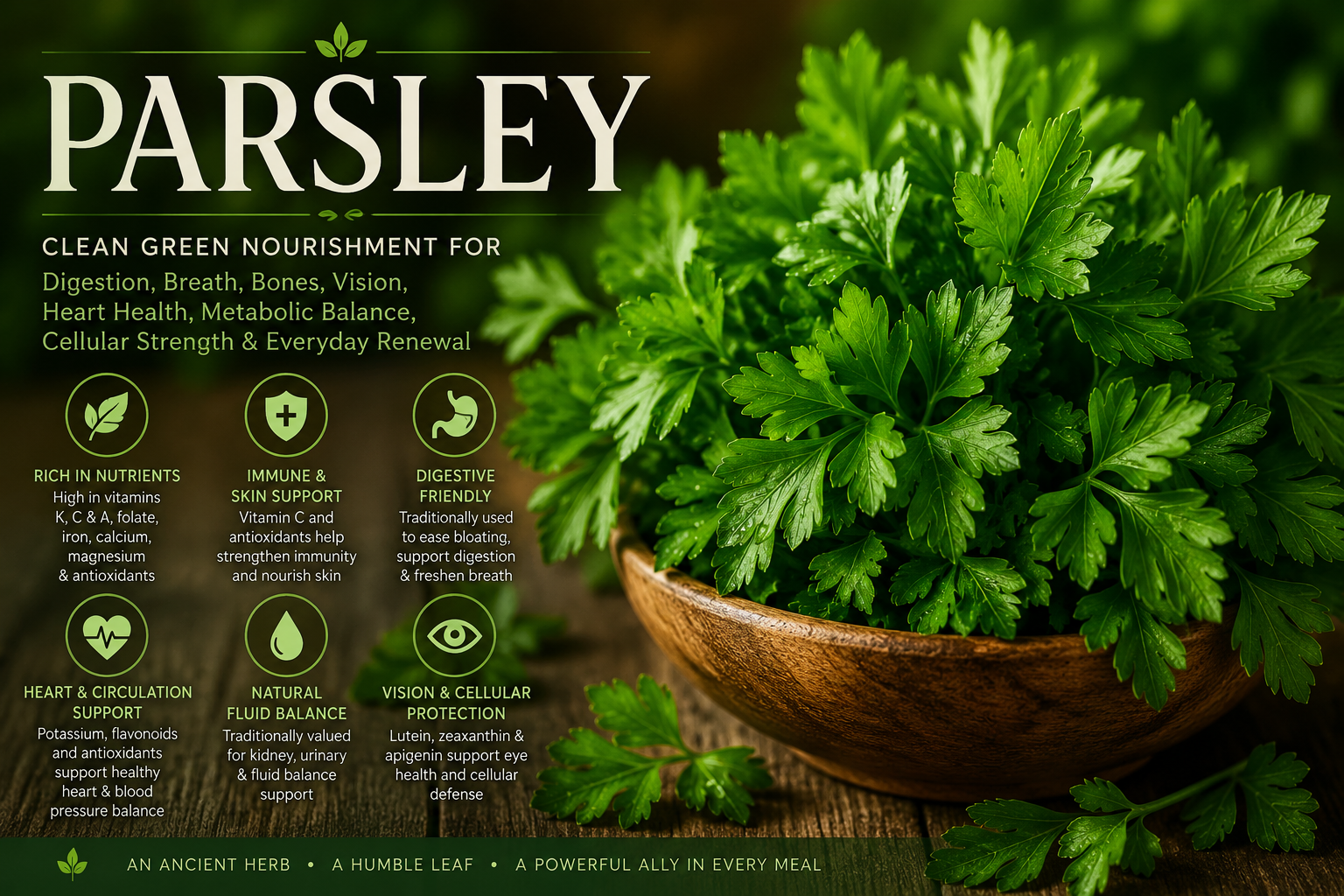
Parsley
Discover parsley benefits for digestion, breath, bones, vision, heart health, blood sugar-conscious meals, skin, antioxidants, fluid balance, and cellular wellness.
Clean green nourishment for digestion, breath, bones, vision, heart health, metabolic balance, cellular strength, and everyday renewal
Parsley is often treated like decoration, but that is far too small a view for this ancient green herb.
This bright leaf has stood beside food, medicine, gardens, kitchens, and traditional healing for centuries. It has been used fresh, dried, steeped, chopped, pressed into dishes, and carried into meals across Mediterranean, Middle Eastern, European, and global food traditions. Parsley is not loud. It does not need to dominate a plate. It brings its strength through freshness, minerals, chlorophyll-rich green life, and a clean taste that wakes food up.
Parsley is far more valuable than a simple garnish. It is a nutritional powerhouse packed with vitamins K, C, and A activity, along with folate, iron, potassium, magnesium, calcium, chlorophyll, lutein, zeaxanthin, apigenin, luteolin, and other antioxidant compounds. It supports bone nourishment, immune strength, skin health, digestion, breath, vision, fluid balance, heart-conscious eating, blood sugar-conscious meals, and long-term cellular health.
Parsley deserves to be seen clearly. It is food with memory. Food with purpose. Food with a long green lineage.
A Small Herb With Ancient Weight
Parsley, known botanically as Petroselinum crispum, belongs to the Apiaceae family, the same plant family that includes carrots, celery, fennel, dill, cilantro, and parsnip.
Its story reaches back into the Mediterranean world. Ancient Greeks and Romans used parsley in food, ceremony, and daily life. Over time, it became woven into European, Middle Eastern, and global cooking. It appeared in broths, sauces, meats, fish, stews, salads, grain dishes, cleansing food traditions, and household remedies.
In old kitchens, parsley was valued because it sharpened flavor, freshened heavy foods, supported digestion, and brought green brightness to meals. In folk traditions, it was used for the kidneys, urinary system, bloating, breath, mineral nourishment, and cleansing rituals.
Not every traditional use has the same level of modern clinical proof, but the long-standing respect around parsley did not appear from nowhere. People noticed what this herb brought to the body and the table.
Parsley is not a trend. It is a survivor of kitchens, gardens, medicine bowls, and household wisdom.
Types of Parsley
There are several forms of parsley, and each one has its own personality.
Flat-leaf parsley, also called Italian parsley, has broader leaves and a stronger, cleaner flavor. It is often preferred for cooking because it holds more presence in sauces, soups, salads, meats, vegetables, and Mediterranean dishes.
Curly parsley has frilled leaves and a lighter flavor. It is often used as a garnish, but it is still a real food herb with nutrients and value.
Root parsley, sometimes called Hamburg parsley or turnip-rooted parsley, is grown for its edible root as well as its leaves. It is more common in parts of Europe and is used in soups, stews, broths, and roasted vegetable dishes.
All three forms belong to the same green family of nourishment, but flat-leaf parsley is usually the strongest everyday choice for flavor and food use.
Nutritional Profile
Parsley offers powerful nutrition for very few calories.
One cup of fresh chopped parsley contains about 22 calories while providing vitamin K, vitamin C, vitamin A activity from carotenoids, folate, iron, potassium, magnesium, calcium, fiber, lutein, zeaxanthin, chlorophyll, and antioxidant flavonoids.
That same cup of fresh chopped parsley provides roughly:
Vitamin K: about 984 mcg
Vitamin C: about 79.8 mg
Vitamin A activity: about 252.6 mcg RAE
Folate: about 91.2 mcg
Iron: about 3.7 mg
Potassium: about 332 mg
Magnesium: about 30 mg
Lutein and zeaxanthin: about 3337 mcg
Parsley deserves a real place in everyday food. Even when used by the handful instead of the cup, it still brings minerals, vitamin K, vitamin C, carotenoids, chlorophyll, and green vitality to the meal.
Parsley is especially strong in vitamin K. This matters because vitamin K supports normal blood clotting and bone-related proteins. It also provides vitamin C, which supports immune defense, collagen formation, tissue-repair nutrition, and antioxidant protection. Its carotenoids support the eyes, skin, and cellular defense.
The strength of parsley is not found in one isolated claim. Its strength is found in the whole green pattern.
Key Benefits of Parsley
Parsley supports the body in several important ways.
Stronger bones: Parsley is exceptionally rich in vitamin K, a nutrient involved in bone-related proteins and normal bone mineralization. This makes parsley a valuable food herb for people who want stronger daily support for bones, teeth, connective tissue, and long-term resilience.
Immune and skin health: Parsley provides vitamin C, carotenoids, chlorophyll, and antioxidants that support immune defense, collagen production, tissue repair, skin nourishment, and antioxidant protection. It is a strong green food for people thinking about skin clarity, repair, aging, and everyday resilience.
Natural fluid balance: Parsley has a long traditional reputation as a food herb for water retention, bloating, urinary flow, and kidney support. It has often been used as a gentle culinary diuretic, helping the body release excess fluid and feel less heavy. This is best understood as food-level support, not a replacement for medical care when swelling, kidney disease, or blood pressure problems are serious.
Fresh breath: Chewing fresh parsley after meals has long been used to freshen the mouth. Its chlorophyll-rich leaves and clean green flavor can help soften strong food odors, especially after garlic, onions, fish, or heavier meals.
Vision support: Parsley contains beta-carotene, vitamin A activity, lutein, and zeaxanthin. These carotenoids are associated with eye and macular health, making parsley a smart green addition for people thinking about long-term vision support.
Digestive support: Parsley has traditionally been used to support digestion, reduce heaviness after meals, and ease occasional bloating and gas. Its bright, aromatic flavor helps awaken food and pairs especially well with lemon, garlic, olive oil, beans, eggs, fish, soups, and roasted vegetables.
Heart and circulation support: Parsley provides potassium, vitamin C, carotenoids, chlorophyll, and flavonoids that fit beautifully into heart-conscious eating. These nutrients support fluid balance, antioxidant defense, vascular nourishment, and whole-food meals that protect the body from the heaviness of processed eating.
Blood sugar-conscious support: Parsley is low in sugar and rich in minerals, antioxidants, and flavor. It can help build cleaner meals for people focused on blood sugar support, insulin resistance, cravings, weight concerns, or metabolic health. Research on parsley extracts and blood sugar is promising, especially in animal studies, but parsley should be honored as supportive food rather than presented as a diabetes treatment.
Cellular and cancer-research support: Parsley contains apigenin, a flavonoid studied for antioxidant, anti-inflammatory, and cancer-related cellular pathways. This does not mean parsley treats cancer. It means parsley contains plant compounds worthy of respect, especially for people thinking about long-term cellular health, oxidative stress, inflammation, and prevention-focused nourishment.
Antioxidant strength: Parsley contains flavonoids such as apigenin and luteolin, along with vitamin C and carotenoids. These compounds help protect cells from oxidative stress, one of the internal patterns connected with inflammation, aging, and chronic disease risk.
Parsley’s strength is found in its usefulness, accessibility, and deep green nourishment. It is one of the simplest ways to bring fresh flavor, minerals, antioxidants, and green vitality into ordinary meals.
Digestive Support and Bloating
Parsley has long been used after meals because it brings a clean, aromatic quality that can support digestion.
Its fresh, slightly peppery taste helps cut through rich or heavy foods. In many traditional food cultures, parsley appears beside meats, oils, beans, grains, sauces, and dense meals because it brings brightness and balance. It may help people feel less weighed down after eating, especially when used fresh and generously.
For bloating, gas, sluggish digestion, and that heavy “food sitting too long” feeling, parsley can be used as a simple daily food support. It pairs well with lemon, olive oil, garlic, cucumber, tomato, eggs, fish, chicken, lentils, rice, potatoes, soups, and broths.
Parsley does not need to be complicated. Sometimes the body receives support through a handful of fresh green leaves added at the right time.
Breath and Mouth Freshness
Parsley has earned its place as one of the classic fresh-breath herbs.
The old practice of chewing parsley after a meal is not empty folklore. Parsley’s bright flavor, chlorophyll-rich leaves, and fresh aromatic compounds can help clear the mouth after strong foods. It is especially useful after garlic, onion, fish, rich sauces, and heavy meals.
Fresh breath also connects to digestion. When a meal is heavy, sluggish, or overly processed, the body can feel burdened and the mouth often reflects it. Parsley brings freshness from both directions: the mouth and the meal itself.
Use it chopped into food, blended into green sauces, or chewed fresh after eating.
Kidney, Urinary, and Fluid Balance Support
Parsley has a long traditional reputation as a kidney and urinary herb. It has been used in folk practices for water retention, mild swelling, bloating, urinary flow, and natural fluid balance.
Modern research has explored parsley’s possible effects on kidney health, urinary chemistry, oxidative stress, and diuretic activity, but stronger human clinical trials are still needed. That boundary matters. Parsley can be honored without pretending every traditional use has been fully proven.
As a food, parsley may support the body through potassium, antioxidants, hydration-friendly minerals, and plant compounds that fit naturally into kidney-conscious nourishment. For everyday wellness, fresh parsley in food is the safest and most sensible form.
People with kidney disease, active kidney inflammation, kidney stones, fluid restrictions, or those taking diuretics or blood pressure medications should use parsley medicinally only with professional guidance. Food amounts are different from strong teas, extracts, seed preparations, or oils. People prone to kidney stones, especially oxalate-related stones, should be careful with concentrated parsley juicing or medicinal amounts.
Heart, Circulation, and Blood Pressure Support
Parsley deserves a place in heart-supportive eating because it brings together several important food-level strengths.
It provides potassium, a mineral involved in fluid balance and normal blood pressure regulation. It also contains vitamin C, carotenoids, chlorophyll, apigenin, luteolin, and other flavonoids that help protect cells from oxidative stress. Oxidative stress and inflammation are part of the larger picture behind cardiovascular strain, so antioxidant-rich foods matter.
Parsley has also been studied for cardiovascular-related effects, including blood pressure, blood vessel relaxation, platelet activity, and lipid-related pathways. Much of this research uses parsley extracts, animal models, or laboratory studies, so it should not be treated as proof that parsley acts like medicine in the human body. Still, the direction is meaningful. Parsley contains compounds that researchers continue to study because they may support circulation, vascular function, and cardiometabolic health.
As food, parsley fits beautifully into a heart-conscious plate. It adds brightness and mineral-rich green nourishment to fish, eggs, beans, chicken, soups, salads, potatoes, roasted vegetables, olive oil, lemon, garlic, and whole-food meals.
For high blood pressure, swelling, chest pain, clotting disorders, heart disease, or medication-managed conditions, parsley should be viewed as supportive food, not a replacement for medical care. Its best role is steady and practical: more green nourishment, more minerals, more antioxidants, and more flavor from real food instead of processed ingredients.
Blood Sugar, Diabetes, and Metabolic Health
Parsley also belongs in a blood sugar-conscious way of eating.
It is naturally low in sugar and calories while bringing minerals, fiber, vitamin C, carotenoids, and antioxidant compounds into the meal. This makes parsley useful for people trying to build steadier, cleaner plates without adding sweeteners, refined starches, or processed sauces.
Parsley has been studied in diabetic animal models, where parsley extract showed effects on blood glucose, oxidative stress, and diabetes-related tissue changes. This research is promising, but it is not the same as human proof that parsley treats diabetes. The honest message is stronger: parsley may support metabolic wellness through its nutrients, antioxidants, and role in whole-food eating.
For diabetes, insulin resistance, cravings, weight concerns, blood sugar swings, or metabolic stress, parsley works best as part of a larger food pattern: protein, fiber, healthy fats, mineral-rich greens, clean herbs, vegetables, beans if tolerated, eggs, fish, olive oil, and fewer refined foods.
Parsley does not carry the whole burden. It helps the plate become wiser.
Skin, Acne, Eczema, and Cellular Defense
Parsley’s vitamin C, vitamin A carotenoids, chlorophyll, and antioxidant compounds make it a useful food for skin-supportive nutrition.
Vitamin C supports collagen formation and helps the body handle oxidative stress. Carotenoids support the skin and eyes through antioxidant activity. Parsley’s green compounds add to the overall nourishment pattern that can matter for skin clarity, repair, and resilience.
For acne, eczema, dull skin, inflammation, or slow healing, parsley should not be framed as a direct cure. Skin issues can involve hormones, gut health, immune patterns, allergies, stress, blood sugar, liver burden, topical products, and environmental triggers. But parsley can be a wise part of a cleaner food rhythm that supports the body from within.
Fresh herbs are one of the easiest ways to make the plate more alive. The skin often responds well when the whole body is better nourished.
Immune and Antioxidant Strength
Parsley contains vitamin C and flavonoids that support antioxidant defense. Antioxidants help protect cells from oxidative stress, the internal wear-and-tear pattern linked with aging, inflammation, pollution exposure, processed foods, illness, and daily stress.
Parsley also contains apigenin and luteolin, plant compounds studied for their effects on inflammation, cellular signaling, and antioxidant pathways. This does not mean parsley should be treated as a disease treatment. It means parsley belongs among the green foods that help build a stronger internal terrain.
The body does not need every food to be dramatic. It needs steady support, again and again.
Bone and Mineral Support
Parsley is one of the strongest everyday herbs for vitamin K.
Vitamin K supports normal blood clotting and helps activate proteins involved in bone health. Parsley also contains calcium, magnesium, vitamin C, iron, potassium, and folate, making it valuable for people who want stronger food-based support for bones, teeth, connective tissue, and long-term resilience.
This is one of parsley’s most important gifts. It is not only a flavor herb. It is a mineral and vitamin-rich green that can help strengthen the nutritional foundation of ordinary meals.
Because parsley is high in vitamin K, people taking warfarin or similar blood-thinning medication should keep vitamin K intake consistent and speak with their healthcare provider before making major changes. The issue is not that parsley is “bad.” The issue is sudden changes in high-vitamin K foods can interfere with medication balance.
Vision and Eye Support
Parsley contains vitamin A activity from carotenoids, including beta-carotene, along with lutein and zeaxanthin.
These plant compounds are connected with eye and macular health, especially when they are part of a larger diet rich in greens, colorful vegetables, eggs, healthy fats, berries, herbs, and whole foods.
Parsley is not an eye treatment. It is a smart green food that helps feed the systems involved in vision, cellular defense, and long-term nourishment.
Cancer Research, Apigenin, and Cellular Health
Parsley contains apigenin, a flavonoid that has drawn serious research interest for its antioxidant, anti-inflammatory, and cancer-related cellular pathways.
Apigenin has been studied for its influence on oxidative stress, cell signaling, cell cycle activity, inflammation, angiogenesis, apoptosis, and other processes involved in cellular health. This research is meaningful, especially because parsley is one of the food herbs known for apigenin content.
The boundary must stay clear. Apigenin research does not mean parsley treats cancer. It does not mean parsley replaces oncology care. It means parsley contains plant compounds that scientists continue to study because the natural world often carries deep biochemical intelligence.
For people thinking about cancer prevention, recovery nourishment, inflammation, oxidative stress, or long-term cellular health, parsley can be part of a wise food pattern. It belongs beside other deeply colored plant foods, herbs, spices, berries, greens, clean proteins, fiber, minerals, and whole foods.
Parsley earns its place here because it feeds the body with green strength, antioxidant protection, and plant compounds worthy of respect.
Parsley for Women and Men
Parsley does not need separate men’s and women’s sections because its main nourishment applies to both.
For women, parsley may support mineral intake, skin nourishment, digestion, fluid balance, immune health, heart-conscious eating, blood sugar-conscious meals, and food-based vitamin K and vitamin C. Because parsley has a strong history in women’s folk traditions, it is important to keep the boundary clear: normal culinary amounts are different from medicinal amounts. During pregnancy, parsley should remain in normal food amounts only, and strong parsley teas, extracts, seeds, oils, or concentrated preparations should be avoided unless a qualified professional says otherwise.
For men, parsley may support circulation, digestion, antioxidant status, mineral intake, blood pressure-conscious eating, metabolic wellness, and whole-food meals built around protein, vegetables, beans, eggs, fish, soups, and herbs.
For both women and men, parsley is everyday green medicine in the old sense of the word: food that nourishes, refreshes, and helps the body stay awake to life.
Best Ways to Use Parsley
Fresh parsley is usually the best everyday form. Add it near the end of cooking or use it raw to preserve its bright flavor and vitamin C.
Use parsley in:
Soups and broths
Eggs and omelets
Fish and seafood
Chicken and turkey
Beans and lentils
Rice and potatoes
Roasted vegetables
Salads and tabbouleh
Green sauces and chimichurri
Lemon-garlic dressings
Cucumber and tomato dishes
Homemade mineral-rich juices in small amounts
A simple parsley blend can be made with chopped parsley, lemon juice, olive oil, garlic, natural salt, and black pepper. This can be added to vegetables, fish, beans, potatoes, eggs, or meat.
Parsley also pairs beautifully with oregano, thyme, basil, dill, mint, cilantro, rosemary, turmeric, ginger, cayenne, paprika, black pepper, garlic, onion, lemon, and apple cider vinegar.
Fresh, Dried, Tea, Juice, and Extract
Fresh parsley is the best choice for everyday nourishment, flavor, vitamin C, chlorophyll, and food-level minerals.
Dried parsley is convenient and still useful, but it has a softer flavor. It works well in soups, stews, eggs, sauces, and seasoning blends.
Parsley tea has a long traditional use, especially for digestion and fluid balance. It should be used gently, not excessively.
Parsley juice is more concentrated than sprinkling parsley on food. Small amounts may fit some wellness routines, but large amounts are not necessary and may not be wise for everyone.
Parsley extracts, seed preparations, and essential oil are much stronger than food. These should be approached carefully. Parsley essential oil is not the same as eating parsley and should not be used casually.
How to Choose Good Parsley
Choose parsley that is deep green, fresh-smelling, and lively. Avoid bunches that are yellowing, slimy, limp, or sour-smelling.
Flat-leaf parsley is usually best when you want stronger flavor. Curly parsley works when you want a milder taste or a decorative finish. Organic parsley is a good choice when available, especially because leafy herbs can hold residues.
To store fresh parsley, trim the stems and place the bunch in a jar with a little water, then cover loosely and refrigerate. You can also wrap it in a slightly damp towel and store it in a bag or container.
Wash parsley well before using. Like all leafy herbs, it can hold soil, grit, and handling residue.
How to Use Parsley Wisely
Parsley is safe for most people in normal food amounts.
Use extra care with concentrated parsley products. Parsley oil, seed preparations, strong medicinal teas, and large amounts of parsley juice are not the same as adding fresh parsley to food.
Avoid medicinal amounts of parsley during pregnancy. Normal food use is generally treated differently, but strong teas, oils, extracts, seeds, and concentrated preparations should be avoided.
People taking warfarin or similar blood-thinning medication should keep vitamin K intake consistent and speak with their healthcare provider before making major changes because parsley is high in vitamin K.
People with kidney disease, kidney inflammation, fluid restrictions, active kidney stones, or those taking diuretics, lithium, blood pressure medication, or transplant-related medications should speak with a qualified professional before using parsley medicinally.
People prone to kidney stones, especially oxalate-related stones, should be careful with concentrated parsley juicing or medicinal amounts.
Do not wild-harvest parsley unless you are trained in plant identification. Some poisonous plants in the same general plant family can look similar, and mistakes can be serious.
Parsley is a beautiful food. Respect keeps it beautiful.
Simple Parsley Wellness Ideas
Add a handful of chopped parsley to soup before serving.
Mix parsley with lemon, garlic, olive oil, and natural salt for a bright green dressing.
Add parsley to eggs, tuna, salmon, chicken salad, or chickpea salad.
Blend parsley into homemade green sauces.
Add parsley to cucumber and tomato salad.
Sprinkle parsley over roasted potatoes or sweet potatoes.
Use parsley in bone broth, vegetable broth, or mineral broth.
Add parsley to bean dishes to brighten flavor and support digestion.
Make tabbouleh with parsley as the main green, not as an afterthought.
Chew a few fresh parsley leaves after garlic, onion, or fish-heavy meals to help freshen the breath.
Use parsley generously in heart-conscious meals with fish, olive oil, beans, garlic, lemon, and vegetables.
Add parsley to blood sugar-conscious plates with protein, fiber, healthy fats, and mineral-rich greens.
Pair parsley with other deeply colored plant foods for antioxidant and cellular-health support.
Frequently Asked Questions
Is parsley more than a garnish?
Yes. Parsley is often treated as decoration, but it is a nutrient-rich culinary herb with vitamin K, vitamin C, vitamin A activity, folate, minerals, chlorophyll, lutein, zeaxanthin, apigenin, luteolin, and antioxidant compounds. It deserves a real place in food.
Is flat-leaf parsley better than curly parsley?
Flat-leaf parsley usually has a stronger flavor and is often preferred for cooking. Curly parsley is milder and often used as a garnish, but it still has value as food.
Can parsley help with bloating?
Parsley has a long tradition of use with digestion, heavy meals, bloating, and fluid balance. It may be helpful as part of meals, especially when paired with lemon, garlic, vegetables, beans, fish, eggs, or soups.
Is parsley good for kidneys?
Parsley has a traditional reputation for kidney and urinary support, and modern research continues to explore this area. For everyday wellness, food amounts are the safest approach. People with kidney disease, active kidney issues, kidney stones, or medication concerns should avoid concentrated parsley use unless guided by a qualified professional.
Can parsley support heart health?
Yes, parsley can support heart-conscious eating. It provides potassium, vitamin C, carotenoids, chlorophyll, and flavonoids that help support fluid balance, antioxidant defense, and vascular nourishment. It should be used as supportive food, especially alongside whole foods, clean fats, protein, vegetables, herbs, and mineral-rich meals.
Can parsley lower blood pressure?
Parsley contains potassium and antioxidants, and it fits well into heart-healthy eating. It should not be used as a replacement for blood pressure care or medication. It works best as part of a whole-food pattern.
Is parsley good for diabetes or blood sugar?
Parsley is low in sugar and rich in plant compounds, so it fits well in blood sugar-conscious meals. Some research has explored metabolic effects, especially in animal studies, but strong human proof is limited. It is best used as supportive food, not as a diabetes treatment.
Does parsley help with inflammation?
Parsley contains vitamin C, carotenoids, apigenin, luteolin, and other antioxidant compounds that help the body handle oxidative stress. Since oxidative stress and inflammation are closely connected, parsley belongs in an inflammation-conscious food pattern.
Is parsley good for skin?
Parsley provides vitamin C, carotenoids, chlorophyll, and antioxidants that support skin nourishment. It may be useful as part of a cleaner food pattern for acne, eczema, dull skin, or inflammation, but it should not be presented as a cure.
Does parsley freshen breath?
Yes. Fresh parsley has long been chewed after meals to help freshen the mouth. Its chlorophyll-rich leaves and clean green flavor can help soften strong food odors.
Is parsley good for vision?
Parsley contains beta-carotene, lutein, and zeaxanthin, which are plant compounds associated with eye and macular health. It belongs in a vision-supportive food pattern with other greens, colorful vegetables, eggs, berries, and healthy fats.
Does parsley have cancer-related research?
Yes. Parsley contains apigenin, a flavonoid studied for antioxidant, anti-inflammatory, and cancer-related cellular pathways. This research supports parsley’s role in cellular-health nutrition, but parsley should not be presented as a cancer treatment.
Can pregnant women eat parsley?
Normal food amounts are generally different from medicinal use. During pregnancy, avoid strong parsley teas, parsley oil, parsley seeds, extracts, or large medicinal amounts unless a qualified professional specifically approves them.
Should people on blood thinners avoid parsley?
People taking warfarin or similar medication should keep vitamin K intake consistent. Parsley is high in vitamin K, so sudden major changes can matter. This does not automatically mean parsley must be avoided, but consistency and professional guidance are important.
Is parsley essential oil safe?
Parsley essential oil is much stronger than the fresh herb and should not be used casually. It carries safety concerns, especially during pregnancy and with internal use. Fresh parsley as food is the better everyday choice for most people.
Deeper Message of Parsley
Parsley teaches the dignity of humble strength.
It does not need to be rare to be valuable. It does not need to be expensive to be powerful. It does not need to shout to carry purpose.
A small green leaf can freshen a meal, support digestion, strengthen mineral intake, feed the eyes, nourish the skin, support the bones, brighten the blood-sugar-conscious plate, honor the heart, contribute to cellular health, and awaken flavor.
Sometimes nourishment arrives finely chopped, bright with lemon, scattered over soup, stirred into broth, chewed after a strong meal, or gathered from the garden by hand.
Parsley is quiet medicine in the oldest food sense: steady green support carried through food, flavor, minerals, and daily nourishment.
It is a reminder that the body still recognizes simple things: fresh food, clean flavor, ancient herbs, and daily nourishment.
Wellness Pathways ↑
Cilantro
Dandelion Root
Stinging Nettle
Cranberry
Lemon Juice
Chanca Piedra
Explore more gentle, grounded wellness pages in the Wellness Pathways ↑

Saw Palmetto
Saw palmetto is a traditional herb used for prostate health, BPH, urinary tract function, DHT balance, hair loss, oily skin, acne, and hormone-related wellness.
Saw palmetto is one of the great rugged plants of American herbal tradition.
It grows close to the earth across the sandy lands of Florida and the coastal South, sharp-edged, persistent, and built for difficult ground. Its dark berries have long been valued for urinary support, reproductive vitality, prostate wellness, and lower pelvic strength.
Today, saw palmetto is best known as a plant extract used to support prostate health, urinary tract function, DHT balance, and certain patterns of hair thinning. Its modern use is closely tied to DHT, or dihydrotestosterone, a powerful androgen involved in prostate tissue, scalp hair patterns, skin oil production, and hormone-related changes.
Saw palmetto is most often discussed for its influence on 5-alpha-reductase, also written as 5α-reductase, the enzyme that converts testosterone into DHT. Because DHT activity is connected to benign prostate enlargement, male-pattern hair loss, female-pattern hair thinning, oily skin, and some androgen-driven acne patterns, saw palmetto is widely used in prostate formulas, hair support products, and hormone-related wellness routines.
Saw palmetto carries deep roots in the land and in traditional healing. Its place in prostate, urinary, and hormone-related wellness grew from long observation, practical use, and the steady recognition that this berry has a particular relationship with the lower urinary system and androgen-related tissue patterns.
Modern research has looked most closely at saw palmetto extracts, BPH symptoms, urinary flow, DHT activity, and hair-loss patterns. These areas help clarify where saw palmetto fits today. Its strongest lanes remain prostate support, urinary tract function, DHT balance, androgenic alopecia, hair loss support, oily skin, acne, and hormone-related patterns.
A Rugged Plant With a Deep Traditional History
Saw palmetto, known botanically as Serenoa repens, is a small native palm of the southeastern United States, especially Florida and the coastal South. Older botanical names include Sabal serrulata and American dwarf palm.
The plant grows in dense, low colonies across pine flatwoods, scrubland, sandy soil, oak hammocks, coastal dunes, and wild Florida terrain. Its fan-shaped leaves have sharp, saw-like edges, which gave the plant its common name. It is slow-growing, hardy, drought-tolerant, salt-tolerant, and deeply adapted to harsh conditions.
Saw palmetto is part of the old living fabric of Florida and the coastal South.
Indigenous peoples of Florida and the southeastern United States used saw palmetto for food, shelter, tools, and medicine. The berries were eaten and used traditionally for urinary support, reproductive support, tonic use, and lower pelvic wellness. The leaves and fibers were used for practical needs such as thatching, baskets, shelter, and other daily materials.
This history gives saw palmetto weight. Its reputation came from people who lived close to the land and understood plants through use, observation, survival, and relationship.
By the 1800s, saw palmetto had entered American botanical and Eclectic medical practice. Eclectic physicians were known for using plant medicines carefully and widely. They described saw palmetto as a nutritive tonic with a strong relationship to the urinary and reproductive systems. Older herbal writings connected it to urinary weakness, prostate irritation, reproductive vitality, tissue tone, and mucous membrane comfort.
In later European herbal practice, saw palmetto became strongly associated with benign prostate enlargement and lower urinary tract symptoms. Over time, it became one of the most recognized herbs in the world for men’s prostate wellness.
The historical thread is steady: saw palmetto has long been tied to the lower urinary system, reproductive vitality, prostate support, and tissue strength. Modern research did not create that connection. It began studying what traditional use had already been pointing toward.
There is also an ecological side to honor. Saw palmetto berries feed wildlife, including birds, deer, and bears. The flowers provide nectar for pollinators. The dense plant growth gives cover to birds, reptiles, and small animals. In Florida, saw palmetto berry harvesting is regulated because the berries matter to both commerce and wildlife.
Even its flowers and berries serve the land, drawing bees, feeding wildlife, and supporting the living web around it.
A plant with this much value should be treated with care, from the land to the bottle.
What Saw Palmetto Contains
Saw palmetto berries contain a rich blend of lipid-soluble plant compounds, including:
fatty acids
phytosterols
plant sterols
flavonoids
plant oils
beta-sitosterol
anti-inflammatory compounds
These compounds are believed to contribute to saw palmetto’s effects on prostate tissue, urinary tract function, inflammation, and androgen pathways.
The most important modern discussion centers on 5-alpha-reductase. This enzyme converts testosterone into DHT, a stronger androgen. DHT plays an important role in male development, puberty, prostate growth, facial and body hair patterns, skin oil activity, and scalp hair follicle behavior.
DHT and Androgen Pathways
DHT is a concentrated androgen made from testosterone. It has an important role in male development, puberty, prostate tissue, skin oil activity, facial and body hair patterns, and scalp hair follicle behavior.
DHT activity can affect different tissues in different ways. In the prostate, it is connected to growth patterns and urinary symptoms. In genetically sensitive scalp follicles, it may shorten the hair growth cycle and contribute to androgenic alopecia. In the skin and scalp, androgen activity may influence oil production, acne patterns, and scalp oiliness.
Saw palmetto is used because it may help influence this DHT pathway. It may affect 5-alpha-reductase activity, DHT uptake, DHT binding, and inflammatory signaling in certain tissues. This is the center of its modern use for prostate health, urinary function, hair thinning, oily skin, and androgen-related concerns.
Prostate Support and BPH
Saw palmetto is most famous for prostate support, especially in connection with benign prostatic hyperplasia, also called BPH. BPH is a noncancerous enlargement of the prostate gland that becomes more common as men age.
As the prostate enlarges, it can affect urinary flow. This may lead to:
frequent urination
nighttime urination
weak urine stream
urinary urgency
incomplete bladder emptying
difficulty starting urination
stop-and-start urination
lower urinary tract symptoms
BPH-related urinary discomfort
These symptoms are often called LUTS, meaning lower urinary tract symptoms.
Saw palmetto is commonly used for these concerns because of its relationship with DHT, inflammation, swelling signals, and urinary function. Its fatty acids and plant sterols may help support a healthier prostate environment.
This is saw palmetto’s central lane. Traditional use, European herbal practice, and modern supplement use all place it here.
Clinical research is most cautious when saw palmetto is studied alone as a BPH treatment. Traditional herbal practice and some studies still support its place as a prostate and urinary support herb, especially when product quality, extract type, symptom pattern, and the whole wellness picture are considered.
Saw palmetto is best understood as a respected prostate support herb with deep traditional use, meaningful hormone-related activity, and a long-standing role in urinary wellness. It should be used with realistic expectations and attention to the whole person, including age, prostate size, symptom pattern, inflammation, lifestyle, and product quality.
Urinary Tract Function
Saw palmetto is often taken to support urinary tract function, especially when urinary changes are connected to prostate enlargement or lower urinary tract irritation.
Many people use saw palmetto for:
frequent urination
nighttime bathroom trips
weak urine flow
urinary urgency
incomplete bladder emptying
lower urinary tract symptoms
BPH-related urinary difficulty
Some people report fewer nighttime awakenings, better urine flow, or less urgency. Saw palmetto fits best when the pattern points toward prostate involvement, DHT activity, inflammation, or mild to moderate lower urinary tract symptoms.
Urinary symptoms deserve attention because they carry information about the body. Blood in urine, painful urination, fever, sudden inability to urinate, worsening symptoms, or unexplained pelvic pain should be evaluated. Saw palmetto can be part of a wise wellness plan, while important body signals still deserve proper attention.
Hair Loss Support and Androgenic Alopecia
Saw palmetto is widely used for hair loss support, especially in connection with androgenic alopecia. This includes male-pattern baldness and female-pattern hair thinning.
This use comes directly from saw palmetto’s relationship with DHT.
In people who are genetically sensitive to DHT, hair follicles can gradually miniaturize. The hair growth cycle may become shorter. Hair may shed faster. The crown may thin. The hairline may recede. Density may weaken over time.
Saw palmetto may help by influencing 5-alpha-reductase, reducing the conversion of testosterone into DHT, and lowering DHT activity around hair follicles. This may help slow shedding and support hair density in certain people.
Saw palmetto is often used for:
male-pattern hair loss
female-pattern hair thinning
androgenic alopecia
receding hairline
thinning crown
DHT-related shedding
oily scalp with hair thinning
hair loss support
Saw palmetto makes the most sense when hair loss looks androgen-related: crown thinning, receding hairline, oily scalp, family history of pattern hair loss, or hair thinning connected to hormone shifts.
It may be less useful when hair loss is connected to:
low iron
thyroid imbalance
autoimmune disease
postpartum changes
major stress
rapid weight loss
low protein intake
illness
medication side effects
scalp disease
Hair loss is a body signal, not just a cosmetic concern. Saw palmetto may support one important pathway, especially when DHT sensitivity appears to be part of the pattern.
Hormone-Related Skin, Acne, and Oily Scalp
Because saw palmetto influences androgen pathways, it is sometimes used for hormone-related skin and scalp concerns.
This includes:
hormonal acne
androgen-driven acne
oily skin
excess scalp oil
PCOS-related hair thinning
female-pattern hair thinning
unwanted facial hair
androgen sensitivity
Androgens can increase oil production in the skin and scalp. DHT activity may contribute to clogged pores, oily skin, scalp oiliness, and some acne patterns. By influencing 5-alpha-reductase and DHT activity, saw palmetto may help support a calmer androgen-related pattern in certain people.
Acne can have many layers. Stress hormones, gut imbalance, food reactions, poor sleep, skin barrier damage, cosmetics, inflammation, and menstrual cycle changes can all play a role.
Saw palmetto may be useful when the pattern points toward androgen excess or androgen sensitivity. For women with irregular cycles, sudden scalp thinning, new facial hair growth, severe acne, or suspected PCOS, a deeper look at hormone patterns can be helpful.
For women, saw palmetto works in hormone-related territory, and it deserves respect.
Inflammation and Tissue Comfort
Saw palmetto contains fatty acids and plant sterols that may help calm inflammatory signaling. This may be part of its traditional and modern use for prostate comfort, urinary tract function, and pelvic wellness.
Inflammation can affect the prostate, bladder comfort, urinary rhythm, scalp health, skin oil production, and hormone-related tissue sensitivity. Saw palmetto’s anti-inflammatory activity may help explain why some people feel supported even when prostate size itself does not dramatically change.
Wellness often works through function, tone, inflammation, circulation, and tissue response, not only through size or structure. A person may experience better urinary comfort or flow because the tissue environment is better supported.
Saw palmetto has a meaningful lane here. It supports the tissue environment connected to prostate, urinary, and androgen-related patterns.
The deeper foundation still matters:
whole foods
quality protein
healthy fats
mineral balance
daily movement
sleep rhythm
sunlight rhythm
less alcohol
less urinary irritation
healthy weight
pelvic floor awareness
Saw palmetto works best when the body is supported from more than one direction.
Men’s Wellness
Saw palmetto has its strongest identity in men’s wellness because of its relationship with prostate health, DHT, urinary tract function, and male-pattern hair loss.
Men may consider saw palmetto for support with:
prostate wellness
BPH-related urinary symptoms
lower urinary tract symptoms
nighttime urination
weak urine flow
incomplete bladder emptying
DHT-related hair loss
male-pattern baldness
oily scalp
prostate inflammation patterns
It may work best as part of a broader prostate and hormone support plan that includes:
pumpkin seeds
zinc-rich foods
tomatoes and lycopene
selenium-rich foods
nettle root
healthy fats
hydration
walking
resistance training
healthy weight
pelvic floor awareness
reduced alcohol irritation
proper prostate screening
For men, saw palmetto carries a long-standing association with prostate and urinary strength. It belongs in a wellness approach that respects both traditional plant wisdom and the body’s need for clear attention.
Women’s Wellness
Saw palmetto may also be used by women, especially for androgen-related hair thinning, oily skin, acne, or PCOS-related patterns. Women should approach it with care because saw palmetto works in hormone-related pathways.
Women may see saw palmetto in formulas for:
female-pattern hair thinning
androgenic alopecia
hormonal acne
oily skin
unwanted facial hair
PCOS-related androgen symptoms
DHT-related scalp thinning
The key is pattern recognition.
Saw palmetto may make sense when symptoms point toward androgen sensitivity. It may not be the right fit when hair thinning is connected to thyroid issues, low iron, menopause, postpartum shifts, autoimmune issues, stress, medication effects, poor protein intake, or scalp disease.
Saw palmetto should not be used during pregnancy or breastfeeding. It should not be used for children unless directed by a qualified professional. Anyone with hormone-sensitive conditions or hormone-related medications should use caution.
For women, saw palmetto deserves the same respect as any herb that touches hormone pathways.
Prostate Cell Research and Clear Boundaries
Saw palmetto has been studied in relation to prostate tissue, DHT activity, inflammation, hormone signaling, and prostate cell behavior. Laboratory research has explored its anti-androgen, anti-inflammatory, and antiproliferative effects.
This research belongs in the prostate wellness conversation because saw palmetto has a long relationship with prostate tissue, androgen activity, and inflammatory signaling.
Saw palmetto is not a prostate cancer treatment. It should not replace PSA monitoring, prostate exams, imaging, biopsy decisions, medical treatment, radiation guidance, surgery, or cancer care. Prostate concerns deserve clear evaluation and steady care.
One important point is that saw palmetto does not appear to significantly change PSA readings, even at higher amounts. That matters because PSA is often used to monitor prostate health. Still, PSA is only one part of the picture. Symptoms, age, exam findings, family history, and medical judgment matter too.
Saw palmetto belongs in prostate wellness and prostate research discussions. It should not be turned into an exaggerated cancer claim.
Supported Wellness Areas
Saw palmetto’s strongest wellness lanes are prostate health, urinary tract function, DHT balance, androgenic alopecia, hair loss support, oily skin, acne, and hormone-related tissue patterns.
Its traditional and modern use is centered around the lower urinary system, prostate tissue, androgen pathways, and DHT-related changes. This is where saw palmetto belongs.
Saw palmetto may help support a healthier prostate and urinary environment in some people. It may support DHT-related hair thinning and androgen-related scalp or skin patterns. It may also help calm certain inflammatory signals connected to prostate and urinary tissue.
Those are the lanes worth keeping clear and strong.
Best Forms of Saw Palmetto
Saw palmetto is available in several forms:
capsules
softgels
liquid extracts
powdered berry
tea
topical scalp products
prostate formulas
hair support formulas
For prostate, urinary, and DHT support, standardized extracts are usually preferred over simple powdered berry. Many modern studies use lipid-based extracts because saw palmetto’s important compounds are fat-soluble.
A quality saw palmetto product should clearly show:
the botanical name, Serenoa repens
the berry as the plant part
the amount per serving
standardization when available
clean sourcing
third-party testing when possible
no unnecessary synthetic dyes
no unnecessary fillers
whether it is a single herb or combination formula
For hair support, topical formulas may combine saw palmetto with rosemary, pumpkin seed oil, caffeine, niacinamide, peptides, or other scalp-supportive ingredients. Oral hair formulas may combine it with zinc, nettle root, pumpkin seed, beta-sitosterol, or biotin.
A bigger ingredient list does not automatically make a better product. The formula should have a reason and a clean purpose.
How to Use It Wisely
Saw palmetto is usually taken consistently over time. It is not typically used as a one-day remedy. Prostate, urinary, hair, and hormone-related changes often take weeks or months to evaluate.
Many adult products use amounts around 160 mg twice daily or 320 mg once daily for standardized extract, depending on the formula and purpose.
Use saw palmetto with care if you:
take blood thinners
take antiplatelet medication
use frequent NSAIDs
have a bleeding disorder
are preparing for surgery
have liver concerns
have pancreas concerns
have prostate cancer or are being evaluated for it
are receiving radiation therapy
take hormone-related medication
have a hormone-sensitive condition
are pregnant
are breastfeeding
are considering it for a child
Possible side effects may include digestive upset, nausea, diarrhea, headache, dizziness, fatigue, rhinitis, or changes in libido. Rare case reports have involved bleeding concerns, liver injury, and pancreatitis, especially in more complicated medical situations or medication use.
Saw palmetto is well tolerated by many adults. It still deserves thoughtful use.
When to Seek Medical Guidance
Medical guidance is wise when symptoms are new, persistent, worsening, painful, or unusual.
For men, this includes:
blood in urine
painful urination
fever or chills
pelvic pain
back or bone pain
sudden urinary changes
trouble starting urination
inability to urinate
weak or interrupted urine stream
worsening nighttime urination
unexplained weight loss
family history of prostate cancer
For women, deeper evaluation may be helpful with sudden hair thinning, severe acne, irregular cycles, new facial hair growth, scalp shedding, or symptoms that may point to thyroid, iron, PCOS, hormone imbalance, or another underlying issue.
Saw palmetto can support a thoughtful wellness plan while still leaving room for proper evaluation when the body is asking for closer attention.
Evidence Snapshot
Strongest traditional use:
Urinary and reproductive support, especially in men.
Most common modern uses:
Prostate health, benign prostatic hyperplasia, lower urinary tract symptoms, urinary flow, nighttime urination, incomplete bladder emptying, DHT balance, hair loss support, androgenic alopecia, oily skin, acne, and hormone-related patterns.
Best-known mechanism:
Saw palmetto is best known for its influence on 5-alpha-reductase, the enzyme that converts testosterone into DHT. It may also affect DHT activity, DHT binding, or DHT uptake in certain tissues.
Human clinical evidence:
Research is most cautious when saw palmetto is studied alone for BPH symptoms. Other studies, traditional use, and clinical experience suggest that some people may experience urinary support. Hair-loss evidence is limited but promising for some androgen-related patterns.
Laboratory evidence:
Shows possible anti-androgen, anti-inflammatory, and prostate tissue effects.
Best fit:
Men seeking prostate and urinary support, people exploring DHT-related hair thinning, and those with androgen-related scalp or skin patterns.
Not the right lane:
Advanced urinary symptoms, prostate cancer treatment, sudden hair loss without investigation, pregnancy, breastfeeding, children, and unexplained hormonal symptoms without a deeper look.
Q&A
What is saw palmetto best known for?
Saw palmetto is best known for prostate health, BPH-related urinary symptoms, lower urinary tract function, DHT balance, hair loss support, androgenic alopecia, oily skin, and hormone-related acne patterns.
How does saw palmetto work?
Saw palmetto’s best-known proposed action is its influence on 5-alpha-reductase, the enzyme that converts testosterone into DHT. It may also affect DHT activity, DHT binding, or DHT uptake in certain tissues.
Why does DHT matter?
DHT is a powerful androgen made from testosterone. It plays an important role in male development, puberty, prostate tissue, skin oil activity, body hair, facial hair, and scalp hair follicle behavior. In some people, strong DHT activity in certain tissues may contribute to prostate enlargement, oily skin, acne patterns, and androgenic hair thinning.
Does saw palmetto help with BPH?
Saw palmetto is widely used for BPH symptoms such as frequent urination, weak urine flow, nighttime urination, and incomplete bladder emptying. Research is cautious when saw palmetto is used alone, but traditional use and some studies support its place as a prostate and urinary support herb.
Can saw palmetto shrink the prostate?
Saw palmetto is best framed as prostate and urinary support, not as a guaranteed prostate-shrinking herb.
Can saw palmetto improve urine flow?
It may help support urine flow in some people, especially when symptoms are related to BPH or lower urinary tract irritation. Results are not the same for everyone.
Can saw palmetto reduce nighttime urination?
Some people use it for nighttime urination and report improvement. Nighttime urination can also involve sleep apnea, bladder irritation, medication effects, caffeine, alcohol, or evening fluid habits.
Can saw palmetto help hair loss?
Saw palmetto may help support hair loss in some people with androgenic alopecia, including male-pattern hair loss and female-pattern hair thinning. It is most relevant when hair loss appears connected to DHT sensitivity.
Does saw palmetto increase hair density?
Some smaller studies suggest saw palmetto may support hair density or reduce shedding in certain people. The evidence is still developing, so it should be viewed as supportive rather than guaranteed.
Can women take saw palmetto?
Some women use saw palmetto for androgen-related hair thinning, hormonal acne, oily skin, unwanted facial hair, or PCOS-related patterns. Women should use care because saw palmetto works in hormone-related pathways.
Can saw palmetto help acne and oily skin?
It may help some androgen-driven acne or oily skin patterns by influencing DHT activity. Acne often has several roots, including stress, gut health, inflammation, skin barrier health, and cycle rhythm.
Is saw palmetto good for prostate cancer?
Saw palmetto is not a prostate cancer treatment. It may be part of prostate wellness and prostate research discussions, but cancer concerns require proper medical evaluation and care.
Does saw palmetto affect PSA levels?
Research suggests saw palmetto does not appear to significantly affect PSA readings. PSA still needs to be interpreted in the full context of symptoms, history, age, and medical evaluation.
Can saw palmetto be taken with medications?
Caution is wise with blood thinners, antiplatelet drugs, NSAIDs, hormone-related medication, and before surgery.
Is saw palmetto safe long term?
Many adults tolerate saw palmetto well, and it has been used in studies for extended periods. Long-term use should still be thoughtful, especially if urinary, hair, or hormone symptoms are changing.
The Deeper Message of Saw Palmetto
Saw palmetto teaches grounded strength.
It grows low, sharp-edged, persistent, and rooted. It survives heat, sand, storm, wildlife, and pressure. Its berries have fed animals, supported traditional wellness, and carried a reputation that has lasted through generations.
This plant carries the wisdom of endurance. It reminds us that strength is not always tall, loud, or quick. Sometimes strength grows close to the earth, serves quietly, and keeps its purpose through changing seasons.
Saw palmetto’s deeper message is one of rooted support: for flow, balance, tissue strength, and the body’s quiet signals.
Real wellness is built with respect, pattern recognition, wise action, and the courage to listen when the body asks for attention.
Wellness Pathways ↑
Stinging Nettle
Pumpkin Seeds
Lycopene
Maca
Reishi Mushroom
Cranberry
Dandelion Root
Green Tea
Explore more gentle, grounded wellness pages in the Wellness Pathways ↑

White Vinegar
White vinegar is an ancient fermented staple used for food preservation, cleaning, laundry, pickling, blood sugar support, foot soaks, and practical home wellness.
White vinegar is one of the most powerful simple staples in the home.
It is clear, sharp, inexpensive, and deeply useful. It belongs in the kitchen, the laundry room, the cleaning cabinet, the garden shed, and, when used wisely, in a grounded wellness routine.
White vinegar does not need a luxury label to matter. Its value comes from fermentation, acetic acid, and an ancient human relationship with preservation, food, cleansing, and practical care.
This is not a modern trend.
This is one of the oldest household tools people have carried through time.
It is humble, practical, and strong.
A little bottle with a long history and a clean purpose.
What White Vinegar Is
White vinegar, often called distilled white vinegar, is a clear vinegar made through fermentation. It is mostly water with acetic acid, the natural compound that gives vinegar its sour taste, sharp smell, and many of its practical benefits.
Most food-grade white vinegar contains about 4–7% acetic acid, with 5% acidity commonly used for cooking and pickling.
That acidity is what gives white vinegar its power.
It helps preserve foods. It brightens recipes. It cuts through residue. It helps neutralize odors. It creates an environment that is less friendly to certain microbes. And when used with meals, vinegar may help support a steadier blood sugar response after eating carbohydrates.
White vinegar is different from apple cider vinegar because it is usually clearer, sharper, and more neutral in flavor. It does not carry the same apple compounds, amber color, or “mother” that raw apple cider vinegar may contain.
Its strength is simplicity.
White vinegar is not a decorative wellness fad. It is a practical fermented tool with ancient roots.
Ancient Roots of Vinegar
Vinegar has one of the oldest stories in the human pantry.
Vinegar belongs to humanity’s ancient fermentation story. Its documented history reaches back to ancient Babylon around 5000 BCE, with later evidence from Egypt, China, the Middle East, Greece, and Rome showing how deeply vinegar moved through food, preservation, medicine, and household life.
Long before modern kitchens, medicine cabinets, grocery shelves, and cleaning aisles, people discovered that fermented liquids could turn sharp, sour, and useful.
Vinegar likely began as an accident of fermentation.
Fruit, grain, dates, figs, rice, beer, or wine would ferment into alcohol. When that alcohol met oxygen and acetic acid bacteria, another transformation happened. Alcohol became acetic acid. Sweetness became sharpness. A drink that could have been wasted became a tool.
That is the ancient intelligence of vinegar.
It came from watching nature work.
The word vinegar comes from the French vin aigre, meaning sour wine. But vinegar became far more than wine gone sharp. Across cultures, it became a preservative, condiment, household cleanser, traditional remedy, and daily support.
Ancient Babylonians were using vinegar thousands of years ago, often made from fruits such as dates and figs. It was used to preserve food, season meals, and support daily household needs. Vinegar was not a luxury item. It was part of survival, flavor, and stewardship.
Ancient Egyptian evidence also points to early vinegar use. Early records from China, the Middle East, Greece, and Rome show vinegar moving through human life as food, medicine, preservation, and practical household care.
In ancient Greece and Rome, vinegar was known, valued, and used in food, drink, traditional care, and military life.
Roman soldiers drank posca, a mixture of vinegar and water, as a practical field drink. It was not white vinegar as we know it today, but it shows how deeply vinegar belonged to ordinary life.
Vinegar moved through the ancient world because it worked.
It preserved.
It flavored.
It cleansed.
It endured.
Key Milestones in Vinegar History
Vinegar’s history is not thin. It is rich, practical, and global.
Around 5000 BCE, Babylon is often named as one of the earliest recorded centers of vinegar use. Babylonians made vinegar from fruits such as dates and figs and used it as a preservative and condiment.
Around 3000 BCE, ancient Egyptian evidence points to early vinegar use, showing that vinegar was already part of ancient food and household life.
By around 1000 BCE, China had developed cereal vinegars, helping establish vinegar as a lasting part of East Asian food culture.
In ancient Greece, vinegar appeared in traditional medicine and household care. Hippocrates and other early medical traditions referenced vinegar for cleansing and healing practices of their time.
In ancient Rome, vinegar was part of everyday life. Romans used it in food preparation, preservation, and drink. Roman soldiers mixed vinegar with water to make posca, a practical drink carried into harsh conditions.
During the Middle Ages, vinegar-making became more specialized in Europe. The French city of Orléans became famous for a slow barrel-aging method known as the Orléans process. This method allowed wine or cider to ferment gradually in wooden barrels or covered vats, creating quality vinegar through patience, air, and time.
In the 1800s, vinegar production changed dramatically. In 1823, Karl Sebastian Schutzenbach introduced a faster industrial method known as the packed generator or rapid-generator process. Alcohol was passed through materials such as wood shavings, where acetic acid bacteria could work more efficiently. This helped move vinegar production from slow household and artisan methods into larger-scale manufacturing.
Later scientific work helped explain what traditional vinegar makers had already learned through observation: acetic acid bacteria are the living force that transforms alcohol into vinegar.
Modern white vinegar is usually made by fermenting grain alcohol or another distilled alcohol into acetic acid, then diluting it to a food-safe acidity.
That is why white vinegar is clear, sharp, dependable, and widely affordable.
It is ancient fermentation carried into modern form.
Historical Uses Through the Ages
Throughout history, vinegar was never only a kitchen ingredient.
It was a preserving liquid, a sour seasoning, a cleaning helper, a traditional remedy, and a household standby.
Before refrigeration, vinegar helped people preserve vegetables, fruits, herbs, and other foods. This was not a hobby. Food preservation was part of survival. Vinegar helped families store what they had, stretch the harvest, and reduce waste.
Before modern cleaning products, vinegar helped cut residue, freshen surfaces, reduce odors, and cleanse everyday household spaces.
Before modern food systems, vinegar helped brighten plain meals, balance heavy foods, and give stored ingredients life again.
Traditional medicine also valued vinegar. Ancient records connect vinegar with wound dressing, digestive support, cough remedies, and cleansing practices. This history deserves honor, but it also belongs in its proper time. Today, vinegar is not modern wound care. Its historical role shows how deeply people trusted its cleansing acidity before better tools existed.
That does not make vinegar weak.
It makes vinegar ancient.
People kept using it because it had real work to do.
It preserved food.
It sharpened flavor.
It cleaned surfaces.
It helped households stretch resources.
It brought order, brightness, and freshness into daily life.
White vinegar carries that legacy forward.
Why White Vinegar Matters
White vinegar matters because acetic acid is active.
Acetic acid gives vinegar its bite, but it also gives vinegar its value. It helps create an acidic environment that can slow the growth of certain microbes, support food preservation, reduce mineral buildup, cut odors, and influence how the body responds to some carbohydrate-rich meals.
White vinegar is a useful natural tool with several clear lanes:
as a food ingredient
as a pickling and preservation aid
as a natural household cleaner
as a laundry freshness helper
as a diluted foot soak or hair rinse
as a small meal-based support for blood sugar balance
as an outdoor contact weed-control tool
as a simple way to reduce odor, residue, and hard-water buildup
Its power is not in excess.
Its power is in proper use.
Blood Sugar and Metabolic Support
One of the most researched wellness uses of vinegar is its effect on post-meal blood sugar.
Vinegar taken with or before a carbohydrate-containing meal may help reduce the rise in blood sugar and insulin after eating. This appears to be connected to acetic acid, which may slow digestion, delay stomach emptying, and influence how the body handles glucose after a meal.
This makes white vinegar especially interesting for people looking for support with:
blood sugar
insulin response
carbohydrate-heavy meals
insulin resistance
prediabetes support
type 2 diabetes lifestyle support
metabolic balance
White vinegar is not a replacement for diabetes care, medication, medical guidance, or a balanced diet. But used wisely with food, it may be a simple support for steadier post-meal blood sugar.
The strongest way to use it is through meals, such as vinaigrettes, pickled vegetables, slaws, marinades, or a diluted vinegar drink taken with food.
White vinegar should never be taken straight. Small, diluted amounts used with food are the wisest way to receive its benefits.
Digestion and Meal Balance
White vinegar can support digestion indirectly by adding acidity, brightness, and balance to food.
A small amount in salad dressing, marinades, soups, sauces, or pickled vegetables can make a meal feel lighter and more satisfying. It can sharpen flavor, balance richness, and help vegetables taste more alive.
Some people use vinegar before meals because it helps them feel fuller or makes carbohydrate-heavy meals feel more balanced. Others find it too sharp, especially if they deal with reflux, ulcers, gastritis, delayed stomach emptying, or a sensitive stomach.
This is where body wisdom matters.
For many people, vinegar is best tolerated when it is:
diluted
taken with food
used in recipes
paired with olive oil, herbs, vegetables, or protein
kept to small amounts
If vinegar causes burning, nausea, throat irritation, stomach pain, or reflux, stop using it internally and choose a gentler option.
Weight Support and Fullness
White vinegar is sometimes promoted for weight loss, but its strongest role is more grounded.
Vinegar may help some people feel fuller when used with meals. It may also support steadier blood sugar after carbohydrate-heavy foods, which can indirectly help cravings for some people.
White vinegar does not replace protein, movement, hydration, sleep, minerals, sunlight, or steady meals.
Its best weight-support role is simple: use it to make healthy food taste better.
A good vinegar dressing can turn plain vegetables into something people actually want to eat. Pickled onions can make a simple bowl feel bright and satisfying. A splash of vinegar can reduce the need for heavier sauces.
That is where white vinegar earns its place.
Not as a shortcut.
As a small tool that helps better choices become easier.
Antimicrobial Properties
White vinegar has natural antimicrobial properties because of its acetic acid content.
This is part of why vinegar has long been used in pickling, food preservation, odor control, cleaning, and diluted foot or scalp rinses. Its acidity can make certain environments less friendly to some bacteria and fungi.
White vinegar’s antimicrobial lane is best understood through practical uses:
preserving acidic foods
reducing odors
refreshing surfaces
cutting residue
supporting foot freshness
helping clean acid-safe areas
creating acidic brines for pickling
It is useful when it is used in the right way.
For situations that require true disinfecting, deeper mold treatment, wound care, or medical attention, choose the proper tool for that purpose.
White vinegar is valuable because it has a clear purpose. It works best when we let it do what it does well.
Heart and Circulatory Support
Vinegar research has explored possible effects on cholesterol, triglycerides, blood sugar, and metabolic health. Some studies suggest vinegar may offer modest support in these areas, especially when used with meals and within a healthy lifestyle.
For heart and circulatory wellness, white vinegar should be seen as a small supporting ingredient, not the main strategy.
Its best role is helping make healthy foods more enjoyable:
crisp salads
cabbage slaws
bean dishes
cucumber salads
pickled onions
herb dressings
marinated vegetables
greens with a splash of brightness
When vinegar helps someone eat more whole foods, vegetables, fiber-rich meals, and balanced plates, it becomes part of a larger pattern that supports the body well.
Food Preservation and Pickling
White vinegar shines in pickling.
Its clean flavor and dependable acidity make it one of the most common choices for preserving vegetables. Cucumbers, onions, peppers, carrots, cabbage, garlic, beets, and herbs can all be preserved with vinegar-based brines.
For safe home canning and shelf-stable pickling, acidity matters.
Many tested canning recipes call for vinegar with 5% acidity. This is important because proper acidity helps create an environment that keeps preserved foods safer.
White vinegar is especially useful for:
quick pickles
refrigerator pickles
tested canning recipes
marinades
slaws
salad dressings
deviled eggs
brightening soups and sauces
balancing rich or fatty foods
A splash of vinegar can wake up a dish like a little bell ringing in the kitchen.
For refrigerator pickles, there is more flexibility. For shelf-stable canning, follow a tested recipe rather than guessing.
Household Cleaning
White vinegar is loved for cleaning because acetic acid helps break down mineral deposits, soap residue, grease film, hard-water spots, and household odors.
It is valued because it is inexpensive, easy to find, clear, sharp, and free from heavy artificial fragrance. It gives clean acidity without competing scents.
White vinegar can be helpful for:
glass
mirrors
sink areas
faucets
hard-water spots
soap residue
refrigerator wipe-downs
trash can odors
drain freshness
microwave steam cleaning
cutting boards after washing
acid-safe countertops
shower buildup on safe surfaces
White vinegar is not the same as a true disinfectant for serious germ control, but as a practical household cleaner, it is highly useful.
It helps with the everyday kind of cleaning: residue, odor, dullness, buildup, and freshness.
Surfaces to Avoid
White vinegar should not be used on everything.
Avoid using vinegar on:
marble
granite
limestone
travertine
natural stone
waxed wood
unsealed grout
cast iron
aluminum
electronic screens
egg spills, because vinegar can make the odor stronger
rubber seals or parts unless your appliance maker says it is safe
surfaces that require manufacturer-approved cleaners
Acid can etch stone, dull finishes, damage coatings, and affect certain materials.
White vinegar is powerful because it is acidic. That same acidity deserves respect.
Laundry Care
White vinegar can be an occasional laundry helper for odor, residue, and freshness.
Many people use it to help reduce musty smells, freshen towels, soften fabric feel, or cut detergent residue. It may be used in a rinse cycle or as part of a careful pre-soak, depending on the fabric and machine.
White vinegar may help with:
musty towel odor
sweat smells
detergent buildup
mild fabric stiffness
pet bedding odor
washing machine freshness
It should not be called a true substitute for bleach when sanitizing, disinfecting, or deep whitening is needed.
White vinegar also should not be overused in washing machines. Too much acidity too often may not be ideal for rubber seals or machine parts. Use it occasionally, keep amounts modest, and follow the washer manufacturer’s guidance.
A wise home routine does not need harshness.
It needs rhythm, balance, and the right tool for the job.
Outdoor Weed Control
White vinegar can be used outdoors as a natural contact weed-control tool, especially for young weeds in cracks, walkways, driveways, gravel areas, and places where you do not want plants growing.
Its acidity damages the leaves it touches.
This can be helpful for small weeds, but it often does not fully kill deep roots or perennial weeds. Many weeds may grow back, especially if the root system remains alive.
White vinegar should be used carefully because it can also harm grass, flowers, vegetables, herbs, and desirable plants.
Best use areas include:
sidewalk cracks
driveway seams
gravel paths
patio edges
non-growing areas
small young weeds
Avoid spraying it near plants you want to keep.
Also be careful with stronger horticultural vinegar. It can contain much higher levels of acetic acid than household vinegar and may irritate or damage skin, eyes, lungs, and surfaces.
Stronger vinegar products should be handled with care, especially around skin, eyes, pets, children, and plants you want to keep.
Skin, Feet, and Hair
White vinegar has a long history of external use, especially for odor, feet, scalp buildup, and hair rinsing.
Because it is acidic, it must be diluted.
Some people use diluted vinegar foot soaks for:
foot odor
sweaty feet
minor fungal-prone environments
rough skin on feet
nail hygiene support
A common approach is adding a small amount of white vinegar to a basin of warm water and soaking the feet briefly. The goal is freshness and balance, not harshness.
For hair, some people use a very diluted vinegar rinse to help remove buildup and restore shine. White vinegar is sharper than apple cider vinegar, so it should be diluted well and kept away from the eyes.
For skin concerns such as acne, eczema, rashes, or irritation, white vinegar should be used carefully. It may be too harsh for sensitive or broken skin.
Never apply undiluted vinegar directly to irritated skin, wounds, burns, or open areas.
White vinegar is useful because it is acidic, and that same acidity must be handled wisely.
Women and Men
White vinegar does not need separate men’s and women’s sections because its main uses are similar for both.
For women and men, it may support:
post-meal blood sugar balance
healthy food preparation
cleaner home routines
laundry freshness
foot and body odor support
scalp and hair buildup rinses
pickled vegetables and digestive-friendly meals
simple, affordable wellness routines
For women dealing with vaginal irritation, white vinegar should not be used internally or as a douche. The body has its own delicate balance, and harsh home remedies can disrupt it.
For men dealing with athlete’s foot, foot odor, sweaty work boots, or heavy work clothes, diluted vinegar foot soaks and occasional laundry use may be helpful as part of a larger hygiene routine.
The same practical uses apply to both men and women.
It is about ordinary care done wisely.
Conditions People Often Search For
White vinegar is commonly searched for in connection with:
blood sugar
diabetes
type 2 diabetes
insulin resistance
weight loss
fullness
digestion
acid reflux
cholesterol
triglycerides
foot fungus
athlete’s foot
foot odor
dandruff
itchy scalp
acne
eczema
cleaning
laundry odor
musty towels
mold
hard water stains
weeds
weed killer
pickling
food preservation
The strongest wellness lane is blood sugar response with meals.
The strongest household lane is cleaning, deodorizing, laundry freshness, and mineral buildup.
The strongest food lane is pickling, preserving, and brightening meals.
The strongest outdoor lane is contact control for young weeds in non-growing areas.
For acne, eczema, reflux, fungal concerns, and stronger internal use, white vinegar should be approached with more care because irritation is possible.
How to Use White Vinegar
White vinegar can be used in simple ways:
Add it to salad dressing with olive oil, herbs, garlic, mustard, honey, or lemon.
Use it in marinades for meat, beans, tofu, or vegetables.
Make refrigerator pickles with cucumbers, onions, carrots, peppers, or cabbage.
Add a splash to soups, greens, slaws, or sauces to brighten flavor.
Use it in tested pickling recipes that call for 5% acidity.
Dilute it in water for a simple cleaning spray on acid-safe surfaces.
Use it occasionally in laundry for odor, residue, or towel freshness.
Make a diluted foot soak for odor or freshness.
Use a very diluted hair rinse occasionally to remove buildup.
Spray it carefully on young weeds in cracks, gravel, or non-growing areas.
A little goes a long way.
White vinegar is not something to overdo.
How to Use It Wisely
White vinegar should always be respected because it is acidic.
Do not drink it straight. Undiluted vinegar can irritate the throat, stomach, and teeth.
Do not brush teeth immediately after consuming vinegar. Rinse with water first and give the mouth time to rebalance.
Use small amounts with meals instead of taking strong vinegar shots.
Avoid frequent internal use if you have reflux, ulcers, gastritis, gastroparesis, or a very sensitive stomach.
Use caution if you take blood sugar medication, insulin, diuretics, or medications affected by potassium levels.
Do not apply undiluted vinegar to skin, scalp, wounds, burns, or irritated areas.
Do not use white vinegar internally for vaginal care.
Do not mix vinegar with bleach. This can create dangerous fumes.
Do not mix vinegar with hydrogen peroxide in the same container.
Do not use vinegar on marble, granite, limestone, travertine, or other acid-sensitive surfaces.
Do not use vinegar near plants you want to keep.
Do not confuse food-grade white vinegar with cleaning vinegar. Cleaning vinegar can be much stronger and is not meant for food use.
White vinegar is most helpful when it is used with respect.
Small amounts. Clear purpose. Wise use.
What to Look For
For food and wellness use, choose food-grade distilled white vinegar.
Look for:
food-grade labeling
5% acidity for pickling and canning
clear ingredients
no added fragrance
no cleaning additives
trusted grocery or food brands
For household cleaning, regular distilled white vinegar is often enough.
For cleaning-only vinegar, keep it away from food use.
For gardening, understand the difference between household vinegar and stronger horticultural vinegar. Stronger vinegar may work more aggressively, but it also carries more risk.
For pickling and canning, always check the acidity level and follow tested recipes.
This is one of those small details that matters.
White Vinegar, Apple Cider Vinegar, and Cleaning Vinegar
White vinegar is clear, sharp, simple, and often best for pickling and cleaning.
Apple cider vinegar is made from fermented apple juice. It has a softer flavor, amber color, and may contain fruit-based compounds, especially when raw and unfiltered.
Cleaning vinegar is usually stronger than food vinegar. It may be useful around the house, but it is not for eating.
The right vinegar depends on the purpose.
For salad dressings, either white vinegar or apple cider vinegar can work.
For pickling, white vinegar is clean and dependable.
For cleaning, white vinegar is often the practical favorite.
For wellness routines, food-grade vinegar in small amounts with food is the safest lane.
For laundry, occasional white vinegar use may help with odor and residue.
For weeds, household white vinegar may help with young weeds in cracks and walkways, while stronger vinegar products require much more caution.
Q&A
How old is vinegar?
Vinegar is one of humanity’s oldest fermented staples. Its documented history reaches back to ancient Babylon around 5000 BCE, with evidence from Egypt, China, the Middle East, Greece, and Rome showing its long role in food, preservation, medicine, and household life.
Is white vinegar good for blood sugar?
White vinegar may help reduce the rise in blood sugar after carbohydrate-containing meals. The acetic acid in vinegar appears to influence digestion and glucose response. It should be used as meal support, not as a replacement for diabetes care.
Can white vinegar help with type 2 diabetes?
White vinegar may be helpful as part of a meal-based lifestyle routine for some people with insulin resistance or type 2 diabetes. Because it can affect blood sugar response, anyone using insulin or blood sugar medication should use caution and follow proper medical guidance.
Can I drink white vinegar every day?
Some people use small amounts daily, but it should always be diluted and preferably taken with food. Drinking vinegar straight is too harsh for the throat, stomach, and teeth.
Is white vinegar better than apple cider vinegar?
Neither is always better. White vinegar is cleaner, sharper, and excellent for pickling and cleaning. Apple cider vinegar has a softer flavor and may contain more fruit-based compounds. For acetic acid benefits, both can be useful when food-grade and used wisely.
Can white vinegar help with weight loss?
White vinegar may support fullness or steadier blood sugar for some people, but it is not a fat-burning shortcut. Its best role is helping healthy meals taste better and feel more satisfying.
Does white vinegar kill bacteria?
White vinegar has antimicrobial properties because of its acidity, but it should not be treated as a complete disinfectant. It can be useful for cleaning, odor control, and food preservation, but deeper disinfection requires the proper product for that purpose.
Can I clean with white vinegar?
Yes, white vinegar is useful for many cleaning tasks, especially glass, odors, hard-water spots, soap residue, and mineral buildup. Do not use it on natural stone, and do not mix it with bleach.
Can white vinegar replace bleach?
White vinegar can help with odor, residue, and some cleaning tasks, but it should not be treated as a true bleach replacement for disinfecting, sanitizing, or deep whitening. Vinegar and bleach should never be mixed.
Can I use white vinegar in laundry?
White vinegar can be used occasionally for laundry odor, residue, towel freshness, and musty smells. Use modest amounts, avoid overuse, and follow your washing machine’s guidance.
Can white vinegar kill weeds?
White vinegar can damage young weeds by contact, especially in cracks, walkways, gravel, and non-growing areas. It may not fully kill deep roots or perennial weeds. It can also harm plants you want to keep, so use it carefully.
Can white vinegar help with foot odor?
Yes, diluted white vinegar foot soaks are commonly used for foot odor and freshness. It should be diluted in water and avoided on cracked, wounded, or irritated skin.
Can white vinegar help athlete’s foot?
White vinegar may help create an acidic environment that is less friendly to some microbes, but athlete’s foot can be stubborn. Use it only diluted, keep feet dry, change socks, and clean shoes.
Can I use white vinegar on my face?
White vinegar is usually too harsh for facial skin, especially undiluted. It can irritate acne, eczema, sensitive skin, or broken skin. Gentler options are usually better for the face.
Can white vinegar help dandruff?
Some people use a very diluted vinegar rinse for scalp buildup or flaking. It should be diluted well, kept away from the eyes, and avoided if the scalp is irritated, scratched, or burning.
Is cleaning vinegar the same as white vinegar?
No. Cleaning vinegar is often stronger and is not meant for food. Use food-grade white vinegar for cooking, pickling, or wellness use.
The Deeper Message of White Vinegar
White vinegar deserves to be honored because it has served ordinary life for thousands of years.
It is not glamorous. It does not ask for attention. It simply does its work: preserving, brightening, cleansing, balancing, cutting through what is heavy, and restoring freshness where things have grown stale.
There is something honest about that.
Sometimes wellness is not found in the rarest bottle or the most expensive remedy. Sometimes it is sitting quietly in the pantry, waiting to be remembered.
White vinegar is simple strength.
Clear. Sharp. Practical. Enduring.
A household staple with ancient roots and a clean purpose.
Wellness Pathways ↑
Apple Cider Vinegar
Probiotics
Lemon Juice
Chromium Picolinate
Explore more gentle, grounded wellness pages in the Wellness Pathways ↑

Propolis
Discover the benefits of propolis for immune support, sore throats, cold sores, oral health, skin repair, inflammation balance, and natural wellness.
Propolis is one of the most fascinating gifts from the hive.
Bees create it from tree sap, plant buds, bark resins, botanical exudates, wax, and their own natural secretions. Inside the hive, propolis becomes a protective seal, a living barrier, and one of the ways bees strengthen the colony.
That alone tells us something important.
Propolis is not soft sweetness like honey. It is the hive’s shield.
For centuries, people have valued propolis for immune support, sore throats, cold sores, minor wound healing, oral health, gum care, skin support, microbial balance, and inflammation balance. Modern research continues to study its antibacterial, antiviral, antifungal, antioxidant, and anti-inflammatory properties, while traditional use reminds us that nature often protects life through quiet, layered intelligence.
Propolis is small, sticky, and easy to overlook, but it carries the strength of trees, bees, and the ancient instinct to preserve what is alive.
What Propolis Is
Propolis is often called bee glue because bees use it to seal cracks, smooth rough spaces, protect hive walls, and help maintain a healthier internal environment.
It begins with plant resin.
Bees gather resin from trees, buds, bark, sap, and other plant sources, then combine it with beeswax and enzymes. The finished propolis can vary in color, scent, texture, and strength depending on the plants growing near the hive.
That is why propolis is not exactly the same everywhere.
Its value comes from the land around the hive. The trees, shrubs, flowers, climate, and season all influence the final resin. This gives propolis a beautiful regional character, much like honey, herbs, tea, or olive oil.
Propolis is not a single isolated nutrient. It is a botanical resin transformed by bees.
Types of Propolis
Different types of propolis can have different colors, plant compounds, aromas, and strengths. These differences do not mean one type is always better than another. They show how closely propolis is tied to the plants growing near the hive.
Brazilian Green Propolis
Brazilian green propolis is one of the best-known and most studied types.
It is commonly associated with a plant called Baccharis dracunculifolia, sometimes called alecrim-do-campo. Bees gather resin from this plant and turn it into a greenish propolis rich in plant compounds.
Brazilian green propolis is especially valued for compounds such as artepillin C, along with phenolic acids and antioxidants.
It is often studied for:
immune support
antioxidant activity
inflammation balance
oral health
microbial balance
cellular protection
Brazilian green propolis usually has an earthy, sharp, resinous character. It is often found in capsules, tinctures, throat sprays, and standardized extracts.
Brazilian Red Propolis
Brazilian red propolis is known for its deep reddish color and rich plant chemistry.
It is often linked with plants such as Dalbergia ecastaphyllum and other regional botanical sources. Red propolis may contain isoflavonoids, pterocarpans, chalcones, and other plant compounds that give it a unique profile.
Brazilian red propolis is often studied for:
antioxidant activity
oral health
microbial balance
inflammation support
skin and tissue support
immune wellness
Its color makes it memorable, but its deeper value is in its broad botanical complexity.
Brazilian Brown Propolis
Brazilian brown propolis is another common type and may come from a wider range of plant sources depending on the region.
Because its botanical sources can vary, brown propolis may be more chemically diverse from one area to another. It is often studied for antioxidant, antimicrobial, and general wellness-supportive properties.
Brazilian brown propolis reminds us that propolis does not have to be rare or brightly colored to be useful. A well-sourced, properly tested product matters more than color alone.
Poplar Propolis
Poplar propolis is common in temperate regions, including parts of Europe, North America, and Asia.
It is often made from resins gathered from poplar trees and related plant sources such as birch, willow, alder, and aspen. Poplar propolis is known for flavonoids and phenolic compounds such as pinocembrin, galangin, chrysin, and caffeic acid derivatives.
This is the type often discussed in older European propolis research and traditional use.
Poplar propolis is especially associated with:
oral health
gum support
skin support
throat comfort
microbial balance
antioxidant activity
immune wellness
Choosing Between Types
Most people do not need to chase the rarest type of propolis.
The best choice is usually a clean, well-made product from a trustworthy source. A strong propolis product should clearly state what type it uses, how it is extracted, and whether it has been tested for quality.
Because propolis varies by region and plant source, quality matters. A good product should be clear about its sourcing, extraction method, and testing.
Some higher-quality products list standardized compounds, total flavonoids, phenolic content, or a named extract. This can make the product more consistent from batch to batch.
Green, red, brown, and poplar propolis can all have value.
The source matters. The testing matters. The formula matters. The way your body responds matters.
A History Written in the Hive
Propolis has been valued since ancient times.
The Egyptians, Greeks, and Romans all recognized propolis as useful for protection, preservation, wounds, and traditional healing. Ancient cultures watched what bees were doing inside the hive and understood that this resinous substance had value beyond the colony.
The Greek word propolis is often understood as meaning “before the city” or “defense of the city.” That meaning fits beautifully. In the hive, propolis stands at the threshold. It guards the entrance. It seals weakness. It helps protect the community.
Traditional folk medicine carried this knowledge forward for generations. Propolis was used for the mouth, throat, skin, wounds, and general resilience long before modern laboratories began studying its active compounds.
Propolis has always been connected to protection.
Why Propolis Is So Valued
Propolis contains many naturally occurring compounds, including flavonoids, phenolic acids, aromatic acids, terpenes, and other plant-based antioxidants.
One important compound found in propolis is pinocembrin, a flavonoid studied for antimicrobial, anti-inflammatory, antioxidant, and tissue-supportive activity. This is one reason propolis has drawn attention for skin repair, minor wound support, microbial balance, and inflammation support.
Propolis is highly prized for several natural properties:
antibacterial support
antiviral support
antifungal support
anti-inflammatory activity
antioxidant protection
oral health support
skin and tissue support
immune system support
This is where propolis shines best: as a concentrated natural protector with practical uses for the mouth, throat, skin, and immune system.
Wound Healing and Skin Support
Topical propolis has long been used for minor cuts, scrapes, burns, irritated skin, and skin repair.
Its value comes from several natural actions working together. Propolis may help discourage bacterial growth, calm local irritation, protect the skin barrier, and support the body’s normal tissue-repair process. Some research also suggests propolis compounds may help support collagen activity, which is important for skin strength and wound recovery.
This makes propolis useful in well-made salves, ointments, balms, creams, and wound-care formulas.
People often search for propolis for:
minor cuts
minor burns
scrapes
dry or irritated skin
acne-prone skin
cold sores
rough patches
skin barrier support
blemish care
Propolis is active and resinous, so sensitive skin should be introduced to it gently. For topical use, apply a tiny amount to a small area first and watch how the skin responds.
For deeper wounds, spreading irritation, wounds that are slow to heal, or skin that looks infected, proper care is important.
Cold Sores and Herpes Support
One of the most well-known modern uses for propolis is cold sore support.
Cold sores are commonly caused by herpes simplex virus type 1, also known as HSV-1. Propolis has been studied for antiviral activity, and some research suggests that topical propolis preparations may help cold sores heal faster when applied directly to the affected area.
A 3% propolis ointment is one of the studied forms often mentioned in cold sore research. Some studies suggest it may help reduce healing time and support the body’s response to herpes lesions when used topically. Research has also looked at propolis for lowering local viral activity in herpes simplex lesions.
This makes propolis especially interesting for people searching for natural cold sore support, lip sore care, herpes support, HSV-1 support, and topical immune support.
Use propolis early when the first tingling, tenderness, or irritation begins. Keep it away from the eyes and avoid using it on skin that becomes more irritated after application.
For frequent or difficult outbreaks, prescription antiviral options may be appropriate.
Propolis can be a helpful topical support when used wisely and consistently.
Immune Support and Sore Throats
Propolis is commonly used in throat sprays, lozenges, tinctures, syrups, and immune-support formulas.
Many people reach for propolis during seasonal changes, scratchy throat days, or times when the body feels like it needs extra support. Its natural antibacterial, antiviral, antifungal, and anti-inflammatory properties make it a natural fit for throat comfort and immune resilience.
A propolis throat spray can be one of the easiest ways to use it.
It goes directly where people often want support: the mouth and throat.
Propolis may help soothe throat irritation, support microbial balance, and bring comfort when the throat feels dry, scratchy, or overworked. This is why it is commonly found in throat lozenges and sprays.
For everyday throat support, propolis has earned its place in many natural wellness cabinets. When throat symptoms are strong, long-lasting, or paired with other concerns, it is wise to get appropriate care.
Oral Health and Gum Support
One of the strongest practical uses for propolis is oral health.
Propolis has been studied in mouthwashes, toothpastes, oral sprays, gels, and other dental products. Research suggests it may help reduce plaque, support gum comfort, discourage harmful oral bacteria, and lower the risk of cavities and gingivitis when used as part of a good oral-care routine.
This makes sense when we understand what propolis does in the hive. It helps create a cleaner, more protected space.
For people interested in natural oral care, propolis may be found in:
propolis mouthwash
propolis toothpaste
propolis throat spray
propolis lozenges
propolis oral gel
propolis gum-care products
It may be especially helpful for people searching for natural support for gum inflammation, gingivitis, plaque, cavities, mouth irritation, canker sore support, oral microbial balance, and throat comfort.
For serious dental infection, deep gum disease, abscesses, loose teeth, ongoing bleeding, or mouth pain that does not improve, dental care is still important. Propolis works best as part of a complete oral wellness routine that includes brushing, flossing, mineral support, and regular dental care.
Propolis and Inflammation Balance
Inflammation is part of the body’s natural defense system. When irritation lingers, the body may need support returning to balance.
Propolis contains compounds that have been studied for helping calm inflammatory pathways. This is one reason it appears in research around gum irritation, skin irritation, throat comfort, respiratory wellness, and metabolic health.
Propolis works with the body’s natural repair and defense systems. Its strength is in its concentrated, layered support for microbial balance, irritation, tissue repair, and everyday resilience.
For people searching for natural support for swelling, gum inflammation, acne inflammation, skin irritation, sore throat, mouth ulcers, and immune stress, propolis may be worth learning about.
Propolis, Heart Health, and Circulation
Propolis is also being studied for its possible role in heart and circulatory wellness.
Because propolis contains antioxidants and inflammation-supportive compounds, researchers have looked at how it may influence oxidative stress, cholesterol balance, blood vessel function, and overall metabolic health.
Propolis is best understood as supportive. It may help support healthier internal balance, especially when used as part of a broader wellness lifestyle that includes nourishing food, movement, hydration, rest, and proper care when needed.
For people already taking medication for blood pressure, cholesterol, blood thinning, or heart conditions, propolis should be used with professional guidance.
Propolis, Blood Sugar, and Metabolic Health
Some human studies and reviews have looked at propolis for blood sugar, insulin resistance, cholesterol, oxidative stress, and inflammation in people with type 2 diabetes or metabolic concerns.
The research is promising, and this area is still developing.
Propolis may belong in the larger conversation around metabolic wellness because of its antioxidant and inflammation-supportive properties. It is best understood as supportive care alongside blood sugar monitoring, nourishment, movement, medication, or professional care when those are needed.
For someone already using medication for diabetes, blood pressure, cholesterol, or clotting, it is wise to ask a knowledgeable healthcare professional before using propolis regularly.
Strong natural substances deserve thoughtful use.
Propolis and Cancer Research
Propolis has been studied in laboratory research for its effects on cancer-related pathways, including inflammation, oxidative stress, abnormal cell growth, and immune activity.
This research is best understood as early-stage scientific interest. Much of the cancer-related research has been done in cells, lab models, or early research settings. These studies help researchers understand possible mechanisms, but they should not be presented as human cancer treatment claims.
For anyone going through cancer care, propolis should be discussed with a qualified healthcare professional, especially during chemotherapy, radiation, surgery, immunotherapy, or medication use.
Its strongest place here is supportive research.
Everyday Wellness Support
Propolis supports many of the same areas for women and men because its main strengths are connected to the mouth, throat, skin, immune system, microbial balance, and inflammatory balance.
Propolis may support:
oral health
gum comfort
immune resilience
skin repair
cold sore care
throat comfort
microbial balance
inflammation balance
seasonal wellness
During pregnancy or breastfeeding, propolis should be used with professional guidance because safety information is limited.
People taking blood thinners, preparing for surgery, managing asthma, dealing with serious allergies, or using multiple medications should also use extra care.
Every natural remedy has a proper place, and propolis is strongest when it is matched wisely to the person and the purpose.
How to Use Propolis Wisely
Propolis comes in several forms:
tinctures
capsules
throat sprays
lozenges
mouthwash
toothpaste
oral gels
creams
ointments
salves
raw propolis
For sore throat and immune support, sprays and lozenges are often the easiest.
For cold sores, topical ointments or creams are usually the most direct.
For gum support, mouthwash, toothpaste, or oral gel may be more targeted.
For skin support, topical balms, creams, or salves are usually preferred.
For general wellness, capsules or tinctures are common, but quality and dosage vary widely.
Start low. Watch your body. Do not combine multiple propolis products at once until you know how you respond.
Avoid propolis if you have a known allergy to bee products, honey, beeswax, bee pollen, or propolis itself. Use extra care if you have asthma, eczema, strong seasonal allergies, or a history of allergic reactions.
Pause use if you notice mouth irritation, rash, itching, swelling, breathing changes, stomach upset, or any unusual reaction.
How to Choose a Good Propolis
Choose propolis products with care.
Look for:
clear labeling
third-party testing when possible
the type of propolis listed, such as green, red, brown, poplar, or standardized extract
standardized compounds, total flavonoids, or phenolic content when available
alcohol-free options if needed
no artificial dyes
no unnecessary sweeteners
clean ingredient lists
reputable sourcing
heavy-metal testing when available
Because propolis varies by region and plant source, quality matters. A good product should be clear about its sourcing, extraction method, and testing.
For throat sprays and tinctures, check whether the product is alcohol-based. Some people tolerate alcohol tinctures well, while others prefer glycerin-based or alcohol-free options.
For mouthwash, look for formulas without artificial colors, harsh preservatives, or unnecessary chemical sweeteners.
For skin products, look for simple formulas that pair propolis with supportive ingredients such as honey, beeswax, olive oil, calendula, aloe, or gentle carrier oils.
For cold sore products, look for a product intended for topical lip use rather than a general internal supplement.
A clean formula makes it easier to know whether propolis itself is a good match for your body.
Who Should Use Extra Care With Propolis
Some people should use propolis with extra guidance.
Use extra care with propolis if you:
are allergic to bee products
have asthma
have eczema or sensitive skin
have strong seasonal allergies
take blood thinners
take immune-suppressing medication
take multiple prescriptions
are pregnant or breastfeeding
are preparing for surgery
have a serious infection
have diabetes and use medication
are undergoing cancer treatment
Propolis is active, concentrated, and biologically meaningful.
A powerful natural substance should be used with respect.
Frequently Asked Questions
What is propolis used for?
Propolis is commonly used for cold sores, sore throats, oral health, gum support, immune support, minor wound care, skin support, and inflammation balance.
Is propolis the same as honey?
No. Honey is made from flower nectar. Propolis is made from plant resin, tree sap, buds, wax, and bee secretions. Honey is food. Propolis is more like the hive’s protective resin.
Why do bees make propolis?
Bees use propolis to seal cracks, strengthen the hive, protect against outside elements, and help maintain a healthier hive environment.
Is propolis antibacterial?
Yes, propolis is valued for natural antibacterial properties. This is one reason it is used in oral care, skin care, throat products, and wound-support formulas.
Is propolis antiviral?
Propolis has been studied for antiviral activity, including research around herpes simplex virus and cold sores. It is often used topically for cold sore support.
Is propolis antifungal?
Propolis contains compounds studied for antifungal activity. This adds to its reputation as a broad microbial-balance support.
What is Brazilian green propolis?
Brazilian green propolis is a well-known type commonly linked with Baccharis dracunculifolia. It is often valued for compounds such as artepillin C and is studied for antioxidant, immune, oral health, and inflammation-supportive properties.
What is Brazilian red propolis?
Brazilian red propolis is a deep red propolis associated with specific regional plants, including Dalbergia ecastaphyllum. It is known for a rich plant-compound profile and is studied for antioxidant, antimicrobial, oral health, and inflammation-supportive properties.
What is Brazilian brown propolis?
Brazilian brown propolis is a common type that may come from several plant sources depending on the region. It is often studied for antioxidant, antimicrobial, and general wellness-supportive properties.
What is poplar propolis?
Poplar propolis is common in temperate regions and is often made from resins gathered from poplar and related trees. It is known for flavonoids and phenolic compounds and has a long history of use for mouth, throat, skin, and immune support.
Is propolis good for gum health?
Propolis may support gum health and oral microbial balance. It is often used in mouthwash, toothpaste, oral gels, and sprays.
Can propolis help with plaque and cavities?
Propolis may help reduce plaque-forming bacteria and support a healthier oral environment. It may be a helpful addition to oral hygiene, but brushing, flossing, dental cleanings, and mineral support still matter.
Can propolis help a sore throat?
Propolis throat sprays and lozenges are commonly used for throat comfort and seasonal support. It may help soothe irritation and support microbial balance in the mouth and throat.
Can propolis help cold sores?
Topical propolis, including 3% propolis ointment in some studies, has been researched for cold sore support. It may help reduce healing time when applied directly to the sore.
Can propolis help herpes outbreaks?
Propolis has been studied for herpes simplex lesions, especially when used topically. People with frequent or difficult outbreaks should seek proper care.
Can propolis help acne?
Topical propolis may support acne-prone skin because of its antimicrobial and anti-inflammatory properties. Sensitive skin should be patch tested first.
Can propolis help wounds?
Topical propolis may support minor skin repair, minor cuts, and small burns. Deep, infected, serious, diabetic, or slow-healing wounds need professional care.
What is pinocembrin?
Pinocembrin is a flavonoid found in propolis. It is studied for antioxidant, anti-inflammatory, antimicrobial, and tissue-supportive properties.
Is propolis good for heart health?
Propolis is being studied for antioxidant and inflammation-supportive effects that may relate to heart and circulatory wellness. It is best understood as support, especially as part of a broader wellness lifestyle.
Can propolis support blood sugar?
Some research has explored propolis for blood sugar, insulin resistance, cholesterol, oxidative stress, and inflammation. This area is still developing, and people using diabetes medication should use professional guidance.
Is propolis safe to take every day?
Some people use propolis daily, but it is not right for everyone. Allergies, medications, pregnancy, breastfeeding, asthma, surgery, and serious health conditions should be considered first.
Who should avoid propolis?
People with known allergies to bee products, propolis, beeswax, bee pollen, or honey should avoid it. Those on blood thinners, preparing for surgery, or dealing with asthma or strong allergies should use professional guidance.
What is the best form of propolis?
It depends on the goal. Sprays and lozenges are useful for throat support. Mouthwash and toothpaste are useful for oral care. Topical ointments are useful for cold sores. Salves and creams are useful for skin support. Capsules and tinctures are used for general wellness.
Is raw propolis better?
Not always. Raw propolis can contain impurities and may be harder to dose. A well-made, tested extract is often more practical and consistent.
Does propolis contain pollen?
Propolis may contain pollen and other bee-related materials, depending on the product. This matters for people with allergies.
Can children use propolis?
Children should use propolis only with guidance from a qualified healthcare professional, especially if they have allergies, asthma, or take medication.
Can propolis be used during pregnancy?
Pregnancy and breastfeeding require extra caution because safety information is limited. Professional guidance is best.
The Deeper Message of Propolis
Propolis teaches steady protection.
The bees strengthen the hive before weakness spreads. They seal the small openings. They protect the vulnerable places. They prepare the environment so life can continue.
There is wisdom in that.
Wellness is not only about responding after the body feels strained. It is also about building a life with better boundaries, cleaner rhythms, stronger nourishment, and daily protection.
Propolis carries that message in physical form.
It is resin. It is shield. It is preservation.
It reminds us that strength can be built in small layers of care, applied again and again, until the whole structure is stronger.
Wellness Pathways ↑
Bee Pollen
Royal Jelly
Quercetin
NAC
Reishi Mushroom
Explore more gentle, grounded wellness pages in the Wellness Pathways ↑
Black Pepper
Explore the wellness benefits of black pepper, including digestion, nutrient absorption, piperine, antioxidant support, joint comfort, circulation, metabolic wellness, brain health, traditional use, safety, and everyday ways to use it wisely.
A few fresh twists can wake up a meal.
That small dark seed carries warmth, movement, sharpness, and ancient memory. Black pepper has traveled through kitchens, trade routes, healing traditions, and daily meals for thousands of years, never needing to be rare or dramatic. It simply brings heat where things have gone dull.
Black pepper is one of the most familiar spices in the world, but familiar does not mean ordinary. The peppercorn is small, yet its influence is wide. It touches digestion, circulation, absorption, flavor, metabolism, joint comfort, brain health, and the body’s natural rhythm of warmth and renewal.
Black pepper reminds us that strength does not always arrive loudly.
Sometimes it comes as a spark.
What Black Pepper Is
Black pepper comes from Piper nigrum, a climbing vine that produces small fruits called peppercorns.
Those peppercorns can become black pepper, white pepper, green pepper, or red peppercorns depending on when they are harvested and how they are prepared.
Black pepper is the most common form. It is made from pepper berries that are harvested before full ripeness and then dried until they become dark, wrinkled, aromatic, and warming.
Its main active compound is piperine, the natural plant compound that gives black pepper its sharp heat. Piperine is one of the reasons black pepper has received so much attention in wellness research. It has been studied for antioxidant, anti-inflammatory, nutrient-enhancing, digestive, metabolic, and brain-supportive properties.
Black pepper also contains aromatic oils, flavonoids, phenolic compounds, plant alkaloids, and other protective compounds that contribute to its flavor and traditional wellness value.
It also provides small amounts of important nutrients, including manganese and vitamin K. Since black pepper is usually eaten in small amounts, it should not be viewed as a major mineral source by itself, but it still adds more than flavor: a little mineral value, plant chemistry, and digestive warmth.
Black pepper is not the same as cayenne pepper, chili pepper, paprika, or bell pepper. Those come from Capsicum plants. Black pepper comes from Piper nigrum and has its own history, chemistry, and purpose.
A Spice with a Long Memory
Black pepper is native to the Malabar Coast of India, a region now associated with Kerala. It became one of the most important spices in the ancient world and was once so valuable that it was known as “black gold.”
For centuries, black pepper moved through India, the Middle East, North Africa, Rome, Europe, and eventually the wider world. It was traded, taxed, gifted, stored as wealth, and used to flavor food across cultures.
In Ayurveda, black pepper has long been valued as a warming spice that supports agni, the digestive fire. It is one of the three herbs in the traditional formula Trikatu, along with long pepper and ginger. This formula was used to awaken digestion, clear heaviness, support circulation, and help other herbs work more effectively.
Traditional Chinese Medicine also values pepper as a warming spice that helps move cold, damp, sluggish energy in the body.
Black pepper’s history is not quiet. It helped shape trade routes, food culture, and herbal tradition. Yet its real beauty is simple: it earned its place through daily usefulness.
What Makes Black Pepper Powerful
Black pepper’s strength comes from its warmth, aroma, mineral traces, and piperine content.
Piperine helps give black pepper its bold bite, but its value goes beyond flavor. It has been studied for how it may influence digestion, antioxidant activity, inflammatory pathways, nutrient absorption, metabolic health, brain function, and the way the body processes certain plant compounds.
This is why black pepper is often paired with turmeric. Turmeric contains curcumin, a powerful plant compound that the body does not absorb easily on its own. Piperine can help the body receive curcumin more fully, which is why turmeric and black pepper are such a wise pair.
Piperine has also been studied for improving the bioavailability of other beneficial compounds, including beta-carotene and certain nutrients. This gives black pepper a special place in food wisdom. It does not only bring flavor. It can help the body make better use of what is already on the plate.
Black pepper does not need to become a supplement trend to matter. Its value begins in food.
The Main Forms of Peppercorns
Black pepper can show up in several forms, and most of them come from the same plant: Piper nigrum.
The difference is usually when the pepper berries are harvested and how they are prepared after harvest.
Black pepper is made from pepper berries that are picked before they are fully ripe and then dried. As they dry, the outer skin darkens and wrinkles. This creates the bold, warming, familiar pepper flavor most people know.
White pepper comes from fully ripe pepper berries. The outer dark skin is removed, leaving the pale inner seed. White pepper has a sharper, earthier flavor and is often used in lighter-colored soups, sauces, mashed potatoes, and some Asian dishes.
Green peppercorns are young, unripe pepper berries. They may be dried, freeze-dried, or preserved in brine. Green peppercorns have a fresher, brighter, more herbal flavor than black pepper. They are often used in sauces, dressings, and savory dishes where a gentler pepper note is wanted.
Red peppercorns are fully ripe pepper berries from Piper nigrum. They are less common than black, white, or green peppercorns and may be dried or preserved. True red peppercorns have a fruity, warm, more rounded pepper flavor.
Pink peppercorns are often sold in colorful pepper blends, but they usually come from a different plant family and are not true black pepper. They can be beautiful and flavorful, but they are not the same herb.
This is part of black pepper’s quiet wonder. One vine can offer several expressions: bold black, sharp white, fresh green, and ripe red.
Digestive Warmth and the Inner Fire
Black pepper has long been used to support digestion.
Its warming quality can help wake up the senses before a meal. The smell, taste, and gentle heat of black pepper can stimulate taste receptors on the tongue, sending a signal to the digestive system that food is coming. This may encourage the stomach and digestive organs to prepare with gastric juices, hydrochloric acid, and digestive enzymes that help break food down more efficiently.
Traditionally, black pepper has been used when digestion feels slow, heavy, cold, or dull. Modern research also suggests that piperine may influence digestive enzymes and gastrointestinal function. This fits beautifully with the way black pepper has been used for centuries: not as a harsh force, but as a warming signal.
Black pepper belongs especially well with meals that feel heavy, rich, oily, creamy, or dense. A little pepper can bring brightness and movement.
This is one of black pepper’s great gifts. It helps food feel more alive.
Nutrient Absorption and Plant Synergy
Black pepper is well known for its ability to support bioavailability, which means helping the body absorb and use certain compounds more effectively.
This is most often discussed with turmeric. Curcumin, the main golden compound in turmeric, is powerful but difficult for the body to absorb. Piperine from black pepper has been shown to increase curcumin absorption in human research.
Black pepper may also help the body absorb and use other beneficial compounds, including beta-carotene, certain vitamins, minerals, and plant nutrients. This is one reason it has been valued in herbal combinations and traditional formulas.
This does not mean every meal needs a heavy amount of pepper. It means black pepper can be a smart companion in food and herbal blends.
Good pairings include:
Turmeric and black pepper
Ginger and black pepper
Cinnamon and black pepper
Lemon and black pepper
Honey, turmeric, and black pepper
Olive oil, herbs, and black pepper
Eggs, greens, and black pepper
Soups, stews, and black pepper
Black pepper teaches a beautiful principle: some things become stronger together.
Antioxidant Support and Cellular Protection
Black pepper contains natural plant compounds, including piperine, flavonoids, and phenolic compounds, that have been studied for antioxidant activity.
Antioxidants help the body neutralize unstable free radicals and manage oxidative stress. This matters because oxidative stress can affect how cells age, repair, and function over time.
Black pepper should not be treated as a magic shield against aging or chronic disease, but it does carry compounds that support the body’s natural antioxidant defenses. In that way, it belongs with other aromatic, colorful, plant-rich foods that help nourish the body’s long-term terrain.
Black pepper supports quietly through food, warmth, aroma, and plant intelligence.
Inflammation Management and Joint Comfort
Piperine has been studied for its influence on inflammatory pathways, which gives black pepper a supportive role in conversations about inflammation management and joint comfort.
This matters for people dealing with stiffness, soreness, joint wear-and-tear, swelling, arthritis concerns, or the everyday discomfort that can come when the body feels inflamed or less fluid.
Black pepper is not a stand-alone answer for chronic joint concerns, but it can belong in meals that support a calmer inflammatory environment. Its role becomes especially interesting when paired with turmeric and ginger, two spices also valued for warmth, movement, and inflammatory balance.
Helpful joint-supportive pairings include:
Black pepper with turmeric
Black pepper with ginger
Black pepper with olive oil
Black pepper with garlic
Black pepper with leafy greens
Black pepper with mineral-rich soups and broths
Black pepper brings warmth where the body feels stiff.
Heart, Circulation, and Blood Flow Support
Black pepper has a natural warming quality, which is why many traditions connect it with movement and circulation.
A small amount of black pepper in meals may support the body by helping food feel lighter, encouraging warmth, and adding strong flavor without relying on artificial ingredients. Research on piperine has explored cholesterol, lipid balance, blood pressure, vascular health, and antioxidant protection.
The strongest heart-related evidence is still developing, especially in humans. Black pepper should be seen as a supportive culinary spice rather than a stand-alone heart remedy.
Its real place is in the daily rhythm: added to nourishing meals, paired with herbs, used consistently but not excessively.
A warm meal with good fats, vegetables, herbs, minerals, natural salt, and black pepper can feel grounding to the whole body.
Blood Sugar, Cholesterol, and Metabolic Support
Black pepper may also have a place in metabolic wellness.
Preclinical research has explored piperine in connection with insulin sensitivity, fasting blood glucose, cholesterol, triglycerides, and liver-related metabolic markers. Some human studies look at piperine in combination with turmeric or other nutrients, which makes it harder to separate black pepper’s effects by itself.
That distinction keeps the wellness message clear.
Black pepper appears to be a helpful companion in metabolic wellness, especially when used with whole foods, fiber-rich meals, movement, and other supportive herbs and spices. It belongs beautifully in a blood-sugar-conscious kitchen and in meals designed to support healthy cholesterol patterns.
Helpful combinations may include:
Black pepper with eggs and greens
Black pepper with lentils or beans
Black pepper with turmeric vegetables
Black pepper with cinnamon-spiced savory meals
Black pepper with soups, broths, and mineral-rich stews
Black pepper with olive oil and leafy greens
Black pepper helps bring flavor and satisfaction, which matters when someone is trying to eat in a steadier, more nourishing way.
Brain Health and Daily Vitality
Black pepper’s warmth can feel clarifying.
In traditional use, it has often been associated with clearing heaviness, waking up dullness, and bringing movement where the body feels sluggish. Modern research has explored piperine in relation to brain function, oxidative stress, mood pathways, neurotransmitter activity, memory, and neuroprotective potential.
Most of this research is still early, especially when it comes to human outcomes. Still, it gives modern language to something traditional systems already understood in their own way: warming spices can help awaken the system and support a clearer, more vital inner rhythm.
Black pepper should not be viewed as a stand-alone answer for neurological conditions, but its piperine content makes it an interesting spice in the broader conversation about brain-supportive nutrition.
On a daily level, black pepper can make food more satisfying. That matters more than people realize.
A meal with aroma, warmth, texture, and flavor can help the body feel present. Black pepper brings attention back to the senses.
It says: wake up, receive, begin again.
Flavor, Satisfaction, and Better Meals
Black pepper gives food a bold, zesty lift.
That matters because nourishing food needs to taste alive. When meals are flavorful, warm, satisfying, and well-seasoned, people are more likely to enjoy them and stay consistent.
Black pepper can help brighten simple foods without needing heavy sauces, processed flavorings, or artificial seasonings. It works beautifully with natural salt, herbs, garlic, lemon, olive oil, vinegar, broth, and other real-food flavors.
This is one of the practical gifts of black pepper. It makes simple food feel finished.
Cancer Research Connection
Black pepper and piperine have been studied for their relationship to cancer biology, mostly in laboratory and animal research.
Researchers have explored piperine’s possible influence on oxidative stress, inflammation, cell signaling, apoptosis, tumor growth pathways, and the behavior of certain cancer cells. Piperine has also been studied for its ability to increase the absorption of other compounds, which is one reason it appears in conversations about turmeric and curcumin.
This research is interesting, but it should be held with maturity. Food-based black pepper is not the same as concentrated piperine extract, and early-stage cancer research does not mean a kitchen spice should be viewed as cancer care by itself.
The grounded truth is still valuable: black pepper contains active plant compounds, and those compounds are being studied for meaningful biological effects.
Black pepper belongs in a cancer-conscious, whole-food lifestyle the way many traditional spices do: as part of a colorful, plant-rich, mineral-rich pattern that supports the body’s terrain.
Black Pepper for Everyday Body Support
Black pepper supports the daily systems both women and men depend on: digestion, warmth, circulation, absorption, movement, and nourishment.
Its value is not strongly gender-specific. Instead, black pepper belongs in meals that help the body feel more awake, steady, and supported.
It can pair well with iron-rich foods, mineral-rich soups, eggs, beans, lentils, leafy greens, roasted vegetables, turmeric, ginger, garlic, olive oil, and nourishing fats.
For women, this may be helpful in meals that support warmth, digestion, metabolic steadiness, and joint comfort.
For men, this may be helpful in meals that support circulation, digestion, metabolism, movement, and vitality.
The deeper point is simple: black pepper helps food become warmer, more flavorful, and more usable by the body.
How to Use Black Pepper Wisely
Black pepper is best used as a food first.
A small amount goes a long way. Freshly ground pepper is usually more aromatic and flavorful than pre-ground pepper that has been sitting for a long time. Whole peppercorns help preserve the spice’s natural oils and strength until they are cracked open.
For everyday use, black pepper is usually best in small culinary amounts: freshly ground over real food, paired with warming spices, and used consistently rather than heavily.
Simple ways to use it:
Add freshly ground black pepper to eggs, soups, stews, roasted vegetables, avocado, salads, beans, lentils, meats, fish, and savory sauces.
Pair black pepper with turmeric when making golden milk, turmeric tea, curry, roasted vegetables, or turmeric honey blends.
Use black pepper with ginger, garlic, cinnamon, lemon, olive oil, and herbs to deepen both flavor and wellness value.
Use black pepper near the end of cooking when you want its aroma to stay bright.
Use it earlier in cooking when you want a deeper, mellow warmth.
Choose whole peppercorns when possible and grind them fresh.
Black pepper does not need to burn the mouth to be effective. A steady daily sprinkle can be more useful than overdoing it.
When to Be Thoughtful
Culinary amounts of black pepper are well tolerated by most people.
Larger amounts or concentrated piperine supplements deserve more care. Piperine can affect how the body absorbs and processes certain medications. This matters especially for people taking medications with a narrow safety range, blood thinners, diabetes medications, blood pressure medications, seizure medications, transplant medications, or other prescriptions that depend on liver enzyme pathways.
People with reflux, gastritis, ulcers, or a very sensitive stomach may also need to use black pepper gently.
Pregnant and breastfeeding women commonly use black pepper in food amounts, but concentrated piperine supplements are a different category and should be approached carefully.
Black pepper is wise when used wisely.
What to Look For
Choose black pepper that smells alive.
Good black pepper should have a strong, warm, sharp aroma. If it smells flat, dusty, or stale, it has likely lost much of its volatile oil.
Look for:
Whole peppercorns when possible
Fresh grinding for best flavor
Organic black pepper when available
Glass jars or well-sealed containers
A strong aroma when opened
No fillers or anti-caking additives when avoidable
Store black pepper away from heat, sunlight, and moisture.
A good peppercorn keeps its spark longer than powder.
Questions and Answers
Is black pepper the same as cayenne pepper?
No. Black pepper comes from Piper nigrum. Cayenne pepper comes from Capsicum peppers. They are both warming, but they are different plants with different active compounds.
Are black, white, green, and red peppercorns from the same plant?
Most true peppercorns come from Piper nigrum. Black pepper, white pepper, green peppercorns, and true red peppercorns usually come from the same vine. Their color and flavor change depending on ripeness and preparation. Pink peppercorns are different and usually come from another plant family.
What is piperine?
Piperine is the natural compound that gives black pepper its sharp heat. It is also one reason black pepper is studied for digestion, absorption, antioxidant activity, inflammatory balance, metabolic support, and brain health.
Does black pepper contain minerals?
Yes. Black pepper contains small amounts of minerals and nutrients, including manganese and vitamin K. Because most people use pepper in small amounts, it is best understood as a flavorful spice with trace nourishment rather than a major nutrient source.
Why is black pepper often used with turmeric?
Black pepper can help the body absorb curcumin, the main golden compound in turmeric, more effectively. This is why turmeric and black pepper are often paired in food and wellness recipes.
Can black pepper help with beta-carotene absorption?
Piperine has been studied for its ability to improve the bioavailability of certain nutrients and plant compounds, including beta-carotene. This is part of why black pepper is valued as a companion spice.
Is freshly ground black pepper better?
Yes. Whole peppercorns hold their aroma and strength longer. Fresh grinding releases the oils and gives a brighter flavor.
Can black pepper help digestion?
Traditionally, black pepper has been used to warm digestion and reduce heaviness after meals. Its taste and heat can help signal the digestive system to prepare for food, including stomach acid and digestive enzyme activity.
Can black pepper support joint comfort?
Black pepper’s piperine has been studied for anti-inflammatory effects, which may make it supportive in a joint-friendly lifestyle. It pairs especially well with turmeric and ginger.
Can black pepper support blood sugar balance?
Black pepper may have supportive metabolic value, especially when used with whole foods and other spices like turmeric and cinnamon. Research has explored piperine in relation to insulin sensitivity and fasting glucose, but human evidence is still developing.
Can black pepper support cholesterol balance?
Early research has explored piperine in connection with cholesterol, triglycerides, and metabolic markers. More human research is needed, but black pepper can belong in heart-conscious meals.
Is black pepper good for brain health?
Piperine has been studied for neuroprotective potential, oxidative stress, memory, and brain-related pathways. This research is still developing, but it adds another layer to black pepper’s traditional reputation as a warming, clarifying spice.
Is black pepper good for circulation?
Black pepper has a warming quality and has traditionally been used to encourage movement in the body. Research has explored piperine in relation to cardiovascular and metabolic markers, but black pepper belongs best as part of a nourishing lifestyle.
Can I take piperine supplements instead of using black pepper?
Food amounts of black pepper and concentrated piperine supplements are not the same. Piperine supplements can affect medication absorption and should be used with more care.
Can black pepper irritate the stomach?
For some people, yes. Those with reflux, ulcers, gastritis, or sensitive digestion may do better with small amounts or may need to avoid it during flare-ups.
What foods pair best with black pepper?
Black pepper pairs beautifully with turmeric, ginger, garlic, lemon, olive oil, eggs, greens, soups, stews, beans, roasted vegetables, meats, fish, and savory sauces.
A Deeper Message from Black Pepper
Black pepper is small, but it changes the room.
It brings warmth to what is bland. It brings movement to what is heavy. It brings sharpness to what has gone sleepy. It helps other good things become more available.
There is wisdom in that.
Some of the most powerful things in life are not large. They are consistent. They are present. They know how to awaken what is already there.
Black pepper teaches that a little fire, rightly used, can restore flavor to the whole meal.
Wellness Pathways ↑
Quercetin
Explore more gentle, grounded wellness pages in the Wellness Pathways ↑

Honey
Explore honey’s ancient history, raw honey, local honey, clover honey, orange blossom honey, wildflower honey, Manuka honey, floral sources, antioxidants, cough support, seasonal allergy tradition, wound-care research, digestion, and safe natural wellness uses.
There is something ancient about a spoonful of golden sweetness.
Before refined sugar, before modern medicine cabinets, before wellness became complicated, honey was gathered, treasured, offered, eaten, and used with reverence. It came from flowers, sunlight, bees, patience, and the quiet intelligence of nature.
Honey is not just sweet. It is floral memory. It is the work of thousands of bees gathered into one amber spoon. It has been used across cultures for nourishment, throat comfort, skin care, wound care, digestion, seasonal support, and ceremonial value for thousands of years.
Real honey is a natural, nutrient-rich sweetener that contains antioxidants, amino acids, enzymes, organic acids, pollen traces, and plant compounds. It provides quick natural energy, helps soothe coughs and sore throats, supports digestion, and has antibacterial qualities when used topically in the right form.
Honey reminds us that sweetness can be powerful when it is real.
What Honey Is
Honey is a natural food made by bees from flower nectar. Bees gather nectar, transform it through enzyme activity, reduce its moisture, and store it in honeycomb.
That process creates a thick, concentrated food with a long shelf life and a rich natural chemistry. Honey is mostly natural sugars, especially fructose and glucose, but it also contains small amounts of amino acids, minerals, organic acids, enzymes, pollen traces, flavonoids, and phenolic acids.
The color, flavor, aroma, and wellness qualities of honey can change depending on the flowers visited by the bees. Clover honey is usually light and mild. Buckwheat honey is darker and bolder. Orange blossom honey carries a floral citrus note. Wildflower honey changes with the land and season. Manuka honey has its own unique chemistry and is often discussed for its stronger antibacterial activity.
Honey is not one single thing. It is a family of golden foods shaped by flowers, bees, soil, climate, season, and place.
A Long History of Honey as Food and Medicine
Honey has been valued since ancient times as both food and natural medicine. Ancient Egyptians, Assyrians, Chinese, Greeks, Romans, and many other traditional cultures used honey for wounds, digestion, skin care, throat comfort, preservation, and nourishment.
Honey was honored not only because it tasted good. It was honored because people saw what it could do.
Ancient cultures did not have laboratories, but they had observation. They watched honey preserve. They saw it protect wounds. They used it to soothe the throat. They recognized its value long before modern science had words like osmotic pressure, hydrogen peroxide activity, methylglyoxal, polyphenols, and antimicrobial effect.
Honey’s story belongs to kitchens, temples, healing rooms, gardens, farms, and family traditions. It has been a food, a remedy, an offering, a symbol of abundance, and a reminder that nature often hides deep intelligence inside simple things.
Why Honey Has Wellness Value
Honey offers natural antibacterial, anti-inflammatory, antioxidant, soothing, and prebiotic properties.
Its thick texture coats the throat, which helps explain why it has long been used for coughs and sore throats. Honey can calm irritation, soften dryness, and make the throat feel less raw.
Honey also has meaningful topical value when used correctly. Medical-grade honey has been studied for wound and burn care because it can help calm inflammation, protect the affected area, create an environment that does not favor bacteria, and support the body’s natural repair process.
Honey contains bioactive plant compounds, including flavonoids and phenolic acids. These compounds help neutralize free radicals and support the body against oxidative stress. Darker, minimally processed honeys often carry stronger antioxidant activity than lighter honeys, though quality depends on floral source, processing, and purity.
Honey may also support gut health as a mild prebiotic. Certain natural compounds in honey can help nourish beneficial gut bacteria that are important for digestion, nutrient absorption, and immune health.
Honey should not be reduced to “just sugar.” It is still sweet and sugar-rich, but real honey carries enzymes, amino acids, organic acids, antioxidants, pollen traces, and plant compounds that refined white sugar does not.
Honey for Coughs and Sore Throats
One of honey’s most familiar uses is soothing the throat.
Honey coats the throat, softens irritation, and can calm the dry, scratchy feeling that often comes with coughing. It can be especially helpful at night when coughing interrupts rest.
Research has shown that honey can be effective for calming coughs in children over age one. Some studies have found honey to be as helpful as certain over-the-counter cough ingredients for nighttime cough relief.
For children over age one, a small amount of honey before bedtime may help calm nighttime coughing. Adults often use honey in warm tea with lemon, ginger, cinnamon, or apple cider vinegar.
Honey is especially beautiful here because it does not force the body. It soothes. It softens. It gives the throat a little golden comfort.
Local Honey and Seasonal Allergy Support
Local honey has a long folk tradition as a seasonal allergy support.
Many people have been taught that honey from nearby bees may expose the body to small amounts of local pollen over time. The belief is that this gentle exposure may help the body become less reactive during pollen season.
The idea has a reasonable pattern behind it. It echoes the larger principle behind allergy desensitization: small, repeated exposure can sometimes help the immune system build tolerance. The difference is that formal allergy immunotherapy uses specific, measured allergens, while local honey is natural, variable, and not standardized.
Modern research is cautious because honey may contain pollen, but it does not always contain the same windborne pollens that trigger many seasonal allergies, such as grasses, weeds, ragweed, and certain trees. Bee-gathered pollen often comes from flowers, while many allergy-triggering pollens travel through the air.
Still, the tradition deserves respect. Some people feel better when they use raw local honey consistently before or during allergy season. That may come from trace pollen exposure, honey’s soothing effect on the throat, its antioxidant and anti-inflammatory compounds, its prebiotic support for the gut, or a combination of these things.
The wisest way to say it is this: local honey may be a gentle seasonal support, but it should not be treated as a guaranteed allergy remedy.
Choose raw local honey from a trusted beekeeper when possible. Start with a small amount, such as half a teaspoon to one teaspoon daily, and pay attention to how your body responds. Local honey connects the body to the land, the flowers, the bees, and the season around it.
It does not replace formal allergy desensitization, but it may still carry value as a nourishing, soothing, regionally connected food.
Honey for Wounds, Burns, and Skin Support
Honey has one of its strongest research connections in topical wound care.
Medical-grade honey has been studied for burns, wounds, cuts, scrapes, and skin repair. It has natural antibacterial, anti-inflammatory, and moisture-balancing properties. When applied in the proper form, honey can help protect the affected area, calm inflammation, and support tissue repair.
For skin, the kind of honey matters.
Honey can have wound-supporting properties, but for open wounds the best choice is a sterile medical-grade honey wound product. Standard pantry honey is made for eating, not for open skin, and it is not prepared or sterilized as a wound-care product.
Medical-grade honey is sterilized and prepared for safe topical use. It may be found in wound dressings, gels, ointments, or bandages designed for skin healing. This is the honey to choose for minor burns, cuts, scrapes, ulcers, or broken skin.
For chronic wounds, diabetic ulcers, surgical wounds, deep wounds, or wounds that are not healing well, medical-grade honey should be used with professional wound-care guidance.
For minor skin dryness or beauty use, some people use raw honey as a brief facial mask or gentle skin softener. That is different from using honey as wound care.
Regular kitchen honey should not be placed into open wounds, deep wounds, infected wounds, serious burns, surgical wounds, or diabetic ulcers.
Honey’s skin lesson is simple: sweetness can protect, and wisdom chooses the right form.
Honey as a Rich Source of Antioxidants
Honey contains antioxidant compounds that come from the plants and flowers visited by bees.
These include flavonoids, phenolic acids, and other plant-based compounds that help protect the body from oxidative stress. Oxidative stress can place strain on cells over time, especially in a modern world where food quality, environmental burden, stress, inflammation, and aging all matter.
This is one reason antioxidant-rich foods have long been valued in daily wellness. Dark honeys, such as buckwheat honey, often contain higher antioxidant activity than lighter honeys. Raw and minimally processed honey may also preserve more of honey’s delicate enzymes, pollen traces, and natural compounds because it has not been heavily heated or filtered.
This gives honey more depth than refined sugar. Refined sugar brings sweetness. Honey brings sweetness with a story, a source, and a wider natural profile.
Honey and Digestive Wellness
Honey has long been used in traditional systems for digestion, dryness, and gentle nourishment.
Modern research also recognizes honey’s prebiotic potential. This means certain compounds in honey may help feed beneficial gut bacteria, including bacteria that support digestion, nutrient absorption, and immune health.
A small amount of real honey can belong beautifully in a gut-supportive lifestyle. Honey can be used in warm herbal tea, yogurt, oatmeal, lemon water, or simple homemade remedies. When paired with foods that contain protein, fat, or fiber, honey often feels steadier than when taken alone.
For digestion, the key is moderation. Honey can support a rhythm, but large amounts can overwhelm the body with sugar.
Honey for Quick Natural Energy
Honey provides quick natural energy because its sugars are easy for the body to use.
Its glucose and fructose can offer a rapid energy lift, which is one reason honey has been used by workers, travelers, singers, athletes, and families for generations. Some people use a small amount before physical activity, during a long workday, or when they need quick carbohydrate.
People who have been instructed to use fast carbohydrate for low blood sugar may use honey as one option, following their own care plan. For everyday wellness, a teaspoon of honey with nut butter, yogurt, fruit, tea, or warm lemon water can offer a simple lift without turning nourishment into a complicated project.
Honey is not meant to become the whole meal. It is a golden accent.
Honey as a Better Alternative to Refined Sugar
Honey is still sugar, but it is not the same as refined white table sugar.
Refined sugar is stripped down to sweetness. Honey contains natural sugars plus small amounts of enzymes, amino acids, minerals, organic acids, antioxidants, and plant compounds. That makes honey more nutritionally interesting than refined sugar, especially when it is used thoughtfully.
When used sparingly, honey can be a better alternative to refined, empty-calorie table sugar. A small amount of honey may bring more flavor, more depth, and more natural compounds than plain refined sugar.
A wise way to use honey is to replace more processed sweeteners with a smaller amount of real honey, rather than adding large amounts of honey on top of an already sweet diet.
Honey works best as a thoughtful sweetener, not something to overuse.
Honey, the Heart, and the Blood System
Honey’s heart connection comes mostly through its antioxidant compounds and its possible effects on cardiometabolic markers.
When used modestly, honey may support a healthier blood system by offering antioxidant activity and by serving as a more whole-food sweetener compared with refined sugar. Its phenolic compounds and flavonoids may help protect cells and blood vessels from oxidative stress.
Some clinical research suggests honey, especially raw honey and certain floral varieties, may modestly support healthier blood sugar and lipid markers when it replaces refined sugar within a balanced diet. Amount, quality, and overall food choices still matter.
For heart wellness, honey belongs beside whole foods, movement, mineral balance, sunlight, rest, hydration, and steady nourishment.
Honey and Blood Sugar Wisdom
Honey is still a sweet food.
Honey contains natural sugars and can raise blood sugar, especially when used in large amounts or taken by itself on an empty stomach.
One tablespoon of honey contains roughly 60 calories and about 17 grams of sugar. That makes honey calorie-dense and sugar-dense, even though it contains more natural value than refined sugar.
For people watching blood sugar, honey belongs in the measured-food category. A teaspoon in tea is very different from several tablespoons a day. Pairing honey with protein, fat, or fiber may help soften the blood sugar rise compared with taking it alone.
Honey may be a better choice than refined sugar for some people, but it still works best in small, thoughtful amounts. People with diabetes, insulin resistance, or blood sugar concerns should use honey carefully and pay attention to their own response.
The balanced truth is simple: honey has value, and honey needs wisdom.
Honey and Cancer Research
Honey’s connection to cancer research is best understood in two areas: early laboratory research and supportive care.
In laboratory research, honey has been studied for antioxidant, anti-inflammatory, immune-modulating, and anti-proliferative effects. These findings are interesting, but lab research is not the same as human cancer care.
The stronger human-centered conversation is honey’s possible role in easing oral mucositis, which is painful inflammation and ulceration of the mouth that can happen during chemotherapy or radiation. Reviews have explored honey as a supportive oral-care intervention for people receiving cancer treatment, especially when the mouth and throat become irritated.
This is where honey may offer gentle supportive comfort. It can be part of a softer oral-care conversation when eating, swallowing, or speaking has become difficult.
Honey’s place here is respectful, supportive, and grounded.
Honey for Oral Wellness
Honey creates an interesting conversation in oral health.
Because it is sweet, it should not sit on the teeth for long periods. Brushing, rinsing, and good dental hygiene still matter.
At the same time, honey has antibacterial and antibiofilm qualities that have been studied in relation to oral bacteria, gum health, mouth ulcers, and oral irritation.
A wise approach is simple: use honey with respect, then care for the mouth afterward.
Different Types and Forms of Honey
Honey changes depending on the flowers, trees, herbs, and plants the bees visit. This is one reason honey can vary so much in color, flavor, aroma, thickness, and antioxidant strength.
Raw honey is honey that has not been heavily heated or filtered. It may contain more pollen traces, enzymes, antioxidants, amino acids, and delicate plant compounds, depending on the source. Raw honey is often preferred for natural wellness because it stays closer to the hive.
Filtered or pasteurized honey is smoother, clearer, and often more uniform in appearance. It can still be used as a sweetener, but heavier processing may reduce some of honey’s delicate natural qualities.
Local honey comes from nearby beekeepers or regional floral sources. Many people value it for freshness, flavor, seasonal tradition, and connection to the land. Raw local honey may contain small amounts of regional pollen, which is why it has such a strong folk reputation for seasonal allergy support.
Clover honey is one of the most common and familiar honeys. It is usually light in color, mild in flavor, and gentle enough for everyday use in tea, oatmeal, toast, yogurt, and baking. Clover honey is a good choice for people who want a simple, pleasant honey that does not overpower food.
Orange blossom honey comes from bees that gather nectar from citrus blossoms. It is usually light, fragrant, floral, and softly citrusy. It works beautifully in tea, lemon water, dressings, fruit, and lighter recipes where a delicate floral note is welcome.
Wildflower honey comes from bees visiting a variety of flowers in a region. Because the floral source changes by season and location, wildflower honey can taste different from one jar to another. It may be light and floral, dark and bold, or somewhere in between. Wildflower honey carries the personality of the land around it.
Buckwheat honey is dark, rich, earthy, and stronger in flavor. Dark honeys like buckwheat are often valued for higher antioxidant activity. Buckwheat honey may be especially useful when someone wants a deeper honey for throat comfort, warm drinks, or stronger recipes. Its flavor is often compared to molasses.
Acacia honey is light, delicate, and slow to crystallize. It has a mild sweetness and smooth texture, making it useful for people who want honey that blends easily into drinks or foods without a strong flavor.
Manuka honey comes from bees that visit the Manuka plant, especially in New Zealand. It is known for methylglyoxal, often called MGO, which is connected to its stronger antibacterial reputation. Manuka honey is often more expensive, so it is best used intentionally. For quality, look for trustworthy grading or testing such as MGO or UMF.
Creamed honey is honey that has been gently whipped or guided through fine crystallization until it becomes smooth, thick, and spreadable. It has a soft, butter-like texture, but it usually contains no dairy. Creamed honey is useful on toast, biscuits, fruit, or warm breads when someone wants honey that spreads instead of drips.
Medical-grade honey is sterilized and prepared for wound care. It is used in dressings, gels, ointments, and clinical products. This is the form to look for when honey is being used on burns, cuts, scrapes, ulcers, or broken skin. Medical-grade honey wound products are made for topical skin use, not for eating.
Comb honey is honey still held in beeswax comb. It is close to the hive, beautiful to serve, and deeply traditional. It can be eaten as-is, spread on toast, paired with fruit, or served with simple foods.
Infused honey may include herbs, ginger, garlic, turmeric, cinnamon, lemon, or spices such as clove. These can be useful and flavorful, but quality and cleanliness matter when making or buying infused honey.
Each type of honey has its own voice. Some are gentle and floral. Some are dark and mineral-rich. Some are better for tea, some for recipes, some for seasonal tradition, and some for wound-care products. Choosing honey well begins with knowing what kind of honey you are holding.
How Beekeepers Know the Floral Source
Beekeepers often know the floral source of honey through land, timing, hive placement, and observation.
If hives are placed near citrus groves during orange blossom season, the honey gathered during that bloom may become orange blossom honey. If bees are near clover fields during a strong clover bloom, the honey may be labeled clover honey. The same idea applies to buckwheat, blueberry, Manuka, and other floral honeys.
The timing of harvest matters. Beekeepers may place empty honey boxes on the hive during a specific bloom and remove them soon after that bloom ends. This helps keep one nectar source dominant instead of mixing it with later flowers.
The bees also give clues through the honey itself. Color, aroma, texture, flavor, and season can all help an experienced beekeeper recognize what the bees were gathering. Clover honey is often mild and light. Orange blossom honey is floral and softly citrusy. Buckwheat honey is dark and bold. Wildflower honey can change from one season to another because it reflects many flowers in the area.
Most floral honey is not usually 100% from one flower. It is often named for the dominant nectar source available when the bees were gathering. For more formal confirmation, honey can also be tested through pollen analysis or other lab methods.
This is part of what makes honey so beautiful. It is not factory-made. It is a living record of place, season, flowers, bees, and timing.
How to Choose Good Honey
Look for honey that says 100% honey and does not list corn syrup, rice syrup, added sugar, or artificial flavoring.
For the highest natural value, look for words like raw, unfiltered, unheated, or minimally processed. Raw and unfiltered honey may retain more pollen traces, enzymes, antioxidants, amino acids, and delicate plant compounds.
Choose honey from trusted beekeepers when possible. Local apiaries, small farms, and farmers’ markets often provide more confidence than anonymous mass-market honey blends. Many common squeeze-bottle honeys are heated, filtered, or pasteurized to stay clear and liquid longer. They can still be used as sweeteners, but they may not carry the same depth as raw, minimally processed honey.
For seasonal support, choose raw local honey from a trusted beekeeper when possible. It may contain small amounts of regional pollen, and it also brings freshness, flavor, and connection to the land around you.
For Manuka honey, look for credible grading or testing such as MGO or UMF. Manuka honey is valued for its stronger antibacterial reputation and is often used more intentionally because it is more expensive.
For flavor, pay attention to floral source. Clover honey is light and mild. Orange blossom honey is floral and softly citrusy. Wildflower honey reflects the local season. Buckwheat honey is darker, richer, and more robust, with a flavor some people compare to molasses.
For spreads, look for creamed honey. Creamed honey is honey that has been carefully whipped or controlled during crystallization to create a smooth, spreadable texture. It is not usually “cream” or dairy. It is still honey, but with a soft, butter-like consistency.
Crystallization is normal. Real honey often crystallizes or becomes cloudy over time, especially raw honey. This does not mean it has gone bad. A jar can be placed in warm water to soften it gently. Honey that stays perfectly clear and runny for a very long time may have been heavily filtered, heated, or processed.
For wound use, look specifically for medical-grade honey products. Do not use standard pantry honey on open wounds. Medical-grade honey wound products are made for topical skin use, not for eating.
Good honey should feel like food with a lineage, not just sweetness in a bottle.
How to Use Honey Wisely
Honey can be used in simple, everyday ways.
Add a teaspoon to warm herbal tea.
Stir it into lemon water.
Use it with ginger for throat comfort.
Drizzle it over yogurt, oats, fruit, or sourdough toast.
Blend it into homemade dressings or marinades.
Take a small spoonful before bed for throat soothing.
Use raw local honey in small amounts before or during allergy season as a traditional seasonal support.
Use raw honey as a short facial mask if your skin tolerates it.
Choose medical-grade honey products for wound-care use.
A common food amount is around one teaspoon to one tablespoon, depending on the person, purpose, and blood sugar needs. More is not always better. Honey works best when it is used with intention, not poured over everything like a golden flood.
Best Practices for Honey
Use moderation. Honey is valuable, but it is calorie and sugar-dense. One tablespoon contains roughly 60 calories and about 17 grams of sugar, so it is best used sparingly as a sweetener rather than freely poured.
Choose raw or minimally processed honey when possible. Raw honey may preserve more enzymes, pollen traces, antioxidants, amino acids, and delicate plant compounds because it has not been heavily heated or filtered.
Choose local honey when seasonal support matters. Raw local honey has a long traditional reputation for allergy-season support. It is not guaranteed, but many people value it for its trace pollen, soothing quality, and connection to their region.
Consider Manuka honey when a stronger antibacterial honey is desired. Manuka honey is known for methylglyoxal, often called MGO, which is connected to its stronger antibacterial reputation.
Try creamed honey for spreading. Creamed honey is smooth, thick, and easy to spread. It is a helpful option for toast, breads, biscuits, and simple snacks.
Avoid harsh heating. High heat can reduce some of honey’s delicate enzymes and natural qualities. Let tea or coffee cool slightly before stirring honey in.
Use the right honey for the right purpose. Pantry honey belongs in food, tea, and simple skin-softening use. Medical-grade honey belongs in wound-care use, especially for burns, cuts, scrapes, ulcers, or broken skin. Medical-grade honey wound products are made for skin use, not for eating.
Protect infants. Honey should never be given to babies under 12 months old because of the risk of infant botulism. This includes raw honey, pasteurized honey, cooked honey, and foods made with honey.
How to Use Honey Wisely for Children
Honey should never be given to babies under 12 months old.
For children over age one, honey is generally considered safe as a food and may help soothe nighttime coughing. Use small amounts.
Honey has many beautiful uses, but infant feeding is not one of them.
When to Be Careful with Honey
Use honey carefully if you have diabetes, insulin resistance, blood sugar swings, or are tracking glucose closely.
Avoid honey if you have a known allergy to honey, bee products, bee pollen, or certain pollens.
Do not give honey to infants under 12 months.
Do not use pantry honey on open wounds, deep wounds, infected wounds, serious burns, surgical wounds, or diabetic ulcers.
Choose medical-grade honey for wound-care use.
Use dental care wisely, especially if honey is taken before bed.
Use moderation if you are trying to reduce sugar intake, lose weight, or calm cravings.
Honey works best with thoughtful use.
A Simple Honey Tea
Warm water
Fresh lemon
One teaspoon honey
Optional ginger or cinnamon
Let the water cool slightly before adding honey. Stir gently. Sip slowly.
This is one of the oldest kinds of comfort: warmth, sweetness, plants, and breath.
Q&A: Honey
Is raw honey better than regular honey?
Raw honey may contain more delicate enzymes, pollen traces, antioxidants, amino acids, and plant compounds because it has not been heavily heated or filtered. Regular honey can still be useful as food, but raw honey is often preferred for natural wellness.
Is honey healthier than sugar?
Honey is still sugar, but it is more complex than refined white sugar. It contains natural sugars along with small amounts of enzymes, amino acids, antioxidants, organic acids, and plant compounds.
Which honey is best for everyday use?
Clover, wildflower, orange blossom, and raw local honey are all good everyday choices. Clover is mild, orange blossom is floral, wildflower reflects the local season, and raw local honey is often valued for freshness and regional connection. Manuka honey is usually saved for more intentional use because it is stronger and more expensive.
How does a beekeeper know what kind of honey the bees made?
Beekeepers usually know by where the hives were placed, what was blooming nearby, when the honey was harvested, and the honey’s color, aroma, and flavor. Most floral honeys are named for the dominant nectar source, not because every drop came from only one flower.
How can I tell if honey is pure or less processed?
Look for 100% honey, raw, unfiltered, unheated, or minimally processed on the label. Pure honey often crystallizes or becomes cloudy over time, especially raw honey. Honey that stays perfectly clear and runny for a very long time may have been heavily processed.
Is creamed honey still real honey?
Yes. Creamed honey is usually real honey that has been whipped or carefully crystallized into a smooth, spreadable texture. It is not usually made with dairy cream. It is simply honey in a softer, thicker form.
Can honey help a cough?
Honey may help soothe the throat and calm nighttime coughing in children over age one and adults. It should never be given to infants under 12 months.
Can honey help a sore throat?
Yes. Honey can coat the throat and reduce irritation. Many people use it in warm tea with lemon, ginger, or cinnamon.
Is local honey good for allergies?
Local honey has a long traditional reputation for seasonal allergy support. The idea is that small amounts of local pollen may gently expose the body to the environment around it. Modern research is mixed because honey does not always contain the same windborne pollens that trigger many allergies, and the amount of pollen is not standardized. Still, many people value raw local honey during allergy season as a soothing, antioxidant-rich, regionally connected food. It may be helpful support for some people, but it should not be presented as a guaranteed allergy remedy.
How should local honey be used for seasonal support?
Many people use a small amount consistently before or during allergy season, such as half a teaspoon to one teaspoon daily. Choose raw local honey from a trusted beekeeper when possible and pay attention to how your body responds.
Can raw honey heal wounds?
Honey has natural wound-supporting properties, but for open wounds the best choice is a sterile medical-grade honey wound product. Standard pantry honey is made for eating, not for open skin.
Can honey be used on minor burns, cuts, and scrapes?
Medical-grade honey can be used in wound-care products for minor burns, cuts, and scrapes. Regular pantry honey should not be used on broken skin, serious wounds, infected wounds, surgical wounds, or diabetic ulcers.
Can I eat medical-grade honey?
No. Medical-grade honey wound products are made for topical skin use, not for eating. Food honey belongs in tea, meals, and everyday wellness use. Medical-grade honey belongs in wound-care products.
Can honey support digestion?
Honey may have mild prebiotic potential because it contains compounds that can help feed beneficial gut bacteria. It works best in small amounts as part of an overall nourishing diet.
Can honey give quick energy?
Yes. Honey contains glucose and fructose, which can provide quick natural energy. It may be useful before activity or when someone needs fast carbohydrate, depending on their needs.
Can people with diabetes use honey?
Some people with diabetes may use very small amounts of honey, but it should be measured and monitored because it can raise blood sugar. Honey is not sugar-free.
Does honey expire?
Honey has a naturally long shelf life when stored properly. Keep it sealed, dry, and away from moisture. Crystallization is normal and does not mean the honey is bad.
Can honey help the skin?
Honey may soften and soothe skin for some people. Medical-grade honey is the better choice for wound care. For beauty use, patch test first and avoid using honey on irritated skin if it causes burning, redness, or itching.
What is the best way to take honey?
The simplest way is one teaspoon in warm tea, lemon water, yogurt, oatmeal, or with ginger. Use it as a supportive food, not something to overdo.
The Deeper Message of Honey
Honey teaches a quiet kind of abundance.
It is not made quickly. It is gathered flower by flower, wingbeat by wingbeat, through cooperation, devotion, and time. A hive does not create honey through force. It creates honey through rhythm.
That is part of honey’s wisdom.
Sweetness is not weakness. Nourishment is not small. Gentleness can preserve, protect, soften, and restore.
Honey carries the memory of flowers and the labor of bees. It reminds us that nature often gives her richest gifts through patience.
A little sweetness, wisely held, can be holy.
Wellness Pathways ↑
Explore more gentle, grounded wellness pages in the Wellness Pathways ↑
Paprika
Paprika is a vibrant red pepper spice rich in carotenoids, antioxidants, and deep culinary history. Explore its benefits, varieties, uses, and cautions.
Paprika carries the warmth of red earth, sun-ripened peppers, old kitchens, and food made with intention.
It is often treated as a simple seasoning, something sprinkled over eggs, potatoes, soups, meats, beans, or roasted vegetables for color. But paprika is more than decoration. It is the powdered memory of ripe red peppers, dried down into a spice that brings color, depth, antioxidants, and gentle fire to the table.
Paprika does its work quietly.
Its strength lives in its color.
Its nourishment is carried in its pigment.
Its beauty is that it turns ordinary food into something warmer, richer, and more alive.
What Paprika Is
Paprika is a vibrant red spice made from dried and ground peppers of the Capsicum annuum plant. Depending on the pepper variety and how it is prepared, paprika may be sweet, mild, smoky, earthy, fruity, pungent, or gently hot.
Most paprika used in everyday cooking is much milder than cayenne pepper. Sweet paprika is usually chosen for color and flavor. Hot paprika carries more heat. Smoked paprika has a deeper, fire-kissed flavor because the peppers are dried over smoke before grinding.
Paprika has more range than many people realize.
It can be soft and sweet.
It can be bold and smoky.
It can carry a little spark.
That range is part of its gift.
A Spice with a Long Journey
Paprika begins with the long story of Capsicum peppers, plants native to the Americas and long valued by Indigenous peoples as food, flavor, and traditional medicine. Long before paprika became a European kitchen staple, peppers were cultivated, eaten, and honored in Central and South America, including regions connected to modern Mexico, Peru, Bolivia, Brazil, and the broader Amazon basin.
These peppers were part of daily cooking, preservation, nourishment, medicine traditions, and cultural life. Many ancient food traditions understood what modern kitchens still know: a meal with pepper has warmth, life, and presence.
After European contact with the Americas, Spanish and Portuguese explorers carried pepper seeds across the Atlantic in the 15th and 16th centuries. At first, these bright plants were often grown in Europe as curiosities or ornamental plants, including in monastery gardens. Over time, their culinary value became impossible to ignore.
Spain helped shape one of paprika’s most beloved forms: pimentón. In the western Spanish region of Extremadura, especially La Vera, peppers were traditionally dried over oak smoke and ground into a deep, earthy spice. This gave Spanish smoked paprika its powerful flavor and made it a treasured part of Spanish cooking.
Hungary gave paprika a lasting home.
The pepper reached Hungary through Ottoman influence in the 1500s. Over the next few centuries, Hungarian growers refined pepper varieties that kept their rich red color and sweet flavor while losing some of their sharper heat. By the 19th century, paprika had become deeply rooted in Hungarian identity and cuisine, especially in dishes like goulash and chicken paprikash.
Hungarian paprika became more than a seasoning. It became red gold.
Its great growing regions, including Kalocsa and Szeged, became known for producing vivid, flavorful paprika. Hungarian paprika developed into many grades and styles, ranging from delicate and sweet to more pungent and hot.
Paprika also has a scientific legacy. During the 1831 cholera epidemic in Hungary, paprika was used in folk practice and widely believed by some to have protective or medicinal value. That part of its story shows how deeply people trusted paprika in traditional use, while keeping the difference between folk practice and modern evidence clear.
In 1937, Hungarian scientist Albert Szent-Györgyi won the Nobel Prize in Physiology or Medicine for discoveries connected with biological oxidation, especially vitamin C. His work in Szeged helped reveal the vitamin richness of fresh paprika peppers. The American Chemical Society later recognized that vitamin C could be extracted in large quantities from paprika.
Paprika’s long journey gives the spice depth. It is an old-world-new-world bridge: born from the Americas, carried through trade routes, refined in Spanish and Hungarian kitchens, studied by science, and loved by generations who understood that food should have warmth, color, and soul.
The Major Varieties of Paprika
Paprika’s strength depends on the kind you use. The name may look simple on a spice jar, but the world behind it is rich.
Spanish paprika, or pimentón, is often smoked gently over oak wood, giving it a deep, earthy, savory flavor. Spanish paprika may be dulce, meaning mild or sweet; agridulce, meaning bittersweet or medium; or picante, meaning hot. This is the paprika that brings smoky depth to beans, stews, roasted vegetables, meats, rice dishes, and Spanish-style sauces.
Hungarian paprika is prized for its vivid red color and rich pepper flavor. It can range from sweet and delicate to stronger and more pungent. Hungary’s famous paprika-growing regions include Kalocsa and Szeged, where paprika became part of the country’s culinary identity.
Sweet or domestic paprika is the common paprika found on many supermarket spice racks. It is usually mild, bright red, and used for color and gentle flavor. This is the type often sprinkled over deviled eggs, hummus, potatoes, soups, chicken, and roasted vegetables.
Hot paprika contains more of the pepper’s natural heat. It may offer more capsaicin activity and brings a stronger warming quality.
Smoked paprika brings depth rather than just heat. It can be sweet, bittersweet, or hot, depending on the peppers used. Its flavor is bold, earthy, and almost firewood-like.
Each form has its place.
Sweet paprika brings color.
Hot paprika brings fire.
Smoked paprika brings depth.
A wise kitchen knows when to use each one.
Why Paprika Is Nutrient-Dense
Paprika is a small spice with a concentrated nutritional story.
Because it is made from dried red peppers, it carries many compounds found in the pepper fruit itself: carotenoids, antioxidants, plant pigments, minerals, and small amounts of vitamins. The amount a person eats in one meal is usually modest, so paprika works best as part of a larger nourishment pattern. But it is still nutrient-dense in the way many spices are: concentrated, colorful, and rich in protective plant compounds.
Paprika’s greatest wellness value comes from its red-orange carotenoids, especially capsanthin and capsorubin, along with beta-carotene, lutein, zeaxanthin, and other pepper pigments. These compounds help explain why paprika is so deeply colored and why that color matters.
Color in food is often a sign of life.
Paprika brings that life in spice form.
Why Paprika’s Color Matters
The red color of paprika is not just visual beauty. It reflects the presence of carotenoids, natural plant pigments that help protect the pepper from sunlight and oxidative stress.
Paprika contains carotenoids such as capsanthin, capsorubin, beta-carotene, lutein, zeaxanthin, and violaxanthin. These compounds are part of what gives paprika its deep red-orange color and antioxidant value.
In the body, antioxidants help defend cells from oxidative stress, the wear and tear caused by unstable molecules called free radicals. Oxidative stress is connected with aging, inflammation, heart strain, metabolic imbalance, and many long-term health concerns.
Paprika works best as part of a larger nourishment pattern that includes colorful foods, protein, sunlight, movement, hydration, and rest. When used often and wisely, it becomes one more way to bring protective plant compounds into daily life.
A little color on the plate can carry meaning.
Paprika and Vitamin C
Paprika has a meaningful place in vitamin C history because fresh red paprika peppers were central to Albert Szent-Györgyi’s work with ascorbic acid.
Fresh red paprika peppers can be rich in vitamin C. Vitamin C supports immune function, acts as an antioxidant, helps collagen formation, and supports the body’s absorption of nonheme iron from plant foods.
Dried paprika has a different nutrient profile because vitamin C is sensitive to heat, air, light, drying, and storage. Dried paprika still has value, but its strongest everyday wellness gifts are usually its carotenoids, color compounds, antioxidant activity, flavor, and culinary usefulness rather than vitamin C alone.
Fresh peppers are the stronger vitamin C food.
Dried paprika is the deeper color spice.
Both have their place.
Paprika and Eye Health
Paprika’s carotenoids make it especially relevant for eye wellness.
Beta-carotene can be converted by the body into vitamin A, a nutrient needed for healthy vision, immune strength, cell growth, and the maintenance of delicate tissues. Lutein and zeaxanthin are also important because they concentrate in the retina, especially in the macula, where they help form protective macular pigment.
That pigment helps the eyes manage certain blue-light wavelengths and supports the eye’s defense against oxidative stress. Lutein and zeaxanthin are often studied in connection with age-related macular degeneration, cataracts, and long-term visual health.
The amount of paprika used in cooking is usually small, but paprika belongs to the same color-family of foods that remind us why red, orange, yellow, and green plants matter.
Carrots, sweet potatoes, red peppers, pumpkin, leafy greens, and paprika all carry the language of carotenoids.
Paprika adds that language in spice form.
Paprika, Inflammation, and Oxidative Stress
Paprika’s wellness value is closely tied to inflammation balance and antioxidant defense.
The carotenoids in red peppers have been studied for their ability to help neutralize oxidative stress. Oxidative stress can burden the body over time and is connected with inflammation, aging, heart strain, metabolic imbalance, and many long-term health concerns.
Hotter paprika may also contain more capsaicin, the natural heat compound found in chili peppers. Capsaicin has been studied for its connection to inflammatory pathways, circulation, metabolism, and pain signaling. This is why capsaicin is also used in some topical products for muscle, nerve, and joint discomfort.
Sweet paprika is usually gentle and lower in capsaicin. Hot paprika carries more fire. Concentrated capsaicin products are a different level of use than culinary paprika.
Still, paprika belongs in the family of warming spices that can help a meal feel more alive while bringing antioxidant compounds into the body.
Paprika has different strengths depending on the variety.
Paprika and Immune Support
Paprika supports immune wellness through its connection to colorful pepper compounds.
Fresh red paprika peppers can be powerful vitamin C foods, and vitamin C is important for immune function, antioxidant protection, collagen formation, and iron absorption. Dried paprika should be understood differently from fresh peppers because drying and storage can reduce vitamin C.
But dried paprika still supports the larger immune story through its carotenoids.
Beta-carotene can be converted into vitamin A, which helps maintain immune function and the body’s protective tissue barriers. A strong body needs healthy barriers: skin, lungs, gut lining, eyes, and mucous membranes. These are the walls and windows of the inner house.
Paprika adds color, warmth, and plant compounds to meals that nourish those deeper systems over time.
Paprika and Heart and Circulatory Wellness
Paprika may support heart and blood vessel wellness through its antioxidant compounds, especially its red pepper carotenoids.
The heart and blood vessels are sensitive to oxidative stress and inflammation. Foods and spices rich in plant pigments can help build a more protective diet pattern over time. Paprika may also support a heart-conscious way of eating because it brings rich flavor without needing heavy sauces, excess sugar, or artificial seasoning blends.
Capsanthin, one of paprika’s signature red carotenoids, has been studied for its connection to HDL cholesterol, often called “good” cholesterol. This research is promising, and it belongs in paprika’s wellness story with the understanding that many of the strongest findings come from animal or concentrated carotenoid research rather than ordinary culinary amounts alone.
Paprika also contains minerals, including potassium. In normal culinary amounts, potassium is part of paprika’s nutritional profile rather than its main heart-supporting strength.
Its real heart gift is broader.
Paprika helps make nourishing meals taste better. It can make vegetables feel fuller, beans feel deeper, soups feel richer, and simple meals feel more satisfying. That kind of flavor support is not small. It helps people stay consistent with real food.
Hot paprika and other Capsicum spices are also studied for capsaicin’s connection to circulation, cholesterol balance, metabolism, and vascular function. Paprika is best understood as supportive kitchen wisdom that belongs inside a larger heart-supportive pattern.
Its best work happens as part of a whole pattern: real food, movement, sunlight, hydration, rest, prayer, peace, and a life given room to breathe, restore, and return to peace.
Paprika and Blood Sugar, Metabolism, and Weight Balance
Paprika may have a gentle place in blood sugar and metabolic wellness, especially when it helps season balanced meals built around protein, fiber, healthy fats, and whole foods.
Research on Capsicum and capsaicin suggests possible benefits for insulin sensitivity, fat oxidation, appetite, inflammation, and metabolic syndrome markers. This connection is stronger with hotter peppers, capsaicin-containing extracts, or concentrated forms than with small amounts of sweet paprika.
Still, paprika can be helpful in a practical way.
It makes blood-sugar-friendly foods taste better.
Paprika works beautifully with eggs, chicken, turkey, fish, lentils, beans, chickpeas, cabbage, cauliflower, roasted peppers, zucchini, onions, mushrooms, and soups. These foods can support steadier meals without relying on overly sweet sauces or refined starches.
Paprika’s role is supportive, not singular. Its strength is in helping real, balanced meals become easier to enjoy consistently.
Paprika and Cancer Research
Paprika has a meaningful cancer research connection because red pepper carotenoids, especially capsanthin and capsorubin, have been studied for antioxidant and cell-protective activity. Some laboratory and animal research has explored red pepper carotenoids and Capsicum compounds in relation to oxidative stress, inflammation, cell signaling, and tumor-promoting pathways.
Paprika’s role remains nutritional, supportive, and research-relevant. It belongs in the larger family of colorful plant foods that support the body with antioxidants, pigments, minerals, and protective compounds.
Its best place is the plate: color, nourishment, flavor, and a long history of use.
It is one more red thread in the fabric of a nourishing life.
Paprika and Digestion
Paprika can support digestion in a gentle culinary sense because it wakes up food.
The aroma, color, and warmth of paprika can help stimulate appetite and make simple meals more satisfying. In traditional cooking, pepper spices were often used with heavier foods, beans, meats, stews, and preserved dishes because they brought warmth and depth.
Many people tolerate sweet paprika well. People with sensitive digestion, reflux, or strong reactions to spicy foods may do better with sweet paprika instead of hot paprika.
The body will usually tell the truth here.
If paprika feels warming and pleasant, use it wisely.
If it feels too strong, choose a gentler form or use less.
Paprika Powder vs. Paprika Extract
Paprika powder is the everyday culinary spice. This is what most people use in food.
Paprika extract or paprika oleoresin is a more concentrated form used mainly as a natural colorant or ingredient in food manufacturing. It is much stronger than kitchen paprika and is different from sprinkling spice into soup.
For everyday wellness, whole-food use is usually the best place to begin.
The kitchen form is simple, practical, and easy to weave into real meals.
How to Use Paprika
Paprika is best used with food, especially food that contains a little healthy fat. Carotenoids are fat-soluble, which means they are better absorbed when eaten with fats such as olive oil, avocado oil, eggs, nuts, seeds, or naturally fatty foods.
Paprika can be used in:
Roasted potatoes or sweet potatoes
Eggs, omelets, and frittatas
Chicken, turkey, fish, or beef rubs
Lentil soup, bean soup, chili, and stew
Roasted cauliflower, carrots, cabbage, onions, and peppers
Hummus, chickpeas, and tahini sauces
Rice, quinoa, and grain bowls
Homemade salad dressings and marinades
Goulash-style soups and slow-cooked meals
Sautéed greens with garlic and olive oil
A simple way to use it:
Warm olive oil gently with garlic, paprika, and a pinch of natural salt. Add vegetables, beans, eggs, chicken, or lentils. Let the paprika bloom in the oil for a few seconds before adding liquid or other ingredients.
Paprika is best warmed gently.
High heat can make it bitter, so let it bloom rather than scorch.
What to Look For
Good paprika should have a rich red or red-orange color and a warm, fresh aroma.
Because paprika’s color compounds are part of its wellness value, freshness matters. Bright color and rich aroma usually signal a stronger, more vibrant spice.
Choose paprika that is:
Vibrant in color
Fresh-smelling
Stored in a sealed container
Free from artificial colors or unnecessary additives
From a reputable spice company
Organic when possible
Matched to your purpose: sweet, hot, or smoked
Paprika loses strength over time. If it smells flat or looks dull brown, much of its flavor and vitality may have faded.
Store paprika away from heat, light, and moisture.
A spice cabinet above the stove may be convenient, but it is not always kind to delicate spices.
How to Use Paprika Wisely
Paprika is safe for most people in normal culinary amounts.
Use more care if you are sensitive to nightshade foods, have reflux, or react strongly to spicy foods. Sweet paprika is usually the gentlest choice.
Anyone using blood-thinning medication, managing a sensitive health situation, or considering concentrated Capsicum supplements may want personal guidance before using high-dose extracts. Culinary paprika used in normal food amounts is very different from concentrated capsules or medicinal-strength preparations.
Also, avoid breathing in paprika powder while cooking, since fine spice powders can bother the nose, throat, or lungs.
Food should feel supportive, strengthening, and welcome in the body.
Paprika Questions and Answers
What is paprika made from?
Paprika is made from dried and ground red peppers from the Capsicum annuum plant. Depending on the pepper variety and how it is prepared, paprika can be sweet, mild, hot, smoky, earthy, or rich.
Is paprika the same as cayenne pepper?
No. Paprika and cayenne both come from Capsicum peppers, but they are usually very different in heat and flavor. Cayenne is typically much hotter. Paprika is often milder and used for color, warmth, and depth, though hot paprika can carry more fire.
What is the difference between sweet paprika, hot paprika, and smoked paprika?
Sweet paprika is mild and bright, often used for color and gentle flavor. Hot paprika has more heat and may contain more capsaicin. Smoked paprika is made from peppers dried over smoke, giving it a deep, earthy, fire-kissed flavor.
Is paprika good for eye health?
Paprika contains carotenoids such as beta-carotene, lutein, and zeaxanthin. These plant pigments are connected with eye wellness, especially because lutein and zeaxanthin concentrate in the retina and support the eye’s defense against oxidative stress.
Does paprika support the immune system?
Paprika supports immune wellness mostly through its colorful pepper compounds. Fresh red paprika peppers can be rich in vitamin C, while dried paprika is better known for carotenoids such as beta-carotene, which the body can convert into vitamin A.
Is paprika good for inflammation?
Paprika contains antioxidant carotenoids that help support the body’s response to oxidative stress. Hot paprika may also contain more capsaicin, a pepper compound studied for its connection to inflammation, circulation, metabolism, and pain signaling.
Can paprika help with heart health?
Paprika may support heart and circulatory wellness through its antioxidant carotenoids, especially capsanthin. It also helps make vegetables, beans, soups, and whole-food meals more flavorful, which can support a heart-conscious eating pattern over time.
Can paprika help with blood sugar or metabolism?
Paprika can be helpful in a practical way because it makes balanced meals more enjoyable. Hotter Capsicum spices and capsaicin have been studied for insulin sensitivity, fat oxidation, and metabolic markers, but paprika’s role is supportive, not singular.
Does paprika have vitamin C?
Fresh red paprika peppers can be rich in vitamin C and played an important role in vitamin C research. Dried paprika has a different nutrient profile because vitamin C can be reduced by drying, heat, air, light, and storage. Dried paprika’s strongest gifts are usually its color compounds, carotenoids, flavor, and antioxidant value.
Is smoked paprika healthy?
Smoked paprika can still offer red pepper carotenoids and rich flavor. Its main gift is culinary depth. It can help make beans, vegetables, soups, stews, and simple meals more satisfying without relying on heavy sauces or artificial flavoring.
How should paprika be used for the best flavor?
Paprika is best warmed gently in oil or added to moist foods like soups, stews, beans, sauces, and roasted vegetables. Let it bloom in warm oil for a few seconds, but avoid scorching it because high heat can make paprika bitter.
What should I look for when buying paprika?
Look for paprika with a rich red or red-orange color, a fresh aroma, and no unnecessary additives. Organic paprika is a good choice when possible. Choose the type that fits your purpose: sweet for everyday color, hot for more fire, or smoked for deeper flavor.
Can paprika bother digestion?
Many people tolerate sweet paprika well. People with sensitive digestion, reflux, or strong reactions to spicy foods may prefer sweet paprika instead of hot paprika. If paprika feels too strong, use less or choose a gentler form.
The Deeper Gift of Paprika
Paprika teaches something simple and beautiful.
Color matters.
Warmth matters.
Small things matter.
A spoonful of red spice can change the whole feeling of a meal. It can make simple food look more alive. It can help humble ingredients feel cared for. It can bring history, nourishment, and beauty into the kitchen without needing anything complicated.
Paprika is steady kitchen fire.
It carries the sun of red peppers, the memory of old trade routes, the wisdom of traditional cooking, and the quiet truth that food can be both practical and sacred.
Sometimes wellness begins with the smallest choices.
A little more color.
A little more warmth.
A little more life on the plate.
Wellness Pathways ↑
Explore more gentle, grounded wellness pages in the Wellness Pathways ↑

Noni
Explore noni benefits, ancient Polynesian canoe-plant history, year-round fruiting, traditional uses, antioxidant support, immune support, joint comfort, endurance, product quality, heart and blood sugar research, cancer research connection, and wise-use guidance.
Some plants do not arrive quietly.
The fruit is strong. The scent is unmistakable. The taste is earthy, sour, fermented, and deeply medicinal. Noni does not try to be delicate. It belongs to the old category of plants that were respected because they endured harsh land, fed people in lean times, offered color for dyes, and became part of traditional healing across island cultures.
Known botanically as Morinda citrifolia, noni grows throughout the Pacific and other tropical regions of the world. It is also known by other names, including Indian mulberry. Noni is often associated with Tahiti because of one well-known modern commercial product, but the plant itself is much older and much broader than any one brand, bottle, or formula.
This is a shoreline tree. A survivor. A year-round bearer. A plant that may hold flower, juvenile fruit, and mature fruit on the same branch while growing in heat, salt, wind, poor soil, volcanic land, coral atolls, and rugged coastal places. Its wellness value begins there.
Noni carries the signature of resilience.
A Tree That Fruits All Year
Some have called noni the tree of life, and it is easy to understand why.
Noni does not follow the neat pattern of a short growing season the way many fruits do. In warm tropical climates, the tree can flower and fruit throughout the year. It can hold blossoms, juvenile fruit, maturing fruit, and ripe fruit at the same time. A single branch may show the whole story at once: flower, young fruit, and mature fruit side by side.
That makes the tree feel almost continuous in its giving.
It grows in difficult places. It endures salt, wind, heat, poor soil, volcanic ground, and coastal conditions. It bears fruit through the seasons. It offers leaves, roots, bark, fruit, seeds, medicine, dye, food, and practical use.
This is part of why noni earned such deep respect in traditional island life. A plant that could keep producing, keep serving, and keep standing through harsh conditions was not just useful.
It was life-giving.
Ancient Polynesian Roots
For thousands of years, Pacific Islanders valued noni as food, medicine, dye, poultice, tonic, and practical household plant. It was used across Polynesia, Micronesia, Melanesia, Southeast Asia, and other tropical regions.
Noni is often described as one of the original canoe plants, carried by early Polynesian voyagers across the Pacific because it was considered useful, durable, and important to survival. These were not plants carried casually. Canoe plants helped people establish life in new islands. They fed families, supported healing, colored cloth, wrapped food, and carried culture from shore to shore.
Noni was not discovered by the modern wellness world. It had already been known, carried, planted, used, and respected by island peoples for generations beyond counting.
The Whole Plant Was Valued
Traditional noni use was not limited to the fruit.
The ripe fruit was eaten fresh, fermented, juiced, cooked, or applied as a poultice. It was also used as an emergency food during famine seasons, when survival mattered more than pleasant taste.
That distinction matters. Raw ripe noni is not a sweet table fruit. It has a strong odor, a bitter-sour taste, and a fermented sharpness that many people find difficult. This was not the kind of fruit most people would reach for as a daily treat. It was valued because it was useful, available, resilient, and deeply woven into traditional life.
The leaves were used in poultices, wraps, teas, and topical preparations. Heated, mashed, or softened leaves were traditionally applied to bruises, sores, wounds, boils, sprains, injuries, and areas of swelling.
The roots and bark were valued for natural dyes, producing yellow, red, and reddish-brown colors used in cloth and traditional materials.
The seeds, wood, and other parts of the tree also carried practical uses in some regions.
This is part of what made noni so respected. It was not a plant with one narrow purpose. It served body, home, medicine, food, craft, and culture.
Sacred Story and Cultural Memory
In Polynesian and Hawaiian traditions, plants were often understood through relationship, not only usefulness. A plant could be food, medicine, ancestor-gift, spiritual symbol, and practical companion all at once.
Noni’s strong odor and unusual fruit gave it a place in cultural memory. In some traditions and modern retellings, noni has been described as a gift, a plant of protection, and a rugged medicine carried through ancestral wisdom.
These traditions should be held respectfully because oral stories can vary by island, family, teacher, and lineage.
The deeper truth remains steady: noni was not treated as an ordinary fruit. It belonged to a world where plants carried meaning.
Its value was physical, practical, and spiritual.
How Tahitian Noni Became Known Worldwide
The modern commercial story of noni changed dramatically in the 1990s.
Before that time, noni was already deeply known in Pacific Island life. It had traditional value as food, medicine, dye, poultice, tonic, and practical plant. But outside those regions, most people had never heard of it.
That changed when John Wadsworth and Stephen Story, along with Kerry Asay, Kim Asay, and Kelly Olsen, helped form Morinda and introduce Tahitian Noni® Juice to the Western wellness market in 1996.
This mattered because noni is not an easy fruit to bring to the world. Raw ripe noni has a powerful smell, a bitter-sour fermented taste, and a strength that most people would not enjoy straight from the tree. Creating a juice that preserved the value of the plant while making it drinkable took care, patience, and formulation.
That original movement helped many people experience noni in a new way.
This is how many meaningful wellness products become known. Someone tries something, notices a difference, and shares it with family, friends, neighbors, or community. Noni’s modern story followed that same human pattern. People drank it, paid attention, felt changes in their own bodies, and shared what they experienced.
Those testimonies became part of noni’s modern story.
Testimonies are not the same as clinical trials, and they should not be used to make dramatic disease promises. But lived experience still matters. A plant with a difficult smell and a difficult taste does not become known worldwide because it is pleasant. It becomes known because people believe it is worth the effort.
That does not mean every noni product on the market is equal. Once noni became known, many companies began making their own versions. With a plant this strong and difficult to process well, quality matters deeply. The source, ripeness, fermentation, blending, bottling, storage, and ingredient integrity can all affect the final product.
The business operated for years under the Morinda name. In December 2018, New Age Beverages completed a business combination with Morinda. Today, Tahitian Noni® products are sold through Partner.Co.
This history honors how noni became known worldwide. Noni itself is the plant. Tahitian Noni® is the branded product line connected to the original modern movement that helped introduce noni to millions of people.
Noni Today
Noni is now found in many forms across the global wellness market: juices, purees, powders, capsules, teas, extracts, topical products, and branded formulas.
This modern chapter does not erase the ancient one. It shows how a rugged island plant traveled from canoe culture, traditional medicine, famine food, family use, and local healing into the global wellness marketplace.
The best way to honor noni is to remember both stories: the ancestral plant and the modern product.
Why Quality Matters So Much With Noni
Noni is not a simple fruit product.
The value of noni depends heavily on how the fruit is grown, harvested, ripened, fermented, processed, blended, bottled, stored, and labeled. A buyer may see the word noni on a bottle and assume every product carries the same plant value, but that is not always true.
Noni is tricky to process well.
The raw fruit has a powerful odor and a bitter-sour fermented taste. If it is handled carelessly, watered down, overheated, poorly fermented, heavily sweetened, or blended in a way that hides how little noni is actually present, the final product may not reflect the deeper value of the plant.
A good noni product is not just about having noni on the label. It should be built with knowledge, care, and respect for the fruit.
After noni became popular, many products entered the market. Some products may be made with care. Others may be made quickly to follow a trend. The buyer usually cannot know the full story unless the company is clear about sourcing, processing, noni percentage, added juices, sweeteners, bottling, testing, and quality standards.
With noni, the label matters.
So does the process.
A strong plant can be weakened by careless handling. A well-made product should respect the fruit, protect its natural value, and tell the buyer honestly what is inside.
Noni as a Superfood and Resilience-Supporting Plant
Noni is often described as a superfood or superfruit because of its antioxidant content, phytonutrients, traditional use, and broad wellness value.
It is also valued in an adaptogen-like way because it has long been connected with resilience, stamina, immune support, recovery, and whole-body balance. Noni fits naturally in that conversation, especially because of its connection to antioxidant protection, inflammatory balance, endurance, and cellular wellness.
Noni contains iridoids, flavonoids, beta-carotene, vitamin C, vitamin E, coumarins such as scopoletin, polysaccharides, phenolic compounds, fatty acids, minerals, and other phytonutrients depending on the form, ripeness, processing method, and plant part used.
Its wellness value is not from one single compound. Noni works more like a botanical chorus, with multiple plant chemicals speaking in different registers.
Its value does not depend on one modern label. It has been respected because it is useful, strong, deeply traditional, and rich in compounds that continue to draw scientific interest.
Immune Support and Daily Vitality
Noni is frequently used by people who want to support immune strength, daily energy, and overall vitality. Its vitamin C content and phytonutrients help explain why it has long been viewed as a strengthening plant.
The immune system does not need to be forced. It needs nourishment, rest, minerals, clean food, emotional steadiness, sunlight, and plant support that helps protect the body from the stress of daily life.
Noni belongs in that supportive category.
Its traditional reputation as a tonic fits naturally beside modern research interest in antioxidant protection, immune activity, inflammation, and cellular resilience.
Antioxidant and Cellular Protection
One of noni’s strongest modern research areas is antioxidant support.
Oxidative stress is one of the quiet burdens placed on the body by pollution, smoke exposure, processed foods, emotional stress, poor sleep, environmental toxins, and normal metabolic activity. Free radicals can contribute to cellular stress when the body’s protective systems are overworked.
Noni contains antioxidants such as iridoids, beta-carotene, vitamin C, vitamin E, and other phytonutrients that help the body defend against oxidative stress.
Human research has looked at noni juice in people exposed to high cellular stress, especially tobacco smoke. Some studies found reductions in markers connected to oxidative stress and DNA stress. Those findings are best understood as research interest in cellular protection, not permission to ignore harmful exposures.
Antioxidant support matters because the body is always repairing, renewing, clearing, and adapting. Noni’s traditional reputation as a strengthening plant fits naturally beside this modern research interest.
Inflammation, Pain Relief, and Joint Health
Across Pacific traditions, noni was often connected with pain, swelling, bruising, wounds, sore muscles, sprains, rheumatism, and joint discomfort.
Modern research has explored noni’s anti-inflammatory and pain-relieving potential, including interest in joint comfort, stiffness, arthritis-related discomfort, and quality of life in people with osteoarthritis.
That research is early and supportive, not a simple answer for every joint concern. Still, the traditional use has enough depth to deserve serious attention.
For people interested in natural support for body wear, stiffness, physical labor, and inflammatory balance, noni may have a meaningful place. It is better understood as a steady botanical that may support the body’s normal repair and calming processes over time.
For topical tradition, noni fruit or leaf preparations were often applied directly to the body. Modern topical noni products may be used in skin and body care, but purity matters. The skin does not need unnecessary fragrance, dyes, or harsh additives.
Endurance, Energy, and Physical Vitality
Noni has also been studied for physical endurance and fatigue.
Some clinical research suggests that regular noni juice consumption may help improve endurance, delay fatigue, and support physical vitality. This fits with its traditional use as a strengthening tonic and its modern connection to antioxidant protection.
Energy is not only stimulation. True vitality comes from better cellular protection, stronger recovery, healthy circulation, balanced inflammation, and a body that is not constantly fighting unnecessary stress.
Noni’s role here is supportive. It is not a caffeine-like push. It is closer to a rugged plant ally for resilience, stamina, and recovery.
Digestive and Elimination Support
Traditionally, noni was used in connection with digestion, appetite, constipation, stomach discomfort, parasite cleansing, and intestinal balance. Some traditional uses involved the fruit, while other preparations used leaves, bark, seeds, or other parts of the plant.
Modern noni juice can be quite strong, especially when fermented. Some people tolerate it well in small amounts. Others may notice stomach upset, loose stools, or discomfort if they take too much too quickly.
This is a plant to begin gently. Noni has an old, earthy force to it. A small amount is often wiser than trying to prove something with a heavy dose.
Heart and Circulatory Wellness
Noni has a meaningful connection to heart and blood vessel wellness. Traditional use included circulation-related concerns, and modern human research has looked at cholesterol, triglycerides, inflammatory markers, homocysteine, and oxidative stress.
Some studies in heavy smokers found improvements in blood lipid markers and oxidative stress markers after noni juice use. This does not mean noni is only for smokers, and it does not mean the same result applies to every person. It does mean noni has enough circulatory relevance to deserve a place in the conversation.
For heart wellness, noni is best viewed as supportive. It belongs beside a whole-food diet, mineral balance, movement, rest, sunlight, stress reduction, and clean daily habits.
People taking blood pressure medication, potassium-affecting medication, blood-thinning medication, or heart medications should use noni thoughtfully and pay attention to how their body responds.
Blood Sugar and Metabolic Wellness
Noni also has a real metabolic research connection. It has been studied for blood sugar regulation, insulin sensitivity, oxidative stress, and type 2 diabetes-related markers.
A small human study found that noni fruit juice helped reduce morning blood sugar in some people with type 2 diabetes and also lowered average HbA1c. That is promising, but it is still limited evidence. Noni fits best as a supportive plant within a larger wellness plan.
The product matters here. Some noni drinks are blended with sweet fruit juices or sweeteners. Someone using noni for metabolic wellness should read labels carefully and choose the form that fits their body and goals.
For people watching blood sugar, a well-formulated noni product used in small servings is very different from a sweetened beverage with only a token amount of noni. Larger servings, especially of blended or sweetened products, may raise blood sugar.
Cancer Research Connection
Noni has drawn research interest in cancer-related fields because of its antioxidant activity, immune activity, anti-inflammatory compounds, polysaccharides, and effects seen in laboratory and animal studies.
Human research has also looked at noni juice and DNA stress markers in heavy smokers. In those studies, noni juice was associated with reduced aromatic DNA adducts, which are markers connected to carcinogen exposure from tobacco smoke.
The strongest public discussion around noni and cellular health belongs in antioxidant protection, immune research, DNA stress markers, and early scientific interest.
People in active cancer care should bring noni into the conversation with their oncology team, especially when using antioxidants or herbal products alongside treatment.
Noni’s real value is strong enough without dramatic disease promises.
Skin, Wounds, and Topical Tradition
Noni has a long record of topical use. Traditional preparations involved fruit poultices, leaf wraps, bark, root, and other parts of the plant for concerns such as bruises, boils, burns, wounds, swelling, sore muscles, sprains, and skin irritation.
Modern noni skin products often use fruit extract, seed oil, or leaf extract. These may be found in lotions, soaps, oils, and creams.
Because skin can react to botanicals, topical noni should be patch-tested first. For topical use, keep noni for minor skin support rather than serious wounds or skin concerns that need proper care.
Whole-Body Wellness
Noni’s core wellness value is not limited to one group of people. Its deeper support is foundational: antioxidant protection, inflammatory balance, circulation, digestion, metabolic wellness, physical resilience, recovery, endurance, skin support, and daily vitality.
This is why noni has been valued so broadly. It works in the areas that matter to the whole body: blood flow, cellular protection, glucose balance, immune strength, joint comfort, digestion, and recovery.
Women and men may notice different needs at different seasons of life, but the foundation is similar. Noni is best understood as a whole-body plant, not a narrowly targeted supplement.
Taste Profile
Raw ripe noni fruit has a very distinctive smell and taste. It is pungent, earthy, bitter, sour, fermented, and often difficult for the modern palate.
This is part of the plant’s identity. Noni does not taste like a polished fruit drink. It does not taste like mango, pineapple, berries, or citrus. Fresh ripe noni is so strong that most people would not want to eat it straight from the tree or drink it raw.
When ripe noni falls from the tree, the smell can be powerful enough to fill a room. That is not weakness in the plant. It is part of its nature.
This is one reason careful processing matters.
Fermentation, juicing, straining, blending, and responsible formulation can make noni easier to use while still respecting the value of the plant. A well-made noni product may include complementary fruit juices to make the taste more palatable. The goal is not to bury noni under sugar or filler. The goal is to make a difficult, powerful fruit drinkable without stripping away its deeper value.
Even with prepared noni juice, the first week or two can be the hardest for new users. Some people jokingly call it “gag juice” at first because the flavor is so strong. Over time, many people find that their palate adjusts, the taste becomes less shocking, and the body seems to receive it more easily.
A pure noni juice, a fermented noni juice, and a blended noni beverage are not the same thing. Each should be judged by quality, processing, ingredients, and honesty on the label.
Choosing a Quality Noni Product
Choosing a good noni product starts with the process, not just the percentage.
Noni juice is the most recognized modern form. It may be aged, fermented, fresh-pressed, blended, or formulated with complementary fruit juices to make the strong flavor more drinkable.
Noni powder is made from dried fruit. It usually has a longer shelf life and can be mixed into smoothies, applesauce, oatmeal, or other foods to make the flavor easier.
A 100% noni product is not automatically the best choice for every person. Raw noni is extremely strong, and noni can be difficult to process well. A carefully formulated noni product from a knowledgeable company may be more usable and more consistent than a harsh product that is technically pure but poorly handled.
With noni, the question is not only, “How much noni is in this?”
The better question is: “Was this plant handled with knowledge, care, and respect?”
Look for a meaningful amount of noni, clear ingredients, and a company that explains what it is doing. If choosing a blend, look for a product that uses noni as a true active ingredient, not as a tiny token amount hidden inside mostly water, sugar, or filler juice.
Ask better questions:
Where was the noni grown?
Was the fruit harvested ripe?
Was it fermented, fresh-pressed, concentrated, powdered, blended, or heavily diluted?
Was heat used in a way that could damage delicate plant compounds?
Is the product built around noni, or mostly other juices?
Are there added sugars, artificial colors, synthetic flavors, hidden dilution, or vague mystery blends?
Is the bottle dark glass to help protect the juice from light?
Does the company provide testing for heavy metals, pesticides, mold, and microbial safety?
Choose brands that are transparent about sourcing, ingredients, serving size, noni percentage, and processing method. Noni sourced from clean tropical growing regions such as Tahiti, Hawai‘i, or other reputable tropical farms should be handled with care from harvest to bottle.
A strong plant deserves a skilled preparation. With noni, quality is not a small detail. It is part of the value.
How to Use Noni
Noni juice is highly potent and naturally bitter. Many people start with 1 ounce daily to see how their body responds.
A common daily serving is 1 to 2 ounces, often taken first thing in the morning on an empty stomach or about 30 minutes before a meal. Some people increase slowly to 3 or 4 ounces daily if desired and well tolerated.
More is not always better. In general, it is wise not to exceed 6 ounces per day unless guided by a qualified professional. Larger servings can be harder on digestion, add more potassium, and may raise blood sugar if the product is blended with sweet juices or sweeteners.
There are several ways to make noni easier to drink:
Mix 1 ounce of noni juice with 3 to 4 ounces of room-temperature water.
Stir in a small amount of raw honey or maple syrup if needed.
Blend it into a smoothie.
Mix it with naturally sweet juices such as pineapple, apple, or grape juice, while being mindful of sugar content and serving size.
Drink plenty of water throughout the day.
Use it consistently rather than aggressively. Many people report that noni becomes easier after the first couple of weeks, and some notice changes in digestion, energy, or general vitality after 2 to 4 weeks of steady use.
For powder or capsules, follow the product’s serving instructions and choose a clean, tested brand.
For leaf tea, use a reputable dried leaf source and keep the preparation gentle.
For topical use, patch-test first and keep noni for minor skin support rather than serious wounds or skin concerns that need proper care.
Noni is intense. Start small, stay consistent, and pay attention to how your body responds.
How to Respect a Strong Plant
Noni is a strong plant, and strong plants deserve thoughtful use.
Use noni carefully if you have kidney concerns, need to limit potassium, or take medications that affect blood pressure, potassium balance, blood thinning, seizures, the liver, or cancer care.
Noni naturally contains potassium, and some products may contain a meaningful amount. People with kidney concerns should be especially mindful.
Rare liver-related concerns have been reported with some noni products, so anyone with liver disease, unusual fatigue, dark urine, yellowing of the skin or eyes, nausea, or right-sided abdominal discomfort should pause use and seek guidance.
During pregnancy or breastfeeding, internal noni is best used only with trusted professional guidance.
People watching blood sugar should pay attention to added juices, sweeteners, serving size, and how their body responds.
Thoughtful use keeps the plant in its proper place: respected, useful, and handled with care.
Questions About Noni
What is noni?
Noni is the fruit of the Morinda citrifolia tree, a tropical plant long valued in Pacific Island, Polynesian, Southeast Asian, and other traditional wellness systems. It is also known as Indian mulberry.
Why do some people call noni the tree of life?
Some people use that name because noni can flower and fruit year-round in warm tropical climates. The tree may hold flowers, young fruit, and mature fruit at the same time, and many parts of the plant have been traditionally used for food, medicine, dye, poultices, and practical daily life.
Why does raw noni smell and taste so strong?
Raw ripe noni has a naturally pungent smell and a bitter-sour, fermented taste. It is not a sweet table fruit. This is one reason noni is usually fermented, juiced, strained, powdered, blended, or prepared carefully rather than eaten fresh like mango or pineapple.
Why does noni quality vary so much?
Noni is difficult to process well. The final product can be affected by ripeness, fermentation, extraction method, heat, dilution, blending, bottling, storage, and testing. A good noni product should be clear about what is inside and how it was made.
Why does choosing a trusted noni brand matter?
Noni is not easy to process well. The fruit is strong, pungent, bitter, and naturally fermented-tasting. A good product depends on careful sourcing, ripeness, fermentation, formulation, bottling, storage, and testing. With noni, a trusted brand matters because the process can shape the value of what reaches the body.
Is 100% noni always best?
Not necessarily. Raw noni is very strong and difficult for most people to use. A well-formulated noni blend from a knowledgeable company may be easier to drink and more consistent than a harsh product that is technically pure but poorly handled.
Why do some people say the first two weeks are the hardest?
Noni has a very strong flavor, and many people need time to adjust. Some jokingly call it “gag juice” at first. After consistent use, many people find the taste becomes less shocking and easier to tolerate.
What is noni most commonly used for?
Noni is commonly used for antioxidant support, immune support, inflammatory balance, joint comfort, digestion, circulation, physical endurance, daily vitality, and overall resilience.
Is noni juice better than noni powder?
It depends on the person. Noni juice is the most recognized modern form and may feel stronger, but it has the most intense taste. Noni powder has a longer shelf life and can be easier to mix into smoothies, oatmeal, applesauce, or other foods.
How much noni juice should someone drink?
Many people begin with 1 ounce daily. A common serving is 1 to 2 ounces, often taken first thing in the morning or about 30 minutes before a meal. Some people slowly increase to 3 or 4 ounces daily if well tolerated. In general, it is wise not to exceed 6 ounces per day unless guided by a qualified professional.
Can noni raise blood sugar?
A well-formulated noni product used in small servings is different from a sweetened or fruit-juice-heavy beverage. Larger servings, especially blended products with grape, apple, pineapple, or other sweet juices, may raise blood sugar in some people.
What should someone look for when buying noni?
Look for clear labeling, a meaningful amount of noni, responsible sourcing, transparent processing, appropriate packaging, no unnecessary additives, and third-party testing when available.
Who should use noni carefully?
People with kidney concerns, potassium restrictions, liver concerns, pregnancy or breastfeeding, diabetes, cancer care, or medications that affect blood pressure, potassium, blood thinning, seizures, or the liver should use noni thoughtfully and seek trusted guidance when needed.
The Deeper Message of Noni
Noni is not a polished fruit. It is not perfumed sweetness. It is not easy, pretty, or delicate.
It is rugged medicine from rugged places.
It teaches a different kind of wellness lesson: some healing gifts do not come wrapped in comfort. Some plants carry the memory of storms, salt, heat, survival, voyaging canoes, volcanic soil, famine seasons, year-round fruit, and human hands that knew how to use what the land provided.
Noni belongs to that older world of plant wisdom. It also belongs to a modern story of careful formulation, testimony, commerce, research, export, and global curiosity.
Both stories matter.
The ancestral plant deserves honor. The modern product deserves honest discussion.
Used wisely, noni may support antioxidant protection, immune strength, inflammatory balance, joint comfort, physical endurance, circulation, metabolic wellness, digestion, skin care, cellular wellness, and whole-body resilience.
A strong plant should be met with a strong kind of respect.
If This Wellness Page Supported You, You May Also Enjoy:
Wellness Pathways ↑
Explore more gentle, grounded wellness pages in the Wellness Pathways ↑

Ashwagandha
Explore ashwagandha benefits for stress, sleep, cortisol, anxiety, energy, hormones, VO2 max, athletic performance, muscle strength, brain support, and metabolic wellness.
This grounding root is one of the most respected adaptogenic herbs in traditional Ayurvedic medicine.
Known botanically as Withania somnifera, ashwagandha has been used for generations to support stress resilience, deep rest, steady energy, stamina, reproductive vitality, mental clarity, and whole-body restoration.
It is one of those herbs that speaks to both calm and strength.
Rather than offering a quick jolt or artificial push, ashwagandha works in a deeper, steadier way.
It is a root medicine.
Steady.
Grounding.
Restorative.
Quietly powerful.
Ashwagandha is especially meaningful for people who feel stretched thin, tired but wired, mentally overloaded, emotionally drained, physically tense, or worn down from long seasons of stress.
Its best-known wellness benefits include stress resilience, cortisol support, anxiety support, better sleep quality, deeper recovery, improved stamina, muscle strength, cognitive support, male reproductive wellness, hormonal support, and metabolic balance.
That is why ashwagandha has become one of the most searched and widely used herbs for modern stress, sleep, energy, and nervous system support.
What Is Ashwagandha?
Ashwagandha is an evergreen shrub native to parts of India, Africa, and the Middle East. The root is the part most commonly used in traditional wellness and modern supplements.
It is sometimes called Indian ginseng or winter cherry, though it is not the same plant as true ginseng.
Ashwagandha contains naturally occurring plant compounds that help explain why this root has such a strong wellness reputation.
Withanolides are the most talked-about compounds in ashwagandha. They are plant steroids connected with many of the herb’s adaptogenic, antioxidant, anti-inflammatory, and stress-supportive effects.
Alkaloids are another group of active plant compounds. In many herbs, alkaloids help shape how the plant interacts with the nervous system, energy, mood, and body chemistry.
Saponins are natural plant compounds that may support immune balance, cellular protection, and the body’s response to inflammation.
Together, these constituents help explain why ashwagandha is a many-pathway herb. It has been studied for stress, sleep, hormones, strength, metabolism, and resilience because it works through more than one pathway in the body.
In simple terms, ashwagandha is a calming-strength herb.
It helps the body return to inner steadiness.
The Ancient History of Ashwagandha
Ashwagandha has been valued for thousands of years in traditional Ayurvedic medicine, where it is considered one of the great Rasayana herbs.
A Rasayana is a rejuvenating tonic used to support vitality, resilience, strength, healthy aging, and the deeper restoration of the body and mind.
The name ashwagandha comes from Sanskrit.
Ashva means horse.
Gandha means smell.
The name is often connected to the strong, earthy aroma of the root and the traditional belief that the herb could help bring the vitality, stamina, and strength associated with a horse.
Its botanical name, Withania somnifera, also carries meaning. Somnifera comes from Latin and is often understood as sleep-inducing, which reflects the herb’s long connection with rest, relaxation, and nervous system calm.
Ashwagandha is associated with classical Ayurvedic tradition and foundational texts such as the Charaka Samhita and Sushruta Samhita. Traditionally, it has been used to support strength, reproductive vitality, sleep, stress resilience, healthy aging, and recovery from depletion.
It has also been known in Unani medicine as Asgandh, where it has been used as a strengthening and restorative herb.
This long history is part of ashwagandha’s authority.
Ashwagandha did not become meaningful because modern wellness discovered it. Modern research is now exploring what traditional systems recognized long ago: this root has a deep relationship with stress, sleep, stamina, vitality, and resilience.
The Traditional Energy of Ashwagandha
In Ayurveda, ashwagandha is considered a restorative herb for rebuilding vitality and resilience, not only for addressing one narrow concern.
Traditionally, it has been connected with:
Stress resilience
Deep rest
Strength and stamina
Nervous system balance
Healthy aging
Reproductive vitality
Grounded energy
Mental steadiness
Recovery from depletion
This gives ashwagandha a different personality from sharper, more stimulating herbs.
It is not fiery like cayenne.
It is not bright and cleansing like lemon.
It is not quick and piercing like peppermint.
Ashwagandha feels more like roots in the earth.
It belongs to the slower, deeper kind of wellness, where the body is helped back into balance instead of pushed harder.
What Does Adaptogenic Mean?
Ashwagandha is often called an adaptogen.
An adaptogen helps the body adapt to physical, emotional, mental, and environmental stress. It supports resilience instead of forcing stimulation or sedation.
This is one reason ashwagandha is so valuable in modern wellness. Many people are not simply tired. They are overactivated, under-rested, and running on stress chemistry.
An adaptogen supports the body’s ability to respond, recover, and return to balance.
Ashwagandha may help the body feel less controlled by stress and more able to meet life with steadiness.
Most Supported Benefits
Ashwagandha has many traditional uses, with some areas supported more strongly by modern human research than others.
Ashwagandha’s strongest modern research centers around stress, cortisol, and sleep, while its broader traditional use continues to guide research into strength, stamina, hormones, fertility, mood, metabolism, and resilience.
The strongest modern human research includes:
Stress support
Perceived stress reduction
Cortisol support
Sleep quality
Sleep duration
Sleep latency
Nervous system balance
Other promising areas include:
Anxiety support
Athletic performance
VO2 max
Muscle strength
Exercise recovery
Memory and focus
Male fertility markers
Testosterone support in men
Perimenopause support
Female sexual wellness
Blood sugar balance
Insulin sensitivity
Cholesterol and triglyceride markers
This honors ashwagandha as both an ancient restorative herb and a serious subject of modern wellness research.
Ashwagandha and Stress Support
Stress support is one of ashwagandha’s strongest modern uses.
When the body is under ongoing pressure, the stress response can begin to feel like it is always switched on. The mind may race. Sleep may become lighter. Muscles may stay tense. Energy may rise and crash. Mood may feel more easily shaken.
Ashwagandha appears to support the body’s stress response through its connection with the nervous system and the hypothalamic-pituitary-adrenal axis, often called the HPA axis. This is one of the body’s main stress-response systems.
Clinical studies suggest that certain ashwagandha extracts may help reduce perceived stress, support calmer stress chemistry, and promote healthier cortisol levels.
Different ashwagandha products can vary by plant part, extraction method, concentration, and withanolide content. This is why one person may respond strongly to one product and feel very little from another.
This is why product details are important.
A root powder, a root-only extract, and a root-and-leaf extract are not always the same experience in the body.
Ashwagandha may help the body move out of constant stress strain and toward a calmer internal rhythm.
For people who feel mentally overloaded, emotionally worn down, or physically tense from stress, this is one of ashwagandha’s most important wellness gifts.
Ashwagandha and Cortisol
Cortisol is one of the body’s main stress hormones.
It helps the body wake up, respond to pressure, manage energy, and meet daily demands. But when stress stays high and recovery stays low, cortisol patterns can become part of the exhaustion cycle.
This is where ashwagandha may be helpful.
By supporting a calmer stress response, ashwagandha may help the body move away from constant high-alert mode and toward a steadier rhythm of energy, rest, and recovery.
A calmer cortisol pattern may support:
More settled energy
Better sleep rhythm
Less stress reactivity
A steadier mood
Improved resilience under pressure
A body that feels less stuck in high-alert mode
This is where ashwagandha becomes more than a sleep herb or mood herb.
It is a stress-recovery herb.
Ashwagandha and Anxiety Support
Ashwagandha is often used for anxiety support because of its calming effect on the stress response.
It may help the body feel less reactive, less tense, and less overwhelmed. For some people, this can feel like more emotional room to breathe.
Ashwagandha is more about helping the body remember how to stand on solid ground.
It may be supportive when stress feels like:
Racing thoughts
Tension in the body
Restless sleep
Irritability
Emotional exhaustion
Feeling wired but tired
Difficulty relaxing
Some clinical studies suggest ashwagandha may help lower anxiety scores, especially when anxiety is connected with stress, poor sleep, and nervous system strain.
This is important because anxiety is not only a thought pattern. It can also be felt in the body.
A tight chest.
A restless stomach.
A racing mind.
A body that cannot settle.
Ashwagandha’s calming-strength quality may help bring the nervous system into a steadier state.
Ashwagandha for Sleep
The species name somnifera is connected with sleep, and ashwagandha has a long relationship with rest.
Ashwagandha is best understood as a sleep-supporting herb because it helps calm the stress patterns that interfere with rest.
Ashwagandha may support:
Falling asleep more easily
Staying asleep longer
Improved sleep quality
Sleep duration
Sleep latency
A calmer night rhythm
Less stress-related restlessness
Waking with a more restored feeling
Sleep latency means the amount of time it takes to fall asleep.
This can be especially helpful for people whose sleep trouble is connected with stress, overthinking, tension, or an overstimulated nervous system.
Ashwagandha may also support the body’s natural sleep rhythm by helping the nervous system move away from high-alert stress mode.
Some people prefer ashwagandha in the evening. Others do better taking it earlier in the day because it can feel strengthening rather than sleepy.
The best timing depends on the person, the dose, the extract, and the reason it is being used.
Ashwagandha for Energy and Fatigue
Ashwagandha is interesting because it can support both rest and energy.
That may sound opposite at first, but it makes sense when you look at stress.
A body that is constantly stressed often burns through energy inefficiently. It may feel alert but depleted, busy but exhausted, tense but unproductive.
Ashwagandha may help support energy by helping the body recover from stress more effectively.
This is steadier energy that comes from deeper restoration.
People often look to ashwagandha for:
Low stamina
Stress-related fatigue
Mental burnout
Physical tiredness
Poor recovery
Feeling depleted after long-term pressure
This is one of the reasons ashwagandha has such a strong reputation as a rebuilding herb.
It may help the body feel more capable because the body is no longer spending so much energy fighting stress.
Ashwagandha and the Nervous System
The nervous system is one of the places where ashwagandha feels especially meaningful.
When the nervous system is under pressure for too long, the whole body can feel affected. Sleep changes. Digestion changes. Mood changes. Focus changes. Hormones can shift. The immune system can feel burdened.
Ashwagandha supports the nervous system by encouraging a calmer, more balanced stress response.
This may help the body feel:
Less tense
Less reactive
More grounded
More able to rest
More resilient under pressure
For people who feel like they live in fight-or-flight, ashwagandha may offer a more rooted kind of support.
Ashwagandha and Brain Support
Ashwagandha is also studied for brain and cognitive support.
Stress can cloud the mind. Poor sleep can make focus harder. Long-term overwhelm can leave a person feeling mentally scattered or dull.
Ashwagandha may support:
Memory
Immediate recall
General memory
Focus
Attention
Task performance
Mental clarity
Stress-related brain fog
Cognitive performance under pressure
Some clinical trials suggest ashwagandha may help improve immediate memory, general memory, attention, and task performance.
Ashwagandha’s brain support is usually calm and steady. It appears to be connected with stress balance, sleep quality, antioxidant activity, and nervous system steadiness.
When the body is less overwhelmed, the mind often has more room to become clear again.
Ashwagandha and Mood
Ashwagandha may support mood by helping the body respond to stress in a healthier way.
This matters because mood is not only emotional. It is also physical. Sleep, blood sugar, hormones, inflammation, nutrient status, nervous system tone, and stress chemistry can all influence how a person feels.
Ashwagandha may help support a more balanced mood when stress is part of the picture.
It may be helpful for people who feel:
Emotionally drained
Easily irritated
Flat from exhaustion
Mentally overloaded
Unable to fully relax
Worn thin by long-term stress
Ashwagandha’s mood support is steady and deep.
Ashwagandha and Athletic Performance
Ashwagandha is not only a calming herb. It also has a strength-building side.
Research suggests ashwagandha may support athletic performance, muscle strength, cardiorespiratory endurance, VO2 max, oxygen use during exercise, and post-workout recovery.
VO2 max is a measure of how well the body uses oxygen during intense exercise. It is often used as a marker of aerobic fitness and cardiorespiratory endurance.
Ashwagandha’s performance support may be connected to its effects on stress hormones, sleep quality, inflammation, testosterone, oxygen consumption, and the body’s ability to repair after physical strain.
Ashwagandha may be supportive for:
Muscle strength
Exercise endurance
Cardiorespiratory performance
VO2 max
Oxygen consumption during exercise
Workout recovery
Physical stamina
Stress-related fatigue
Strength training support
This makes ashwagandha especially interesting for people who are trying to build strength while also recovering from stress, poor sleep, or long-term depletion.
It is about helping the body recover better, adapt better, and grow stronger from a steadier foundation.
The research is promising, but many studies are small, short-term, and use different extracts and doses.
Ashwagandha and Muscle Strength
Ashwagandha has been studied in connection with resistance training and muscle strength.
Some studies suggest it may help improve strength gains, muscle size, and recovery when paired with exercise.
This may be especially useful for people who want to support a stronger body without relying on stimulants.
Ashwagandha’s strength support may come from several overlapping pathways:
Better stress balance
Improved sleep quality
Support for testosterone in men
Reduced exercise-related strain
Improved recovery
Support for oxygen use and endurance
Muscle grows from effort plus recovery.
Ashwagandha belongs to the recovery side of strength.
Ashwagandha and Hormone Balance
Ashwagandha has a strong connection with the endocrine system, which includes the body’s hormone-producing glands.
This is part of why it can feel so powerful for stress, sleep, energy, and reproductive wellness.
Because it may influence cortisol, thyroid hormones, testosterone, and other hormone pathways, it should be used with respect.
For some people, this is part of its benefit.
For others, especially those with thyroid disorders, hormone-sensitive conditions, or certain medications, this is where wise guidance matters.
Ashwagandha is a serious restorative herb.
That is part of its strength.
Ashwagandha and Testosterone
Ashwagandha has been studied for male hormone support, especially testosterone.
Some research suggests it may help support healthy testosterone levels in men, particularly when stress, poor sleep, fertility challenges, or physical training are part of the picture.
Ashwagandha should be understood as hormone-supportive, not as a direct replacement for the body’s own hormone pathways or prescribed hormone care.
It may help support the body’s natural hormone environment by reducing stress strain, improving recovery, and supporting reproductive vitality.
Men with hormone-sensitive prostate cancer should avoid ashwagandha unless their healthcare provider specifically approves it.
Ashwagandha for Men
Ashwagandha has been studied for several areas of men’s wellness, especially stress, testosterone, sperm quality, strength, stamina, and recovery.
Research suggests ashwagandha may support:
Healthy testosterone levels
Sperm count
Sperm motility
Semen volume
Stress resilience
Exercise recovery
Muscle strength
Cardiorespiratory endurance
VO2 max
Sleep quality
Physical stamina
This makes ashwagandha especially interesting for men dealing with stress-related fatigue, low resilience, poor sleep, fertility concerns, or strength and recovery goals.
Because ashwagandha may influence testosterone, men with hormone-sensitive prostate cancer should avoid it unless their healthcare provider specifically approves it.
Ashwagandha and Male Fertility
Ashwagandha has a meaningful traditional and modern connection with male reproductive wellness.
Some clinical research suggests ashwagandha root extract may improve sperm concentration, sperm motility, semen volume, and testosterone levels in men with fertility challenges.
Fertility is shaped by many things, including stress, sleep, hormones, heat exposure, infections, medications, nutrient status, toxins, alcohol, smoking, and overall health.
Ashwagandha may be supportive when stress, depletion, sleep, and male reproductive markers are part of the picture.
Ashwagandha for Women
Ashwagandha can also be supportive for women, especially in areas connected with stress, sleep, mood, energy, focus, nervous system balance, sexual wellness, and perimenopause.
Women often carry stress in layers: emotional labor, family responsibility, work pressure, hormonal changes, sleep disruption, and nervous system strain.
Ashwagandha’s calming-strength quality can be helpful when the body feels overwhelmed and depleted.
Ashwagandha may support women with:
Stress resilience
Sleep quality
Mood steadiness
Energy
Mental clarity
Perimenopause symptoms
Sexual wellness
Nervous system balance
Because ashwagandha can influence hormones and thyroid activity, women with thyroid conditions, endocrine disorders, pregnancy, breastfeeding, or hormone-sensitive health concerns should use it wisely.
Ashwagandha and Perimenopause
Perimenopause can bring sleep changes, mood shifts, hot flashes, stress sensitivity, brain fog, and a body that feels less predictable than it used to.
Ashwagandha has been studied in women during perimenopause and may help support mild to moderate climacteric symptoms, including stress, sleep difficulty, and hot flashes.
This makes sense because perimenopause is not only about reproductive hormones. It is also deeply connected with the nervous system, cortisol, sleep, and stress resilience.
Ashwagandha may be helpful for women who feel:
More easily stressed
More restless at night
Mentally foggy
Emotionally stretched
Interrupted by hot flashes
Tired but unable to deeply settle
This is one of the places where ashwagandha can feel especially grounding.
Ashwagandha and Sexual Wellness
Ashwagandha has been studied for sexual wellness in both men and women.
For men, its strongest connection is with stress resilience, testosterone support, semen quality, and fertility markers.
For women, some research suggests ashwagandha may support sexual function, desire, arousal, lubrication, satisfaction, and comfort, especially when stress and depletion are part of the picture.
This benefit has more depth than it may seem at first.
Stress can affect desire.
Poor sleep can affect hormones.
Nervous system tension can affect intimacy.
Exhaustion can affect the body’s ability to feel present.
Ashwagandha may support sexual wellness by helping the whole body feel more restored, regulated, and alive.
Ashwagandha and Blood Sugar Support
Ashwagandha has been traditionally used in wellness practices that include blood sugar and metabolic support.
Some research suggests ashwagandha may help support healthier blood sugar, insulin sensitivity, and metabolic markers.
This area is promising, though it is not as established as ashwagandha’s use for stress and sleep.
For people watching blood sugar, this matters because ashwagandha may offer supportive metabolic benefits while also influencing glucose levels.
Anyone taking diabetes medication should use care and monitor wisely, because natural support and medication can sometimes affect the same pathway.
Ashwagandha and Insulin Resistance
Insulin helps move glucose from the bloodstream into the cells.
When the body becomes less responsive to insulin, blood sugar balance can become more difficult. This is often called insulin resistance.
Ashwagandha may help support insulin sensitivity in some people, especially through its possible effects on stress chemistry, inflammation, oxidative stress, and metabolic function.
Stress matters here because high stress can influence blood sugar, cravings, sleep, belly fat patterns, and energy swings.
For people working on metabolic wellness, ashwagandha may be one supportive piece of a bigger picture that also includes protein, minerals, movement, sleep, and steady daily rhythms.
Ashwagandha and Cholesterol
Ashwagandha has also been studied for cholesterol and lipid support.
Some research suggests it may help support healthier cholesterol and triglyceride markers in certain people.
This may connect with its effects on stress, inflammation, blood sugar regulation, thyroid activity, exercise recovery, and overall metabolic health.
For cholesterol wellness, ashwagandha is best understood as a supportive herb that may help improve the internal terrain, especially when stress, sleep, inflammation, blood sugar balance, and metabolic strain are part of the picture.
Ashwagandha and Heart Wellness
Ashwagandha may support heart wellness indirectly through its effects on stress, sleep, inflammation, blood sugar, cholesterol markers, and exercise recovery.
Stress has a real physical effect on the heart and blood vessels. Poor sleep, inflammation, blood sugar imbalance, and high stress chemistry can all add to cardiovascular strain.
Ashwagandha may be supportive by helping the body settle into a calmer rhythm.
Some people also use ashwagandha alongside wellness goals related to blood pressure or cholesterol, but this area needs more human research before making very strong claims.
People taking blood pressure medication should use care because ashwagandha may interact with antihypertensive medications.
Ashwagandha and Thyroid Support
Ashwagandha has been studied for its effect on thyroid function, especially in people with subclinical hypothyroidism.
Some research suggests it may help support healthier thyroid hormone levels in certain people. This may be one reason some people report better energy, mood, or metabolism support when using ashwagandha.
This same thyroid influence means ashwagandha may not be the right fit for everyone.
People taking thyroid medication, people with hyperthyroidism, people with Hashimoto’s, Graves’ disease, thyroid nodules, or any diagnosed thyroid condition should use extra care and professional guidance.
In simple terms:
Ashwagandha may support thyroid balance in some people, but because it can also shift thyroid activity, people with thyroid conditions should use thoughtful guidance.
Ashwagandha and Inflammation
Ashwagandha contains compounds that have been studied for antioxidant and anti-inflammatory activity.
Inflammation is part of the body’s healing response, but when inflammation becomes chronic, it can place extra strain on the joints, brain, heart, immune system, blood sugar balance, and overall energy.
Ashwagandha may help calm inflammatory pathways, especially where stress and oxidative strain are involved.
This may be one reason it has traditional use for discomfort, stiffness, fatigue, and general resilience.
Ashwagandha and Joint Comfort
Ashwagandha has been used traditionally for discomfort, stiffness, and inflammatory conditions.
Some early clinical research and traditional use suggest it may help support joint comfort and mobility, especially because of its anti-inflammatory activity.
It belongs more in the category of deeper whole-body support than fast, sharp relief.
For joint wellness, ashwagandha may be best understood as supporting the internal terrain: stress response, inflammation balance, sleep, recovery, and resilience.
Ashwagandha and Immune Balance
Ashwagandha has been studied for immune-modulating activity.
This means it may influence how the immune system responds. For some people, this may be part of its restorative value.
Immune support is best understood as balance. A wise immune system responds when needed and calms when needed.
Because ashwagandha may affect immune activity, people with autoimmune conditions or people taking immunosuppressant medications should use extra care.
This includes conditions such as lupus, rheumatoid arthritis, multiple sclerosis, Hashimoto’s thyroiditis, Graves’ disease, inflammatory bowel disease, and others.
Ashwagandha is strong enough to deserve respect here.
Ashwagandha and Cancer Research
Ashwagandha contains compounds, especially withaferin A, that have been studied in laboratory and animal research for potential anticancer activity.
This research includes interest in inflammation, oxidative stress, cancer cell growth, apoptosis, immune activity, and how certain ashwagandha compounds interact with cancer-related pathways.
This is an important research connection, and it should be described truthfully.
Most of this cancer-related research is preclinical, meaning it has been done in cells, animals, or early research settings.
Ashwagandha has meaningful laboratory and preclinical cancer research around its plant compounds, especially withaferin A. This research is not the same as proven human cancer treatment, but it shows why the herb continues to receive serious scientific interest.
There has also been research interest in ashwagandha for quality-of-life support, such as fatigue, in people receiving cancer care.
Anyone in active cancer treatment should speak with their oncology team before using ashwagandha because herbs can interact with treatment, immune function, hormones, liver metabolism, and medications.
Forms of Ashwagandha
Ashwagandha comes in several forms, and the form matters.
Ashwagandha Root Powder
This is the traditional whole-root form. It may be mixed into warm drinks, smoothies, or capsules.
Root powder is usually gentler and less concentrated than standardized extracts. It has the full earthy taste of the herb, which some people love and others do not.
Ashwagandha Capsules
Capsules are one of the most common forms. They may contain root powder, root extract, or a standardized extract.
This is often the easiest form for consistent daily use.
Standardized Extracts
Standardized extracts list a percentage of withanolides or use a branded extract.
Common examples include:
KSM-66
Sensoril
Shoden
These extracts can differ in important ways.
Some are made from the root only, which is closer to traditional use and common in many human studies.
Some use both root and leaf, which can create a different phytochemical profile and may contain different withanolide concentrations.
Some extracts are more concentrated, meaning a smaller amount may deliver a stronger effect.
Some are studied for stress and cortisol. Others are studied for sleep, strength, athletic performance, testosterone, or recovery.
This is why ashwagandha labels should be read carefully. A clear label helps you know the plant part, dose, extract type, and strength of the product.
Ashwagandha Tea
Ashwagandha tea is usually milder than capsules or extracts.
It may be a gentle option for people who want a traditional, calming evening ritual, though the taste is earthy and slightly bitter.
Ashwagandha Tincture
Tinctures are liquid extracts. They may act faster for some people and are easy to adjust by drops.
People avoiding alcohol should check whether the tincture is alcohol-based or glycerin-based.
Gummies and Blends
Ashwagandha is now found in gummies, drinks, stress blends, sleep blends, hormone blends, and adaptogen formulas.
These can be convenient, but they also make it easier to take more than expected or combine ashwagandha with other herbs, sedatives, sweeteners, or stimulants.
For a strong herb like ashwagandha, simple formulas are often easier to understand.
Root vs. Leaf Extract
Traditionally, the root is the most respected and commonly used part of ashwagandha.
Many people prefer root-only extracts because they align more closely with traditional use and are commonly used in human studies.
Some modern extracts use root and leaf. These may contain different levels of withanolides and different plant chemistry.
Root-only extracts are often preferred by people who want a form that stays closer to traditional use.
Root-and-leaf extracts may offer a different concentration of plant compounds.
The most important thing is clarity. A good product should tell you exactly what part of the plant is used and how concentrated the extract is.
Look for:
The plant name: Withania somnifera
The plant part used: root, leaf, or root and leaf
The amount per serving
The withanolide percentage, if standardized
Third-party testing when possible
A clean formula without unnecessary additives
How People Commonly Use Ashwagandha
Many ashwagandha studies use short-term daily supplementation, often for 6 to 12 weeks.
Common supplement amounts often fall around 300 to 600 mg per day for standardized extracts, though products vary widely.
Some people take it once daily. Others split it between morning and evening.
Morning use may fit people who feel depleted, stressed, or low in stamina.
Evening use may fit people using it mainly for sleep or relaxation.
Divided use may fit people who want steadier stress support through the day.
Ashwagandha is best understood as a short-term or seasonal support herb for many people. It has been studied most often over several weeks to about three months, while long-term daily use over many months or years is still not well established.
The best approach is usually to start low, notice how the body responds, and choose a high-quality product.
Some people use it seasonally or during high-stress periods. Others use it in cycles.
Who May Benefit Most from Ashwagandha?
Ashwagandha may be especially helpful for people who feel:
Stressed and depleted
Tired but wired
Mentally overloaded
Unable to settle at night
Physically tense
Low in stamina
Emotionally worn down
Foggy from stress and poor sleep
In need of nervous system support
Recovering from long seasons of pressure
Working on strength and recovery
Seeking support for male fertility markers
Working on metabolic balance
This is where ashwagandha’s personality comes through clearly.
It is a root herb for people who need their roots back.
Who Should Use Extra Care?
Ashwagandha is natural, and it is also active in the body.
Use extra care with ashwagandha if you are pregnant, breastfeeding, could be pregnant, giving supplements to a child, preparing for surgery, living with thyroid disease, managing an autoimmune condition, taking thyroid medication, taking diabetes medication, taking blood pressure medication, using sedatives or sleep medications, taking anti-seizure medication, using immunosuppressants, or living with liver disease.
Women who are trying to conceive should use professional guidance, since ashwagandha is not recommended during pregnancy and pregnancy can begin before a person knows.
Men with hormone-sensitive prostate cancer should avoid ashwagandha unless specifically guided by their healthcare provider.
Anyone receiving cancer treatment should speak with their oncology team before using ashwagandha.
Because ashwagandha may influence liver, thyroid, blood sugar, immune, nervous system, and hormone pathways, thoughtful use matters.
A strong herb should be matched wisely to the person, the season, the dose, and the reason it is being used.
Liver Support and Liver Awareness
Ashwagandha has been studied for antioxidant and liver-protective activity in laboratory and animal research, but it should not be described as a proven liver detox herb in humans.
The liver already performs detoxification every day. Ashwagandha may support antioxidant pathways in early research, but human evidence for direct liver detox support is not strong enough to make that claim.
At the same time, rare liver injury cases have been reported with ashwagandha supplements. These reports are uncommon, but they are important enough to mention wisely.
When liver reactions have been reported, symptoms often appeared within weeks to a few months of starting ashwagandha.
Warning signs can include:
Yellowing of the skin or eyes
Dark urine
Intense itching
Severe nausea
Unusual fatigue
Abdominal discomfort
Loss of appetite
Most reported cases improve after stopping the product, but recovery can take time, and people with existing liver disease should be especially careful.
People with acute liver disease, cirrhosis, advanced chronic liver disease, or a history of supplement-related liver injury should avoid ashwagandha unless specifically guided by a qualified healthcare professional.
The goal is wise use.
Ashwagandha has a strong traditional history and meaningful modern research, but the body still deserves attention, especially when herbs are taken in concentrated supplement form.
When to Pause or Reconsider
Ashwagandha is well tolerated by many people, especially when used short-term, but every body responds differently.
Pause use and seek guidance if symptoms such as yellowing of the skin or eyes, dark urine, intense itching, unusual fatigue, severe nausea, abdominal pain, racing heart, shakiness, unusual agitation, or signs of thyroid overactivity appear.
Milder side effects can include stomach upset, loose stools, nausea, drowsiness, headache, or feeling overly relaxed.
The body gives feedback.
Good wellness listens.
Quality Matters
Ashwagandha is popular, and popularity can create quality problems.
Choose products from trusted companies that clearly identify the plant, plant part, extract type, dose, and testing standards.
A better ashwagandha product should make it easy to know:
What part of the plant is used
How much is in each serving
Whether it is standardized
What other ingredients are included
Whether it has third-party testing
Whether the brand is transparent
Look for independent testing when possible. Examples include USP, NSF, ConsumerLab, or another reputable third-party testing program.
These seals do not guarantee that an herb is right for every person, but they can help confirm that a product was made properly, contains what the label says, and has been checked for certain quality concerns.
Avoid mystery blends that hide the amount of ashwagandha inside a stress complex or proprietary blend.
Ashwagandha works best when you know what you are taking.
Ashwagandha in a Whole Wellness Lifestyle
Ashwagandha is strongest when it is not asked to do the work of an entire lifestyle by itself.
It pairs beautifully with:
Consistent sleep rhythms
Morning sunlight
Protein-rich meals
Mineral support
Gentle movement
Strength training
Prayer or meditation
Breathwork
Less late-night scrolling
More quiet time
Nervous system rest
Time outdoors
Ashwagandha can support the body, but the body still loves rhythm, nourishment, peace, and care.
A calmer life is not always possible overnight.
But a calmer body can begin with one steady choice at a time.
Simple Ways to Use Ashwagandha
Ashwagandha can be used in practical ways, depending on the form:
A capsule with breakfast for daytime stress support
A capsule or tea in the evening for sleep support
Root powder blended into warm milk or a dairy-free drink
A tincture added to water
A short-term stress support routine during demanding seasons
A recovery support routine with strength training and sleep focus
A metabolic wellness routine paired with food, movement, and sleep habits
Many traditional preparations combine ashwagandha with warm milk, ghee, honey, spices, or other nourishing ingredients. This reflects its restorative nature.
It is not only about taking an herb.
It is about creating a signal of safety and restoration in the body.
Frequently Asked Questions
Is ashwagandha good for stress?
Yes, stress support is one of ashwagandha’s strongest modern uses. It may help support a calmer stress response, healthier cortisol patterns, better sleep, and improved resilience during stressful seasons.
Does ashwagandha lower cortisol?
Ashwagandha has been studied for cortisol support, and some research suggests certain extracts may help lower elevated cortisol in stressed adults. This is one reason it is often used for stress resilience and nervous system balance.
Does ashwagandha help anxiety?
Ashwagandha may help support calmness and reduce stress-related tension. It is often used by people who feel overwhelmed, restless, or emotionally worn down. Research is promising, though results can vary depending on the person and the extract used.
Does ashwagandha help with sleep?
Ashwagandha may help improve sleep quality, sleep duration, and sleep latency, especially when sleep trouble is connected with stress, tension, or an overactive mind.
Does ashwagandha give you energy?
Ashwagandha does not usually give stimulant energy like caffeine. It may support steadier energy by helping the body recover from stress and depletion.
Does ashwagandha help athletic performance?
Ashwagandha may support athletic performance, muscle strength, cardiorespiratory endurance, VO2 max, oxygen use, and recovery. It may be especially helpful when paired with strength training, sleep, and consistent recovery habits.
What is VO2 max?
VO2 max is a measure of how well the body uses oxygen during intense exercise. It is often used as a marker of aerobic fitness, endurance, and cardiorespiratory performance.
Can ashwagandha help build muscle?
Some studies suggest ashwagandha may support muscle strength and muscle gains when combined with resistance training. Its benefits may come through better recovery, stress support, testosterone support in men, and sleep quality.
Does ashwagandha help memory and focus?
Ashwagandha may support immediate memory, general memory, attention, focus, and task performance. Its cognitive benefits may be connected with calmer stress chemistry, better sleep, and nervous system support.
Is ashwagandha good for hormones?
Ashwagandha may influence stress hormones, thyroid hormones, and testosterone. This can be helpful for some people, but it also means people with thyroid, hormone-sensitive, or endocrine conditions should use care.
Does ashwagandha increase testosterone?
Some research suggests ashwagandha may help support healthy testosterone levels in men, especially when stress, fertility, sleep, or exercise recovery are part of the picture.
Can women take ashwagandha?
Many women use ashwagandha for stress, sleep, energy, mood, focus, sexual wellness, and perimenopause support. Women who are pregnant, breastfeeding, could be pregnant, trying to conceive, or managing thyroid or hormone-sensitive conditions should use professional guidance.
Can men take ashwagandha?
Yes, ashwagandha is commonly used by men for stress, sleep, stamina, testosterone support, fertility support, strength, and recovery. Men with hormone-sensitive prostate cancer should avoid it unless medically approved.
Can ashwagandha help fertility?
Ashwagandha has been studied for male fertility and may support sperm quality and testosterone in some men. Female fertility evidence is less clear, though ashwagandha may support stress and hormone resilience.
Can ashwagandha help blood sugar?
Ashwagandha may support blood sugar balance and insulin sensitivity in some people. People taking diabetes medication should use care because blood sugar may shift when herbs and medications affect the same pathway.
Can ashwagandha help cholesterol?
Ashwagandha may support healthier cholesterol and triglyceride markers in some people, though this area needs more research. It is best viewed as part of a whole metabolic wellness lifestyle.
Does ashwagandha detox the liver?
Ashwagandha should not be described as a proven liver detox herb in humans. The liver already performs detoxification every day. Ashwagandha has been studied for antioxidant and liver-protective activity in laboratory and animal research, but rare liver reactions have also been reported with ashwagandha supplements.
Is ashwagandha safe for long-term use?
Short-term use appears to be better studied than long-term use. Many studies last several weeks to about three months. Long-term daily use over many months or years is not well established, so many people use ashwagandha seasonally or in cycles.
Can children take ashwagandha?
Ashwagandha supplements should not be used for children unless specifically guided by a qualified healthcare professional. Children have different needs, and safety data is limited.
Can ashwagandha affect the thyroid?
Yes, ashwagandha may influence thyroid hormone levels. People with thyroid disorders or those taking thyroid medication should use extra care.
Can ashwagandha affect the liver?
Rare liver reactions have been reported with ashwagandha supplements. This appears to be uncommon, but people with liver disease, cirrhosis, advanced chronic liver disease, or a history of supplement-related liver injury should avoid ashwagandha unless guided by a healthcare professional.
Is ashwagandha better in the morning or at night?
It depends on the person. Morning may be better for stress and stamina. Evening may be better for relaxation and sleep. Some people do well with a divided dose.
What form of ashwagandha is best?
Root-only extracts are often preferred because they align with traditional use and are common in studies. Standardized extracts can offer consistency. Whole root powder may be gentler. The best form depends on the goal and the person.
Final Thoughts
Ashwagandha is a strong, grounding herb for a stressed and weary age.
It speaks to the body in the language of roots, rest, and resilience.
It may help the nervous system soften.
It may help sleep come more naturally.
It may help the body recover from pressure.
It may help energy feel steadier.
It may help the mind feel clearer.
It may help strength return from a deeper place.
It may help a person feel less carried by stress and more carried by steadiness.
Ashwagandha is not loud medicine.
It is deep medicine.
It belongs to the quiet rebuilding places of natural wellness, where the body remembers that calm is not weakness, rest is not failure, and strength does not always roar.
Sometimes strength returns slowly.
Like roots finding water.
If this message supported you, you may also enjoy:
Magnesium
Valerian Root
Lavender
Wellness Pathways ↑
Explore more gentle, grounded wellness pages in the Wellness Pathways ↑

Soursop
Discover the wellness benefits of soursop, also known as graviola or guanábana, including immune support, fiber, digestion, inflammation, blood sugar, blood pressure, antimicrobial activity, and cancer research.
There is something powerful about a plant that can be both sweet and strong.
Soursop is creamy, tropical, bright, and nourishing. Its fruit is enjoyed as food, while its leaves have a long place in traditional wellness. Its plant compounds have drawn modern research interest for inflammation, blood sugar, blood pressure, microbes, oxidative stress, skin support, and cancer biology.
Also known as graviola, guanábana, and Annona muricata, soursop grows in tropical regions and has been used in traditional practices across parts of the Caribbean, Central America, South America, Africa, and Asia.
The fruit is commonly enjoyed in juices, smoothies, desserts, frozen treats, fruit bowls, and traditional recipes.
The leaves are more often used in teas, powders, extracts, capsules, and stronger herbal preparations.
That difference matters.
Soursop fruit is food-based nourishment.
Soursop leaf is a stronger herbal form.
Together, they tell the story of a plant with sweetness, depth, and real wellness interest.
What Is Soursop?
Soursop comes from the Annona muricata tree, a tropical evergreen that produces large green fruit with soft white pulp inside.
The outside is green and bumpy. The inside is creamy, fragrant, and filled with black seeds that are removed before eating.
The flavor is often described as sweet, tangy, tropical, citrus-like, and creamy. It has a richness that makes it popular in drinks, smoothies, fruit bowls, frozen desserts, and traditional foods.
Soursop contains fiber, vitamin C, potassium, antioxidants, flavonoids, tannins, phenolics, alkaloids, and other plant compounds that make it meaningful in natural wellness.
It is food.
It is tradition.
It is research.
It is a tropical plant with more going on beneath the surface than its beautiful flavor alone.
Nutrition Note: Whole Fruit vs. One Serving
Soursop is nutrient-dense, but the amount depends on how much is eaten.
A standard serving is often considered about one cup of soursop fruit or pulp. One cup provides fiber, vitamin C, potassium, natural carbohydrates, and plant compounds.
A whole soursop fruit is much larger. One whole fruit can provide about 21 grams of fiber and about 129 mg of vitamin C, depending on size.
That is more than a full day’s recommended amount of vitamin C for many adults.
This makes soursop a strong food-based wellness fruit, especially for immune support, digestion, antioxidant protection, and mineral nourishment.
The History and Traditional Story of Soursop
Soursop has a deeper story than its tropical sweetness suggests.
Botanically known as Annona muricata, soursop is native to the warm tropical regions of the Americas, especially Central America and northern South America, and it became deeply established throughout the Caribbean. Long before it became part of modern wellness conversations, it was a food plant and traditional remedy among Indigenous and local communities in tropical regions.
The fruit was valued for its creamy white pulp, refreshing flavor, and nourishing qualities. The leaves, bark, roots, and other parts of the plant were used in traditional preparations for concerns connected to fever, inflammation, digestion, parasites, infections, skin problems, blood sugar, blood pressure, pain, and general body support.
Soursop was formally described by Carl von Linnaeus in 1753 in Species Plantarum, giving it its botanical name, Annona muricata.
After European contact with the Americas, soursop began traveling far beyond its native range. It spread through the Caribbean, where it became deeply rooted in food culture and traditional wellness. In Spanish-speaking regions, it became known as guanábana. In French-speaking regions, it became known as corossol. In Portuguese wellness and herbal traditions, it is often called graviola.
From the Caribbean and tropical Americas, soursop moved across the equatorial world through trade, colonization, and migration. It became established in tropical Africa, Southeast Asia, the Pacific Islands, India, Malaysia, Indonesia, and other warm, humid regions where the tree could thrive.
Today, soursop is still grown in tropical and subtropical areas around the world. Mexico is often described as a leading producer, while Brazil, Colombia, Venezuela, Peru, Ecuador, Guatemala, Haiti, and other tropical regions remain important for cultivation, local markets, and traditional use.
Commercially, the fruit pulp is used in juices, smoothies, nectars, sherbets, ice creams, jams, desserts, and frozen pulp. Traditionally, the leaves are steeped as tea and used in stronger herbal preparations.
Soursop belongs to a much older story than modern wellness trends.
It is an old tropical food, a traditional wellness plant, and a modern subject of scientific research.
Core Benefits of Soursop
Nutrient-Dense Tropical Fruit
Soursop is a nutrient-dense tropical fruit packed with fiber, vitamin C, potassium, antioxidants, and protective plant compounds.
Its sweetness comes with fiber, vitamin C, potassium, and protective plant compounds.
The fiber supports digestion.
The vitamin C supports immune wellness and antioxidant defense.
The potassium supports fluid balance, muscle function, and blood pressure regulation.
The plant compounds help explain why soursop has been studied for inflammation, microbes, metabolic health, and cellular protection.
Immune Support
Soursop is especially rich in vitamin C, an antioxidant that supports immune defense, collagen formation, skin repair, and the body’s normal healing processes.
One whole soursop can provide more than a full day’s vitamin C for many adults. This gives soursop a meaningful place in immune nourishment, especially when enjoyed as part of a whole-food wellness routine.
Vitamin C helps protect cells from free radical stress and supports the body as it responds to everyday exposure, inflammation, stress, and seasonal immune challenges.
Antioxidant and Cellular Support
Soursop contains antioxidants that help protect the body from oxidative stress.
Oxidative stress can come from stress, inflammation, illness, poor diet, environmental exposure, toxins, and normal aging. Antioxidants help the body defend its cells from this internal wear and tear.
Soursop’s vitamin C, flavonoids, phenolics, tannins, and other plant compounds give it a meaningful place in cellular wellness.
This is one of the reasons soursop has drawn attention far beyond the fruit bowl.
Inflammation Support
Soursop contains plant compounds such as flavonoids, phytosterols, tannins, phenolics, and alkaloids, which have been studied for antioxidant and anti-inflammatory activity.
Traditional use has long connected soursop with inflammatory concerns such as swelling, pain, fever, arthritis, rheumatism, and tissue discomfort.
Modern lab and animal research also supports soursop’s connection to inflammatory balance.
This makes soursop a strong natural wellness plant for people interested in chronic inflammation, oxidative stress, joint comfort, and overall body resilience.
Digestive Health and Fiber
Soursop fruit is naturally rich in dietary fiber.
One cup of soursop pulp provides a meaningful amount of fiber, while one whole fruit can contain about 21 grams.
Fiber supports:
Healthy bowel movements
Digestive regularity
Beneficial gut bacteria
A healthier gut environment
Natural elimination
Constipation prevention
Steadier blood sugar after meals
This is one of soursop’s most practical everyday benefits.
It is tropical, nourishing, and useful for the ordinary rhythm of digestion.
Blood Sugar and Metabolic Support
Soursop has a meaningful connection to blood sugar research.
Early research, animal studies, lab studies, and limited human evidence suggest that soursop may influence glucose metabolism. It may help slow glucose absorption, support antioxidant defense, and affect pathways connected to blood sugar balance.
Some research has explored soursop leaf extract alongside diabetes medication and found blood-sugar-lowering effects. This matters because it shows soursop may have real metabolic activity.
Because of that activity, concentrated forms should be used thoughtfully.
People taking diabetes medication should use concentrated soursop leaf tea, capsules, powders, or extracts carefully because soursop may lower blood sugar.
Food amounts of the fruit are gentler than concentrated herbal forms.
Blood Pressure and Heart Support
Soursop also has a heart and circulation connection.
The fruit contains potassium, a mineral that supports fluid balance, muscle function, and healthy blood pressure regulation. Soursop has also been studied for possible blood-pressure-lowering effects.
Research has explored soursop supplementation in people with prehypertension, including its effects on blood pressure, serum uric acid, and kidney function. This gives soursop a meaningful human-research connection in the heart and metabolic wellness conversation.
This makes soursop especially interesting for circulation, vascular wellness, and heart-supportive nutrition.
People taking blood pressure medication should use concentrated soursop products carefully because the plant may lower blood pressure.
Uric Acid Research Connection
Soursop has also been studied in connection with serum uric acid.
One randomized trial in a prehypertensive population reported benefits related to blood pressure and serum uric acid, making this an interesting research area.
This does not make soursop a casual answer for gout, kidney concerns, or uric acid problems. It means this is a real research connection worth including with care.
People with kidney disease or those taking medication for blood pressure, blood sugar, gout, or uric acid should use concentrated soursop forms thoughtfully.
Natural Antimicrobial Support
Soursop has been studied for natural antimicrobial and antifungal activity.
Lab studies suggest soursop leaf extract may help fight certain bacteria and fungi, including microbes connected to oral health and yeast balance.
Soursop leaf extract has been studied against Streptococcus mutans, a bacteria connected to tooth decay, and Candida albicans, a yeast species often discussed in fungal balance research.
This research supports soursop’s traditional and scientific connection to microbial balance.
Oral Wellness Support
Because soursop leaf extract has been studied against oral microbes, it has a place in the conversation around mouth wellness, gum balance, breath, and tooth decay bacteria.
Lab research has found soursop leaf extract activity against Streptococcus mutans, one of the bacteria connected to tooth decay.
This makes soursop relevant to oral wellness research, while still keeping the claim grounded. Oral care and dental guidance still matter for active concerns.
Candida and Yeast Balance Research
Soursop leaf extract has also been studied against Candida albicans.
Newer lab research has explored Annona muricata leaf extract against Candida albicans biofilm. Biofilms matter because they can make microbes more difficult to manage.
This strengthens soursop’s antifungal research connection.
At this point, the strongest support is still lab-based. Soursop is best described as having a meaningful antimicrobial and antifungal research profile, especially in leaf extract studies.
Skin and Wound Support
Soursop leaves have traditionally been used for skin concerns, abscesses, and tissue irritation.
Animal research has explored soursop leaf extract for wound healing and found promising effects connected to antioxidant activity, inflammation balance, and tissue repair.
For serious wounds, open skin, or signs of infection, wise care still matters.
This research supports the plant’s traditional connection to skin and tissue wellness.
Liver and Whole-Body Wellness
Soursop has also been traditionally connected with liver and whole-body wellness.
Some animal studies have explored liver-protective effects, especially through antioxidant and anti-inflammatory pathways. Human research is still limited, so this section should stay grounded.
The best way to understand soursop here is as a plant that may support the body’s natural defense systems through antioxidants, fiber, inflammation balance, and metabolic support.
Cancer Research Connection
Soursop has earned serious scientific attention in cancer biology.
Some of its most studied compounds are annonaceous acetogenins, a group of plant compounds found in Annona species. These compounds have been studied in laboratory and animal research for their effects on cancer cell growth, programmed cell death, cellular energy production, oxidative stress, inflammation, and cancer-related signaling pathways.
Research has looked at soursop extracts in connection with several cancer cell lines, including breast, lung, colon, prostate, pancreatic, liver, and skin cancer cell lines.
This is part of why soursop has become such a widely discussed plant in natural wellness.
The honest distinction is that most of this research is still preclinical. Laboratory and animal studies are much stronger than human cancer-treatment evidence at this time.
Soursop is a powerful traditional plant with compounds worthy of scientific study. It belongs in the conversation around cancer biology because researchers are looking at how its plant compounds interact with cancer cells, inflammation, oxidative stress, and cellular energy pathways.
For anyone dealing with cancer, concentrated soursop products deserve extra care. Soursop leaf tea, powders, capsules, extracts, and high-strength preparations should be discussed with a care team, especially during chemotherapy, radiation, surgery, immunotherapy, imaging tests, or medication use.
Soursop deserves respect.
The research deserves attention.
The human evidence still needs more time, more quality, and more clarity.
Soursop Fruit vs. Soursop Leaf
Soursop is used in different ways, and the part of the plant matters.
Soursop Fruit
Soursop fruit is the food form.
The edible part is the soft white pulp. It provides fiber, vitamin C, potassium, natural carbohydrates, hydration, antioxidants, and a creamy tropical flavor.
The fruit is the gentler form of soursop and is the best place to begin for everyday wellness.
Soursop Leaf
Soursop leaf is the stronger herbal form.
It is commonly used as tea, powder, capsules, or extract. Much of the medicinal research focuses on the leaves because they contain concentrated plant compounds.
This form deserves more care, especially for people taking medication, dealing with serious health concerns, or considering long-term daily use.
Soursop Seeds
The edible part of soursop is the white pulp.
Remove the black seeds before eating or blending the fruit. The seeds are not used as food and are avoided because of toxicity concerns.
Forms of Soursop
Fresh Soursop Fruit
Fresh fruit is best for food-based wellness, vitamin C, fiber, potassium, digestion, hydration, and antioxidant support.
Soursop Pulp
Soursop pulp can be used in smoothies, juices, fruit bowls, desserts, and frozen recipes. This is a convenient way to enjoy the fruit when fresh soursop is hard to find.
Soursop Juice
Soursop juice is popular in tropical regions and wellness spaces. Look for juice without added sugar when possible.
Soursop Leaf Tea
Soursop leaf tea is a traditional preparation made from dried leaves. This is more herbal than nutritional and should be used with awareness.
Soursop Powder
Soursop powder may be made from fruit, leaves, or mixed plant parts. Read labels carefully because fruit powder and leaf powder are not the same.
Soursop Capsules and Extracts
Capsules and extracts are concentrated. They may be stronger and less predictable than food forms. Quality, dose, plant part, and extraction method matter.
Topical Preparations
Some traditional uses involve soursop leaves for skin support. Use care with homemade preparations, irritated skin, open wounds, or signs of infection.
Soursop for Women and Men
Soursop may support both women and men through its antioxidant, fiber, immune, digestive, inflammatory, metabolic, and heart-supportive benefits.
The fruit may be especially useful for:
Digestive regularity
Immune nourishment
Skin-supportive vitamin C
Collagen support
Cellular antioxidant protection
Inflammatory balance
Gut wellness
Blood pressure support
Blood sugar balance
General cardiovascular wellness
For women, soursop’s vitamin C, fiber, antioxidants, and skin-supportive nutrients make the fruit a helpful part of a nourishing food routine.
Some traditional accounts mention postpartum use, but concentrated soursop leaf products are best avoided during pregnancy and breastfeeding unless guided by a qualified professional.
For men, soursop is especially relevant to blood pressure, blood sugar, inflammation, digestive fiber intake, antioxidant protection, and prostate research interest.
The prostate connection should be stated carefully. Soursop has appeared in lab research involving prostate cancer cells, while current evidence remains in the research stage.
How to Use Soursop Wisely
For everyday wellness, the fresh fruit is the simplest place to begin.
Enjoy soursop as:
Fresh fruit
Smoothies
Juice without added sugar
Frozen fruit desserts
Fruit bowls
Soursop pulp in recipes
Small amounts blended with other nourishing fruits
For leaf tea, capsules, powders, or extracts, use more care. Start low, avoid excessive daily use, and pay attention to how the body responds.
Soursop is powerful enough without overusing it.
Choosing Soursop Wisely
The best soursop choice depends on the form.
Fresh fruit pulp is the gentlest and most food-based way to use soursop. Choose ripe fruit that is slightly soft, fragrant, and yellow-green. Avoid fruit that is overly mushy, moldy, fermented, or damaged.
The edible part is the soft white pulp. Remove the black seeds before eating or blending the fruit.
For frozen pulp or juice, choose products that clearly state they are made from soursop pulp. Unsweetened pulp or juice is the cleaner choice when available.
For tea, powder, capsules, or extracts, read the label carefully. These forms are more concentrated than the fruit and should be chosen with more care.
Look for:
Clear labeling of the plant part used
Fruit pulp, leaf, stem, bark, or seed clearly identified
No seed-containing products
No vague “whole plant” wording unless the company clearly explains what is included
No cancer-treatment promises
No disease-treatment promises
Clear serving size
Simple ingredients
No hidden proprietary blends
No unnecessary stimulant blends
Quality testing when available
A reputable company with transparent sourcing
Fruit pulp and leaf powder are not the same.
Fruit pulp is food-based.
Soursop leaf is more concentrated.
Seeds are avoided.
Once that difference is clear, soursop becomes much easier to use wisely.
Calm Safety Notes
Soursop is best understood by form.
The fresh fruit pulp is the gentler food form.
The leaves, powders, capsules, extracts, bark, stems, and seeds are stronger or less commonly used as food.
Use extra care with soursop if you:
Take blood sugar medication
Take blood pressure medication
Take multiple medications or have a condition that requires careful medication management
Have Parkinson’s disease or another neurological condition
Are pregnant or breastfeeding
Have liver or kidney disease
Are using concentrated extracts, capsules, powders, or strong daily leaf tea
Are going through cancer treatment
Have a PET scan or certain imaging tests scheduled
Are considering long-term daily use
Are giving it to a child
The main safety distinction is simple:
Enjoy the fruit pulp as food.
Remove the black seeds.
Use leaf tea and concentrated products thoughtfully.
Avoid long-term heavy use of strong soursop preparations unless guided by a qualified professional.
Soursop naturally contains acetogenins, including annonacin. These compounds are part of why the plant has drawn scientific attention. They are also the reason stronger preparations deserve more care than ordinary fruit pulp.
The practical message is respect, clarity, and thoughtful use.
Frequently Asked Questions About Soursop
Is soursop the same as graviola?
Yes. Soursop is commonly called graviola, guanábana, or Annona muricata.
Is soursop fruit healthy?
Yes. Soursop fruit can be a nourishing food. It provides fiber, vitamin C, potassium, antioxidants, and natural plant compounds.
Is soursop leaf stronger than the fruit?
Yes. The leaves are generally used as a stronger herbal preparation, while the fruit is more of a food-based wellness option.
Does soursop support the immune system?
Soursop fruit is rich in vitamin C, which supports immune wellness, antioxidant defense, skin repair, collagen formation, and normal healing.
How much vitamin C is in soursop?
A whole soursop fruit can provide about 129 mg of vitamin C, depending on size. That is more than a full day’s recommended amount for many adults.
How much fiber is in soursop?
One cup of soursop pulp provides a meaningful amount of fiber, while a whole fruit can contain about 21 grams. Fiber supports digestion, regularity, gut bacteria, and healthy elimination.
Does soursop help inflammation?
Soursop contains flavonoids, phytosterols, tannins, phenolics, and other compounds studied for inflammation and oxidative stress support. It also has a long traditional connection to inflammatory concerns.
Does soursop help digestion?
Yes, soursop fruit contains fiber, which supports bowel regularity, beneficial gut bacteria, and healthier digestion.
Can soursop support blood sugar?
Soursop has been studied for blood sugar and metabolic effects. It may help support glucose balance, but people taking diabetes medication should be careful with concentrated forms because soursop may lower blood sugar.
Can soursop support blood pressure?
Soursop may support blood pressure through potassium in the fruit and plant compounds that have been studied for blood-pressure-lowering effects. People taking blood pressure medication should be careful with concentrated forms.
Does soursop affect uric acid?
Soursop has been studied in connection with serum uric acid and blood pressure. This is an interesting research area, but people with kidney disease, gout, or medication concerns should use concentrated forms carefully.
Does soursop have antimicrobial benefits?
Lab studies suggest soursop leaf extract has antimicrobial and antifungal activity, including activity against certain oral bacteria and Candida species. More human research is needed, but the plant’s microbial wellness connection is real.
Can soursop help with tooth decay bacteria?
Soursop leaf extract has been studied in lab research against Streptococcus mutans, a bacteria connected to tooth decay. This supports oral wellness interest, while brushing, flossing, and dental care still matter.
Can soursop help with yeast or Candida?
Lab research has found soursop leaf extract activity against Candida albicans, including Candida biofilm research. This is promising, but it should be understood as lab research rather than proof of a human yeast infection treatment.
Is soursop being studied for cancer?
Yes. Soursop compounds have been studied in lab and animal cancer research. Human evidence is still developing, so anyone dealing with cancer should use extra care and discuss concentrated soursop products with their care team.
Can you eat soursop seeds?
The edible part of soursop is the soft white pulp. Remove the black seeds before eating or blending the fruit.
Is soursop safe every day?
Fresh fruit in normal food amounts is different from daily strong leaf tea or concentrated extracts. Regular heavy use of concentrated forms should be approached carefully because of nervous system concerns connected to annonacin.
Final Thoughts
Soursop is a beautiful example of why natural wellness needs both reverence and discernment.
It is food.
It is tradition.
It is research.
It is sweetness with strength inside it.
The fruit nourishes.
The leaves carry deeper herbal power.
The compounds invite scientific attention.
The whole plant asks to be handled with respect.
Soursop’s real story is already strong.
If this message supported you, you may also enjoy:
Wellness Pathways ↑
Explore more gentle, grounded wellness pages in the Wellness Pathways ↑