

Aloe Vera
Explore aloe vera benefits for skin comfort, minor burns, wound support, acne-prone skin, digestion, constipation, oral health, blood sugar, forms, safety, and wise natural use.
Cooling Skin Comfort, Wound Support, Digestive Balance, and Whole-Body Wellness
Few plants feel as immediately useful as aloe vera.
Many people first meet this plant through a leaf snapped open after too much sun, a cooling gel placed on warm skin, or a bottle kept nearby for burns, dryness, and irritation. Its comfort is physical. Cooling. Softening. Calming. Like the skin finally receiving the moisture it was asking for.
But aloe vera is far more than a sunburn plant.
It is a potent medicinal plant with a long history in skin care, wound support, digestive wellness, oral health, beauty care, metabolic research, and supportive comfort. It carries a remarkable inner gel filled with moisture, plant compounds, antioxidants, minerals, enzymes, amino acids, and polysaccharides that help explain why aloe vera has been honored across cultures for centuries.
Aloe vera reminds us that gentle plants can still carry deep strength.
What Aloe Vera Is
Aloe vera is a succulent plant with thick, fleshy green leaves that store water. The part most people know is the clear inner gel inside the leaf. This gel is naturally cooling, moist, and rich in plant compounds that have made aloe vera one of the most widely used skin-supporting plants in the world.
Aloe vera is often listed as Aloe vera or Aloe barbadensis Miller. These names are commonly connected with the aloe used in skincare, soothing gels, aloe juice, supplements, oral care products, and wellness formulas.
The aloe leaf has different parts, and this matters.
The inner gel is the clear, soothing part of the plant. This is the part most often used for skin comfort, hydration, minor burns, and gentle topical care.
The latex is the bitter yellow sap found just beneath the outer leaf skin. Aloe latex contains compounds that act as stimulant laxatives and is much more forceful inside the body.
The whole leaf includes more of the plant, including outer leaf material. Whole-leaf products need careful processing because they may contain compounds from the latex layer.
This is why aloe vera should not be treated as one simple ingredient. The form matters. The part of the plant matters. The quality matters.
Aloe vs. Aloe Vera
Aloe is the larger family of plants, while aloe vera is the specific aloe most commonly used in natural wellness, skincare, soothing gel, aloe juice, and herbal products.
There are many types of aloe. Some are mostly ornamental. Some have stronger traditional uses. Some may be more irritating or less appropriate for everyday wellness.
When people talk about aloe for sunburn, skin comfort, digestion, oral care, acne-prone skin, or everyday natural wellness support, they usually mean aloe vera.
That is why this page focuses on aloe vera instead of aloe in general. It keeps the wellness information clear, useful, searchable, and specific.
A Plant With a Long Wellness History
Aloe vera has been valued for thousands of years in cultures around the world. It has been connected with ancient Egypt, Greece, Rome, Babylonia, China, India, Africa, and many traditional healing systems.
Historically, aloe was used for burns, wounds, skin irritation, beauty care, digestive cleansing, and general body comfort. It earned its reputation as a household plant because it was practical. People could grow it, cut it, use it, and keep it close.
That is part of aloe vera’s beauty.
It is a plant people recognize. A plant people reach for. A plant that has stayed close to everyday life because its support is easy to understand.
Why Aloe Vera Is So Valued
Aloe vera is valued because it offers practical support for several areas of wellness.
The inner gel contains a wide range of naturally occurring compounds, including water, polysaccharides, amino acids, enzymes, vitamins, minerals, antioxidants, plant sterols, saponins, and salicylic acid. These compounds help explain aloe’s long-standing reputation for cooling, soothing, moisturizing, and supporting irritated tissue.
Aloe vera may help support:
Healthy skin comfort
Minor burn and sunburn care
Wound and abrasion support
Skin hydration and softness
Collagen and skin elasticity support
Acne-prone skin comfort
Scalp and hair moisture
Oral and gum wellness
Digestive soothing
Historic laxative use of aloe latex, with strong caution
Blood sugar balance research
HbA1c and metabolic wellness research
Cholesterol and triglyceride research
Radiation-related skin comfort research
Mouth sore and oral tissue comfort
Cellular wellness research
Aloe vera does not need exaggeration. Its value is already there. It is cooling, soothing, water-rich, plant-rich, and deeply useful when used wisely.
Aloe Vera for Skin Comfort, Moisture, and Aging Skin
Aloe vera is one of the most loved plants for skin care.
The inner gel is often used on sunburn, minor burns, dry skin, rough patches, irritation, redness, bug bites, razor irritation, and everyday skin discomfort. It may help cool the skin, calm the feeling of heat, soften tightness, and support the skin’s natural repair process.
Aloe vera is also valued in beauty and anti-aging skincare because it helps hydrate the skin without feeling heavy. Its natural compounds may support collagen activity, skin flexibility, moisture retention, and a smoother-looking complexion.
This is why aloe vera appears in so many moisturizers, after-sun gels, soothing masks, facial gels, body lotions, scalp products, and anti-aging formulas.
Aloe vera may support:
Dry skin
Sun-exposed skin
Hot or irritated skin
Rough patches
Fine lines caused by dryness
Skin elasticity
Moisture retention
Post-shaving comfort
Sensitive skin care
Everyday skin softness
Aloe helps the skin feel cooled, hydrated, calmer, and better cared for.
Aloe Vera for Burns, Wounds, and Irritated Skin
This is one of aloe vera’s strongest wellness connections.
Aloe vera has been studied for minor burns, first-degree burns, some second-degree burns, abrasions, and wound healing. Topical aloe gel may help reduce discomfort, calm inflammation, support collagen activity, improve moisture around the wound area, and encourage a healthier repair environment.
Aloe’s wound-support reputation is rooted in its water-rich gel and natural plant compounds. Together, they may support tissue comfort, skin integrity, and the body’s natural healing response.
People commonly use aloe vera for:
Sunburn
Minor kitchen burns
Small scrapes
Minor abrasions
Dry or irritated patches
Razor burn
Bug bites
After-shaving comfort
Skin that feels hot or tight
Scalp irritation
For minor burns and small surface wounds, aloe vera can be a beautiful first-line comfort plant.
For deep burns, serious wounds, infected skin, severe pain, spreading redness, fever, or wounds that are not healing, proper care is important. Aloe belongs in thoughtful home care, especially when the concern is minor and the skin is clean.
Aloe Vera for Acne-Prone Skin
Aloe vera deserves a clear place in acne-prone skincare.
Aloe naturally contains soothing, antibacterial, anti-inflammatory, and skin-supporting compounds, including salicylic acid. This makes it useful for skin that is red, irritated, clogged, inflamed, or overworked by stronger acne products.
Aloe may help calm the look and feel of breakouts while supporting the skin’s moisture barrier. This matters because acne-prone skin is often treated too aggressively. When the skin becomes stripped, dry, and irritated, it can look angrier and feel worse.
Aloe vera may support:
Mild acne-prone skin
Red-looking blemishes
Inflamed-feeling breakouts
Clogged-pore skincare routines
Dryness from acne products
Post-breakout skin comfort
Sensitive skin that needs gentler care
Aloe brings cooling support to skin that has often been scrubbed, dried, and battled.
Aloe Vera for Collagen, Skin Elasticity, and Visible Aging
Aloe vera has a meaningful connection to collagen and skin structure.
Research has explored aloe’s role in collagen content, collagen organization, wound repair, and skin flexibility. In everyday skincare language, this means aloe may help support the look and feel of skin that is hydrated, more flexible, and less fragile.
This is one reason aloe vera is used in anti-aging formulas. Dry skin can make lines look deeper. Irritated skin can look dull and tired. Skin that is better hydrated and calmer often looks fresher and more resilient.
Aloe vera may support:
Collagen activity
Skin flexibility
Moisture retention
Smoother-looking skin
Dryness-related fine lines
Skin softness
A refreshed complexion
Aloe offers nourishment, moisture, cooling, and support for skin that wants to feel softer, calmer, and more resilient.
Aloe Vera for Digestive Relief and Constipation
Aloe vera is also used internally, usually as aloe juice, aloe gel, or aloe supplements.
Some people use purified aloe vera juice or inner leaf gel for digestive soothing, occasional indigestion, gut comfort, and overall digestive wellness. Aloe’s cooling nature has made it popular in digestive traditions because it feels like a calming plant, especially when the digestive system feels hot, irritated, or unsettled.
However, aloe latex is very different from gentle inner leaf aloe gel.
Aloe latex is the bitter yellow sap found just beneath the outer leaf skin. This latex contains anthraquinones, including aloin, which act as stimulant laxative compounds. They trigger bowel movements by stimulating the intestines and increasing water movement into the bowel, making stool easier to pass.
This is why aloe latex has historically been used for constipation.
But aloe latex is strong. It can cause cramping, diarrhea, dehydration, fluid loss, electrolyte imbalance, low potassium, digestive irritation, and potential kidney or heart concerns, especially with high doses, long-term use, or use alongside certain medications.
Whole-leaf aloe products may also be stronger because they can include both the inner gel and latex-containing parts of the leaf. This is why whole-leaf aloe products should be chosen carefully and avoided internally unless they are clearly purified, decolorized, and processed to remove harsh latex compounds.
Aloin-free aloe vera juice is different. It is typically made from the inner gel and processed to remove latex compounds. This type of aloe may be more useful as a mild digestive soother than as a strong laxative.
For constipation, aloe latex should be treated as a powerful short-term laxative, not an everyday digestive tonic. It should not be used long-term, and it is not something to use casually. There is no universally standardized dose for aloe latex products, and commercial preparations vary, so label directions and qualified guidance matter.
Aloe vera may support:
Digestive soothing
Occasional indigestion comfort
Gut lining comfort
Mild digestive hydration from inner leaf aloe
Historic short-term constipation use from aloe latex
Bowel movement stimulation from aloin-containing latex
General digestive wellness when the right form is used wisely
Aloe may feel gentle, but internal use deserves respect. For internal use, purified inner leaf aloe vera products are usually the gentler choice. Aloe latex and non-decolorized whole-leaf aloe products require much more caution.
Aloe Vera for Blood Sugar and Metabolic Wellness
Aloe vera has a real research connection to blood sugar and metabolic wellness.
Studies and reviews have explored aloe vera for fasting blood glucose, HbA1c, cholesterol, triglycerides, and metabolic markers in people with prediabetes and type 2 diabetes. Some research suggests aloe vera may help support healthier blood sugar and lipid patterns, although results can vary depending on the product, dose, study design, and person.
This makes aloe vera relevant to:
Blood sugar balance
Fasting blood glucose research
HbA1c research
Prediabetes support research
Type 2 diabetes wellness research
Triglyceride research
Cholesterol research
Metabolic health
Weight and fat-mass research in certain groups
Because aloe may affect blood sugar, anyone taking glucose-lowering medication should use oral aloe with care and proper guidance.
Aloe Vera for Heart and Blood System Support
Aloe vera is not usually known as a heart herb in the same way as hawthorn or garlic, but it does have a meaningful connection to the blood system through metabolic health research.
Blood sugar, cholesterol, triglycerides, inflammation, oxidative stress, and circulation are all part of the larger cardiovascular picture. Aloe’s research connection to these markers gives it a place in the wider conversation around blood system wellness.
Aloe vera may help support heart and blood system wellness through:
Blood sugar balance research
Cholesterol research
Triglyceride research
Antioxidant activity
Inflammation-related research
Metabolic wellness support
Aloe vera’s connection here is best understood through metabolic balance, antioxidant activity, and the health of the blood system as a whole.
Aloe Vera for Oral and Gum Wellness
Aloe vera is also used in oral care, and this is one of the areas that should not be skipped.
Aloe mouthwash, aloe gel, and aloe-based oral products have been studied for plaque, gingivitis, gum irritation, mouth ulcers, oral tenderness, and mouth sores. Its soothing nature makes sense here because the mouth is sensitive tissue.
Aloe may help support:
Dental plaque reduction
Gingivitis wellness routines
Swollen gum comfort
Bleeding gum support when related to gum irritation
Mouth sore comfort
Dental appliance irritation
Oral tissue soothing
Oral lichen planus comfort research
Mouth comfort during difficult care seasons
Aloe vera is valuable here because oral tissue can become irritated quickly. Gums, cheeks, tongue, and inner mouth tissue all need gentle support when inflamed or tender.
Aloe can be a meaningful addition to oral wellness routines alongside brushing, flossing, dental care, and proper attention to ongoing gum or mouth concerns.
Aloe Vera for Hair and Scalp
Aloe vera is often used in hair and scalp care because it brings moisture without feeling heavy.
It may help soothe a dry, itchy-feeling scalp, soften hair, calm irritation from styling products, and add light hydration. Many people use aloe gel as a scalp mask, curl refresher, or gentle leave-on moisture layer.
For hair, aloe is less about dramatic transformation and more about comfort, softness, and balance.
Aloe vera may support:
Dry scalp
Sun-exposed scalp
Itchy-feeling scalp
Frizz-prone hair
Curly hair hydration
Lightweight moisture
After-wash scalp soothing
Beard-area skin comfort
Aloe feels like a drink of water for hair and skin.
Aloe Vera for Everyday Wellness
Aloe vera can support everyday wellness for both women and men through skin hydration, after-sun care, shaving irritation, scalp comfort, digestive soothing, oral care, acne-prone skin comfort, and metabolic wellness research.
Its usefulness is practical and easy to understand. Aloe is the kind of plant people reach for when the skin feels hot, the scalp feels dry, the mouth feels tender, the digestive system feels unsettled, or the body needs cooling support.
Aloe vera may be especially relevant for:
Skin hydration
After-sun care
Shaving irritation
Razor burn
Acne-prone skin comfort
Dry scalp
Beard-area irritation
Workout-related skin rubbing
Digestive soothing
Oral tissue comfort
Gum wellness
Blood sugar and metabolic research
Menopause-related dryness research
Some aloe-based topical products have been studied for vaginal dryness and postmenopausal comfort, but product quality and appropriate use matter greatly. Aloe should not be casually applied internally unless the product is made specifically for that purpose.
Pregnant and breastfeeding women should be especially careful with oral aloe, aloe latex, and whole-leaf aloe products.
Simple support still counts. Sometimes the most useful wellness tools are the ones people will actually use.
Aloe Vera and Cellular Wellness Research
Aloe vera also has a cellular wellness and supportive care research connection.
Aloe compounds such as acemannan, aloe-emodin, polysaccharides, antioxidants, and other plant constituents have been studied in laboratory, immune-related, skin, and oral tissue research. Aloe has also been studied in supportive care settings for concerns such as radiation-related skin irritation and oral mucositis.
Its responsible place is in:
Supportive care research
Radiation-related skin comfort research
Oral tissue comfort research
Mouth sore and mucositis comfort research
Cellular wellness studies
Skin integrity support
Immune-related laboratory research
That is still meaningful.
Supporting skin comfort, mouth comfort, tissue integrity, hydration, and cellular resilience matters deeply for people going through hard seasons. Aloe’s story here belongs to comfort, protection, and support.
Forms of Aloe Vera
Aloe vera comes in several forms, and each one is different.
Fresh aloe gel
This comes directly from the inner leaf. It is most often used topically for skin comfort, burns, dryness, and irritation.
Aloe vera gel products
These are bottled gels made for skin use. Look for simple ingredients and avoid products loaded with dyes, fragrance, or drying alcohol if the skin is sensitive.
Aloe vera juice
This is made for internal use. Quality matters. Choose purified, decolorized, inner leaf products when possible.
Aloin-free aloe vera juice
This is usually made from inner leaf aloe and processed to remove the stronger latex compounds. It may support mild digestive soothing and hydration, but it is not the same as aloe latex.
Aloe vera capsules or supplements
These are used internally and should be chosen carefully. Product quality, form, and clear labeling matter.
Aloe vera powder
This may be used in supplements, skincare, or drink mixes depending on the product.
Aloe vera creams and lotions
These combine aloe with other moisturizing ingredients for daily skin care.
Aloe vera mouthwash or oral gel
These are made for oral tissue, gum support, mouth sores, and gentle oral wellness routines.
Aloe latex
This comes from the yellow sap beneath the leaf skin. It contains aloin and other anthraquinones that act as stimulant laxatives. This is the form to be most careful with.
Whole-leaf aloe extract
This includes more of the leaf and may contain compounds from the latex layer. Non-decolorized whole-leaf extract is not the same as purified inner leaf gel and should be avoided for internal use.
How to Use Aloe Vera
For skin, aloe gel can be applied in a thin layer to clean skin. It is often used after sun exposure, after shaving, on dry patches, on mild irritation, or on minor burns.
For burns and scrapes, aloe works best when the concern is minor and the skin is clean.
For hair and scalp, aloe gel can be used lightly on the scalp or mixed into a simple hair mask.
For oral care, use aloe products made specifically for the mouth.
For internal use, choose aloe products made for drinking or supplementation. Purified, decolorized, inner leaf aloe products are generally the gentler choice. Follow the product label and avoid using oral aloe casually or excessively.
Aloe latex should only be viewed as a powerful short-term laxative with proper guidance. Long-term use may create problems with dehydration, electrolyte balance, bowel function, kidney stress, and heart-related concerns.
Aloe is best used with respect. A little can go a long way.
Use Aloe Vera Wisely
Aloe vera is gentle in many ways, but the form and use matter.
Topical aloe gel is generally well tolerated, but some people may experience itching, burning, rash, or irritation. A patch test is a good idea for sensitive skin.
Avoid using aloe gel on deep wounds, serious burns, infected skin, severe irritation, or wounds that are not healing.
For internal use, choose purified aloe products made for oral use. Avoid aloe latex unless specifically guided by a qualified professional, and be cautious with whole-leaf aloe products, especially if they are not clearly decolorized or processed to reduce harsh compounds.
For internal use, avoid non-decolorized whole-leaf aloe extract and choose purified, decolorized, inner-leaf aloe products when possible.
Oral aloe may not be a good fit for people who are pregnant, breastfeeding, managing kidney or liver concerns, taking diabetes medication, taking heart medication, taking blood-thinning medication, taking diuretics, preparing for surgery, or using multiple medications.
Aloe vera can be a wonderful natural support, and it is strongest when the right form is matched with the right use.
Frequently Asked Questions About Aloe Vera
Is aloe vera the same as aloe?
Not exactly. Aloe is the larger plant family. Aloe vera is one specific type of aloe and the one most commonly used for skin comfort, aloe gel, aloe juice, and natural wellness products.
Is aloe vera good for sunburn?
Yes, aloe vera gel is commonly used for sunburn because it feels cooling and soothing. It may help calm heat, dryness, tightness, and discomfort after sun exposure.
Can aloe vera help burns heal?
Topical aloe vera gel has been studied for minor burns and wound healing. It may help support a moist, comfortable healing environment and reduce burn-related discomfort in certain minor burn situations.
Can aloe vera help wounds and scrapes?
Aloe vera may support minor wound and abrasion comfort by cooling the area, supporting moisture, and encouraging a healthier repair environment. Serious wounds need proper care.
Can aloe vera help wrinkles or aging skin?
Aloe vera may support hydrated, flexible, smoother-looking skin. It has a research connection to collagen activity and skin moisture, which makes it valuable in anti-aging skincare.
Can aloe vera help acne?
Aloe vera may help acne-prone skin because it has soothing, antibacterial, anti-inflammatory, and salicylic-acid-containing properties. It may be especially helpful when skin feels irritated, dry, or over-treated.
Can I use fresh aloe from the plant?
Yes, many people use fresh inner leaf gel topically. Be sure to avoid the yellow latex layer, especially for internal use, and patch test first if your skin is sensitive.
Is aloe vera gel the same as aloe vera juice?
No. Aloe gel usually refers to the clear inner leaf gel, often used on skin. Aloe juice is made for internal use and should come from a purified product intended for drinking.
What is aloe latex?
Aloe latex is the bitter yellow sap found just beneath the outer leaf skin. It contains anthraquinones, including aloin, that act as stimulant laxative compounds.
How does aloe latex relieve constipation?
Aloe latex stimulates the intestines and increases water movement into the bowel. This can help trigger a bowel movement, which is why aloe latex has historically been used for constipation.
Is aloe latex safe?
Aloe latex is much stronger than aloe gel. It can cause cramping, diarrhea, dehydration, fluid loss, electrolyte imbalance, low potassium, digestive irritation, kidney stress, and heart-related concerns. It should be used with great care and only short-term with proper guidance.
Can aloe vera help constipation?
Aloe latex has historically been used as a stimulant laxative because it contains anthraquinones such as aloin. However, this is a strong form of aloe and should not be used casually or long-term. Purified inner leaf aloe is a gentler conversation for digestive soothing, while latex-containing products need much more caution.
Is aloin-free aloe vera juice a laxative?
Aloin-free aloe vera juice is usually made from the inner gel and processed to remove the stronger latex compounds. It may be more useful for mild digestive soothing and hydration than as a strong laxative. Aloe latex and some whole-leaf products are the forms more associated with stimulant laxative effects.
Can aloe vera help digestion?
Purified inner leaf aloe products may help some people with digestive soothing, occasional indigestion, and gut comfort. Aloe latex is stronger and should not be confused with gentle inner leaf gel.
Can aloe vera help blood sugar?
Aloe vera has been studied for blood sugar and metabolic support, especially in prediabetes and type 2 diabetes research. Anyone taking blood sugar medication should use oral aloe wisely.
Can aloe vera help cholesterol?
Some research has explored aloe vera’s effects on cholesterol, triglycerides, and lipid markers. This makes aloe relevant to metabolic wellness, though product quality and individual response matter.
Is aloe vera good for the mouth and gums?
Aloe has been studied in mouthwash and oral gel forms for plaque, gingivitis, gum irritation, mouth sores, and oral tissue comfort. Use products made specifically for oral use.
Can aloe vera be used every day?
Topical aloe can often be used daily if the skin tolerates it well. Internal aloe should be used more carefully and according to product directions. Aloe latex should not be used as an everyday digestive tonic.
Should aloe vera be used during pregnancy?
Oral aloe, aloe latex, and whole-leaf aloe products should be avoided or discussed with a qualified healthcare professional during pregnancy and breastfeeding.
Final Thoughts on Aloe Vera
Aloe vera is a plant of cooling, moisture, repair, and practical care.
It belongs in natural wellness because it has earned its place through history, home use, traditional medicine, skincare, oral care, digestive use, metabolic research, and supportive comfort.
It is simple enough to sit on a windowsill and strong enough to deserve real respect.
Aloe teaches a quiet lesson.
Some support does not arrive loudly.
Some healing does not need to be harsh.
Some plants carry softness as their strength.
Aloe vera is one of those plants.
Cooling. Soothing. Restorative. Useful. Wise.
If this message supported you, you may also enjoy:
Wellness Pathways ↑
Explore more gentle, grounded wellness pages in the Wellness Pathways ↑
Lavender
Explore lavender benefits for sleep, stress, anxiety support, GABA pathways, nervous system calm, headaches, menstrual cramps, digestion, skin comfort, lavender oil, lavender tea, Silexan, cancer-related comfort research, respiratory aroma support, and types of lavender.
Lavender is one of the most beloved calming plants in the natural wellness world.
Its scent is soft, but its history is strong.
For thousands of years, lavender has been used in baths, linens, oils, teas, perfumes, skin preparations, herbal pillows, home rituals, and evening routines. People have long turned to lavender when the body feels tense, the mind feels busy, the skin feels irritated, the belly feels unsettled, or the spirit needs a gentler place to land.
Lavender is most often associated with calm, rest, sleep, nervous system ease, emotional steadiness, skin comfort, headache comfort, menstrual cramp comfort, digestive ease, and the peaceful atmosphere of a quiet home.
It is not a loud herb.
It does not push.
Lavender works more like a softening presence. It invites the body to unclench. It reminds the breath to come back. It brings a sense of quiet order to places that feel overstimulated, rushed, or worn thin.
What Is Lavender?
Lavender most commonly refers to Lavandula angustifolia, also known as English lavender, common lavender, or true lavender. It is an aromatic flowering plant in the mint family, native to the Mediterranean region and treasured around the world for its fragrance, beauty, and calming traditional use.
The name lavender is often connected to the Latin word lavare, meaning “to wash,” which fits its long history in bathing, cleansing, body care, fragrance, and peaceful home rituals.
The parts most often used are the flowers and the essential oil extracted from the flowering tops of the plant. Lavender may be found as dried buds, tea, infused oil, hydrosol, essential oil, bath preparation, body care ingredient, linen spray, culinary herb, garden plant, or standardized oral lavender oil capsule.
Lavender belongs to the mint family, but it does not carry the sharp, bright personality of herbs like peppermint or oregano. Lavender is floral, resinous, herbaceous, and calming. It feels more like evening light than morning spark.
Lavender Through History
Lavender has a rich history stretching back thousands of years.
Its story reaches through the Mediterranean, the Middle East, India, Egypt, Greece, Rome, medieval Europe, royal households, cottage gardens, healing traditions, perfumery, and modern aromatherapy.
Lavender has been prized for its fragrance, cleansing associations, soothing nature, skin use, insect-deterring scent, and ability to bring beauty into daily life.
Ancient Egypt
In ancient Egypt, lavender was used in perfumes, cosmetics, aromatic preparations, and the mummification process.
Its fragrance was valued not only for beauty, but also for preservation, ritual, and honor. Lavender belonged to a world where scent, body care, and sacred preparation were deeply connected.
Ancient Greece and Rome
The name lavender is often connected to the Latin word lavare, meaning “to wash.”
The Romans used aromatic plants in bathing, cleaning, and public bath culture. Lavender became associated with freshness, cleanliness, and refinement.
Greek and Roman herbal writers also discussed aromatic plants for their practical and medicinal qualities. Lavender became part of the old herbal world of scent, comfort, cleansing, and body care.
Roman soldiers are often said to have carried aromatic herbs for wound care, freshness, and hygiene during travel and military life.
The Middle Ages
During the Middle Ages, lavender was used in homes, castles, gardens, and healing spaces.
It was strewn on floors, tucked into linens, used to scent rooms, and valued for its insect-repelling fragrance. In a time before modern cleaning products, aromatic herbs helped freshen the home and support a cleaner atmosphere.
Lavender was also known as an herb of love and devotion. It appeared in folklore, romance traditions, and household rituals.
Renaissance and Plague-Era Use
During later European history, lavender continued to be used for washing, scenting clothing, freshening linens, and supporting household cleanliness.
Washerwomen were sometimes connected with lavender because of its use in laundry and linens. Lavender’s scent became woven into the idea of clean sheets, fresh clothing, and peaceful domestic life.
In difficult historical periods, people often carried aromatic herbs because they believed strong plant scents helped protect health and clear the air.
Whether every historical belief was scientifically correct or not, the history shows something important: people trusted lavender as a plant of cleanliness, comfort, fragrance, and protection.
Royal and Victorian Use
Lavender became especially loved in European royal and Victorian households.
Queen Elizabeth I was said to enjoy lavender preserves and lavender tea. Queen Victoria helped popularize lavender as a fashionable fragrance, household scent, and personal care plant.
During the Victorian era, lavender was used in perfumes, soaps, sachets, linens, teas, headache support, and elegant home rituals. It became a symbol of refinement, grace, cleanliness, and calm.
Modern Lavender
Today, lavender remains one of the most widely loved herbs in the world.
It is used in:
Essential oils
Aromatherapy
Herbal teas
Sleep products
Skincare
Hair care
Massage oils
Bath blends
Perfumes
Soaps
Candles
Linen sprays
Culinary recipes
Herbes de Provence
Garden borders
Pollinator gardens
Natural home products
Lavender has moved through time without losing its place.
Ancient people valued it. Herbalists valued it. Gardeners valued it. Perfumers valued it. Modern researchers continue to study it.
That kind of history deserves respect.
Lavender Symbolism
Beyond its practical uses, lavender has carried symbolic meaning throughout history.
It has been connected with purity, calm, devotion, silence, grace, love, cleanliness, protection, and peaceful home life.
In folklore, lavender was sometimes placed under pillows, tucked into clothing, scattered in rooms, or used in wedding and love traditions.
Lavender’s symbolism fits its nature.
It is soft, but not weak.
Beautiful, but practical.
Quiet, but deeply remembered.
Different Types and Forms of Lavender
Lavender is not just one thing.
When people say “lavender,” they may be talking about the flowering plant, dried lavender buds, lavender tea, lavender essential oil, lavender hydrosol, lavender infused oil, lavandin oil, spike lavender oil, ornamental lavender, culinary lavender, or standardized oral lavender oil capsules.
These are related, but they are not interchangeable.
The type and form of lavender matter because each one has a different strength, scent, traditional use, chemical profile, and best purpose.
True Lavender / English Lavender
True lavender, also called English lavender, usually refers to Lavandula angustifolia.
This is the lavender most often connected with calm, sleep support, emotional ease, lavender tea, gentle skin care, bath blends, sachets, and peaceful aromatherapy.
True lavender has a sweet, floral, herbaceous aroma. It is usually the best lavender to look for when someone wants lavender for bedtime, stress support, relaxation, tea, or a gentle nervous-system ritual.
Lavender Flower
Lavender flower refers to the dried flowering tops of the lavender plant.
This is the form commonly used for lavender tea, herbal sachets, sleep pillows, bath blends, infused oils, and peaceful home rituals. Lavender flower is softer than essential oil because it is not as concentrated.
Lavender flower is a beautiful choice for people who want lavender as part of a gentle evening rhythm, tea ritual, home fragrance, prayer corner, bedside sachet, or natural body care routine.
Use food-grade lavender if the flowers will be consumed in tea, honey, syrups, baked goods, or culinary recipes.
Lavender Tea
Lavender tea is usually made from dried lavender flowers.
It is often used in the evening for relaxation, sleep routines, digestive comfort, mood support, and nervous-system ease. The flavor is floral and strong, so a small amount is usually enough.
Lavender tea blends beautifully with:
Chamomile
Lemon balm
Passionflower
Rose
Mint
Fennel
Ginger
Honey
Lavender tea is one of the gentler ways to enjoy lavender because it uses the flower rather than concentrated essential oil.
Lavender Essential Oil
Lavender essential oil is the concentrated aromatic oil distilled from lavender flowers.
It is much stronger than dried lavender flowers or lavender tea. This is the form most often used in aromatherapy, massage blends, bath products, skin care, diffusers, linen sprays, and sleep routines.
Lavender essential oil may support calm, relaxation, sleep quality, tension relief, skin comfort, headache comfort, and a peaceful home atmosphere.
Because essential oil is concentrated, a little goes a long way. It should usually be diluted before touching the skin.
Lavender Hydrosol
Lavender hydrosol is the aromatic water created during the distillation process.
It is much gentler than essential oil and can be used as a facial mist, linen spray, scalp mist, pillow spray, or calming skin spray. Hydrosol is a lovely choice for people who want lavender’s softness without the intensity of essential oil.
Lavender Infused Oil
Lavender infused oil is made by steeping lavender flowers in a carrier oil.
This is not the same as lavender essential oil. It is milder, softer, and often used in massage oils, salves, body oils, after-bath oils, and gentle skin care.
Lavender infused oil is a beautiful form for people who want lavender’s comfort in body care without the strong concentration of essential oil.
Standardized Oral Lavender Oil Capsules
Some lavender oil products are made specifically for internal use as standardized oral capsules.
The best-known researched oral lavender oil preparation is Silexan, a patented lavender oil preparation made from Lavandula angustifolia flowers. Silexan has been clinically studied for generalized anxiety disorder, subthreshold anxiety, nervous tension, restlessness, mood support, and anxiety-related sleep disruption.
This is one of the strongest research areas for lavender.
Standardized oral lavender oil may help support:
Generalized anxiety symptoms
Subthreshold anxiety
Nervous tension
Restlessness
Anxiety-related sleep disruption
Nighttime awakenings connected to stress
Co-occurring mild depressive symptoms
Mood steadiness
Daily emotional ease
One reason Silexan is so interesting is that studies suggest it may calm without acting like a heavy sedative. Research has reported a favorable tolerability profile, and studies on abuse potential found that Silexan did not show the same abuse-pattern concerns associated with certain sedative medications.
Lavender oil contains active compounds, especially linalool and linalyl acetate. When taken in a standardized oral capsule, these compounds appear to influence the central nervous system in several ways, including modulation of neurotransmitter activity, reduction of excessive neuronal excitation, and inhibition of voltage-operated calcium channels.
This means oral lavender oil may help the nervous system become less overactive.
Standardized oral lavender oil capsules are prepared for internal use. They are different from lavender tea, aromatherapy, topical essential oil blends, and bottles of essential oil meant for scent or skin use.
The research on Silexan should not be automatically applied to every lavender oil capsule, because standardized preparations are made and studied in specific ways.
Lavandin
Lavandin is usually Lavandula x intermedia, a hybrid of true lavender and spike lavender.
Lavandin is hardy, high-yielding, strongly aromatic, and commonly used in essential oils, soaps, perfumes, laundry products, cleaning products, skincare, massage blends, and home fragrance.
Its aroma is usually bolder, sharper, and more camphor-like than true lavender. It still smells floral, but it has more muscle in it.
Lavandin may be useful for:
Stress support
Tension relief
Restful atmosphere
Muscle massage blends
Stiff joints
Headache comfort
Respiratory aroma blends
Oily skin care
Scalp care
Home fragrance
Laundry and cleaning products
Because lavandin often contains more camphor than true lavender, it is usually more body-focused and clearing than soft and sleepy.
Lavandin can be wonderful in massage oils, chest rubs, muscle blends, soaps, and household products. For bedtime tea, gentle sleep routines, and soft emotional calm, true lavender is usually the better choice.
Lavandin essential oil should be diluted before applying to the skin. Because of its stronger camphor-like profile, it is not the best choice for burns or very sensitive skin.
Spike Lavender
Spike lavender, usually Lavandula latifolia, is stronger, sharper, and more stimulating than true lavender.
It contains higher levels of camphor and 1,8-cineole, which gives it a more penetrating, eucalyptus-like, herbaceous aroma. Spike lavender is less of a bedtime lavender and more of a body, breath, and clarity lavender.
Spike lavender may be used in aromatherapy and topical blends for:
Respiratory comfort
Seasonal congestion support
Clear-breathing blends
Muscle aches
Stiffness
Headache comfort
Arthritis-related discomfort
Mental fatigue
Focus and clarity
Insect-repellent blends
Oily or acne-prone skin care
Itchy scalp blends
Minor bites and stings
Unlike true lavender, spike lavender tends to feel energizing and clarifying. It may help the mind feel more awake rather than sleepy.
Because spike lavender has a higher camphor content, it should be used carefully and properly diluted. It is not the gentlest lavender for children, pregnancy, sensitive skin, significant burns, or delicate skin areas.
Spanish Lavender
Spanish lavender, often Lavandula stoechas, is recognized by its showy flower heads topped with petal-like bracts that look like little rabbit ears.
Spanish lavender has a stronger, more resinous, piney, medicinal aroma than true lavender. It is often loved for gardens, pollinator support, outdoor beauty, insect-deterring fragrance, and bright aromatic presence.
Spanish lavender may be valued for:
Landscaping
Garden beauty
Pollinator support
Outdoor seating areas
Natural pest-deterring fragrance
Uplifting aromatherapy
Clarifying aroma
Warm-climate gardens
Spanish lavender is often more of a garden and aromatic plant than a gentle tea or bedtime herb. For culinary lavender or sleep tea, true lavender is usually the better choice.
French Lavender
French lavender can refer to different plants depending on the region, but it often refers to Lavandula dentata, known for its toothed, fern-like leaves and soft purple flowers.
French lavender is loved for its fragrance, ornamental beauty, heat-loving nature, and garden structure. It is often used in fragrance products, dried arrangements, sachets, bath products, and landscaping.
French lavender may be valued for:
Garden borders
Containers
Warm climates
Fragrant landscaping
Aromatherapy
Bath products
Dried floral use
Home fragrance
Pollinator support
Because common names can be confusing, anyone using lavender for tea, food, or internal use should choose a product clearly labeled food-grade and preferably identified by its botanical name.
Ornamental Lavender
Some lavender varieties are grown mainly for beauty, shape, color, foliage, garden design, and pollinator value.
Ornamental lavenders may have silver-gray foliage, deep purple flowers, long bloom seasons, compact shapes, or dramatic garden structure. They may be perfect for hedges, borders, patio pots, cottage gardens, rock gardens, and pollinator habitats.
Ornamental lavender may be valued for:
Garden beauty
Pollinator habitat
Hedges and borders
Containers
Drought-tolerant landscaping
Silver-gray foliage
Long blooming seasons
Fragrant pathways
Visual softness
These lavenders can be beautiful and useful, but they are not automatically the best choice for tea, internal use, sleep support, or researched lavender oil preparations.
With lavender, the label matters.
A culinary lavender flower, a true lavender essential oil, a lavandin massage oil, a spike lavender chest rub, and a standardized oral lavender oil capsule are not the same thing.
The right lavender depends on the purpose.
Best Lavender by Purpose
Different lavender forms shine in different ways.
For sleep and calm:
True lavender, also called English lavender or Lavandula angustifolia, is usually the best choice.
For tea:
Food-grade lavender flower is the best choice.
For anxiety research:
Standardized oral lavender oil, especially Silexan, has the strongest research support.
For muscle blends:
Lavandin or spike lavender may be useful because of their stronger camphor-like aromatic profiles.
For respiratory aroma blends:
Spike lavender or lavandin are usually better suited than true lavender.
For gentle skin care:
True lavender, lavender hydrosol, or lavender infused oil are usually the gentler choices.
For gardens and pollinators:
Spanish lavender, French lavender, and ornamental lavenders can be beautiful choices.
For home fragrance:
True lavender, lavandin, dried lavender bundles, sachets, linen sprays, and hydrosols can all have a place.
For culinary use:
Choose lavender that is clearly labeled food-grade.
This simple guide helps match the lavender to the need.
Lavender is more useful when it is chosen with purpose.
What Makes Lavender Supportive?
Lavender contains natural aromatic compounds that give it its distinct scent and wellness value.
Two of the most important compounds are linalool and linalyl acetate, which are commonly studied for their calming, soothing, and nervous-system-supportive properties.
Lavender may also contain other natural plant constituents, including flavonoids and antioxidant compounds. The exact balance can vary depending on the species, climate, growing location, harvest time, distillation method, and product quality.
These natural compounds are one reason lavender is often used for:
Stress
Nervous tension
Anxiety support
Restlessness
Sleep quality
Temporary insomnia
Mild mood support
Headache comfort
Migraine comfort
Menstrual cramp comfort
Digestive tension
Bloating and gas
Skin comfort
Minor wound care
Redness and irritation
Scalp and hair care
Respiratory aroma blends
Body relaxation
A peaceful bedtime environment
Lavender is especially loved because it reaches the body through more than one pathway.
Its aroma can influence the senses quickly.
Its tea can feel comforting as part of a slow evening ritual.
Its diluted oil can be massaged into the body for comfort.
Its dried flowers can change the atmosphere of a room.
Its standardized oral oil has been studied for nervous-system support.
Lavender is not only about chemistry. It is also about rhythm, ritual, and the signal it sends to the body: soften now.
Lavender, GABA, and the Body’s Calming Pathways
Lavender is often loved because people can feel its calming effect before they can explain it.
One of the reasons lavender is so interesting is its relationship with the body’s calming nervous-system pathways, including GABA-related activity.
GABA, short for gamma-aminobutyric acid, is one of the body’s main calming neurotransmitters. It helps quiet excessive nerve activity, soften stress responses, and support the transition from high-alert mode into rest.
Lavender contains aromatic compounds such as linalool and linalyl acetate, which have been studied for their calming, relaxing, and nervous-system-supportive effects.
Research suggests lavender may influence calm through several pathways:
GABA-related activity
Olfactory signaling through scent
Stress-response pathways
Calcium-channel modulation
Mood-related neurotransmitter activity
Reduced neuronal over-excitability
Some laboratory research suggests linalool may support GABA-A receptor activity in an allosteric way, meaning it may help the body’s natural calming signals work more effectively.
This helps explain why lavender is often used for:
Stress
Anxiety support
Racing thoughts
Restlessness
Sleep quality
Nervous tension
A tense body
Difficulty winding down
Stress-related mood heaviness
Lavender’s calming story is bigger than one pathway.
It may work through plant chemistry.
It may work through scent.
It may work through memory.
It may work through rhythm and ritual.
It may work through the nervous system’s own ability to return to calm.
Lavender deserves respect because it appears to work with the body’s own calming design.
Oral Lavender Oil, Silexan, Anxiety, and Sleep
Standardized oral lavender oil is one of the strongest research areas for lavender.
The best-known preparation is Silexan, a patented oral lavender oil made from Lavandula angustifolia flowers. It has been clinically studied for generalized anxiety disorder, subthreshold anxiety, mixed anxiety and depressive symptoms, restlessness, nervous tension, and anxiety-related sleep disruption.
This is not the same as lavender tea or lavender aromatherapy.
It is also not the same as topical essential oil.
Silexan is a standardized oral capsule designed for internal use.
Generalized Anxiety and Subthreshold Anxiety
Clinical trials and meta-analyses have found that Silexan can significantly reduce anxiety symptoms in people with generalized anxiety disorder, subthreshold anxiety, and mixed anxiety-depressive symptoms.
Some studies have found its effects comparable to certain low-dose prescription anxiety medications in specific trial settings.
This does not make lavender “weak medicine.”
It makes it worth paying attention to.
Sleep Quality
Silexan may also support sleep, especially when sleep trouble is connected to anxiety, nervous tension, restlessness, or nighttime mental activity.
Instead of acting like a heavy sedative, oral lavender oil appears to help sleep partly by calming the anxiety pattern underneath it.
This can mean fewer nighttime awakenings, more restful sleep, and a quieter transition into the night for some people.
Mood Support
Many people dealing with anxiety also experience low mood, emotional heaviness, or depressive symptoms.
Research suggests Silexan may help improve co-occurring depressive symptoms in some people with anxiety-related conditions. This makes oral lavender oil especially interesting as a whole-person calming support.
Low Sedation and Low Abuse-Potential Profile
One of the reasons Silexan stands out is its favorable tolerability profile.
Research suggests it does not appear to work like a heavy sedative, does not typically impair cognition in the way some sedating medications can, and has not shown the same abuse-potential pattern associated with certain prescription sedatives.
That does not mean every person will respond the same way.
But it does show that standardized oral lavender oil has a meaningful place in the conversation about natural anxiety support.
How Oral Lavender Oil Works
Lavender oil contains active compounds, especially linalool and linalyl acetate.
Research suggests Silexan may calm the nervous system through multiple mechanisms, including modulation of voltage-operated calcium channels. These channels help regulate calcium flow into nerve cells, which can influence neuronal excitability and neurotransmitter release.
In simpler language: oral lavender oil may help turn down excessive nervous-system activity.
This is part of why it has been studied for anxiety, nervous tension, restlessness, and sleep disruption connected to anxiety.
Lavender’s strength is not only in its scent.
In standardized oral form, lavender has measurable nervous-system activity that deserves to be honored.
Lavender for Mental and Emotional Wellbeing
Lavender is one of the most recognized plants for calm, emotional steadiness, and nervous system support.
Many people use lavender when they feel overstimulated, tense, worried, restless, or unable to settle after a long day.
Lavender may be helpful when someone feels:
Anxious
Overstimulated
Emotionally tense
Mentally restless
Unable to settle before sleep
Stressed before a medical procedure
Physically tight from emotional strain
Caught in repetitive anxious thoughts
Unable to transition from work mode to rest mode
Lavender aromatherapy has also been studied in medical and procedure settings, including procedure-related nervousness, dental anxiety, and MRI-related anxiety. This makes sense because lavender’s scent can act as a calming signal to the body during moments that feel tense, uncomfortable, or overstimulating.
Lavender may also support a healthier stress response. Some studies suggest lavender aromatherapy may help the body relax in ways that support calmer heart rate, cortisol, and blood pressure patterns in certain groups, especially when stress and tension are part of the picture.
A better way to say this is simple:
Lavender may help the body soften out of high-alert mode and return to a steadier rhythm.
Lavender’s emotional gift is simple but powerful.
It helps create an atmosphere where the nervous system can remember calm.
Aromatherapy and the Emotional Brain
When lavender essential oil is inhaled, its aromatic molecules travel through the nose and stimulate the olfactory system. This system connects closely with areas of the brain involved in emotion, memory, stress response, and feelings of safety.
That is one reason a scent can change the feeling of a room so quickly.
Lavender aromatherapy may help the body shift toward calm by sending a sensory message of ease. This may support lower perceived stress, steadier breathing, reduced tension, and a more peaceful transition into sleep.
Lavender does not need to overwhelm the room to be effective. A soft scent is often enough.
The goal is not to flood the senses.
The goal is to invite the body toward calm.
Lavender for Sleep and Evening Rest
Lavender is widely used for sleep because it helps create a peaceful transition from day to night.
For many people, sleep problems are not only about tiredness. They are about the body still feeling “on.” The mind keeps sorting, planning, replaying, or bracing. The body can still feel alert, even when the day is over.
Lavender can be helpful because it gives the body a familiar sensory cue that the day is closing.
Lavender may support:
Sleep quality
Bedtime relaxation
Restlessness
Nighttime tension
Difficulty winding down
Temporary insomnia connected to stress
A calmer sleep environment
A more peaceful evening routine
Lavender may support sleep in more than one way.
It may help calm the mind.
It may help soften the stress response.
It may help quiet the body’s sense of alertness.
It may make the bedroom feel softer, safer, and more restful.
For some people, lavender is not a knock-out sleep aid. It is more like a dimmer switch.
It helps the nervous system lower the lights.
That is why lavender often works best as part of a bedtime rhythm: warm tea, prayer, dim lighting, gentle stretching, a bath, a soft pillow spray, or a few quiet minutes of breathing.
Simple bedtime uses include:
Diffusing lavender briefly before bed
Using a lavender linen spray
Adding dried lavender to a sleep sachet
Drinking lavender tea in the evening
Using a properly diluted lavender roll-on
Adding properly diluted lavender oil to a warm bath
Lavender does not need to overpower the room. A little goes a long way.
Lavender helps the body remember that it is allowed to rest.
Lavender and Mood Support
Lavender is often connected to emotional softness, especially during seasons of worry, grief, overwhelm, burnout, mild low mood, or nervous exhaustion.
It may help people feel more settled, comforted, and less emotionally jagged. Lavender can be a gentle companion when someone needs a quiet pause, a warm cup, a calmer room, or a softer bedtime ritual.
Some research connects lavender with improved feelings of wellbeing and emotional ease, especially when stress or nervous tension is part of the picture. Lavender aromatherapy has also been used in clinical and medical settings to help people feel calmer before stressful experiences.
This makes lavender a thoughtful support for daily emotional wellness, especially when it is used consistently as part of a peaceful routine.
Lavender belongs beautifully in the realm of daily emotional tending:
A cup of tea after a hard day
A soft scent in a prayer corner
A calming bath
A gentle massage oil
A sleep ritual
A quiet reset after emotional intensity
A small ritual that tells the body it can soften now
Lavender reminds the body that peace can be practiced.
Lavender and Cancer-Related Research
Lavender has a meaningful place in cancer-related wellness because it has been studied in two different ways: supportive comfort during cancer care and early laboratory research on cancer-related pathways.
These are not the same thing, and the difference matters.
The strongest human research focuses on supportive comfort during cancer care, especially anxiety, pain, sleep quality, fatigue, nausea-related discomfort, emotional steadiness, and overall wellbeing.
That is important.
Comfort is not a side note.
Comfort is part of caring for the whole person.
Lavender for Supportive Comfort During Cancer Care
A systematic review of lavender and cancer complications found that lavender was often used as inhalation aromatherapy. In many of the included studies, lavender significantly helped reduce anxiety and pain, improve sleep quality, and support healthier vital signs.
Lavender aromatherapy and lavender massage have been studied as gentle complementary supports for people dealing with:
Cancer-related stress
Treatment-related tension
Sleep disruption
Fatigue
Pain
Nausea-related discomfort
Lack of appetite
Emotional heaviness
Procedure-related nervousness
General distress
A need for peace and comfort
Lavender may help:
Calm the breath
Soften the room
Support rest
Ease tension
Support sleep quality
Make care routines feel more gentle
Help the nervous system feel more settled
Bring beauty and comfort into daily life
When the body is doing hard work, peaceful support matters.
Lavender, Sleep, Stress, and the Healing Environment
Lavender’s role in cancer-related care also makes sense because stress, sleep, and emotional environment matter to the whole person.
Sleep supports restoration.
Calm supports the nervous system.
Peaceful surroundings can help the body feel less tense.
Lavender does not need to be framed as fighting cancer directly to have value.
Supporting rest, reducing stress, calming the senses, easing procedure-related nervousness, and creating a more peaceful environment are meaningful wellness roles.
For someone going through cancer care, lavender may be used gently as:
A lightly scented room spray
A soft pillow or linen spray
A diluted hand or foot massage oil
A quiet diffuser session in a ventilated space
A calming breath ritual
A peaceful bath, when appropriate
A small bedtime practice
Lavender can bring softness, beauty, and steadiness into a season where the body needs extra care.
Early Laboratory Research on Lavender and Cancer Pathways
There is also early scientific research looking at lavender essential oil, lavender extracts, and lavender compounds in cancer cell lines and animal models.
Some laboratory studies have explored lavender’s possible effects on cancer-related pathways, including oxidative stress, inflammation, cell survival, apoptosis, and tumor-cell growth. Apoptosis is the body’s natural process of clearing damaged or abnormal cells.
This research is interesting and worth watching.
Laboratory research can show that a plant compound has biological activity. Animal research can show possible effects in a living system. Human research is needed before these findings can be fully understood for practical cancer support in people.
This is where honesty matters.
Lavender has promising early research in certain laboratory studies.
Lavender has stronger human research as supportive comfort during cancer care.
Lavender should be respected, not exaggerated.
Lavender may support the person, even when it is not being used to treat the disease.
Science may not have mapped everything traditional plant wisdom has noticed. At the same time, early findings should be shared with care.
Truth does not need fear.
Truth does not need exaggeration.
Lavender has enough dignity on its own.
Lavender’s Deeper Role
Lavender’s cancer-related gift may be comfort, calm, and support for the whole person.
It can help create a gentler environment. It can bring softness into daily care routines. It can remind someone that peace, beauty, tenderness, and rest still matter.
Lavender does not have to hold every answer to be valuable.
Sometimes its medicine is quiet:
A calmer breath.
A softer room.
A steadier heart.
A body given permission to rest.
A person reminded they are still worthy of peace.
Lavender for Pain, Tension, and Physical Comfort
Lavender has a long history of use for physical comfort, especially when pain is connected to stress, tension, cramping, or nervous system strain.
Lavender is commonly used for:
Tension headaches
Migraine comfort
Neck and shoulder tightness
Menstrual cramps
Muscle tension
Stress-related body aches
Restless evening discomfort
Lower belly tension
Body tightness from emotional strain
Lavender contains natural compounds with mild analgesic and antispasmodic properties. This means it may help calm discomfort and ease tension in the body.
For headaches or migraines, lavender is often used through inhalation or as a properly diluted oil applied near the temples, neck, or shoulders. It should always be kept away from the eyes.
For menstrual cramps, lavender may be used as aromatherapy, tea, or properly diluted massage oil over the lower abdomen.
Lavender does not need to be harsh to be helpful.
Sometimes the body responds best to warmth, quiet, gentle pressure, and a scent that tells the nervous system it is safe to soften.
Lavender for Digestion and Belly Comfort
Lavender is usually known for sleep and stress, but it also has a traditional connection to digestion.
Culinary lavender and lavender tea have been used to help calm the belly, especially when digestive discomfort is connected to tension, stress, or nervous-system tightness.
Lavender may help support digestive comfort by encouraging relaxation in the body, including the smooth muscles of the digestive tract. This is why lavender is sometimes described as having carminative and antispasmodic properties.
Lavender may be traditionally used for:
Bloating
Gas
Indigestion
Nervous stomach
Mild digestive tension
Stress-related belly discomfort
After-dinner heaviness
Lavender tea can be especially lovely after dinner or before bed when the body needs both digestive ease and emotional calm.
Because lavender has a strong floral taste, a small amount is usually enough. It blends beautifully with chamomile, lemon balm, mint, fennel, ginger, or honey.
Lavender’s digestive support is gentle. It belongs best with occasional digestive tension, nervous stomach, and mild after-meal discomfort.
Lavender for Skin Comfort, Wounds, Redness, and Hair Care
Lavender has a strong place in natural body care because it is soothing, aromatic, and traditionally used for minor skin discomfort.
Lavender essential oil has been studied for antimicrobial, antibacterial, antifungal, anti-inflammatory, antioxidant, analgesic, and wound-healing activity. It has also been explored for its role in tissue repair, collagen activity, fibroblast activity, and calming irritated skin.
For everyday wellness, lavender is commonly used in natural skin care for:
Minor scrapes
Bug bites
Small burns
Dry skin
Redness
Itchy spots
Minor irritation
After-sun blends
Scalp comfort
Hair and beard oils
Relaxing body oils
Gentle bath products
Foot soaks
After-shave blends
Oily or acne-prone skin
Itchy scalp blends
Lavender may help calm the look and feel of irritated skin, especially when used properly diluted in a carrier oil, salve, lotion, or balm.
Some people also use lavender in scalp oils, hair mists, beard oils, and after-shave blends because it can make skin and hair care feel calmer and more restorative.
Lavender may be soothing for some people with redness, irritation, or eczema-prone skin, but sensitive skin can respond differently. A patch test is always wise.
Lavender should not be applied undiluted to the skin. For significant burns, deep wounds, infected skin, or skin that is very reactive, gentle professional guidance is wise.
Lavender’s skin gift is not only that it smells beautiful.
It helps turn body care into a peaceful ritual.
Lavender for Whole-Body Comfort and Daily Wellness
Lavender supports the whole person.
It is often thought of as a sleep herb or a calming scent, but its usefulness reaches further than bedtime. Lavender can support the body, mind, skin, senses, and home environment in simple, practical ways.
Lavender may be helpful for:
Stress and nervous tension
Sleep routines
Racing thoughts
Headaches and migraine comfort
Neck and shoulder tension
Muscle tightness
Menstrual cramp comfort
PMS-related tension
Perimenopause and menopause sleep changes
After-shave skin comfort
Beard oil and scalp blends
Oily or irritated skin
Post-work decompression
Peaceful home rituals
For menstrual cramps, lavender may be used as aromatherapy, tea, or a properly diluted massage oil over the lower abdomen. Studies have explored lavender inhalation and aromatherapy massage for primary dysmenorrhea, and some women find it helpful as part of a comfort routine with warmth, rest, hydration, and gentle pressure.
For body tension, lavender can be used in massage blends for the neck, shoulders, feet, or lower back. Lavandin and spike lavender may be especially useful in body-focused blends because they have a stronger, more camphor-like aromatic profile.
For skin and grooming, lavender may be used in properly diluted after-shave blends, beard oils, scalp oils, hair mists, bath oils, salves, and body lotions. It can make daily care feel more soothing and restorative.
Lavender also belongs in the home. Dried lavender sachets, linen sprays, drawer bundles, bath blends, and pillow sprays can help make ordinary spaces feel calmer, cleaner, and more peaceful.
Lavender is not only for one kind of person or one kind of need.
It is a plant for the nervous system, the skin, the senses, the home, and the quiet places where the body remembers how to rest.
Lavender for Respiratory Aroma Support
Lavender is not usually the first herb people think of for respiratory support, but certain lavender types have a place in clear-breathing and chest-comfort blends.
This is especially true for lavandin and spike lavender, which contain more camphor-like and eucalyptus-like aromatic compounds than true lavender.
Lavandin and spike lavender may be used in diluted aroma blends for:
Seasonal stuffiness
Chest rubs
Sinus-clearing aroma blends
Clear-breathing steam rituals
Cold-season comfort
Respiratory tension
Heavy-feeling airways
Mental fog from congestion
Spike lavender, in particular, has a sharper and more stimulating aroma. It is often used when the goal is clarity, breath, and body comfort rather than sleep.
True lavender may still help create a calm breathing environment, especially when stress and tension make the breath feel shallow. But for stronger respiratory aroma blends, lavandin and spike lavender are usually better suited.
Essential oils used for respiratory comfort should be diluted properly and used with good ventilation.
Lavender for Home, Garden, and Everyday Atmosphere
Lavender is not only a wellness plant for the body.
It is also a plant of the home.
For centuries, lavender has been used in drawers, linens, laundry, bathing spaces, gardens, walkways, and bedside rituals. Its fragrance makes everyday places feel cleaner, softer, and more peaceful.
Lavender may be used for:
Linen sachets
Drawer bundles
Closet fragrance
Pillow sprays
Laundry scent
Bath blends
Prayer spaces
Reading corners
Garden borders
Patio containers
Pollinator gardens
Outdoor seating areas
Natural insect-deterring fragrance
Lavender also supports pollinators. Its flowers are loved by bees and butterflies, making it a beautiful plant for gardens that support life beyond the human household.
Spanish lavender, French lavender, and ornamental lavenders may be especially valued in landscaping because of their striking flower shapes, long bloom seasons, heat tolerance, and visual beauty.
Lavender brings wellness in a quiet way.
It softens the room.
It blesses the linen.
It feeds the pollinators.
It makes ordinary spaces feel more cared for.
Simple Ways to Use Lavender
Lavender can become part of everyday wellness without making life complicated.
For sleep:
Use a lavender pillow spray, herbal sachet, tea, or brief diffuser session before bed.
For stress:
Keep lavender hydrosol or a diluted lavender roll-on nearby for a calming pause during the day.
For mood support:
Use lavender during journaling, prayer, stretching, or quiet evening reflection.
For bath support:
Add properly diluted lavender essential oil to bath salts, castile soap, or a carrier before adding it to bathwater. Essential oil should not be dropped straight into bathwater because it can float on the surface and irritate the skin.
For body tension:
Use diluted lavender oil in massage over the neck, shoulders, feet, or lower abdomen.
For digestion:
Drink a gentle lavender tea blend after dinner or before bed when digestive tension is connected to stress or nervous stomach.
For skin comfort:
Use lavender in a gentle salve, lotion, infused oil, or diluted body oil after a patch test.
For scalp and hair care:
Use properly diluted lavender in scalp oils, hair mists, beard oils, or calming after-shave blends.
For respiratory aroma support:
Use lavandin or spike lavender in a properly diluted chest rub, diffuser blend, or steam ritual when a sharper, clearer scent is desired.
For home atmosphere:
Place dried lavender sachets in drawers, closets, prayer spaces, bedside tables, reading corners, or linen cabinets.
For emotional reset:
Breathe slowly with lavender nearby while journaling, praying, stretching, or sitting quietly.
Lavender works beautifully when it is connected to ritual.
The plant helps.
The pause helps too.
What to Look For in a Good Lavender Product
Quality matters with lavender.
Because lavender products can vary widely in strength, purity, plant species, and intended use, the label matters. A true lavender essential oil, a fragrance oil, a culinary lavender flower, and an oral lavender oil capsule are not interchangeable.
For dried lavender, look for:
Organic or unsprayed when possible
Strong natural aroma
Clean purple-gray buds
No musty smell
Food-grade labeling if using for tea or recipes
Clearly labeled botanical name when available
For essential oil, look for:
Botanical name: Lavandula angustifolia for true lavender
Pure essential oil, not fragrance oil
GC/MS testing when available
Dark glass bottle
Clear sourcing information
No synthetic perfume added
No vague “lavender fragrance” wording
For lavandin or spike lavender oils, look for:
Clear botanical name
Proper usage guidance
Dilution instructions
Aromatherapy-quality sourcing
No confusion with true lavender
For oral lavender oil capsules, look for:
Products clearly labeled for internal use
Standardized lavender oil when possible
Clear dosage instructions
A reputable company
Research-backed preparations when available
Avoid confusing fragrance oil with true lavender essential oil. Fragrance oils may smell pleasant, but they are not the same as plant-derived essential oils.
For calm, sleep, tea, and gentle wellness use, true lavender is usually the lavender to look for.
For muscle blends, respiratory aroma blends, strong household fragrance, or clarifying scent, lavandin or spike lavender may have their own place.
Calm and Wise Use
Lavender is gentle for many people, but it is still active.
Lavender used in normal food amounts is generally considered safe for most people. Oral lavender products may be suitable for some adults when used as directed, but they may cause digestive upset, headache, nausea, or lavender-flavored burping in some people.
Aromatherapy may bother people who are sensitive to scent, and topical lavender products may irritate some skin.
Use lavender wisely if you:
Are pregnant or breastfeeding
Use sedatives, sleep medications, anxiety medications, or other calming herbs
Have sensitive skin or fragrance sensitivity
Have asthma or scent-triggered headaches
Are using lavender on children
Have an upcoming surgery
Have a hormone-sensitive medical history
Develop rash, itching, swelling, coughing, nausea, or headache after use
Lavender essential oil should be kept away from the eyes, inner ears, and mucous membranes. It should not be applied undiluted to skin.
Lavandin and spike lavender have stronger camphor-like profiles than true lavender, so they deserve extra care with children, pregnancy, sensitive skin, and respiratory sensitivity.
For children, use extra care with essential oils. Lavender products should be mild, diluted, age-appropriate, and used sparingly.
For pets, use essential oils thoughtfully. Cats, dogs, birds, and small animals may be sensitive to diffused oils. Keep rooms ventilated, allow pets to leave the area, and do not apply lavender oil directly to animals unless guided by a qualified veterinarian.
Lavender is best approached with respect for its strength.
Frequently Asked Questions About Lavender
Is lavender good for anxiety?
Lavender may help support calm and nervous system ease. Research is strongest for standardized oral lavender oil products, especially Silexan, which has been studied for generalized anxiety disorder, subthreshold anxiety, nervous tension, and anxiety-related sleep disruption. Lavender aromatherapy may also help some people feel calmer, especially when used as part of a peaceful routine.
Does lavender work with GABA?
Lavender appears to influence calming nervous-system pathways, including GABA-related activity. GABA is one of the body’s main calming neurotransmitters, and lavender compounds such as linalool have been studied for their relaxing effects. This may help explain why lavender is often used for stress, anxiety, racing thoughts, and sleep support.
What is Silexan?
Silexan is a patented standardized oral lavender oil preparation made from Lavandula angustifolia flowers. It has been clinically studied for anxiety symptoms, nervous tension, restlessness, mood support, and anxiety-related sleep disruption.
Is lavender good for sleep?
Lavender is commonly used for sleep quality, restlessness, and bedtime relaxation. It may help create a calmer evening environment and give the body a sensory cue that it is time to wind down.
What type of lavender is best for sleep?
True lavender, also called English lavender or Lavandula angustifolia, is usually the best choice for sleep, calming aromatherapy, tea, and gentle evening rituals.
Is lavender oil the same as lavender?
No. Lavender is the plant. Lavender oil is one concentrated form of the plant. Lavender tea, dried lavender flowers, infused oil, hydrosol, essential oil, lavandin, spike lavender, and oral lavender oil capsules are not all the same thing.
What is the difference between lavender flower and lavender essential oil?
Lavender flower is the dried flowering part of the plant and is commonly used for tea, sachets, bath blends, and infused oils. Lavender essential oil is a concentrated distilled oil used in aromatherapy, massage blends, skin care, and home fragrance. Essential oil is much stronger than the dried flower.
What is the difference between true lavender and lavandin?
True lavender is usually Lavandula angustifolia and is most often used for sleep, tea, emotional calm, and gentle aromatherapy. Lavandin is usually Lavandula x intermedia, a hybrid of true lavender and spike lavender. Lavandin often smells stronger, sharper, and more camphor-like. It is useful in massage blends, soaps, home fragrance, and body-focused aromatherapy.
What is spike lavender used for?
Spike lavender, usually Lavandula latifolia, is stronger and more stimulating than true lavender. It is often used in diluted blends for respiratory comfort, muscle aches, headache comfort, mental clarity, oily skin, scalp care, and insect-repellent blends.
Can I drink lavender tea?
Yes, food-grade lavender flowers can be used as tea. Lavender has a strong floral flavor, so it is often blended with chamomile, lemon balm, mint, rose, fennel, ginger, or honey.
Can lavender help with digestion?
Lavender has traditional use for digestive comfort, especially bloating, gas, indigestion, and nervous stomach. Lavender tea may be helpful when belly discomfort is connected to stress or tension.
Can lavender help lower blood pressure?
Lavender aromatherapy has been studied for stress response, heart rate, cortisol, and blood pressure patterns in some groups. Lavender may help the body relax and return to a steadier rhythm when stress and tension are part of the picture.
Does lavender help with dental, MRI, or medical-procedure anxiety?
Lavender aromatherapy has been studied in medical and dental settings, including dental anxiety, MRI-related anxiety, and other stressful procedures. It may help some people feel calmer before or during uncomfortable medical experiences.
Does lavender have cancer-related research?
Yes. Lavender has human research as a supportive comfort tool for people dealing with cancer-related stress, sleep disruption, fatigue, pain, nausea-related discomfort, lack of appetite, general distress, and treatment-related tension. Lavender essential oil and extracts have also been studied in laboratory and animal research for possible effects on cancer-related pathways, but that research is still developing and should not be presented as proof that lavender treats cancer in people.
Can I put lavender essential oil directly on my skin?
Lavender essential oil should be diluted before applying to the skin. Even gentle essential oils can irritate skin when used undiluted.
Is lavender antibacterial or antifungal?
Lavender essential oil has shown antibacterial and antifungal activity in research, especially in laboratory studies. This supports its traditional use in minor skin care, but it should still be properly diluted and used wisely.
Can lavender help eczema?
Lavender may help calm redness and irritation for some people, but eczema-prone skin can also react to essential oils. Use a gentle dilution, patch test first, and choose the gentlest form possible.
Can lavender help with headaches?
Lavender inhalation has been studied for migraine and headache comfort. It may be most useful when headaches are connected to stress, tension, poor sleep, or overstimulation.
Can lavender help with menstrual cramps?
Lavender aromatherapy and lavender massage have been studied for menstrual cramp comfort. It may help some women when used as part of a calming routine with warmth, rest, hydration, and gentle massage.
Is lavender good for hair?
Lavender is commonly used in scalp oils, hair mists, beard oils, and natural hair-care blends. It may help make scalp and hair care feel more soothing, especially when properly diluted.
Is lavender useful around the home?
Yes. Lavender has a long history in linen sachets, drawer bundles, laundry, bath blends, room sprays, garden borders, and peaceful home rituals. It can help ordinary spaces feel cleaner, calmer, and more cared for.
Is lavender safe for pets?
Essential oils should be used carefully around pets. Cats, dogs, birds, and small animals may be sensitive to diffused oils. Keep rooms ventilated, allow pets to leave the area, and do not apply lavender oil directly to animals unless guided by a qualified veterinarian.
The Deeper Gift of Lavender
Lavender teaches a quiet kind of medicine.
Not everything that helps the body has to be intense.
Not every healing ritual has to be complicated.
Sometimes wellness begins when the room becomes softer, the breath becomes slower, the shoulders drop, and the nervous system realizes it does not have to keep holding the whole world at once.
Lavender is a plant of return.
Return to calm.
Return to rest.
Return to the body.
Return to the small evening rituals that make life feel less harsh.
It is a reminder that peace can be cultivated.
One cup of tea.
One breath.
One bath.
One softened room at a time.
If this message supported you, you may also enjoy:
Valerian Root
Magnesium
Aloe Vera
Wellness Pathways ↑
Explore more gentle, grounded wellness pages in the Wellness Pathways ↑

Cayenne Pepper
Discover cayenne pepper benefits, history, forms, traditional uses, circulation support, blood sugar wellness, heart health, wound research, digestion, metabolism, topical pain relief, and capsaicin research.
Cayenne pepper is one of the boldest spices in natural wellness. Bright red, warming, and unmistakably alive, cayenne brings fire to food and movement to the body.
This beloved pepper comes from the Capsicum family, often connected with Capsicum annuum, and is best known for capsaicin, the active heat-producing compound it contains. Capsaicin belongs to a group of plant compounds called capsaicinoids, and it is responsible for much of cayenne’s warming personality and many of its traditional wellness uses.
For thousands of years, hot peppers have been valued for food, warmth, vitality, digestion, circulation, skin care, and healing traditions. Cayenne carries that long human story forward. It is not a new wellness trend. It is an ancient fire that traveled across cultures, kitchens, gardens, and natural medicine traditions.
What Is Cayenne Pepper?
Cayenne pepper is made from dried, ground hot peppers. It is usually a deep red or orange-red powder with a spicy, warming flavor.
The main active compound in cayenne is capsaicin. Capsaicin interacts with heat and pain receptors in the body, especially TRPV1 receptors, which are involved in heat sensation, nerve signaling, and pain perception. This is why cayenne feels hot on the tongue, warming in the body, and active in topical capsaicin products.
Capsaicin can also influence substance P, a compound involved in transmitting pain signals. With repeated topical use, capsaicin can help desensitize local pain receptors and reduce overactive pain messaging in the area where it is applied.
Cayenne also contains antioxidant plant compounds, including carotenoids and flavonoids, along with small amounts of vitamins A and C. Since cayenne is usually used in small amounts, it is not eaten like a major nutrient food, but it can still add a bright spark of plant support to a balanced wellness rhythm.
A Long History of Trust and Use
Cayenne pepper belongs to one of the oldest and most widely loved plant traditions in the world. Long before cayenne became a pantry spice, hot peppers were cultivated and used by Indigenous peoples throughout Central and South America.
Chili peppers have been cultivated and used in the Americas for thousands of years, with many sources tracing their use back more than 7,000 years. Ancient Mesoamerican and South American cultures, including the Aztec and Maya worlds, valued hot peppers for food, warmth, vitality, and traditional healing.
Indigenous healers used hot peppers in many practical ways. They were used for digestive complaints, throat discomfort, wounds, fevers, and seasonal wellness. These uses grew from observation, experience, and a close relationship with the plants of the land.
Hot peppers also held cultural meaning. In some Indigenous traditions, fiery peppers were associated with strength, endurance, life force, and protection. They were not only seasoning. They were part of daily life, ceremony, medicine, and survival.
The name “cayenne” is connected to Cayenne, French Guiana, and to older Indigenous Tupi-Guarani language roots tied to pungent peppers. The pepper’s global name was shaped later through European trade and colonization, but the deeper story begins with the people who first cultivated and trusted hot peppers.
When Christopher Columbus arrived in the Americas in the late 1400s, he encountered Indigenous peoples using fiery peppers. Europe was hungry for costly imported spices, especially black pepper from India and Southeast Asia. Because hot peppers had a sharp, fiery heat, Europeans began calling them “peppers,” even though they were botanically different from black peppercorns.
Columbus brought chili peppers back to Europe, and the name “pepper” stayed. What began as a search for expensive spice became one of the great culinary exchanges of history.
Spanish and Portuguese explorers quickly carried pepper seeds along trade routes to Africa, India, Southeast Asia, China, and the Mediterranean. Because hot peppers grew well in tropical and subtropical climates, they spread quickly and became woven into local food traditions.
Today, the influence of cayenne and related hot peppers can be found around the world. They bring heat and depth to Thai curry pastes, Ethiopian berbere, Indian masalas, Chinese Sichuan dishes, Caribbean sauces, Mexican salsas, and countless soups, stews, marinades, and spice blends.
In the United States, cayenne became an essential part of Louisiana Cajun and Creole cooking, adding deep heat to gumbos, jambalayas, étouffées, sauces, and seafood dishes. It also became part of early American gardening. George Washington planted cayenne peppers in his botanical garden at Mount Vernon in 1785, showing that this fiery plant had already earned a place in American food and garden culture.
This long history matters. Cayenne has been trusted across generations because people experienced its warmth, usefulness, and power. Modern research is now studying what traditional cultures recognized through observation: this little red pepper has a remarkable relationship with circulation, digestion, metabolism, pain signaling, inflammation, blood sugar, skin repair, and cellular health.
Cayenne Pepper’s Main Wellness Benefits
Cayenne pepper is best known for capsaicin, the fiery plant compound that gives it heat and much of its wellness value.
Capsaicin may support:
pain relief when used topically
metabolism and thermogenesis
appetite balance
blood sugar wellness
insulin sensitivity research
post-meal glucose response
digestive activity
healthy circulation
blood vessel function
inflammation balance
cholesterol and lipid metabolism
antioxidant protection
skin and wound repair research
cellular health research
Cayenne is small but mighty. A pinch can wake up a whole meal, and the plant compounds inside it have earned a meaningful place in both traditional wellness and modern research.
Dietary and Culinary Forms of Cayenne
Cayenne has always belonged in the kitchen first. Food is one of the most natural ways to use this pepper.
Common dietary and culinary forms include:
fresh whole cayenne peppers
dried whole peppers
crushed pepper flakes
ground cayenne powder
hot sauces
fermented pepper sauces
spice blends
warming teas and tonics
Fresh cayenne peppers can be used in stir-fries, salsas, sauces, soups, stews, marinades, and cooked dishes.
Dried peppers and flakes retain natural oils, seeds, color, and heat. They are useful when someone wants a stronger pepper presence than powder alone.
Ground cayenne powder is the most common pantry form. It blends easily into broths, chili, beans, eggs, roasted vegetables, spice rubs, sauces, dressings, and warming drinks.
Hot sauces often combine cayenne or related hot peppers with vinegar, garlic, natural salt, and fermentation. This creates a bright, living condiment that brings heat, acidity, depth, and flavor to food.
Culinary cayenne is the gentlest and most traditional way to enjoy this plant. It brings warmth, flavor, circulation support, digestive support, and everyday vitality through food.
Health and Supplement Forms
Cayenne and capsaicin are also available in more concentrated forms.
Common supplement-style forms include:
cayenne capsules
capsaicin capsules
liquid extracts
tinctures
concentrated drops
specialty nasal sprays used under medical supervision
Capsules usually contain dried cayenne pepper powder or standardized capsaicinoids. These are more concentrated than a pinch of cayenne in food and are often chosen by people who want a measured amount.
Liquid extracts and tinctures are concentrated forms that may be taken in drops. Traditionally, these are used by people focused on digestion, circulation, warmth, and metabolic support.
Specialty nasal capsaicin sprays have been studied for certain nerve-related head and airway concerns, including cluster headache, nonallergic rhinitis, and sensory neuropathic cough. These are not casual pantry remedies. Nasal capsaicin belongs in a more specialized category and should be used with appropriate professional guidance.
The form matters. Cayenne in food is one thing. Concentrated capsules, extracts, tinctures, and nasal preparations are stronger and more targeted.
Topical and Pain Relief Forms
Topical capsaicin is one of cayenne’s strongest research areas. These products are applied to the skin, not eaten.
Common topical forms include:
creams
ointments
gels
lotions
roll-ons
patches
liniments
warming oils
Creams and ointments are common over-the-counter forms. Many standard products contain capsaicin in the 0.025% to 0.075% range and are used for localized muscle, joint, nerve, and arthritis-related discomfort.
Patches are applied directly to the skin for targeted, sustained capsaicin exposure. Some professional-strength patch systems use higher concentrations and are used in clinical settings for certain neuropathic pain conditions, including painful diabetic peripheral neuropathy and postherpetic neuralgia.
Liniments and oils are rubbed into the skin to warm the area and soothe soreness. These can feel deeply warming and are often used for muscles, joints, and stiffness.
Capsaicin works topically by interacting with local pain receptors. With repeated use, it can desensitize the area, reduce substance P activity, and calm overactive pain signaling.
This is why topical capsaicin continues to be used and studied for nerve pain, diabetic neuropathy, shingles-related nerve pain, arthritis discomfort, muscle soreness, joint pain, and localized discomfort.
Capsaicin has also been studied for itchy psoriasis symptoms. Some people use topical capsaicin products to help reduce itching, redness, scaling, and discomfort connected with psoriasis.
Topical capsaicin can feel very warm or prickly at first. This sensation often eases with consistent use. Use these products according to the label, apply them only to intact skin, wash hands well afterward, and keep them away from the eyes and sensitive areas.
Food-grade cayenne powder and properly formulated topical capsaicin products are different. For skin comfort, choose products made specifically for topical use.
Wound and Skin Repair Research
Cayenne’s traditional history includes use for wounds and skin concerns, and modern research is beginning to explore why capsaicin may matter in skin repair.
Capsaicin has been studied for its relationship with inflammation, tissue repair, fibroblast activity, blood flow, and wound-healing pathways. These are important because healthy wound repair depends on several coordinated steps: clearing damaged tissue, calming excessive inflammation, rebuilding skin structure, forming new blood vessels, and remodeling the repair area.
In experimental research, capsaicin has been shown to improve wound healing by helping regulate the inflammatory response and supporting the repair process. This matters because inflammation is part of healing, but the body also needs that response to move forward into tissue repair.
Research has also explored capsaicin in diabetic wound models, where wound repair can be slower and more complicated. In a diabetic mouse study, capsaicin promoted full-thickness skin wound healing through pathways connected with fibroblast activity and Akt/mTOR signaling. Fibroblasts are the cells that help build collagen and repair tissue structure.
For open skin or active wounds, proper wound care matters. Culinary cayenne, capsaicin research, and prepared topical products are different categories. The real point is stronger than a home remedy claim: capsaicin is being studied because it interacts with biological pathways involved in skin repair.
Cayenne’s old wound-healing reputation now has a modern research doorway. The traditional use was not random. The plant has real activity, and science is still mapping how that activity works.
Metabolism and Weight Management Support
Cayenne is often connected with metabolism because capsaicin can create a mild thermogenic effect. Thermogenesis means the body produces heat and uses energy.
Capsaicin may slightly support resting metabolic rate, energy use, fat oxidation, and appetite control. Some people find that spicy foods help them feel more satisfied with meals.
Cayenne works best as a warming spice within a larger rhythm of nourishing food, movement, hydration, sleep, and steady daily habits.
A sprinkle of cayenne can brighten a meal, encourage warmth, and make healthy foods feel more satisfying.
Blood Sugar and Diabetes Support
Cayenne pepper may also support blood sugar wellness because of capsaicin, the active compound that gives chili peppers their heat.
Capsaicin has been studied for its relationship with insulin sensitivity, glucose metabolism, post-meal blood sugar response, inflammation, oxidative stress, body weight, and diabetic nerve pain. This makes cayenne especially interesting for people researching type 2 diabetes, insulin resistance, metabolic syndrome, gestational diabetes, and diabetic neuropathy.
One of the key ways capsaicin may support blood sugar balance is by improving insulin sensitivity. Insulin sensitivity refers to how well the body’s cells respond to insulin and pull glucose out of the bloodstream. In research, capsaicin has been shown to influence cellular energy pathways, including AMPK, a pathway involved in glucose uptake, fat metabolism, and insulin responsiveness.
Capsaicin may also help support a healthier post-meal blood sugar response. In a small clinical study on women with gestational diabetes, regular capsaicin-containing chili supplementation improved postprandial hyperglycemia and hyperinsulinemia. In simpler words, it helped support healthier blood sugar and insulin patterns after meals.
This matters because steadier post-meal blood sugar is an important part of metabolic wellness. Cayenne can be used as a food-based support alongside balanced meals, movement, hydration, sleep, blood sugar monitoring, and professional guidance when needed.
Cayenne may also help with weight management, which matters because body weight, insulin sensitivity, and blood sugar regulation are closely connected. Capsaicin can create a temporary thermogenic effect, meaning the body produces more heat and may use slightly more energy. It may also help some people feel fuller after meals, which can support portion awareness and steadier eating habits.
Another important area is diabetic neuropathy. Diabetic neuropathy is nerve pain, burning, tingling, numbness, or sensitivity that can happen when blood sugar affects nerves over time. Topical capsaicin creams and patches are studied and used for neuropathic pain, including painful diabetic peripheral neuropathy. These products work by reducing the intensity of pain signals sent by irritated nerves.
Eating cayenne and using topical capsaicin are not the same thing. Cayenne in food supports the body internally, while topical capsaicin products are applied to the skin for localized nerve or joint comfort.
Cayenne also contains antioxidant plant compounds, including carotenoids and flavonoids. These compounds matter because blood sugar imbalance is closely connected with oxidative stress and chronic inflammation, both of which can affect blood vessels, nerves, tissues, and long-term metabolic health.
Cayenne pepper may support blood sugar wellness, insulin sensitivity, post-meal glucose balance, weight management, inflammation balance, oxidative stress defense, and diabetic nerve comfort through capsaicin and antioxidant plant compounds.
It is best honored as a supportive spice that can work alongside a thoughtful diabetes or metabolic wellness plan.
Digestive Support
Cayenne has traditionally been used to support digestion, especially when meals feel heavy, slow, or sluggish.
In small culinary amounts, cayenne may help stimulate digestive activity and awaken the stomach before or during meals. This is one reason warming spices are often used in soups, stews, broths, beans, and hearty meals.
Although spicy foods are often blamed for heartburn or stomach irritation, capsaicin has also been studied for protective effects in the stomach. Research suggests capsaicin may help support mucus production, alkali secretion, and healthy blood flow to the stomach lining. These actions may help explain why cayenne and capsaicin have been researched for their relationship with certain stomach ulcers.
Cayenne is a strong spice, so the best approach is to start small and notice how your body responds. People with sensitive digestion, reflux, gastritis, ulcers, or inflammatory bowel flares may prefer very small amounts or gentler warming spices.
Cayenne should feel warming and supportive.
Cardiovascular and Circulation Support
Cayenne pepper has a strong traditional connection with heart and circulation support, and modern research gives that tradition more substance. Capsaicin, the active compound in cayenne, has been studied for its effects on blood flow, inflammation, cholesterol metabolism, blood pressure regulation, and clotting-related pathways.
One of cayenne’s most important cardiovascular actions is its relationship with blood vessel function. Capsaicin can help stimulate nitric oxide activity and support vasodilation, which means the blood vessels relax and widen. When blood vessels are more flexible, blood can move with less resistance, which may support healthier blood pressure and easier circulation.
This is one reason cayenne is often described as a warming circulation spice. It does not just create heat on the tongue. It may also encourage a sense of internal warmth, movement, and flow.
Capsaicin has also been studied for inflammation balance. Chronic inflammation can affect blood vessels and contribute to plaque buildup, atherosclerosis, and cardiovascular stress. Research suggests capsaicin may help calm inflammatory signaling and oxidative stress, both of which are important in long-term heart and artery health.
Cayenne may also support healthier cholesterol patterns. Studies suggest capsaicin and related pepper compounds may influence cholesterol metabolism, LDL oxidation, triglycerides, and fat handling in the body. This matters because oxidized LDL cholesterol is connected with plaque formation in blood vessels.
Cayenne belongs in the heart-health conversation as a powerful food spice that may support cholesterol and lipid balance as part of a whole-food lifestyle.
Cayenne has also been studied for its effect on clotting-related pathways. Experimental research suggests capsaicin may help reduce platelet aggregation and support anti-thrombotic or fibrinolytic activity. Fibrinolytic activity refers to the body’s natural ability to break down fibrin, a protein involved in clot formation.
This is an important area of research for cardiovascular wellness. People who take blood-thinning medication, aspirin therapy, or clotting-related medication should use cayenne supplements with professional guidance.
Population research also supports the heart-health connection. Studies have found that regular chili pepper intake is associated with lower cardiovascular disease mortality and overall mortality. Cayenne is not the whole story by itself, but hot peppers have clearly earned a meaningful place in heart-conscious eating patterns.
Cayenne also deepens flavor in a way that supports real food. It pairs beautifully with mineral-rich natural salt, garlic, onion, herbs, lemon, vinegar, olive oil, broths, beans, soups, stews, eggs, and roasted vegetables. Salt is essential to the body, and quality mineral salt has its place. Cayenne does not replace that. It adds another layer of warmth, satisfaction, and depth so meals feel alive, balanced, and nourishing.
For heart and circulation support, cayenne works best as part of a bigger foundation: mineral-rich foods, quality salt used wisely, hydration, movement, restful sleep, stress support, healthy fats, fiber, and whole-food meals.
Cayenne is a fire-starter for better flow, better flavor, and a more awake relationship with the body.
Antioxidant Power
Cayenne pepper brings antioxidant plant compounds to the table.
It contains capsaicin, carotenoids, flavonoids, vitamin A, and vitamin C. These compounds help the body defend against oxidative stress, which is the everyday cellular wear and tear caused by free radicals.
Because cayenne is usually used in small amounts, it should not be treated as a main vitamin source. Still, it adds color, flavor, heat, and antioxidant support to meals.
A little red flame can carry more value than it first appears.
Capsaicin and Cancer Research
Capsaicin, the active compound in cayenne pepper, has demonstrated strong anti-cancer activity in laboratory and animal studies. This is not a vague wellness claim. Researchers study capsaicin because it interacts with several major pathways involved in cancer biology, including cell survival, tumor growth, inflammation, angiogenesis, invasion, metastasis, and programmed cell death.
The strongest evidence right now is preclinical, meaning cell studies, animal studies, and mechanistic research. That does not weaken the findings. It simply tells us where the science is most developed at this stage.
In laboratory and animal research, capsaicin has shown activity against multiple cancer cell lines and tumor models. It has been studied in prostate, breast, lung, gastric, bladder, colon, oral, pancreatic, liver, skin, and bone cancer models.
One of capsaicin’s most important actions is apoptosis. Apoptosis means programmed cell death. In healthy biology, apoptosis helps the body remove damaged, abnormal, or unnecessary cells. Cancer cells often resist this process, which allows them to survive and multiply. Capsaicin has repeatedly been shown to push cancer cells back toward apoptosis in preclinical models.
Capsaicin has also shown anti-proliferative activity. This means it can slow or interrupt the way certain cancer cells multiply in lab and animal models. In prostate cancer research, orally administered capsaicin slowed prostate cancer cell growth by downregulating androgen receptor expression and inhibiting PSA transcription. In breast cancer cell studies, capsaicin caused cell-cycle arrest and apoptosis through pathways connected with EGFR and HER-2. In bladder cancer research, capsaicin triggered cancer cell death through reactive oxygen species and mitochondrial disruption.
Another important area is angiogenesis. Angiogenesis is the formation of new blood vessels. Tumors use blood vessels to bring oxygen and nutrients for growth. Research suggests capsaicin can interfere with angiogenesis pathways, which may help limit tumor-feeding activity in certain experimental models.
Capsaicin has also been studied for its effects on invasion and metastasis. Metastasis is the spread of cancer from one area of the body to another. Some research suggests capsaicin can influence genes and signaling pathways involved in cancer cell movement, invasion, and spread. That makes capsaicin more than a simple antioxidant. It is a biologically active compound with multiple research targets.
Capsaicin may also matter in stomach health research because of its relationship with Helicobacter pylori, often called H. pylori. H. pylori is a bacteria linked with gastritis, ulcers, and increased stomach cancer risk in some people. Research shared by Moffitt Cancer Center notes that capsaicin can restrict the growth of H. pylori in the digestive tract.
The deeper truth is this: capsaicin has meaningful anti-cancer activity in preclinical research. It has been shown to trigger cancer cell death, slow cancer cell growth, influence tumor-feeding blood vessel pathways, and affect mechanisms involved in invasion and metastasis.
At this stage, cayenne and capsaicin belong in the category of serious cellular and preclinical cancer research, not a standardized human cancer protocol. The research deserves respect, not exaggeration and not dismissal.
Cayenne pepper should be honored as a powerful food spice with fascinating cellular research behind it. For anyone navigating cancer care, a history of cancer, precancerous changes, chronic gastritis, ulcers, or H. pylori infection, high-dose cayenne or capsaicin supplements are best discussed with a qualified healthcare professional.
The Warming Nature of Cayenne
Cayenne is often described as a warming spice because it creates a natural heat response in the body.
Many people use cayenne to help support:
cold hands and feet
sluggish digestion
healthy circulation
metabolic warmth
appetite balance
muscle comfort
joint comfort
blood sugar wellness
winter wellness
overall vitality
That warming feeling is part of cayenne’s personality. It is lively, fiery, and stimulating. A little goes a long way.
Cayenne Pepper for Immune Season
Cayenne is often used during cold-weather seasons because it feels warming, clearing, and stimulating.
Many people add a small pinch of cayenne to lemon water, herbal tea, honey drinks, broths, or wellness tonics. Its spicy heat may help open the senses and bring comfort when the body feels heavy or chilled.
A simple warming drink may include:
warm water
lemon
raw honey
a tiny pinch of cayenne
optional ginger
This is not about overwhelming the body. It is about adding a small spark of warmth.
Cayenne Pepper for Everyday Wellness
Cayenne can be useful for anyone who wants more warmth, movement, and spice in their wellness routine.
Because capsaicin supports circulation, digestive activity, metabolism, blood sugar research, inflammation balance, topical pain relief, and cellular health research, cayenne has a wide range of everyday wellness uses.
Some people are drawn to it for cold hands and feet. Others use it for sluggish digestion, heart-conscious meals, blood sugar support, muscle comfort, joint comfort, skin research, or a warming boost during colder seasons.
Cayenne may be especially helpful for people focused on:
circulation and blood flow
digestive warmth
metabolism and appetite balance
blood sugar wellness
heart-conscious cooking
muscle and joint comfort
skin and wound repair research
winter wellness
cold hands and feet
healthy inflammation response
topical nerve pain support through capsaicin products
Blood sugar, insulin sensitivity, inflammation, circulation, and metabolism are not only women’s concerns or men’s concerns. They are whole-body concerns. The gestational diabetes study is valuable because it shows capsaicin-containing chili influenced post-meal glucose and insulin patterns in a human pregnancy-related metabolic setting, but post-meal blood sugar balance matters far beyond pregnancy.
For men, capsaicin has also been studied in prostate cancer cell models, including pathways connected with androgen receptor expression and PSA transcription. That gives cayenne a specific place in men’s cellular health research while still keeping the broader benefits relevant to everyone.
Cayenne is not narrow. It touches many systems because capsaicin interacts with heat receptors, nerve signaling, circulation pathways, inflammation pathways, metabolic signaling, and cellular repair mechanisms.
For anyone, the best use of cayenne is personal. Some bodies love heat. Some bodies prefer gentler herbs. Cayenne teaches you to listen, start small, and respect the body’s response.
Health Concerns Cayenne Is Commonly Used or Studied For
Cayenne pepper and capsaicin are commonly used, traditionally valued, or studied for:
nerve pain
diabetic neuropathy
painful diabetic peripheral neuropathy
postherpetic neuralgia
arthritis discomfort
joint pain
muscle aches
psoriasis itching
skin repair research
wound healing research
slow digestion
low appetite
metabolism support
weight management support
blood sugar support
insulin sensitivity
insulin resistance
type 2 diabetes support
gestational diabetes research
post-meal glucose response
metabolic syndrome
oxidative stress related to blood sugar
cold hands and feet
circulation support
cardiovascular wellness
blood flow support
blood pressure support
cholesterol and lipid metabolism
atherosclerosis research
platelet aggregation research
fibrinolytic activity research
heart-conscious cooking
oxidative stress
cellular health research
H. pylori-related stomach research
cluster headache research
nonallergic rhinitis research
sensory neuropathic cough research
This list reflects areas where cayenne, capsaicin, or topical capsaicin products have been traditionally used, studied, or discussed in natural wellness and research settings.
Ways to Use Cayenne Pepper
Cayenne can be used in many simple ways.
Add a small pinch to soups, chili, beans, or lentils.
Sprinkle lightly over eggs or avocado toast.
Mix into roasted vegetables.
Add to homemade sauces or dressings.
Use a tiny pinch in warm lemon-honey water.
Blend into spice mixes with garlic, paprika, turmeric, black pepper, or cumin.
Add to bone broth or vegetable broth for extra warmth.
Pair with quality mineral salt, garlic, lemon, herbs, and olive oil for full-bodied flavor.
Use fresh cayenne peppers in salsas, stir-fries, and cooked dishes.
Use dried cayenne flakes for stronger texture, heat, and pepper character.
Use fermented cayenne hot sauce when you want heat, brightness, and depth.
Start small. Even a tiny amount can change the whole dish.
Cayenne Pepper Tea or Tonic
A gentle cayenne tonic can be made with warm water, lemon, honey, and a very small pinch of cayenne.
Start with less than you think you need. Cayenne blooms quickly in warm liquid.
A simple version:
1 cup warm water
juice of ½ lemon
1 teaspoon honey
tiny pinch of cayenne pepper
optional slice of fresh ginger
Stir well and sip slowly.
This can feel especially comforting in cold weather or when the body feels sluggish.
How Much Cayenne Pepper Should You Use?
Cayenne is best started in tiny amounts.
For food, begin with a light sprinkle or a small pinch. If your body enjoys it, you can slowly increase from there.
For measured capsaicin or capsaicinoid supplements, many studies use low milligram amounts. A common researched range is around 2 to 4 mg of capsaicinoids per day, with some studies using higher amounts depending on the purpose and formulation.
This is not the same as 2 to 4 mg of cayenne powder. Cayenne powder contains varying amounts of capsaicinoids depending on the pepper, growing conditions, heat level, and preparation. The hotter the pepper, the more concentrated the capsaicinoids may be.
The best practical guidance is simple: start low, use cayenne with food, and listen to your body. If cayenne feels too intense, causes digestive discomfort, or creates too much heat, reduce the amount until it feels supportive.
More is not always better with cayenne. The goal is warmth, movement, and support.
Choosing a Good Cayenne Pepper
Look for cayenne pepper that is:
deep red or orange-red
fresh-smelling
organic when possible
free from unnecessary fillers
stored in a tightly sealed jar
kept away from heat, light, and moisture
Old cayenne can lose its brightness, flavor, and strength. If it looks dull brown or smells flat, it may be time to replace it.
For supplements, choose products from brands that provide clear labeling, quality testing, and transparent ingredient lists.
For topical products, choose formulas made specifically for skin use.
For hot sauces, look for simple ingredients such as peppers, vinegar, garlic, natural salt, herbs, and spices.
Best Use and Safety Wisdom
Cayenne is a beautiful spice, and it is also strong. The best approach is to use it with respect, start small, and let your body’s response guide the amount.
Small culinary amounts are usually the gentlest way to enjoy cayenne. Concentrated capsules, extracts, and high-dose capsaicin products are stronger and are best used with more intention.
Extra guidance is wise for people managing reflux, gastritis, ulcers, inflammatory bowel flares, H. pylori infection, blood pressure concerns, heart rhythm concerns, blood sugar concerns, diabetic neuropathy, clotting concerns, pregnancy, breastfeeding, or active cancer care.
Cayenne supplements are also best discussed with a healthcare professional if you take blood thinners, aspirin therapy, blood pressure medication, cholesterol medication, diabetes medication, immune-suppressing medication, or other long-term prescriptions.
Topical capsaicin products should be used with label directions. People with reduced skin sensation, including some people with diabetic neuropathy, may want extra care with topical products so the warmth stays comfortable.
Nasal capsaicin preparations are specialized and should be used only with appropriate professional guidance.
Cayenne is best when it feels warming, helpful, and alive.
Frequently Asked Questions
Is cayenne pepper the same as capsaicin?
Not exactly. Cayenne pepper is the whole pepper. Capsaicin is one of the active capsaicinoid compounds inside cayenne that creates the spicy heat.
Is cayenne pepper Capsicum annuum?
Many cayenne peppers are commonly classified within Capsicum annuum, the same broad species that includes many familiar sweet and hot peppers. Cayenne belongs to the Capsicum family and is best known for its heat-producing capsaicinoids.
Why does cayenne pepper have such a long history?
Cayenne belongs to the larger Capsicum pepper family, which has been cultivated and used in the Americas for thousands of years. Indigenous peoples used hot peppers for food, warmth, vitality, digestion, wounds, and traditional healing long before the pepper spread across the world.
Where does the name cayenne come from?
The name cayenne is connected to Cayenne, French Guiana, and to older Indigenous language roots associated with pungent peppers. The name became widely used through European trade, but the pepper’s deeper history belongs to the Indigenous cultures that cultivated hot peppers long before global spice routes carried them outward.
What is cayenne pepper best known for?
Cayenne pepper is best known for capsaicin. Capsaicin gives cayenne its heat and is connected with topical pain relief, warming circulation support, metabolism support, digestive activity, antioxidant activity, blood sugar research, cardiovascular research, wound repair research, and cellular health research.
How does capsaicin help with pain?
Capsaicin works with TRPV1 heat and pain receptors. With repeated topical use, it can desensitize local pain signaling and reduce substance P activity, which helps explain why capsaicin creams, gels, and patches are used for localized nerve, muscle, joint, and arthritis-related discomfort.
Is cayenne pepper good for wounds?
Cayenne and hot peppers have a traditional history of wound-related use, and modern capsaicin research is exploring skin repair and wound-healing pathways. Experimental studies suggest capsaicin may influence inflammation, fibroblast activity, tissue repair, and wound closure. For open wounds, proper wound care and professional guidance matter. Kitchen cayenne powder and prepared topical products are not the same thing.
Is cayenne pepper good for blood sugar?
Cayenne pepper may support blood sugar balance through capsaicin. Capsaicin has been studied for its effects on insulin sensitivity, glucose metabolism, post-meal blood sugar response, inflammation, and oxidative stress. It works best as a supportive food spice inside a balanced lifestyle.
Can cayenne pepper help with diabetes?
Cayenne may be helpful for people focused on diabetes support because capsaicin has been studied for insulin sensitivity, post-meal glucose response, metabolism, inflammation, oxidative stress, and diabetic nerve pain. It works best alongside a thoughtful diabetes plan that includes food choices, movement, monitoring, and professional guidance when needed.
Can cayenne pepper help insulin resistance?
Capsaicin may support insulin sensitivity by influencing cellular pathways involved in glucose uptake and energy metabolism, including AMPK. This makes cayenne an interesting spice for insulin resistance and metabolic syndrome support.
Can cayenne pepper lower blood sugar after meals?
Research suggests capsaicin-containing chili may help support healthier post-meal blood sugar and insulin responses. Cayenne can be a helpful addition to balanced meals for people focused on metabolic wellness.
Can cayenne pepper help diabetic neuropathy?
Topical capsaicin creams and patches are studied and used for nerve pain, including painful diabetic peripheral neuropathy. These products work through the skin to calm pain signaling from irritated nerves. Eating cayenne pepper is different from using a topical capsaicin product.
Is cayenne pepper good for heart health?
Cayenne pepper may support heart health through several pathways. Capsaicin has been studied for its effects on blood flow, vasodilation, inflammation, oxidative stress, cholesterol metabolism, and clotting-related activity. Population studies have also linked regular chili pepper intake with lower cardiovascular disease mortality and overall mortality.
Cayenne is a powerful spice that can support a heart-conscious lifestyle, especially when used in food alongside healthy meals, movement, hydration, mineral balance, quality salt used wisely, and whole-food nourishment.
Is cayenne pepper good for circulation?
Cayenne has a long traditional use for warmth and circulation support. Capsaicin may support vasodilation, blood vessel relaxation, and healthy blood flow. It may help the body feel warmer and more awake.
Can cayenne pepper help lower blood pressure?
Cayenne may support blood pressure regulation through blood vessel relaxation, circulation support, and heart-conscious eating patterns. People taking blood pressure medication should use concentrated cayenne supplements with professional guidance.
Can cayenne pepper support cholesterol?
Capsaicin has been studied for its relationship with cholesterol metabolism, LDL oxidation, triglycerides, and fat handling. Cayenne may support healthier lipid balance as part of a whole-food lifestyle.
Does cayenne pepper thin the blood?
Cayenne and capsaicin have been studied for clotting-related pathways, including platelet aggregation and fibrinolytic activity. People taking blood thinners, aspirin therapy, or clotting-related medication should use cayenne supplements with professional guidance.
Can cayenne pepper help with weight management?
Cayenne may modestly support metabolism, thermogenesis, appetite balance, and fullness. It works best as part of a balanced lifestyle with nourishing food, movement, hydration, rest, and steady habits.
Is cayenne pepper good for digestion?
For many people, small amounts of cayenne can support digestive warmth and help wake up the appetite. Cayenne has also been studied for protective stomach mechanisms. People with sensitive digestion may do best with very small amounts.
Can cayenne pepper help pain?
Eating cayenne is different from using topical capsaicin. Topical capsaicin creams, gels, ointments, patches, liniments, and oils are used externally for joint, muscle, nerve, and arthritis-related discomfort. They should be used according to label directions.
Can cayenne pepper help psoriasis?
Topical capsaicin has been studied for itchy psoriasis symptoms and may help some people with itching, redness, scaling, or discomfort. Use topical products as directed and choose a pace that feels comfortable for your skin.
Are capsaicin nasal sprays used for headaches or cough?
Specialty nasal capsaicin preparations have been studied for cluster headaches, nonallergic rhinitis, and sensory neuropathic cough. This is a more specialized use and should be approached with professional guidance, not treated like ordinary cayenne powder.
Does cayenne pepper fight cancer?
Capsaicin has demonstrated strong anti-cancer activity in laboratory and animal studies. Research shows that it can trigger apoptosis, slow cancer cell growth, interfere with tumor-feeding blood vessel pathways, and influence mechanisms involved in invasion and metastasis.
The strongest evidence is currently preclinical, meaning cellular and animal research. That still matters. These findings show that capsaicin is biologically active in cancer-related pathways and deserves continued serious research.
Can cayenne pepper help with H. pylori?
Some research suggests capsaicin may restrict H. pylori growth or reduce H. pylori-related inflammatory activity. H. pylori can be linked with gastritis, ulcers, and increased stomach cancer risk. Anyone with suspected or confirmed H. pylori should work with a qualified healthcare professional.
How much cayenne or capsaicin can I take daily?
For measured capsaicin or capsaicinoid supplements, many studies use low milligram amounts, often around 2 to 4 mg per day. Cayenne powder is different because the capsaicin content can vary widely from pepper to pepper.
With food, start with a small pinch and adjust from there. The body gives good feedback. If the heat feels too strong or your stomach feels uncomfortable, use less.
Can I take cayenne pepper every day?
Many people use small culinary amounts daily in food. Capsules or concentrated supplements are stronger and are best used more carefully, especially for people taking medications or managing blood sugar, blood pressure, heart, clotting, stomach, or nerve conditions.
What should I do if cayenne feels too hot in my mouth?
Milk, yogurt, avocado, or other fatty foods usually calm the heat better than water because capsaicin is fat-soluble. Water can spread the heat around instead of soothing it.
Final Thoughts
Cayenne pepper is a spice of movement, warmth, and boldness.
It carries an ancient story of cultivation, food, medicine, ceremony, global trade, and everyday kitchen wisdom. People have trusted hot peppers for thousands of years because they bring heat, flavor, vitality, and usefulness in a form that is simple, accessible, and alive.
Cayenne reminds the body to wake up gently, digest with fire, circulate with life, support metabolic rhythm, and meet the day with a little more spark.
Used wisely, cayenne can be a beautiful addition to the kitchen and the wellness cabinet. It does not need to be used in large amounts to be meaningful. Sometimes the smallest pinch carries the strongest medicine.
Cayenne is fire in humble form.
A little red flame for the body’s natural rhythm.
If this wellness page supported you, you may also enjoy:
Wellness Pathways ↑
Explore more gentle, grounded wellness pages in the Wellness Pathways ↑
Chromium Picolinate
Explore chromium picolinate for blood sugar balance, insulin resistance, cravings, PMOS / PCOS, cholesterol, triglycerides, body composition, and metabolic wellness.
Chromium picolinate is a supplemental form of chromium, a trace mineral connected to blood sugar balance, insulin function, carbohydrate metabolism, cravings, and overall metabolic wellness.
Chromium is naturally found in small amounts in certain foods. Chromium picolinate is different because it is a supplement form where chromium is bound to picolinic acid. This is why many supplement labels use the longer name.
Chromium picolinate is best known for its connection to insulin, the hormone that helps move glucose from the bloodstream into the cells. Because of this, many people are curious about chromium picolinate for blood sugar swings, sugar cravings, carb cravings, insulin resistance, prediabetes, type 2 diabetes support, metabolic syndrome, PMOS / PCOS, cholesterol support, triglyceride support, weight management, and body composition.
Chromium vs. Chromium Picolinate
Chromium and chromium picolinate are connected, but they are not exactly the same.
Chromium is the trace mineral itself. It is found naturally in foods and is involved in how the body handles insulin, glucose, carbohydrates, fats, and protein.
Chromium picolinate is a supplement form of chromium. In this form, chromium is bound to picolinic acid.
A simple way to understand it is:
Chromium is the mineral.
Chromium picolinate is one supplement form of that mineral.
Food naturally contains chromium. Supplements may contain chromium picolinate or other forms, including chromium chloride, chromium nicotinate, chromium polynicotinate, chromium histidinate, and chromium yeast.
Chromium picolinate is one of the most common supplement forms used for blood sugar, cravings, insulin resistance, and metabolic support.
Understanding Different Forms of Chromium
Chromium supplements come in several forms. The name on the label tells you what chromium is bound to or how it is delivered.
Chromium picolinate is chromium bound to picolinic acid. It is one of the most common and widely studied forms used in blood sugar, cravings, insulin resistance, and metabolic support supplements.
Chromium chloride is a simple inorganic form of chromium. It may appear in some supplements, but it is usually not the form people are searching for when looking into chromium for blood sugar and metabolic wellness.
Chromium nicotinate is chromium bound to niacin, also known as vitamin B3.
Chromium polynicotinate is a related niacin-bound form. It is sometimes used in supplements focused on glucose metabolism, cholesterol support, and cardiovascular wellness.
Chromium histidinate is chromium bound to histidine, an amino acid. It is less common than chromium picolinate.
Chromium yeast is chromium grown or incorporated into yeast. It is sometimes used as a food-based or naturally complexed chromium form.
The simple takeaway is this: these are different supplement forms of the same trace mineral. Chromium picolinate is the focus here because it is common, easy to find, and frequently studied for blood sugar and metabolic wellness.
What Chromium Picolinate May Support
Chromium picolinate is most often used for:
healthy blood sugar balance
insulin sensitivity
carbohydrate metabolism
glucose metabolism
sugar and carb cravings
steady energy after meals
metabolic wellness
PMOS / PCOS-related insulin resistance
cholesterol and triglyceride support
weight management support
body composition support
Chromium picolinate is best understood as a metabolic support nutrient. It may help the body use insulin and glucose more efficiently, especially when paired with steady meals, protein, fiber, minerals, movement, hydration, and rest.
A Deeper Look at Chromium Picolinate
Chromium picolinate has been studied most often for blood sugar balance, insulin response, cravings, PMOS / PCOS, cholesterol patterns, triglycerides, and body composition.
The strongest interest around chromium picolinate comes from its relationship with insulin. Insulin is the hormone that helps move glucose from the bloodstream into the cells, where it can be used for energy. When the body responds to insulin more efficiently, blood sugar, hunger patterns, cravings, energy, and metabolic balance may all be easier to support.
One proposed way chromium picolinate may help is through chromodulin, a chromium-binding substance that appears to support insulin receptor activity. In simpler terms, chromium picolinate may help the body respond to insulin signals more effectively.
This is why chromium picolinate is often discussed for people dealing with:
blood sugar swings
insulin resistance
prediabetes support
type 2 diabetes support
metabolic syndrome
PMOS / PCOS-related insulin resistance
carbohydrate cravings
sugar cravings
energy crashes after meals
high triglycerides
low HDL cholesterol
body composition goals connected to metabolic health
Chromium picolinate works best as part of a larger wellness foundation. It belongs beside nourishing meals, steady movement, mineral support, hydration, quality sleep, and appropriate medical care when needed.
Chromium Picolinate and Blood Sugar Control
Blood sugar balance is the main reason many people learn about chromium picolinate.
Chromium picolinate may help support the body’s response to insulin, the hormone that helps move glucose from the bloodstream into the cells. When insulin function is supported, the body may be better able to manage glucose after meals.
Chromium picolinate has been studied for:
fasting blood sugar
fasting insulin
HbA1c
glucose metabolism
insulin sensitivity
blood sugar stability
carbohydrate metabolism
This matters because blood sugar balance is not only about numbers on a lab report. It can also affect energy, appetite, cravings, mood steadiness, and how the body feels after meals.
Chromium picolinate may be especially worth understanding for people with blood sugar concerns, type 2 diabetes support needs, prediabetes support needs, insulin resistance, metabolic syndrome, or strong cravings connected to blood sugar swings.
The goal is to support steadier glucose handling and a calmer metabolic rhythm.
Chromium Picolinate and Insulin Resistance
Insulin resistance happens when the body has a harder time responding to insulin. When this happens, glucose may not move into the cells as easily, and the body may need to produce more insulin to keep blood sugar steady.
Over time, insulin resistance can be connected with:
blood sugar swings
carb cravings
fatigue after meals
abdominal weight gain
high triglycerides
low HDL cholesterol
PMOS / PCOS
prediabetes
type 2 diabetes
metabolic syndrome
Chromium picolinate is often studied because it sits close to this insulin-glucose conversation.
For people working on insulin resistance, chromium picolinate may be one supportive nutrient within a larger foundation that includes protein, fiber, magnesium, movement, hydration, sleep, and whole-food meals.
Chromium Picolinate, Cravings, and Appetite
Chromium picolinate is also commonly used by people who struggle with sugar cravings, carb cravings, or feeling pulled toward snacks when blood sugar feels uneven.
Cravings are not always about willpower. They can be connected to blood sugar dips, skipped meals, stress, poor sleep, hormone changes, under-eating, low protein intake, mineral needs, or emotional patterns.
Because chromium picolinate is tied to glucose metabolism and insulin response, some people use it as part of a gentle blood sugar support routine.
Chromium picolinate may be especially worth learning about if cravings come with:
afternoon energy crashes
feeling shaky between meals
needing sweets after eating
strong carb cravings at night
feeling hungry soon after meals
brain fog when meals are delayed
late-night snacking
The goal is steadiness.
When blood sugar feels steadier, cravings may feel less demanding. Food choices may feel calmer. Energy may feel less like a roller coaster and more like a steady path.
Chromium Picolinate and PMOS / PCOS
Chromium picolinate is sometimes used by women with PMOS, the newer name for PCOS.
PMOS stands for Polyendocrine Metabolic Ovarian Syndrome. It was previously known as Polycystic Ovary Syndrome, or PCOS. Because this name change is still new, many people and medical resources may use both terms during the transition.
The updated name, PMOS, better reflects that this condition is not only about ovarian cysts. It is also deeply connected to hormones, metabolism, insulin resistance, blood sugar balance, and whole-body health.
PMOS / PCOS can be connected with:
irregular periods
acne
excess facial or body hair
weight changes
fertility struggles
blood sugar concerns
insulin resistance
higher risk of metabolic concerns
Because insulin resistance is common in many women with PMOS / PCOS, chromium picolinate has been studied for possible support with:
fasting insulin
insulin resistance
blood sugar balance
BMI
free testosterone
cravings
weight-related metabolic stress
cycle-related metabolic changes
Chromium picolinate may be a helpful nutrient to understand for women who are supporting PMOS / PCOS from a metabolic angle.
It is best viewed as one possible support tool within a larger plan that may also include protein, fiber, movement, minerals, sleep, stress support, and hormone-aware care.
Chromium Picolinate and Metabolic Syndrome
Metabolic syndrome is a group of concerns that may include high blood sugar, insulin resistance, abdominal weight gain, high triglycerides, low HDL cholesterol, and elevated blood pressure.
Chromium picolinate is relevant to this conversation because it is connected to insulin response, glucose metabolism, cravings, triglyceride patterns, and overall metabolic wellness.
People interested in metabolic syndrome support often look at nutrients and habits that help the body handle food more steadily. Chromium picolinate may fit into that larger picture because of its relationship with blood sugar and insulin function.
For metabolic wellness, chromium picolinate works best beside the deeper foundations:
protein with meals
fiber-rich foods
healthy fats
daily movement
walking after meals
hydration
magnesium
restful sleep
stress support
steady meal timing
Metabolic health is built from many steady signals repeated over time.
Chromium Picolinate and Cholesterol
Chromium picolinate has also been studied for cholesterol and triglyceride support, especially in people with blood sugar concerns, insulin resistance, type 2 diabetes, PMOS / PCOS, or metabolic syndrome.
Because blood sugar balance and lipid balance are closely connected, it makes sense that chromium picolinate would be studied for:
triglycerides
total cholesterol
LDL cholesterol
HDL cholesterol
metabolic syndrome patterns
Chromium picolinate may help support healthier triglyceride and HDL patterns in some people, especially when the bigger issue is metabolic imbalance.
This places chromium picolinate in the larger metabolic conversation. Blood sugar balance, insulin response, cholesterol patterns, triglycerides, appetite, and body composition often overlap more than people realize.
For cholesterol and triglyceride support, chromium picolinate pairs best with fiber-rich foods, healthy fats, movement, liver support, mineral balance, blood sugar support, and steady meals.
Chromium Picolinate and Weight Management
Chromium picolinate is often discussed for weight management because of its connection to insulin, glucose metabolism, appetite, and cravings.
The deeper point is metabolic support.
Chromium picolinate may support weight management indirectly by helping some people feel steadier around blood sugar, hunger, cravings, and carbohydrate response.
This may be especially relevant for people who notice:
strong sugar cravings
carb cravings after meals
energy crashes
feeling hungry soon after eating
late-night snacking
appetite swings
weight struggles connected to insulin resistance
difficulty staying consistent because cravings feel intense
When blood sugar is better supported, the body may feel less driven by urgency around food. This can make it easier to build steady habits and stay consistent with nourishing choices.
Chromium picolinate is best described as metabolic support for the blood sugar side of weight management.
Chromium Picolinate and Body Composition
Chromium picolinate has also been studied for body composition, including body fat percentage, lean body mass, appetite patterns, and metabolic health.
The most helpful way to understand chromium picolinate is through its connection to insulin and glucose metabolism. When blood sugar, cravings, appetite, and carbohydrate response are better supported, the body may have an easier time cooperating with healthy body composition goals.
Chromium picolinate may support body composition from the metabolic side by helping with:
blood sugar balance
insulin response
carbohydrate metabolism
appetite steadiness
sugar and carb cravings
energy stability after meals
body fat goals connected to metabolic health
lean body support when paired with protein and strength movement
For lean body support, chromium picolinate fits best beside the true foundations: enough protein, strength-building movement, minerals, hydration, sleep, and steady nourishment.
Chromium picolinate may be one helpful piece for people whose body composition goals are connected to blood sugar swings, cravings, insulin resistance, or metabolic stress.
Food Sources of Chromium
Chromium is naturally found in many foods, though the amount can vary depending on soil, water, processing, and cooking methods.
Food sources may include:
beef
turkey
ham
whole grains
bread and grain products
green beans
lettuce
apples
bananas
grape juice
orange juice
tomato juice
brewer’s yeast
nuts
Food is always a beautiful foundation. Supplements may be helpful for some people, but food brings chromium along with fiber, minerals, antioxidants, and other nutrients that work together.
Food Needs vs. Supplement Amounts
Chromium is needed in very small amounts from food. Adult Adequate Intake levels are generally in the microgram range, often around 20 to 35 mcg per day depending on age and sex.
Chromium picolinate supplements usually provide much higher amounts than food because they are designed as concentrated supplemental support. Many chromium-only supplements provide 200 to 500 mcg of elemental chromium per serving, and some provide up to 1,000 mcg.
This is why reading the Supplement Facts label matters. Food intake, daily nutrient needs, and supplement dosing are not the same conversation.
How to Choose a Chromium Picolinate Supplement
When choosing a chromium picolinate supplement, look for a clean, clearly labeled product that shows the amount of elemental chromium.
Supplement labels usually list chromium in micrograms, written as mcg. Many chromium picolinate supplements provide 200 to 500 mcg per serving, while some provide up to 1,000 mcg.
A common label range is:
200 mcg for a simple daily support amount
500 mcg for a stronger supplemental amount
up to 1,000 mcg only with professional guidance or a clear reason
The label should show the amount of elemental chromium, not only the total weight of the chromium picolinate compound.
This matters because chromium picolinate is not 100% chromium. Elemental chromium makes up about 12.4% of the chromium picolinate compound. A good Supplement Facts label should make this easy by listing the actual chromium amount in mcg.
Look for:
elemental chromium clearly listed
chromium picolinate named as the form
200 to 500 mcg per serving for most common supplement ranges
third-party testing when possible
quality seals such as USP, NSF, or another reputable testing organization
no unnecessary artificial colors or fillers
a reputable brand with transparent labeling
a simple formula if you are sensitive to multi-ingredient blends
There is no official Tolerable Upper Intake Level established for chromium, but higher amounts should still be used thoughtfully. A wise approach is to avoid going above 1,000 mcg per day unless guided by a healthcare professional, especially for people using blood sugar medication, thyroid medication, or managing kidney or liver concerns.
How Chromium Picolinate Is Commonly Used
Chromium picolinate is often taken with a meal because its main purpose is connected to how the body handles food, especially carbohydrates and glucose.
Some people prefer taking it with breakfast or lunch. Others take it with their largest carbohydrate-containing meal.
A gentle approach is best: start simple, pay attention to how the body responds, and avoid stacking too many blood sugar supplements at once unless guided by a knowledgeable practitioner.
What to Pair With Chromium Picolinate for Better Blood Sugar Support
Chromium picolinate may work best when paired with steady daily habits.
Helpful foundations include:
eating protein with meals
adding fiber-rich foods
including healthy fats
walking after meals
staying hydrated
getting enough magnesium
sleeping consistently
reducing long gaps between meals
choosing whole-food carbohydrates
The goal is a steadier carbohydrate response. When meals include protein, fiber, healthy fats, and minerals, the body often handles glucose with more balance.
Chromium picolinate may support that same rhythm by helping the body respond to insulin and glucose more efficiently.
Who May Want to Learn More About Chromium Picolinate
Chromium picolinate may be worth learning about for people interested in natural support for:
blood sugar balance
carb cravings
sugar cravings
insulin resistance
prediabetes support
type 2 diabetes support
PMOS / PCOS
metabolic syndrome
cholesterol and triglyceride support
energy dips after meals
weight management support
body composition support
It may be especially relevant for people who feel like their energy rises and falls with food, or who feel pulled into cravings that seem bigger than willpower.
Sometimes the body is asking for more balance.
Using Chromium Picolinate Wisely
Chromium from food is generally considered safe. Chromium picolinate supplements are commonly used, but they should be chosen thoughtfully.
Chromium picolinate may interact with blood sugar medications. If someone takes insulin, metformin, or other diabetes medications, chromium picolinate could increase the need to monitor blood sugar carefully.
Chromium picolinate may also interfere with levothyroxine, a thyroid medication, if taken at the same time. People taking thyroid medication should ask a doctor or pharmacist how far apart to separate them.
People with kidney disease or liver disease should use high-dose chromium supplements with professional guidance. Pregnant or breastfeeding women should also get guidance before using concentrated supplements.
A simple approach is best: choose a quality supplement, use an appropriate amount, take it consistently with food if that works well for the body, and pay attention to how it fits with the rest of the wellness routine.
A Gentle Way to Think About Chromium Picolinate
Chromium picolinate is about steady metabolic support.
It may help some people feel more balanced around food, sugar, cravings, and energy. It may support people who are working on insulin resistance, PMOS / PCOS, metabolic health, cholesterol, triglycerides, body composition, or blood sugar steadiness.
Chromium picolinate works best inside a whole-body rhythm: nourishing meals, mineral support, movement, rest, hydration, and patience.
The body loves steadiness.
Chromium picolinate may be one small way to support that steadiness.
Frequently Asked Questions
Is chromium the same as chromium picolinate?
No. Chromium is the trace mineral itself. Chromium picolinate is a supplement form of chromium where chromium is bound to picolinic acid. They are connected, but they are not exactly the same.
Why do supplements say chromium picolinate instead of just chromium?
Supplement labels often name the form of the nutrient being used. Chromium picolinate tells you that the chromium is bound to picolinic acid. Other chromium supplements may use different forms, such as chromium chloride, chromium nicotinate, chromium polynicotinate, chromium histidinate, or chromium yeast.
Which form of chromium is best?
Chromium picolinate is one of the most common and widely studied forms, especially for blood sugar, insulin resistance, cravings, and metabolic support. Other forms may also be used, but chromium picolinate is often the form people recognize and search for most.
Is chromium picolinate good for blood sugar?
Chromium picolinate is commonly used for blood sugar support because it is connected to insulin function, glucose metabolism, and carbohydrate metabolism. It may be especially relevant for people interested in insulin resistance, type 2 diabetes support, prediabetes support, metabolic syndrome, or blood sugar swings.
Can chromium picolinate help with sugar cravings?
Chromium picolinate may help some people with cravings, especially if cravings are connected to blood sugar swings. It works best alongside protein, fiber, regular meals, hydration, minerals, and good sleep.
Is chromium picolinate good for insulin resistance?
Chromium picolinate is commonly used by people interested in insulin resistance support. It may help support the body’s response to insulin, especially when used as part of a larger blood sugar support plan.
Is chromium picolinate good for PMOS / PCOS?
Chromium picolinate has been studied for PMOS / PCOS because insulin resistance is common in many women with this condition. It may be useful to understand for women supporting fasting insulin, blood sugar balance, cravings, and PMOS / PCOS-related metabolic stress.
Why are both PMOS and PCOS listed?
PMOS stands for Polyendocrine Metabolic Ovarian Syndrome, the newer name for PCOS. PCOS stands for Polycystic Ovary Syndrome, the older name that many people still know and search for. Using both terms helps readers recognize the condition while also honoring the updated name.
Does chromium picolinate support cholesterol?
Chromium picolinate has been studied for lipid support, including cholesterol and triglycerides. It may be especially relevant for people looking at the bigger connection between blood sugar balance, triglycerides, HDL cholesterol, insulin resistance, and metabolic syndrome.
Does chromium picolinate help with weight management?
Chromium picolinate is best viewed as metabolic support. It may support weight management indirectly by helping some people feel steadier around blood sugar, cravings, appetite patterns, and carbohydrate response.
Can chromium picolinate support body composition?
Chromium picolinate may support body composition goals from the metabolic side, especially when cravings, blood sugar swings, or insulin resistance are part of the picture. It should be paired with protein, movement, sleep, hydration, and steady nourishment.
Can chromium picolinate support lean body mass?
Chromium picolinate is sometimes included in body composition conversations because of its connection to insulin, glucose metabolism, appetite, and cravings. For lean body support, it works best beside protein, strength movement, minerals, hydration, sleep, and consistent nourishment.
What dose of chromium picolinate is commonly used?
Many chromium picolinate supplements provide 200 to 500 mcg of elemental chromium per serving. Higher amounts, such as 1,000 mcg per day, should be used with professional guidance or a clear reason.
What does elemental chromium mean?
Elemental chromium is the actual amount of chromium the supplement provides. Chromium picolinate is a compound, and only part of that compound is chromium. A good Supplement Facts label should list the chromium amount in mcg.
Can people with diabetes take chromium picolinate?
People with diabetes should speak with a doctor or pharmacist before taking chromium picolinate, especially if they use insulin, metformin, or other blood sugar medications. Chromium picolinate may affect blood sugar levels.
Can chromium picolinate be taken with thyroid medication?
Chromium picolinate may reduce the absorption of levothyroxine if taken at the same time. People taking thyroid medication should ask a healthcare provider how far apart to separate them.
What is the best time to take chromium picolinate?
Many people take chromium picolinate with a meal, often breakfast or lunch, because it is connected to blood sugar and carbohydrate metabolism.
Is more chromium picolinate better?
Not always. Chromium picolinate works best when the amount fits the person, the purpose, and the rest of the wellness routine. A clean supplement, steady meals, and consistent habits matter more than simply choosing a higher dose.
Final Thoughts
Chromium picolinate is a small supplement with a big conversation around blood sugar, cravings, insulin resistance, PMOS / PCOS, cholesterol, triglycerides, body composition, and metabolic wellness.
It is quiet, practical, and worth understanding.
For the person trying to feel steadier after meals, less ruled by cravings, and more supported in their metabolic health, chromium picolinate may be a helpful piece of the picture.
Sometimes one small piece helps the body’s larger rhythm make more sense.
If this wellness page supported you, you may also enjoy:
Wellness Pathways ↑
Explore more gentle, grounded wellness pages in the Wellness Pathways ↑

Silver Healing Bandage
Learn how silver healing bandages support wound care, reduce bioburden, manage drainage, disrupt biofilm stress, and protect wounds with antimicrobial silver ions.
A silver healing bandage is a modern wound dressing made with silver, one of the most respected antimicrobial minerals in wound care. Silver is used because it can help create a cleaner, more protected healing environment when the skin is open, irritated, draining, slow to heal, heavily colonized, or more vulnerable to infection.
This is not just a regular bandage with silver added for decoration. A true silver wound dressing is designed to release ionic silver, silver ions, nanocrystalline silver, metallic silver, or silver nanoparticles into the moist wound environment. These silver particles help reduce unwanted microbial activity so the body can focus more energy on repair, tissue rebuilding, collagen support, and skin restoration.
Silver does not replace the body’s healing intelligence. The body is the healer. Silver helps defend the space where healing is trying to happen.
Silver’s Long History in Wound Care
Silver has been used for wound care and antimicrobial support for thousands of years. Long before people understood bacteria, viruses, fungi, or germ theory, ancient civilizations noticed that silver helped preserve cleanliness and protect vulnerable areas.
Ancient Egyptians, Greeks, and Romans used silver to help preserve liquids, purify water, and support wound care. Silver vessels were used to help keep water and other liquids from spoiling. Silver itself became associated with cleanliness, protection, preservation, and healing.
As medicine developed, silver remained important. Silver nitrate was used for wounds, ulcers, and skin concerns. In the 1800s, surgeons began using silver-coated materials, silver wire, and silver sutures. Before antibiotics became widely available, silver salts and colloidal silver were commonly used for antimicrobial support.
In the 1960s, silver experienced a major medical revival through silver nitrate solutions and silver sulfadiazine cream, especially in burn care. Silver sulfadiazine became widely known as an important topical option for serious burn wounds.
In the late 20th century, silver wound care entered a new era with modern silver dressings, including nanocrystalline silver dressings. These dressings were designed to release silver ions in a more controlled, sustained way. This helped bring silver into advanced wound care with better consistency, better moisture management, stronger antimicrobial protection, and less need for frequent dressing changes in some cases.
Silver’s story is ancient and modern at the same time. It carries the wisdom of observation and the precision of today’s wound-care technology.
Why Silver Is Used in Bandages
Silver bandages are primarily used to help manage bioburden, reduce infection risk, fight unwanted microbes, and reduce wound odor linked to bacterial buildup.
Bioburden simply means the amount of bacteria or microbes present in a wound. A wound does not need to be severely infected to have too much microbial activity. Sometimes a wound is carrying more microbial stress than the body can comfortably manage while trying to repair.
When the skin is broken, the body begins repair. But that repair process needs the right conditions. The wound needs protection, moisture balance, circulation, oxygen, nutrition, and a reduced microbial burden.
Silver bandages are used because silver may help:
support a cleaner wound environment
release antimicrobial silver ions into wound moisture
reduce bacterial burden on the wound surface
work against a broad range of bacteria, fungi, and some viruses
help protect against antibiotic-resistant organisms such as MRSA and VRE
support wounds with heavy microbial colonization
help manage biofilm-related wound stress
reduce odor linked to bacterial burden
help manage heavy exudate when paired with absorbent dressing materials
protect wounds that are at higher risk of infection
support burns, ulcers, surgical wounds, and chronic wounds when appropriate
reduce repeated disruption by offering sustained antimicrobial activity in some dressings
support tissue repair by giving the body a cleaner, calmer place to heal
Silver bandages are especially useful when the goal is not only to cover the wound, but to protect the wound environment from microbial stress.
How Silver Works
Silver healing bandages work by releasing silver ions into the moist wound environment. These ions are highly reactive and antimicrobial. They can interact with microbes in several ways at once.
Silver needs moisture to become active in the wound environment, which is why the wound’s drainage level and the dressing’s moisture balance matter so much. When silver contacts wound moisture or exudate, silver ions can become available where the wound needs antimicrobial support.
Silver ions may help by:
damaging bacterial cell walls and membranes
causing leakage from microbial cells
binding to microbial proteins
interfering with enzyme activity
disrupting microbial energy production
interrupting DNA replication in certain microbes
helping stop bacteria from multiplying
reducing bacterial burden on the wound surface
helping weaken biofilms in some wound-care settings
supporting a cleaner wound environment for tissue repair
Silver is considered broad-spectrum because it can act against many microbes, including bacteria, fungi, and some viruses. In wound care, its most important practical role is reducing bacterial burden, managing infection risk, and helping with biofilm-related wound stress.
Some advanced silver dressings have been tested against a very wide range of wound-related microbes, including resistant organisms, but performance depends on the dressing type, silver release, wound moisture, and wound condition.
This broad action is one reason silver dressings are valued in wound care. Silver does not depend on only one narrow pathway. It can affect cell walls, proteins, enzymes, energy systems, and DNA activity, which makes it a powerful antimicrobial wound-care tool.
Silver is not just covering the wound. It is helping create a guarded healing field.
What Gram-Positive and Gram-Negative Bacteria Mean
The words gram-positive and gram-negative sound technical, but the basic idea is simple.
Gram-positive bacteria and gram-negative bacteria are two major groups of bacteria. They are grouped by how their outer structure looks and behaves under a special lab stain.
Gram-positive bacteria have a thicker outer wall. Examples include Staphylococcus and Streptococcus bacteria. MRSA is a type of Staphylococcus aureus that has become resistant to some antibiotics.
Gram-negative bacteria have a different outer barrier that can make them harder to manage in some situations. Examples include Pseudomonas and E. coli.
This matters because some antimicrobial tools work better on one group than the other. Silver is valued because it has broad activity and may act on both gram-positive and gram-negative bacteria. In simple words: silver is broad, not narrow. It can help reduce many different kinds of microbial pressure on a wound.
Silver and Infection Protection
One of the main reasons silver is used in wound care is its ability to reduce microbial burden. When bacteria build up in a wound, the body may have to spend more energy fighting irritation and immune stress instead of moving forward with repair.
Silver bandages help by releasing antimicrobial silver directly where the wound needs protection. The silver ions can disrupt bacteria at the cell wall, protein, enzyme, and DNA level. This helps reduce the chance that bacteria will multiply heavily across the wound surface.
Silver dressings may be especially helpful for wounds that show signs of increased bacterial burden, such as:
increased drainage
wound odor
delayed healing
fragile or irritated tissue
increased tenderness
new or spreading redness
recurrent wound breakdown
a wound that seems stuck instead of steadily improving
Silver does not replace proper wound cleaning, dressing changes, or medical care when needed. But when infection risk or microbial burden is part of the wound picture, silver can be a powerful topical tool.
Silver and Biofilm Support
Biofilms are stubborn communities of microbes that can cling together on a wound surface. They can act like a shield, making bacteria harder to clear and making a wound harder to heal.
Biofilm is one reason some wounds stay stuck. The surface may look like it is trying to heal, but underneath, microbial communities can keep the wound inflamed, draining, irritated, and slow to close.
Silver may help support biofilm management by reducing microbial burden and disrupting the environment that allows bacteria to stay organized on the wound surface. Advanced silver dressings, especially nanocrystalline silver dressings, are often used in wound care when biofilm or heavy colonization is suspected.
This is especially important for:
chronic wounds
pressure wounds
leg ulcers
diabetic foot wounds
burn wounds
heavily colonized wounds
wounds with odor
wounds with recurring drainage
wounds that are not progressing as expected
Silver helps weaken the microbial pressure so the wound has a better chance to move forward.
Silver, Inflammation, and Tissue Repair
A wound that stays inflamed for too long can struggle to heal. Chronic wounds may remain trapped in an irritated state, especially when bacteria, biofilm, drainage, poor circulation, or repeated trauma are part of the picture.
Silver bandages may help support the wound environment by lowering microbial burden and reducing the irritation that bacteria can create. Some silver-based dressings and silver nanoparticle wound products have also been studied for anti-inflammatory and antioxidant effects.
This matters because healing is not only about fighting germs. It is also about helping the wound move from defense into repair.
In wound repair, the body needs fibroblasts, collagen activity, new skin formation, and wound contraction. Fibroblasts are important repair cells that help build new tissue. Collagen helps provide structure. Epithelial cells help create new surface skin.
Some silver nanoparticle research has explored support for fibroblast activity, collagen deposition, wound contraction, and tissue regeneration. The strongest practical takeaway is this: when silver helps reduce microbial burden and calm the wound environment, the body may have a better opportunity to rebuild.
Silver’s gift is that it helps clear and defend the space where healing can finally gain traction.
Can Silver Bandages Help Wounds Heal Faster?
Silver bandages may support faster wound recovery when bacteria, infection risk, biofilm, odor, heavy drainage, or inflammation are slowing the wound down. By reducing microbial burden, silver can help the body spend less energy managing unwanted microbes and more energy moving into repair.
Silver may support faster recovery by:
helping prevent bacterial overgrowth
reducing infection risk in vulnerable wounds
lowering microbial burden on the wound surface
helping reduce biofilm-related stress
supporting a cleaner wound bed
reducing odor and excess drainage linked to bacteria
supporting new skin formation by improving the wound environment
protecting the wound from repeated contamination
reducing the need for frequent dressing disruption in some advanced dressings
helping the wound move from inflammation toward repair
Modern research is strongest in showing that silver dressings reduce wound bioburden and support infected or high-risk wounds. Evidence on whether silver directly accelerates every wound is more mixed, because healing depends on many factors: circulation, nutrition, wound type, blood sugar, immune strength, pressure, dressing choice, and how well the wound is cared for.
The stronger truth is this: silver can speed the path when microbial burden is one of the things blocking healing.
How to Choose the Right Silver Bandage
Choosing the right silver bandage matters. The dressing should match the wound, not just the word “silver” on the package.
The three biggest things to consider are:
how much drainage the wound has
how long the dressing is designed to stay on
what type of silver the dressing uses
For infected wounds, chronic wounds, diabetic wounds, worsening wounds, or wounds that keep reopening, it is wise to involve a doctor or wound-care professional. Silver is strong, but the whole wound picture matters.
Match the Dressing to the Drainage Level
Wounds produce different amounts of fluid, also called exudate. The silver dressing should be able to handle that fluid while keeping the wound moist but not soggy.
Silver alginate dressings are often best for highly draining wounds. Alginate dressings come from seaweed fibers and form a soft gel when they touch wound fluid. This helps absorb drainage while maintaining a moist healing environment.
Silver foam dressings are often ideal for moderate to heavy drainage. They are absorbent, soft, and cushioning, which can make them useful for tender wounds, pressure areas, or wounds that need more padding.
Silver hydrofiber dressings also help absorb drainage and may form a gel-like layer over the wound. They can be useful when the wound needs fluid control and close contact with the wound bed.
Silver hydrocolloid or silver hydrogel dressings may be better for dry or minimally draining wounds. These dressings can help add or maintain moisture so the wound bed does not dry out too much.
Silver non-adherent dressings may be helpful when the wound is tender, fragile, or easily disturbed. They protect the wound without sticking aggressively to new tissue.
The goal is balance. Too dry can slow repair. Too wet can irritate the wound and soften the surrounding skin. The best silver dressing helps create a cleaner, moisture-balanced space.
Types of Silver Used in Bandages
The effectiveness of a silver bandage depends partly on how the silver is delivered.
Ionic silver is one of the most active forms. It releases silver ions, also written as Ag⁺, into the wound environment. These ions help disrupt bacterial cell walls, interfere with proteins and enzymes, and combat biofilm-related microbial activity.
Nanocrystalline silver contains extremely small silver crystals. This form is designed for strong, sustained silver ion release. Some nanocrystalline silver dressings can provide antimicrobial activity for several days, and some products are designed for wear times up to seven days depending on drainage level, wound condition, and product directions.
Metallic or elemental silver releases silver ions more slowly. It may provide a more gradual, low-level antimicrobial effect depending on the dressing design.
Silver nanoparticles use tiny silver particles and are studied for antimicrobial action, inflammation support, biofilm activity, and tissue repair support.
The type of silver matters because silver must become available in the wound environment to do its antimicrobial work. A dressing that releases silver too slowly may act differently than one designed for rapid or sustained silver ion delivery.
Silver Bandages and Moisture Management
Moisture balance is one of the quiet secrets of wound care. A wound often heals better when it is moist but not soggy. Dry scabbing can slow some wounds because new skin cells have a harder time moving across a dry surface. Too much fluid can also cause problems because it can soften the surrounding skin, increase irritation, loosen dressings, and make the wound harder to manage.
Many silver dressings are designed to support moisture balance while offering antimicrobial protection.
Silver foam dressings can absorb drainage and cushion the wound.
Silver alginate dressings can help manage moderate to heavier exudate.
Silver hydrofiber dressings absorb fluid and may form a soft gel-like layer over the wound.
Silver hydrogel dressings may help support moisture when a wound is too dry.
Silver hydrocolloid-style dressings may help maintain a moist wound environment while protecting the area.
The goal is not to dry the wound out harshly. The goal is to create a clean, protected, balanced environment where the body can rebuild.
Silver Bandages and Heavy Exudate
Exudate is the fluid that comes from a wound. Some wound fluid is part of normal healing. But heavy exudate can keep the wound irritated, soften surrounding skin, increase odor, and make dressings harder to keep in place.
This is where the type of silver dressing matters. Silver foam, silver alginate, and silver hydrofiber dressings are often chosen when a wound has more drainage because they can absorb fluid while also delivering antimicrobial support.
Heavy drainage can also signal that the wound is inflamed or struggling. If the fluid increases, smells unpleasant, changes color, or comes with more pain, warmth, or redness, the wound may need more attention.
Silver dressings that manage exudate well can help protect both the wound bed and the skin around the wound.
Extended Protection from Modern Silver Dressings
Modern silver dressings are designed to release silver in a more controlled way. Some ionic and nanocrystalline silver dressings provide sustained silver ion release, which may help protect the wound environment between dressing changes.
This matters because every bandage change can disturb the wound surface. If a dressing can stay in place appropriately, absorb drainage well, maintain moisture balance, and continue offering antimicrobial support, the wound may have more uninterrupted time to repair.
Some advanced silver dressings are designed to work for several days, depending on the product, wound drainage, and clinical situation. Some products may be worn up to seven days, but that is not a universal rule. A heavily draining wound may need more frequent changes.
The purpose is simple: fewer unnecessary disruptions, steady antimicrobial protection, and a more stable healing environment.
What a Silver Healing Bandage May Be Used For
Silver bandages may be helpful for wounds where extra antimicrobial support is needed, such as:
minor cuts or scrapes that need extra protection
minor burns, depending on the dressing type
skin tears
opened blisters
draining wounds
slow-healing skin spots
pressure-related wounds
leg ulcers
diabetic foot wounds under professional care
surgical wounds when recommended
burn wounds
wounds with odor
wounds with heavier drainage
wounds that are irritated or at higher risk of infection
wounds affected by biofilm or heavy bacterial colonization
wounds exposed to repeated contamination risk
Silver dressings are used in both acute and chronic wound care. Acute wounds may include burns, surgical wounds, cuts, abrasions, or skin injuries. Chronic wounds may include pressure wounds, venous leg ulcers, diabetic wounds, or wounds that are taking longer to heal.
When Silver Bandages Are Most Helpful
Silver bandages are most helpful when the wound needs more than simple coverage. They are commonly chosen when there is concern about infection risk, bacterial burden, heavy drainage, odor, biofilm, inflammation, or slow healing.
They may be especially useful when:
the wound is draining more than expected
there is wound odor
the wound is irritated and slow to calm
the wound is at higher risk of infection
the wound has signs of heavy bacterial colonization
biofilm may be part of the wound picture
the wound is chronic or slow to close
the wound needs both absorption and antimicrobial support
the wound is a burn or ulcer needing advanced protection
the wound keeps reopening or stalling
Silver is best used with purpose. It is not just a fancier bandage. It is a targeted wound-care tool.
Modern Types of Silver Bandages
There are several kinds of silver wound dressings. Each one has a slightly different purpose.
Silver adhesive bandages are usually made for smaller wounds and minor skin injuries.
Silver foam dressings are often used when a wound has more drainage and needs cushioning.
Silver alginate dressings are often used for wounds with moderate to heavier drainage.
Silver hydrofiber dressings absorb fluid and may form a soft gel-like layer over the wound.
Silver hydrogel dressings may be used when moisture support is needed.
Silver hydrocolloid-style dressings may help maintain a moist wound environment while protecting the area.
Silver non-adherent pads help protect tender wounds without sticking aggressively to the skin.
Nanocrystalline silver dressings are advanced silver dressings designed to release silver ions in a controlled and sustained way.
Silver nanoparticle dressings use very small silver particles and are studied for antimicrobial action, inflammation support, and tissue repair support.
Silver sulfadiazine cream is a well-known topical silver preparation historically used in burn care.
The best dressing depends on the wound size, location, drainage level, tenderness, infection risk, and the condition of the skin around the wound.
How Silver Supports the Healing Environment
A healthy wound environment is protected, clean, moist but not soggy, and able to repair without constant irritation. Silver bandages can help by working against unwanted bacteria while the dressing protects the area from friction, dirt, and outside contamination.
Depending on the type of dressing, a silver bandage may also help:
absorb drainage
reduce sticking
cushion tender skin
reduce odor
protect fragile tissue
support moisture balance
reduce microbial stress
help the wound stay cleaner between dressing changes
This matters because healing is not only about closing the skin. It is about giving the body the right conditions to rebuild.
How to Use a Silver Bandage Wisely
Always follow the directions on the specific product, because silver bandages are not all made the same.
A simple approach is:
Wash your hands first.
Gently clean the wound with clean running water or saline.
Pat the surrounding skin dry.
Apply the silver bandage as directed.
Keep the bandage smooth, not tight.
Use the right absorbency for the amount of drainage.
Change it when the product says to, or sooner if it becomes wet, dirty, loose, or heavily saturated.
Watch the wound for improvement, irritation, odor, drainage, or spreading redness.
Avoid layering ointments, oils, creams, or herbal salves underneath a silver dressing unless the product directions or a wound-care professional says it is compatible. Some silver products work best when the dressing can directly interact with wound moisture.
Follow the product label for special situations such as MRI scans, radiation treatments, pregnancy, breastfeeding, newborn care, or known silver sensitivity. Different silver dressings are made differently, so the manufacturer’s instructions matter.
Silver dressings are usually best used as a focused antimicrobial tool, not as an indefinite everyday dressing. For wounds using silver because of infection risk, odor, heavy drainage, biofilm, or slow healing, reassess after about two weeks. If the wound is cleaner, calmer, and improving, a non-silver dressing may be enough. If the wound is not improving, the wound needs a fresh look and possibly a different plan.
What to Look For in a Silver Bandage
A good silver bandage should clearly say it is made for wound care and contains silver, silver ions, ionic silver, nanocrystalline silver, silver alginate, silver foam, silver hydrofiber, silver nanoparticles, or another medical-grade silver dressing material.
Look for:
sterile packaging
clear wound-care directions
a size that fully covers the wound
gentle adhesive or non-adherent design
absorbency that matches the drainage level
a dressing that supports moisture balance
a dressing that does not dry out the wound too much
a trusted brand or medical-grade product
an expiration date
intact packaging
clear instructions for wear time and dressing changes
For fragile skin, a non-adherent silver pad or silicone-border silver dressing may be gentler than a strong adhesive bandage.
When a Silver Bandage May Not Be Needed
Silver bandages are powerful in the right situation, but they do not need to be used on every tiny clean scrape. For many simple minor cuts, gentle cleaning, moisture balance, and a clean covering may be enough.
A silver bandage may not be needed when:
the wound is small, clean, and low risk
there is no unusual redness, odor, drainage, or irritation
the wound is already healing well
the skin is only lightly scratched
a regular sterile bandage is enough protection
someone is sensitive to silver or the dressing ingredients
More silver is not always better. Once the wound is cleaner, calmer, and moving forward, the goal may shift from antimicrobial protection to gentle moisture balance and tissue support. This is why silver dressings are usually reassessed rather than used endlessly.
Silver is best thought of as a purposeful dressing. Use it when the wound needs more protection, more antimicrobial support, or more careful attention.
Silver Bandages and Colloidal Silver
Silver bandages are not the same as taking colloidal silver internally. A silver bandage is a topical wound dressing. It is placed on the outside of the body to help protect the wound environment.
This matters because silver’s strongest modern use is topical wound care, where silver can be applied directly to the area needing support.
Silver bandages carry forward part of silver’s long healing history in a focused, practical, modern form.
Signs the Wound May Be Improving
A wound that is moving in the right direction may show:
less tenderness
less swelling
less drainage
less odor
healthier-looking tissue
edges slowly drawing inward
new pink skin forming
skin around the wound looking calmer
less irritation around the wound edges
fewer signs of bacterial burden
Healing is usually gradual. A wound often changes day by day, not minute by minute. The body is patient, cellular, and beautifully organized.
When to Get Extra Help
A silver bandage can be helpful, but some wounds need more care than a home bandage can provide.
Get medical guidance if the wound is deep, large, from an animal bite, from a dirty or rusty object, will not stop bleeding, has debris that will not rinse out, or is on someone with diabetes, poor circulation, immune concerns, or slow wound healing.
Also seek care if there are signs of infection, such as spreading redness, increasing pain, warmth, swelling, pus, drainage, fever, red streaking, worsening odor, or a wound that keeps getting worse instead of better.
Some wounds simply need a bigger circle of support, and getting that support early can protect the healing process.
The Deeper Wisdom of a Bandage
A bandage is a quiet kind of care.
It covers what is open.
It protects what is tender.
It gives the body room to repair what has been disrupted.
Silver adds another layer to that care. It brings the old wisdom of a mineral into the modern language of wound support.
Healing often begins with one simple act: clean the wound, cover it well, and give the body a safe place to do what it was designed to do.
Frequently Asked Questions
Is a silver bandage the same as a regular bandage?
No. A regular bandage mainly covers and protects the wound. A silver bandage adds antimicrobial support through silver built into the dressing.
What does bioburden mean?
Bioburden means the amount of bacteria or microbes present in a wound. Silver bandages are used to help reduce this microbial burden so the wound environment can become cleaner and calmer.
What makes silver bandages antimicrobial?
Silver bandages release silver ions into wound moisture. These ions can damage bacterial membranes, interfere with proteins and enzymes, disrupt energy production, and interrupt DNA replication in certain microbes.
Does silver need moisture to work?
Yes. Silver ions are released in the presence of wound moisture or exudate. This is why the wound’s drainage level and the dressing’s moisture balance matter when choosing a silver bandage.
What are gram-positive and gram-negative bacteria?
They are two major groups of bacteria with different outer structures. Gram-positive bacteria have a thicker outer wall. Gram-negative bacteria have a different outer barrier that can make them harder to manage in some situations. Silver is valued because it can act broadly against both types.
Do silver bandages work against bacteria, fungi, and viruses?
Silver is considered broad-spectrum, meaning it can act against many types of microbes, including bacteria, fungi, and some viruses. In wound care, silver is mainly valued for reducing bacterial burden, supporting infection-risk wounds, and helping manage biofilm-related wound stress.
Can silver bandages help with MRSA?
Silver has been studied for activity against antibiotic-resistant bacteria, including MRSA. Nanocrystalline and ionic silver dressings may be useful when resistant bacteria are a concern, especially under proper wound-care guidance.
Can silver bandages help with VRE?
Silver ions have been reported to act against resistant organisms, including vancomycin-resistant Enterococci, known as VRE. This is one reason silver remains important in advanced wound-care settings.
Do silver bandages prevent infection?
Silver bandages may help lower infection risk by reducing microbial burden and acting as an antimicrobial barrier. They do not replace proper wound cleaning, dressing changes, or medical care when infection signs are present.
Can silver bandages help with biofilm?
Yes, some silver dressings, especially advanced and nanocrystalline silver dressings, are used in wound care to help reduce biofilm-related bacterial burden. Biofilms can make wounds harder to manage because bacteria cling together in a stubborn layer.
Are silver bandages helpful for heavy drainage?
Yes, when the dressing is designed for it. Silver foam, silver alginate, and silver hydrofiber dressings are often chosen for wounds with more exudate because they can absorb drainage while also providing antimicrobial support.
Which silver bandage is best for heavy drainage?
Silver alginate, silver foam, and silver hydrofiber dressings are usually better choices for heavier drainage. They are designed to absorb more wound fluid while delivering silver support.
Which silver bandage is best for a dry wound?
Silver hydrogel or some silver hydrocolloid-style dressings may be better for dry or minimally draining wounds because they help add or maintain moisture.
What is ionic silver?
Ionic silver is silver in its active ion form, written as Ag⁺. It is the form that helps disrupt bacteria, reduce microbial burden, and support antimicrobial wound care.
What is nanocrystalline silver?
Nanocrystalline silver is silver made into extremely small crystal particles. It is designed for strong, sustained silver ion release and is used in advanced wound dressings.
What is metallic or elemental silver?
Metallic or elemental silver is silver in its metal form. It generally releases silver ions more slowly, depending on the dressing design.
Do silver bandages reduce inflammation?
Silver may help calm the wound environment by reducing microbial burden and the irritation that comes with it. Some silver-based and silver nanoparticle dressings have also been studied for anti-inflammatory and antioxidant effects.
Do silver bandages help with collagen and tissue repair?
Silver may support tissue repair indirectly by helping create a cleaner, calmer wound environment. Some silver nanoparticle research also looks at fibroblast activity, collagen deposition, wound contraction, and tissue regeneration.
Do silver bandages help with new skin formation?
Silver may support new skin formation when microbial burden, drainage, odor, or infection risk are slowing the wound down. A cleaner, protected, moisture-balanced wound environment gives new skin cells a better place to move and rebuild.
Do silver bandages make wounds heal faster?
Silver bandages may support faster recovery when bacteria, biofilm, heavy drainage, odor, infection risk, or inflammation are blocking progress. They do not guarantee faster healing for every simple wound, but they can be very helpful when microbial burden is part of the delay.
How often should I change a silver bandage?
Follow the product directions. Some silver dressings are changed daily, while others are designed to stay in place longer. Change it sooner if it becomes wet, dirty, loose, or heavily saturated.
Why do some silver dressings last longer?
Some modern ionic or nanocrystalline silver dressings are designed for sustained silver ion release. This can provide ongoing antimicrobial protection between dressing changes, depending on the product and wound drainage.
Can a silver dressing stay on for seven days?
Some silver dressings are designed for wear times up to seven days, but this depends on the product, the wound, and the amount of drainage. A heavily draining wound may need more frequent changes.
Should silver bandages be used for a long time?
Silver dressings are usually best used as a focused antimicrobial tool and then reassessed. If the wound is cleaner, calmer, and improving, a non-silver dressing may be enough. If the wound is not improving after about two weeks, the wound may need a different plan.
Can I put ointment under a silver bandage?
Only if the product directions say it is okay. Some ointments, oils, creams, or salves may interfere with how the silver dressing contacts the wound.
Are silver bandages good for burns?
Some silver dressings are used for burns, especially under wound-care guidance. Silver has a long history in burn care, including silver nitrate solutions and silver sulfadiazine cream. For serious burns, large burns, blistering burns, chemical burns, or burns on the face, hands, feet, or genitals, get medical care.
Can silver bandages be used for diabetic wounds?
Diabetic wounds should be handled carefully and often need professional wound care. Silver dressings may be used in some diabetic wound situations, especially when infection risk, drainage, odor, or slow healing is present.
Should I use silver bandages every day?
Not usually. Silver bandages are best used with purpose, especially for wounds that are draining, irritated, slow to heal, colonized, odorous, or at higher risk of infection.
Why does silver have such a long history in wound care?
Silver has been valued for thousands of years because people observed its ability to help preserve cleanliness, reduce spoilage, and support wound care. Modern science later helped explain what ancient people had already noticed: silver has antimicrobial properties.
What makes modern silver bandages different from ancient silver use?
Ancient silver use was based mostly on observation and tradition. Modern silver bandages are designed with wound-care technology, using materials that release silver ions in a controlled way while also helping manage moisture, drainage, biofilm, odor, and protection.
If this wellness page supported you, you may also enjoy:
Vitamin A
Wellness Pathways ↑
Explore more gentle, grounded wellness pages in the Wellness Pathways ↑

Milk Thistle
Milk thistle is a time-honored herbal support for liver wellness, gallbladder support, digestion, blood sugar balance, cholesterol, PCOS support, hormone processing, breast milk support, reproductive wellness, and whole-body renewal.
Gentle Liver Support for Cleansing, Renewal, and Whole-Body Resilience
Milk thistle is one of the most treasured herbs for liver wellness. With its purple flower, protective nature, and long history of traditional use, this plant has become a beloved companion for people seeking gentle support for cleansing, digestion, metabolism, hormone processing, and inner renewal.
The liver works quietly every day. It helps process what we eat, drink, breathe, absorb, store, balance, and release. Milk thistle is often used to support that steady inner work, especially when the body feels burdened, sluggish, inflamed, or in need of nourishment.
Milk thistle is not a harsh cleansing herb. It is more like a steady botanical shield for one of the body’s hardest-working organs.
What Makes Milk Thistle Special
Milk thistle contains silymarin, a natural mixture of flavonolignans found mostly in the seeds. Silymarin is the main active compound group connected with milk thistle’s liver-supportive benefits and antioxidant activity.
Milk thistle has historically been used for liver support, gallbladder support, digestion, bile flow, and breast milk support. Today, it is also commonly discussed for blood sugar balance, cholesterol support, hormone processing, reproductive wellness, cancer care support research, and whole-body resilience.
Silymarin has been studied for antioxidant, anti-inflammatory, immune-modulating, liver-protective, and antiviral activity, especially in liver-related research. Modern research continues to explore what herbal tradition has long recognized: milk thistle is a respected, time-honored wellness herb with deep roots, especially in liver, gallbladder, digestion, breast milk support, and whole-body renewal.
A Plant With an Honored History
Milk thistle is not a new wellness trend. It is an ancient herbal ally with more than 2,000 years of recorded use, especially for the liver, gallbladder, digestion, and the body’s natural cleansing pathways.
Native to the Mediterranean region, milk thistle was known in ancient Greece and Rome. In the 1st century AD, the Greek physician and botanist Dioscorides wrote about milk thistle’s healing properties, including its use for venomous bites and other ailments. Roman naturalist Pliny the Elder also praised the plant, noting its connection to bile flow and liver wellness.
Milk thistle’s story also carries a beautiful thread of Christian folklore. Its white-veined leaves were traditionally connected to the Virgin Mary, with legend saying the pale marbling came from Mary’s milk while she was nursing. This sacred association helped shape the plant’s name, Silybum marianum, and deepened its traditional connection to breast milk support and maternal nourishment.
During the Renaissance, English herbalist John Gerard described milk thistle in 1597 as “the best remedy against melancholy diseases,” reflecting the old herbal understanding that liver, bile, mood, and heaviness of spirit were often connected. Later herbalists, including Nicholas Culpeper, continued to value milk thistle for liver, spleen, gallbladder, jaundice, and cleansing support.
In the 19th century, German physician Johann Gottfried Rademacher helped carry milk thistle into more formal European herbal practice by using milk thistle seed preparations for liver, spleen, and gallbladder concerns.
This long history matters. Milk thistle has been honored across centuries because herbalists, healers, and families observed its steady relationship with liver wellness, digestion, bile flow, breast milk support, and renewal. Modern research adds another layer to the story, but it does not replace the wisdom carried through generations.
Milk thistle deserves to be seen as both ancient and relevant, traditional and researched, gentle and strong.
Primary Health Benefits of Milk Thistle
Milk thistle is most often used for:
Liver protection and repair support
Healthy liver enzyme balance
Fatty liver and NAFLD support
Alcohol-related liver stress support
Hepatitis and cirrhosis support alongside guided care
Antioxidant and anti-inflammatory support
Natural cleansing and bile-flow support
Digestive comfort and indigestion support
Blood sugar, HbA1c, and insulin resistance support
Cholesterol, triglyceride, and LDL support
Heart-metabolic and blood vessel support
Hormone processing and estrogen metabolism support
PMS and heavy-period pattern support through liver wellness
Perimenopause, menopause, hot flash, and night sweat research
PCOS support through liver, blood sugar, hormone, and inflammation pathways
Fertility-supportive research
Male fertility, sperm health, and oxidative stress research
Men’s metabolic, liver, hormone-processing, and reproductive wellness support
Traditional breast milk and postpartum nourishment support
Cancer care support research under oncology guidance
Milk thistle is a supportive herb with a long and honored place in natural wellness. For ongoing liver concerns, diabetes, gallbladder or bile duct concerns, hormone-sensitive conditions, pregnancy, breastfeeding, cancer care, fertility concerns, male reproductive concerns, or prescription medication use, it is best used with knowledgeable guidance.
Liver Protection, Bile Flow, and Natural Cleansing
Milk thistle is best known for supporting the liver.
The liver helps filter, process, store, balance, and release. It is involved in bile production, fat digestion, blood sugar regulation, nutrient storage, hormone processing, cholesterol metabolism, and the body’s natural cleansing pathways.
Milk thistle may help support:
Healthy liver cell protection
Normal liver enzyme balance
The body’s natural cleansing rhythm
Protection from oxidative stress
Healthy inflammatory response
Liver tissue resilience
Bile flow and fat digestion
Milk thistle has been studied for several liver-related concerns, including alcohol-related liver stress, hepatitis B and C, nonalcoholic fatty liver disease, cirrhosis, and liver stress connected with medical treatments or environmental burden. Modern research continues to study milk thistle’s role in liver wellness, while its long-standing place in herbal tradition remains strong.
Milk thistle is also often discussed for nonalcoholic fatty liver disease, also called NAFLD. This pattern is connected with liver fat buildup, insulin resistance, inflammation, and metabolic stress. Silymarin may help support liver health by reducing oxidative stress and supporting healthier inflammatory signaling, though results can vary by person, product, and study design.
The word “detox” can be overused, but the body truly does have cleansing systems. The liver, kidneys, lymphatic system, digestive tract, lungs, and skin all help process and release what the body no longer needs. Milk thistle supports the liver’s part in that natural rhythm without forcing the body into harsh cleansing.
Digestion and Indigestion Support
Because the liver helps produce bile, and bile helps the body digest fats, milk thistle may also support digestive wellness. Healthy bile flow helps the body break down fats and absorb fat-soluble nutrients.
Milk thistle has also been traditionally used for indigestion. Some research suggests milk thistle, especially when combined with other digestive-support supplements, may help improve symptoms of indigestion.
This makes it a useful herb for people who feel heavy after meals, especially rich or fatty meals. People with gallbladder, gallstone, or bile duct concerns should use milk thistle with guidance.
Blood Sugar, Cholesterol, and Heart-Metabolic Support
Milk thistle is also being studied as a complementary support for type 2 diabetes, insulin resistance, cholesterol balance, and heart-metabolic wellness. This connection makes sense because the liver helps regulate glucose storage, glucose release, cholesterol metabolism, and fat metabolism.
Research suggests silymarin may help support fasting blood glucose, HbA1c, insulin resistance, total cholesterol, triglycerides, LDL cholesterol, inflammation markers, and HDL cholesterol in people with glucose and lipid metabolic imbalance.
These benefits appear most meaningful in people with underlying metabolic concerns such as type 2 diabetes, insulin resistance, fatty liver patterns, metabolic syndrome, or glucose and lipid imbalance.
Milk thistle’s antioxidant and anti-inflammatory compounds, including silymarin and silibinin, may also help support blood vessel wellness. This matters because oxidative stress, inflammation, unhealthy cholesterol patterns, and blood sugar imbalance all influence cardiovascular health.
Milk thistle may also support areas commonly affected by diabetes, including liver fat buildup, inflammation, cholesterol balance, and early kidney-protective research. This is best understood as supportive metabolic research rather than a one-size-fits-all outcome.
People taking diabetes medication should use milk thistle with guidance, because blood sugar may need closer monitoring when milk thistle is used alongside medication.
Hormone, PCOS, and Reproductive Wellness for Women
For women, milk thistle may be especially meaningful because the liver is involved in hormone processing, including the breakdown and clearance of used estrogen. When liver function and elimination pathways are supported, the body may be better able to process excess hormones as part of its natural rhythm.
This is why milk thistle is often discussed for PMS, heavy periods, mood changes, and hormone patterns sometimes described as “estrogen dominance.” It is best viewed as liver and hormone-processing support.
Milk thistle may also offer support during perimenopause and menopause. Clinical research has studied Silybum marianum extract for menopausal hot flashes, with findings suggesting it may help reduce hot flash frequency and severity. This gives milk thistle a meaningful place in the conversation around hot flashes, night sweats, and menopausal comfort.
Milk thistle is also being studied for PCOS-related patterns. Polycystic Ovary Syndrome, often called PCOS, is a hormone and metabolic pattern that may involve irregular or missing periods, higher androgen levels, acne, excess facial or body hair, thinning hair, ovarian cyst patterns, insulin resistance, blood sugar imbalance, weight changes, fertility challenges, and inflammation.
This is why milk thistle may be meaningful in the PCOS conversation. The liver helps process hormones, blood sugar, fats, and inflammatory burden, while silymarin and silibinin are known for antioxidant and anti-inflammatory activity. Early research suggests possible support for inflammation, insulin resistance, oxidative stress, and hormone markers connected with PCOS.
Milk thistle is best understood as part of a broader PCOS-supportive wellness plan, especially when liver wellness, hormone processing, blood sugar balance, and inflammation are part of the picture.
Milk thistle may support fertility indirectly by helping the body process estrogen, reduce oxidative stress, support liver function, and improve metabolic balance. It may be part of a broader hormone-supportive wellness plan.
Milk thistle may affect estrogen signaling in some situations. Women using hormone-related medication or managing hormone-sensitive conditions should use it with guidance.
Milk thistle also has a long traditional history as a nursing-mother herb and has been used to support breast milk flow, maternal nourishment, and postpartum resilience. This traditional use deserves respect. Modern research is still catching up to the depth of milk thistle’s historical use, so nursing mothers should use guidance, especially with concentrated extracts or multi-herb formulas.
Men’s Reproductive and Metabolic Wellness
For men, milk thistle may support wellness through the liver, metabolism, hormones, circulation, and antioxidant protection.
The liver helps process hormones and hormone byproducts, including sex hormones. It also plays a major role in cholesterol balance, blood sugar regulation, fat metabolism, and natural cleansing. Because of this, milk thistle may be useful for men who want to support liver wellness, metabolic balance, blood vessel health, hormone processing, and whole-body resilience.
Milk thistle may be especially meaningful for men dealing with blood sugar imbalance, insulin resistance, fatty liver patterns, cholesterol concerns, inflammation, alcohol-related liver stress, or oxidative stress. These patterns can influence energy, circulation, reproductive wellness, and overall vitality.
Milk thistle also has a place in male fertility and sperm-health research. Sperm cells are sensitive to oxidative stress, which can affect sperm count, movement, shape, and DNA quality. Silymarin has been studied for antioxidant activity and its role in helping protect reproductive tissues from oxidative burden.
For men, milk thistle is best honored as a liver, metabolic, antioxidant, and reproductive-support herb. It supports the terrain of men’s wellness by helping the body maintain cleaner internal balance, stronger antioxidant protection, and healthier metabolic rhythm.
Cancer Care Support Research
Milk thistle has also been studied in cancer care, especially for its connection to liver wellness, antioxidant protection, tissue comfort, and whole-body resilience during demanding treatment seasons.
This is an important part of milk thistle’s story because the liver often carries a heavy workload during intensive care. Milk thistle’s long-standing relationship with liver support is one reason researchers have continued to study silymarin in cancer-care settings.
Research has explored milk thistle and silymarin for:
Liver stress during chemotherapy
Mouth and throat comfort during radiation
Skin comfort during radiation
Treatment-related skin reactions
Antioxidant protection
Quality of life and recovery support
Some studies have found that silymarin may help support liver enzymes during chemotherapy, reduce radiation-related mouth irritation, and support skin comfort during radiation. These areas are still being studied, but they show why milk thistle continues to hold such a respected place in herbal and integrative wellness.
Milk thistle is best viewed as a supportive-care herb that may be used alongside oncology care with professional guidance, so it fits wisely into the full care plan.
Skin Clarity and Inner Balance
The skin often reflects what is happening inside the body. When the liver, digestion, hydration, blood sugar, and elimination pathways are supported, the skin may appear calmer and more balanced.
Milk thistle is not only about the liver. It is about helping the body handle internal stress more gracefully.
For people who feel dull, inflamed, puffy, sluggish, or overloaded, milk thistle may be a gentle herb to consider as part of a whole-body wellness routine.
Best Forms of Milk Thistle
Milk thistle is commonly found as:
Capsules
Tablets
Liquid extracts
Tinctures
Tea
Powdered seed
The seeds are the most valued part of the plant because they contain silymarin. Capsules and extracts are usually more concentrated than tea. Many people look for milk thistle products that clearly list the amount of milk thistle extract or silymarin.
Some milk thistle products are standardized to contain a certain percentage of silymarin, while others use enhanced-absorption forms such as silybin-phosphatidylcholine or phytosome blends. Because silymarin compounds can be poorly absorbed, these forms are designed to help the body use them more efficiently.
Quality matters because supplement strength and purity can vary. Choose reputable brands that clearly list the amount of milk thistle extract or silymarin, and look for third-party testing when possible.
How to Use Milk Thistle Gently
Milk thistle is usually taken daily for a season of support. Some people use it during heavier wellness seasons, while others use it as part of a long-term liver support routine.
Gentle ways to use milk thistle may include:
Taking it with meals
Using it consistently for several weeks
Pairing it with clean hydration
Eating more bitter greens and whole foods
Supporting digestion and elimination
Reducing unnecessary burden on the liver
Supporting sleep, movement, and nourishment
Milk thistle works best when the whole body is being supported. Herbs are helpers, and they work beautifully with daily care.
Milk Thistle Pairs Well With
Milk thistle is often paired with other gentle liver and digestive supports, such as:
Dandelion root
Artichoke leaf
Turmeric
Ginger
Lemon water
Bitter greens
Beets
Choline-rich foods
High-quality protein
Clean water
Together, these can support digestion, bile flow, antioxidant protection, and the body’s natural cleansing rhythm.
Use Wisely
Milk thistle is generally well tolerated by many people, but every body is different. Some people may notice mild digestive changes such as bloating, nausea, gas, diarrhea, constipation, or stomach discomfort. Headache or itchiness may also occur in sensitive individuals.
Milk thistle is best used with guidance if you are pregnant, breastfeeding, taking prescription medication, managing blood sugar, using hormone-related medication, receiving cancer care, or working with an ongoing liver, gallbladder, or bile duct concern.
People with allergies to ragweed, daisies, marigolds, chrysanthemums, artichokes, thistles, or related plants may also want to be mindful.
Because milk thistle may affect blood sugar and how certain medications are processed, it is wise to speak with a knowledgeable healthcare provider if you take diabetes medication, blood thinners, hormone-related medication, cancer-care medication, or prescriptions such as warfarin, diazepam, raloxifene, simeprevir, or sirolimus.
Women who are pregnant, breastfeeding, using hormone therapy, or managing hormone-sensitive conditions should use milk thistle with knowledgeable guidance. Men experiencing fertility concerns, hormone concerns, diabetes, cardiovascular symptoms, or metabolic imbalance may benefit from looking at the whole-body picture, including liver health, blood sugar, circulation, inflammation, and metabolic wellness.
Frequently Asked Questions
Why has milk thistle been valued for so long?
Milk thistle has been valued for more than 2,000 years because of its long traditional connection to liver wellness, gallbladder support, bile flow, digestion, cleansing, and breast milk support. Ancient Greek, Roman, medieval, Renaissance, and European herbal traditions all recognized milk thistle as a meaningful plant ally. Modern research continues to study what herbal tradition has honored for generations.
Is milk thistle good for the liver?
Milk thistle is one of the most popular herbs for liver support. It is commonly used to support liver cell protection, antioxidant activity, healthy liver enzyme balance, bile flow, and the body’s natural cleansing pathways. Modern research continues to study its role, while its long-standing place in herbal tradition remains strong.
Can milk thistle help fatty liver?
Milk thistle is often used for fatty liver support because silymarin has been studied for liver enzymes, oxidative stress, inflammation, insulin resistance, and metabolic wellness. It may be especially meaningful as part of a whole-body liver and metabolic support plan.
Does milk thistle help blood sugar and diabetes?
Milk thistle may help support blood sugar balance in people with type 2 diabetes. Research suggests silymarin may help support fasting blood glucose and HbA1c while also supporting insulin sensitivity and inflammation balance. Anyone taking diabetes medication should use milk thistle with guidance because blood sugar may need closer monitoring.
Can milk thistle support cholesterol and heart health?
Milk thistle may support cholesterol and heart-metabolic wellness by helping improve total cholesterol, triglycerides, LDL cholesterol, blood sugar, and insulin resistance patterns. Its antioxidant and anti-inflammatory compounds may also support blood vessel health, especially in people with metabolic concerns.
Can milk thistle support women’s hormones?
Milk thistle may support women’s hormone balance by supporting the liver, which helps process and clear used hormones, including estrogen. This is why milk thistle is often discussed for PMS, heavy periods, mood changes, and estrogen-dominance patterns. It is best understood as liver and hormone-processing support.
What is PCOS, and why is milk thistle discussed for PCOS support?
PCOS stands for Polycystic Ovary Syndrome. It is a hormone and metabolic pattern that may involve irregular periods, higher androgen levels, acne, excess facial or body hair, thinning hair, ovarian cyst patterns, insulin resistance, blood sugar imbalance, weight changes, fertility challenges, and inflammation. Milk thistle is discussed for PCOS support because it supports liver wellness, hormone processing, antioxidant protection, blood sugar balance, and inflammation balance.
Can milk thistle help with menopause or hot flashes?
Milk thistle has been studied for menopausal hot flashes. Some clinical research suggests Silybum marianum extract may help reduce hot flash frequency and severity. More research is still helpful, but this gives milk thistle a meaningful place in menopause-support conversations.
Can milk thistle support fertility?
Milk thistle may support fertility indirectly by helping the body process estrogen, reduce oxidative stress, support liver function, and improve metabolic balance. It may be part of a broader hormone-supportive wellness plan.
How does milk thistle support men’s health?
Milk thistle may support men’s health through liver wellness, hormone processing, blood sugar balance, cholesterol support, circulation support, antioxidant protection, and sperm-health research. Its strongest role for men is whole-body support, especially where liver health, metabolic balance, oxidative stress, and reproductive wellness are connected.
Can milk thistle support men’s fertility?
Milk thistle may support men’s fertility indirectly through antioxidant protection. Sperm cells are vulnerable to oxidative stress, which can affect sperm count, movement, shape, and DNA quality. Silymarin has been studied for antioxidant activity and reproductive tissue protection. Human research is still growing, and milk thistle already has a meaningful place in the broader male fertility conversation because of its antioxidant and liver-metabolic support.
Is milk thistle used for indigestion?
Yes. Milk thistle has a traditional connection with digestion and may support bile flow and fat digestion. It is often discussed for digestive heaviness and indigestion, especially when paired with other digestive-support herbs.
Can nursing mothers use milk thistle?
Milk thistle has a long traditional history as a nursing-mother herb and has been used to support breast milk flow and postpartum nourishment. Modern research is still catching up to this traditional use, so nursing mothers should use guidance, especially with concentrated extracts or multi-herb formulas.
Is milk thistle the same as blessed thistle?
No. Milk thistle and blessed thistle are different herbs, even though the names are easy to confuse. Milk thistle is Silybum marianum and is best known for liver support. Blessed thistle is Cnicus benedictus, also called holy thistle or St. Benedict’s thistle. Read labels carefully, especially when choosing breastfeeding or digestive-support formulas.
Is milk thistle used in cancer care support?
Yes. Milk thistle has been studied in cancer-care support, especially for liver wellness, antioxidant protection, mouth and throat comfort, skin comfort, and treatment-related resilience. It has a long history of use for liver support, which is why it continues to be studied in integrative wellness settings. Anyone receiving oncology care should use milk thistle with professional guidance so it fits wisely into the full care plan.
A Gentle Way to Think About Milk Thistle
Milk thistle is a plant of protection.
It supports the body’s inner filter.
It helps nourish the liver’s steady work.
It supports the body through seasons of burden.
It reminds us that cleansing does not have to be harsh.
Sometimes wellness is not about forcing the body to change.
Sometimes it is about giving the body what it needs to restore, rebuild, and return to balance.
Final Thoughts
Milk thistle is one of the most beloved herbs for liver wellness because it supports one of the body’s most important organs. The liver processes, filters, stores, balances, protects, and renews every day.
For those seeking liver nourishment, antioxidant protection, digestive support, blood sugar balance, insulin resistance support, cholesterol support, hormone-processing support, PCOS-supportive wellness, male and female reproductive wellness support, traditional breast milk support, and cancer care support research awareness, milk thistle is a beautiful herb to know.
If this wellness page supported you, you may also enjoy:
Wellness Pathways ↑
Explore more gentle, grounded wellness pages in the Wellness Pathways ↑

Nattokinase
Learn about nattokinase benefits, ancient soybean history, Japanese natto, Korean cheonggukjang, Chinese douchi, fibrin balance, circulation, blood pressure, heart health, sinus comfort, supplement quality, FU potency, NSK-SD®, and men’s and women’s wellness research.
Ancient Soybean Wisdom, Natural Circulation, Blood Flow, Heart, Sinus, and Men’s and Women’s Wellness Research Support
Nattokinase is a powerful fibrin-supporting enzyme extracted from natto, a traditional Japanese fermented soybean food with deep roots in East Asian food history.
Long before nattokinase was named by modern science, there was the soybean.
And long before the soybean became a supplement source, it was a field food, a survival food, a protein food, a fermented food, and a food of transformation across China, Korea, and Japan.
Nattokinase belongs to this larger story.
It carries the strength of the soybean, the wisdom of fermentation, the legacy of Japanese natto, and the modern discovery of an enzyme deeply connected to fibrin breakdown, blood flow, circulation, clotting balance, blood pressure, heart health, artery wellness, sinus mucus comfort, pelvic circulation conversations, men’s vascular wellness, and metabolic wellness research.
Unlike a basic vitamin or mineral, nattokinase is an enzyme. Enzymes help the body carry out specific actions. Nattokinase is best known for its fibrinolytic activity, meaning it helps break down fibrin.
Fibrin is a protein involved in clot formation, wound repair, tissue buildup, and structural support inside the body. The body needs fibrin for healing, but when fibrin becomes excessive or poorly cleared, it may contribute to thicker blood flow, sluggish circulation, plaque concerns, nasal polyps, thick mucus, scar tissue conversations, and cardiovascular strain.
This is why nattokinase is often used by people looking to support:
Healthy blood flow
Circulation
Fibrin balance
Healthy clotting balance
Blood pressure balance
Heart health
Artery wellness
Healthy cholesterol levels
Triglyceride balance
Plaque support
Atherosclerosis support
Sinus comfort
Thick mucus support
Nasal polyp support
Pelvic circulation research
Men’s vascular wellness research
Metabolic wellness research
Healthy aging
Nattokinase carries a beautiful theme in natural wellness.
It supports movement.
Clearer flow.
Softer pressure.
Steadier circulation.
A body better able to release what has become too thick, heavy, or stagnant.
What Is Nattokinase?
Nattokinase is a natural enzyme produced during the fermentation of soybeans into natto.
Natto is made by fermenting soybeans with Bacillus subtilis natto, a beneficial bacterium that transforms the soybeans and creates nattokinase during the process.
Natto has been eaten in Japan for generations and is known for its strong flavor, sticky texture, and traditional connection to strength, nourishment, digestion, and vitality.
Nattokinase supplements are usually sold in capsule form and measured in FU, which stands for fibrinolytic units.
FU measures enzyme activity.
This is important because nattokinase strength is not only about milligrams. It is about how active the enzyme is inside the body.
The Ancient Value of the Soybean
Before there was nattokinase, there was the soybean.
The soybean is one of the great ancient foods of East Asia. Long before it became a modern crop or supplement source, it was a field food, a survival food, a protein food, a medicine-like food, and eventually, one of the most transformed foods in human history.
Cultivated soybean, known botanically as Glycine max, came from wild soybean, Glycine soja. Its story reaches back thousands of years into East Asian soil, especially through China, Korea, and Japan.
This was not an ordinary bean.
It became a foundation food.
In ancient China, soybean was known as shu and was counted among the important staple grains. It was part of the food world that helped sustain families, villages, farmers, and early civilization.
Soybean was valuable because it offered something powerful from the field:
Protein
Oil
Strength
Adaptability
Storage
Soil renewal
Fermentation potential
Unlike many delicate foods, soybeans could be dried, stored, cooked, sprouted, ground, pressed, fermented, and transformed into many different forms.
That is part of the soybean’s genius.
It was never only one food.
It became many.
Whole soybean.
Soybean sprout.
Soybean paste.
Soy sauce.
Tofu.
Miso.
Doenjang.
Cheonggukjang.
Douchi.
Natto.
The bean carried possibility inside itself.
The Soybean and the Wisdom of Transformation
The soybean was not always easy to eat in its simplest form.
Ancient people learned that the bean’s deeper value could be unlocked through preparation.
Cooking softened it.
Grinding changed it.
Pressing released its oil.
Sprouting awakened it.
Fermentation transformed it.
This is where the soybean becomes especially meaningful.
Fermentation took a hard, humble bean and made it more digestible, more flavorful, more active, and more alive with beneficial compounds.
Across East Asia, different cultures learned how to transform soybeans in their own way.
China developed fermented soybean pastes, soy sauce, douchi, and other early soy preparations.
Korea developed powerful fermented soybean foods such as doenjang and cheonggukjang.
Japan developed miso, shoyu, and natto, the sticky fermented soybean food that later gave nattokinase its name.
The soybean became a bridge between food and function.
It nourished the body.
It supported digestion.
It provided protein.
It created depth of flavor.
It carried fermentation wisdom.
And in the case of natto, it revealed a powerful fibrin-supporting enzyme that modern science would eventually name nattokinase.
The East Asian Fermented Soybean Lineage
Nattokinase is named from natto, the traditional Japanese fermented soybean food where the enzyme was first identified and studied.
But natto itself belongs to a much older and wider story.
Across East Asia, soybeans have been transformed through fermentation for centuries. Japan, Korea, and China each carry their own fermented soybean traditions, shaped by food, climate, culture, medicine, preservation, and daily nourishment.
The deeper point is this:
Nattokinase does not stand alone.
It belongs to a family of strong fermented soybean foods where time, heat, bacteria, and humble soybeans create something far more active than the original bean.
In Japan, natto became the food most directly connected to nattokinase. It is sticky, stringy, pungent, protein-rich, and traditionally eaten with rice. Natto carries the direct story of nattokinase because the enzyme was discovered in its fibrin-dissolving, sticky portion.
In Korea, cheonggukjang carries a similar spirit. It is a traditional Korean fermented soybean food made with boiled soybeans and rice straw, where naturally present Bacillus bacteria help transform the soybeans. Like natto, cheonggukjang is known for its strong aroma, rich fermentation activity, and connection to digestion, circulation, and functional food research.
In China, douchi and earlier fermented soybean preparations carry another important branch of this lineage. Douchi is a traditional Chinese fermented soybean food, and modern research has identified powerful fibrinolytic enzymes from Bacillus strains found in douchi.
Together, these foods tell a larger story:
Japan gave nattokinase its name through natto.
Korea preserved its own powerful Bacillus-fermented soybean tradition through cheonggukjang.
China carried ancient fermented soybean foods such as douchi, where fibrinolytic enzymes have also been studied.
This is not a small history.
It is a living food lineage.
Soybeans became medicine-like food through fermentation.
Rice straw carried beneficial bacteria.
Warmth awakened enzymes.
Time transformed protein.
Culture preserved what science would later study.
Nattokinase deserves to be understood inside this wider East Asian story of fermentation, circulation, nourishment, and enzyme activity.
The Long History of Natto and Nattokinase
Nattokinase may feel modern because it is often sold today as a capsule, but its roots reach deep into Japanese food history.
Long before nattokinase had a scientific name, there was natto.
Natto is sticky, stringy, pungent, nourishing, and unmistakable. It is a strong food with character, history, and purpose.
For centuries, natto has been eaten in Japan as a food of nourishment, strength, digestion, and vitality. It has been especially known as a traditional breakfast food, often served with rice.
One traditional origin story traces natto back to the 11th-century samurai Minamoto no Yoshiie. As the story is told, soldiers stored freshly boiled soybeans in rice straw during a military campaign. The natural bacteria on the straw fermented the beans, creating the sticky fermented soybean food that became known as natto.
Whether natto began through this exact moment or through several ancient fermentation practices over time, the deeper truth remains:
Natto was born from simple food, living bacteria, time, and transformation.
That is the beauty of fermentation.
It takes what is ordinary and awakens something hidden inside it.
Natto as a Traditional Japanese Food
By the Edo Period, from 1600 to 1868, natto had become a familiar food among ordinary Japanese people. It was often sold by morning vendors and eaten as part of daily life.
The value here is important:
Natto was not created in a laboratory.
It came from the kitchen, the field, the straw bale, the breakfast bowl, and the ordinary table.
It was food before it was a supplement.
It was tradition before it was research.
It was lived wisdom before it was named by science.
Natto naturally contains nutrients and fermentation compounds, including protein, amino acids, vitamin K2, and active enzymes.
The Modern Discovery of Nattokinase
The scientific study of natto grew in the modern era.
In 1925, Dr. Oshima at Hokkaido University, formerly Hokkaido Imperial University, reported purification and characteristics related to natto components. This helped open the door for deeper scientific study of natto and its active compounds.
Then, in the 1980s, Japanese researcher Dr. Hiroyuki Sumi studied traditional foods for their fibrin-dissolving activity.
Natto stood out.
Its sticky, stringy portion showed powerful activity against fibrin, the protein involved in clot structure.
In 1987, Dr. Sumi and colleagues published work describing a novel fibrinolytic enzyme from natto. This enzyme became known as nattokinase.
That discovery gave a scientific name to something traditional food culture had carried quietly for generations.
Nattokinase is not just another wellness trend.
It is a bridge between ancestral food wisdom and modern enzyme research.
It belongs to the story of fermentation, circulation, nourishment, and the body’s natural desire for flow.
Why This History Matters
The history behind nattokinase gives the enzyme greater depth and meaning.
Nattokinase is not a random laboratory invention. It comes from natto, a traditional Japanese fermented soybean food, and natto itself belongs to a wider East Asian world of fermented soybean wisdom.
That world includes Japanese natto, Korean cheonggukjang, Chinese douchi, and other fermented soybean foods that show how deeply traditional cultures understood transformation through food.
The deeper point is that natural wellness is not only about isolated compounds.
It is also about lineage.
Natto carries the story of soybeans transformed by beneficial bacteria.
Cheonggukjang carries the Korean story of strong soybean fermentation.
Douchi carries the Chinese story of ancient fermented soybean preparation.
Nattokinase carries the story of an active enzyme discovered inside this larger tradition.
Together, they remind us that nature often places strength inside humble things.
A soybean.
A straw bundle.
A clay vessel.
A breakfast bowl.
A living enzyme.
A river of circulation inside the body.
Nattokinase deserves to be understood with both respect and precision.
It is strong.
It is active.
It is deeply connected to flow.
And its story reaches back through generations of fermented food wisdom long before the supplement bottle.
Why Nattokinase Is Known for Circulation
Nattokinase is best known for supporting circulation because of its relationship with fibrin.
Fibrin helps form clots when the body needs to stop bleeding or repair tissue. That is an important part of healing.
But excess fibrin may contribute to thicker blood flow, reduced vessel flexibility, arterial buildup, clotting concerns, and sluggish circulation.
Nattokinase helps support the body’s natural fibrin-clearing process. It may also support the body’s own clot-clearing pathways by encouraging healthier fibrinolytic activity.
This is why nattokinase is often called a fibrinolytic enzyme.
In simple words, nattokinase helps support cleaner, smoother internal flow.
Key Heart Health Benefits of Nattokinase
Nattokinase is widely studied for its connection to cardiovascular wellness because it supports several important heart and circulation pathways at the same time.
It is most often valued for three major heart-health actions:
Fibrin breakdown and clotting balance
Blood pressure support
Cholesterol, triglyceride, and plaque support
This makes nattokinase especially interesting for people focused on healthy blood flow, artery wellness, vascular comfort, and long-term cardiovascular support.
Fibrinolytic and Clotting Balance Support
Nattokinase is known as a fibrinolytic enzyme, meaning it helps break down fibrin.
Fibrin is a protein involved in clot formation. It helps the body stop bleeding and repair tissue when needed. But when fibrin becomes excessive or poorly cleared, it may contribute to thicker blood flow, sluggish circulation, clotting concerns, and vascular strain.
Nattokinase helps support the body’s natural ability to break down excess fibrin and maintain healthier clotting balance.
This is one reason nattokinase is often discussed in connection with healthy circulation, vascular wellness, and cardiovascular support.
For everyday wellness, it is best understood as a natural support for healthy blood flow and fibrin balance over time.
Natural Blood Flow and Clotting Balance Support
Nattokinase is often described as a natural blood-thinner support because it supports fibrin breakdown and healthy blood flow.
A more precise way to understand it is this:
Nattokinase helps the body break down fibrin, a protein involved in clot structure.
Its value is specific. It supports the body’s natural fibrinolytic activity, clot-clearing pathways, and circulation balance.
This makes nattokinase a strong natural enzyme for people interested in circulation, vascular wellness, and smoother internal flow.
Blood Pressure Management
Nattokinase has been studied for its ability to support healthy blood pressure levels.
Clinical research suggests consistent nattokinase supplementation may help moderately lower both systolic and diastolic blood pressure in some people, especially those with elevated blood pressure.
Nattokinase may support blood pressure balance through several pathways, including:
Improved blood flow
Fibrin breakdown
Healthier vessel tone
Reduced strain within circulation
Possible influence on renin and ACE-related blood pressure pathways
The renin-angiotensin system helps regulate vessel tightening, fluid balance, and cardiovascular pressure. Nattokinase may help support a more relaxed vascular environment by improving blood flow and reducing strain within circulation.
This makes nattokinase especially interesting for people looking for natural support for high blood pressure, vessel comfort, cardiovascular wellness, circulation, heart health, and healthy aging.
Nattokinase is best viewed as a steady support for blood pressure balance, not a quick fix.
The body responds best to rhythm.
Cholesterol, Triglycerides, Plaque, and Artery Support
Nattokinase has also been studied for its connection to cholesterol, triglycerides, and plaque wellness.
Some research suggests long-term nattokinase use may support healthier levels of:
Total cholesterol
LDL cholesterol
Triglycerides
HDL cholesterol balance
Emerging research also suggests nattokinase may help support healthier plaque markers, carotid artery wellness, and atherosclerosis progression, especially with consistent long-term use.
Arterial plaque can affect the openness and flexibility of blood vessels. Over time, this may influence circulation, blood pressure, and cardiovascular wellness.
Nattokinase may help support artery wellness through several connected pathways, including fibrin breakdown, healthy blood flow, lipid balance, anti-atherosclerotic activity, and circulatory comfort.
Higher-dose research has shown stronger results in cholesterol and plaque studies, while lower-dose studies have been more mixed. This means nattokinase is promising, and dose, consistency, individual health status, and overall lifestyle may all matter.
Sinus and Respiratory Wellness
Nattokinase is mostly known for circulation, but research has also looked at its connection to sinus and respiratory wellness.
This is because fibrin may also be involved in thick mucus, nasal polyp tissue, and blocked sinus passages.
Research has found that nattokinase may help reduce mucus thickness and support the breakdown of fibrin-rich nasal polyp tissue.
This makes nattokinase especially interesting for people learning about natural support for:
Chronic sinus congestion
Thick mucus
Nasal polyps
Sinus blockage
Chronic sinusitis support
Respiratory mucus
Airway comfort
Mucus flow
The same fibrin-clearing action that makes nattokinase important for circulation may also explain why it is being studied for sinus and mucus concerns.
Nattokinase’s respiratory story is strongest where fibrin, mucus thickness, nasal polyp tissue, and airway flow overlap.
Nattokinase and Cancer Research
Nattokinase has entered cancer research because of its relationship with fibrin, fibronectin, blood flow, tissue stiffness, and the physical environment around solid tumors.
In cancer research, one of the most important areas of interest is the tumor microenvironment.
The tumor microenvironment is the area surrounding a tumor. It can include fibrous tissue, blood vessels, immune cells, clotting proteins, inflammation, extracellular matrix, and structural barriers that may affect how the tumor behaves and how therapies reach it.
Because nattokinase helps break down fibrin and influences fibrous structures, researchers have studied it for its potential role in remodeling the physical barriers around tumors.
This is an emerging research lane, and it gives nattokinase a meaningful place in the study of flow, tissue structure, and treatment delivery.
Tumor Microenvironment and Physical Barriers
Some laboratory and animal studies suggest nattokinase may help break down physical barriers around tumors, including fibrin, fibronectin, and dense extracellular matrix tissue.
These barriers can make solid tumors more rigid and difficult to penetrate.
By reducing fibrous buildup and stiffness in the tumor environment, nattokinase has been studied for its potential to improve blood flow, support oxygen movement, and soften structural resistance inside solid tumors.
This research is especially interesting because tumor stiffness, fibrous tissue, and limited oxygen flow can affect how researchers think about solid tumor treatment delivery.
Treatment Delivery Research
Early research has also looked at whether nattokinase may help improve the delivery of cancer therapies into solid tumors.
Because nattokinase can break down fibrin and affect clot-like barriers, animal studies suggest it may help improve tumor penetration for therapies such as chemotherapy, radiotherapy, and CAR-T cell therapy.
This places nattokinase in an important emerging conversation:
How can the physical environment around solid tumors be softened, opened, and made more accessible?
Nattokinase is being studied because it may help address some of the fibrous and clot-like barriers that make solid tumors harder to reach.
Liver Cancer Mouse Research
In mouse research involving hepatocellular carcinoma, nattokinase crude extract was associated with reduced tumor growth, improved survival, and changes in tumor-related markers such as FOXM1, CD31, CD44, and vimentin.
These markers are connected to tumor growth, blood vessel patterns, cancer stem-cell behavior, and tissue remodeling.
This gives nattokinase a meaningful place in early cancer research, especially where fibrin, tumor structure, vascular patterns, and tissue remodeling overlap.
Cancer Cell Apoptosis Research
Preliminary studies have also explored whether nattokinase may help trigger apoptosis, which is programmed cell death, in certain cancer cells.
Some lab research has examined whether nattokinase may make specific cancer cells more sensitive to chemotherapy agents such as oxaliplatin.
This type of research helps scientists understand possible pathways involving enzymes, fibrin, tissue structure, and cancer-cell behavior.
A Clear Understanding of Cancer Research
Nattokinase’s cancer-research story is strongest in the area of tumor microenvironment science.
It is being studied because of its relationship with fibrin, fibronectin, tissue stiffness, blood flow, oxygen movement, extracellular matrix remodeling, and treatment penetration.
Nattokinase’s place in cancer research is best understood through tumor microenvironment science, where fibrin, fibrous tissue, blood flow, oxygen movement, and treatment delivery are being studied with growing interest.
The enzyme has biological actions that researchers are paying attention to.
That is worth honoring with accuracy.
Strong natural compounds deserve both respect and precision.
Nattokinase, Metabolic Health, and Diabetes Research
Nattokinase is best known for circulation, fibrin breakdown, blood pressure support, and cardiovascular wellness, but research has also explored its possible connection to metabolic health and diabetic complications.
This area is developing, and the research is meaningful because diabetes affects far more than blood sugar.
It also affects circulation, inflammation, blood vessel health, clotting balance, oxidative stress, microvascular function, kidney tissue, retina health, and advanced glycation end-products.
That makes nattokinase an interesting enzyme in metabolic wellness research, especially where blood flow, fibrin balance, and high-glucose stress overlap.
Insulin Sensitivity Research
Early clinical research has explored nattokinase and natto-related supplementation for metabolic markers such as fasting insulin, fasting glucose, HbA1c, and HOMA score.
HOMA score is a measurement often used in research to estimate insulin resistance.
In early human research involving people with obesity and diabetes, nattokinase supplementation was associated with improvements in metabolic markers after several months. These included fasting insulin, fasting glucose, HbA1c, and HOMA score.
This gives nattokinase a place in the conversation around metabolic wellness, insulin sensitivity research, and circulation-related blood sugar support.
Diabetic Retinopathy and Small Blood Vessel Research
Diabetic retinopathy affects the small blood vessels of the retina and is strongly connected to long-term blood sugar imbalance, inflammation, vascular strain, and microvascular changes.
Early animal and cell research suggests nattokinase may help support the retina under diabetic conditions.
In diabetic retinopathy models, nattokinase has been studied for its ability to support healthier microvascular function, calm inflammatory signals, and protect retinal tissue.
This research matters because it connects nattokinase to small blood vessel support, neuroinflammation pathways, and diabetic eye-health research.
The strongest way to understand this section is through microvascular wellness.
Nattokinase is being studied where blood flow, inflammation, retina tissue, and high-glucose stress meet.
Kidney Protection and AGE Research
High blood sugar can contribute to the formation of advanced glycation end-products, often called AGEs.
AGEs are compounds that may affect blood vessels, nerves, kidneys, eyes, and tissues over time.
Early research suggests nattokinase may help reduce AGE formation and support kidney tissue under high-glucose conditions.
Research has also looked at whether nattokinase may help protect renal tubules from abnormal glycogen buildup under hyperglycemic conditions.
This is meaningful because kidney wellness is an important part of long-term metabolic health.
Nattokinase’s role here is best understood through AGE research, high-glucose stress, renal tubule support, and metabolic microvascular wellness.
A Clear Understanding of Metabolic Research
Nattokinase may be helpful to study in metabolic health because diabetes affects many pathways at once:
Blood flow
Small blood vessels
Inflammation
Oxidative stress
Fibrin balance
Retina health
Kidney stress
AGE formation
Cardiovascular wellness
Its main strength is still circulation and fibrin support, but emerging research suggests it may also have value in areas where blood flow, vessel health, and high-glucose stress overlap.
Nattokinase for Men and Women
Nattokinase supports core wellness pathways that matter for both men and women, including circulation, fibrin balance, blood pressure, artery wellness, cholesterol support, sinus comfort, metabolic wellness research, and healthy aging.
The main benefits are not gender-specific, but men and women may come to nattokinase for different reasons.
Women may be interested in pelvic circulation, menstrual clotting balance conversations, fertility-support discussions, and cardiovascular changes during midlife and beyond.
Men may be interested in heart health, blood pressure, vascular wellness, metabolic support, and the circulation side of sexual wellness.
The foundation is the same:
Better flow
Healthier circulation
Balanced fibrin activity
Steadier cardiovascular support
Clearer internal pathways
Women’s Pelvic Circulation and Reproductive Wellness Research
For women, nattokinase is sometimes discussed in connection with pelvic circulation, fibrin balance, menstrual clotting, endometriosis-related adhesions, scar tissue conversations, and fertility-support discussions.
This conversation is built around nattokinase’s fibrinolytic activity.
Fibrin and fibrous tissue can be involved in clotting, scar tissue, adhesions, and pelvic tissue remodeling. Because nattokinase helps break down fibrin, some functional medicine and fertility-focused practitioners discuss it as part of a broader pelvic circulation and tissue-support approach.
Its strongest role here is circulatory, fibrin-supportive, and tissue-remodeling focused.
Endometriosis and Pelvic Adhesion Support
Endometriosis can involve pelvic pain, painful periods, heavy bleeding, fertility challenges, scar tissue, adhesions, inflammation, and tissue remodeling.
Adhesions are bands of fibrous tissue that can cause pelvic tissues and organs to stick together.
Because nattokinase helps support fibrin breakdown, it is sometimes discussed for endometriosis-related fibrin buildup, scar tissue, and pelvic adhesions.
The research conversation is built around overlap:
Fibrin
Fibrous tissue
Scar tissue
Adhesions
Inflammation
Pelvic circulation
Tissue remodeling
This makes nattokinase a meaningful enzyme to discuss in women’s pelvic wellness, especially as part of a broader practitioner-guided approach.
Menstrual Flow and Clotting Balance
Nattokinase may influence menstrual flow because it supports fibrin breakdown and healthy blood movement.
Some women explore it for clotty periods, sluggish pelvic circulation, or menstrual discomfort where clotting and inflammation may be part of the picture.
This is one of the reasons nattokinase is discussed in connection with menstrual clotting balance and pelvic circulation.
For women with very heavy periods, anemia, fibroids, unexplained bleeding, or blood-thinning medication use, professional guidance can help match nattokinase with the body’s needs wisely.
Nattokinase may support healthy fibrin balance and circulation, and women’s bodies deserve that support to be handled with attentiveness.
Pelvic Blood Flow and Fertility Conversations
Healthy fertility depends on many factors, including hormones, ovulation, inflammation balance, nutrient status, stress, thyroid health, blood sugar, uterine lining quality, and pelvic circulation.
Some fertility-focused practitioners discuss nattokinase because improved blood flow and reduced platelet aggregation may theoretically support better uterine and pelvic circulation.
This may be especially relevant in conversations around uterine lining development, implantation support, and pelvic blood flow.
Nattokinase’s strongest fertility-related conversation is not hormonal.
It is about circulation, fibrin balance, pelvic blood flow, tissue movement, and uterine environment support.
Pregnancy and Breastfeeding
Pregnancy and breastfeeding are special seasons where the body’s clotting, blood flow, and nourishment needs are highly specific.
Because nattokinase affects fibrin, clotting balance, blood flow, and bleeding tendency, pregnant and breastfeeding women may want to use it only with qualified professional guidance.
This is especially important for women with:
Pregnancy complications
History of clotting concerns
History of heavy bleeding
Placenta concerns
Planned C-section or surgery
Blood-thinner use
High-risk pregnancy
Nattokinase is natural and active, so pregnancy and breastfeeding are seasons where personal guidance matters.
A Clear Understanding for Women
For women, nattokinase may be worth learning about in connection with:
Pelvic circulation
Fibrin balance
Clotty menstrual flow
Endometriosis research
Pelvic adhesions
Scar tissue conversations
Uterine blood flow
Fertility-support discussions
Midlife cardiovascular support
Pregnancy safety considerations
The strongest evidence for nattokinase remains cardiovascular, fibrin, blood pressure, and circulation support.
The women’s wellness conversation belongs in the broader research lane of circulation, fibrin balance, pelvic tissue support, and practitioner-guided reproductive wellness.
Men’s Circulation, Reproductive, and Sexual Wellness Research
For men, nattokinase belongs most strongly in the vascular wellness conversation.
Healthy erectile function depends on blood flow, endothelial function, nerve signaling, hormones, and overall cardiovascular health.
Because nattokinase supports fibrin breakdown, circulation, blood pressure balance, artery wellness, and vascular flow, it may support the circulation pathways that matter for men’s sexual wellness.
Its men’s wellness story is strongest through circulation.
This gives nattokinase a meaningful place in conversations around heart health, blood pressure, metabolic wellness, pelvic blood flow, vascular aging, and the circulation side of sexual health.
Erectile Function and Blood Flow
Healthy erectile function depends heavily on blood flow, endothelial function, nerve signaling, hormones, and overall cardiovascular health.
Because nattokinase supports fibrin breakdown, circulation, and healthier blood flow, it may be interesting for men who are focused on vascular wellness and healthy blood movement.
This is especially relevant where blood pressure, artery health, metabolic wellness, and vascular flow are part of the larger picture.
For ongoing erectile concerns, professional evaluation can be helpful because erectile function may reflect cardiovascular, metabolic, hormonal, nerve, or blood vessel health.
Cardiovascular, Metabolic, and Prostate-Area Circulation
Men’s sexual health and long-term vitality are deeply connected to cardiovascular wellness.
Good circulation supports the whole body, including the pelvic region. Nattokinase may be helpful to learn about because it supports healthy blood flow, fibrin balance, artery wellness, blood pressure balance, cholesterol and plaque support, metabolic wellness research, and peripheral circulation.
Some men may also be interested in nattokinase for prostate-area circulation and pelvic blood flow as they age.
Its strongest role here is general circulation and vascular-support wellness that may also matter for pelvic and reproductive-area blood flow.
Hormones, Testosterone, and Male Fertility
Nattokinase’s strongest men’s wellness story is circulation, not hormone signaling.
The enzyme itself is best understood through its fibrinolytic and circulation-supporting activity.
Natto, the fermented soybean food that nattokinase comes from, naturally contains amino acids, proteins, vitamin K2, and other nutrients. Natto as a food may offer broader nutritional value than isolated nattokinase supplements.
L-arginine is one amino acid often discussed in male fertility and nitric oxide research, while nattokinase is more specifically known for fibrin balance and circulation.
Both conversations can matter, but they work through different pathways.
A Clear Understanding for Men
For men, nattokinase may be worth learning about in connection with:
Heart health
Blood pressure
Blood flow
Artery wellness
Fibrin balance
Peripheral circulation
Pelvic circulation
Vascular wellness
Metabolic wellness
Healthy aging
Erectile-function circulation support
The strongest evidence remains cardiovascular and circulation-related.
The men’s reproductive and sexual wellness conversation is best understood as indirect, vascular-supportive, and connected to the body’s need for healthy flow.
Nattokinase and Clotting Balance
Nattokinase is often discussed in connection with clotting balance because it helps break down fibrin, one of the structural proteins involved in clot formation.
For wellness use, nattokinase is best understood as a natural support for healthy blood flow, fibrin balance, and the body’s natural clot-clearing pathways over time.
It is also discussed in connection with cardiovascular and circulation wellness because those areas involve blood flow, clotting balance, and vascular pathways.
Because nattokinase has real activity in the body, people already using blood thinners, aspirin, antiplatelet medication, blood pressure medication, or other circulation-related medication may want professional guidance.
This keeps nattokinase in its rightful place:
Strong.
Active.
Useful.
And best matched with wisdom.
Nattokinase and Vitamin K2
Natto naturally contains both nattokinase and vitamin K2.
Vitamin K2 is valuable for bone and cardiovascular wellness. Many nattokinase supplements are made to be vitamin K2-free or low in vitamin K2.
This distinction helps the reader understand the difference between the full fermented food experience and a more targeted enzyme supplement.
Vitamin K2 status is especially important for people using warfarin or managing vitamin K consistency.
The label helps the reader understand which form they are choosing.
Nattokinase Supplements
Nattokinase supplements are usually sold in capsule form, but the most important number on the label is not the milligrams.
It is the FU.
FU stands for fibrinolytic units, and it measures the enzyme’s actual fibrin-supporting activity. Because nattokinase is an enzyme, activity matters more than weight alone.
A supplement may list milligrams, but FU tells you more about its strength.
Many quality nattokinase supplements provide around 2,000 FU per serving, and some formulas offer 2,000 to 4,000 FU depending on the product and intended use. Some research has used higher amounts, but higher is not automatically better.
When choosing nattokinase, look for:
FU clearly listed on the label
A common serving range such as 2,000 to 4,000 FU
Clear enzyme activity, not only milligrams
Third-party testing when available
A reputable raw material source
Patented or well-researched extracts when available
NSK-SD® or another clearly identified nattokinase source when listed
Vitamin K2-free or low-K2 formula when desired
Non-GMO soy if preferred
Soy-free option if soy sensitive
Clean ingredient list
Clear allergen information
Serving size and suggested use clearly listed
Nattokinase is a strong enzyme, and a clear label helps the reader understand the strength, source, and purpose of the supplement.
Supplement Quality and Label Tips
The best nattokinase supplement is one that clearly tells you what you are getting.
Look first for FU, or fibrinolytic units. This is the activity measurement that shows how active the enzyme is.
A label that only lists milligrams without FU gives an incomplete picture because nattokinase strength depends on enzyme activity.
A strong nattokinase label should clearly show:
Fibrinolytic units, or FU
Serving size
Amount per serving
Source of nattokinase
Whether vitamin K2 is included or removed
Allergen information
Third-party testing or verification when available
Suggested use
Expiration date or freshness information
Some nattokinase products use patented, researched raw materials such as NSK-SD®, a well-known nattokinase extract made from a patented strain of Bacillus subtilis natto. Patented raw materials can help support consistency, enzyme activity, and quality from batch to batch.
Vitamin K2 status is also worth checking.
Natto naturally contains vitamin K2, while many nattokinase supplements are made to be vitamin K2-free or low in vitamin K2. This label detail is especially important for people using warfarin or managing vitamin K consistency.
Some formulas also use enteric-coated or delayed-release capsules to help protect enzyme activity through digestion.
A clear label helps the reader understand the supplement’s strength, form, source, and intended use.
What Is NSK-SD®?
NSK-SD® is a patented nattokinase extract developed from Bacillus subtilis natto, the beneficial bacterium used in natto fermentation.
It is one of the best-known researched forms of nattokinase and is often used by supplement companies that want a consistent, standardized enzyme source.
NSK-SD® is also known for having vitamin K2 removed, which may be useful for people who want a targeted nattokinase enzyme supplement rather than the full vitamin K2 content naturally found in natto food.
Not every quality nattokinase supplement has to use NSK-SD®, but a patented or well-researched raw material can give helpful information about source, consistency, and enzyme activity.
Best Time to Take Nattokinase
Nattokinase is often taken on an empty stomach.
This is because enzymes may work best when they are not being used for food digestion.
Common timing options include:
Morning before food
Between meals
Bedtime away from food
Some people take it with a small amount of food if their stomach is sensitive.
Consistency matters more than rushing.
What to Keep in Mind With Nattokinase
Nattokinase is generally well tolerated by many people, but because it has real effects on fibrin, blood flow, and clotting balance, it should be used thoughtfully.
Things to pay attention to may include:
Easy bruising
Nosebleeds
Unusual bleeding
Heavier menstrual bleeding
Low blood pressure symptoms
Digestive discomfort
Allergic reactions in people sensitive to natto or fermented soy
Anyone who notices unusual bleeding, unexpected bruising, or a strong change in how they feel should pause use and speak with a qualified healthcare professional.
Nattokinase is a strong natural enzyme, and strong natural tools are best used with awareness, respect, and wisdom.
Surgery, Dental Work, and Procedures
Because nattokinase may affect bleeding and clotting balance, people may want to tell their surgeon, dentist, or procedural provider if they use it before any surgery, dental work, or procedure.
This can include dental extractions, colonoscopies, biopsies, cosmetic procedures, and planned surgeries.
A healthcare professional can help decide whether nattokinase should be paused before or after a procedure based on the person’s health history, medications, and bleeding tendency.
Who May Benefit from Learning About Nattokinase?
Nattokinase may be worth learning about for people interested in natural support for:
High blood pressure
Cardiovascular wellness
Healthy circulation
Blood flow
Natural blood-thinner support
Fibrin balance
Healthy clotting balance
Artery health
Healthy cholesterol
Triglyceride balance
Plaque support
Atherosclerosis support
Cold hands and feet
Sluggish circulation
Healthy aging
Sinus congestion
Thick mucus
Nasal polyps
Chronic sinusitis support
Respiratory mucus balance
Metabolic wellness research
Insulin sensitivity research
Diabetic microvascular research
AGE research
Pelvic circulation research
Endometriosis-related fibrin conversations
Menstrual clotting balance conversations
Fertility-support conversations
Men’s vascular wellness
Erectile-function circulation support
Emerging enzyme research
It is especially interesting for people who want an enzyme-based approach to circulation and flow.
Thoughtful Use and Personal Guidance
Nattokinase is powerful and should be used wisely.
Personal guidance may be helpful for people who:
Take blood thinners
Take aspirin daily
Take antiplatelet medication
Use warfarin, Eliquis, Xarelto, Plavix, heparin, or similar medications
Have a bleeding disorder
Have a history of hemorrhagic stroke
Have an active ulcer or bleeding issue
Are preparing for surgery, dental work, or procedures
Have a history of blood clots
Have very low blood pressure
Take blood pressure medication
Have diabetes or take blood sugar medication
Have kidney disease
Have diabetic retinopathy or serious eye complications
Have very heavy periods
Have anemia, fibroids, or unexplained bleeding
Have endometriosis with severe symptoms
Are trying to conceive
Are pregnant or breastfeeding
Have a soy allergy or sensitivity
Have cancer or are receiving cancer treatment
Nattokinase has real activity in the body, so thoughtful use matters.
A strong natural tool works best when it is matched with wisdom.
Nattokinase and Medications
Nattokinase may increase the effects of medications or supplements that affect blood flow, clotting, or bleeding.
This includes:
Blood thinners
Aspirin
Antiplatelet medications
Blood pressure medications
High-dose fish oil
Ginkgo biloba
Garlic supplements
Other circulation-support supplements
People taking blood pressure medication may also want to monitor their response because nattokinase may support lower blood pressure in some people.
Women with heavy periods, anemia, fibroids, endometriosis, unexplained bleeding, fertility treatment plans, pregnancy, or breastfeeding may want professional guidance before using nattokinase.
Men with ongoing erectile concerns, fertility concerns, hormone concerns, prostate concerns, or cardiovascular symptoms may benefit from looking at the bigger picture of circulation, hormones, metabolism, and vascular health.
People with diabetes or kidney disease may also want guidance with nattokinase, especially if they take medication or have complications involving the eyes, kidneys, blood vessels, or circulation.
People receiving chemotherapy, radiation, immunotherapy, or preparing for cancer-related surgery should speak with their oncology team before using nattokinase.
How to Support Circulation Alongside Nattokinase
Nattokinase may work best as part of a fuller wellness rhythm.
Helpful foundations include:
Walking regularly
Staying hydrated
Eating mineral-rich foods
Supporting magnesium levels
Reducing ultra-processed foods
Eating colorful plant foods
Balancing blood sugar
Using healthy fats
Prioritizing sleep
Managing stress
Avoiding long periods of sitting
Supporting healthy blood pressure
Supplements can help, but the body loves rhythm.
Movement, minerals, water, rest, breath, and steady nourishment all matter.
Frequently Asked Questions About Nattokinase
What is nattokinase best known for?
Nattokinase is best known for supporting circulation, blood flow, fibrin breakdown, blood pressure balance, artery wellness, cholesterol support, plaque support, and heart health.
Is nattokinase the same as natto?
No. Natto is the fermented soybean food. Nattokinase is the enzyme created during the fermentation process.
What does FU mean?
FU means fibrinolytic units. It measures nattokinase enzyme activity.
Why does soybean history matter when learning about nattokinase?
Nattokinase comes from natto, and natto comes from the ancient soybean. The soybean has been valued across East Asia for thousands of years as a protein-rich, oil-rich, adaptable food that becomes even more powerful through fermentation.
Is nattokinase only connected to Japan?
Nattokinase itself was discovered and named from Japanese natto. But the deeper fermented soybean lineage reaches across East Asia, including Japanese natto, Korean cheonggukjang, and Chinese douchi.
What is cheonggukjang?
Cheonggukjang is a traditional Korean fermented soybean food made with boiled soybeans and Bacillus bacteria. It belongs to the wider East Asian family of strong fermented soybean foods.
What is douchi?
Douchi is a traditional Chinese fermented soybean food. Modern research has identified fibrinolytic enzymes from Bacillus strains found in douchi, making it part of the larger fermented soybean enzyme story.
Is nattokinase a natural blood thinner?
Nattokinase is often described as a natural blood thinner because it supports fibrin breakdown and healthy blood flow. More specifically, it is a fibrinolytic enzyme, meaning it helps the body break down fibrin, a protein involved in clot formation.
Can nattokinase support heart health?
Yes. Nattokinase is studied for cardiovascular wellness because it supports fibrin balance, healthy blood flow, blood pressure balance, artery wellness, cholesterol markers, triglycerides, and plaque-related research.
Can nattokinase help with clotting balance?
Nattokinase supports fibrin breakdown and the body’s natural clot-clearing pathways. This is one of the main reasons it is valued in circulation and cardiovascular wellness.
Does nattokinase lower blood pressure?
Clinical studies suggest nattokinase may help moderately lower systolic and diastolic blood pressure in some people, especially with consistent use.
How does nattokinase support blood pressure?
Nattokinase may support blood pressure by improving circulation, supporting fibrin balance, and influencing blood-pressure regulation pathways such as renin activity and vessel tone.
Can nattokinase help cholesterol?
Some research suggests nattokinase may support healthier cholesterol and triglyceride levels, especially as part of a broader cardiovascular wellness approach.
Does nattokinase support artery health?
Emerging research suggests nattokinase may help support healthier plaque markers and atherosclerosis progression, especially with long-term, consistent use. This is one of the reasons nattokinase is studied for artery wellness.
Can nattokinase help sinus problems?
Research suggests nattokinase may help reduce mucus thickness and support the breakdown of fibrin-rich nasal polyp tissue.
Can nattokinase help mucus?
Nattokinase may help reduce mucus viscosity, meaning it may support thinner, easier-moving mucus.
Can nattokinase help nasal polyps?
Nattokinase has been studied for nasal polyp tissue because nasal polyps can contain fibrin-rich buildup. Research suggests nattokinase may help shrink nasal polyp tissue through fibrin degradation.
Can nattokinase help with diabetes research pathways?
Nattokinase is being studied in metabolic wellness because diabetes affects blood flow, inflammation, small blood vessels, oxidative stress, AGE formation, and cardiovascular wellness.
Can nattokinase improve insulin sensitivity?
Early clinical research has explored nattokinase in connection with fasting insulin, fasting glucose, HbA1c, and HOMA score. This makes it interesting in insulin-resistance and metabolic wellness research.
Can nattokinase support diabetic retinopathy research?
Early animal and cell research suggests nattokinase may help support retinal small blood vessels and calm neuroinflammation in diabetic retinopathy models.
Can nattokinase support kidney health research in diabetes?
Early research suggests nattokinase may help reduce advanced glycation end-products and support renal tubules under high-glucose conditions.
What are AGEs?
AGEs, or advanced glycation end-products, are compounds that can form when sugars react with proteins or fats in the body. They are connected to aging, inflammation, blood vessel stress, and diabetic complications.
Is nattokinase different for men and women?
The main benefits of nattokinase are similar for men and women. It supports circulation, fibrin balance, blood pressure, artery wellness, cholesterol support, sinus comfort, and healthy aging pathways that matter for both.
Why might women take nattokinase?
Women may be interested in nattokinase for circulation, blood pressure balance, vascular comfort, sinus mucus support, healthy aging, pelvic circulation, menstrual clotting balance conversations, and cardiovascular changes that can become more important during midlife and beyond.
Can nattokinase support endometriosis-related conversations?
Nattokinase is sometimes discussed for endometriosis because it supports fibrin breakdown, and endometriosis can involve inflammation, scar tissue, adhesions, and tissue remodeling.
Can nattokinase support pelvic adhesion or scar tissue conversations?
Nattokinase may be discussed for pelvic adhesions because of its fibrinolytic activity. This makes it part of a broader conversation around fibrin, scar tissue, pelvic circulation, and tissue remodeling.
Can nattokinase support menstrual clotting balance?
Nattokinase may influence menstrual flow because it supports fibrin breakdown and healthy blood movement. This is why some women explore it for clotty periods or sluggish pelvic circulation.
Can nattokinase support fertility conversations?
Nattokinase is sometimes discussed in fertility circles because pelvic blood flow, uterine circulation, fibrin balance, and tissue movement can matter in reproductive wellness.
Is nattokinase used during pregnancy?
Pregnancy and breastfeeding are special seasons where professional guidance matters because nattokinase affects fibrin, clotting balance, and blood-flow pathways.
Why might men take nattokinase?
Men may be interested in nattokinase for heart health, blood pressure, artery wellness, cholesterol and plaque support, healthy circulation, metabolic wellness research, and the vascular side of sexual wellness.
Can nattokinase support erectile-function circulation?
Nattokinase may support the circulation pathways involved in men’s sexual wellness because erectile function depends strongly on healthy blood flow and vascular function.
Does nattokinase increase testosterone?
Nattokinase’s strongest men’s wellness story is circulation, blood flow, fibrin balance, blood pressure, and artery wellness. Testosterone works through a different pathway.
Can nattokinase support sperm or fertility conversations?
Natto as a food contains amino acids and nutrients, while nattokinase supplements are mainly known for circulation and fibrin balance. Male fertility is complex, but blood flow, metabolic wellness, and vascular health can all be part of the bigger picture.
Can nattokinase support prostate-area circulation?
Nattokinase may support general circulation, blood pressure, artery wellness, and pelvic blood flow, which may be relevant to men’s wellness as they age.
Why is nattokinase being studied in cancer research?
Nattokinase is being studied because it may help break down fibrin, fibronectin, and fibrous barriers in the tumor microenvironment. Research is exploring its role in tumor stiffness, oxygen movement, and treatment penetration.
Can nattokinase help therapies reach solid tumors in research models?
Animal and laboratory studies suggest nattokinase may improve the delivery of certain therapies into solid tumors by reducing physical barriers around tumors. This belongs to the emerging research lane of tumor microenvironment science.
Should someone with cancer ask about nattokinase?
Anyone with cancer or a history of cancer should speak with their oncology team before using nattokinase, especially if they are receiving chemotherapy, radiation, surgery, immunotherapy, or blood-thinning medication.
Can nattokinase be taken with blood thinners?
Because nattokinase affects fibrin and clotting balance, people taking blood thinners, aspirin, or antiplatelet medications should use professional guidance.
Should nattokinase be paused before surgery or dental work?
Because nattokinase may affect bleeding and clotting balance, people should tell their surgeon, dentist, or procedural provider if they use nattokinase before any procedure.
How many FU of nattokinase should I look for?
Many nattokinase supplements provide around 2,000 FU per serving, and some formulas offer 2,000 to 4,000 FU depending on the product and intended use. FU stands for fibrinolytic units, which measure the enzyme’s activity.
Is FU more important than milligrams?
Yes. With nattokinase, FU gives a clearer picture of enzyme activity than milligrams alone. Nattokinase is an enzyme, so its strength is best understood by activity, not just weight.
What makes a nattokinase supplement higher quality?
A stronger nattokinase label will usually show FU activity, serving size, source, vitamin K2 status, allergen information, third-party testing when available, and whether the formula uses a researched or patented raw material such as NSK-SD®.
What is NSK-SD®?
NSK-SD® is a patented nattokinase extract made from Bacillus subtilis natto. It is one of the best-known researched nattokinase raw materials and is often used for consistency, enzyme activity, and quality.
Should nattokinase be vitamin K2-free?
Natto food naturally contains vitamin K2, while many nattokinase supplements are made vitamin K2-free or low in vitamin K2. This label detail is especially important for people using warfarin or managing vitamin K consistency.
What should I keep in mind when taking nattokinase?
Nattokinase has real activity in the body. People may want to pay attention to easy bruising, nosebleeds, unusual bleeding, heavier menstrual bleeding, low blood pressure symptoms, digestive discomfort, or reactions related to fermented soy sensitivity.
Does nattokinase contain soy?
Most nattokinase comes from fermented soybeans. Anyone with a soy allergy should read labels carefully or look for soy-free options.
Deeper Wisdom of Nattokinase
Nattokinase teaches us something simple and beautiful about the body.
Wellness needs flow.
Blood must flow.
Breath must flow.
Mucus must clear.
Energy must move.
The body must be allowed to release what has become too thick, too heavy, or too stagnant.
Nattokinase supports the body’s natural clearing wisdom.
It reminds us that health is not always about force.
Sometimes healing is about movement.
A softer pressure.
A clearer pathway.
A steadier river within.
Used wisely, nattokinase may be a meaningful natural support for circulation, heart health, blood pressure balance, artery wellness, sinus comfort, mucus flow, pelvic circulation conversations, men’s vascular wellness conversations, metabolic wellness research, and the body’s deep desire to keep life moving.
If this wellness page supported you, you may also enjoy:
Wellness Pathways ↑
Explore more gentle, grounded wellness pages in the Wellness Pathways ↑

Colloidal Silver
A grounded natural wellness guide to colloidal silver, including silver’s ancient history, antimicrobial properties, eye comfort use, skin support, sinus and throat support, product quality, particle size, and PPM meaning.
Colloidal silver carries forward one of the oldest and most respected stories in natural wellness.
Long before modern antibiotics, silver was valued by ancient civilizations for preservation, cleansing, wound care, eye care, surgical repair, and microbial protection. Egyptians, Chinese, Greeks, Romans, Phoenicians, Persians, and other ancient peoples used silver in practical ways, including storing water, wine, and food in silver vessels to help keep them fresher for longer.
That history still matters.
Silver was not born from a modern trend. It was part of everyday wisdom before microscopes, before antibiotics, and before modern medicine had the language to explain what people were already observing.
Across generations, people recognized silver for preservation, cleanliness, and protection around water, food, wounds, and the body.
Colloidal silver continues that history in a modern liquid form.
It is made of tiny silver particles suspended in liquid. In natural wellness, people commonly look to it for skin cleansing, eye comfort, mouth and gum freshness, sinus and throat support, wound cleansing, seasonal wellness, natural home preparedness, and microbial balance.
Its ancient roots, practical uses, and continued relevance give colloidal silver a meaningful place in natural wellness.
What Colloidal Silver Is
Colloidal silver is a liquid preparation that contains tiny particles of silver suspended in liquid.
Silver is a natural element. Throughout history, it has been used in many forms, including silver vessels, silver compounds, silver nitrate, silver wire sutures, wound-care materials, and antimicrobial surfaces.
Colloidal silver is best understood as a targeted natural wellness tool. It is different from daily foundational minerals like magnesium, zinc, selenium, copper, or potassium. Those minerals nourish body systems every day. Colloidal silver is more often used with a specific purpose in mind.
People are drawn to colloidal silver because silver has long been associated with cleanliness, preservation, and microbial balance.
Silver’s Ancient Place in Human History
Silver’s story reaches back thousands of years.
Ancient people did not have laboratories, microscopes, or modern infection theory. What they had was observation. They saw that water stored in silver vessels stayed fresher. They saw that silver was useful around wounds and cleansing. They saw that this natural element carried a protective quality.
In Egypt, China, Greece, Rome, Persia, Phoenicia, and other ancient cultures, silver was connected with preservation, purity, and practical care. Silver vessels, silver containers, silver plates, silver coins, and silver preparations were used in different ways to help protect water, food, wounds, and the body.
This is one reason silver’s history is so meaningful. It was recognized through generations of use, not invented by modern marketing.
Silver belonged to practical household and healing traditions long before modern wellness language existed.
Silver’s Longstanding Place in Wellness and Care
Silver’s place in history was never small.
Long before modern medicine had today’s language, ancient people were already using silver in practical ways. They used it for water storage, food preservation, wound care, cleansing, and protection.
Silver was valued because people saw its usefulness.
Later, silver became part of early medical practice. It was used in eye care, surgical repair, wound support, cleansing preparations, and antimicrobial applications.
Modern care still uses silver in specific wound-care materials, burn-care products, antimicrobial coatings, and medical applications. Silver bandages and silver wound dressings are a modern example of silver’s continued place in wound-care support. That topic deserves its own full page, but it belongs here as a reminder that silver’s story continued in different forms.
Colloidal silver carries part of that older story forward.
That history deserves to be presented clearly and respectfully.
Silver Before Modern Antibiotics
Before modern antibiotics became common, silver held an important place in medicine.
It was used because people observed its cleansing and protective qualities. Silver was part of wound care, eye care, surgical repair, preservation practices, and antimicrobial applications.
Silver nitrate was used in eye care, including newborn eye care, where it became historically known for helping protect against serious eye infections.
Silver wire was used in surgery.
Silver compounds were used for cleansing.
Silver vessels were used for preservation.
Silver colloids became part of early antimicrobial practice.
In 1889, chemist M.C. Lea reported work with a silver colloid, which became an important part of colloidal silver’s documented history and later silver nanoparticle research.
This gives colloidal silver a history rooted in practical use, not novelty. It comes from a long-standing relationship between silver, cleanliness, preservation, and microbial protection.
Silver Wire Sutures and Early Surgery
Silver was not only used for water, food, cleansing, and wounds. It also had a respected place in early surgery.
In the 1800s, fine silver wire was used as a suture material to help hold tissue together during healing. Before modern synthetic sutures, surgeons needed materials that were strong, stable, and suitable for delicate repair.
Silver wire became important because it offered clean, steady support while the body repaired itself.
Silver’s role in surgery shows that it was valued for more than beauty or ornament. It was used as a practical medical material in surgical repair, wound support, and early antimicrobial practice.
How Silver Interacts With Microbes
Silver’s continued use is tied to the way it interacts with microbes through multiple pathways.
Research describes silver as interacting with microbial cell walls, membranes, proteins, enzymes, oxidative balance, and replication. This multi-pathway activity is one reason silver continues to be studied in antimicrobial materials, wound-care products, coatings, and topical applications.
This helps explain why silver has remained important across ancient preservation, early medical use, modern wound care, and natural wellness.
Researched Properties of Silver
Silver has been studied for several properties that help explain why it has remained important in wellness, wound care, and antimicrobial materials.
Antibacterial and antimicrobial activity
Silver nanoparticles are studied for their ability to interact with bacteria in several ways. Research describes silver’s effects on bacterial cell membranes, proteins, enzymes, oxidative balance, and microbial replication. This helps explain why silver continues to be used in antimicrobial materials and wound-care products.
Support against resistant bacteria
Silver nanoparticles have been studied in connection with difficult bacteria, including antibiotic-resistant strains. This is one reason silver continues to draw attention in wound-care research, antimicrobial coatings, and modern material science.
Antifungal activity
Silver nanoparticles have also been studied for antifungal activity. This supports silver’s long-standing connection to microbial balance, skin support, and cleansing.
Antiviral research
Silver nanoparticles have been researched for antiviral activity in laboratory and material-science settings. This area of research is part of why silver remains an important subject in modern antimicrobial study.
Wound-care support
Silver-containing materials are still used and studied in wound care because silver can help support a cleaner wound environment. Silver’s antimicrobial action is one reason it remains part of wound dressings, burn-care materials, and other medical products.
Skin-care interest
Silver is also used and studied in skin-care and topical products. People often look to it for acne-prone skin, irritated skin, blemishes, minor scratches, and general skin freshness.
Silver’s value is not based only on tradition. It has both a long history and an active place in modern research.
Why People Still Value Colloidal Silver
People continue to value colloidal silver because silver has a long-standing reputation for cleanliness, microbial balance, and natural preparedness.
In natural wellness, colloidal silver is commonly discussed for:
Skin cleansing
Minor skin irritation
Acne-prone skin
Eye comfort
Mouth and gum freshness
Sinus and throat support
Seasonal wellness
Wound cleansing
Microbial balance
Natural home preparedness
Many families keep colloidal silver on hand because they have found it useful for everyday comfort and cleansing support.
Silver’s continued use in wound-care materials also shows that silver still has a place in modern care. Silver-containing wound dressings, burn-care materials, antimicrobial coatings, and certain medical products continue to be studied and used because silver has recognized antimicrobial activity.
Colloidal Silver for Eye Comfort
Many people keep colloidal silver as part of their natural wellness cabinet for occasional eye irritation, dryness, redness, or that gritty, tired feeling that can come from dust, pollen, screen time, wind, or environmental exposure.
This is one of the practical reasons colloidal silver remains meaningful in many natural wellness homes. People use it because they have experienced comfort from it.
For the eyes, purity and sterility matter.
Anything used in or around the eyes should be sterile, cleanly manufactured, and intended for that purpose. Use a trusted product intended for eye use, keep the bottle clean, do not share it, and pay attention to how your body responds.
When eye discomfort is mild and occasional, many people look for natural comfort support. When there is eye pain, vision changes, thick discharge, injury, strong light sensitivity, or repeated irritation, the eyes deserve proper attention.
Colloidal Silver and Skin Support
Colloidal silver is commonly used in natural wellness for skin cleansing and comfort.
People often look to it for minor skin irritation, acne-prone areas, blemishes, scratches, rashes, and general skin freshness. Silver’s antimicrobial reputation is one reason it continues to be valued for topical support.
Silver-containing wound dressings are still used in wound-care settings, and silver remains part of the modern conversation around skin, wounds, and microbial balance.
For home use, the best approach is clean and simple: cleanse the area, use a quality product, and allow the body’s natural repair process to do its work.
Colloidal Silver for Mouth, Gum, Sinus, and Throat Support
Colloidal silver is often discussed for mouth freshness, gum comfort, sinus support, and throat comfort.
This fits with silver’s long-standing association with cleansing and microbial balance. Many people keep it on hand during seasonal shifts, pollen exposure, dry weather, environmental irritation, or times when the mouth, throat, or sinuses need extra support.
For mouth and gum use, people may look to colloidal silver for freshness and cleansing support.
For the throat, it is often used when the throat feels irritated or dry.
For the sinuses, people may value it during allergy seasons, dust exposure, or changes in the air.
As with any strong wellness tool, quality and purpose matter. Choose clean products, use them thoughtfully, and let the body’s signals guide you.
Colloidal Silver and the Natural Wellness Cabinet
Some natural supports are daily foundations.
Magnesium supports muscles, nerves, and relaxation.
Vitamin C supports immune function and collagen.
Zinc supports immune health and skin repair.
Selenium supports antioxidant protection.
Vitamin D supports immune strength, mood, bones, and hormones.
Herbs support different body systems in different ways.
Colloidal silver has a different place.
It is more targeted.
It is often kept for moments when someone wants extra cleansing support, microbial balance, skin comfort, eye comfort, mouth freshness, throat comfort, sinus support, or natural home preparedness.
This is where colloidal silver fits well: as a purposeful wellness support with a long history behind it.
How to Choose a Quality Colloidal Silver Product
For colloidal silver, quality matters.
A clean product should be simple, transparent, and carefully made. Look for a company that clearly lists the concentration, ingredients, directions, and manufacturing standards.
PPM means parts per million. It tells you how much silver is present in the liquid. For example, 10 PPM means 10 parts of silver per one million parts of liquid.
Many natural wellness users prefer lower-strength colloidal silver products, often around 10 to 20 PPM. With colloidal silver, strength alone is not the goal. Clean formulation, proper manufacturing, particle quality, and clear product information are just as important.
Particle size is also part of product quality. Smaller, well-dispersed particles are often preferred because they provide more surface area and a more consistent formula. Since labels do not always tell the full story, testing information, batch quality, and company transparency matter.
A quality product should ideally contain only purified water and silver. Look for simple formulas without salts, proteins, dyes, artificial colors, unnecessary stabilizers, or unclear additives.
Purity is important. Many high-quality products are made with high-purity elemental silver and purified water. Some companies list details such as 99.999% pure silver, pharmaceutical-grade water, USP-grade water, or other purity standards.
Testing information is helpful. A trustworthy company should be willing to share quality details, such as a Certificate of Analysis, often called a COA. A COA can help confirm concentration, purity, and batch quality.
Manufacturing standards matter too. Look for companies that follow strong quality-control practices and clean production standards.
Packaging also matters. Dark amber or cobalt glass bottles are often preferred because they help protect the product from light. Many natural wellness users also prefer glass over plastic for cleaner storage.
For anything used in or around the eyes, choose only sterile products intended for eye use.
A clean, well-made product helps protect both the value of the remedy and the person using it.
True Colloidal Silver, Ionic Silver, and Product Clarity
When shopping for colloidal silver, you may see different terms on labels, including true colloidal silver, ionic silver, nanosilver, silver hydrosol, or silver solution.
These terms are not always used consistently from one company to another.
In general, true colloidal silver refers to tiny silver particles suspended in liquid, while ionic silver contains dissolved charged silver ions. Some products may contain a mixture of both.
The best approach is to study the product itself.
A quality company should clearly explain what is in the bottle, how it is made, what the concentration is, whether testing is available, and how the product is intended to be used.
Choose clear labeling, simple ingredients, clean manufacturing, and a company that provides enough information for you to feel confident in the product.
A Wise Way to Use Colloidal Silver
Colloidal silver should be used with intention.
Choose quality products from trustworthy sources.
Pay attention to concentration and serving size.
Look for clean ingredients and transparent labeling.
Choose products with testing or COA information when available.
Keep bottles clean and properly stored.
Use sterile products intended for eye use when using anything near the eyes.
Do not share bottles used near the eyes, nose, or mouth.
Support the body with minerals, hydration, rest, sunlight, nourishing food, and prayerful discernment.
Use extra thought with children, pregnancy, breastfeeding, medications, or ongoing health conditions.
Strong natural tools are best used with respect, purpose, and care.
Questions and Answers
Was silver used before modern antibiotics?
Yes. Silver was used long before modern antibiotics became common. It was valued for preservation, cleansing, wound care, eye care, surgical repair, and antimicrobial use.
Did ancient civilizations use silver?
Yes. Ancient civilizations, including Egyptians, Chinese, Greeks, Romans, Phoenicians, and Persians, used silver in practical ways. Silver vessels and containers were used to help preserve water, wine, and food.
When did colloidal silver become part of documented history?
In 1889, chemist M.C. Lea reported work with a silver colloid. This became part of the documented history of colloidal silver and later silver nanoparticle research.
Is colloidal silver natural?
Yes. Silver is a natural element, and colloidal silver contains tiny silver particles suspended in liquid.
What does PPM mean?
PPM means parts per million. It tells you how much silver is present in the liquid. For example, 10 PPM means 10 parts of silver per one million parts of liquid.
Why do people use colloidal silver?
People commonly use or research colloidal silver for skin cleansing, throat and sinus support, eye comfort, mouth freshness, wound cleansing, microbial balance, seasonal wellness, and natural home preparedness.
Does silver have antimicrobial properties?
Yes. Silver has recognized antimicrobial activity and continues to be used and studied in wound-care materials, antimicrobial coatings, burn-care materials, and medical applications.
What does antibacterial mean in silver research?
Silver nanoparticles have been studied for antibacterial activity, including how they interact with bacterial membranes, proteins, enzymes, oxidative balance, and replication. This is one reason silver remains important in antimicrobial research, wound-care materials, and protective coatings.
Has silver been studied for antifungal properties?
Yes. Silver nanoparticles have been studied for antifungal activity, which supports silver’s connection to microbial balance and topical wellness research.
Has silver been studied for antiviral properties?
Yes. Silver nanoparticles have been researched for antiviral activity in laboratory and material-science settings.
Can colloidal silver be used for irritated eyes?
Many people use colloidal silver for occasional eye comfort and irritation support. For anything used in or around the eyes, cleanliness and product quality are especially important. Choose only clean, sterile products intended for eye use.
What PPM should I look for?
Many natural wellness users prefer lower-strength products, often around 10 to 20 PPM. More is not automatically better. A clean formula, clear label, trusted manufacturer, and good product handling matter deeply.
Does particle size matter?
Yes. Particle size is one part of product quality. Smaller, well-dispersed particles are often preferred, but product testing, purity, consistency, and clear labeling matter too.
What ingredients should be in a quality colloidal silver product?
A simple product should ideally contain purified water and silver, without salts, proteins, dyes, artificial colors, unnecessary stabilizers, or unclear additives.
Should I look for a Certificate of Analysis?
Yes. When available, a COA can help show that a product has been tested for concentration, purity, and batch quality.
Is glass packaging better?
Dark amber or cobalt glass bottles are often preferred because they help protect the product from light and are favored by many people who want cleaner storage.
Should I make colloidal silver at home?
For general wellness use, especially anything used near the eyes, a professionally made sterile product from a transparent company is the better choice.
Is colloidal silver the same as silver wound dressings?
No. Silver wound dressings, silver bandages, and silver burn-care materials are topical products designed for wound-care settings. Colloidal silver is a liquid preparation used in natural wellness. Both are connected to silver’s antimicrobial nature, but they are different forms.
Is colloidal silver a daily mineral like zinc or magnesium?
Colloidal silver is better understood as a targeted wellness tool, not a daily nutritional mineral. It is used differently from minerals the body requires every day.
What is the best way to think about colloidal silver?
Colloidal silver is a strong, historic natural wellness support. It carries a long antimicrobial history and is best used with quality, purpose, cleanliness, and wisdom.
Final Thoughts
Colloidal silver carries a history that reaches far beyond modern wellness trends.
Before modern antibiotics, silver already had a place in the human story. Ancient civilizations valued it for preservation, water storage, cleansing, wound care, eye care, surgical repair, and microbial protection.
From silver vessels in ancient cultures to silver wire in surgery, from silver nitrate in eye care to silver-containing wound materials today, silver has remained connected to cleanliness, protection, and practical wellness.
Natural wellness is partly about remembering what people knew before everything became packaged, patented, and separated from everyday life.
Colloidal silver continues that connection between ancient practice and modern natural wellness.
It is historic.
It is practical.
It is still respected.
When used with quality, cleanliness, and wisdom, colloidal silver remains an important part of the natural wellness conversation.
If this message supported you, you may also enjoy:
Wellness Pathways ↑
Explore more gentle, grounded wellness pages in the Wellness Pathways ↑
Oregano
Explore oregano benefits for immune support, digestion, blood sugar, diabetes-related support, heart health, cholesterol, blood pressure, oregano tea, oregano oil, respiratory comfort, oral health, cancer-related research, traditional uses, fungal concerns, parasite cleansing, and safe natural use.
Natural Support for Immune Strength, Digestion, Blood Sugar, Heart Health, and Microbial Balance
Oregano is more than a flavorful kitchen herb. This small green leaf has a long history of use for immune support, digestion, respiratory comfort, menstrual comfort, heart and circulatory support, blood sugar wellness, and natural microbial balance.
The strength of oregano comes from its natural plant compounds, especially carvacrol and thymol. These compounds are connected to oregano’s antibacterial, antifungal, antiviral, antiparasitic, antioxidant, anti-inflammatory, heart-supportive, blood-sugar-supportive, and cancer-related activity seen in research. Oregano also contains polyphenols, flavonoids, rosmarinic acid, ursolic acid, and volatile oils that help explain why this herb has been treasured in food, folk medicine, and natural wellness traditions.
Oregano has a bold, earthy kind of wisdom. It belongs in the kitchen, but it also belongs in the wellness conversation.
Why Oregano Is So Valued
Oregano has been valued for a very long time as both a food herb and a traditional wellness herb. It is not a fragile little garnish. It is a strong, useful, respected plant that has traveled through kitchens, gardens, folk remedies, and healing traditions for centuries.
Oregano has traditionally been used to support the body during times of seasonal discomfort, coughs, colds, flu-like symptoms, sinus congestion, bronchial discomfort, digestive upset, gas, bloating, fungal concerns, parasite cleansing, and microbial imbalance.
The food herb is gentle and easy to use in meals. Oregano tea is stronger than food seasoning and is often used when the body needs warming herbal support. Oil of oregano and oregano extract are the most concentrated internal forms. Oregano essential oil is the strongest aromatic form.
Oregano is especially valued for:
Immune support
Cold and flu season support
Cough, mucus, and respiratory comfort
Sinus and bronchial support
Digestive comfort
Gas, bloating, and indigestion
Gut microbial balance
Yeast and fungal concerns
Parasite cleansing
Oral and dental microbial balance
Antioxidant protection
Inflammatory support
Blood sugar and diabetes-related support
Heart and circulatory support
Cholesterol support
Blood vessel support
Cancer-related research
Menstrual comfort
Seasonal wellness
Air freshness when diffused carefully
Oregano Through History
Oregano has deep roots in ancient Mediterranean life. It was valued in ancient Egypt, Greece, and Rome as a food herb, household herb, and traditional wellness plant. It was used to flavor vegetables, wines, meats, and fish, but its story goes beyond the kitchen.
In Greek tradition, oregano was connected with happiness, joy, and peace. The name is often traced to Greek words connected with “mountain” and “joy,” giving oregano the beautiful meaning of “joy of the mountains.”
Greek mythology connected oregano with Aphrodite and happiness. Oregano was used in wedding ceremonies as a symbol of joy and placed on graves as a symbol of peace. This gives oregano a deeper story than just flavor. It was connected with life, love, remembrance, and continuity.
Oregano also has a long medicinal history. Historical herbal writings connect oregano with respiratory support, throat comfort, digestive trouble, coughs, mucus, antiseptic use, and women’s health traditions. Later herbal traditions continued to describe oregano as warming, digestive, expectorant, and emmenagogue, meaning it was traditionally used to support coughs, mucus clearance, digestion, and menstrual flow.
These traditional uses show that oregano’s value was recognized long before modern research began studying its plant compounds. Its reputation did not appear overnight. It has been carried through generations because people recognized its strength.
That long history matters. Oregano has been used for centuries because it is flavorful, useful, warming, and naturally strong. Understanding its different forms helps us appreciate the full character of the herb, from everyday food seasoning to concentrated botanical extract.
Oregano as a Nutrient-Rich Food Herb
While oregano oil and oregano tea get most of the attention, simple culinary oregano also has real value.
Dried oregano contains antioxidant plant compounds along with nutrients such as vitamin K1, iron, and manganese. Vitamin K1 supports normal blood clotting and bone mineralization. Manganese supports immune function, bone formation, and antioxidant activity. Iron supports healthy blood and normal energy production.
This makes oregano a beautiful everyday herb for soups, sauces, vegetables, eggs, beans, meats, dressings, and Mediterranean-style meals. The food form may be gentle, but it still brings nourishment.
Oregano Types: Mediterranean and Mexican Oregano
Not all oregano is exactly the same.
Mediterranean oregano usually comes from Origanum species, including Origanum vulgare. Mexican oregano often comes from Lippia graveolens, which belongs to a different botanical family but has a similar bold flavor. Mediterranean oregano is part of the mint family, while Mexican oregano is part of the verbena family.
Both can contain valuable plant compounds, but research may not always apply equally to every oregano product. This matters most with extracts, capsules, oils, and studies that name a specific oregano species.
For daily food use, either type can add flavor and antioxidant support. For supplements or oil of oregano, quality, species, concentration, and product labeling matter more.
Oregano Oil: The Stronger Form
Oil of oregano is a potent extract that contains higher levels of oregano’s active plant compounds, especially carvacrol and thymol. This is the form many people think of when they hear about oregano for immune support, gut balance, respiratory wellness, fungal concerns, parasite cleansing, or stronger microbial defense.
Oil of oregano is commonly used in natural wellness for:
Immune and seasonal support: Oil of oregano is often used during cold, flu, sinus, and upper respiratory seasons because of its strong plant compounds and traditional connection to microbial defense.
Digestive and gut balance: Some people use oil of oregano to support bloating, gas, microbial balance, yeast imbalance, parasite cleansing, and concerns such as SIBO.
Fungal and skin concerns: Diluted oregano oil is sometimes used topically for athlete’s foot, toenail fungus, and minor bacterial or fungal skin issues.
Antioxidant and inflammatory support: Oregano oil contains antioxidant compounds that help the body respond to oxidative stress. Its natural anti-inflammatory properties are also why some people explore it for joint discomfort, arthritis-type concerns, inflammatory digestive issues, heart-related oxidative stress, blood sugar balance, and deeper whole-body support.
Oil of oregano has a strong wellness reputation because it concentrates oregano’s most active compounds. Traditional use, plant chemistry, and early research all point to why this form is so valued. Because it is concentrated, it is best used with intention and clear product guidance.
Oregano Tea: A Stronger Herbal Preparation
Oregano tea is a caffeine-free herbal tea made by steeping fresh or dried oregano leaves in hot water. It is gentler than oil of oregano, but stronger than simply sprinkling oregano on food.
Oregano tea contains many of oregano’s natural plant compounds, including carvacrol, thymol, rosmarinic acid, flavonoids, and antioxidants. These compounds are connected to oregano’s antimicrobial, antifungal, antiviral, antioxidant, anti-inflammatory, and antispasmodic activity.
Traditionally, oregano tea has been used for digestion, respiratory support, immune support, mucus, coughs, sore throats, cold and flu discomfort, menstrual cramps, and menstrual flow support.
Oregano Tea for Digestion
Oregano tea is often used for gas, bloating, indigestion, heaviness after meals, and general stomach discomfort.
Traditionally, oregano has been used as a carminative and stomachic herb. In plain language, this means it may help the body release trapped gas, support digestive juices, ease bloating, and settle an uncomfortable stomach.
Oregano has real digestive strength. It is not just a flavor. It is a warming, active herb that has been used when digestion feels tense, heavy, swollen, or uncomfortable.
Oregano Tea for Coughs, Mucus, and Respiratory Comfort
Oregano tea has a strong traditional connection with the lungs and respiratory tract. It has been used for coughs, colds, flu-like symptoms, bronchial congestion, sinus discomfort, sore throat, and mucus buildup.
Oregano has been used historically for respiratory tract concerns, coughing, bronchial catarrh, expectoration, and cough-related spasms. In simpler words, oregano has a long history of use for cough comfort, mucus support, and respiratory ease.
Oregano tea is more than a comforting drink. It is a warming, active herbal preparation with a long tradition of use for respiratory and digestive support.
Oregano Tea for Menstrual Comfort
Oregano tea has traditional use for menstrual cramps and menstrual flow support. In herbal tradition, oregano has been used as an emmenagogue, meaning it may help promote menstrual flow.
This is why some women use oregano tea for monthly discomfort, cramping, sluggish cycles, or the heavy, tight feeling that can come before or during a period.
Because oregano has traditional use for supporting menstrual flow, concentrated oregano preparations are not recommended during pregnancy. Normal food amounts are different from medicinal-strength tea, oil, or supplements.
Oregano for Heart and Circulatory Support
Oregano may also support heart and circulatory wellness because it contains powerful antioxidant and anti-inflammatory compounds, especially carvacrol and thymol.
Oxidative stress and chronic inflammation are two major forces that can strain the blood vessels, cholesterol balance, and heart tissue over time. Oregano’s plant compounds help explain why this herb is being studied for cardiovascular support.
Oregano and oregano extract are especially discussed for:
Cholesterol support: A small human study involving people with mild hyperlipidemia studied Origanum onites distillate along with diet and lifestyle guidance. This study is commonly discussed for improvements in cholesterol markers, including LDL and HDL changes.
Blood pressure and blood vessel support: Carvacrol, one of oregano’s main active compounds, has shown blood-pressure-supportive effects in animal research. Carvacrol and thymol have also shown blood-vessel-relaxing effects in rat artery studies, which supports oregano’s possible role in circulation and blood pressure balance.
Heart tissue protection: Research on carvacrol has shown cardioprotective activity in preclinical research. This matters because oxidative stress and inflammation can damage heart tissue, especially when blood flow is restricted and then restored.
Antioxidant protection: Oregano’s antioxidants help the body respond to free radical stress. Since oxidative stress is involved in cardiovascular strain, oregano may be a valuable heart-supportive herb within a nourishing lifestyle.
Oregano’s heart-related value is connected to its antioxidant, anti-inflammatory, cholesterol-supportive, and blood-vessel-supportive compounds. Its plant chemistry makes it a meaningful herb for heart and circulatory wellness, especially as part of a nourishing lifestyle.
Oregano for Blood Sugar and Diabetes-Related Support
Oregano may also support blood sugar and diabetes-related wellness because it contains polyphenols, flavonoids, rosmarinic acid, carvacrol, thymol, and other antioxidant compounds.
Oregano’s blood-sugar connection comes from its polyphenols, flavonoids, and active compounds that are being studied for glucose uptake, enzyme activity, oxidative stress, and insulin-related pathways.
Oregano and oregano-type extracts are being studied for several diabetes-related actions:
Blood sugar enzyme support:Origanum vulgare leaf extract has shown the ability to inhibit alpha-glucosidase in experimental research. Alpha-glucosidase is an enzyme involved in breaking down carbohydrates into glucose. By slowing this enzyme, oregano compounds may help support a steadier post-meal blood sugar response.
Glucose uptake and glycation support:Origanum vulgare leaf extract has also been shown in research to promote glucose uptake, inhibit glycosylation, and relieve oxidative stress. Glycation is one of the damaging processes connected to high blood sugar and diabetes-related complications.
DPP-IV and PTP1B enzyme activity: Culinary herb research has examined oregano-type extracts for their ability to inhibit DPP-IV and PTP1B, two enzyme targets related to type 2 diabetes pathways. These pathways overlap with areas studied in diabetes research, while ordinary food amounts are different from concentrated research extracts. Also, Mexican oregano is often Lippia graveolens, not the same botanical plant as common oregano, Origanum vulgare.
Insulin resistance and inflammation: Chronic inflammation and oxidative stress can worsen insulin resistance. Oregano’s antioxidant and anti-inflammatory compounds, including carvacrol, thymol, and rosmarinic acid, may help support a healthier internal environment for blood sugar balance.
Pancreatic cell protection: Animal research on Origanum vulgare extract suggests it may help protect against diabetes-related damage through antioxidant, anti-inflammatory, and anti-apoptotic activity. This is preclinical research, but it is an important point because pancreatic beta cells are vulnerable to oxidative stress and inflammatory damage.
Oregano fits naturally into a thoughtful blood-sugar wellness approach, especially when used as a food herb, tea, or carefully chosen supplement. People using insulin or blood-sugar medications should pay attention to their numbers and use concentrated oregano products with wisdom because they may influence blood sugar.
Oregano and Cancer-Related Research
Oregano contains active plant compounds that have shown anti-cancer activity in laboratory, test-tube, and animal research. Food amounts of oregano support general wellness, while cancer-related studies usually use isolated, concentrated, amplified, or synthesized compounds.
Scientists are studying oregano’s compounds because they may influence cancer-related pathways such as oxidative stress, inflammation, tumor cell growth, cell migration, tumor development, and apoptosis, which is programmed cell death.
This research adds to oregano’s long-standing reputation as a plant with serious biological activity.
Oregano’s cancer-related research is especially connected to:
Carvacrol and thymol: These are two of oregano’s most important active compounds. Research reviews show that carvacrol and thymol can demonstrate antitumor and antiproliferative activity through several signaling pathways. Carvacrol appears especially active in some in vitro studies.
Colon cancer cell research: Carvacrol has been studied in human colon cancer cell lines, where it has shown the ability to inhibit cancer cell proliferation, reduce migration, and encourage apoptosis.
Prostate cancer cell research: Carvacrol has also been studied in prostate cancer cell research, where it has shown activity against cancer cell proliferation, cell survival, and cancer-related signaling pathways.
Breast cancer and animal research: Oregano extract has been studied in animal models of breast cancer. In one rat mammary cancer model, oregano extract was associated with reduced tumor frequency, reduced tumor incidence, and lower tumor volume compared with control animals.
Rosmarinic acid: Rosmarinic acid is one of oregano’s antioxidant polyphenols. Research connects rosmarinic acid with anti-tumor potential because it may influence tumor cell proliferation, apoptosis, metastasis-related pathways, inflammation, and oxidative stress.
Ursolic acid: Ursolic acid is a plant triterpenoid found in many herbs and plants, including oregano. Research describes ursolic acid as having anti-cancer activity through pathways such as apoptosis, cell-cycle arrest, reduced proliferation, and suppression of metastasis-related pathways.
Researchers have also reported that thyme and oregano contain compounds of interest for cancer-related drug development, while clearly noting that ordinary food amounts are not enough to create that level of concentrated effect.
Oregano contains compounds with real anti-cancer activity in laboratory, test-tube, and animal research, especially through antioxidant protection, inflammation modulation, tumor cell growth suppression, reduced migration, and apoptosis support.
Diffusing Oregano Essential Oil
Diffusing oregano essential oil is another way people use oregano for respiratory comfort, seasonal wellness, air freshness, and a cleaner-feeling home environment.
Oregano essential oil has a strong, warm, spicy, herbaceous aroma. It is rich in active compounds such as carvacrol and thymol, which are connected to oregano’s antibacterial, antifungal, antiviral, and antioxidant activity. Research recognizes oregano essential oils for antimicrobial, antiviral, and antifungal properties. When diffused, oregano essential oil is best understood as aromatic air-freshening support, while ventilation, cleaning, and healthy airflow still matter.
When diffused carefully, oregano essential oil is commonly used for:
Respiratory comfort: Oregano essential oil is often diffused during cold, cough, sinus, and seasonal congestion seasons. Its sharp herbal aroma may help open the senses, support easier breathing, and bring comfort when the airways feel heavy.
Mucus and cough support: Oregano has traditional use for respiratory complaints, including coughs and bronchitis, and oregano oil has been used traditionally for respiratory disorders. Diffusing oregano essential oil may offer aromatic support when coughs, mucus, congestion, or bronchial heaviness are present.
Air freshness and microbial balance: Because oregano essential oil contains strong antimicrobial and antifungal compounds, some people diffuse it to freshen indoor air and create a cleaner herbal atmosphere. It works best alongside cleaning, ventilation, mold correction when needed, and healthy indoor airflow.
Seasonal immune support: During cold and flu season, diffusing oregano essential oil may help create a more protective-feeling environment, especially when paired with rest, hydration, nourishing food, fresh air, and good indoor airflow.
Mental clarity and confidence: Oregano’s aroma is bold and assertive. In aromatherapy, its warm, spicy scent may feel clearing, energizing, and strengthening when the mind feels tired, foggy, or weighed down.
Oregano essential oil is powerful. Use only a small amount in a diffuser, keep the room well ventilated, and avoid long diffusion sessions. Essential oil vapors may bother people with asthma, COPD, sensitive lungs, migraines, or fragrance sensitivity.
Around babies, young children, pets, pregnant women, or people with asthma, lung sensitivity, migraines, or strong fragrance sensitivity, use extra wisdom. Pets should always be able to leave the room, and essential oils should never be applied directly to pets.
Oregano for Immune and Respiratory Support
Oregano has a long traditional connection with respiratory wellness. It is often used for coughs, colds, flu-like symptoms, sinus congestion, sore throat, bronchial discomfort, and seasonal immune support.
The compounds in oregano oil have shown antimicrobial, antifungal, antiviral, and antiparasitic activity in research settings. This helps explain why oregano has become so popular during cold and flu season.
Oregano’s strength shows up clearly in its long traditional use for seasonal wellness, coughs, mucus, congestion, respiratory comfort, and microbial balance.
Oregano for Broader Digestive and Gut Support
Oregano has traditionally been used as a digestive herb, especially for gas, bloating, indigestion, heaviness after meals, and general stomach discomfort.
Oregano tea may be a helpful way to use the herb after meals. Oil of oregano capsules are much stronger and are sometimes used for deeper gut microbial support, but they should not be treated like everyday seasoning.
Because oregano oil has strong antimicrobial activity, long-term or heavy use may irritate the digestive tract or affect healthy gut bacteria. A short-term, careful approach is usually wiser than daily overuse.
Oregano and Gut Microbial Balance
Oil of oregano is often discussed for gut balance because of its activity against certain bacteria, fungi, viruses, and parasites in research settings. It is commonly explored in natural wellness for bloating, yeast imbalance, candida concerns, parasite cleansing, and SIBO.
Oregano oil may be helpful as part of a broader wellness plan. For ongoing digestive symptoms, testing and guidance can help a person understand what they are dealing with while using oregano wisely.
Oregano for Oral and Dental Microbial Balance
Oregano oil is also being studied for oral microbial balance. Its active compounds, especially carvacrol and thymol, have shown activity against bacteria and biofilms connected to dental concerns.
Research on oregano essential oil has shown antibacterial and anti-biofilm activity against Streptococcus mutans, a key bacteria involved in dental plaque and tooth decay. This is why oregano oil sometimes appears in natural oral care formulas.
Oregano may help support a healthier mouth environment, but it should not be used undiluted in the mouth. Brushing, flossing, dental cleanings, and care for tooth infections remain important.
Oregano for Antioxidant and Inflammatory Support
Oregano contains antioxidant plant compounds that help the body respond to oxidative stress. Oxidative stress can come from normal aging, poor diet, stress, pollution, toxins, illness, and everyday wear on the body.
Oregano’s natural compounds have also been studied for anti-inflammatory activity. This is why oregano oil and oregano tea are sometimes explored for joint discomfort, arthritis-type concerns, inflammatory digestive issues, cardiovascular strain, blood sugar imbalance, cancer-related oxidative stress, and general body discomfort connected to inflammation.
Oregano for Skin and Fungal Concerns
Oregano oil is one of the stronger natural oils people use for fungal and skin concerns. It is commonly discussed for athlete’s foot, toenail fungus, minor bacterial skin issues, and fungal imbalance.
For skin use, oregano oil should be diluted in a carrier oil. Sensitive skin may react to strong preparations, so patch-testing is wise.
Understanding the Different Forms of Oregano
Oregano can be used in several forms, and each one has a different level of strength.
Fresh or dried oregano leaf is the gentle food form. This is the oregano used in soups, sauces, eggs, roasted vegetables, meats, beans, dressings, and Mediterranean-style meals.
Oregano tea is made by steeping fresh or dried oregano in hot water. It is stronger than food seasoning and has a long tradition of use for digestive comfort, coughs, mucus, respiratory support, and menstrual comfort.
Oil of oregano or oregano extract is a concentrated supplement form. It may come in capsules, softgels, tinctures, or liquid drops. This form is much stronger than the food herb and is commonly used for immune support, gut microbial balance, fungal concerns, parasite cleansing, and seasonal wellness.
Oregano essential oil is the most concentrated aromatic form. It is usually used in a diffuser or diluted for topical use. It is not the same as culinary oregano, oregano tea, or oil of oregano capsules. Essential oils should not be swallowed casually and should always be used with respect.
The simple way to remember it is this: oregano leaf is food, oregano tea is herbal support, oil of oregano is a stronger supplement, and oregano essential oil is a powerful aromatic extract.
Choosing Oil of Oregano or Oregano Supplements
Choosing between liquid oil of oregano, capsules, and softgels depends on the purpose, taste preference, and how someone wants to use it.
Liquid oil drops are often chosen for short-term seasonal use, sudden throat discomfort, or targeted use because they are flexible and fast to use. They can also be diluted for topical application. The taste is usually very strong, sharp, peppery, and warming.
Capsules and softgels are often chosen for convenience, travel, daily routines, and people who do not like the intense taste of liquid oil. They bypass the mouth and release in the digestive tract, which can feel gentler for some people.
When choosing oil of oregano, quality matters.
Carvacrol content: Carvacrol is one of oregano’s main active compounds. Many high-potency products list a standardized carvacrol percentage, often around 70% to 80%. A clear carvacrol amount helps show the strength of the product.
Organic and non-GMO options: Organic oregano products may appeal to people who want herbs grown without synthetic pesticides or chemical fertilizers.
Third-party testing and COAs: Look for brands that offer third-party testing or a Certificate of Analysis. This helps verify purity, potency, and screening for concerns such as heavy metals, microbial contamination, or unwanted residues.
Dilution: Liquid oil of oregano is concentrated. Many products are already blended with a carrier oil such as olive oil or coconut oil. If a product is not pre-diluted, it should be diluted according to product directions before topical use or internal use.
Clear labeling: Choose products that clearly identify whether they are oil of oregano for internal supplement use or oregano essential oil for aromatic or topical use. These are not the same.
A good oregano product should make its strength, ingredients, carrier oil, serving size, and intended use easy to understand.
Simple Ways to Use Oregano
Oregano can be used in everyday meals as a flavorful wellness herb. Add it to soups, sauces, eggs, roasted vegetables, chicken, fish, beans, marinades, or homemade salad dressings.
Oregano tea can be made by steeping fresh or dried oregano in hot water for several minutes. It has a strong earthy taste, so many people soften it with honey, lemon, ginger, or cinnamon.
Oil of oregano capsules or drops should be used according to product directions. Start gently, avoid overuse, and pay attention to how your body responds.
For topical use, oregano oil should always be diluted with a carrier oil before applying to the skin.
For oral-care use, never place oregano essential oil directly in the mouth undiluted. Use only properly formulated oral products or professional guidance.
For diffusing, use a small amount of oregano essential oil, diffuse for a short time, keep the room ventilated, and stop if anyone develops coughing, throat irritation, headache, eye irritation, dizziness, or breathing discomfort.
Using Oregano Wisely
Oregano has been valued for centuries because it is useful, flavorful, warming, and naturally strong. Each form has its own place, from everyday kitchen herb to tea, concentrated supplement, and aromatic essential oil.
For most people, oregano used as a normal food herb is gentle and easy to include in meals. Oregano tea is also a traditional herbal preparation many people use for digestion, coughs, mucus, seasonal discomfort, and monthly comfort.
The stronger forms, such as oil of oregano, oregano extract, and oregano essential oil, are concentrated. A few drops of oil or a capsule is not the same as a pinch of dried oregano in soup.
Concentrated oregano products are more active than culinary oregano, so they deserve thoughtful use, clear labeling, and attention to strength.
Use extra wisdom with concentrated oregano products during pregnancy or breastfeeding, when taking blood thinners, diabetes medication, insulin, heart medication, or blood pressure medication, before surgery, with heavy or unexplained bleeding, during cancer treatment, or with allergies to plants in the mint family such as basil, thyme, sage, lavender, marjoram, or mint.
Higher amounts may bother digestion or cause unwanted reactions in some people, especially when used too often or too strongly.
For diffusing oregano essential oil, use a small amount, keep the room ventilated, and avoid long sessions. Strong essential oil vapors may bother people with asthma, COPD, sensitive lungs, migraines, or fragrance sensitivity. Around pets, babies, and young children, it is better to be especially thoughtful and cautious.
Oregano is strong, old, useful, and respected. Used wisely, it can be a beautiful part of natural wellness.
Oregano Questions and Answers
Is oregano good for the immune system?
Yes, oregano may help support immune wellness because it contains antioxidant and antimicrobial plant compounds, especially carvacrol and thymol.
Is oregano nutritious as a food herb?
Yes. Dried oregano contains antioxidants and nutrients such as vitamin K1, iron, and manganese. It is used in small amounts, but it still adds nourishment and plant compounds to meals.
How long has oregano been used?
Oregano has been used for centuries in Mediterranean food and traditional wellness. It was valued in ancient Egypt, Greece, and Rome, and historical writings connect it with digestion, respiratory support, antiseptic use, and household healing traditions.
Why was oregano important in ancient Greece?
In Greek tradition, oregano was connected with joy, happiness, and peace. It was used in wedding ceremonies and placed on graves, showing that it carried both practical and symbolic meaning.
Is oregano oil stronger than oregano leaf?
Yes. Oil of oregano is much stronger than fresh or dried oregano. The food herb can be used regularly in meals, while oregano oil should be used more carefully.
Is oregano tea caffeine-free?
Yes. Oregano tea is naturally caffeine-free because it is made from an herb, not from black tea, green tea, coffee, or yerba mate.
What is oregano tea good for?
Oregano tea is traditionally used for digestion, gas, bloating, indigestion, coughs, mucus, sore throat, cold and flu discomfort, sinus support, bronchial congestion, menstrual cramps, and menstrual flow support.
Can oregano tea help loosen mucus?
Yes. Oregano has traditional use for respiratory support, coughs, and bronchial discomfort. Oregano tea may help support mucus clearance and cough comfort.
Can oregano tea help with menstrual cramps?
Traditionally, yes. Oregano tea has been used for menstrual discomfort, cramping, and menstrual flow support. Because of that traditional use, concentrated oregano products are not recommended during pregnancy.
Is oregano good for heart health?
Yes, oregano may support heart and circulatory wellness because it contains antioxidant and anti-inflammatory compounds such as carvacrol and thymol. These compounds are connected to cholesterol support, blood vessel relaxation, and heart tissue protection in research.
Can oregano help cholesterol?
Oregano extract has shown promising results in a small human study involving people with mild hyperlipidemia. The study is commonly discussed for improvements in cholesterol markers, including LDL and HDL.
Can oregano help blood pressure?
Carvacrol has shown blood-pressure-supportive effects in animal research, and carvacrol and thymol have shown blood-vessel-relaxing effects in rat artery studies. This supports oregano’s possible role in circulation and blood pressure balance.
Is oregano good for blood sugar?
Oregano may support blood sugar balance because its polyphenols and flavonoids have shown activity related to glucose uptake, oxidative stress, carbohydrate-digesting enzymes, and insulin-related pathways in experimental research.
Can oregano support diabetes-related wellness?
Oregano may be supportive for diabetes-related wellness, especially through antioxidant, anti-inflammatory, glucose-supportive, and enzyme-inhibiting effects. Food amounts are different from concentrated research extracts and supplement forms.
Does oregano affect some of the same pathways studied in diabetes research?
Some oregano-type extracts affect enzyme pathways that overlap with diabetes drug targets, such as alpha-glucosidase, DPP-IV, and PTP1B. Ordinary food amounts are not the same as concentrated research extracts.
Can oregano support pancreatic health?
Animal research suggests Origanum vulgare extract may help protect against diabetes-related damage through antioxidant, anti-inflammatory, and anti-apoptotic activity. This is promising preclinical research connected to pancreatic beta cell protection.
Should people with diabetes use wisdom with oregano oil?
Yes. Food amounts of oregano are generally gentle, but concentrated oregano oil or supplements may affect blood sugar. People taking insulin or diabetes medication should use stronger oregano preparations wisely.
Does oregano have anti-cancer properties?
Yes. Oregano contains compounds such as carvacrol, thymol, rosmarinic acid, and ursolic acid that have shown anti-cancer activity in laboratory, test-tube, and animal research. These compounds have been studied for effects on cancer cell growth, inflammation, migration, oxidative stress, tumor development, and apoptosis. Carvacrol has been studied in colon and prostate cancer cell research, and oregano extract has shown tumor-suppressive effects in animal breast cancer models.
Can eating oregano provide the same effects studied in cancer research?
Food oregano can support general wellness as part of a nourishing diet, but cancer-related research usually involves isolated, concentrated, amplified, or synthesized compounds, not ordinary culinary amounts.
What is carvacrol’s role in cancer research?
Carvacrol has shown antitumor, antiproliferative, antioxidant, and apoptosis-supporting activity in cancer-related research. It is one of oregano’s most important active compounds.
What is thymol’s role in cancer research?
Thymol has shown antitumor and antiproliferative activity and may work alongside carvacrol through several cancer-related pathways.
Can oregano help with colds, flu, or sinus congestion?
Oregano is commonly used in natural wellness during cold, flu, sinus, and upper respiratory seasons. Its plant compounds have shown antimicrobial and antiviral activity in research settings, and oregano tea is often used for coughs, sore throats, mucus, and bronchial discomfort.
Can you diffuse oregano essential oil?
Yes, oregano essential oil can be diffused, but it is very strong. Use a small amount, diffuse for short periods, keep the room ventilated, and use extra wisdom around babies, young children, pets, pregnant women, or people with asthma, COPD, migraines, or sensitive lungs.
Does diffusing oregano oil purify the air?
Oregano essential oil has antimicrobial and antifungal properties, and some people diffuse it to freshen the air and support a cleaner indoor atmosphere. It works best alongside cleaning, ventilation, mold correction when needed, and healthy indoor airflow.
Is oregano good for oral health?
Oregano oil compounds have shown antibacterial and anti-biofilm activity against bacteria connected to dental plaque and tooth decay. This supports oregano’s role in oral microbial balance, while regular dental care remains important.
Is oregano good for digestion?
Yes, oregano has traditional use for gas, bloating, indigestion, stomach discomfort, and digestive tightness. Oregano tea or food-based oregano may be gentler than oil of oregano.
Can oregano oil help with candida or yeast imbalance?
Oregano oil has antifungal activity in research settings and is often used in natural wellness for yeast and microbial balance.
Can oregano oil help with SIBO?
Oil of oregano is commonly explored for SIBO because of its antimicrobial activity. People dealing with ongoing bloating, pain, diarrhea, constipation, or suspected SIBO may benefit from proper testing and guidance.
Can oregano oil help with parasite cleansing?
Oregano oil has antiparasitic activity in research settings, and oregano oil has traditional use for parasitic concerns. Its strong plant compounds make it a meaningful herb in parasite cleansing conversations.
Can oregano oil be used for toenail fungus or athlete’s foot?
Diluted oregano oil is sometimes used topically for fungal concerns such as toenail fungus or athlete’s foot. It should be diluted and used with attention to skin sensitivity.
Can I take oregano oil every day?
Oil of oregano is concentrated, so the best amount depends on the product, purpose, and person. Follow product directions, pay attention to how your body responds, and give stronger herbal extracts the respect they deserve.
What should I look for in oregano oil?
Look for clear labeling, reputable brands, third-party testing or COAs when possible, a clear carvacrol percentage, organic or non-GMO options when desired, and a clear distinction between oil of oregano for internal use and oregano essential oil for aromatic or topical use.
Can pregnant women use oregano?
Oregano as a normal food seasoning is different from strong oregano tea, oil of oregano, or concentrated supplements. Concentrated oregano products are not recommended during pregnancy because oregano has traditional use for supporting menstrual flow.
Can oregano essential oil be swallowed?
Oregano essential oil is highly concentrated and is generally used aromatically or topically when diluted. Oil of oregano supplements and oregano essential oil are different products.
The Gentle Wisdom of Oregano
Oregano reminds us that strength does not always arrive loudly. Sometimes it sits quietly in the kitchen cabinet, waiting to be remembered.
It is sharp, warm, protective, and deeply earthy. Used wisely, oregano can be a beautiful part of natural wellness, especially for digestion, seasonal support, respiratory comfort, menstrual comfort, fungal concerns, oral microbial balance, blood sugar wellness, heart and circulatory support, cancer-related research, air freshness, parasite cleansing, and microbial balance.
This little leaf carries warmth, strength, and protection in a simple green form.
If this message supported you, you may also enjoy:
Elderberry
Ginger
Garlic
Mullein Leaf
Wellness Pathways ↑
Explore more gentle, grounded wellness pages in the Wellness Pathways ↑
Hyaluronic Acid for Skin Joints Eyes and Tissue Hydration
Hyaluronic acid supports hydrated skin, skin barrier comfort, flexible joints, dry eyes, gum tissue, wound repair, and menopause-related vaginal dryness. Learn how it works, the different types, and how to choose the right form.
Hyaluronic acid is one of the body’s natural moisture holders. It is found in the skin, joints, eyes, connective tissue, and other areas where hydration, cushioning, flexibility, and repair matter.
Even though it has the word “acid” in its name, hyaluronic acid is gentle in nature. It is a water-loving molecule that helps tissues stay moist, smooth, cushioned, and resilient.
This is why hyaluronic acid has become so well known in skincare, but its value goes much deeper than the surface. It supports dry skin, fine lines, skin elasticity, joint comfort, dry eyes, tissue repair, oral tissue comfort, and vaginal dryness related to menopause. It is more than a beauty ingredient. It is a body-support molecule that helps the skin, joints, eyes, and delicate tissues stay more comfortable and resilient.
What Hyaluronic Acid Is
Hyaluronic acid, also called hyaluronan or sodium hyaluronate in some products, is naturally made by the body. It acts like a moisture magnet, helping tissues hold water where water is needed.
Hyaluronic acid is famous for its remarkable water-binding ability and is often described as being able to hold up to 1,000 times its weight in water. That water-holding ability is what makes it so valuable for hydrated skin, cushioned joints, moist eyes, and flexible tissue.
The skin uses it to stay plump, flexible, and hydrated. The joints use it as part of synovial fluid, the slippery fluid that helps bones move smoothly without harsh friction. The eyes use it for moisture and lubrication. The body also uses it during tissue repair, where hydration and structure help healing move forward.
As people age, natural hyaluronic acid levels decline. Sun exposure, inflammation, oxidative stress, hormonal changes, and normal wear on the body can also affect how much moisture and resilience the tissues maintain. This is one reason skin may look drier, joints may feel stiffer, eyes may feel irritated, and tissues may lose some of their youthful bounce over time.
Why the Body Values It
Hyaluronic acid helps the body hold water in a useful way. It helps create a better hydrated environment inside the tissue itself.
That matters because moisture is about more than appearance. Hydrated tissue bends better, stretches better, protects better, and repairs better.
When skin is well hydrated, it often looks smoother and feels softer. When joints have better lubrication and cushioning, movement can feel more comfortable. When the eyes have better surface moisture, dryness and irritation may ease. When delicate tissues are dry or thin, hyaluronic acid can help restore comfort through water retention and improved elasticity.
This is the quiet strength of hyaluronic acid. It supports softness, movement, comfort, and repair.
Benefits for Skin Hydration and Aging
Hyaluronic acid is one of the most useful ingredients for dry, dull, tight, or aging skin. It helps support skin hydration, elasticity, smoothness, barrier comfort, and a fresher-looking glow.
Topical hyaluronic acid serums and creams help draw water to the outer layers of the skin. This can make the skin look smoother, softer, and more supple. It is especially helpful for dry skin, mature skin, dehydrated skin, fine lines, rough texture, and skin that feels tight after cleansing.
Hyaluronic acid also supports the skin barrier, the outer protective layer that helps the skin hold moisture and stay comfortable. When the skin barrier is better hydrated, the skin may feel less tight, look smoother, and handle dryness more gracefully.
It can also be helpful for many sensitive and acne-prone skin types because it hydrates without being oily, heavy, or pore-clogging. As with any skincare ingredient, the full formula matters. A simple fragrance-free hyaluronic acid product is usually a better choice for easily irritated skin.
Oral hyaluronic acid supplements also have research behind them. Many skin studies look at daily use over 8 to 12 weeks, with research showing improvements in hydration, elasticity, smoothness, and wrinkle appearance over time.
This makes hyaluronic acid useful from both directions. Topical use helps the surface. Oral use may support the skin from within.
For best skincare results, apply hyaluronic acid to slightly damp skin, then seal it with a moisturizer. This matters because hyaluronic acid attracts water. If the skin is very dry and there is little moisture to bind, it may not feel as comfortable. A moisturizer over it helps hold the hydration in place.
Benefits for Joints and Stiffness
Hyaluronic acid also supports joint comfort because it is naturally present in synovial fluid. Synovial fluid helps lubricate joints so movement feels smoother.
This is especially relevant for people dealing with joint stiffness, knee discomfort, mild osteoarthritis, creaky movement, or reduced flexibility with age. Hyaluronic acid helps support the cushioning and glide that joints need.
Hyaluronic acid injections are used medically for knee osteoarthritis in certain people. Oral hyaluronic acid supplements have also been studied for joint comfort, with some research showing improvement in pain, stiffness, and physical function.
Hyaluronic acid is best understood as gradual joint support rather than instant relief. For many people, it works best as part of a larger joint-care routine that may also include movement, stretching, minerals, protein, collagen-supporting nutrients, anti-inflammatory foods, and healthy weight support.
Benefits for Dry Eyes
Hyaluronic acid is commonly used in artificial tears and dry eye drops because it helps hold moisture on the surface of the eye.
This can be helpful for dry eyes, irritated eyes, computer-related eye dryness, contact lens discomfort, wind or air-conditioning dryness, and the gritty feeling some people get when the tear film is not staying stable.
Preservative-free hyaluronic acid eye drops are often a good choice for people who need regular use, because preservatives can bother sensitive eyes when used too often.
Eye dryness can come from many causes, including aging, medications, autoimmune conditions, screen use, hormonal shifts, allergies, contact lenses, and environmental dryness. Hyaluronic acid drops can provide soothing moisture support, but ongoing eye pain, vision changes, or severe dryness should be checked by an eye professional.
Benefits for Menopause and Vaginal Dryness
Hyaluronic acid can be especially helpful for women dealing with vaginal dryness, discomfort, itching, burning, painful intimacy, or tissue dryness related to menopause, postpartum changes, certain medications, or low-estrogen states.
Vaginal hyaluronic acid moisturizers work by helping the tissue hold water and improve elasticity. They are non-hormonal, which makes them an important option for women who cannot use estrogen, do not want to use estrogen, or want a gentler moisture-support approach.
Research shows that vaginal hyaluronic acid can improve symptoms of genitourinary syndrome of menopause, including vaginal dryness and discomfort. Some studies have found improvement similar to vaginal estrogen over short study periods, though larger research is still helpful.
A vaginal moisturizer is different from a lubricant. Moisturizers are used regularly to improve tissue hydration over time. Lubricants are used during intimacy to reduce friction in the moment. Some women benefit from using both, depending on their needs.
Benefits for Tissue Repair and Wound Support
Hyaluronic acid plays a meaningful role in tissue repair because it helps create a moist, structured environment where healing can happen more smoothly.
In the repair process, hyaluronic acid helps regulate moisture, supports a healthy inflammatory response, and helps guide the rebuilding environment damaged tissue needs. It is also involved in cell movement and the formation of new blood vessels, which are important parts of healthy wound healing.
This is why hyaluronic acid is used in some wound dressings, burn care products, oral care products, eye products, and skin-repair formulas. It supports hydration, tissue flexibility, and the body’s natural repair process.
For minor skin irritation, dryness, barrier damage, cosmetic procedure aftercare, acne marks, rough texture, or post-procedure skin support, hyaluronic acid can be part of a healthy repair-support routine when used appropriately.
Benefits for Oral Tissue and Gum Comfort
Hyaluronic acid is also used in some oral care products because the mouth contains delicate tissue that depends on moisture and repair. It may help support gum comfort, oral tissue hydration, and healing after irritation or dental work when used in products made specifically for the mouth.
This can be helpful for people dealing with dry mouth discomfort, gum tenderness, mouth irritation, or tissue sensitivity after dental procedures. Hyaluronic acid mouth gels, rinses, and oral-care products should be used only as directed and should be chosen from products made specifically for oral use.
Different Types of Hyaluronic Acid and What They Are Good For
Not all hyaluronic acid products work the same way. The “type” can refer to the form of hyaluronic acid, the size of the molecule, or how it is used in the body. This matters because a face serum, an eye drop, an oral supplement, a vaginal moisturizer, and an injectable filler each have their own purpose.
Hyaluronic acid is the general name for the moisture-binding molecule naturally found in the skin, joints, eyes, and connective tissue. It is the broad umbrella term used for many products.
Sodium hyaluronate is a salt form of hyaluronic acid. It is commonly used in skincare, eye drops, and supplements because it is stable, effective, and easy to formulate. In skincare, it is good for daily hydration, smoother-looking skin, and helping the skin feel softer without heaviness.
High molecular weight hyaluronic acid has larger molecules that mostly stay near the surface of the skin. This type is good for surface hydration, quick plumping, softness, and helping the skin barrier feel more comfortable. It is often a good choice for sensitive skin because it tends to sit on top of the skin instead of pushing deeper into the upper layers. Larger hyaluronic acid molecules are especially useful for that fresh, dewy, hydrated look.
Low molecular weight hyaluronic acid has smaller molecules. This type is often used for deeper-feeling hydration in the upper layers of the skin, elasticity support, smoother texture, and longer-term skin comfort. It may be helpful in formulas designed for aging skin, dry skin, rough texture, and fine lines. Very sensitive skin may need a gentler formula, because smaller molecules can feel more active for some people.
Hydrolyzed hyaluronic acid is hyaluronic acid that has been broken down into smaller pieces. It is good for lightweight hydration, smoother texture, and products designed to absorb more easily into the upper layers of the skin.
Sodium acetylated hyaluronate is a modified form of hyaluronic acid made to cling to the skin more easily. It is good for longer-lasting surface hydration, softness, smoother texture, and helping the skin feel less tight. This form may show up in higher-end serums, creams, or moisturizers.
Multi-weight hyaluronic acid uses more than one molecule size. This is often one of the best choices for everyday skincare because it gives both surface hydration and deeper upper-layer hydration. The larger molecules help the outer skin feel smooth and plump, while the smaller molecules help support hydration beneath the surface layer.
Cross-linked hyaluronic acid is usually used in professional dermal fillers and some medical products. It is made to last longer in tissue. This type is good for cosmetic volume, deeper facial lines, and professional medical or aesthetic use.
Sodium hyaluronate crosspolymer is a cross-linked form used in some topical skincare products. In skincare, it helps form a moisture-holding film on the skin, making it useful for longer-lasting hydration, smoother texture, and reducing that dry, tight feeling.
Oral hyaluronic acid is taken as a supplement and is used for skin hydration, skin elasticity, wrinkle appearance, and joint comfort. Oral hyaluronic acid works differently than a serum. It supports hydration gradually from within and is usually studied over several weeks.
Hyaluronic acid eye drops are made for dry eye comfort. They are good for dry, irritated, gritty, or contact-lens-tired eyes because they help moisture stay on the surface of the eye. Eye products should always be made specifically for the eyes.
Vaginal hyaluronic acid moisturizers are made for vaginal dryness and tissue comfort, especially during menopause or other low-estrogen seasons. They are good for moisture, elasticity, dryness-related discomfort, and intimacy discomfort related to tissue dryness.
A simple way to choose is this:
For sensitive or easily irritated skin, start with high molecular weight hyaluronic acid or a gentle fragrance-free sodium hyaluronate formula.
For dry, dull, or aging skin, a multi-weight hyaluronic acid serum can give more complete hydration support.
For quick plumping before makeup, high molecular weight hyaluronic acid or sodium hyaluronate crosspolymer may be helpful.
For joint comfort, choose an oral supplement rather than a face serum.
For dry eyes, choose hyaluronic acid eye drops made specifically for the eyes.
For menopause-related vaginal dryness, choose a vaginal hyaluronic acid moisturizer made specifically for that tissue.
Exact molecular weight numbers are not always listed on skincare labels, and they are not the only thing that matters. The full formula, fragrance level, preservatives, skin sensitivity, and whether the product is sealed with a moisturizer can make a big difference.
Topical Hyaluronic Acid
Topical hyaluronic acid is best for skin hydration, plumpness, smoothness, and barrier comfort.
Look for products that include hyaluronic acid, sodium hyaluronate, hydrolyzed hyaluronic acid, sodium acetylated hyaluronate, sodium hyaluronate crosspolymer, or multi-weight hyaluronic acid. These names can look different on a label, but they are all part of the hyaluronic acid family.
A formula with more than one molecular weight can be helpful, but the full formula matters more than marketing words. A gentle, well-formulated serum may work better than a complicated product filled with fragrance, harsh additives, or ingredients your skin does not like.
Best use:
Apply to slightly damp skin.
Follow with a moisturizer.
Use daily or twice daily if your skin likes it.
Avoid applying it to very dry skin without sealing it in.
Choose fragrance-free formulas if your skin is sensitive.
Oral Hyaluronic Acid Supplements
Oral hyaluronic acid is often used for skin hydration, wrinkle support, elasticity, and joint comfort.
Common supplement amounts often range around 60 to 240 mg per day, depending on the product and study. Many skin studies look at consistent daily use over 8 to 12 weeks, with improvements building gradually over time.
For quality, look for:
A clearly listed amount of hyaluronic acid or sodium hyaluronate.
Third-party testing when available.
A simple formula without unnecessary fillers.
Fermentation-derived hyaluronic acid if vegan sourcing matters.
A reputable company with clear labeling.
Some hyaluronic acid is made through bacterial fermentation, while some may come from rooster combs. People who avoid animal-derived ingredients should look for vegan or fermentation-derived products.
People with poultry, feather, or egg sensitivities may prefer fermentation-derived or clearly labeled vegan hyaluronic acid, since some hyaluronic acid products have historically been sourced from rooster combs.
Eye Drops and Other Forms
Hyaluronic acid eye drops are used for dry eye comfort. Preservative-free formulas are often best for frequent use or sensitive eyes.
Vaginal hyaluronic acid moisturizers are used for dryness and tissue comfort, especially around menopause. Choose clean, fragrance-free products designed specifically for vaginal use.
Injectable hyaluronic acid is different from supplements, serums, eye drops, and moisturizers. Dermal fillers can add volume and soften deeper lines when placed professionally. Joint injections may be used medically to help lubricate arthritic knees. These should only be done by trained licensed professionals because placement, technique, sterility, and anatomy matter.
How to Use Hyaluronic Acid Wisely
Hyaluronic acid is generally well tolerated. Most people use topical, oral, eye, or vaginal forms without major issues.
For skincare, patch test first if your skin is sensitive. If a serum makes your skin feel tight, sticky, or drier, try applying it to damp skin and sealing it with a moisturizer.
For oral supplements, start with the label dose and give it time. Hyaluronic acid is gradual. Skin and joint benefits usually build with consistent use.
For eye drops, use products made specifically for eyes. Do not put skincare hyaluronic acid near or into the eyes.
For vaginal dryness, use products made specifically for vaginal tissue. Avoid fragranced products, harsh ingredients, or anything that causes burning or irritation.
For oral care, use products made specifically for the mouth. Do not use facial serums or cosmetic hyaluronic acid products inside the mouth.
For injections, use trained licensed professionals. Injectable hyaluronic acid requires proper placement, technique, sterility, and anatomy knowledge.
People with active cancer, a history of hormone-sensitive cancer, pregnancy, breastfeeding, serious autoimmune disease, or complex medical conditions should ask their healthcare provider before using oral supplements or specialized products. This is not because hyaluronic acid is known to be dangerous for everyone in these groups. It is because personal medical context matters, and supplements are not studied equally in every population.
Who May Benefit Most
Hyaluronic acid may be especially helpful for people dealing with:
Dry skin
Dehydrated skin
Fine lines and wrinkles
Loss of skin elasticity
Rough skin texture
Skin barrier dryness
Sensitive skin that needs gentle hydration
Acne-prone skin that needs moisture without heaviness
Joint stiffness
Mild knee osteoarthritis discomfort
Dry eyes
Contact lens dryness
Postmenopausal vaginal dryness
Vaginal discomfort or irritation from dryness
Dry mouth discomfort
Gum tenderness or oral tissue irritation
Tissue dryness with aging
Minor skin repair support
It is a simple ingredient, but it touches many parts of the body because hydration touches many parts of health.
A Grounded Takeaway
Hyaluronic acid is one of the body’s natural comfort molecules.
It helps skin feel softer, joints move more smoothly, eyes stay moist, gums and oral tissues stay more comfortable, and delicate tissues hold hydration. Its value goes beyond appearance. It is about helping the body stay flexible, cushioned, moisturized, and more comfortable in its own skin.
Used wisely, hyaluronic acid can be a gentle but powerful support for people who want more softness, comfort, flexibility, and resilience in their skin and body. It brings water back into the conversation, and sometimes the body simply needs better hydration where it matters most.
Q&A
Is hyaluronic acid good for dry skin?
Yes. Hyaluronic acid helps the skin hold water, which can improve dryness, tightness, dullness, and the appearance of fine lines. It works best when applied to damp skin and followed with a moisturizer.
Is hyaluronic acid only for the face?
No. Hyaluronic acid is used for skin, joints, eyes, vaginal dryness, oral tissue comfort, tissue repair, and certain medical treatments. It is naturally found throughout the body.
Can hyaluronic acid help wrinkles?
Yes, it can help reduce the look of fine lines by improving hydration and skin plumpness. Oral hyaluronic acid has also been studied for improvements in skin hydration, elasticity, and wrinkle appearance over time.
Can hyaluronic acid help the skin barrier?
Yes. Hyaluronic acid supports the skin barrier by helping the skin hold moisture. A better hydrated skin barrier often feels softer, calmer, and less tight.
What type of hyaluronic acid is best for skin?
For everyday skincare, sodium hyaluronate or multi-weight hyaluronic acid is usually a good choice. High molecular weight hyaluronic acid is best for surface hydration, plumping, and sensitive skin comfort. Low molecular weight or hydrolyzed hyaluronic acid may be better for deeper upper-layer hydration, texture, elasticity, and fine lines.
Is high molecular weight or low molecular weight hyaluronic acid better?
Neither is automatically better. High molecular weight hyaluronic acid is better for surface hydration, barrier comfort, and a gentle plumping effect. Low molecular weight hyaluronic acid may support deeper upper-layer hydration and skin elasticity. Many people do well with a multi-weight formula that includes both.
What is multi-weight hyaluronic acid good for?
Multi-weight hyaluronic acid is good for fuller hydration support because it uses different molecule sizes. Larger molecules help hydrate and smooth the surface, while smaller molecules help support hydration in the upper layers of the skin.
What is sodium hyaluronate crosspolymer good for?
Sodium hyaluronate crosspolymer is a topical skincare form that helps create a moisture-holding film on the skin. It is good for longer-lasting surface hydration, smoother texture, and reducing dry tightness.
Can hyaluronic acid help joint pain?
It may help support joint comfort, especially stiffness or mild osteoarthritis-related discomfort. It works gradually and is best viewed as joint support, not an instant pain reliever.
Are hyaluronic acid eye drops helpful?
Yes. Hyaluronic acid is commonly used in artificial tears because it helps hold moisture on the eye surface. Preservative-free drops are often best for frequent use.
Can hyaluronic acid help gums?
Hyaluronic acid is used in some oral gels, rinses, and dental products to support gum comfort, oral tissue moisture, and healing after irritation or dental work. Products should be made specifically for oral use.
Is hyaluronic acid safe during menopause?
Hyaluronic acid can be especially helpful during menopause because it supports dry skin and vaginal dryness. Vaginal hyaluronic acid moisturizers are non-hormonal and may help improve tissue hydration and comfort.
Is sodium hyaluronate the same as hyaluronic acid?
Sodium hyaluronate is a salt form of hyaluronic acid. It is commonly used in skincare, eye drops, and supplements because it is stable and effective.
How long does oral hyaluronic acid take to work?
Many studies look at results over 8 to 12 weeks. Some people may notice skin hydration sooner, but deeper support usually takes consistent use.
If this message resonated, you may also enjoy:
Continue exploring gentle, grounded natural wellness support in Wellness Pathways ↑
Flaxseed for Heart, Liver, Kidney, Hormone, and Digestive Support
Learn how flaxseed supports heart health, liver health, fatty liver, kidney-friendly nutrition, cholesterol, blood pressure, digestion, type 2 diabetes, blood sugar, insulin resistance, hormone metabolism, gut health, weight support, breast health, prostate health, colorectal health, and cellular protection.
Flaxseed is small, simple, and quietly powerful. Also called flax seed or linseed, this tiny seed is packed with fiber, plant-based omega-3 fats, lignans, minerals, and deep daily nourishment.
Flaxseed is not flashy, but it is deeply useful. It supports the body in steady, foundational ways: helping digestion move, supporting cholesterol balance, nourishing the heart, feeding the gut, stabilizing blood sugar patterns, supporting liver and kidney wellness, supporting hormone metabolism, and offering unique plant compounds connected to cellular protection.
A spoonful of ground flaxseed may look simple, but it carries a lot of wisdom inside it.
What Makes Flaxseed So Valuable
Flaxseed contains three major things that make it special: fiber, alpha-linolenic acid, and lignans.
The fiber in flaxseed supports bowel regularity, fullness, blood sugar balance, gut health, and healthy cholesterol levels. It contains both soluble and insoluble fiber, which means it can help soften stool, add bulk, and support a steadier digestive rhythm.
Flaxseed is also one of the richest plant-based sources of alpha-linolenic acid, often called ALA. ALA is an essential plant-based omega-3 fatty acid that supports heart health, inflammation balance, circulation, blood vessel function, liver support, kidney-supportive nutrition, and cell membrane health.
Then there are lignans. This is where flaxseed becomes especially interesting. Lignans are plant compounds with antioxidant and phytoestrogen activity. In the body, gut bacteria help convert flaxseed lignans into enterolignans, including enterodiol and enterolactone. These compounds are studied for their relationship to hormone metabolism, breast health, prostate health, cardiovascular health, inflammation balance, and cellular protection.
Flaxseed is not just fiber. It is a whole food with layered benefits.
Best Form and Daily Amount
For most people, ground flaxseed is the best daily form because it provides the full range of benefits: fiber, lignans, ALA omega-3 fats, minerals, and whole-food plant compounds.
A simple daily amount is 1 tablespoon of ground flaxseed. Some people use 1 to 2 tablespoons daily, especially for digestion, cholesterol, blood sugar steadiness, fullness, and metabolic support.
If your body is not used to fiber, start with 1 teaspoon daily and build slowly. Flaxseed works best when taken with enough water.
Some studies use higher amounts, such as 15 to 30 grams per day, but higher amounts should be increased gradually and used thoughtfully, especially for people with digestive sensitivity, kidney concerns, diabetes medication, blood pressure medication, or blood-thinning medication.
Heart, Cholesterol, Blood Pressure, and Artery Support
Flaxseed is one of the most meaningful everyday foods for heart health. It brings together alpha-linolenic acid, soluble fiber, and lignans, three nutrients that work from different angles to support the cardiovascular system.
Alpha-linolenic acid, often called ALA, is a plant-based omega-3 fatty acid that supports healthier inflammation balance, blood vessel function, circulation, and cell membrane health. Because inflammation and oxidative stress play major roles in artery stress and plaque buildup, flaxseed belongs in the conversation around atherosclerosis, arterial protection, and long-term heart wellness.
The soluble fiber in flaxseed helps bind cholesterol in the digestive tract so the body can remove more of it instead of reabsorbing it. This is one of the reasons daily ground flaxseed can help lower total cholesterol and LDL cholesterol, often called “bad” cholesterol.
Flaxseed’s lignans add another layer of heart support. Lignans act as antioxidant and anti-inflammatory plant compounds, helping protect against the oxidative stress and inflammation involved in artery disease.
Flaxseed also has real blood-pressure value. Research has shown that dietary flaxseed can reduce both systolic and diastolic blood pressure, especially in people with high blood pressure or cardiovascular risk factors.
This matters because high LDL cholesterol, high blood pressure, arterial inflammation, oxidative stress, and plaque buildup are all connected to higher risk of heart disease and stroke. Ground flaxseed supports the heart in a practical, food-based way by helping improve cholesterol clearance, blood pressure patterns, inflammation balance, and artery health.
For people dealing with high LDL cholesterol, high total cholesterol, high blood pressure, inflammation, poor circulation, atherosclerosis concerns, or family history of heart disease or stroke, ground flaxseed can be a simple daily food worth taking seriously.
Inflammation and Gut Microbiome Support
Flaxseed also supports a healthier inflammatory balance. Its ALA omega-3 fats, lignans, antioxidants, and fiber work together to support heart health, gut health, liver support, kidney-supportive nutrition, and cellular protection.
Because flaxseed is rich in fiber, it also helps feed beneficial gut bacteria. A healthier gut microbiome matters because the gut is connected to digestion, immune balance, inflammation, metabolism, hormone clearance, liver fat metabolism, bile acid patterns, kidney-related waste pathways, and overall wellness.
This is one reason ground flaxseed is more valuable than flaxseed oil for many people. Flaxseed oil contains ALA, but it does not naturally provide the same fiber, stool support, fullness, or lignan-rich whole-food benefit as ground flaxseed.
Blood Sugar, Insulin, and Type 2 Diabetes Support
Flaxseed can be a serious food-based support for people managing type 2 diabetes, prediabetes, insulin resistance, and metabolic syndrome patterns.
The soluble fiber in flaxseed includes mucilage, a gel-forming fiber that slows digestion and helps slow the absorption of carbohydrates. This is one reason ground flaxseed can help reduce sharp blood sugar spikes after meals. Instead of sugar rushing into the bloodstream all at once, flaxseed helps the meal move through the body more slowly and steadily.
This post-meal benefit has real research behind it. In one randomized crossover clinical trial, 15 grams of ground golden flaxseed before breakfast reduced peak glucose rise by 17% and reduced the two-hour post-meal glucose response by 24% in men with type 2 diabetes. That is meaningful because post-meal glucose spikes matter for long-term diabetes management.
Daily ground flaxseed has also shown meaningful effects on fasting blood sugar. One open-label study using 10 grams of flaxseed powder daily for one month reported a 19.7% reduction in fasting blood glucose and a 15.6% reduction in HbA1c in people with type 2 diabetes. That is a meaningful finding. It shows flaxseed can have real metabolic activity in the body, especially when used consistently.
Larger reviews also support the blood-sugar value of flaxseed. A systematic review and meta-analysis of randomized controlled trials found that flaxseed supplementation significantly reduced fasting blood sugar, insulin concentrations, HbA1c, and HOMA-IR in people with prediabetes or type 2 diabetes. HOMA-IR is a marker used to estimate insulin resistance, so improvement here means the body may be using insulin more effectively.
This matters because type 2 diabetes is not only about sugar. It is also connected to inflammation, blood vessel stress, cholesterol issues, triglycerides, fatty liver, kidney stress, heart disease, stroke risk, nerve damage, and circulation problems. Diabetes tends to raise triglycerides and LDL cholesterol while lowering HDL cholesterol, which increases cardiovascular risk.
Flaxseed supports this wider picture because it brings together fiber, ALA omega-3 fats, lignans, and antioxidants. These compounds support steadier blood sugar, healthier insulin response, better cholesterol patterns, triglyceride support, inflammation balance, heart protection, liver support, and kidney-supportive nutrition.
For people dealing with type 2 diabetes, prediabetes, insulin resistance, high fasting glucose, post-meal glucose spikes, high triglycerides, high LDL cholesterol, low HDL cholesterol, fatty liver, or metabolic syndrome, ground flaxseed can be a simple daily food worth taking seriously.
Kidney Health and Proteinuria Support
Flaxseed may also be helpful for kidney-supportive nutrition because it supports several issues that place stress on the kidneys: inflammation, oxidative stress, high blood pressure, blood sugar imbalance, cholesterol problems, and cardiovascular strain.
Flaxseed is naturally low in sodium, potassium, and phosphorus in normal serving amounts, which makes it a kidney-friendly seed for many people with chronic kidney disease, kidney transplant history, and dialysis needs.
The ALA omega-3 fats in flaxseed support healthier inflammatory balance, while its lignans and antioxidants help protect against oxidative stress. This matters because inflammation and oxidative stress are involved in many kidney concerns, including diabetic kidney stress, lupus nephritis, and inflammatory kidney patterns.
Flaxseed has also been studied for proteinuria, which means excess protein in the urine. Protein in the urine can be a sign that the kidneys are under stress. Research on lupus nephritis has explored ground flaxseed and flax lignans for kidney-protective effects, including proteinuria and kidney function markers.
Animal research in type 2 diabetes-related kidney disease also found that flaxseed meal reduced proteinuria and kidney tissue injury markers. Animal research does not guarantee the same result in humans, but it supports the larger picture: flaxseed has meaningful anti-inflammatory, antioxidant, metabolic, and kidney-supportive activity.
Flaxseed may also be gentler on the kidneys than relying heavily on animal-based protein sources, because plant-based foods often create a lower acid load in the body. For people with kidney concerns, this does not mean unlimited flaxseed. Portion size still matters, and anyone with advanced CKD, dialysis needs, potassium or phosphorus restrictions, kidney stones, or changing lab results should follow guidance from a kidney-aware healthcare provider or renal dietitian.
For people dealing with chronic kidney disease, diabetic kidney stress, proteinuria, high blood pressure, inflammation, cardiovascular risk, lupus nephritis, or kidney-related metabolic concerns, ground flaxseed may be a simple food worth discussing with a kidney-aware healthcare provider.
Liver Health and Fatty Liver Support
Flaxseed also has meaningful value for liver health, especially for people dealing with fatty liver, now often called MASLD, or metabolic dysfunction-associated steatotic liver disease. Many people still know it by the older term NAFLD, or non-alcoholic fatty liver disease.
This matters because liver health is deeply connected to blood sugar, insulin resistance, triglycerides, cholesterol, inflammation, gut bacteria, bile flow, weight patterns, and metabolic syndrome. Flaxseed supports many of those areas at once.
Ground flaxseed is especially valuable because it brings together soluble fiber, ALA omega-3 fats, lignans, and antioxidants. These compounds support healthier fat metabolism, inflammatory balance, oxidative-stress protection, gut microbiome balance, cholesterol patterns, and triglyceride support.
Clinical research has found that flaxseed powder can improve liver fat deposition, liver function markers, body composition, lipid metabolism, and gut microbiota in people with fatty liver. One randomized controlled clinical trial found that 12 weeks of flaxseed powder improved liver lipid deposition, liver function, body composition, lipid metabolism, and gut microbiota in people with NAFLD.
Flaxseed has also been studied for liver enzymes such as ALT and AST, which can rise when the liver is under stress. In one randomized open-label controlled study in people with NAFLD, adding 30 grams of brown milled flaxseed daily for 12 weeks, along with lifestyle modification, led to greater improvements in body weight, liver enzymes, insulin resistance, hepatic fibrosis, and steatosis compared with lifestyle modification alone.
This liver support likely comes from several directions at once. Flaxseed fiber helps feed beneficial gut bacteria and supports healthier bile acid and fat metabolism. ALA omega-3 fats support inflammation balance. Lignans and antioxidants help protect against oxidative stress. And because flaxseed also supports blood sugar, insulin sensitivity, cholesterol, triglycerides, and fullness, it fits naturally into a liver-supportive food pattern.
For people dealing with fatty liver, MASLD, NAFLD, elevated ALT or AST, high triglycerides, insulin resistance, type 2 diabetes, belly fat, inflammation, or metabolic syndrome, ground flaxseed can be a simple daily food worth taking seriously.
Digestive Support and Constipation Relief
One of the clearest everyday uses for flaxseed is digestive regularity.
Ground flaxseed absorbs fluid and helps form a softer, bulkier stool. This can support people dealing with constipation, sluggish bowels, hard stools, irregularity, or the feeling that digestion is not moving well.
This benefit depends on water. Flaxseed is fiber-rich, and fiber needs fluid to work well. Taking flaxseed dry or using too much without enough water can cause bloating, gas, fullness, or discomfort.
For many people, the best approach is to start small. Try one teaspoon daily, then increase slowly to one tablespoon, and possibly up to two tablespoons if the body handles it well.
Flaxseed works best when it becomes part of a rhythm, not when it is treated like a one-day rescue.
Weight Support and Fullness
Ground flaxseed can support weight goals because its fiber and healthy fats help increase fullness, slow digestion, and reduce the urge to keep snacking. This benefit comes mostly from whole or ground flaxseed, not flaxseed oil, because flaxseed oil does not contain the same fiber.
Flaxseed is especially helpful when added to meals that need more staying power. A bowl of oatmeal, smoothie, yogurt, or breakfast bowl can feel more satisfying when ground flaxseed is added.
This is not about chasing quick weight loss. It is about helping the body feel steady, nourished, and satisfied between meals.
For people working on weight management, blood sugar balance, cravings, constipation, cholesterol, fatty liver, or metabolic health, ground flaxseed can be a steady daily helper.
Hormone Metabolism, Women’s Health, and Men’s Health
Flaxseed is especially valuable because of its lignans, plant compounds that can interact with hormone pathways in gentle and complex ways. These lignans are converted by healthy gut bacteria into enterolignans, including enterodiol and enterolactone. These compounds are studied for their relationship to estrogen metabolism, antioxidant protection, inflammation balance, breast health, prostate health, and cellular protection.
For women, flaxseed may support healthier estrogen metabolism, especially when paired with good digestion. This matters because the body clears used hormones partly through the liver, bile, and bowels. When digestion is sluggish, hormone clearance can feel less smooth. Supporting bowel regularity can be one quiet way to support hormonal balance.
Flaxseed has been studied in connection with postmenopausal hormone metabolism, breast health markers, hot flashes, and menopausal symptoms. The research on hot flashes is mixed, so flaxseed should not be presented as a guaranteed hot flash remedy. Its stronger everyday value for women is digestive support, cholesterol support, blood sugar steadiness, liver-supportive metabolism, hormone-metabolism support, and lignan-rich cellular protection.
For men, flaxseed also has meaningful research interest, especially around prostate health. Clinical research has studied ground flaxseed in men with prostate cancer before surgery, and findings suggested flaxseed was associated with lower tumor cell proliferation markers. That does show flaxseed belongs in the conversation around men’s cellular health, prostate support, hormone metabolism, and protective food patterns.
For both women and men, flaxseed supports the body from several angles at once: fiber, plant-based omega-3 fats, lignans, antioxidants, gut support, cholesterol support, blood sugar steadiness, liver-supportive metabolism, and inflammation balance.
Women with heavy periods, hormone-sensitive conditions, pregnancy, breastfeeding, or who use hormone therapy or birth control should use flaxseed thoughtfully and stay aware of how their body responds. Men with prostate concerns or hormone-related health concerns may also find ground flaxseed especially worth considering as part of a larger wellness routine.
Cancer-Related Research and Cellular Protection
Flaxseed deserves serious attention in protective nutrition research, especially around hormone-sensitive health, breast health, prostate health, colon health, inflammation balance, and cellular protection.
Flaxseed is one of the richest known dietary sources of lignans. These plant compounds are phytoestrogens, which means they can interact with estrogen pathways in the body. This is especially important because many breast cancers are hormone-sensitive. Lignans may help influence how estrogen behaves, how strongly it signals, and how the body processes and clears it.
Flaxseed is a food, but it is not passive. Its lignans, fiber, and ALA have real biological activity in the body.
The lignans in flaxseed are converted by healthy gut bacteria into enterolignans, including enterodiol and enterolactone. These compounds are being studied for their connection to estrogen metabolism, antioxidant protection, inflammation balance, cell signaling, and hormone-related cancer risk.
Flaxseed has also shown promise in human cancer biomarker studies. In breast cancer research, flaxseed has been associated with reduced signs of tumor cell growth and improved markers connected to cancer cell behavior. In prostate cancer research, ground flaxseed has been associated with lower tumor cell proliferation markers in men before surgery. These findings matter because they show flaxseed is not only theoretical. It has shown measurable biological effects in human studies, even though larger long-term trials are still needed.
Flaxseed also contains alpha-linolenic acid, often called ALA. ALA is a plant-based omega-3 fatty acid that supports healthier inflammatory balance. In lab and animal research, flaxseed and its compounds have been studied for their ability to influence tumor growth, cancer cell spread, oxidative stress, and inflammation.
The fiber in flaxseed adds another important layer. Fiber supports bowel regularity, feeds beneficial gut bacteria, helps clear waste, supports estrogen clearance, and helps create a healthier colon environment. This is one reason flaxseed belongs in the conversation around colorectal health as well as breast and prostate health.
The strongest, most balanced truth is this: flaxseed is one of the most meaningful food-based supports for hormone metabolism, breast health, prostate health, colon health, inflammation balance, and cellular protection. Its cancer-related research is promising enough to take seriously, especially as part of a larger protective lifestyle.
Food can be powerful without pretending to be everything.
Different Ways to Use Flaxseed
Flaxseed can be used in several forms, but they are not all the same. The form matters because each one offers different benefits.
Ground flaxseed is usually the best everyday choice because it gives the body fiber, lignans, ALA omega-3 fats, minerals, and whole-food plant compounds. This is the form most connected to digestive regularity, cholesterol support, blood sugar steadiness, hormone metabolism, fullness, gut support, liver support, kidney-supportive nutrition, and cellular protection.
Whole flaxseed can be useful if you grind it fresh at home. Whole seeds store well because their delicate oils are protected inside the seed. But if eaten whole, many seeds may pass through the digestive tract without releasing their full nutrition. For the best benefit, grind whole flaxseed in a coffee grinder or small blender before using.
Flaxseed meal is another name often used for ground flaxseed. It can be convenient, but freshness matters. Because the oils in flaxseed are delicate, ground flaxseed or flaxseed meal should smell mild and nutty, not bitter, sour, chemical-like, or paint-like. Once opened, it is best kept sealed in the refrigerator or freezer.
Ground flaxseed can also be baked into muffins, pancakes, and breads, which may make it easier for sensitive stomachs to tolerate.
Flaxseed oil is helpful when the main goal is adding plant-based omega-3 support. It contains ALA, which supports heart health, inflammation balance, blood vessel function, and cell membrane health. But flaxseed oil does not naturally provide the same fiber or lignans found in ground flaxseed, so it is not the best form for constipation, stool bulk, cholesterol binding, fullness, blood sugar steadiness, gut microbiome support, or lignan-rich hormone support.
Flaxseed oil should be treated gently. Choose cold-pressed flaxseed oil in a dark bottle, keep it refrigerated, and use it cold or add it after cooking. It works well in salad dressing, smoothies, yogurt, or drizzled over already-cooked vegetables. Do not use flaxseed oil for high-heat cooking because heat can damage its delicate fatty acids.
Flaxseed oil capsules are a supplement form of flaxseed oil. They may be useful for people who want ALA omega-3 support but do not want to use liquid oil. They still do not replace ground flaxseed unless the product is specially made with added lignans, because capsules usually do not provide the same fiber or whole-seed benefits.
For most people, the strongest daily option is simple: use ground flaxseed for the broadest wellness benefits, and use flaxseed oil only when you specifically want extra plant-based omega-3 support.
How to Choose a Good Flaxseed or Flaxseed Oil
Quality matters because flaxseed contains delicate oils that can go rancid when exposed to heat, light, and air.
For ground flaxseed or whole flaxseed, look for:
Organic flaxseed when possible
Whole flaxseed that you grind fresh, or fresh ground flaxseed from a trusted brand
Cold-milled ground flaxseed
Packaging that is sealed well and protected from light
A fresh, mild, nutty smell
No bitter, sour, chemical, or paint-like odor
Refrigerated or freezer storage after opening
Golden and brown flaxseed are both valuable. Brown flaxseed is often slightly stronger in flavor, while golden flaxseed may taste milder. Nutritionally, both can be good choices.
For flaxseed oil, look for:
Cold-pressed flaxseed oil
A dark glass bottle
Refrigerated storage
A fresh smell and taste
No bitter, stale, or paint-like odor
Clear “do not heat” or cold-use guidance on the label
Flaxseed oil should never be used for high-heat cooking. It is best used cold or stirred into food after cooking.
Easy Ways to Use Flaxseed
Ground flaxseed is easy to add to everyday meals. It has a mild, nutty taste and blends well into soft foods.
Try adding ground flaxseed to:
Oatmeal
Yogurt
Smoothies
Applesauce
Pancake or muffin batter
Homemade energy bites
Soups after cooking
Salad dressings
Nut butter toast
Warm cereal
A simple daily amount is 1 tablespoon of ground flaxseed. Some people use 2 tablespoons daily, especially for fiber, cholesterol, bowel support, blood sugar steadiness, or fullness. Start small if your body is not used to fiber.
Flaxseed oil can be used differently. Try adding a small amount to:
Salad dressing
Smoothies
Yogurt
Cold sauces
Already-cooked vegetables
A spoonful of applesauce
A finished bowl of oatmeal after it cools slightly
Always take ground flaxseed with enough water.
A Few Smart Use Notes
Flaxseed is generally safe for many people when used in normal food amounts, but it is still active food. It can affect digestion, blood sugar, blood pressure, bleeding tendency, and hormone pathways in some people.
Use extra care if you take blood thinners, antiplatelet medication, diabetes medication, blood pressure medication, estrogen therapy, or hormonal birth control. Flaxseed may add to the effects of some medications, especially those that affect blood sugar, blood pressure, or bleeding tendency.
People using diabetes medication should monitor their blood sugar carefully when adding ground flaxseed consistently, especially if they already have lower blood sugar readings. Flaxseed can support glucose improvement, and medication needs are personal.
People with kidney disease, dialysis needs, kidney stones, or strict potassium and phosphorus limits should follow portion guidance from a kidney-aware provider or renal dietitian, even though flaxseed is considered kidney-friendly in normal serving amounts.
People with liver disease, fatty liver, elevated liver enzymes, or metabolic syndrome should use flaxseed as supportive nutrition alongside appropriate liver care and lab monitoring.
People with seed allergies, swallowing difficulties, bowel narrowing, or a history of bowel obstruction should use flaxseed carefully and ask a healthcare provider before increasing fiber.
People preparing for surgery should mention flaxseed or flaxseed oil to their healthcare team, especially flaxseed oil because of its possible effect on blood clotting.
Avoid unripe flaxseed, and choose food-grade flaxseed from a trusted source. If you are sensitive to raw seeds, toasted, baked, or cooked-in forms may be easier to tolerate.
Pregnant or breastfeeding women should check with a trusted healthcare provider before using higher amounts of flaxseed, flaxseed oil, or concentrated flax supplements.
Flaxseed is a beautiful daily food. The key is using it in a way that fits your body, your medications, and your season of health.
Flaxseed Q&A
Is ground flaxseed better than whole flaxseed?
Yes. Ground flaxseed is easier for the body to digest and absorb. Whole flaxseed may pass through the digestive tract without releasing all of its nutrients.
How much ground flaxseed should I use daily?
A simple daily amount is 1 tablespoon of ground flaxseed. Some people use 1 to 2 tablespoons daily. If your body is not used to fiber, start with 1 teaspoon and build slowly while drinking enough water.
Which is better, flaxseed or flaxseed oil?
Ground flaxseed is better for broad daily wellness because it contains fiber, lignans, ALA omega-3 fats, minerals, and whole-food plant compounds. Flaxseed oil is useful for adding plant-based omega-3 support, but it does not naturally provide the same fiber, stool support, cholesterol-binding, fullness, blood sugar, gut, liver, kidney-supportive fiber, or lignan benefits as ground flaxseed.
What is flaxseed oil best for?
Flaxseed oil is best used for plant-based omega-3 support. It provides ALA, which supports heart health, inflammation balance, blood vessel function, and cell membrane health. It should be used cold or added after cooking, not heated.
Does flaxseed help constipation?
Flaxseed can be very helpful for constipation because it provides fiber that supports stool bulk and bowel movement regularity. It works best when taken with enough water.
Is flaxseed good for cholesterol?
Yes. Flaxseed has good research behind it for supporting cholesterol levels, especially total cholesterol and LDL cholesterol. Its soluble fiber, lignans, omega-3 fats, and plant compounds all appear to play a role.
Does flaxseed help lower blood pressure?
Yes, flaxseed has meaningful research behind it for blood pressure support. Dietary flaxseed has been shown to reduce both systolic and diastolic blood pressure, especially in people with high blood pressure or cardiovascular risk factors.
Is flaxseed good for artery health?
Yes. Ground flaxseed supports artery health through its ALA omega-3 fats, soluble fiber, lignans, and antioxidant compounds. These nutrients help support healthier cholesterol levels, blood pressure, inflammation balance, and oxidative-stress protection, all of which matter for atherosclerosis and plaque-related heart concerns.
Is flaxseed good for type 2 diabetes?
Yes. Ground flaxseed has meaningful research behind it for type 2 diabetes and prediabetes support. Its mucilage-rich soluble fiber slows carbohydrate absorption, which can help reduce post-meal blood sugar spikes. Studies also show flaxseed can improve fasting blood sugar, insulin levels, HbA1c, and HOMA-IR, a marker of insulin resistance.
Flaxseed also supports cholesterol, triglycerides, inflammation balance, heart health, liver support, and kidney-supportive nutrition, which matters because diabetes, fatty liver, cardiovascular risk, and kidney stress are closely connected.
Is flaxseed good for kidney health?
Flaxseed can be a kidney-friendly food for many people because it is low in sodium, potassium, and phosphorus in normal serving amounts, while providing fiber, ALA omega-3 fats, lignans, and antioxidants. It may support kidney health by helping with inflammation balance, blood pressure, cholesterol, blood sugar steadiness, heart health, and proteinuria research.
People with advanced CKD, dialysis needs, kidney stones, or strict potassium and phosphorus limits should use portion guidance from their kidney care team.
Can flaxseed help protein in the urine?
Flaxseed has been studied for proteinuria, which means excess protein in the urine. Research on lupus nephritis and animal research on diabetes-related kidney disease suggest flaxseed may help support proteinuria and kidney-protective pathways. This is promising, but people with kidney disease should treat it as supportive nutrition and work with their kidney care team.
Is flaxseed good for fatty liver?
Yes, ground flaxseed has meaningful research behind it for fatty liver support, including MASLD and NAFLD. Studies have found that flaxseed powder can support liver fat reduction, liver enzyme improvement, insulin resistance, triglycerides, inflammation balance, and gut microbiota. Its fiber, ALA omega-3 fats, lignans, and antioxidants make it especially useful for metabolic liver support.
Can flaxseed help liver enzymes like ALT and AST?
Flaxseed has been studied for liver enzyme support in people with fatty liver. Research using ground or milled flaxseed has shown improvements in liver enzymes, insulin resistance, steatosis, and metabolic markers when used consistently, especially alongside lifestyle changes.
Can flaxseed help blood sugar spikes after meals?
Yes. Ground flaxseed can help slow carbohydrate absorption and reduce post-meal glucose spikes. One clinical trial found that 15 grams of ground golden flaxseed before breakfast reduced peak glucose rise and the two-hour post-meal glucose response in men with type 2 diabetes.
Does flaxseed help inflammation?
Flaxseed supports a healthier inflammatory balance through ALA omega-3 fats, lignans, fiber, and antioxidant plant compounds. This makes it especially valuable as part of a heart-supportive, gut-supportive, liver-supportive, kidney-supportive, and metabolic wellness routine.
Is flaxseed good for hormones?
Flaxseed supports hormone metabolism through lignans and fiber. It may be especially useful for estrogen metabolism, postmenopausal wellness, breast health support, prostate health support, and digestive hormone clearance. It should not be oversold as a guaranteed hormone fix, but it is a valuable hormone-supportive food.
Can flaxseed help protect against cancer?
Yes, flaxseed has meaningful protective research behind it, especially for breast, prostate, colon, and hormone-related health. Its lignans may help influence estrogen metabolism, its ALA omega-3 fats support inflammation balance, and its fiber supports gut, colon, and hormone-clearance pathways.
Human research is still developing, but flaxseed has shown measurable effects on cancer-related biomarkers in breast and prostate studies. It is best viewed as a powerful protective food within a larger healthy lifestyle, not as a replacement for cancer treatment or medical care.
Can flaxseed help with weight support?
Flaxseed can support weight goals by helping with fullness, digestion, blood sugar steadiness, and bowel regularity. It is not a quick-fix weight loss food, but it can be a helpful part of a nourishing routine.
The Grounded Takeaway
Flaxseed is one of the simplest foods to add and one of the easiest to underestimate.
Ground flaxseed supports the heart, arteries, gut, liver, kidneys, hormones, blood sugar, cholesterol, triglycerides, inflammation balance, bowel regularity, and cellular health in a steady, practical way. Flaxseed oil can also be useful, especially for plant-based omega-3 support, but it does not replace the whole-seed benefits of ground flaxseed.
Used consistently, ground flaxseed can become one of those quiet daily supports that helps the body feel more balanced, regular, nourished, and cared for.
If the body is a garden, flaxseed is one of the little seeds that helps the soil remember how to thrive.
Related Links
If this wellness page was helpful, you may also enjoy:
Apple Cider Vinegar
Green Tea
Vitamin E
Explore more wellness pathways pages ↑
SAM-e Benefits for Mood Joints Liver Heart and Cellular Health
Learn how SAM-e supports mood, osteoarthritis joint pain, liver detoxification pathways, glutathione, methylation, homocysteine metabolism, heart wellness research, metabolic health, cancer research pathways, and how to choose a good SAM-e brand.
SAM-e is one of those wellness supplements that reaches deeper than one simple benefit. It supports mood, brain chemistry, joint comfort, liver pathways, methylation, glutathione, cellular function, heart-related pathways, metabolic wellness, and cancer-relevant research pathways. That makes it especially interesting for people looking for natural support that works with the body’s own deeper chemistry.
SAM-e stands for S-adenosylmethionine, also written as S-adenosyl-L-methionine. It is a compound the body naturally makes from the amino acid methionine. The body uses SAM-e in many important reactions, especially reactions connected to methylation, neurotransmitter balance, liver function, joint tissue, antioxidant support, homocysteine metabolism, gene expression, and cellular repair.
People most often look into SAM-e for depression support, low mood, osteoarthritis joint pain, knee and hip stiffness, liver support, detoxification pathways, methylation health, glutathione support, fatty liver concerns, insulin resistance research, blood sugar balance support, homocysteine metabolism, heart health pathway support, and cancer research pathways. It has been studied most often for depression, osteoarthritis, and liver diseases, but its deeper role in methylation, gene regulation, oxidative stress, inflammation, and liver protection makes it much broader than a simple “mood and joint” supplement.
What People Use SAM-e to Support
SAM-e is most often researched for mood, joint, liver, methylation, cardiovascular, metabolic, and cellular-health-related concerns. People commonly look into SAM-e when they want natural support for:
depression or depressive symptoms
low mood
lack of motivation
emotional heaviness
brain fog connected to low mood
mental fatigue
osteoarthritis
knee pain
hip pain
joint stiffness
morning stiffness
reduced mobility
cartilage support concerns
liver health
fatty liver-related concerns
MASLD, formerly called NAFLD
MASH, formerly called NASH
hepatitis C research
cholestasis research
cirrhosis research
glutathione support
methylation support
detoxification pathway support
healthy homocysteine metabolism
cardiovascular wellness research
blood vessel support research
oxidative stress related to heart health
inflammation-related vascular stress
heart health pathway support
metabolic health
blood sugar balance support
insulin resistance research
prediabetes support research
type 2 diabetes support research
metabolic syndrome
oxidative stress related to blood sugar imbalance
fatty liver concerns connected to diabetes
cancer research pathways
anticancer research pathways
methylation and gene-expression research
oxidative stress related to cancer biology
inflammation-related cancer research
metastasis-related gene research
chemotherapy-related liver support research
drug-induced liver toxicity research
liver protection during medical treatment research
These are support-focused uses, research connections, and pathway-based areas of interest, not guaranteed outcomes. SAM-e has been studied for several of these concerns, and the clearest way to describe it is that it may help support, has been studied for, or is being researched for these areas of wellness and cellular function.
What SAM-e Does in the Body
SAM-e is a major methyl donor. That means it helps donate small chemical groups called methyl groups, which the body uses to activate, regulate, build, repair, and support many internal processes.
Methylation affects many areas of health, including:
mood chemistry
brain function
liver detoxification pathways
DNA regulation
gene expression
cell membrane health
homocysteine balance
hormone processing
glutathione production
nervous system function
heart and blood vessel pathways
metabolic function
cellular repair
Because methylation touches so many systems, SAM-e has a wide reach. It supports pathways that touch the brain, liver, joints, cells, blood vessels, metabolism, and gene regulation in connected ways.
SAM-e is also involved in the production and regulation of important neurotransmitters, including serotonin, dopamine, and norepinephrine. These brain chemicals help influence mood, motivation, focus, pleasure, emotional steadiness, and mental energy.
SAM-e for Mood and Depression Support
SAM-e is best known for its connection to mood. Many people take SAM-e because they are looking for natural support for low mood, depressive symptoms, emotional heaviness, lack of motivation, or a flat inner feeling.
SAM-e supports mood partly because it helps the body make and regulate neurotransmitters involved in emotional balance. Serotonin, dopamine, and norepinephrine all play important roles in how a person feels, thinks, responds, and moves through daily life.
Some studies have explored SAM-e as a stand-alone mood support and as an add-on alongside conventional antidepressant care. This is one reason SAM-e gets attention in conversations about depression and natural mood support.
Because SAM-e can affect serotonin-related pathways, people taking SSRIs, SNRIs, MAOIs, tricyclic antidepressants, or other mood medications should only use it with professional guidance.
For the right person, SAM-e may help support a brighter, steadier mood and better emotional resilience. For someone who already feels anxious, wired, restless, overstimulated, or prone to insomnia, it may feel too activating.
This is what it means to let the body’s response be the guide. A helpful response may feel like steadier mood, clearer thinking, better motivation, or more comfortable movement over time. A poor fit may show up as restlessness, irritability, anxiety, digestive upset, sweating, or trouble sleeping. Those signals matter because SAM-e works directly with active body pathways, especially mood chemistry, methylation, liver function, and nervous system balance.
SAM-e for Brain Function and Mental Energy
SAM-e also supports brain function by helping with methylation, neurotransmitter activity, and healthy cell membranes.
Some people are interested in SAM-e for brain fog connected to low mood, sluggish motivation, poor mental drive, or feeling emotionally flat. Its support is different from caffeine. It is not just a quick energy push. It works closer to the body’s internal chemistry.
When SAM-e agrees with a person, they may feel more mentally clear, emotionally available, and motivated. When it is not a good fit, it may cause restlessness, irritability, anxiety, or trouble sleeping.
This is why SAM-e is best used thoughtfully. When we say SAM-e has real activity in the body, we mean it is involved in important biochemical pathways, including methylation, neurotransmitter support, liver detoxification pathways, glutathione balance, homocysteine metabolism, gene expression, and cell membrane health. It is not just a gentle filler supplement. Its usefulness comes from the fact that it participates in meaningful body chemistry, and that is also why timing, dose, product quality, medication use, and personal sensitivity matter.
SAM-e for Osteoarthritis and Joint Pain
SAM-e has also been studied for osteoarthritis, especially knee and hip osteoarthritis. People often look into it for joint pain, stiffness, reduced mobility, morning stiffness, and wear-and-tear joint discomfort.
SAM-e appears to have anti-inflammatory and cartilage-supportive properties. It may help support joint comfort while also supporting the tissues involved in smoother movement. Some research has compared SAM-e with conventional NSAIDs, such as ibuprofen, for osteoarthritis pain relief. In some studies, SAM-e appeared to provide similar support for pain and function, although it may take longer to become fully active.
That timing matters. SAM-e is not usually thought of as a quick “take it today, feel it today” joint supplement. For osteoarthritis support, it may take several weeks before a person can fairly judge whether it is helping.
SAM-e may be especially interesting for people dealing with:
knee joint pain
hip joint pain
osteoarthritis stiffness
joint tenderness
morning stiffness
wear-and-tear discomfort
reduced mobility
cartilage support concerns
Because joint discomfort can come from many causes, SAM-e works best as part of a wider wellness foundation. Movement, hydration, minerals, protein, omega-3s, magnesium, turmeric, healthy weight support, and proper footwear can all matter for long-term joint comfort.
SAM-e for Liver Support and Detoxification Pathways
SAM-e has a meaningful relationship with the liver. The liver uses methylation, bile flow, antioxidant activity, and detoxification pathways every day to process hormones, fats, medications, alcohol, metabolic waste, and normal byproducts from the body’s own chemistry.
SAM-e supports liver health partly through its role in methylation and glutathione. Glutathione is one of the body’s most important antioxidants, and it plays a major role in liver protection, detoxification support, and oxidative stress balance.
SAM-e has been explored for liver-related concerns, including cholestasis, alcoholic liver disease, hepatitis C, MASLD, MASH, fatty liver-related concerns, and chronic liver disease such as cirrhosis. MASLD is the newer term for what many people still know as NAFLD, and MASH is the newer term for what many people still search as NASH.
This is one reason SAM-e belongs in the liver-support conversation. It supports some of the pathways involved in the liver’s natural cleansing and detoxification work, especially methylation and glutathione balance.
For everyday wellness, SAM-e may be most useful as a nutrient that supports the liver’s natural detoxification pathways, antioxidant balance, bile-related processes, and healthy cellular function.
Anyone with diagnosed liver disease, abnormal liver enzymes, cirrhosis, hepatitis, gallbladder concerns, pregnancy-related cholestasis, or medication-related liver stress should use SAM-e only with proper guidance.
SAM-e and Glutathione
One of the most valuable parts of SAM-e is its connection to glutathione.
Glutathione is often called the body’s master antioxidant because it helps protect cells from oxidative stress and supports liver detoxification. The body needs good nutrient status, healthy methylation, and sulfur-containing compounds to keep glutathione pathways working well.
SAM-e supports the chemistry that helps maintain glutathione balance. This is one reason it has drawn attention for liver resilience, antioxidant support, detoxification pathway support, cellular protection, and chemotherapy-related liver support research.
For people interested in natural detox support, this matters. Detoxification is not just about “cleansing” in a trendy way. It is about giving the liver and cells the nutrients they need to keep doing their daily work.
SAM-e and Methylation Support
SAM-e belongs in the methylation conversation because it is one of the body’s key methyl donors.
Healthy methylation supports mood, liver function, hormone processing, brain function, homocysteine balance, DNA activity, nervous system health, detoxification pathways, heart and blood vessel pathways, metabolic wellness, and gene expression. When methylation is not well supported, a person may feel the effects in energy, mood, focus, detoxification, or overall resilience.
SAM-e works alongside other methylation-supportive nutrients, including:
vitamin B12
folate
vitamin B6
magnesium
choline
methionine
This does not mean every person needs a large supplement stack. It simply means SAM-e is part of a larger nutritional system. The body does not work in isolated pieces. It works in loops, pathways, rhythms, and relationships.
SAM-e and Cancer Research
SAM-e has a real and important connection to cancer research because it helps regulate methylation, gene expression, glutathione, inflammation, oxidative stress, immune signaling, liver function, and cellular growth pathways.
The cancer research is important, but it belongs in the research and oncology-guided support category, not in self-treatment claims. SAM-e touches some of the same deep biological systems that researchers study in cancer biology.
In preclinical and laboratory studies, SAM-e has shown anticancer activity in several cancer models, including breast, prostate, osteosarcoma, hepatocellular, gastric, colon, melanoma, and other cancer-related models. Research has explored how SAM-e may influence cancer cell growth, invasiveness, metastasis-related genes, angiogenesis, inflammation, immune response, and programmed cell death.
One reason SAM-e is important in this area is its role as a methyl donor. Methylation helps regulate gene expression. Since abnormal methylation patterns are deeply involved in cancer biology, researchers are studying how SAM-e may influence unhealthy gene-expression patterns in certain cancer cells.
Some research suggests SAM-e can affect cancer-related epigenetic patterns, downregulate pro-metastatic genes, and reduce invasive behavior in certain cancer cells. In liver cancer cell research, SAM-e inhibited growth and invasiveness in cancer cells and showed weaker effects on normal liver cells in that model.
SAM-e may also matter in cancer care because of its relationship with the liver. Some cancer treatments can place major stress on the liver, and research has explored SAM-e for chemotherapy-related liver toxicity and drug-induced liver injury. This connects directly to SAM-e’s role in restoring hepatic glutathione, supporting antioxidant defenses, and helping protect liver tissue from injury.
Product quality matters deeply when discussing SAM-e and cancer-relevant pathways. Much of the cancer research uses controlled SAM or AdoMet material in laboratory, animal, or clinical settings. That is very different from a weak over-the-counter product that may be poorly stabilized, under-dosed, exposed to moisture, or degraded before the body can use it.
A high-quality SAM-e supplement should not be assumed to create the same results seen in cancer studies, but a poor-quality product may not deliver enough active SAM-e to meaningfully support methylation, glutathione, gene-expression, liver-protection, or cellular pathways at all. This is why brand quality, enteric coating, blister packaging, testing, freshness, and active-form labeling matter so much.
This is not a small or meaningless connection. SAM-e is being seriously studied because the preclinical evidence is not shallow. It affects cancer-relevant pathways including methylation, gene expression, tumor-growth signaling, metastasis-related genes, angiogenesis, inflammation, oxidative stress, glutathione, immune activity, liver protection, and cellular growth control.
At the same time, cancer is one of the areas where truth has to stay precise. Much of the strongest anticancer evidence for SAM-e is still preclinical, meaning laboratory, cell, and animal research rather than large human cancer trials. Researchers have also raised thoughtful concerns because SAM-e changes methylation patterns, and methylation can affect both cancer-promoting genes and tumor-suppressor genes depending on context.
For that reason, anyone with active cancer, a history of cancer, tumors, chemotherapy, radiation, immunotherapy, hormone therapy, targeted therapy, or oncology medications should discuss SAM-e with their oncology team before using it. That is not fear-based. It is respectful of how powerful and complex these pathways are.
A clear way to understand the cancer connection is this: SAM-e is being seriously studied because it affects cancer-relevant pathways, including methylation, gene expression, tumor-growth signaling, metastasis signaling, inflammation, oxidative stress, glutathione, immune activity, and liver protection. It should not be ignored, and it also should not be used casually in cancer care without professional guidance.
SAM-e Homocysteine and Heart Health
SAM-e also has a meaningful connection to heart and blood vessel health because of its role in methylation, antioxidant balance, and homocysteine metabolism.
Homocysteine is an amino acid that naturally forms in the body during methylation. Higher homocysteine levels have been studied in connection with heart disease, stroke, blood vessel stress, and inflammation. Because SAM-e participates in the methylation cycle, some people wonder whether taking SAM-e could raise homocysteine.
That concern makes sense, but the picture is more balanced than it may first appear. SAM-e can move through the body into S-adenosylhomocysteine, also called SAH, and then into homocysteine. From there, the body can recycle homocysteine back into methionine or move it toward glutathione production through the transsulfuration pathway.
This process depends on nutrients such as folate, vitamin B12, vitamin B6, magnesium, choline, and overall liver function. This is one reason SAM-e should be seen as part of a larger methylation system, not as an isolated supplement.
Some research suggests that lower SAM-e levels, higher SAH levels, or a lower SAM-to-SAH ratio may be connected with higher cardiovascular risk markers. Experimental studies also suggest SAM-e may have antioxidant and anti-inflammatory effects that could support blood vessel function and help protect heart tissue from oxidative stress.
At the same time, SAM-e should not be presented as a proven treatment for heart disease. The cardiovascular research is still developing, and the strongest human research for SAM-e remains focused on mood, osteoarthritis, and liver-related concerns.
A grounded way to understand it is this: SAM-e may support some of the deeper methylation, antioxidant, liver, and homocysteine-related pathways that overlap with heart and blood vessel wellness.
People with heart disease, high homocysteine, high blood pressure, stroke history, kidney disease, diabetes, or cardiovascular medication use should use SAM-e with professional guidance so the whole picture is considered wisely.
SAM-e Liver Health and Blood Sugar Balance
SAM-e is not usually thought of as a primary blood sugar supplement, but there is a meaningful connection between SAM-e, liver health, oxidative stress, methylation, and metabolic wellness.
The liver plays a major role in blood sugar balance. It helps store glucose, release glucose, process fats, respond to insulin, and manage many of the chemical pathways involved in metabolism. This is one reason fatty liver concerns, insulin resistance, metabolic syndrome, and type 2 diabetes are so closely connected.
SAM-e supports liver pathways partly through methylation and glutathione balance. Glutathione helps protect the liver and cells from oxidative stress, which is important because oxidative stress is one of the issues connected with diabetes and metabolic strain.
Early research also suggests SAM-e may influence insulin-signaling pathways, glucose transport, mitochondrial function, inflammation-related insulin resistance, and oxidative stress. Some animal and cell studies are promising, especially around insulin sensitivity and glucose metabolism.
A balanced way to understand it is this: SAM-e may support some of the deeper liver and cellular pathways that overlap with blood sugar balance, especially in people dealing with fatty liver concerns, insulin resistance, metabolic syndrome, oxidative stress, or type 2 diabetes.
People with diabetes, prediabetes, insulin resistance, metabolic syndrome, fatty liver concerns, kidney disease, or blood sugar medication use should speak with a healthcare provider before using SAM-e. This is not because SAM-e is something to fear. It is because blood sugar, liver function, medications, and supplement activity all need to work together wisely.
How to Choose a Good SAM-e Brand
A good SAM-e brand is one that proves the supplement is stable, protected, properly labeled, and still potent when it reaches the body. With SAM-e, brand quality matters because the molecule is fragile. Heat, moisture, air, stomach acid, weak packaging, and poor manufacturing can all reduce how much active SAM-e is actually available.
The strongest way to choose a SAM-e supplement is to look for proof, not just pretty labels or big claims.
Choose a SAM-e brand that has:
Enteric-coated tablets
SAM-e needs protection from stomach acid. Enteric coating helps the tablet pass through the stomach and dissolve later in the intestines, where the body can better use it.
Avoid powders, liquids, gummies, and casual blended formulas unless the brand provides strong stability and potency testing. SAM-e is delicate, so forms that leave it more exposed to moisture, air, or digestive breakdown are usually not ideal.
Individual blister packaging
Blister packs protect each tablet from air and moisture until it is used. This matters because SAM-e can degrade when exposed to moisture and heat.
Large multi-pill bottles may be convenient, but they expose the product to air each time the bottle is opened. With SAM-e, packaging is not a small detail. It can affect whether the product still has usable potency.
Third-party testing or verification
Look for independent testing when possible, such as ConsumerLab.com approval, USP Verified, NSF Certified, or another credible third-party testing program. With SAM-e, testing matters because some products do not contain what the label promises.
A brand does not need to be flashy. It needs to be verifiable. Good signs include lot numbers, expiration dates, storage instructions, transparent testing practices, and a real company with reachable customer support.
A clear potency label
The label should clearly state the amount of SAM-e per tablet, often 200 mg or 400 mg. Be cautious with vague “mood blend,” “liver blend,” or “wellness blend” products that do not clearly list the SAM-e amount.
For SAM-e, “proprietary blend” wording is not helpful if the actual SAM-e dose is unclear. The reader should know exactly how much SAM-e is being provided.
A stable form of SAM-e
SAM-e may appear in stabilized forms such as tosylate, disulfate tosylate, disulfate ditosylate, or 1,4-butanedisulfonate. These stabilized forms are used because SAM-e itself is chemically delicate.
Current testing guidance does not show that one stabilized form is clearly better than another for everyone. Freshness, coating, packaging, potency testing, and brand transparency matter more than chasing one specific salt form.
Active isomer information when available
Some higher-quality products identify the S,S-adenosylmethionine form, which is considered the biologically active form. Some brands may also list an active isomer percentage, such as 70% to 80%.
This can be a helpful quality clue, but it should not be treated as proof by itself. A product can make impressive claims and still be weak if it is not properly protected, packaged, tested, and stored.
A real company with transparent quality practices
A good SAM-e brand should have a clear company website, lot numbers, expiration dates, storage instructions, customer support, and some explanation of quality testing. SAM-e is too fragile and too active in the body to buy from a mystery seller with no quality trail.
Avoid SAM-e products that are:
gummies
liquids
powders without strong stability proof
large bottles without moisture protection
very cheap marketplace products from unknown sellers
products without clear SAM-e dosage
products with no testing, no lot number, or no real company information
products that make big promises but give little proof
A simple rule for readers:
Do not choose SAM-e by price alone. Choose it by protection, testing, packaging, active-form clarity, freshness, and brand transparency.
With SAM-e, a bargain product may not be a bargain if the active ingredient has already broken down or was never present in the amount promised.
Best Ways to Use SAM-e
SAM-e is usually taken on an empty stomach, often in the morning. Many people take it 30 to 60 minutes before food.
Because SAM-e can feel energizing, morning use is usually the better place to start. Taking it late in the day may interfere with sleep for sensitive people.
Common supplement amounts are often 200 mg or 400 mg per tablet, and some studies have used higher daily amounts depending on the condition being studied.
A thoughtful approach may look like:
start low
take it earlier in the day
use an enteric-coated product
avoid combining it with antidepressants or serotonin-related supplements unless supervised
watch mood, sleep, digestion, anxiety, and energy
SAM-e is active in the body, so it should be matched carefully to the person. The goal is not to take the most. The goal is to find what the body handles well.
For Women and Men
SAM-e may support mood, joint comfort, liver pathways, methylation, metabolic wellness, heart-related pathways, cellular function, and cancer-relevant research pathways in both women and men. The main difference is not that SAM-e works completely differently by sex, but that certain life stages and health patterns may make its support more relevant.
For women, SAM-e may be especially interesting during perimenopause or menopause, when mood, sleep, motivation, joint stiffness, liver hormone-processing pathways, cardiovascular wellness, and metabolic health can all shift. It may be worth discussing with a knowledgeable practitioner when low mood, joint discomfort, liver support, blood sugar concerns, heart health, and metabolic wellness are part of the bigger picture.
Pregnancy and breastfeeding require extra care. Long-term safety data and pregnancy safety data are limited, so women who are pregnant, trying to conceive, breastfeeding, or dealing with pregnancy-related liver concerns should speak with a healthcare provider before using SAM-e.
For men, SAM-e may be especially relevant when low mood, low motivation, joint stiffness, liver stress, reduced mental drive, fatty liver concerns, cardiovascular risk factors, or metabolic strain are concerns. Men may not always talk openly about mood changes, so support for emotional steadiness, motivation, and mental energy can matter more than they may say.
For both women and men, the key is personal fit. SAM-e may feel supportive for one person and too stimulating for another, especially if anxiety, insomnia, bipolar disorder, blood sugar medication, heart medication, cancer history, liver disease, kidney disease, or medication interactions are part of the picture.
How to Use SAM-e Wisely
SAM-e is best used with awareness, especially because it works with mood chemistry, methylation, liver pathways, glutathione balance, homocysteine metabolism, metabolic function, gene expression, and the nervous system.
People taking antidepressants, mood medications, or supplements that affect serotonin should speak with a healthcare provider before using SAM-e. This includes SSRIs, SNRIs, MAOIs, tricyclic antidepressants, St. John’s wort, 5-HTP, L-tryptophan, and other serotonin-supportive products.
Extra care is also helpful with certain cough medicines and pain medications that affect serotonin, including dextromethorphan, tramadol, and meperidine. These combinations are best avoided unless a healthcare provider is specifically supervising them.
People taking amphetamines, antipsychotics, or other psychiatric medications should also use SAM-e only with professional guidance.
People with bipolar disorder should be especially careful with SAM-e because it may be too activating and could increase the risk of mania or mood cycling in vulnerable people.
People taking levodopa for Parkinson’s disease should also speak with a healthcare provider before using SAM-e, because SAM-e may reduce levodopa’s effectiveness.
People who are immunocompromised should also seek professional guidance before using SAM-e.
People with diabetes, prediabetes, insulin resistance, kidney disease, liver disease, heart disease, high homocysteine, high blood pressure, stroke history, cardiovascular medication use, or blood sugar medication use should also use SAM-e thoughtfully and with guidance. This is especially important if blood sugar levels, blood pressure, heart markers, liver enzymes, or medications are being monitored.
People with active cancer, a history of cancer, tumors, chemotherapy, radiation, immunotherapy, hormone therapy, targeted therapy, or oncology medications should discuss SAM-e with their oncology team before using it. SAM-e is connected to powerful pathways, including methylation, gene expression, liver protection, and glutathione, so cancer-related use should be guided by someone who understands the full treatment picture.
Possible side effects can include nausea, gas, diarrhea, constipation, dry mouth, headache, dizziness, mild insomnia, sweating, restlessness, irritability, or anxiety. These are not meant to scare anyone. They are simply body signals to pay attention to, especially when starting something that works with active chemistry.
Who May Benefit Most From Learning About SAM-e
SAM-e may be worth learning about for people interested in natural support for mood, motivation, osteoarthritis discomfort, knee and hip stiffness, liver detoxification pathways, fatty liver-related concerns, methylation, glutathione, homocysteine metabolism, metabolic wellness, and deeper cellular support.
It may also be especially interesting for people researching how methylation connects to depression, joint health, liver resilience, blood sugar balance, cardiovascular wellness, cancer biology, gene expression, oxidative stress, inflammation, and chemotherapy-related liver support.
SAM-e is fascinating because it shows how connected the body truly is. Mood is not separate from the brain. The brain is not separate from methylation. The liver is not separate from blood sugar balance. The heart is not separate from oxidative stress and homocysteine metabolism. Cancer research is not separate from gene expression, methylation, inflammation, glutathione, and liver protection. The joints are not separate from inflammation and cellular repair.
The body is always working in systems, not isolated pieces.
The Grounded Takeaway
SAM-e is a naturally occurring compound that supports some of the body’s most important internal pathways. It helps with methylation, neurotransmitter balance, liver function, glutathione support, joint comfort, homocysteine metabolism, metabolic wellness, gene expression, and cellular health.
It is most often researched for depression, osteoarthritis, and liver health. It may help support mood, ease osteoarthritis-related joint discomfort, and assist liver detoxification pathways, especially when the product is high quality and matched to the right person.
SAM-e also has meaningful connections to heart, metabolic, and cancer-relevant pathways because methylation, homocysteine metabolism, antioxidant balance, liver function, blood sugar balance, inflammation, glutathione, and gene expression all overlap. This makes SAM-e especially worth learning about for people interested in fatty liver concerns, insulin resistance research, oxidative stress, cardiovascular wellness research, cancer biology research, chemotherapy-related liver support research, and deeper cellular support.
Brand quality is a major part of the SAM-e story. A well-made, protected, verified SAM-e supplement is very different from a poorly stabilized product that may have lost potency before it ever reaches the body. With SAM-e, quality is not a luxury detail. It is part of whether the supplement can do meaningful work at all.
The most important thing to remember is that SAM-e is active. It can be deeply supportive for some people, but it should be used with awareness. Mood history, medications, sleep patterns, anxiety levels, blood sugar concerns, heart health, liver health, kidney health, cancer history, current treatments, and product quality all matter.
For the right person, SAM-e may help support mood, mobility, liver resilience, heart-related pathways, metabolic balance, cellular wellness, and the deeper chemistry that helps the body feel more steady, clear, and well-supported.
Related Natural Wellness Pages
If this message resonated, you may also enjoy:
Explore more natural wellness pages ↑
Berberine Benefits for Metabolic Health and Whole-Body Balance
Learn how berberine supports blood sugar balance, insulin sensitivity, cholesterol, triglycerides, PCOS, gut health, liver metabolism, inflammation, and whole-body wellness.
Berberine is one of the most important natural compounds in the metabolic wellness conversation. It is a bright yellow plant alkaloid found in herbs such as barberry, goldenseal, Oregon grape, goldthread, and coptis, with a long history of use in traditional wellness systems.
Today, berberine is best known for its support of blood sugar balance, insulin sensitivity, cholesterol, triglycerides, PCOS-related insulin resistance, gut health, inflammation, liver metabolism, and overall metabolic function.
Its strength comes from the way it helps the body use energy more wisely. Berberine supports the way cells respond to insulin, how the liver handles glucose and fat metabolism, how the gut microbiome communicates with the body, and how inflammatory patterns affect metabolic health.
In simple terms, berberine helps support the body’s inner fuel system.
What Berberine Is
Berberine is a naturally occurring compound found in several bitter yellow plants. Its color is so strong that it has even been used historically as a natural dye. That golden color is a little clue to its strength: berberine is concentrated, active, and biologically powerful.
Most berberine supplements are made from purified berberine, often listed as berberine HCl. It is usually taken in capsule form because the taste is extremely bitter. That bitterness is part of its traditional identity. Bitter plants have long been valued for digestion, bile flow, liver support, and metabolic balance.
What makes berberine especially important is that it does not work in only one small corner of the body. It touches several systems at once: blood sugar regulation, lipid metabolism, gut bacteria, inflammation pathways, liver metabolism, and cellular energy signaling.
Why Berberine Works So Deeply
Berberine is often discussed because it activates AMPK, an enzyme pathway often described as a metabolic master switch. AMPK helps the body sense energy needs and decide whether to store fuel, burn fuel, improve glucose use, or support fat metabolism.
When AMPK activity is supported, the body can handle glucose and fats more efficiently. This is one of the reasons berberine has been studied for fasting blood sugar, post-meal blood sugar, hemoglobin A1c, insulin resistance, triglycerides, LDL cholesterol, waist circumference, metabolic syndrome, and type 2 diabetes support.
Berberine also works through the gut. Even though berberine has low absorption into the bloodstream, that may be part of why it has such a strong relationship with the intestinal microbiome. It interacts with gut bacteria, bile acids, digestive metabolism, and inflammation signals.
This makes berberine more than a blood sugar supplement. It is a metabolic and gut-centered compound with whole-body relevance.
Key Health Benefits of Berberine
Berberine is best known for its metabolic, blood sugar, heart-health, gut, liver, and anti-inflammatory support. It has become especially popular because it works through several important pathways at once, including AMPK activation, insulin signaling, liver glucose production, lipid metabolism, gut bacteria, and inflammatory balance.
Blood Sugar Management
Berberine is one of the most studied natural compounds for blood sugar support. It helps improve insulin sensitivity and reduces excess glucose production in the liver. This is why it is often discussed for insulin resistance, prediabetes support, type 2 diabetes support, metabolic syndrome, cravings, fatigue after meals, stubborn abdominal weight, and blood sugar swings.
Research shows that berberine can help lower fasting blood glucose, post-meal blood glucose, and hemoglobin A1c in people with type 2 diabetes. In one small 3-month clinical study, berberine was compared with metformin in newly diagnosed type 2 diabetes and showed a similar glucose-lowering effect during that study period.
That is a meaningful finding. Berberine should still not be used to replace prescribed medication without professional guidance, but the research clearly shows that berberine has real metabolic power.
For many people, this is the truth that matters: berberine is not just “supportive” in a vague wellness way. It has measurable effects on glucose metabolism, insulin response, and blood sugar patterns.
Heart Health, Cholesterol, and Triglycerides
Berberine also supports cardiovascular and metabolic health by improving cholesterol and triglyceride patterns. Research has shown that berberine can help lower total cholesterol, LDL cholesterol, and triglycerides. HDL cholesterol support appears less consistent, so berberine is best understood as stronger support for LDL, triglycerides, total cholesterol, and overall lipid metabolism.
This matters because blood sugar, insulin resistance, cholesterol, triglycerides, belly fat, fatty liver patterns, high blood pressure, and inflammation often move together. They are part of the same metabolic story.
When the body struggles to handle glucose well, it often struggles to handle fats well too. Berberine’s value is that it supports the larger metabolic system instead of focusing on only one isolated number.
Weight Management and Waist Circumference
Berberine can support modest weight loss and reductions in waist circumference, especially when weight struggles are connected to insulin resistance, blood sugar imbalance, high triglycerides, metabolic syndrome, or inflammation.
It is not best understood as a fast weight-loss shortcut. Its stronger role is metabolic support.
Berberine helps the body process glucose and fats more efficiently. When insulin sensitivity improves, blood sugar becomes steadier, cravings may calm, energy may feel more stable, and the body can become more responsive to healthy weight changes.
This is especially important for people who feel like they are doing “all the right things” but still struggle with belly weight, cravings, fatigue after meals, and stubborn metabolic slowdown.
PCOS Support
Berberine deserves a real place in the PCOS conversation. PCOS is often connected to insulin resistance, high androgen levels, irregular periods, acne-prone skin, stubborn abdominal weight, inflammation, high cholesterol, and blood sugar imbalance.
Because berberine supports insulin sensitivity, glucose metabolism, lipid metabolism, and inflammatory balance, it may be especially useful for women dealing with the metabolic side of PCOS.
For women with PCOS, this is not a tiny side note. Insulin resistance can affect ovulation, cycle regularity, androgen levels, cravings, weight, skin, and energy. Supporting insulin balance can help support the whole picture.
Berberine should be used thoughtfully in fertility seasons. Women who are trying to conceive, going through fertility support, pregnant, or breastfeeding should speak with a qualified healthcare professional about whether berberine is appropriate and when it should be stopped.
Gut Health and Microbiome Balance
Berberine has a long history of digestive use, and modern research continues to explore how strongly it interacts with the gut microbiome.
It has natural antimicrobial and anti-inflammatory properties, but its gut role is more complex than simply “killing bad bacteria.” Berberine appears to help shape microbial balance, bile acid metabolism, intestinal signaling, and digestive inflammation.
This gut connection is important because the gut is deeply tied to blood sugar, cholesterol, immune balance, inflammation, cravings, and metabolic health.
The gut is not just where food is digested. It is one of the body’s main communication centers. Berberine works in that terrain, helping influence the metabolic messages that begin there.
Some people may notice digestive changes when taking berberine, especially at higher amounts or when starting too quickly. Nausea, constipation, diarrhea, bloating, stomach discomfort, or cramping can happen. Taking berberine with meals and starting gently can make it easier for the body to adjust.
Berberine and Inflammation
Berberine is also valued for its anti-inflammatory properties. Metabolic imbalance often comes with low-grade inflammation, which may show up quietly through fatigue, sluggish recovery, joint stiffness, skin issues, belly weight, blood sugar swings, or a general sense that the body is carrying too much stress.
Berberine has been studied for inflammatory markers and may help support healthier inflammatory balance, especially in people with metabolic risk factors.
This matters because inflammation and metabolism are deeply connected. Blood sugar, insulin resistance, cholesterol, triglycerides, gut health, liver health, and inflammation are not separate islands. They speak to each other constantly.
Berberine helps support that conversation in a healthier direction.
Berberine and Liver Metabolism
Berberine is also being studied for liver-related metabolic health, especially fatty liver patterns connected to insulin resistance, high triglycerides, abdominal weight, and metabolic imbalance.
This makes sense because the liver plays a central role in glucose production, fat metabolism, cholesterol balance, and the body’s natural processing rhythms. When the body is under metabolic stress, the liver often carries part of that burden.
Research on berberine and fatty liver markers is promising, but still developing. Some studies show benefits for liver enzymes, insulin sensitivity, and lipid patterns, while newer research suggests berberine may not always reduce liver fat directly. The most balanced way to understand berberine is as support for the metabolic patterns that often affect liver health, not as a guaranteed liver-fat solution.
Berberine and Type 2 Diabetes Support
Berberine has been studied in people with type 2 diabetes because of its effects on fasting blood glucose, post-meal glucose, hemoglobin A1c, insulin resistance, and lipid markers.
Its action is meaningful because it works on several levels. It helps support insulin sensitivity, reduces excess liver glucose production, supports cellular energy signaling through AMPK, and improves lipid metabolism.
This is why berberine is more than a casual wellness supplement. It has enough evidence and biological activity to be respected as a serious metabolic support compound.
For anyone already taking glucose-lowering medication, berberine should be coordinated carefully because combining the two may lower blood sugar too much.
Women and Berberine
Berberine may be especially helpful for women dealing with PCOS, insulin resistance, irregular cycles, cravings, stubborn abdominal weight, acne-prone skin connected to hormone imbalance, high cholesterol, or blood sugar swings.
For PCOS, berberine’s value is closely tied to insulin sensitivity. When insulin is high or poorly regulated, it can affect androgen levels, ovulation, cycle regularity, skin, cravings, energy, and weight. Supporting insulin response can help support the body’s hormonal and metabolic rhythm.
Berberine may also be useful for women who notice blood sugar dips, fatigue after meals, intense cravings, or belly-weight changes during hormone shifts. It works best when paired with steady meals, enough protein, magnesium, fiber, vitamin D, sleep, and balanced mineral support.
Women who are pregnant, trying to become pregnant, or breastfeeding should use extra care. Berberine is generally avoided during pregnancy and breastfeeding unless a qualified healthcare professional specifically directs it.
Men and Berberine
For men, berberine is most useful when the concern is metabolic health: high fasting glucose, insulin resistance, elevated triglycerides, cholesterol concerns, belly weight, fatty liver patterns, or energy dips after meals.
Men often carry metabolic stress around the abdomen, and waist circumference can be an important clue. Because berberine supports glucose and lipid metabolism, it may be helpful for men who want to support long-term heart, liver, and metabolic wellness.
Men taking medication for blood sugar, blood pressure, cholesterol, heart rhythm, blood thinning, immune suppression, or transplant-related care should use extra care and speak with a healthcare professional before using berberine.
Best Ways to Use Berberine Wisely
Berberine is natural, but it is also biologically active. That means it does not simply pass through the body quietly. It can influence real body processes, including blood sugar balance, insulin response, cholesterol, triglycerides, gut bacteria, liver metabolism, and inflammatory balance. This is one of the reasons people value it so much. It has the ability to support meaningful change in the body.
Because berberine works on important metabolic pathways, it is best used with intention rather than casually added without thought.
For many people, berberine is best taken with meals. This fits its role in meal-related blood sugar support and may also make it easier on the stomach. Some people do better by starting with a lower amount and increasing only if their body responds well.
Digestive changes are the most common issue people notice. Berberine may cause nausea, constipation, diarrhea, bloating, stomach discomfort, cramping, or a bitter aftertaste, especially if the amount is too high or it is taken on an empty stomach. If the body feels irritated, it may be a sign to lower the amount, take it with food, or pause.
Because berberine can help lower blood sugar, people who already take blood-sugar-lowering medication should be especially thoughtful. This includes insulin, metformin, sulfonylureas, and other diabetes medications. When berberine is combined with medication, blood sugar may drop too low for some people. Signs of low blood sugar can include shakiness, sweating, weakness, dizziness, hunger, headache, confusion, anxiety, or feeling suddenly “off.”
Berberine may also interact with certain medications, including cyclosporine and medications related to blood sugar, blood pressure, cholesterol, blood thinning, heart rhythm, immune suppression, or transplant care. Anyone taking regular prescription medication should check with a qualified healthcare professional before using berberine.
Berberine is generally avoided during pregnancy and breastfeeding unless specifically directed by a qualified healthcare professional. It should also not be given to infants or young children. This matters because berberine may affect bilirubin handling in newborns, which is why extra care is needed around pregnancy, breastfeeding, and infants.
Berberine is a strong plant compound, and its strength is part of its value. It simply works best when used with awareness, respect, and thoughtful care. When taken wisely, it can be a meaningful support for blood sugar balance, insulin sensitivity, cholesterol, triglycerides, PCOS-related metabolic concerns, gut health, liver metabolism, and inflammation.
A Gentle Berberine Check-In
Before using berberine, it helps to pause and ask: Is my goal blood sugar support, insulin resistance, cholesterol, triglycerides, PCOS-related metabolic support, gut balance, liver metabolism, or inflammation support?
If you are taking medication, managing a diagnosed condition, pregnant, breastfeeding, trying to conceive, or considering berberine for a child, this is a supplement to discuss with a qualified healthcare professional first.
If you are using it for general metabolic support, start thoughtfully, take it with meals, pay attention to digestion and energy, and let your body’s response guide you.
Berberine works best when it is part of a grounded wellness rhythm: steady meals, enough protein, fiber, movement, hydration, magnesium, sleep, and fewer blood sugar spikes.
How Much Berberine Do People Usually Take?
Berberine supplements often come in 400 mg or 500 mg capsules. Many studies have used daily totals around 1,000 mg to 1,500 mg, usually divided across meals. That does not mean everyone needs that amount.
A thoughtful approach is to follow product directions, start gently, and pay attention to how the body responds. More is not always better with berberine. Because it can affect blood sugar, digestion, and medication processing, the best amount is the amount that supports the body without creating discomfort or unwanted effects.
Some people use berberine in focused seasons rather than taking it endlessly. For example, someone may use it during a metabolic reset while also improving food choices, movement, protein intake, fiber, sleep, hydration, and mineral balance.
How to Choose a Good Berberine Supplement
Quality matters with berberine. Look for a product that clearly lists the amount of berberine per serving, preferably as berberine HCl or another clearly identified form.
Choose brands that use third-party testing when possible. Avoid mystery blends that hide the actual amount of berberine. Be careful with products that combine berberine with too many other blood-sugar-lowering herbs, stimulants, or aggressive weight-loss ingredients.
Although berberine is found in plants such as goldenseal and Oregon grape, a standardized berberine supplement is not the same thing as taking the whole herb. Whole-herb products can vary in strength, quality, absorption, and interaction risk. For clear metabolic support, look for a product that tells you exactly how much berberine you are getting.
Some products use enhanced forms such as dihydroberberine or berberine phytosome. These may be designed for better absorption, which can be useful, but stronger absorption can also mean stronger effects. With those forms, it is especially smart to begin low and pay attention to how the body responds.
A good berberine supplement should be clear, straightforward, and transparent. The label should tell you what form you are taking, how much you are getting, and whether other active ingredients are included.
Frequently Asked Questions About Berberine
What is berberine best known for?
Berberine is best known for supporting blood sugar balance, insulin sensitivity, cholesterol, triglycerides, PCOS-related metabolic concerns, gut health, liver metabolism, inflammation, and metabolic wellness.
How does berberine work?
Berberine works partly by activating AMPK, an important metabolic enzyme pathway that helps the body regulate energy use, glucose metabolism, fat metabolism, and insulin sensitivity. It also interacts with the gut microbiome and supports healthier inflammatory balance.
What does it mean that berberine is biologically active?
It means berberine can influence real processes in the body. It is not simply a mild background nutrient. It can affect blood sugar regulation, insulin response, lipid metabolism, gut bacteria, liver metabolism, and inflammatory signaling. That is why berberine can be so helpful, and also why it should be used with awareness.
Can berberine help with blood sugar?
Yes. Berberine has been studied for fasting blood glucose, post-meal glucose, hemoglobin A1c, and insulin resistance. It supports blood sugar by helping cells respond better to insulin and reducing excess glucose production in the liver.
Is berberine similar to metformin?
One small 3-month clinical study found that berberine had glucose-lowering effects comparable to metformin in newly diagnosed type 2 diabetes during that study period. That is an important finding, but berberine should not replace prescribed medication without professional guidance.
Can berberine help with cholesterol?
Yes. Berberine has been shown to support healthier total cholesterol, LDL cholesterol, triglycerides, and lipid metabolism. HDL support is less consistent, so its strongest cholesterol-related value is usually tied to LDL, total cholesterol, triglycerides, and overall lipid balance.
Can berberine help with weight loss?
Berberine can support modest weight loss and waist circumference reduction, especially when weight concerns are connected to insulin resistance, blood sugar imbalance, triglycerides, or metabolic syndrome. Its strongest role is metabolic support, not quick weight loss.
Can berberine help with PCOS?
Berberine may support women with PCOS by helping improve insulin sensitivity, glucose metabolism, lipid metabolism, androgen balance, and inflammatory balance. Because insulin resistance can affect cycles, ovulation, skin, cravings, and weight, berberine may be useful for the metabolic side of PCOS.
Is berberine good for gut health?
Berberine interacts strongly with the gut microbiome. It has antimicrobial and anti-inflammatory properties and may help support microbial balance, bile acid metabolism, digestive signaling, and gut-related metabolic function.
Can berberine support liver health?
Berberine may support liver-related metabolic health by improving some of the patterns that often affect the liver, such as insulin resistance, high triglycerides, cholesterol imbalance, and inflammation. Research on liver fat itself is still developing, so berberine is best understood as metabolic support for liver wellness rather than a guaranteed liver-fat solution.
Can berberine lower blood sugar too much?
Berberine can help lower blood sugar, which is part of its metabolic value. The main concern is when it is combined with insulin, metformin, sulfonylureas, or other glucose-lowering medication. Signs that blood sugar may be too low include shakiness, sweating, weakness, dizziness, hunger, headache, confusion, anxiety, or feeling suddenly off. Anyone taking blood-sugar medication should use berberine with professional guidance.
Can berberine be taken long term?
Some people use berberine in focused seasons rather than taking it endlessly. Because berberine is biologically active and can affect blood sugar, digestion, liver metabolism, and medication processing, long-term use is best approached thoughtfully. People taking regular medication or managing a diagnosed condition should get professional guidance before using berberine for an extended period.
When should berberine be taken?
Berberine is commonly taken with meals. This may help reduce stomach discomfort and support meal-related blood sugar balance.
Who should use extra care with berberine?
People who are pregnant, breastfeeding, trying to conceive, taking regular medication, managing diabetes, dealing with low blood sugar, or considering berberine for a child should use extra care and get professional guidance first.
The Soul2222 Takeaway
Berberine is a golden plant compound with a strong metabolic voice. It speaks to blood sugar, insulin sensitivity, cholesterol, triglycerides, gut balance, liver metabolism, inflammation, and the body’s ability to use energy with more intelligence.
Its gift is regulation.
Berberine helps the body return to a steadier rhythm: steadier blood sugar, cleaner metabolic flow, better lipid balance, stronger gut communication, and a more grounded relationship with energy.
This is not about chasing a trend. It is about understanding a natural compound that has real biological power.
Berberine belongs in the wellness world with respect, clarity, and care. Used thoughtfully, it can be a powerful ally for people who want to support metabolic health from the inside out.
Related Pages
If this message resonated, you may also enjoy:
Magnesium
Vitamin B Complex
Moringa
Natural Wellness ↑
Explore more gentle, grounded wellness pages in Natural Wellness ↑
Vitamin B Complex
Vitamin B complex supports energy, nerves, mood, red blood cells, blood sugar metabolism, heart health, cellular health, and whole-body wellness.
Vitamin B complex is a combination of the eight essential B vitamins that work together to support cellular energy production, brain and nervous system function, red blood cell formation, metabolism, and whole-body wellness.
These vital nutrients help the body convert food into usable fuel while also supporting healthy cells, nerves, blood, mood-related chemistry, skin, hair, nails, blood sugar metabolism, DNA synthesis, and cardiovascular balance through homocysteine metabolism.
The B vitamins include:
B1, also called thiamin
B2, also called riboflavin
B3, also called niacin
B5, also called pantothenic acid
B6, also called pyridoxine
B7, also called biotin
B9, also called folate or folic acid
B12, also called cobalamin
Each B vitamin has its own role, but together they support some of the body’s most important daily functions. They help support steady energy, clear thinking, healthy nerve signaling, strong blood formation, and resilient cellular function.
Why Vitamin B Complex Matters
B vitamins are deeply connected to how alive, clear, and steady the body feels.
They are involved in energy metabolism, brain function, nervous system health, red blood cell formation, DNA synthesis, immune support, mood-related neurotransmitter production, healthy growth, and cellular repair.
Because most B vitamins are water-soluble, the body does not store large amounts of them for long periods. They need to be supplied regularly through food, and in some cases, through supplementation. Vitamin B12 is a little different because the body can store it, especially in the liver, but absorption can still become a concern for many people.
This is why B complex is often used by people who feel depleted, mentally foggy, stressed, run down, nutritionally stretched, or in need of deeper metabolic support.
Key Health Benefits of Vitamin B Complex
Vitamin B complex supports the body in several important ways.
Energy and Metabolism
B vitamins help the body convert carbohydrates, fats, and proteins into usable cellular energy.
This is one of the biggest reasons people think of B complex for low energy, tiredness, weakness, sluggish metabolism, brain fog, or feeling physically drained. B vitamins do not work like caffeine. They do not force stimulation. They help the body use the nourishment it already receives from food.
B1, B2, B3, B5, B6, B7, and B12 all play important roles in energy metabolism. When these nutrients are low, the body may feel tired, sluggish, foggy, or less able to keep up with daily demands.
Brain, Mood, and Cognitive Function
Vitamin B complex supports brain health, focus, concentration, mood balance, memory, and mental clarity.
Vitamins B6, B9, and B12 are especially important because they help support neurotransmitter production, methylation, and healthy brain chemistry. Neurotransmitters such as serotonin, dopamine, and other chemical messengers help influence mood, motivation, emotional steadiness, sleep rhythms, and mental focus.
Low B-vitamin status can be connected with brain fog, poor concentration, irritability, low mood, mental fatigue, forgetfulness, and feeling emotionally less steady.
This is why B complex can be valuable during stressful seasons, heavy workloads, poor sleep, nutritional depletion, and times when the mind feels overextended.
Nervous System Health
The nervous system depends heavily on B vitamins.
B1, B6, B9, and B12 are especially important for nerve signaling, nerve protection, and healthy communication between the brain and body. These vitamins help support the structures and chemistry that allow nerves to function properly.
Low levels of certain B vitamins can be connected with tingling, numbness, burning sensations, peripheral neuropathy symptoms, nerve discomfort, weakness, balance changes, confusion, and memory problems.
Vitamin B12 deserves special attention because deficiency can affect the nerves before a person realizes how serious the issue has become. Some people may eat enough B12 but still struggle to absorb it well because of age, digestive issues, low stomach acid, pernicious anemia, gastric surgery, metformin use, or long-term acid-reducing medication use.
Red Blood Cell and Cellular Health
Folate and vitamin B12 are essential for DNA synthesis, cell division, and healthy red blood cell formation.
These two vitamins help protect against certain deficiency-related anemias, especially megaloblastic anemia and macrocytic anemia related to folate or B12 deficiency. When B12 or folate is low, red blood cells may not form properly, and the body may not carry oxygen as efficiently as it should.
This can lead to fatigue, weakness, shortness of breath, pale skin, dizziness, headaches, heart palpitations, poor concentration, and feeling unusually worn down.
Vitamin B6 also supports hemoglobin formation, which matters because hemoglobin helps red blood cells carry oxygen throughout the body.
Cardiovascular, Circulation, and Homocysteine Support
Vitamin B complex supports heart and vascular wellness in several important ways.
Vitamin B6, folate, and vitamin B12 help the body metabolize homocysteine, an amino acid connected to cardiovascular and blood vessel health. When homocysteine levels are too high, it may reflect low B-vitamin status, poor methylation support, kidney concerns, genetic factors, or other health issues. B vitamins help the body process homocysteine and turn it into other compounds the body can use.
This matters because healthy homocysteine metabolism supports the blood vessels, circulation, and cardiovascular system. It is one of the clearest ways B complex connects to heart health.
B vitamins also support red blood cell formation and oxygen delivery. Folate and B12 help the body make healthy red blood cells, while B6 supports hemoglobin formation. When these nutrients are low, the body may struggle with fatigue, weakness, shortness of breath, dizziness, heart palpitations, pale skin, and anemia-related symptoms.
The heart is also an energy-demanding organ. It works every moment of the day, so it depends on steady cellular energy production. B vitamins help convert carbohydrates, fats, and proteins into usable energy, which supports the heart muscle, circulation, stamina, and overall metabolic function.
For people with blood sugar concerns, B complex may be especially important because diabetes can place extra stress on blood vessels, nerves, kidneys, and cardiovascular health. B12 also deserves attention for people taking metformin, because long-term metformin use can lower B12 levels in some people, and low B12 can contribute to fatigue, anemia, and nerve symptoms.
B complex should not be described as preventing heart disease, heart attacks, or strokes. The stronger and more accurate truth is that B vitamins support the body systems connected to heart and vascular wellness, including homocysteine metabolism, red blood cell formation, oxygen transport, energy production, nerve health, blood vessel support, and metabolic balance.
Blood Sugar and Diabetes Support
Vitamin B complex also has an important connection to blood sugar health because B vitamins help the body convert carbohydrates, fats, and proteins into usable energy.
This does not mean B complex acts like insulin or replaces diabetes care, blood sugar monitoring, medication, movement, or a nourishing diet. But it does mean B vitamins support some of the body systems that people with blood sugar concerns often need to protect: energy metabolism, nerve health, B12 status, homocysteine balance, kidney wellness, blood vessel wellness, and cellular repair.
Thiamin, or vitamin B1, helps the body metabolize carbohydrates. Because diabetes is closely connected with how the body handles glucose, thiamin has been studied for its role in diabetic nerve, kidney, and blood vessel health. Benfotiamine, a fat-soluble form of thiamin, has also been studied for diabetic neuropathy support.
Vitamin B12 is especially important for people who take metformin, a common medication for type 2 diabetes. Long-term metformin use can lower B12 levels in some people, and low B12 can contribute to fatigue, weakness, numbness, tingling, burning sensations, balance changes, memory changes, mood changes, and nerve discomfort.
This matters because B12 deficiency symptoms can overlap with diabetic neuropathy symptoms. For people with diabetes, especially those using metformin, B12 status is worth paying attention to.
Vitamin B6, folate, and B12 also support homocysteine metabolism. Healthy homocysteine balance matters for heart and blood vessel wellness, which is especially important for people with blood sugar concerns.
Vitamin B complex does not directly “control diabetes,” but it can support the body systems that diabetes often places under extra stress.
Vitamin B Complex, Cellular Health, and Cancer Considerations
Vitamin B complex has an important connection to cellular health because several B vitamins help support DNA synthesis, methylation, red blood cell formation, immune function, and normal cell growth.
Folate, vitamin B12, and vitamin B6 are especially important in these pathways. Folate helps the body make DNA and supports healthy cell division. Vitamin B12 supports DNA synthesis, nerve health, and red blood cell formation. Vitamin B6 supports immune function, protein metabolism, neurotransmitter production, and homocysteine balance.
These functions matter because healthy cells depend on proper nutrition to repair, divide, and function well. Low levels of certain B vitamins can contribute to anemia, fatigue, poor immune resilience, mouth and tongue changes, nerve symptoms, and cellular stress.
The cancer connection needs careful wording. B vitamins support normal cellular health, but they should not be described as a way to prevent, treat, cure, or control cancer. Cancer biology is complex, and fast-growing cells can also use nutrients involved in DNA synthesis and cell division.
Folate is one of the clearest examples. Adequate folate is important for DNA formation, red blood cell production, and healthy pregnancy development, but high-dose folic acid supplementation is not the same as getting folate naturally from food. Research has raised concerns that high-dose folic acid may not be wise in some situations, especially after abnormal or cancerous cells are already present.
Vitamin B12 also deserves balanced wording. B12 is essential for healthy nerves, blood cells, brain function, and DNA synthesis, but research on B12 and cancer risk is mixed. Some studies show associations between higher B12 levels or long-term high-dose B12 supplementation and certain cancer risks, while other studies do not show the same connection. This does not prove that B12 causes cancer. It means high-dose supplementation should be used thoughtfully.
Vitamin B6 has also been studied in relation to cancer risk. Low B6 status has been associated with some cancer concerns in research, but B6 supplements have not been proven to prevent cancer or reduce cancer death. The better message is that B6 supports immune function, protein metabolism, neurotransmitter production, and homocysteine balance, not that it is a cancer-prevention supplement.
For people who currently have cancer, have a history of cancer, are going through chemotherapy or radiation, or are taking cancer-related medications, B complex should be discussed with an oncology professional before use. Some supplements can interfere with treatment plans, and the right choice depends on the person, their labs, their diagnosis, their treatment, and their nutritional status.
The strongest way to say it is this: Vitamin B complex supports the body’s normal cellular systems, but it should be used as nutritional support, not as a cancer-prevention or cancer-treatment promise.
Skin, Hair, Nails, Mouth, and Tongue Health
B vitamins also support the visible and protective tissues of the body.
Biotin is well known for hair, skin, and nail support, but it is not the only B vitamin involved. Riboflavin, niacin, B6, folate, and B12 also support healthy skin, mucous membranes, mouth tissue, tongue health, and cellular repair.
Low B-vitamin status can sometimes show up as cracked corners of the mouth, angular cheilitis, sore tongue, glossitis, mouth irritation, dry or irritated skin, dermatitis-like skin changes, brittle nails, thinning hair, or slower cellular renewal.
Skin, hair, and nail concerns can have many causes, but B vitamins are still an important part of the body’s foundation for healthy tissue.
Pregnancy, Growth, and Healthy Development
Folate is one of the most important nutrients before and during pregnancy because it supports healthy fetal development, especially the neural tube.
Adequate folate intake before and during early pregnancy helps reduce the risk of neural tube defects. Vitamin B12, B6, and other B vitamins also support red blood cell formation, nervous system function, cell growth, and energy needs during pregnancy and breastfeeding.
B6 is also commonly used under proper guidance for pregnancy-related nausea and vomiting.
Women who are pregnant, planning pregnancy, breastfeeding, or recovering from birth may need extra attention to B-vitamin intake because the body’s nutrient demands are higher during these seasons.
Migraine Support from Riboflavin
Riboflavin, also known as vitamin B2, has been studied for migraine support.
Riboflavin is needed for mitochondrial function, which is one reason researchers have studied it for migraine prevention. Some clinical research and headache guidelines support riboflavin as a helpful option for reducing migraine frequency in certain people.
This does not mean every headache is connected to riboflavin, but it does make vitamin B2 an important nutrient to understand for people exploring nutritional support for migraines.
Health Issues Vitamin B Complex Helps Support
Vitamin B complex may be helpful for people dealing with or trying to support the body through:
Low energy
Fatigue
Weakness
Brain fog
Poor concentration
Mental fatigue
Memory changes connected to low B-vitamin status
Mood changes connected to nutrient insufficiency
Irritability
Stress-related depletion
PMS symptoms
Pregnancy-related nausea and vomiting, with proper guidance
Heart and vascular wellness support
Healthy homocysteine metabolism
Circulation and blood vessel support
Red blood cell and oxygen-delivery support
Heart palpitations connected to B12 or folate deficiency anemia
Shortness of breath connected to anemia-related nutrient deficiency
Dizziness or weakness connected to low red blood cell support
Metabolic and cardiovascular support for people with blood sugar concerns
Blood sugar metabolism support
Type 2 diabetes nutrient support
Metformin-related B12 depletion
Diabetic neuropathy symptoms connected to B12 or B-vitamin deficiency
Carbohydrate metabolism support through thiamin
Blood vessel wellness concerns related to homocysteine metabolism
Kidney wellness concerns connected to elevated homocysteine
Cellular health and DNA synthesis support
Normal cell growth and repair
Red blood cell support during nutrient depletion
Immune system support connected to B-vitamin status
Cancer-treatment nutrition support only under professional guidance
History of cancer or active cancer requiring careful supplement guidance
Nerve tingling
Numbness
Burning sensations in the hands or feet
Peripheral neuropathy symptoms connected to deficiency
Poor balance connected to B12 deficiency
Megaloblastic anemia
Macrocytic anemia related to folate or B12 deficiency
B12 deficiency anemia
Folate deficiency anemia
Pernicious anemia and B12 absorption concerns
Poor red blood cell formation
Low hemoglobin support related to B6 status
Elevated homocysteine
Cardiovascular wellness concerns related to homocysteine metabolism
Neural tube development support before and during pregnancy
Adequate folate intake to help reduce neural tube defect risk
Mouth cracks
Angular cheilitis
Sore tongue
Glossitis
Mouth irritation
Skin changes linked to deficiency
Dermatitis-like skin irritation connected to deficiency
Brittle nails
Thinning hair connected to nutrient insufficiency
Migraine support from riboflavin, with proper guidance
Pellagra related to severe niacin deficiency
Beriberi related to severe thiamin deficiency
Wernicke-Korsakoff syndrome related to severe thiamin deficiency
Vegan or vegetarian nutrient gaps
Low animal-food intake
Poor appetite
Alcohol-related nutrient depletion
Digestive absorption problems
Celiac disease
Crohn’s disease
Ulcerative colitis
Inflammatory bowel disease
Bariatric surgery history
Older age and reduced B12 absorption
Long-term acid-reducer use
Pregnancy and breastfeeding nutrient demands
Vitamin B complex does not act on every one of these issues in the same way. Some concerns are directly tied to deficiency, some are supported through energy and metabolism, and some are connected to specific B vitamins such as folate, B6, B12, thiamin, niacin, or riboflavin.
The strongest truth is this: B vitamins support the systems that keep energy, nerves, blood, brain function, mood chemistry, blood sugar metabolism, cellular health, heart and vascular wellness, pregnancy development, skin, mouth tissue, and cellular repair working properly. When those nutrients are low, the body can show it in many different ways.
The Eight B Vitamins and What They Do
Each B vitamin brings something important to the body.
Vitamin B1, Thiamin
Vitamin B1 helps the body turn food into energy and supports the growth, development, and function of cells.
It is especially important for the nervous system, muscles, and heart. Low thiamin can be connected with fatigue, weakness, confusion, memory trouble, nerve problems, and in serious deficiency, conditions such as beriberi or Wernicke-Korsakoff syndrome.
Thiamin also plays an important role in carbohydrate metabolism, which makes it especially relevant for blood sugar and metabolic wellness.
Vitamin B2, Riboflavin
Vitamin B2 helps the body produce energy and supports healthy cells, skin, eyes, mouth tissue, and mucous membranes.
It also helps other B vitamins work properly by helping convert them into usable forms. Low riboflavin can be connected with cracked lips, angular cheilitis, sore throat, mouth and tongue changes, skin issues, hair loss, and in more serious cases, anemia or eye-related concerns.
Riboflavin is also one reason B complex can turn urine bright yellow. That color change is common and usually harmless.
Vitamin B3, Niacin
Vitamin B3 supports energy production, cellular function, skin health, digestion, and nervous system health.
It is also connected to NAD, an important compound involved in many enzyme reactions in the body. Severe niacin deficiency can lead to pellagra, a condition linked with skin changes, digestive issues, a bright red tongue, diarrhea, confusion, and neurological symptoms.
High-dose niacin is different from the amount usually found in a balanced B complex. Larger supplemental doses, especially nicotinic acid, can cause flushing and may affect liver enzymes or blood glucose in some people.
Vitamin B5, Pantothenic Acid
Vitamin B5 helps the body make coenzyme A, which is essential for energy production, fat metabolism, hormone-related pathways, and many cellular processes.
Deficiency is rare, but low levels have been associated with fatigue, irritability, sleep disturbance, headache, digestive discomfort, and burning or numb sensations in the hands and feet.
Vitamin B6, Pyridoxine
Vitamin B6 supports more than 100 enzyme reactions in the body, especially those related to protein metabolism, neurotransmitter production, immune function, brain development, nervous system health, hemoglobin formation, homocysteine balance, PMS support, and pregnancy-related nausea support when used properly.
Vitamin B6 is not one single form. It includes several related compounds, including pyridoxine, pyridoxal, pyridoxamine, and their phosphate forms. Pyridoxal-5-phosphate, often called P-5-P or PLP, is the active coenzyme form used in many B6-dependent reactions in the body.
Many standard supplements use pyridoxine hydrochloride, a common supplemental form that the body must convert into the active form. Some B-complex formulas use P-5-P, which is already in the active coenzyme form. This does not mean one form is perfect for everyone, but it does mean supplement quality, form, dose, and balance matter.
A person’s digestion, liver function, riboflavin status, medications, inflammation, genetics, and overall nutrient balance can all affect how well B6 is converted and used. This is one reason a good B complex should be balanced and thoughtfully dosed rather than overloaded with extreme amounts of one B vitamin.
Low B6 can be linked with skin irritation, cracked corners of the mouth, swollen tongue, confusion, low mood, weakened immune function, poor hemoglobin support, and certain types of anemia.
The concern is not B6 from food or a balanced B-complex formula. The concern is long-term high-dose supplemental B6, especially when someone unknowingly takes several products that all contain B6. Too much supplemental B6 over time can cause nerve-related side effects, including tingling, numbness, burning, or peripheral neuropathy-like symptoms.
That does not make B6 harmful. It means the body needs the right form, the right amount, and the right balance.
Vitamin B7, Biotin
Vitamin B7 helps the body use fats, carbohydrates, and protein.
It is best known for supporting hair, skin, and nails, but it also plays a real role in energy metabolism. Biotin deficiency is uncommon, but when it occurs, it may be linked with thinning hair, skin rash, brittle nails, fatigue, and neurological symptoms.
Biotin can interfere with certain lab tests, including thyroid tests and heart-related troponin tests, so it is important to mention biotin or B complex use before blood work.
Vitamin B9, Folate
Vitamin B9 is essential for DNA formation, cell division, red blood cell production, and healthy pregnancy development.
Folate is especially important before and during pregnancy because it supports neural tube development. Low folate can contribute to megaloblastic anemia, macrocytic anemia, weakness, fatigue, difficulty concentrating, irritability, headache, mouth soreness, tongue changes, elevated homocysteine, and pregnancy-related developmental concerns.
Folate comes naturally from food. Folic acid is the synthetic form often used in fortified foods and supplements. Methylfolate is another supplemental form some people prefer.
High-dose folic acid should be used thoughtfully, especially for people with active cancer, a history of cancer, or abnormal cell-growth concerns, unless guided by a qualified professional.
Vitamin B12, Cobalamin
Vitamin B12 supports healthy nerves, red blood cell formation, DNA synthesis, brain function, and methylation.
B12 deficiency can cause fatigue, weakness, megaloblastic anemia, tingling, numbness, balance issues, memory changes, mood changes, glossitis, sore tongue, heart palpitations, pale skin, low red or white blood cell counts, and neurological symptoms.
B12 is found naturally in animal foods, so people who eat vegan or mostly plant-based diets often need fortified foods or a supplement.
B12 also deserves special attention for people taking metformin because long-term metformin use can lower B12 levels in some people.
Very high-dose B12 should be used thoughtfully, especially by people with active cancer, a history of cancer, or unexplained high B12 blood levels.
Vitamin B Complex for Women and Men
Vitamin B complex supports both women and men through energy production, brain function, nervous system health, red blood cell formation, mood-related chemistry, metabolism, blood sugar metabolism, cellular health, and cardiovascular wellness through healthy homocysteine metabolism.
For women, B vitamins can be especially valuable during seasons of higher nutrient demand. Folate is essential before and during pregnancy because it supports healthy fetal development, especially neural tube development. Vitamin B6 is often used for PMS support because it helps with neurotransmitter production and may support mood-related PMS symptoms, irritability, bloating, and emotional steadiness. B6 is also commonly used under guidance for nausea and vomiting during pregnancy.
Women with heavy menstrual bleeding may also want to pay attention to B12, folate, and iron status because low red blood cell support can contribute to fatigue and weakness. B vitamins do not replace iron when iron is low, but they do support healthy blood formation, oxygen delivery, and energy metabolism.
For men, B complex supports stamina, focus, nerve health, brain function, red blood cell formation, physical energy, and metabolic health. Men under high physical stress, heavy work demands, poor sleep, alcohol use, restricted diets, digestive issues, blood sugar concerns, or intense training may need extra attention to steady B-vitamin intake.
People who smoke or used to smoke should be especially careful with long-term high-dose B6 or B12 supplementation unless guided by a professional, because some research has raised concern about lung cancer risk, especially in men using high-dose B-vitamin supplements over time.
For both women and men, B complex can be especially helpful during times of stress, depletion, poor diet, restricted eating, low animal-food intake, digestive absorption problems, aging, pregnancy, breastfeeding, blood sugar concerns, heavy workloads, or recovery from illness.
For both women and men, B complex helps support the daily systems that keep the body fueled, clear, steady, and resilient.
Food Sources of B Vitamins
The best foundation is always a nutrient-rich diet.
Good food sources of B vitamins include:
Eggs
Beef, poultry, turkey, and other meats
Fish and seafood
Liver and organ meats
Milk, yogurt, and cheese
Beans and lentils
Chickpeas
Nuts and seeds
Sunflower seeds
Whole grains
Fortified cereals
Nutritional yeast
Leafy greens
Avocado
Mushrooms
Potatoes and sweet potatoes
Bananas
Broccoli and other vegetables
Fortified plant milks
Vitamin B12 is found naturally in animal foods, so people who eat vegan or mostly plant-based diets often need fortified foods or a B12 supplement.
Folate is found in leafy greens, beans, lentils, asparagus, avocado, citrus, and fortified grains.
Biotin is found in eggs, nuts, seeds, salmon, sweet potatoes, and some organ meats.
Because B vitamins are spread across many foods, a varied diet matters. The more narrow the diet, the easier it becomes to miss one or more of them.
Who May Benefit From Vitamin B Complex
Vitamin B complex may be helpful for people who:
Feel tired or run down
Have brain fog or poor focus
Are under high stress
Eat a restricted diet
Eat vegan or mostly plant-based
Eat very little animal food
Have poor appetite
Use alcohol often
Have digestive absorption issues
Have celiac disease, Crohn’s disease, ulcerative colitis, or inflammatory bowel disease
Have had bariatric or gastric surgery
Are older and may absorb B12 less efficiently
Take metformin
Use long-term acid-reducing medications
Have blood sugar concerns
Want nutritional support for type 2 diabetes
Have tingling, numbness, burning, or neuropathy symptoms connected to deficiency
Have elevated homocysteine or want heart and vascular nutrient support
Have fatigue, dizziness, palpitations, or shortness of breath connected to nutrient-related anemia
Are pregnant or breastfeeding
Deal with PMS symptoms
Have mouth cracks, sore tongue, or skin changes connected to deficiency
Have certain anemia patterns related to B12, folate, or B6
Want nutritional support for migraines through riboflavin
Need cellular health support through adequate nutrition
Have active cancer, a history of cancer, or cancer-treatment needs and have professional guidance on supplement use
A person does not need every one of these issues to benefit. Sometimes B complex is simply used as a daily foundational supplement for people who want better nutritional coverage.
How to Choose a High-Quality Vitamin B Complex
Not all B-complex supplements are made the same. A good B complex should be balanced, clearly labeled, thoughtfully dosed, and made by a company that takes quality seriously.
Look for a formula that includes all eight essential B vitamins:
B1 as thiamin
B2 as riboflavin
B3 as niacin or niacinamide
B5 as pantothenic acid
B6 as pyridoxine, pyridoxine hydrochloride, or P-5-P / PLP
B7 as biotin
B9 as folate, folic acid, or methylfolate
B12 as methylcobalamin, cyanocobalamin, adenosylcobalamin, or hydroxocobalamin
A stronger formula will clearly list the amount of each B vitamin on the Supplement Facts label. Avoid products that hide key ingredients in vague blends or make it hard to see exactly how much of each vitamin you are getting.
Balance matters. A good B complex should not overload one or two B vitamins far above the others without a clear reason. Very high-dose formulas may be useful in certain situations, but they are not automatically better for everyday wellness.
Form matters too. Some people prefer methylfolate instead of folic acid, or methylcobalamin instead of cyanocobalamin. Some people prefer B6 as P-5-P because it is already in the active coenzyme form. Others do well with standard forms.
The best choice depends on the person’s digestion, liver function, riboflavin status, medications, nutrient status, genetics, health history, cancer history, current treatment plan, and how their body responds.
Quality matters because dietary supplements are not tested by the FDA for safety and effectiveness before they are sold. When possible, look for products that have been third-party tested or verified by respected independent organizations such as USP, NSF, or ConsumerLab. These seals do not guarantee that a supplement is right for every person, but they can provide extra confidence that the product was made properly, contains what the label says, and has been checked for harmful levels of contaminants.
For everyday support, many people do best with a clean, moderate-dose B complex rather than an extreme megadose formula. Be especially thoughtful with high amounts of B6, niacin, folic acid, or B12. People with diabetes, kidney disease, active cancer, cancer history, pregnancy needs, nerve symptoms, anemia symptoms, or medication-related nutrient concerns should choose a formula with more care.
A few signs of a better B complex include:
Clear Supplement Facts labeling
All eight B vitamins included
Balanced amounts rather than extreme megadoses
No vague proprietary blends hiding key amounts
No unnecessary stimulants or “energy blends” unless clearly desired
Recognizable B-vitamin forms listed on the label
Third-party testing when possible
A reputable company with transparent quality standards
A few red flags include:
Very high amounts of B6, niacin, folic acid, or B12 without a clear reason
A label that hides amounts inside a proprietary blend
A formula marketed with dramatic promises
Added caffeine or stimulants in a product meant for daily nutrient support
No clear manufacturer information
No quality-testing information
Claims that sound like the supplement treats, cures, or prevents disease
A good B complex should feel supportive, steady, and useful. The goal is not the strongest bottle on the shelf. The goal is the right form, the right balance, and the right quality for the body.
Best Ways to Use Vitamin B Complex Wisely
Vitamin B complex is usually taken with food, often earlier in the day.
Since B vitamins support energy metabolism, some people prefer taking them with breakfast or lunch instead of at night.
Start with a moderate dose if you are sensitive to supplements. Take it with food to reduce the chance of stomach upset. Bright yellow urine can happen from riboflavin, and that color change is common and usually harmless.
B vitamins are essential nutrients, and the right amount matters. Vitamin B6 is a good example of why supplement form, quality, and balance matter. B6 supports brain development, immune function, nervous system health, protein metabolism, neurotransmitter production, and more than 100 enzyme reactions in the body.
The concern is not normal B6 from food or a balanced B-complex formula. The concern is taking high-dose B6 for long periods, especially when someone is stacking several products that all contain B6, such as a multivitamin, B complex, energy supplement, PMS supplement, magnesium supplement, or nerve-support formula.
Some B6 supplements use pyridoxine hydrochloride, while others use P-5-P, the active coenzyme form. For some people, the form may matter. A good B complex should be balanced, thoughtfully dosed, and made in a way the body can actually use.
Too much supplemental B6 over time can cause nerve-related side effects, including tingling, numbness, burning, or peripheral neuropathy-like symptoms. A good B complex should support the nervous system, not overwhelm it.
High-dose niacin can cause flushing and may affect the liver at larger supplemental amounts. People with diabetes or blood sugar concerns should be careful with high-dose niacin, especially nicotinic acid, because larger supplemental doses can raise blood glucose in some people.
Too much folic acid can hide signs of B12 deficiency, which matters because untreated B12 deficiency can affect the nervous system.
Biotin can interfere with certain lab tests, including thyroid tests and heart-related troponin tests, so it is important to mention biotin or B complex use before blood work.
Testing can be helpful when symptoms are ongoing. If someone has fatigue, tingling, numbness, burning sensations, balance changes, heart palpitations, anemia symptoms, memory changes, mood changes, or long-term metformin or acid-reducer use, it may be helpful to ask about B12, folate, a CBC, methylmalonic acid, and homocysteine testing.
People with kidney disease, diabetic kidney concerns, or diabetic nephropathy should be especially careful with high-dose B-vitamin supplements and should use them with professional guidance.
People with active cancer, a history of cancer, abnormal cell-growth concerns, chemotherapy, radiation, or cancer-related medications should also use B complex with professional guidance. The goal is to correct deficiency and support nutritional status without interfering with a treatment plan.
If you have nerve symptoms, anemia symptoms, pregnancy needs, kidney disease, diabetes, cancer history, active cancer, or take medications that affect B-vitamin status, it is wise to check levels or ask a qualified professional.
A good B complex should feel supportive, not overstimulating or overwhelming.
Q&A About Vitamin B Complex
What is vitamin B complex good for?
Vitamin B complex supports energy production, nervous system health, brain function, red blood cell formation, metabolism, skin and mouth health, mood-related neurotransmitters, pregnancy nutrition, blood sugar metabolism, homocysteine metabolism, cellular health, heart and vascular wellness, and whole-body wellness.
Can vitamin B complex help with fatigue?
Vitamin B complex can help with fatigue when tiredness is related to low B-vitamin status, poor diet, stress, pregnancy demands, absorption issues, alcohol use, restricted eating, blood sugar imbalance, or anemia-related nutrient needs. It helps the body turn food into usable energy.
Can vitamin B complex help with brain fog?
Yes, B vitamins support brain energy, neurotransmitter production, methylation, and nervous system function. When B-vitamin levels are low, brain fog, poor concentration, forgetfulness, and mental fatigue can become more noticeable.
Can vitamin B complex help with nerve problems?
B vitamins, especially B1, B6, B9, and B12, are important for nerve health. Low levels can be connected to tingling, numbness, burning sensations, weakness, balance changes, peripheral neuropathy symptoms, and nerve discomfort. Ongoing nerve symptoms should be taken seriously, especially because B12 deficiency can affect the nervous system if ignored.
Can vitamin B complex help with blood sugar or diabetes?
Vitamin B complex does not directly control diabetes, but it supports important systems involved in blood sugar and metabolic wellness. B vitamins help the body convert food into energy, support carbohydrate metabolism, protect nerve function, assist homocysteine balance, and help maintain B12 status in people who take metformin.
For people with blood sugar concerns, B complex may be especially helpful for nutrient support, nerve support, fatigue connected to nutrient insufficiency, and metformin-related B12 depletion.
Does vitamin B complex help prevent cancer?
Vitamin B complex should not be described as preventing, treating, curing, or controlling cancer.
B vitamins support normal cellular health, DNA synthesis, methylation, red blood cell formation, immune function, and nutrient status. Those systems matter for healthy cell function, but cancer biology is complex. High-dose B-vitamin supplements are not recommended as a cancer-prevention strategy, and people with active cancer, a history of cancer, or current cancer treatment should use B complex only with proper guidance.
Is vitamin B complex safe during cancer treatment?
People going through chemotherapy, radiation, immunotherapy, targeted therapy, or other cancer-related treatment should speak with their oncology team before using B complex or any supplement.
Some supplements can interfere with treatment, affect lab results, or be inappropriate depending on the diagnosis, treatment plan, kidney function, liver function, nutrient status, and medication list. In some cases, vitamins or minerals are appropriate when there is a known deficiency or when a care team recommends them. The safest path is individualized guidance.
Is vitamin B complex good for mood?
B vitamins support brain chemistry, neurotransmitter production, methylation, and healthy nervous system function. Low B-vitamin status can contribute to irritability, low mood, poor focus, and mental fatigue. B complex can support mood from a nutritional foundation.
Does vitamin B complex help with PMS?
Vitamin B6 is the B vitamin most often connected with PMS support. It may help support mood-related PMS symptoms, irritability, bloating, and emotional steadiness because of its role in neurotransmitter production.
Is vitamin B complex good for the heart?
Vitamin B complex supports heart and vascular wellness through several pathways. Vitamin B6, folate, and B12 help the body metabolize homocysteine, which is connected to blood vessel and cardiovascular health. B vitamins also support red blood cell formation, oxygen delivery, cellular energy production, nerve health, and metabolic balance.
B complex should not be described as preventing heart disease, heart attacks, or strokes, but it does support important systems that help the heart, blood vessels, circulation, and metabolism function properly.
Can vitamin B complex help with migraines?
Riboflavin, or vitamin B2, has been studied for migraine prevention and may help reduce migraine frequency in some people. It is one of the B vitamins most often discussed for migraine support.
What is the best form of vitamin B6?
Vitamin B6 can appear in supplements as pyridoxine hydrochloride or as P-5-P / PLP, the active coenzyme form. Some people do well with pyridoxine hydrochloride, while others prefer P-5-P because it is already in the active form.
The best choice depends on the person’s digestion, liver function, riboflavin status, medications, genetics, inflammation, and overall nutrient balance. A balanced, quality formula matters more than chasing the highest dose.
How do you choose the best B complex supplement?
Choose a B complex that includes all eight B vitamins, lists clear amounts on the Supplement Facts label, uses recognizable forms, avoids vague proprietary blends, and keeps the formula balanced rather than extreme. Third-party testing from groups such as USP, NSF, or ConsumerLab can add extra quality confidence.
The best B complex is not always the highest-dose formula. For many people, the better choice is a clean, moderate, well-balanced product that supports the body without overwhelming it.
Who needs B12 the most?
People who eat vegan or mostly plant-based diets, older adults, people with low stomach acid, people taking metformin or long-term acid-reducing medications, those with digestive disorders, and those who have had gastric or bariatric surgery may need extra attention to B12.
Should B complex be taken every day?
Many people take B complex daily, especially if they want steady nutritional support. Others use it during seasons of stress, fatigue, increased demand, or nutrient depletion. The best amount depends on diet, health needs, supplement strength, medications, cancer history, and how the body responds.
The Grounded Takeaway
Vitamin B complex is foundational nourishment for a body that wants to feel clear, steady, energized, and well-supported.
It helps the body make energy, protect the nervous system, build healthy red blood cells, support the brain, assist with mood-related chemistry, strengthen cellular function, support blood sugar metabolism, support heart and vascular wellness, and keep many quiet inner systems moving with more ease.
It also supports DNA synthesis, methylation, immune function, and normal cell growth, which makes it important for cellular health. But B complex should be used as nutrient support, not as a promise to prevent, treat, cure, or control cancer.
When B vitamins are missing, the body can feel dimmed. When they are present in the right balance, the body has more of what it needs to function with brightness, rhythm, and resilience.
Vitamin B complex is not about forcing energy. It is about helping the body create energy in the way it was designed to.
Related Links
Natural Wellness ↑
Explore more gentle, grounded wellness pages in the Natural Wellness library ↑
Suggested related pages:
Vitamin A
Learn how vitamin A supports vision, skin, immune strength, wound healing, reproduction, cellular health, carotenoid antioxidant support, and tissue repair.
Vitamin A is one of the body’s essential support nutrients. It supports the eyes, skin, immune system, reproductive health, cellular growth, and the delicate surface tissues that protect the body from the inside out.
This fat-soluble micronutrient helps the body see in low light, maintain healthy skin, strengthen immune defenses, support normal growth and reproduction, and keep the linings of the lungs, gut, eyes, and skin healthy and resilient. It is not a flashy nutrient, but it is deeply foundational.
Because vitamin A is fat-soluble, the body can store it rather than clearing all of it quickly. Much of that storage happens in the liver. This is why steady food-based intake can be nourishing, while high-dose preformed vitamin A supplements should be used thoughtfully. The goal is not more and more. The goal is enough, steady, and wise.
What Vitamin A Does in the Body
Vitamin A supports vision, immune strength, skin repair, cell growth, reproduction, and the health of epithelial tissues. Epithelial tissues are the surface linings of the body, including the skin, eyes, lungs, digestive tract, urinary tract, and reproductive tract.
These tissues matter because they form some of the body’s most important protective barriers. They help keep the body protected, hydrated, responsive, and strong. When vitamin A status is healthy, these surfaces are better able to renew, defend, and function well.
Vitamin A also supports cellular communication and differentiation, which means it helps cells mature into the right kinds of cells for the right places in the body. That is part of why vitamin A matters for growth, skin health, immune function, fertility, pregnancy, tissue repair, and long-term cellular health.
The Two Main Forms of Vitamin A
Vitamin A comes in two main forms: preformed vitamin A and provitamin A carotenoids.
Preformed vitamin A is found in animal foods such as eggs, dairy, fish, and liver. This form is already active and ready for the body to use. On supplement labels, it may appear as retinol, retinyl palmitate, or retinyl acetate.
Provitamin A carotenoids are found in colorful plant foods, especially sweet potatoes, carrots, pumpkin, butternut squash, red bell peppers, cantaloupe, mango, spinach, kale, collards, and other dark leafy greens. Beta-carotene is the best-known form, and the body converts it into active vitamin A as needed.
Both forms matter, but they behave differently. Preformed vitamin A can build up in the body if taken in high amounts. Beta-carotene from whole foods is generally gentler because the body controls how much it converts. Plant-based carotenoids also bring carotenoid antioxidant support, helping neutralize free radicals that can contribute to cellular stress over time.
Vitamin A Benefits for Vision
Vitamin A is essential for healthy vision, especially night vision. The retina uses vitamin A to help form rhodopsin, a light-sensitive protein that allows the eyes to respond to dim light.
This is why night blindness is one of the classic signs of low vitamin A. When vitamin A is too low, the eyes may struggle to adjust in darkness, and the surface of the eyes can become dry, irritated, and more vulnerable.
Vitamin A also supports the cornea, the clear front surface of the eye. Healthy vitamin A levels help protect the eye surface and support normal tear film and tissue integrity.
For everyday wellness, vitamin A-rich foods help nourish the eyes in a steady, natural way. Carrots, sweet potatoes, pumpkin, spinach, kale, collards, eggs, dairy, and fish all support eye health from different angles.
Vitamin A Benefits for Skin and Wound Healing
Vitamin A supports healthy skin by helping with cell turnover, epithelial repair, and tissue renewal. It helps the skin maintain its role as a protective barrier, which matters for dryness, texture, resilience, and recovery.
Vitamin A is also important for wound-healing processes. It supports the growth and differentiation of skin cells, collagen-related repair pathways, epithelial renewal, and the skin’s natural wound-healing response.
Collagen gives skin structure and strength, while vitamin A helps guide the repair and renewal work that keeps skin functioning well.
This is also why vitamin A derivatives, called retinoids, are widely used in skin care and dermatology. Topical retinoids are commonly used for acne, uneven texture, fine lines, and wrinkle support. Food-based vitamin A supports the body from within, while topical or prescription retinoids are a separate category and should be used with care.
Low vitamin A can be connected with rough, dry skin and weaker tissue health. This does not mean every skin issue is caused by low vitamin A, but it does mean vitamin A plays a real role in helping the body keep skin and protective tissues strong.
Vitamin A and Immune Strength
Vitamin A is important for immune defense because it helps maintain the body’s protective barriers and supports the function of immune cells.
The skin, lungs, digestive tract, and mucous membranes are part of the body’s first line of protection. These surfaces help block unwanted invaders before they can move deeper into the body. Vitamin A helps keep those tissues strong and responsive.
Vitamin A also supports the development and activity of immune cells, including white blood cells and T-cell responses. These cells help the body recognize, respond to, and defend against infections and everyday immune challenges.
Vitamin A also supports the body’s deeper protective systems by helping maintain healthy immune regulation, strong barrier tissues, and normal cell differentiation. This matters because the immune system does more than respond to germs. It also helps the body recognize and respond to abnormal cells through immune surveillance. A strong, well-nourished immune system is one part of the body’s natural defense environment, including cancer-related defense pathways.
Food sources of vitamin A and beta-carotene-rich fruits and vegetables may support long-term cellular health as part of a nutrient-rich diet. This is different from claiming that vitamin A supplements prevent or treat cancer. High-dose supplements, especially beta-carotene supplements for people who smoke or used to smoke, need caution.
When vitamin A status is low, immune resilience can weaken. People may become more vulnerable to frequent infections, slower recovery, and reduced tissue strength. This is one reason vitamin A has been studied so heavily in children and populations where deficiency is common.
For everyday wellness, vitamin A-rich foods are a simple way to support the immune system without turning nutrition into fear or overcomplication. It is one of those nutrients that helps the body stay ready, protected, and strong.
Vitamin A for Reproductive Health and Growth
Vitamin A supports reproductive health in both women and men. It is involved in normal growth, development, reproductive tissue function, cellular communication, and the formation and maintenance of organs and tissues.
In women, vitamin A supports egg development, reproductive tissue health, placental function, and fetal development during pregnancy. In men, vitamin A supports normal sperm development and reproductive tissue health.
During pregnancy, vitamin A is important for embryo growth, organ development, immune development, and healthy formation of body tissues. The body needs vitamin A, but the amount and form matter.
Too little vitamin A can weaken the body, but too much preformed vitamin A from supplements, liver capsules, cod liver oil, or high-retinol products can be harmful during pregnancy. This is not about avoiding vitamin A. It is about using the right amount and the right form.
Food Sources of Vitamin A
Some of the best food sources of vitamin A and provitamin A carotenoids include:
Sweet potatoes
Carrots
Pumpkin
Butternut squash
Spinach
Kale
Collard greens
Swiss chard
Red bell peppers
Cantaloupe
Mango
Egg yolks
Milk and dairy foods
Salmon and other fatty fish
Liver, in small and careful amounts
Color is a helpful clue. Orange, yellow, red, and deep green foods often contain carotenoids that the body can convert into vitamin A. These foods also bring fiber, minerals, antioxidants, and other plant compounds that support whole-body wellness.
Because vitamin A is fat-soluble, the body absorbs it better when it is eaten with some fat. A little butter, olive oil, coconut oil, avocado, eggs, or another healthy fat can help the body use carotenoid-rich foods more effectively.
Conditions and Concerns Vitamin A May Help Support
Vitamin A is most strongly connected with vision, immune defense, skin health, tissue repair, reproductive health, growth, long-term cellular health, and the body’s protective surface tissues. When intake is too low or absorption is impaired, vitamin A status may be relevant for concerns such as night blindness, dry eyes, xerophthalmia, rough or dry skin, frequent infections, slower wound healing, poor tissue resilience, and weakened mucous membrane health.
In more serious deficiency, vitamin A can affect the eyes in deeper ways. Low vitamin A can lead to xerophthalmia, a group of eye problems caused by vitamin A deficiency. It can begin with night blindness and severe eye dryness, and in more advanced cases may include Bitot’s spots, corneal dryness, corneal ulcers, softening of the cornea, and vision loss if deficiency is not corrected. This is one reason vitamin A is so closely tied to eye health and why long-term deficiency should be taken seriously.
Vitamin A also matters for immune strength because it helps maintain the protective linings of the lungs, gut, eyes, skin, urinary tract, and reproductive tract. These tissues help the body defend itself against everyday invaders. Low vitamin A status can leave the body more vulnerable to infections, slower recovery, and weaker barrier protection.
Vitamin A status may also be relevant to long-term cellular health because vitamin A helps regulate cell growth and differentiation, while carotenoid-rich foods provide antioxidant support against free-radical stress. These roles connect vitamin A to the body’s broader protective systems, including immune surveillance and healthy tissue maintenance.
Vitamin A may also be especially important for people with digestive or absorption challenges, including inflammatory bowel disease, celiac disease, certain liver or pancreatic conditions, bariatric surgery history, very restrictive diets, or trouble absorbing fats. Since vitamin A is fat-soluble, the body needs healthy digestion, bile flow, and fat absorption to use it well.
Vitamin A is also connected to reproductive health, pregnancy, fetal development, sperm development, egg development, placental health, and normal growth. The body needs enough vitamin A during seasons of development, but the form and amount matter, especially during pregnancy.
In children and deficiency-prone populations, vitamin A status is also clinically important in connection with measles, diarrheal illness, preventable childhood blindness, and infection-related complications. This belongs under medical guidance, but it shows how deeply vitamin A is tied to immune resilience, eye protection, and healthy development.
For everyday wellness, vitamin A is not just about carrots and eyesight. It is part of a larger body system that includes vision, skin repair, immune defense, digestion, reproductive health, cellular health, tissue renewal, and the strength of the body’s natural protective barriers.
Vitamin A for Women and Men
Vitamin A supports reproductive health in both women and men, along with skin health, immune strength, vision, cellular function, and tissue repair. It helps the body maintain healthy reproductive tissues and supports the normal development of eggs and sperm.
For women, vitamin A is especially important during pregnancy, breastfeeding, and postpartum recovery because it supports fetal development, placental health, immune development, and the formation of healthy body tissues. The key is balance. Too little vitamin A can weaken the body, but too much preformed vitamin A from supplements can be a concern during pregnancy.
Women who are pregnant, trying to become pregnant, or breastfeeding should be careful with high-dose vitamin A supplements, liver capsules, cod liver oil, or products high in preformed retinol unless they have clear professional guidance. A good prenatal vitamin usually already includes vitamin A in an appropriate amount.
During pregnancy, it is especially wise to avoid high-dose preformed vitamin A supplements, liver-based supplements, cod liver oil with high retinol content, and retinoid medications or creams unless a qualified professional has clearly guided their use.
For men, vitamin A supports normal sperm development, reproductive tissue health, immune strength, skin, and vision.
People who currently smoke, used to smoke, or have had asbestos exposure should be especially careful with high-dose beta-carotene supplements. This concern applies to both women and men. Beta-carotene from foods such as carrots, sweet potatoes, pumpkin, squash, and leafy greens is different from concentrated supplement doses and remains the better choice for most people.
For both women and men, the best approach is usually food first, with supplementation used only when there is a clear reason. Colorful plant foods, healthy fats, eggs, dairy, and fish can support vitamin A levels in a steady, balanced way.
How to Use Vitamin A Wisely
Vitamin A is powerful because the body stores it. That is helpful when intake is steady and balanced, but it is also why high-dose vitamin A supplements should not be taken casually.
Vitamin A numbers can be confusing because labels may use the term mcg RAE, which means micrograms of retinol activity equivalents. This measurement helps compare different forms of vitamin A, including active vitamin A from animal foods and supplements, and provitamin A carotenoids from plant foods.
For most adults, the recommended daily amount is about 700 mcg RAE for women and 900 mcg RAE for men. The adult upper limit is 3,000 mcg RAE per day, but this upper limit applies to preformed vitamin A from supplements, liver, liver-based products, cod liver oil, and animal sources.
This upper limit does not apply the same way to beta-carotene from whole foods because the body controls how much beta-carotene it converts into active vitamin A. That is why carrots, sweet potatoes, pumpkin, squash, mango, and leafy greens can be eaten as nourishing foods without being treated the same as high-dose retinol supplements.
When reading supplement labels, look closely at the form. Retinol, retinyl palmitate, and retinyl acetate are preformed vitamin A. Beta-carotene is provitamin A. Some supplements contain a mix. This matters because preformed vitamin A can build up in the body, while beta-carotene from food is handled more gently.
A smart vitamin A approach looks like this: eat colorful plant foods often, include healthy fats with meals, avoid stacking multiple supplements that contain preformed vitamin A, and be extra thoughtful during pregnancy or when using retinoid medications.
Best Everyday Way to Support Vitamin A
The best everyday way to support vitamin A is through real food. A baked sweet potato with butter, sautéed spinach with eggs, roasted carrots with olive oil, pumpkin soup, leafy greens, squash, and colorful vegetables all bring vitamin A support in a natural, balanced way.
Vitamin A does not need to be complicated to be valuable. It works steadily in the background, helping the eyes receive light, the skin renew itself, the immune system stay ready, and the body maintain strong protective tissues.
It is a nutrient of vision, protection, repair, and renewal. It helps the body see, shield, restore, and grow.
Frequently Asked Questions About Vitamin A
Is vitamin A good for the eyes?
Yes. Vitamin A is essential for healthy vision, especially night vision. It helps the retina respond to light and supports the surface tissues of the eyes, including the cornea.
What are signs of low vitamin A?
Possible signs of low vitamin A include night blindness, dry eyes, rough or dry skin, frequent infections, poor tissue resilience, slower wound healing, and weakened immune function. Severe deficiency can cause serious eye damage.
What is xerophthalmia?
Xerophthalmia is a group of eye problems caused by vitamin A deficiency. It can include night blindness, severe dry eyes, Bitot’s spots, corneal dryness, corneal ulcers, softening of the cornea, and vision loss in serious cases. It is one of the clearest signs that vitamin A is essential for eye surface health and long-term vision protection.
Is beta-carotene the same as vitamin A?
Beta-carotene is not the same as active vitamin A, but the body can convert it into vitamin A. It is found in plant foods such as carrots, sweet potatoes, pumpkin, squash, and leafy greens.
Does vitamin A help the immune system?
Yes. Vitamin A supports immune function by helping maintain healthy surface tissues and supporting immune-cell activity, including white blood cells and T-cell responses.
Does vitamin A help skin?
Yes. Vitamin A supports skin cell turnover, tissue repair, wound-healing processes, epithelial renewal, and healthy protective tissue. Vitamin A derivatives called retinoids are also widely used in skin care for acne, texture, and wrinkle support.
Does vitamin A support wound healing?
Yes. Vitamin A supports the body’s wound-healing response by helping with epithelial repair, skin cell renewal, collagen-related repair pathways, and tissue resilience.
Does vitamin A help protect against cancer?
Vitamin A supports immune defense, healthy barrier tissues, normal cell growth, cell differentiation, and carotenoid antioxidant support. These systems are part of the body’s broader protective environment, including immune surveillance and long-term cellular health. A nutrient-rich diet with vitamin A and beta-carotene foods may support healthy cellular function, but vitamin A supplements should not be presented as a way to prevent or treat cancer.
Can you get too much vitamin A?
Yes. Too much preformed vitamin A from supplements, liver, liver capsules, cod liver oil, or retinol-based products can build up in the body. High intake can affect the liver, skin, bones, joints, and pregnancy safety.
Is beta-carotene from food safer than high-dose vitamin A supplements?
Yes. Beta-carotene from whole foods is handled differently than preformed vitamin A from high-dose supplements. The body converts food-based beta-carotene into active vitamin A as needed, while preformed vitamin A can build up more easily.
Should people who smoke avoid beta-carotene supplements?
People who smoke, used to smoke, or have had asbestos exposure should be careful with high-dose beta-carotene supplements. This does not mean they need to avoid beta-carotene-rich foods. Whole foods such as carrots, sweet potatoes, pumpkin, squash, and leafy greens are different from concentrated supplement doses.
Is vitamin A safe during pregnancy?
Vitamin A is necessary during pregnancy, but high-dose preformed vitamin A can be harmful. Pregnant women should avoid extra high-dose retinol supplements, liver-based supplements, and retinoid medications or creams unless guided by a qualified professional.
What are the best food sources of vitamin A?
Sweet potatoes, carrots, pumpkin, squash, spinach, kale, collards, eggs, dairy, fish, and liver all provide vitamin A support. Plant foods provide carotenoids, while animal foods provide preformed vitamin A.
Final Takeaway
Vitamin A helps the body see clearly, protect itself, renew its tissues, and stay strong from the inside out. It supports the eyes, skin, immune system, reproductive health, wound healing, long-term cellular health, carotenoid antioxidant support, and the body’s natural barrier tissues.
The best path is steady nourishment, not excess. Colorful foods, healthy fats, and wise supplement choices give vitamin A the space to do what it does best: help the body stay resilient, protected, and well supported.
If this message resonated, you may also enjoy:
Natural Wellness ↑
Explore more gentle, grounded wellness pages in the Natural Wellness library ↑
Coconut Oil
Learn the real benefits of coconut oil for dry skin, acne-prone skin, mild sun support, hair, oil pulling, energy, cooking, and natural wellness.
A Tropical Oil with Ancient Roots and Everyday Value
Coconut oil has been part of daily life in tropical cultures for centuries, long before it became a modern wellness trend. Across the Pacific Islands, India, Southeast Asia, the Philippines, Indonesia, coastal Africa, the Caribbean, and many warm-climate regions, the coconut palm has been valued for food, oil, body care, hair care, traditional medicine, building materials, fiber, and daily living.
In India, the coconut palm has been called Kalpavriksha, a tree that provides many necessities of life. In the Philippines, it has often been called the Tree of Life. In Malaysia, it has been known as the tree of a thousand uses. These names point to something real: coconut oil was never just a passing trend. It came from a plant deeply woven into nourishment, beauty, cultural practices, body care, and survival.
Coconut oil is made from the white flesh of the coconut. Virgin coconut oil is usually made from fresh coconut meat, while refined coconut oil is often made from dried coconut meat called copra. Its value comes from its unique fatty acid profile, especially lauric acid, along with smaller amounts of true medium-chain fats. This gives coconut oil its rich texture, natural stability, tropical scent, and practical usefulness for skin, hair, oral care, food, and body rituals.
Why Coconut Oil Is So Valuable
Coconut oil is valuable because it works in simple, practical ways.
It moisturizes dry skin. It helps protect the skin barrier. It supports hair by helping reduce protein loss. It can be used in oil pulling for oral hygiene. It adds richness and satisfaction to food. It has been used for generations as a body oil, hair oil, massage oil, cooking fat, and natural-care staple.
The strongest value of coconut oil is usefulness. It belongs to that old category of natural supports people kept using because it had a place in real life. It was used on skin that felt dry, hair that needed protection, mouths that needed cleansing, meals that needed richness, and bodies that needed simple care.
Why Coconut Oil Can Be Solid or Liquid
Coconut oil naturally changes texture depending on temperature. At cooler room temperatures, it may become firm, white, and scoopable. In warmer rooms or when gently heated, it melts into a clear liquid oil.
This is normal and does not mean the oil has gone bad. Coconut oil becomes firm because it is rich in saturated fats, which are more stable and solid at lower temperatures. When warmed, those fats melt easily.
This makes coconut oil useful in different ways. When firm, it can be scooped and used like a body butter, foot balm, or hair treatment. When melted, it spreads easily over the skin, blends into recipes, or works well as a massage oil.
Understanding Coconut Oil’s Fatty Acids
Coconut oil is mostly saturated fat, but not all of its fats behave the same way in the body. That is part of what makes it interesting.
Coconut oil contains a mix of medium-chain and long-chain fatty acids. The exact percentages can vary by coconut variety, processing, and testing method, but coconut oil is commonly rich in:
Lauric acid
This is the dominant fatty acid in coconut oil, often making up close to half of the oil. Lauric acid has a 12-carbon chain, so it sits in an interesting middle place. It is often discussed with medium-chain fats, but it does not behave exactly like the shorter MCTs found in pure MCT oil. Lauric acid matters because the body can convert some of it into monolaurin, a compound studied for antimicrobial activity.
Caprylic acid and capric acid
These are true shorter-chain MCTs. They are absorbed more quickly and can be used by the body as a faster source of energy. Coconut oil contains some of these fats, but not nearly as much as concentrated MCT oil.
Myristic acid and palmitic acid
These are longer-chain saturated fats that contribute to coconut oil’s richness, firmness, stability, and satisfying texture. They are part of why coconut oil becomes solid at cooler temperatures and melts easily with warmth.
Together, these fatty acids help explain why coconut oil is useful in so many ways. It has fast-burning fats for energy, lauric acid with meaningful antimicrobial interest, and longer-chain fats that give it texture, stability, and richness for food, skin care, hair care, and body care.
Coconut oil is best understood as a powerful traditional oil with many practical uses.
Coconut Oil vs. MCT Oil
Coconut oil and MCT oil are related, but they are not the same.
Coconut oil is a whole natural oil that contains a wide spectrum of fatty acids, including lauric acid, caprylic acid, capric acid, myristic acid, palmitic acid, and smaller amounts of other fats.
MCT oil is a concentrated product usually made to contain mostly caprylic acid and capric acid. These shorter-chain MCTs are absorbed quickly and used rapidly for energy.
This difference matters because the benefits of MCT oil should not automatically be given to regular coconut oil. Coconut oil does contain some true MCTs, but it also contains lauric acid and longer-chain saturated fats.
Coconut oil belongs in the kitchen, body-care cabinet, and natural wellness routine as a whole traditional oil. MCT oil is more like a concentrated supplement-style oil.
Top Benefits of Coconut Oil
Coconut oil supports wellness in several meaningful ways:
It moisturizes dry skin and helps support the skin barrier.
It supports skin prone to eczema, dermatitis, dryness, roughness, or irritation.
It can feel calming to dry, inflamed-looking, or acne-prone skin when the skin barrier needs support.
It offers mild natural sun support, with testing often discussed around SPF 7 to 8.
It helps protect hair by reducing protein loss, especially when used before or after washing.
It supports oral hygiene when used for oil pulling alongside brushing and flossing.
It provides quick dietary energy from its shorter-chain fats and can make meals feel more satisfying.
It works beautifully as a body oil, massage oil, hair oil, cuticle oil, foot oil, and traditional natural-care staple.
Coconut oil shines most when it is used with knowledge. It is rich, useful, and nourishing, but it does not need to be overused to be valuable.
Skin Hydration, Barrier Support, and Calming Care
One of coconut oil’s strongest wellness uses is skin care. Virgin coconut oil helps moisturize dry skin, soften rough areas, reduce moisture loss, and support the skin barrier.
This makes coconut oil useful for:
Dry skin
Rough elbows and knees
Cracked heels
Dry hands
Dry patches
Skin prone to eczema
Skin prone to dermatitis
Irritated-feeling skin
Inflamed-looking dry skin
Acne-prone skin that is dry or barrier-stressed
Dry cuticles
Post-shower body moisture
Skin that feels stripped or tight after washing
Coconut oil is especially helpful when applied after a shower or bath while the skin is still slightly damp. This helps seal in moisture and leaves the skin feeling softer, smoother, and more protected.
Coconut oil can also feel calming to skin that is dry, irritated, or inflamed-looking. Virgin coconut oil has been studied for anti-inflammatory and skin-protective properties, and lauric acid has been studied for antimicrobial activity against acne-related bacteria. That gives coconut oil real value for skin that needs moisture, softness, barrier support, and a calmer feel.
For acne-prone skin, coconut oil may feel calming when the skin is dry, irritated, inflamed-looking, or stripped from harsh products. Lauric acid, one of coconut oil’s main fatty acids, has been studied for antimicrobial activity against acne-related bacteria, which gives coconut oil meaningful skin-support value. Because coconut oil is rich, start with a small amount and pay attention to how your skin responds.
Coconut Oil and Natural Sun Support
Coconut oil has a long history of use in sunny, tropical regions where the coconut palm grows naturally. Many people have used it on the skin before or after time outdoors because it helps soften, moisturize, and support the skin barrier.
Coconut oil also has mild natural sun-support properties. In one in-vitro study, coconut oil showed an SPF value around 8, which helps explain why some people feel they can spend time in the sun with coconut oil on their skin and not burn as quickly.
Its sun-related value is not only about blocking rays. Coconut oil helps keep skin moisturized, soft, and less dried out by heat, salt air, wind, swimming, and outdoor exposure. It can feel especially soothing when skin feels dry or tight after time outside.
For brief outdoor time, gentle sunlight, or skin that already tolerates the sun well, coconut oil may be a useful traditional skin oil. For long periods in strong sun, high UV hours, fair or burn-prone skin, or children’s skin, stronger sun protection is still the wiser choice.
Coconut oil belongs in natural sun care as a nourishing skin-support oil with mild SPF value. It should be respected for what it does well: moisturize, soften, support the skin barrier, and provide some natural sun support.
Coconut Oil for Eczema-Prone, Dermatitis-Prone, and Irritated Skin
Virgin coconut oil has been studied for mild-to-moderate atopic dermatitis and eczema-prone skin. Its value comes from more than simple moisture. Coconut oil helps support the skin barrier, softens dryness, and contains fatty acids studied for antimicrobial and anti-inflammatory activity.
This matters because eczema-prone and dermatitis-prone skin often needs barrier support. When the skin barrier is dry, weak, or irritated, the skin may feel itchy, rough, tight, inflamed, or more reactive. Coconut oil can help create a protective layer that supports comfort and moisture retention.
For many people, this is one of coconut oil’s most meaningful uses. It is simple, affordable, and easy to apply. Some people find it calming and protective, especially when used after bathing.
A small patch test is still smart, especially for sensitive skin, but coconut oil’s skin value should not be understated. Its traditional use for dry, rough, irritated, and inflamed-feeling skin has strong practical roots, and modern research supports its role in barrier care.
Hair Protection and Damage Support
Coconut oil is one of the best natural oils for hair protection. It is valued because it can penetrate the hair shaft better than many oils and help reduce protein loss from both damaged and undamaged hair.
This makes coconut oil helpful for:
Dry hair
Brittle hair
Frizz
Breakage-prone hair
Damaged hair
Hair weakened by heat styling
Hair affected by coloring or chemical treatments
Hair exposed to sun or UV stress
Curly, coarse, thick, or textured hair
Dry ends
Pre-wash hair protection
Hair is made mostly of protein. When hair loses protein from washing, grooming, coloring, heat, brushing, sun exposure, and everyday wear, it can become weaker, rougher, and more prone to breakage. Coconut oil helps protect the hair fiber, which is why many people use it before washing or as a small finishing oil on the ends.
For a pre-wash treatment, apply coconut oil to dry hair, focusing on the mid-lengths and ends. Leave it on for 20 minutes or longer, then wash as usual. For very dry, thick, curly, or textured hair, it may be left on longer. For fine hair, use only a small amount.
Coconut oil is powerful for hair because it does not only sit on the surface. It can help protect the structure of the hair itself. That is why it has earned such a strong place in traditional and modern hair care.
Scalp and Beard Support
Coconut oil can also be used on the scalp or beard when dryness is the issue. For a dry scalp, a small amount can be massaged in before washing. For beards, it can soften coarse hair, reduce dryness, and make the skin beneath feel more comfortable.
This can be especially useful for rough beard texture, dry facial hair, flaky-feeling skin under the beard, dry hands, rough elbows, or cracked heels.
For anyone prone to clogged pores, scalp buildup, or oily skin, use a light amount and wash thoroughly.
Oral Health and Oil Pulling
Coconut oil has become one of the most popular oils for oil pulling, an ancient Ayurvedic oral-care practice where oil is gently swished around the mouth and then spit out. This practice was traditionally used to help cleanse the mouth, freshen breath, support the gums, and promote a cleaner oral environment.
The idea behind oil pulling is simple: the oil moves through the mouth, around the teeth, gums, and tongue, helping loosen buildup and carry away some of what does not belong there. Coconut oil is especially valued today because it contains lauric acid, a fatty acid connected with antimicrobial activity.
Oil pulling may support:
Plaque buildup
Gingivitis-prone gums
Odor-causing oral bacteria
Breath freshness
A coated tongue
A cleaner-feeling mouth
A simple natural oral-care ritual
To oil pull, place a small spoonful of coconut oil in the mouth and gently swish it around. Beginners can start with just a few minutes and slowly work up if desired. The oil should be moved gently, not aggressively, because forceful swishing can tire the jaw.
After swishing, spit the oil into the trash, not the sink, because coconut oil can harden and clog drains. Rinse the mouth if desired, then brush as usual.
Oil pulling works best as a supportive ritual alongside brushing, flossing, regular dental cleanings, and good hydration. It should not be used to ignore tooth pain, gum disease, infections, or serious oral concerns. But as a traditional mouth-cleansing practice, coconut oil pulling has a real place in natural wellness.
Lauric Acid and Natural Microbial Support
Lauric acid is one of the main reasons coconut oil has such a strong wellness reputation. Lauric acid can be converted into monolaurin, a compound studied for activity against certain bacteria, fungi, and viruses in laboratory settings.
This helps explain why coconut oil has been traditionally used for skin, scalp, oral care, and body care. It also supports coconut oil’s reputation as a useful oil for hygiene-focused routines.
Coconut oil may be especially useful for:
Dry skin barrier support
Scalp dryness
Oil pulling
Natural body care
Simple massage oil
Traditional skin and hair rituals
Dry, rough, or irritated-feeling skin
Its real strength is as a practical natural support for everyday wellness, hygiene, moisture, and protection.
Energy and Satiety Support
Coconut oil contains some medium-chain fats, which are processed differently than many longer-chain fats. These fats can be absorbed and used by the body as a quicker source of energy. This is one reason coconut oil is often described as energizing or satisfying when added to food.
Coconut oil may support:
Quick dietary energy
Meal satisfaction
A richer texture in food
Longer-lasting fullness when used with balanced meals
Traditional cooking and baking
Because coconut oil contains both shorter-chain fats and longer-chain saturated fats, it is best used as a rich traditional fat rather than treated like concentrated MCT oil. It can help meals feel more satisfying and provide quick energy in small amounts.
Its best food use is in thoughtful amounts, especially in recipes where the flavor and texture truly belong.
Coconut Oil in Food
Coconut oil has a long history as a cooking fat in tropical regions where coconuts grow naturally. It has been used in everyday meals, traditional dishes, baked goods, curries, rice dishes, sweets, and sautéed foods for generations.
In the kitchen, coconut oil brings richness, stability, and a mild tropical flavor. It works especially well in recipes where its texture and flavor belong, such as curries, coconut rice, roasted vegetables, baked goods, granola, homemade treats, and dairy-free recipes.
Coconut oil is naturally firm at cooler temperatures, melts easily with heat, and gives food a satisfying richness. Virgin coconut oil works well when you want the natural coconut flavor. Refined coconut oil works better when you want a more neutral taste or higher-heat cooking.
A strong way to use coconut oil in food:
Use virgin coconut oil when you want the natural coconut flavor.
Use refined coconut oil when you want a more neutral flavor.
Choose organic, food-grade coconut oil whenever possible.
Avoid hydrogenated or partially hydrogenated coconut oil.
Do not reuse coconut oil over and over for deep frying.
Use the amount that fits the recipe, because coconut oil is rich and concentrated.
Coconut oil can absolutely have a strong place in a healthy kitchen. It is not a weak oil or a trendy oil. It is a traditional, practical, deeply useful cooking fat with real value.
Everyday Body Care Uses
Coconut oil can be useful for many simple body-care routines. It can be used as a body oil, hair oil, cuticle oil, makeup remover, foot softener, beard oil, scalp oil, massage oil, after-shower moisturizer, and natural sun-support oil.
It may be especially helpful for dry legs, rough feet, dry hands, brittle ends, frizz, dry scalp, rough elbows, cracked heels, coarse beard hair, sun-exposed skin, and skin that feels tight or dry after washing.
For hair and beard care, only a small amount is usually needed. Thick, coarse, curly, or textured hair may handle more, while fine hair can become weighed down quickly.
For delicate or sensitive skin, start with a very small amount and pay attention to how your skin responds. Coconut oil is rich and protective for many people, but it can feel too heavy for some skin types.
Best Type of Coconut Oil to Choose
Quality matters.
For body care, hair care, oil pulling, and wellness use, choose:
Organic
Virgin or unrefined
Cold-pressed
Food-grade
No hydrogenated oils
No artificial fragrance
No unnecessary additives
Glass jar when possible
For skin, hair, body care, oil pulling, natural sun support, and recipes where coconut flavor is welcome, virgin unrefined coconut oil is usually the best choice.
For cooking at higher temperatures, refined coconut oil has a more neutral taste and a higher smoke point. Still, quality matters. Choose clean, food-grade refined coconut oil if using it for cooking.
Avoid hydrogenated or partially hydrogenated coconut oil. That processing can create trans fats, which are not supportive for health.
How to Use Coconut Oil
For dry skin
Apply a small amount after bathing while skin is slightly damp.
For rough feet
Apply before bed and cover with socks.
For dry hands
Massage into hands and cuticles, especially at night.
For hair protection
Apply before washing, focusing on the mid-lengths and ends.
For frizz
Warm a tiny amount between the palms and smooth lightly over the ends.
For scalp dryness
Massage a small amount into the scalp before washing.
For oil pulling
Swish gently for several minutes, spit into the trash, then brush as usual.
For natural sun support
Apply a light layer before brief outdoor time or use after sun exposure to soften and moisturize dry skin.
For cooking
Use small amounts in recipes where the flavor fits.
For massage
Use as a simple body oil when the skin needs softness and warmth.
How to Use Coconut Oil Wisely
Coconut oil is rich, useful, and easy to love, but the best results come from using it in the right way.
For skin, start with a small amount, especially if your skin is sensitive or acne-prone. Coconut oil works beautifully for many dry body areas, but it can feel too heavy on some faces.
For hair, begin lightly. A little can help soften dry ends and protect the hair shaft, while too much can leave hair greasy or weighed down.
For natural sun support, remember that coconut oil offers mild SPF value, not full-strength sun protection for every person or every situation. It may be useful for brief exposure, gentle sunlight, or skin that already tolerates sun well, but longer time in strong sun calls for stronger protection.
For oil pulling, always spit the oil into the trash instead of the sink because coconut oil can harden and clog drains.
For food, use coconut oil in the amount that fits the recipe. It can add richness, flavor, and satisfaction to meals, especially when the flavor belongs.
Coconut oil works best when it is used with common sense: enough to support, not so much that it overwhelms.
Frequently Asked Questions
Is coconut oil supposed to be solid or liquid?
Yes. Coconut oil can be solid, soft, or liquid depending on the temperature. This is normal. Cooler temperatures make it firm and scoopable, while warmth turns it into a clear liquid oil.
Is coconut oil good for dry skin?
Yes. Coconut oil can moisturize dry skin, soften rough areas, and support the skin barrier. It works especially well when applied after bathing while the skin is still slightly damp.
Can coconut oil calm irritated or inflamed-looking skin?
Yes, coconut oil can feel calming for dry, irritated, or inflamed-looking skin, especially when the skin barrier needs moisture and protection. Virgin coconut oil has been studied for skin-protective and anti-inflammatory properties, and many people use it to support rough, dry, reactive, or eczema-prone skin.
Is coconut oil good for acne-prone skin?
Coconut oil may feel calming when acne-prone skin is dry, irritated, inflamed-looking, or stripped from harsh products. Lauric acid, one of coconut oil’s main fatty acids, has been studied for antimicrobial activity against acne-related bacteria, which gives coconut oil meaningful skin-support value. Because coconut oil is rich, start with a small amount and pay attention to how your skin responds.
Does coconut oil have SPF?
Yes. Coconut oil has been reported in testing to have a low natural SPF, often discussed around SPF 7 to 8. This may help explain why some people use coconut oil during brief sun exposure and do not burn as quickly. Coconut oil is still best understood as mild natural sun support, not full-strength sun protection for long periods in strong sun.
Can coconut oil help after sun exposure?
Yes. Coconut oil can help moisturize and soften skin that feels dry from sun, wind, salt air, swimming, or outdoor exposure. It can support the skin barrier and leave sun-exposed skin feeling smoother and less tight.
Is coconut oil good for eczema-prone skin?
Virgin coconut oil has research support for helping eczema-prone and atopic dermatitis-prone skin in some people. It supports moisture, barrier comfort, and skin softness. Sensitive skin should still be patch tested first.
Is coconut oil good for hair?
Yes. Coconut oil is especially helpful for dry, brittle, damaged, curly, coarse, or textured hair. It can help reduce protein loss from the hair and protect the hair shaft when used before or after washing.
Can coconut oil help with frizz?
Yes. A small amount can help smooth frizz and soften dry ends. The key is using very little, especially on fine hair.
Can coconut oil support oral health?
Yes. Coconut oil pulling can support oral hygiene by helping reduce plaque, odor-causing oral bacteria, breath issues, and gum-health concerns when used along with brushing, flossing, and regular dental care.
How often can you do coconut oil pulling?
Some people use coconut oil pulling a few times per week, while others use it daily as part of their morning routine. A few minutes is enough to begin. The most important thing is to keep it gentle, spit the oil into the trash, and continue regular brushing, flossing, and dental care.
Does coconut oil burn fat?
Coconut oil contains some fats that can be used quickly for energy, and it can help meals feel more satisfying. However, weight management depends on the full pattern of food choices, activity, portions, and overall intake. Coconut oil is best used as a rich traditional fat in modest amounts.
Should coconut oil be used for cooking?
Yes. Coconut oil can be a very useful cooking oil, especially in recipes where its flavor, texture, and traditional use make sense. Virgin coconut oil works well when you want a coconut flavor, while refined coconut oil works better when you want a more neutral taste. Choose clean, food-grade coconut oil and avoid hydrogenated versions.
Is coconut oil the same as MCT oil?
No. Coconut oil contains some medium-chain fatty acids, but it is not the same as concentrated MCT oil. MCT oil is usually concentrated for caprylic and capric acids, while coconut oil contains a wider spectrum of fats, including lauric, myristic, and palmitic acids.
Can coconut oil be used every day?
For skin, hair, or body care, many people use small amounts daily. For eating, use the amount that fits the meal or recipe, remembering that coconut oil is rich and concentrated.
The Grounded Takeaway
Coconut oil is an old, practical, deeply loved natural oil with real everyday value. Its strongest gifts are skin moisture, skin barrier support, mild natural sun support, hair protection, oral-care support, traditional body care, and cooking.
It softens dry skin. It can calm dry, irritated, inflamed-feeling skin. It helps support sun-exposed skin. It helps protect hair from protein loss. It supports oil pulling as an ancient oral-care ritual. It adds richness to food. It carries generations of traditional use behind it.
Coconut oil contains fast-burning fats, lauric acid with meaningful antimicrobial interest, and longer-chain fats that give it structure, richness, and stability. It does not need exaggerated claims to be valuable. Its real strength is that it does several simple things well.
Used with wisdom, coconut oil earns its place in the natural wellness cabinet.
Related Links
If this page resonated, you may also enjoy:
Castor Oil
MSM
Black Seed Oil
Turmeric
Apple Cider Vinegar
Explore more natural wellness pages ↑
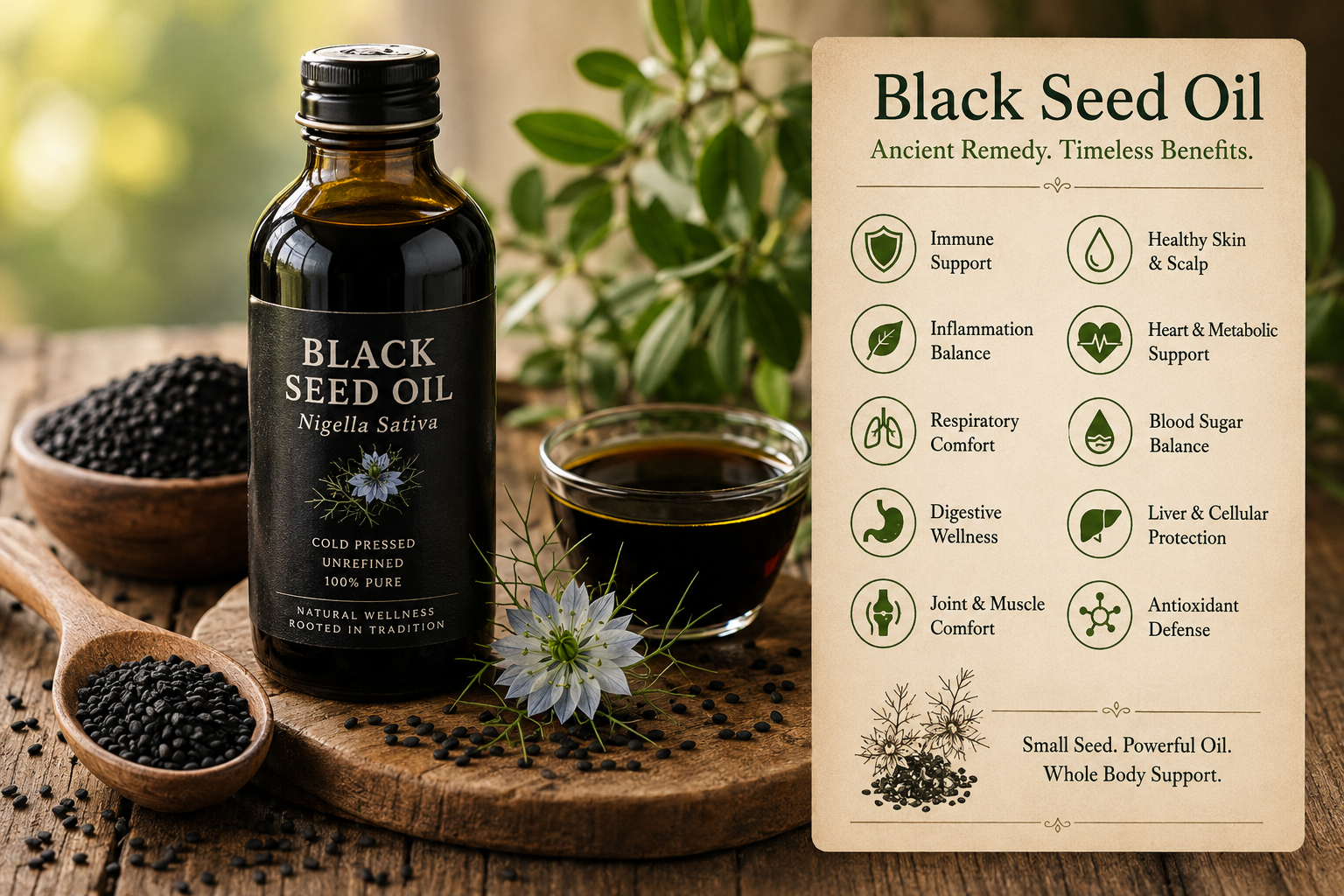
Black Seed Oil Benefits for Natural Body Support
Learn how black seed oil supports inflammation, allergies, asthma comfort, blood sugar, cholesterol, digestion, skin, and cellular wellness.
Black seed oil is one of the oldest natural wellness oils still valued today, pressed from the tiny black seeds of Nigella sativa, a plant with deep roots in ancient and traditional medicine. It has been used across generations as both a food-based remedy and a body-support oil, trusted in homes, kitchens, and healing traditions long before it appeared on modern supplement shelves.
What makes black seed oil so respected is that it supports more than one part of the body at a time. It is used for inflammation balance, immune support, respiratory comfort, digestion, skin health, joint comfort, metabolic wellness, cellular protection, and whole-body resilience.
This is not a trendy oil with a shallow story. Black seed oil has history, depth, and real usefulness. It carries the feeling of old-world wisdom meeting modern wellness needs.
What Black Seed Oil Is
Black seed oil comes from the seeds of the Nigella sativa plant, also known as black seed, black cumin seed, or kalonji. The oil is dark, strong, earthy, and slightly peppery, with a bold flavor that tells you right away it is not a delicate little background oil.
One of black seed oil’s most studied active compounds is thymoquinone, often shortened to TQ. This natural plant compound is studied for antioxidant, anti-inflammatory, immune-supportive, and cellular-protective activity.
That matters because inflammation and oxidative stress affect many areas of health, including metabolism, immune function, circulation, skin, joints, respiratory comfort, tissue repair, and long-term vitality.
Black seed oil is best understood as a whole-body support. It does not belong in just one wellness category. Its strength is that it touches several connected systems at once.
The Ancient History of Black Seed Oil
Black seed oil belongs to a much older story of food, medicine, tradition, and everyday body care. The seeds of Nigella sativa have been used for thousands of years across Middle Eastern, Indian, Unani, Ayurvedic, and Islamic healing traditions.
In many cultures, black seed was treated as more than a spice. It was part of the household healing shelf, the kitchen, and the old natural medicine traditions passed through families, herbalists, and healers. People used the seeds and oil for digestion, breathing comfort, skin concerns, inflammation, immune strength, and general resilience.
That ancient reputation matters. Black seed oil is not simply a modern supplement with a shiny label. It is an old-world remedy that has traveled through generations because people kept finding value in it.
Modern research is now helping explain some of what traditional use already honored. Black seed oil contains powerful plant compounds that support antioxidant protection, inflammation balance, immune function, metabolic wellness, and cellular resilience.
What Black Seed Oil Helps Support
Black seed oil is valued because it supports several body systems at once. Its strongest wellness reputation comes from its natural compounds, especially thymoquinone, which has been studied for antioxidant and anti-inflammatory activity.
Black seed oil supports:
Inflammation balance
Black seed oil supports a healthier inflammatory response. This is one reason people use it for body aches, stiffness, joint comfort, muscle soreness, swelling, and recovery support.
Immune system support
Black seed oil supports the body’s natural defense system and is often used during seasonal changes, colder months, or times when the body needs extra resilience.
Respiratory and seasonal comfort
Black seed oil has a long traditional connection to breathing support and has also been studied for allergy-related concerns. People commonly use it for sinus comfort, congestion, sneezing, itchy nose, runny nose, and seasonal irritation.
Metabolic health
Black seed oil supports routines focused on blood sugar balance, cholesterol support, triglycerides, blood pressure, and heart-metabolic wellness. These areas are deeply connected to energy, circulation, inflammation, and long-term body health.
Joint and muscle comfort
Because black seed oil supports inflammation balance and antioxidant protection, it is used for stiffness, sore joints, body aches, muscle discomfort, and everyday mobility.
Digestive support
Traditionally, black seed has been used to support digestion, bloating, gas, heaviness, and gut comfort. Black seed oil may feel especially useful when the body feels sluggish, irritated, or weighed down.
Skin and scalp support
Black seed oil is used topically for dry skin, acne-prone skin, irritated skin, eczema-prone skin, flaky scalp, and scalp nourishment. Because it is strong, a small amount is usually enough.
Liver and cellular protection
Black seed oil’s antioxidant activity supports the body’s natural cellular protection systems, including the liver’s role in processing everyday metabolic and environmental stress.
Whole-body resilience
Black seed oil is a whole-body support because inflammation, immunity, digestion, skin, circulation, metabolism, and cellular protection are all connected. When the body is supported in one area, other systems often benefit too.
Specific Health Conditions and Concerns Black Seed Oil Supports
Black seed oil deserves clear language because people are not just searching for vague “wellness.” They want to know what it actually supports.
Black seed oil is commonly used to support people dealing with:
Seasonal allergies and allergic rhinitis
Black seed oil has been studied for allergy-related concerns and is used for sneezing, sinus pressure, congestion, itchy nose, runny nose, and seasonal irritation.
Asthma-related breathing comfort
Black seed has been studied for respiratory support, including asthma-related symptoms and airway inflammation. It is often used in routines focused on easier breathing, lung comfort, and seasonal respiratory support.
Rheumatoid arthritis and inflammatory joint concerns
Black seed oil has been studied in connection with rheumatoid arthritis and inflammatory joint symptoms. It supports people dealing with joint stiffness, swelling, aching joints, and reduced everyday mobility.
Osteoarthritis-style stiffness and body aches
Black seed oil is also relevant for people dealing with general stiffness, sore knees, tight joints, muscle discomfort, body aches, and everyday wear-and-tear discomfort.
Type 2 diabetes and blood sugar balance
Black seed oil has been studied for blood sugar and metabolic markers. It supports routines focused on type 2 diabetes, insulin sensitivity, fasting blood sugar, glucose balance, and metabolic stability.
High cholesterol and triglycerides
Black seed oil is used in heart-metabolic wellness routines because research connects Nigella sativa with lipid support, including cholesterol, LDL cholesterol, triglycerides, and healthier lipid patterns.
High blood pressure support
Black seed has been studied for blood pressure and cardiovascular markers. This makes it relevant for people focused on circulation, heart health, vascular wellness, and blood pressure support.
Metabolic syndrome and weight-related metabolic strain
Black seed oil supports people dealing with metabolic syndrome, belly weight concerns, sluggish metabolism, inflammation markers, blood sugar changes, cholesterol imbalance, and cardiovascular stress.
Acne-prone skin and irritated skin
Black seed oil is used topically for acne-prone skin, irritated skin, redness, clogged-looking pores, and skin that feels inflamed or reactive.
Eczema-prone skin and dry patches
Black seed oil is used in routines focused on dry, itchy, eczema-prone, or irritated skin. It should be patch tested first because it is a strong oil.
Flaky scalp and scalp irritation
Many people use black seed oil for dry scalp, flaky scalp, scalp irritation, and scalp nourishment.
Bloating, gas, and digestive heaviness
Black seed has a long traditional history of use for digestion. It supports people dealing with bloating, gas, sluggish digestion, stomach heaviness, and occasional gut discomfort.
Fatigue connected to inflammation or metabolic imbalance
When the body is dealing with inflammation, poor blood sugar balance, sluggish digestion, or metabolic stress, energy can suffer. Black seed oil supports better internal balance, which can help the body feel steadier and more resilient.
General inflammation and recovery support
Black seed oil is used for whole-body inflammation support, soreness, stiffness, muscle discomfort, and recovery after physical strain.
Cellular protection and cancer-related research
Black seed oil and thymoquinone are being studied for cellular protection and cancer-related pathways, including oxidative stress, inflammation, immune activity, apoptosis, abnormal cell growth, angiogenesis, and how cells respond to damage. This research is especially strong in laboratory and animal studies, and it is meaningful enough to name. Human cancer-treatment evidence is still limited, so black seed oil belongs in the category of promising cellular-support research, not as a stand-alone cancer treatment.
Black Seed Oil and Inflammation Support
One of the main reasons people turn to black seed oil is inflammation support. Inflammation is part of the body’s natural repair process, but when it stays elevated too long, the body can feel heavy, achy, stiff, tired, swollen, and out of balance.
Black seed oil supports a calmer inflammatory response. This makes it valuable for people looking for natural support with joint comfort, muscle soreness, stiffness, recovery, and general body ease.
This is one of black seed oil’s strongest wellness lanes. It helps the body feel less burdened and more able to return to balance.
Immune and Respiratory Support
Black seed oil has a long history of use for immune and respiratory wellness. Many people reach for it during seasonal changes, colder months, allergy seasons, or times when the body feels like it needs extra support.
It is used for sinus comfort, congestion, allergy-type irritation, and breathing ease. The respiratory system is sensitive to pollen, dust, weather changes, inflammation, and immune stress. Black seed oil supports the body by helping calm inflammatory activity while also offering antioxidant protection.
That combination is part of why black seed oil has remained such a respected natural support for seasonal wellness.
Metabolic Health, Blood Sugar, and Cholesterol
Black seed oil is valuable for metabolic wellness. Metabolic health affects energy, weight balance, blood sugar, cholesterol, triglycerides, blood pressure, circulation, inflammation, and long-term vitality.
Black seed oil has been studied for its connection to healthier blood sugar patterns, lipid levels, and cardiovascular markers. This makes it especially meaningful for people focused on type 2 diabetes, high cholesterol, high triglycerides, high blood pressure, metabolic syndrome, insulin resistance, and sluggish energy.
The best way to think of black seed oil here is as support for the bigger foundation. It works best alongside nourishing food, movement, hydration, better sleep, mineral balance, and steady daily habits.
Digestive and Gut Comfort
Black seed oil has also been used traditionally for digestion. Its warm, peppery nature fits naturally into food-based wellness traditions where spices and seeds were valued for both flavor and body support.
People use black seed oil for occasional bloating, digestive heaviness, gas, or sluggish digestion. It may help support a calmer digestive environment because of its antioxidant and inflammation-balancing properties.
Taking it with food is often gentler, especially because the oil has a strong taste and can feel intense on an empty stomach.
Skin, Scalp, and External Use
Black seed oil is also used externally for skin and scalp support. Many people use it for dry skin, acne-prone skin, irritated areas, flaky scalp, or scalp nourishment.
Because black seed oil is potent, it should be used with care on the skin. Some people apply a tiny amount directly, while others mix it with a gentler carrier oil such as jojoba, olive oil, or coconut oil. A patch test is wise before using it over a larger area.
For skin and scalp use, more is not better. Black seed oil is concentrated, and a little can go a long way.
Emerging Research on Cellular Protection and Cancer Pathways
Black seed oil is also being studied for deeper cellular protection, especially because of thymoquinone, one of its main active compounds.
This area of research matters because thymoquinone has been studied for antioxidant activity, inflammation balance, immune modulation, apoptosis, tumor-cell growth pathways, angiogenesis, and how abnormal cells grow, multiply, and respond to stress.
Laboratory and animal research has looked at thymoquinone in connection with cancer-related mechanisms, including breast, lung, colon, prostate, liver, skin, and other cancer cell lines. Some research also explores whether thymoquinone may support the effects of standard therapies or help protect healthy tissues from treatment-related oxidative stress.
The truth is important here: this research is real, but it is still mostly preclinical. That means it is strongest in lab and animal studies, with human evidence still developing. Black seed oil should not be presented as a replacement for cancer care. The honest value is that black seed oil and thymoquinone are promising in the areas of cellular protection, antioxidant defense, inflammation balance, immune support, and cancer-related research pathways.
What to Look for in a Good Black Seed Oil
Because black seed oil is concentrated, quality matters more than people realize. A cheap, stale, heat-damaged, diluted, or chemically extracted oil may not offer the same value as a fresh, clean, carefully made oil.
When choosing black seed oil, look for these key quality markers:
Clearly stated thymoquinone level
Thymoquinone, often called TQ, is one of the main active compounds in black seed oil. For supplement-quality black seed oil, it is helpful when the label clearly states the TQ percentage. Many stronger standardized oils list a TQ level around 1.5% to 5%. This gives buyers a better sense of potency and consistency.
A black seed oil does not have to list TQ to have value, especially if it is being used more like a traditional food-based oil. But when someone is buying black seed oil specifically for wellness support, a clearly stated TQ level is a strong sign that the company is paying attention to potency.
Cold-pressed extraction
Choose black seed oil that is 100% cold-pressed. Cold pressing avoids high heat and harsh chemical solvents, helping preserve the oil’s natural compounds, aroma, and strength.
Certified organic and pure
Choose certified organic black seed oil when possible. The label should say 100% pure Nigella sativa oil with no fillers, carrier oils, artificial flavors, additives, or unnecessary ingredients.
Organic matters because quality begins with the seed. A clean seed gives the oil a cleaner foundation. You can also use the USDA Organic Integrity Database to look up certified organic operations and verify that a company or producer is connected to real organic certification.
Unrefined and hexane-free
Look for oil that is unrefined and hexane-free. Unrefined oil stays closer to its natural state. Hexane-free means the oil was not extracted with a harsh chemical solvent. For a wellness oil, this matters.
Dark glass packaging
Black seed oil should be packaged in a dark amber or opaque glass bottle. Light can damage delicate oils over time, and glass is a better choice than plastic for a concentrated wellness oil.
Avoid clear bottles, plastic bottles, or packaging that lets too much light reach the oil.
Third-party testing
A stronger brand should be willing to provide testing for purity, freshness, heavy metals, and thymoquinone content. This matters because not every bottle labeled “black seed oil” has the same potency or quality.
Third-party testing gives extra confidence that the oil is clean, fresh, and honest.
Strong taste and aroma
Real black seed oil is bold. It should taste and smell pungent, peppery, earthy, slightly bitter, and herbaceous. If it is bland, odorless, unusually clear, or flavorless, it may be over-processed, old, weak, or diluted.
Black seed oil should feel strong because it is strong. This is not an oil where “mild and tasteless” is usually a good sign.
How to Store Black Seed Oil
Black seed oil should be protected from heat, light, and air. Keep it tightly capped and store it in a cool, dark place. If the label recommends refrigeration after opening, follow that guidance.
A fresh black seed oil should smell pungent, earthy, peppery, and slightly bitter. If it smells sour, stale, rancid, or strangely flat, it may be past its best quality.
Oils are alive in their own quiet way, and when they go off, they usually tell you.
How People Commonly Use Black Seed Oil
Black seed oil is commonly taken by the teaspoon, used in capsules, or applied externally in small amounts. It has a strong, peppery, slightly bitter taste, so many people take it with honey, food, yogurt, smoothies, or in capsules because the flavor can be bold at first.
Liquid oil makes it easier to notice the taste, aroma, and freshness. Capsules are easier for people who dislike the strong flavor or want a more convenient daily routine.
Some people stir a small amount into salad dressing or warm food after cooking. It is better not to heat black seed oil heavily, because delicate oils can lose quality when exposed to high heat.
For topical use, a small amount can be massaged into the scalp, dry skin, or areas that need extra nourishment. Because it is strong, it is best to start slowly and pay attention to how the body responds.
How to Start Gently
Black seed oil is strong, so it is wise to begin with a small amount and see how the body responds. Some people tolerate it easily, while others may notice digestive warmth, burping, heartburn, nausea, or stomach discomfort if they take too much too quickly.
For liquid black seed oil, many people start with a small amount taken with food. For capsules, follow the serving size on the product label, especially because thymoquinone levels and oil strength can vary from brand to brand.
A steady, moderate routine is usually better than taking large amounts. With black seed oil, more is not always better.
For Women and Men
Black seed oil can support both women and men in routines focused on inflammation balance, immune strength, respiratory comfort, digestion, skin support, metabolic health, cellular protection, and whole-body resilience.
It may be especially relevant for people dealing with seasonal allergies, allergic rhinitis, asthma-related breathing comfort, joint stiffness, body aches, rheumatoid arthritis, blood sugar concerns, high cholesterol, triglycerides, high blood pressure support, acne-prone skin, eczema-prone skin, bloating, sluggish digestion, and general inflammation.
Women who are pregnant, trying to conceive, or breastfeeding should be especially thoughtful with supplement-level use. Anyone taking medication for blood sugar, blood pressure, blood thinning, immune conditions, or multiple prescriptions should also use extra care because black seed oil is natural but active.
The main point is simple: black seed oil is not a weak oil. Its strength is part of its value, and it should be used with respect.
A Grounded Note on Use and Awareness
Black seed oil is well tolerated by many people when used reasonably, but some people may experience nausea, heartburn, digestive upset, burping, or skin irritation.
Because black seed oil may influence blood sugar, blood pressure, and blood-thinning effects, people taking related medications should use extra care. It is also wise to stop using supplement-level black seed oil before surgery unless a qualified professional gives different guidance.
Pregnancy and breastfeeding are times to be more careful with concentrated herbal oils. Culinary use of black seed in normal food amounts is different from taking black seed oil as a supplement.
Grounded Takeaway
Black seed oil is a deeply respected natural remedy with a long history and real modern relevance. It supports the body in meaningful ways: inflammation balance, antioxidant protection, immune resilience, respiratory comfort, digestion, skin and scalp nourishment, metabolic health, liver and cellular protection, and whole-body strength.
It may be especially helpful for people looking for natural support with seasonal allergies, allergic rhinitis, asthma-related breathing comfort, rheumatoid arthritis, joint stiffness, type 2 diabetes, blood sugar balance, high cholesterol, triglycerides, high blood pressure support, acne-prone skin, eczema-prone skin, bloating, digestive heaviness, general inflammation, and cellular protection.
Its value comes from both ancient use and growing research. It is rooted, practical, strong, and still useful today.
Small seed. Powerful oil. Old wisdom with a modern place.
Quick Q&A
What is black seed oil?
Black seed oil is the oil pressed from the seeds of the Nigella sativa plant. It is also called black cumin seed oil or kalonji oil.
What is black seed oil good for?
Black seed oil is commonly used for inflammation support, immune balance, respiratory comfort, digestion, skin and scalp support, joint comfort, blood sugar balance, cholesterol support, cellular protection, and overall body resilience.
What health concerns is black seed oil commonly used for?
Black seed oil is commonly used to support people dealing with seasonal allergies, allergic rhinitis, asthma-related breathing comfort, rheumatoid arthritis, joint stiffness, type 2 diabetes, blood sugar balance, high cholesterol, triglycerides, high blood pressure support, metabolic syndrome, acne-prone skin, eczema-prone skin, flaky scalp, bloating, digestive heaviness, body aches, soreness, general inflammation, and cellular stress.
Is black seed oil ancient?
Yes. Black seed has been used for thousands of years in traditional wellness systems, including Middle Eastern, Indian, Unani, Ayurvedic, and Islamic healing traditions.
What is thymoquinone?
Thymoquinone, often called TQ, is one of the main active compounds in black seed oil. It is studied for antioxidant, anti-inflammatory, immune-supportive, and cellular-protective activity.
How much thymoquinone should black seed oil have?
For supplement-quality black seed oil, many stronger standardized oils list a thymoquinone level around 1.5% to 5%. A stated TQ percentage can be a helpful sign of potency and consistency, but it should be considered alongside purity, extraction method, freshness, packaging, and testing.
What should I look for when buying black seed oil?
Choose black seed oil that is organic, cold-pressed, unrefined, hexane-free, packaged in dark glass, clearly labeled as Nigella sativa, and preferably standardized for thymoquinone content. A strong black seed oil should have a bold, peppery, slightly bitter taste and aroma. Bland, odorless, or overly clear oil may be weak, old, diluted, or over-processed.
Can black seed oil help with inflammation?
Black seed oil supports a healthier inflammatory response, which is why many people use it for joint comfort, stiffness, soreness, body aches, and whole-body wellness.
Can black seed oil help with allergies or seasonal discomfort?
Black seed oil has a long history of use for respiratory and seasonal support. Many people use it for sinus comfort, congestion, sneezing, seasonal irritation, itchy nose, runny nose, and allergy-prone times of year.
Can black seed oil support blood sugar and cholesterol?
Black seed oil has been studied for metabolic health, including blood sugar, cholesterol, triglycerides, and blood pressure support. It works best as part of a healthy daily routine.
Is black seed oil being studied for cancer?
Yes. Black seed oil and thymoquinone are being studied for cancer-related pathways, including antioxidant defense, inflammation balance, immune activity, apoptosis, tumor-cell growth, angiogenesis, and cellular protection. The strongest research is still in laboratory and animal studies, with human evidence still developing. This makes it a meaningful area of research, especially around cellular protection and future complementary support, but black seed oil should not replace cancer treatment or medical care.
Can black seed oil support the liver?
Black seed oil’s antioxidant properties may help support cellular protection, including the liver’s role in handling everyday metabolic stress.
Can black seed oil be used on skin?
Yes. Black seed oil is often used for dry skin, acne-prone skin, irritated skin, eczema-prone skin, flaky scalp, and scalp nourishment. A patch test is wise because the oil is strong.
Who should be careful with black seed oil?
People who are pregnant, breastfeeding, preparing for surgery, or taking medications for blood sugar, blood pressure, blood thinning, or immune conditions should use extra care with supplement-level black seed oil.
If this message resonated, you may also enjoy:
Explore more natural wellness pages ↑

Castor Oil
Explore castor oil’s ancient uses for skin, hair, pain comfort, digestion, liver-area packs, abdominal support, and occasional constipation.
Castor oil is a thick, plant-based oil pressed from the seeds of the castor plant, Ricinus communis. It is rich in ricinoleic acid, a unique fatty acid that gives the oil its heavy texture, deep moisturizing quality, and long reputation as one of the great traditional body-support oils.
This is not a new wellness trend. Castor oil has been carried through ancient homes, healing traditions, body-care rituals, and natural medicine systems for thousands of years. It has been used for skin, hair, digestion, elimination, pain comfort, abdominal support, liver-area packs, massage, dryness, softening, and warmth.
Castor oil has survived because people kept finding value in it.
Modern wellness often talks about castor oil in small ways, but its history is much larger. Across time, people have used this oil for softening, moving, warming, soothing, moistening, and supporting the body’s natural rhythms of release.
Ancient Wisdom and the Long History of Castor Oil
Castor oil has ancient roots. Castor beans have been found in ancient Egyptian tombs dating back thousands of years, and castor oil was mentioned in early Egyptian medical writings. In the ancient world, it was valued for body care, eye comfort, lamp oil, medicine, and practical daily use.
The story does not stop in Egypt. Castor oil and the castor plant have also appeared in traditional systems across India, China, the Mediterranean world, and Europe. In traditional Chinese medicine, castor seed preparations were used carefully for bowel movement, swelling, external poultices, painful areas, and body-support applications. In the Middle Ages, castor oil was known in European herbal use, including external use for skin concerns.
That kind of history matters.
When a natural remedy remains in human use for thousands of years, across many places and many generations, it deserves respect. The ancients may not have used modern medical language, but they were careful observers of the body. They noticed warmth, swelling, dryness, elimination, pain, stiffness, digestion, skin changes, and how the body responded to repeated care.
Castor oil belongs to that older world of plant wisdom, body observation, and consistent ritual.
Why Castor Oil Is Valued
Castor oil is valued because it has several qualities at once. It is thick, warming, softening, moisturizing, protective, and moving.
On the skin, it helps seal in moisture and soften rough areas. In hair care, it coats the hair shaft, adds shine, reduces dryness, and helps fragile hair look fuller and stronger. In massage, it brings slip, warmth, and comfort to sore or tense areas. In packs, it combines oil, cloth, warmth, pressure, and stillness into a deeper body-care ritual.
Internally, castor oil has long been known for its strong effect on elimination. It works as a stimulant laxative by encouraging intestinal movement. This is one of its clearest recognized uses, but it should be approached with care because it is powerful.
Castor oil’s value is not one single thing. It is an oil of softness, warmth, movement, and support.
Castor Oil for Digestive and Elimination Support
Castor oil has a long history of use for digestion and elimination. When taken internally, it works as a strong stimulant laxative for temporary constipation. It encourages movement in the intestines and can help the body release stool when elimination has become sluggish.
This is one of castor oil’s most recognized actions, and it is part of why the oil became so well known in traditional homes. It was not used casually as a daily supplement. It was respected because people knew it moved the bowels strongly.
For digestive support today, castor oil is best understood in two ways.
Internally, it may be used for occasional constipation, but only with care, proper dosing, and awareness that it can cause cramping, urgency, diarrhea, nausea, dehydration, or electrolyte imbalance if misused.
Externally, castor oil packs or abdominal massage may support digestive comfort in a gentler way. A warm pack over the abdomen can help the belly feel softer, calmer, and less tense. The warmth, oil, pressure, and quiet rest can create a feeling of ease when the abdomen feels tight, bloated, sluggish, or uncomfortable.
This is where castor oil becomes more than a laxative. It becomes part of a rhythm of warmth, rest, and body attention.
Castor Oil Packs and Traditional Body Support
Castor oil packs are one of the most meaningful traditional uses of castor oil. A pack is usually made by soaking a soft cloth with castor oil, placing it over the body, covering it, and adding gentle warmth.
People often use castor oil packs over the abdomen, lower abdomen, liver area, sore joints, tight muscles, or areas that feel tense, stagnant, swollen, or uncomfortable.
A castor oil pack is not only about the oil. It is about the whole ritual: oil, cloth, warmth, pressure, stillness, breath, and consistency. This is why many people feel such deep benefit from it. The body is being given time, warmth, and attention.
In traditional wellness, castor oil packs are used to support warmth, circulation, softness, relaxation, abdominal ease, digestive movement, lymphatic flow, menstrual comfort, joint comfort, and the body’s natural cleansing rhythms.
This kind of support is not always easy to measure in a modern study, but that does not make it meaningless. Traditional remedies often work through repeated, steady care rather than one dramatic moment.
Castor Oil Packs and the Liver Area
Many people place castor oil packs over the right upper abdomen, often called the liver area, as part of a deeper wellness routine. This practice has become one of the most loved uses of castor oil.
The liver is one of the body’s major cleansing and processing organs. It helps filter, transform, store, and move substances through the body. A castor oil pack over the liver area does not need to be described as a guaranteed medical detox to have value.
A better way to understand it is this: liver-area castor oil packs may support the body by encouraging warmth, relaxation, circulation, abdominal softness, calm breathing, and a steady rhythm of care. When the body moves out of stress mode and into a calmer state, digestion, elimination, and natural cleansing rhythms can feel more supported.
Many people use liver-area packs consistently because they feel lighter, calmer, softer, and more in tune with their body afterward. That experience matters.
Castor oil packs should still be used wisely. For serious concerns such as tumors, stones, severe pain, unexplained swelling, or major symptoms, castor oil should be seen as supportive body care, not the only form of care.
Castor Oil for Pain, Stiffness, and Body Comfort
Castor oil has a long history of use for areas that feel sore, stiff, swollen, tight, or overworked. Its ricinoleic acid content is one reason it has been valued for body comfort, inflammation support, and massage routines.
When castor oil is massaged into sore muscles or used with warmth over stiff joints, it can help create a feeling of softness and relief. Many people use it for tired feet, tight shoulders, stiff hands, sore knees, back tension, neck tightness, and areas that feel dry, tense, or achy.
This is one of the places where castor oil feels bigger than basic skin care. It belongs in the world of body comfort. It is an oil people reach for when they want to soften what feels tight and warm what feels stuck.
For occasional muscle soreness, stiffness, or everyday aches, castor oil can be a beautiful part of a massage routine. For ongoing pain, injury, major swelling, or severe arthritis symptoms, it should be used as supportive care while getting personal guidance when needed.
Castor Oil for Skin Softness and Dryness
Castor oil works beautifully as a moisture-sealing oil. It acts as an occlusive, meaning it helps form a protective layer over the skin so moisture does not escape too quickly.
This makes it especially useful for dry feet, cracked heels, rough hands, elbows, knees, cuticles, and skin that feels tight, flaky, or weather-worn.
For dry feet, castor oil can be massaged into the heels and covered with cotton socks overnight. For hands and cuticles, a small amount can soften rough areas and support a healthier-looking nail bed. For elbows and knees, it can bring back a smoother, more cared-for feel.
Because castor oil contains ricinoleic acid, it is also valued for calming, antimicrobial, and anti-inflammatory properties. For some people, this may help soothe irritated-looking skin. Because the oil is thick, acne-prone skin should use it carefully. A light amount or a blend with a thinner oil is usually better than applying it heavily to the face.
Castor oil has also been used in wound-care preparations because it helps maintain moisture and keeps tissue from drying out. For home use, it is best kept to dry, closed, or rough skin rather than open, infected, bleeding, or serious wounds.
Castor Oil for Fuller-Looking Hair, Brows, and Lashes
Castor oil is loved in hair, brow, and lash routines because it can help hair look fuller, glossier, thicker, darker, and better conditioned. Its rich texture coats the hair shaft, helps seal in moisture, softens dryness, and may reduce brittleness and breakage.
For hair, this can create the appearance of thicker, healthier-looking strands, especially when dryness, dullness, or breakage is part of the problem. When hair breaks less and looks smoother, it can appear fuller and stronger over time.
For eyebrows and eyelashes, consistent use may help the hairs look smoother, darker, fuller, shinier, and more flexible. This is one reason castor oil has remained popular in natural brow and lash routines.
Castor oil is best understood as a strengthening and conditioning oil. It supports the scalp and hair environment, protects delicate hairs, and helps the hair you already have look healthier and fuller.
Castor Oil for Hair and Scalp Care
For the scalp, castor oil can be used as a pre-wash treatment to help moisturize dry, flaky, or irritated skin. Its richness helps reduce dryness and supports a more comfortable scalp environment.
Castor oil can help soften dry ends, smooth frizz, coat the hair shaft, and improve the feel of brittle or rough strands. It is especially useful for hair that feels dry, dull, fragile, or easily broken.
For a simple pre-wash treatment, massage a small amount into the scalp or dry ends, leave it on for a short period, then shampoo thoroughly. Because castor oil is very thick, many people prefer mixing it with a lighter oil so it spreads more easily and rinses out better.
A small amount is enough. Too much castor oil can create buildup, make hair feel sticky, or be difficult to wash out.
Castor Oil for Eyebrows and Eyelashes
Castor oil is commonly used on eyebrows and eyelashes because it can help condition the hair and soften dryness around the brow area. It may make lashes and brows look glossier, smoother, darker, fuller, and more cared for, especially when they are dry or brittle.
For brows, a tiny amount can be brushed through with a clean spoolie. For lashes, it should be used with extra care and kept away from the eye itself.
If using castor oil near the eyes, use only a tiny amount. Stop using it if there is redness, itching, burning, swelling, or irritation. For eye-area concerns, products made specifically for eyelids or lashes are the safer choice.
Castor Oil and Natural Cleansing Rhythms
Castor oil has always been associated with movement and release. Internally, it moves the bowels. Externally, it is used in packs and massage to support warmth, softness, circulation, and relaxation.
This is why many traditional wellness routines connect castor oil with cleansing. The body already has its own cleansing systems: liver, lymph, kidneys, bowels, skin, lungs, and digestion. Castor oil can be part of a routine that supports those natural rhythms by helping the body soften, rest, warm, and release tension.
A castor oil pack does not have to be described as forcing the body to detox. Its deeper value is that it creates conditions where the body may feel more supported: warmth, rest, pressure, oil, breath, consistency, and care.
That is a powerful thing.
What Castor Oil May Support
Castor oil may support many areas of everyday wellness when used thoughtfully.
Topically, it may support dry skin, rough heels, dry cuticles, flaky scalp, brittle hair, fuller-looking brows and lashes, sore muscles, stiff joints, abdominal comfort, liver-area rituals, and general body ease.
Through massage, it may support areas that feel tense, tight, dry, sore, swollen, or overworked.
Through castor oil packs, it may support warmth, relaxation, abdominal softness, digestive comfort, menstrual comfort, liver-area care, and the body’s natural rhythms of release.
Internally, castor oil may support temporary constipation as a stimulant laxative. This use is strong and should be approached carefully, not casually or daily.
Castor oil’s best support areas are simple but meaningful: moisture, softness, warmth, movement, comfort, elimination, relaxation, hair conditioning, scalp care, body care, and consistent wellness rituals.
A Grounded Way to Understand Castor Oil
Castor oil has real value when it is used with respect. It is better understood as an ancient body-support oil than as a modern beauty trend.
It has been used for thousands of years because people found it helpful for softening, warming, moving, moistening, soothing, and supporting the body. Its strongest everyday uses are practical and powerful: moisturizing dry skin, conditioning hair and scalp, supporting fuller-looking brows and lashes, easing roughness, supporting abdominal packs, comforting sore areas, and encouraging elimination when used internally with care.
At the same time, serious conditions deserve serious attention. Castor oil packs are used by many people as part of wellness routines for deep body support, but they should not be the only support for tumors, stones, severe pain, unexplained lumps, major swelling, or chronic disease symptoms.
The truth is not small. Castor oil is valuable. It is ancient. It is powerful in its own way. And it is best used with patience, consistency, and wisdom.
Everyday Body Care With Castor Oil
Castor oil can be useful for both women and men as part of simple natural body care. It may support dry skin, rough hands, cracked heels, dry cuticles, flaky scalp, brittle hair, tired feet, sore muscles, stiff joints, and areas that feel dry, tense, or overworked.
For hair and scalp routines, castor oil can help soften dryness, smooth rough strands, add shine, and support a more comfortable scalp. For men with facial hair, a tiny amount can also soften beard hair and condition dry skin beneath the beard.
Many people use castor oil packs over the lower abdomen or right upper abdomen as part of a personal wellness ritual. This can feel grounding and calming, especially when paired with warmth, rest, and slow breathing. Women may also use lower-abdominal castor oil packs as part of cycle-support routines, while men may use them for abdominal comfort, liver-area support, relaxation, or general body care.
Women who are pregnant, trying to conceive, breastfeeding, dealing with heavy bleeding, or managing cycle or reproductive concerns should use extra care with internal use and abdominal pack routines. Castor oil should not be taken internally during pregnancy, and abdominal castor oil packs should be avoided during pregnancy unless a qualified provider gives personal guidance.
How to Use Castor Oil
Start small. Castor oil is thick and rich, so a little goes a long way.
For skin, apply a thin layer to dry areas or mix it with a lighter oil. For feet, apply before bed and cover with socks. For cuticles, massage a tiny amount into the nail area.
For hair, use castor oil as a pre-wash treatment. Massage a small amount into the scalp or dry ends, let it sit, then shampoo thoroughly.
For brows, brush a tiny amount through with a clean spoolie. For lashes, use extreme care, avoid the eye itself, and use only the smallest amount.
For sore muscles or stiff areas, massage a small amount into the skin and add gentle warmth if desired.
For a castor oil pack, apply oil to a soft cloth, place it over the chosen area, cover with a towel, and rest with gentle warmth. Many people place packs over the abdomen, lower abdomen, sore joints, tight muscles, or right upper abdomen. Use enough oil to moisten the cloth without making it drip.
Always patch test first, especially if your skin is sensitive. Avoid applying castor oil to irritated, broken, infected, freshly treated, or open skin. Keep it out of the eyes unless using a product specifically made for eye use.
How Often to Use Castor Oil
For dry skin, castor oil can be used a few times per week or as needed on rough areas like feet, hands, elbows, knees, and cuticles.
For hair and scalp, once a week or every other week is often enough because the oil is thick and can build up quickly.
For brows and lashes, some people use a tiny amount consistently, often at night. The key is to use very little and watch for irritation.
For castor oil packs, some people use them occasionally, while others use them more consistently as part of a deeper wellness routine. The best rhythm is the one your body responds to comfortably.
For internal use, castor oil should not be used as a daily wellness habit. It is a strong stimulant laxative for temporary constipation and should be used carefully.
How to Choose a Good Castor Oil
For topical use, choose a castor oil that is organic, cold-pressed, hexane-free, unrefined, and stored in a glass bottle.
Organic matters because castor oil is often used directly on the skin, scalp, abdomen, liver area, brows, lashes, and body. Cold-pressed oil is made without high heat, which helps preserve more of the oil’s natural qualities. Hexane-free means the oil was not extracted using hexane, a chemical solvent. Unrefined castor oil is less processed and closer to its natural form.
A glass bottle is also a better choice than plastic because castor oil is thick, rich, and often used in warm packs, massage, hair care, skin care, and body-care rituals. When choosing an oil for regular use, quality matters.
A good simple label to look for is:
Organic • Cold-Pressed • Hexane-Free • Unrefined • Glass Bottle
What to Keep in Mind
Castor oil is natural, but it is still active. Some people can develop skin irritation, itching, redness, clogged pores, or sensitivity from castor oil or products that contain it. A patch test is wise before using it on larger areas.
Raw castor beans are not the same as properly prepared castor oil. Castor beans contain toxic compounds and should not be eaten or used casually. Use prepared castor oil from a trusted source.
Castor oil is best used thoughtfully. It is a strong, ancient oil with real value when used wisely.
Simple Takeaway
Castor oil is one of the great traditional body-support oils. It has been used for thousands of years for softness, warmth, moisture, movement, elimination, massage, skin, hair, digestion, pain comfort, abdominal packs, liver-area rituals, and everyday wellness care.
Its strength is in the way it helps the body feel softened, warmed, supported, and tended.
Used wisely, castor oil can be a meaningful natural support for dry skin, roughness, fuller-looking hair, brow and lash conditioning, scalp comfort, sore muscles, stiff joints, abdominal comfort, liver-area wellness rituals, digestive ease, and occasional constipation.
Frequently Asked Questions About Castor Oil
Is castor oil an ancient remedy?
Yes. Castor oil has been used for thousands of years in traditional body care and natural wellness. It appears in ancient Egyptian history, traditional Chinese use, Ayurvedic and folk practices, and European herbal traditions.
What is castor oil best known for?
Castor oil is best known for moisturizing dry skin, conditioning hair and scalp, supporting fuller-looking brows and lashes, soothing body massage, castor oil packs, abdominal comfort, and occasional constipation relief.
Can castor oil support digestion?
Yes. Internally, castor oil works as a stimulant laxative for temporary constipation. Externally, castor oil packs and abdominal massage may support digestive comfort by encouraging warmth, relaxation, and softness in the belly area.
Can castor oil help with pain and stiffness?
Castor oil is often used in massage routines for sore muscles, stiff joints, tight shoulders, tired feet, and areas that feel tense or overworked. Its ricinoleic acid content is one reason it has been valued for comfort and inflammation support.
Can castor oil packs support the liver area?
Many people place castor oil packs over the right upper abdomen, often called the liver area, as part of a traditional wellness routine. This can feel warming, calming, and supportive. It is best understood as liver-area support and body-care ritual, not a guaranteed medical detox.
Can castor oil help with bloating or abdominal discomfort?
A warm castor oil pack or abdominal massage may feel soothing for belly tension, bloating, sluggishness, or general abdominal discomfort. The comfort often comes from warmth, oil, pressure, massage, and relaxation.
Can castor oil make hair look thicker?
Yes. Castor oil can help hair look thicker, fuller, glossier, and healthier by coating the hair shaft, sealing in moisture, reducing dryness, and helping protect fragile strands from breakage.
Can castor oil help eyelashes and eyebrows look fuller?
Yes. Castor oil can condition eyebrows and eyelashes and help them look softer, shinier, darker, and fuller. Use only a tiny amount near the eyes and stop if irritation appears.
Is castor oil good for dry skin?
Yes. Castor oil is especially useful for dry, rough, flaky, or weather-worn skin because it helps seal in moisture and soften the skin’s surface.
What does occlusive mean?
An occlusive oil helps form a protective layer over the skin. This helps reduce water loss and keeps moisture from escaping too quickly.
Can castor oil help acne?
Castor oil contains ricinoleic acid, which is valued for calming, antimicrobial, and anti-inflammatory properties. However, castor oil is very thick and may feel too heavy for acne-prone skin. It is best used carefully, lightly, and with a patch test.
Can castor oil help scars?
Castor oil can help moisturize and soften dry, tight skin once the skin is fully closed. It is not known to erase scars, but it can support comfort and softness in dry or healing-looking areas.
Can castor oil support the body when someone has tumors or serious concerns?
Castor oil packs are used by many people as part of traditional wellness routines for deep body support. They may help the body feel warmer, softer, calmer, and more supported, especially when used consistently with rest, hydration, nourishment, and personal care.
For tumors, stones, severe pain, unexplained lumps, major swelling, or serious symptoms, castor oil should be understood as supportive care, not the only care. It should not replace proper evaluation or needed treatment, but it may still have a place in a thoughtful wellness routine.
Can you take castor oil internally?
Castor oil is a stimulant laxative for temporary constipation, but it can be harsh and should be used carefully. It should not be used casually, daily, during pregnancy, or for chronic constipation without personal guidance.
What kind of castor oil should I choose?
For topical routines, look for castor oil that is organic, cold-pressed, hexane-free, unrefined, and stored in a glass bottle. This is a strong quality standard for skin, hair, scalp, castor oil packs, massage, brows, and lashes.
If this message resonated, you may also enjoy:
Magnesium
Electrolytes
Turmeric
Ginger
Explore more natural wellness pages ↑

MSM Benefits for Joints, Skin, and Mobility
Learn how MSM supports joint comfort, flexible movement, muscle recovery, skin health, and everyday wellness through its natural sulfur content.
MSM is one of those steady wellness supports that works quietly in the background, helping the body move, repair, and stay flexible.
MSM stands for methylsulfonylmethane, a naturally occurring sulfur compound found in small amounts in plants, animals, and the human body. As a supplement, MSM is commonly used for joint comfort, muscle soreness, flexible movement, exercise recovery, and skin support.
MSM is valued because sulfur is part of the body’s structural foundation. The body uses sulfur in connective tissue, cartilage, skin, hair, nails, proteins, enzymes, and antioxidant activity. This is why MSM is often connected to joint health, natural support for inflammatory balance and antioxidant activity, tissue repair, and beauty-from-within wellness.
For many people, MSM fits beautifully into a wellness routine focused on moving better, aging well, staying active, and supporting the body from the inside out.
Why MSM Matters to the Body
Sulfur plays an important role in how the body builds and maintains healthy tissues. It is involved in amino acids, proteins, enzymes, antioxidants, and connective tissue structure. Because MSM provides sulfur in a form the body can use, it is often associated with flexibility, tissue support, and overall resilience.
This is one reason MSM is commonly used by people who want support for knees, hips, hands, back comfort, exercise recovery, and general mobility. It is not only about joint discomfort. It is also about helping the body feel less stiff, more fluid, and more able to keep up with daily life.
MSM is especially popular among people who want to keep moving with more ease, comfort, and confidence.
Where MSM May Offer Meaningful Support
MSM is most often used to support joint comfort, flexible movement, and recovery, but its benefits reach into several related areas of wellness. The strongest research and most common use center around osteoarthritis, especially knee osteoarthritis, along with mild knee pain, joint stiffness, age-related wear and tear, and everyday movement comfort.
MSM is also used by active people for exercise-related muscle soreness, workout recovery, physical strain, and stiffness after activity. Because MSM supports antioxidant defenses and a healthy inflammatory response, it may help the body recover more smoothly after movement, exercise, or physically demanding work.
For skin health, MSM is often connected to fine lines, wrinkles, skin roughness, firmness, elasticity, hydration, and aging skin support. Its sulfur content helps explain why it is often included in beauty-from-within formulas for skin, hair, nails, and connective tissue.
MSM has also been studied for seasonal allergies and allergic rhinitis, including symptoms such as nasal irritation, congestion, sneezing, and breathing comfort during allergy seasons. This area has less research than joint health, so it is best understood as a smaller part of MSM’s broader wellness picture.
The clearest way to understand MSM is this: it is best known for supporting joint comfort, knee osteoarthritis symptoms, mild knee pain, stiffness, exercise recovery, muscle soreness, and skin aging support, with seasonal allergy support as a smaller but interesting area of research.
MSM and Joint Comfort
MSM is best known for its connection to joint health. It has been studied most often for knee osteoarthritis and mild knee discomfort. Some research has shown that MSM can help support improvements in pain levels, physical function, and daily movement comfort, especially when used consistently over time.
This makes MSM a helpful option for people who feel stiffness after sitting too long, discomfort when walking, soreness in the knees or hands, or that creaky feeling that can show up with age, repetitive movement, physical work, or everyday wear and tear.
MSM supports joint comfort partly by helping the body manage oxidative stress and a healthy inflammatory response. When the body is under stress, tissues can feel tighter, more irritated, and slower to recover. MSM helps support a healthier internal environment so movement can feel easier and less restricted.
For people focused on staying active, MSM can be a gentle daily support for flexibility, comfort, and long-term mobility.
MSM for Muscle Soreness and Exercise Recovery
MSM is also used by people who exercise, walk often, work physical jobs, or simply want to recover more comfortably after activity.
Movement strengthens the body, but it can also create normal stress on muscles, joints, and connective tissues. MSM may help support recovery by assisting the body’s antioxidant defenses and helping calm the after-effects of physical strain.
This can be especially helpful for people who feel sore after workouts, yard work, long days on their feet, or starting a new movement routine. MSM is not only for athletes. It can support anyone who wants their body to recover more smoothly after doing more than usual.
For people trying to stay strong, flexible, and active as they age, MSM can be a useful part of a larger routine that includes hydration, minerals, protein, magnesium, gentle stretching, and regular movement.
MSM and Skin Health
MSM is also valued for skin support because sulfur is connected to collagen, keratin, and connective tissue integrity. Healthy skin depends on strong structural support, hydration, elasticity, and the body’s ability to renew and protect itself.
Some research has shown that oral MSM may support the appearance of smoother skin, improved firmness, better elasticity, hydration, and reduced roughness. This makes MSM interesting not only as a joint supplement, but also as a beauty-from-within nutrient.
For people who want to support aging skin naturally, MSM may pair well with vitamin C, collagen, silica, hydration, minerals, and antioxidant-rich foods. Vitamin C is especially important because the body uses it for collagen formation.
MSM works best alongside good nutrition, hydration, protein, minerals, and healthy daily habits. It can be a helpful inner support for skin that looks and feels more resilient.
Hair and Nail Support
Because MSM provides sulfur, and sulfur is connected to keratin structure, it is often included in supplements for hair and nails. Keratin is a major structural protein found in hair and nails, and sulfur-containing compounds help support strength and integrity.
People often look to MSM when they want stronger nails, healthier-looking hair, or better overall tissue support. The strongest research is still more focused on joints and skin, but the connection between sulfur and structural tissues is why MSM is commonly found in beauty and hair-support formulas.
Hair, nails, and skin also depend on protein, minerals, healthy fats, hydration, and steady nourishment. MSM can support this foundation as part of a well-rounded wellness routine.
MSM for Women, Men, and Active Aging
MSM can be useful for both women and men who want to support joint comfort, muscle recovery, skin health, flexible movement, and long-term mobility. It may be especially helpful for people who exercise, work physical jobs, stand often, walk regularly, or notice more stiffness in the knees, hips, hands, shoulders, or back.
For women, MSM may be especially valuable during seasons of hormonal change, including perimenopause and menopause, when shifts in estrogen can affect skin hydration, collagen, connective tissue resilience, and joint comfort. Supporting connective tissue during these seasons can help women feel more comfortable, mobile, and supported.
For men, MSM may fit well into routines focused on workout recovery, physical performance, joint comfort, and staying active with age. Men who lift weights, golf, run, work with their hands, or spend long hours on their feet may appreciate MSM as part of a steady mobility and recovery routine.
How to Use MSM
MSM is commonly sold as capsules, tablets, crystals, or powder. Powder can be mixed into water, juice, smoothies, or other drinks. Some people prefer capsules because MSM powder can have a bitter taste.
Many supplement routines use MSM in the range of 1 to 3 grams per day, while joint-focused studies have often used higher daily amounts. A gentle approach is to start low and increase slowly if desired. This gives the body time to adjust and makes it easier to notice how you respond.
MSM is often paired with:
Vitamin C
Glucosamine
Chondroitin
Collagen
Hyaluronic acid
Turmeric
Magnesium
Taking MSM with food may be easier on the stomach for sensitive people.
What to Know Before Using MSM
MSM is generally well tolerated by many adults, but some people may experience digestive upset, headache, skin rash, or sensitivity reactions. Starting with a smaller amount can help reduce the chance of discomfort.
People taking blood thinners, anti-inflammatory medications, or several supplements at once should use a little extra care and get personal guidance before adding MSM. It is also wise to mention MSM before surgery, dental procedures, or medical procedures because supplements can sometimes affect bleeding, inflammation, or medication planning.
Pregnant and breastfeeding women should also get personal guidance before using MSM because there is not enough strong safety information for those stages.
As with any supplement, quality matters. Look for MSM from a reputable brand, ideally with third-party testing or clear quality standards.
Simple Everyday Takeaway
MSM is a natural sulfur compound that supports connective tissue, joint comfort, muscle recovery, skin health, and flexible movement. It is especially useful for people who want to stay active, mobile, and comfortable in their body as life keeps moving.
MSM is valuable because it supports the body in steady, practical ways. It helps nourish the structure behind movement, resilience, and recovery so the body can feel more supported from the inside out.
For anyone building a natural wellness routine around mobility, graceful aging, skin support, and everyday strength, MSM is worth knowing.
Quick Questions About MSM
What is MSM best known for?
MSM is best known for supporting joint comfort, flexible movement, and mobility. It is commonly used by people dealing with knee discomfort, stiffness, muscle soreness, or general wear and tear.
Can MSM help with osteoarthritis?
MSM has been studied most often for osteoarthritis, especially knee osteoarthritis. Research suggests it may help support joint comfort, stiffness, physical function, and daily movement when used consistently over time.
Does MSM help skin?
MSM may support skin firmness, elasticity, hydration, and smoother texture. Because it provides sulfur, it connects naturally to the body’s structural tissues, including skin, hair, and nails.
Can MSM help with inflammation?
MSM supports the body’s healthy inflammatory response and antioxidant defenses. This is one reason it is often used for joint comfort, movement support, muscle soreness, and recovery after physical activity.
Can MSM help with seasonal allergies?
MSM has been studied for seasonal allergic rhinitis, which may include sneezing, congestion, nasal irritation, itchy eyes, and breathing discomfort during allergy seasons. This research area is smaller than joint health, but it is part of MSM’s broader wellness picture.
Is MSM good for hair and nails?
MSM is often used in hair, skin, and nail formulas because sulfur is connected to keratin and structural tissue strength. It may be helpful as part of a full nutrient-rich routine.
Can MSM be taken every day?
Many people take MSM daily. It is best to follow the product directions, start with a smaller amount if sensitive, and choose a quality supplement.
Related Links
If this message resonated, you may also enjoy:
Explore more natural wellness pages ↑

Ginkgo Biloba for Memory, Circulation, and Brain Health
Learn how ginkgo biloba supports memory, brain fog, circulation, mental clarity, antioxidant protection, healthy aging, and what to know before using it.
Ginkgo biloba is one of the oldest living tree species on earth, and its fan-shaped leaves have been used for generations in traditional wellness traditions. Today, ginkgo is best known for its connection to memory, circulation, mental clarity, and healthy aging.
This herb is often called a “brain herb,” but its real value goes deeper than that. Ginkgo supports the body through natural plant compounds that help protect cells from oxidative stress and support healthy blood flow. Because the brain, eyes, hands, feet, and nervous system all depend on steady circulation, ginkgo has earned its place in the conversation around focus, brain fog, cold hands and feet, and long-term vitality.
At its best, ginkgo belongs in a whole-body wellness rhythm: nourishing food, hydration, movement, minerals, quality sleep, sunlight, learning, and daily mental engagement.
What Is Ginkgo Biloba?
Ginkgo biloba comes from the leaves of the ginkgo tree, a strong and ancient tree sometimes called a living fossil because it has survived for millions of years. The part most commonly used in supplements is the leaf extract.
Ginkgo leaf contains natural compounds called flavonoids and terpenoids. These are part of what gives the herb its wellness value. Flavonoids help protect cells from oxidative stress, while terpenoids are connected to circulation and healthy blood flow.
Most quality ginkgo supplements use a standardized leaf extract. You may see this listed as 24% flavone glycosides and 6% terpene lactones. Standardized extracts are often preferred because they offer a more consistent amount of the plant compounds people are actually looking for.
How Ginkgo Supports the Body
Ginkgo’s value comes from the way it supports circulation, antioxidant protection, and brain health.
The brain needs oxygen, nutrients, steady blood flow, and healthy cell protection to function well. When circulation is supported, the body can deliver oxygen and nutrients more efficiently through small blood vessels, including those that serve the brain, eyes, hands, feet, and delicate tissues.
Ginkgo also supports antioxidant activity. Antioxidants help protect the body from oxidative stress, which is part of everyday life and can increase with age, stress, poor sleep, environmental exposure, low-quality food, and inflammation.
This is why ginkgo is often connected to memory, focus, mental clarity, cold hands and feet, eye wellness, and healthy aging. It supports the terrain that clear thinking and steady vitality grow from.
Ginkgo Biloba and Memory Support
Ginkgo is most famous for memory and mental clarity. Many people use it when they want support for focus, recall, concentration, brain fog, or staying mentally sharp as they age.
Ginkgo is best understood as a steady brain-support herb, especially when paired with hydration, minerals, protein, healthy fats, movement, sleep, and daily mental engagement.
For older adults, ginkgo has been studied for age-related cognitive concerns. The research is mixed, but ginkgo continues to be widely used because of its connection to circulation, antioxidant support, and cognitive wellness.
For everyday use, ginkgo may be helpful for people who want to support mental sharpness, stay engaged, and care for the brain as part of a long-term wellness lifestyle.
Ginkgo Biloba for Brain Fog and Focus
Brain fog can feel like mental heaviness, forgetfulness, slow thinking, scattered focus, or the feeling that your mind is not fully awake. Ginkgo is often used by people who want to feel clearer, more alert, and more mentally present.
Ginkgo’s support is usually more subtle and steady than quick or stimulating. Its value is connected to circulation, antioxidant protection, and nervous system wellness.
Brain fog can come from many places, including poor sleep, dehydration, low iron, hormone changes, stress, blood sugar swings, low protein, low minerals, medication effects, or long seasons of overload. Ginkgo fits best as one helpful piece of a fuller brain-support routine that includes water, minerals, nourishing meals, movement, outdoor light, and deep rest.
A strong brain-support rhythm gives the mind a better foundation to work from. Ginkgo fits beautifully into that bigger picture.
Ginkgo Biloba and Circulation
Ginkgo is also known for circulation support. Healthy circulation helps carry oxygen and nutrients through the body, and that matters for energy, warmth, brain function, eye health, and overall vitality.
People often look into ginkgo for cold hands and feet, sluggish circulation, leg heaviness, and support for healthy blood flow. Its traditional use for circulation is one of the reasons it remains so popular.
When circulation symptoms are mild, such as hands and feet that often feel cold, ginkgo may be worth learning about as part of a broader wellness routine. That routine may also include movement, hydration, minerals, stretching, warming foods, healthy fats, and cardiovascular support.
For stronger circulation concerns, especially symptoms that come on suddenly, worsen, affect one side of the body, or come with chest discomfort, shortness of breath, swelling, numbness, or skin color changes, it is wise to get proper medical guidance.
Ginkgo Biloba and Eye Health
The eyes rely on delicate blood vessels, steady oxygen delivery, and strong antioxidant protection. Because ginkgo supports circulation and antioxidant activity, it is sometimes used as part of an eye-health routine.
People interested in healthy aging, visual wellness, and small-vessel circulation may be drawn to ginkgo. It may fit beside other eye-support nutrients such as lutein, zeaxanthin, zinc, vitamin A, omega-3 fatty acids, hydration, and blood sugar balance.
Ginkgo can be part of a broader eye-wellness routine, while regular eye care remains important for vision changes, eye pressure, pain, flashing lights, sudden floaters, or diagnosed eye conditions.
Ginkgo Biloba and Tinnitus
Ginkgo is often searched for tinnitus, which is ringing, buzzing, humming, pulsing, or high-pitched sound in the ears. Some people try ginkgo because tinnitus can be connected to circulation, stress, inflammation, nerve signaling, or changes in ear health.
Ginkgo is often explored for tinnitus support, especially when circulation and nervous system wellness are part of the bigger picture. Results vary, so it is best approached as supportive rather than guaranteed.
Tinnitus can have many causes, including hearing loss, wax buildup, jaw tension, blood pressure changes, medication effects, ear injury, nerve irritation, or stress. Sudden tinnitus, one-sided tinnitus, pulsing sounds, dizziness, hearing changes, or ear pain are good reasons to get the ears checked.
Benefits of Ginkgo Biloba
Ginkgo biloba may support:
Memory and recall
Mental clarity and focus
Brain fog support
Healthy circulation and blood flow
Cold hands and feet linked to minor circulation concerns
Antioxidant protection
Healthy aging
Brain and nervous system wellness
Eye wellness as part of a broader nutrient routine
Everyday cognitive vitality
Ginkgo works best as part of a whole-body support plan. The herb can help support important pathways, while the daily foundation still matters: water, minerals, nourishing food, movement, sleep, sunlight, and a life that keeps the mind awake and engaged.
Ginkgo Biloba for Everyday Brain and Circulation Support
Ginkgo may be useful for people who want to support memory, focus, circulation, mental clarity, and healthy aging. It is often chosen during seasons of mental fatigue, long workdays, brain fog, cold hands and feet, or a desire to stay sharp and engaged with life.
For women, ginkgo deserves a little extra thought around heavy menstrual bleeding, anemia concerns, pregnancy, breastfeeding, surgery, or dental procedures because of its effect on bleeding tendency. During pregnancy and breastfeeding, personal guidance matters most.
For anyone taking heart medications, blood thinners, aspirin, diabetes medications, antidepressants, seizure medications, or regular anti-inflammatory medications, personal guidance is a good idea before using ginkgo.
For everyone, ginkgo works best beside the basics: movement, hydration, minerals, nourishing meals, sleep, stress support, and habits that protect blood flow and brain function over time.
How People Commonly Use Ginkgo Biloba
Ginkgo is usually taken as a capsule, tablet, liquid extract, or tea. Capsules and tablets are the most common because they are easier to standardize.
When choosing a ginkgo supplement, look for:
A standardized ginkgo leaf extract
Clear labeling
Third-party testing when possible
A reputable brand
No unnecessary fillers
The words “leaf extract,” not seed
Ginkgo is usually taken consistently over time rather than only once in a while. People often look for support over several weeks, giving the body time to respond.
For supplement use, choose ginkgo leaf extract. Ginkgo seeds are a separate preparation and are not used the same way because safety concerns are much higher.
Using Ginkgo Biloba Thoughtfully
Ginkgo is well tolerated by many people, and because it is active in the body, it is best used with care when medications, upcoming procedures, or existing health conditions are part of the picture.
The main thing to consider is bleeding tendency. Ginkgo may increase bleeding risk for people taking blood thinners, aspirin, anti-platelet medications, or regular anti-inflammatory medications. Extra care also matters before surgery, dental surgery, or medical procedures.
Some people may notice headache, dizziness, stomach upset, constipation, heart palpitations, or skin reactions.
People with a seizure history or diabetes should use ginkgo with personal guidance, especially when medication is involved, so the body’s response can be monitored safely.
Pregnancy and breastfeeding are seasons where personal guidance matters most, so ginkgo is best avoided unless a qualified healthcare professional recommends it.
When Personal Guidance Matters
Personal guidance is especially important for anyone who:
Takes blood thinners, aspirin, or anti-platelet medications
Has a bleeding disorder
Has very heavy menstrual bleeding
Is pregnant or breastfeeding
Has epilepsy or a seizure history
Has surgery or dental work coming up
Takes diabetes medication
Takes antidepressants or heart medications
Has a serious circulation condition
Uses several supplements that affect bleeding
These points help people use ginkgo with wisdom, especially when medications, bleeding concerns, pregnancy, surgery, or existing health conditions are involved.
Q&A
Is ginkgo biloba good for memory?
Ginkgo biloba is widely used for memory support, especially in relation to aging and mental clarity. It is best viewed as a brain-support herb that works through circulation and antioxidant support.
Does ginkgo biloba help with brain fog?
Ginkgo may support mental clarity and focus because of its connection to circulation and antioxidant activity. Brain fog can also come from sleep loss, dehydration, low iron, hormone changes, blood sugar swings, stress, low protein, or medication effects, so the root cause matters.
Is ginkgo biloba good for circulation?
Ginkgo has a long history of use for circulation support. People often look into it for cold hands and feet, sluggish circulation, and healthy blood flow support.
Can ginkgo biloba help tinnitus?
Ginkgo is commonly searched for tinnitus support. Results vary, but it may be part of a broader wellness approach for some people, especially when circulation and nervous system support are part of the picture.
What is the best form of ginkgo biloba?
A standardized ginkgo leaf extract is usually preferred because it provides a more consistent amount of the active plant compounds. Look for quality labeling, clear dosage information, and leaf extract rather than seed-based products.
Can you take ginkgo biloba every day?
Many people take standardized ginkgo daily, but it depends on the person, their medications, and their health situation. Anyone taking blood thinners, aspirin, diabetes medication, seizure medication, or preparing for surgery should use extra care and get personal guidance.
The Takeaway
Ginkgo biloba is a powerful ancient herb with a meaningful place in modern wellness. Its greatest value is connected to memory support, brain health, circulation, antioxidant protection, and healthy aging.
It supports the body best when it is part of a bigger rhythm: nourishing meals, hydration, movement, sunlight, minerals, deep rest, mental engagement, and daily choices that help the mind stay bright.
For the person who wants to feel clear, awake, focused, and connected to life, ginkgo can be a thoughtful part of the wellness path. It reminds us that brain health is about more than memory. It is about circulation, vitality, presence, and keeping the inner light switched on.
If this message resonated, you may also enjoy:
Explore more natural wellness pages ↑