

Vitamin K Benefits for Blood, Bones, and Heart Health
Learn how vitamin K supports blood clotting, bone health, mineral balance, heart wellness, bruising concerns, heavy bleeding, and newborn protection.
Vitamin K is one of the body’s quiet strength nutrients. It does not usually get as much attention as vitamin C, vitamin D, magnesium, or zinc, but it plays an important role in helping the body stay steady, supported, and protected.
Vitamin K is best known for its role in normal blood clotting. That may not sound exciting at first, but it is deeply important. When the body is injured, vitamin K helps activate the proteins that allow blood to clot properly. This is part of how the body responds to cuts, scrapes, bleeding, and everyday repair.
But vitamin K is not only about clotting. It also supports healthy bones, healthy tissues, heart and blood vessel wellness, and the way the body uses minerals. It is one of those nutrients that works quietly in the background, helping the body maintain order, strength, and structure.
Why Your Body Values Vitamin K
Vitamin K helps the body make and activate proteins that are needed for normal blood clotting. This is why it has sometimes been called the “clotting vitamin.” When bleeding needs to stop, vitamin K helps the body respond properly.
This matters for everyday wellness because the body is always repairing, balancing, and protecting itself. A small cut, bleeding gums, frequent nosebleeds, easy bruising, slow clotting, or heavy menstrual bleeding can all be signs that something in the body may need attention. Vitamin K is not the only possible factor, but it is one important nutrient connected to the body’s normal clotting process.
Vitamin K also helps activate proteins involved in bone health. One of these proteins is called osteocalcin. Osteocalcin supports bone mineralization, which is part of how bones maintain their strength and structure over time.
Bones are not built from calcium alone. They are living tissue supported by minerals, protein, collagen, hormones, movement, and overall nourishment. Vitamin K matters because it helps activate proteins involved in how the body organizes and maintains that structure.
Vitamin K also supports proteins involved in normal mineral balance throughout the body. This matters because minerals need to be handled with care. The goal is not simply to consume more of one mineral. The goal is to help the body use minerals wisely, support strong bones, and protect soft tissues from unwanted mineral buildup.
This makes vitamin K meaningful for long-term wellness. It is connected to blood, bones, tissues, mineral balance, and structure. In simple terms, vitamin K helps the body support important systems that build, protect, and repair.
Vitamin K1 and Vitamin K2
There are two main forms of vitamin K that are often discussed: vitamin K1 and vitamin K2.
Vitamin K1 comes mostly from plants, especially leafy green vegetables. This is the form most commonly found in the diet. Foods like spinach, kale, collard greens, turnip greens, Swiss chard, romaine lettuce, broccoli, parsley, cabbage, and Brussels sprouts are good sources.
Vitamin K2 is found in some animal foods and fermented foods. It is also made in small amounts by bacteria in the gut. K2 is often discussed in connection with bone health, heart health, and mineral balance because it helps activate proteins involved in how minerals are used and organized in the body.
Both forms matter. K1 is easier for many people to get through everyday foods, especially leafy greens. K2 is found in smaller amounts in foods like eggs, cheese, meats, and fermented foods such as natto.
This is one reason a varied diet matters. Different foods bring different forms of support, and vitamin K is a beautiful example of the body’s need for both plant nourishment and whole-food variety.
Food Sources of Vitamin K
Vitamin K is naturally found in many whole foods, especially green vegetables.
Good sources include:
Spinach
Kale
Collard greens
Turnip greens
Swiss chard
Romaine lettuce
Broccoli
Brussels sprouts
Asparagus
Cabbage
Parsley
Blueberries
Figs
Prunes
Kiwi
Eggs
Cheese
Meat
Fermented foods such as natto
Because vitamin K is a fat-soluble vitamin, the body absorbs it better when it is eaten with some healthy fat. This is why a salad with olive oil, greens with avocado, eggs with spinach, or broccoli with butter can make more nutritional sense than eating greens completely fat-free.
It is a simple reminder that food often works best as a whole experience. The body loves partnership. Nutrients do not always work alone; they work together.
How Much Vitamin K Do You Need?
Most adults do not need to overthink vitamin K if they regularly eat leafy greens and a variety of whole foods.
The general daily adequate intake is about 90 micrograms for adult women and 120 micrograms for adult men. Many people can reach this through food, especially with greens like spinach, kale, collards, romaine lettuce, broccoli, and Brussels sprouts.
Vitamin K is not usually one of those nutrients people need to chase aggressively. For many, the better goal is consistency: eating nourishing foods regularly and giving the body a steady supply of what it needs.
A small amount of greens can go a long way. This is one reason leafy vegetables are so valuable in everyday wellness. They are simple, familiar foods, but they carry deep nutritional support.
Vitamin K and Blood Clotting
Vitamin K plays a direct role in normal blood clotting. The body needs vitamin K to make and activate clotting proteins that help stop bleeding when the body is injured.
One important clotting protein connected to vitamin K is prothrombin, which helps the body form clots when bleeding needs to stop.
This is important after a cut, scrape, wound, dental bleeding, nosebleed, or any situation where the body needs to form a clot. Without enough vitamin K, the body may have a harder time stopping bleeding properly.
This does not mean every bleeding issue is caused by low vitamin K. Bleeding changes can have many causes, including medications, digestive issues, liver concerns, low platelets, anemia, nutrient deficiencies, or other health conditions.
But vitamin K belongs in the conversation because clotting is one of its core jobs.
Vitamin K and Bone Support
Vitamin K has an important connection to bone health. It helps activate proteins involved in building and maintaining bone structure.
One of the most important vitamin K-dependent proteins for bones is osteocalcin. Osteocalcin supports bone mineralization, which helps the body maintain the strength and structure of the bone matrix.
This does not mean vitamin K works alone. Bone health also depends on vitamin D, magnesium, phosphorus, calcium, protein, trace minerals, movement, hormones, and overall nutrition. But vitamin K deserves a real place in the conversation.
Vitamin D supports mineral absorption. Magnesium supports muscle, nerve, and mineral function. Protein and collagen help form the living framework of bone. Vitamin K helps activate proteins involved in bone mineralization and structural support.
This is why vitamin K is often paired with vitamin D in wellness conversations. They have different roles, but both can be part of a strong foundation for bones, structure, and long-term support.
For people thinking about bone density, osteoporosis prevention, fracture risk, healthy aging, mineral balance, or maintaining strong bones over time, vitamin K is worth understanding.
Vitamin K and Heart Health
Vitamin K also plays a role in mineral balance, which makes it meaningful for heart and blood vessel wellness.
One of the key proteins vitamin K helps activate is called matrix Gla-protein, or MGP. MGP helps protect blood vessels from unwanted mineral buildup, especially calcium deposits in artery walls. This matters because vascular calcification can make arteries stiffer and less flexible over time.
This is why vitamin K is often discussed in connection with artery health, heart health, vascular calcification, and long-term cardiovascular wellness.
The goal is not to treat calcium as the whole story. The goal is to support the body’s ability to use minerals wisely, maintain strong bones, and protect soft tissues and blood vessels from mineral buildup where it does not belong.
Vitamin K works alongside nutrients like vitamin D, magnesium, phosphorus, calcium, protein, and trace minerals as part of a larger mineral-balance system. That makes vitamin K a quiet but important part of the body’s blood, bone, and heart-support foundation.
Vitamin K Works Best in a Whole-Body Foundation
Vitamin K is important, but it does not work alone. Bone strength, clotting, heart health, and mineral balance also depend on vitamin D, magnesium, phosphorus, calcium, protein, movement, hormones, and overall nourishment.
This is why vitamin K is best understood as part of a foundation, not a quick fix. It supports the body’s natural systems for clotting, structure, repair, bone mineralization, and mineral balance, while other nutrients help with absorption, energy, muscle function, and tissue health.
Wellness often works this way. One nutrient may have a special job, but the body thrives through teamwork.
When the body is nourished from many directions, it has more of what it needs to stay strong, responsive, and steady.
Vitamin K for Women and Men
Vitamin K matters for both women and men because it supports normal blood clotting, bone strength, heart and blood vessel wellness, and healthy mineral balance.
For anyone who bruises easily, has bleeding gums, frequent nosebleeds, slow clotting, unusual bleeding, digestive absorption issues, or a very low intake of leafy greens, vitamin K is worth understanding as part of the bigger nutrition picture.
Vitamin K also becomes more important with age because bone strength, mineral balance, and cardiovascular wellness need steady support over time. It works alongside nutrients like vitamin D, magnesium, phosphorus, calcium, protein, and trace minerals to help the body maintain structure and resilience.
For women, vitamin K may be especially worth paying attention to during seasons when bone health becomes more important, including midlife and menopause. It may also be relevant when there are unusually heavy periods or bleeding that seems difficult to stop.
For pregnancy and breastfeeding, vitamin K remains important. Newborns are commonly given vitamin K after birth because babies are born with very low vitamin K stores. This helps protect them from vitamin K deficiency bleeding, also called VKDB.
Vitamin K, Bruising, and Bleeding
Vitamin K is closely tied to the body’s clotting process, so it naturally belongs in conversations about easy bruising, bleeding gums, frequent nosebleeds, slow wound clotting, and unusual bleeding.
That does not mean vitamin K is always the answer. Bleeding changes can come from many causes, including medications, digestive issues, liver concerns, low platelets, anemia, nutrient deficiencies, or other health conditions.
But vitamin K is one of the nutrients the body needs for normal clotting. When the body is not getting enough, or when absorption is poor, clotting may be affected.
New or unusual bleeding deserves attention, especially when it is frequent, heavy, unexplained, or difficult to stop.
Vitamin K and Newborn Protection
Vitamin K is especially important for newborns.
Babies are born with very low vitamin K stores, and they do not yet have enough gut bacteria to make meaningful amounts of vitamin K on their own. Because vitamin K is needed for normal clotting, low vitamin K can put newborns at risk for vitamin K deficiency bleeding, also called VKDB.
VKDB is rare, but it can be serious. It can cause bleeding inside or outside the body, including bleeding in the intestines or brain.
This is why newborns are routinely given vitamin K after birth. The vitamin K shot helps protect babies during a vulnerable time when their natural vitamin K levels are low.
For parents, this is an important topic to discuss with a trusted birth provider before delivery. It is not about fear. It is about understanding why vitamin K matters from the very beginning of life.
Vitamin K and Medication
The most important thing to know about vitamin K is its relationship with blood-thinning medication, especially warfarin, also known as Coumadin.
Vitamin K can affect how warfarin works. This does not always mean a person has to avoid vitamin K foods completely. In many cases, consistency is the key. Sudden large changes in vitamin K intake can interfere with how the medication works.
For example, someone taking warfarin should not suddenly go from eating almost no greens to eating large spinach salads every day without guidance. It is better to keep vitamin K intake steady and follow the plan given by the healthcare provider managing the medication.
Vitamin K from food is generally safe for most people, but high-dose supplements are different from simply eating greens. Anyone taking blood thinners, managing clotting concerns, or preparing for surgery should be careful with vitamin K supplements and get personal guidance.
Signs You May Not Be Getting Enough Vitamin K
Vitamin K deficiency is considered uncommon in healthy adults, especially for people who regularly eat leafy greens and other whole foods.
When deficiency does happen, it may be connected to poor absorption, certain digestive conditions such as Crohn’s disease or celiac disease, long-term antibiotic use, liver or bile issues, gallbladder concerns, bariatric surgery, very low fat intake, or difficulty absorbing fats.
Possible signs may include:
Easy bruising
Bleeding gums
Frequent nosebleeds
Heavy menstrual bleeding
Unusual bleeding
Blood taking longer to clot
Black or very dark stool
Blood in the stool or urine
Signs of internal bleeding
These signs can have many causes, so they should not be brushed off or self-diagnosed. Bleeding changes deserve attention, especially if they are new, frequent, heavy, unexplained, or difficult to stop.
FAQ About Vitamin K
What is vitamin K best known for?
Vitamin K is best known for helping the body make and activate proteins needed for normal blood clotting.
Does vitamin K help bones?
Yes. Vitamin K helps activate proteins involved in bone health and mineral use. One of these proteins is called osteocalcin, which supports bone mineralization and helps the body maintain strong bone structure.
Are bones mostly about calcium?
No. Calcium matters, but bones are not just calcium. Bones are living tissue supported by minerals, protein, collagen, hormones, movement, vitamin D, magnesium, phosphorus, trace minerals, and overall nourishment.
Does vitamin K support heart health?
Vitamin K supports proteins involved in mineral balance, including matrix Gla-protein, or MGP. MGP helps protect blood vessels from unwanted mineral buildup, especially calcium deposits in artery walls. This matters because vascular calcification can make arteries stiffer and less flexible over time.
What foods are highest in vitamin K?
Leafy greens are some of the best sources, especially spinach, kale, collard greens, turnip greens, Swiss chard, romaine lettuce, broccoli, parsley, and Brussels sprouts. Other food sources include asparagus, blueberries, figs, prunes, kiwi, eggs, cheese, meat, and fermented foods such as natto.
Is vitamin K the same as potassium?
No. This is a common mix-up. Vitamin K is a vitamin. Potassium is a mineral. They are completely different nutrients.
Do women and men both need vitamin K?
Yes. Women and men both need vitamin K for normal clotting, bone support, heart and blood vessel wellness, and healthy mineral balance. Women may want to pay special attention during midlife, menopause, pregnancy, breastfeeding, or seasons of unusually heavy bleeding.
Can vitamin K interfere with medication?
Yes. Vitamin K can interfere with warfarin and may affect how that medication works. Consistency matters, and supplement use should be discussed with a healthcare provider when blood thinners are involved.
Can vitamin K help with easy bruising?
Vitamin K supports normal clotting, so low vitamin K can be one possible factor in easy bruising. However, bruising can have many causes, including medications, aging skin, low platelets, anemia, liver issues, or other nutrient needs. Frequent or unexplained bruising should be taken seriously.
Is vitamin K good to take with vitamin D?
Vitamin K and vitamin D are often discussed together because they both play roles in bone and mineral support. Vitamin D supports mineral absorption, while vitamin K helps activate proteins involved in bone mineralization and mineral balance. They are different nutrients, but they can support the same larger foundation.
Why do newborns receive vitamin K?
Newborns are born with very low vitamin K stores. Because vitamin K is needed for normal clotting, babies are routinely given vitamin K after birth to help protect them from vitamin K deficiency bleeding, also called VKDB.
The Grounded Takeaway
Vitamin K is not loud, trendy, or dramatic. It is steady.
It supports the body’s ability to clot, build, strengthen, and maintain structure. It helps bones maintain their mineralized framework, supports healthy mineral balance, and plays a meaningful role in blood, bone, and heart wellness.
Vitamin K reminds us that wellness is not always about chasing the newest thing. Sometimes it is about honoring the simple nutrients that have been helping the body all along.
A plate with leafy greens, colorful vegetables, healthy fats, and nourishing whole foods is not just “eating healthy.” It is giving the body tools.
Vitamin K is one of those tools.
Quiet. Essential. Strong.
If this wellness guide resonated, you may also enjoy:
Vitamin D
Magnesium
Potassium
Wellness Pathways ↑
Explore more gentle, grounded wellness pages in the Wellness Pathways ↑
Bentonite Clay
Learn how bentonite clay helps draw toxins from the skin, absorb excess oil, support acne-prone skin, soothe rashes and itching, and refresh the body through masks and bath soaks.
Bentonite clay is a natural volcanic ash clay treasured for its ability to draw toxins and impurities from the skin, absorb excess oil, calm irritation, and support a cleaner, more refreshed complexion.
When mixed with water, bentonite clay becomes a soft mineral paste that can be used in face masks, body masks, bath soaks, scalp treatments, foot soaks, and simple natural skin-care routines. Its strength comes from its absorbent, drawing, and binding qualities. In simple terms, bentonite clay can soak up excess oil while also helping bind unwanted substances on the skin so they can be rinsed away.
This is why bentonite clay has become such a trusted natural support for oily skin, acne-prone skin, clogged-looking pores, rashes, itching, irritation, and skin that feels heavy, reactive, or uncomfortable.
It is simple. It is earthy. It is deeply practical.
What Bentonite Clay Is
Bentonite clay forms when volcanic ash weathers over time and becomes rich in minerals, especially montmorillonite. This mineral clay is known for its fine particles, large surface area, swelling action, and strong ability to bind and absorb substances.
When bentonite clay is mixed with water, it expands into a smooth paste. This paste can be applied to the face, scalp, body, feet, or added to a bath. As it sits on the skin, it begins to absorb oil, sweat, and moisture while helping toxins, bacteria, dirt, and environmental impurities cling to the clay.
When the clay is rinsed away, those substances are washed away with it.
That is the beauty of bentonite clay. It does not need to be complicated to be useful.
How Bentonite Clay Pulls Toxins From the Skin
Bentonite clay is often used for skin detoxification because it helps draw and bind toxins from the skin. Its mineral structure gives it a strong drawing and binding quality, meaning unwanted substances can stick to the clay’s surface.
Bentonite clay also has a natural negative electrical charge. Certain toxins, impurities, metals, and contaminants can carry a positive charge, which allows the clay to attract and hold them. Its fine texture and large surface area also help it absorb oil, sweat, dirt, bacteria, product residue, and other buildup from the skin.
When hydrated, bentonite clay swells and creates more surface area. This gives the clay more ability to attract, absorb, and hold onto toxins, excess oil, bacteria, sweat, dirt, dead skin cells, pollution particles, and other impurities sitting on the skin or trapped in pores.
This is why bentonite clay is so valuable in face masks, full-body clay baths, body masks, and acne-prone skin routines. As the clay dries on the skin or disperses through bath water, it helps pull toxins and impurities into the clay. When the mask or bath is rinsed away, those toxins and impurities are carried off the skin.
For a face mask, this supports a clearer, cleaner complexion.
For a bath soak, this supports full-body skin detoxification by helping draw toxins, sweat, bacteria, oils, and environmental impurities from larger areas of the body.
For skin that feels oily, itchy, inflamed, congested, rash-prone, or uncomfortable, that matters. The skin can feel cleaner, calmer, lighter, and more supported.
Full-Body Skin Detox Baths
A bentonite clay bath is one of the most meaningful ways to use this clay when the skin needs more than a small face mask.
When added to warm bath water, bentonite clay disperses across the body and creates a mineral-rich soak. As the body rests in the water, the clay helps draw toxins, oils, bacteria, sweat, dirt, and impurities from the skin. This makes it useful when larger areas feel irritated, itchy, rash-prone, sweaty, inflamed, or uncomfortable.
A full-body clay bath can be especially helpful when the skin feels affected by heat, sweat, environmental exposure, plant irritation, or rash-related discomfort. The warm water softens the skin while the clay helps pull away what may be aggravating the surface.
This is why many people use bentonite clay baths as a natural skin detox ritual. It is not only about beauty. It is about comfort. It is about relief. It is about helping the whole body’s skin feel cleaner, calmer, and more at ease.
Specific Rashes and Skin Irritations People Use Bentonite Clay For
Bentonite clay is often used when the skin feels itchy, inflamed, rash-prone, oily, irritated, or exposed to something the skin is trying to release. Its value comes from the way it absorbs moisture and oil while helping bind toxins, bacteria, plant oils, dirt, sweat, and other impurities from the skin’s surface.
Because bentonite clay has a naturally negative charge and strong drawing properties, it can help attract and hold certain toxins and impurities. This is why it has been used in drawing masks, body soaks, and topical skin-support routines.
Poison Ivy, Poison Oak, and Poison Sumac
Poison ivy, poison oak, and poison sumac rashes happen after the skin comes into contact with urushiol, the irritating plant oil found in these plants.
Bentonite clay may be helpful after the skin has been washed because it can act as a drawing paste. It helps absorb oiliness, calm itching, dry weepy irritation, and pull surface impurities from the skin.
For small patches, a thin bentonite clay paste can be applied gently and rinsed away once it begins to dry. For larger areas, a lukewarm clay bath may feel better than rubbing paste over irritated skin.
The first step with poison ivy, poison oak, or poison sumac is still to wash the skin and anything that may have plant oil on it, including clothing, shoes, tools, towels, and pet fur. After that, bentonite clay can be used as a soothing skin-support option to help the area feel calmer and cleaner.
Chickenpox Itching and Blisters
Bentonite clay is used by some people as a natural comfort remedy for chickenpox itching because it may help calm the skin, absorb moisture, draw impurities from the skin’s surface, and support the drying of blisters.
For chickenpox, a lukewarm clay bath is gentler than rubbing clay paste directly over blisters. Hot water can make itching worse, so the bath should be cool to lukewarm.
A clay bath may help the skin feel calmer, cooler, and more comfortable while the blisters begin to dry. After the bath, gently pat the skin dry with a soft towel. Do not rub the blisters.
For children, pregnancy, fever, severe symptoms, infected-looking blisters, or rash near the eyes, chickenpox needs proper care guidance. Used gently, a bentonite clay bath can help make the itchy stage feel calmer and more manageable.
Heat Rash and Sweat-Related Irritation
Heat rash often happens when sweat and heat irritate the skin. The skin may feel prickly, itchy, bumpy, hot, or uncomfortable.
Bentonite clay may help because it absorbs sweat, oil, and moisture while giving the skin a cooling, drying feel. A thin clay paste can be used on small areas, while a brief lukewarm clay bath can help when the irritation is spread across the body.
This can be especially useful when heat rash appears under clothing, in skin folds, after sweating, or during hot weather. The clay helps pull away sweat, toxins, and surface irritation so the skin can feel cleaner and calmer.
Bug Bites
Bug bites can itch, swell, and feel irritated because of the body’s reaction to the bite. Bentonite clay can be used as a small drawing paste over a bite to help calm itching, absorb fluid or surface irritation, and give the skin a cooling feel.
A small amount of clay mixed with water can be applied directly to the bite, allowed to sit briefly, and then rinsed away. This can help the bite feel less hot, less itchy, and less aggravated.
The important thing is not to scratch. Scratching can open the skin and make irritation worse. Bentonite clay can be a useful option when the skin needs something calming and drawing instead of more rubbing.
Eczema-Prone or Dermatitis-Prone Irritation
For eczema-prone or dermatitis-prone skin, bentonite clay should be used gently. Some people find it helpful when the skin feels itchy, oily, weepy, or irritated because the clay can absorb moisture, bind toxins, and pull surface impurities from the skin.
Because eczema-prone skin can also be dry and sensitive, bentonite clay should not be overused. A short bath soak or brief, thin application is usually better than leaving clay on the skin for a long time.
After using bentonite clay, moisturizer can help keep the skin comfortable. The goal is to calm and support the skin, not dry it out too much.
Diaper Rash-Type Irritation
Bentonite clay has also been studied for diaper rash-type irritation, where moisture, friction, and skin irritation are part of the problem.
Its absorbent, drying, and protective qualities may help calm the skin and reduce excess moisture. This is one reason bentonite clay has been explored for infant diaper dermatitis.
For babies or young children, use only clean, high-quality clay externally and keep the application gentle. Avoid thick layers, avoid broken skin, and use common sense with very sensitive areas.
Hives-Related Itching
Hives can make the skin feel itchy, raised, hot, and reactive. Bentonite clay may feel cooling for some people, especially when used briefly in a lukewarm bath or as a very gentle paste on a small area.
Because hives can be connected to allergic reactions, this is an area where the clay should be used carefully. If hives are spreading quickly, involve swelling of the lips, tongue, throat, or face, or come with breathing trouble, that needs immediate attention.
For mild, temporary skin discomfort, bentonite clay may help the skin feel cooler and calmer.
Acne, Blackheads, Whiteheads, and Clogged Pores
Bentonite clay is especially loved for oily and acne-prone skin because it helps absorb sebum. Sebum is the natural oil produced by the skin. The body needs it, but when too much oil mixes with bacteria, dirt, sweat, dead skin cells, and toxins from the environment, the skin can feel clogged and breakouts can become more likely.
A bentonite clay mask helps pull that excess oil and buildup from the skin. It can leave the face feeling cleaner, tighter, smoother, and less shiny. It can also help pores look clearer because the clay draws out what has settled into them.
For blackheads and whiteheads, bentonite clay can help absorb oil and loosen surface buildup that contributes to clogged-looking pores. For acne-prone skin, it offers simple natural support by absorbing oil, binding bacteria and surface impurities, drawing toxins from pores, and calming the look of irritated breakouts.
The goal is to help the skin release buildup so it can feel more balanced.
Rashes and Skin Issues That Need Extra Care
Bentonite clay can be helpful for many common surface-level skin irritations, but some rashes need a little more care and clarity before using clay.
Be careful with:
Ringworm
Scabies
Shingles
Severe allergic reactions
Deep wounds
Infected-looking rashes
Rashes near the eyes
Rashes near the mouth
Rashes near the genitals
Rapidly spreading rashes
Rashes with fever or severe pain
If a rash is spreading quickly, very painful, infected-looking, near the eyes, mouth, or genitals, or comes with fever, swelling, or breathing trouble, it is better to get proper guidance first.
Bentonite clay is most helpful for common surface-level skin concerns: drawing out toxins and impurities, absorbing oil and moisture, calming itching, soothing irritation, and helping the skin feel cleaner and more comfortable.
Antibacterial and Skin-Balancing Properties
Bentonite clay is also valued for its antibacterial potential. Because it can bind bacteria, oils, toxins, and impurities from the skin’s surface, it helps create a cleaner skin environment.
This matters for acne-prone skin, irritated skin, and areas where sweat and buildup collect. Bacteria, oil, and trapped debris can all contribute to skin discomfort. Bentonite clay helps reduce buildup on the skin in a simple, natural way.
It is especially useful in routines where the skin feels oily, sweaty, congested, or reactive. A bentonite clay mask or bath can help the skin feel clearer without needing harsh scrubbing.
Key Benefits of Bentonite Clay
Draws toxins from the skin
Bentonite clay helps bind toxins, bacteria, oils, and environmental impurities from the skin so they can be rinsed away.
Supports full-body skin detox baths
When added to bath water, bentonite clay can help draw toxins and impurities from larger areas of the body, making it useful for full-body skin comfort and refreshment.
Absorbs excess oil
It helps soak up sebum and reduce shine, making it especially useful for oily and combination skin.
Supports acne-prone skin
Bentonite clay helps pull excess oil, bacteria, toxins, and surface buildup from the skin, which can support clearer-looking skin.
Helps tighten the look of pores
As bentonite clay dries, it creates a gentle tightening effect that can make pores look smaller and cleaner.
Soothes mild irritation
Its cool, mineral-rich texture can feel calming on itchy, rash-prone, or irritated skin.
Helps with itch comfort
Bentonite clay baths and masks may help calm itching from heat rash, bug bites, poison ivy, poison oak, chickenpox blisters, and other surface irritations.
Supports bath soaks
Bentonite clay can be added to warm bath water for a full-body skin reset when larger areas feel uncomfortable.
Refreshes the scalp
Used as a scalp mask, bentonite clay can absorb oil, sweat, and product buildup so the scalp feels lighter and cleaner.
Softens rough skin
In foot soaks or body masks, bentonite clay can help refresh rough-feeling areas and leave the skin feeling smoother.
How to Use Bentonite Clay as a Face Mask
For a simple face mask, mix a small amount of bentonite clay with water until it forms a smooth paste.
Apply a thin layer to clean skin. Leave it on for about 5 to 10 minutes, then rinse before the clay becomes overly tight or uncomfortable. Follow with a gentle moisturizer.
Bentonite clay does not need to dry until it is cracked and uncomfortable to be useful. Rinse it while it is still slightly soft or just beginning to dry. Letting it sit too long can leave the skin feeling tight, dry, or irritated.
For oily skin, once a week is usually a good place to start. Some people with very oily skin may use it more often, but the skin should still feel balanced afterward.
For sensitive or dry skin, use a shorter mask time and less frequent applications.
How to Use Bentonite Clay in a Bath Soak
For a bentonite clay bath, add about 1/4 to 1/2 cup of clay to warm bath water and stir well so it disperses. Soak for 15 to 20 minutes, then rinse the skin with clean water afterward.
A bath soak is especially helpful when the skin feels itchy, irritated, sweaty, rash-prone, exposed to environmental toxins, or uncomfortable across larger areas of the body.
After bathing, moisturize the skin if needed. The goal is for the skin to feel calm and refreshed, not overly dry.
To protect plumbing, avoid dumping thick clay clumps directly down the drain. Stir the clay well into the bath water, rinse the tub afterward, and use common sense with larger amounts.
How to Use Bentonite Clay for Itchy Spots or Rashes
For a small itchy area, mix bentonite clay with water until it forms a paste. Apply a thin layer over the irritated area and allow it to sit briefly. Rinse gently and pat the skin dry.
This can be used for bug bites, poison ivy, poison oak, heat rash, mild itchy patches, or localized irritation. For larger areas, a bath soak may feel better than applying paste all over the body.
Do not scrub irritated skin. Let the clay sit gently and rinse it away gently.
How to Use Bentonite Clay for Chickenpox Itching
For chickenpox-related itching, bentonite clay may be used as a gentle bath soak to help calm the skin, absorb moisture, draw impurities from the skin’s surface, and support the drying of blisters.
Use lukewarm water, not hot water, because hot water can make itching worse. Add a small amount of bentonite clay to the bath and let it disperse. Soak briefly, then gently pat the skin dry with a soft towel. Do not rub the blisters.
Because chickenpox is contagious and can sometimes lead to complications, follow proper care guidance, especially for children, pregnancy, fever, severe symptoms, infected-looking blisters, or rash near the eyes.
How to Use Bentonite Clay on the Scalp
Bentonite clay can also be used as a scalp mask when the scalp feels oily, itchy, sweaty, or heavy with product buildup.
Mix the clay with water until smooth. Apply it to the scalp, let it sit briefly, then rinse thoroughly. Follow with shampoo or conditioner if needed.
This can be helpful for people who use oils, creams, styling products, or dry shampoo and want a deeper scalp refresh.
How Often to Use Bentonite Clay
For face masks, once a week is a good starting point for most people. Oily skin may tolerate it a little more often, while dry or sensitive skin may only need it occasionally.
For bath soaks, use bentonite clay when the skin feels itchy, irritated, rash-prone, sweaty, or in need of a deeper skin reset. It does not need to be an everyday routine. A few times during a period of skin discomfort may be enough.
The skin should feel calmer and cleaner after using bentonite clay, not tight, raw, or overly dry. If the skin feels too dry afterward, use less clay, shorten the time, or follow with a gentle moisturizer.
Best Ways to Mix Bentonite Clay
Bentonite clay can be mixed with:
Water
Aloe vera gel
Rose water
Chamomile tea
A gentle hydrosol
Water is the best starting point for most people. It keeps the mask simple and gentle.
Aloe vera can add a soothing feel, especially for irritated or sensitive skin.
Apple cider vinegar is sometimes mixed with bentonite clay, but it can be too strong for sensitive skin, especially on the face. For a first use, water is the safer and gentler choice.
Many people prefer mixing bentonite clay in a glass, ceramic, or wooden bowl with a non-metal spoon.
A Simple Bentonite Clay Face Mask
Mix:
1 teaspoon bentonite clay
1 to 2 teaspoons water or aloe vera gel
Optional: a few drops of rose water
Stir until smooth. Apply a thin layer to clean skin. Leave on for 5 to 10 minutes, then rinse gently with warm water. Follow with moisturizer.
Use this mask when the skin feels oily, dull, congested, or in need of a clean reset.
A Simple Bentonite Clay Bath
Add:
1/4 to 1/2 cup bentonite clay
Warm bath water
Stir the clay into the water as well as possible. Soak for 15 to 20 minutes. Rinse the skin afterward and moisturize if needed.
This can be a beautiful option when the skin feels itchy, irritated, rash-prone, sweaty, or exposed to environmental toxins and irritants.
Choosing a Good Bentonite Clay
Quality matters with bentonite clay because it comes from the earth. Natural clay can contain trace minerals, and low-quality clay products may contain unwanted contaminants.
Choose a reputable brand that provides third-party testing or a certificate of analysis when possible. This is especially important because some clay products have been found to contain heavy metals such as lead or arsenic.
For most home wellness routines, bentonite clay is best used externally. Face masks, body masks, scalp treatments, foot soaks, and bath soaks are the most practical ways to use it.
Internal use should be approached carefully. If a product is marketed for drinking, eating, or internal detox, quality testing matters even more.
Gentle Use and Quality Tips
Before using bentonite clay on the face or a larger area of the body, do a small patch test first. This is especially helpful for sensitive skin, children, or skin that is already irritated.
Bentonite clay can be drying if left on too long or used too often. Rinse it before the skin feels overly tight, itchy, or uncomfortable.
If you use strong exfoliating products, retinol, acne treatments, or acids, avoid using them at the same time as a bentonite clay mask. Clay can be drying on its own, and combining too many active products can leave the skin irritated.
Avoid breathing in the dry powder when mixing it. Fine powders can irritate the nose, throat, or lungs if inhaled.
Avoid getting bentonite clay near the eyes, inside the nose, inside the mouth, or on open/raw skin. For chickenpox, poison ivy, blistered skin, or very delicate irritation, use a gentle bath soak rather than rubbing clay paste directly over broken or sensitive areas.
Do not apply bentonite clay to deep wounds, infected skin, severe skin irritation, or blisters near the eyes. For everyday skin care, it is best used for surface-level cleansing, soothing, and refreshing.
For children, pregnancy, breastfeeding, active chickenpox, severe rashes, or very sensitive skin, choose a clean, reputable clay and use it gently on the skin.
Frequently Asked Questions
Does bentonite clay remove toxins from the skin?
Yes. Bentonite clay helps draw and bind toxins, oils, bacteria, dirt, sweat, and environmental impurities from the skin’s surface and pores so they can be rinsed away.
How does bentonite clay pull toxins from the skin?
When mixed with water, bentonite clay swells and creates a large surface area. It also has a natural negative electrical charge, which helps attract certain positively charged toxins, metals, and impurities. Its absorbent surface also helps collect oil, bacteria, dirt, sweat, and product buildup so they can rinse away with the clay.
Can bentonite clay help with full-body detox?
Bentonite clay baths can support full-body skin detoxification by helping draw toxins, oils, sweat, bacteria, and impurities from the skin across larger areas of the body. This is one reason people use clay baths when their skin feels itchy, rash-prone, irritated, or affected by environmental exposure.
Can bentonite clay help oily skin?
Yes. Bentonite clay absorbs excess sebum, which can help oily skin feel cleaner, less shiny, and more balanced.
Can bentonite clay help acne-prone skin?
Yes. Bentonite clay can support acne-prone skin by absorbing excess oil, binding bacteria, drawing out surface toxins, and helping clear buildup from pores.
Does bentonite clay tighten pores?
Bentonite clay can make pores look tighter temporarily as it dries and absorbs oil. It helps pores look cleaner and less noticeable.
Can bentonite clay soothe rashes or irritated skin?
Yes. Bentonite clay can feel soothing for mild rashes, itchiness, dermatitis-prone skin, heat rash, bug bites, poison ivy, poison oak, and other surface irritations. A bath soak can be especially helpful when larger areas of the body feel uncomfortable.
Can bentonite clay help chickenpox itching?
Bentonite clay is used by some people as a natural support for chickenpox itching because it can help calm the skin, absorb moisture, draw impurities from the skin, and support the drying of blisters. Use gentle lukewarm baths, avoid rubbing, and follow appropriate care guidance for active chickenpox.
Can bentonite clay be used in a bath?
Yes. Bentonite clay can be added to warm bath water as a mineral-rich soak. It helps draw toxins and impurities from the skin while leaving the body feeling refreshed and grounded.
Is bentonite clay antibacterial?
Bentonite clay has antibacterial potential and can help reduce bacteria and impurities on the skin’s surface. This is one reason it is commonly used in acne-prone and deep-cleansing skin routines.
Can bentonite clay be used on hair or scalp?
Yes. Bentonite clay can be used on the scalp to help absorb oil, sweat, and product buildup. It should be rinsed thoroughly so residue does not remain in the hair.
Is bentonite clay safe to eat or drink?
For most people, bentonite clay is best used externally unless they are using a properly tested product with knowledgeable guidance. Some clay products may contain heavy metals, so internal use should never be casual.
Natural Wellness Takeaway
Bentonite clay is a simple, earthy, deeply practical wellness tool. It helps draw toxins from the skin, absorb excess oil, bind bacteria and impurities, refresh acne-prone skin, soothe irritated skin, support full-body skin detox baths, and bring the skin back to a cleaner, calmer feeling.
For someone dealing with uncomfortable skin, that can mean more than skin care. It can mean relief. It can mean confidence. It can mean feeling comfortable enough to wear the clothes they want, step outside, and feel like themselves again.
Its strength is quiet earth wisdom: a little clay, a little water, a little patience, and skin that finally feels supported.
If this wellness guide resonated, you may also enjoy:
Coconut Oil
Castor Oil
Vitamin A
Natural Wellness Library ↑
Discover more natural wellness pages in the Natural Wellness Library ↑
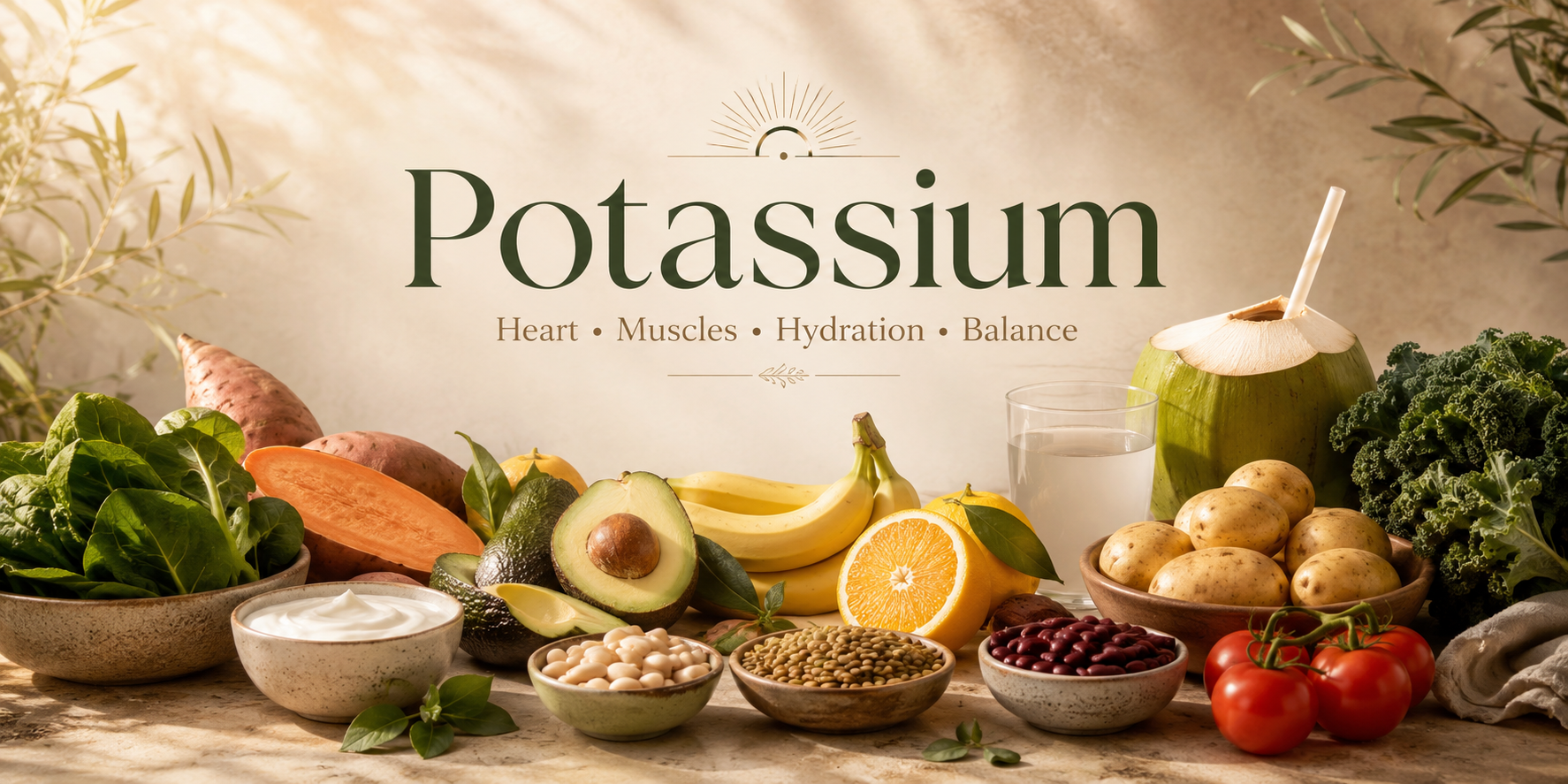
Potassium
Learn how potassium supports blood pressure, heart rhythm, muscle function, nerve signaling, hydration, kidney wellness, and mineral balance.
The Essential Mineral for Heart, Muscle, Nerve, and Fluid Balance
Potassium is one of the body’s most important minerals and electrolytes. It helps keep the body’s electrical system steady, supports normal heart rhythm, helps muscles contract and relax, and allows nerves to send messages clearly through the body.
Potassium is a foundational mineral the body depends on every day.
Your body uses potassium to support fluid balance, blood pressure, muscle strength, nerve communication, heart rhythm, and the healthy movement of nutrients and fluids in and out of cells. When potassium intake is strong and balanced, the body is better supported from the inside out.
Potassium also has a close relationship with sodium. Many modern diets are high in sodium from processed foods, restaurant meals, packaged snacks, sauces, and hidden salt. Potassium helps the body handle sodium more wisely by supporting sodium excretion through urine and helping blood vessel walls relax. This is one reason potassium-rich foods are so valuable for blood pressure and heart wellness.
Why Potassium Matters
Potassium works mostly inside the cells, while sodium works more heavily outside the cells. Together, they help regulate fluid movement, nerve signals, and muscle contraction.
This balance affects how the body feels and functions. Healthy potassium levels support steady energy, muscle movement, hydration, heart rhythm, and blood pressure regulation. When potassium intake is too low, the body may become more sensitive to sodium, muscles may feel weaker, and the body’s natural electrical rhythm may feel less supported.
Potassium is especially important for people who eat a high-sodium diet, sweat heavily, work outdoors, exercise often, or lose fluids through heat, illness, vomiting, diarrhea, or certain medications.
Supports Healthy Blood Pressure
One of potassium’s strongest benefits is blood pressure support.
Potassium helps the body move excess sodium out through urine. It also supports more relaxed blood vessel walls, which helps the cardiovascular system function with better balance.
This matters because sodium and potassium work together. When sodium intake is high and potassium intake is low, the body may hold onto more fluid and blood pressure may rise more easily. When potassium-rich foods are part of daily meals, the body has better mineral support for healthy pressure, circulation, and fluid regulation.
For people focused on blood pressure wellness, potassium-rich foods are one of the most important food-based supports.
Supports Heart Rhythm and Cardiovascular Function
The heart depends on electrical signals to beat in rhythm. Potassium helps regulate those signals.
Healthy potassium balance supports the heart’s natural rhythm, the contraction of heart muscle, and overall cardiovascular steadiness. This is why potassium matters so much. The body needs the right amount in the right balance.
A strong food-based potassium intake can support everyday heart wellness, especially when paired with a lower-sodium, whole-food pattern.
Supports Muscle Strength and Function
Muscles need potassium to contract and relax properly. This includes the muscles used for movement as well as the heart muscle itself.
Low potassium can contribute to muscle weakness, cramping, fatigue, or a heavy, depleted feeling in the body. Potassium becomes especially important after sweating, heat exposure, exercise, fluid loss, or illness.
Potassium works with other electrolytes, including magnesium, sodium, calcium, and chloride. The body’s muscles do best when these minerals are balanced together.
Supports Nerve Communication
Potassium helps nerves send signals throughout the body. These signals affect movement, reflexes, muscle response, and communication between the brain and body.
When potassium is low, the body’s electrical messaging can feel less steady. Supporting potassium through food helps nourish the nervous system in a basic, practical, deeply important way.
This is one of potassium’s quiet strengths. It helps the body stay responsive, connected, and coordinated.
Supports Fluid Balance and Hydration
Potassium is an electrolyte, which means it helps regulate fluid balance in the body.
Hydration is not only about drinking water. The body also needs minerals that help water move where it belongs. Potassium helps maintain fluid balance inside the cells, while sodium helps regulate fluid outside the cells. Together, they help the body maintain healthy hydration patterns.
This is why potassium-rich foods can be helpful when the body feels depleted from heat, sweating, or fluid loss.
Supports Kidney Stone and Bone Health
Potassium-rich diets, especially from fruits and vegetables, are connected with healthier mineral balance in the body.
Potassium can help reduce urinary calcium loss, which supports bone and kidney wellness. This is one reason potassium matters beyond the heart and muscles. It also plays a role in the larger mineral balance that affects bones, kidneys, and long-term health.
Fruits, vegetables, beans, and other potassium-rich whole foods bring more than potassium alone. They also provide fiber, antioxidants, plant compounds, and natural minerals that support the body in multiple ways.
Potassium and Magnesium Work Together
Potassium and magnesium often work together in the body’s electrolyte balance.
Low magnesium can make it harder for the body to maintain healthy potassium levels. This is one reason muscle cramps, weakness, fatigue, or electrolyte imbalance may involve more than one mineral.
Potassium, magnesium, sodium, hydration, and overall nutrition all matter. The body is a living system, and minerals work as a team.
This also makes potassium a natural companion topic to magnesium, salt, hydration, and mineral balance.
Potassium-Rich Foods
The best way to support potassium is usually through food.
Potassium-rich foods include:
Potatoes
Sweet potatoes
Bananas
Avocados
Spinach and leafy greens
Beans
Lentils
Tomatoes and tomato products
Oranges and citrus fruits
Coconut water
Winter squash
Yogurt
Milk
Salmon
Chicken
Beef
Nuts and seeds
Potassium goes far beyond bananas. Potatoes, sweet potatoes, beans, leafy greens, avocado, tomato products, yogurt, and fish can all provide meaningful potassium.
A potassium-rich lifestyle can be simple. It can look like adding avocado to breakfast, eating a baked potato with dinner, using spinach in soups or eggs, adding beans to meals, drinking coconut water after sweating, or choosing fruit instead of a packaged snack.
How Much Potassium Do Adults Need?
Potassium recommendations can look confusing because there are different reference numbers.
For general adult nutrition, the Adequate Intake for potassium is about 3,400 mg per day for adult men and 2,600 mg per day for adult women. During pregnancy, the amount increases to about 2,900 mg per day, and during breastfeeding it is about 2,800 mg per day.
Food labels use a different reference number. The FDA Daily Value for potassium is 4,700 mg per day. That is the number used to calculate the percent Daily Value on Nutrition Facts labels.
So when you see potassium listed on a food label, the percentage is based on the 4,700 mg label reference number. For most people, the best goal is to build potassium-rich meals from real foods throughout the day.
Potassium Supplements
Potassium supplements are sometimes used when potassium is low or when certain medications, conditions, or fluid losses cause the body to lose too much potassium.
For general wellness, food is usually the best foundation.
Many over-the-counter potassium supplements provide small amounts compared with food. This is intentional because potassium is powerful, and the body needs the right balance. High-dose potassium should be handled carefully, especially for people with kidney disease or those taking medications that affect potassium levels.
Food-based potassium is often the safest and most natural starting place for healthy people.
Helpful Guidance for Potassium Balance
Potassium is essential, and balance matters.
People with kidney disease may need to limit potassium because the kidneys help remove extra potassium from the blood. When kidney function is reduced, potassium can build up more easily.
Extra care is also important for people taking medications that can raise potassium levels, including some blood pressure medications, heart medications, potassium-sparing diuretics, ACE inhibitors, ARBs, and potassium-based salt substitutes.
For most healthy people, potassium-rich foods are supportive. For people with kidney concerns or potassium-affecting medications, potassium intake should be guided more carefully.
Signs Potassium May Be Low
Low potassium can happen when the body loses too much fluid or too many minerals, or when intake is too low.
Possible signs of low potassium may include:
Muscle weakness
Muscle cramps
Fatigue
Constipation
Feeling unusually depleted
Heart palpitations
Tingling or weakness in more serious cases
Low potassium can be connected to vomiting, diarrhea, heavy sweating, laxative overuse, poor intake, certain medications, or fluid loss.
These symptoms can have many causes, but potassium is one mineral worth considering when the body feels weak, crampy, drained, or off balance.
Signs Potassium May Be Too High
High potassium does not always cause obvious symptoms, but when symptoms do appear, they may include muscle weakness, nausea, unusual fatigue, heart palpitations, or irregular heartbeat.
This matters most for people with kidney disease, people using potassium supplements, people taking potassium-affecting medications, or people using salt substitutes made with potassium chloride.
The goal is healthy potassium balance.
Potassium for Women
Potassium can be especially helpful for women who deal with fluid shifts, bloating, muscle cramps, high sodium intake, or heavy sweating.
Because women may experience changes in fluid balance around the menstrual cycle, potassium-rich foods can support steadier mineral balance. Avocado, potatoes, leafy greens, beans, yogurt, citrus fruits, coconut water, and tomato-rich meals can be simple everyday supports.
During pregnancy and breastfeeding, potassium remains important for fluid balance, muscle function, and overall nourishment. Food-based potassium is a strong foundation, while supplements should be handled with professional guidance during those seasons.
Potassium for Men
Potassium is important for men’s heart health, blood pressure support, muscle function, and exercise recovery.
Men who sweat heavily, work outdoors, exercise intensely, or eat a high-sodium diet may benefit from paying closer attention to potassium-rich foods. Potassium supports electrolyte balance, muscle performance, and cardiovascular wellness, especially when paired with hydration, magnesium, and whole-food meals.
For men focused on long-term heart health, potassium-rich foods are a smart daily habit.
Everyday Ways to Get More Potassium
Simple ways to increase potassium include:
Add avocado to eggs, salads, wraps, or bowls
Choose potatoes or sweet potatoes as a mineral-rich side
Add spinach to soups, smoothies, eggs, or pasta
Eat beans or lentils several times per week
Use tomato sauce, salsa, or roasted tomatoes in meals
Choose yogurt with fruit
Drink coconut water after sweating or heat exposure
Add oranges, bananas, or kiwi as snacks
Include salmon or other fish when possible
Build meals around whole foods instead of packaged foods
Potassium works best as part of a real-food pattern. The body uses it well when it comes from balanced meals that also provide fiber, minerals, water-rich foods, protein, and other nutrients.
Q&A
Is potassium good for blood pressure?
Yes. Potassium supports healthy blood pressure by helping the body balance sodium, move excess sodium out through urine, and support more relaxed blood vessel walls.
Is potassium only found in bananas?
No. Bananas contain potassium, but many foods provide meaningful amounts. Potatoes, sweet potatoes, beans, lentils, spinach, avocado, tomato products, yogurt, citrus fruits, and fish are all good potassium sources.
Can potassium help with muscle cramps?
Potassium supports normal muscle contraction and relaxation. Low potassium can contribute to muscle weakness and cramping, though cramps can also involve magnesium, sodium, calcium, hydration, circulation, or muscle fatigue.
Is coconut water a good source of potassium?
Yes. Coconut water naturally contains potassium and can be helpful after sweating, heat exposure, or exercise. It is not necessary for everyone, but it can be a useful electrolyte option.
Should I take a potassium supplement?
Most people should focus on potassium-rich foods first. Potassium supplements are sometimes needed when potassium is low or when certain medications cause potassium loss, but supplements should be used carefully because too much potassium can be serious for some people.
Who should be careful with potassium?
People with kidney disease, people on dialysis, and people taking medications that raise potassium should be careful with high-potassium foods, potassium supplements, and potassium-based salt substitutes.
What foods are highest in potassium?
Potatoes, sweet potatoes, beans, lentils, spinach, avocado, tomato products, coconut water, yogurt, bananas, citrus fruits, and some fish are all strong potassium sources.
Does potassium help with hydration?
Yes. Potassium helps regulate fluid balance inside the body’s cells. Hydration depends on both water and electrolytes, and potassium is one of the key electrolytes that helps the body use fluids properly.
Final Thoughts on Potassium
Potassium is one of the body’s essential everyday minerals.
It supports the heart, muscles, nerves, blood pressure, hydration, and mineral balance. It helps the body handle sodium more wisely. It supports normal muscle movement, steady nerve communication, and healthy heart rhythm. It also helps the body maintain better fluid balance from the inside out.
For most people, the best way to support potassium is through real food: potatoes, leafy greens, avocado, beans, tomatoes, fruit, yogurt, fish, and other mineral-rich choices.
Potassium is about giving the body one of the minerals it needs to function with strength, rhythm, and balance.
If this wellness guide resonated, you may also enjoy:
Magnesium
Vitamin D
Moringa
Natural Wellness Library ↑
Explore more natural wellness pages in the Natural Wellness Library ↑

Valerian Root
Learn how valerian root supports restful sleep, stress relief, nervous system calm, menopause hot flashes, mild tension, and peaceful evening routines.
A Calming Herbal Root for Sleep, Stress, Hot Flashes, and Evening Peace
Valerian root is one of the classic herbs for deep rest, relaxation, and nighttime calm. For generations, it has been used by people who want to settle the body, quiet the mind, and move into sleep with more ease.
Valerian is especially valued when the nervous system feels overstimulated. It supports the body when stress has been high, thoughts keep running, muscles feel tense, or the evening does not naturally feel peaceful yet.
This root is often connected with sleep, but its benefits reach further than bedtime. Valerian root is also used for stress, nervous tension, menopause-related hot flashes, mild tension, and the kind of restlessness that can make the body feel tired but unable to fully relax.
Its strength is gentle but real. Valerian helps the body soften into rest.
What Is Valerian Root?
Valerian root comes from the valerian plant, most commonly Valeriana officinalis. The plant has delicate flowers, but the root is the part traditionally used in teas, capsules, tinctures, extracts, and calming herbal blends.
The root has a strong earthy scent that comes from its natural plant compounds. These include valerenic acid and other constituents that are believed to contribute to valerian’s relaxing effects.
Valerian may be used by itself or blended with other calming herbs such as lemon balm, passionflower, chamomile, hops, or lavender. These herbs are often used together in evening formulas because they support relaxation from slightly different angles.
Why the Body Values Valerian Root
Valerian root supports the body’s natural ability to move from alertness into rest.
Many people do not need more pressure around sleep. They need support for the nervous system. The body may be tired, but the mind may still be active. The muscles may still be holding tension. The day may be over, but the body has not fully received the message that it can relax.
Valerian root helps support that shift. It encourages a calmer internal rhythm, making it easier for the body to relax, release tension, and prepare for sleep.
This is why valerian belongs so naturally in an evening routine. It helps create a bridge between the busyness of the day and the restoration of night.
Supports Deeper, More Restful Sleep
Valerian root is widely used to support restful sleep and nighttime relaxation. Many people take it in the evening to help them fall asleep more easily, sleep more peacefully, and feel less restless during the night.
Its sleep-supporting value is especially helpful when rest is disrupted by stress, nervous tension, overstimulation, or a mind that keeps moving after the body is ready to sleep.
Valerian works well as part of a steady nighttime rhythm. Dim lighting, a cool bedroom, less screen time, prayer, journaling, quiet breathing, calming music, or a warm cup of herbal tea can all help the body receive valerian’s message more fully.
For people who feel wound up at night, valerian offers a gentle signal of release. The day can end. The body can soften. Rest can begin.
Calms Stress and Supports the Nervous System
Valerian root has a long history of use for stress, nervous tension, and restlessness.
One reason valerian is so valued is its relationship with GABA, a calming neurotransmitter that helps quiet excessive nervous system activity. GABA helps the body move away from over-alertness and toward relaxation. Valerian appears to support this calming pathway, which helps explain its traditional use for sleep, stress, and nervous system support.
This makes valerian especially helpful for people who feel mentally busy, emotionally stretched, or physically tense in the evening. It does not erase the demands of life, but it can support the body’s ability to come down from the stress response.
Valerian helps lower the inner volume so rest feels more reachable.
Supports Menopause Hot Flash Relief
Valerian root also has a meaningful place in menopause support.
Studies suggest valerian can help reduce the frequency and intensity of hot flashes in menopausal women. This is important because hot flashes are not just a passing discomfort for many women. They can interrupt sleep, affect mood, drain energy, and make the body feel unsettled.
Valerian’s calming and sleep-supporting qualities may be especially helpful when menopause symptoms disturb rest at night. When hot flashes, night waking, or nervous system changes make sleep harder, valerian can offer natural support for a calmer evening and more restful night.
Valerian is not a hormone replacement. Its value is in relaxation, sleep support, hot flash support, and nervous system calm. For women moving through menopause, that can be deeply helpful.
Helps Ease Mild Tension
Valerian root has also been used for mild nervous tension and tension-related discomfort.
Stress often shows up in the body. It may appear as tight shoulders, a clenched jaw, shallow breathing, neck tension, or a heavy feeling in the head. When the nervous system stays on high alert, the body can remain braced even after the stressful moment has passed.
Valerian supports relaxation in that tense state. It helps the body unwind, which can be useful when tension is connected to stress, poor rest, or an overstimulated nervous system.
Valerian has also been studied for tension-type headaches. This makes it reasonable to include as a natural support for mild tension, especially when the discomfort is tied to stress, tightness, or difficulty relaxing.
Supports a Peaceful Evening Routine
Valerian root can be a beautiful part of a calming nighttime ritual.
Modern life often keeps the mind and body active long after the day should be winding down. Bright lights, phones, responsibilities, worries, and unfinished thoughts can all keep the nervous system engaged.
Valerian helps create a clear evening signal.
A cup of valerian tea, a capsule, or a tincture can become part of the body’s nightly rhythm. Over time, that rhythm matters. The body responds to repeated signals of calm. When the evening feels steady and peaceful, sleep often becomes easier to enter.
Valerian does not have to stand alone. It works beautifully with simple habits that invite the body into rest.
How Valerian Root Is Commonly Used
Valerian root is commonly used as a tea, capsule, tincture, extract, or part of an herbal sleep blend.
Valerian tea can feel grounding, though the taste is earthy and strong. Capsules and tinctures are often chosen by people who want a more convenient option. Herbal blends may combine valerian with chamomile, lemon balm, passionflower, hops, or lavender for a fuller calming effect.
Valerian is usually used in the evening because it can make some people feel relaxed or sleepy. It is best taken when the body is ready to wind down, not before driving, working, or doing anything that requires clear focus.
Wise Use and Helpful Safety Notes
Valerian root is a calming herb with real effects, so it should be used with awareness.
Because valerian supports relaxation and sleep, it should not be combined with alcohol, sleeping pills, sedatives, narcotic pain medicines, muscle relaxers, or other calming substances unless a qualified healthcare professional says it is appropriate. Combining calming substances can increase drowsiness and make the body too sedated.
Some people may feel drowsy the next morning, especially if they take valerian too late at night, take a higher amount than their body needs, or combine it with other calming products. Other possible side effects can include headache, dizziness, vivid dreams, stomach upset, or feeling unusually restless instead of relaxed.
Valerian should not be used before driving, operating equipment, or doing anything that requires alert focus until a person knows how their body responds. It is also not usually recommended during pregnancy or breastfeeding unless guided by a healthcare professional, because safety has not been clearly established for those seasons.
Valerian has real effects on sleep, relaxation, and the nervous system, and those effects deserve wise use. When used thoughtfully, it can be a beautiful part of a peaceful nighttime routine.
Valerian Root and Daily Life
Valerian root works best when it is part of a lifestyle that honors rest.
A peaceful evening routine can make valerian more supportive. Dimming the lights, putting the phone away earlier, keeping the bedroom cool, stretching gently, writing down tomorrow’s tasks, praying, or taking a few quiet breaths can all help prepare the body for sleep.
The body listens to patterns. When the same calming signals happen night after night, rest often becomes easier to receive.
Valerian root belongs beautifully in a natural wellness lifestyle because it reminds the body that rest is nourishment. Sleep is where the body repairs, the nervous system resets, hormones find rhythm, and the mind finally has space to recover.
Common Questions About Valerian Root
Is valerian root good for sleep?
Yes. Valerian root is commonly used for sleep support, especially when rest is disrupted by stress, nervous tension, or difficulty winding down at night.
Can valerian root help with stress?
Yes. Valerian has a long history of use for stress, nervous tension, and restlessness. It supports a calmer internal state and may help the body relax after a demanding day.
Can valerian root help with anxiety?
Valerian supports relaxation and nervous system calm. It can be helpful when someone feels tense, overstimulated, or unsettled, especially in the evening. It should not replace deeper support when anxiety is severe or ongoing.
Can valerian root help with menopause hot flashes?
Valerian can support menopausal women who struggle with hot flashes, especially when hot flashes interfere with sleep or nighttime calm. Studies suggest valerian may help reduce hot flash frequency and intensity.
Can valerian root help with tension headaches?
Valerian has been studied for tension-type headaches and has traditional use for mild nervous tension. It may be helpful when tension is connected to stress, tight muscles, poor sleep, or an overactive nervous system.
Does valerian root work the first night?
Some people feel calmer the first night they use valerian. Others notice the benefit more clearly when it becomes part of a consistent evening routine.
Can valerian root make you groggy?
Yes, it can for some people. Taking too much, taking it too late, or combining it with other calming substances can increase the chance of next-day drowsiness.
The Takeaway
Valerian root is a calming herbal root used for sleep, stress, nervous tension, menopause-related hot flashes, mild tension, and evening relaxation.
Its value is in the way it helps the body shift out of strain and into rest. It supports the nervous system, encourages relaxation, and helps create a peaceful transition from the demands of the day into the restoration of night.
Used wisely, valerian can become part of a gentle nighttime rhythm that supports calmer evenings, deeper rest, and a more restored body by morning.
If this wellness guide resonated, you may also enjoy:
Magnesium
Vitex Chasteberry
Sam-e
Natural Wellness ↑
Explore more gentle, grounded wellness pages in the Natural Wellness library ↑

Vitex Chasteberry
Vitex, also known as chasteberry, supports PMS, breast tenderness, hot flashes, night sweats, mood changes, cycle rhythm, and women’s hormonal wellness.
Natural Support for PMS, Breast Tenderness, Menstrual Rhythm, Mood Changes and Hormonal Wellness
Vitex, also known as chasteberry or Vitex agnus-castus, is a small berry from the chaste tree, a flowering shrub native to the Mediterranean region and parts of Central Asia.
For centuries, Vitex has held a special place in traditional women's herbal wellness. Today, it is most widely recognized for supporting premenstrual comfort, cyclical breast tenderness, menstrual rhythm and reproductive hormone signaling.
What makes Vitex especially interesting is the way it appears to work.
Vitex is not simply a source of estrogen or progesterone. Instead, research suggests that compounds within the plant may influence communication between the brain, pituitary gland and reproductive system, particularly pathways involving dopamine and prolactin.
This gives Vitex a distinctive place among women's herbs.
Rather than supplying one hormone, Vitex appears to influence some of the signaling mechanisms that help regulate hormonal rhythm.
What Vitex Is Best Known For
Vitex is best known for supporting women experiencing symptoms that follow a menstrual or hormonal pattern, particularly:
Premenstrual syndrome, or PMS
Cyclical breast tenderness
Premenstrual mood changes
Irritability
Headaches associated with PMS
Bloating and premenstrual discomfort
Menstrual irregularity
Certain prolactin-related cycle disturbances
Luteal-phase concerns
Hormonal changes during perimenopause
Vitex has also been explored for fertility-related menstrual patterns, menopausal symptoms, PMDD and hormone-associated skin changes.
The depth of research is not equal across all of these uses.
The strongest human evidence centers on PMS and cyclical breast tenderness, while several other applications remain promising areas of study.
Why Vitex Is Different From Simply Taking a Hormone
The phrase “hormone balance” is commonly used in wellness conversations, but Vitex appears to do something more specific and more interesting.
The reproductive system depends on constant communication among the brain, pituitary gland, ovaries and other tissues.
The pituitary gland is a small endocrine gland located at the base of the brain. Although tiny, it releases hormones that help coordinate reproduction, thyroid activity, growth, stress responses and other essential functions.
Vitex appears to influence this communication system.
One of the most studied possibilities involves dopamine.
Dopamine is widely known as a brain neurotransmitter involved in motivation, movement and reward, but dopamine also plays an important role in reproductive endocrinology because it helps regulate the release of prolactin from the pituitary gland.
Vitex contains plant compounds that appear capable of interacting with dopamine-related pathways.
Through these pathways, Vitex may influence prolactin signaling and some of the downstream hormonal patterns connected with the menstrual cycle.
That is why describing Vitex simply as an herb that “raises progesterone” or “balances estrogen” misses much of the story.
Vitex may be better understood as an herb that helps influence hormonal communication and reproductive rhythm.
Understanding Prolactin
Prolactin is often described as the breastfeeding hormone because it helps stimulate milk production after childbirth.
But prolactin does much more than that.
Prolactin also interacts with reproductive function, menstrual rhythm, ovulation and breast tissue.
When prolactin becomes elevated outside pregnancy and breastfeeding, menstrual and reproductive patterns can sometimes change.
Depending on the individual and the degree of elevation, higher prolactin may be associated with:
Irregular menstrual cycles
Changes in ovulation
Shortened luteal phases
Breast tenderness
Fertility difficulties
Changes in reproductive hormone signaling
This connection helps explain why researchers became interested in Vitex.
Clinical research has found that certain Vitex preparations can influence prolactin responses in some women, particularly those with specific menstrual patterns associated with elevated prolactin activity.
This is one of the most fascinating parts of the Vitex story.
The berry may be working upstream, helping influence the communication signals that shape what eventually happens throughout the menstrual cycle.
PMS and Monthly Comfort
Premenstrual syndrome can involve much more than feeling slightly different before a period.
PMS may affect the body, mood, appetite, sleep and nervous system.
Women may experience:
Breast tenderness
Irritability
Emotional sensitivity
Mood changes
Headaches
Bloating
Cravings
Fatigue
Changes in sleep
Fluid retention
Physical discomfort
Vitex is one of the most extensively studied herbal approaches for PMS.
Clinical trials and systematic reviews have found improvements in various premenstrual symptoms among women using Vitex preparations.
This is important because PMS follows a rhythm.
Symptoms often appear during the luteal phase, the portion of the menstrual cycle after ovulation, and then improve shortly after menstruation begins.
When symptoms repeatedly appear during the same hormonal window each month, Vitex may be particularly relevant because of its relationship with reproductive signaling.
Where the Evidence Is Strongest
Among the many reasons women use Vitex, two areas stand out most clearly in human research:
Premenstrual syndrome and cyclical breast tenderness.
Vitex has been studied in randomized clinical trials as well as systematic reviews and meta-analyses for these conditions.
That does not mean every woman will respond the same way. Herbal medicine is rarely that tidy.
But it does mean these uses are supported by considerably more human research than many of the broader claims sometimes made about Vitex.
This distinction matters.
A woman looking into Vitex deserves to know both the tradition surrounding the herb and where modern clinical research has gone deepest.
Breast Tenderness and Cyclical Mastalgia
One of the strongest areas of Vitex research involves cyclical mastalgia, the medical term for breast pain or tenderness that follows the menstrual cycle.
Cyclical breast tenderness commonly becomes stronger in the days or weeks before menstruation and improves after the period begins.
This pattern may reflect changes involving estrogen, progesterone, prolactin and breast-tissue sensitivity across the menstrual cycle.
Vitex has been studied extensively for this particular symptom.
A systematic review and meta-analysis examining clinical trials of Vitex for cyclical mastalgia found that Vitex reduced breast pain compared with placebo in the studies included in the conservative analysis.
Researchers have also observed changes in elevated prolactin in some women.
This connection between prolactin signaling and breast tissue helps explain why breast tenderness has become one of Vitex's best-supported uses.
For a woman whose breast discomfort predictably appears before menstruation month after month, Vitex is one of the better-researched herbal options worth understanding.
Cycle Regularity and Hormonal Rhythm
The menstrual cycle is an intricate biological rhythm rather than a single monthly event.
Signals travel among the hypothalamus, pituitary gland and ovaries throughout the cycle.
Follicle-stimulating hormone, luteinizing hormone, estrogen, progesterone and prolactin all participate in this coordinated conversation.
Sleep, nutrition, thyroid function, metabolic health, stress, medications, age and other factors can also influence menstrual patterns.
Vitex is commonly used when the menstrual picture includes a combination of:
PMS
Cyclical breast tenderness
Irregular menstrual rhythm
Prolactin-related symptoms
Luteal-phase concerns
Vitex does not force every menstrual cycle into the same pattern.
Its value appears to lie in influencing some of the signaling pathways involved in reproductive rhythm.
The Luteal Phase
The luteal phase is the second half of the menstrual cycle.
It begins after ovulation and continues until menstruation.
After an egg is released, the follicle that released it becomes a temporary endocrine structure called the corpus luteum.
The corpus luteum produces progesterone, helping prepare and maintain the uterine lining during this portion of the cycle.
For some women, the luteal phase may be shortened or progesterone production during that phase may be inadequate.
Researchers have investigated Vitex in women experiencing luteal-phase abnormalities connected with elevated prolactin responses.
In a small randomized, placebo-controlled study, women receiving a specific Vitex preparation experienced reductions in prolactin responses, normalization of shortened luteal phases and improvements in luteal progesterone production.
That study gives us an important clue about where Vitex may be especially relevant.
Its reproductive effects may be most meaningful when a menstrual problem involves a particular hormonal signaling pattern rather than when Vitex is used as a general-purpose fertility supplement.
Vitex and Fertility
Vitex frequently appears in conversations about fertility because menstrual rhythm, ovulation, prolactin and luteal-phase function are all connected with reproductive health.
There is a reasonable biological basis for this interest.
If elevated prolactin, irregular cycles or luteal-phase abnormalities are disrupting reproductive rhythm, influencing those pathways could potentially improve the conditions surrounding conception.
However, this deserves precision.
Vitex has not been established as a universal fertility treatment.
Research is much stronger for specific menstrual and prolactin-related patterns than it is for infertility as a whole.
The most meaningful question therefore may not be:
“Does Vitex increase fertility?”
A better question is:
“Is there a menstrual, luteal-phase or prolactin-related pattern present that Vitex may help support?”
That distinction allows Vitex to be appreciated for what it may genuinely do without turning it into something it has never been proven to be.
Once pregnancy is suspected or confirmed, continued Vitex use should be discussed with a qualified healthcare professional.
PMS, Mood and Emotional Rhythm
Hormones and the nervous system are deeply interconnected.
For some women, the days before menstruation bring noticeable changes in:
Patience
Emotional sensitivity
Irritability
Sadness
Tension
Concentration
Sleep
Stress tolerance
When those emotional shifts consistently follow the menstrual cycle, reproductive hormone signaling may be one piece of the picture.
Vitex has been studied for the broader collection of emotional and physical symptoms associated with PMS.
This is another reason it may feel very different from an herb intended simply to relax the nervous system.
Vitex is being used closer to the hormonal rhythm behind the recurring pattern.
What About PMDD?
Premenstrual dysphoric disorder, or PMDD, is a more severe premenstrual condition in which emotional, cognitive and physical symptoms can significantly interfere with everyday life.
Symptoms may include pronounced irritability, mood changes, anxiety, sadness, difficulty concentrating and physical premenstrual symptoms.
Vitex has been investigated in research involving severe premenstrual symptoms and PMDD.
The research is interesting, but it is smaller and less definitive than the broader body of evidence for PMS.
For that reason, PMDD belongs in the Vitex conversation, but it should not be treated as though Vitex has been established as a stand-alone answer for every woman with PMDD.
It represents another area where the connection between the menstrual cycle, brain chemistry and reproductive hormone signaling deserves continued exploration.
Perimenopause
Perimenopause is the transition leading toward menopause.
During this period, ovarian hormone production becomes less predictable.
Periods may become:
Shorter or longer
Heavier or lighter
Closer together or farther apart
Women may also begin experiencing:
Hot flashes
Night sweats
Mood changes
Anxiety
Breast tenderness
Sleep disruption
Changing PMS patterns
Altered menstrual rhythm
Perimenopause is particularly interesting in relation to Vitex because menstrual cycles may still be occurring while reproductive signaling is becoming increasingly variable.
Some women therefore use Vitex during this transition, especially when their symptoms continue to have a cyclical or premenstrual character.
Vitex and Menopause
Vitex has also been studied for menopausal symptoms.
One randomized, double-blind, placebo-controlled clinical trial involving menopausal women found improvements in overall menopausal symptom scores, anxiety and vasomotor symptoms among women receiving Vitex compared with placebo.
Vasomotor symptoms are the temperature-regulation disturbances that include hot flashes and night sweats.
Those results are encouraging.
At the same time, menopause research on Vitex remains much smaller than the research surrounding PMS and cyclical breast tenderness.
The best description of Vitex for menopause is therefore promising and developing.
That leaves room for both science and women's real-world experiences.
Some women report meaningful improvement while taking Vitex during hormonal transition. Clinical research gives us reasons to continue investigating those experiences rather than dismissing them, while also recognizing that much more research is needed.
Hot Flashes and Night Sweats
Hot flashes can feel like sudden internal waves of heat, sometimes accompanied by flushing, sweating or a racing heartbeat.
Night sweats are related vasomotor events that occur during sleep and can interrupt rest.
These symptoms arise partly because reproductive hormone changes affect temperature-regulating systems in the brain.
Vitex is not one of the most extensively studied herbs for hot flashes, but early human research makes this a legitimate area of interest.
A small placebo-controlled study found improvement in vasomotor symptoms among women using Vitex.
That does not put hot flashes in the same evidence category as PMS or cyclical breast tenderness, but it does give us something meaningful to explore.
For women who find that Vitex improves their experience during perimenopause or menopause, their personal response is useful information about their own bodies.
Hormonal Acne and Skin Changes
Skin can sometimes reveal the rhythm of what is happening elsewhere in the body.
Some women notice acne:
Before menstruation
Around ovulation
During periods of irregular cycles
During perimenopause
During other hormonal transitions
Vitex has a long history of use for hormone-associated skin concerns, and its influence on reproductive signaling provides a possible reason for this traditional use.
However, modern human clinical research specifically demonstrating that Vitex treats hormonal acne is limited.
It is therefore best understood as a traditional and emerging use, rather than one of Vitex's established clinical applications.
Interestingly, acne has also occasionally been reported by people taking Vitex, reminding us that hormone-related responses can differ considerably from one person to another.
What's Inside the Vitex Berry?
Vitex fruit contains a complex mixture of naturally occurring plant compounds.
Researchers have identified constituents including:
Diterpenes
Flavonoids
Iridoid glycosides
Agnuside
Casticin
Vitexin
Other polyphenolic compounds
The diterpenes are particularly interesting because researchers have investigated their potential interaction with dopamine receptors.
This chemical complexity also helps explain why Vitex should not be reduced to a single active ingredient.
The whole berry contains numerous compounds capable of interacting with biological pathways.
Plant medicine often works through orchestras rather than solo instruments.
Vitex Is Not Simply a Phytoestrogen
Vitex is sometimes placed into a broad category with every herb associated with women's hormones.
That can be misleading.
Its most interesting proposed mechanism involves dopaminergic activity and prolactin regulation through the pituitary rather than simply supplying estrogen-like compounds.
Research into possible estrogen-receptor activity has produced mixed findings, and the precise mechanism of Vitex remains under investigation.
What is clearer is that the plant interacts with the reproductive signaling system in ways that distinguish it from herbs discussed primarily for their phytoestrogen content.
Traditional Use Through History
The relationship between humans and Vitex extends far beyond modern supplement bottles.
Vitex was known in ancient Mediterranean cultures and became associated with women's reproductive health, chastity and traditional gynecological uses.
Its common name monk's pepper arose from historical traditions surrounding the plant and beliefs that it could influence sexual desire.
Over time, however, Vitex became far more strongly associated with women's menstrual and reproductive wellness.
Modern research has now begun investigating some of the very reproductive patterns for which the plant developed its traditional reputation.
That meeting place between historical use and modern investigation is part of what makes Vitex so interesting.
How Vitex Is Commonly Used
Vitex is generally made from the fruit of the chaste tree and is available in several forms, including:
Capsules
Tablets
Liquid extracts
Tinctures
Standardized herbal extracts
Many products are taken once daily, although formulation and concentration vary considerably.
Vitex is usually approached as a consistent daily herb rather than something taken only when PMS symptoms begin.
Clinical research commonly evaluates Vitex over multiple menstrual cycles.
For this reason, women often track their response over approximately 8 to 12 weeks or two to three menstrual cycles rather than expecting an immediate overnight change.
Why the Type of Extract Matters
One detail easily lost in conversations about herbs is that one Vitex product is not automatically equivalent to another.
Clinical trials may use particular extracts with defined concentrations and preparation methods.
Different products can contain different amounts of plant material and different concentrations of active constituents.
When choosing a Vitex product, useful things to look for include:
The botanical name Vitex agnus-castus
Identification of the plant part, usually the fruit
Clear serving information
Extract concentration when applicable
Standardization information when provided
Transparent manufacturing information
Independent quality testing when available
A study showing benefits from one standardized preparation does not automatically prove that every product labeled “chasteberry” will perform identically.
Quality matters.
Paying Attention to Your Own Pattern
One of the most useful things a woman can do while exploring Vitex is track what her body is doing.
Consider recording:
Cycle length
Ovulation timing when known
Breast tenderness
PMS symptoms
Mood
Headaches
Bloating
Cravings
Sleep
Hot flashes
Night sweats
Skin changes
Menstrual flow
How symptoms change across several cycles
Patterns often tell a story that isolated symptoms cannot.
If breast tenderness appears predictably seven days before every period, that is different information from breast pain occurring randomly throughout the month.
If irritability, headaches and bloating consistently rise together during the luteal phase, that pattern also matters.
The body leaves clues.
Working With Vitex Wisely
Vitex is natural, but it is also biologically active.
That is part of what makes the plant interesting.
Because it may influence dopamine, prolactin and reproductive signaling, additional guidance can be useful when someone is:
Pregnant or breastfeeding
Receiving fertility treatment
Using hormonal contraception
Using hormone therapy
Taking dopamine agonist or antagonist medications
Taking antipsychotic or other medications that substantially affect dopamine
Managing a known pituitary disorder
Managing a hormone-sensitive medical condition
Vitex is generally well tolerated in studies.
Reported effects have included digestive discomfort, headache, itching, rash, acne and changes in menstrual patterns.
Most importantly, using an active herb wisely means paying attention to how your particular body responds.
The Evidence Landscape
Vitex has been studied across several areas of women's health, but the amount and quality of evidence differ by use.
The strongest human research currently centers on:
PMS and cyclical breast tenderness.
Promising human evidence exists for:
Certain prolactin-related menstrual disturbances and selected luteal-phase abnormalities.
Early and developing research includes:
Menopausal symptoms such as hot flashes, night sweats and anxiety.
More limited or condition-specific evidence includes:
Fertility support and PMDD.
Traditional or emerging uses include:
Hormonal-pattern acne and several broader reproductive wellness applications.
This evidence landscape allows Vitex to be appreciated without forcing every possible benefit into the same scientific category.
What Makes Vitex Valuable
Vitex is valuable because it invites us to think about hormonal wellness differently.
Symptoms such as breast tenderness, mood changes, menstrual irregularity and premenstrual discomfort do not occur in isolation.
They emerge from an interconnected system involving the brain, pituitary gland, ovaries, nervous system and hormone receptors throughout the body.
Vitex appears to interact with part of that communication network.
Its strongest clinical story involves PMS and cyclical breast tenderness.
Its prolactin research gives us a fascinating window into why the plant may affect menstrual rhythm.
Its emerging research in perimenopause and menopause raises worthwhile questions about how the herb might help certain women during hormonal transition.
And its centuries of traditional use remind us that women's experiences with medicinal plants often began long before laboratories were able to investigate their mechanisms.
Vitex deserves neither exaggeration nor dismissal.
It deserves understanding.
A Grounded Takeaway
Vitex, or chasteberry, is one of the most important traditional herbs associated with women's menstrual and hormonal wellness.
Modern research has given particular support to its use for PMS and cyclical breast tenderness and has revealed intriguing relationships with dopamine signaling, prolactin and the menstrual cycle.
Research also suggests possible benefits in selected prolactin-related luteal-phase disturbances, while studies involving menopause, fertility, PMDD and other hormonal concerns continue to develop.
Vitex does not simply pour hormones into the body.
Its story appears to involve something subtler: communication.
The brain sends signals.
The pituitary responds.
Hormones carry messages.
Breast tissue, ovaries and reproductive organs respond to those messages.
The menstrual cycle moves through its phases.
And within that remarkable biological conversation, Vitex appears capable of influencing certain signals.
That is what makes this small berry so fascinating.
It is not merely a “women's hormone herb.”
It is a plant whose relationship with the body's reproductive signaling system has been recognized traditionally for generations and is still being unraveled by modern science.
Frequently Asked Questions About Vitex
Is Vitex the same as chasteberry?
Yes. Vitex, chasteberry, chaste tree berry and Vitex agnus-castus generally refer to the same plant. The fruit of the chaste tree is the part most commonly used in supplements.
What is Vitex best known for?
Vitex is best known for PMS and cyclical breast tenderness. It is also commonly used to support menstrual rhythm and other hormone-related symptoms.
Does Vitex help PMS?
Human clinical research supports Vitex as a promising option for reducing several PMS symptoms, particularly cyclical breast tenderness and other recurring premenstrual complaints.
Can Vitex help breast tenderness?
Cyclical breast tenderness is one of the strongest areas of Vitex research. Studies have found reductions in breast pain among women whose symptoms follow the menstrual cycle.
Why might Vitex affect breast tenderness?
One possible explanation involves prolactin. Prolactin influences breast tissue as well as reproductive function, and Vitex appears capable of influencing dopamine pathways involved in prolactin regulation.
Does Vitex lower prolactin?
Certain Vitex preparations have reduced prolactin responses in human studies, particularly among women with specific prolactin-related menstrual abnormalities. Vitex should not be viewed as a replacement for evaluating unexplained or significantly elevated prolactin.
Does Vitex increase progesterone?
Vitex does not contain progesterone. In a study involving women with luteal-phase abnormalities related to latent hyperprolactinemia, Vitex improved luteal progesterone production along with other hormonal changes. The effect appears to occur indirectly through reproductive signaling rather than by supplying progesterone.
Does Vitex balance hormones?
“Hormone balancing” is a convenient phrase, but it oversimplifies how Vitex appears to work.
Vitex may influence pituitary, dopamine and prolactin signaling and thereby affect downstream reproductive hormone patterns.
“Supporting hormonal communication and reproductive rhythm” is a more accurate description.
Can Vitex regulate menstrual cycles?
Vitex may support menstrual rhythm in certain women, particularly when cycle disturbances occur alongside PMS, cyclical breast tenderness, luteal-phase concerns or prolactin-related patterns.
Irregular cycles can have many causes, however, so the reason behind the irregularity matters.
Can Vitex help fertility?
Vitex is sometimes useful in fertility-related situations involving irregular cycles, luteal-phase abnormalities or prolactin signaling.
Evidence is not strong enough to describe Vitex as a general infertility treatment.
Its potential value appears to be more specific: supporting certain reproductive patterns that can influence fertility.
What is the luteal phase?
The luteal phase is the portion of the menstrual cycle between ovulation and the beginning of the next period.
During this phase, the corpus luteum produces progesterone to support the uterine lining.
Can Vitex help a short luteal phase?
A small placebo-controlled study found normalization of shortened luteal phases among women with luteal-phase defects associated with latent hyperprolactinemia.
That does not mean every short luteal phase has the same cause, but it is one of the more intriguing areas of Vitex research.
Can Vitex help PMDD?
Vitex has been studied for severe premenstrual symptoms and PMDD, but the research base is less established than it is for broader PMS.
It remains a legitimate area of research rather than a proven universal treatment for PMDD.
Does Vitex help with perimenopause?
Vitex is commonly used during perimenopause, particularly when symptoms retain a cyclical pattern involving PMS, breast tenderness, mood changes or irregular periods.
Because hormone production becomes increasingly variable during perimenopause, individual responses can differ.
Does Vitex help hot flashes?
Early clinical research suggests that Vitex may improve vasomotor symptoms such as hot flashes in some menopausal women.
This research is promising but considerably smaller than the research supporting Vitex for PMS and cyclical breast tenderness.
Can Vitex help night sweats?
Night sweats are another type of vasomotor symptom. Early human research on Vitex and menopausal symptoms gives researchers reason to continue exploring this possibility, although larger trials are still needed.
Can Vitex help menopause-related anxiety?
One small randomized placebo-controlled study found improvement in anxiety as well as vasomotor symptoms among menopausal women using Vitex.
This is an intriguing finding, but menopause remains an emerging area of Vitex research.
Can Vitex help hormonal acne?
Vitex has traditionally been used for hormone-associated skin concerns, particularly when breakouts follow the menstrual cycle.
Clinical evidence specifically establishing Vitex as an acne treatment remains limited, so this is better considered a traditional and emerging use.
Is Vitex a phytoestrogen?
Vitex should not simply be classified as an estrogen replacement.
Researchers have investigated possible estrogen-receptor activity, but findings have been mixed. Its better-characterized activity involves dopamine and prolactin-related signaling.
How long does Vitex take to work?
Vitex generally is not considered an immediate-acting herb.
Many clinical studies evaluate response across approximately three menstrual cycles, and women commonly assess their response after about 8 to 12 weeks of consistent use.
Should Vitex be taken every day?
Many Vitex preparations used in clinical research are taken consistently rather than only during PMS symptoms.
The appropriate amount depends upon the preparation and concentration of the particular product.
Is every Vitex supplement the same?
No.
Vitex supplements can differ substantially in extraction method, concentration, standardization and amount of plant material.
This is why results from a particular clinical extract cannot automatically be transferred to every Vitex product on the shelf.
Can Vitex be used during pregnancy?
Vitex is generally not recommended for routine use once pregnancy is established unless its use is specifically directed by a qualified healthcare professional.
Can Vitex be used while breastfeeding?
Because Vitex may affect prolactin and reproductive signaling, its use while breastfeeding deserves individualized professional guidance.
Can Vitex be used with birth control or hormone therapy?
Vitex influences pathways involved in reproductive signaling. Women using hormonal contraception, estrogen therapy, anti-estrogen therapy or other hormonal treatments should discuss concurrent Vitex use with a knowledgeable healthcare professional.
Can Vitex interact with medications?
Because of its potential dopaminergic activity, particular attention is appropriate with medications that act strongly on dopamine pathways.
This includes dopamine agonists and antagonists and may include some medications used in neurological or psychiatric care.
Is Vitex worth understanding?
Absolutely.
Vitex brings together centuries of traditional herbal use and an expanding body of modern research involving PMS, breast tenderness, prolactin, the pituitary gland and reproductive rhythm.
Its story is still being written.
And the more science learns about the relationship between the brain, hormones and reproductive system, the more interesting this small Mediterranean berry becomes.
Explore More Natural Wellness
Continue exploring related subjects in the Wellness Library:
Hormonal Wellness
Learn more about the body's interconnected hormone-signaling systems and the everyday factors that support hormonal health.
Cortisol: Stress Response, Energy, Sleep, Metabolism and Hormonal Balance
Explore how the body's primary stress hormone interacts with sleep, metabolism, energy and other hormone systems.
Nervous System Strength and Balance
Discover the relationship between nervous-system regulation, sleep, stress resilience and whole-body wellness.
Collagen for Skin, Joints, Bones, Muscles and Connective Tissue
Explore one of the body's most abundant structural proteins and its role throughout connective tissue.
If this wellness page supported you, you may also enjoy:
Valerian Root
Natural Wellness ↑
Explore more gentle, grounded wellness pages in the Natural Wellness library ↑

Mullein Leaf
Mullein leaf is a traditional herb for respiratory support, cough comfort, mucus clearing, throat soothing, skin comfort, and natural lung wellness.
Mullein Leaf for Lungs, Mucus, Cough, Throat and Respiratory Wellness
Mullein is one of the great traditional respiratory herbs, a tall, soft-leaved plant whose relationship with the lungs, throat and breath reaches across centuries of herbal practice.
Known botanically as Verbascum thapsus, common mullein is recognized by its broad velvety leaves and towering stalk of yellow flowers. Beneath that unmistakable appearance is a remarkably complex plant containing mucilage, saponins, flavonoids, iridoids, phenylethanoid glycosides and numerous other naturally occurring compounds.
Mullein leaf has traditionally been prepared when the respiratory system needs both comfort and movement. Its soothing nature has made it especially valued when the throat and respiratory passages feel dry or irritated, while its expectorant tradition connects it with the normal loosening and movement of mucus.
That combination is what makes mullein distinctive.
It is more than simply an herb associated with cough.
It is a plant with a long and enduring relationship with the breath.
What Is Mullein Leaf?
Common mullein is a biennial plant belonging to the Verbascum genus.
During its first year, the plant usually develops a low rosette of broad, fuzzy gray-green leaves. During its second year, a tall flowering stalk rises from the center and may grow several feet high, carrying many small yellow flowers.
Mullein is native to Europe, western and central Asia and northern Africa. It was later introduced into other parts of the world and is now widely naturalized throughout North America.
Different parts of mullein have developed different traditional uses.
The leaf became especially prominent in respiratory teas, infusions, tinctures and extracts.
The flowers have their own long respiratory tradition and are also commonly infused into oil.
The root appears in separate folk traditions.
Each plant part contains its own balance of phytochemicals, which is why mullein leaf, mullein flower and mullein root should not automatically be treated as interchangeable.
This page focuses primarily on the leaf.
An Herb With an Ancient Story
Mullein has been valued as a medicinal plant for generations.
Its use appears throughout European herbal history, especially in preparations associated with the lungs, cough and throat.
As the plant spread into new regions, its herbal story continued to grow.
After becoming established in North America, mullein was incorporated into a variety of local herbal traditions and was used in preparations associated with cough, sore throat, respiratory discomfort and other forms of traditional care.
The plant acquired many names along the way, including great mullein, common mullein, velvet dock, candlewick plant and Aaron's rod.
Some of those names came from its striking appearance.
Others reflected historical household uses for its large soft leaves or towering dried stalks.
But one relationship remained especially persistent.
Across generations, mullein kept returning to the respiratory system.
Why Mullein Became a Respiratory Herb
Healthy respiratory function requires balance.
The airways need to remain comfortably moist while also maintaining the ability to move mucus and trapped particles outward.
Mullein fits beautifully into this picture because traditional herbal practice associates it with both sides of that process.
Its mucilage contributes to its soothing, demulcent nature.
Its saponins help explain its long expectorant tradition.
This means mullein has historically been used when respiratory tissues feel dry and irritated as well as when mucus feels difficult to move.
Rather than simply pushing the respiratory system in one direction, mullein developed a reputation for supporting the environment in which normal respiratory comfort and clearing can occur.
Mucilage and Mullein's Soothing Nature
Mucilage is one of the most important parts of mullein's story.
Mucilage is a group of plant substances that absorb water and develop a slippery or gel-like quality.
Plants containing significant mucilage have traditionally been described as demulcents.
A demulcent is used to soothe and protect irritated mucous membranes.
These delicate membranes line the mouth, throat, digestive tract and portions of the respiratory system.
This helps explain why a warm mullein infusion can feel particularly suited to a dry or irritated throat.
The water brings hydration.
The warmth brings comfort.
The herb contributes water-soluble plant constituents traditionally associated with soothing tissues.
Sometimes the preparation and the plant are working toward the same purpose.
Saponins and Mullein's Expectorant Tradition
Mullein also contains naturally occurring compounds known as saponins.
Saponins occur throughout the plant kingdom and contribute to the properties of many traditional medicinal herbs.
A number of saponin-containing plants have historically been used as expectorants.
An expectorant supports the normal loosening and movement of respiratory secretions so mucus can be cleared more easily.
This complements mullein's demulcent qualities.
Mucilage helps explain the soothing side of mullein.
Saponins help explain the clearing side.
Together they offer a compelling reason why mullein became so closely associated with respiratory wellness.
Mullein and the Lungs
The lungs interact with the outside world every moment of the day.
Every breath brings oxygen, but it may also carry pollen, dust, microorganisms and microscopic environmental particles.
The respiratory system has its own sophisticated protective network.
Mucus helps capture particles.
Tiny hair-like structures called cilia help transport that mucus upward.
Immune cells monitor the respiratory tissues.
The airway lining creates a protective barrier between the body and the outside environment.
Mullein leaf has traditionally been used when these respiratory passages need gentle support and comfort.
Its herbal reputation centers on helping maintain a respiratory environment where tissues feel soothed and normal clearing processes can continue.
Mullein and Mucus
Mucus is an important part of respiratory health.
It traps pollen, dust, microorganisms and other particles before they can travel deeper into delicate lung tissue.
Healthy mucus must also remain mobile.
When secretions become particularly thick or difficult to move, the respiratory system has to work harder to clear them.
Mullein has traditionally been valued as an expectorant herb during these situations.
Its traditional role is not to eliminate mucus completely.
Mucus has a job.
The goal is healthy movement and normal respiratory clearance.
The Mucociliary Clearance System
One of the respiratory system's most remarkable cleaning mechanisms is known as mucociliary clearance.
Many of the airways are lined with microscopic hair-like structures called cilia.
Above them rests a thin layer of mucus.
Airborne material becomes trapped in that mucus.
The cilia then move rhythmically, transporting the mucus upward through the respiratory passages where it can eventually be swallowed or expelled.
It is a microscopic cleaning system operating every minute of the day.
Hydration helps mucus maintain a consistency that allows it to move more effectively.
This is one reason warm fluids have remained part of traditional respiratory care.
Mullein tea brings hydration together with an herb historically valued for both soothing tissues and supporting normal respiratory secretions.
Mullein and Dry Cough
A dry cough may feel scratchy, repetitive or irritating rather than productive.
There may be little mucus to move.
In these situations, mullein's traditional demulcent character becomes particularly relevant.
Mucilage-rich herbal preparations have long been used when delicate mucous membranes feel dry or irritated.
Warm tea can also add moisture and comfort directly to the throat.
Mullein flower has its own formally recognized European traditional use for sore throat associated with dry cough and colds.
The leaf and flower are different preparations, but their parallel respiratory histories help explain why the Verbascum plant became so closely associated with throat and cough support.
Mullein and Productive Cough
A productive cough serves a different purpose.
Mucus is present, and the respiratory system is attempting to move those secretions upward and outward.
Coughing is one of the body's natural clearing mechanisms.
Mullein's expectorant tradition makes it particularly interesting when respiratory secretions need movement.
Rather than simply suppressing a natural process, traditional mullein use has centered on supporting the body's ability to manage and clear mucus.
Sometimes the respiratory system is already doing exactly what it was designed to do.
It simply needs support along the way.
Mullein and the Throat
The throat is another natural home for mullein's soothing reputation.
Warm herbal tea passes directly across tissues that may feel dry, scratchy or irritated.
Mucilage-containing plants have traditionally been chosen specifically because of their relationship with mucous membranes.
This makes mullein tea more than merely a way to swallow an herb.
The preparation itself becomes part of the experience.
Warmth, water and plant constituents arrive together.
Traditional herbal preparations often endured because people repeatedly observed how well the method fit the plant.
What Makes Mullein Distinctive?
Many medicinal plants contain flavonoids.
Many contain antioxidants.
Many have histories involving cough or respiratory discomfort.
Mullein is distinctive because of how several qualities come together.
Its mucilage contributes to its soothing tradition.
Its saponins help explain its expectorant reputation.
Its phytochemistry includes numerous additional compounds being investigated through modern science.
Its leaf and flower contain related but different chemical profiles.
And its relationship with the respiratory system has remained remarkably persistent across generations.
Mullein is not a plant defined by one molecule.
Its identity emerges from the interaction among many compounds, preparations and centuries of observation.
The Plant Chemistry Inside Mullein
Modern analysis reveals that mullein contains a diverse collection of phytochemicals.
Researchers have identified compounds belonging to groups that include flavonoids, iridoids, phenylethanoid glycosides, phenylpropanoid glycosides, saponins, sterols, coumarins and other phenolic compounds.
The amount and balance of these constituents varies according to the plant part and extraction method.
A water infusion will not contain exactly the same chemical profile as an alcohol tincture.
A leaf extract will not necessarily resemble a flower preparation.
This is one reason herbal medicine cannot always be reduced to a single "active ingredient."
A medicinal plant is a chemical community.
Verbascoside
One of the most interesting compounds associated with mullein is verbascoside, also known as acteoside.
Verbascoside is a phenylethanoid glycoside found in mullein as well as several other medicinal plants.
It has attracted considerable scientific attention.
Experimental research has examined verbascoside in relation to oxidative stress, inflammatory signaling, microbial activity, cellular protection and immune pathways.
Verbascoside does not explain every traditional use of mullein.
Plants are rarely that simple.
But it provides a fascinating example of how compounds hidden inside an old herbal remedy can become the subject of modern molecular research.
Aucubin and Mullein's Iridoids
Mullein also contains iridoid compounds, including compounds related to aucubin.
Iridoids are part of the plant's own sophisticated defense chemistry.
Plants use these compounds as part of their response to insects, microorganisms and environmental stress.
Modern scientists have investigated various iridoids in relation to inflammatory, oxidative and microbial pathways.
Their presence adds another layer to mullein's complexity.
The chemistry that helps a plant survive in its environment may also help explain why humans found that plant interesting enough to use for generations.
Flavonoids and Antioxidant Activity
Mullein contains flavonoids and other phenolic compounds associated with antioxidant activity.
Oxidation is a natural part of life.
Cells produce reactive molecules during metabolism, exercise, immune activity and energy production.
The body also maintains its own antioxidant systems to keep these processes in balance.
Plants manufacture their own protective compounds, and many of those compounds can interact with oxidative pathways.
Laboratory research involving mullein extracts has demonstrated antioxidant activity.
For mullein, this is best understood as one part of a much larger botanical story rather than the plant's defining feature.
Mullein and Inflammatory Balance
Inflammation is one of the body's essential protective responses.
It helps coordinate circulation, immune activity and tissue repair when the body encounters injury or stress.
Researchers have studied mullein extracts and individual compounds in relation to signaling pathways involved in inflammatory activity.
This remains an active experimental field.
Its importance lies partly in helping modern researchers investigate why traditional herbalists repeatedly chose mullein for irritated tissues and respiratory discomfort.
The old observations came first.
Science is now beginning to explore some of the pathways beneath them.
Mullein and Immune Signaling
The immune and respiratory systems are closely connected.
The airways constantly encounter microorganisms, allergens and environmental material, which means immune signaling is woven into everyday respiratory defense.
Experimental research involving Verbascum compounds has explored pathways associated with immune and inflammatory responses.
This broadens our understanding of mullein beyond the older idea of an herb that simply affects mucus.
Its plant chemistry interacts with a much wider biological landscape.
Mullein and Antibacterial Research
Mullein extracts have demonstrated antibacterial activity in laboratory studies.
Researchers have examined different parts of the plant against several types of bacteria and found that activity varies according to the plant part, extraction method and microorganism being studied.
Leaf extracts have attracted particular interest because of their phenylethanoid-glycoside-rich chemistry.
These findings add another layer to mullein's scientific story and help explain why the plant continues to attract researchers interested in traditional medicinal plants.
Mullein and Viral Research
Compounds and extracts from Verbascum species have also been examined in experimental antiviral research.
Different plant preparations have demonstrated activity in laboratory models involving certain viruses and viral processes.
This remains an emerging research field.
Its greatest value is in showing that mullein's chemistry has enough biological activity to continue generating new scientific questions.
The respiratory traditions surrounding mullein developed centuries before people could even see a virus.
Modern research now allows scientists to investigate parts of that ancient story at the microscopic level.
Mullein and Antifungal Research
Experimental research has also identified antifungal activity among preparations made from Verbascum thapsus.
Together with antibacterial and antiviral investigations, this contributes to a broader picture of the plant's microbial research.
Mullein's traditional identity remains centered on respiratory and throat wellness.
Its chemistry, however, continues to reveal additional areas worthy of scientific exploration.
Mullein and Skin Wellness
Mullein's traditional uses extend beyond the respiratory system.
Preparations from the plant have historically been applied externally to irritated or uncomfortable skin.
Modern research has begun examining this tradition more closely.
One randomized, double-blind controlled human study evaluated a Verbascum thapsus cream in 93 women following episiotomy.
By the tenth day, the group using the mullein preparation had significantly better wound-healing scores than the placebo group.
Human clinical research involving mullein remains limited, which makes this study particularly interesting.
It represents an example of a traditional area of use moving into controlled human research.
Mullein and Modern Tissue Research
Interest in mullein and tissue repair has continued in experimental research.
Scientists have investigated Verbascum thapsus extracts in modern wound-care materials, including specialized biomaterial systems.
Researchers have explored antioxidant, antibacterial and tissue-repair properties within these experimental preparations.
There is something remarkable about that progression.
A plant associated historically with traditional herbal preparations is now being investigated through modern material science.
The technology changed.
The plant remained.
Mullein Leaf and Mullein Flower
Understanding the difference between mullein leaf and mullein flower is important.
They come from the same plant but are not chemically identical.
Mullein leaf has a prominent place in Western and North American respiratory herbal practice and commonly appears in teas, tinctures, capsules and extracts.
Mullein flower has its own long respiratory tradition.
European herbal authorities formally recognize preparations made from mullein flower, based on long-standing traditional use, for relief of sore throat associated with dry cough and colds.
That formal monograph applies specifically to the flower.
Mullein flowers are also commonly used to prepare infused oils.
The distinction does not diminish the leaf.
It gives us a more complete understanding of the plant.
Mullein Flower Oil and Ear Traditions
Mullein is widely associated with traditional herbal ear oils.
These preparations are generally made from the flowers rather than the leaves.
The flowers are infused into oil and may be combined in commercial preparations with herbs such as garlic.
This means mullein flower oil and mullein leaf tea represent entirely different preparations.
Understanding which part of an herb is being used is one of the most important pieces of good herbal knowledge.
The name of the plant tells us where the story begins.
The plant part tells us much more about the preparation.
Mullein Tea
Tea is one of the simplest and most traditional ways to use mullein leaf.
A common household preparation uses approximately 1 to 2 teaspoons of dried mullein leaf with one cup of hot water.
Allow the leaves to steep for approximately 10 to 15 minutes.
Then filter the tea very carefully.
Mullein leaves are covered with extremely fine hairs, so good filtration is an important part of preparing the tea.
A fine tea filter, coffee filter or tightly woven cloth can create a smoother infusion.
Mullein tea has a mild, earthy herbal character and combines the plant with two things respiratory tissues naturally appreciate: warmth and hydration.
Why Water Is Such a Natural Preparation for Mullein
The preparation of an herb can influence which parts of the plant become available.
Mucilage has a natural affinity for water.
When mullein is infused in water, water-soluble plant material moves into the tea.
At the same time, the drink itself contributes hydration.
This helps explain why tea fits mullein's respiratory tradition so naturally.
Warm liquid passes across the throat.
Water supports normal mucus consistency.
The plant contributes its own constituents.
The preparation and the herb work in the same direction.
Why Mullein Tea Needs Fine Filtration
One of mullein's most recognizable characteristics is its velvety texture.
The leaves are covered with microscopic hairs called trichomes.
On the living plant, these hairs help protect the leaf and give mullein its soft appearance.
In tea, they are less welcome.
If the hairs remain suspended in the liquid, they can create a scratchy or irritating feeling in the mouth or throat.
This is why careful filtration has long been part of preparing mullein leaf tea.
Sometimes centuries of herbal knowledge come down to very simple details.
With mullein, one of those details is a good strainer.
Mullein Tinctures and Liquid Extracts
Mullein is also available as tinctures and liquid extracts.
These preparations use alcohol, glycerin or other solvents to extract plant compounds.
Different solvents capture different portions of the plant's chemistry.
For that reason, tincture and tea are not chemically identical preparations.
Commercial extracts also vary greatly in concentration.
A quality label should clearly identify the botanical species and the plant part used.
This is particularly important with mullein because leaf, flower and root preparations have different traditional histories.
Mullein Capsules
Mullein leaf is also available in capsules.
Capsules offer convenience and allow the dried herb to be used without preparing tea.
Tea, however, brings something capsules cannot provide.
Water.
For someone interested primarily in mullein's respiratory tradition, the hydration and warmth accompanying tea may be part of its appeal.
The most concentrated preparation is not automatically the best preparation.
The best choice is the one that fits the purpose.
Choosing a Quality Mullein Product
Good herbal products should make it easy to understand what is inside them.
Look for products that clearly identify Verbascum thapsus and specify whether they contain leaf, flower or another plant part.
Reputable suppliers should also use clean plant material that has been properly harvested, dried and stored.
Mullein grows readily in roadsides, vacant areas and disturbed soil, which makes the origin of wild-harvested material important.
An herb can be beautifully natural and still benefit from thoughtful sourcing.
Herbs Traditionally Paired With Mullein
Mullein frequently appears alongside other respiratory and soothing herbs.
Traditional companions include thyme, peppermint, marshmallow root, ginger, licorice root, elderflower, chamomile and nettle.
Each herb contributes something different.
Marshmallow root is especially rich in mucilage.
Thyme carries its own strong aromatic respiratory tradition.
Peppermint contributes cooling aromatic compounds.
Ginger adds warmth.
Chamomile contributes gentle soothing qualities.
Thoughtful herbal blending is not about collecting the greatest possible number of plants.
It is about giving every herb a reason to be there.
What About Smoking Mullein?
Mullein leaves have historically been burned or smoked in several traditions.
That history has sometimes been interpreted to mean that smoking mullein is an ideal way to support the respiratory system.
But burning plant material creates smoke and fine particles that the lungs then have to process.
For someone interested in mullein specifically because of its traditional relationship with respiratory wellness, tea and other non-combusted preparations provide much gentler ways to experience the plant.
The lungs already operate one of the body's most impressive cleaning systems.
They do not need a campfire inside them.
Recognizing Mullein
Mullein is remarkably distinctive once its life cycle becomes familiar.
During its first year, it generally forms a basal rosette of large fuzzy gray-green leaves close to the ground.
During its second year, a tall flowering stalk rises dramatically from the center.
Small yellow flowers appear along that stalk.
Mature mullein can become surprisingly tall.
Today the plant grows widely throughout much of North America and frequently appears in sunny fields, roadsides, disturbed areas and open ground.
People interested in gathering wild herbs should learn accurate plant identification and choose clean growing areas away from heavy roadside pollution, pesticides and other contaminants.
Mullein and Everyday Respiratory Wellness
Mullein fits best within a larger approach to respiratory wellness.
Adequate hydration helps maintain normal mucus consistency.
Fresh air can reduce concentrated indoor irritants when outdoor conditions are favorable.
Regular movement supports circulation and deeper breathing.
Appropriate indoor humidity can help respiratory tissues remain comfortable.
Rest supports normal immune function.
Good nutrition provides the materials needed for tissue maintenance and repair.
Reducing unnecessary exposure to smoke and airborne irritants helps lower the workload placed on the respiratory system.
Mullein can become one part of that larger picture.
It does not need to carry the entire respiratory system on its fuzzy shoulders.
How to Use Mullein Wisely
For mullein leaf tea, quality dried herb and thorough filtration are the most important practical details.
For tinctures, capsules and extracts, follow the product directions because concentrations vary substantially.
Choose products that identify both the botanical species and the plant part being used.
Because concentrated herbal preparations may be approached differently during pregnancy, breastfeeding, childhood or alongside multiple medications, individualized guidance can help when those circumstances apply.
The formal European traditional-use monograph for mullein flower applies to adults and adolescents over 12 rather than establishing dosing for younger children.
Respiratory symptoms that are severe, rapidly worsening or accompanied by significant difficulty breathing deserve appropriate medical evaluation.
Herbal wellness and modern medical care do not have to occupy opposite sides of the room.
Both begin with respecting the body.
Understanding the Evidence Around Mullein
Mullein has several different layers of evidence.
The first is traditional evidence.
Its relationship with the lungs, throat and cough spans generations of herbal practice.
The second is phytochemical evidence.
Modern analysis confirms that the plant contains numerous biologically interesting compounds, including flavonoids, iridoids, phenylethanoid glycosides and saponins.
The third is experimental evidence.
Laboratory and animal research has investigated antioxidant, inflammatory, antibacterial, antiviral, antifungal and other biological properties.
The fourth is human evidence.
This remains the smallest layer, particularly for mullein leaf and respiratory use.
Controlled human research does exist in other areas, including topical wound healing, but modern respiratory clinical trials remain limited.
Each layer answers a different question.
Tradition tells us how people used the plant.
Chemistry reveals what is inside it.
Experimental research explores how those compounds behave.
Human trials help determine how those findings translate into real-world clinical outcomes.
The richest understanding comes when we allow each form of evidence to speak clearly without asking it to pretend to be something else.
Frequently Asked Questions
What is mullein leaf traditionally used for?
Mullein leaf is best known as a traditional respiratory herb. It has been used in herbal preparations associated with cough, throat irritation, respiratory mucus, chest congestion and general comfort of the airways.
Why is mullein associated with the lungs?
Mullein combines soothing and expectorant traditions. Its mucilage contributes to its demulcent qualities, while its saponins help explain its historical association with mucus movement and respiratory clearing.
What does demulcent mean?
A demulcent is a substance traditionally used to soothe and protect irritated mucous membranes. Mucilage-containing plants often have demulcent qualities.
Is mullein an expectorant?
Mullein has traditionally been classified as an expectorant herb, meaning it has been used to support the normal loosening and movement of respiratory secretions.
Can mullein be used for a dry cough?
Mullein's soothing and demulcent traditions make it particularly interesting when the throat or respiratory passages feel dry or irritated. Mullein flower also has formally recognized European traditional use for sore throat associated with dry cough and colds.
Can mullein be used when mucus is present?
Mullein leaf has a longstanding expectorant tradition and has historically been used when respiratory mucus feels difficult to move.
Is mucus bad for the lungs?
Mucus is an important part of respiratory defense. It helps capture pollen, dust, microorganisms and environmental particles. Healthy respiratory function depends partly on mucus remaining mobile enough to be cleared normally.
What is mucociliary clearance?
Mucociliary clearance is one of the respiratory system's natural cleaning processes. Mucus traps particles while microscopic cilia move that mucus upward through the airways.
Is mullein leaf the same as mullein flower?
No. The leaf and flower come from the same plant but contain different proportions of plant compounds and have somewhat different traditional uses.
Why do some sources specifically mention mullein flower for cough?
European herbal authorities have established a traditional-use monograph specifically for mullein flower for relief of sore throat associated with dry cough and colds. That formal recognition applies to the flower rather than automatically applying to mullein leaf.
Is mullein ear oil made from mullein leaf?
Many traditional mullein ear oils are made from the flowers rather than the leaves. Product labels should specify which plant part was used.
Why does mullein tea need to be filtered carefully?
Mullein leaves contain extremely fine hairs called trichomes. Thorough filtration removes these fibers and creates a smoother tea.
How is mullein tea traditionally prepared?
Dried mullein leaf is commonly steeped in hot water for approximately 10 to 15 minutes and then carefully filtered through a very fine strainer or filter.
Can mullein be taken as a tincture?
Yes. Mullein is available as tinctures and liquid extracts as well as teas and capsules. Extract concentrations vary, so the manufacturer's directions should guide use.
Can mullein be combined with other herbs?
Yes. Mullein commonly appears in respiratory herbal blends with plants such as thyme, marshmallow root, peppermint, ginger, chamomile, elderflower and licorice root.
Does mullein contain antioxidants?
Mullein contains flavonoids, phenolic compounds and other constituents that have demonstrated antioxidant activity in experimental research.
Has mullein been studied for inflammation?
Yes. Researchers have investigated mullein extracts and individual compounds in relation to inflammatory and immune-signaling pathways.
Has mullein been studied for bacteria?
Yes. Mullein extracts have demonstrated antibacterial activity in laboratory studies. Activity differs depending on the plant part, extraction method and microorganism studied.
Has mullein been studied for viruses?
Yes. Verbascum extracts and constituents have been examined in experimental antiviral research.
Has mullein been studied for fungi?
Yes. Experimental research has also reported antifungal activity among preparations made from Verbascum thapsus.
Has mullein been studied for skin and wound healing?
Yes. Mullein has a long history of topical use, and controlled human research has evaluated Verbascum thapsus cream for wound healing. Experimental research has also explored mullein extracts in modern wound-care materials.
Is there strong human research on mullein leaf for respiratory conditions?
Modern human respiratory research remains limited. Mullein leaf's respiratory reputation is supported primarily by longstanding traditional use, phytochemistry and experimental research rather than a large body of modern clinical trials.
What Makes Mullein Worth Remembering?
Mullein's story began long before anyone could identify mucilage, saponins, flavonoids, iridoids or verbascoside.
People first knew the plant through observation.
They recognized its soft leaves.
They learned how to prepare them.
They discovered that careful filtration mattered.
They returned to the herb when throats felt dry, coughs became troublesome or respiratory mucus needed movement.
Generation after generation carried that knowledge forward.
Today science can look inside the leaf.
It can identify complex families of phytochemicals.
It can examine inflammatory pathways, microorganisms, tissue responses and cellular activity.
Modern science has not erased mullein's traditional story.
It has opened new windows into it.
That meeting place between observation and investigation is where mullein becomes especially interesting.
Traditional herbal knowledge tells us where generations found value.
Modern research helps us explore why.
And between the two stands the plant itself, soft-leaved, towering and unmistakable, carrying an ancient respiratory tradition into a new age of discovery.
For something so deeply associated with the breath, perhaps that is fitting.
Breath enters.
Breath leaves.
Mucus captures what does not belong.
Cilia quietly sweep the airways.
Tissues protect and restore themselves.
And for generations, mullein has stood beside that quiet work.
If this wellness page supported you, you may also enjoy:
Ginger
Natural Wellness ↑
Explore more gentle, grounded wellness pages in the Natural Wellness library ↑
Apple Cider Vinegar: Blood Sugar, Metabolism, Digestion, Heart Health, and Everyday Wellness
Learn how apple cider vinegar supports blood sugar balance, appetite, cholesterol, digestion, and everyday wellness, plus the best ways to use it wisely.
Apple cider vinegar is one of the simplest foods in the wellness kitchen, yet there is much more happening inside that familiar amber bottle than its sharp flavor suggests.
Made from fermented apples, apple cider vinegar has long been used in cooking, food preservation, dressings, marinades, pickled foods, traditional preparations, and everyday wellness routines. Modern research has added another layer to that history by examining its effects on blood sugar, insulin sensitivity, metabolic health, appetite, triglycerides, cholesterol, digestion, and other aspects of human wellness.
At the center of much of this research is acetic acid, the primary organic acid created during vinegar fermentation.
Acetic acid gives apple cider vinegar its unmistakable sourness, but it also interacts with human metabolism in several interesting ways. Research suggests vinegar can influence the glucose and insulin response to meals, insulin sensitivity, carbohydrate metabolism, satiety, and certain blood-lipid markers.
That gives apple cider vinegar something especially valuable: it is not merely a wellness product someone has to remember to take. It is a functional food that can become part of the meal itself.
A splash in a dressing.
A spoonful in a marinade.
A little vinegar with vegetables, beans, grains, or another carbohydrate-containing meal.
Sometimes meaningful wellness begins with very ordinary things.
What Apple Cider Vinegar Is
Apple cider vinegar begins with apples.
During the first stage of fermentation, yeast converts the natural sugars from the apples into alcohol. During the next stage, acetic-acid bacteria convert that alcohol into acetic acid.
The result is vinegar.
Apple cider vinegar is primarily water and acetic acid, along with smaller amounts of compounds carried forward from the apples and fermentation process.
The concentration varies among products, but commercial culinary vinegars commonly contain around 5% acidity.
That acidity is responsible for much of apple cider vinegar's culinary character, preservative ability, and metabolic interest.
A Beautiful Transformation Through Fermentation
Fermentation is one of nature's great transformations.
Fruit begins with sugars. Microorganisms use those sugars and gradually create something entirely different.
In apple cider vinegar, fermentation turns sweet apple juice first into an alcoholic cider and then into the bright, acidic vinegar we recognize today.
Acetic-acid bacteria are central to that final transformation.
Instead of thinking of fermentation simply as food becoming older, it is more helpful to see it as food becoming chemically different.
Humans learned to work with these processes long before we understood their microbiology.
Through observation and experience, cultures around the world learned that fermentation could preserve harvests, create new flavors, transform ingredients, and make entirely new foods possible.
Apple cider vinegar belongs to that ancient relationship between people, plants, microorganisms, and food.
A Long History of Vinegar in Everyday Life
Vinegar has been part of human food culture for thousands of years.
Different civilizations created vinegars from whatever fermentable foods were available to them: grapes, grains, dates, fruits, rice, cider, and other carbohydrate-rich ingredients.
Vinegar became valuable in the kitchen because acidity could help preserve foods while also transforming their flavor.
Pickling extended the usefulness of seasonal vegetables.
Marinades tenderized and seasoned foods.
Acid balanced rich dishes.
Simple sauces became brighter.
Fermented foods could be stored and enjoyed in ways fresh ingredients sometimes could not.
Apple cider vinegar grew from this much larger vinegar tradition.
Today we can appreciate something our ancestors learned through experience: vinegar is a remarkably useful food.
Modern science is now helping us understand why some of that usefulness reaches beyond the kitchen.
Acetic Acid: The Heart of Apple Cider Vinegar
Much of the scientific interest surrounding apple cider vinegar centers on acetic acid.
Acetic acid is a small organic acid, but its biological effects appear to touch several parts of metabolism.
Research involving vinegar and acetic acid has explored possible effects on:
blood glucose after meals
fasting blood glucose
insulin response
insulin sensitivity
carbohydrate digestion
glucose uptake and metabolism
gastric emptying
appetite and satiety
triglycerides
cholesterol
broader cardiometabolic health
These effects do not appear to come from one isolated pathway.
Instead, acetic acid seems capable of interacting with several steps involved in how the body handles a meal.
That is what makes apple cider vinegar particularly fascinating.
A very small amount of a common fermented food can interact with a surprisingly sophisticated metabolic system.
Apple Cider Vinegar and Blood Sugar
Blood sugar support is one of the most important areas of human research surrounding apple cider vinegar.
Clinical studies and systematic reviews have found that apple cider vinegar or vinegar consumption can improve several measures of glucose control in certain populations, including fasting blood glucose and HbA1c.
Research has also repeatedly examined vinegar's influence on the rise in blood glucose that occurs after eating.
This is known as the post-meal or postprandial glucose response.
When carbohydrates are eaten, they are broken down into smaller sugars, including glucose. That glucose moves into the bloodstream, and insulin helps move it from the blood into cells where it can be used for energy or stored for later.
The speed and size of that glucose rise can vary tremendously depending on the meal.
Vinegar consumed with certain carbohydrate-containing meals has been shown to reduce the rise in glucose and insulin afterward.
This makes apple cider vinegar especially interesting as a meal-time metabolic tool.
Why Post-Meal Blood Sugar Matters
Blood sugar wellness is not only about the glucose level measured first thing in the morning.
What happens after meals matters too.
A person's body may experience several significant rises in glucose every day depending on the foods eaten, carbohydrate quality, portion sizes, activity, insulin sensitivity, and overall metabolic health.
Over time, the body's ability to handle these repeated glucose loads becomes part of the larger metabolic picture.
Apple cider vinegar's ability to influence post-meal glucose is therefore meaningful because it is connected directly to something we do several times every day:
eat.
It gives people a practical way to think about wellness meal by meal rather than only through isolated numbers.
Apple Cider Vinegar and Insulin
Insulin is one of the body's great energy-management hormones.
When glucose rises in the bloodstream, the pancreas releases insulin. Insulin then helps signal cells to take glucose out of the blood and use or store it.
The goal is not simply to produce more insulin.
The body also needs to respond well to the insulin it produces.
That brings us to one of the most interesting areas of vinegar research.
Apple Cider Vinegar and Insulin Sensitivity
Insulin sensitivity describes how effectively the body's cells respond to insulin.
When cells respond efficiently, less insulin may be required to manage a given amount of glucose.
When insulin sensitivity declines, the body can compensate by producing more insulin. Over time, this can become part of the progression toward insulin resistance, prediabetes, metabolic syndrome, and type 2 diabetes.
Controlled human research has found that vinegar can improve insulin sensitivity following a high-carbohydrate meal in people with insulin resistance and in people with type 2 diabetes.
This suggests apple cider vinegar's metabolic usefulness may extend beyond simply slowing the appearance of glucose in the bloodstream.
It may also influence how effectively the body handles that glucose once it arrives.
For anyone interested in metabolic wellness, that is an important distinction.
Apple Cider Vinegar and Insulin Resistance
Insulin resistance can develop gradually.
The pancreas may still be producing insulin, sometimes a great deal of it, but cells become less responsive to its signal.
The body then has to work harder to maintain normal blood glucose.
This metabolic shift can exist long before diabetes develops.
Because vinegar has demonstrated effects on insulin sensitivity and post-meal glucose in human studies, apple cider vinegar has meaningful relevance to the larger conversation surrounding insulin resistance and metabolic health.
It fits particularly well alongside habits that also support insulin sensitivity, including:
regular movement
strength and muscle activity
adequate sleep
fiber-rich foods
protein
vegetables
minimally processed carbohydrates
healthy fats
maintaining metabolic health over time
Apple cider vinegar does not have to carry the whole load.
Its beauty is that it can quietly join a pattern that is already helping the body.
Apple Cider Vinegar and Prediabetes
Prediabetes is an important metabolic crossroads.
Blood glucose has moved above the ideal range, but there is often still tremendous opportunity to influence what happens next.
Food quality, activity, muscle mass, sleep, weight balance, stress, and insulin sensitivity can all become meaningful pieces of the picture.
Vinegar has attracted interest in this area because of its relationship with post-meal glucose and insulin sensitivity.
One of the easiest ways to use that knowledge is simply to bring vinegar into the meal.
A salad dressed with apple cider vinegar and olive oil beside a carbohydrate-containing dinner.
Cabbage slaw with beans.
Quick-pickled vegetables alongside potatoes or grains.
A vinegar-based dressing over a grain bowl filled with vegetables and protein.
The vinegar becomes part of a much larger metabolic strategy without making the meal feel medicinal.
How Apple Cider Vinegar May Help the Body Handle Carbohydrates
Apple cider vinegar's blood-sugar effects appear to involve more than one mechanism.
Researchers have explored several possibilities.
One involves carbohydrate digestion.
Acetic acid may influence enzymes involved in breaking down certain carbohydrates, potentially changing how rapidly glucose becomes available for absorption.
Another involves gastric emptying, or the rate at which food moves from the stomach into the small intestine.
When food moves more slowly, glucose from the meal may reach the bloodstream more gradually.
Research has also examined changes in insulin sensitivity and glucose use by tissues such as skeletal muscle.
The result is not one giant metabolic switch.
It appears to be a collection of smaller effects that can work together.
This is one reason apple cider vinegar is so interesting.
Its strength may lie in nudging several parts of metabolism rather than dramatically forcing any one of them.
Apple Cider Vinegar and the Glycemic Response of a Meal
The effects of vinegar are especially interesting in relation to the type of meal being eaten.
Human studies have shown benefits when vinegar is paired with carbohydrate-containing meals, including reductions in post-meal glucose and insulin responses.
Some research suggests the effect may be particularly useful with meals that would otherwise produce a larger glucose rise.
This gives us a wonderfully practical lesson:
Apple cider vinegar does not need to exist separately from food.
It can become part of the food.
Imagine a meal containing vegetables, protein, fiber-rich carbohydrates, healthy fat, herbs, and an apple cider vinegar dressing.
Each component brings something useful to the table.
Wellness often works beautifully that way.
Not through one heroic ingredient, but through foods supporting one another.
Apple Cider Vinegar, Appetite, and Satiety
Apple cider vinegar also has an interesting relationship with satiety, the feeling of fullness and satisfaction after eating.
Controlled meal research has found that vinegar can increase subjective feelings of fullness while reducing glucose and insulin responses after a carbohydrate-containing meal.
This creates a natural connection between metabolic health and appetite.
Meals that leave people satisfied can make it easier to maintain a comfortable eating rhythm.
Apple cider vinegar also has another very practical advantage.
Acidity makes food interesting.
It cuts through richness, wakes up vegetables, balances sweetness, adds life to beans and grains, and can transform a plain bowl of greens into something genuinely enjoyable.
That matters more than it may seem.
Healthy food is far more useful when people actually want to eat it.
Apple Cider Vinegar and Weight Balance
Apple cider vinegar is frequently discussed in relation to body weight.
The most responsible way to understand this area is through the larger metabolic picture.
Research on vinegar and body composition is smaller and less consistent than the evidence surrounding glucose control, and dramatic weight-loss promises are not where ACV's strongest evidence lies.
Its more meaningful potential for weight wellness comes from the pathways we already know it can influence:
satiety, post-meal glucose, insulin response, insulin sensitivity, triglycerides, and overall meal quality.
Some research on vinegar has reported modest improvements in weight-related measures, but apple cider vinegar is best viewed as one supportive element within a larger pattern of nourishing food and metabolic health.
That perspective actually gives it more value, not less.
Weight regulation is complex.
A food that can support several underlying metabolic processes deserves appreciation without needing to promise dramatic overnight changes.
Apple Cider Vinegar and Triglycerides
Triglycerides are a form of fat carried in the bloodstream.
They are influenced by genetics, energy balance, insulin function, alcohol intake, carbohydrate intake, liver metabolism, physical activity, and many other factors.
Research involving acetic acid and apple cider vinegar has found reductions in triglycerides in some populations, including people with metabolic concerns.
That makes triglycerides another important part of ACV's cardiometabolic story.
This connection also makes biological sense alongside the glucose and insulin findings.
Carbohydrate metabolism, insulin signaling, liver metabolism, fat storage, and circulating triglycerides are deeply interconnected.
The body is not a collection of independent systems.
It is a conversation.
Apple Cider Vinegar and Cholesterol
Apple cider vinegar has also been studied for its effects on cholesterol.
Some clinical studies and research reviews have reported improvements in total cholesterol, particularly among people with existing metabolic concerns.
Results for individual cholesterol fractions such as LDL and HDL are more variable.
For that reason, the most grounded way to describe ACV's lipid benefits is as part of its larger influence on metabolic and cardiometabolic health, with particularly interesting findings involving total cholesterol and triglycerides.
This also gives us another reason to appreciate how naturally apple cider vinegar fits into heart-supportive meals.
Combine it with:
olive oil
leafy greens
beans
lentils
vegetables
garlic
herbs
seeds
nuts
whole grains
lean proteins
Suddenly one bottle of vinegar is helping an entire plate come alive.
Apple Cider Vinegar and Heart Health
The heart is influenced by far more than one cholesterol number.
Long-term cardiovascular wellness is connected with blood glucose, insulin sensitivity, triglycerides, blood pressure, inflammation, body composition, movement, sleep, nutrition, and many other factors.
Apple cider vinegar's most interesting relationship with heart health comes through these cardiometabolic pathways.
Its research involving glucose regulation, insulin sensitivity, triglycerides, and cholesterol gives it a legitimate supporting role in a heart-conscious lifestyle.
Its culinary role may be just as valuable.
Apple cider vinegar can help turn foods associated with cardiovascular wellness into meals people truly enjoy eating.
A good dressing may seem like a tiny thing.
Tiny things repeated every day have a way of becoming lifestyles.
Apple Cider Vinegar and Digestion
Apple cider vinegar has been associated with digestion for generations.
Its sourness begins working on the eating experience before the food even reaches the stomach.
Acidic flavors stimulate the senses and increase salivation. Vinegar can brighten rich foods, balance heavier dishes, and bring freshness to a meal.
Its physiological effects on digestion are more complex.
Vinegar can influence gastric emptying and carbohydrate digestion, and these effects are part of its relationship with post-meal blood glucose.
For everyday wellness, the gentlest approach is often also the most natural:
use apple cider vinegar with food.
Dress vegetables with it.
Add it to a marinade.
Stir a splash into soup.
Make slaw.
Quick-pickle onions.
Bring acidity into a bean dish.
The digestive conversation begins at the table.
Apple Cider Vinegar and Gastroparesis
Because vinegar can slow gastric emptying, people who already have significantly delayed stomach emptying should approach vinegar drinks differently.
This is especially relevant for gastroparesis.
For someone with slow gastric emptying, drinking concentrated amounts before meals may not be the best way to use ACV.
Small culinary amounts may be more comfortable depending on individual tolerance.
This is a good example of why wellness is not about automatically doing more.
It is about understanding the body well enough to use a good thing appropriately.
Apple Cider Vinegar, Fermentation, and Gut Wellness
Because apple cider vinegar is produced by fermentation, it naturally enters conversations about fermented foods and gut health.
But there is an important distinction worth understanding.
Raw, unfiltered apple cider vinegar may contain microorganisms and fermentation material associated with vinegar production, but ACV should not automatically be considered equivalent to a concentrated probiotic food or supplement.
Its relationship with gut wellness may be broader and more practical.
Think about what apple cider vinegar helps people eat:
leafy greens
cabbage
onions
cucumbers
carrots
beans
lentils
whole grains
herbs
vegetables of every color
Many of these foods provide the fibers and plant compounds that nourish the intestinal ecosystem.
So perhaps ACV's most dependable contribution to gut wellness is not that it magically supplies everything the microbiome needs.
It is that it can make microbiome-supportive food delicious.
That is valuable in its own right.
What Is “The Mother” in Apple Cider Vinegar?
Raw, unfiltered apple cider vinegar often contains cloudy strands or sediment known as the mother.
This is a natural product of vinegar fermentation.
The mother is associated with acetic-acid bacteria and the cellulose-rich matrix they create, along with proteins, enzymes, yeast, and other fermentation material.
It may float through the bottle, collect at the bottom, or form wispy strands.
That is normal.
Many people prefer apple cider vinegar with the mother because it remains closer to its unfiltered fermented form.
It is a beautiful traditional choice.
At the same time, the mother does not have to carry the entire reputation of apple cider vinegar.
Acetic acid remains the major component behind many of vinegar's best-established metabolic effects.
Filtered apple cider vinegar can therefore still be useful.
Raw ACV with the mother simply offers a less-filtered expression of the same remarkable fermented food.
Apple Cider Vinegar and Antimicrobial Research
One of vinegar's oldest practical strengths comes from its acidity.
Long before microbiology existed as a science, people understood that vinegar could help preserve foods.
Today we understand part of the reason.
Acetic acid creates conditions that can inhibit the growth or survival of various microorganisms.
Laboratory research has demonstrated antimicrobial activity against a range of bacteria and fungi.
Researchers have also become interested in acetic acid and biofilms.
Biofilms are organized communities of microorganisms that attach to surfaces and surround themselves with a protective matrix.
They can be remarkably resilient.
Research into acetic acid's effects on microbes and biofilms is fascinating and helps us better understand why vinegar has been so useful in preservation and food preparation throughout human history.
The laboratory research is broader than what can be assumed from drinking vinegar, so its most established everyday antimicrobial role remains beautifully practical:
food preparation, acidity, pickling, and preservation.
Apple Cider Vinegar and Oxidative Stress
Another developing area of research involves oxidative stress.
The human body constantly produces reactive molecules during metabolism.
It also maintains antioxidant systems that help keep those molecules in balance.
Oxidative stress develops when that balance shifts too far toward oxidative activity.
In human research involving people with type 2 diabetes and abnormal blood lipids, apple vinegar consumption has been associated with improvements in certain markers of oxidative stress alongside improvements in glycemic measures.
This is a smaller and more emerging research area than blood glucose, but it adds an interesting dimension to ACV's metabolic story.
It reminds us that foods can affect the body through several overlapping pathways.
Apple Cider Vinegar and Metabolic Wellness
When we pull the research together, one theme becomes especially clear.
Apple cider vinegar is fundamentally a metabolic wellness food.
Its strongest areas of interest overlap:
blood glucose
HbA1c
post-meal glucose
insulin response
insulin sensitivity
satiety
triglycerides
cholesterol
carbohydrate metabolism
These are not random benefits scattered across the body.
They belong to an interconnected metabolic system.
That gives ACV a coherent identity.
Its value is not that it supposedly does everything.
Its value is that several of its most interesting effects seem to gather around one enormously important area of health:
how the body receives, processes, uses, and stores energy from food.
That is a wonderful role for something so simple.
Apple Cider Vinegar and the Everyday Meal
One of the best things about apple cider vinegar is how easily it can disappear into normal life.
Wellness sometimes becomes unnecessarily complicated.
Apple cider vinegar does the opposite.
It can simply become part of dinner.
A homemade vinaigrette may contain:
apple cider vinegar
extra-virgin olive oil
mustard
garlic
herbs
pepper
Pour it over leafy greens, cucumbers, tomatoes, beans, lentils, roasted vegetables, or a grain bowl.
Now the vinegar is arriving alongside fiber, plant compounds, minerals, protein, and healthy fat.
That is how food works best.
Not as isolated ingredients competing for attention, but as a nourishing community on the plate.
Wonderful Ways to Use Apple Cider Vinegar
Apple cider vinegar is remarkably versatile.
Use it to make a simple salad dressing with olive oil, herbs, mustard, garlic, or a little honey.
Splash it over cucumber and tomato salad.
Use it in cabbage slaw.
Add it to bean or lentil salads.
Make quick-pickled onions, cucumbers, carrots, radishes, or cabbage.
Whisk it into marinades for chicken, turkey, fish, tofu, vegetables, or other proteins.
Add a little to soups and stews when they need brightness.
Use it in sauces.
Mix it into a grain bowl dressing.
Add it to braised greens.
Combine a small amount with water, ginger, cinnamon, lemon, or a touch of honey for a diluted wellness drink.
There is no need for ACV to become a chore.
Its best home may simply be the kitchen.
Apple Cider Vinegar Before or With Meals
For people interested specifically in glucose and insulin response, using apple cider vinegar with or around a meal is a sensible approach.
Much of the human research examining vinegar's metabolic effects has involved consuming it with carbohydrate-containing foods or near mealtime.
That means you do not have to wake up and force down sour vinegar water before breakfast for ACV to “count.”
Vinegar in your salad dressing counts.
Vinegar in your slaw counts.
Vinegar used with vegetables beside dinner counts.
The food itself can be the wellness routine.
How Much Apple Cider Vinegar to Use
There is no single perfect amount for everyone.
For someone who wants to try ACV as a diluted drink, about 1 teaspoon in a full glass of water provides a gentle place to begin.
Some studies and traditional routines use larger amounts, including approximately 1 to 2 tablespoons across the day.
There is little reason to believe that continually increasing the amount creates continually increasing benefits.
Apple cider vinegar is concentrated enough to do its job in modest amounts.
That is part of its elegance.
How to Use Apple Cider Vinegar Wisely
Apple cider vinegar is naturally acidic.
That acidity is part of what makes it useful, but it also means the body appreciates a little common sense.
If drinking it, dilute it well rather than taking it straight.
Regular undiluted exposure can be hard on tooth enamel and may irritate the mouth, throat, or stomach.
A straw can reduce direct tooth contact when drinking diluted ACV, and rinsing the mouth with plain water afterward can help clear lingering acid.
Give the mouth a little time before brushing after an acidic drink rather than immediately scrubbing softened enamel.
Food use is particularly gentle because the vinegar is distributed throughout a meal.
People taking insulin or glucose-lowering medication should also remember that ACV itself may influence blood glucose.
Very large or prolonged amounts of vinegar can affect potassium balance, so people with kidney concerns or medications that influence potassium deserve a more individualized approach.
And because vinegar can slow gastric emptying, people with gastroparesis may need to use it differently.
These are simply ways of working with the nature of vinegar.
Strong foods deserve thoughtful use.
Choosing a Good Apple Cider Vinegar
Apple cider vinegar does not need a complicated ingredient list.
Look for vinegar made from apples or apple cider without unnecessary additions.
Raw, unfiltered apple cider vinegar with the mother is a lovely choice for people who prefer a more traditional, minimally filtered vinegar.
Filtered apple cider vinegar remains useful too.
The most important characteristic is that it is genuine apple cider vinegar with the acidity appropriate for culinary use.
Choose one whose flavor you enjoy.
A wellness food hidden in the back of a cabinet cannot do much.
One you genuinely like using can become part of your life.
The Everyday Gift of Apple Cider Vinegar
Apple cider vinegar is easy to overlook because it is so ordinary.
There is no rare mountain harvest.
No exotic root that takes ten years to mature.
No elaborate ritual required.
It begins with apples.
Microorganisms transform them.
Acetic acid emerges.
And from that beautifully simple process comes a food that human research has connected with blood glucose regulation, HbA1c, post-meal glucose and insulin responses, insulin sensitivity, satiety, triglycerides, cholesterol, and broader metabolic wellness.
Its usefulness reaches beyond laboratory measurements too.
It helps preserve food.
It makes vegetables taste better.
It transforms dressings.
It brightens beans and grains.
It gives life to simple meals.
It can become part of a healthier way of eating without demanding that someone redesign their entire life around it.
That deserves appreciation.
Apple cider vinegar reminds us that wellness does not always arrive in an extraordinary package.
Sometimes it has been sitting quietly on the pantry shelf all along.
A fermented apple.
A living tradition.
A little acetic acid.
A bright splash across a nourishing meal.
And one more simple way to work with the body rather than against it.
Apple Cider Vinegar Q&A
What are the main benefits of apple cider vinegar?
Apple cider vinegar is most strongly studied for metabolic wellness, particularly blood sugar control, post-meal glucose response, HbA1c, insulin response, and insulin sensitivity. Research has also explored its effects on satiety, triglycerides, cholesterol, oxidative stress, and other metabolic markers.
Can apple cider vinegar lower blood sugar?
Human research indicates that apple cider vinegar and vinegar can support healthier blood glucose regulation. Studies have reported improvements in post-meal glucose, fasting glucose, and HbA1c in certain populations.
Can apple cider vinegar lower HbA1c?
Research reviews involving people with type 2 diabetes have found improvements in HbA1c with apple cider vinegar consumption. HbA1c reflects average blood glucose over approximately the previous two to three months.
How does apple cider vinegar help blood sugar?
Several mechanisms may work together. Acetic acid may influence carbohydrate digestion, gastric emptying, glucose metabolism, insulin response, and insulin sensitivity, helping change how quickly and efficiently the body handles glucose from a meal.
Does apple cider vinegar help insulin resistance?
Vinegar has been shown in controlled human research to improve insulin sensitivity after a high-carbohydrate meal, including in people with insulin resistance.
This makes ACV particularly interesting as part of a broader metabolic-health lifestyle.
Is apple cider vinegar helpful for prediabetes?
Because prediabetes commonly involves declining insulin sensitivity and altered glucose regulation, apple cider vinegar's effects on post-meal glucose and insulin sensitivity make it a useful food to consider within an overall metabolic-supportive eating pattern.
Does apple cider vinegar lower insulin?
Some meal studies have found lower post-meal insulin responses when vinegar is consumed with carbohydrate-containing food. This may reflect changes in glucose absorption, insulin sensitivity, or other aspects of carbohydrate metabolism.
Is apple cider vinegar good for metabolism?
Metabolic health is one of ACV's most compelling research areas.
Its studied effects include fasting glucose, HbA1c, post-meal glucose, insulin response, insulin sensitivity, triglycerides, cholesterol, and satiety.
Can apple cider vinegar help with weight balance?
Apple cider vinegar may contribute modestly to weight wellness through its relationships with satiety, glucose regulation, insulin sensitivity, triglycerides, and meal quality.
Its metabolic effects are more compelling than dramatic weight-loss claims.
Can apple cider vinegar reduce belly fat?
Research into vinegar and body composition is less established than the glucose research. Some studies have explored waist and visceral-fat measures, but ACV is better understood as a metabolic-support tool than as a targeted belly-fat remedy.
Does apple cider vinegar reduce appetite?
Controlled meal research has found increased subjective satiety after vinegar consumption in some circumstances.
For some people, improved meal satisfaction may contribute to a steadier eating rhythm.
Can apple cider vinegar lower triglycerides?
Research involving apple cider vinegar and dietary acetic acid has found reductions in triglycerides in certain populations, making triglycerides an important part of ACV's broader cardiometabolic story.
Can apple cider vinegar lower cholesterol?
Some clinical research and meta-analyses have found improvements in total cholesterol. Results for individual markers such as LDL and HDL are more variable.
Is apple cider vinegar good for heart health?
Its potential cardiovascular value is largely connected with cardiometabolic factors including blood glucose, insulin sensitivity, triglycerides, cholesterol, body composition, and overall food quality.
Apple cider vinegar also pairs naturally with heart-supportive foods such as olive oil, vegetables, beans, lentils, herbs, nuts, seeds, and leafy greens.
Is apple cider vinegar good for digestion?
Apple cider vinegar adds acidity to meals and influences gastric emptying and carbohydrate digestion.
Many people find small culinary amounts an enjoyable way to bring acidity into food.
People with gastroparesis or significant stomach sensitivity may need a more individualized approach.
Does apple cider vinegar increase stomach acid?
Apple cider vinegar itself is acidic, so consuming it introduces acid into the stomach. Claims that ACV reliably corrects “low stomach acid” are not as well established as its metabolic effects, so its digestive value is better understood through its acidity, culinary usefulness, gastric-emptying effects, and relationship with carbohydrate digestion.
Is apple cider vinegar good for gut health?
Apple cider vinegar can fit beautifully into a gut-supportive diet, especially because it pairs so well with vegetables, beans, lentils, whole grains, herbs, and other fiber-rich foods.
Raw ACV may contain fermentation organisms and materials, but it should not automatically be considered equivalent to a concentrated probiotic.
Is apple cider vinegar a probiotic?
Raw, unfiltered apple cider vinegar may contain microorganisms associated with vinegar fermentation, particularly acetic-acid bacteria.
However, ACV is not generally considered interchangeable with a defined probiotic supplement containing specific organisms in measured amounts.
What is the mother in apple cider vinegar?
The mother is the cloudy, cellulose-rich fermentation matrix associated with acetic-acid bacteria and other material produced during vinegar fermentation.
It is normal and characteristic of many raw, unfiltered vinegars.
Is apple cider vinegar with the mother better?
Many people prefer ACV with the mother because it is less filtered and retains more of the visible fermentation material.
However, much of vinegar's strongest human research centers on acetic acid, which is also present in filtered apple cider vinegar.
Both can have value.
Does apple cider vinegar have antimicrobial properties?
Yes. Acetic acid has demonstrated antimicrobial activity against various microorganisms in laboratory research and helps explain vinegar's long history in food preservation and pickling.
Laboratory antimicrobial findings are broader than what should automatically be assumed from drinking ACV.
Does apple cider vinegar affect biofilms?
Laboratory research has investigated acetic acid's ability to disrupt or inhibit certain microbial biofilms.
This is a fascinating developing area of research, although it should be distinguished from using ordinary dietary ACV as a treatment for an infection.
Does apple cider vinegar help oxidative stress?
Some human research involving people with type 2 diabetes and abnormal blood lipids has reported favorable changes in certain oxidative-stress markers.
This is promising but less established than ACV's glucose-related research.
When is the best time to take apple cider vinegar?
For metabolic purposes, apple cider vinegar makes good sense with or around meals, especially carbohydrate-containing meals, because much of the research on glucose and insulin response has used vinegar in the context of food.
Should I drink apple cider vinegar on an empty stomach?
There is no requirement to take apple cider vinegar on an empty stomach.
It can be consumed with food, incorporated directly into a meal, or diluted and used around mealtime.
How much apple cider vinegar should I use?
A gentle starting amount for someone drinking ACV is around 1 teaspoon diluted in a full glass of water.
Some people and research protocols use larger amounts, often up to approximately 1 to 2 tablespoons distributed across the day.
More is not automatically better.
Can I drink apple cider vinegar every day?
Small amounts of diluted apple cider vinegar or normal culinary amounts can fit into an everyday diet for many people.
Food-based use is one of the easiest and gentlest ways to enjoy it regularly.
Should apple cider vinegar always be diluted?
When drinking it, yes.
Apple cider vinegar is acidic enough that repeated undiluted exposure can irritate tissues and contribute to tooth-enamel erosion.
Using it in food naturally distributes the vinegar throughout the meal.
Can apple cider vinegar damage teeth?
Frequent exposure to acidic drinks can soften and erode tooth enamel.
Diluting ACV, minimizing direct tooth contact, rinsing with plain water afterward, and allowing some time before brushing are helpful ways to protect enamel.
Can apple cider vinegar interact with diabetes medication?
Because apple cider vinegar can influence glucose levels, people using insulin or other glucose-lowering medicines should take that effect into account when using ACV regularly.
What is the healthiest way to use apple cider vinegar?
One of the best approaches is also the simplest: use it with nourishing food.
Make vinaigrettes, slaws, bean salads, marinades, sauces, pickled vegetables, grain bowls, and vegetable dishes.
That way apple cider vinegar becomes part of a nutritious meal rather than another wellness task.
If this wellness page supported you, you may also enjoy:
Ginger
Natural Wellness ↑
Explore more gentle, grounded wellness pages in the Natural Wellness library ↑
Garlic
Garlic is a powerful everyday food used for heart, immune, blood sugar, oral, digestive, and whole-body wellness. Learn its benefits, best forms, and practical uses.
A Bold Everyday Food for Heart, Immune, Metabolic, Liver, Oral, and Whole-Body Wellness
Garlic is one of the most familiar foods in the kitchen and one of the most fascinating plants in natural wellness.
A single clove carries a remarkable collection of sulfur-containing compounds that have been studied for cardiovascular health, blood sugar balance, immune function, antioxidant protection, inflammation, liver health, microbial balance, oral wellness, and other areas of whole-body health.
Garlic is also wonderfully practical.
It does not require an elaborate routine or an exotic recipe. It can become part of soups, sauces, vegetables, broths, beans, marinades, dressings, roasted dishes, and everyday meals.
For thousands of years, people across different cultures have valued garlic as both food and traditional wellness support. Modern research is now helping explain why this humble bulb earned such an enduring reputation.
Garlic reminds us that some of nature’s most interesting compounds can be hiding in plain sight, sitting quietly on a cutting board.
What Garlic Is
Garlic, botanically known as Allium sativum, belongs to the Allium family alongside onions, shallots, leeks, scallions, and chives.
The familiar garlic bulb is divided into individual cloves.
Inside those cloves is an intricate natural chemistry that changes dramatically the moment garlic is cut, crushed, chopped, or chewed.
Garlic is particularly famous for its organosulfur compounds. These compounds help create garlic’s unmistakable aroma and flavor, but they are also responsible for much of the scientific interest surrounding the plant.
Among garlic’s important compounds are:
Alliin
Allicin
Ajoene
Diallyl sulfide
Diallyl disulfide
Diallyl trisulfide
S-allyl cysteine
Other sulfur-containing compounds and phytochemicals
These compounds do not all exist in garlic in the same form or concentration.
Preparation changes the chemistry.
That is one of the most fascinating things about garlic.
What Happens When Garlic Is Crushed
A whole garlic clove contains a sulfur compound called alliin along with an enzyme called alliinase.
Inside an intact clove, they are largely kept apart.
When garlic is chopped, crushed, minced, or chewed, the plant cells break open. Alliinase can then interact with alliin, triggering the formation of allicin.
Allicin is responsible for much of the sharp aroma released by freshly crushed garlic.
It is also highly reactive.
Rather than remaining unchanged, allicin naturally gives rise to additional sulfur compounds, including ajoene and various diallyl sulfides.
This means garlic is best understood as a dynamic collection of plant compounds rather than a food defined by one single ingredient.
Its chemistry unfolds as the clove is prepared.
Why Letting Chopped Garlic Rest Matters
There is a simple kitchen practice that can help garlic develop more of its characteristic sulfur chemistry.
After chopping or crushing fresh garlic, allow it to rest for approximately 5 to 10 minutes before cooking.
This gives alliinase time to act before prolonged heat reduces its activity.
It is a small detail, but it beautifully demonstrates how food preparation can influence plant chemistry.
For a stronger fresh-garlic character, crush it and allow it to rest.
For a gentler, sweeter flavor, cook or roast it.
Different preparations simply bring forward different sides of the plant.
Garlic Through History
Garlic has traveled beside humanity for thousands of years.
Ancient civilizations valued it not only as food but also as a plant associated with strength, stamina, digestion, respiratory wellness, circulation, and resilience.
Garlic appears in ancient Egyptian traditions and was included in the diets of people performing physically demanding work.
Ancient Greek physicians and athletes also used garlic, while traditional Indian and Asian systems incorporated it into food and wellness practices.
Across Mediterranean cultures, garlic became deeply woven into everyday cooking.
Over generations it traveled into kitchens throughout Europe, Asia, the Middle East, Africa, and eventually the Americas.
That long history matters.
Garlic survived thousands of years of changing diets because it was useful, flavorful, accessible, and remarkably adaptable.
Modern research has added another layer to this ancient story by exploring the compounds behind many of garlic’s traditional uses.
Garlic and Heart Health
Cardiovascular wellness is one of the most extensively researched areas of garlic.
Human clinical research has examined garlic preparations for their effects on blood pressure, cholesterol, vascular function, inflammation, oxidative stress, and other cardiovascular markers.
Garlic supplementation has been associated with reductions in blood pressure, particularly among people who begin with elevated blood pressure.
Certain preparations have also been associated with improvements in total cholesterol and LDL cholesterol.
These effects appear to involve several interconnected mechanisms.
Garlic compounds may influence:
Blood vessel relaxation
Nitric oxide signaling
Oxidative stress
Inflammatory signaling
Lipid metabolism
Platelet activity
Vascular function
Together, these areas help explain why garlic has maintained such a strong reputation as a heart-supportive plant.
Garlic and Healthy Blood Pressure
Blood pressure is shaped by many systems working together, including blood-vessel flexibility, kidney function, nervous-system signaling, mineral balance, nitric oxide production, and inflammatory activity.
Garlic compounds appear capable of influencing several of these pathways.
Aged garlic extract in particular has received considerable attention in human cardiovascular research.
Studies involving people with hypertension have reported meaningful reductions in systolic and, in some cases, diastolic blood pressure following regular supplementation.
This gives garlic a well-earned place in the larger conversation around cardiovascular nutrition and healthy circulation.
Food-based garlic also fits naturally into heart-supportive eating patterns built around vegetables, beans, lentils, herbs, olive oil, fish, fiber-rich foods, and minimally processed meals.
Garlic and Cholesterol
Garlic has also been studied for its influence on blood lipids.
Clinical research has found improvements in markers such as:
Total cholesterol
LDL cholesterol
Triglycerides in some populations
HDL cholesterol in some studies
Garlic’s influence on lipid metabolism may be one more way this ancient food supports cardiovascular wellness.
There is also a beautifully practical benefit.
Garlic makes heart-supportive food taste good.
Vegetables, lentils, beans, fish, whole grains, soups, greens, mushrooms, and other nourishing foods become richer and more satisfying when garlic is part of the meal.
Sometimes nutrition improves because healthy food becomes the food people genuinely want to eat.
Garlic and Circulation
Healthy circulation depends upon flexible blood vessels and steady blood flow throughout the body.
Garlic’s effects on vascular signaling, nitric oxide pathways, oxidative stress, and platelet activity have led researchers to explore its role in circulatory health.
These mechanisms overlap naturally with garlic’s broader cardiovascular effects.
Good circulation supports the delivery of oxygen and nutrients throughout the body, making vascular wellness an important part of whole-body health.
Garlic and Blood Sugar
Garlic has also received substantial attention in metabolic research.
Studies involving people with type 2 diabetes and other metabolic concerns have reported improvements in fasting blood glucose and HbA1c after garlic supplementation.
Some research has also found simultaneous improvements in cholesterol and other metabolic markers.
Garlic compounds may influence glucose metabolism through several pathways involving insulin signaling, oxidative stress, inflammation, and liver metabolism.
This makes garlic especially interesting because cardiovascular health, blood sugar regulation, inflammation, and liver function are closely connected.
Garlic fits beautifully into meals containing protein, vegetables, legumes, healthy fats, herbs, spices, and naturally fiber-rich foods.
Garlic and Metabolic Wellness
Metabolic health is much larger than blood sugar alone.
It includes the way the body handles glucose, insulin, fats, energy production, oxidative stress, inflammation, and nutrient storage.
Garlic’s research spans many of these areas.
Its ability to influence multiple metabolic pathways helps explain why the same plant repeatedly appears in research involving cardiovascular health, diabetes, liver health, and inflammation.
This interconnectedness is one of garlic’s most interesting qualities.
Instead of belonging to one narrow category, garlic touches multiple biological systems that constantly communicate with one another.
Garlic and Liver Health
The liver performs hundreds of essential tasks.
It processes nutrients, regulates blood sugar, participates in fat metabolism, produces important proteins, stores nutrients, and helps transform and eliminate substances the body no longer needs.
Researchers have become increasingly interested in garlic’s relationship with liver and metabolic health.
Human studies involving people with fatty liver disease have reported improvements in several markers after garlic supplementation, including changes in liver fat and certain liver enzymes.
Garlic’s influence on lipid metabolism, insulin sensitivity, oxidative stress, and inflammatory signaling may all contribute to this relationship.
The liver is deeply connected to the rest of metabolic health.
Supporting blood sugar balance, healthy lipid metabolism, antioxidant defenses, and nourishing food choices also supports the environment in which the liver performs its enormous workload.
Garlic belongs naturally within that larger picture.
Garlic and Antioxidant Protection
Every cell in the body continuously produces reactive molecules as part of normal metabolism.
The body also maintains sophisticated antioxidant systems that help keep those molecules balanced.
Garlic’s sulfur-containing compounds have been studied for their ability to influence antioxidant defenses and oxidative-stress pathways.
Research involving garlic supplementation has found favorable changes in several markers associated with antioxidant activity and oxidative balance.
This matters because oxidative stress touches many areas of health, including:
Cardiovascular function
Metabolic health
Brain aging
Immune function
Liver health
Cellular integrity
Inflammatory signaling
Garlic therefore brings more to the table than vitamins and minerals alone.
Its value is deeply connected to its phytochemistry.
Garlic and Inflammation
Inflammation is one of the body’s natural protective systems.
It helps coordinate immune activity, tissue repair, and responses to physical challenges.
Healthy regulation is the goal.
Garlic compounds have been studied for their influence on inflammatory signaling pathways and inflammatory biomarkers.
Human research involving garlic supplementation has shown favorable changes in several markers associated with inflammation.
This may help explain why garlic’s research reaches across so many seemingly different areas of wellness.
Heart health, metabolic health, liver health, immune function, and oxidative stress are deeply interconnected.
Inflammatory signaling is one of the bridges between them.
Garlic and Immune Support
Garlic has been associated with seasonal wellness for generations.
Modern research has provided fascinating insight into that traditional reputation.
Garlic contains compounds capable of interacting with immune signaling and microbial organisms.
Allicin, ajoene, and diallyl sulfides have demonstrated antibacterial, antifungal, antiviral, and antibiofilm activity in laboratory research.
Scientists have investigated garlic compounds against a wide variety of microorganisms.
This antimicrobial biology helps explain why garlic has maintained such a long-standing place in traditional seasonal wellness.
Garlic also contributes to the larger nutritional foundation that supports healthy immune function.
That foundation includes:
Adequate protein
Minerals
Colorful plant foods
Healthy fats
Hydration
Restful sleep
Sunlight and time outdoors
Movement
Rest when the body needs it
Garlic can be one bold, flavorful ingredient within that bigger picture.
Garlic and Microbial Balance
One particularly interesting area of garlic research involves microbial biofilms.
Biofilms are organized communities of microorganisms that attach to surfaces and protect themselves within a surrounding matrix.
Certain garlic compounds have demonstrated activity involving biofilm formation and microbial communication in laboratory research.
Researchers continue exploring the ways garlic-derived molecules interact with microbial cells, enzymes, membranes, signaling systems, and biofilms.
This area connects traditional plant knowledge with modern microbiology and helps explain why garlic remains such an active subject of scientific study.
Garlic and Digestion
Garlic can be deeply nourishing and wonderfully flavorful, but digestion is one area where individual response matters.
Many people digest garlic beautifully.
Others discover that raw garlic or larger amounts leave them with gas, bloating, reflux, or abdominal discomfort.
Part of the reason involves fructans.
Garlic is naturally rich in fructans, a type of fermentable carbohydrate.
Gut bacteria can ferment these compounds, which helps explain why garlic may produce significant gas or bloating in people who are especially sensitive to fermentable carbohydrates.
People following a low-FODMAP eating pattern often discover that whole garlic is difficult to tolerate for this reason.
Garlic-infused oil can sometimes provide garlic flavor without the same fructan load because fructans are water-soluble rather than fat-soluble.
For people who tolerate garlic well, its natural fermentable carbohydrates are simply part of the plant.
The digestive response is highly individual.
Raw Garlic and Digestion
Raw garlic delivers an intense concentration of garlic’s characteristic flavor and chemistry.
Some people love finely minced raw garlic in dressings, dips, salsa, hummus, or sauces.
Others find raw garlic too strong for the stomach.
Cooking changes that experience considerably.
Heat softens garlic’s sharpness, changes some of its sulfur compounds, and creates a sweeter flavor.
The best preparation is the one the individual body enjoys and tolerates.
Wellness works best when the food and the body are in conversation with one another.
Garlic and Oral Wellness
Garlic’s antimicrobial properties have also inspired research involving the mouth.
Garlic-derived compounds have demonstrated activity against several microorganisms associated with:
Dental plaque
Tooth decay
Gum concerns
Periodontal disease
Oral biofilms
Researchers have studied activity involving organisms such as Streptococcus mutans, Porphyromonas gingivalis, and Fusobacterium nucleatum.
Garlic’s sulfur compounds, particularly allicin, help explain its long history in traditional approaches to oral wellness.
Garlic is best enjoyed through food and thoughtfully prepared natural applications rather than prolonged direct contact with delicate mouth tissue, since concentrated raw garlic can be very strong.
Regular brushing, flossing, dental care, nutritious food, adequate minerals, and attention to persistent tooth or gum concerns remain important parts of oral wellness.
Garlic and Cancer Research
Garlic and its organosulfur compounds have attracted significant scientific interest in cancer biology.
Researchers have studied compounds such as allicin, ajoene, diallyl sulfide, diallyl disulfide, diallyl trisulfide, and S-allyl cysteine for their effects on processes involved in cellular health.
Research has explored areas including:
Oxidative stress
Inflammatory signaling
Cell-cycle regulation
Apoptosis
Angiogenesis
Enzyme activity
Cellular signaling
Abnormal cell proliferation
Detoxification pathways
This work is helping scientists better understand how garlic’s natural compounds interact with the complex biology of cells.
Human research continues to explore how dietary garlic and specific garlic preparations may relate to long-term cellular health, while laboratory research is revealing more about the biological pathways involved.
Garlic’s organosulfur compounds remain an important and active area of scientific investigation.
Fresh Garlic
Fresh garlic gives you the plant in its familiar culinary form.
Crushing or chopping the cloves activates the alliinase system and promotes allicin formation.
Fresh garlic can be:
Minced
Crushed
Sliced
Grated
Blended
Roasted
Simmered
Sautéed
Each preparation creates a somewhat different flavor and chemical profile.
For maximum pungency, crush it and let it rest.
For mellow sweetness, roast it.
For rich everyday flavor, gently sauté it.
Garlic is remarkably versatile.
Cooked Garlic
Cooking transforms garlic.
The aggressive bite softens, sweetness develops, and the flavor spreads throughout the dish.
Cooked garlic remains a valuable part of nourishing meals and makes vegetables, beans, grains, proteins, soups, and sauces richer and easier to enjoy.
Food has to be lived with.
That matters.
Roasted Garlic
Roasting garlic turns something sharp and pungent into something almost creamy.
Whole bulbs can be roasted until the cloves become soft enough to spread.
Roasted garlic works beautifully in:
Mashed potatoes
Vegetable dishes
Soups
Toast
Beans
Sauces
Dressings
Hummus
Grain dishes
It is also often gentler for people who find raw garlic too intense.
Garlic Powder
Garlic powder is convenient, inexpensive, and useful.
It has its own chemical profile and remains an easy way to bring garlic’s flavor and plant compounds into everyday meals.
Garlic powder works especially well in:
Roasted vegetables
Beans
Eggs
Meat
Fish
Potatoes
Soups
Homemade seasoning blends
A pantry ingredient that makes nourishing food easier to prepare has value all its own.
Aged Garlic Extract
Aged garlic extract deserves special attention because it appears frequently in human research.
It is produced by aging garlic under controlled conditions for an extended period.
During this process, the chemical profile changes.
The sharpness and odor associated with fresh garlic are reduced while more stable, water-soluble compounds become prominent.
One of the best-known is S-allyl cysteine, often abbreviated SAC.
Aged garlic extract has been studied extensively in cardiovascular and metabolic research involving:
Blood pressure
Cholesterol
Vascular function
Oxidative stress
Inflammatory markers
Arterial health
Its chemistry is different from freshly crushed garlic, which gives aged garlic extract its own distinct place in garlic research.
Garlic Supplements
Garlic supplements come in many forms.
These may include:
Aged garlic extract
Garlic powder tablets
Garlic capsules
Garlic oil products
Standardized garlic preparations
The composition can differ dramatically among products.
Understanding the form used in a supplement makes it easier to connect that product with the kind of garlic studied in research.
Food-based garlic remains the simplest everyday way to enjoy this plant, while concentrated preparations offer another approach for people interested in specific forms used in clinical studies.
How to Use Garlic in Everyday Life
Garlic might be one of the easiest wellness foods to bring into a daily routine.
Add minced garlic to soups, stews, chili, or broth.
Sauté garlic gently in olive oil before adding vegetables.
Roast whole cloves until soft and spreadable.
Blend fresh garlic into hummus or bean dips.
Add minced garlic to salad dressings.
Combine garlic with lemon, parsley, and olive oil for a bright sauce.
Add garlic to chicken, fish, vegetables, tofu, or meat marinades.
Stir garlic into cooked greens.
Add it to mushrooms, potatoes, lentils, rice, or beans.
Blend roasted garlic into soups.
Mix minced garlic into tahini sauces.
Add garlic to homemade bone broth or vegetable broth.
Use garlic powder when fresh garlic is inconvenient.
Pair garlic with herbs such as rosemary, oregano, thyme, parsley, basil, or sage.
There are hundreds of ways to use it.
That is part of garlic’s genius.
Garlic With Lemon and Olive Oil
Garlic, lemon, and olive oil form one of the simplest and most useful flavor combinations in the kitchen.
Crushed garlic provides sharp sulfur compounds.
Lemon brings acidity and vitamin C.
Extra-virgin olive oil contributes monounsaturated fats and polyphenols.
Together they make vegetables, fish, beans, salads, lentils, and grains far more interesting.
Nourishing food does not have to taste medicinal.
It should taste alive.
Using Garlic Wisely
Garlic is well tolerated by many people when used in ordinary food amounts.
Its strength is also part of its personality.
Large quantities of raw garlic can cause heartburn, stomach irritation, nausea, gas, or digestive discomfort in sensitive individuals.
Cooked or roasted garlic is often gentler.
Concentrated garlic supplements deserve additional consideration because garlic compounds can influence platelet activity, blood pressure, and blood glucose.
People using anticoagulant or antiplatelet medications, blood-pressure medicines, glucose-lowering medications, or preparing for surgery should take concentrated garlic products with those effects in mind.
Pregnant and breastfeeding women have a long history of consuming garlic as ordinary food. Concentrated supplemental preparations are a different form and can be considered individually.
The goal is simple: choose the form and amount that works well with the body.
Common Questions About Garlic
Is garlic good for the heart?
Yes. Cardiovascular health is one of the strongest areas of human garlic research.
Garlic preparations have been studied for blood pressure, cholesterol, vascular function, oxidative stress, inflammation, and other cardiovascular markers.
Aged garlic extract is among the most extensively researched supplemental forms.
Can garlic help support healthy blood pressure?
Research indicates that certain garlic preparations can help lower blood pressure in people with hypertension.
Garlic’s effects appear to involve several pathways connected with vascular relaxation, nitric oxide signaling, antioxidant activity, and cardiovascular function.
Can garlic help with cholesterol?
Garlic supplementation has been associated with improvements in total cholesterol and LDL cholesterol, with additional lipid improvements reported in some studies.
Garlic also makes heart-supportive foods more flavorful, giving it a practical role far beyond supplementation.
Can garlic support blood sugar?
Yes.
Human research has reported improvements in fasting blood glucose and HbA1c among some people using garlic supplementation, including people with type 2 diabetes.
Garlic’s metabolic effects may involve insulin signaling, inflammation, oxidative stress, and lipid metabolism.
Is garlic good for the liver?
Garlic has become an increasingly interesting subject in liver research.
Human studies involving fatty liver disease have reported improvements in several liver and metabolic markers after garlic supplementation.
Its effects on oxidative stress, inflammation, blood lipids, and glucose metabolism may all contribute.
Is garlic anti-inflammatory?
Garlic contains sulfur compounds that influence inflammatory signaling pathways.
Human supplementation research has also reported favorable changes in several inflammatory biomarkers.
Is garlic an antioxidant?
Garlic helps support antioxidant defenses through multiple biologically active sulfur compounds.
Research has found favorable changes in markers associated with oxidative stress and antioxidant capacity following garlic supplementation.
Is garlic good for the immune system?
Garlic has a long history as a seasonal wellness food.
Its compounds demonstrate antimicrobial and immune-related activity in research, while garlic itself contributes to a nourishing dietary foundation that supports healthy immune function.
Does garlic have antimicrobial properties?
Yes.
Garlic compounds, particularly allicin and related organosulfur molecules, have demonstrated antibacterial, antifungal, antiviral, and antibiofilm activity in laboratory research.
This is one of the reasons garlic continues to attract such strong interest in microbiology.
Is raw garlic better than cooked garlic?
They offer different experiences.
Raw crushed garlic allows greater formation of allicin and has an intense flavor.
Cooking changes garlic’s chemistry while making it sweeter, softer, and easier for many people to digest.
Both forms have value.
Should garlic sit after chopping?
Allowing chopped or crushed garlic to rest for approximately 5 to 10 minutes gives the enzyme alliinase time to help form allicin before the garlic is exposed to prolonged cooking heat.
It is an easy kitchen practice for people who want to preserve more of garlic’s fresh sulfur chemistry.
Can garlic support oral health?
Garlic compounds demonstrate antimicrobial activity against several organisms associated with plaque, cavities, gum concerns, and oral biofilms.
Garlic is best enjoyed as part of food and whole-body nourishment, while good oral hygiene and regular dental care provide the foundation for healthy teeth and gums.
Why does garlic sometimes cause bloating?
Garlic contains fructans, fermentable carbohydrates that can produce gas and bloating in sensitive individuals.
People with IBS or sensitivity to high-FODMAP foods are especially likely to notice this effect.
Is garlic-infused oil easier to digest?
It can be for people sensitive to garlic fructans.
Because fructans are water-soluble rather than fat-soluble, properly prepared garlic-infused oil can provide garlic flavor without the same concentration of fermentable carbohydrates.
Is aged garlic different from raw garlic?
Yes.
Aging changes garlic’s chemical profile.
Aged garlic extract contains more stable water-soluble compounds such as S-allyl cysteine and has been extensively studied for cardiovascular and metabolic effects.
Is garlic powder still useful?
Yes.
Garlic powder is convenient, flavorful, and easy to use in everyday meals.
It has its own chemical profile and can help make vegetables, beans, proteins, soups, and other nourishing foods more enjoyable.
Can garlic be eaten every day?
Many people enjoy garlic every day as part of ordinary meals.
The ideal amount depends on individual digestion, personal preference, and preparation.
Consistency within a nourishing diet matters more than trying to use an unusually large amount.
A Grounded Takeaway
Garlic is proof that extraordinary biology can live inside an ordinary ingredient.
Inside each clove is a changing collection of sulfur compounds that scientists continue to investigate for cardiovascular health, blood sugar regulation, liver health, antioxidant protection, inflammation, immune activity, microbial balance, oral wellness, and cellular health.
Its story stretches from ancient kitchens and traditional wellness practices to modern clinical research laboratories.
Yet garlic has never lost its simplicity.
Crush it.
Let it rest.
Add it to a warm pan.
Roast it until it becomes sweet.
Stir it into soup.
Blend it into a dressing.
Use it to make vegetables irresistible.
Garlic does not ask wellness to become complicated.
It reminds us that nourishment can begin with everyday food, prepared with care and enjoyed consistently.
Sometimes something powerful really can be as simple as one small clove.
If this wellness page supported you, you may also enjoy:
Cloves
Natural Wellness ↑
Explore more gentle, grounded wellness pages in the Natural Wellness library ↑
Cloves for Natural Wellness
Cloves are a warming spice rich in natural plant compounds. Learn how cloves may support digestion, oral freshness, tooth comfort, antioxidant wellness, and everyday nourishment.
Cloves are tiny flower buds with an extraordinary presence.
Warm, fragrant, slightly sweet, and unmistakably bold, cloves have traveled through kitchens, healing traditions, trade routes, and generations of home remedies. A single clove can transform a cup of tea or an entire pot of food, yet the story inside this little spice goes much deeper than flavor.
Cloves contain a remarkable collection of natural plant compounds, especially eugenol, along with polyphenols, flavonoids, tannins, and other aromatic constituents. These compounds have drawn scientific interest for their antioxidant, antimicrobial, anti-inflammatory, metabolic, and oral-health properties. Much of this research remains laboratory or animal research, while some areas, including oral comfort and blood sugar, also have limited human research.
Cloves are therefore best understood in two ways at once: as an ancient culinary and traditional wellness spice that can be enjoyed in everyday life, and as a fascinating plant that modern science continues to investigate.
What Are Cloves?
Cloves are the dried, unopened flower buds of the clove tree, Syzygium aromaticum, an evergreen tree belonging to the myrtle family.
The buds are harvested before the flowers open and then dried until they develop the dark brown color and concentrated aroma we recognize as cloves.
Whole cloves resemble tiny nails, which is connected to the origin of their English name. Inside those small buds is an impressive concentration of aromatic plant chemistry.
Cloves can be used whole, ground, infused into water, included in extracts, or distilled into essential oil. These forms are not interchangeable.
Whole and ground cloves are culinary foods. Extracts and capsules are more concentrated. Clove essential oil is dramatically more concentrated and belongs in a different category entirely.
Understanding those differences helps us appreciate cloves without assuming that more concentrated always means better.
Cloves Through History and Traditional Wellness
Cloves originated in the Maluku Islands of Indonesia, historically known as the Spice Islands. For centuries, these tiny buds became enormously valuable throughout international spice trade.
But cloves were more than a luxury flavoring.
Traditional systems of wellness used them for digestion, mouth and tooth comfort, breath freshness, warming preparations, respiratory complaints, food preservation, and a variety of everyday ailments.
Their intense aroma also made them valuable long before refrigeration and modern food-processing technology. Plants rich in aromatic compounds often became intertwined with both cooking and preservation because people learned through experience that certain spices helped foods remain appealing longer.
Modern research has since demonstrated substantial antimicrobial activity from clove and eugenol in laboratory settings, offering one possible explanation for some of these historical uses.
The story of cloves is therefore an interesting meeting place between traditional observation and modern investigation.
What Makes Cloves So Interesting?
Cloves contain numerous phytochemicals, but one compound stands above the others in both abundance and scientific attention:
eugenol.
Eugenol is responsible for much of the characteristic scent, warming sensation, and biological activity associated with cloves.
Cloves also contain compounds such as:
gallic acid
flavonoids
tannins
phenolic acids
β-caryophyllene
eugenol acetate
Rather than thinking of cloves as containing one magical ingredient, it is more useful to see them as a complex botanical mixture.
Plants rarely work through a single compound alone.
Their chemistry is a small ecosystem.
Eugenol and the Power Inside the Clove
Eugenol is an aromatic phenolic compound found especially abundantly in clove essential oil.
Researchers have investigated eugenol for antioxidant, antimicrobial, anti-inflammatory, analgesic, and other biological activities. Laboratory research suggests that eugenol can interact with several cellular pathways involved in oxidative stress and inflammatory signaling.
This does not mean eating cloves produces the same effects seen when purified eugenol or concentrated clove preparations are applied to cells in a laboratory.
The amount, preparation, route of exposure, and concentration matter enormously.
But understanding eugenol helps explain something people have recognized about cloves for centuries:
this is an unusually concentrated spice.
Its aroma, warming character, numbing sensation, food-preserving traditions, and connection to dental care are not random qualities. They are connected to the chemistry within the plant.
Cloves and Antioxidant Support
Cloves have gained particular attention for their high concentration of antioxidant plant compounds.
Antioxidants participate in the body's broader defense against oxidative stress, which occurs when the production of reactive molecules exceeds the body's ability to manage them effectively.
Oxidation is not inherently harmful. It is part of normal metabolism, immune activity, exercise, and life itself.
The body already possesses sophisticated antioxidant systems.
Plant foods add another layer by providing compounds that interact with oxidation and cellular signaling in different ways.
Cloves contain several phenolic compounds capable of antioxidant activity in laboratory testing. Reviews of clove research consistently identify antioxidant activity as one of the plant's most prominent biological characteristics.
This does not mean someone needs large quantities of cloves.
It means cloves can be another colorful piece of an antioxidant-rich diet that includes fruits, vegetables, herbs, teas, cacao, nuts, seeds, and other spices.
A small spice can still contribute meaningful plant chemistry.
Cloves, Oxidative Stress, and Inflammatory Signaling
Inflammation is part of the body's normal defense and repair system. Problems can arise when inflammatory signaling becomes excessive, prolonged, or poorly regulated.
Researchers have become interested in eugenol because experimental studies suggest that it can influence pathways associated with oxidative stress and inflammation.
Studies involving cells and animals have examined effects on inflammatory mediators, oxidative balance, and signaling pathways such as NF-κB. These findings are scientifically interesting, but they should be understood as mechanistic and preclinical research, rather than proof that eating cloves treats inflammatory disease in people.
This distinction matters because different kinds of research answer different questions.
Laboratory research can show us what a plant compound may be capable of doing.
Animal studies help researchers understand whole-body effects.
Human trials tell us whether those effects meaningfully translate into people.
For cloves, the first two evidence lanes are currently much larger than the third.
Cloves and Digestive Wellness
Cloves have a long traditional connection to digestion.
Their warming, aromatic nature made them a natural ingredient in preparations intended to follow meals, settle the stomach, awaken appetite, or make heavier foods easier to enjoy.
This is part of a much larger tradition involving aromatic spices such as ginger, cinnamon, cardamom, fennel, cumin, and cloves.
Aromatic compounds interact with taste, smell, saliva, and the sensory experience of eating. That alone can help explain why strongly aromatic plants became woven into digestive traditions around the world.
For everyday wellness, cloves fit naturally into:
warm digestive teas
chai-style preparations
rice dishes
curries
soups
stews
baked fruit
spice blends
warm milk or plant-milk drinks
Cloves pair especially well with ginger, cinnamon, cardamom, fennel, citrus peel, apple, pear, cacao, and honey.
There is no need to turn cloves into a complicated digestive protocol.
Sometimes the oldest use is still one of the best: a little spice folded naturally into nourishing food.
Cloves, Teeth, Gums, and Oral Wellness
Few spices have a stronger historical relationship with the mouth than cloves.
For generations, people have used cloves for tooth discomfort, breath freshness, and oral care. Eugenol is largely responsible for this reputation.
Its distinctive warming and numbing characteristics eventually helped make eugenol important beyond folk tradition. Eugenol-containing materials have also had a place in dentistry.
Human research provides some particularly interesting evidence here.
In one randomized study examining topical preparations before dental needle insertion, clove gel and benzocaine gel both produced significantly lower pain scores than placebo, and researchers found no significant difference in pain scores between the two active preparations. That does not mean household clove oil should be substituted for dental anesthetics, but it provides an intriguing human-data point behind cloves' longstanding association with temporary oral comfort.
Other clinical research has continued investigating clove-based topical preparations for dental discomfort.
Whole cloves have also traditionally been chewed briefly to freshen the breath.
For gentler everyday use, clove tea may provide the aroma and warming sensation without the intensity of essential oil.
Tooth Comfort Is Different From Tooth Repair
Cloves deserve to be honored for what they can offer without asking them to do something they cannot.
Temporary numbing or soothing does not repair:
tooth decay
a cracked tooth
an exposed nerve
an abscess
significant gum disease
an underlying dental infection
Pain is information.
If tooth discomfort is strong, persistent, recurring, associated with swelling, or progressively worsening, identifying the cause matters more than repeatedly masking the sensation.
Cloves may have a place in temporary comfort.
Dental treatment addresses the underlying problem.
Those are two different jobs.
Cloves and the Microbial World
Another fascinating area of clove research involves microorganisms.
Clove essential oil and eugenol have demonstrated activity against numerous bacteria and fungi under laboratory conditions. Studies have examined gram-positive bacteria, gram-negative bacteria, yeasts, fungi, and other microorganisms.
Researchers believe these effects may involve disruption of microbial membranes and other cellular processes.
This research helps make the traditional use of cloves for food preservation and oral preparations especially interesting.
However, there is an important evidence boundary.
A substance killing or inhibiting a microorganism in a laboratory dish does not automatically mean eating that substance will treat an infection inside the human body.
Concentration, absorption, metabolism, tissue exposure, and safety all change the equation.
That is why antimicrobial laboratory research should be appreciated for what it teaches us about the plant without being turned into an unsupported treatment claim.
Cloves and Blood Sugar Research
Cloves have also attracted attention in metabolic research.
Laboratory and animal studies have explored possible effects involving glucose metabolism, insulin signaling, oxidative stress, and metabolic enzymes.
Human research is much more limited, but one small open-label pilot study examined a water-soluble polyphenol-rich clove extract in healthy and prediabetic participants.
The researchers reported reductions in pre-meal and post-meal blood glucose during the study period. Because this was a small pilot study without the strength of a large randomized controlled trial, it should be viewed as early human evidence, not as proof that cloves treat diabetes.
Animal research has also examined clove extracts in metabolic and diabetic models, adding biological plausibility while still leaving important questions for human trials.
This is exactly the kind of research area worth watching.
It is interesting.
It is promising enough to study further.
And it is still developing.
For everyday wellness, culinary cloves can simply remain part of a nourishing diet. Someone managing diabetes or taking glucose-lowering medication should be more cautious with concentrated clove extracts or supplements because concentrated preparations are different from normal culinary use.
Cloves and Circulatory Wellness
Oxidative stress, inflammatory signaling, glucose regulation, and vascular function are deeply interconnected areas of human physiology.
Because clove compounds have shown antioxidant and anti-inflammatory activity in experimental research, scientists have also explored possible cardiovascular and circulatory implications.
This research is largely preclinical.
There is not strong human clinical evidence showing that ordinary clove consumption prevents or treats cardiovascular disease.
Still, cloves fit naturally within a broader food pattern rich in herbs, spices, vegetables, fruits, legumes, nuts, and teas.
Rather than expecting one spice to carry an entire cardiovascular strategy, cloves can contribute to a larger landscape of plant diversity.
That is a more realistic and more beautiful way to use food as wellness.
Cloves and Emerging Cancer Research
Clove compounds, particularly eugenol and clove extracts, have also been studied in cancer research.
Laboratory studies have examined effects involving cancer-cell growth, oxidative processes, apoptosis, cell-cycle regulation, and other pathways across several experimental cancer models. Reviews of the literature describe anticancer activity in laboratory systems, including investigations involving leukemia, breast, lung, and colorectal cancer cells.
This is primarily cell and preclinical research.
Results seen when concentrated compounds are placed directly onto cancer cells cannot be translated into claims that eating cloves or taking clove supplements treats cancer.
But the research is still meaningful.
Plants contain thousands of molecules, and studying those molecules can reveal biological mechanisms, potential drug leads, or entirely new areas of investigation.
That is one reason natural compounds remain an important part of biomedical research.
The appropriate takeaway is curiosity, not exaggeration.
Cloves and Seasonal Comfort
Cloves have always seemed at home in the colder months.
Their aroma fills a room quickly. Their warmth pairs naturally with teas, broths, baked fruit, chai, cider, soups, and slow-cooked dishes.
Traditional systems have also included cloves in preparations for coughs, throat discomfort, congestion, and respiratory complaints, although modern clinical evidence for these uses is limited.
A cup of warm clove tea may still be comforting because wellness is not limited to pharmacological effects.
Warmth matters.
Hydration matters.
Aroma matters.
Rest matters.
The ritual of preparing something nourishing can matter too.
Cloves bring all of those qualities together beautifully.
Whole Cloves, Ground Cloves, Extracts, and Clove Oil
Not every form of clove delivers the same concentration.
Whole Cloves
Whole cloves are dried flower buds.
They are ideal for simmering in tea, cider, broths, rice dishes, sauces, soups, and stews.
Because the whole bud remains intact, it can easily be removed before serving.
Ground Cloves
Ground cloves are simply the dried buds reduced to powder.
They blend easily into oatmeal, baked goods, fruit dishes, smoothies, spice mixtures, cacao, curries, and warm drinks.
A small amount provides considerable flavor.
Clove Extracts and Capsules
Extracts concentrate particular components of cloves.
The concentration can vary considerably between products, which means an extract cannot automatically be compared with the amount of clove someone would encounter in food.
Research involving a standardized extract also cannot automatically be generalized to every clove supplement sold commercially.
Clove Essential Oil
Clove essential oil is the most concentrated form.
It contains a much higher concentration of volatile compounds such as eugenol than culinary cloves.
That changes both its potential biological activity and its safety profile.
Essential oils should never be treated as though they are simply liquid versions of kitchen herbs.
Concentration changes everything.
Why More Is Not Always Better
Plants can contain compounds that produce different biological effects at different concentrations.
Eugenol is a good example.
Research describes antioxidant activity at certain concentrations while also identifying potential pro-oxidant and toxic effects at sufficiently high exposures.
This is an important principle throughout natural wellness:
potency deserves respect.
A pinch of cloves in oatmeal is not equivalent to swallowing essential oil.
One or two cloves simmered in tea are not equivalent to a concentrated extract.
Natural does not mean chemically inactive.
The very reason plants can be useful is that they contain active compounds.
How to Use Cloves in Everyday Life
The simplest uses are often the most sustainable.
Add a small pinch of ground cloves to oatmeal with apples and cinnamon.
Simmer whole cloves with ginger and lemon for a warming tea.
Add cloves to black tea, rooibos, or a homemade chai blend.
Combine a little clove with cacao or hot chocolate.
Add whole cloves to rice, lentils, soups, sauces, or stews and remove them before serving.
Use ground cloves with pumpkin, sweet potato, apples, pears, or baked fruit.
Add cloves to marinades and savory spice blends.
Simmer cloves with orange peel, cinnamon, ginger, or apple for a naturally fragrant kitchen.
For breath freshness, some traditions use a whole clove briefly in the mouth before discarding it.
There is no need for cloves to dominate a recipe.
They are remarkably good at working from the background.
Simple Clove Tea
One of the easiest ways to experience cloves is through tea.
Add one or two whole cloves to hot water and allow them to steep or gently simmer.
They can be enjoyed alone or combined with:
fresh ginger
cinnamon
lemon
orange peel
cardamom
black tea
rooibos
honey
The result is aromatic, warming, and easy to incorporate into everyday life.
Those who prefer a milder flavor can begin with one clove and adjust according to taste.
How to Use Cloves Wisely
For most people, culinary quantities of cloves are very different from concentrated medicinal preparations.
The greatest caution belongs to clove essential oil and concentrated extracts, not the occasional use of cloves in food.
Concentrated eugenol can irritate tissues and can become harmful at excessive doses. Clove oil should not be swallowed casually or repeatedly applied undiluted throughout the mouth or onto the skin.
People using anticoagulant or antiplatelet medications, those with bleeding disorders, people preparing for surgery or dental procedures, and those taking medications that lower blood glucose should be particularly thoughtful about concentrated clove products.
Pregnancy and breastfeeding are another reason to distinguish normal culinary use from concentrated supplements and essential oils.
Food is one level of exposure.
Concentrated botanical products are another.
Knowing the difference allows cloves to remain what they have been for generations: a useful, beautiful spice rather than something that needs to be pushed to extremes.
Cloves in a Natural Wellness Lifestyle
The deeper we look at cloves, the more interesting they become.
Their value does not come from one dramatic promise.
It comes from layers.
There is the culinary layer: warmth, flavor, fragrance, and nourishment.
There is the traditional layer: centuries of use for digestion, the mouth, seasonal comfort, and preservation.
There is the chemical layer: eugenol, polyphenols, flavonoids, tannins, and other plant compounds.
And there is the scientific layer: ongoing research into oxidative stress, inflammatory signaling, microorganisms, metabolism, pain, and other areas of human biology.
All of those layers can coexist without turning cloves into a miracle cure.
That may actually make the plant more impressive.
Cloves do not need exaggerated promises.
Their real story is fascinating enough.
Frequently Asked Questions About Cloves
What are cloves good for?
Cloves are traditionally associated with digestion, oral freshness, temporary tooth comfort, warming teas, food preservation, and seasonal wellness. Modern research has also investigated their antioxidant, antimicrobial, inflammatory, metabolic, and analgesic properties.
The strength of evidence differs depending on the use, with much of the broader biological research still coming from laboratory and animal studies.
What is eugenol?
Eugenol is one of the major aromatic compounds in cloves and is especially concentrated in clove essential oil.
It contributes to cloves' characteristic fragrance and has been widely studied for antioxidant, antimicrobial, anti-inflammatory, and analgesic properties.
Are cloves high in antioxidants?
Cloves contain substantial amounts of phenolic compounds with antioxidant activity.
They are one of many spices that can contribute additional plant compounds to an antioxidant-rich diet.
Can cloves help with tooth discomfort?
Clove and eugenol have a long history of dental use, and some human studies involving topical clove preparations have found temporary pain-reducing effects.
That can provide short-term comfort, but cloves cannot repair decay, an abscess, a fractured tooth, or another underlying dental problem.
Can cloves freshen breath?
Yes. Their powerful aromatic compounds have made cloves a traditional breath-freshening spice.
Some people briefly use a whole clove in the mouth before discarding it, while others prefer clove tea.
Are cloves good for digestion?
Cloves have traditionally been used in digestive preparations and pair naturally with other aromatic spices such as ginger, cinnamon, fennel, and cardamom.
Human clinical research specifically proving digestive benefits remains limited, so this use is best understood primarily through culinary and traditional experience.
Are cloves antimicrobial?
Clove extracts, clove essential oil, and eugenol have demonstrated activity against numerous bacteria and fungi in laboratory studies.
Laboratory antimicrobial activity does not mean culinary cloves can treat infections in people, but it remains an important and active area of scientific investigation.
Can cloves lower blood sugar?
A small human pilot study involving a polyphenol-rich clove extract reported encouraging changes in pre-meal and post-meal glucose. Animal and laboratory studies have also examined clove and glucose metabolism.
The human evidence is still too limited to consider cloves a treatment for diabetes.
Are cloves being researched for cancer?
Yes.
Researchers have investigated eugenol and other clove compounds in laboratory and animal cancer models, including research involving cell growth, apoptosis, oxidative processes, and signaling pathways.
This remains preclinical research and should not be interpreted as evidence that consuming cloves treats cancer.
Can I eat cloves every day?
Small culinary quantities can fit naturally into the daily diet of many people.
Because cloves have a powerful flavor, very little is usually necessary.
Concentrated extracts, capsules, and essential oil are different and deserve greater care.
Are whole cloves and clove oil the same?
No.
Whole and ground cloves are foods.
Clove essential oil is an extremely concentrated distillation containing much higher amounts of volatile compounds, particularly eugenol.
Their doses, uses, and safety considerations are very different.
What is the easiest way to use cloves?
Try adding a pinch of ground cloves to oatmeal, baked fruit, cacao, or a spice blend.
For tea, simmer one or two whole cloves in water and combine them with ginger, cinnamon, lemon, orange peel, or honey if desired.
Final Takeaway
Cloves are small, but they carry a remarkable story.
They traveled from ancient spice islands into kitchens and healing traditions around the world. Their unmistakable fragrance became associated with food, digestion, oral care, warmth, preservation, and comfort long before scientists knew the name eugenol.
Today, research is helping us understand some of the chemistry beneath those traditions.
Cloves contain antioxidant-rich plant compounds. Eugenol has attracted significant scientific attention. Oral-health research offers an intriguing connection between traditional use and modern investigation. Metabolic, antimicrobial, inflammatory, and other areas continue to be explored.
Yet cloves do not need to become complicated to be valuable.
They can still be what they have always been:
a few fragrant buds in a pot of tea,
a pinch of spice warming a meal,
an ancient plant carried forward into an ordinary modern kitchen.
Sometimes wellness arrives quietly.
And sometimes an entire world of plant chemistry is tucked inside something small enough to rest in the palm of your hand.
If this wellness page supported you, you may also enjoy:
Ginger
Natural Wellness ↑
Explore more gentle, grounded wellness pages in the Natural Wellness library ↑
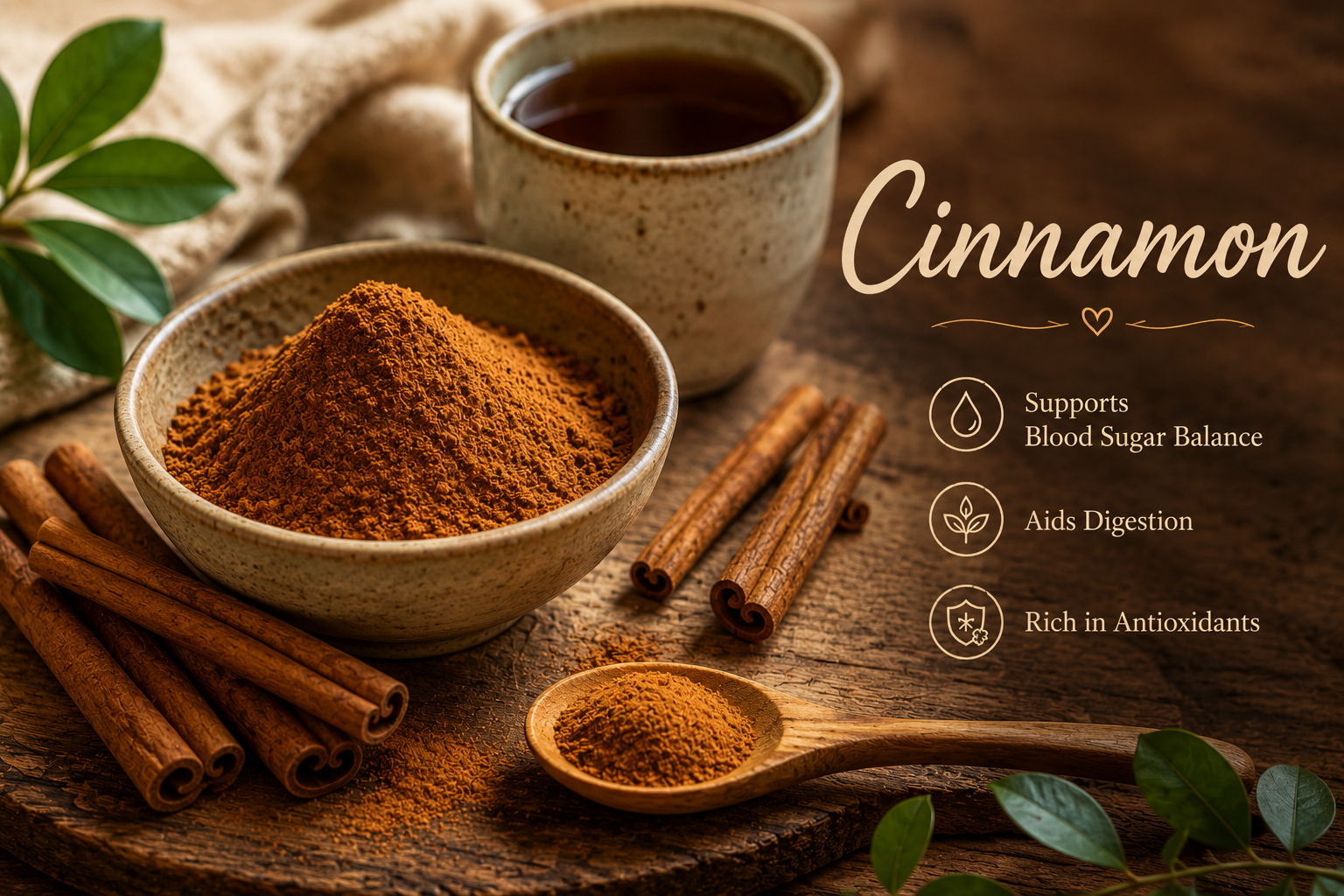
Cinnamon
Cinnamon is a warming spice traditionally valued for digestion, blood sugar balance, antioxidant support, and everyday nourishment.
Cinnamon is one of the most familiar spices in the kitchen, but its value reaches beyond flavor. It brings warmth to simple foods, depth to drinks, and a naturally sweet note that can make nourishing meals feel more comforting and satisfying.
Cinnamon comes from the inner bark of trees in the Cinnamomum family. Once the bark is dried, it curls into cinnamon sticks or is ground into the soft brown powder many people use in oatmeal, tea, baked apples, smoothies, coffee, and seasonal recipes.
Its aroma and flavor come from natural plant compounds, including cinnamaldehyde, which gives cinnamon its distinct warmth and spice. These compounds are part of why cinnamon has been valued for generations in food traditions and natural wellness practices around the world.
Cinnamon fits naturally into everyday wellness because it is simple, familiar, and easy to bring into meals and warm drinks. It adds comfort, depth, and gentle sweetness while also offering plant-based support. Sometimes the most helpful choices are not rare or complicated. They are the steady, nourishing things already close at hand.
Why Cinnamon Has Been Valued for So Long
Cinnamon has been used for centuries in cooking, traditional wellness practices, and cultural rituals. In many parts of the world, it has been valued as a warming spice, often connected with digestion, comfort, circulation, seasonal support, and the enjoyment of food.
That warmth is part of what makes cinnamon so loved. It can make simple meals feel richer and more satisfying. It can soften the sharpness of plain foods, bring sweetness without adding sugar, and make everyday nourishment feel more inviting.
Modern research continues to explore cinnamon’s role in antioxidant activity, metabolic wellness, blood sugar balance, and everyday nourishment. Cinnamon is not a single-purpose spice. Its value comes from the way it supports the body in several gentle, overlapping ways.
It is also easy to use consistently. A small amount can change the flavor of an entire dish. That matters because wellness is not only about knowing what supports the body. It is also about making those supportive choices easy enough to return to.
What Gives Cinnamon Its Wellness Value
Cinnamon contains natural plant compounds that give it its aroma, flavor, and wellness value. Cinnamaldehyde is one of the best-known compounds in cinnamon, but cinnamon also contains antioxidant compounds that help support the body as it responds to everyday oxidative stress.
Oxidative stress is part of normal life. The body responds to daily demands from metabolism, activity, environment, aging, and stress. Antioxidant-rich foods, herbs, teas, fruits, vegetables, and spices can help support a balanced lifestyle.
Cinnamon’s strength is that it brings both flavor and function. It can make nourishing foods more enjoyable while adding plant-based support in a simple, everyday way.
That is one of the reasons cinnamon is so useful. It does not require a complicated routine. It blends easily into the foods and drinks people already enjoy.
Cinnamon and Blood Sugar Balance
One of the most common reasons people become interested in cinnamon is blood sugar support. Cinnamon has been studied for its possible role in supporting fasting blood sugar, insulin sensitivity, and metabolic wellness, especially for people who are paying closer attention to glucose balance.
Cinnamon should not be treated like medicine or used in place of a care plan. It is better understood as a supportive food-based spice that may fit well into a balanced eating pattern.
For someone who wants to reduce excess sugar, make breakfast more satisfying, or add flavor without relying on sweeteners, cinnamon can be very helpful. A sprinkle of cinnamon in oatmeal, plain yogurt, smoothies, chia pudding, coffee, or baked fruit can add natural sweetness and warmth without adding sugar.
That is one of cinnamon’s most practical benefits. It can help healthier foods feel more enjoyable, which makes better choices easier to return to.
Cinnamon and Digestion
Cinnamon has a long history of use as a digestive spice. It is often used in warm drinks and meals because it feels comforting and settling. Many food traditions pair cinnamon with grains, fruits, heavier foods, and warming drinks.
For everyday use, cinnamon can make nourishing foods feel more inviting. It works beautifully with oats, apples, pears, sweet potatoes, pumpkin, nuts, seeds, and warm herbal teas.
Cinnamon can also be helpful for people who are trying to move away from overly processed sweets. Because it adds depth, warmth, and a naturally sweet flavor, it can make simple foods feel more complete.
A bowl of oatmeal with cinnamon, fruit, and a little nut butter can feel far more satisfying than plain oats alone. A warm drink with cinnamon can feel comforting without needing to be heavy or overly sweet.
Cinnamon and Antioxidant Support
Cinnamon is naturally rich in antioxidant compounds. This is one reason it continues to receive attention in wellness conversations. Antioxidants help support the body’s natural defense against oxidative stress, which is part of normal daily life.
With spices, the value is often found in steady, realistic use. Cinnamon does not need to be used heavily to have a place in a nourishing routine. A small amount added to meals, drinks, and simple recipes can bring both flavor and plant-based support.
Cinnamon can be part of a broader antioxidant-rich lifestyle that includes colorful fruits, vegetables, herbs, teas, nuts, seeds, and whole foods.
Its beauty is that it makes healthy foods more appealing. It can turn simple ingredients into something cozy, satisfying, and worth returning to.
Cassia Cinnamon and Ceylon Cinnamon
There are different types of cinnamon, and this is worth understanding.
Cassia cinnamon is the most common type found in many grocery stores. It has a stronger, bolder flavor and is often what people think of as regular cinnamon.
Ceylon cinnamon is sometimes called “true cinnamon.” It tends to have a softer, lighter, more delicate flavor.
The main wellness difference many people pay attention to is coumarin, a natural compound found in higher amounts in cassia cinnamon. Ceylon cinnamon usually contains much lower amounts.
For normal food use, cassia cinnamon is generally fine for most people. A sprinkle in coffee, oatmeal, or baked apples is very different from taking large amounts every day.
For people who use cinnamon daily, use larger amounts, take cinnamon capsules, or have liver concerns, Ceylon cinnamon may be the better long-term choice. This does not make cassia cinnamon bad. It simply means cinnamon type matters more when someone uses cinnamon often or in concentrated forms.
Choosing Cinnamon Carefully
Because cinnamon is used often in food, quality matters. Choose cinnamon from trusted brands, especially if you use it regularly. Ground spices can vary in quality, sourcing, and testing standards, so it is wise to buy from companies that take purity and safety seriously.
There have been public alerts for certain ground cinnamon products found to contain elevated lead levels. This does not mean all cinnamon is unsafe. It simply means cinnamon is one of those spices where brand quality, sourcing, and recall awareness are worth paying attention to.
A good practical approach is to choose reputable brands, avoid questionable discount products, and check current recalls if cinnamon is used often in the home or in foods given to children regularly.
Cinnamon for Everyday Wellness
Cinnamon can be helpful for anyone who wants to make simple foods feel warmer, sweeter, and more satisfying without adding much sugar. It fits easily into breakfast, warm drinks, smoothies, baked fruit, and cozy recipes, making it a practical spice for daily nourishment.
For people paying attention to blood sugar, energy, cravings, or metabolic wellness, cinnamon may be especially useful as part of a balanced eating pattern. It can add sweetness and depth to foods without turning to heavily processed sweeteners.
Cinnamon may also be appealing during colder seasons or times when the body wants warm, grounding foods. A little cinnamon in oatmeal, tea, coffee, apples, sweet potatoes, or warm milk can make everyday wellness feel more comforting and realistic.
Pregnant or breastfeeding women can usually enjoy cinnamon in normal food amounts, but concentrated cinnamon capsules or extracts are different from using cinnamon as a kitchen spice. Those products deserve more care, especially during sensitive seasons of life.
Easy Ways to Use Cinnamon
Cinnamon is one of the easiest wellness spices to use because it works in so many everyday foods.
Try cinnamon in:
Oatmeal with apples, walnuts, or chia seeds.
Plain yogurt with berries and a drizzle of honey.
Coffee, matcha, chai, or warm herbal tea.
Smoothies with banana, cacao, pumpkin, or nut butter.
Roasted sweet potatoes or carrots.
Baked apples, pears, or peaches.
Homemade granola or energy bites.
Warm milk, oat milk, or cozy evening drinks.
Cinnamon also pairs beautifully with ginger, turmeric, clove, nutmeg, cacao, vanilla, cardamom, and citrus. It can bring a cozy sweetness to recipes without needing much added sugar.
Cinnamon Tea and Warm Drinks
Cinnamon tea is a simple way to enjoy cinnamon in a gentle, comforting form. Cinnamon sticks can be simmered in water, or ground cinnamon can be stirred carefully into warm drinks.
Cinnamon blends especially well with ginger, lemon, apple, clove, or a small amount of honey. It can also be added to coffee, chai, hot cacao, warm milk, oat milk, or a simple evening drink.
A warm cinnamon drink can feel grounding in the morning, soothing after a meal, or comforting in the evening. It is one of those small rituals that can make wellness feel less like a task and more like a return to care.
Cinnamon Capsules and Supplements
Cinnamon is often sold in capsule or extract form. These products are more concentrated than using cinnamon as a spice in food. Some people use them for blood sugar support, but this is where cinnamon type, dose, product quality, medication use, and personal health history matter more.
Food use is the gentlest place to begin, especially with a spice as easy and familiar as cinnamon. Stirring cinnamon into meals, warm drinks, and everyday recipes allows the body to receive it in a simple, natural way.
Cinnamon supplements should be approached with more awareness, especially for anyone taking diabetes medication, blood thinners, cholesterol medication, or medication that affects the liver.
Cinnamon can be a beautiful everyday spice. Concentrated cinnamon products simply deserve more care than a sprinkle in a recipe.
Using Cinnamon Wisely
Cinnamon is generally well tolerated in normal food amounts. Most people can enjoy it as a kitchen spice without concern.
The main thing to understand is that everyday food use is different from high amounts, long-term heavy use, or concentrated supplements. Cassia cinnamon contains more coumarin than Ceylon cinnamon, and high coumarin intake may be a concern for sensitive people, especially those with liver issues.
Anyone with liver disease, anyone taking medication that affects blood sugar or blood clotting, and anyone taking medications that are processed through the liver should be thoughtful with cinnamon supplements.
The simple takeaway is this: cinnamon is best enjoyed as a steady, flavorful part of everyday nourishment. Used wisely, it can bring warmth, comfort, and support without needing to be overdone.
Q&A
Is cinnamon good for blood sugar?
Cinnamon has been studied for blood sugar and insulin sensitivity support, especially in people with prediabetes or type 2 diabetes. It may be helpful as part of a balanced lifestyle, but it should not be treated as a replacement for medical care, medication, or healthy eating habits.
Which cinnamon is better, Ceylon or cassia?
Cassia cinnamon is more common and has a stronger flavor. Ceylon cinnamon is lighter and usually contains much less coumarin. For occasional food use, either may be fine for most people. For daily heavy use or supplements, many people prefer Ceylon.
Is Ceylon cinnamon better for daily use?
Ceylon cinnamon may be the better choice for people who use cinnamon often or in larger amounts because it usually contains much lower coumarin levels than cassia cinnamon. This makes it a gentler long-term option for regular use.
Can I use cinnamon every day?
Many people use small amounts of cinnamon daily in food or drinks. A sprinkle in oatmeal, coffee, tea, yogurt, or smoothies is very different from taking large doses or concentrated capsules.
Is cinnamon good for digestion?
Cinnamon has a long traditional history as a warming digestive spice. Many people enjoy it in warm drinks or meals because it feels comforting and settling.
Can cinnamon help reduce sugar cravings?
Cinnamon can make foods taste naturally sweeter and warmer without adding sugar. It may help make healthier foods feel more satisfying, which can support better food choices.
Should pregnant women avoid cinnamon?
Cinnamon in normal food amounts is generally different from high-dose supplements. Pregnant or breastfeeding women can usually enjoy cinnamon as a food spice, while concentrated cinnamon products deserve more care and should be approached thoughtfully.
Should I worry about lead in cinnamon?
Most people do not need to be afraid of cinnamon. The practical step is to buy cinnamon from trusted brands, stay aware of recalls, and be more selective if cinnamon is used often in the home. Quality matters, especially with ground spices.
Is cinnamon better as food or as a supplement?
For most people, cinnamon makes the most sense as a food spice. It is easy to add to meals and drinks, and it can support healthier choices by making simple foods taste warmer and more satisfying. Supplements are more concentrated and need more thought, especially for people taking medication or using cinnamon for a specific health goal.
Final Takeaway
Cinnamon is a small spice with a strong presence. It brings warmth, flavor, comfort, and plant-based support into everyday meals. Its greatest value is not in making wellness complicated. Its value is in making simple nourishment feel good.
A sprinkle of cinnamon can turn ordinary food into something warmer, richer, and more enjoyable. It can support a lifestyle built around steadier choices, cozy rituals, and daily care.
Cinnamon reminds us that wellness does not always need to arrive loudly. Sometimes it begins with something as simple as warmth in a cup, sweetness without excess, and a familiar spice that helps the body feel a little more at home.
If this wellness page supported you, you may also enjoy:
Cloves
Natural Wellness ↑
Explore more gentle, grounded wellness pages in the Natural Wellness library ↑

Oolong Tea
Oolong tea is a smooth, antioxidant-rich tea that supports gentle energy, metabolism, focus, heart-conscious habits, and everyday wellness.
A Smooth Tea for Energy, Balance, and Everyday Wellness
Oolong tea occupies one of the most fascinating places in the world of tea.
It begins with the same plant that gives us green tea, black tea, white tea, and pu-erh: Camellia sinensis. Yet through careful harvesting, bruising, oxidation, rolling, heating, and drying, oolong develops an identity entirely its own.
Some oolong teas are pale, floral, almost creamy, and delicate. Others are roasted, amber-colored, nutty, mineral-rich, fruity, or deeply warming. The difference is not simply flavor. The way the leaves are processed also changes their natural plant compounds, creating a remarkable mixture of catechins, theaflavins, theasinensins, caffeine, L-theanine, aromatic compounds, and other tea polyphenols.
That makes oolong much more than a beverage sitting halfway between green and black tea.
It is its own ancient tea tradition.
For people who enjoy natural wellness, oolong offers something beautifully practical: a flavorful daily drink that can provide gentle stimulation, antioxidant compounds, metabolic support, and a quiet ritual that has been valued for generations.
What Makes Oolong Tea Different
Green, oolong, and black tea all come from Camellia sinensis.
What changes them is largely what happens after the leaves are harvested.
Green tea is heated relatively quickly after picking, limiting oxidation and preserving large amounts of the original catechins.
Black tea undergoes much more extensive oxidation. During this process, catechins are transformed into other compounds, including theaflavins and thearubigins, which help create black tea's darker color and richer flavor.
Oolong is produced between these two ends of the spectrum.
Its leaves are intentionally allowed to oxidize to varying degrees before the process is stopped with heat. Some oolongs are only lightly oxidized. Others approach the depth and darkness of black tea.
This wide range is one reason two oolong teas can taste almost completely different.
But oxidation also changes the chemistry of the leaf.
Rather than simply retaining the compounds of green tea or developing those found in black tea, oolong contains a complex mixture formed during its unique processing.
That chemical middle ground is one of the most interesting things about oolong.
The Natural Compounds Inside Oolong Tea
Oolong tea contains an intricate mixture of naturally occurring substances.
Among the most important are:
Catechins
These are flavan-3-ol polyphenols naturally abundant in fresh tea leaves. They include compounds such as EGCG, epicatechin, epigallocatechin, and epicatechin gallate.
Because oolong is only partially oxidized, some of these catechins remain in the finished tea.
Theaflavins
As tea leaves oxidize, some catechins combine and form new compounds known as theaflavins.
These compounds are particularly associated with oxidized teas and contribute to their color, flavor, antioxidant activity, and biological effects.
Theasinensins
Theasinensins are especially fascinating in oolong.
They are compounds formed through the oxidation and pairing of tea catechins and are considered characteristic components of partially oxidized tea.
Researchers continue to investigate their antioxidant, metabolic, cellular, and inflammatory pathways.
Their presence is one reason describing oolong simply as “half green tea and half black tea” does not really do it justice.
Its chemistry becomes something new.
L-Theanine
L-theanine is an amino acid naturally found in tea leaves.
It is one of the compounds associated with tea's unusual ability to provide alertness while still feeling smoother than many other caffeinated beverages.
Caffeine
Oolong naturally contains caffeine.
The amount varies tremendously according to cultivar, growing conditions, leaf age, processing, quantity of tea used, water temperature, and steeping time.
Other plant compounds
Oolong also supplies numerous flavonoids, phenolic acids, pigments, aromatic compounds, minerals, and volatile substances.
More than 100 individual chemical constituents have been identified in oolong tea.
The tea leaf is a surprisingly complex little laboratory.
Antioxidant Support and Oxidative Balance
Everyday metabolism naturally produces unstable molecules known as reactive oxygen species.
The body has its own sophisticated antioxidant systems for keeping these molecules in balance, but food-derived plant compounds can contribute additional support.
Tea is one of the world's best-known dietary sources of polyphenols.
Oolong provides several families of these compounds rather than only one.
Its remaining catechins contribute antioxidant activity, while compounds created during oxidation, including theaflavins and theasinensins, add another layer.
Researchers study these compounds for their ability to interact with oxidative pathways, cellular signaling, inflammation, and the body's own antioxidant defenses.
This does not mean that drinking tea simply “removes toxins” or eliminates oxidative stress.
The relationship is much more interesting.
Tea polyphenols appear to participate in the body's larger system of cellular regulation and defense.
For someone building an antioxidant-rich lifestyle, oolong can therefore be a meaningful whole-food beverage rather than an isolated antioxidant supplement.
Oolong Tea, Caffeine, and L-Theanine
One reason tea feels different from many other caffeinated drinks may be the combination of caffeine and L-theanine.
Caffeine stimulates the central nervous system and can improve alertness, attention, and wakefulness.
L-theanine has been studied for effects involving relaxation, attention, and the stress response.
Tea naturally contains both.
Research examining tea, caffeine, and L-theanine suggests that the combination may support certain aspects of attention and cognitive performance.
This creates one of tea's most appreciated qualities: energy that many people describe as focused rather than abrupt.
The experience varies from person to person, however.
Someone who is highly sensitive to caffeine may still feel jittery from a strong oolong.
For others, one or two cups provide a comfortable middle ground between herbal tea and coffee.
How Much Caffeine Is in Oolong Tea?
There is no single caffeine number that applies to every oolong.
The amount can vary considerably.
Leaf variety, growing conditions, harvest season, brewing temperature, steeping time, and the amount of leaf all matter.
A strongly brewed oolong may contain considerably more caffeine than a lightly brewed one.
This is why the common statement that oolong always contains less caffeine than black tea or more than green tea is too simplistic.
Tea type alone does not reliably predict the caffeine in your cup.
If you are caffeine-sensitive, begin with a smaller amount of tea, use a shorter steep, and notice how your body responds.
Oolong Tea and Metabolism
Oolong's relationship with metabolism is one of its most researched and most widely discussed qualities.
The interest comes primarily from caffeine and tea polyphenols.
Both may influence energy expenditure, fat oxidation, and pathways involved in how the body handles nutrients.
In one controlled human study, oolong tea consumption increased 24-hour energy expenditure compared with water. Fat oxidation was also higher during the oolong condition.
That is an intriguing finding.
It does not mean that oolong tea causes dramatic weight loss.
The size of metabolic changes produced by tea is generally modest, and body weight remains influenced by food intake, movement, sleep, hormones, genetics, muscle mass, medications, and many other factors.
The more useful way to think about oolong is as part of a metabolic-supportive lifestyle.
An unsweetened cup provides flavor and stimulation with virtually no sugar or meaningful calorie load.
If it replaces soda, sweetened coffee drinks, energy drinks, or habitual snacking, its practical value can become even greater.
Fat Oxidation and Energy Use
Researchers have also investigated whether oolong compounds influence the body's use of fat for energy.
Some human experiments suggest increased fat oxidation following oolong consumption.
Laboratory research has additionally examined whether certain oolong polyphenols affect digestive enzymes involved in dietary fat breakdown.
Results across studies are not perfectly consistent, however.
A more recent controlled trial examining isolated polymerized oolong polyphenols did not find a clear reduction in post-meal triglycerides at the tested doses.
That distinction matters.
Oolong has interesting metabolic biology, but science is still determining which compounds, preparations, amounts, and populations experience meaningful effects.
The strongest conclusion today is that oolong may modestly influence energy metabolism while also serving as a low-calorie replacement for drinks that work against metabolic health.
Oolong Tea and Blood Sugar
Tea has also attracted considerable interest in glucose metabolism.
Oolong contains caffeine, catechins, polymerized polyphenols, and other compounds capable of interacting with metabolic pathways.
Some research has reported improvements in glucose-related measures, while other carefully controlled studies have found little or no effect.
For example, controlled research in healthy adults has found that oolong did not significantly improve fasting glucose, insulin, or glucose tolerance during short-term consumption.
Other research and broader analyses of tea studies have suggested possible glucose benefits, although the quality and consistency of evidence specifically for oolong remain limited.
This tells us something valuable.
Oolong should not be portrayed as a guaranteed blood-sugar treatment.
But unsweetened oolong can still be an excellent beverage for someone building a blood-sugar-conscious diet.
It contains essentially no added sugar, provides flavor and satisfaction, and can replace beverages containing large amounts of rapidly absorbed sugar.
Sometimes the greatest benefit of a food comes from both what it contains and what it replaces.
Heart and Circulatory Wellness
Tea polyphenols have been extensively studied in cardiovascular research.
Scientists are interested in their relationships with blood vessels, endothelial function, cholesterol metabolism, oxidation, inflammation, and circulation.
The endothelial lining is the delicate inner surface of blood vessels. Its ability to relax and respond properly is important for healthy circulation.
Tea flavonoids are among the dietary compounds studied for supporting these vascular pathways.
Oolong-specific human evidence is smaller than the enormous research base surrounding tea generally, so it is important to keep the distinction clear.
Still, oolong contains many of the same families of tea polyphenols involved in cardiovascular research.
As an unsweetened beverage, it also fits naturally into heart-conscious eating patterns.
A daily drink does not need to behave like a drug to have value.
Repeated dietary choices accumulate.
Replacing sugary beverages with tea while eating whole foods, moving regularly, sleeping well, and maintaining healthy blood pressure can create a much larger effect than searching for a single miracle ingredient.
Cholesterol and Lipid Research
Oolong has also been investigated in relation to cholesterol and blood lipids.
Laboratory, animal, observational, and limited human research has examined whether tea polyphenols influence lipid absorption, liver lipid metabolism, oxidation of LDL particles, or circulating cholesterol.
The overall tea literature is encouraging enough to keep this an active area of research, but individual study results vary.
This is another area where oolong deserves respect without exaggeration.
Its polyphenols clearly interact with biological pathways involving lipids.
Exactly how large that effect becomes in everyday human life remains an ongoing scientific question.
Digestive Wellness
Tea has been consumed with and after meals for generations.
Part of that tradition may simply come from experience.
Warm tea can feel settling after food, particularly after a rich meal.
But modern research is beginning to uncover another layer of this relationship.
Many tea polyphenols are not completely absorbed in the small intestine.
Some travel farther into the digestive tract, where they can interact with intestinal microorganisms.
Those microorganisms can then transform tea compounds into new metabolites that may themselves have biological activity.
This has opened an entire field of research involving tea and the gut microbiome.
Oolong Tea and the Gut Microbiome
Researchers are increasingly interested in the two-way relationship between tea polyphenols and intestinal bacteria.
The microbiome can transform polyphenols.
Polyphenols may also influence which microorganisms thrive.
Experimental research involving oolong and other teas has examined changes in bacterial populations, short-chain fatty acid pathways, intestinal barrier function, inflammatory signaling, and bile-acid metabolism.
Some particularly interesting oolong studies have reported microbiome-related effects in animals.
However, much of the specifically oolong-focused gut research remains preclinical.
That means it should be viewed as promising research rather than proof that drinking oolong can treat gastrointestinal disease.
Still, the larger picture is fascinating.
The cup of tea does not necessarily stop interacting with the body once its compounds leave the stomach.
Its chemistry may continue changing through conversations with the trillions of microorganisms living farther down the digestive tract.
Oolong Tea After Meals
Oolong has long been enjoyed alongside or following food.
Its roasted or floral flavor can provide a satisfying finish to a meal without requiring dessert or a sweet beverage.
For people who tend to continue eating because they want “something more,” tea can also create a natural closing ritual.
There is one important exception.
Tea polyphenols can reduce absorption of non-heme iron when tea is consumed directly with a meal.
For most people with adequate iron status, moderate tea drinking is unlikely to create a serious problem.
But people who are iron deficient or at increased risk of deficiency may benefit from drinking oolong between meals rather than with iron-rich foods.
Oolong Tea and Oral Wellness
Tea has also attracted interest in dental and oral-health research.
Tea leaves naturally contain polyphenols and fluoride, and laboratory studies have investigated how tea compounds interact with oral bacteria, plaque formation, and the environment of the mouth.
Some population research also associates regular tea drinking with measures of oral health.
That does not make tea a replacement for brushing, flossing, dental care, or treatment of periodontal disease.
But unsweetened tea has an obvious advantage over sweetened beverages: it does not continually bathe the teeth in added sugar.
For oral wellness, the simplest approach remains one of the strongest.
Drink oolong without large amounts of sugar.
Brain, Attention, and Mental Energy
Oolong is not usually discussed as a “brain food,” yet the tea plant contains several substances researchers study for cognition.
Caffeine is the most obvious.
It can increase wakefulness and reaction speed.
L-theanine is also of considerable interest because of its interaction with attention, relaxation, and mood.
Tea polyphenols are being studied separately for possible effects involving neuroinflammation, oxidative pathways, vascular health, and the gut-brain axis.
Much of the disease-specific research remains early or comes from other varieties of Camellia sinensis, so it would be premature to claim that oolong prevents neurological disease.
What is much better established is that tea's natural caffeine-theanine combination can support alertness and attention in the short term.
For many people, that makes oolong a useful work, reading, study, or creative companion.
Cellular and Cancer Research
Tea polyphenols have been investigated extensively in laboratory cancer research.
Researchers have studied catechins, theaflavins, theasinensins, and related compounds for possible effects on oxidative signaling, inflammation, cell-cycle regulation, apoptosis, angiogenesis, and other cellular pathways relevant to cancer biology.
Oolong-specific laboratory research is part of this larger field.
These studies are scientifically important because they help researchers understand how tea compounds interact with cells.
But there is a major distinction between laboratory research and human cancer treatment.
A compound affecting a cancer cell in a laboratory does not automatically mean that drinking tea will produce the same effect inside a human body.
Oolong is therefore best honored here for what the evidence actually reveals: it contains biologically active plant compounds with intriguing cellular effects that continue to be studied.
That is already remarkable without asking the research to say more than it does.
Inflammation and Immune Signaling
Polyphenols from tea are also studied for their relationship with inflammatory signaling.
Inflammation is not inherently harmful. It is one of the body's normal defense and repair systems.
Problems arise when inflammatory signaling becomes persistently dysregulated.
Laboratory and animal studies suggest that tea polyphenols can interact with pathways controlling oxidative stress, cytokines, cellular signaling, and immune activity.
Oolong-specific research in this field is still developing.
The practical takeaway is not that oolong “turns off inflammation.”
Rather, it is one of many polyphenol-rich plant foods and beverages that can contribute to an overall dietary environment supportive of healthy inflammatory balance.
Oolong Tea and Healthy Aging
Healthy aging rarely comes from one dramatic intervention.
It is built from hundreds of ordinary choices repeated for years.
Tea fits beautifully into that philosophy.
Oolong provides plant polyphenols, little or no sugar when consumed plain, moderate caffeine, and an easy ritual that can replace less supportive habits.
Many of the biological systems investigated in tea research, including vascular function, glucose metabolism, oxidative balance, inflammation, cognition, and the microbiome, are also systems that matter greatly as we age.
Research cannot reduce healthy aging to a daily cup of tea.
But a cup of oolong can certainly belong in the larger pattern.
Women and Oolong Tea
Oolong can be a wonderful everyday tea for women.
The biggest considerations are caffeine and iron.
During pregnancy, total caffeine intake from coffee, tea, chocolate, energy drinks, medications, and other sources should all be counted together. Many professional health organizations advise limiting caffeine during pregnancy to approximately 200 milligrams per day.
Because caffeine varies considerably between oolong teas, women who are pregnant may prefer smaller servings or lighter brews.
Caffeine also passes into breast milk. Breastfeeding women may want to pay attention to whether higher caffeine intake seems to affect their baby's sleep or restlessness.
Iron deserves special attention as well.
Tea polyphenols can reduce absorption of non-heme iron, particularly iron from plant foods.
Women with heavy menstrual bleeding, low ferritin, anemia, pregnancy-related iron needs, or other reasons for increased iron requirements may do better enjoying oolong between meals and away from iron supplements.
There is no need to fear tea.
Timing can solve much of the issue.
Men and Oolong Tea
For men, oolong can provide a simple combination of hydration, focus, metabolic support, and a satisfying alternative to sugary or heavily caffeinated beverages.
Men who rely on large amounts of coffee or energy drinks may find oolong useful when they want caffeine without such an intense dose.
Its place in heart-conscious and metabolic eating patterns may also be particularly valuable over the long term.
Men who are caffeine-sensitive, experience heart palpitations, struggle with anxiety, or have difficulty sleeping should pay attention to serving size and timing.
The goal is not simply to consume more tea.
It is to find the amount that feels supportive.
The Ancient Tradition of Oolong Tea
Oolong belongs to a long and sophisticated Chinese tea tradition.
Its historical development is closely associated with regions of China including Fujian and Guangdong, while Taiwan later became famous for producing its own extraordinary oolong styles.
Oolong production developed into something approaching an art form.
Leaves may be withered, gently bruised or shaken, allowed to oxidize, heated to stop oxidation, rolled or twisted, dried, and sometimes roasted.
Tiny changes in any of these steps can dramatically change the finished tea.
Altitude matters.
Cultivar matters.
Weather matters.
Harvest season matters.
The skill of the tea maker matters.
This is why fine oolong is often spoken about almost the way people speak about wine.
The same tea plant can express completely different personalities depending upon where and how it was grown and made.
Light Oolong and Dark Oolong
There is no single oolong flavor.
Lightly oxidized oolong may taste floral, fresh, creamy, buttery, sweet, or almost orchid-like.
Moderately oxidized oolong can develop fruit, honey, stone-fruit, toasted, and mineral notes.
More heavily oxidized or roasted oolong may become rich, nutty, woody, caramel-like, smoky, or deeply warming.
Neither style is automatically healthier.
Their chemical profiles differ, but all authentic oolong comes from the same remarkable tea species.
The best one is often simply the one you genuinely enjoy drinking without loading it with sugar.
Famous Oolong Tea Styles
People discovering oolong may encounter names such as:
Tieguanyin
A famous Chinese oolong traditionally associated with Anxi in Fujian. Depending upon production, it may be floral, creamy, roasted, or deeply aromatic.
Da Hong Pao
One of the celebrated Wuyi rock teas. These teas are known for complex roasted, mineral, fruit, and spice-like notes.
Dan Cong
Traditionally associated with Guangdong's Phoenix Mountain region. Dan Cong teas are famous for extraordinary natural aromas that can resemble flowers, honey, fruit, or spice.
Dong Ding
A beloved Taiwanese oolong traditionally associated with a more roasted, rounded flavor.
High Mountain Oolong
Taiwanese high-mountain teas are often prized for floral aroma, sweetness, creamy texture, and a clean finish.
Trying different styles can completely change someone's idea of what “tea” tastes like.
Hot Oolong Tea
Hot oolong allows aroma to unfold beautifully.
A simple preparation is:
Use approximately 1 teaspoon of loose leaves per cup, adjusting according to the tea.
Heat fresh water.
For lighter oolongs, water somewhat below a full boil may preserve delicate floral qualities.
Darker and heavily roasted oolongs often respond beautifully to hotter water.
Steep approximately 2 to 5 minutes when using a Western-style brewing method.
Taste before adding anything.
Good oolong frequently needs no sweetener at all.
Multiple Steeps and the Changing Cup
One of oolong's greatest pleasures is that many high-quality loose-leaf teas can be infused repeatedly.
The first infusion may be fragrant and bright.
The second may become sweeter.
The third may reveal mineral or fruit notes that were barely noticeable before.
Later infusions can become softer and more delicate.
This unfolding character is one reason traditional tea drinkers often use more leaf, smaller vessels, and shorter repeated infusions.
The tea becomes an experience rather than a single cup.
Iced Oolong Tea
Oolong also makes an exceptional iced tea.
Because many varieties naturally have floral, fruity, roasted, or honey-like flavors, they can taste satisfying without added sugar.
Brew it normally and chill it, or experiment with cold brewing.
Cold brewing tends to produce a smooth, gentle cup.
Place loose oolong leaves in cold water in the refrigerator for several hours or overnight, strain, and serve chilled.
It can be a beautiful alternative to bottled sweet tea, soda, or artificially flavored drinks.
How to Choose a Good Oolong Tea
Look for tea where you can identify what you are buying.
Loose-leaf tea often allows you to see the actual leaf quality.
Whole or largely intact leaves are usually preferable to dusty fragments, although appearance alone does not guarantee excellence.
A reputable tea seller may provide information about:
The growing region
Tea cultivar
Harvest season
Oxidation level
Roasting style
Origin
Flavor profile
Brewing recommendations
The world of oolong is enormous.
You do not need to become a tea expert to enjoy it.
Start with one style, learn its personality, and explore from there.
How to Store Oolong Tea
Tea slowly loses aroma when exposed to air, moisture, heat, light, and strong odors.
Keep oolong in a sealed container in a cool, dry, dark place.
Avoid storing it next to spices, coffee, or strongly scented foods because tea leaves readily absorb surrounding aromas.
Properly stored roasted oolongs can sometimes remain enjoyable for a long time.
Delicate green-style oolongs are generally best enjoyed while their fresh floral character remains vibrant.
How to Use Oolong Tea Wisely
For most healthy adults, moderate oolong consumption can fit easily into daily life.
A few details make the experience better.
If caffeine interferes with your sleep, enjoy oolong earlier in the day.
If you are sensitive to caffeine, begin with a weaker infusion or smaller serving.
If you have low iron, drink oolong between meals rather than directly alongside iron-rich foods or supplements.
Pregnant or breastfeeding women should account for caffeine from all sources.
People taking medications or managing conditions in which caffeine intake has been restricted should follow their individualized guidance.
And perhaps most importantly, allow good oolong to remain tea.
Loading it with large amounts of sugar can erase one of its simplest advantages.
The Evidence at a Glance
Oolong has several different levels of evidence behind it.
Human research
Human studies have investigated energy expenditure, fat oxidation, glucose metabolism, caffeine and attention, post-meal metabolic responses, and other outcomes. Results are promising in some areas and mixed in others.
Animal research
Animal studies have explored oolong in relation to metabolism, inflammation, gut microorganisms, intestinal health, oxidative pathways, and numerous other biological processes.
Laboratory research
Cell and biochemical studies have examined catechins, theaflavins, theasinensins, and other oolong compounds for effects involving antioxidant activity, enzymes, inflammation, cancer-related pathways, bacterial growth, and cellular signaling.
Traditional use
Oolong has been consumed for generations as both a treasured beverage and an after-meal tea within East Asian tea cultures.
These different kinds of evidence should not be treated as interchangeable.
Human outcomes tell us something different from animal experiments.
Animal research tells us something different from a test tube.
Traditional use tells us something different again.
Together they form a much richer picture.
The Grounded Takeaway
Oolong tea deserves to be understood as more than the beverage between green tea and black tea.
Partial oxidation transforms the leaf.
Catechins remain while new polyphenols emerge.
Theasinensins, theaflavins, caffeine, L-theanine, aromatic compounds, and numerous other substances create a tea with unusually complex chemistry.
Human research has explored oolong's relationship with metabolism, fat oxidation, glucose regulation, and energy expenditure. Broader tea research continues to examine cardiovascular health, cognition, the microbiome, oxidative balance, inflammation, and cellular health.
Not every proposed benefit has been proven.
That does not diminish oolong.
It makes its true story more interesting.
Here is an ancient beverage created through extraordinary craftsmanship, containing hundreds of natural compounds, capable of producing everything from a pale floral cup to a dark roasted infusion.
And sometimes wellness really can be that simple.
Hot water.
A handful of leaves.
A few quiet minutes.
And one of the world's oldest cultivated plants opening itself into the cup.
Oolong Tea Q&A
Is oolong tea green tea or black tea?
Neither.
Oolong, green tea, and black tea all come from Camellia sinensis, but they are processed differently.
Oolong undergoes partial oxidation, giving it its own chemical profile, aroma, flavor, and color.
Does oolong tea contain caffeine?
Yes.
Regular oolong naturally contains caffeine.
The amount varies considerably according to the tea, leaf amount, water temperature, brewing method, and steeping time.
Does oolong contain L-theanine?
Yes.
Oolong naturally contains L-theanine, although amounts vary from tea to tea.
L-theanine is one reason scientists are interested in the distinctive mental effects associated with tea.
What are theasinensins?
Theasinensins are polyphenol compounds formed as tea catechins undergo oxidation.
They are particularly interesting in oolong chemistry and are being researched for antioxidant, metabolic, cellular, and other biological activities.
Is oolong tea good for metabolism?
Research suggests oolong can influence energy metabolism.
A controlled human study found increased 24-hour energy expenditure and fat oxidation following oolong tea consumption.
The effect is modest rather than dramatic, however.
Oolong is best viewed as one part of a healthy metabolic lifestyle rather than a weight-loss treatment.
Can oolong tea help with weight balance?
It may support a weight-conscious lifestyle in several ways.
Its caffeine and polyphenols may modestly affect energy metabolism, while unsweetened oolong contains almost no calories.
Replacing soda, sweetened coffee, or other high-calorie drinks with oolong may provide an additional practical advantage.
Is oolong tea good for blood sugar?
Research is mixed.
Some studies suggest potentially beneficial effects involving glucose metabolism, while controlled research has also found little or no improvement.
Unsweetened oolong remains an excellent low-sugar beverage choice for people interested in metabolic wellness.
Is oolong tea good for the heart?
Tea polyphenols are extensively studied for vascular function, cholesterol metabolism, oxidative balance, and cardiovascular wellness.
Oolong contains many of these compounds and can fit naturally into a heart-conscious dietary pattern.
Is oolong tea good for digestion?
Many people find warm oolong pleasant after meals.
Researchers are also studying interactions between tea polyphenols and intestinal microorganisms.
Much of the oolong-specific microbiome research is still experimental, but it is an exciting area of investigation.
Is oolong tea good for the gut microbiome?
Possibly.
Laboratory and animal research suggests tea polyphenols may interact with gut bacteria and influence microbial metabolism.
Human research is still developing, so oolong should not be presented as a treatment for microbiome disorders.
Can oolong tea affect iron absorption?
Yes.
Tea polyphenols can reduce absorption of non-heme iron when tea is consumed with meals.
People who have iron deficiency or increased iron needs may want to drink oolong between meals instead.
Can pregnant women drink oolong tea?
Oolong contains caffeine.
Pregnant women should therefore include it when calculating total daily caffeine intake. Many professional organizations recommend keeping caffeine intake around or below 200 milligrams daily during pregnancy.
Because caffeine content varies, serving size matters.
Can I drink oolong while breastfeeding?
Many women can drink moderate amounts of caffeinated tea while breastfeeding.
Caffeine does enter breast milk, however, and some babies may be more sensitive than others.
Total daily caffeine from all sources should be considered.
Is oolong stronger than green tea?
Flavor-wise, sometimes.
Caffeine-wise, not necessarily.
Some oolongs contain more caffeine than some green teas, while others contain less.
Tea type alone cannot reliably predict caffeine content.
Is darker oolong healthier than lighter oolong?
Not necessarily.
Different oxidation and roasting levels change the tea's chemistry.
Lighter oolongs retain more of certain compounds while more extensively oxidized teas develop others.
There is no good evidence that one oxidation level is universally the healthiest.
Can I drink oolong every day?
For many healthy adults, yes.
Daily oolong can be part of a balanced diet when caffeine intake is appropriate for the individual.
What is the best time to drink oolong tea?
Morning through early afternoon works well for most people.
It can also be pleasant after meals.
Anyone sensitive to caffeine may want to avoid drinking it later in the evening.
Is oolong tea good after meals?
It can be.
Oolong's warmth and complex flavor make it a satisfying after-meal drink.
People with low iron should consider having it between meals rather than immediately with food.
Can oolong tea be steeped more than once?
Yes.
Many quality loose-leaf oolongs are excellent across several infusions.
In fact, repeatedly steeping the leaves is one of the pleasures of drinking fine oolong because aroma and flavor can change with each infusion.
Should I drink oolong hot or cold?
Either.
Hot oolong showcases its aroma beautifully.
Iced or cold-brewed oolong can be remarkably smooth and refreshing.
The healthiest version is generally whichever preparation allows you to enjoy it without excessive added sugar.
Is bottled oolong tea as good as freshly brewed?
It depends upon the product.
Check the ingredient list carefully.
Some bottled teas contain substantial amounts of added sugar or flavorings.
Freshly brewed unsweetened tea gives you greater control over what goes into the cup.
Is oolong tea an herbal tea?
No.
Oolong is true tea because it comes from Camellia sinensis.
Chamomile, peppermint, rooibos, and similar drinks are technically herbal infusions rather than true teas.
What does oolong tea taste like?
There is no single oolong flavor.
Depending upon the tea, it may taste floral, creamy, buttery, fruity, honey-like, mineral, roasted, nutty, woody, sweet, or earthy.
That extraordinary range is one of oolong's defining qualities.
If this wellness page supported you, you may also enjoy:
Natural Wellness ↑
Explore more gentle, grounded wellness pages in the Natural Wellness library ↑
White Tea
Learn about white tea benefits, antioxidants, caffeine, skin wellness, oral wellness, women’s health notes, and how to enjoy this gentle tea in daily life.
Gentle Antioxidant Support, Calm Energy, and Everyday Wellness
White tea is one of the most delicate traditional teas in the world, yet its softness should not be mistaken for emptiness. Inside its pale leaves and silvery buds is a rich collection of natural tea compounds, including catechins, flavonoids, amino acids, caffeine, and aromatic plant substances.
It comes from the Camellia sinensis plant, the same remarkable plant that gives us green tea, black tea, oolong tea, pu-erh tea, and matcha. What makes white tea different is not the plant itself, but the youth of the leaves and the gentle way they are handled after harvesting.
Many white teas are made from unopened buds or tender young leaves. They are usually allowed to wither and dry with far less rolling, heating, or controlled oxidation than other traditional teas. This restrained process helps preserve white tea’s light color, subtle aroma, natural sweetness, and distinctive plant profile.
The brewed tea may appear pale gold, soft yellow, honey-colored, or light amber. Its flavor can carry notes of wildflowers, melon, pear, hay, honey, cucumber, herbs, stone fruit, or fresh spring air.
White tea offers something increasingly rare: a drink that can support alertness without demanding intensity. It belongs equally well beside a quiet morning, an afternoon of focused work, a book, a garden, or a moment when the body simply needs a gentler pace.
What Is White Tea?
White tea is a true tea rather than an herbal infusion. All true teas come from Camellia sinensis, but their character changes according to the leaves selected, the growing conditions, harvesting season, processing method, and final preparation.
The name “white tea” does not mean the brewed liquid is white. It refers to the fine silvery-white hairs, called trichomes, that cover many young tea buds. These delicate hairs help protect the developing leaf while it is still growing on the plant.
White tea is often described as minimally processed, although this does not mean it is completely unaltered. Once picked, the buds and leaves naturally begin changing through moisture loss and mild oxidation. Tea makers carefully manage this process to preserve the softness and complexity that define a good white tea.
The exact flavor and strength can vary considerably. A tea made almost entirely from unopened buds may be refined, silky, and surprisingly energizing. A leafier white tea may have a fuller body, deeper sweetness, and more noticeable floral, woody, or fruity notes.
A Brief History of White Tea
Forms of delicate bud tea have been valued in China for centuries. During parts of imperial Chinese history, rare spring buds were gathered and prepared as tribute teas for members of the imperial court.
The white tea most people recognize today became strongly associated with Fujian Province, particularly areas such as Fuding and Zhenghe. The region’s tea plants, misty mountains, soil, rainfall, and long tradition of tea craftsmanship helped shape the development of celebrated white tea styles.
White tea eventually moved beyond China. It is now produced in places such as India, Sri Lanka, Nepal, Kenya, and other tea-growing regions. Each area creates a different expression of the leaf. Some teas remain light and floral, while others become fruity, honeyed, malty, or richly aromatic.
This history gives white tea a quiet dignity. It was never created to overwhelm the senses. Its beauty was found in careful harvesting, restrained handling, and the ability to notice subtle qualities that stronger drinks might conceal.
Popular Types of White Tea
Silver Needle
Silver Needle, often called Bai Hao Yin Zhen, is made primarily from tender unopened buds covered in fine silvery hairs.
It is generally considered one of the most refined white teas. The flavor may be light, sweet, floral, melon-like, or softly vegetal. Although it tastes delicate, its use of young buds means it should not automatically be assumed to be low in caffeine.
White Peony
White Peony, or Bai Mu Dan, usually contains a combination of buds and young leaves.
It often has more body and color than Silver Needle, with floral, fruity, hay-like, honeyed, or lightly earthy notes. It is an approachable choice for people who want the elegance of white tea with a somewhat fuller flavor.
Tribute Eyebrow
Tribute Eyebrow, commonly known as Gong Mei, is generally made with more mature leaves and fewer buds.
It tends to have a richer, deeper character than bud-centered white teas. Depending on its origin and age, it may develop sweet fruit, dried herb, wood, or warm autumnal notes.
Long Life Eyebrow
Long Life Eyebrow, or Shou Mei, is often made from larger and more mature leaves harvested later in the season.
It can produce a darker, more robust cup with flavors that may resemble dried fruit, honey, wood, herbs, or gentle spice. It is also commonly aged.
Fresh and Aged White Tea
White tea can be enjoyed young or allowed to age under suitable conditions.
Fresh white tea is often bright, floral, soft, clean, and lightly sweet. As some white teas age, their flavor can deepen and change. Floral freshness may gradually give way to dried fruit, honey, herbs, wood, warm grain, or medicinal-aromatic notes.
Aging does not automatically make every tea better. The original leaf quality, storage conditions, humidity, temperature, air exposure, and protection from odors all matter. Poorly stored tea may simply become flat, stale, musty, or contaminated.
Well-made aged white tea is appreciated for its evolving flavor and character. It should be purchased from a trustworthy seller who can explain its origin and storage history.
What Makes White Tea Different?
White tea’s distinction comes from the meeting of young plant material and gentle processing.
Tender buds and leaves naturally contain protective compounds that help the growing plant respond to sunlight, insects, environmental stress, and microbial exposure. When these leaves are carefully harvested and minimally handled, many of their original compounds remain present in the finished tea.
White tea contains varying amounts of:
Catechins
Flavonols
Phenolic acids
Tannins
Caffeine
L-theanine and other amino acids
Tea polysaccharides
Natural aromatic compounds
Trace minerals
The amounts are not identical in every white tea. Plant variety, bud-to-leaf ratio, growing altitude, sunlight, soil, weather, harvest timing, processing, storage, water temperature, and steeping time can all change what reaches the cup.
This is why broad statements such as “white tea always has the most antioxidants” or “white tea always has the least caffeine” are too simplistic. White tea is a category containing many different teas, not one standardized drink.
Natural Compounds in White Tea
Catechins
Catechins are plant polyphenols found abundantly in less-oxidized teas. They include epigallocatechin gallate, commonly called EGCG, along with epigallocatechin, epicatechin gallate, and epicatechin.
These compounds have been widely studied for antioxidant activity and their possible influence on cellular signaling, inflammation, circulation, metabolism, and microbial balance.
Flavonols
White tea may contain flavonols such as quercetin, kaempferol, and myricetin derivatives.
Flavonols are part of the plant’s natural defense system. In the human diet, they contribute to the broad network of plant compounds associated with antioxidant and cellular support.
Phenolic Acids
Phenolic acids are another group of naturally occurring plant substances found in tea.
They add to white tea’s total polyphenol profile and may participate in antioxidant activity and interactions with the gut microbiome.
L-Theanine
L-theanine is an amino acid naturally found in tea leaves. It is often discussed in connection with the distinctive mental experience produced by tea.
Rather than acting as a simple sedative, L-theanine appears to interact with the nervous system in ways that may complement caffeine. This partnership helps explain why tea can feel alert yet smoother than an equally stimulating drink without theanine.
Caffeine
Caffeine is a natural stimulant produced by the tea plant. It can support wakefulness, attention, reaction time, and temporary relief from fatigue.
The amount in white tea varies widely. Young buds can contain substantial caffeine because caffeine helps defend tender plant growth from insects. A delicate flavor therefore does not guarantee a tiny caffeine dose.
Tannins
Tannins contribute structure, mild dryness, and sometimes bitterness to tea.
They are part of white tea’s polyphenol family, but they can also bind with non-heme iron from plant foods. This is why people with low iron may benefit from separating tea from iron-rich meals and supplements.
Aromatic Compounds
White tea’s fragrance comes from a complex collection of volatile compounds.
These substances create its floral, fruity, grassy, honeyed, woody, and fresh aromas. Aroma is not merely decorative. It shapes the entire tea experience and helps make a simple cup feel restorative and complete.
White Tea and Antioxidant Support
The body naturally produces unstable molecules during metabolism, immune activity, exercise, and ordinary cellular life. Environmental exposures, inadequate sleep, chronic stress, smoking, pollution, and an unbalanced diet may add to this oxidative burden.
The body has its own antioxidant defenses, and food supplies additional supportive compounds. White tea contributes polyphenols that can interact with this larger protective system.
Antioxidants should not be imagined as tiny shields that erase every harmful molecule. Their work is more complex. Plant compounds may influence antioxidant enzymes, inflammatory signals, cell communication, and the body’s response to ordinary stress.
White tea is therefore best understood as one part of a varied plant-rich diet rather than a solitary answer. Its value grows when it accompanies colorful foods, adequate protein, movement, sleep, hydration, sunlight, and meaningful rest.
White Tea and Calm, Focused Energy
White tea contains both caffeine and L-theanine, although the amounts vary among products.
Caffeine can increase alertness and reduce the feeling of fatigue. L-theanine may help shape the mental quality of that stimulation. Together, they can create an experience that many tea drinkers describe as clear, steady, or quietly focused.
This does not mean white tea will feel calming to everyone. People who are highly sensitive to caffeine may still experience nervousness, a racing heart, stomach discomfort, or disrupted sleep.
The best guide is the body’s own response. A person who feels overstimulated by a large mug may do beautifully with a smaller serving, a shorter steep, or a leafier variety consumed earlier in the day.
White Tea and Brain Wellness
Tea’s caffeine and L-theanine have been studied for their relationship to attention, alertness, mood, and mental performance.
White tea itself has far less human research than tea compounds in general. It would therefore be premature to claim that white tea prevents cognitive decline or treats a neurological condition.
Its realistic value is quieter and still meaningful. A moderate cup may support wakefulness, concentration, and a focused daily ritual. Replacing a heavily sweetened energy drink with unsweetened white tea may also reduce sugar intake while preserving a sense of alertness.
The ritual matters too. Preparing tea asks the mind to pause, measure, wait, breathe, and notice. This cannot be reduced to a single nutrient, yet it may contribute to the sense of steadiness that tea drinkers have valued for generations.
White Tea and Heart and Circulatory Wellness
Traditional tea drinking has been studied in relation to cardiovascular health, including blood vessel function, blood pressure, cholesterol patterns, stroke risk, and cardiovascular mortality.
Much of the human evidence comes from tea consumption broadly or from green and black tea rather than white tea specifically. White tea contains many related compounds, but it should not simply inherit every conclusion drawn from other teas.
Early white tea research has explored possible effects on oxidative stress, inflammation, blood lipids, and blood vessel health. Some human findings are encouraging, but the evidence remains limited and cannot establish white tea as a treatment.
Its strongest everyday role may be beautifully practical. Unsweetened white tea can replace soda, syrup-heavy coffee, sweet tea, or high-caffeine energy drinks. This single change may reduce added sugar and excessive stimulant intake while increasing fluid and plant-compound consumption.
A heart-supportive cup is most meaningful when it belongs to a larger pattern that includes movement, restful sleep, fiber-rich foods, adequate minerals, healthy fats, and appropriate medical care.
White Tea and Blood Sugar and Metabolic Wellness
White tea contains compounds that have attracted interest in blood sugar regulation, insulin activity, fat metabolism, inflammation, and lipid balance.
Laboratory and animal studies have produced intriguing results, but these forms of research cannot tell us exactly what ordinary white tea will do inside the human body.
A small amount of human research has also examined white tea in people with metabolic concerns. Some findings suggest possible improvements in measurements such as blood glucose, cholesterol, triglycerides, body weight, or inflammatory markers. These studies are promising rather than final, and differences in tea amount, diet, exercise, participant health, and study design make sweeping conclusions inappropriate.
White tea does have a clear place in metabolic wellness when it is consumed without large amounts of sugar. Replacing sweet beverages with plain tea can lower the amount of rapidly absorbed sugar entering the diet.
White tea should not replace prescribed diabetes care, medication, glucose monitoring, adequate nutrition, or professional guidance. People using glucose-lowering medication should continue watching their individual response rather than assuming that any tea is automatically neutral.
White Tea and Weight Management
White tea is sometimes promoted as a fat-burning drink. That claim gives a single beverage more power than the evidence supports.
Tea catechins and caffeine have been studied for possible effects on energy expenditure, fat oxidation, appetite-related pathways, and metabolic activity. Some white tea research has also examined body weight and waist measurements, but the human evidence is still too limited to promise meaningful weight loss from drinking white tea alone.
Its more reliable contribution is substitution.
Plain white tea provides flavor and ritual without the sugar, cream, syrups, or calories found in many commercial drinks. When it replaces those beverages consistently, it may support a wider weight-management plan.
The tea can assist the pattern. It cannot create the pattern by itself.
White Tea and Digestive Wellness
White tea is not traditionally as closely associated with digestion as ginger, peppermint, or fennel, but some people find a warm cup pleasant after food.
Its fluid, warmth, gentle aroma, and mild bitterness can make it feel settling. White tea polyphenols also reach the digestive tract, where they may interact with intestinal microbes and be transformed into smaller compounds.
Research into tea and the gut microbiome is growing, although white tea has not been studied as deeply as some other teas. The relationship is likely to be individual and influenced by the entire diet.
Tea may irritate an empty stomach in sensitive people. Caffeine and tannins can contribute to nausea, reflux, or stomach discomfort, particularly when tea is brewed strongly.
People who notice this response may do better with a weaker cup after food rather than first thing in the morning.
White Tea and the Gut Microbiome
Not every tea compound is fully absorbed in the small intestine. Some continue into the colon, where gut microorganisms can transform them.
This creates a two-way relationship. Tea compounds may influence the microbial environment, while microbes help determine which smaller metabolites the body encounters.
This field is still unfolding. Researchers are investigating how different teas may affect microbial diversity, bacterial activity, intestinal barrier function, and the production of beneficial metabolites.
White tea may participate in this conversation because of its polyphenols and tea polysaccharides, but it should not yet be described as a proven probiotic or microbiome treatment.
A diverse diet containing vegetables, fruits, legumes, whole grains, herbs, spices, nuts, seeds, and fermented foods remains far more important than relying on one drink.
White Tea and Oral Wellness
Unsweetened white tea may be a thoughtful beverage for oral wellness.
Tea catechins and other polyphenols have been studied for their interactions with oral bacteria, plaque development, gum-related inflammation, and compounds associated with unpleasant breath.
Most direct oral-health research has involved green tea, isolated catechins, or concentrated preparations rather than everyday white tea. White tea contains related compounds, but its exact clinical effect remains less certain.
Its clearest advantage is what it can replace. Plain tea does not repeatedly bathe the teeth in added sugar the way soda, sweet tea, juice drinks, and sugary coffee beverages can.
White tea still does not replace brushing, flossing, dental cleanings, or treatment for pain, infection, bleeding gums, or tooth damage. It simply offers a cleaner daily beverage choice when served without sugar.
White Tea and Skin Wellness
White tea is frequently connected with beauty and healthy-aging conversations because of its polyphenol content.
Skin is constantly responding to sunlight, pollution, hormones, stress, sleep, hydration, nutrition, and ordinary oxidative activity. Tea polyphenols have been investigated for their possible influence on antioxidant defenses, inflammation, collagen-related enzymes, and ultraviolet stress.
Much of the stronger human skin research involves green tea or topical tea preparations rather than drinking white tea. Laboratory findings involving white tea extracts should not be translated directly into promises of younger-looking skin.
A cup of white tea can still contribute to skin wellness by providing fluid, plant compounds, and an alternative to high-sugar beverages. Its ritual may also support the quieter foundations of healthy skin: hydration, rest, steadier habits, and less reliance on heavily sweetened drinks.
It belongs in the picture, but it is not the entire portrait.
White Tea and Cellular Research
White tea extracts and their individual compounds have been studied in laboratories for their effects on oxidative stress, inflammation, abnormal cell growth, DNA damage, and cellular signaling.
This area of research includes cancer-related experiments, but it requires careful interpretation. A substance changing cells in a laboratory dish does not show that drinking white tea will prevent, treat, or cure cancer in a person.
Laboratory studies often use concentrated extracts and controlled exposures that differ greatly from the compounds absorbed after drinking a cup of tea. Human metabolism, digestion, dose, tissue distribution, and disease biology add many layers of complexity.
The research is valuable because it may reveal mechanisms worth exploring. It should be honored as scientific investigation, not converted into a medical promise before human evidence exists.
White tea can remain part of a nourishing lifestyle during ordinary life or medical care, but anyone undergoing cancer treatment should discuss concentrated tea extracts or major dietary changes with their oncology team because supplements can behave differently from brewed tea.
White Tea and Immune Wellness
White tea contains polyphenols that have shown antimicrobial, antiviral, antioxidant, or immune-related activity in laboratory research.
These findings help scientists understand how tea compounds interact with microbes and cellular pathways. They do not mean a cup of white tea can prevent or treat an infection.
Its realistic immune value comes from its place within everyday care. It contributes fluid, provides plant compounds, and may serve as a soothing alternative to sugary beverages.
The immune system depends on far more than a single food or drink. Sleep, protein, micronutrients, movement, stress, sunlight, vaccination decisions, medical care, and the condition of the whole body all matter.
White tea can accompany that foundation with grace.
White Tea and Bone Wellness
Tea consumption has been studied in relation to bone density and fracture risk, although results vary across populations and tea types.
Tea provides flavonoids and small amounts of minerals, while its caffeine content raises questions about whether high intake could affect calcium balance in some people. Moderate tea consumption within a nourishing diet is generally different from consuming very large amounts of caffeine while eating too little calcium or protein.
White tea has not been studied deeply enough to make specific promises for bone strength.
For bone wellness, tea should sit beside the larger essentials: resistance exercise, weight-bearing movement, adequate protein, calcium, vitamin D, magnesium, and appropriate hormonal and medical care.
White Tea and Exercise
White tea may be a pleasant pre-exercise drink for people who tolerate caffeine well.
Its caffeine can increase alertness and may make movement feel easier for some people. Its fluid also contributes to hydration, although water remains the simplest foundation.
Animal research has examined white tea and exercise-related oxidative stress, with some findings suggesting support for antioxidant defenses. This does not establish improved athletic performance in humans.
People who exercise late in the day should consider the effect of caffeine on sleep. Protecting nighttime recovery may be more valuable than adding a mildly stimulating drink before an evening workout.
White Tea for Women
White tea may appeal to women who want a softer beverage while still enjoying natural caffeine and tea polyphenols.
Its most important consideration for many women is iron. Tea polyphenols can reduce the absorption of non-heme iron, the form found in plant foods and many supplements, when tea is consumed close to the same meal.
This matters particularly for women with:
Heavy menstrual bleeding
Low ferritin or iron deficiency
Pregnancy-related iron needs
Vegetarian or vegan diets
A history of anemia
Regular blood donation
A practical approach is to enjoy white tea between meals and separate it from iron supplements by a reasonable window. Vitamin C-rich foods can help improve non-heme iron absorption when eaten with iron-containing meals.
White tea also counts toward daily caffeine consumption during pregnancy and breastfeeding. Its delicate flavor does not make it caffeine-free. Because caffeine varies among white teas, smaller servings and earlier timing may be helpful.
White Tea for Men
White tea can support a simpler beverage routine for men who want hydration, plant compounds, and moderate stimulation without the heaviness of coffee or energy drinks.
Its most valuable role may be replacing drinks that contain large amounts of sugar, artificial flavoring, or excessive caffeine.
Research on tea and cardiovascular or metabolic wellness is relevant to men because blood pressure, cholesterol, glucose regulation, sleep, and abdominal weight often become increasingly important with age.
White tea is not a substitute for screening or treatment. It is a sustainable daily choice that may fit naturally into a heart-conscious and metabolically supportive lifestyle.
White Tea and Healthy Aging
Healthy aging does not come from stopping time. It comes from supporting the body’s ability to repair, adapt, move, think, connect, and remain resilient.
White tea contributes antioxidant polyphenols, fluid, a modest source of caffeine, and a calming ritual. Those qualities may support a lifestyle centered on long-term wellness.
The deeper value may be found in consistency. A cup of tea can become a small daily signal to slow down, drink something nourishing, and return to habits that protect the future body.
No tea can replace movement, meaningful relationships, restorative sleep, nourishing food, purpose, or medical care. White tea can sit among them as a quiet ally.
Does White Tea Contain Less Caffeine Than Other Tea?
Sometimes, but not always.
Caffeine levels depend on:
The tea plant variety
Whether buds or mature leaves are used
Growing conditions
Harvest season
Amount of tea
Water temperature
Steeping time
Repeated infusions
Cup size
Young buds may contain considerable caffeine as part of the plant’s natural defense system. Silver Needle can therefore contain more caffeine than its delicate flavor suggests.
A lightly brewed, leaf-forward white tea may feel gentler than a heavily brewed black tea, but color and flavor alone cannot reveal the caffeine content.
People seeking lower caffeine can use less leaf, shorten the steep, choose a smaller serving, or look for a product with verified caffeine information.
White Tea Is Gentle, Not Caffeine-Free
The word “gentle” describes the flavor and often the drinking experience. It does not mean white tea is suitable at every hour for every person.
Caffeine-sensitive people may experience:
Difficulty falling asleep
Lighter or interrupted sleep
Restlessness
Shakiness
Anxiety
Heart palpitations
Headaches
Reflux
Stomach discomfort
A morning or early-afternoon cup is often the best starting place. People with strong caffeine sensitivity may prefer a caffeine-free herbal infusion later in the day.
How to Brew White Tea
White tea usually responds beautifully to water below a full boil.
A useful starting method is:
Use approximately 1 to 2 teaspoons of loose tea per 8 ounces of water.
Heat the water to about 160°F to 185°F.
Steep for approximately 2 to 5 minutes.
Taste before automatically extending the time.
Adjust the amount of leaf, temperature, or steeping time during the next preparation.
Very delicate buds may shine at the lower end of the temperature range. Fuller or more mature leaves may respond well to slightly warmer water or a longer infusion.
The goal is not to follow one rigid formula. It is to let the leaf open without scorching away its subtlety.
Can White Tea Be Steeped More Than Once?
High-quality loose-leaf white tea can often be infused several times.
Each steep may reveal a different layer. The first may be light and aromatic, the second fuller and sweeter, and later infusions softer or more mineral.
For repeated steeping, add a little more time with each infusion. The exact number of useful steeps depends on the tea, leaf amount, vessel, water, and personal taste.
Re-steeping also helps a higher-quality tea feel less extravagant because one portion of leaves may create several cups.
Cold-Brew White Tea
Cold brewing creates a smooth, refreshing cup with less of the sharpness that sometimes develops in hot water.
To prepare it:
Add loose white tea or tea bags to a clean jar or pitcher.
Pour in cool, filtered water.
Cover and refrigerate for approximately 4 to 12 hours.
Taste periodically and remove the leaves when the flavor feels complete.
Keep the finished tea refrigerated and enjoy it while fresh.
Cold brew is especially lovely with White Peony or fruit-forward white teas. It can be enjoyed plain or with a small amount of lemon, peach, pear, mint, berries, or fresh ginger.
White Tea With Lemon, Honey, or Milk
White tea is naturally subtle, so additions can easily overpower it.
Lemon can brighten leafier varieties but may hide delicate floral notes. Honey adds sweetness and warmth, although only a small amount may be needed.
Milk is less common with white tea because the tea’s body is usually too light to remain distinct. Fuller white teas or aged varieties may tolerate it better.
For everyday wellness, plain tea or lightly flavored tea allows the leaf to remain at the center of the cup.
Choosing a Quality White Tea
Look for tea with identifiable leaves or buds rather than excessive powder and dust.
Helpful quality signs may include:
A fresh, clean aroma
Whole or mostly intact leaves
A clear country or region of origin
A named tea style
Harvest information when available
Storage guidance
Transparent ingredient labeling
No unnecessary sweeteners or artificial flavoring
A reputable seller should be able to explain what the tea is, where it came from, and how it should taste.
Expensive tea is not automatically superior. Freshness, honest sourcing, careful storage, and personal enjoyment matter more than prestige.
Loose Leaf or Tea Bags?
Loose-leaf white tea often provides more room for the leaves to open and may offer greater aroma and complexity.
Tea bags are convenient and can still contain good tea. The main question is what is inside them. A larger pyramid-style bag may hold recognizable leaves, while a small paper bag may contain finely broken tea that brews quickly and can become bitter.
Choose the format that helps you drink tea consistently. A beautiful loose-leaf tea has little value if its preparation feels too complicated for daily life.
How to Store White Tea
White tea is sensitive to its environment.
Store it in an airtight container away from:
Sunlight
Heat
Humidity
Steam
Strong spices
Coffee
Perfume
Cleaning products
Other powerful odors
Tea leaves readily absorb moisture and surrounding aromas. A clear jar displayed beside the stove may look attractive, but it is rarely the best home for delicate tea.
Fresh white tea should remain protected and dry. Tea intended for aging requires knowledgeable storage rather than casual exposure to air and humidity.
White Tea Versus Green Tea
White tea and green tea come from the same plant, but their processing creates different sensory experiences.
Green tea is commonly heated after harvesting to slow oxidation and preserve its green character. It may taste grassy, vegetal, nutty, marine, steamed, sweet, or brisk.
White tea is generally allowed to wither and dry with less direct intervention. It may taste floral, fruity, honeyed, airy, silky, herbal, or softly woody.
Both contain catechins, caffeine, amino acids, and other tea compounds. The exact amounts vary too widely to declare one universally superior.
Choose green tea when you want a brighter, more structured cup. Choose white tea when you want softness, fragrance, and a slower unfolding flavor.
White Tea Versus Black Tea
Black tea undergoes much greater oxidation, producing darker pigments, a stronger body, and flavor notes that may include malt, fruit, spice, caramel, wood, or cocoa.
White tea remains lighter in color and usually more delicate in flavor.
Black tea often pairs well with milk and may feel more substantial in the morning. White tea tends to shine when enjoyed plain and may suit quieter mornings or early afternoons.
Black tea is not automatically higher in caffeine. Brewing method and leaf composition remain important. The bolder taste simply makes its stimulation easier to notice.
White Tea Versus Herbal Tea
White tea contains caffeine because it comes from Camellia sinensis.
Herbal teas are made from other plants, such as chamomile flowers, peppermint leaves, ginger root, rooibos, hibiscus, or lemon balm. Many are naturally caffeine-free, although products should still be checked for added true tea or other stimulants.
White tea is appropriate when someone wants gentle natural stimulation. A caffeine-free herbal tea may be a better choice before sleep or for someone avoiding caffeine completely.
How to Use White Tea Wisely
White tea is a traditional food beverage, but thoughtful use still matters.
Protect Your Sleep
Enjoy it earlier in the day when caffeine affects your sleep. Even a drink that feels mild can remain active in the body for hours.
Consider Iron Timing
Separate white tea from iron supplements and iron-focused meals when low iron, anemia, pregnancy, or heavy menstrual bleeding is a concern.
Begin Gently
Start with a smaller or more lightly brewed cup when you are sensitive to caffeine, tannins, reflux, or nausea.
Keep It Lightly Sweetened
A large amount of sugar can erase one of tea’s simplest advantages as an alternative to sweetened beverages.
Be Thoughtful During Pregnancy
Count white tea toward total daily caffeine. Product strength varies, so delicate flavor should not be used as a caffeine measurement.
Distinguish Tea From Extracts
A brewed cup and a concentrated supplement are not the same exposure. Tea extracts can deliver much larger amounts of catechins or caffeine and may carry different risks, including interactions or liver concerns.
Review Medication Considerations
People taking anticoagulants, stimulant medications, blood pressure medicine, diabetes medicine, or medications affected by caffeine should ask a pharmacist or clinician about their individual circumstances.
Listen to the Body
A tea can be wholesome and still be a poor fit for one person. Sleep disruption, palpitations, nausea, reflux, or anxiety are useful signals to reduce the amount, change the timing, or choose a caffeine-free drink.
A White Tea Ritual
White tea invites attention because it reveals itself slowly.
Warm the water. Notice the dry leaves. Watch the buds and leaves unfold. Allow the fragrance to rise before tasting. Take the first sip without adding anything.
This ritual does not need to become elaborate or ceremonial. Its purpose is presence.
A small cup can become a doorway between one part of the day and the next. It can mark the beginning of work, a moment of prayer, an afternoon pause, or the decision to care for the body without rushing it.
White tea’s value is found not only in what the leaf contains, but also in what the moment creates.
Simple Takeaway
White tea is one of nature’s gentler expressions of the tea plant.
It offers catechins, flavonoids, amino acids, natural caffeine, aromatic compounds, hydration, and a long tradition of careful preparation. Research surrounding white tea is promising in several areas, including antioxidant, cardiovascular, metabolic, microbial, and cellular wellness, but direct human evidence remains smaller than the research available for tea as a whole.
Its everyday strengths are already worthy of respect.
White tea can replace sugary drinks, offer smoother alertness, contribute plant compounds, support hydration, and create a peaceful daily ritual. It does not need to perform miracles to hold value.
Sometimes wellness arrives boldly. White tea arrives on quieter feet.
Questions and Answers
Does white tea have caffeine?
Yes. White tea naturally contains caffeine because it comes from the Camellia sinensis plant. The amount varies according to the plant, buds and leaves used, serving size, water temperature, and steeping time.
Is white tea caffeine-free?
No. It is only caffeine-free when a product has been specifically decaffeinated. Even decaffeinated tea may contain a small residual amount.
Does white tea always contain less caffeine than green or black tea?
No. Some white teas, particularly those containing many young buds, may contain more caffeine than expected. Brewing method and serving size also matter.
What does white tea taste like?
White tea is usually light and delicate. Depending on the variety, it may taste floral, honeyed, fruity, silky, herbal, grassy, melon-like, woody, or subtly sweet.
Can white tea be consumed every day?
Many people enjoy it daily. Personal caffeine tolerance, sleep, digestion, iron status, pregnancy, medications, and total tea intake should guide the amount.
What is the best time to drink white tea?
Morning through early afternoon is a good window for most caffeine-sensitive people. Those who metabolize caffeine slowly may need to stop even earlier.
Is white tea good before bed?
It is generally not the best bedtime tea because it contains caffeine. Chamomile, rooibos, lemon balm, or another caffeine-free infusion may be more suitable.
Is white tea rich in antioxidants?
White tea contains polyphenols, including catechins and flavonols, that contribute to antioxidant activity. The exact content varies among teas and brewing methods.
Is white tea better than green tea?
Neither is universally better. Green tea often has a brighter, grassier flavor, while white tea is usually softer and more floral or fruity. Both can be valuable.
Can white tea support heart wellness?
Tea consumption has been studied in connection with cardiovascular health. Direct white tea research is promising but limited. Its clearest role is as an unsweetened plant-based drink within a heart-supportive lifestyle.
Can white tea lower blood sugar?
Preliminary studies have explored white tea and glucose regulation, but it should not be treated as a diabetes therapy. Its practical advantage is greatest when it replaces sugar-sweetened drinks.
Does white tea cause weight loss?
White tea alone is unlikely to produce substantial weight loss. It can support a weight-conscious routine when used instead of high-calorie beverages.
Is white tea good for the skin?
White tea provides fluid and antioxidant polyphenols. Laboratory research is interesting, but drinking white tea has not been proven to reverse skin aging or replace sun protection, sleep, and nourishing food.
Is white tea good for teeth?
Unsweetened white tea is generally a more tooth-conscious choice than sugary drinks. Tea polyphenols have also been studied for their interactions with oral bacteria and plaque.
Can white tea upset the stomach?
Yes. Strong tea, caffeine, and tannins may cause nausea, reflux, or discomfort in sensitive people, particularly when consumed on an empty stomach.
Does white tea interfere with iron?
Tea polyphenols can reduce non-heme iron absorption when tea is consumed close to an iron-rich meal or supplement. People with low iron may benefit from drinking it between meals.
Can white tea be consumed during pregnancy?
White tea still contributes caffeine. Pregnant people should include it when calculating total daily caffeine and discuss individual needs with their prenatal clinician.
Can children drink white tea?
Because it contains caffeine, white tea is not an ideal routine drink for young children. A pediatric professional can provide guidance based on the child’s age and health.
Can white tea be cold brewed?
Yes. Cold brewing often produces a particularly smooth and refreshing flavor. Steep it in cool water in the refrigerator for several hours, then remove the leaves.
Can white tea leaves be reused?
Many loose-leaf white teas can be steeped several times. Add a little more time to later infusions and continue while the flavor remains enjoyable.
Should white tea be brewed with boiling water?
Usually not. Water around 160°F to 185°F is a helpful starting range. Boiling water may make delicate white tea taste bitter or flatten its subtler aromas.
Is loose-leaf white tea better than tea bags?
Loose leaf often offers larger leaves and greater flavor complexity, but a high-quality tea bag can still make a beautiful cup. Ingredient quality matters more than format alone.
Is bottled white tea healthy?
It depends on the ingredients. Some bottled products contain very little tea and substantial added sugar. Check the label and choose unsweetened or lightly sweetened options.
Is white tea the same as an herbal tea?
No. White tea comes from Camellia sinensis and naturally contains caffeine. Herbal teas come from other plants and are often caffeine-free.
Can white tea prevent cancer?
White tea compounds have been investigated in laboratory and animal research, but drinking white tea has not been shown to prevent or cure cancer. Laboratory findings should not be mistaken for human treatment evidence.
Is concentrated white tea extract the same as brewed tea?
No. Extracts may deliver far larger and more concentrated amounts of tea compounds. Their effects, medication interactions, and risks may differ from those of an ordinary cup.
If this wellness page supported you, you may also enjoy:
Oolong Tea
Natural Wellness ↑
Explore more gentle, grounded wellness pages in the Natural Wellness library ↑
Black Tea Benefits for Energy and Whole-Body Wellness
Learn how black tea supports steady energy, antioxidants, heart wellness, digestion, and daily balance, with simple tips for enjoying it wisely.
Black tea is one of the most familiar drinks in the world, yet its wellness value is often hidden beneath its everyday reputation. It may be served beside breakfast, poured over ice on a summer afternoon, blended with spices, softened with milk, or brightened with lemon. Because it is so common, it is easy to overlook the remarkable plant chemistry steeping inside the cup.
Black tea comes from Camellia sinensis, the same plant that gives us green tea, white tea, and oolong tea. The difference lies largely in what happens after the leaves are harvested. Black tea leaves are allowed to oxidize more fully, creating their dark color, rich aroma, deeper flavor, and distinctive collection of plant compounds.
During oxidation, some of the catechins naturally present in fresh tea leaves join together and form theaflavins and thearubigins. These compounds help create black tea’s copper-red color, brisk character, and antioxidant activity. Black tea also contains caffeine, the amino acid L-theanine, flavonols, phenolic acids, minerals, and aromatic compounds that contribute to both its flavor and its effects within the body.
For many people, black tea occupies a useful middle ground. It provides more body and caffeine than many green teas, yet generally delivers less caffeine than brewed coffee. The result can be a steady, grounded form of alertness that supports work, movement, conversation, study, and the ordinary demands of the day.
Black tea is familiar, practical, and deeply woven into human history. It does not need to be exotic to be valuable. Its strength lies partly in how naturally it fits into everyday life.
What Makes Black Tea Different
All traditional true teas begin with the leaves of Camellia sinensis. White, green, oolong, and black tea are not separate plants. They are different expressions of the same plant, shaped by harvesting, rolling, oxidation, drying, climate, soil, leaf age, and craftsmanship.
Green tea is heated relatively soon after harvest, which limits oxidation and preserves more of its original catechins. Oolong tea is partially oxidized. Black tea undergoes more extensive oxidation before drying.
As the leaf oxidizes, its chemical composition changes. Catechins are transformed into larger and more complex polyphenols, particularly theaflavins and thearubigins. These compounds help explain why black tea tastes, looks, and behaves differently from green tea even though both come from the same plant.
Black tea commonly contains:
Theaflavins
Theaflavins contribute to black tea’s brightness, briskness, reddish color, and antioxidant potential. They have been studied for their relationship with vascular function, cholesterol metabolism, inflammatory pathways, glucose handling, and cellular protection.
Thearubigins
Thearubigins are a broad and complex family of compounds responsible for much of black tea’s deep color and full-bodied flavor. They are less completely understood than theaflavins, but they represent a significant portion of black tea’s polyphenol content and may interact with the digestive system and gut microbiome.
Catechins
Although oxidation transforms many catechins, black tea still contains smaller amounts of catechins such as epigallocatechin gallate, epicatechin, and epicatechin gallate.
Flavonols
Black tea contains flavonols such as quercetin, kaempferol, and myricetin. These compounds are also found in fruits, vegetables, and other plant foods and contribute to the antioxidant richness of the diet.
L-Theanine
L-theanine is an amino acid naturally found in tea leaves. It is associated with a calm but attentive mental state and may help shape the way tea’s caffeine feels.
Caffeine
Caffeine stimulates the central nervous system, helping reduce feelings of tiredness while supporting alertness, reaction time, concentration, and mental readiness.
Aromatic Compounds
Hundreds of volatile compounds help create the floral, fruity, malty, smoky, woody, honeyed, or citrus-like notes found across different black teas. Aroma is part of the tea experience and can contribute to the sense of comfort and ritual surrounding a freshly brewed cup.
Together, these compounds create something more interesting than caffeinated water. Black tea carries its own balance of stimulation, plant chemistry, flavor, and tradition.
Black Tea and Steady Energy
One of black tea’s most practical benefits is its ability to support wakefulness without necessarily delivering the intensity of a strong coffee or energy drink.
An 8-ounce cup of black tea commonly contains roughly 40 to 50 milligrams of caffeine, although the amount can vary considerably. The type of tea, quantity of leaves, water temperature, steeping time, and serving size all influence the final caffeine content.
A large mug brewed with multiple tea bags may contain much more caffeine than a lightly steeped cup. Bottled teas also vary widely, especially when tea extracts or added caffeine are used.
Caffeine works primarily by interfering with adenosine, a chemical messenger involved in the buildup of sleep pressure. As adenosine activity is reduced, the brain may feel more awake and responsive. This can support:
Morning alertness
Attention during repetitive tasks
Reading and studying
Reaction time
Exercise readiness
Afternoon energy
Mental engagement during work
Black tea also provides L-theanine, which may contribute to tea’s more measured character. Caffeine and L-theanine have been studied together for their potential to support attention and task performance. This partnership helps explain why many people describe tea energy as clear, focused, or steady rather than abrupt.
The experience still varies from person to person. Genetics, caffeine tolerance, sleep quality, medications, hormonal changes, hydration, and whether tea is consumed with food can all shape the response.
For someone reducing coffee, black tea may offer a satisfying bridge. It still has warmth, depth, aroma, and enough strength to mark the beginning of the day, but its lower caffeine level may feel more comfortable.
Focus, Attention, and Mental Clarity
Black tea has long been connected with moments that require attention: morning planning, conversation, writing, reading, study, and work. Modern research helps explain why this pairing feels so natural.
Its caffeine can improve alertness and reduce the perception of fatigue. L-theanine may support a relaxed form of attention by influencing brain signaling involved in calmness and mental focus. Tea polyphenols are also being explored for their broader relationship with brain aging, circulation, oxidative balance, and cognitive health.
The most immediate mental effects usually come from caffeine and L-theanine rather than from a dramatic change in long-term brain health. A cup of black tea may help the mind feel more prepared to begin, particularly when tiredness or mental sluggishness is present.
Black tea can also support focus through ritual. Preparing tea creates a natural transition between activities. Water is heated. Leaves are measured. The tea steeps. The aroma rises. For a few minutes, the mind has a place to gather itself.
That quiet structure can be valuable in a distracted world. The chemistry of the tea matters, but so does the pause surrounding it.
Antioxidant Support and Oxidative Balance
The body naturally produces reactive molecules during metabolism, immune activity, exercise, and energy production. Environmental exposures, inadequate sleep, chronic stress, smoking, pollution, and dietary patterns can add to this burden.
The body has its own antioxidant systems, but plant foods and beverages can contribute additional compounds that interact with oxidative and inflammatory pathways.
Black tea contains theaflavins, thearubigins, catechins, flavonols, and phenolic acids. These compounds are often described as antioxidants, but their work within the body is more complex than simply “neutralizing free radicals.” They may also influence cell signaling, enzyme activity, blood vessel behavior, microbial metabolism, and the body’s own protective systems.
This matters because wellness is rarely created by one dramatic substance. It is shaped by repeated choices that affect the body over time.
A daily cup of mostly unsweetened black tea can contribute to the overall polyphenol content of the diet, especially when it replaces soda, heavily sweetened coffee, or other sugar-rich drinks.
Black tea’s value is not that it performs a miracle in one sitting. Its value is that it can become a consistent source of plant compounds in a form people genuinely enjoy.
Heart, Blood Vessels, and Circulation
Black tea has received considerable research attention for its relationship with cardiovascular wellness. The strongest areas of interest include blood vessel function, blood pressure, cholesterol patterns, inflammation, and long-term cardiovascular risk.
The inner lining of the blood vessels, called the endothelium, plays an important role in circulation. It helps blood vessels relax and contract, influences blood clotting, and participates in blood pressure regulation. Black tea polyphenols, particularly theaflavins, have been studied for their ability to support endothelial function and blood vessel responsiveness.
Regular tea drinking has also been associated in some research with favorable cardiovascular outcomes. However, results vary depending on the population, amount consumed, overall diet, smoking status, preparation method, and what the tea replaces.
Black tea may support a heart-conscious lifestyle in several connected ways:
It provides polyphenols associated with vascular function.
Its caffeine content is generally lower than coffee.
Unsweetened tea can replace sugar-heavy drinks.
It contributes fluid to the diet.
It may complement meals rich in vegetables, fruit, legumes, whole grains, healthy fats, and quality protein.
Its ritual may create a pause that reduces hurried eating or constant snacking.
Black tea is most supportive when it joins a broader pattern of nourishment, movement, restorative sleep, healthy blood pressure management, and meaningful stress reduction.
The cup is part of the pattern, not the entire pattern.
Cholesterol and Blood Lipid Wellness
Black tea has been studied for its potential relationship with total cholesterol, LDL cholesterol, triglycerides, and other markers of lipid metabolism.
Theaflavins may influence enzymes and pathways involved in the production, absorption, and processing of cholesterol. Some clinical studies have reported modest improvements in certain cholesterol markers, while others have found limited or inconsistent effects.
Differences in tea strength, study duration, participant health, diet, and supplement versus beverage forms make the research difficult to compare directly.
The grounded understanding is that unsweetened black tea may contribute to a cholesterol-conscious routine, particularly when it replaces drinks high in sugar or saturated fat. It does not erase the effects of an unbalanced diet, but it can become one supportive element within a healthier daily rhythm.
Blood Pressure and Vascular Tone
Black tea contains both caffeine and polyphenols, which can affect blood vessels in different ways.
Caffeine may temporarily raise blood pressure in people who are sensitive to it or who do not consume caffeine regularly. With habitual tea drinking, this immediate effect often becomes less noticeable as tolerance develops.
At the same time, black tea polyphenols have been studied for their potential to support endothelial function and healthy vascular relaxation. Some clinical research suggests that regular black tea consumption may produce small improvements in blood pressure, although the effect is generally modest.
For someone managing hypertension, the most useful approach is to notice how the body responds rather than assuming every cup will behave the same way. Home blood pressure readings can help reveal whether strong caffeinated tea causes a noticeable increase.
A lightly brewed or decaffeinated black tea may offer the flavor and ritual with less stimulation.
Blood Sugar and Metabolic Wellness
Black tea is increasingly being studied for its relationship with glucose metabolism, insulin activity, digestion, and long-term metabolic health.
Tea polyphenols may influence enzymes involved in breaking down carbohydrates, the absorption of glucose from the digestive tract, cellular signaling connected with insulin, and the gut microbes that participate in metabolic regulation.
Some studies suggest that black tea may help moderate the rise in blood glucose following a meal or support aspects of insulin sensitivity. Other studies have reported mixed or limited effects. The response may depend on the individual’s existing metabolic health, the amount of tea consumed, the composition of the meal, and whether sugar is added to the tea.
The way tea is prepared matters enormously here.
Plain black tea contains almost no calories or sugar. A commercially prepared sweet tea, chai latte, or bottled tea may contain enough added sugar to overwhelm the metabolic advantages of the tea itself.
For blood sugar wellness, black tea is most helpful when served:
Plain
With lemon
With cinnamon or ginger
With a small amount of milk
Lightly sweetened when necessary
Chilled without large amounts of syrup or sugar
The deepest metabolic benefit may come from what black tea replaces. Swapping a sugar-heavy beverage for unsweetened tea can reduce daily added-sugar intake without leaving the person with nothing enjoyable to drink.
Digestion and the Gut Microbiome
Black tea has a long history as a drink served with or after food. Its warmth, mild bitterness, aroma, and gentle stimulation can make it feel grounding after a meal.
The polyphenols in black tea are not all absorbed in the small intestine. Some travel onward to the colon, where gut microbes can break them into smaller compounds. In turn, tea polyphenols may influence which microorganisms thrive and how they behave.
This two-way conversation between tea compounds and gut microbes is one of the most interesting areas of current tea research.
Theaflavins and thearubigins may serve as raw material for microbial transformation. Their metabolites can then interact with the intestinal environment and potentially influence metabolic, immune, and inflammatory pathways.
Much of this field is still developing, and gut microbiomes differ dramatically among individuals. Black tea should not be presented as a probiotic or as a treatment for digestive disease. Its role is more subtle. It may contribute plant compounds that participate in the larger ecology of the digestive system.
Individual tolerance also matters. Strong tea can cause nausea, stomach discomfort, or reflux in some people, particularly when consumed on an empty stomach. A shorter steep, smaller serving, or cup taken with food may feel gentler.
Milk, lemon, cinnamon, ginger, cardamom, and other additions can change both the flavor and digestive experience. The best cup is the one that brings comfort without creating irritation.
Black Tea, Stress, and the Daily Nervous System
Black tea is stimulating, but it is also deeply associated with comfort. This apparent contradiction is part of its character.
The caffeine encourages wakefulness, while L-theanine and the sensory ritual of tea may support a more collected state of mind. Holding a warm cup, inhaling the aroma, and stepping away from noise can create a small boundary between the nervous system and the demands of the day.
Research has explored whether regular black tea drinking may influence stress recovery and cortisol responses. Findings are interesting, though tea should not be treated as a stand-alone solution for chronic stress.
Its most reliable benefit may be behavioral. A deliberate tea break can interrupt mental spiraling, reduce constant task switching, and give the body a few minutes to settle.
A tea ritual can become a signal:
The morning is beginning.
The workday is shifting.
The meal is complete.
The conversation has room to deepen.
The body is allowed to pause.
That kind of repetition can bring steadiness to daily life.
Hydration and Fluid Balance
Caffeinated drinks are sometimes assumed to be dehydrating. Caffeine does have a mild diuretic effect, especially in larger doses or in people unaccustomed to it. However, the water in a normal serving of tea still contributes to daily fluid intake.
For regular tea drinkers, moderate amounts of black tea can be part of hydration rather than working against it.
Water should still remain an important part of the day, particularly during heat, illness, pregnancy, strenuous exercise, or outdoor work. Black tea can add variety and enjoyment to the fluid routine.
Unsweetened iced tea can be especially useful for people who find plain water difficult to drink consistently. Adding lemon, orange slices, mint, berries, or a cinnamon stick can create flavor without turning the drink into liquid candy.
Oral and Dental Wellness
Black tea has an interesting relationship with oral health.
Its polyphenols have been studied for their effects on certain oral bacteria, bacterial adhesion, inflammatory activity, and the formation of dental plaque. Fluoride naturally present in tea may also contribute to tooth enamel strength, although fluoride levels vary according to the age of the leaves, soil, growing region, and brewing method.
Black tea’s greatest practical oral benefit may come from replacing sugary beverages. Each time unsweetened tea takes the place of soda, sweet tea, or a syrup-heavy coffee drink, the teeth experience less repeated sugar exposure.
Black tea can stain enamel over time. The same dark compounds that create its rich color can cling to the tooth surface, especially when tea is sipped slowly throughout the day.
Helpful habits include:
Rinsing the mouth with water after tea
Avoiding constant sipping for many hours
Keeping up with brushing and flossing
Using a straw for iced tea when practical
Receiving regular dental care
Brushing immediately after a highly acidic drink can sometimes be harsh on softened enamel. With lemon tea or other acidic additions, rinsing with water and allowing a little time before brushing may be gentler.
Bone Health and Aging
Tea consumption has also been studied in connection with bone mineral density and fracture risk. Observational research has sometimes found that habitual tea drinkers have favorable bone measurements, possibly because of tea’s flavonoids, fluoride, lifestyle patterns, or other nutritional factors.
The evidence is not strong enough to treat black tea as a bone-building remedy. Bone health depends on sufficient protein, calcium, vitamin D, magnesium, vitamin K, resistance exercise, hormone health, and overall nutrition.
Very high caffeine intake may be less supportive when calcium intake is inadequate. Moderate black tea consumption, particularly within a mineral-rich diet, can generally fit comfortably into a bone-conscious lifestyle.
Milk added to tea may provide calcium and protein, depending on the type and quantity used. Fortified plant milk can also contribute calcium and vitamin D when the product is well formulated.
Black Tea and Cellular Research
Black tea polyphenols have been studied in laboratory and animal research for their effects on oxidative stress, inflammation, cell signaling, abnormal cell growth, and mechanisms involved in cancer development.
Theaflavins have shown interesting activity in experimental models, including effects on cell-cycle regulation, programmed cell death, inflammatory pathways, and the formation of new blood vessels. These findings help scientists understand how black tea compounds behave under controlled conditions.
Laboratory activity does not automatically translate into the same effect from drinking tea in everyday life. The concentrations used in cell studies may be much higher than those achieved through normal tea consumption, and the human body transforms tea compounds during digestion and metabolism.
Human population studies on tea and cancer risk have produced mixed results. Differences in genetics, smoking, alcohol use, diet, tea temperature, preparation style, and the type of cancer being studied make the picture complex.
Black tea is best understood as a polyphenol-rich food beverage that may contribute to a protective dietary pattern. It should not be turned into a promise that the research has not earned.
One practical detail deserves attention: repeatedly drinking beverages at scalding temperatures can injure the tissues of the mouth and esophagus. Letting very hot tea cool to a comfortable temperature protects those tissues while preserving the pleasure of the drink.
Does Adding Milk Change Black Tea?
Milk and black tea have shared a cup for generations, yet the question of whether milk interferes with tea polyphenols continues to attract debate.
Milk proteins can bind to some tea compounds in the cup and digestive tract. Laboratory findings have raised questions about whether this changes antioxidant availability. Human studies, however, have not consistently shown that adding milk eliminates black tea’s cardiovascular or antioxidant effects.
For most people, a modest amount of milk is a matter of preference. It can soften bitterness, reduce astringency, and make strong tea easier on the stomach.
The nutritional effect depends on what is added:
Dairy milk adds protein, calcium, and natural milk sugar.
Unsweetened fortified plant milk may add calcium and vitamin D.
Sweetened creamers can add substantial sugar and oils.
Condensed milk creates a much sweeter and more calorie-dense drink.
Chai-shop and café drinks may contain more sugar than tea.
A splash of milk does not transform black tea into an unhealthy beverage. The overall amount of sugar and the person’s broader diet matter far more.
Lemon, Honey, and Spices
Black tea welcomes a wide range of additions, each changing its character.
Lemon
Lemon brightens the flavor and provides vitamin C. Vitamin C may also help support the absorption of plant-based iron from foods, although drinking tea directly with an iron-rich meal can still reduce non-heme iron absorption.
Honey
Honey adds sweetness and flavor, but it remains a source of sugar. A small amount may be enough to round out a strong tea without overwhelming it.
Ginger
Ginger adds warmth and may feel supportive for digestion or nausea. It pairs especially well with Assam, Ceylon, and chai-style teas.
Cinnamon
Cinnamon brings natural sweetness without requiring much added sugar. It complements black tea’s malty and woody notes.
Cardamom, Cloves, and Black Pepper
These traditional chai spices create depth and warmth. They also contribute their own aromatic plant compounds.
Mint
Mint can make iced black tea feel fresh and cooling, particularly during warm weather.
The healthiest cup does not have to be austere. It can be flavorful, fragrant, and satisfying without becoming overloaded with sweeteners.
Traditional Types of Black Tea
Black tea is not one single flavor. Growing region, altitude, cultivar, harvest season, and processing style can create striking differences.
Assam
Assam tea comes from northeastern India and is known for its strong, malty, full-bodied flavor. It is frequently used in breakfast blends and holds up well to milk.
Darjeeling
Darjeeling is grown in the Himalayan foothills and often has floral, fruity, muscatel, or lightly astringent notes. It is sometimes called the champagne of teas because of its distinctive aroma and seasonal character.
Ceylon
Ceylon tea comes from Sri Lanka. Its flavor varies by elevation but is often bright, brisk, citrusy, and refreshing. It works beautifully hot or iced.
Keemun
Keemun is a Chinese black tea with smooth, lightly smoky, wine-like, floral, or cocoa notes. It is often gentler than robust breakfast teas.
Yunnan Black Tea
Black teas from Yunnan, China, may have honeyed, earthy, peppery, chocolate-like, or malty flavors. Golden leaf tips can create a soft and naturally sweet cup.
Lapsang Souchong
Traditionally smoked over pinewood, Lapsang Souchong has a distinctive smoky aroma. It is bold, savory, and unlike most other teas.
English Breakfast
English Breakfast is usually a blend rather than a tea from one location. It is designed to be strong, balanced, and suitable for milk or breakfast foods.
Irish Breakfast
Irish Breakfast blends are often robust and may contain a high proportion of Assam tea. They are known for strength and maltiness.
Earl Grey
Earl Grey is black tea flavored with bergamot, a fragrant citrus fruit. The result is floral, citrusy, and immediately recognizable.
Masala Chai
Masala chai combines black tea with spices such as cardamom, ginger, cinnamon, cloves, fennel, and black pepper. Traditional preparations vary by region and family.
Exploring different varieties allows the drinker to experience black tea as a broad family rather than a single supermarket flavor.
A Brief History of Black Tea
Tea has been cultivated and consumed in China for thousands of years. Earlier tea traditions centered heavily on green and compressed teas. Darker, more heavily oxidized styles developed over time and proved particularly useful for long-distance trade because they retained their character during travel.
Black tea became deeply connected with international commerce, colonial expansion, taxation, agriculture, and cultural exchange. It traveled along sea routes, entered European households, became part of British afternoon tea, and took root in India, Sri Lanka, Africa, and other growing regions.
In the American South, iced sweet tea became a cultural fixture. In India, chai developed into a richly spiced, milk-based daily drink. In Turkey, strong black tea became central to hospitality and conversation. Across East Africa, black tea often appears with milk and sugar. In Britain and Ireland, breakfast tea became woven into the ordinary rhythm of home and work.
The history is not entirely gentle. Tea commerce was entangled with imperial power, labor exploitation, land control, and the reshaping of regional agriculture. Understanding this history gives the cup greater depth. Black tea carries craftsmanship and hospitality, but it also carries the complicated story of global trade.
Today, tea remains one of the world’s most widely consumed beverages. Every region has found its own way to hold the cup.
What Women May Want to Know
Black tea can fit beautifully into a woman’s daily routine, but caffeine and iron deserve thoughtful attention.
Iron Absorption
The polyphenols in black tea can bind with non-heme iron in the digestive tract and reduce its absorption when tea is consumed with a meal. Non-heme iron is found in plant foods, fortified foods, and many supplements.
This matters especially for women who have:
Heavy menstrual bleeding
Low ferritin
Iron-deficiency anemia
Pregnancy-related iron needs
A plant-based diet
A history of low iron
Increased iron requirements
Black tea does not automatically cause iron deficiency. The effect depends on iron status, diet, tea quantity, and timing.
Women protecting their iron absorption may prefer to drink black tea between meals rather than with iron-rich foods or supplements. Allowing an hour or two of separation can help. Vitamin C-rich foods such as citrus, kiwi, berries, tomatoes, and bell peppers can improve non-heme iron absorption when eaten with the meal.
Pregnancy
Black tea contributes to total daily caffeine intake during pregnancy. An 8-ounce cup may contain around 40 to 50 milligrams, but cup size and brewing strength matter.
Many professional pregnancy guidelines advise limiting total caffeine from all sources to about 200 milligrams per day. Coffee, tea, chocolate, soda, energy drinks, supplements, and some medications all contribute to that total.
A lightly brewed or decaffeinated black tea can preserve the ritual while reducing caffeine exposure. Decaffeinated tea still contains a small amount of caffeine, but substantially less than standard tea.
Breastfeeding
Caffeine passes into breast milk in small amounts. Some babies appear more sensitive than others, particularly newborns or premature infants. Restlessness, unusual wakefulness, or irritability may suggest that reducing caffeine could help.
The mother’s sleep and energy needs matter too. A moderate morning cup may feel supportive without disrupting the household’s evening rhythm.
What Men May Want to Know
For men, black tea can be especially useful as part of a cardiovascular, metabolic, and energy-conscious lifestyle.
Men are often encouraged to monitor blood pressure, cholesterol, blood sugar, waist circumference, sleep quality, and long-term cardiovascular risk. Unsweetened black tea fits naturally into a routine supporting these areas because it supplies polyphenols without adding sugar or many calories.
It can also help men who want to reduce:
High-caffeine coffee intake
Energy drinks
Sugary soda
Sweetened bottled beverages
Heavy creamers
Afternoon drinks that interfere with sleep
Black tea is not specifically a male-health remedy, but its practical strengths align with common wellness goals: steady energy, cardiovascular support, hydration, metabolic awareness, and a simple replacement for heavily sweetened drinks.
Men with reflux, caffeine-sensitive blood pressure, anxiety, palpitations, or disrupted sleep may do better with a lighter brew or an earlier cutoff time.
Black Tea and Iron Absorption
The relationship between tea and iron deserves a clear explanation because it is often reduced to a frightening one-line warning.
Black tea primarily affects non-heme iron, the form found in plant foods and many fortified products. Its polyphenols can bind to this iron during digestion, making less of it available for absorption.
The effect is greatest when tea is consumed with the meal or close to an iron supplement. It is much less relevant when tea is enjoyed between meals by someone with healthy iron stores and a varied diet.
People who may benefit from more careful timing include those with anemia, low ferritin, heavy menstrual bleeding, pregnancy, gastrointestinal blood loss, limited food intake, or a predominantly plant-based diet.
A practical routine might look like this:
Take an iron supplement with water and vitamin C if directed.
Keep black tea away from the supplement by one or two hours.
Enjoy tea between meals.
Pair plant-based iron foods with vitamin C.
Follow laboratory testing when iron deficiency is already present.
This allows black tea and iron-rich nourishment to coexist without turning either one into a burden.
Black Tea, Oxalates, and Kidney Stones
Black tea naturally contains oxalate. Oxalate can bind with calcium and contribute to calcium oxalate kidney stones in susceptible individuals.
That fact does not mean every black tea drinker is moving toward a kidney stone. Stone formation is influenced by total fluid intake, urine volume, calcium intake, sodium intake, genetics, digestive conditions, medications, and the overall oxalate pattern of the diet.
Research in people without a history of stones has not shown that moderate black tea drinking automatically creates a significant stone risk. Someone with recurring calcium oxalate stones, intestinal oxalate absorption problems, or medical advice to follow a low-oxalate diet may need more individualized guidance.
Helpful considerations may include:
Avoiding extremely concentrated tea
Keeping total fluid intake adequate
Not relying on black tea as the only beverage
Consuming adequate dietary calcium with meals
Following personalized advice based on the type of stone
The issue is usually excessive concentration and individual susceptibility, not the existence of black tea itself.
Caffeine Sensitivity, Sleep, and Timing
Caffeine can remain active in the body for many hours. Its half-life, the time required for the body to eliminate roughly half of it, varies widely.
Genetics, pregnancy, liver function, medications, hormonal contraceptives, smoking status, and age can all affect caffeine metabolism. One person may drink black tea after dinner and sleep soundly. Another may feel the same cup echoing through the night like a tiny marching band.
Signs that black tea may be too strong, too frequent, or too late include:
Difficulty falling asleep
Lighter or more fragmented sleep
Restlessness
Trembling
Racing thoughts
Palpitations
Headaches
Irritability
Stomach discomfort
Feeling tired but unable to settle
Moving the final cup earlier in the day can make a surprising difference. People who are highly sensitive may prefer morning tea only, half-caffeinated blends, shorter steeping, or decaffeinated black tea.
Good energy during the day should not have to borrow from the night.
Reflux and Sensitive Stomachs
Black tea can aggravate reflux, nausea, or stomach irritation in some people. Caffeine may relax the lower esophageal sphincter, while tea’s tannins and astringency can feel harsh on an empty stomach.
A gentler approach may include:
Drinking tea after food
Using fewer leaves
Steeping for less time
Choosing a smoother variety
Adding a small amount of milk
Avoiding lemon when acid is a trigger
Limiting very hot tea
Switching to decaffeinated black tea
Assam and strongly brewed breakfast teas may feel more intense, while lighter Darjeeling, Keemun, or carefully brewed Ceylon teas may be easier for some people.
Medications and Individual Considerations
Black tea is a food beverage, but its caffeine and polyphenols can still matter when medications or health conditions are involved.
Extra care may be useful for people taking stimulant medications, certain decongestants, or medicines affected by caffeine. Caffeine can also add to palpitations, tremor, anxiety, or insomnia caused by other substances.
Anyone taking an iron supplement should separate it from tea. People taking thyroid medication are generally instructed to take it consistently with water on an empty stomach and wait before eating or drinking other beverages, according to their prescribed directions.
A pharmacist can often provide the clearest answer about whether black tea needs to be separated from a particular medication. This is especially useful when several medications, supplements, and caffeinated products are used together.
How to Brew a Better Cup of Black Tea
Black tea is forgiving, but small adjustments can transform the cup.
Basic Method
Use fresh water and bring it close to a full boil. Pour the hot water over the tea leaves or tea bag and allow it to steep.
A common starting point is:
One tea bag or approximately one teaspoon of loose-leaf tea
Eight ounces of water
Three to five minutes of steeping
A shorter steep creates a lighter, less astringent cup. A longer steep creates more strength, bitterness, tannin, and usually more caffeine.
Removing the leaves at the end of the steep keeps the flavor from becoming excessively dry or harsh.
For Stronger Tea
Use more leaves rather than leaving the same leaves in the water indefinitely. Additional tea creates fullness, while excessive steeping can draw out more bitterness.
For Iced Tea
Brew the tea slightly stronger, allow it to cool, and pour it over ice. Refrigerate homemade tea promptly and prepare fresh batches regularly.
Cold brewing is another option. Tea leaves steeped in cold water in the refrigerator for several hours often create a smoother, less bitter drink.
For Chai
Simmer black tea with spices such as ginger, cinnamon, cardamom, cloves, and black pepper. Add milk or plant milk and sweeten lightly according to preference.
How Much Black Tea Is Reasonable?
There is no perfect number of cups for every person.
For many adults, one to three cups per day fits comfortably into a balanced routine. Some habitual tea drinkers tolerate more, while others feel the effects of a single strong cup.
Total caffeine matters more than tea alone. A day may also include coffee, chocolate, soda, pre-workout products, energy drinks, or medications containing caffeine.
For most healthy adults, total caffeine intake up to approximately 400 milligrams per day is generally considered a level unlikely to cause adverse effects. That number is a broad upper reference, not a personal target.
Someone may feel best far below it.
Pregnancy, breastfeeding, heart rhythm concerns, anxiety, reflux, migraines, certain medications, and sleep problems can all lower the amount that feels supportive.
The best amount leaves the drinker feeling:
Awake rather than agitated
Focused rather than scattered
Satisfied rather than dependent on repeated cups
Comfortable in the stomach
Able to sleep deeply at night
A Simple Black Tea Ritual
Black tea can be swallowed while rushing out the door, but it can also become a small act of order.
Heat the water.
Choose the leaves.
Listen as the cup fills.
Watch the amber color deepen.
Let the aroma rise before taking the first sip.
For a few minutes, there is nowhere else the hands need to be.
This pause does not solve every difficulty, but it changes the way the next moment is entered. The mind has time to arrive. The body receives warmth. The day gains a visible beginning or a gentle turning point.
Wellness often grows through small actions repeated with care. A cup of tea can become one of them.
The Grounded Takeaway
Black tea is bold, familiar, and richer than its ordinary reputation suggests.
It provides caffeine for alertness, L-theanine for tea’s characteristic focused quality, and polyphenols such as theaflavins and thearubigins that participate in antioxidant, vascular, metabolic, digestive, and cellular pathways.
It may support cardiovascular wellness, mental clarity, hydration, and a more balanced daily energy pattern. It can also help replace drinks burdened with excessive sugar or overwhelming caffeine.
Black tea works best when its strength is respected. Brew it to suit your body. Keep added sugar modest. Protect iron absorption when needed. Pay attention to sleep, reflux, blood pressure, and caffeine sensitivity. Allow very hot tea to cool before drinking.
Most of all, let black tea remain something enjoyable.
Its wellness value is not confined to compounds with complicated names. It is also found in the warmth of the cup, the steadiness of a familiar ritual, and the simple human wisdom of pausing long enough to be present.
Black tea reminds us that something can be common without being insignificant.
Sometimes the everyday cup has been carrying more than we realized.
Frequently Asked Questions About Black Tea
Does black tea contain caffeine?
Yes. An 8-ounce cup commonly contains around 40 to 50 milligrams of caffeine, although the amount varies according to the tea, brewing method, steeping time, and serving size. Large or strongly brewed cups may contain considerably more.
Does black tea provide more caffeine than green tea?
Black tea often contains somewhat more caffeine than green tea, but this is not always true. The amount of leaves, leaf grade, growing conditions, and preparation method may matter as much as the tea category.
Is black tea a good alternative to coffee?
Black tea can be a helpful coffee alternative for people who want a bold, warming drink with less caffeine. It still supports alertness but may feel steadier or gentler for some people.
Can black tea improve energy?
Its natural caffeine can reduce feelings of tiredness and support alertness, concentration, and reaction time. L-theanine may contribute to the calm, attentive quality commonly associated with tea.
Is black tea good for the heart?
Black tea contains polyphenols that have been studied for their relationship with blood vessel function, blood pressure, cholesterol metabolism, and cardiovascular health. It is most valuable as part of a broader heart-supportive lifestyle.
Can black tea lower blood pressure?
Some studies suggest that regular black tea consumption may lead to modest improvements in blood pressure. Caffeine may temporarily raise blood pressure in sensitive individuals, so personal response still matters.
Can black tea affect cholesterol?
Black tea and its theaflavins have been studied for possible effects on LDL cholesterol and other blood lipids. Results vary, but unsweetened black tea can fit well into a cholesterol-conscious diet.
Is black tea helpful for blood sugar?
Tea polyphenols may influence carbohydrate digestion, glucose absorption, insulin signaling, and the gut microbiome. Human research is still developing. Unsweetened tea is the most supportive form for blood sugar wellness.
Does black tea support digestion?
Black tea polyphenols interact with gut microbes and may influence the intestinal environment. Warm tea may also feel comforting after meals. Very strong tea can aggravate nausea or reflux in sensitive people.
Does black tea count toward hydration?
Yes. The water in black tea contributes to daily fluid intake. Moderate tea drinking is generally compatible with hydration, even though caffeine has a mild diuretic effect.
Can black tea reduce stress?
Black tea contains L-theanine, and the tea ritual itself can create a calming pause. Some research has examined black tea and stress recovery, but it is best viewed as one supportive daily practice rather than a treatment for chronic stress.
Can black tea affect iron levels?
Black tea can reduce the absorption of non-heme iron when consumed with meals or iron supplements. People with low iron may prefer to drink it between meals and separate it from supplements by one or two hours.
Can pregnant women drink black tea?
Black tea can fit into pregnancy when total caffeine intake is monitored. Many professional guidelines recommend keeping caffeine from all sources at or below approximately 200 milligrams per day during pregnancy.
Can black tea be enjoyed while breastfeeding?
Many breastfeeding women tolerate moderate caffeine. Because small amounts enter breast milk, reducing intake may help when a baby seems unusually restless, wakeful, or irritable.
Can black tea cause kidney stones?
Black tea contains oxalate, but moderate intake does not automatically cause stones. People with recurring calcium oxalate stones or an individualized low-oxalate plan may need to limit very strong or excessive tea.
Can black tea worsen acid reflux?
It can in some people, particularly when strong, consumed on an empty stomach, or taken late in the day. A smaller serving, shorter steep, milk, food, or decaffeinated tea may feel gentler.
Does black tea stain teeth?
Yes. Its dark pigments and tannins can stain enamel over time. Rinsing with water after drinking tea and maintaining regular dental care can help reduce staining.
Is milk in black tea unhealthy?
A small amount of milk can fit comfortably into a healthy cup of tea. The larger concern is usually the amount of added sugar or sweetened creamer rather than the milk itself.
Is Earl Grey a black tea?
Traditional Earl Grey is black tea flavored with bergamot oil. It contains caffeine unless it is made with decaffeinated black tea.
Is chai considered black tea?
Many traditional masala chai recipes use black tea combined with milk and spices. Café chai drinks may contain substantial added sugar, so preparation makes an important difference.
Is iced black tea healthy?
Unsweetened or lightly sweetened iced black tea can be a refreshing wellness-friendly drink. Homemade tea gives greater control over sugar, strength, and ingredients than many bottled versions.
Is decaffeinated black tea completely caffeine-free?
No. Decaffeinated tea usually contains a small amount of caffeine, but far less than regular black tea.
Can black tea be consumed every day?
Many people enjoy black tea daily. The best amount depends on caffeine tolerance, sleep, iron status, pregnancy, medications, reflux, kidney stone history, and the strength of the brew.
What is the best time to drink black tea?
Morning and early afternoon work well for most people. Those sensitive to caffeine may sleep better when they stop drinking it six or more hours before bedtime.
If this wellness page supported you, you may also enjoy:
Natural Wellness ↑
Explore more gentle, grounded wellness pages in the Natural Wellness library ↑
Matcha Benefits - Calm Energy, Focus, and Antioxidant Support
Learn about matcha, a powdered green tea rich in antioxidants, L-theanine, and natural caffeine. Discover how matcha supports calm energy, focus, metabolism, and daily wellness.
Matcha is a vibrant powdered green tea made from finely ground tea leaves. It comes from the same tea plant used to produce regular green tea, black tea, white tea, and oolong tea, yet the way matcha is grown, prepared, and consumed gives it a character all its own.
With ordinary green tea, the leaves are steeped in hot water and then removed. The water captures part of what the leaves contain, creating a light and refreshing infusion. Matcha is different because the entire powdered tea leaf is whisked directly into water, milk, smoothies, or recipes. Instead of drinking only what was extracted from the leaf, you consume the finely ground leaf itself.
That whole-leaf experience is part of what gives matcha its rich green color, fuller texture, concentrated plant profile, and naturally uplifting quality. It brings together calm energy, focused attention, antioxidant compounds, and the quiet pleasure of preparing something with intention.
Matcha is more than another green beverage. It is a deeply rooted tea tradition that has found a meaningful place in modern wellness, morning routines, creative work, movement, reflection, and everyday nourishment.
What Makes Matcha Different from Regular Green Tea?
Matcha is a form of green tea, but it is produced and prepared differently from the green tea commonly sold in tea bags.
Regular green tea is made by placing whole or broken tea leaves in hot water. Some of the leaves’ compounds move into the water, and the leaves are removed before the tea is enjoyed. Matcha leaves are processed into an extremely fine powder, allowing the leaf itself to become part of the finished drink.
The leaves used for matcha are usually shaded for a period before harvest. Reducing their exposure to direct sunlight encourages the leaves to develop their deep green appearance and influences compounds associated with matcha’s taste and character, including chlorophyll and L-theanine.
After harvesting, the leaves are steamed to preserve their color, carefully dried, and prepared for grinding. Stems and veins are generally removed before the remaining leaf material is slowly ground into a fine powder.
The result is a tea with a fuller body, richer plant profile, smoother texture, and more concentrated flavor than most conventionally brewed green teas. A well-prepared cup may taste grassy, fresh, gently earthy, creamy, and slightly sweet, with a natural touch of bitterness that gives the drink depth.
The Natural Compounds Found in Matcha
Matcha contains a broad collection of naturally occurring tea compounds that work together rather than appearing as isolated ingredients.
Catechins and EGCG
Catechins are antioxidant compounds naturally found in tea. One of the best-known is epigallocatechin gallate, commonly called EGCG. Green tea catechins are widely valued for helping the body respond to everyday oxidative stress and for contributing to matcha’s broader wellness profile.
Because the whole powdered leaf is consumed, matcha can provide a concentrated source of these compounds compared with lightly brewed green tea. The exact amount varies according to the tea, its growing conditions, freshness, serving size, and preparation.
L-Theanine
L-theanine is an amino acid naturally present in tea leaves. It is one of the main reasons matcha is associated with a calm, attentive quality rather than energy alone.
Its presence helps explain why many people describe matcha as clear, steady, or centered. Matcha can support wakefulness while still fitting naturally into quiet work, study, prayer, journaling, reading, or creative thought.
Natural Caffeine
Matcha contains caffeine, which supports alertness, energy, and mental wakefulness. The amount depends on the matcha itself and how much powder is used.
A lightly prepared drink made with half a teaspoon will generally feel different from a strong serving containing one or more teaspoons. This flexibility allows people to adjust matcha according to their caffeine tolerance and the kind of energy they want.
Chlorophyll
Chlorophyll gives healthy matcha leaves their vivid green appearance. The shading period before harvest contributes to the deep color that people often associate with fresh, good-quality matcha.
Chlorophyll is sometimes discussed as though it alone explains the value of green foods, but matcha’s strength comes from its entire plant profile. Its color is one visible expression of the careful growing and preparation process behind the tea.
Polyphenols
Polyphenols are plant compounds that support the body as it manages oxidative stress created through normal metabolism, environmental exposure, physical activity, and everyday life.
Matcha’s polyphenols are part of what makes it more than a caffeine drink. They allow it to provide stimulation alongside genuine plant nourishment.
Amino Acids and Aromatic Compounds
Matcha contains additional amino acids and natural aromatic compounds that influence its flavor, texture, and overall drinking experience. These components help create the balance between freshness, mild sweetness, vegetal depth, and gentle bitterness found in quality matcha.
Together, matcha’s catechins, caffeine, L-theanine, chlorophyll, polyphenols, amino acids, and other tea compounds form a layered profile that supports both its wellness value and its distinctive character.
Matcha for Calm, Steady Energy
One of matcha’s most appreciated qualities is the way it combines alertness with composure.
Caffeine encourages wakefulness and helps the mind engage with the task in front of it. L-theanine contributes to matcha’s smoother and more grounded character. Together, these compounds create the focused-energy experience for which matcha has become known.
Coffee often announces itself quickly. It can feel bold, sharp, and immediate. Matcha tends to arrive with a quieter hand. Its energy is often described as gradual, steady, and easier to carry through a morning of work, study, household tasks, exercise, or creative projects.
Individual experiences vary, and matcha still contains meaningful caffeine. A large or strongly prepared serving can feel stimulating, especially to someone who is sensitive to caffeine. Starting with a smaller amount makes it easier to discover how matcha feels in your own body.
For many people, matcha works beautifully at the beginning of the day because it supports both energy and intention. The brief process of measuring, whisking, and preparing the drink creates a natural pause before the day gathers speed.
Matcha for Focus and Mental Clarity
Matcha is frequently chosen by students, writers, artists, professionals, business owners, and others who want to feel awake without relying only on fast or heavily sweetened energy drinks.
Caffeine helps support alertness, reaction, and mental engagement. L-theanine complements that stimulation by contributing to a calmer quality of attention. This pairing is especially useful during work that requires sustained concentration rather than a short burst of energy.
Matcha can fit naturally before:
Reading or studying
Writing and creative work
Detailed office tasks
Planning and organization
Prayer or meditation
Meetings and presentations
Exercise or outdoor activity
Long periods of focused work
The drink itself does not replace sleep, nourishment, hydration, or rest. Its value is found in how it works within those foundations. When the body is cared for, matcha can offer a clear and useful lift that helps the mind meet the day with greater presence.
Matcha and Antioxidant Support
Antioxidants help the body respond to oxidative stress, a normal process connected with metabolism, exercise, environmental exposures, food, sunlight, and the ordinary work of living.
Matcha is particularly valued for its catechins and other polyphenols. Because the powdered leaf is consumed rather than removed after steeping, the drink delivers more of the leaf’s natural material in each serving.
This does not mean every cup contains an identical amount of antioxidant compounds. Tea quality, harvest, storage, age, preparation, and serving size all influence the final drink. Fresh matcha from a reputable source, stored carefully and prepared without boiling water, offers the best opportunity to enjoy its full color, flavor, and plant profile.
Antioxidant support is not felt in the same immediate way as caffeine. It is part of the deeper value matcha can add when enjoyed as one element of a plant-rich, balanced lifestyle.
Matcha and Metabolic Wellness
Matcha often appears in discussions about metabolism because it naturally contains both green tea catechins and caffeine. These compounds may support the body’s normal use of energy, particularly when matcha is combined with movement, adequate protein, balanced meals, hydration, and consistent sleep.
Its greatest value is found as a supportive daily habit rather than a quick weight-loss product. Matcha cannot compensate for severe restriction, chronic exhaustion, or an unbalanced diet. It can, however, replace drinks that contain large amounts of added sugar and little nutritional value.
A lightly sweetened matcha latte, iced matcha, or simple cup of matcha can provide a satisfying ritual while contributing tea compounds and steady energy. For someone working toward healthier routines, that small change may support a broader pattern of better daily choices.
Matcha can also be useful before physical activity. Its caffeine may help a person feel more alert and ready to move, while the drink itself is lighter than many heavy blended coffee beverages. Personal comfort matters, so people with sensitive stomachs may prefer to have it with food rather than immediately before exercise.
Matcha and Heart-Friendly Habits
Green tea compounds are frequently associated with heart and circulation wellness. Matcha contains the same general family of catechins and polyphenols found in brewed green tea, delivered through the whole powdered leaf.
Its practical value for heart-friendly living also comes from what it can replace. A cup of matcha prepared with water or lightly sweetened milk may take the place of a heavily sugared coffee drink, soda, or processed energy beverage.
The larger pattern still matters most. Heart wellness is shaped by movement, sleep, blood pressure, blood sugar balance, smoking exposure, stress, nourishment, and many other factors. Matcha belongs within that whole picture as a plant-rich drink that can support thoughtful daily habits.
Small choices repeated over time often carry more value than dramatic routines that cannot be maintained. Matcha can become one of those simple choices: a nourishing drink that supports energy, focus, and antioxidant intake while bringing more green plant compounds into the day.
Matcha and Skin Wellness
Skin reflects what is happening throughout the body. Hydration, nutrition, circulation, rest, hormones, sunlight exposure, stress, and environmental conditions all influence how skin looks and feels.
Matcha’s antioxidant compounds can support the body’s internal response to oxidative stress, allowing it to contribute to skin wellness as part of a broader nourishing routine. It also provides a simple way to add more plant compounds to the day without relying on complicated preparations.
A cup of matcha cannot replace water, nutritious food, appropriate sun protection, or restorative sleep. Its role is quieter and more cumulative. It offers another source of polyphenols while supporting the habits that help the whole body function well.
Some skincare products also contain green tea or matcha ingredients. These are separate from drinking matcha, and their quality depends on the complete formula. The powdered tea used for drinking should be chosen and stored as food, while products intended for skin should be used according to their own directions.
Matcha and Digestion
Matcha can be a comfortable part of a morning routine, especially when prepared warmly and enjoyed slowly. Its effect on the stomach, however, differs from person to person.
Some people enjoy matcha before breakfast without difficulty. Others find that concentrated tea compounds and caffeine feel stronger on an empty stomach. They may experience queasiness, stomach discomfort, or a hollow, unsettled feeling.
Enjoying matcha with breakfast, after a meal, or as a latte can make it gentler. Milk or plant milk softens the flavor and reduces the intensity of the drink, which is one reason matcha lattes have become so popular.
A smaller serving can also help. Beginning with half a teaspoon allows the body to become familiar with matcha without creating an unnecessarily strong drink.
Matcha does not need to be consumed on an empty stomach to be valuable. The most supportive preparation is the one that feels good, fits naturally into the day, and can be enjoyed consistently.
Matcha for Women
Matcha can be a useful drink for women who want steady energy, clearer focus, and antioxidant support without depending entirely on coffee or sugary beverages.
Its combination of caffeine and L-theanine can fit particularly well into busy mornings, concentrated work, exercise, study, household responsibilities, or creative projects. Serving size and timing allow the drink to be adjusted according to individual needs.
Matcha During Pregnancy and Breastfeeding
Matcha contains caffeine and should be included when calculating total daily caffeine intake during pregnancy. A commonly followed pregnancy guideline is to stay below 200 milligrams of caffeine per day, although individual medical guidance may differ.
The caffeine in one serving of matcha varies significantly according to the powder and amount used. Measuring the matcha rather than preparing it casually makes it easier to understand how much is being consumed.
Breastfeeding mothers may also notice that timing and serving size matter. Some babies appear more sensitive to caffeine than others, particularly when the mother drinks larger amounts or consumes it later in the day.
A smaller serving taken earlier, preferably with food, may be more comfortable. Personal medical guidance remains important during pregnancy and breastfeeding, especially when other caffeine sources are also part of the day.
Matcha and Iron Timing
Tea compounds can reduce the absorption of non-heme iron, the form found in plant foods and many supplements. This is particularly relevant for women who are working to improve low iron levels.
Matcha does not automatically need to be removed from the diet. Timing can make a meaningful difference. It may be better to enjoy matcha between meals rather than alongside an iron supplement or a meal specifically chosen for its iron content.
Women with known iron deficiency, anemia, heavy menstrual bleeding, pregnancy-related iron needs, or difficulty maintaining healthy iron levels may benefit from asking a healthcare professional how to space tea and iron intake.
Matcha for Men
Matcha can support men who want energy, concentration, and antioxidant intake without relying only on coffee, soda, or processed energy drinks.
It can be prepared before work, exercise, outdoor projects, travel, study, or mentally demanding tasks. The caffeine supports alertness, while matcha’s tea compounds give the drink a broader nutritional profile than caffeine alone.
For men focused on long-term vitality, heart-conscious habits, metabolism, fitness, or everyday mental performance, matcha can become a practical part of a larger routine. It is easy to adjust, easy to carry as powder, and versatile enough to prepare hot, cold, plain, or blended.
As with any caffeinated drink, more is not automatically better. A moderate serving that supports energy without creating restlessness, digestive discomfort, or sleep disruption is usually the more useful choice.
Ceremonial Grade and Culinary Grade Matcha
Matcha is often sold under two broad labels: ceremonial grade and culinary grade. These terms can be helpful, but they are not universal quality standards. One company’s ceremonial matcha may differ greatly from another’s, making color, aroma, sourcing, freshness, texture, and taste equally important.
Ceremonial Grade Matcha
Ceremonial matcha is generally intended for drinking with water or preparing in simple beverages where the flavor of the tea remains central.
It is often:
Brighter green
Finer in texture
Smoother in flavor
Less bitter
More delicate
More expensive
This is usually the best choice for traditional matcha, thin matcha drinks, or lattes in which only a few ingredients are used.
Culinary Grade Matcha
Culinary matcha is made for recipes where the tea will be combined with stronger flavors or additional ingredients.
It is often:
More robust
Earthier
Slightly more bitter
Less delicate
More affordable
Culinary matcha works well in smoothies, yogurt bowls, oatmeal, pancakes, muffins, cookies, energy bites, chia pudding, sauces, and desserts.
A good culinary matcha should still look and smell fresh. “Culinary” does not need to mean dull, stale, brownish, or poor quality. It simply means the powder has a stronger profile that can remain noticeable when mixed with other ingredients.
How to Use Matcha
One of matcha’s greatest strengths is its versatility. It can be prepared traditionally or folded into familiar foods and drinks.
Traditional Matcha
Place matcha powder in a bowl or wide cup. Add a small amount of warm water and whisk briskly until the powder is smooth and a light layer of foam forms. Add additional water according to the strength you prefer.
A bamboo whisk is traditional and works beautifully, but a small handheld frother, shaker bottle, or tightly sealed jar can also produce a smooth drink.
Matcha Latte
Whisk matcha with a small amount of warm water before adding warm milk or plant milk. Oat milk, almond milk, coconut milk, soy milk, and whole milk can all be used.
Preparing the matcha separately before adding milk helps prevent dry clumps from floating through the drink.
Iced Matcha
Whisk or shake matcha with a small amount of cool or warm water until smooth. Pour it over ice and add water, milk, or plant milk.
Iced matcha can be lightly sweetened or flavored with vanilla, cinnamon, coconut, or fruit.
Matcha Smoothies
Matcha blends well with banana, mango, berries, pineapple, spinach, avocado, yogurt, vanilla protein, coconut milk, or nut butter.
Because it contains caffeine, it is useful to measure the powder rather than adding an unknown amount directly from the container.
Breakfast Bowls and Oatmeal
A small amount of matcha can be stirred into oatmeal, yogurt, chia pudding, smoothie bowls, or overnight oats. Its green color and earthy flavor pair especially well with vanilla, coconut, banana, berries, honey, and maple.
Baking and Recipes
Culinary matcha can be added to muffins, cookies, pancakes, waffles, homemade bars, frostings, puddings, and desserts.
Heat and additional ingredients will change the flavor and appearance, so culinary matcha is generally more economical for these uses than delicate ceremonial powder.
A Simple Daily Matcha Routine
A satisfying matcha routine does not need to be complicated.
Begin with half to one teaspoon of matcha powder. Place it in a cup or bowl and add approximately two tablespoons of warm water. Whisk until the powder is completely blended and lightly frothy.
Add more warm water for a traditional tea, or add milk for a latte. The drink can be enjoyed plain or lightly flavored with honey, maple syrup, vanilla, cinnamon, coconut sugar, or another preferred sweetener.
People who are new to matcha may enjoy beginning with a creamy latte. The milk softens the tea’s grassy and earthy notes, creating a gentler introduction.
Over time, some people naturally reduce the sweetener as their palate becomes more familiar with matcha’s deeper flavor.
Consistency does not require drinking matcha every day. The best routine is one that supports the body, feels enjoyable, and fits comfortably into real life.
Easy Matcha Latte Recipe
Ingredients
1 teaspoon matcha powder
2 tablespoons warm water
¾ to 1 cup warm milk or plant milk
Honey or maple syrup, optional
Vanilla or cinnamon, optional
Directions
Place the matcha powder in a cup or small bowl. Add the warm water and whisk until smooth and lightly frothy.
Warm the milk separately, then pour it into the prepared matcha. Stir gently or froth the drink again for a creamier texture.
Add a small amount of honey, maple syrup, vanilla, or cinnamon if desired.
Enjoy slowly while warm, or pour the finished latte over ice for a cool version.
Why Water Temperature Matters
Matcha tastes best when prepared with warm water rather than boiling water.
Very hot water can make the tea taste harsh, overly bitter, or flat. Gentler water allows its grassy freshness, mild sweetness, and creamy texture to remain more noticeable.
If the water has reached a full boil, allow it to cool briefly before adding it to the powder. The water should still be comfortably hot, but it does not need to be bubbling.
Water quality also affects flavor. Strongly chlorinated or unpleasant-tasting water can overpower the delicacy of good matcha. Filtered water may create a cleaner cup when local tap water has a noticeable taste.
What to Look for When Buying Matcha
Because matcha involves consuming the powdered tea leaf itself, quality and sourcing deserve attention.
Fresh matcha should generally have a lively green color rather than appearing dull, brownish, or yellow. Its aroma should be grassy, clean, and fresh. The powder should feel extremely fine rather than coarse or gritty.
Useful qualities to look for include:
Vibrant green color
Fine, silky texture
Fresh grassy aroma
Clear sourcing information
Protective packaging
Minimal ingredients
No unnecessary fillers
Testing or quality information when available
A reputable producer or seller
Packaging matters because light, oxygen, heat, and moisture can quickly diminish matcha’s color and flavor. Opaque tins, sealed pouches, or other protective containers are preferable to clear packages that expose the powder to light.
Price alone does not guarantee excellence, but extremely inexpensive matcha marketed as premium ceremonial powder may deserve closer examination. Culinary matcha can be affordable and useful, while high-quality drinking matcha usually reflects more careful growing, processing, and storage.
The best matcha is ultimately one that looks fresh, tastes enjoyable, comes from a source you trust, and suits the way you plan to use it.
How to Store Matcha
Matcha is sensitive to air, light, heat, moisture, and strong surrounding odors. Once opened, it gradually loses its brightness and freshness.
Keep it in a tightly sealed container away from the stove, sunny windows, steam, and humid areas. Many people refrigerate opened matcha, particularly when they do not use it quickly.
When matcha is stored in the refrigerator, keep the container well sealed so the powder does not absorb moisture or food odors. Allowing the closed container to warm slightly before opening may also help prevent condensation from forming inside.
Fresh matcha usually tastes smoother, smells livelier, and displays a brighter green color. Buying a smaller amount that can be used while fresh may be better than purchasing a large package that remains open for many months.
Understanding Matcha and Caffeine
Matcha naturally contains caffeine, and this is part of why it supports alertness and focus.
The amount in a cup varies according to:
The matcha variety
Growing and processing conditions
The amount of powder used
The size of the serving
The strength of preparation
Because the powdered leaf is consumed, matcha can feel stronger than ordinary steeped green tea. At the same time, many people experience it differently from coffee because of its L-theanine content and the way they prepare and drink it.
Those who are sensitive to caffeine can begin with half a teaspoon and observe how they feel. A smaller serving may provide enough lift without creating shakiness, a racing feeling, digestive discomfort, or difficulty sleeping.
Morning is often the most comfortable time to enjoy matcha. An early afternoon serving may also work for people who tolerate caffeine well. Anyone who notices disrupted sleep may benefit from moving matcha earlier rather than simply reducing sleep quality night after night.
Matcha also contributes to total daily caffeine intake. Coffee, tea, chocolate, soda, energy drinks, pre-workout products, and some medications may all add to the day’s total.
The Best Times to Drink Matcha
Matcha can be enjoyed whenever its energy and flavor fit naturally into the day.
Popular times include:
In the morning
With breakfast
Before focused work
Before studying
Before a workout
During a creative project
As an early afternoon lift
In place of a sugary beverage
As part of prayer, journaling, or reflection
A morning matcha can help create a calmer beginning than grabbing a drink while rushing out the door. Preparing it becomes a brief ritual that marks the transition from rest into purposeful activity.
Before exercise, matcha may provide useful alertness without the heaviness of a large blended drink. Before work or study, it can help create a clear starting point for concentration.
The ideal timing is personal. It should support the rhythm of the day without interfering with meals, iron intake, digestion, or restorative sleep.
Matcha Compared with Coffee
Matcha and coffee both contain caffeine, but they come from different plants and deliver very different flavors, compounds, and experiences.
Coffee is roasted, aromatic, bold, and often fast-hitting. Matcha is fresh, vegetal, smooth, and layered with tea compounds. Coffee’s character comes largely from the coffee bean and roasting process, while matcha carries the powdered green tea leaf into the drink.
Some people prefer matcha because they find its energy smoother. Others prefer the flavor and strength of coffee. Many enjoy both, choosing according to the day.
Matcha may work especially well when someone wants:
A smaller or more adjustable caffeine serving
A green, plant-rich beverage
A calmer morning ritual
A drink that works hot or iced
An alternative to sweetened coffee beverages
Energy paired with tea polyphenols
A beverage that can be blended into food
There is no need to turn the choice into a contest. Coffee and matcha offer different experiences. Matcha simply adds another useful and beautiful option.
Matcha Compared with Green Tea Bags
Green tea bags are convenient, affordable, and easy to prepare. They create an infusion by allowing hot water to draw compounds from the tea leaves.
Matcha is more concentrated because the powdered leaf remains in the finished drink. It has a thicker body, stronger flavor, brighter color, and fuller plant profile.
Green tea bags are ideal for light, easy sipping. Matcha is useful when someone wants a richer tea experience, a more substantial drink, or a preparation that can be turned into a latte, smoothie, or recipe.
Both can belong in a balanced wellness routine. One does not need to replace the other.
Why Matcha Sometimes Tastes Bitter
Some natural bitterness belongs to matcha, but a cup that tastes extremely harsh, stale, dusty, or unpleasant may reflect the powder’s quality or preparation.
Bitterness can increase when:
The water is boiling
Too much powder is used
The matcha is old
The container has been exposed to air
The powder has absorbed moisture
Lower-quality matcha is used for drinking
The matcha is not blended thoroughly
To create a smoother cup, begin with a smaller amount of powder and use warm rather than boiling water. Whisk the tea thoroughly so no dry clumps remain.
A matcha latte can soften bitterness, as can a small amount of vanilla, cinnamon, honey, or maple syrup. Brighter, fresher matcha generally provides a smoother and more balanced flavor than powder that has become dull or stale.
Taste also develops with familiarity. Someone accustomed to sweet coffee drinks may initially find plain matcha intense. A lightly sweetened latte can help the palate gradually become acquainted with the tea.
How to Use Matcha Wisely
Matcha is a concentrated tea and deserves to be used thoughtfully.
Begin with a modest amount, particularly if you are new to matcha or sensitive to caffeine. Half a teaspoon may be enough to understand how your body responds.
Enjoying matcha with food can make it more comfortable for people who experience nausea or stomach sensitivity. Those working to increase iron absorption may prefer to separate matcha from iron supplements and iron-focused meals.
Earlier use is generally better for sleep. Even when matcha feels smoother than coffee, its caffeine can remain active for hours.
Choose a reputable product, protect it from heat and moisture, and pay attention to freshness. Since the powdered leaf is consumed, good sourcing and storage carry particular importance.
People who are pregnant, breastfeeding, managing low iron, using stimulant medications, or following medical caffeine restrictions should consider their complete situation rather than viewing matcha in isolation.
Wisely used, matcha can remain what it was meant to be: a nourishing tea, a source of steady energy, and a pleasurable part of daily life.
Frequently Asked Questions About Matcha
Is matcha the same as green tea?
Matcha is a form of green tea, but it is prepared differently. Regular green tea is steeped in water and the leaves are removed. Matcha is made from finely ground tea leaves that are whisked directly into the drink, allowing the powdered leaf to be consumed.
This gives matcha a richer taste, fuller texture, deeper color, and more concentrated plant profile than a typical cup of brewed green tea.
Does matcha contain caffeine?
Yes. Matcha naturally contains caffeine. The amount varies according to the product and the amount of powder used.
Matcha also contains L-theanine, which contributes to the smoother, more focused quality many people associate with its energy.
Can matcha be enjoyed every day?
Many people include matcha in their daily routine. The most suitable amount depends on caffeine tolerance, serving size, digestive comfort, total caffeine intake, iron needs, and sleep.
Daily use does not require a large serving. A smaller cup may provide all the energy and enjoyment a person wants.
Is matcha good for focus?
Matcha is commonly used during work, study, and creative tasks because it contains both caffeine and L-theanine.
Caffeine supports alertness, while L-theanine contributes to a calmer quality of concentration. This combination can make matcha particularly appealing for sustained mental activity.
Is matcha better than coffee?
Matcha and coffee are different rather than universally better or worse.
Coffee is roasted, bold, and usually stronger. Matcha is green, earthy, and rich in tea compounds. Some people prefer matcha’s steadier feel, while others enjoy coffee’s flavor and intensity.
The best choice depends on personal taste, caffeine response, digestion, and the experience someone wants from the drink.
Can matcha be added to smoothies?
Yes. Matcha blends well with banana, mango, berries, spinach, avocado, yogurt, vanilla, protein powder, coconut milk, and nut butter.
Its flavor is noticeable, so beginning with a smaller amount can help prevent it from overpowering the smoothie.
What type of matcha is best for drinking?
A fresh, smooth ceremonial-style matcha is generally the preferred choice for drinking with water or using in a simple latte.
The label alone does not guarantee quality. Look for vibrant color, fine texture, fresh aroma, protective packaging, clear sourcing, and a flavor you genuinely enjoy.
What type of matcha is best for baking?
Culinary matcha is generally best for baking and recipes. Its stronger flavor remains noticeable when combined with flour, sweeteners, milk, fruit, chocolate, or other ingredients.
It is also usually more affordable than delicate matcha intended for drinking.
Should matcha be taken with food?
Matcha can be enjoyed with or without food, depending on personal comfort.
People who feel nauseated or unsettled after drinking it on an empty stomach may prefer it with breakfast, after a meal, or prepared as a latte.
Why does matcha sometimes taste bitter?
Matcha can become overly bitter when prepared with boiling water, made too strong, stored poorly, or kept beyond its freshest period.
Using warm water, measuring the powder, whisking thoroughly, and choosing fresh matcha can create a noticeably smoother drink.
Is matcha good in the morning?
Morning is one of the most popular times to drink matcha because its caffeine supports wakefulness and focus.
It can serve as a coffee alternative, accompany breakfast, or become part of a quiet ritual before the day begins.
Can matcha interfere with sleep?
Yes. Matcha contains caffeine, and drinking it too late may affect sleep in sensitive individuals.
Moving the serving earlier in the day is often more useful than continuing to drink it late and accepting poorer rest.
Can matcha affect iron absorption?
Tea compounds can reduce the absorption of non-heme iron when consumed at the same time as iron-rich plant foods or supplements.
People concerned about iron levels may prefer to enjoy matcha between meals and away from iron supplements.
Can matcha be prepared without a bamboo whisk?
Yes. A bamboo whisk is traditional, but it is not essential.
A handheld milk frother, shaker bottle, tightly sealed jar, small kitchen whisk, or blender can also be used. The main goal is to fully disperse the powder so the drink becomes smooth rather than clumpy.
Final Takeaway
Matcha is a finely powdered green tea with a long tradition, a concentrated plant profile, and a uniquely balanced character.
By consuming the powdered leaf, matcha offers more than flavored water. It provides caffeine, L-theanine, catechins, polyphenols, chlorophyll, amino acids, and other natural tea compounds in a drink that can be prepared simply and adjusted to individual taste.
Its energy is often experienced as focused and steady. Its antioxidant compounds add deeper plant value. Its versatility allows it to become a warm morning tea, creamy latte, iced drink, smoothie ingredient, breakfast addition, or culinary ingredient.
Matcha’s place in wellness is not built on a single dramatic promise. Its value comes from the way many qualities meet in one cup: energy without unnecessary complexity, focus with a calmer rhythm, rich green tea compounds, thoughtful preparation, and a ritual that can bring a moment of clarity into an otherwise hurried day.
Whether enjoyed daily or occasionally, matcha can become a beautiful and practical way to support alertness, concentration, antioxidant intake, and more intentional living.
If this wellness page supported you, you may also enjoy:
Oolong Tea
Natural Wellness ↑
Explore more gentle, grounded wellness pages in the Natural Wellness library ↑
Green Tea
Learn about green tea benefits for antioxidants, calm energy, heart wellness, hydration, fluid balance, focus, and daily natural support.
A Timeless Daily Tea for Antioxidants, Heart Health, Metabolism, Calm Energy, and Healthy Aging
Green tea is one of the world’s oldest and most widely enjoyed wellness drinks. For thousands of years, people have prepared its leaves not only for refreshment, but also for clarity, digestion, vitality, hospitality, contemplation, and the simple pleasure of pausing over a warm cup.
Its strength begins with simplicity. Green tea does not require an elaborate routine. A few leaves, warm water, and several quiet minutes release a remarkable collection of natural plant compounds into the cup. These compounds have made green tea one of the most extensively studied traditional beverages in modern nutrition research.
Green tea offers antioxidants, gentle caffeine, the amino acid L-theanine, and a broad family of polyphenols that interact with the body in many ways. Regular consumption has been studied in connection with cardiovascular health, cholesterol, blood sugar regulation, brain function, inflammation, oral health, liver wellness, metabolic balance, and healthy aging.
A brewed cup will not behave like a concentrated supplement or a medication. Its value is found in steady nourishment, thoughtful use, and the way a small daily habit can support many parts of the body at once.
Green Tea and the Camellia Sinensis Family
Green tea comes from Camellia sinensis, the same plant that gives us white tea, oolong tea, black tea, and pu-erh tea. These teas are not produced by entirely different plants. Their distinctive colors, flavors, aromas, and chemical profiles develop largely through cultivation, harvesting, oxidation, fermentation, and processing.
After green tea leaves are picked, they are quickly heated by steaming or pan-firing. This slows the natural oxidation that would otherwise darken the leaves and change their flavor. The leaves are then rolled, shaped, and dried.
Because oxidation is limited, green tea retains its fresh color and a high proportion of its original catechins. These naturally occurring polyphenols are responsible for much of green tea’s bitterness, astringency, antioxidant activity, and scientific interest.
Black tea is allowed to oxidize more fully, creating its darker color and deeper flavor. Oolong is partially oxidized and occupies the wide middle ground between green and black tea. White tea is delicately processed, while pu-erh develops through microbial fermentation and aging.
Each form has its own character. Green tea is especially valued for its combination of catechins, caffeine, L-theanine, aroma compounds, and centuries of traditional use.
An Ancient Leaf with a Living History
Green tea has deep roots in China, where tea cultivation and preparation gradually grew from medicinal and ceremonial traditions into an important part of daily life. Over time, tea traveled throughout East Asia and became closely woven into food, art, hospitality, spiritual practice, trade, and social connection.
In Japan, powdered green tea eventually became central to the tea ceremony, where preparing and receiving a bowl of matcha could become an act of presence, respect, discipline, and beauty. Different regions developed their own cultivation methods and signature teas, including sencha, gyokuro, bancha, jasmine green tea, dragon well, gunpowder tea, and many others.
Green tea’s history matters because it reminds us that this leaf was never valued for only one isolated compound. People experienced it as a complete beverage: warming yet refreshing, gently stimulating, mentally clarifying, socially meaningful, and easy to return to day after day.
Modern research has helped explain some of those longstanding observations, but the cup itself remains beautifully uncomplicated.
What Green Tea Contains
Green tea contains hundreds of naturally occurring compounds. Their amounts vary according to the tea variety, growing conditions, harvest season, leaf age, processing method, storage, water temperature, and steeping time.
Among its most important components are:
Catechins
Catechins are polyphenols with antioxidant and cell-signaling activity. The best known is epigallocatechin gallate, usually shortened to EGCG.
Other green tea catechins include epigallocatechin, epicatechin gallate, and epicatechin. Together, these compounds contribute to green tea’s taste and many of the biological effects being explored in research.
L-Theanine
L-theanine is an amino acid naturally concentrated in tea leaves. It can cross into the brain and influence pathways involved in attention, relaxation, and mental state.
The relationship between L-theanine and caffeine helps explain why green tea often feels different from coffee. The stimulation may feel clearer and more measured, especially when the tea is brewed moderately.
Caffeine
Green tea naturally contains caffeine. The amount varies considerably, but an ordinary cup often provides less caffeine than a typical cup of coffee.
Shade-grown teas, matcha, larger servings, hotter water, and longer steeping can all increase caffeine exposure. Decaffeinated varieties provide another option, although decaffeination may reduce some of the tea’s natural compounds.
Flavonols, Phenolic Acids, and Aromatic Compounds
Green tea also supplies smaller amounts of quercetin-related flavonols, phenolic acids, chlorophyll, carotenoids, volatile aromatic compounds, minerals, and other plant constituents.
These compounds do not work in isolation. A cup of tea is a plant matrix, meaning its constituents are consumed together and may influence one another’s absorption and activity.
Antioxidant Protection and Cellular Wellness
Every cell in the body continually produces reactive molecules as part of ordinary metabolism, immune activity, exercise, environmental exposure, and energy production. The body has its own antioxidant systems to keep these molecules in balance.
Green tea’s catechins can support this antioxidant network. They may interact with free radicals, influence antioxidant enzymes, affect inflammatory signaling, and help protect fats, proteins, and cellular structures from excessive oxidative stress.
This does not mean antioxidants create an invisible shield around the body. Their role is more intricate. They participate in the body’s ongoing chemistry and may help cells respond more effectively to daily stress.
Green tea’s antioxidant activity is one reason it appears across research involving the heart, brain, blood vessels, metabolism, liver, skin, and healthy aging. These systems are deeply connected. Supporting cellular balance in one area can ripple into many others.
Green Tea and Inflammation
Inflammation is an essential part of immune defense and tissue repair. Problems arise when inflammatory signaling remains elevated or poorly regulated over time.
Laboratory and human research suggests that green tea catechins may influence several pathways involved in inflammation. They have been studied for their effects on inflammatory messengers, oxidative stress, vascular function, and metabolic activity.
Results vary according to the population, dose, form of green tea, study length, and the health of participants. Even so, the broader picture suggests that regularly drinking unsweetened green tea can contribute to an eating pattern rich in anti-inflammatory plant compounds.
This becomes especially meaningful when green tea replaces beverages loaded with added sugar. The benefit comes from what the tea provides and from what it may gently move out of the daily routine.
Heart, Cholesterol, and Circulation
Green tea has been studied extensively for cardiovascular wellness. Its catechins may support the inner lining of blood vessels, influence cholesterol metabolism, reduce oxidation of LDL particles, and contribute to healthier vascular function.
Clinical trials and pooled research have found modest reductions in total cholesterol and LDL cholesterol in some groups consuming green tea or green tea compounds. Blood-pressure findings are more varied, although some studies suggest small improvements with regular use.
These are usually subtle changes rather than dramatic shifts. Their importance lies in consistency. Cardiovascular health is shaped by many small influences repeated over years: food choices, movement, sleep, stress, smoking exposure, blood sugar, blood pressure, and the beverages a person drinks every day.
Green tea can fit naturally into that larger picture. An unsweetened cup provides plant compounds without the sugar found in soda, sweet tea, flavored coffee drinks, or many energy beverages.
Its gentle caffeine may temporarily increase heart rate or blood pressure in people who are sensitive, while regular tea drinkers may experience less of this effect. Personal response matters, and decaffeinated green tea remains available for those who enjoy the leaf but prefer less stimulation.
Blood Sugar and Metabolic Balance
Green tea is frequently studied in connection with glucose metabolism, insulin sensitivity, body composition, and the risk factors associated with type 2 diabetes.
Catechins may influence digestive enzymes, glucose absorption, cellular signaling, fat metabolism, and the way the liver handles energy. Some clinical studies have found modest improvements in fasting glucose, cholesterol, or other metabolic markers, while others have found little change.
This mixed picture tells us something important: green tea is most valuable as part of a complete pattern, not as a shortcut around that pattern.
When green tea replaces a high-sugar drink, it can immediately reduce added sugar and excess calories. When it becomes part of a routine that includes fiber-rich foods, protein, movement, sleep, and regular meals, it supports a metabolic environment that is far more meaningful than any single extract or “fat-burning” claim.
Weight Management Beyond the Marketing
Green tea is often promoted as a weight-loss drink because caffeine and catechins can slightly influence energy expenditure and fat oxidation. The actual effect on body weight is usually modest and varies considerably among individuals.
Its deeper contribution to weight management may be practical rather than dramatic.
Green tea can provide flavor, warmth, refreshment, and mild energy without requiring sugar, cream, syrups, or a large number of calories. It can replace sweet drinks, create a satisfying pause between meals, and support a more intentional daily rhythm.
Matcha lattes and bottled green teas can be very different. Many contain significant amounts of sugar, sweetened milk, or flavored syrups. The words “green tea” on a label do not automatically make a beverage metabolically gentle.
Plain brewed tea, lightly sweetened tea, or homemade matcha offers greater control over what enters the cup.
Brain Health, Alertness, and Calm Focus
Green tea occupies an unusual space between stimulation and calm.
Caffeine blocks adenosine receptors in the brain, which helps reduce feelings of drowsiness and supports alertness. L-theanine influences neurotransmitter activity and patterns of brain function associated with relaxed attention.
Consumed together in tea, these compounds may support concentration, reaction time, working memory, and a steadier mental state. Many people describe green tea as providing a more even form of energy than coffee.
The experience depends on the tea and the person. Strong matcha may contain substantial caffeine, while lightly brewed bancha or decaffeinated green tea may feel very gentle.
Long-term research is also exploring associations between tea consumption and cognitive aging. Green tea’s catechins may affect oxidative stress, inflammation, circulation, and cellular pathways relevant to the aging brain. Observational findings are encouraging in some populations, although they do not prove that green tea alone prevents dementia or neurological disease.
Still, the combination of hydration, flavonoids, modest caffeine, and L-theanine makes green tea a thoughtful beverage for people who want mental energy without turning every afternoon into a caffeine thunderstorm.
Stress, Mood, and the Ritual of Tea
The chemistry of green tea deserves attention, but so does the ritual.
Preparing tea asks the body to slow down long enough to heat water, measure leaves, wait, breathe, and receive the cup. That small sequence can create a boundary between one part of the day and another.
Tea can mark the beginning of work, the close of a meal, an afternoon reset, a conversation, a moment of prayer, or a quiet return to oneself.
L-theanine may contribute to the relaxed concentration associated with tea, while the ritual itself creates another kind of support. Warmth, aroma, repetition, and intentional pauses all communicate with the nervous system.
Wellness sometimes arrives through compounds measured in a laboratory. Sometimes it arrives because a person finally sat down for five peaceful minutes. Green tea carries room for both.
Liver Wellness and the Difference Between Tea and Extracts
The liver processes nutrients, medications, hormones, alcohol, environmental compounds, and many of the substances we consume. Green tea has been studied for its possible effects on liver fat, oxidative stress, inflammation, and metabolic liver health.
Moderate consumption of brewed green tea appears well tolerated by most adults and may be associated with favorable liver and metabolic patterns.
Concentrated green tea extracts are a different matter. Capsules and high-dose products can deliver far more EGCG at one time than a person would ordinarily receive from a cup of tea. Rare cases of liver injury have been linked primarily to concentrated extracts, particularly when taken in large doses or on an empty stomach.
This distinction honors green tea rather than diminishing it. Traditional brewed tea and high-dose supplemental extracts are not interchangeable experiences.
Someone using a concentrated product should follow the label carefully, avoid stacking several catechin-containing supplements, and pay attention to unusual fatigue, nausea, abdominal discomfort, dark urine, itching, or yellowing of the skin or eyes.
For everyday wellness, brewed tea offers the leaf in its gentler and more traditional form.
Digestion and the Gut
Green tea can feel refreshing after a meal, and its polyphenols interact with the digestive tract before they ever reach the bloodstream.
Some catechins are absorbed in the small intestine, while others travel into the colon, where they can be transformed by gut microorganisms. Researchers are investigating how this two-way relationship may influence the gut microbiome, intestinal barrier, inflammation, and metabolism.
Green tea also contains tannins and caffeine, which can feel uncomfortable to some people on an empty stomach. Nausea, stomach irritation, or acid reflux may occur when the tea is brewed very strongly or consumed without food.
A lighter brew, lower-caffeine variety, shorter steeping time, or enjoying tea after a meal may feel better. The ideal preparation is the one the body welcomes.
Oral Health and Freshness
Green tea catechins have been studied for their activity against certain oral bacteria. They may help influence the microbial environment associated with plaque formation, gum health, and breath.
Tea also provides fluoride in varying amounts depending on the plant, soil, and growing region. Fluoride can support tooth enamel, although the concentration differs among teas.
Drinking unsweetened green tea is far friendlier to the teeth than continually sipping sugar-sweetened beverages. It cannot replace brushing, flossing, dental care, or treatment for gum disease, but it can be part of an oral-health-conscious routine.
Green tea can also stain teeth over time, although it generally stains less heavily than black tea or coffee. Rinsing the mouth with water after tea may help reduce residue.
Skin and Healthy Aging
Skin reflects circulation, hydration, inflammation, nutrition, hormones, sun exposure, sleep, and overall health. Green tea’s antioxidant and anti-inflammatory compounds have therefore attracted interest in skin research.
Both oral green tea and topical preparations have been studied for their possible roles in supporting the skin’s response to ultraviolet exposure, redness, oil production, and signs of aging.
Green tea does not replace sun protection. Its compounds may, however, support some of the biological systems that help the skin respond to environmental stress.
Unsweetened tea also contributes to daily fluid intake. Caffeinated tea still provides water, and ordinary servings do not automatically dehydrate a healthy person who is accustomed to caffeine.
Immune Function
Green tea catechins have demonstrated antimicrobial and antiviral activity in laboratory research. They can also influence immune signaling and inflammatory pathways.
Laboratory activity does not always translate directly into the same effect inside the human body. Digestion, absorption, metabolism, dose, and tissue exposure all shape what happens after tea is consumed.
Green tea is best understood as a nutrient-rich beverage that supports the broader environment in which the immune system works. It contributes polyphenols and hydration while fitting comfortably beside adequate sleep, nourishing food, movement, sunlight, and regular care.
Green Tea and Cancer Research
Green tea has been studied extensively in relation to cancer because catechins, especially EGCG, can influence oxidative stress, inflammation, cell signaling, blood-vessel formation, and the growth or death of abnormal cells in laboratory settings.
Animal and cell studies have produced many intriguing findings. Human research is more complex. Some observational studies have found associations between higher green tea consumption and lower rates of particular cancers, while others have found weak, inconsistent, or no clear association.
Cancer is not one disease, and tea consumption is only one part of a person’s diet, genetics, environment, lifestyle, and medical history. Preparation methods and typical intake also vary greatly among populations.
Green tea deserves a place in cancer research because its compounds are biologically active and scientifically interesting. At the same time, drinking tea should never delay screening, diagnosis, or cancer treatment.
For most people, the most grounded way to include green tea is as one component of a varied, plant-rich way of eating.
Fluid Balance and Mild Puffiness
Green tea contributes to hydration while its caffeine may temporarily increase urine production, particularly in people who do not regularly consume caffeine.
This may leave some people feeling a little less heavy or puffy, but green tea is not a dependable treatment for swelling. Persistent swelling can have many causes, including long periods of sitting, high sodium intake, heat, medication effects, circulation problems, kidney concerns, heart conditions, hormonal changes, or pregnancy-related complications.
Gentle movement, adequate water, comfortable footwear, rest, and elevating the legs may support ordinary end-of-day puffiness.
Swelling that is sudden, severe, painful, one-sided, accompanied by shortness of breath, or connected with a rapid change in health deserves prompt evaluation.
The original page gave fluid balance a prominent role. Green tea may contribute gentle support, but its wider value reaches far beyond this single use.
Green Tea During Pregnancy
Pregnancy changes how the body handles caffeine and increases the importance of folate, iron, hydration, blood-pressure awareness, and individualized medical guidance.
Green tea can fit into some pregnancies when total caffeine intake remains within the limit recommended by the person’s prenatal clinician. Caffeine from coffee, tea, matcha, soda, chocolate, energy products, and medications all counts toward the daily total.
Green tea should not be used as a home treatment for pregnancy swelling. Sudden swelling of the face or hands, rapidly worsening swelling, severe headache, visual changes, upper abdominal pain, shortness of breath, or elevated blood pressure can be warning signs that need immediate medical attention.
Tea polyphenols can also reduce the absorption of non-heme iron. Drinking green tea between meals rather than alongside iron-rich foods or prenatal iron supplements may be a helpful adjustment.
Very large amounts of green tea or concentrated extracts are a different exposure than an occasional brewed cup. Pregnancy is an important time to avoid experimenting with high-dose green tea supplements unless they have been specifically reviewed by the prenatal care team.
Women’s Wellness
Green tea offers several areas of interest for women throughout adulthood.
Its modest metabolic and cardiovascular effects may be especially relevant as cholesterol patterns, insulin sensitivity, and body composition change through midlife and menopause. Research in postmenopausal women is still developing, with some studies suggesting small improvements in cholesterol but inconsistent effects on weight and blood sugar.
Women with heavy menstrual cycles, low ferritin, or iron-deficiency anemia should pay attention to tea timing. The tannins and catechins in green tea can interfere with non-heme iron absorption when consumed with meals or supplements.
Spacing green tea one or two hours away from iron-rich meals or iron supplements allows women to enjoy the tea while protecting the nutritional work being done elsewhere in the day.
Women who are sensitive to caffeine may also notice changes in sleep, breast tenderness, anxiety, heart rate, hot flashes, or bladder urgency. A lighter brew or decaffeinated green tea may provide a better fit.
Men’s Wellness
For men, green tea can support a practical daily routine centered on heart health, metabolic wellness, alertness, and healthy aging.
Research has also explored green tea catechins in relation to prostate cells and prostate cancer risk. Laboratory findings have been interesting, but human evidence remains mixed and does not establish green tea as a treatment.
Its strongest everyday value lies in the larger pattern. Replacing sugary drinks, receiving more plant polyphenols, moderating caffeine, supporting hydration, and choosing a beverage that fits a heart-conscious lifestyle can all add up over time.
Men who take blood-thinning medication, have heart-rhythm concerns, manage iron deficiency, or use concentrated supplements should consider how green tea fits with their individual care.
Brewed Green Tea, Matcha, and Extracts
Although all three begin with tea leaves, they are not equivalent.
Brewed Green Tea
Brewed green tea is prepared by steeping leaves in water and then removing them. It provides catechins, L-theanine, caffeine, aroma, and flavor in a relatively gentle form.
This is the easiest choice for regular use and offers enormous variety, from delicate Japanese sencha to nutty Chinese dragon well and fragrant jasmine green tea.
Matcha
Matcha is made from shade-grown green tea leaves that are processed and ground into a fine powder. Because the entire leaf is consumed, matcha generally provides a more concentrated dose of catechins, caffeine, chlorophyll, and other leaf compounds.
A bowl of matcha can provide stronger stimulation than lightly brewed green tea. Serving size matters, and café matcha drinks may contain more sugar than tea.
Green Tea Extract
Green tea extract is concentrated and often sold in capsules, tablets, powders, beverages, or weight-management products. The amount of EGCG may equal several cups of tea and can sometimes be difficult to identify when it is hidden inside a proprietary blend.
Extracts deserve greater care, especially at high doses or when taken while fasting. People with liver disease, medication concerns, pregnancy, or multiple supplement use should review concentrated products with a qualified professional.
The traditional cup and the concentrated capsule may share a name, but they do not deliver the leaf in the same way.
Choosing a Green Tea
Fresh, well-stored tea usually has a cleaner aroma and brighter flavor than tea that has sat for years in a warm, open container.
Look for tea stored away from light, heat, moisture, and strong odors. Loose-leaf tea can offer excellent quality, but tea bags remain convenient and can still produce a valuable cup.
Different varieties offer different experiences:
Sencha has a fresh, grassy, gently savory character.
Gyokuro is shade-grown, rich in umami, and often higher in caffeine and L-theanine.
Bancha is made from more mature leaves and usually has a mild, approachable flavor.
Genmaicha combines green tea with roasted rice, creating a warm, nutty cup.
Dragon well, also called Longjing, is pan-fired and known for its soft chestnut-like flavor.
Jasmine green tea is scented with jasmine blossoms and offers a fragrant, floral cup.
Gunpowder tea is rolled into small pellets and produces a stronger brew.
Matcha is whisked rather than steeped and delivers the whole powdered leaf.
There is no single “best” green tea. The best choice is fresh, enjoyable, and well suited to the person drinking it.
How to Brew Green Tea Without Bitterness
Green tea often becomes bitter when the water is too hot, the leaves are over-steeped, or too much tea is used.
A helpful starting point is water between approximately 160°F and 180°F, depending on the tea. Delicate Japanese teas often prefer the lower end, while sturdier Chinese teas may handle slightly hotter water.
Steep for about one to three minutes and adjust from there. More leaf with a shorter steep can create a flavorful cup without extracting excessive bitterness.
Matcha is usually whisked into warm water rather than boiling water. A small amount of powder can be sifted into a bowl, mixed with water, and whisked until smooth and lightly frothy.
Green tea can be enjoyed plain or paired with lemon, mint, ginger, jasmine, honey, fruit, or a splash of milk. Lemon and other vitamin C-rich additions may also help preserve catechins during digestion.
Creating a Daily Green Tea Rhythm
Green tea can be used in many uncomplicated ways.
A cup in the morning may provide a gentler beginning than strong coffee. An early-afternoon cup can create a clear transition into the second half of the day. Iced green tea can replace soda or heavily sweetened tea. Decaffeinated green tea can bring warmth and ritual later in the day.
People who are caffeine-sensitive may prefer tea with food, a shorter steep, fewer leaves, or an earlier drinking time.
Consistency matters more than forcing a large amount. One enjoyable cup that becomes part of the day is more valuable than a demanding routine that is abandoned within a week.
Enjoying Green Tea Wisely
Green tea is well tolerated by many adults, but the body still deserves a vote.
Caffeine can contribute to restlessness, anxiety, headaches, rapid heartbeat, reflux, frequent urination, or disrupted sleep. Reducing the strength, amount, or timing may solve the problem.
Tea can reduce non-heme iron absorption. People with low iron may benefit from drinking it between meals.
Some medications can interact with caffeine, vitamin K, or concentrated tea compounds. Warfarin users, people taking stimulant medications, and those managing significant health conditions should discuss regular high intake or supplements with their care team.
Brewed green tea contains some vitamin K, although usually far less than leafy green vegetables. Consistency is often more important than complete avoidance for people using warfarin, but individualized guidance matters.
Concentrated extracts require greater awareness because they can expose the liver to high amounts of catechins at once. Taking more is not the path to receiving more wisdom from the plant.
Green tea has endured for centuries because the ordinary cup already holds so much.
A Grounded Takeaway
Green tea is a remarkable meeting place between ancient tradition and modern research.
Its leaves offer catechins, L-theanine, caffeine, and an intricate family of plant compounds. Together, they may support antioxidant defenses, cardiovascular wellness, cholesterol balance, mental alertness, metabolic health, oral wellness, and the body’s response to everyday inflammation.
Its benefits are often modest, cumulative, and beautifully practical. Green tea can replace sugary beverages, create a calmer caffeine rhythm, contribute to hydration, and bring a moment of intention into an otherwise crowded day.
Matcha offers a more concentrated experience. Extracts require greater care. The traditional brewed cup remains the gentlest and most enduring way to know the leaf.
Green tea does not need exaggerated promises to be valuable. It has history, substance, versatility, and a quiet ability to support several dimensions of wellness at once.
A few leaves open in warm water, releasing color, aroma, and centuries of human appreciation. That is simple, but it is far from small.
Questions and Answers About Green Tea
Is green tea good to drink every day?
Many adults can enjoy green tea daily. The best amount depends on caffeine sensitivity, iron status, medications, pregnancy, sleep patterns, and the strength of the tea.
One to several cups can fit comfortably into a balanced routine. Drinking more is not automatically better, especially when caffeine begins affecting sleep or digestion.
How much caffeine is in green tea?
A typical cup may contain approximately 20 to 50 milligrams of caffeine, although the amount can fall outside that range.
Tea variety, leaf quantity, water temperature, steeping time, serving size, and whether the entire leaf is consumed all matter. Matcha frequently contains more caffeine per serving than lightly brewed green tea.
Does green tea hydrate the body?
Yes. Brewed green tea is mostly water and contributes to daily fluid intake.
Caffeine can mildly increase urine output, especially in people who are not accustomed to it, but ordinary tea consumption still provides meaningful hydration.
Is green tea better than coffee?
They offer different experiences.
Coffee usually provides more caffeine and can create stronger stimulation. Green tea generally supplies less caffeine along with L-theanine and high levels of catechins.
The better choice is the one that supports energy without disturbing sleep, digestion, heart rhythm, or emotional steadiness.
Can green tea help lower cholesterol?
Research suggests that regular green tea consumption or green tea catechins may produce modest reductions in total and LDL cholesterol in some people.
Green tea works best beside nourishing food, movement, healthy body composition, and appropriate medical care rather than as a replacement for them.
Can green tea lower blood sugar?
Some studies have found small improvements in fasting glucose or other metabolic markers, while others have found limited effects.
Unsweetened green tea can still support blood sugar goals by replacing soda, sweet tea, and other high-sugar beverages.
Does green tea burn belly fat?
Green tea may slightly increase energy expenditure or fat oxidation, but the effect is generally modest.
It cannot selectively remove fat from the abdomen. Its most dependable contribution is as a low-calorie, unsweetened beverage within a larger eating and movement pattern.
Is matcha healthier than ordinary green tea?
Matcha is more concentrated because the entire powdered leaf is consumed. It may provide more catechins, L-theanine, caffeine, chlorophyll, and other leaf compounds per serving.
That concentration can be useful, but it also means caffeine and total exposure may be higher. Ordinary brewed green tea is gentler and easier to adjust.
Can green tea help the brain?
Caffeine and L-theanine may support alertness, attention, reaction time, and a calmer form of concentration.
Long-term research is examining possible connections with cognitive aging, but green tea has not been established as a treatment or guaranteed prevention for dementia.
Can green tea reduce inflammation?
Green tea catechins can influence oxidative stress and inflammatory pathways. Human studies suggest possible benefits, although outcomes vary.
Regularly drinking unsweetened green tea can contribute to a wider anti-inflammatory lifestyle rich in whole plant foods, movement, rest, and healthy metabolic habits.
Is green tea good for the liver?
Moderate brewed green tea appears safe for most adults and may support metabolic and liver wellness.
Concentrated extracts have occasionally been linked to liver injury, especially in high doses or when taken on an empty stomach. Brewed tea and high-dose supplements should be treated as different products.
Can green tea upset the stomach?
Yes. Strong tea, tannins, and caffeine can cause nausea, reflux, or irritation, particularly when consumed on an empty stomach.
Using cooler water, steeping for less time, choosing a milder variety, or drinking tea with food may help.
Does green tea interfere with iron?
Green tea can reduce absorption of non-heme iron, the form found in plant foods and many supplements.
People with low iron, heavy menstrual cycles, pregnancy-related iron needs, or iron-deficiency anemia may benefit from drinking tea between meals and spacing it away from iron supplements.
Can green tea be consumed during pregnancy?
Some people include modest amounts of brewed green tea during pregnancy while remaining within the caffeine limit recommended by their prenatal clinician.
Total caffeine from every source matters. High-dose green tea extracts are a separate concern and should be reviewed with the prenatal care team.
Does green tea help pregnancy swelling?
Green tea should not be relied upon to treat pregnancy swelling.
Sudden swelling of the face or hands, severe or rapidly increasing swelling, headache, visual changes, upper abdominal pain, or elevated blood pressure should be evaluated promptly because these symptoms can accompany serious pregnancy complications.
What is the best time to drink green tea?
Morning or early afternoon works well for many people because green tea contains caffeine.
People who metabolize caffeine slowly may need to stop earlier in the day. Decaffeinated green tea can provide the ritual and flavor with less interference with sleep.
Is bottled green tea as healthy as brewed tea?
It depends on the product.
Some bottled teas contain useful tea compounds, while others contain large amounts of added sugar and relatively little brewed tea. Reading the ingredient list and added-sugar information reveals more than the picture on the front.
Can milk be added to green tea?
Yes. Milk can soften bitterness and create a more filling drink.
Research continues to examine how milk proteins affect the availability of tea polyphenols, but adding a small amount of milk does not erase the entire value of the tea. Enjoyability and the overall dietary pattern remain important.
Can lemon be added to green tea?
Yes. Lemon brightens the flavor and supplies vitamin C, which may help preserve catechins as they move through digestion.
Allowing boiling-hot tea to cool slightly before adding lemon can preserve more of its fresh flavor.
How should green tea be stored?
Keep green tea tightly sealed and protected from heat, moisture, light, and strong odors.
Fresh green tea is delicate. Proper storage helps preserve its aroma, color, and flavor.
If this wellness page supported you, you may also enjoy:
Natural Wellness ↑
Explore more gentle, grounded wellness pages in the Natural Wellness library ↑

Kombucha - A Bright Fermented Tea for Gut-Friendly Wellness
Learn what kombucha is, how this fermented tea supports gut-friendly habits, hydration variety, antioxidants, and everyday wellness in a simple, refreshing way.
Kombucha is a fizzy fermented tea with a bright, tangy flavor and a long-loved place in the world of natural wellness. Made from brewed tea, sugar, bacteria, and yeast, kombucha transforms through fermentation into a lively drink with organic acids, tea compounds, gentle bubbles, and a refreshing taste that feels both ancient and modern.
At its heart, kombucha is simple: tea meets fermentation, and the result is a sparkling drink with character.
For many people, kombucha is a beautiful alternative to soda, sweet tea, or ordinary flavored drinks. It has movement, brightness, and flavor without feeling too heavy. It can be enjoyed with meals, poured into a glass over ice, or sipped as an afternoon refresh when the body wants something more interesting than plain water.
Kombucha is not only about taste. Its value comes from the combination of fermented tea, natural acids, tea antioxidants, and live cultures found in many raw or unpasteurized varieties. That is what gives kombucha its unique place in the wellness world.
What Is Kombucha?
Kombucha begins with brewed tea, usually black tea or green tea. Sugar is added to feed the fermentation process. Then a culture of bacteria and yeast, often called a SCOBY, is introduced. SCOBY stands for symbiotic culture of bacteria and yeast.
As the tea ferments, the flavor changes. The sweetness softens, the tang grows, and natural bubbles begin to form. The final drink is lightly acidic, fizzy, and often flavored with fruit, herbs, ginger, berries, citrus, or botanicals.
This is why kombucha feels different from ordinary tea. It carries the grounding qualities of tea and the lively energy of fermentation in one bottle.
Why People Love Kombucha
Kombucha has become popular because it offers something many people enjoy: a drink that feels refreshing, flavorful, and supportive without being complicated.
Its natural fizz makes it satisfying. Its tangy flavor wakes up the senses. Its fermented nature connects it to a long tradition of foods and drinks made through natural transformation, like yogurt, kefir, sauerkraut, kimchi, miso, and fermented vegetables.
For someone looking for a more balanced drink option, kombucha can feel like a beautiful upgrade. It still gives that bubbly, flavorful experience, but with more depth, more character, and the added interest of fermentation.
Kombucha and Gut-Friendly Living
One reason kombucha gets attention is because it belongs to the family of fermented foods and drinks. Many raw kombuchas contain live microorganisms, which are part of the conversation around digestive wellness and gut balance.
A healthy gut is connected to many everyday rhythms: digestion, comfort after meals, nutrient use, and the way the body feels throughout the day. Kombucha can be one small part of a gut-friendly lifestyle that also includes fiber-rich foods, fruits, vegetables, hydration, movement, and steady meals.
The beauty of kombucha is that it makes fermented living feel easy. You do not have to prepare anything elaborate. You can simply choose a well-made bottle, enjoy a small glass, and let it become part of a balanced routine.
Raw vs. Pasteurized Kombucha
Kombucha may be sold raw or pasteurized, and this can change what the drink offers.
Raw kombucha is usually kept refrigerated and may contain live cultures from fermentation. This is one reason people often connect kombucha with gut-friendly living.
Pasteurized kombucha has been heated, which can make the drink more stable, though it may reduce or remove live cultures. It can still offer refreshing flavor, organic acids, and tea-based compounds. It simply means the live-culture piece may be different.
For someone choosing kombucha mainly for the fermented, probiotic-style experience, raw and refrigerated options are usually the ones to look for. For someone who simply enjoys the taste, sparkle, and tea-based refreshment, either style may fit.
The Tea Benefits Inside Kombucha
Because kombucha starts with tea, it also carries some of the natural plant compounds found in tea. Black and green tea contain polyphenols, which are often valued for their antioxidant activity.
Antioxidants help support the body’s natural balance as it moves through everyday life. Green tea kombucha may have a lighter, brighter taste, while black tea kombucha often has a deeper, richer flavor.
Different brands and brewing styles create different results, so kombucha is not always exactly the same from bottle to bottle. That is part of its charm. Some are crisp and clean. Some are fruity. Some are gingery and bold. Some are soft and floral.
A Refreshing Swap for Sugary Drinks
One of kombucha’s strongest everyday benefits is how useful it can be as a drink swap.
If someone is used to soda, sweet tea, or heavily flavored drinks, kombucha can offer a more refreshing option. It still feels fun. It still has bubbles. It still has flavor. But many brands offer lighter choices with less sugar than traditional soda.
The key is to choose one that tastes bright and balanced. Some kombuchas are very light and crisp, while others are sweeter and more dessert-like. A good everyday choice is one that feels refreshing, clean, and enjoyable.
How to Choose a Good Kombucha
A good kombucha should feel fresh, balanced, and clean.
Look for one with simple ingredients: tea, culture, sugar, and natural flavorings such as fruit, herbs, or ginger. Choose a sweetness level that fits your goals and taste preferences. Many people enjoy kombucha that is tangy, lightly sweet, and not overpowering.
Refrigerated kombucha is usually the best choice, especially when it is raw or contains live cultures. The refrigerator helps preserve the flavor and keeps the drink stable.
If you are new to kombucha, start with a small serving. A few ounces may be enough at first. Then you can see how your body likes it and decide what amount feels right for you.
How to Read a Kombucha Label
A kombucha label can tell you a lot.
Look at the sugar amount first. Some kombuchas are light and crisp, while others are sweeter because of added juice or flavoring. Choose one that feels refreshing and balanced for your goals.
Check whether it is raw, pasteurized, refrigerated, or shelf-stable. Raw kombucha is usually found in the refrigerated section.
Because kombucha is made from tea, it can contain caffeine. The amount depends on the tea base and brewing style.
Kombucha may also contain trace amounts of naturally occurring alcohol from fermentation. Most store-bought kombucha sold as non-alcoholic is made with this in mind, but the label is still the best place to check if that matters to you.
A good kombucha label should feel simple, clear, and easy to understand.
How to Start with Kombucha
If kombucha is new to you, start with a small glass instead of a full bottle.
A few ounces can be enough at first. This gives your body time to get used to the tang, bubbles, acidity, and fermentation. From there, you can decide what amount feels good in your own routine.
Kombucha is best enjoyed as a bright addition to wellness. It can be a small, enjoyable upgrade: a little sparkle with lunch, a refreshing afternoon drink, or a fun swap when you want something more interesting than plain water.
Ways to Enjoy Kombucha
Kombucha can be enjoyed in simple, everyday ways.
Pour it into a pretty glass with ice and citrus.
Drink a small serving with lunch.
Use it as a fun afternoon beverage instead of soda.
Try ginger kombucha when you want something bold and warming.
Choose berry, peach, lemon, or herbal flavors when you want something light and bright.
Kombucha can also be used as a mocktail base. Add fresh mint, berries, lemon slices, or a splash of sparkling water for a beautiful drink that feels special without being complicated.
Gentle Things to Keep in Mind
Kombucha is naturally tangy because of its fermentation. Enjoying it with a meal or sipping water afterward can help it fit smoothly into your routine.
Because kombucha is made from tea, it can contain caffeine. The amount depends on the tea used and the brewing process. If you are sensitive to caffeine, a smaller serving or a lower-caffeine option may feel best.
Kombucha is also a fermented drink, so it can contain trace amounts of naturally occurring alcohol. Most store-bought kombucha sold as non-alcoholic is made with this in mind, but reading the label is a good habit, especially for anyone who prefers very clear ingredient and alcohol information.
During pregnancy, breastfeeding, or times when the body needs extra care, it is worth choosing carefully. Some people may prefer pasteurized kombucha or guidance from a trusted health professional to choose the best fit.
This simply helps place kombucha in the right lane: a refreshing fermented tea to enjoy with awareness, balance, and pleasure.
Kombucha and Everyday Wellness
Kombucha fits best as part of a larger wellness rhythm.
It pairs well with nourishing meals, mineral-rich hydration, fiber, movement, sunlight, rest, and foods that support the gut naturally. It can add variety to your day and help make better beverage choices feel enjoyable instead of restrictive.
Sometimes wellness becomes easier when the choices feel alive. Kombucha has that little spark. It is fizzy, bright, tangy, and flavorful. It brings a sense of ritual to something as ordinary as taking a drink.
Q&A About Kombucha
Is kombucha good for gut health?
Kombucha can support a gut-friendly lifestyle because it is fermented and many raw varieties contain live cultures. It works best as part of a balanced routine that includes fiber-rich foods, hydration, and steady nourishment.
Does kombucha have probiotics?
Many raw kombuchas contain live bacteria and yeast from fermentation. The amount and type can vary by brand, brewing method, storage, and whether the drink has been pasteurized.
Is raw kombucha better than pasteurized kombucha?
Raw kombucha is usually the better choice for people who want live cultures, because pasteurization may reduce or remove them. Pasteurized kombucha can still be enjoyable as a fermented tea drink with flavor, tea compounds, and organic acids.
Is kombucha better than soda?
For many people, kombucha can be a more refreshing everyday choice than soda, especially when it is lower in sugar. It still gives bubbles and flavor, but with the added character of fermented tea.
Does kombucha have caffeine?
Yes, kombucha can contain caffeine because it is made from tea. The amount varies depending on whether black tea, green tea, or another tea base is used.
Does kombucha contain alcohol?
Kombucha can contain trace amounts of naturally occurring alcohol because it is fermented. Most store-bought kombucha sold as non-alcoholic is made with this in mind. Checking the label is the easiest way to know what you are choosing.
How much kombucha should you drink?
Many people do well starting with a small serving, such as a few ounces, then adjusting based on how their body responds. Kombucha is best enjoyed as part of a balanced wellness routine.
The Takeaway
Kombucha is a bright, fizzy fermented tea that brings flavor, refreshment, and gut-friendly tradition into everyday life. Its value comes from the beauty of fermentation, the natural compounds in tea, and the way it can help make better beverage choices feel enjoyable.
It is simple, lively, and full of personality.
A little tang, a little sparkle, a little ancient kitchen wisdom in a modern glass.
If this wellness page supported you, you may also enjoy:
Ginger
Natural Wellness ↑
Explore more gentle, grounded wellness pages in the Natural Wellness library ↑
Hawthorn for Heart and Circulation Support
Learn about hawthorn, including hawthorn berry, leaf, flower, tea, supplements, extracts, and its traditional use for heart, circulation, antioxidant, and digestive support.
Hawthorn is one of the most heart-connected plants in traditional wellness.
Many people know hawthorn for its deep red berries, but this plant offers more than the berry alone. The berry, leaf, and flower have all been used in herbal preparations, giving hawthorn a long-standing place in heart, circulation, antioxidant, and digestive support.
Hawthorn comes from the Crataegus plant family and belongs to the rose family. This gives it a beautiful botanical connection to both strength and softness. It produces clusters of small red berries, delicate blossoms, green leaves, and protective thorns. There is something meaningful about that combination. Hawthorn carries beauty, nourishment, structure, and protection on the same branch.
In European herbal traditions, hawthorn has long been associated with heart and circulation support. In Traditional Chinese Medicine, hawthorn berry is known as Shan Zha and has traditionally been used to support digestion, especially after rich or heavier meals.
At its core, hawthorn is a plant of nourishment, movement, rhythm, and balance.
What Hawthorn Is
Hawthorn grows as a shrub or small tree and produces small red fruits often called haws. These berries have a tart, earthy, slightly fruity taste and are commonly used in teas, syrups, powders, extracts, tinctures, capsules, and herbal blends.
Hawthorn belongs to the Crataegus genus, which includes many species used in herbal traditions around the world. Different products may use different hawthorn species, but the berry, leaf, and flower remain the most commonly discussed plant parts in wellness preparations.
The berry is the part many people recognize first, but hawthorn’s wellness value includes more than the fruit. The leaves and flowers are also widely used, especially in extracts and formulas made for heart and circulation support.
This is why hawthorn products can look different from one brand to another. One tea may focus mostly on dried hawthorn berries. Another supplement may use hawthorn leaf and flower extract. Another formula may combine the berry, leaf, and flower together.
Hawthorn’s value comes from the way each part of the plant contributes something meaningful. The berry is often loved for teas, traditional digestive use, and its deep red nourishment. The leaf and flower are commonly used in heart and circulation formulas because they contain important plant compounds. Together, the berry, leaf, and flower give hawthorn its rich place in herbal wellness.
Hawthorn Berry, Leaf, and Flower
Hawthorn can be used in different ways depending on the part of the plant.
Hawthorn berry is often used in teas, syrups, powders, jams, traditional digestive preparations, and herbal blends. It has a tart flavor and a deep red color that makes it especially beautiful in tea formulas.
Hawthorn leaf is commonly used in extracts and supplements. The leaves naturally contain flavonoids and other plant compounds that help explain hawthorn’s long-standing connection to cardiovascular wellness.
Hawthorn flower is also used in herbal preparations, often alongside the leaf. Leaf-and-flower extracts are common in modern hawthorn supplements and are frequently used in heart and circulation formulas.
Some products use one part of the plant. Some combine several parts. This does not make one form automatically better than another. It simply means hawthorn can be prepared in different ways depending on the purpose, tradition, and type of product.
This is why hawthorn is best understood as a whole plant, with the berry, leaf, and flower each adding to its traditional use and modern wellness value.
What Gives Hawthorn Its Value
Hawthorn contains natural plant compounds that help explain why it has remained so respected in traditional wellness. These include:
Flavonoids
Procyanidins
Polyphenols
Phenolic acids
Antioxidant compounds
Plant pigments and protective nutrients
These compounds are part of what makes hawthorn especially interesting for heart-centered wellness. Flavonoids and procyanidins are often discussed in relation to antioxidant support, blood vessel function, and cardiovascular health.
Antioxidants help the body handle everyday oxidative stress. The body is always working, repairing, moving, responding, and renewing. Plant compounds from foods and herbs can support the body’s natural protective systems and help nourish resilience from the inside.
Hawthorn has been valued for generations, and modern wellness interest helps explain why. Its berries, leaves, and flowers contain natural plant compounds that support its long-standing connection to heart, circulation, and antioxidant wellness.
Heart and Circulation Support
Healthy circulation matters because the body depends on movement. Blood carries oxygen, nutrients, warmth, and life-giving support throughout the body. When circulation is supported, the whole system can feel more nourished.
Hawthorn has traditionally been used to support the heart’s natural strength and flow. It is often included in teas, tinctures, capsules, extracts, and herbal blends created for cardiovascular wellness.
A grounded way to understand hawthorn is this:
It supports the heart by honoring the movement of the whole body.
Hawthorn is often connected with healthy blood vessel function. Blood vessels need flexibility, tone, and ease so circulation can move well. The plant compounds in hawthorn are part of why it has been studied for its relationship with cardiovascular wellness, blood vessel support, and circulation.
This makes hawthorn a thoughtful herb for people who are interested in heart-centered wellness from a natural living perspective.
Blood Pressure and Vascular Wellness
Hawthorn is often discussed in connection with healthy blood pressure support because of its relationship with the heart and blood vessels.
A grounded way to understand this is that hawthorn has traditionally been used to support the systems involved in healthy circulation, including the heart, blood vessels, and overall cardiovascular balance.
For someone creating a wellness lifestyle, hawthorn may fit alongside other heart-supportive habits such as:
Daily movement
Mineral-rich foods
Hydration
Stress-calming practices
Good sleep
Steady nourishment
Time outdoors
Breathwork or quiet reflection
The heart responds to the whole life we live. Hawthorn belongs in that bigger picture.
Antioxidant Support
One of hawthorn’s important strengths is its antioxidant value.
The body uses antioxidants to help protect cells from everyday oxidative stress. Oxidative stress can come from normal metabolism, busy schedules, environmental exposure, and the natural demands of everyday life.
Hawthorn’s flavonoids and polyphenols help give the plant its protective character. This antioxidant support is one reason hawthorn has remained respected in both traditional herbalism and modern wellness conversations.
Its berries, leaves, and flowers contain protective plant compounds that help explain why hawthorn has been valued for heart, circulation, and antioxidant support.
Cholesterol and Lipid Metabolism Support
Hawthorn has also been studied for its relationship with cholesterol, lipids, and metabolic health.
Hawthorn’s connection to cardiovascular wellness goes beyond circulation alone. Some research has looked at how hawthorn may relate to lipid metabolism, including cholesterol and triglyceride patterns.
Its traditional use centers on the heart and circulation, while modern interest also includes antioxidant support, blood vessel function, and lipid metabolism. This gives hawthorn a fuller wellness picture without making exaggerated claims.
Digestive Support and Traditional Use
Hawthorn is not only a heart herb. It also has a long relationship with digestion.
In Traditional Chinese Medicine, hawthorn berry, or Shan Zha, has been used to support digestion, especially after rich, heavier, or fatty meals. This traditional use gives hawthorn a second wellness lane that is very helpful to include.
The berry is especially important in this digestive tradition. Its tart flavor gives a clue to its use. Tart fruits and berries have often been valued because they awaken the senses and bring brightness to meals, teas, and tonics.
Hawthorn berries have also been used in traditional food preparations such as syrups, preserves, fruit leathers, and tonics. Their tart flavor makes them especially suited for blends with warming spices, citrus, rosehips, hibiscus, or apple.
Digestion is part of how the body receives nourishment, breaks down food, and keeps energy moving. Hawthorn’s traditional digestive use makes it a beautiful example of how one plant can support more than one part of the wellness picture.
Hawthorn berry tea can feel especially grounding after dinner or during a quiet evening routine.
Hawthorn Tea
Hawthorn tea is one of the simplest ways people enjoy this plant.
The flavor is usually tart, earthy, fruity, and slightly woody. It is less sweet than many common fruit teas, but it blends beautifully with other herbs and fruits.
Hawthorn pairs well with:
Hibiscus
Rosehips
Cinnamon
Ginger
Lemon balm
Orange peel
Apple pieces
Elderberry
Rooibos
Holy basil
Nettle
Dandelion root
A hawthorn tea blend can feel warming, heart-centered, and steady. Hibiscus and rosehips bring tart brightness. Cinnamon adds warmth. Lemon balm adds calm. Ginger adds movement. Elderberry adds depth.
Hawthorn tea is one of the more traditional and comforting ways to enjoy the plant. It can be used on its own or blended with other herbs for a deeper flavor and broader wellness profile. For people who enjoy herbal tea, hawthorn offers a simple way to bring this plant into a daily or seasonal routine.
Hawthorn Supplements, Capsules, Extracts, and Tinctures
Hawthorn is also commonly used in supplement form. This includes capsules, tablets, tinctures, liquid extracts, powdered herbs, and standardized extracts.
These options can be helpful for people who want a more consistent way to include hawthorn in their wellness routine. Tea has a softer ritual feeling, while capsules, tinctures, and extracts can feel more practical for steady use.
Many hawthorn supplements, especially extracts made for heart and circulation support, use hawthorn leaf and flower rather than berry alone. This is one reason the plant-part information on the label matters.
Hawthorn capsules may contain powdered hawthorn berry, hawthorn leaf and flower, or a concentrated extract. Some formulas combine several parts of the plant, while others focus on leaf-and-flower extract because those parts are commonly used in heart and circulation formulas.
Hawthorn tablets are similar to capsules and may contain powdered hawthorn or extract. The label should clearly show the plant part used and the serving directions.
Hawthorn tinctures are liquid herbal extracts. These are often used by people who prefer herbal drops instead of capsules or tea.
Hawthorn extracts may be more concentrated than simple powdered herb. Some extracts are standardized to certain plant compounds, such as flavonoids or procyanidins. Standardization means the product is made to contain a consistent level of specific compounds.
Hawthorn powders may be added to drinks, smoothies, or herbal preparations, depending on the product.
Hawthorn blends may combine hawthorn with other herbs used for heart, circulation, relaxation, or digestion support.
The best form depends on the person’s goal, preference, and comfort level. Some people love the simplicity of tea. Others prefer the convenience of capsules. Some like tinctures because they feel more traditional and easy to adjust. Others choose extracts when they want a more concentrated supplement.
How to Choose a Hawthorn Supplement
Quality matters with herbs, especially when choosing supplements.
When looking for a hawthorn supplement, it helps to check for:
The plant name, such as Crataegus
The plant part used, such as berry, leaf, flower, or extract
Clear serving directions
Clean ingredient labeling
A trusted brand
Quality testing when available
Whether the product is berry-only, leaf-and-flower, or whole-plant
Whether it is a powder, tincture, capsule, tablet, or standardized extract
For capsules and tablets, choose brands that clearly state what part of the plant is included. For tinctures, look for clean ingredient information and clear directions. For extracts, notice whether the product mentions standardized compounds.
With hawthorn, the plant part matters because berry, leaf, and flower preparations may be used for slightly different purposes or traditions.
For longer-term supplement use, it is wise to choose quality products, follow product directions, and get personalized guidance when medication or existing health concerns are part of the picture.
Steady Use and Long-Term Wellness
Hawthorn fits beautifully into a steady wellness rhythm.
This matches the nature of heart and circulation support. The heart benefits from daily nourishment, movement, calm, hydration, good sleep, and care that is repeated over time.
A warm cup of hawthorn tea, a consistent supplement routine, or a thoughtfully chosen herbal blend can become part of a larger lifestyle pattern that supports the body gently and regularly.
Hawthorn’s gift is its steadiness. It belongs to the quiet, faithful kind of wellness that builds through care, rhythm, and consistency.
How Hawthorn Fits Into Everyday Wellness
Hawthorn fits best into wellness when it is part of a supportive lifestyle.
It can be used as a tea in the evening, a capsule as part of a daily supplement routine, a tincture in an herbal plan, or an extract when someone wants a more concentrated form. Some people enjoy hawthorn seasonally. Others use it more consistently with guidance.
A hawthorn routine may pair well with:
A quiet morning or evening tea
Capsules or extracts taken according to product directions
Gentle walking
Breathwork
Mineral-rich meals
Colorful fruits and vegetables
Healthy fats
Adequate protein
Time outside
Rest and nervous system care
This is important because the heart is affected by the whole person. Food, sleep, stress, movement, hydration, emotions, and daily rhythm all matter.
Hawthorn adds one steady layer to a heart-supportive lifestyle.
Food and Lifestyle Companions for Heart Wellness
Hawthorn makes the most sense when paired with heart-supportive daily choices.
Foods that naturally fit this conversation include:
Berries
Leafy greens
Beets
Pomegranates
Citrus fruits
Garlic
Onions
Olive oil
Avocado
Nuts and seeds
Beans and lentils
Oats
Wild-caught fish
Herbs and spices
Mineral-rich foods
These foods bring fiber, minerals, antioxidants, healthy fats, and plant compounds that support overall wellness.
Lifestyle matters too. The heart benefits from movement, calm, oxygen, rest, hydration, and steady nourishment. Even a daily walk can support circulation and help the body feel more alive.
Hawthorn belongs beautifully in this kind of wellness rhythm.
Hawthorn and Emotional Symbolism
Hawthorn is often spoken of as a heart plant for physical reasons, but it also carries emotional symbolism.
The heart is more than a muscle in the way people experience life. It is connected to courage, tenderness, love, resilience, steadiness, and hope. This is part of why hawthorn feels so meaningful in a wellness conversation.
The plant itself has blossoms, leaves, berries, and thorns. It carries softness and strength together. It produces red berries that feel vibrant and alive. It reminds us that protection and beauty can live on the same branch.
This symbolism is part of why hawthorn has such a lasting place in herbal traditions. It is practical, beautiful, protective, and deeply connected to the heart.
Thoughtful Use
Hawthorn is a respected herb with a long tradition of use, and because it is closely connected with heart and circulation support, it is best used with a little extra thoughtfulness.
This is especially true for anyone already taking medication for heart health, blood pressure, circulation, or blood-thinning support. In those cases, it is wise to make sure hawthorn fits comfortably with the person’s current wellness or medical plan.
Pregnancy and breastfeeding are also seasons where personalized guidance matters. During those times, herbs are best chosen with extra care and good support.
Every body responds a little differently, so it is wise to notice what feels steady, comfortable, and well-matched. Most people who choose hawthorn are looking for gentle support, and the best approach is always the one that feels clear, grounded, and right for the body.
The goal is simple: honor the body, choose wisely, and use this plant in a way that feels steady, comfortable, and well-matched.
Everyday Use Tips
For someone new to hawthorn, tea is often the most familiar and gentle-feeling place to begin. Capsules, tinctures, and extracts are also common options for people who prefer a more convenient supplement form.
Helpful everyday tips:
Start with a simple hawthorn tea, capsule, or tincture.
Notice what feels steady and comfortable.
Choose products with clear labels.
Check whether the product uses berry, leaf, flower, or extract.
Avoid combining many new herbs at once.
Use hawthorn as part of a larger wellness rhythm.
Keep the heart-supportive basics in place: food, movement, hydration, rest, and calm.
For supplements, follow the product directions and seek guidance when medication is involved.
Hawthorn is best approached with respect, consistency, and common sense.
A Simple Hawthorn Tea Ritual
A hawthorn tea ritual can be simple and beautiful.
Add hawthorn tea to a cup.
Pour hot water over it.
Let it steep until the color and flavor deepen.
Add rosehips or hibiscus for brightness.
Add cinnamon or ginger for warmth.
Add lemon balm for calm.
Sip slowly and let the body settle.
This kind of ritual turns wellness into something gentle and doable. It is about returning to care in a simple, steady way.
Hawthorn Q&A
What is hawthorn best known for?
Hawthorn is best known for heart and circulation support. It has a long history of traditional use as a heart-centered herb and is often included in teas, tinctures, capsules, extracts, and wellness blends focused on cardiovascular vitality.
Is hawthorn the same as hawthorn berry?
Hawthorn refers to the whole plant, including the berry, leaf, and flower. Hawthorn berry refers specifically to the red fruit of the plant. Many teas use the berry, while many supplements and extracts may use the leaf, flower, or a combination of plant parts.
What part of hawthorn is used?
The berry, leaf, and flower can all be used. The berry is common in teas and traditional digestive preparations. The leaf and flower are often used in extracts and formulas focused on heart and circulation support.
Is hawthorn only used for heart support?
No. While hawthorn is most often connected with heart and circulation wellness, it also has a traditional relationship with digestion. In Traditional Chinese Medicine, hawthorn berry is known as Shan Zha and has been used to support digestion after richer or heavier meals.
What does hawthorn tea taste like?
Hawthorn tea usually has a tart, earthy, slightly fruity taste. It is not overly sweet, but it blends beautifully with hibiscus, rosehips, cinnamon, ginger, lemon balm, orange peel, apple pieces, and other warming or bright herbs.
Why do some products say hawthorn leaf and flower instead of hawthorn berry?
Different parts of the plant are used in different preparations. Leaf-and-flower extracts are common in heart and circulation formulas because those parts contain valuable plant compounds. Berry-based products are common in teas, powders, syrups, and traditional digestive blends.
Is hawthorn available as a supplement?
Yes. Hawthorn is commonly available as tea, capsules, tablets, tinctures, powders, and extracts. Some products use hawthorn berry, some use leaf and flower, and some combine multiple parts of the plant. The label should clearly explain what form and plant part are included.
What is the difference between hawthorn tea and hawthorn capsules?
Hawthorn tea is often used as a gentle herbal drink and may focus more on dried berries or blended herbs. Hawthorn capsules are more convenient and may contain powdered herb or concentrated extract. Tea can feel more ritual-based, while capsules and extracts may be easier for steady use.
Can hawthorn be used as part of a daily wellness routine?
Some people include hawthorn consistently as part of their wellness routine in tea, capsule, tincture, tablet, or extract form. Tea may feel simple and traditional, while capsules and extracts can be more convenient. The best form depends on the person, the product, and whether they take any medications. Clear labels, quality brands, and product directions matter.
Who should be thoughtful with hawthorn?
Anyone taking medication for heart health, blood pressure, circulation, or blood-thinning support should make sure hawthorn fits comfortably with their current plan. Pregnancy and breastfeeding are also times when herbs are best chosen with extra care and guidance.
How does hawthorn support everyday wellness?
Hawthorn can be a lovely part of a heart-supportive wellness routine. Whether enjoyed as tea, capsule, tincture, or extract, it pairs well with simple daily care like movement, hydration, nourishing meals, quiet moments, and good rest. It brings a steady, grounded quality to wellness without needing to feel complicated.
What herbs pair well with hawthorn?
Hawthorn pairs beautifully with hibiscus, rosehips, cinnamon, ginger, lemon balm, elderberry, orange peel, apple, rooibos, holy basil, nettle, and dandelion root. The best pairing depends on whether someone wants a bright, warming, calming, or grounding tea blend.
A Grounded Takeaway
Hawthorn is a beautiful example of whole-plant wisdom. Its berries, leaves, and flowers each carry a place in traditional wellness, from heart and circulation support to antioxidant nourishment and digestive comfort.
Its value comes from both tradition and plant chemistry. Hawthorn contains flavonoids, procyanidins, polyphenols, and other antioxidant compounds that help explain why this plant has remained so respected in herbal wellness.
Hawthorn is best understood as part of a thoughtful wellness lifestyle. It pairs well with nourishing food, movement, hydration, rest, calm, and daily choices that support the heart and body as a whole.
Sometimes wellness feels like a major life change. Other times, it begins with something smaller: a warm cup of tea, a deeper breath, a walk outside, a better meal, a moment of care.
Hawthorn reminds us that the heart deserves support, steadiness, and kindness.
Used thoughtfully, hawthorn can be a lovely part of a grounded wellness routine that supports heart vitality, honors circulation, brings antioxidant nourishment, and invites the body into a steadier rhythm.
If this wellness page supported you, you may also enjoy:
Magnesium
Natural Wellness ↑
Explore more gentle, grounded wellness pages in the Natural Wellness library ↑
Glutathione and the Body’s Inner Antioxidant Support System
Learn how glutathione supports antioxidant protection, cellular health, liver function, immune balance, energy, skin radiance, and everyday wellness.
Glutathione is one of the body’s most important antioxidant compounds. It is made inside the body and works within the cells, helping protect cellular health, support liver function, maintain immune balance, and assist the body’s natural renewal process.
This is why glutathione matters. It is not just another wellness trend. It is part of the body’s built-in antioxidant system, and the body depends on it every day.
Glutathione supports the deeper foundation of wellness: the cells, the liver, the immune system, the mitochondria, and the body’s ability to stay balanced through daily life.
What Glutathione Is
Glutathione is made from three amino acids: glutamine, glycine, and cysteine. These amino acids come together to form a powerful compound the body uses throughout the cells.
One of glutathione’s main roles is antioxidant protection. Antioxidants help the body manage oxidative stress, which can come from normal metabolism, aging, exercise, stress, environmental exposure, and everyday life.
Glutathione is often called the body’s “master antioxidant” because it works inside the cells and helps support the larger antioxidant network. It also works closely with nutrients like vitamin C, selenium, and other protective compounds that help the body maintain balance.
Why Glutathione Matters
Glutathione matters because cellular health is the foundation of whole-body wellness. Every day, the body is producing energy, repairing tissue, responding to stress, clearing waste, and renewing itself. Glutathione supports that work.
It helps protect cells from oxidative stress. It supports the liver’s natural processing pathways. It helps maintain immune balance. It supports mitochondria, which are involved in cellular energy. It also plays a role in healthy aging because oxidative stress is one of the major factors that affects how the body feels and functions over time.
When glutathione is well supported, the body has a stronger foundation for energy, clarity, resilience, recovery, and long-term wellness.
How Glutathione Keeps Working in the Body
One of the most important things to understand about glutathione is that the body can use it, restore it, and keep it moving through a natural cycle.
Glutathione has an active form, often called GSH, and an oxidized form, often called GSSG. A simple way to understand this is that glutathione helps the body respond to oxidative stress, and then the body works to refresh it so it can continue supporting the cells.
This makes glutathione more than a one-time nutrient. It is part of an ongoing system. The body is always producing energy, repairing, clearing, rebuilding, and adapting. Glutathione helps support that steady internal rhythm.
Glutathione and Liver Support
The liver is one of the body’s hardest-working wellness organs. It helps process nutrients, hormones, metabolic byproducts, environmental exposures, and substances the body needs to clear.
Glutathione plays an important role in liver function because it supports the liver’s natural antioxidant and detoxification pathways. The liver uses glutathione as part of its built-in system for processing and protection.
This is one reason glutathione is so important for whole-body wellness. Supporting glutathione helps support the body’s natural ability to process, protect, and renew itself.
Glutathione and Immune Balance
Glutathione also supports immune balance. A healthy immune system needs to be strong, but it also needs to be steady, responsive, and well regulated.
Because glutathione helps protect cells from oxidative stress, it supports the immune system’s ability to function with balance. This matters because immune health is connected to cellular health, inflammation balance, recovery, and overall vitality.
Good immune support is not only about one nutrient. It also includes sleep, protein, minerals, hydration, sunlight, movement, stress support, and nourishing foods. Glutathione fits into that bigger picture as one of the body’s important internal support compounds.
Glutathione and Cellular Energy
Glutathione is connected to energy because it helps protect the mitochondria. Mitochondria are often described as the energy centers of the cells. When mitochondria are better supported, the body has a stronger foundation for energy, focus, endurance, and resilience.
This is not the same as a quick stimulant feeling. Glutathione’s value is deeper. It supports the cellular environment that allows the body to produce energy, repair itself, and function well over time.
When the cells are better protected from oxidative stress, the body has a stronger foundation for steady vitality.
Glutathione and Healthy Aging
As the body moves through different seasons of life, cellular support becomes more important. Glutathione is part of the body’s natural antioxidant defense system, which helps protect cellular wellness and supports resilience over time.
Healthy aging is not only about the passing of years. It is about how well the body is nourished, rested, protected, and supported along the way. Glutathione supports this bigger picture because it helps with antioxidant balance, liver function, cellular renewal, immune steadiness, and mitochondrial wellness.
This makes glutathione a meaningful wellness topic for people who care about energy, clarity, vitality, recovery, and long-term body support.
Glutathione and Skin Radiance
Glutathione is often discussed in connection with skin because it supports antioxidant balance and cellular wellness. Healthy-looking skin is closely connected to what is happening inside the body. Hydration, minerals, sleep, circulation, antioxidants, protein, healthy fats, and liver support all matter.
Glutathione supports skin radiance by supporting the body’s internal antioxidant system. Some studies have looked at glutathione for skin brightness and tone, but for everyday wellness, the best way to understand glutathione is as deeper cellular and antioxidant support.
The skin often reflects the body’s inner environment. When the body is nourished, hydrated, rested, and supported at the cellular level, the skin has a better foundation for looking clear, fresh, and vibrant.
Foods That Support Glutathione
The body makes glutathione, but it needs the right nutrients to do it well. Food can be a powerful part of that support.
Some foods provide the building blocks the body uses to make glutathione. Others provide nutrients that help support the antioxidant network around it.
Helpful foods include:
Broccoli
Kale
Cabbage
Cauliflower
Garlic
Onions
Eggs
Fish
Chicken
Lentils
Beans
Avocado
Spinach
Asparagus
Sulfur-rich foods are especially helpful because they provide compounds the body can use to support glutathione production. Protein also matters because glutathione is made from amino acids.
Vitamin C, selenium, and other antioxidants also help support the body’s antioxidant network.
What Helps the Body Make Glutathione
Glutathione support is not only about taking glutathione itself. The body also benefits from the nutrients and habits that help it make, use, and recycle glutathione well.
Helpful glutathione support may include:
Protein-rich foods for amino acids
Sulfur-rich foods like garlic, onions, broccoli, cabbage, kale, and cauliflower
Vitamin C to support the antioxidant network
Selenium to support glutathione-related enzymes
Mineral-rich foods for overall body balance
Quality sleep
Hydration
Steady nourishment
Gentle daily movement
This is where glutathione becomes more than a supplement topic. It becomes a whole-body support topic. The body works best when it has the materials it needs every day.
Glutathione Supplements
Glutathione is available in supplement form, often as capsules, sublingual formulas, or liposomal glutathione. Liposomal forms are designed to support absorption by surrounding the active ingredient in tiny fat-like particles.
Some people also support glutathione naturally through nutrients that help the body make more of its own. One well-known example is NAC, which provides cysteine, one of the building blocks used to make glutathione.
For everyday wellness, the best approach is simple and steady: nourish the body, support the liver, eat enough protein, include mineral-rich foods, and choose supplements thoughtfully when they fit your needs.
Glutathione supplements may be especially interesting for people who want antioxidant support, liver support, cellular wellness, healthy aging support, skin radiance support, immune balance, or help maintaining inner vitality.
Glutathione, NAC, and the Body’s Building Blocks
NAC is often discussed alongside glutathione because it helps provide cysteine. Cysteine is one of the three amino acids the body uses to make glutathione.
This gives people two common paths to consider. Some choose glutathione directly, especially liposomal or sublingual forms. Others choose precursor support, such as NAC, to help the body make glutathione naturally.
Both approaches are centered around the same idea: giving the body support for one of its most important antioxidant systems.
A Thoughtful Note for Women and Men
Glutathione can be valuable for both women and men because cellular health, antioxidant support, liver function, immune balance, and energy support matter for everyone.
For women, glutathione may be especially interesting during seasons when the body is doing more internal work, such as hormonal changes, busy life seasons, skin changes, or times when energy and radiance feel more noticeable. It can support the body’s deeper antioxidant foundation, which connects to skin, liver function, immune balance, and cellular wellness.
Women who are pregnant or breastfeeding often prefer to be extra thoughtful with supplements and choose guidance that fits that season of life.
For men, glutathione may be especially interesting for exercise recovery, oxidative stress support, aging well, liver support, and reproductive wellness. Because oxidative stress can affect sperm health, antioxidant support is often discussed in connection with male fertility and overall vitality.
The bigger message is the same for both women and men: glutathione supports the body at the cellular level, where so much of wellness begins.
Glutathione Q&A
What is glutathione?
Glutathione is a natural compound made by the body from three amino acids: glutamine, glycine, and cysteine. It works inside the cells and helps support antioxidant balance, cellular wellness, liver function, immune balance, and the body’s natural renewal process.
Why is glutathione called the body’s master antioxidant?
Glutathione is often called the body’s master antioxidant because it works throughout the cells and helps support the body’s larger antioxidant network. It also works closely with nutrients like vitamin C, selenium, and other protective compounds that help keep the body balanced from within.
What does glutathione do for the body?
Glutathione supports cellular health, antioxidant protection, liver function, immune balance, mitochondrial wellness, healthy aging, and natural inner radiance. Its work is important because so much of wellness begins at the cellular level.
Can food help support glutathione?
Yes. The body makes glutathione, and certain foods provide the building blocks and nutrients that help support that process. Protein-rich foods, sulfur-rich vegetables, garlic, onions, broccoli, cabbage, kale, cauliflower, eggs, fish, chicken, lentils, beans, spinach, asparagus, and avocado can all be part of a glutathione-supportive lifestyle.
What nutrients help the body make glutathione?
The body uses amino acids to make glutathione, especially cysteine, glycine, and glutamine. Nutrients like vitamin C and selenium also support the antioxidant network around glutathione. This is why steady nourishment matters so much. The body works best when it has the materials it needs.
What is the difference between glutathione and NAC?
Glutathione is the antioxidant compound itself. NAC is a nutrient that provides cysteine, one of the building blocks the body uses to make glutathione. Some people choose glutathione directly, while others use NAC to support the body’s natural glutathione production.
What is liposomal glutathione?
Liposomal glutathione is a form of glutathione designed to support absorption. It surrounds glutathione in tiny fat-like particles, which may help the body use it more effectively than some standard oral forms.
Is glutathione good for skin radiance?
Glutathione supports skin radiance by supporting antioxidant balance and cellular wellness. It is best understood as part of the body’s deeper inner support system. Healthy-looking skin often reflects hydration, nourishment, sleep, minerals, antioxidants, liver support, and overall wellness.
Does glutathione support energy?
Glutathione supports the mitochondria, which are the energy centers inside the cells. It is not a quick energy stimulant. Its value is more foundational because it helps support the conditions that allow cells to function well over time.
Who may be interested in glutathione?
Glutathione may be interesting for people who want to support antioxidant balance, liver wellness, cellular health, healthy aging, immune balance, energy foundations, skin radiance, and overall vitality from within.
Can glutathione be part of a daily wellness routine?
Yes. Glutathione support can be part of a daily wellness routine through nourishing foods, protein, sulfur-rich vegetables, hydration, sleep, movement, and thoughtful supplements when they fit a person’s needs.
A Simple Wellness Takeaway
Glutathione is one of the body’s most important antioxidant support compounds. It helps protect cells, supports liver function, works with the immune system, supports antioxidant balance, and plays a role in cellular energy and renewal.
Its value is deep and practical. Glutathione supports the body where wellness begins: inside the cells.
When you support glutathione through food, nutrients, healthy habits, and thoughtful supplementation, you are supporting one of the body’s built-in ways of staying balanced, resilient, clear, and well cared for from within.
If this wellness page supported you, you may also enjoy:
Natural Wellness Library ↑
Continue exploring simple, grounded ways to support the body in Natural Wellness.
Astaxanthin: The Ruby Antioxidant for Skin, Eyes, and Cellular Strength
Learn how astaxanthin supports skin glow, eye comfort, cellular strength, exercise recovery, antioxidant protection, and healthy aging.
Astaxanthin is a deep red-orange antioxidant found in certain microalgae and in the seafood that eat them, including salmon, shrimp, krill, lobster, crab, and trout. It is the natural pigment that gives many of these foods their rich pink, red, and coral color.
In the body, astaxanthin is valued because it helps protect cells from oxidative stress. Oxidative stress is part of everyday life. It can come from sunlight, stress, exercise, screen exposure, environmental exposure, inflammation, and the natural aging process. The body already has its own antioxidant defense system, and nutrients like astaxanthin help support that system.
Astaxanthin is best known for supporting skin health, eye comfort, cellular strength, exercise recovery, and healthy aging. It is a useful wellness nutrient because it supports the body in both visible and deeper ways.
Why Astaxanthin Matters
Astaxanthin belongs to a family of natural pigments called carotenoids. Carotenoids are the colorful compounds found in foods like carrots, tomatoes, peppers, salmon, and shrimp.
What makes astaxanthin special is how it works in the body. It is fat-soluble, which means it works closely with the fatty layers of cells and is best absorbed with food that contains healthy fat. This matters because cell membranes, skin tissue, the eyes, the brain, and many internal systems depend on healthy fats and strong cellular protection.
Astaxanthin is important because it supports the body where oxidative stress often shows up first: the skin, eyes, muscles, circulation, energy, and aging process.
Where Astaxanthin Comes From
Astaxanthin begins in microalgae. One of the most common natural sources used in supplements is Haematococcus pluvialis, a tiny freshwater microalgae known for producing a rich red-orange pigment.
That pigment moves through the food chain into salmon, trout, shrimp, krill, lobster, crab, and other reddish seafood. This is why these foods naturally have their pink or red-orange color.
For supplement use, many people look for astaxanthin sourced from microalgae because it is close to the original natural source.
Skin Glow and Healthy Aging Support
Astaxanthin is one of the most meaningful antioxidants for skin wellness. Skin is constantly exposed to sunlight, pollution, stress, dehydration, and normal aging. These all affect how the skin looks and feels over time.
Astaxanthin supports skin moisture, elasticity, smoothness, and a more refreshed appearance. It helps protect the skin from oxidative stress, which is one reason it is often used in beauty-from-within routines.
This is deeper than surface-level beauty support. Healthy skin depends on what is happening inside the body too. Hydration, circulation, collagen support, antioxidant balance, healthy fats, and minerals all play a role. Astaxanthin supports that deeper foundation.
For people who want skin that looks more vibrant and feels more resilient, astaxanthin is a strong wellness nutrient to know.
Eye Comfort and Screen-Time Support
Astaxanthin is also valuable for eye support. The eyes use a lot of energy and are exposed to light all day. Phones, computers, tablets, bright indoor lighting, reading, driving, and long hours of close-up focus can all leave the eyes feeling tired.
Astaxanthin supports visual comfort, eye endurance, and a healthier response to screen-related eye strain. It is often used by people who spend long hours on computers or devices because it supports the eyes from within.
It pairs well with simple habits like screen breaks, good lighting, hydration, outdoor light, and regular eye care. For people who work on screens, read often, drive at night, or feel eye fatigue from daily visual demands, astaxanthin can be a meaningful part of a supportive routine.
Cellular Strength and Antioxidant Protection
Astaxanthin’s deeper value is cellular support. Every day, the body’s cells produce energy, repair tissue, respond to stress, and protect themselves from damage. Antioxidants help support this process by helping the body manage oxidative stress.
Astaxanthin supports cellular strength by helping protect cell structures from oxidative pressure. This is why it is connected to skin health, eye health, circulation, muscle recovery, and healthy aging. These benefits may look separate, but they are all connected through the same deeper foundation: healthier, more resilient cells.
When the cells are better supported, the body has a stronger foundation for energy, repair, and long-term wellness.
Exercise Recovery and Muscle Support
Exercise is good for the body, and it also increases energy demand and oxidative stress. This is a normal part of physical activity. The body adapts through movement, recovery, protein, minerals, hydration, sleep, and antioxidant support.
Astaxanthin supports exercise recovery by helping the body respond to exercise-related oxidative stress. It is often used by active adults who want support for endurance, muscle recovery, and long-term resilience.
This can be helpful for walkers, runners, lifters, busy workers, and anyone who wants to stay strong and active over time. Astaxanthin supports the body’s ability to keep going, recover well, and handle physical demands.
Heart, Circulation, and Whole-Body Wellness
Astaxanthin’s antioxidant activity also makes it useful for whole-body wellness. Oxidative stress affects many systems in the body, including the heart, blood vessels, skin, eyes, muscles, and brain.
Astaxanthin is often included in wellness routines that focus on healthy circulation, inflammation balance, cellular protection, and long-term vitality. These areas matter because the body works as one connected system. Skin, eyes, energy, muscles, and circulation are not isolated from each other.
A nutrient that supports antioxidant balance can have wide value because oxidative stress touches many parts of health.
How to Take Astaxanthin
Astaxanthin is commonly found in supplement form, often in softgels. Many adult supplements are found in the range of 4 to 8 mg per day, depending on the product and personal wellness goals.
Since astaxanthin is fat-soluble, it is best taken with a meal that contains healthy fat. Good options include avocado, eggs, olive oil, salmon, nuts, seeds, or a balanced meal with healthy oils. Taking it with food helps the body absorb and use it more effectively.
Consistency matters. Astaxanthin works best as part of a steady wellness rhythm for skin, eyes, cellular wellness, and healthy aging.
How Long Astaxanthin Takes to Support the Body
Astaxanthin works best with consistent use. Because it supports antioxidant balance and cellular health, its benefits often build over time.
Skin support, eye comfort, and exercise recovery are benefits that are supported by daily habits. Astaxanthin fits well into that kind of routine because it is simple, steady, and easy to pair with meals.
For best absorption, it should be taken with food that contains healthy fat.
What to Look for in an Astaxanthin Supplement
A quality astaxanthin supplement should clearly list the source, amount per serving, and serving directions. Many people look for astaxanthin sourced from Haematococcus pluvialis microalgae.
Because astaxanthin is fat-soluble, it is commonly sold in oil-based softgels. This format works well with the way the body absorbs it. If using capsules, powders, or blends, taking the product with a meal that contains healthy fat can still support absorption.
Look for clear labeling, a trusted source, and a dose that matches your wellness goals.
A Thoughtful Note for Women and Men
Astaxanthin can be useful for both women and men.
Women may be especially interested in astaxanthin for skin glow, healthy aging, eye comfort, antioxidant balance, and cellular support. It fits well into beauty-from-within routines because it supports skin health from the inside.
Men may appreciate astaxanthin for exercise recovery, muscle support, eye comfort, cellular energy, circulation, and overall vitality. It can be a strong addition to routines focused on staying active, resilient, and energized.
During pregnancy, breastfeeding, or when using medication, supplement choices should be made with personal guidance. That keeps wellness thoughtful, individualized, and aligned with the body’s season of life.
Astaxanthin Q&A
What is astaxanthin?
Astaxanthin is a natural red-orange antioxidant pigment found in microalgae and certain seafood, including salmon, trout, shrimp, krill, lobster, and crab. It belongs to the carotenoid family, the same family of colorful compounds found in foods like carrots, tomatoes, and peppers.
What is astaxanthin best known for?
Astaxanthin is best known for supporting antioxidant balance, skin health, eye comfort, exercise recovery, cellular strength, and healthy aging.
Is astaxanthin good for skin?
Yes. Astaxanthin supports skin moisture, elasticity, smoothness, and a more refreshed appearance over time. It is often used in beauty-from-within routines because it supports the skin from the inside.
Can astaxanthin help with eye comfort?
Yes. Astaxanthin supports eye comfort and visual endurance, especially for people who spend a lot of time on screens, reading, driving, or doing close-up work.
Why is astaxanthin helpful for healthy aging?
Astaxanthin helps the body manage oxidative stress, which is one of the major factors connected to aging. By supporting antioxidant balance, it helps protect cells and supports long-term wellness.
Can astaxanthin support exercise recovery?
Yes. Astaxanthin supports the body’s response to exercise-related oxidative stress. It is often used by active adults for muscle recovery, endurance support, and physical resilience.
When is the best time to take astaxanthin?
Astaxanthin is best taken with a meal that contains healthy fat because it is fat-soluble. Meals with avocado, eggs, olive oil, nuts, seeds, salmon, or other healthy fats can help the body absorb it better.
How much astaxanthin do people usually take?
Many astaxanthin supplements are found in the 4 to 8 mg range per serving. The best amount depends on the product, personal goals, and individual needs.
What should I look for in an astaxanthin supplement?
Look for a supplement that clearly lists the source, amount per serving, and whether it comes from microalgae. Many quality astaxanthin supplements use Haematococcus pluvialis as the source.
Can women and men both take astaxanthin?
Yes. Astaxanthin can support both women and men. Women may value it for skin, eye, and healthy-aging support. Men may value it for exercise recovery, circulation, eye comfort, and cellular energy.
Can astaxanthin be part of a daily wellness routine?
Yes. Astaxanthin fits well into a daily wellness routine because it supports the body in a steady, practical way. It works best alongside healthy meals, hydration, movement, sleep, sunlight awareness, and other supportive habits.
A Simple Wellness Takeaway
Astaxanthin is a powerful natural antioxidant with real value for skin, eyes, muscles, cells, and healthy aging.
Its importance comes from the way it helps the body manage oxidative stress. That matters because oxidative stress affects how the skin ages, how the eyes handle daily strain, how muscles recover, and how the body protects itself over time.
Astaxanthin offers both beauty support and deeper cellular support. It helps the body stay more resilient in a world that asks a lot from the skin, eyes, energy system, and whole body.
For people who want a simple, steady nutrient that supports visible glow and deeper wellness, astaxanthin is a strong choice.
If this wellness page supported you, you may also enjoy:
Natural Wellness Library ↑
Continue exploring simple, grounded ways to support the body in Natural Wellness.
Vitamin C
Learn how Vitamin C supports immune health, collagen, skin repair, antioxidant protection, iron absorption, wound healing, gum health, and everyday wellness.
The Bright Nutrient for Immune Strength, Skin Support, Iron Absorption, and Everyday Repair
Vitamin C is one of the most familiar nutrients, but it is also one of the most quietly powerful.
It supports the body in ways that feel both practical and deeply foundational: immune strength, skin repair, collagen formation, antioxidant protection, iron absorption, wound healing, gum health, and everyday resilience.
This is the bright, helpful nutrient many people think of during cold season, but Vitamin C is not only a “when you feel something coming on” vitamin. It is something the body values every day.
Because Vitamin C is water-soluble, the body does not store large amounts of it for long periods. That means it works best when it is part of a regular rhythm through food and, when needed, thoughtful supplementation.
Vitamin C helps the body stay ready.
Ready to repair.
Ready to protect.
Ready to rebuild.
Ready to respond.
What Vitamin C Is
Vitamin C, also known as ascorbic acid, is an essential water-soluble vitamin. The body needs it, but it cannot make it on its own. That means Vitamin C has to come from food, drinks, or supplements.
Vitamin C is found mostly in fruits and vegetables, especially citrus fruits, berries, kiwi, peppers, broccoli, Brussels sprouts, tomatoes, potatoes, and leafy greens.
Inside the body, Vitamin C works as an antioxidant and a repair-support nutrient. It helps protect cells from oxidative stress and supports the creation of collagen, one of the body’s most important structural proteins.
This is why Vitamin C matters for skin, gums, blood vessels, connective tissue, wound healing, immune function, and overall vitality.
Vitamin C may feel simple.
But simple nutrients can carry enormous value.
Why the Body Values Vitamin C
Vitamin C helps the body make collagen, a protein that supports skin, blood vessels, connective tissue, gums, bones, cartilage, and wound healing.
This makes it important for the body’s natural repair process.
Vitamin C also works as an antioxidant, helping protect cells from free radical stress. Free radicals can come from everyday life: stress, pollution, smoke, sunlight, inflammation, illness, and the body’s own natural energy production.
Vitamin C helps bring a layer of protection to the body’s inner landscape.
It also supports the immune system. A well-nourished body has more of what it needs to respond, recover, and stay steady.
Vitamin C supports the body’s ability to protect itself and repair well.
That is real everyday wellness.
Key Benefits of Vitamin C
Vitamin C supports the body in several meaningful ways.
Vitamin C supports:
Immune system function
Collagen formation
Skin repair and firmness
Wound healing
Gum health
Blood vessel support
Connective tissue strength
Antioxidant protection
Iron absorption from plant foods
Energy support through better iron use
Everyday cellular repair
Cold-season resilience
Healthy aging and tissue renewal
Vitamin C is bright, practical, and useful.
It helps the body protect what is delicate and rebuild what needs repair.
Vitamin C and Immune Strength
Vitamin C is deeply connected to immune support.
The immune system uses Vitamin C as part of its normal function. Vitamin C supports immune cells, helps protect those cells from oxidative stress, and contributes to the body’s natural defense system.
This is why Vitamin C gets so much attention during colder months. It belongs in the seasonal wellness conversation alongside sleep, hydration, minerals, protein, colorful food, fresh air, sunlight, and rest.
The strongest cold-season message is this: Vitamin C works best as steady daily support.
Regular Vitamin C intake may slightly shorten the length of colds for some people, especially those under higher physical stress or those who may not be getting enough Vitamin C. Taking Vitamin C only after symptoms begin is usually less helpful than keeping the body nourished before it is under pressure.
That kind of support still matters.
A body that is nourished consistently has more to work with when life asks it to respond.
Vitamin C and Skin Support
One of Vitamin C’s strongest gifts is its connection to collagen.
Collagen helps give skin its structure, firmness, elasticity, and ability to repair. This is why Vitamin C is often connected with skin health, not only in skincare products, but through nutrition.
When the body has enough Vitamin C, it has better support for the natural processes that help skin stay strong, healthy, and resilient.
Healthy skin is built from the inside and outside. Hydration, minerals, protein, healthy fats, sleep, sunlight rhythm, hormones, and nourishment all matter. Vitamin C is one important piece of that larger picture.
Vitamin C supports skin that can rebuild, renew, and protect itself.
It is not about chasing perfect skin.
It is about helping the body care for the skin it lives in.
Vitamin C and Collagen Repair
Vitamin C is essential for collagen formation.
Collagen is found throughout the body, including the skin, tendons, ligaments, blood vessels, gums, bones, cartilage, and connective tissue. When the body is repairing a wound, healing tissue, strengthening gums, or maintaining skin structure, Vitamin C is part of that process.
This makes Vitamin C especially meaningful during times of healing, tissue stress, skin changes, gum concerns, or increased physical demand.
Protein provides the building blocks.
Vitamin C helps the body build and organize collagen properly.
That is why Vitamin C is a true repair-support nutrient.
Vitamin C and Iron Absorption
Vitamin C helps the body absorb non-heme iron, which is the type of iron found in plant foods such as spinach, beans, lentils, tofu, pumpkin seeds, and fortified cereals.
This is one of Vitamin C’s most practical benefits.
Pairing Vitamin C-rich foods with iron-rich meals can help the body use that iron more effectively. For example:
Lentils with lemon
Spinach with strawberries
Beans with bell peppers
Oatmeal with berries
Iron-fortified cereal with citrus
Greens with a squeeze of lime
Tofu with broccoli or peppers
This is where Vitamin C becomes more than immune support.
It becomes part of energy support, oxygen support, and nourishment at a deeper level.
Vitamin C and Women’s Wellness
Vitamin C can be especially helpful for women because of its connection to iron absorption, skin support, collagen formation, immune strength, gum health, and everyday repair.
Women with heavier monthly cycles may lose more iron through bleeding. Vitamin C does not replace iron, but it helps the body absorb non-heme iron from plant foods and fortified foods. This can be especially helpful for women who rely on plant-based iron sources or who are trying to support energy, oxygen flow, and mineral balance through food.
Women who eat mostly plant-based meals may also benefit from pairing Vitamin C-rich foods with iron-rich foods more intentionally.
During pregnancy and breastfeeding, Vitamin C needs increase. The body is supporting growth, tissue building, immune function, and nourishment for both mother and baby. This does not mean the body needs extreme amounts. It means steady intake matters.
Vitamin C also supports skin, gums, connective tissue, wound healing, and collagen repair through many stages of a woman’s life, including pregnancy, postpartum, perimenopause, menopause, and later adulthood.
For women, Vitamin C is a bright daily support for repair, resilience, and renewal.
Vitamin C and Men’s Wellness
Vitamin C matters for men too.
It supports immune function, collagen formation, tissue repair, gum health, blood vessel support, antioxidant protection, and everyday resilience.
Men who train hard, work physically demanding jobs, smoke, experience high stress, spend time around pollution, or are focused on healthy aging may benefit from paying closer attention to Vitamin C-rich foods.
Vitamin C also supports connective tissue, which matters for muscles, tendons, ligaments, joints, skin, and recovery. It helps the body maintain the structures that support strength and movement.
For men, Vitamin C is practical wellness.
It helps the body repair, protect, and keep going with more support.
Best Food Sources of Vitamin C
Vitamin C is easy to find in colorful, fresh foods.
Some of the best sources include:
Oranges
Grapefruit
Kiwi
Strawberries
Red bell peppers
Green bell peppers
Broccoli
Brussels sprouts
Tomatoes
Cantaloupe
Cabbage
Potatoes
Lemon juice
Lime juice
Papaya
Pineapple
Kale
A fun little truth: red bell peppers are one of the strongest everyday sources of Vitamin C. Many people think oranges are the star of the show, but red peppers can quietly outshine them.
This makes Vitamin C easy to bring into daily life.
A bowl of berries.
A squeeze of lemon.
A handful of peppers.
A kiwi with breakfast.
A side of broccoli.
Small colorful choices can carry real value.
A Simple Food Tip
Vitamin C can be reduced by long storage, high heat, and cooking water.
That does not make cooked vegetables a bad choice. It simply means it is helpful to include some Vitamin C foods fresh or lightly cooked when possible.
Steamed broccoli, fresh citrus, raw bell peppers, strawberries, kiwi, cabbage slaw, tomatoes, or a squeeze of lemon over food can all be simple ways to bring more Vitamin C into daily meals.
Vitamin C-rich foods do not need to be complicated.
They just need to show up regularly.
How Much Vitamin C Do Adults Need?
Most adults do well with steady, consistent Vitamin C intake.
General daily recommendations are:
Adult women: 75 mg per day
Adult men: 90 mg per day
Pregnancy: 85 mg per day
Breastfeeding: 120 mg per day
People who smoke need more Vitamin C because smoking increases oxidative stress in the body. In general, people who smoke need about 35 mg more Vitamin C per day than nonsmokers.
People exposed to secondhand smoke often may also need to pay more attention to Vitamin C intake.
The goal is not to chase the highest dose.
The goal is to give the body steady, useful support it can actually use.
Signs the Body May Be Low in Vitamin C
Low Vitamin C is not as common as it once was, but it can still happen when someone eats very few fruits and vegetables, has limited food variety, smokes, is exposed to secondhand smoke, or has trouble absorbing nutrients.
Possible signs of low Vitamin C may include:
Feeling unusually tired
Slower wound healing
Bleeding or tender gums
Easy bruising
Dry or rough skin
General weakness
Joint discomfort
Low resilience
Swollen or irritated gums
Severe Vitamin C deficiency is called scurvy. It is rare today, but it is still a reminder that the body needs fresh nourishment regularly, not just once in a while.
When the body is missing Vitamin C, repair can become slower, tissues can become more fragile, and the body may have a harder time keeping up with everyday renewal.
This is one reason Vitamin C deserves a steady place in a well-rounded wellness rhythm.
Vitamin C Supplements
Vitamin C is available in several supplement forms.
Common forms include:
Ascorbic acid
Sodium ascorbate
Calcium ascorbate
Other mineral ascorbates
Vitamin C with bioflavonoids
Buffered Vitamin C
Liposomal Vitamin C
Ascorbic acid is the common form found in many supplements. Buffered forms, such as calcium ascorbate or sodium ascorbate, may feel gentler for some people. Liposomal Vitamin C is often marketed for absorption, though food and regular supplement forms can still be useful.
For many people, food is the best foundation. Supplements can be helpful when intake is low, food variety is limited, needs are higher, or someone wants extra seasonal support.
Taking Vitamin C with food may be gentler on the stomach, especially at higher doses.
Some people prefer splitting supplement doses during the day instead of taking a large amount at once because Vitamin C is water-soluble and the body tends to use moderate amounts more efficiently.
How to Use Vitamin C in Everyday Life
Vitamin C can be taken through food first, which is usually the best foundation.
A colorful plate with fruit and vegetables can naturally provide steady Vitamin C.
Food gives Vitamin C in a natural package alongside fiber, water, minerals, and other plant compounds, which is why colorful fruits and vegetables are still the best starting place.
Simple ways to use Vitamin C daily:
Add lemon or lime to water or meals
Eat berries with breakfast
Snack on kiwi or oranges
Add bell peppers to eggs, salads, wraps, or beans
Pair citrus with iron-rich meals
Add broccoli or Brussels sprouts to dinner
Use tomatoes, cabbage, or peppers in bowls and soups
Choose fruit instead of skipping fresh food entirely
Small choices can carry a lot of value.
Smart Vitamin C Use
Vitamin C is generally well tolerated by most people, especially from food.
Very high-dose supplements can cause stomach upset, nausea, cramps, or diarrhea. For adults, the upper limit is 2,000 mg per day.
The body absorbs moderate amounts of Vitamin C better than very large doses, and extra Vitamin C is usually removed through urine. This is why steady intake often makes more sense than mega-dosing.
People with kidney stone history, kidney disease, iron overload conditions such as hemochromatosis, or those receiving certain cancer treatments should be more thoughtful with high-dose Vitamin C supplements.
Vitamin C works best when it is used in a way that supports the body well.
Food first.
Steady intake.
Thoughtful supplements when needed.
Balance over excess.
A Grounded Takeaway
Vitamin C is a bright, everyday nutrient that helps the body stay ready, repair well, and protect itself from daily stress.
It supports immunity, skin, collagen, wound healing, gums, iron absorption, blood vessels, connective tissue, antioxidant protection, and the body’s natural renewal process.
It is simple, accessible, and powerful in a quiet way.
A few colorful foods each day can help the body feel supported from the inside out: citrus, berries, peppers, greens, tomatoes, kiwi, potatoes, and fresh little sparks of nourishment that bring real value to everyday life.
Vitamin C reminds us that wellness does not always have to be complicated.
Sometimes support can be found in something as simple as a bright orange, a handful of strawberries, red peppers on a plate, or a squeeze of lemon over a meal.
Frequently Asked Questions About Vitamin C
What does Vitamin C do?
Vitamin C supports immune function, collagen formation, wound healing, skin repair, gum health, antioxidant protection, blood vessel support, connective tissue strength, and iron absorption from plant foods.
Is Vitamin C good for immune support?
Yes. Vitamin C supports normal immune function and helps protect immune cells from oxidative stress. Regular intake is a strong daily foundation for seasonal wellness.
Can Vitamin C prevent a cold?
Vitamin C is best understood as daily immune support. Regular intake may slightly shorten the length of colds for some people, especially those under higher physical stress or those who may not be getting enough Vitamin C.
Is Vitamin C good for skin?
Yes. Vitamin C helps the body make collagen, which supports skin structure, firmness, connective tissue, and wound healing.
Does Vitamin C help with iron?
Yes. Vitamin C helps the body absorb non-heme iron from plant foods like beans, lentils, spinach, tofu, pumpkin seeds, and fortified cereals.
Why is Vitamin C helpful for women?
Vitamin C can be especially helpful for women because it supports iron absorption, skin health, collagen formation, immune function, gum health, wound healing, and tissue repair. Women with heavier monthly cycles or mostly plant-based diets may benefit from pairing Vitamin C foods with iron-rich meals.
Is Vitamin C important during pregnancy and breastfeeding?
Yes. Vitamin C needs increase during pregnancy and breastfeeding. Pregnant women generally need about 85 mg per day, and breastfeeding women generally need about 120 mg per day.
Why is Vitamin C helpful for men?
Vitamin C supports men’s immune health, tissue repair, collagen formation, gum health, blood vessels, antioxidant protection, and recovery from daily stress or physical demand.
What foods are highest in Vitamin C?
Citrus fruits, kiwi, strawberries, bell peppers, broccoli, Brussels sprouts, tomatoes, potatoes, papaya, pineapple, cabbage, kale, and cantaloupe are all good sources. Red bell peppers are especially rich in Vitamin C.
Should Vitamin C be taken with food?
Vitamin C can be taken with or without food, but taking supplements with food may be gentler on the stomach. Food-based Vitamin C is usually the best foundation.
What is the best form of Vitamin C?
Ascorbic acid is the common form used in many supplements. Buffered forms such as calcium ascorbate or sodium ascorbate may feel gentler for some people. The best form depends on the person’s needs and tolerance.
Can you take too much Vitamin C?
Yes, especially from high-dose supplements. Too much can cause digestive upset, and adults should generally stay below 2,000 mg per day unless guided by a qualified professional.
Who may need more Vitamin C?
People who smoke, people exposed to secondhand smoke, people with very limited food variety, people who eat few fruits and vegetables, pregnant or breastfeeding women, and people with certain absorption challenges may need more attention to Vitamin C intake.
What are signs of low Vitamin C?
Possible signs include fatigue, slower wound healing, bleeding or tender gums, easy bruising, dry or rough skin, general weakness, and swollen or irritated gums.
Does cooking reduce Vitamin C?
Yes, long storage, high heat, and cooking water can reduce Vitamin C. Fresh or lightly cooked Vitamin C-rich foods can help preserve more of the nutrient.
If this wellness page supported you, you may also enjoy:
Zinc
Natural Wellness ↑
Explore more gentle, grounded wellness pages in the Natural Wellness library ↑