


Self-Trust Is the Currency of the Kingdom
Self-trust is the currency of the inner kingdom. Discover how peace, consistency, and self-loyalty rebuild inner confidence from within.
Self-trust is not built through words alone.
You can tell yourself to be confident. You can repeat encouraging thoughts. You can try to think more positively. But self-trust is not built only through what you say to yourself. It is built through what you repeatedly show yourself.
Self-trust grows when your inner world begins to believe that you mean what you say. It grows when you keep promises to yourself, honor your own truth, and stop abandoning yourself when discomfort rises. In that sense, self-trust becomes the currency of your inner kingdom. It is what keeps everything moving in a healthy way.
When self-trust is weak, life feels unstable. Decisions become harder because you are never fully sure you will stay with yourself. Boundaries feel shaky because some part of you expects you to override them later. Peace feels fragile because your inner foundation does not feel fully dependable yet.
Trust grows through consistency.
Many people think self-trust returns in one breakthrough moment. Sometimes healing does include a powerful moment of realization, but trust is usually rebuilt through consistency. Small, honest, repeated acts of self-loyalty matter more than dramatic promises.
Every time you rest when you truly need rest, trust grows.
Every time you tell yourself the truth, trust grows.
Every time you keep a boundary instead of collapsing it for approval, trust grows.
Every time you choose alignment over self-betrayal, trust grows.
These moments may seem ordinary, but they are not small to your inner world. They send a message: “You are safe with me now. I will not keep leaving you behind.”
A kingdom without trust cannot stay peaceful.
Imagine trying to lead an inner life where every part of you feels uncertain about your leadership. Your mind doubts your follow-through. Your body expects you to ignore warning signs. Your spirit assumes you will dismiss what it knows. That is not a peaceful kingdom. That is an unstable one.
But when trust begins to grow, your whole inner world responds. You become less reactive because you are less divided. Your decisions become cleaner because you know you will stand with them. Your boundaries become calmer because they are no longer built only from exhaustion. Peace becomes more sustainable because it has a trustworthy foundation.
Self-trust is quiet strength.
Self-trust does not always look dramatic from the outside. It may look like simple steadiness. It may look like not chasing panic. It may look like making one clean choice and standing by it. It may look like no longer needing to argue with yourself for hours because your inner world is learning that you can be counted on.
This kind of trust is deeply healing. It restores dignity. It restores stability. It helps you stop living as though everything depends on external confirmation.
When self-trust returns, peace no longer feels accidental. It begins to feel earned, rooted, and real.
Gentle Reflection
Ask yourself today: What is one small promise I can keep to myself today that would help rebuild trust within me?
Your Soulful Pathways ↑
Discover more series pages for you in Your Soulful Pathways ↑
I Don’t Abandon Myself
Discover the power of making a new inner law: I don’t abandon myself. Learn how self-trust grows through loyalty, peace, and inner commitment.
Some of the deepest pain comes from leaving yourself.
There are moments when life wounds you, disappoints you, or stretches you beyond what feels easy. But often, the deeper ache does not come only from what happened. It comes from what happens next inside of you. It comes from the moment you leave yourself in order to survive, to please, to avoid conflict, or to keep something from falling apart.
Self-abandonment can look subtle. It can look like saying yes when your whole being means no. It can look like silencing what you know because someone else’s comfort feels more urgent than your truth. It can look like talking yourself out of your needs, dismissing your pain, or betraying your deeper knowing just to keep the peace.
That is why this page matters so much. There is power in choosing a new inner law: I don’t abandon myself.
Self-loyalty changes your inner world.
When you make this kind of inner vow, you are not promising perfection. You are not claiming you will always know the right move instantly. You are simply choosing loyalty. You are choosing to stop disappearing from your own life whenever things get uncomfortable.
This kind of self-loyalty becomes a turning point because your inner world notices how you treat it. Your mind notices whether truth is safe with you. Your body notices whether its signals are respected. Your spirit notices whether it is constantly being overridden.
When you keep abandoning yourself, inner trust begins to erode. But when you begin staying with yourself, something changes. Peace starts returning. Clarity starts returning. The relationship you have with your own soul becomes steadier.
Staying with yourself is sacred work.
Sometimes staying with yourself means telling the truth, even when it shakes something loose. Sometimes it means resting instead of performing strength. Sometimes it means walking away from what keeps teaching you to betray your own peace. Sometimes it means choosing the slower, cleaner path instead of the urgent one.
Self-abandonment usually promises immediate relief. It says, “Just ignore this feeling.” “Just make them happy.” “Just keep the pattern going.” But every time you abandon yourself for short-term ease, you pay for it in inner fracture.
Staying with yourself may cost you comfort in the moment, but it gives you something deeper: integrity. You begin to feel whole again because you are no longer dividing yourself against yourself.
This law protects your peace.
A healthy inner law does not confine you. It protects what is sacred. “I don’t abandon myself” is not a selfish sentence. It is a stabilizing one. It means you will not keep handing your inner peace away to fear, people-pleasing, old habits, or emotional chaos.
This new law becomes a form of inner government. Not rigid, but clear. Not hard, but rooted. It tells your life, “There is a line here now. I will not keep leaving myself behind.”
And from that place, self-trust can begin to grow again.
Gentle Reflection
Ask yourself today: Where have I been abandoning myself, and what would it look like to stay with myself instead?
Your Soulful Pathways ↑
Discover more series pages for you in Your Soulful Pathways ↑

Letting Feelings Speak Without Letting Them Rule
Discover how to honor your emotions without letting them control your life. Learn emotional wisdom, self-leadership, and peaceful inner balance.
Your feelings deserve respect, not the throne.
Many people have been taught two extremes when it comes to emotion: either suppress it or surrender to it. Either push feelings down and pretend they are not there, or let them decide everything. But neither extreme leads to peace.
Your emotions are not the enemy. They carry information. They reveal tenderness, fear, grief, desire, disappointment, love, and unmet need. They can help you understand what is happening inside of you. But they were never meant to become the ruler of your life.
Feelings deserve respect, but they do not deserve full authority.
Emotion is information, not final instruction.
A feeling can tell you that something matters. It can tell you that something hurt. It can tell you that a boundary may have been crossed or that a fear has been stirred. But a feeling cannot always tell you what is true in full. It shows you part of the landscape, not the whole map.
For example, fear may say, “Do not risk this.” Insecurity may say, “You are not enough for this.” Loneliness may say, “Go back to what drains you just so you do not feel alone.” These feelings are real, but real does not always mean reliable as a final guide.
Emotional maturity begins when you stop asking your feelings to be your ruler and start letting them be your messenger.
Listening is different from surrendering.
There is wisdom in saying, “I feel anxious right now,” instead of pretending you are fine. There is wisdom in saying, “This hurt,” instead of minimizing it. There is wisdom in saying, “My body feels unsettled,” instead of overriding every signal. But there is also wisdom in not building your whole next decision around the loudest feeling of the hour.
You can listen without surrendering.
You can honor emotion without obeying every impulse.
You can make room for your heart without handing it the crown.
This is where inner authority becomes so important. It helps you hold your feelings with compassion while still leading with discernment. It lets you say, “I hear what this emotion is trying to tell me, but I will not let it run the government of my life.”
Peace grows when emotions are held well.
A feeling that is ignored often gets louder. A feeling that is blindly obeyed often gains too much power. But a feeling that is truly heard and wisely held begins to settle into its right place.
When you stop fighting your emotions and stop submitting to them, you begin to develop a calmer relationship with yourself. Your inner world becomes less chaotic because you are no longer at war with what you feel, nor are you ruled by it.
This is not emotional numbness. It is emotional wisdom.
You are allowed to feel deeply. You are allowed to grieve, to ache, to hope, to tremble, to care. But you are also allowed to lead yourself gently through those feelings instead of making every wave your identity, your prophecy, or your next command.
Gentle Reflection
Ask yourself today: What feeling in me needs to be heard, and what feeling have I been letting rule too much?
Your Soulful Pathways ↑
Discover more series pages for you in Your Soulful Pathways ↑

Difference Between Control and Authority
Learn the difference between control and authority, and discover how peaceful inner leadership creates trust, steadiness, and emotional balance.
Control and authority are not the same.
Many people confuse inner authority with control. They think self-leadership means tightening everything, managing every variable, and forcing themselves into constant discipline. But control and authority are not twins. They move with very different energy.
Control is usually rooted in fear. It grips because it is afraid of what will happen without force. It needs certainty, immediate compliance, and visible order at all times. It tries to hold everything so tightly that life has no room to breathe.
Authority is different. Authority does not panic. Authority does not need to prove itself every minute. Authority is grounded. It knows what matters. It leads with steadiness, clarity, and truth.
Control presses. Authority directs.
Control often feels urgent. It says things like, “Fix this now.” “Do more.” “Hold it together.” “Don’t let anything slip.” Even when it sounds productive, it often leaves you exhausted because its energy is pressure.
Authority does not always shout. In fact, it often speaks quietly. It says, “Pause.” “Tell the truth.” “This matters.” “That does not belong here.” “You do not need to betray yourself to keep the peace.” It directs instead of dominates.
Control wants total predictability. Authority wants alignment.
Control does not create trust.
When you try to control yourself harshly, your inner world does not become peaceful. It becomes tense. Your mind may obey for a little while, but your body starts carrying strain. Your spirit begins to feel confined. You may become productive, but not deeply well.
Authority creates something control never can: trust.
When you lead yourself with authority, your inner world begins to learn that you are safe to follow. You are not ruling through shame, force, or panic. You are making decisions from clarity. You are holding limits without cruelty. You are protecting peace without becoming rigid.
This matters because your inner life responds to the quality of your leadership. If you lead yourself with pressure, you may stay in motion but lose connection. If you lead yourself with authority, you build peace and trust at the same time.
Authority is strong enough to stay calm.
One of the clearest signs of true authority is that it does not need constant drama. It can be still without becoming passive. It can be firm without becoming harsh. It can say no without apology and yes without fear. It is not flimsy, but it is not frantic either.
This kind of authority is deeply needed in an overstimulated world. When everything around you is loud, inner authority helps you stop reacting to every demand, every emotion, and every fear as if it deserves full control over your life.
You begin to realize that peace is not weakness. Calm is not passivity. Softness is not surrender. Sometimes the most powerful thing you can do is stay rooted enough not to be ruled by pressure.
Gentle Reflection
Ask yourself today: Am I trying to control myself into peace, or am I learning to lead myself with authority?
Your Soulful Pathways ↑
Discover more series pages for you in Your Soulful Pathways ↑
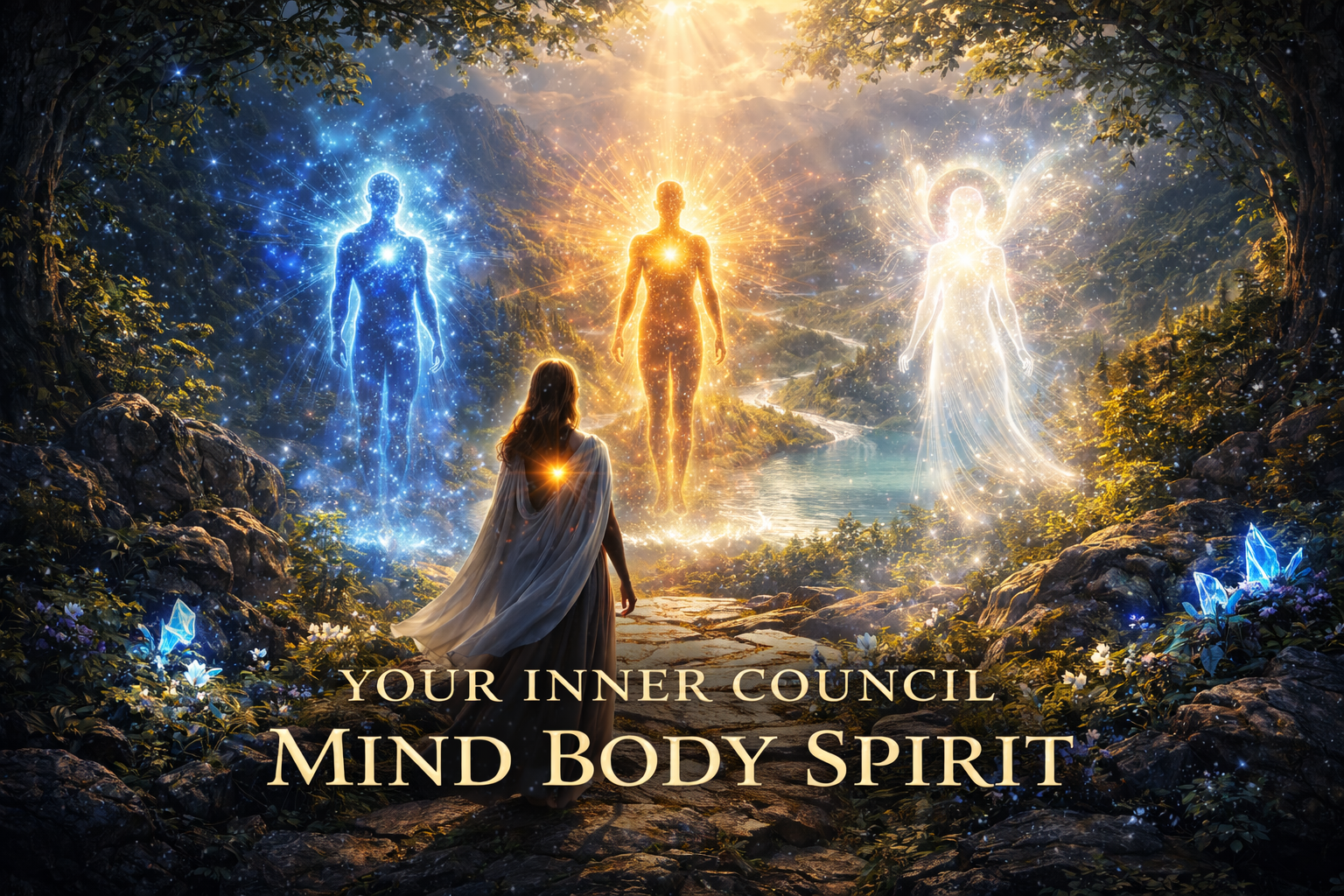
Your Inner Council Mind Body Spirit
Explore the relationship between mind, body, and spirit, and learn how inner harmony creates stronger self-trust, peace, and alignment.
You are more than one moving part.
Your inner world is not made of one voice alone. You are not just a mind thinking thoughts. You are not just a body carrying stress. You are not just a spirit reaching for meaning. You are all of these at once, and each part affects the others.
That is why inner leadership matters so much. If one part of you is screaming while the others are ignored, your life can start feeling off balance. Your mind may be racing while your body is exhausted. Your spirit may be longing for peace while your thoughts keep circling fear. You may be trying to move forward while one part of you is quietly asking to be heard first.
This is why it helps to think of your inner world as a kind of council: mind, body, and spirit each have something to say.
The mind gathers meaning.
Your mind helps you interpret life. It notices patterns, asks questions, remembers experiences, and tries to make sense of what is happening. It can be a gift of insight, clarity, and discernment. But when the mind is left without inner grounding, it can also spiral into overthinking, assumption, and mental noise.
The mind should be listened to, but not worshiped. It is wise when aligned, but overwhelming when it tries to manage everything alone.
The body carries truth.
Your body is often speaking before your words ever do. It carries tension, fatigue, relief, instinct, and warning. Sometimes your body knows you are overloaded before your mind admits it. Sometimes your body feels unsafe in a room before you can explain why. Sometimes your body is simply asking for sleep, stillness, nourishment, or breath.
Many people try to lead themselves while ignoring the body completely. But the body is not an inconvenience. It is part of your inner council. It deserves attention and care.
The spirit remembers what matters.
Your spirit reaches beyond survival. It longs for truth, peace, meaning, and alignment. It is the part of you that knows when something is technically working but still not right for your soul. It is the part that pulls you toward what is deeper, cleaner, and more real.
When the spirit is neglected, life can become hollow even when you stay productive. You may be functioning outwardly while inwardly feeling disconnected from your own center.
Inner harmony changes everything.
Self-leadership is not about letting one part dominate the others. It is about listening well and leading wisely. Your mind may bring insight. Your body may bring warning. Your spirit may bring direction. Together, they give you a fuller picture of what is true.
This does not mean every part gets equal control. It means every part gets honest attention. Leadership still matters. The goal is not inner chaos with three microphones. The goal is wise inner order.
When your mind is respected, your body is cared for, and your spirit is heard, your life begins to feel less divided. Decisions become clearer. Reactions soften. Peace comes closer. You stop treating yourself like a machine and begin relating to yourself like a whole being.
Your inner council does not need constant conflict. It needs a leader who knows how to listen.
Gentle Reflection
Ask yourself today: Which part of me has been ignored lately, and what might change if I finally listened?
Your Soulful Pathways ↑
Discover more series pages for you in Your Soulful Pathways ↑

Part of You Meant to Lead
Discover the steady part of you meant to lead your life with peace, self-trust, and inner authority instead of fear or emotional chaos.
There is a deeper self in you.
There is a part of you that was never meant to live in panic. A part of you that can feel deeply without collapsing inward. A part of you that can listen to fear without handing fear the keys. A part of you that knows how to pause, listen, and choose from truth instead of urgency. That is the part of you meant to lead.
Many people live from whichever inner voice is loudest in the moment. Fear rises, and fear takes over. Insecurity speaks, and everything bends around it. Exhaustion moves in, and the whole day becomes colored by heaviness. When this happens often, life starts to feel reactive. You may still be functioning, but inwardly it can feel like the wrong voice is always running the room.
Inner leadership asks a very different question: Who in me is leading right now?
Feelings are real, but they are not the ruler.
Your emotions matter. They carry information. They reveal hurt, longing, needs, and places that deserve attention. But feelings were never meant to sit on the throne of your life. They are messengers, not monarchs.
When a feeling becomes your ruler, everything shifts. A moment of rejection can define your whole identity. One wave of anxiety can decide your next move. One hard memory can start governing what you expect from life now. This does not mean you are weak. It simply means your inner leadership may need to be restored.
The part of you meant to lead is not the loudest part. It is often the quietest. It does not shout. It does not scramble. It does not demand relief at any cost. It is grounded, honest, steady, and deeply aware. It can look at your emotions and say, “I hear you, but I will not let you drive us somewhere untrue.”
True leadership is calm, clear, and rooted.
The deeper self within you does not lead by pressure. It leads by alignment. It remembers your values when your mind is spinning. It remembers peace when your nervous system is activated. It remembers what matters when your emotions are pulling in ten directions.
This kind of self-leadership is not cold or detached. It is compassionate and strong at the same time. It knows when you need rest. It knows when you need honesty. It knows when you need to stop negotiating with what is harming you. It leads with wisdom, not force.
You strengthen this inner authority every time you pause before reacting. Every time you choose truth over impulse. Every time you tell yourself, “I will not betray my deeper knowing just to escape discomfort.” These moments may seem small, but they are how your inner world learns who is actually in charge.
You are not meant to be ruled by chaos.
If your inner world has felt divided, loud, or easily shaken, it does not mean you are broken. It may only mean the rightful leader within you has been ignored for too long. The answer is not shame. The answer is restoration.
There is a steady self in you that knows how to lead. There is wisdom in you that is deeper than fear. There is truth in you that is more reliable than mood. That part of you may need strengthening, but it is there.
The goal is not perfection. The goal is rightful order.
When the deeper, steadier, wiser part of you begins to lead, peace becomes more than an occasional feeling. It becomes the atmosphere of your inner life. That is where leadership begins. That is where your inner kingdom starts to become whole.
Gentle Reflection
Ask yourself today: What voice in me has been leading lately, and is it truly qualified to lead my life?
Your Soulful Pathways ↑
Discover more series pages for you in Your Soulful Pathways ↑

Inner Kingdom
Inner Kingdom is a Soul2222 series about self-trust, emotional steadiness, and peaceful inner authority. Discover how leadership begins within.
Leadership begins inside.
Many people spend their lives trying to organize the outside world while their inner world feels noisy, divided, or unsettled. They try to solve everything through pressure, speed, overthinking, or control, only to find that peace still feels far away. But real leadership does not begin with managing appearances. It begins within.
Inner Kingdom is a series about self-governance, inner authority, and the sacred work of becoming trustworthy with your own life. It is not about becoming hard, rigid, or emotionally shut down. It is about learning how to let the wisest part of you lead. It is about creating an inner life where peace is not constantly overruled by fear, chaos, or self-abandonment.
Many of us were never taught how to lead ourselves well. We learned how to react, how to survive, how to please, and how to keep moving. But leadership is different from coping. Leadership knows how to pause. Leadership listens without surrendering to panic. Leadership honors emotion without handing emotion full control.
Your inner world needs rightful order.
When the wrong voice is always in charge, life begins to feel unstable. Fear makes decisions. Exhaustion sets the tone. Old wounds start writing current rules. You may look functional from the outside, but inwardly it can feel like everything is being governed by urgency, pressure, or confusion.
This series invites you into a different way.
What if peace could take its rightful place in you?
What if self-trust could be restored?
What if you stopped negotiating with chaos and started leading from calm?
What if the deepest part of you became the part that carried authority?
That is the heart of Inner Kingdom.
This is not about pretending you never struggle. It is not about denying pain or forcing yourself into perfect composure. It is about building an inner life where your values, your truth, and your spiritual center have more influence than your passing storms.
Peace is not passivity.
There is a kind of peace that is soft, but there is also a kind of peace that is strong. It is the peace that knows when to pause, when to speak, when to let go, and when to stay steady. It does not come from pretending everything is fine. It comes from inner alignment.
That kind of peace is powerful because it is rooted in authority. Not the authority of force, but the authority of knowing who should be leading within you.
When your inner world has rightful order, your thoughts become clearer. Your emotions become easier to hold. Your boundaries become less confusing. Your decisions become calmer. You stop abandoning yourself to please noise, urgency, and fear.
This series is an invitation home to yourself.
Each page in Inner Kingdom will walk through a different part of that restoration. You will explore what it means to let the right part of you lead, how to understand your inner world more clearly, how to build self-trust, and how to create daily rhythms that keep peace near the center.
This is not a kingdom of control.
It is a kingdom of alignment.
It is a kingdom of inner steadiness.
It is a kingdom where peace has a place, truth has a voice, and your life is no longer led by chaos.
Leadership begins inside.
And when it does, everything begins to change.
In this series
Part of You Meant to Lead
Your Inner Council Mind Body Spirit
Difference Between Control and Authority
Letting Feelings Speak Without Letting Them Rule
I Don’t Abandon Myself
Self-Trust Is the Currency of the Kingdom
Creating a Seat for Peace
Power in Calm Decisions
When You Stop Negotiating With Chaos
Daily Inner Kingdom Check-In
Your Soulful Pathways ↑
Discover more series pages for you in Your Soulful Pathways ↑
A Purpose Practice for People Who Feel Behind
Feeling behind in life? Discover a gentle purpose practice to help you reconnect with meaning, pace, and your next faithful step.
Feeling behind can distort everything. It can make your own life look smaller than it is. It can make other people’s timelines feel like accusations. It can turn growth into pressure and calling into panic. When you feel behind, even good desires can become heavy. Instead of moving with meaning, you start pushing from fear. This is where a gentle purpose practice can help return you to yourself.
Behind compared to what?
The first thing to notice is that the feeling of being behind often comes from comparison, not truth. You may be measuring your life against people with different histories, resources, wounds, responsibilities, personalities, and timing. Comparison removes context and replaces it with pressure. It creates the illusion that everyone is on one master schedule and you have somehow failed to keep up.
But your life is not late just because it is not identical to someone else’s. Your path is shaped by things the outside world cannot fully see. Healing takes time. Discernment takes time. Realignment takes time. Becoming rooted takes time.
A simple practice for returning to purpose
When you feel behind, pause and come back to these three questions.
What is already true in my life right now?
This question grounds you in reality instead of panic. Name what is present. Maybe you are learning. Maybe you are healing. Maybe you are surviving something hard. Maybe you are building slowly. Maybe you are more honest than you used to be. That matters.
What is one thing I can tend with love today?
Purpose often returns through care, not pressure. Choose one thing. A task. A relationship. A prayer. A page. A responsibility. A piece of your health. Tending one thing with love reconnects you to meaning.
What pace feels honest for this season?
Not every season is meant for sprinting. Some are for restoration, rebuilding, or quiet preparation. Let your pace reflect truth, not shame.
Replace panic with devotion
The feeling of being behind often makes people desperate. They start rushing, forcing, and scattering their energy. But purpose deepens in devotion, not panic. Devotion says, I will honor what is mine today. I will take one aligned step. I will stop using shame as fuel. I will stop speaking to myself like I am a failure for being human.
This shift matters. A person fueled by shame may move fast for a while, but usually collapses inward. A person fueled by devotion moves differently. More steadily. More kindly. More sustainably. That path may look quieter, but it is often far more fruitful.
Your timing still belongs to something sacred
You are allowed to trust that your life is not ruined because it unfolded differently than you expected. The detours, delays, pauses, and rebuilding seasons do not automatically disqualify purpose. Sometimes they refine it. Sometimes they save you from becoming outwardly successful and inwardly lost.
So when you feel behind, do not ask, “How do I catch up to everyone?”
Ask, “How do I come back into relationship with my own life?”
That is where peace begins.
That is where purpose becomes breathable again.
That is where the next faithful step can actually be heard.
You are not behind life itself.
You are inside a living process.
And even now, your days can still become sacred.
Your Soulful Pathways ↑
Discover more series pages for you in Your Soulful Pathways ↑
The “Next Right Step” Doctrine
Feeling overwhelmed or behind? Discover the wisdom of taking the next right step instead of needing the whole plan at once.
One reason people feel stuck is not because they are incapable, but because they are trying to solve too much at once. They want the whole plan before they begin. They want full certainty, guaranteed outcomes, and a ten-step map before taking step one. When that clarity does not arrive, paralysis sets in. But life is rarely given in full blueprint form. More often, it unfolds through the next right step.
You are not meant to carry the whole path at once
There is a deep relief in realizing that your job is not to figure out your whole life by tonight. Your job is to listen for what is honest and aligned now. The next right step doctrine is simple, but powerful: when the future feels too large, return to what is clear enough for today.
What conversation needs to happen?
What task needs to be completed?
What truth needs to be honored?
What habit needs to begin?
What burden needs to be put down?
What small act of courage is asking for your yes?
Purpose often becomes visible through motion, not overanalysis.
Small clarity is still clarity
People often dismiss small knowing because it does not answer everything. But a little bit of clarity can be enough to move. You may not know where the path leads in six months, but you may know what integrity requires today. You may not know your final purpose, but you may know what kindness, responsibility, healing, or honesty looks like in this moment.
That matters. Small clarity is not inferior clarity. It is usable clarity.
The next right step protects you from overwhelm
When you bring your attention back to one step, your nervous system can soften. The mind stops trying to swallow the whole horizon. You return to relationship with the present. This is not laziness. It is wisdom. Large callings are often lived one simple decision at a time.
Sometimes the next right step is practical.
Send the email.
Make the list.
Rest before speaking.
Apply for the job.
Take the walk.
Keep the appointment.
Sometimes it is inward.
Tell the truth.
Forgive yourself.
Stop performing.
Ask for help.
Trust the quieter way.
Purpose is built in sequences
A meaningful life is rarely one huge leap. It is a series of aligned steps. One choice shapes another. One act of obedience creates room for the next. One healed pattern opens a new possibility. If you keep demanding the entire staircase before stepping onto the first stair, you may remain frozen beside your own becoming.
The next right step doctrine reminds you that life can be lived faithfully in pieces. You do not have to force revelation. You only have to stay responsive to what is yours now.
So when you feel behind, overwhelmed, or uncertain, come back to this: what is the next right step? Not the biggest step. Not the most impressive step. Not the step that proves everything all at once. The right step. The honest step. The doable step.
That is enough for today.
And often, enough for today becomes a life.
Your Soulful Pathways ↑
Discover more series pages for you in Your Soulful Pathways ↑
Faithfulness Beats Intensity
Intensity fades, but faithfulness lasts. Discover why steady devotion, gentle consistency, and enduring presence matter more than dramatic bursts.
Intensity can feel powerful. It can create the illusion of momentum, certainty, and passion all at once. In some moments, intensity is useful. It can help initiate change, break through apathy, or energize action. But intensity is not the same thing as depth. It is not the same thing as endurance. And it is certainly not the same thing as spiritual maturity. A life built only on intensity often burns bright and then burns out. A life built on faithfulness can keep carrying light.
Intensity comes in waves
There are people who feel deeply motivated for short bursts. They have big emotional surges, strong plans, dramatic declarations, and moments of complete conviction. Then life gets ordinary again. The feeling changes. Energy dips. The glow softens. If they depended on intensity to keep moving, everything stalls.
This is why so many meaningful things remain unfinished. People mistake emotional fire for sustainable devotion. But purpose is rarely fulfilled in one beautiful wave. It is fulfilled through staying power.
Faithfulness is quieter and stronger
Faithfulness does not always feel exciting, but it keeps building. It keeps tending. It keeps returning. It keeps loving what matters long after the first emotional spark fades. Faithfulness is what keeps a person grounded in truth even when the mood changes. It is what helps someone keep praying, healing, creating, learning, or serving without requiring constant emotional fuel.
This is one reason faithfulness is so spiritually rich. It teaches you how to move from commitment instead of temporary charge. It builds a soul that can remain stable in changing weather.
Gentle consistency carries more than dramatic force
You do not need to be on fire every day to live a meaningful life. In fact, many people have harmed themselves by trying to maintain impossible intensity. They confuse exhaustion with devotion. They think if they are not pushing hard, they are not serious. But sacred living is not always loud. Sometimes it looks like a pace you can actually sustain.
Gentle consistency may not impress the world quickly, but it transforms things steadily. One honest habit repeated. One quiet prayer repeated. One kind response repeated. One boundary honored. One next right step taken again and again. This is how real change grows roots.
Choose what can endure
There is wisdom in asking not only what inspires you, but what you can remain faithful to. What patterns support your life instead of draining it? What rhythms help your soul stay connected? What pace allows you to keep going without abandoning yourself?
Faithfulness beats intensity because it can survive ordinary days. It does not demand perfect conditions. It does not require emotional fireworks. It simply asks for your sincere return and your willing heart.
So release the pressure to be constantly electrified. You do not have to live in dramatic overdrive to be deeply devoted. You do not have to prove your seriousness by burning yourself out. You can build a meaningful life through steadiness, honesty, and care.
Intensity may begin things.
Faithfulness carries them.
And often, the people who truly fulfill their calling are not the ones who live loudest. They are the ones who keep showing up with a steady soul long after the rush has passed.
Your Soulful Pathways ↑
Discover more series pages for you in Your Soulful Pathways ↑
The Spiritual Discipline of Showing Up
Showing up is a spiritual discipline. Discover the quiet power of consistency, faithfulness, and returning to your life one day at a time.
Showing up is not always glamorous. It rarely feels cinematic. Most days it looks simple, repetitive, and a little plain. Yet there is profound spiritual power in being the kind of person who returns. Returns to the work. Returns to prayer. Returns to truth. Returns to healing. Returns to the life in front of them even after discouragement, distraction, confusion, or fatigue. This is not small strength. This is a holy kind of steadiness.
Showing up forms the soul
It is easy to admire dramatic breakthroughs. It is harder to appreciate the quieter miracle of consistency. But transformation is often built there. Not in one emotional moment, but in many small returns. Every time you come back to what matters, you are shaping your inner life. You are telling your spirit, “This matters enough to return to.” That message changes you over time.
Showing up does not require perfection. In fact, perfectionism often prevents real showing up because it waits for ideal conditions. Discipline says, begin anyway. Begin tired. Begin unsure. Begin small. Begin with what you have.
Faithfulness is often ordinary
Many people miss the sacred because they are searching for constant intensity. But intensity comes and goes. Faithfulness stays. Faithfulness writes the paragraph, answers the message, takes the walk, says the prayer, cleans the room, keeps the promise, rests with intention, tells the truth, and keeps learning. It is not always thrilling. It is deeply powerful.
A life built on faithful showing up develops quiet authority. Not because it is loud, but because it is trustworthy. You begin to trust yourself. Others begin to feel your steadiness. Your spirit becomes less scattered because you are practicing return.
Returning matters more than dramatic momentum
There will be days when you lose rhythm. That is part of being human. You may get overwhelmed, discouraged, distracted, or emotionally tired. The sacred discipline is not never wobbling. The sacred discipline is coming back. Again and again. Without turning one imperfect day into a permanent identity.
This is where many people lose themselves. They think inconsistency means failure, so they stop entirely. But your life does not need perfect momentum. It needs gentle resilience. It needs the ability to say, “Today I return.”
Show up to what is yours
Not everything deserves your energy. Showing up spiritually does not mean saying yes to every demand. It means being present to what is truly yours to tend. Your healing. Your values. Your calling. Your responsibilities. Your rest. Your next honest step.
When you learn to show up for your own life with sincerity, something inside you stabilizes. You stop treating your days like accidents. You begin to live with intention instead of drift. Even the smallest acts become containers for grace.
So today, do not underestimate the holiness of showing up. The email sent with kindness. The page written. The walk taken. The prayer whispered. The boundary kept. The truth spoken. The thing begun again after almost giving up.
This is how a soul becomes strong.
Not only through breakthrough, but through return.
Not only through inspiration, but through devotion.
Not only through vision, but through presence.
Sometimes the most spiritual thing you can do is simply arrive again with an honest heart.
Your Soulful Pathways ↑
Discover more series pages for you in Your Soulful Pathways ↑
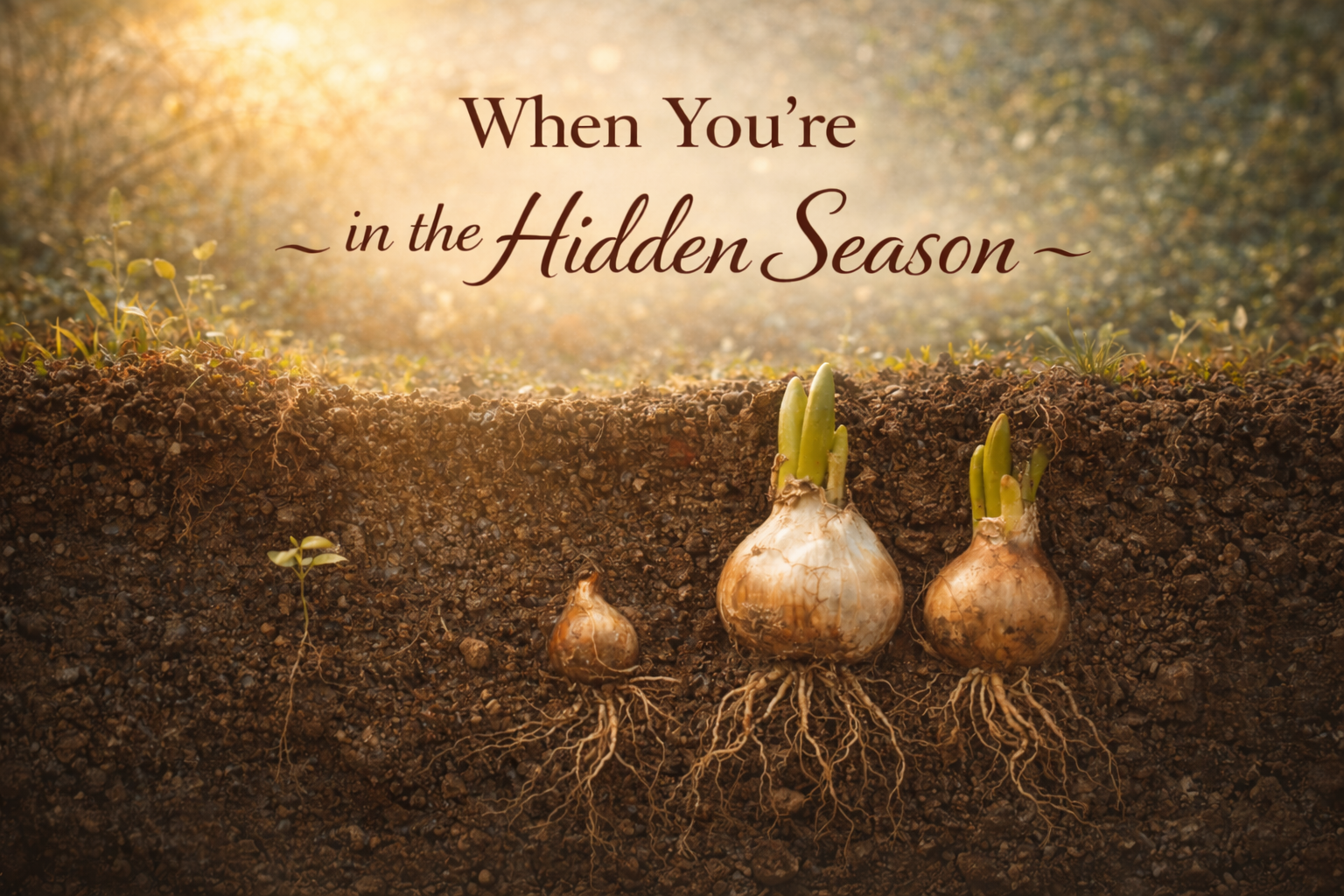
When You’re in the Hidden Season
Hidden seasons are not wasted seasons. Discover the spiritual meaning of quiet growth, unseen preparation, and purpose without visibility.
There are seasons in life when very little seems visible. You may not be receiving recognition, momentum, or outward confirmation. You may feel tucked away from the larger movement of things, as if your life has gone quiet while everyone else seems to be accelerating. Hidden seasons can test the heart because they often look like nothing is happening, even when something sacred is growing beneath the surface.
Hidden does not mean forgotten
One of the hardest parts of a hidden season is the temptation to interpret it as abandonment. If things are not moving publicly, it is easy to assume you have fallen behind or missed your chance. But not every quiet season is a sign of delay in the negative sense. Some seasons are protective. Some are formative. Some are healing spaces where deeper roots are being grown before visible fruit can be sustained.
Nature understands this well. Roots deepen in darkness. Seeds split open underground. Not all growth announces itself right away.
The unseen can be deeply productive
A hidden season may be teaching you how to live without constant external proof. It may be untangling your worth from visibility. It may be strengthening your inner life, clearing false motives, healing old wounds, or maturing your discernment. These are not small things. In fact, they may be some of the most important things happening in your life.
When nothing flashy is occurring, your soul has a chance to remember what is true without distraction. You begin to notice your real supports. You learn what remains when applause is absent. You find out whether you can still love your life in seed form.
Stop insulting the quiet
Many people speak harshly to themselves in hidden seasons. They call themselves late, irrelevant, unimportant, or stuck. But the hidden season may not be punishing you. It may be sheltering you. It may be preparing you. It may be restoring parts of you that were too exhausted to keep blooming at the old pace.
This is not permission to stay asleep in your life. It is permission to honor the season honestly. You can still show up. You can still tend your calling. You can still keep your spirit active. But you do not have to despise the quiet just because it is not dramatic.
Let the hidden season do its work
There is strength in learning how to remain faithful when your life feels small from the outside. There is beauty in choosing not to rush what is still ripening. Hidden seasons can purify the heart. They teach you how to belong to your life without constant witness. They teach you to move from substance instead of image.
So if you are in a season where much is happening inwardly and little is happening outwardly, do not assume it is empty. The sacred often works in concealed ways. Not to tease you, but to deepen you.
This chapter may be quieter than you wanted.
It may also be holier than you realize.
You are not less called because fewer people can see what is happening.
You are not behind because the season is inward.
You are not forgotten because the path is hidden.
Some of the most meaningful becoming happens where only God can see it clearly at first.
Your Soulful Pathways ↑
Discover more series pages for you in Your Soulful Pathways ↑

Your Life Is Someone Else’s Permission Slip
Your life may give others permission to heal, begin, speak, or grow. Discover how authentic living quietly frees other people too.
You may never fully know how many people are watching your life for courage. Not in the sense of admiration, but in the deeper human sense. People look for evidence that healing is possible. That it is possible to begin again. That it is possible to speak honestly, choose peace, leave what is false, try something new, grieve and still keep living. Often, without meaning to, your life becomes a permission slip for someone else.
Authenticity is contagious
When one person lives more truthfully, it stirs something in others. It reminds them that they do not have to stay trapped in old roles, old fears, or old performances forever. They may not say it. They may not even fully realize it. But your honesty can loosen something in another person’s spirit.
When you stop pretending, you teach.
When you heal out loud, even gently, you teach.
When you keep going with tenderness instead of hardness, you teach.
This does not mean your life must become a public lesson. It means your integrity has ripple effects. Realness carries.
You do not have to be perfect to inspire freedom
Some people think they need to have everything figured out before they can help anyone else. But perfection is rarely what gives people hope. Perfection often creates distance. What gives people hope is sincerity. What gives people hope is seeing someone live with courage in the middle of imperfection.
When you admit you are still learning, people breathe easier. When you say, “I am healing too,” walls soften. When you take a small brave step, someone else may finally believe their own small brave step counts. This is one of the hidden gifts of living truthfully: your life becomes a quiet invitation.
Your becoming creates openings
Every time you honor your growth, you make growth feel more possible in the world around you. Every boundary you set with love teaches something. Every unhealthy cycle you refuse to continue teaches something. Every act of self-respect, softness, faith, and honesty teaches something.
Your life may be giving someone permission to rest.
Or to leave what harms them.
Or to trust their voice.
Or to start the project they keep delaying.
Or to return to God.
Or to believe that a quiet life can still be meaningful.
You may think you are just trying to survive your own path, but even that effort can become a lantern for someone else.
Live in a way that opens doors
This is not a call to perform wisdom. It is a call to embody it. The most powerful permission slips are not speeches. They are lives. Lives that show gentleness is strength. Lives that show healing is possible. Lives that show detours do not mean failure. Lives that show a person can be both tender and clear, both humble and strong, both unfinished and deeply called.
So live your life with sincerity. Honor the healing you have fought for. Let your choices reflect the truth you are learning. Someone else may be waiting, not for your perfection, but for your example.
Sometimes the way you keep going becomes the evidence another soul needed.
Sometimes your courage becomes their doorway.
Sometimes your life says to someone else, “You are allowed too.”
And that matters more than you know.
Your Soulful Pathways ↑
Discover more series pages for you in Your Soulful Pathways ↑

How to Live Like You’re Already Called
Learn how to live like you’re already called through faith, daily alignment, and ordinary devotion instead of waiting for a dramatic sign.
Many people are waiting for a grand sign before they let themselves live with conviction. They want certainty first. They want the full map, the dramatic moment, the unmistakable message, the giant yes from the universe. Until then, they hold back. They postpone devotion. They postpone trust. They postpone becoming. But what if calling is not something you wait to receive in one lightning-bolt moment? What if calling is also something you practice?
Calling begins in the posture of your life
To live like you are already called is not to pretend you know everything. It is not arrogance. It is not self-importance. It is a willingness to live with reverence now instead of later. It is choosing to treat your life as meaningful before all the evidence arrives.
You do this by becoming available. Available to growth. Available to truth. Available to service. Available to the next honest step. A called life is rarely built from one dramatic leap. It is built from daily alignment with what feels sacred, clear, and real.
Act like your days matter
When people think of purpose, they often imagine some future version of themselves finally doing meaningful work. But a called life starts in the present tense. It asks, how are you speaking today? How are you loving today? How are you handling what has already been placed in your care? Are you moving through life like your presence matters, or like you are just waiting in a hallway for your real life to begin?
To live called is to stop treating ordinary days like filler. It is to understand that your spirit is forming through habits, thoughts, choices, reactions, and rhythms. The person you are becoming in the quiet is part of the calling too.
Faith often looks like steadiness
Living called does not always feel inspiring. Sometimes it looks plain. Sometimes it looks like discipline. Sometimes it looks like getting up again, telling the truth, doing the work in front of you, resting when needed, and staying connected to what matters. There is beauty in that kind of consistency. It builds a soul that can carry deeper purpose without collapsing under pressure.
This path also asks you to stop worshipping big moments. Big moments can be beautiful, but they are not the whole story. A soul that honors one faithful day after another becomes strong in ways flashier people may never understand.
Start where life is touching you now
You do not need every answer to live like you are already called. You need willingness. You need sincerity. You need the humility to tend what is in front of you and the courage to trust that your life has meaning even in unfolding form.
Speak kindly. Create honestly. Serve where you can. Repair what you can. Learn what you need. Say no where your spirit is being drained. Say yes where truth is asking for your presence. Live as if your life is not random, because it is not.
The point is not to manufacture certainty. The point is to stop acting disconnected from your own sacredness. Calling often becomes clearer while you are walking, not while you are waiting.
Maybe the sign you are looking for is not outside you.
Maybe it is the quiet persistence inside you that keeps whispering, live this day like it matters.
Because it does.
And so do you.
Your Soulful Pathways ↑
Discover more series pages for you in Your Soulful Pathways ↑

The Day You Stop Waiting to Be Chosen
Stop waiting for outside validation. Discover the freedom of honoring your calling, your voice, and your path without needing permission first.
There comes a day in many healing journeys when something shifts. You realize you have spent years waiting. Waiting to be noticed. Waiting to be invited. Waiting to be validated. Waiting for someone with authority, status, love, or approval to tell you that your life matters and your voice is real. Waiting to be chosen can become such a normal posture that you hardly notice how much power you have handed away.
But there is freedom in the day you stop building your worth around someone else’s recognition.
Waiting can become a quiet prison
Not all waiting is bad. Some waiting is wise. Some seasons require patience. But there is another kind of waiting that slowly shrinks the soul. It says, “I can begin once someone confirms me.” “I can trust my gifts once they are applauded.” “I can move when I am finally selected.” This kind of waiting often forms when people have been overlooked, criticized, compared, or taught to mistrust themselves.
The result is painful. You may carry beauty, insight, and wisdom, yet still feel suspended. Not because you have nothing to give, but because you learned to believe it only counts if another person sees it first.
Your life does not begin at permission
There is a powerful moment when you understand that being chosen by others is not the same as being called by life. Some doors are wonderful when they open. Some opportunities are worth receiving. But no human system gets the final say on whether your soul has value. No gatekeeper decides whether your kindness matters, your creativity matters, your healing matters, or your voice belongs in the world.
You do not need to become arrogant to stop waiting to be chosen. You simply need to become rooted. Rooted enough to begin anyway. Rooted enough to write, speak, build, serve, create, apply, share, learn, and grow without making your courage dependent on applause.
Choose alignment over approval
When you stop waiting to be chosen, you start asking better questions. Not “Who will pick me?” but “What feels honest?” Not “How do I become acceptable?” but “How do I become available to what is mine to do?” This is where purpose starts breathing differently. It becomes less about being selected and more about being aligned.
You begin to understand that some of the most meaningful steps in life happen quietly. You choose yourself by honoring your values. You choose yourself by believing the small whisper that says begin. You choose yourself by showing up for your own becoming, even before the world understands it.
Called people do not always look chosen at first
Many sacred beginnings are unimpressive from the outside. They happen in small rooms, private notebooks, late-night prayers, simple posts, gentle conversations, and brave decisions no one else fully witnesses. But that does not make them less real. It makes them intimate. It makes them rooted in something deeper than performance.
The day you stop waiting to be chosen may not look dramatic. It may feel like peace. It may feel like relief. It may feel like finally standing in your own life instead of outside it.
You are allowed to begin before you are fully seen.
You are allowed to trust what is growing in you.
You are allowed to move without a stamp of approval.
Sometimes the holiest decision is this:
I will stop waiting for permission to become who I already am.
Your Soulful Pathways ↑
Discover more series pages for you in Your Soulful Pathways ↑
The Holiness of Small Work
Small work matters. Discover the sacred beauty of quiet service, unseen effort, and the ordinary acts that shape a meaningful life.
There is a kind of work that rarely gets celebrated. It does not trend. It does not usually come with awards. It is the work of keeping things going, caring for details, tending what is fragile, cleaning what gets dirty again, helping without announcement, and staying present in tasks the world calls small. Yet much of life is held together by this very kind of labor. What if small work is not beneath purpose, but one of its purest forms?
Small does not mean insignificant
The world often measures value by visibility. If many people can see it, it must matter. If it gets attention, it must be important. But the soul knows another language. It understands that what is quiet can still be sacred. A meal made with love, a room made peaceful, a problem handled with patience, a child comforted, a tired person encouraged, a burden lifted before anyone asks, these are not tiny things in the spiritual sense. They are deeply alive with meaning.
Small work becomes holy when it is done with care, sincerity, and presence. Not because it is glamorous, but because it reflects a heart willing to serve life itself.
Your hidden effort is still real
There are seasons where much of what you do may feel repetitive or unnoticed. You may wonder whether it matters that you keep trying, keep tending, keep showing up. It matters. The unseen does not become worthless just because it is unseen. Roots are hidden too, and they hold up entire forests.
There is dignity in faithful effort. There is spiritual substance in consistency. Some of the strongest people on earth are carrying worlds no one fully sees. They are doing emotional labor, practical labor, spiritual labor, and relational labor all at once. They are making ordinary life function. They are preserving warmth in places that could easily grow cold.
Reverence changes the way you work
When you begin to see your everyday actions as part of a sacred life, even familiar tasks can soften. You stop dividing life into meaningful things and meaningless things. You realize the soul can inhabit all of it. Washing dishes can become gratitude. Answering a message can become kindness. Doing the next needed thing can become devotion.
This does not mean you must romanticize exhaustion or stay in situations that are draining your spirit. It simply means you do not have to wait for a bigger assignment to treat your life as holy ground. The way you care for what is already in your hands says a great deal about your relationship with purpose.
The sacred often enters quietly
A life of depth is not built only in peak moments. It is built in repetition, in care, in restraint, in faithfulness, in the willingness to bless the ordinary instead of despising it. Many people miss their life because they are waiting for a more dramatic version of it. Meanwhile, the sacred keeps arriving in towels folded, calls returned, tears listened to, mistakes repaired, and one more loving effort made before the day ends.
Do not underestimate the spiritual beauty of small work. It may be shaping your character more than any applause ever could. It may be teaching your soul steadiness, humility, patience, and tenderness. It may be preparing you for larger things, or it may already be the larger thing in disguise.
What you do with love is never wasted.
What you tend with sincerity is never small.
Your Soulful Pathways ↑
Discover more series pages for you in Your Soulful Pathways ↑
Purpose Isn’t Always a Job
Purpose is not always your career. Discover how your calling can live in the way you love, serve, create, and show up each day.
Many people grow up believing purpose must look impressive to count. It must be visible, measurable, praised, or attached to a title. Somewhere along the way, purpose became tangled up with performance. It got dressed in achievement, pinned to productivity, and sent out into the world wearing a name tag. But the soul does not always speak through a job title. Sometimes it speaks through presence. Sometimes it moves through the way you care for your home, speak to strangers, listen to someone hurting, or keep going when no one is clapping.
Purpose is deeper than a position
A job can absolutely be part of your purpose, but it is not the only place purpose lives. Work may be one channel, not the whole river. If you tie your worth too tightly to your role, then every job change, delay, disappointment, or season of uncertainty can start to feel like an identity collapse. But your purpose is bigger than what you do for money. It is rooted in who you are becoming and how you carry your spirit through the world.
Some people are living purpose inside hospitals, classrooms, businesses, and ministries. Others are living purpose while healing from burnout, raising children, caring for aging parents, working part-time, rebuilding after loss, or simply learning to breathe again. Purpose is not disqualified by ordinary circumstances. In many cases, it is revealed there.
Your way of being matters
Purpose often arrives less like a spotlight and more like a frequency. It is the energy you bring into a room. It is the honesty in your voice. It is the compassion that softens someone else’s hard day. It is the patience you offer when it would be easier to become cold. It is the courage to stay true to what is real, even when life feels small from the outside.
You may not always be in the right job. You may not even know what your “big thing” is yet. But you can still live as a person of depth, integrity, kindness, and faith. That matters more than many people realize. A soul anchored in truth can bless a space without ever standing on a stage.
Release the pressure to prove it
You do not need to force your life into a dramatic shape for it to matter. Some of the most meaningful people never become publicly known. They become internally steady. They become safe places. They become honest voices. They become examples of what grounded love looks like in motion.
Purpose is not always about building something huge. Sometimes it is about becoming someone whole. Sometimes it is about showing that tenderness can survive in a hard world. Sometimes it is about breaking generational patterns quietly and faithfully. Sometimes it is about learning to live with your heart open.
Your purpose may include paid work, yes. But it also includes your character, your choices, your healing, your devotion, and the way you leave people feeling after they encounter you. That is not lesser purpose. That is living truthfully.
Maybe your soul is not asking, “What job proves my worth?”
Maybe it is asking, “How do I become a vessel for light where I already am?”
Your Soulful Pathways ↑
Discover more series pages for you in Your Soulful Pathways ↑
A Weekly “Signal Reset” Practice
A weekly ritual to clear noise, close open loops, realign priorities, and return to a clean, steady signal.
You don’t have to wait until you’re burnt out to realign. A clean signal is maintained, not rescued.
That’s what this weekly reset is: a gentle practice that clears noise, closes loops, re-centers your energy, and returns you to yourself. Not as a punishment. As a kindness.
Choose a day. Choose a time. Keep it simple. Even 20–30 minutes can change the entire week.
Step 1: Clear the channel (3 minutes)
Sit somewhere quiet. Put one hand on your chest. Take five slow breaths.
Then ask: “What has been loud in me lately?”
Write a few words. No analysis. No fixing. Just naming.
This step matters because your nervous system needs to feel heard before it can relax.
Step 2: Close one open loop (5 minutes)
Open loops are quiet energy drains. Your mind keeps scanning for them like a browser with too many tabs open.
Pick one small loop and close it:
send the email
schedule the appointment
reply to the message
file the paper
pay the bill
delete the cluttered note
make the list you’ve been avoiding
Only one. This is about momentum, not perfection. Closing one loop tells your system: “We’re not carrying everything at once.”
Step 3: Check your inputs (5 minutes)
Inputs shape outputs. So ask: “What did I consume this week that affected my mood?”
Make two columns:
Nourishing
Draining
Then pick one adjustment for next week:
reduce one draining input by 10%
add one nourishing input
create one daily clean pocket of quiet
unfollow one account that dysregulates you
stop starting your morning with stress content
Small adjustments here create surprisingly big clarity.
Step 4: Check your boundaries (5 minutes)
Ask: “Where did I say yes but mean no?”
Choose one boundary for next week. Write it as a simple rule:
I don’t answer messages after 7 pm.
I take ten minutes before agreeing to requests.
I don’t discuss that topic.
I leave conversations that turn disrespectful.
Then write one sentence you’ll use. Keep it short, calm, and repeatable:
“That doesn’t work for me.”
“I’m not available for that.”
“I’m choosing something different.”
Step 5: Recommit to one signal anchor (5 minutes)
Pick one daily anchor that stabilizes your signal. Something easy enough to repeat.
Examples:
three slow breaths before your phone
a short walk
water before coffee
one honest sentence in a journal
a ten-minute tidy reset
a five-minute sit in silence
Then decide when it happens. Anchors work when they have a home in your day.
Step 6: Bless the week (2 minutes)
End with one gentle statement:
“May my life be clean, clear, and true.”
Then ask: “What is one thing I’m proud of from this week?”
Write one sentence.
This is how you teach your nervous system to notice progress, not just pressure.
This weekly reset is maintenance for your mind, your energy, and your choices. It’s how you stay aligned without burning out. It’s how you keep your signal strong, even when life gets loud.
Your Soulful Pathways ↑
Discover more series pages for you in Your Soulful Pathways ↑

Small Truths Create Big Reality
Big change begins with small honesty. Tiny truths strengthen your signal, build self-trust, and reshape your reality over time.
Most people wait for a big moment to change. A breaking point. A perfect plan. A burst of motivation that finally makes everything easy.
But reality is rarely rebuilt in one dramatic decision. Reality is rebuilt through small truths.
A small truth is a tiny moment of honesty that you stop talking yourself out of. It’s the moment you admit what you feel. The moment you name what you need. The moment you choose clarity over comfort. These moments look small, but they change the signal you live inside.
And your life responds to your signal.
The smallest lie creates the biggest stress
Stress doesn’t always come from what’s happening around you. Often, it comes from what’s happening inside you: the quiet internal contradiction.
You say you’re fine when you’re not.
You agree when your body is already exhausted.
You keep the peace by shrinking yourself.
You tolerate what hurts because it’s familiar.
Even if you’re “nice” about it, your nervous system feels the split. That split becomes tension. The tension becomes fatigue. The fatigue becomes numbness or irritability. Then you wonder why you can’t get traction.
It’s because your signal is carrying too many contradictions.
A small truth is self-respect
Small truths don’t need an audience. You can tell the truth privately first, and it still changes your life.
Small truths sound like:
I’m tired.
I don’t want that.
I’m not available.
I need time.
I don’t like how that felt.
I want something different.
I’m scared, but I’m willing.
These aren’t dramatic statements. They’re directional. They point you back toward yourself.
Truth stacking builds identity
Identity is not just who you “are.” It’s who you repeatedly choose to be.
When you repeatedly tell small truths, you stop living like a person who abandons herself. You begin living like a person who listens.
One truth doesn’t change everything. But truth stacking does.
Try one small truth per day this week:
Say no once.
Ask for what you need without apologizing for needing it.
Stop explaining your boundary.
End a conversation when it turns disrespectful.
Admit your real capacity instead of pretending you can do more.
These are one-degree shifts. And one degree changes the destination.
Small truths heal people-pleasing gently
People-pleasing often comes from the belief that love must be earned through compliance. That belief can run deep. It can feel like survival.
Small truths unwind people-pleasing without ripping your life apart. They teach your nervous system a new message: “I can be honest and still be safe.”
At first, honesty may feel shaky. You might feel guilt. You might feel the urge to backpedal. That doesn’t mean you’re wrong. It means you’re learning.
Reality follows your permissions
What you tolerate becomes normal. What you allow becomes your baseline. Your life responds to what you repeatedly accept.
Small truths are how you revoke permissions.
You revoke permission for disrespect.
You revoke permission for overextension.
You revoke permission for constant self-betrayal.
Then something surprising happens: your reality begins to rearrange. Not because the world magically changes, but because you show up differently. Your signal becomes clearer. And clear signals create clear outcomes.
Let truth be gentle and consistent
Truth does not have to be harsh. It can be soft and steady. It can be brief. It can be calm.
Small truths create big reality because they create coherence. And coherence is peace you can feel in your body.
Your Soulful Pathways ↑
Discover more series pages for you in Your Soulful Pathways ↑
Alignment Isn’t Loud. It’s Consistent.
Alignment isn’t a vibe you chase. It’s consistency you live. Small daily choices create a steady, clear signal over time.
Alignment is often imagined as a dramatic moment: a breakthrough, a sign, a pivot that makes everything click into place.
But most real alignment is quieter than that. It’s not a performance. It’s a pattern. It’s consistency.
Alignment is the calm, steady agreement between what you value and what you repeatedly choose. It’s how you live when no one is watching, no one is clapping, and the day is ordinary.
You don’t have to feel inspired to be aligned. You just have to be willing to be consistent.
Your life believes what you repeat
Your nervous system does not trust what you promise once. It trusts what you practice. That’s why big declarations can feel powerful in the moment but fade by Wednesday. And that’s why tiny daily habits can change your life without fanfare.
Consistency is the language of safety. When you show up for yourself in small ways, your body starts to relax. Your mind stops scanning for proof. Your energy stops splintering. Your signal becomes clean.
The quiet difference between “a vibe” and a foundation
A vibe is temporary. A foundation is lived.
A vibe says, “I feel aligned today.”
A foundation says, “I return to what matters even when I don’t feel like it.”
When your alignment depends on mood, you’ll feel like you’re always starting over. When your alignment is built on foundation, you’ll feel like you’re always returning home.
The boring miracle of small habits
Small habits don’t look impressive, but they create the most honest transformation. They build a life that holds you.
Here are examples of alignment that looks “small” but changes everything:
Drinking water before you pour energy into everyone else
Taking ten minutes of quiet before you absorb the world’s noise
Saying no once a week to protect your future yes
Cleaning one corner of your space so your mind can breathe
Going to bed a little earlier because your body matters
Doing one task you keep avoiding, not in panic, but in peace
These are not productivity tricks. They are self-respect in motion. And self-respect is alignment.
Consistency creates self-trust
Self-trust is not confidence. It’s reliability.
When you keep a small promise to yourself, your nervous system receives a message: “I’m safe with me.” When you keep doing that, you become a stable place to live inside.
This is why consistency feels like healing. You stop depending on motivation to carry you. You start depending on your own integrity.
Alignment removes contradiction
Misalignment often looks like a split life: your values say peace, but your schedule says chaos. Your soul says rest, but your habits say push. Your heart says truth, but your mouth says “it’s fine.”
Alignment is the slow removal of contradiction. Not by force. By repeated choice.
One gentle question helps: “Is this choice feeding the life I say I want?”
You don’t have to get it perfect. You just have to keep returning.
A plan that doesn’t overwhelm you
Pick one “signal anchor” for the week. One daily practice that stabilizes you.
Examples:
Three slow breaths before touching your phone
A short walk at the same time each day
A ten-minute tidy reset
No requests or decisions in your first five minutes awake
One honest sentence in your journal at night
Make it easy. Make it repeatable. Your nervous system loves repeatable.
Let your life be the proof
You don’t need to announce your alignment. You don’t need to convince anyone. Your choices will speak. Your energy will settle. Your life will simplify.
Alignment isn’t loud. It’s consistent. And consistency makes your signal unmistakably clear.
Your Soulful Pathways ↑
Discover more series pages for you in Your Soulful Pathways ↑