


Daily Inner Kingdom Check-In
Use this daily inner kingdom check-in to reconnect with peace, self-trust, and emotional clarity through a gentle practice of inner leadership.
Peace Is Strengthened Through Daily Attention
Peace is strengthened through daily attention.
A healthy inner life is not built only through breakthroughs. It is built through rhythm. It is built through small returns, honest pauses, quiet choices, and sacred moments where you come back to yourself before chaos has a chance to take over the room again.
This is why a daily check-in matters.
Many people move through the day without ever truly checking in with themselves. They respond, perform, fix, help, think, solve, carry, and keep going. They notice the needs around them before they notice what is happening within them.
But inner leadership requires awareness.
You cannot lead what you refuse to notice.
A Daily Inner Kingdom Check-In is not meant to become one more heavy task. It is not a performance. It is not a spiritual checklist. It is a small act of return.
A pause.
A breath.
A reconnection.
A way of asking, “What is happening in me today, and who is leading right now?”
That question can bring your inner world back into order.
It helps you notice whether peace is still near the center or whether fear, pressure, exhaustion, resentment, or urgency has quietly taken the seat.
Honesty Before Performance
Start with honesty, not performance.
This check-in does not require polished answers. It does not require you to sound wise, feel peaceful, or have everything figured out before you begin. It simply asks for truth.
Truth is a clean beginning.
You might ask yourself:
What am I feeling right now?
What is my body carrying today?
What thoughts have been setting the tone lately?
What feels aligned?
What feels off?
Have I been abandoning myself anywhere?
What has been louder than peace?
What would peace need from me today?
These questions are not meant to judge you. They are meant to help you see yourself clearly.
Awareness itself can be healing because it interrupts autopilot. It gives you a moment to stop moving from habit and begin moving from wisdom. It lets you notice the inner atmosphere before it becomes the outer reaction.
Sometimes the most powerful thing you can say is simple:
This is what is happening in me.
No shame.
No pretending.
No spiritual performance.
Just truth, held with kindness.
Listening to the Inner Council
A daily check-in helps you listen to your inner council.
Your mind may be carrying thoughts that need to be named.
Your body may be carrying tension that needs care.
Your emotions may be asking to be heard without being allowed to rule.
Your spirit may be longing for prayer, stillness, truth, beauty, or a slower pace.
When you check in daily, you stop treating yourself like one disconnected machine. You begin relating to yourself like a whole being.
You may discover that your mind needs less noise.
You may discover that your body needs rest.
You may discover that your emotions need compassion.
You may discover that your spirit needs time with God.
You may discover that your peace has been pushed to the edge of your life when it was meant to have a place near the center.
This is not overthinking. It is stewardship.
You are tending the inner kingdom.
You are noticing what has been neglected.
You are learning what needs order, care, truth, release, or protection.
A check-in does not have to be long to be powerful. Even a few honest minutes can interrupt a pattern, soften a reaction, and help you return to the deeper part of you that knows how to lead.
Awareness Becomes Leadership
The goal is not only to notice what is there.
The goal is to lead wisely from what you see.
If your body is carrying too much tension, perhaps peace needs rest.
If your mind is spinning, perhaps peace needs less stimulation and more truth.
If your emotions are loud, perhaps peace needs compassion and discernment.
If your spirit feels neglected, perhaps peace needs prayer, stillness, reflection, Scripture, worship, or quiet time away from noise.
This is how a check-in becomes more than a mood report.
It becomes inner leadership.
Not harsh.
Not rigid.
Attentive.
Wise.
Steady.
The more consistently you do this, the more your inner world begins to trust you. It learns that you will notice. It learns that you will not keep charging ahead while everything inside you is asking for care. It learns that peace has a place in your daily life, not just in your imagination.
Small daily returns create a steadier life.
A five-minute pause may not solve everything in one day, but it can change the direction of your inner life over time. It keeps you connected. It helps you respond sooner. It strengthens self-trust. It reminds you that leadership begins inside and must be renewed again and again.
Your inner kingdom does not need constant intensity.
It needs faithful attention.
Gentle Reflection
A daily check-in is one way of saying:
I am here.
I am listening.
I am not abandoning myself today.
I want peace near the center again.
That kind of return is powerful.
It is how calm becomes more natural. It is how self-trust becomes stronger. It is how peace becomes less accidental. It is how your inner kingdom stays tended.
You do not need to overhaul your whole life in one moment.
You can begin with today.
One pause.
One honest answer.
One breath before reaction.
One moment of listening.
One choice that brings peace closer to the center.
This is how inner leadership becomes a rhythm instead of an idea. This is how the kingdom within you becomes steadier, clearer, and more whole.
Ask yourself today:
What does my inner kingdom need from me right now?
What has been leading me lately?
What part of me needs care, truth, rest, or courage?
Where can I create more room for peace today?
What is one small choice that would help me lead myself well?
If this message resonated, you may also enjoy:
When You Stop Negotiating With Chaos
Alignment Isn’t Loud. It’s Consistent
Your Soulful Pathways ↑
Discover more series pages for you in Your Soulful Pathways ↑

When You Stop Negotiating With Chaos
Learn what changes when you stop negotiating with chaos and begin protecting peace, boundaries, and inner order with quiet strength.
Chaos Does Not Get the Final Vote
Chaos should not always get a vote.
There comes a point in inner leadership when you realize that not everything deserves endless negotiation. Not every chaotic pattern deserves one more chance to prove itself harmless. Not every draining habit deserves more access. Not every inner storm deserves the final say.
For a long time, people often negotiate with chaos because it feels familiar.
They explain it.
They excuse it.
They revisit it.
They accommodate it.
They keep making room for it long after it has already shown what it brings.
This can happen outwardly in relationships, environments, routines, and responsibilities. But it can also happen inwardly in thought patterns, emotional cycles, old reactions, fear loops, and self-defeating habits.
At some point, peace requires a decision:
Chaos no longer gets this kind of access.
That decision is not harsh. It is holy clarity. It is the deeper part of you rising up and saying, “This cannot keep ruling my inner world.”
Peace begins to grow when you stop giving disorder the same authority as truth.
Peace Requires Clarity
Peace grows where clarity is allowed.
Negotiating with chaos can sound reasonable at first. “Maybe it will change.” “Maybe I am overreacting.” “Maybe this time will be different.” “Maybe I can keep managing it.” “Maybe it is not as draining as it feels.”
But constant negotiation is not always wisdom.
Sometimes it is avoidance of the grief that comes with clarity.
Clarity can be uncomfortable because it asks something of you. It may ask for a boundary, a release, a refusal, a new rhythm, a better pattern, or a deeper level of honesty. It may ask you to stop pretending something is peaceful just because it is familiar.
But clarity also protects peace.
It stops pretending that everything belongs in your life equally.
It helps you recognize the difference between what stretches you and what drains you, what challenges you and what continually destabilizes you, what deserves patience and what has already shown its pattern.
When you stop negotiating with chaos, you begin honoring what peace requires.
You begin to understand that peace is not built by giving everything unlimited access. Peace is built when truth is allowed to name what no longer belongs near the center of your life.
Boundaries Create Inner Order
Boundaries are part of inner government.
A healthy inner kingdom cannot stay healthy if chaos is always welcomed as though it deserves the same seat as truth, wisdom, peace, and spiritual alignment. Boundaries help establish order. They tell your life what will no longer be allowed to keep ruling through confusion, pressure, repeated disruption, and emotional exhaustion.
This does not mean you become hard-hearted.
It means you become clear.
It means you stop treating chaos like an equal partner in your decision-making. It means you stop letting every crisis, every old fear, every familiar pattern, and every self-undermining impulse pull you away from your center.
Sometimes the holiest word is no.
Sometimes the cleanest answer is enough.
Sometimes peace grows not because something lovely was added, but because something chaotic finally lost access.
That is not cruelty.
That is stewardship.
You are the keeper of your inner atmosphere. You are allowed to notice what keeps disturbing your peace. You are allowed to protect what God is restoring in you. You are allowed to stop opening the door to what repeatedly walks in and scatters what you have been trying to build.
Boundaries do not make your life smaller.
They make room for what is sacred to breathe.
You Do Not Owe Chaos Your Loyalty
You do not owe chaos your loyalty.
There is no virtue in staying endlessly available to what keeps stealing your peace. Chaos may be loud, but loudness is not authority. Familiarity is not alignment. Repetition is not proof that something belongs.
Some patterns feel powerful only because they have had access for so long.
Some fears feel truthful only because they have spoken so often.
Some habits feel like part of you only because they have gone unchallenged.
But you are allowed to outgrow what once ruled you.
You are allowed to stop negotiating with the thoughts that make you smaller.
You are allowed to stop returning to the emotional cycles that exhaust your spirit.
You are allowed to stop giving old confusion a seat at the table of your future.
The moment you stop negotiating with chaos, something in you stands taller. Self-trust grows. Clarity deepens. Peace feels less fragile because you are no longer making it share the room with everything that opposes it.
This is not punishment.
It is protection.
It is inner leadership saying, “We do not live like that anymore.”
And sometimes that one sentence changes the whole atmosphere of a life.
Gentle Reflection
When you stop negotiating with chaos, you are not declaring that life will never be difficult. You are declaring that difficulty does not get to become your ruler. You are deciding that pressure does not get automatic authority. You are choosing to stop making endless room for what keeps pulling you away from peace.
This is part of rightful order.
Truth gets a voice.
Peace gets a place.
Wisdom gets authority.
Chaos does not get to sit on the throne.
You can be compassionate and still be clear. You can be patient and still have limits. You can be loving and still say no. You can be gentle and still refuse to keep giving access to what repeatedly fractures your inner world.
Ask yourself today:
What chaos in my life have I been over-negotiating with?
What pattern has already shown me what it brings?
What would peace ask me to make clear?
Where do I need a cleaner boundary?
What would change if I stopped giving chaos a vote in my inner kingdom?
If this message resonated, you may also enjoy:
Your Soulful Pathways ↑
Discover more series pages for you in Your Soulful Pathways ↑
Power in Calm Decisions
Discover the power of calm decisions and how inner authority helps you choose with clarity, peace, and self-trust instead of pressure.
Clarity, Discernment, Inner Peace, and Better Choices
Calm is not weakness.
In a world that rewards urgency, speed, reaction, and immediate answers, calm can look unimpressive at first.
It does not rush to prove itself.
It does not perform panic to seem responsible.
It does not create drama in order to feel powerful.
It does not assume that the loudest feeling must contain the clearest answer.
Calm carries a quieter strength.
And that strength is real.
Calm can see.
Calm can listen.
Calm can wait long enough for the emotional dust to settle.
Calm can recognize the difference between something that feels urgent and something that is actually important.
Many poor decisions are not made because people lack wisdom.
They are made because people are flooded.
When fear spikes, pressure rises, anger takes over, or uncertainty becomes uncomfortable, it becomes harder to hear the quieter voice of discernment.
You may choose for relief instead of truth.
You may say yes because saying no feels uncomfortable.
You may say no because fear makes possibility feel dangerous.
You may respond before you understand what you are responding to.
You may choose what makes the feeling disappear now instead of what will create greater peace later.
That is why calm matters.
Calm gives wisdom room to speak.
It gives your spirit space to recognize what is true.
It gives you enough distance from the immediate emotional weather to ask a better question:
What choice will I still respect when this feeling passes?
There is power in calm decisions because calm helps you choose from your deeper center instead of your loudest fear.
Pressure Pushes, Calm Considers
Pressure pushes.
Calm considers.
Pressure says:
Decide now.
Calm says:
Pause long enough to see clearly.
Pressure says:
Do whatever makes this feeling stop.
Calm asks:
What will remain true after this feeling passes?
Pressure wants immediate relief.
Calm wants wise alignment.
This distinction matters because not every urgent feeling carries accurate direction.
Sometimes urgency is fear asking for the steering wheel.
Sometimes pressure is discomfort demanding an escape.
Sometimes guilt disguises itself as responsibility.
Sometimes excitement makes something look clearer than it actually is.
Sometimes anger makes immediate action feel powerful when waiting would be wiser.
Emotions can carry useful information, but they do not always need to become immediate instructions.
You can honor what you feel without allowing every feeling to make your decisions.
That is inner leadership.
Calm Does Not Mean Doing Nothing
Calm is sometimes misunderstood as passivity.
But a calm decision can be incredibly decisive.
A calm no.
A calm yes.
A calm ending.
A calm beginning.
A calm boundary.
A calm correction.
A calm decision to walk away.
A calm willingness to stay.
A calm refusal to return to what has repeatedly brought chaos.
A calm decision to stop explaining yourself to what has already shown you its pattern.
There is nothing passive about clarity.
Sometimes calm tells you to wait.
Sometimes calm tells you to act because the answer is already clear.
The difference is that the action is not being controlled by emotional chaos.
You are acting from clarity rather than trying to escape discomfort.
That distinction can change the direction of a life.
Emotional Urgency Is Not Always Real-World Urgency
One of the most useful distinctions you can learn is the difference between emotional urgency and actual urgency.
Actual urgency may require immediate action.
A genuine emergency.
An immediate responsibility.
A time-sensitive opportunity.
A situation involving safety.
A deadline that truly exists.
Those moments call for appropriate action.
But emotional urgency can make an ordinary decision feel as though the walls are closing in.
I have to decide right now.
I have to answer them immediately.
I cannot sit with this uncertainty.
Something terrible will happen if I wait.
Sometimes the deadline exists only inside the feeling.
Before making an important decision, ask:
Is this actually urgent, or does it simply feel urgent?
That question can create precious space between reaction and choice.
And sometimes a few minutes, a night of sleep, a prayer, a walk, or one additional piece of information changes everything.
Calm Creates Space Between Feeling and Choice
There is enormous power in the space between what happens and what you do next.
Someone says something upsetting.
You do not have to answer immediately.
An opportunity appears.
You do not have to accept before understanding it.
Someone asks something of you.
You do not have to give an automatic yes.
Fear rises.
You do not have to reorganize your life around it.
Anger appears.
You do not have to turn it into action before you understand what it is protecting.
Calm creates a small clearing.
And inside that clearing, you regain choice.
You can ask:
What actually happened?
What am I feeling?
What do I know?
What am I assuming?
What information am I missing?
What response agrees with who I want to be?
That pause is not weakness.
Sometimes the pause is where your power returns.
Calm Decisions Protect Future Peace
Every decision plants something.
It creates a consequence, direction, pattern, boundary, relationship, commitment, opening, or ending.
That is why inner authority matters.
It helps you stop sabotaging tomorrow's peace simply to relieve today's discomfort.
Calm decision-making asks different questions:
Does this align with my deeper truth?
Will this create greater peace or greater chaos later?
Am I choosing from fear, pressure, guilt, anger, or clarity?
What are the likely consequences of this choice?
Do I actually have enough information yet?
Does my spirit feel settled here?
Would I make the same decision tomorrow morning?
These questions shift the center of your life.
Instead of allowing every feeling to write the next chapter, you let wisdom hold the pen.
Calm decisions protect your future from the cost of panic.
They protect your peace from impulsive agreements.
They protect your time from automatic yeses.
They protect your relationships from unnecessary reactions.
They protect your self-trust from repeatedly choosing against what you already know.
They protect your inner kingdom from being ruled by whatever happens to feel loudest today.
Calm Makes Room for Discernment
Discernment needs room.
When everything inside you is shouting, subtle differences become harder to recognize.
Fear and intuition can sometimes be difficult to distinguish in the moment.
So can:
Excitement and alignment.
Guilt and responsibility.
Avoidance and peace.
Pressure and genuine urgency.
Calm gives you space to look more carefully.
You can ask whether a choice agrees with your values.
Whether the facts support it.
Whether you are responding to what is actually happening now.
Whether you need more information.
Whether you are choosing something because it is right or because you desperately want uncertainty to end.
This is also where prayer can become powerful.
Instead of praying only:
God, tell me what to do.
You might also pray:
God, quiet what is distorting my sight. Help me recognize what is true. Give me wisdom to know what is mine to do and courage to do it.
Sometimes the answer becomes clearer when the noise becomes quieter.
You Can Be Calm and Still Change Your Mind
Inner authority does not mean stubbornness.
A strong decision-maker can receive new information.
You can make the best decision available with what you know today and later discover something you did not know.
Then you can adjust.
That is not weakness.
That is wisdom responding to reality.
Calm does not need to defend yesterday's decision simply because yesterday made it.
Calm can say:
I know more now.
I see this differently now.
This no longer aligns.
I need to reconsider.
I was wrong.
I am choosing differently.
There is freedom in knowing that one decision does not imprison you forever.
Some choices have lasting consequences, but many parts of life allow reconsideration, repair, adjustment, and new direction.
You do not need perfect foresight.
You need honesty, wisdom, and enough humility to keep listening.
The 24-Hour Question
When a decision feels emotionally charged and does not require an immediate answer, try a simple practice:
Would anything important be harmed if I waited until tomorrow?
If the answer is no, give the decision some room.
Sleep.
Pray.
Walk.
Write down the facts.
Let excitement settle.
Let fear settle.
Let anger settle.
Then revisit the decision.
Sometimes the answer remains exactly the same.
That itself can be useful.
You discover that the decision was not merely an emotional reaction.
Other times, the answer changes once the intensity passes.
Either way, you have learned something.
Not every decision needs 24 hours.
But decisions carrying strong emotion often benefit from enough space to discover what remains after the emotional volume comes down.
A Simple Calm Decision Practice
When you have an important decision to make, move through these questions:
1. What are the facts?
Separate what you actually know from what you fear, hope, suspect, or assume.
2. What am I feeling?
Name the emotion without judging it.
Fear.
Excitement.
Anger.
Guilt.
Pressure.
Hope.
Confusion.
Relief.
3. Is there a genuine deadline?
Determine whether the urgency exists in reality or mainly inside the emotional experience.
4. What information am I missing?
Sometimes clarity requires another question rather than another hour of thinking.
5. What choice agrees with my values?
Bring the decision back to who you want to be and what you believe matters.
6. What are the likely consequences?
Look beyond immediate relief.
Consider tomorrow.
Next month.
Next year, when appropriate.
7. What becomes clearer when I become quieter?
Then pause.
Pray.
Listen.
And when clarity arrives, have the courage to honor it.
Stronger Decisions Build Deeper Self-Trust
A life filled with frantic decisions can easily become a frantic life.
But a life built through clearer choices begins to carry a different atmosphere.
You start trusting yourself more.
You become less available for unnecessary confusion.
You learn that you do not have to answer every demand immediately.
You become more comfortable saying:
I need to think about that.
Let me get back to you.
I need more information before deciding.
That does not work for me.
Yes, this feels right.
No, I am not choosing that.
There is tremendous power in a person who does not need panic to make progress.
Calm decisions teach your inner world:
We do not have to run every time fear knocks.
We can pause.
We can listen.
We can discern.
We can choose.
That is how self-trust grows.
Not from making every decision perfectly.
From knowing that you can listen, choose, learn, and adjust.
Calm Can Become Part of Your Inner Kingdom
The Inner Kingdom is strengthened whenever you decide what gets authority within you.
Fear may speak.
It does not automatically become king.
Anger may speak.
It does not automatically write the law.
Pressure may arrive.
It does not automatically set the deadline.
Other people's opinions may matter.
They do not automatically become your truth.
Your emotions deserve to be heard.
But your deepest decisions deserve more than whichever feeling happens to be loudest.
Wisdom needs a seat.
Truth needs a seat.
Faith needs a seat.
Discernment needs a seat.
Peace needs a seat.
And when those voices have room, your choices begin to change.
You become less reactive without becoming passive.
More thoughtful without becoming indecisive.
More peaceful without becoming powerless.
More open without becoming easily moved.
Calm becomes part of your strength.
Frequently Asked Questions
Why Is It Better to Make Decisions When Calm?
Calm can make it easier to consider information, consequences, values, and alternatives rather than responding primarily to immediate emotional pressure.
The goal is not to eliminate emotion.
It is to give yourself enough space to use emotion as information without allowing it to become the only information.
Does Being Calm Mean Ignoring My Feelings?
No.
Calm decision-making begins by recognizing what you feel.
Fear, anger, excitement, disappointment, hope, and concern may all contain useful information.
The difference is that you listen to the emotion before deciding whether it should direct your action.
How Can I Calm Down Before Making an Important Decision?
When circumstances allow, create some space.
Step away from the conversation.
Take a walk.
Pray.
Breathe slowly.
Sleep before answering.
Write down what you know.
Gather missing information.
Talk with someone whose wisdom you trust.
Even a short pause can sometimes change the quality of a decision.
How Do I Know Whether Something Is Actually Urgent?
Look for an external reason the decision must happen immediately.
Is there a genuine deadline?
Is someone's safety involved?
Will waiting create a real consequence?
Or is the strongest pressure coming from discomfort with uncertainty?
Not everything that feels urgent actually is.
Can a Calm Decision Still Be Difficult?
Absolutely.
Some of the clearest decisions are difficult precisely because they require courage.
Calm does not guarantee comfort.
It gives you a steadier place from which to choose.
What If I Make the Wrong Decision?
You will not make every decision perfectly.
When new information appears, you can learn, adjust, repair what can be repaired, and choose again where choice remains available.
Self-trust does not come from never making mistakes.
It grows from knowing you can respond wisely when you do.
Choose From the Quiet Place
There is real power in calm decisions because calm helps truth rise to the surface.
Calm does not remove responsibility.
It helps you carry responsibility with wisdom.
Calm does not make decisions disappear.
It helps you make them from a clearer place.
Calm does not promise that every choice will be easy.
It gives you a steadier center from which to choose.
You do not have to rush every decision simply because pressure is present.
You do not have to obey fear because fear speaks loudly.
You do not have to choose temporary relief at the expense of lasting peace.
You can pause.
You can breathe.
You can gather information.
You can pray.
You can ask for wisdom.
You can wait when waiting is wise.
You can act when action is clear.
And you can make the calm decision even when the calm decision requires courage.
Ask yourself:
What decision in my life needs less pressure and more peace around it?
Where have I been mistaking urgency for wisdom?
What am I assuming that I could actually verify?
What choice would support my future peace?
What would remain true if I gave this decision a little more room?
What would calm say if I allowed it to speak?
Sometimes power does not arrive as force.
Sometimes it arrives as a quiet moment in which fear stops holding the pen.
And you choose from truth instead.
If this message resonated, you may also enjoy:
When You Stop Negotiating With Chaos
Your Soulful Pathways ↑
Discover more series pages for you in Your Soulful Pathways ↑
Creating a Seat for Peace
Learn how to create a lasting place for peace within your life through self-trust, calm choices, and inner emotional stability.
Peace Needs a Place to Sit
Peace needs a place to sit.
Many people want peace, but they treat it like a visitor instead of giving it a place to stay. They hope it will appear when circumstances calm down, when people behave better, when the schedule gets lighter, or when life becomes less demanding.
But peace cannot become a steady atmosphere in your life when it is always treated like something temporary.
Creating a seat for peace means making room for it within your inner world. It means building a life where peace is no longer constantly pushed out by urgency, fear, overreaction, noise, and emotional chaos. It means deciding that calm gets to belong here too.
This is not denial.
It is intention.
It is the sacred decision to stop making peace wait outside the door of your own life.
Peace needs more than an occasional invitation. It needs a place of honor. It needs room in your thoughts, your pace, your choices, your boundaries, your body, your prayers, and your daily rhythm.
When you create a seat for peace, you are telling your inner kingdom:
Calm is welcome here.
Wisdom is welcome here.
Stillness is welcome here.
God’s peace is not a stranger here.
Peace Can Live in Real Life
Peace is not the absence of everything hard.
Many people imagine peace as a life where nothing difficult happens, no one disappoints them, no pressure rises, no uncertainty appears, and no emotion shakes the room. But peace does not require perfect conditions. It requires a stable center.
You can still have grief and peace.
You can still have uncertainty and peace.
You can still have responsibility and peace.
You can still have pressure around you without giving pressure full authority within you.
Peace becomes stronger when it is built into your way of living instead of left at the mercy of your circumstances.
This might mean making slower decisions instead of impulsive ones.
It might mean stepping away from unnecessary noise.
It might mean protecting your energy from constant overstimulation.
It might mean refusing to rehearse fear all day in your own mind.
It might mean choosing what nourishes your spirit instead of what only drains your attention.
It might mean allowing silence, prayer, breath, rest, and truth to become part of your daily atmosphere again.
Peace is not fragile when it is rooted.
It can sit with you in the middle of a hard season and still remind you that chaos does not get the final word. It can steady your thoughts, soften your reactions, and help you respond from wisdom instead of pressure.
This is how peace becomes more than a feeling.
It becomes a way of being led.
A Peaceful Life Is Built Through Repeated Choices
A peaceful life is built on repeated choices.
Peace is rarely created in one grand gesture. More often, it is created through small daily decisions that teach your inner world what atmosphere you are willing to live in.
When you keep a healthy boundary, peace gets stronger.
When you stop feeding panic with constant mental spiraling, peace gets stronger.
When you stop abandoning yourself, peace gets stronger.
When you choose gentleness without becoming passive, peace gets stronger.
When you tell the truth before resentment grows, peace gets stronger.
When you give your body rest instead of treating exhaustion like a badge of honor, peace gets stronger.
When you return to God before you return to worry, peace gets stronger.
A seat for peace is built through repetition. It is built by choosing what supports steadiness over and over again until calm no longer feels foreign.
At first, peace may feel unfamiliar if you have lived for a long time in urgency. Calm can feel strange when your inner world has been trained to expect pressure. Stillness can feel uncomfortable when noise has become normal. Rest can feel undeserved when over-functioning has been your pattern.
But peace can be learned.
Your inner world can become accustomed to gentleness.
Your nervous system can begin to recognize safety.
Your spirit can begin to breathe again.
Every peaceful choice becomes another stone in the foundation.
Peace Belongs Near the Center
Peace belongs near the center.
If peace is always the first thing sacrificed, something in you will remain tired. You may achieve things, help people, keep moving, and appear strong on the outside, but inwardly you may feel like there is never anywhere soft to land.
Peace changes that.
It gives your soul somewhere to sit down.
This is one of the sacred responsibilities of inner leadership. You are not only leading your life forward. You are also deciding what gets to live at the center of it.
If urgency sits at the center, everything becomes rushed.
If fear sits at the center, everything becomes tense.
If approval sits at the center, everything becomes negotiable.
If exhaustion sits at the center, everything becomes heavy.
But when peace is allowed near the center, your inner world begins to change.
Your thoughts breathe more easily.
Your body softens more often.
Your decisions become less frantic.
Your spirit feels less exiled from your daily life.
Peace deserves more than occasional access. It deserves a real place.
Not because life will always be easy, but because your soul was not created to live constantly crowded by pressure. You were made for steadiness. You were made for communion with what is sacred. You were made for an inner life where peace is not always being evicted by the loudest demand.
Peace is not a luxury.
It is part of rightful order.
Gentle Reflection
Creating a seat for peace is one of the most powerful acts of inner leadership.
It is the decision to stop treating calm like an accident and start treating it like something worthy of protection. It is the decision to notice what keeps pushing peace out and to begin making different choices. It is the decision to let wisdom, stillness, prayer, and truth become part of the atmosphere within you.
Peace does not need everything around you to be perfect before it can sit with you.
It only needs room.
A little room in your morning.
A little room in your thoughts.
A little room before you respond.
A little room before you say yes.
A little room before fear takes over.
A little room where your spirit can remember that God is near, truth is steady, and you do not have to be ruled by every storm.
Ask yourself today:
What in my life keeps pushing peace out?
Where have I been treating peace like a visitor instead of giving it a place?
What choice would create more room for calm within me?
What boundary would protect the peace I am trying to build?
What would it look like to let peace sit closer to the center today?
If this message resonated, you may also enjoy:
Self-Trust Is the Currency of the Kingdom
When You Stop Negotiating With Chaos
Your Soulful Pathways ↑
Discover more series pages for you in Your Soulful Pathways ↑

Self-Trust Is the Currency of the Kingdom
Self-trust is the currency of the inner kingdom. Discover how peace, consistency, and self-loyalty rebuild inner confidence from within.
Self-Trust Is Built by What You Show Yourself
Self-trust is not built through words alone.
You can tell yourself to be confident. You can repeat encouraging thoughts. You can try to think more positively. Those things can help, but self-trust is not built only through what you say to yourself. It is built through what you repeatedly show yourself.
Self-trust grows when your inner world begins to believe that you mean what you say.
It grows when you keep promises to yourself.
It grows when you honor your own truth.
It grows when you stop abandoning yourself when discomfort rises.
It grows when you become someone your own spirit can rely on.
In that sense, self-trust becomes the currency of your inner kingdom. It is what allows peace, clarity, courage, boundaries, and wisdom to move through your life in a healthy way.
When self-trust is strong, you do not need to argue with yourself as much. You do not need constant outside confirmation before every choice. You do not have to keep proving to yourself that your deeper knowing matters.
Your inner world begins to understand:
I am safe with myself now.
The Currency of the Inner Kingdom
Every kingdom runs on something.
Some inner kingdoms run on fear. Some run on urgency. Some run on approval. Some run on old patterns that were never meant to govern a whole life.
But a peaceful inner kingdom runs on trust.
Self-trust is the inner currency that makes steadiness possible. It is the quiet agreement between your mind, body, and spirit that says, “We can move forward because we are no longer working against ourselves.”
When self-trust is weak, life can feel unstable. Decisions become harder because you are never fully sure you will stay with yourself. Boundaries feel shaky because some part of you expects you to override them later. Peace feels fragile because your inner foundation does not feel fully dependable yet.
But when self-trust begins to grow, your inner world starts to settle.
Your mind does not have to keep spinning for proof.
Your body does not have to keep bracing for betrayal.
Your spirit does not have to keep wondering if it will be heard.
Self-trust tells every part of you that your leadership is becoming safer, clearer, and more consistent.
That is why it matters so much.
Trust Grows Through Consistency
Many people think self-trust returns in one breakthrough moment.
Sometimes healing does include a powerful moment of realization. A light turns on. A truth becomes clear. Something inside finally says, “I cannot keep living against myself.”
But self-trust is usually rebuilt through consistency.
Small, honest, repeated acts of self-loyalty matter more than dramatic promises.
Every time you rest when you truly need rest, trust grows.
Every time you tell yourself the truth, trust grows.
Every time you keep a boundary instead of collapsing it for approval, trust grows.
Every time you choose alignment over self-betrayal, trust grows.
Every time you follow through on one small promise, trust grows.
These moments may seem ordinary, but they are not small to your inner world. They send a message deeper than words:
You are safe with me now.
I will not keep leaving you behind.
I will not promise peace and then keep choosing chaos.
I will not hear the truth and then bury it for comfort.
I will learn how to stay.
This is how the inner kingdom becomes stable. Not through pressure. Not through perfection. Through faithful, repeated alignment.
A Trustworthy Foundation Changes Everything
A kingdom without trust cannot stay peaceful.
Imagine trying to lead an inner life where every part of you feels uncertain about your leadership. Your mind doubts your follow-through. Your body expects you to ignore warning signs. Your spirit assumes you will dismiss what it knows. Your emotions do not know whether they will be heard or silenced.
That is not a peaceful kingdom.
That is an unstable one.
But when trust begins to grow, your whole inner world responds. You become less reactive because you are less divided. Your decisions become cleaner because you know you will stand with what is true. Your boundaries become calmer because they are no longer built only from exhaustion. Peace becomes more sustainable because it has a trustworthy foundation.
Self-trust is quiet strength.
It does not always look dramatic from the outside. It may look like simple steadiness. It may look like not chasing panic. It may look like making one clean choice and standing by it. It may look like telling the truth without turning it into a battle. It may look like no longer needing to debate your own worth before you honor your own peace.
This kind of trust is deeply healing.
It restores dignity.
It restores stability.
It helps you stop living as though everything depends on external confirmation.
When self-trust returns, peace no longer feels accidental. It begins to feel rooted, steady, and real.
Gentle Reflection
Self-trust is built one honest choice at a time.
It grows when your words and actions begin to match. It grows when your inner life sees that you are no longer making promises you do not intend to keep. It grows when you stop treating your own needs, truth, and peace as things that can always be postponed.
You do not have to rebuild self-trust all at once.
You can begin with one small promise.
One honest boundary.
One clean yes.
One peaceful no.
One moment where you choose not to abandon yourself.
One moment where your deeper wisdom becomes the voice you follow.
That is how inner currency is restored.
That is how the kingdom becomes steady again.
Ask yourself today:
What is one small promise I can keep to myself today?
Where have I been asking myself to trust words without action?
What would help my inner world feel safer with me?
What choice today would strengthen self-trust instead of weaken it?
How can I lead myself in a way my own spirit can believe?
If this message resonated, you may also enjoy:
Your Soulful Pathways ↑
Discover more series pages for you in Your Soulful Pathways ↑

I Don’t Abandon Myself
Discover the power of making a new inner law: I don’t abandon myself. Learn how self-trust grows through loyalty, peace, and inner commitment.
How Self-Loyalty Builds Self-Trust, Stronger Boundaries, and Inner Peace
There is power in choosing a new inner law:
I don’t abandon myself.
Not:
I always get everything right.
Not:
I never change my mind.
Not:
I put myself above everyone else.
Not:
I refuse compromise.
Something much steadier.
I will not keep disappearing from my own life.
I will listen when something matters to me.
I will notice when I am tired.
I will pause before automatically saying yes.
I will stop pretending something is fine when I know it needs attention.
I will allow myself to have needs, preferences, limits, questions, and a voice.
I will care about other people without making myself the price of keeping the peace.
That is self-loyalty.
And for someone who has spent years adapting, pleasing, overgiving, explaining, carrying, fixing, or keeping everything together, self-loyalty can feel almost revolutionary.
What Is Self-Abandonment?
Self-abandonment happens when you repeatedly move away from your own needs, values, feelings, boundaries, or inner knowing in order to gain approval, avoid discomfort, preserve connection, or keep other people happy.
It does not always look dramatic.
It may look like:
Saying yes when you want to say no.
Ignoring exhaustion because other people need something.
Staying quiet when something matters deeply to you.
Allowing someone else's disappointment to override your decision.
Dismissing your feelings before you have understood them.
Accepting behavior you know is hurting you.
Overexplaining every boundary.
Pretending not to care.
Making everyone else's comfort more important than your own peace.
You can abandon yourself while looking incredibly responsible from the outside.
That is part of what makes the pattern difficult to see.
Self-Abandonment Can Look Like Being “Easy”
Many people learn early that being easy creates less conflict.
Do not need too much.
Do not complain.
Do not make things complicated.
Do not disappoint anyone.
Do not become emotional.
Do not change your mind.
Do not ask for special consideration.
So you become adaptable.
Helpful.
Agreeable.
Low-maintenance.
Dependable.
Those qualities can be beautiful.
But they become costly when they require you to continually suppress the person underneath them.
Being considerate is not the same as disappearing.
Being flexible is not the same as never having preferences.
Being kind is not the same as letting everyone else decide.
Why Do People Abandon Themselves?
Usually, self-abandonment is not random.
It developed for a reason.
Perhaps disagreement once created tension.
Maybe saying no led to guilt.
Maybe approval felt uncertain.
Perhaps being helpful earned affection.
Maybe being strong kept everything moving.
Maybe you learned that other people's emotions were somehow your responsibility.
Maybe staying quiet felt safer than speaking honestly.
Those strategies may have helped you navigate an earlier season.
But survival strategies can become habits long after the original situation has changed.
One of the most important questions you can ask is:
Does this pattern still serve the life I am living now?
Self-Abandonment Is Often Very Quiet
It may happen in a few seconds.
Someone asks:
Can you do this?
You already feel tired.
You know your schedule is full.
Something inside you hesitates.
But before you have fully checked with yourself, you hear your own voice say:
Sure.
That tiny moment matters.
Not because every unwanted task is self-abandonment.
Life requires compromise, responsibility, sacrifice, and sometimes doing things we would rather not do.
The deeper issue is whether you are consciously choosing or automatically overriding yourself.
There is a difference between:
I don't really feel like doing this, but I choose to because it matters
and
I cannot allow myself to say no because someone might be disappointed.
Choice changes the experience.
The Cost of Repeatedly Leaving Yourself
One false yes probably will not reshape your entire life.
But patterns accumulate.
You may begin to feel:
Resentful.
Exhausted.
Invisible.
Disconnected.
Chronically overcommitted.
Unsure what you actually want.
Frustrated that people expect so much from you.
Confused because you agreed to many of those expectations yourself.
You may start believing other people are constantly taking your time when part of the problem is that you have never taught your life where the limits are.
That realization is not an invitation to blame yourself.
It is an invitation to reclaim choice.
Self-Loyalty Does Not Mean Selfishness
This distinction matters.
Self-loyalty does not mean:
Nobody else's needs matter.
I always get my way.
I never compromise.
I refuse inconvenience.
I only do what feels good.
Healthy relationships require flexibility.
Families require sacrifice.
Commitments require follow-through.
Sometimes love, responsibility, and commitment ask something from you.
Self-loyalty simply means you remain part of the equation.
Your needs do not automatically outrank everyone else's.
But they also do not automatically come last.
Stay With Yourself Before You Answer
One of the simplest ways to stop abandoning yourself is to slow the answer down.
Before responding to a request, ask:
Do I have capacity?
Do I want to do this?
Is this genuinely my responsibility?
Am I agreeing because I choose to or because I feel afraid to say no?
What will this yes require from me?
Then answer.
When you need time, say:
Let me think about it and get back to you.
That sentence creates room for you to exist inside the decision.
What Self-Loyalty Sounds Like
It does not always sound dramatic.
Sometimes it sounds like:
I need a little time.
That doesn't work for me.
I can help with part of that.
I need to rest tonight.
I see it differently.
I don't want to discuss that right now.
I changed my mind.
I need help.
I am not comfortable with that.
I can do this, but I cannot do that.
Small truthful sentences can change the architecture of a life.
Stop Making Your Needs a Problem
Some people can acknowledge everyone else's needs easily.
But when their own appear, the inner conversation changes.
I shouldn't need this.
I should be able to handle more.
Why am I so tired?
Other people have it worse.
I do not want to be difficult.
You do not need to turn every need into a moral question.
Sometimes you need food.
Rest.
Quiet.
Space.
Help.
Time.
Information.
Comfort.
Movement.
A boundary.
Needs are information.
They do not automatically dictate what you must do, but they deserve to be heard.
Your Body Can Offer Information
Self-abandonment can sometimes show up physically.
You agree and notice tension.
You enter a situation and feel yourself bracing.
You keep pushing and realize you are exhausted.
You say something is fine while remaining unsettled afterward.
Your body does not provide infallible answers.
A physical reaction can reflect fear, anxiety, excitement, fatigue, stress, or many other things.
So use the same principle:
Notice first. Interpret second.
Ask what the sensation may be telling you.
Then bring in context, values, facts, prayer, and judgment.
Boundaries Are One Form of Self-Loyalty
A boundary turns inner awareness into action.
You recognize:
I need rest.
Then protect an evening.
You recognize:
This conversation keeps becoming disrespectful.
Then end it when that line is crossed.
You recognize:
I cannot take another commitment.
Then decline.
You recognize:
This person has not handled my private life carefully.
Then share less.
Boundaries say:
What I know about myself is allowed to influence how I live.
That builds self-trust.
You Can Change Your Answer
Sometimes you abandon yourself before you realize it.
You say yes.
Then think about it.
Then recognize:
I really cannot do this.
You are allowed to correct yourself.
Try:
“I answered too quickly. I need to change my answer.”
Or:
“I thought I could make that work, but I can't.”
Or:
“After thinking about it, I need to pass.”
Changing an answer thoughtfully is sometimes more honest than keeping a commitment you made without clarity.
Of course, some commitments carry responsibilities and consequences.
But your first answer is not automatically sacred simply because it came out of your mouth quickly.
Stop Waiting for Other People to Notice Your Limits
Sometimes resentment grows because you hope someone will see that you are exhausted and stop asking.
They may not.
You hope they will realize you have too much on your plate.
They may not.
You hope they will sense that your yes was reluctant.
They may not.
People cannot reliably honor limits they do not know exist.
Part of self-loyalty is communicating.
Not angrily.
Clearly.
You Can Love Someone Without Agreeing With Them
Self-abandonment often appears in disagreement.
You may think:
If I disagree, they will feel rejected.
If I say no, they will think I do not care.
If I choose differently, they will be upset.
But love does not require identical thoughts, preferences, beliefs, or decisions.
You can say:
I love you, and I see this differently.
I care about you, and my answer is still no.
I understand why you feel that way, but I need to make another choice.
Connection becomes more genuine when it can survive difference.
Stop Overexplaining Your Boundaries
Overexplaining often sounds like kindness.
Sometimes it is fear wearing a very long paragraph.
You keep explaining because you hope the other person will finally agree that your boundary is legitimate.
But your boundary does not require unanimous approval.
You can provide context.
You can be warm.
You can care about the other person's feelings.
And still stop explaining.
“That doesn't work for me.”
Sometimes that is enough.
Staying With Yourself Does Not Mean Obeying Every Feeling
Self-loyalty is not emotional impulsivity.
You can feel anger without sending the message.
Feel fear without running.
Feel guilt without changing a healthy boundary.
Feel desire without acting immediately.
Feel hurt without deciding the relationship is over.
Your feelings deserve attention.
They do not always deserve control.
Staying with yourself means listening without handing every emotion the steering wheel.
Learn to Stay Through Discomfort
One reason people abandon themselves is because honesty can create discomfort.
Someone may be disappointed.
There may be silence.
A conversation may feel awkward.
You may feel guilty.
Your heart may race.
You may want to take your boundary back simply to make the discomfort stop.
This is where self-loyalty becomes practice.
Ask:
Can I remain here without immediately undoing what I know?
Discomfort passes.
Self-betrayal can linger much longer.
Self-Loyalty Rebuilds Self-Trust
Self-trust is not simply believing you always make the right decision.
Nobody does.
Self-trust is knowing:
I will listen.
I will pay attention.
I will tell myself the truth.
I will correct course when I need to.
I will not repeatedly sacrifice myself just to avoid uncomfortable moments.
That kind of trust is built through repetition.
One pause.
One honest answer.
One boundary.
One promise kept.
One decision not to override yourself.
The inner relationship begins changing.
Keep Small Promises to Yourself
If you want to strengthen self-loyalty, start small.
Promise yourself ten minutes of quiet.
Take them.
Decide you will pause before answering a request.
Pause.
Say you will go to bed earlier.
Try.
Promise yourself you will make the call.
Make it.
Choose one thing you will not revisit tonight.
Leave it alone.
Grand declarations can feel inspiring.
Small promises create evidence.
Do Not Abandon Yourself After a Mistake
Self-abandonment can happen after failure too.
You make a mistake and immediately turn against yourself.
How could I be so stupid?
I ruin everything.
I should have known better.
Self-loyalty does not mean avoiding responsibility.
It means remaining on your own side while taking it.
Try:
I made a mistake.
What needs repair?
What can I learn?
What do I do next?
You do not become wiser by making yourself your enemy.
Stay With Yourself in Success Too
People sometimes abandon themselves when things are going well.
An opportunity appears and you immediately worry about whether you deserve it.
Someone compliments you and you dismiss it.
You accomplish something and rush to minimize it.
You experience joy and immediately prepare for something to go wrong.
Self-loyalty includes receiving good things without automatically arguing against them.
Let yourself say:
This is good.
I am grateful.
I worked for this.
I can receive this moment.
Become Someone You Can Come Home To
There is a beautiful shift that happens when your inner world begins feeling less hostile.
You stop treating yourself like a problem to manage.
You become curious instead of immediately critical.
You allow uncertainty.
You listen.
You rest.
You correct yourself without humiliation.
You celebrate growth.
You take responsibility.
You forgive.
You begin becoming a place within yourself where your own life can safely land.
That is a profound form of inner peace.
Faith Can Deepen Self-Loyalty
For a person of faith, staying with yourself does not mean making yourself your highest authority.
It can mean honoring the life God entrusted to you.
Your body.
Your time.
Your abilities.
Your relationships.
Your conscience.
Your responsibilities.
Your gifts.
Your need for rest.
Your ability to choose.
You can pray:
God, help me recognize when fear is pulling me away from what is true.
Help me love others without disappearing.
Help me know when sacrifice is loving and when it has become self-abandonment.
Give me wisdom about what belongs to me and what does not.
Teach me to stay rooted in You without leaving myself behind.
A Self-Loyalty Check-In
When something feels confusing, ask:
What am I feeling?
What do I need?
What do I know?
What am I afraid will happen if I honor that?
What is actually my responsibility?
What choice best reflects my values?
What can I communicate honestly?
What would staying with myself look like here?
You do not need immediate certainty.
Sometimes asking the right questions is the beginning of returning.
Signs You Are Abandoning Yourself Less
You may notice:
You pause before automatically saying yes.
You recognize exhaustion sooner.
You say what you prefer more easily.
You need less permission for ordinary choices.
You change your answer when necessary.
You stop explaining every boundary.
You ask for help sooner.
You recognize when guilt is trying to override you.
You are more willing to disappoint someone temporarily than betray yourself repeatedly.
You listen to emotions without obeying every one of them.
You recover from mistakes without attacking yourself.
You feel more comfortable receiving good things.
You trust yourself to speak when something matters.
You feel less invisible inside your own life.
Self-loyalty often grows quietly.
But eventually, you can feel the difference.
Frequently Asked Questions
What does it mean to abandon yourself?
Self-abandonment can mean repeatedly ignoring your needs, values, boundaries, emotions, preferences, or inner judgment in order to avoid conflict, gain approval, preserve connection, or prioritize others at your own continual expense.
What are common signs of self-abandonment?
Common patterns can include people-pleasing, saying yes when you mean no, overexplaining boundaries, suppressing needs, ignoring exhaustion, constantly seeking approval, minimizing your feelings, and feeling responsible for everyone else's emotions.
Is putting other people first always self-abandonment?
No. Love, responsibility, parenting, partnership, friendship, and community sometimes require sacrifice. The issue is whether sacrifice is consciously chosen and sustainable or whether you repeatedly erase yourself from consideration.
How do I stop abandoning myself?
Begin by slowing down decisions, noticing your needs and limits, communicating more honestly, setting appropriate boundaries, keeping small promises to yourself, and observing the situations where you most often override yourself.
Is self-loyalty selfish?
Healthy self-loyalty is not the belief that only your needs matter. It means your needs, values, responsibilities, and wellbeing remain part of your decisions rather than being automatically excluded.
Why do I feel guilty when I start setting boundaries?
If you learned that agreement, helping, caretaking, or keeping peace were necessary for belonging, boundaries may initially feel unfamiliar. Guilt does not automatically mean the boundary is wrong.
Can I change my mind after saying yes?
Sometimes, yes. Circumstances, information, or your understanding of your capacity may change. When responsibilities to others are involved, communicate as early and respectfully as possible.
Does staying with myself mean trusting every feeling?
No. Feelings are valuable information, but they are not always instructions. Self-loyalty includes noticing emotions, considering context and consequences, and making decisions through discernment.
How does self-loyalty build self-trust?
Every time you listen to yourself, communicate honestly, keep a reasonable promise, or correct course instead of ignoring what you know, you create evidence that you can rely on yourself.
A Prayer for Self-Loyalty
God, help me stay close to what is true.
Teach me to love others without disappearing from my own life.
Show me where fear, guilt, pressure, or old habits are teaching me to leave myself behind.
Help me hear my needs without making them my only concern, honor my boundaries without becoming hard, and serve others without losing the life You entrusted to me.
Give me courage to pause, wisdom to choose, and grace when I need to correct my path.
Help me become someone I can trust to listen, learn, repair, rest, and begin again.
Let my loyalty to truth deepen my relationship with You and strengthen the way I walk through my own life.
Amen.
I Don’t Abandon Myself
There will still be moments when keeping everyone happy seems easier.
Times when saying yes feels simpler.
Times when silence appears safer.
Times when you want to ignore what you know because the truth may require change.
You will not handle every one of those moments perfectly.
That is not the promise.
The promise is:
I will keep coming back.
I will notice when I have left myself behind.
I will listen again.
I will tell the truth again.
I will correct my answer when needed.
I will rest.
I will ask for help.
I will take responsibility.
I will stop treating my own life as the easiest thing to sacrifice.
You can love people deeply without disappearing.
You can compromise without betraying yourself.
You can serve without becoming invisible.
You can forgive without surrendering discernment.
You can change without losing yourself.
You can feel deeply without letting every feeling rule.
You can belong to others and still belong inside your own life.
There is power in choosing a new inner law:
I don’t abandon myself.
Not because I am the only person who matters.
Because I matter too.
Letting Feelings Speak Without Letting Them Rule
Discover how to honor your emotions without letting them control your life. Learn emotional wisdom, self-leadership, and peaceful inner balance.
Feelings Deserve Respect
Your feelings deserve respect, not the throne.
Many people are taught two extremes when it comes to emotion. Either push feelings down and pretend they are not there, or let feelings decide everything. Either suppress the heart or surrender the whole life to whatever emotion is loudest in the moment.
But neither extreme leads to peace.
Your emotions are not the enemy. They carry information. They reveal tenderness, fear, grief, desire, disappointment, love, hope, longing, and unmet need. They can help you understand what is happening inside of you. They can show you where something matters, where something hurts, where something needs attention, and where something is asking to be held with care.
But feelings were never meant to become the ruler of your life.
They are part of your inner world.
They deserve a voice.
They do not need the throne.
Inner leadership allows you to honor what you feel without letting every emotion govern your direction. It gives your heart room to speak while still allowing wisdom, truth, peace, and spiritual alignment to lead.
That is emotional steadiness.
Not numbness.
Not denial.
Not surrender.
Steadiness.
Emotion Is Information
Emotion is information, not final instruction.
A feeling can tell you that something matters. It can tell you that something hurt. It can tell you that a boundary may have been crossed, that a fear has been stirred, or that your heart is asking for kindness. A feeling may reveal something real, but it does not always reveal the whole truth.
It shows you part of the landscape.
It does not always give you the full map.
Fear may say, “Do not risk this.”
Insecurity may say, “You are not ready.”
Loneliness may say, “Go back to what drains you so you do not have to feel alone.”
Disappointment may say, “Nothing good is coming.”
Anxiety may say, “Decide now.”
These feelings are real, but real does not always mean reliable as the final guide.
Emotional wisdom begins when you stop asking your feelings to be your ruler and start allowing them to be your messenger. You can receive the message without making the feeling your master. You can ask what the emotion is trying to show you without letting it take command of your identity, your decisions, or your future.
A feeling may be honest about the moment.
Wisdom helps you understand what the moment truly means.
Listening Without Surrendering
Listening is different from surrendering.
There is wisdom in saying, “I feel anxious right now,” instead of pretending everything is fine. There is wisdom in saying, “This hurt,” instead of minimizing what mattered. There is wisdom in saying, “My body feels unsettled,” instead of overriding every signal. There is wisdom in naming what is true inside you with gentleness and honesty.
But there is also wisdom in not building your next decision around the loudest feeling of the hour.
You can listen without surrendering.
You can honor emotion without obeying every impulse.
You can make room for your heart without handing it the crown.
This is where inner authority becomes so important. Inner authority helps you hold your feelings with compassion while still leading with discernment. It lets you say, “I hear what this emotion is trying to tell me, but I will not let it run the government of my life.”
That is not harsh.
That is healthy.
That is the deeper part of you learning how to lead.
You do not have to shame yourself for feeling deeply. You do not have to punish yourself for having a strong reaction. You do not have to pretend your heart is quieter than it is. You can bring your feelings into the light and still choose from truth.
This is how peace begins to have more authority within you.
Holding Emotions With Wisdom
Peace grows when emotions are held well.
A feeling that is ignored often gets louder. A feeling that is blindly obeyed often gains too much power. But a feeling that is truly heard and wisely held begins to settle into its rightful place.
When you stop fighting your emotions and stop submitting to them, you begin to develop a calmer relationship with yourself. Your inner world becomes less chaotic because you are no longer at war with what you feel, and you are no longer ruled by every wave that rises.
This is emotional wisdom.
You are allowed to feel deeply.
You are allowed to grieve.
You are allowed to ache.
You are allowed to hope.
You are allowed to tremble.
You are allowed to care.
And you are also allowed to lead yourself gently through those feelings instead of turning every wave into your identity, your prophecy, or your next command.
A feeling can move through you without becoming you.
A feeling can visit without becoming the king.
A feeling can speak without writing the law of your life.
When your emotions are held by wisdom, they become part of your wholeness instead of proof that you are falling apart. They become signals to understand, not storms to worship.
Your heart is safest when it is honored and led well.
Gentle Reflection
You do not need to become emotionless to be steady.
You do not need to silence your heart to be wise.
You do not need to choose between feeling deeply and living with inner authority.
You can be tender and strong.
You can be honest and grounded.
You can be emotional and wise.
You can let your feelings speak without letting them rule.
This is one of the sacred practices of inner leadership. It teaches your inner world that every part of you can be welcomed, but not every part gets to lead. It teaches your emotions that they do not have to scream for attention. It teaches your spirit that peace can remain present even when feelings rise.
Ask yourself today:
What feeling in me needs to be heard?
What feeling have I been letting rule too much?
What would wisdom say to this feeling?
What would change if I honored my emotions without handing them my authority?
If this message resonated, you may also enjoy:
Difference Between Control and Authority
Self-Trust Is the Currency of the Kingdom
Your Soulful Pathways ↑
Discover more series pages for you in Your Soulful Pathways ↑
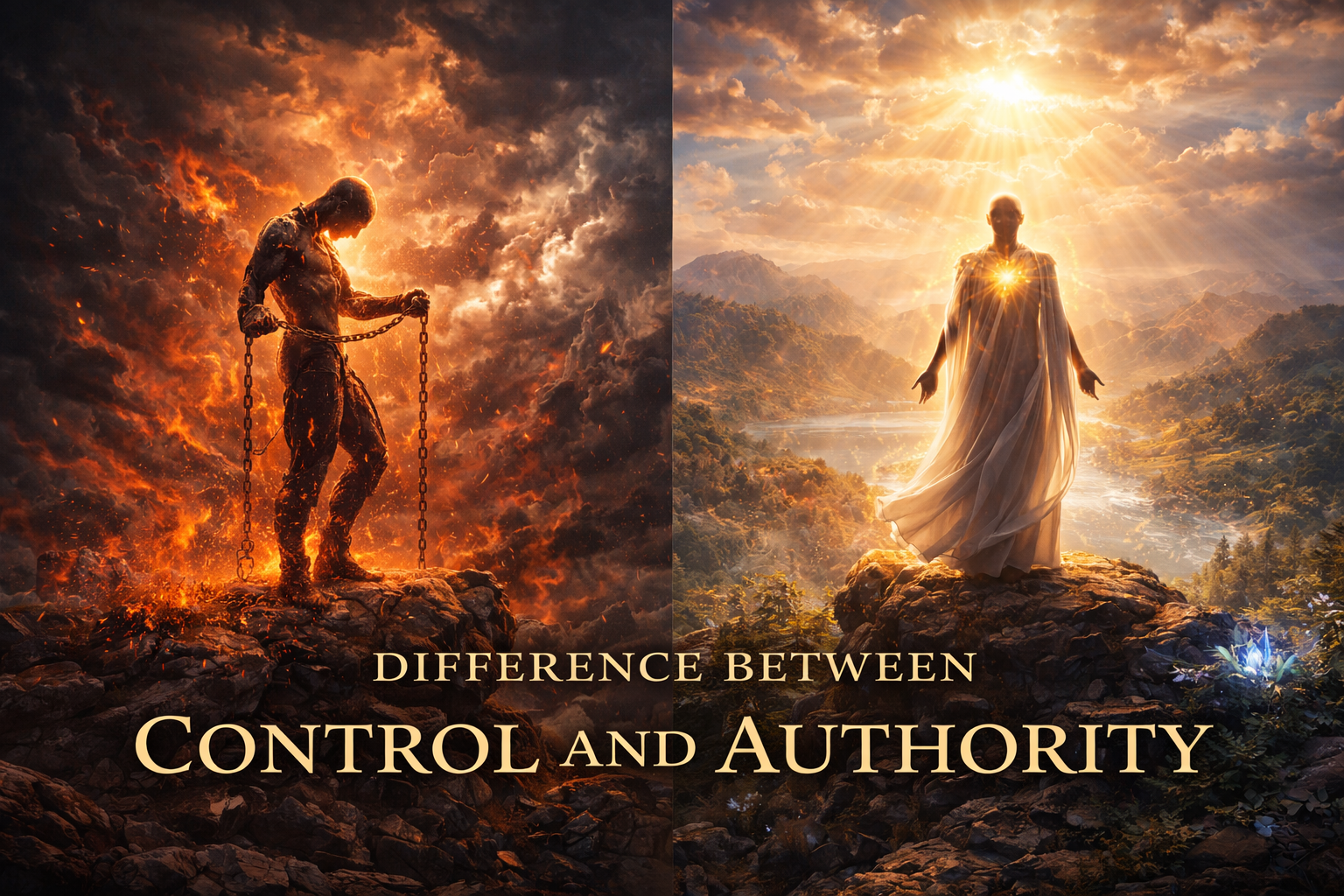
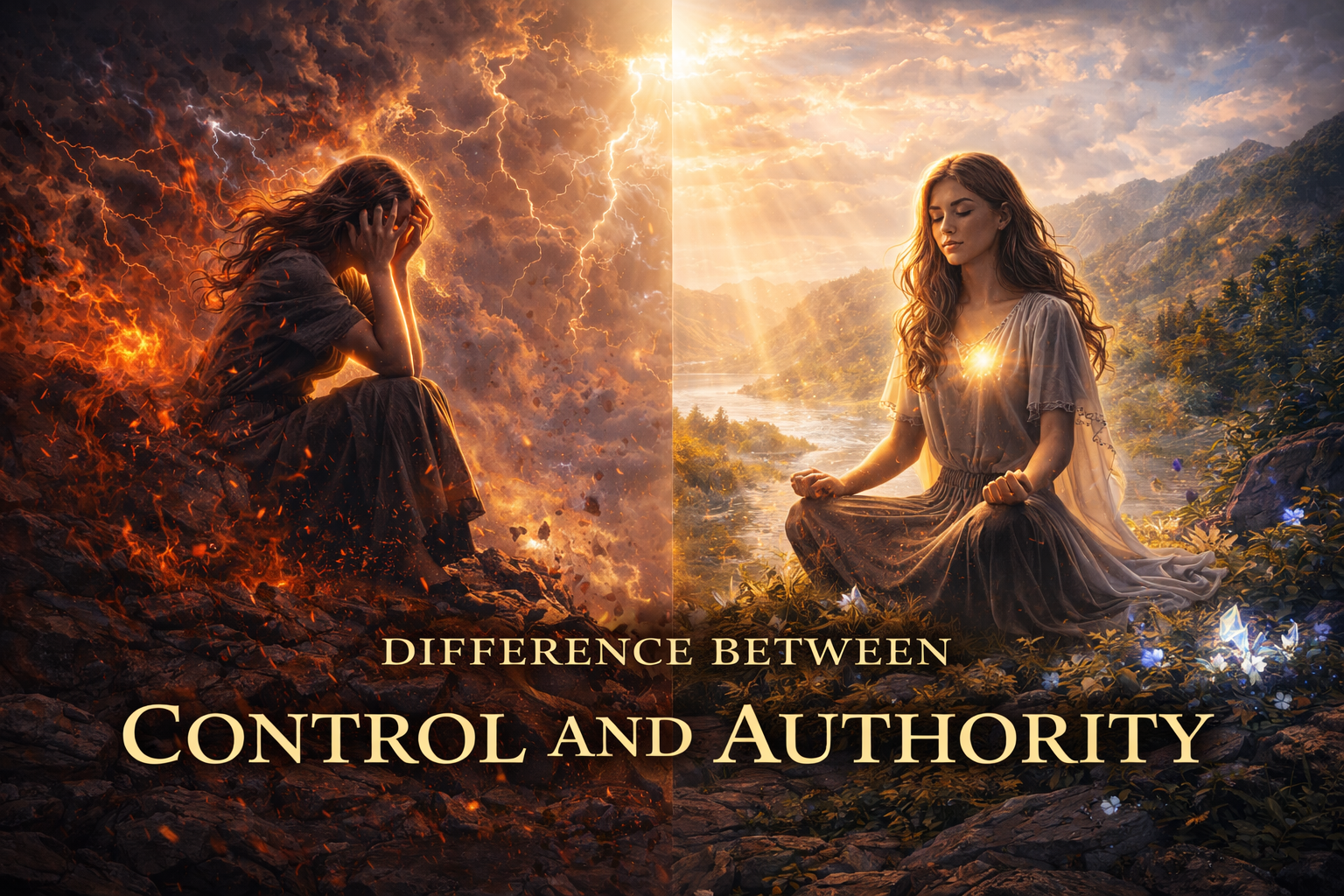
Difference Between Control and Authority
Learn the difference between control and authority, and discover how peaceful inner leadership creates trust, steadiness, and emotional balance.
Control Is Not Authority
Control and authority are not the same.
Many people confuse inner authority with control. They think self-leadership means tightening everything, managing every variable, forcing constant discipline, and staying on guard against anything unexpected.
But control and authority do not carry the same spirit.
Control is usually rooted in fear. It grips because it is afraid of what may happen without force. It needs certainty, immediate compliance, and visible order at all times. It tries to hold life so tightly that there is no room left to breathe.
Authority is different.
Authority does not panic.
Authority does not need to prove itself every minute.
Authority is grounded. It knows what matters. It leads with steadiness, clarity, and truth.
Inner authority is not the harsh voice that bullies you into obedience. It is the wiser voice that helps you return to alignment. It does not try to dominate your inner world. It brings your inner world into order.
That is the difference.
Control grips.
Authority leads.
Control Presses, Authority Directs
Control often feels urgent.
It says things like, “Fix this now.” “Do more.” “Hold it together.” “Do not let anything slip.” “Keep everything under control.”
Even when control sounds productive, its energy is usually pressure. It pushes you to move from fear instead of wisdom. It may create motion, but it rarely creates peace.
Authority moves differently.
Authority does not always shout. In fact, it often speaks quietly.
It says, “Pause.”
“Tell the truth.”
“This matters.”
“That does not belong here.”
“You do not need to betray yourself to keep the peace.”
Authority directs instead of dominates.
Control wants total predictability.
Authority wants alignment.
Control asks, “How can I make everything behave?”
Authority asks, “What is the wise thing to do from here?”
That question changes the atmosphere within you. It moves you out of panic and back into presence. It reminds you that you do not have to squeeze life into submission in order to lead yourself well.
Trust Cannot Be Forced
Control does not create deep trust.
When you try to control yourself harshly, your inner world does not become peaceful. It becomes tense. Your mind may obey for a little while, but your body begins to carry strain. Your spirit may feel confined. You may become productive, but not deeply well.
That is why pressure is not the same as peace.
Authority creates something control never can.
Trust.
When you lead yourself with true authority, your inner world begins to learn that you are safe to follow. You are not ruling through shame, force, panic, or self-rejection. You are making decisions from clarity. You are holding limits without cruelty. You are protecting peace without becoming rigid.
This matters because your inner life responds to the quality of your leadership.
If you lead yourself with constant pressure, you may stay in motion but lose connection.
If you lead yourself with grounded authority, you build peace and trust at the same time.
You begin to believe yourself again.
You begin to feel safer inside your own life.
You begin to understand that self-leadership does not have to feel like war within you. It can feel like order returning.
The Strength of True Authority
True authority is strong enough to stay calm.
One of the clearest signs of real authority is that it does not need constant drama. It can be still without becoming passive. It can be firm without becoming harsh. It can say no without guilt and yes without fear.
It is not flimsy.
It is not frantic.
It is rooted.
This kind of authority is deeply needed in a loud world. When everything around you is pulling for your attention, inner authority helps you stop reacting to every demand, every emotion, and every fear as if it deserves full control over your life.
You begin to realize that peace is not weakness.
Calm is not passivity.
Softness is not surrender.
Sometimes the most powerful thing you can do is stay rooted enough not to be ruled by pressure.
Inner authority allows you to move through life with a clearer center. You can listen without absorbing everything. You can care without carrying what was never yours. You can be flexible without losing yourself. You can be kind without becoming available to every form of disorder.
That is not control.
That is leadership.
Gentle Reflection
The difference between control and authority can change the way you relate to yourself.
Control says, “I must force myself into peace.”
Authority says, “I can lead myself back into alignment.”
Control tightens.
Authority steadies.
Control fears what might happen.
Authority trusts wisdom enough to move one honest step at a time.
You do not need to control every part of yourself into silence. You need to lead yourself with truth, calm, courage, and care. You need the kind of inner authority that can listen well, decide clearly, and return to peace without demanding perfection.
Ask yourself today:
Am I trying to control myself into peace?
Where have I been using pressure instead of wisdom?
What would change if I led myself with calm authority?
What decision would feel different if I made it from alignment instead of fear?
If this message resonated, you may also enjoy:
Letting Feelings Speak Without Letting Them Rule
Your Inner Council Mind, Body, Spirit
Your Soulful Pathways ↑
Discover more series pages for you in Your Soulful Pathways ↑

Your Inner Council Mind Body Spirit
Explore the relationship between mind, body, and spirit, and learn how inner harmony creates stronger self-trust, peace, and alignment.
Whole Within Yourself
You are more than one moving part.
Your inner world is not made of one voice alone. You are not just a mind thinking thoughts. You are not just a body carrying stress. You are not just a spirit reaching for meaning. You are all of these at once, and each part affects the others.
That is why inner leadership matters so much.
When one part of you is carrying too much while the others are ignored, life can start to feel off balance. Your mind may be racing while your body is asking for rest. Your spirit may be longing for peace while your thoughts keep circling pressure. You may be trying to move forward while one part of you is quietly asking to be heard first.
This is why it helps to understand your inner world as a council.
Your mind, body, and spirit each have something to say.
Each one carries wisdom.
Each one deserves attention.
But they were never meant to live in conflict. They were meant to come into alignment under wise inner leadership.
The Mind Gathers Meaning
Your mind helps you interpret life.
It notices patterns, asks questions, remembers experiences, solves problems, and tries to make sense of what is happening. It can be a beautiful gift of insight, clarity, discernment, creativity, and direction.
A healthy mind helps you see what matters.
It helps you learn from the past without living there.
It helps you imagine the future without being ruled by it.
It helps you choose with wisdom instead of simply reacting to the loudest feeling in the room.
But when the mind is left without inner grounding, it can become overwhelmed. It can circle the same concern again and again. It can build stories from fear. It can try to manage everything at once until peace feels far away.
The mind should be listened to, but not worshiped.
It is wise when aligned.
It becomes heavy when it tries to carry the whole kingdom alone.
Inner leadership allows the mind to bring information, but not become the only voice in charge.
The Body Carries Truth
Your body is often speaking before your words ever do.
It carries tension, fatigue, relief, instinct, warning, energy, and quiet signals that deserve attention. Sometimes your body knows you are overloaded before your mind admits it. Sometimes your body feels the weight of a room before you can explain why. Sometimes your body is simply asking for sleep, stillness, nourishment, movement, sunlight, breath, or care.
Many people try to lead themselves while ignoring the body completely.
They push through exhaustion.
They override warning signs.
They treat rest as an interruption instead of wisdom.
But the body is not an inconvenience. It is part of your inner council. It was never meant to be dragged behind your life as if it has nothing important to say.
Your body helps tell the truth about your pace, your limits, your energy, and your needs.
When you begin listening to the body with kindness, you stop treating yourself like a machine. You begin relating to yourself like a whole being.
That is part of inner leadership too.
The Spirit Remembers What Matters
Your spirit reaches beyond survival.
It longs for truth, peace, meaning, alignment, beauty, purpose, and communion with what is sacred. It is the part of you that knows when something is technically working but still does not feel right for your soul. It is the part that pulls you toward what is deeper, cleaner, wiser, and more real.
Your spirit remembers what matters when life becomes busy.
It remembers your values when pressure gets loud.
It remembers peace when your thoughts are scattered.
It remembers God, truth, and meaning when the world tries to reduce everything to tasks, outcomes, and appearances.
When the spirit is neglected, life can become hollow even if you stay productive. You may be functioning outwardly while inwardly feeling disconnected from your center.
That disconnection is not failure.
It is an invitation to return.
Your spirit does not need noise to be powerful. Often, it speaks through stillness, conviction, longing, gratitude, beauty, and the quiet knowing that something inside you is asking to be honored again.
A Council Led by Wisdom
Inner harmony changes everything.
Self-leadership is not about letting one part dominate the others. It is about listening well and leading wisely.
Your mind may bring insight.
Your body may bring truth.
Your spirit may bring direction.
Together, they give you a fuller picture of what is real.
This does not mean every part gets equal control. It means every part receives honest attention. Leadership still matters. The goal is not inner confusion with three voices competing for the throne. The goal is wise inner order.
When your mind is respected, your body is cared for, and your spirit is heard, your life begins to feel less divided. Decisions become clearer. Reactions soften. Peace comes closer. You stop forcing yourself forward without listening to what your whole being is trying to say.
Your inner council does not need constant conflict.
It needs a leader who knows how to listen.
It needs the deeper, steadier part of you to gather the voices, honor what is true, and choose from wisdom.
Ask yourself today:
Which part of me has been ignored lately?
What has my mind been trying to tell me?
What has my body been asking for?
What has my spirit been quietly remembering?
What might change if I listened with kindness and led with wisdom?
If this message resonated, you may also enjoy:
Difference Between Control and Authority
Letting Feelings Speak Without Letting Them Rule
Your Soulful Pathways ↑
Discover more series pages for you in Your Soulful Pathways ↑

Part of You Meant to Lead
Discover the steady part of you meant to lead your life with peace, self-trust, and inner authority instead of fear or emotional chaos.
Inner Leadership, Self-Trust, and Choosing Wisdom Over Fear
There is a deeper self in you.
A steady center beneath the noise.
A part of you capable of listening to fear without obeying it, feeling emotion without being ruled by it, and making decisions from wisdom instead of urgency.
A part of you that can pause when everything feels loud.
A part of you that remembers what matters when emotions pull in ten directions.
A part of you that can listen for truth, recognize what God may be showing you, and choose the next step without handing your life over to panic.
This is inner leadership.
And this is the part of you meant to lead.
Many people live from whichever inner voice is loudest in the moment.
Fear rises, and fear takes over.
Insecurity speaks, and everything bends around it.
Anger appears, and anger decides what happens next.
The need for approval enters the room, and suddenly your own truth becomes negotiable.
When this happens often, life can begin to feel reactive. You may still be functioning, making decisions, and handling responsibilities, but inwardly it can feel as though the wrong voice keeps running the room.
Inner leadership asks a different question:
Who in me is leading right now?
That question can change everything.
It helps you notice whether your life is being led by wisdom or worry, truth or pressure, peace or panic, faith or fear, your deeper knowing or a passing emotional storm.
The part of you meant to lead is not necessarily the loudest.
It is often the steadiest.
What Is Inner Leadership?
Inner leadership is the ability to remain connected to your values, wisdom, faith, discernment, and deeper knowing even when emotions or circumstances become loud.
It does not require you to control every thought.
It does not ask you to become emotionless.
It does not mean you will never feel afraid, uncertain, hurt, angry, disappointed, or overwhelmed.
Inner leadership means those experiences can enter the room without automatically being placed in charge of it.
You can feel fear and still choose courage.
You can feel angry and still choose your words wisely.
You can feel hurt and still refuse to make a permanent decision from a temporary wound.
You can feel pressure and still pause.
You can feel uncertain and still listen for truth.
You can want someone's approval and still refuse to abandon yourself to receive it.
This is one of the great differences between control and inner authority.
Control says: I need everything around me to behave a certain way before I can be at peace.
Inner leadership says: I can remain rooted even when I cannot control everything around me.
Control tries to govern the world.
Inner authority learns to govern what has actually been entrusted to you.
Your responses.
Your choices.
Your attention.
Your words.
Your boundaries.
Your direction.
Your willingness to listen.
Your willingness to wait.
Your willingness to choose what is true.
That is where your authority lives.
Feelings Can Speak Without Taking the Throne
Your emotions matter.
They carry information.
They can reveal hurt, longing, needs, patterns, tenderness, desire, disappointment, joy, hope, and places inside you that deserve attention.
They can point toward what needs care, clarity, healing, honesty, or change.
But feelings do not have to sit on the throne of your life.
They are messengers, not monarchs.
Fear may have something to tell you.
Anger may have something to tell you.
Sadness may have something to tell you.
Excitement may have something to tell you.
Even jealousy, disappointment, frustration, and uncertainty can reveal something worth examining.
Inner leadership does not silence these voices.
It listens.
Then it discerns.
Because listening to a feeling is different from obeying it.
A moment of rejection does not have to define your identity.
One wave of fear does not have to decide your future.
One hard memory does not have to determine what you expect from every new relationship.
One uncomfortable conversation does not have to become proof that everything is falling apart.
One emotional day does not have to become a verdict on your entire life.
The deeper part of you can listen while still asking:
What is this feeling showing me?
What is actually true?
What belongs to this moment, and what belongs to the past?
What would be wise?
Where is peace leading me?
What would I choose if fear were not making the decision?
That is inner authority.
Fear Can Advise You Without Governing You
Fear can be persuasive because it often speaks with urgency.
Do it now.
Fix this immediately.
Say yes.
Get away.
Do not risk it.
Do not change.
What if something goes wrong?
What if they leave?
What if you fail?
Fear loves a deadline.
Wisdom is often willing to breathe.
That does not make fear useless.
Sometimes fear alerts you to something important. Sometimes it notices risk. Sometimes it reminds you to slow down and look more carefully.
But fear does not automatically become truth simply because it speaks loudly.
You can hear its concern without giving it final authority.
You can pause.
Look at the whole picture.
Ask what is true.
Seek wisdom.
Pray.
Then decide.
Fear can have a voice without having the throne.
The Voice Qualified to Lead
The part of you meant to lead does not usually shout.
It does not scramble.
It does not demand relief at any cost.
It does not rush you into decisions simply to escape discomfort.
It does not need to prove itself through control, force, perfection, or endless explanation.
It is grounded.
Honest.
Steady.
Aware.
Patient enough to listen.
Strong enough to tell the truth.
Humble enough to change direction when new truth appears.
This deeper self can look at your emotions and say:
I hear you, but I will not let you drive us somewhere untrue.
It remembers your values when your mind is spinning.
It remembers what matters when emotions pull in ten directions.
It remembers who you are when old fear tries to rename you.
True inner leadership can be compassionate and strong at the same time.
It knows when you need rest.
It knows when you need honesty.
It knows when you need courage.
It knows when you need a boundary.
It knows when you need to wait.
It knows when you need to stop negotiating with something that continually pulls you away from peace.
This is the voice qualified to lead.
Not because it is loud.
Because it is aligned.
How to Recognize the Steadier Voice
The wiser voice within you often feels different from fear and pressure.
It may not always give you the answer you hoped for, but it usually does not have to frighten you into listening.
The steadier voice often:
Allows you to pause.
Does not demand an immediate answer when one is unnecessary.
Can acknowledge uncertainty without collapsing into panic.
Remembers your values.
Leaves room for prayer and discernment.
Can hold compassion and boundaries at the same time.
Does not require you to betray yourself to keep someone else comfortable.
Does not need endless justification.
Can admit when you were wrong.
Can change direction without turning the change into failure.
Looks beyond immediate relief toward what will still feel true tomorrow.
Leaves you clearer rather than more tangled.
Sometimes this voice is surprisingly simple.
Wait.
Rest.
Tell the truth.
Do not answer yet.
This is not yours to carry.
Apologize.
Try again.
Walk away.
Stay.
Ask for help.
Give it time.
Trust God here.
The deepest guidance is not always complicated.
Sometimes the wisdom you need has been underneath the noise the entire time.
Inner Leadership in Everyday Life
Inner leadership becomes easier to understand when you see what it looks like in ordinary moments.
Someone disappoints you.
Fear says:
Fix this immediately or you may lose them.
Inner leadership says:
I can pause before deciding what this means.
Someone asks something of you.
People-pleasing says:
Say yes so nobody is disappointed.
Inner leadership says:
Let me decide whether this is actually mine to carry.
Something goes wrong.
Panic says:
Everything is falling apart.
Inner leadership asks:
What actually needs my attention right now?
You make a mistake.
Shame says:
This proves something terrible about you.
Inner leadership says:
I can take responsibility without turning a mistake into an identity.
Someone misunderstands you.
Insecurity says:
Explain until they approve of you.
Inner leadership says:
I can communicate clearly without surrendering my peace to someone's interpretation of me.
An opportunity appears.
Fear says:
Stay where it is familiar.
Impulse says:
Jump immediately before you lose it.
Inner leadership says:
Let me listen, pray, gather what I need to know, and decide from clarity.
These differences may seem small.
But small differences repeated over time can shape an entire life.
The Inner Leadership Check-In
Before an important reaction, conversation, or decision, pause.
Ask:
Who in me is leading right now?
Fear?
Urgency?
Anger?
Shame?
Exhaustion?
The need for approval?
The need to prove something?
An old wound?
A past disappointment?
Or:
Peace?
Wisdom?
Faith?
Love?
Truth?
Discernment?
Self-respect?
Then ask:
If the wisest, steadiest part of me were leading this moment, what would I do next?
Notice the wording.
Not:
What would solve my whole life?
Not:
What guarantees the outcome I want?
Not:
What will make everyone happy?
Just:
What would I do next?
Sometimes the next wise action is small.
Wait an hour.
Sleep on it.
Make the call.
Do not send the message yet.
Tell the truth.
Ask another question.
Say no.
Say yes.
Pray.
Get more information.
Rest.
Take one step.
Inner leadership often becomes clearer when you stop demanding the entire road and ask only for enough wisdom for the next step.
Inner Authority Is Different From Control
There is an important difference between authority and control.
Control often grows from the desire to manage every outcome, every response, every possibility, and every detail.
But life cannot be lived that way.
There will always be things outside your control.
Other people's choices.
Timing.
Unexpected changes.
Closed doors.
Open doors.
Delays.
Outcomes you could not predict.
Inner authority does not require mastery over all of that.
It says:
I may not control everything happening around me, but I can choose how I meet what happens.
That is strength.
You do not have to control another person's reaction in order to speak honestly.
You do not have to know the entire future in order to make today's wise decision.
You do not have to eliminate uncertainty before moving forward.
You do not have to make everyone understand you before honoring what you know.
Inner authority gives you a place to stand even while the world around you is still moving.
Inner Leadership and Faith
True inner leadership carries humility.
Sometimes leading yourself well means becoming quiet enough to recognize that you do not know everything.
It means listening.
Praying.
Discerning.
Being willing to receive wisdom.
Being willing to change.
Being willing to recognize what God may be showing you instead of allowing fear, pressure, or ego to govern you.
You can ask:
God, what is true here?
What am I not seeing clearly?
What belongs to me to do?
What do I need to release?
Where am I being led by fear instead of faith?
What would wisdom look like here?
Inner leadership is not about having every answer.
It is about becoming a wiser steward of the life you have been given.
Sometimes leadership means acting.
Sometimes leadership means waiting.
Sometimes leadership means admitting you were wrong.
Sometimes leadership means standing firm when you know something is right.
Sometimes leadership means surrendering what was never yours to control.
Wisdom knows the difference.
Strengthening Your Inner Authority
Inner authority grows through practice.
Every pause before a reaction matters.
Every honest breath matters.
Every time you choose truth over impulse, you teach your inner world who is allowed to lead.
Every time you refuse to betray your deeper knowing simply to escape discomfort, something becomes stronger.
Every time you keep a boundary you know is right, self-trust grows.
Every time you admit a mistake without turning against yourself, self-trust grows.
Every time you pause rather than reacting immediately, self-trust grows.
Every time you pray before making a decision that pressure wants made immediately, discernment grows.
Every time you honor a quiet no, a peaceful yes, or a necessary wait, your inner life becomes more trustworthy.
A new order begins to form.
Fear may still speak, but it no longer receives full command.
Old patterns may still knock, but they no longer automatically receive the keys.
Emotion may still move through you, but emotion does not automatically become direction.
These moments may seem small.
They are not.
They are how self-trust is rebuilt.
They are how peace becomes more than an occasional feeling.
They are how the inner kingdom begins to come into rightful order.
Signs Your Inner Leader Is Getting Stronger
Inner leadership does not always arrive with a dramatic breakthrough.
Often, you notice it in the way ordinary moments begin to change.
You pause before reacting.
You need less outside validation before trusting what you know.
You become more comfortable saying:
I don't know yet.
You can change your mind without believing you have failed.
You recover your peace more quickly after difficult moments.
Your yes becomes more intentional.
Your no becomes clearer.
You can hear another person's opinion without automatically turning it into your truth.
You make fewer decisions simply to escape discomfort.
You recognize when something deserves thought instead of an immediate reaction.
You become more willing to ask questions.
You become more willing to wait for clarity.
You can admit a mistake without surrendering your worth.
You begin recognizing peace as strength rather than passivity.
You stop confusing urgency with importance.
And perhaps most importantly, you begin trusting yourself to meet life as it comes.
You do not need every future answer today.
You trust that when tomorrow arrives, you can meet tomorrow with the wisdom available then.
That is a different kind of confidence.
Quiet.
Rooted.
Lived.
Self-Trust Is Built by What You Repeatedly Do
Self-trust is not believing that every instinct you have is correct.
It is knowing that you will listen to yourself honestly.
That you will examine what you feel.
That you will seek truth.
That you will correct yourself when needed.
That you will not continually abandon what you know simply because another voice becomes louder.
You build self-trust when your actions repeatedly show your inner world:
I am listening.
I will tell myself the truth.
I will seek wisdom.
I will give myself time when time is available.
I will follow through on what I know matters.
Eventually, something changes.
You stop needing every answer immediately.
You become less afraid of uncertainty.
You trust yourself to meet the next moment when it arrives.
That is a powerful kind of peace.
Your Inner Council Has Many Voices
You do not have to silence every voice inside you.
Imagine an inner council.
Your mind has something to say.
Your body has something to say.
Your emotions have something to say.
Memory has something to say.
Desire has something to say.
Experience has something to say.
Your spirit has something to say.
Faith has something to say.
Wisdom listens to the whole council.
But not every voice receives the throne simply because it spoke.
Fear can warn without ruling.
Emotion can inform without commanding.
Memory can teach without imprisoning.
Desire can inspire without controlling.
Logic can clarify without silencing the soul.
Your body can signal without writing the entire story.
Faith can remind you that what you see today may not be the whole story.
Inner leadership listens.
Then it discerns.
Then it chooses.
This is not the silencing of yourself.
It is the integration of yourself.
Different parts can be heard while the wisest part remains responsible for direction.
Gentle Reflection
The goal is not perfection.
The goal is rightful order.
When the deeper, steadier, wiser part of you begins to lead, your inner life starts to feel different.
You become less easily pulled away from yourself.
Your decisions become calmer.
Your boundaries become clearer.
Your reactions become more intentional.
Your spirit becomes steadier.
You begin trusting yourself to face difficult moments without automatically surrendering to whichever feeling arrives first.
Peace begins to feel less like somewhere you occasionally visit and more like something being built within you.
Ask yourself today:
What voice in me has been leading lately?
Is that voice truly qualified to lead my life?
Where has fear been making decisions that belong to wisdom?
What do I already know beneath the noise?
What would change if my deeper wisdom had more authority today?
What is one decision I can make from peace instead of pressure?
You do not need to answer everything today.
One honest answer may be enough to change the direction of the next step.
Frequently Asked Questions
What Is Inner Leadership?
Inner leadership is the ability to guide your choices, reactions, boundaries, attention, and direction from wisdom, values, discernment, faith, and deeper self-awareness rather than automatically reacting to fear, pressure, emotion, or outside approval.
How Do I Become a Better Leader of Myself?
Begin by creating a pause between what you feel and what you do. Notice what voice is influencing you, identify what is actually true, consider your values, pray or reflect when needed, and choose the next action that aligns with wisdom rather than immediate emotional relief.
How Can I Tell Whether Fear Is Making My Decisions?
Fear-driven decisions often carry urgency, catastrophic thinking, pressure to escape discomfort, or the feeling that something must be solved immediately. Wisdom can still recognize real risks, but it generally leaves room for information, reflection, prayer, discernment, and deliberate choice.
How Can I Make Decisions From Wisdom Instead of Emotion?
Begin by listening to the emotion rather than immediately acting on it. Ask what the feeling is showing you, what facts are actually present, what your values say, what you may need to learn, and what choice will still feel true when the emotional intensity has passed.
Can I Honor My Emotions Without Letting Them Control Me?
Yes. Emotions can be heard without automatically being obeyed. You can explore what an emotion may be revealing and then decide what response aligns with your deeper wisdom, values, faith, and circumstances.
What Is the Difference Between Inner Authority and Control?
Control attempts to manage people, circumstances, and outcomes. Inner authority focuses on what is actually yours to govern: your choices, responses, words, boundaries, attention, and direction.
How Does Self-Trust Strengthen Inner Leadership?
Self-trust grows when you repeatedly listen honestly, keep meaningful promises to yourself, honor appropriate boundaries, seek wisdom, correct course when necessary, and stop abandoning your deeper knowing simply to avoid discomfort or gain approval.
What Role Can Faith Play in Inner Leadership?
Faith can create space between fear and action. Prayer, discernment, trust in God, and willingness to listen can help you move beyond immediate reactions and consider what is true, wise, loving, and aligned.
The Part of You Meant to Lead
You are not meant to be ruled by chaos.
You are not meant to be governed by every passing mood, memory, fear, pressure, opinion, or expectation.
There is a steady self in you that knows how to lead.
There is wisdom in you deeper than fear.
There is truth in you more reliable than urgency.
There is faith available when you cannot see the whole road.
That part of you may need strengthening.
Strengthen it.
Give it room.
Listen for it.
Practice choosing from it.
Your inner kingdom does not become peaceful because every difficult voice disappears.
It becomes peaceful because those voices are finally given their rightful place.
Fear may speak.
Emotion may speak.
Memory may speak.
Desire may speak.
Uncertainty may speak.
But they do not automatically rule.
Wisdom listens.
Truth discerns.
Faith steadies.
Peace creates room.
And the part of you meant to lead makes the final decision.
That is inner leadership.
That is self-trust becoming lived.
That is your inner kingdom coming into rightful order.
If this message resonated, you may also enjoy:
Your Inner Council Mind, Body, Spirit
Difference Between Control and Authority
Alignment Isn’t Loud. It’s Consistent
Your Soulful Pathways ↑
Discover more series pages for you in Your Soulful Pathways ↑

Inner Kingdom
Inner Kingdom is a Soul2222 series about self-trust, emotional steadiness, and peaceful inner authority. Discover how leadership begins within.
Leadership Begins Inside
Leadership begins inside.
Many people spend years trying to organize the outside world while their inner world feels noisy, divided, or unsettled. They try to solve everything through pressure, speed, overthinking, or control, only to discover that peace is not found by managing appearances.
Real leadership begins within.
Inner Kingdom is a higher motivation series about self-governance, inner authority, and the sacred work of becoming trustworthy with your own life. It is about learning how to let the wisest part of you lead. It is about creating an inner life where peace has influence, truth has a voice, and your life is no longer carried away by every passing storm.
Many of us were taught how to react, survive, please, perform, and keep moving. But inner leadership is different. Inner leadership knows how to pause. It listens without surrendering to panic. It honors emotion without handing emotion the crown. It allows your deeper values, your spiritual center, and your higher wisdom to become the governing voice within you.
This is the heart of Inner Kingdom.
Rightful Order Within
Your inner world was never meant to be ruled by fear, exhaustion, old wounds, pressure, or confusion.
When the wrong voice takes the lead, life begins to feel unstable. Fear starts making decisions. Urgency sets the pace. Exhaustion shapes your reactions. Old pain writes new rules. You may still look capable on the outside, but inside, your peace feels interrupted by too many voices trying to take command.
Inner Kingdom invites you into a different way.
What if peace could take its rightful place in you?
What if self-trust could be restored?
What if you stopped handing authority to chaos and started leading from calm?
What if the deepest, truest, most God-rooted part of you became the part that carried influence?
Rightful order does not mean you become cold, rigid, or emotionally shut down. It means your inner life becomes aligned. It means every feeling can be heard, but not every feeling gets to lead. It means fear can speak, but wisdom gets the final word. It means pressure can knock, but peace decides what enters.
Peace With Authority
Peace is not weakness.
There is a kind of peace that is gentle, and there is a kind of peace that is strong. Strong peace knows when to pause, when to speak, when to let go, when to stay steady, and when to stop giving your energy away to what keeps pulling you out of alignment.
This kind of peace does not come from pretending everything is fine. It comes from inner authority.
Inner authority is not force. It is not control. It is not pushing yourself into perfection. It is the quiet strength of knowing who should be leading within you.
When your inner world has rightful order, your thoughts become clearer. Your emotions become easier to hold. Your boundaries become less confusing. Your decisions become calmer. You stop abandoning yourself to please noise, urgency, fear, or pressure.
You begin to feel the difference between a reaction and a response.
You begin to know the difference between control and true authority.
You begin to understand that calm is not passive. Calm can be powerful. Calm can be protective. Calm can be deeply wise.
The Work of Becoming Trustworthy With Your Life
Inner Kingdom is an invitation back to yourself.
Each part of this series walks through a different piece of inner restoration. You will explore what it means to let the right part of you lead, how to understand your inner world with more clarity, how to build self-trust, and how to create daily rhythms that keep peace near the center.
This is the work of becoming trustworthy with your own life.
It means learning to listen inwardly without being ruled by every inner voice. It means honoring your mind, body, and spirit as part of your inner council. It means allowing your emotions to speak without allowing them to govern your entire direction. It means choosing self-respect over self-abandonment. It means creating a steady place within you where truth can sit down and speak clearly.
Inner leadership grows through practice.
A pause before a reaction.
A truthful word instead of a pleasing one.
A calm decision instead of a pressured one.
A boundary that protects peace.
A daily check-in that asks, “What is leading me right now?”
These small moments become sacred structure. They teach your inner world that wisdom is allowed to lead here.
The Inner Kingdom Path
Inner Kingdom is not a kingdom of control.
It is a kingdom of alignment.
It is a kingdom of inner steadiness.
It is a kingdom where peace has a place, truth has a voice, and your life is no longer led by chaos.
Leadership begins inside.
And when it does, everything begins to change.
Continue through the Inner Kingdom series:
Part of You Meant to Lead
Your Inner Council Mind Body Spirit
Difference Between Control and Authority
Letting Feelings Speak Without Letting Them Rule
I Don’t Abandon Myself
Self-Trust Is the Currency of the Kingdom
Creating a Seat for Peace
Power in Calm Decisions
When You Stop Negotiating With Chaos
Daily Inner Kingdom Check-In
If this message resonated, you may also enjoy:
Your Soulful Pathways ↑
Discover more series pages for you in Your Soulful Pathways ↑