

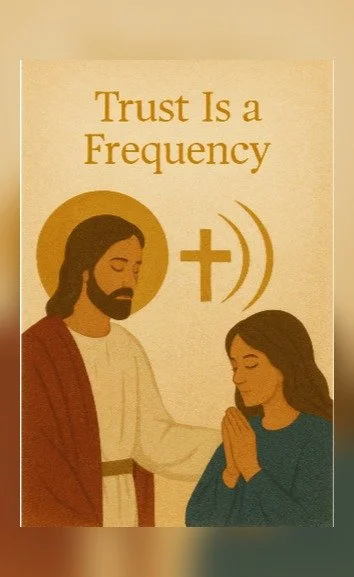
Trust Is a Frequency
Trust is a spiritual frequency. Learn how to shift from fear to faith by tuning your heart to God’s goodness and steady care.
Trust is more than a belief in your head—it’s a posture of your heart. It’s the “station” your soul is tuned to. When you’re tuned to fear, everything feels like a threat. When you’re tuned to trust, you begin to notice how often God is quietly taking care of you.
What You Tune Your Heart To
If your heart is tuned to worry, you mostly see:
What could go wrong
What hasn’t worked before
All the ways you might be disappointed
When you gently tune your heart toward God’s goodness, you start to see:
Little provisions arriving at just the right time
Conversations and verses that confirm what He’s saying
Doors that close and later make sense
The outside circumstances might not change overnight, but the frequency inside your heart does.
Practicing the Frequency of Trust in God
Trust doesn’t mean you never feel afraid. It means you choose to lean into God even while fear is present.
You can practice by:
Remembering specific moments when God carried you through what you once feared
Meditating on Scriptures about His faithfulness
Saying, “God, I don’t know how, but I know You.”
Each time you return your thoughts to His character instead of your worst-case scenarios, you strengthen the signal of trust.
Trusting God More Than Outcomes
In the end, trust is less about believing for a certain outcome and more about believing in a certain God.
Pray:
God, tune my heart to Your goodness.
When fear gets loud, remind me of who You are.
Help me trust Your heart, not just seek Your answers.
Let my life carry the quiet frequency of faith in You. Amen.
Your Soulful Pathways ↑Desktop: Hover over “Your Soulful Pathways” in the top menu to explore another series.
Mobile: Tap the menu (☰), then choose “Your Soulful Pathways.”

When Life Pauses You on Purpose
If everything has suddenly slowed or stopped, this faith-centered reflection helps you see God’s loving purpose in a pause you didn’t choose.
Sometimes God stops you where you are. Plans stall, energy drops, doors close, and everything slows down—even when you wanted to keep going.
It can feel like you’ve failed. But often, a holy pause is not God’s rejection. It’s His rescue.
God’s Loving “Slow Down”
Your soul may have been whispering, “I’m tired,” while your schedule shouted, “Just push through.” When you don’t or can’t slow yourself, God sometimes allows life to pause you gently but firmly.
That pause can come as:
A closed opportunity
A change in circumstances
A sense that He’s saying “rest” instead of “run”
He’s not trying to punish you. He’s trying to protect your heart.
Learning to Rest Instead of Resist
Our instinct is often to fight the pause—to fill every empty space, prove we’re still productive, or rush to “fix” what slowed down. But what if this season is holy ground?
In this pause, God invites you to:
Catch up on rest—body, mind, and spirit
Reflect on what wasn’t working
Bring your disappointment and frustration honestly to Him
Let Him re-center your identity in His love, not your performance
Underneath the stillness, God is quietly repairing and realigning things you can’t yet see.
The Pause Is Not the End
This chapter is not your whole story. The pause is where God prepares you for what’s next, often in deeper ways than constant motion ever could.
Pray:
Lord, I don’t fully understand this slowdown,
but I choose to believe You are with me in it.
Help me stop fighting what You’re using to heal me.
Teach me to rest in Your love,
and prepare my heart for whatever You have next. Amen.
Your Soulful Pathways ↑
Desktop: Hover over “Your Soulful Pathways” in the top menu to explore another series.
Mobile: Tap the menu (☰), then choose “Your Soulful Pathways.”

Trusting the Invisible Path
When you can’t see the whole way forward, learn how to follow God step by step and trust the invisible path He is leading you on.
Sometimes God asks you to move before you can see where the path leads. You feel a holy nudge toward change—yet the details are still hidden.
This is for the part of you that wants to say “yes” to God but wishes you could see the whole map first.
When God Leads Without Explaining Everything
God’s guidance often arrives as:
A quiet but persistent stirring
A growing discomfort where you are
A sense that a season is over before the next one appears
He doesn’t always give you explanations. He gives you invitations. The Invisible Path asks you to trust His voice more than your need for control.
Walking by Faith, One Step at a Time
Imagine a path lit by small lamps instead of one bright spotlight. God often shows you just enough light for the next step.
Ask Him:
“Lord, what is clear right now?”
“What step would honor You, even if I feel afraid?”
“Where do I sense Your peace, not just my pressure?”
You don’t have to feel fearless to obey. You just have to be willing to take one step in His direction.
Trusting the One Who Sees the Whole Story
You may not see the full route, but you are seen along the route. God goes before you, walks with you, and comes behind you.
Pray:
God, I can’t see how all of this will work out,
but You can.
Teach me to trust Your heart more than my need to understand.
Light up the next step, and give me courage to follow.
I place my future in Your hands. Amen.
Your Soulful Pathways ↑Desktop: Hover over “Your Soulful Pathways” in the top menu to explore another series.
Mobile: Tap the menu (☰), then choose “Your Soulful Pathways.”
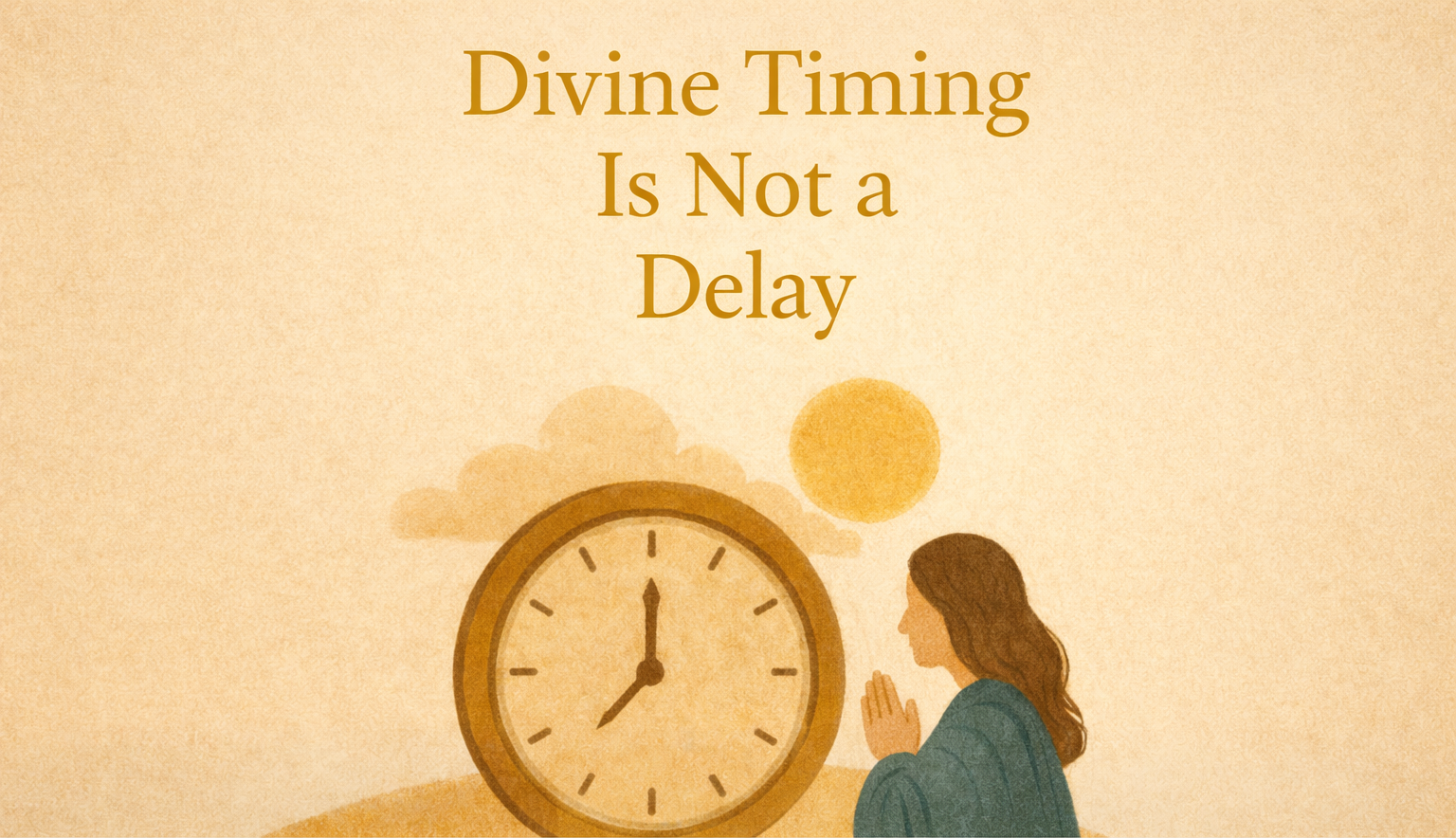
Divine Timing Is Not a Delay
Waiting can feel like a painful delay, but God’s timing is protection and preparation. Find comfort and faith while you wait on Him.
When your heart feels ready but your circumstances do not move, the waiting can feel deeply painful. You may wonder if God has forgotten you, overlooked your prayers, or changed His mind about what you hoped for. When something matters to you and it still has not arrived, the silence can feel personal.
But this is an important truth to remember: divine timing is not punishment. It is not proof that God is withholding goodness from you. It is not rejection. God’s timing is often an expression of wisdom, protection, preparation, and love.
What feels like a delay to you may actually be the exact timing that keeps you safe, aligned, and ready for what is ahead.
God is not late, even when it feels that way
From a human perspective, “late” often means not happening when I wanted it to happen. We naturally measure timing by desire, urgency, discomfort, and how long we have already been waiting. But God sees what we cannot see. He knows the full picture, including the parts that remain hidden from you right now.
His timing takes into account:
your emotional readiness
your spiritual growth
the people connected to the answer
the resources needed for the next step
the unseen details He is arranging for your good
What feels slow from your view may be perfectly timed from His. God is not reacting late. He is moving with intention.
Waiting does not mean you were forgotten
One of the hardest parts of waiting is the fear that nothing is happening. But in God’s hands, waiting is never empty. Even when your outer life seems still, something deeper may already be unfolding.
God may be protecting you from something you cannot yet see.
He may be strengthening your foundation before giving you something weighty to carry.
He may be aligning circumstances, people, healing, opportunities, or timing in ways that will make more sense later.
The absence of immediate movement does not mean the absence of God. Silence is not abandonment. Sometimes His quiet is part of the preparation.
What God grows in the waiting
The waiting season can be difficult, but it is often deeply meaningful. God uses these in-between spaces to grow qualities in you that you will need later. This does not mean the waiting is always easy or that you have to pretend to enjoy it. It means the season still has purpose.
In waiting, God often grows:
deeper trust in His heart
strength to carry what you are asking for
clearer identity and stronger boundaries
greater emotional maturity and spiritual steadiness
a more grounded, healed version of you
Sometimes you are not only waiting for the blessing. Sometimes you are becoming someone more ready to hold it well.
That becoming matters.
You can be honest with God while you wait
Trusting divine timing does not mean pretending the wait does not hurt. Faith is not denial. You can love God and still admit that the process feels hard. You can believe He is good and still tell Him that you wish things were moving sooner.
Honest prayer might sound like:
Lord, this is hard.
I do not understand the timing.
I want to trust You, but I feel tired.
This kind of honesty does not weaken your faith. It deepens your relationship with God. He is not asking for polished words. He invites your real heart.
Resting in a time you do not control
One of the deepest spiritual lessons in waiting is learning to rest in a timeline you do not control. That can feel uncomfortable, especially when your soul is longing for movement, change, or relief. But surrender is not the same as giving up. Surrender is choosing to place your hope in God even when you cannot yet see the outcome.
Resting in divine timing may look like:
releasing the need to force what is not ready
trusting that what is meant for you will not miss you
letting God prepare both you and the answer
choosing peace even when clarity has not fully arrived
This kind of trust does not always come all at once. It often grows one prayer, one breath, and one surrendered day at a time.
A delay is not always a denial
Sometimes what feels like a delay is actually protection. Sometimes it is refinement. Sometimes it is alignment. And sometimes it is love moving in a form you do not yet recognize.
God sees what you cannot.
He knows what would come too early.
He knows what would break you if it arrived before your roots were deep enough.
He knows how to prepare your heart for what you are asking for.
So if life feels paused, do not assume you have been passed over. What is taking time may still be deeply held in God’s care.
Trust the wisdom of the process
Divine timing asks you to believe that God’s wisdom is greater than your urgency. That does not erase your longing, but it does give it a place to rest. You do not have to figure everything out before you trust Him. You only need to keep bringing your heart back into His hands.
If something is truly from God, it will not miss you.
If something is delayed, there may still be holy work unfolding beneath the surface.
If something is not yet, that does not mean never.
Sometimes God’s kindest answer is not now, because He is still preparing what comes next.
Prayer
Lord, if it is from You, it will not miss me.
Prepare my heart for what I am asking for,
and prepare that blessing for me.
Help me trust that Your not yet is kindness,
not rejection.
Teach me to rest in Your wisdom,
even when I do not understand the timing. Amen.
Your Soulful Pathways ↑
Discover more series pages for you in Your Soulful Pathways ↑

When You’re Not Sure What’s Next
When your future feels foggy, learn how to rest in God, take the next right step, and trust that He still knows exactly where you’re going.
There are seasons when God doesn’t show you the whole road—only the next small patch of light. Plans fall through, doors close, and the future that once felt clear now looks blurry and uncertain.
If you’re here, you may be asking, “God, what am I supposed to do now?”
This space is a place to breathe and remember: even when you don’t know what’s next, God still does.
The Sacred Space Between Chapters
Life with God moves in chapters, but the pages between them can feel messy and confusing. We want clear instructions and timelines. God often leads us through an in-between season—where one thing is ending and the next hasn’t fully begun.
In that space:
Old roles don’t fit anymore
New doors aren’t open yet
Your spirit senses change coming, but your mind wants a map
It may feel like you’re lost, but Heaven is not confused about you. God is still writing your story.
You Don’t Need the Whole Plan, Just the Next Step
We often want God to hand us a full blueprint. Instead, He usually gives us a next step and invites us to walk by faith, not sight.
Ask Him:
“God, what is one small step of obedience I can take today?”
“What are You clearly asking me to release?”
“Where do I feel Your peace, even if I still feel afraid?”
You don’t have to solve your entire future this week. You are only asked to be faithful with the light God has given you today.
Held by the One Who Sees the Whole Way
Not knowing what’s next doesn’t mean you’re off track or forgotten. It means you’ve reached a place where your faith rests on God’s character, not your clarity.
You can pray:
God, I don’t know what is coming next,
but I choose to trust that You go before me.
Close the doors that are not from You,
open the ones that are,
and give me courage to follow Your lead.
Even in the fog, keep my heart close to Yours. Amen.
Your Soulful Pathways ↑Desktop: Hover over “Your Soulful Pathways” in the top menu to explore another series.
Mobile: Tap the menu (☰), then choose “Your Soulful Pathways.”

When Your Heart Needs Rest
For the days when your heart feels tired and overwhelmed, this reflection offers permission to rest, step back, and care for your inner world.
There comes a point when it is not only your body that feels tired. Your heart can become tired too. Tired of carrying too much. Tired of staying strong for everyone else. Tired of pretending you are fine when something inside you feels stretched thin.
Heart exhaustion is real. It can happen after long seasons of emotional stress, caregiving, disappointment, grief, overthinking, or simply holding too much for too long. You may not always have words for it. You may just notice that your usual spark feels dimmer, your patience feels shorter, and your spirit feels quieter than it used to.
If your heart feels worn out, let this be your reminder that rest is not only allowed, it is necessary.
Signs your heart is exhausted
A tired heart does not always look dramatic from the outside. Sometimes it appears quietly, woven into your daily life in ways you almost miss.
Heart-tired can look like:
feeling numb instead of deeply sad or deeply joyful
dreading conversations that once felt easy
struggling to care about things you normally value
feeling emotionally distant or easily overwhelmed
wanting to withdraw but feeling guilty for needing space
crying more easily, or not being able to cry at all
These are not signs that you are broken. They are signals. Your inner world may be asking for gentleness, stillness, and time to recover. Emotional exhaustion is often the soul’s way of saying, something in you needs care now.
A tired heart is not a weak heart
Many people have been taught to keep going no matter what. To stay useful. To stay available. To stay strong. But your heart is not a machine. It cannot run on emotional empty forever.
Resting your heart does not mean you are failing. It does not mean you are lazy, selfish, dramatic, or giving up. It means you are listening. It means you are honoring your human limits before deeper depletion takes over.
There is wisdom in noticing when your heart needs repair.
There is strength in responding with kindness instead of more pressure.
Rest is repair
When your heart needs rest, healing often begins with permission. Permission to stop performing. Permission to stop over-carrying. Permission to admit that something inside you needs quiet.
Rest for your heart might mean:
saying no more often without explaining too much
taking a break from emotional caretaking
stepping back from people or situations that constantly drain you
letting yourself cry, sleep, pray, journal, or simply be still
turning down the noise so your spirit can breathe again
These simple acts are not small. They are part of emotional restoration. They help your nervous system settle. They help your mind unclench. They help your heart begin to feel safe enough to soften.
Create small sanctuaries of quiet
You do not need a perfect retreat, a weekend away, or a dramatic life change to begin resting your heart. Often, healing begins in small daily sanctuaries. Tiny spaces where your heart is no longer being asked to carry more.
That might look like:
a few quiet minutes at the beginning or end of your day
a chair, corner, or outdoor space that becomes your place to breathe
gentle music, candlelight, prayer, or nature sounds
turning off your phone long enough to feel yourself again
placing your hand over your heart and simply noticing what is there
These moments tell your inner world something important: you are safe enough to pause now.
Speak gently to yourself
When your heart is tired, harshness only deepens the ache. This is a time for softer language. Softer expectations. Softer ways of being with yourself.
You might say:
Heart, I know you are tired. I am here now.
We do not have to carry everything today.
We do not have to be strong in this moment. We can just be.
This kind of self-talk is not silly. It is healing. The heart responds to gentleness. The more compassion you offer yourself, the easier it becomes for your system to come out of survival mode and into restoration.
Rest helps your heart remember itself
A rested heart does not become perfect overnight. But it does begin to remember its own rhythm. Its own softness. Its own ability to feel joy again.
This is what heart rest makes possible. Not instant transformation, but quiet return.
A return to what is true.
A return to what matters.
A return to the part of you that does not need to perform to be worthy.
You are allowed to step back.
You are allowed to pause.
You are allowed to be quiet for a while.
Your worth is not measured by how much you carry. It is also reflected in how kindly you care for the one carrying it.
Your Soulful Pathways ↑
Discover more series pages for you in Your Soulful Pathways ↑

The Long Road of Healing (and why it’s okay)
If your healing feels slow or endless, you’re not failing. This gentle reflection honors the long road of healing and reminds you that your pace is okay.
We love the idea of overnight breakthroughs—one moment of clarity, one powerful prayer, one decision that fixes everything. But for most hearts, healing is not a single moment. It is a long, winding road. Slow. Uneven. Holy in its own way.
If your healing feels like it’s taking too long, this page is here to exhale with you and say: it’s okay.
Healing Is Not a Race
You may look around and feel behind:
“They moved on faster than I did.”
“They bounced back. Why am I still struggling?”
“I should be over this by now.”
But there is no universal timeline for healing. Your nervous system, your history, your experiences, and your soul are uniquely yours. Comparing your pace to someone else’s only adds shame to an already tender process.
It is okay if:
You still have hard days
Certain dates or places still trigger memories
You need more time than you thought you would
Healing is not about how quickly you finish. It is about how truthfully you walk.
The Quiet Progress You May Not See
Sometimes you don’t realize how far you’ve come because your growth feels ordinary. You may not see fireworks—but look for the quiet shifts:
You pause before reacting.
You speak up where you once stayed silent.
You rest instead of pushing yourself past your limit.
You recognize red flags earlier than before.
These small changes are proof that healing is happening, even when you still feel tender.
Giving Yourself Permission to Be “In Process”
You have permission to be a work in progress:
To be both healing and hurting
To be both hopeful and uncertain
To be deeply spiritual and still triggered sometimes
You are not required to present a finished version of yourself to be worthy of love, rest, or joy.
You can say:
“I am allowed to be in the middle of my healing and still be loved, guided, and held.”
The long road of healing is not a punishment. It is often a protection—giving your heart time to rebuild itself on a stronger, truer foundation.
You are not late. You are not failing. You are simply still on the road, and that is okay.
Your Soulful Pathways ↑
Desktop: Hover over “Your Soulful Pathways” in the top menu to explore another series.
Mobile: Tap the menu (☰), then choose “Your Soulful Pathways.”
Learning to Trust Yourself Again
After hurt, regret, or ignored intuition, it’s possible to trust yourself again. This gentle reflection helps you rebuild self-trust from the inside out.
There are moments in life that shake your confidence in your own judgment—relationships that went wrong, choices you regret, seasons where you ignored your intuition and paid the price. Over time, you might start to believe, “I can’t trust myself.”
This page is here to remind you: self-trust can be rebuilt. Gently. Slowly. Honestly.
When Your Inner Voice Went Quiet
Sometimes, your inner voice didn’t actually disappear—it was just overruled:
You knew something felt off, but you stayed anyway.
You sensed a “no,” but said “yes” to keep the peace.
You felt your body tighten, but you told yourself you were overreacting.
After a while, it can feel safer to disconnect from your own knowing. Yet a life lived far from your inner truth eventually becomes very heavy.
Making Space to Hear Yourself Again
Learning to trust yourself again begins with listening—without immediately dismissing what you hear.
You might ask:
What do I really feel about this?
If I wasn’t afraid of disappointing anyone, what would I choose?
Where in my body do I feel a “yes”? Where do I feel a “no”?
Write down what comes up. Don’t analyze it yet. Just notice. Awareness of your internal signals is the foundation of self-trust.
Forgiving Past Versions of You
It is hard to trust yourself when you’re still angry at who you used to be. But that past version of you was doing the best they could with what they knew at the time.
You might whisper:
“I forgive myself for not knowing then what I know now. I was trying to survive.”
Self-forgiveness doesn’t erase consequences, but it softens the harshness inside. It says, “I will learn from this, not condemn myself forever because of it.”
As you practice listening, honoring your feelings, setting small boundaries, and forgiving your missteps, you begin to feel something sacred returning: the sense that you can rely on yourself.
You may not get everything right. No one does. But you will no longer abandon yourself. And that is the deepest form of trust.
Your Soulful Pathways ↑
Desktop: Hover over “Your Soulful Pathways” in the top menu to explore another series.
Mobile: Tap the menu (☰), then choose “Your Soulful Pathways.”
Healing Through Awareness
Awareness is the first step of emotional healing. Learn how gently noticing your patterns, pain, and truth can become the doorway to real inner change.
Most change begins with a single, honest moment of awareness: “Something isn’t right inside of me, and I can’t keep ignoring it.” Awareness can feel uncomfortable at first. It shines a light into places you’ve kept in the dark. But it is also the beginning of true healing.
Seeing What You Used to Numb
For a long time, survival may have meant:
Pushing your feelings down
Distracting yourself with busyness
Shrugging off painful moments with, “It’s fine, I’m fine”
Awareness interrupts that pattern. It invites you to pause and really notice:
What makes your chest tighten
What drains your energy
What you say “yes” to when you mean “no”
This is not about judging yourself. It’s about finally listening to the signals your soul has been sending for years.
Naming What You’re Carrying
Healing deepens when you start to name, out loud or on paper, what’s really going on:
“I feel invisible in this relationship.”
“I am exhausted from pretending I’m okay.”
“That experience from years ago still affects how I see myself.”
Naming your truth doesn’t make it worse. It makes it clearer. It gives you something solid to work with, instead of a vague heaviness you can’t quite explain.
Awareness brings shape to your pain—and what has shape can be held, tended, and slowly transformed.
Letting Awareness Guide Your Next Gentle Step
Awareness alone is not the final destination. It’s a compass. Once you see more clearly, you can choose different paths:
If you notice constant self-criticism, you can gently practice self-compassion.
If you see a pattern of one-sided relationships, you can explore boundaries.
If you recognize old trauma, you can reach out for support—from a therapist, coach, or trusted friend.
You don’t have to fix everything at once. You only need to honor what you now see, and take one small, aligned step in response.
Awareness is not meant to shame you. It is meant to wake you. And as you wake, you begin to remember: you are worthy of a life that feels honest, peaceful, and true to your heart.
Your Soulful Pathways ↑
Desktop: Hover over “Your Soulful Pathways” in the top menu to explore another series.
Mobile: Tap the menu (☰), then choose “Your Soulful Pathways.”

Becoming Your Own Safe Place
Learn how to create emotional safety within yourself—through self-trust, boundaries, and gentle reparenting of your own heart.
For much of your life, you may have searched for safety in other people’s approval, consistency, or presence. When they stayed, you felt secure. When they left or changed, your world shook. This page is about learning how to become a place of safety for yourself.
What Safety Really Feels Like
Safety is more than locked doors and quiet rooms. True emotional safety feels like:
Being able to feel your feelings without being shamed
Knowing you won’t abandon yourself when things get hard
Trusting that you will protect your own boundaries
Becoming your own safe place doesn’t mean you don’t need anyone. It means your peace is no longer completely dependent on what others do or don’t do.
Reparenting Your Heart
Many of us were never taught how to comfort ourselves, how to self-soothe, or how to speak kindly inside our own minds. So we learn it now, as adults.
You can begin to “reparent” yourself by:
Checking in with your feelings instead of numbing them
Saying, “I’m here for you,” to your own heart
Creating small rituals of care—making tea, stepping outside, journaling honestly
Each small act says, “I will not abandon you again.” And your nervous system starts to believe that.
Setting Boundaries as an Act of Self-Love
Becoming your own safe place also means learning where you end and others begin. Not everyone gets to have full access to your heart. Not every request deserves a “yes.”
Boundaries are not walls; they are doors with locks and keys. You get to decide who enters your life deeply, and under what conditions. This is not selfish. It is holy stewardship of your heart.
As you practice, you will begin to feel something new:
A quiet strength. A steady inner ground. A sense that no matter what happens around you, you will still be there for you.
Your Soulful Pathways ↑
Desktop: Hover over “Your Soulful Pathways” in the top menu to explore another series.
Mobile: Tap the menu (☰), then choose “Your Soulful Pathways.”

Releasing What Hurt You
A gentle guide to releasing the pain of the past—without minimizing it—so your heart can breathe again and make space for healing.
Letting go is one of the hardest parts of healing. Especially when what hurt you feels unforgettable. This page is not about pretending the pain never happened. It’s about learning how to release its grip on your heart, one gentle layer at a time.
Letting Go Is Not Forgetting
Releasing what hurt you is not:
Saying it was okay
Erasing the memory
Allowing the same harm again
Instead, it is a choice to stop carrying the weight alone. It is your way of saying, “I will not let this define the rest of my story.”
You can honor what happened and still choose freedom. You can remember and still move forward.
Making Space for Your Feelings First
Before you can release, you often have to feel. Not all at once, not in a tidal wave—but in safe, manageable waves of truth.
You might:
Journal what you wish you could’ve said
Cry without apologizing to yourself for being “too emotional”
Admit, “That hurt more than I wanted to admit.”
Your feelings are not the enemy. They are the doorway through which the pain can finally loosen its hold.
Handing What You Can’t Carry to Something Higher
There are parts of healing you can do, and parts that feel too big. For the “too big” parts, you are allowed to hand them over—to God, to the Universe, to Love itself.
You might say:
“I don’t know how to fully let this go, but I’m willing. Help me release what is no longer meant to live in my heart.”
Releasing is rarely one moment. It’s a process. Some days you’ll feel light; other days, the old weight may return briefly. This does not mean you’ve failed. It means you are human, learning how to live unburdened.
You deserve a life that is not built around your wound, but around your healing.
Your Soulful Pathways ↑
Desktop: Hover over “Your Soulful Pathways” in the top menu to explore another series.
Mobile: Tap the menu (☰), then choose “Your Soulful Pathways.”

Self-Compassion as Medicine
Learn how self-compassion becomes real emotional medicine—softening self-criticism, honoring your humanity, and helping your heart heal.
There are seasons when the way you speak to yourself becomes part of what is hurting you.
Not because you are trying to be cruel, but because you may have learned that pressure is the only way to keep going. You may have believed that if you were hard enough on yourself, you would stay productive, avoid mistakes, or become stronger. But over time, constant self-criticism can quietly wear down the heart. It can make healing feel farther away, not closer.
Self-compassion is not weakness. It is not laziness, avoidance, or letting yourself off the hook. It is a way of tending to your inner world with honesty and care. It is medicine for the parts of you that are tired from carrying too much without gentleness.
Why self-criticism does not create real healing
Many people were taught to motivate themselves through shame.
They learned inner language like this:
“I should be over this by now.”
“I always mess things up.”
“I need to do better.”
“What is wrong with me?”
At first, this kind of thinking can seem useful because it feels sharp and urgent. It creates the illusion of control. But shame rarely produces lasting peace or meaningful growth. More often, it keeps you trapped in cycles of self-blame, anxiety, and emotional exhaustion.
When you are always bracing against your own thoughts, your nervous system never fully gets to rest. Your body stays tense. Your heart stays guarded. Your spirit begins to believe that love must be earned through perfection.
That is not healing.
Healing begins when truth is paired with kindness. You can acknowledge where you are struggling without turning against yourself in the process.
What self-compassion really means
Self-compassion is the practice of responding to your pain, mistakes, and limitations with understanding instead of harshness.
It does not mean pretending everything is fine.
It does not mean excusing behavior that needs to change.
It does not mean avoiding responsibility.
It means you stay connected to your own humanity while you grow.
Self-compassion says:
“That hurt more than I expected.”
“I am still learning.”
“I can be honest with myself without being cruel.”
“I am allowed to need rest, support, and grace.”
This kind of inner language creates space for repair. It helps you come back to yourself instead of abandoning yourself the moment life feels heavy.
Speaking to yourself like someone you love
Think about how you would respond to someone you deeply care about if they were struggling.
You would probably not shame them for being tired.
You would not tell them they are failing because they need time.
You would not use their pain as proof that they are not enough.
You would soften.
You would listen.
You would remind them that difficult seasons do not erase their worth.
That same tenderness belongs to you too.
For many people, self-compassion feels unfamiliar at first. It may even feel uncomfortable. But that does not mean it is wrong. It simply means you are learning a new way to be with yourself.
Sometimes healing starts with saying words you do not fully believe yet, but need to hear anyway:
“This is hard, and I am allowed to be gentle with myself.”
“My feelings make sense.”
“I deserve the same compassion I so freely offer others.”
Gentle presence is part of the medicine
Self-compassion is not always dramatic. Often it is quiet. It looks like pausing instead of spiraling. It looks like resting without guilt. It looks like noticing your inner critic and choosing not to hand it the microphone.
You do not have to fight every harsh thought. You can simply introduce a different voice. A wiser one. A softer one. One that says, “I see you trying. I see how much this matters to you. Stay here. Do not leave yourself now.”
Place a hand over your heart if you need to.
Take one slow breath.
Let yourself be human.
Over time, this gentle presence becomes its own kind of medicine. Steady. Honest. Healing. Real.
You may not be used to treating yourself with kindness, but that kindness can still begin today. And sometimes the way forward is not through more pressure, but through compassion deep enough to help your whole being exhale.
Your Soulful Pathways ↑
Discover more series pages for you in Your Soulful Pathways ↑

Healing the Wounded Heart
A soft, soul-centered reflection for those carrying invisible heartbreak—honoring your pain, embracing slow healing, and letting love back in.
A wounded heart does not always cry loudly. Sometimes it keeps moving through the day quietly, doing what is expected, smiling when needed, and carrying pain that no one else can fully see. From the outside, you may look fine. Inside, there may still be disappointment, betrayal, grief, rejection, or emotional exhaustion that has not fully healed.
If you are here, your heart may be carrying invisible bruises. This page is a gentle place to begin. Healing a wounded heart does not happen through denial, pressure, or pretending you are over it before you truly are. It begins with honesty, tenderness, and giving your pain permission to be seen.
Honoring what hurt you
Healing starts with truth. Not dramatic truth. Not performative truth. Just honest truth.
You may need to admit:
That moment hurt me more than I realized.
That season was heavier than I let myself acknowledge.
That relationship left a deeper mark than I wanted to admit.
These truths matter. Pain that is ignored does not disappear. It often settles deeper into the body, the emotions, and the nervous system. A wounded heart needs space to tell the truth about what happened.
Your pain is not an inconvenience. It is not weakness. It is a signal asking to be noticed, held, and slowly released. You are allowed to say, What happened was not okay, and it affected me. That honesty is not a setback. It is part of healing.
A wounded heart often learns to survive quietly
Sometimes the hardest pain is the pain that keeps functioning. You may still get things done. You may still show up for others. You may still be dependable, thoughtful, and outwardly steady. But inside, part of you may feel guarded, tired, or numb.
This is common after emotional hurt. The heart learns how to protect itself. It may go quiet. It may stop expecting much. It may stay alert for disappointment. None of this means you are broken. It means your heart adapted in the ways it knew how.
Healing begins when survival is no longer the only mode available to you.
Healing is not a straight line
One of the most important things to remember is that healing is rarely linear. Some days you may feel strong, clear, and hopeful. Other days you may feel like you are right back in the ache. This does not mean you have failed. It does not mean healing is not happening.
It means your heart is still in process.
Healing often looks like:
taking breaks when you used to push through
setting boundaries where you once abandoned yourself
letting yourself cry without shame
asking for help even when it feels unfamiliar
feeling a wave of emotion and choosing gentleness instead of judgment
Every one of these is a sign of healing. Progress is not always loud. Sometimes it looks like responding to your pain differently than you used to.
Why the heart needs gentleness
A wounded heart does not heal well under harshness. It does not heal through constant self-criticism, emotional rushing, or pressure to be okay before it is ready. The heart heals through safety, honesty, patience, and compassion.
This is why gentleness matters so much.
Gentleness sounds like:
I am allowed to take my time.
I do not need to minimize what hurt me.
I can be healing even if I still have tender days.
I do not need to earn rest while I recover.
These small inner shifts create emotional safety. And emotional safety is where deeper healing begins.
Letting love back in slowly
A wounded heart often closes for protection. That was wise when the pain was fresh. Guarding your heart may have helped you survive a season that felt overwhelming, disappointing, or unsafe. But as healing begins, you are allowed to open again, slowly and carefully.
Not all at once.
Not for everyone.
Not beyond your pace.
Begin with small things:
letting in kindness from safe people
receiving care without immediately deflecting it
accepting a compliment without dismissing it
believing that peace and goodness are still possible for you
noticing where you feel safe, steady, and emotionally respected
This is how trust begins to return. Little by little, your heart learns that it does not have to stay closed forever.
You are more than what hurt you
One of the deepest truths in heart healing is this: you are not your wound. What happened to you matters, but it is not the whole story of who you are. Your pain is real, but it is not your identity.
You are the soul that survived it.
You are the heart still learning how to open again.
You are the person becoming softer, wiser, and more whole through the healing process.
There is no deadline for this journey. The heart has its own sacred timing. Healing the wounded heart is not about becoming untouched by pain. It is about becoming more rooted in truth, safety, self-respect, and love than in what once broke you.
And that healing is possible, one gentle step at a time.
Your Soulful Pathways ↑
Discover more series pages for you in Your Soulful Pathways ↑

When You Don’t Feel Enough
For the days you feel small, broken, or not enough—this gentle reflection helps you see your worth with softer eyes and begin healing from within.
There are days when the world feels too loud, too demanding, and you feel too small. You look at your life, your choices, your reflection, and a quiet ache whispers, “Maybe I’m just not enough.”
This page is here to hold that ache with tenderness, not judgment. You are not alone in this feeling—and it is not the truth of who you are.
The Lie of “Not Enough”
The belief that you are not enough rarely starts with you.
It’s often planted by:
Old criticism
Comparisons
Rejection
Unmet expectations
Over time, those moments stack up and become a story you tell yourself: “If I were better, they would have stayed. If I were different, life would be easier. If I were more, I would be loved.”
But this story is incomplete. Your worth never depended on perfection, performance, or other people’s approval. It has always been quietly intact, even on your most broken days.
Seeing Yourself with Softer Eyes
Healing begins when you pause and choose a softer lens.
Ask yourself:
If my friend felt this way, what would I say to them?
What if my “not enough” is really “I am exhausted and need kindness”?
Where did I first learn to measure my worth like this?
Your tenderness, your sensitivity, your longing to be loved deeply—none of these are flaws. They are evidence that you were made to love and be loved in a genuine way.
Letting Worth Come from Within
You don’t have to earn your worth.
You don’t have to hustle for love.
You don’t have to fix everything to be worthy of rest, of joy, of being here.
Take a breath and place a hand over your heart. Even if you feel nothing, say gently:
“I am still worthy. Even here. Even now.”
You are not behind. You are not broken beyond repair. You are a soul in the middle of becoming— and that is more than enough.
Your Soulful Pathways ↑
Desktop: Hover over “Your Soulful Pathways” in the top menu to explore another series.
Mobile: Tap the menu (☰), then choose “Your Soulful Pathways.”
Manifestation as an Energy, Not a Task
Manifestation isn’t a checklist — it’s an energy you live from. Step into flow, alignment, and ease with this heart-centered perspective. #ManifestationEnergy #SpiritualFlow #AlignedManifesting #BeTheVibration #Soul2222
It’s not about doing more — it’s about being more aligned.
Manifestation is often misunderstood as a series of tasks: write the script, make the vision board, say the affirmation, visualize, repeat. But manifestation was never meant to be a performance. It’s not a checklist. It’s not about “doing it right.”
It’s an energy. A way of being. A quiet alignment with what already belongs to you.
When you treat manifestation like a task, it becomes mechanical. You might begin chasing results, overthinking your worthiness, and wondering if you’ve done enough to “earn” the outcome. This creates tension — not flow.
But when you treat manifestation as an energy, you soften. You begin to ask:
How do I feel when I imagine this desire already here?
Does my energy match the peace, joy, or love I’m calling in?
Am I embodying what I want to receive?
That shift changes everything.
Manifestation is not about controlling the outcome. It’s about becoming the version of yourself who can naturally hold that outcome — emotionally, energetically, spiritually.
You don’t have to prove anything. You don’t have to hustle to deserve what’s aligned. You simply become a match for it by nurturing your internal state.
That might look like:
Grounding into gratitude before the physical arrives
Choosing thoughts that affirm your worthiness
Releasing old beliefs about struggle or lack
Taking aligned actions that feel peaceful, not pressured
Trusting the flow, even when it’s not linear
This is where the beauty of spiritual manifestation unfolds. It’s not about doing more. It’s about doing less — but with intention. With awareness. With joy.
The energy you carry is your manifestation.
The vibration you emit is your point of attraction.
If you want to manifest abundance, practice embodying ease.
If you want to manifest love, become deeply connected to self-worth.
If you want to manifest peace, make room for stillness.
There’s no trick to it — just a return to presence. A remembering of your own power. And an honoring of your natural state of alignment.
You were never meant to manifest from exhaustion.
You were meant to manifest from truth, trust, and love.
So breathe. Be. Align. You are not behind. You are not doing it wrong.
You are a powerful creator — simply by being in harmony with your own energy.
Affirmation:
“Manifestation is who I am becoming — not what I must chase.”
Your Soulful Pathways ↑
Desktop: Hover over “Your Soulful Pathways” in the top menu to explore another series.
Mobile: Tap the menu (☰), then choose “Your Soulful Pathways.”
When the Universe Asks You to Wait
Delays are not denials. Discover the sacred meaning behind divine timing and how to find peace while you wait. #DivineTiming #TrustThePause #SpiritualPatience #UniverseKnowsBest #Soul2222
A pause is not a denial. It is often divine timing at work in places you cannot yet see.
There are moments on the path when everything seems to slow down. The signs grow quieter. The doors that once looked promising do not open. The next step feels hidden. You may find yourself standing in a strange in-between, no longer where you were, but not yet where you hoped to be. These are the moments when waiting can feel especially tender.
And yet, this pause does not mean you are forgotten.
When the Universe asks you to wait, it is not always withholding. Sometimes it is protecting. Sometimes it is preparing. Sometimes it is inviting your soul into a deeper kind of trust, one that does not depend entirely on immediate proof.
Waiting is one of the most misunderstood parts of the manifestation journey. Many people interpret it as failure, delay, punishment, or being off course. But waiting can be sacred. It can be a cocoon for the soul. A quiet chamber where something unseen is being rearranged. A divine breath between chapters.
Waiting does not mean nothing is happening
One of the hardest parts of waiting is how still it can appear from the outside.
When there is no visible movement, the mind can become restless. It may start asking whether you did something wrong. Whether you missed a sign. Whether your desires are too late, too much, or somehow not meant for you. This inner questioning can make the pause feel heavier than it really is.
But spiritual growth does not always happen where you can see it.
There is movement in the unseen.
There is alignment happening in silence.
There are seeds taking root long before the surface changes.A season of waiting may look empty, but it can be full of invisible preparation. The blessing may still be forming. The timing may still be ripening. The conditions around your manifestation may still be shifting into place. And just as importantly, something within you may still be strengthening so that when the next chapter opens, you can meet it with more steadiness, clarity, and peace.
The pause may be preparing you
It is natural to want the thing you have been hoping for as soon as possible. A new beginning. A healed relationship. Greater peace. More abundance. A clear answer. A door that finally opens. But sometimes what you are asking for carries a weight that requires deeper capacity.
The waiting season may be building that capacity in you.
Your energy may need time to realign.
Your inner world may need more healing than you realized.
Your trust may be growing roots.
Your identity may be shifting so you can receive from a new level of self-worth rather than old patterns of fear.Sometimes the manifestation is not delayed because you are doing something wrong. Sometimes it is delayed because something meaningful is being completed first. A lesson. A release. A refinement. A quiet reordering of what can support the life you are calling in.
This is why waiting can be holy ground. It is not always a gap in the story. It may be part of the story itself.
Waiting reveals what fear tries to say
Pauses often bring hidden feelings to the surface.
When life slows down, unresolved fear can become louder. You may notice impatience, doubt, comparison, self-criticism, or the temptation to force outcomes that are not ready. You may feel restless and want to push, chase, overthink, or make something happen just to escape the discomfort of uncertainty.
This is where the waiting becomes a spiritual teacher.
It reveals where you still tie your worth to outcomes.
It reveals where you still believe timing determines value.
It reveals where you still fear being forgotten, overlooked, or left behind.None of this means you are failing. It means the pause is showing you what needs tenderness. It is helping you see the places within that still need reassurance, healing, and truth. Waiting has a way of bringing your relationship with trust into the light.
And that can be deeply transformative.
The invitation is to wait with grace
It is okay to feel restless in the pause. It is okay to wish things were clearer. It is okay to admit that waiting is not easy for you. But the invitation is not to wait from emptiness. It is to wait with grace.
To wait not as someone abandoned, but as someone being held.
To wait not in panic, but in expectancy.
To wait not from lack, but from trust.
To wait with the quiet belief that what is meant for you is not lost.Waiting with grace does not mean pretending you never feel doubt. It means you do not let doubt become your master. It means you come back to your center. You breathe. You reconnect. You soften your grip on the timeline and strengthen your connection to the deeper wisdom guiding your life.
There is power in this kind of waiting. It keeps your heart open without demanding control. It lets peace grow in places where fear once ruled. It teaches you that trust is not passive. It is an active spiritual posture.
Ways to honor the waiting season
This chapter does not need to be empty simply because it is unfinished. There are gentle ways to honor the pause and stay connected to your path while the next step is still forming.
Start small rituals that bring you back to joy.
Let beauty still have a place in your days.
Light a candle. Take a mindful walk. Speak kindly to yourself. Create little moments that remind your nervous system that life is still here, still supporting you, still worthy of presence.Speak gratitude for what is unseen.
Thank the healing that is in progress.
Thank the answers that are still forming.
Thank the support you cannot yet fully measure.Revisit your intentions, but release the timeline.
You can stay devoted to what you desire without clinging to the exact schedule. Alignment often deepens when force relaxes.Focus on becoming, not only receiving.
Sometimes the most meaningful shift in a waiting season is the person you are becoming within it. More grounded. More trusting. More able to receive without fear. More rooted in your own worth.You are not behind
One of the most painful illusions created by waiting is the idea that everyone else is moving and you are somehow late. But your life is not meant to unfold by comparison. Your path has its own sacred rhythm. Your timing has its own intelligence.
You are not behind.
You are not missing out.
You are not being skipped over.A pause does not erase your progress. It does not cancel what is meant for you. It does not mean the door will never open. Sometimes it simply means now is the season for deeper roots, steadier trust, and quieter preparation.
The clarity will return.
The next opening will come.
The movement will become visible again.But for now, the invitation is simple: stay close, stay calm, and stay open.
Let the pause be enough for now
This season will not last forever.
There will come a day when the answer arrives, the path clears, the timing makes sense, or the blessing lands in a way you can finally recognize. And when that day comes, you may look back and realize that the waiting held more wisdom than you knew. That the silence was not absence. That the pause was not punishment. That the delay carried grace.
Until then, let the pause be enough for now.
Breathe into what is here.
Trust what you cannot yet see.
Let the waiting soften you instead of hardening you.
Let it deepen your faith instead of draining it.
Let it teach you how to remain open without losing peace.When the Universe asks you to wait, it is not forgetting you.
It may be drawing you closer to timing that is wiser, gentler, and more aligned than what you could have forced on your own.
Affirmation
I trust the timing. I rest in the pause with grace.Your Soulful Pathways ↑
Discover more series pages for you in Your Soulful Pathways ↑
Your Heart Is a Magnet
The most powerful manifestation tool is your own heart. Learn how to attract love, peace, and purpose from within. #HeartCenteredLiving #MagneticEnergy #LoveAttractsLove #SpiritualManifestation #Soul2222
Your truest frequency lives in your heart — and it’s always attracting.
Your heart is not just a vessel of emotion — it’s a living, magnetic field. The energy you hold within it creates a ripple through everything you attract. The Universe responds not to your words, but to your frequency. And that frequency is rooted in how open, aligned, and honest your heart is.
We often hear about “raising your vibration” or “matching the energy of your desires,” but what does that really mean? It means learning to live from the wisdom of the heart — not just the logic of the mind. It means releasing the fear-based patterns that block love, trust, or worthiness, and instead returning to softness, compassion, and truth.
Your heart is always emitting a signal.
What signal are you sending?
When your heart is guarded, filled with doubt, or carrying old wounds, that signal can become distorted. But when your heart is open — even just a little — the energy it sends out is powerful. Loving. Magnetic.
You don’t have to be perfect. You just have to be honest with yourself. You just have to tend to your heart with care.
Manifesting from the heart sounds like:
“I allow what is meant for me to find me.”
“I trust that love surrounds me, even when I can’t see it.”
“I know my worth, and I don’t settle for less.”
It feels like:
Peace, even when things are uncertain
Gentle excitement, not frantic energy
A deep inner yes, without needing external validation
The beautiful truth is: You don’t have to do more. You just have to feel more — to awaken the energy of your desires from within. When love, joy, and gratitude flow freely through your heart, you become the magnet. You become the vibration.
You don’t attract what you want.
You attract what you are energetically ready to hold.
So give your heart space to breathe. Let it soften. Forgive what’s heavy. Open to what’s true. The more aligned your heart becomes, the more the world reflects that alignment back to you — through people, experiences, synchronicities, and peace.
Manifestation is not about effort. It’s about resonance.
And your heart already knows how to resonate with miracles.
Affirmation:
“My heart is aligned with the energy of love, truth, and receiving.”
Your Soulful Pathways ↑
Desktop: Hover over “Your Soulful Pathways” in the top menu to explore another series.
Mobile: Tap the menu (☰), then choose “Your Soulful Pathways.”

Manifesting Without Fear
Shift from fear to trust. Release pressure and control so manifestation flows from spiritual faith and inner peace. #FearlessManifesting #TrustTheUniverse #SpiritualCourage #ManifestWithFaith #Soul2222
Pure manifestation cannot live in fear. It is born in trust.
Fear creates friction. It tightens your energy, clouds your clarity, and makes your manifestations feel like something far away — something you must earn, chase, or worry about. But true, heart-centered manifestation is not fueled by anxiety. It’s powered by faith.
When you release fear, you create space. Space for alignment. Space for grace. Space for your desires to flow toward you, rather than away from your grasp.
Manifesting without fear doesn’t mean you never feel afraid — it means you don’t lead with fear. You don’t let it be the driver of your decisions. Instead, you notice it, soothe it, and choose to trust anyway.
Ask yourself gently:
Am I trying to manifest because I’m scared of what will happen if I don’t?
Am I rushing, forcing, or micromanaging because I don’t believe it will come?
Am I trying to control the timing, the form, the path — instead of trusting the process?
Fear says, “I need this now or I’ll fall apart.”
Trust says, “What is meant for me is finding me, and I am safe in the waiting.”
This shift in energy — from panic to peace — changes everything.
When you begin to release fear, you’ll notice:
You no longer feel the need to prove, push, or convince
Your body relaxes into the energy of receiving
Your thoughts become clearer, softer, and more hopeful
You feel aligned, not frantic
And from that place, manifestations arrive differently. They flow. They unfold. They feel like a match, not a rescue.
One way to release fear is to create a gentle ritual of returning to faith. When doubt creeps in, don’t shame yourself — just pause, breathe, and realign.
Here are a few soul-centered practices:
Write down your fears, then burn or tear the paper as a symbol of release
Speak affirmations that calm the nervous system and open the heart
Meditate with the intention of remembering: You are already supported.
Visualize your desires arriving peacefully — no struggle, no fight
Fear is not your enemy — but it is not your compass either.
Let your compass be faith. Let it be softness. Let it be your deep knowing that you are co-creating with a Universe that is kind, not cruel… responsive, not random.
You were never meant to manifest through stress. You were meant to manifest through alignment — and alignment begins when fear ends.
You are safe to trust again.
Affirmation:
“I choose trust over fear. I let faith lead.”
Your Soulful Pathways ↑
Desktop: Hover over “Your Soulful Pathways” in the top menu to explore another series.
Mobile: Tap the menu (☰), then choose “Your Soulful Pathways.”
Energetic Blocks & How to Release Them
Learn to identify and gently release energetic blocks that may be holding your manifestations back. Clear resistance with softness and spiritual awareness. #EnergyClearing #LetGoToReceive #ReleaseResistance #HealingEnergy #Soul2222
Resistance is not punishment. It is often guidance.
There are times when your desires feel clear, your intentions feel sincere, and yet something still seems to slow the flow. You may wonder why what you are calling in feels delayed, tangled, or just out of reach. It can be tempting to assume you are doing something wrong, that you are not trying hard enough, or that what you want simply is not meant for you.
But often, what is creating friction is not a lack of worthiness.
It is energy.
More specifically, it can be the subtle blocks you carry inside without fully realizing they are there. Energetic blocks are not signs that you are broken. They are signs that something within you still wants attention, compassion, healing, or release. They act like static in your inner field, making it harder to fully receive with ease, trust, and openness.
And every block carries a message.
What energetic blocks really are
Energetic blocks are inner patterns that interrupt the natural flow of receiving, trusting, expressing, or moving forward.
They may be made of old fear.
Old grief.
Old beliefs.
Old survival strategies.
Old stories you absorbed when you were younger.
Unprocessed emotions that were never given room to move through.
These blocks often form for understandable reasons. At some point, they may have helped protect you. A guarded heart may have developed after disappointment. Overthinking may have formed in response to instability. Doubt may have taken root after repeated letdowns. Controlling every detail may have become a way to feel safer in an unpredictable world.
So the block is not the enemy.
It is often a protective response that stayed too long.
This is why energetic healing begins not with self-judgment, but with awareness. When you understand that resistance is often rooted in old protection rather than present truth, you can begin to meet yourself more gently.
How energetic blocks show up
Energetic blocks are not always dramatic. Sometimes they are quiet, familiar, and easy to normalize.
They can show up as fear of being seen, fear of failing, or fear of receiving what you say you want. They can appear as the belief that you are not truly worthy, not ready enough, too late, too damaged, or somehow less deserving than others. They can also take the form of overthinking, perfectionism, comparison, guilt for wanting more, or the urge to control every outcome before you allow yourself to relax.
Sometimes the block is emotional.
Sometimes it is mental.
Sometimes it feels physical.
You may notice a tight chest when you think about stepping into something bigger.
You may feel exhaustion when it is time to act on a desire that truly matters.
You may experience racing thoughts when something good starts getting close.
You may feel tension, hesitation, or heaviness around receiving support, love, abundance, visibility, or peace.
These responses matter.
The body often reveals what the conscious mind has not fully named yet.
Why blocks are not here to punish you
It is easy to get frustrated with your own resistance.
You may wonder why you keep circling the same fears. Why doubt shows up even when you have done so much inner work. Why receiving can feel harder than longing. Why old patterns return just when you thought you had moved beyond them.
But blocks are not punishment.
They are signals.
They are often invitations to look deeper, not proof that you are failing. They show you where love has not fully reached yet. They reveal where healing is still asking for your attention. They point toward places where your nervous system, your beliefs, or your emotional body may still be living in old conditions while your soul is trying to move forward.
A block may be saying:
This part of you is still afraid.
This belief is still shaping your reality.
This old wound still needs tenderness.
This pattern is ready to be released.
When you shift from judgment to curiosity, the whole process changes. Instead of trying to crush resistance, you begin listening to it. And often, that is where release begins.
Questions that help reveal the block
Energetic blocks lose power when they are brought into the light with honesty.
Instead of asking, “What is wrong with me?” it can be more healing to ask:
What is this fear trying to protect me from?
Where did this belief begin?
What feels unsafe about receiving what I desire?
What old story am I repeating without realizing it?
What would happen if I stopped trying to control this?
What part of me still believes ease is not allowed?
These questions create space for truth.
And truth is often the beginning of release.
When you see the block clearly, you no longer have to live entirely inside it. You can begin separating your present self from an old pattern that once felt absolute.
Releasing does not require force
One of the biggest misunderstandings about healing is the belief that you must attack your patterns in order to overcome them.
But energetic release does not usually happen through force.
It happens through awareness, safety, softness, and willingness.
You do not have to fix yourself into worthiness.
You do not have to shame yourself into alignment.
You do not have to push past every fear to prove you are healing.
Often, energy begins to move when you stop fighting yourself and start listening with compassion.
That may look like breathing through fear instead of bracing against it.
It may look like resting instead of pushing harder.
It may look like allowing tears, honesty, or fatigue to surface without turning them into failure.
It may look like noticing a limiting belief and gently choosing a truer one.
It may look like giving your body movement when the mind has become too crowded.
It may look like telling the truth in your journal instead of performing strength.
Release is less about violence toward the old self and more about loving yourself into a new level of openness.
Gentle ways to release energetic blocks
There are many ways to begin releasing energetic blocks, and not all of them are dramatic. The gentlest methods are often the most sustainable because they help your system feel safe enough to soften.
Breathe through the fear
When fear rises, pause before reacting. Breathe into the sensation instead of immediately trying to escape it. Fear often loosens when it is witnessed without resistance.
Journal the truth without censoring it
Write what you are really afraid of. Write the thoughts you usually try to spiritualize away. Honesty clears space. What is named can begin to move.
Speak limiting beliefs aloud and reframe them
Sometimes an old belief loses some of its power when you hear it clearly. You might say, “Part of me believes it is too late for me,” and then gently answer it with something truer: “Life is still unfolding for me, and I am allowed to receive in my own timing.”
Move your body
Energy is often stored physically. Walking, stretching, shaking out tension, dancing, or simply taking a few deep breaths with hand-to-heart awareness can help shift what has been held in the body.
Rest without guilt
Some blocks remain active because the nervous system is overwhelmed. Rest is not laziness. It is often part of energetic repair. Softness can dissolve what force cannot.
Choose again with love
You do not need to heal everything at once. Each time you notice an old pattern and respond differently, you begin changing the energy you live from.
Realignment happens when openness returns
When you release what no longer belongs in your field, something beautiful begins to happen.
You feel lighter.
Clearer.
Less reactive.
Less desperate.
More available to peace.
More available to receiving.
This does not mean life becomes perfect overnight. It means your energy becomes more open. And openness changes the way you relate to everything. You stop gripping so tightly. You stop fighting yourself at every turn. You begin trusting that what is for you does not require self-abandonment to receive.
When you realign, what you have been calling in may begin to feel closer, not because you forced it into place, but because your inner space is no longer crowded with so much resistance.
This is the quiet power of release.
You are not broken
It is important to remember that having energetic blocks does not mean something is wrong with you.
It means you are human.
It means you have lived.
It means your heart and body have tried to protect you.
It means there are places within you ready for more compassion and truth.
Let go not because you are broken, but because you are whole enough to stop carrying what is no longer yours.
Let go because ease is allowed.
Let go because peace is possible.
Let go because your energy deserves room to breathe.
Let go because love enters more freely when resistance is no longer running the whole house.
The work of releasing is not about doing more and more until you earn the life you want.
It is about becoming more honest, more aware, and more willing to soften.
There is always more space for love when resistance leaves the room.
Affirmation
I release what no longer serves my energy. I open to the new.
Your Soulful Pathways ↑
Discover more series pages for you in Your Soulful Pathways ↑
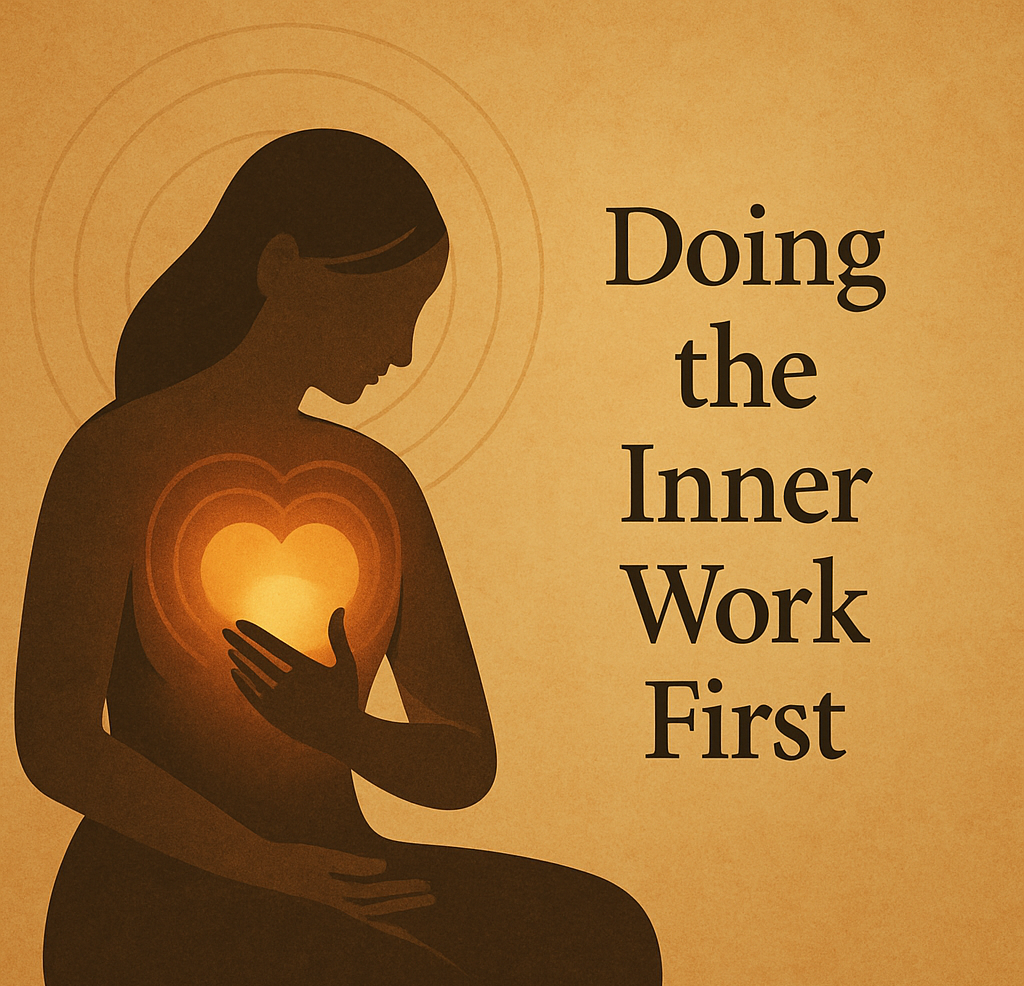
Doing the Inner Work First
True manifestation begins within. Heal, clear, and align from the inside out to open space for new blessings. #InnerHealing #ManifestationStartsWithin #SoulWork #ShadowToLight #Soul2222
The outer shifts after the inner is seen, softened, and healed.
Before we see the results we want in the outer world, we’re often invited to go within. True manifestation doesn’t start with scripting or vision boards — it starts with the quiet, invisible work of clearing, healing, and aligning your inner landscape.
This is the sacred preparation.
When you do the inner work first, you begin to clear the noise — the limiting beliefs, the fears, the doubts, the buried wounds. You soften the grip of the stories that once told you what you were allowed to have, or who you were allowed to be. And in that softening, you create space for new energy to enter.
It’s not always easy — this kind of work asks for your presence, your honesty, and your patience. But it is the most powerful foundation you can build. Because once you shift something inside, the external world has no choice but to realign in response.
Your inner world is the blueprint. It tells the Universe what you’re ready to receive.
Doing the inner work doesn’t mean you have to be perfect or healed before anything can happen. It simply means you’re willing to look inward with love. You’re willing to ask:
Where am I still holding on to fear?
What do I believe about receiving?
Is my heart open, or guarded?
When you meet yourself in these places — with compassion — healing begins.
And with healing, comes readiness. Readiness to receive, to grow, to step into the version of yourself that aligns with what you desire.
This is the space where manifestation becomes natural. Not because you forced something, but because you became someone who no longer blocks what’s meant for them.
The inner work teaches you to trust. It teaches you that your energy speaks louder than your words. That it’s safe to clear out what no longer serves — and to believe that something better will fill its place.
So, take time to tend to your own soil. Sit with your feelings. Write what needs to be expressed. Forgive. Reflect. Rest. Realign. You don’t have to rush the process. This part is the process.
The Universe is always ready. The question is: are you clear enough to receive?
Affirmation:
“I honor the sacred work within me. I heal, release, and rise.”
Your Soulful Pathways ↑
Desktop: Hover over “Your Soulful Pathways” in the top menu to explore another series.
Mobile: Tap the menu (☰), then choose “Your Soulful Pathways.”