


Releasing What Hurt You
A gentle guide to releasing the pain of the past—without minimizing it—so your heart can breathe again and make space for healing.
Letting go is one of the hardest parts of healing. Especially when what hurt you feels unforgettable. This page is not about pretending the pain never happened. It’s about learning how to release its grip on your heart, one gentle layer at a time.
Letting Go Is Not Forgetting
Releasing what hurt you is not:
Saying it was okay
Erasing the memory
Allowing the same harm again
Instead, it is a choice to stop carrying the weight alone. It is your way of saying, “I will not let this define the rest of my story.”
You can honor what happened and still choose freedom. You can remember and still move forward.
Making Space for Your Feelings First
Before you can release, you often have to feel. Not all at once, not in a tidal wave—but in safe, manageable waves of truth.
You might:
Journal what you wish you could’ve said
Cry without apologizing to yourself for being “too emotional”
Admit, “That hurt more than I wanted to admit.”
Your feelings are not the enemy. They are the doorway through which the pain can finally loosen its hold.
Handing What You Can’t Carry to Something Higher
There are parts of healing you can do, and parts that feel too big. For the “too big” parts, you are allowed to hand them over—to God, to the Universe, to Love itself.
You might say:
“I don’t know how to fully let this go, but I’m willing. Help me release what is no longer meant to live in my heart.”
Releasing is rarely one moment. It’s a process. Some days you’ll feel light; other days, the old weight may return briefly. This does not mean you’ve failed. It means you are human, learning how to live unburdened.
You deserve a life that is not built around your wound, but around your healing.
Your Soulful Pathways ↑
Desktop: Hover over “Your Soulful Pathways” in the top menu to explore another series.
Mobile: Tap the menu (☰), then choose “Your Soulful Pathways.”

Self-Compassion as Medicine
Learn how self-compassion becomes real emotional medicine—softening self-criticism, honoring your humanity, and helping your heart heal.
There are seasons when the way you speak to yourself becomes part of what is hurting you.
Not because you are trying to be cruel, but because you may have learned that pressure is the only way to keep going. You may have believed that if you were hard enough on yourself, you would stay productive, avoid mistakes, or become stronger. But over time, constant self-criticism can quietly wear down the heart. It can make healing feel farther away, not closer.
Self-compassion is not weakness. It is not laziness, avoidance, or letting yourself off the hook. It is a way of tending to your inner world with honesty and care. It is medicine for the parts of you that are tired from carrying too much without gentleness.
Why self-criticism does not create real healing
Many people were taught to motivate themselves through shame.
They learned inner language like this:
“I should be over this by now.”
“I always mess things up.”
“I need to do better.”
“What is wrong with me?”
At first, this kind of thinking can seem useful because it feels sharp and urgent. It creates the illusion of control. But shame rarely produces lasting peace or meaningful growth. More often, it keeps you trapped in cycles of self-blame, anxiety, and emotional exhaustion.
When you are always bracing against your own thoughts, your nervous system never fully gets to rest. Your body stays tense. Your heart stays guarded. Your spirit begins to believe that love must be earned through perfection.
That is not healing.
Healing begins when truth is paired with kindness. You can acknowledge where you are struggling without turning against yourself in the process.
What self-compassion really means
Self-compassion is the practice of responding to your pain, mistakes, and limitations with understanding instead of harshness.
It does not mean pretending everything is fine.
It does not mean excusing behavior that needs to change.
It does not mean avoiding responsibility.
It means you stay connected to your own humanity while you grow.
Self-compassion says:
“That hurt more than I expected.”
“I am still learning.”
“I can be honest with myself without being cruel.”
“I am allowed to need rest, support, and grace.”
This kind of inner language creates space for repair. It helps you come back to yourself instead of abandoning yourself the moment life feels heavy.
Speaking to yourself like someone you love
Think about how you would respond to someone you deeply care about if they were struggling.
You would probably not shame them for being tired.
You would not tell them they are failing because they need time.
You would not use their pain as proof that they are not enough.
You would soften.
You would listen.
You would remind them that difficult seasons do not erase their worth.
That same tenderness belongs to you too.
For many people, self-compassion feels unfamiliar at first. It may even feel uncomfortable. But that does not mean it is wrong. It simply means you are learning a new way to be with yourself.
Sometimes healing starts with saying words you do not fully believe yet, but need to hear anyway:
“This is hard, and I am allowed to be gentle with myself.”
“My feelings make sense.”
“I deserve the same compassion I so freely offer others.”
Gentle presence is part of the medicine
Self-compassion is not always dramatic. Often it is quiet. It looks like pausing instead of spiraling. It looks like resting without guilt. It looks like noticing your inner critic and choosing not to hand it the microphone.
You do not have to fight every harsh thought. You can simply introduce a different voice. A wiser one. A softer one. One that says, “I see you trying. I see how much this matters to you. Stay here. Do not leave yourself now.”
Place a hand over your heart if you need to.
Take one slow breath.
Let yourself be human.
Over time, this gentle presence becomes its own kind of medicine. Steady. Honest. Healing. Real.
You may not be used to treating yourself with kindness, but that kindness can still begin today. And sometimes the way forward is not through more pressure, but through compassion deep enough to help your whole being exhale.
Your Soulful Pathways ↑
Discover more series pages for you in Your Soulful Pathways ↑

Healing the Wounded Heart
A soft, soul-centered reflection for those carrying invisible heartbreak—honoring your pain, embracing slow healing, and letting love back in.
A wounded heart does not always cry loudly. Sometimes it keeps moving through the day quietly, doing what is expected, smiling when needed, and carrying pain that no one else can fully see. From the outside, you may look fine. Inside, there may still be disappointment, betrayal, grief, rejection, or emotional exhaustion that has not fully healed.
If you are here, your heart may be carrying invisible bruises. This page is a gentle place to begin. Healing a wounded heart does not happen through denial, pressure, or pretending you are over it before you truly are. It begins with honesty, tenderness, and giving your pain permission to be seen.
Honoring what hurt you
Healing starts with truth. Not dramatic truth. Not performative truth. Just honest truth.
You may need to admit:
That moment hurt me more than I realized.
That season was heavier than I let myself acknowledge.
That relationship left a deeper mark than I wanted to admit.
These truths matter. Pain that is ignored does not disappear. It often settles deeper into the body, the emotions, and the nervous system. A wounded heart needs space to tell the truth about what happened.
Your pain is not an inconvenience. It is not weakness. It is a signal asking to be noticed, held, and slowly released. You are allowed to say, What happened was not okay, and it affected me. That honesty is not a setback. It is part of healing.
A wounded heart often learns to survive quietly
Sometimes the hardest pain is the pain that keeps functioning. You may still get things done. You may still show up for others. You may still be dependable, thoughtful, and outwardly steady. But inside, part of you may feel guarded, tired, or numb.
This is common after emotional hurt. The heart learns how to protect itself. It may go quiet. It may stop expecting much. It may stay alert for disappointment. None of this means you are broken. It means your heart adapted in the ways it knew how.
Healing begins when survival is no longer the only mode available to you.
Healing is not a straight line
One of the most important things to remember is that healing is rarely linear. Some days you may feel strong, clear, and hopeful. Other days you may feel like you are right back in the ache. This does not mean you have failed. It does not mean healing is not happening.
It means your heart is still in process.
Healing often looks like:
taking breaks when you used to push through
setting boundaries where you once abandoned yourself
letting yourself cry without shame
asking for help even when it feels unfamiliar
feeling a wave of emotion and choosing gentleness instead of judgment
Every one of these is a sign of healing. Progress is not always loud. Sometimes it looks like responding to your pain differently than you used to.
Why the heart needs gentleness
A wounded heart does not heal well under harshness. It does not heal through constant self-criticism, emotional rushing, or pressure to be okay before it is ready. The heart heals through safety, honesty, patience, and compassion.
This is why gentleness matters so much.
Gentleness sounds like:
I am allowed to take my time.
I do not need to minimize what hurt me.
I can be healing even if I still have tender days.
I do not need to earn rest while I recover.
These small inner shifts create emotional safety. And emotional safety is where deeper healing begins.
Letting love back in slowly
A wounded heart often closes for protection. That was wise when the pain was fresh. Guarding your heart may have helped you survive a season that felt overwhelming, disappointing, or unsafe. But as healing begins, you are allowed to open again, slowly and carefully.
Not all at once.
Not for everyone.
Not beyond your pace.
Begin with small things:
letting in kindness from safe people
receiving care without immediately deflecting it
accepting a compliment without dismissing it
believing that peace and goodness are still possible for you
noticing where you feel safe, steady, and emotionally respected
This is how trust begins to return. Little by little, your heart learns that it does not have to stay closed forever.
You are more than what hurt you
One of the deepest truths in heart healing is this: you are not your wound. What happened to you matters, but it is not the whole story of who you are. Your pain is real, but it is not your identity.
You are the soul that survived it.
You are the heart still learning how to open again.
You are the person becoming softer, wiser, and more whole through the healing process.
There is no deadline for this journey. The heart has its own sacred timing. Healing the wounded heart is not about becoming untouched by pain. It is about becoming more rooted in truth, safety, self-respect, and love than in what once broke you.
And that healing is possible, one gentle step at a time.
Your Soulful Pathways ↑
Discover more series pages for you in Your Soulful Pathways ↑

When You Don’t Feel Enough
For the days you feel small, broken, or not enough—this gentle reflection helps you see your worth with softer eyes and begin healing from within.
There are days when the world feels too loud, too demanding, and you feel too small. You look at your life, your choices, your reflection, and a quiet ache whispers, “Maybe I’m just not enough.”
This page is here to hold that ache with tenderness, not judgment. You are not alone in this feeling—and it is not the truth of who you are.
The Lie of “Not Enough”
The belief that you are not enough rarely starts with you.
It’s often planted by:
Old criticism
Comparisons
Rejection
Unmet expectations
Over time, those moments stack up and become a story you tell yourself: “If I were better, they would have stayed. If I were different, life would be easier. If I were more, I would be loved.”
But this story is incomplete. Your worth never depended on perfection, performance, or other people’s approval. It has always been quietly intact, even on your most broken days.
Seeing Yourself with Softer Eyes
Healing begins when you pause and choose a softer lens.
Ask yourself:
If my friend felt this way, what would I say to them?
What if my “not enough” is really “I am exhausted and need kindness”?
Where did I first learn to measure my worth like this?
Your tenderness, your sensitivity, your longing to be loved deeply—none of these are flaws. They are evidence that you were made to love and be loved in a genuine way.
Letting Worth Come from Within
You don’t have to earn your worth.
You don’t have to hustle for love.
You don’t have to fix everything to be worthy of rest, of joy, of being here.
Take a breath and place a hand over your heart. Even if you feel nothing, say gently:
“I am still worthy. Even here. Even now.”
You are not behind. You are not broken beyond repair. You are a soul in the middle of becoming— and that is more than enough.
Your Soulful Pathways ↑
Desktop: Hover over “Your Soulful Pathways” in the top menu to explore another series.
Mobile: Tap the menu (☰), then choose “Your Soulful Pathways.”
Manifestation as an Energy, Not a Task
Manifestation isn’t a checklist — it’s an energy you live from. Step into flow, alignment, and ease with this heart-centered perspective. #ManifestationEnergy #SpiritualFlow #AlignedManifesting #BeTheVibration #Soul2222
It’s not about doing more — it’s about being more aligned.
Manifestation is often misunderstood as a series of tasks: write the script, make the vision board, say the affirmation, visualize, repeat. But manifestation was never meant to be a performance. It’s not a checklist. It’s not about “doing it right.”
It’s an energy. A way of being. A quiet alignment with what already belongs to you.
When you treat manifestation like a task, it becomes mechanical. You might begin chasing results, overthinking your worthiness, and wondering if you’ve done enough to “earn” the outcome. This creates tension — not flow.
But when you treat manifestation as an energy, you soften. You begin to ask:
How do I feel when I imagine this desire already here?
Does my energy match the peace, joy, or love I’m calling in?
Am I embodying what I want to receive?
That shift changes everything.
Manifestation is not about controlling the outcome. It’s about becoming the version of yourself who can naturally hold that outcome — emotionally, energetically, spiritually.
You don’t have to prove anything. You don’t have to hustle to deserve what’s aligned. You simply become a match for it by nurturing your internal state.
That might look like:
Grounding into gratitude before the physical arrives
Choosing thoughts that affirm your worthiness
Releasing old beliefs about struggle or lack
Taking aligned actions that feel peaceful, not pressured
Trusting the flow, even when it’s not linear
This is where the beauty of spiritual manifestation unfolds. It’s not about doing more. It’s about doing less — but with intention. With awareness. With joy.
The energy you carry is your manifestation.
The vibration you emit is your point of attraction.
If you want to manifest abundance, practice embodying ease.
If you want to manifest love, become deeply connected to self-worth.
If you want to manifest peace, make room for stillness.
There’s no trick to it — just a return to presence. A remembering of your own power. And an honoring of your natural state of alignment.
You were never meant to manifest from exhaustion.
You were meant to manifest from truth, trust, and love.
So breathe. Be. Align. You are not behind. You are not doing it wrong.
You are a powerful creator — simply by being in harmony with your own energy.
Affirmation:
“Manifestation is who I am becoming — not what I must chase.”
Your Soulful Pathways ↑
Desktop: Hover over “Your Soulful Pathways” in the top menu to explore another series.
Mobile: Tap the menu (☰), then choose “Your Soulful Pathways.”
When the Universe Asks You to Wait
Delays are not denials. Discover the sacred meaning behind divine timing and how to find peace while you wait. #DivineTiming #TrustThePause #SpiritualPatience #UniverseKnowsBest #Soul2222
A pause is not a denial. It is often divine timing at work in places you cannot yet see.
There are moments on the path when everything seems to slow down. The signs grow quieter. The doors that once looked promising do not open. The next step feels hidden. You may find yourself standing in a strange in-between, no longer where you were, but not yet where you hoped to be. These are the moments when waiting can feel especially tender.
And yet, this pause does not mean you are forgotten.
When the Universe asks you to wait, it is not always withholding. Sometimes it is protecting. Sometimes it is preparing. Sometimes it is inviting your soul into a deeper kind of trust, one that does not depend entirely on immediate proof.
Waiting is one of the most misunderstood parts of the manifestation journey. Many people interpret it as failure, delay, punishment, or being off course. But waiting can be sacred. It can be a cocoon for the soul. A quiet chamber where something unseen is being rearranged. A divine breath between chapters.
Waiting does not mean nothing is happening
One of the hardest parts of waiting is how still it can appear from the outside.
When there is no visible movement, the mind can become restless. It may start asking whether you did something wrong. Whether you missed a sign. Whether your desires are too late, too much, or somehow not meant for you. This inner questioning can make the pause feel heavier than it really is.
But spiritual growth does not always happen where you can see it.
There is movement in the unseen.
There is alignment happening in silence.
There are seeds taking root long before the surface changes.A season of waiting may look empty, but it can be full of invisible preparation. The blessing may still be forming. The timing may still be ripening. The conditions around your manifestation may still be shifting into place. And just as importantly, something within you may still be strengthening so that when the next chapter opens, you can meet it with more steadiness, clarity, and peace.
The pause may be preparing you
It is natural to want the thing you have been hoping for as soon as possible. A new beginning. A healed relationship. Greater peace. More abundance. A clear answer. A door that finally opens. But sometimes what you are asking for carries a weight that requires deeper capacity.
The waiting season may be building that capacity in you.
Your energy may need time to realign.
Your inner world may need more healing than you realized.
Your trust may be growing roots.
Your identity may be shifting so you can receive from a new level of self-worth rather than old patterns of fear.Sometimes the manifestation is not delayed because you are doing something wrong. Sometimes it is delayed because something meaningful is being completed first. A lesson. A release. A refinement. A quiet reordering of what can support the life you are calling in.
This is why waiting can be holy ground. It is not always a gap in the story. It may be part of the story itself.
Waiting reveals what fear tries to say
Pauses often bring hidden feelings to the surface.
When life slows down, unresolved fear can become louder. You may notice impatience, doubt, comparison, self-criticism, or the temptation to force outcomes that are not ready. You may feel restless and want to push, chase, overthink, or make something happen just to escape the discomfort of uncertainty.
This is where the waiting becomes a spiritual teacher.
It reveals where you still tie your worth to outcomes.
It reveals where you still believe timing determines value.
It reveals where you still fear being forgotten, overlooked, or left behind.None of this means you are failing. It means the pause is showing you what needs tenderness. It is helping you see the places within that still need reassurance, healing, and truth. Waiting has a way of bringing your relationship with trust into the light.
And that can be deeply transformative.
The invitation is to wait with grace
It is okay to feel restless in the pause. It is okay to wish things were clearer. It is okay to admit that waiting is not easy for you. But the invitation is not to wait from emptiness. It is to wait with grace.
To wait not as someone abandoned, but as someone being held.
To wait not in panic, but in expectancy.
To wait not from lack, but from trust.
To wait with the quiet belief that what is meant for you is not lost.Waiting with grace does not mean pretending you never feel doubt. It means you do not let doubt become your master. It means you come back to your center. You breathe. You reconnect. You soften your grip on the timeline and strengthen your connection to the deeper wisdom guiding your life.
There is power in this kind of waiting. It keeps your heart open without demanding control. It lets peace grow in places where fear once ruled. It teaches you that trust is not passive. It is an active spiritual posture.
Ways to honor the waiting season
This chapter does not need to be empty simply because it is unfinished. There are gentle ways to honor the pause and stay connected to your path while the next step is still forming.
Start small rituals that bring you back to joy.
Let beauty still have a place in your days.
Light a candle. Take a mindful walk. Speak kindly to yourself. Create little moments that remind your nervous system that life is still here, still supporting you, still worthy of presence.Speak gratitude for what is unseen.
Thank the healing that is in progress.
Thank the answers that are still forming.
Thank the support you cannot yet fully measure.Revisit your intentions, but release the timeline.
You can stay devoted to what you desire without clinging to the exact schedule. Alignment often deepens when force relaxes.Focus on becoming, not only receiving.
Sometimes the most meaningful shift in a waiting season is the person you are becoming within it. More grounded. More trusting. More able to receive without fear. More rooted in your own worth.You are not behind
One of the most painful illusions created by waiting is the idea that everyone else is moving and you are somehow late. But your life is not meant to unfold by comparison. Your path has its own sacred rhythm. Your timing has its own intelligence.
You are not behind.
You are not missing out.
You are not being skipped over.A pause does not erase your progress. It does not cancel what is meant for you. It does not mean the door will never open. Sometimes it simply means now is the season for deeper roots, steadier trust, and quieter preparation.
The clarity will return.
The next opening will come.
The movement will become visible again.But for now, the invitation is simple: stay close, stay calm, and stay open.
Let the pause be enough for now
This season will not last forever.
There will come a day when the answer arrives, the path clears, the timing makes sense, or the blessing lands in a way you can finally recognize. And when that day comes, you may look back and realize that the waiting held more wisdom than you knew. That the silence was not absence. That the pause was not punishment. That the delay carried grace.
Until then, let the pause be enough for now.
Breathe into what is here.
Trust what you cannot yet see.
Let the waiting soften you instead of hardening you.
Let it deepen your faith instead of draining it.
Let it teach you how to remain open without losing peace.When the Universe asks you to wait, it is not forgetting you.
It may be drawing you closer to timing that is wiser, gentler, and more aligned than what you could have forced on your own.
Affirmation
I trust the timing. I rest in the pause with grace.Your Soulful Pathways ↑
Discover more series pages for you in Your Soulful Pathways ↑
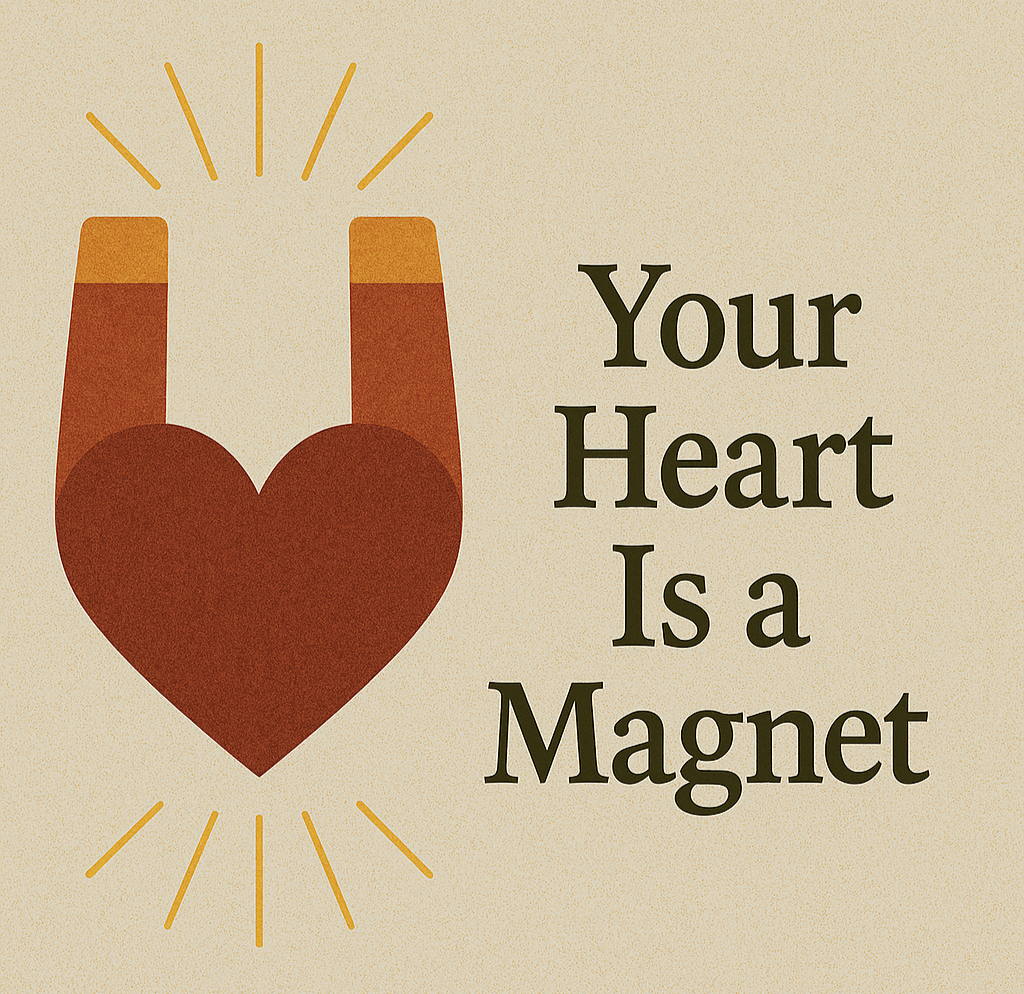
Your Heart Is a Magnet
The most powerful manifestation tool is your own heart. Learn how to attract love, peace, and purpose from within. #HeartCenteredLiving #MagneticEnergy #LoveAttractsLove #SpiritualManifestation #Soul2222
Your truest frequency lives in your heart — and it’s always attracting.
Your heart is not just a vessel of emotion — it’s a living, magnetic field. The energy you hold within it creates a ripple through everything you attract. The Universe responds not to your words, but to your frequency. And that frequency is rooted in how open, aligned, and honest your heart is.
We often hear about “raising your vibration” or “matching the energy of your desires,” but what does that really mean? It means learning to live from the wisdom of the heart — not just the logic of the mind. It means releasing the fear-based patterns that block love, trust, or worthiness, and instead returning to softness, compassion, and truth.
Your heart is always emitting a signal.
What signal are you sending?
When your heart is guarded, filled with doubt, or carrying old wounds, that signal can become distorted. But when your heart is open — even just a little — the energy it sends out is powerful. Loving. Magnetic.
You don’t have to be perfect. You just have to be honest with yourself. You just have to tend to your heart with care.
Manifesting from the heart sounds like:
“I allow what is meant for me to find me.”
“I trust that love surrounds me, even when I can’t see it.”
“I know my worth, and I don’t settle for less.”
It feels like:
Peace, even when things are uncertain
Gentle excitement, not frantic energy
A deep inner yes, without needing external validation
The beautiful truth is: You don’t have to do more. You just have to feel more — to awaken the energy of your desires from within. When love, joy, and gratitude flow freely through your heart, you become the magnet. You become the vibration.
You don’t attract what you want.
You attract what you are energetically ready to hold.
So give your heart space to breathe. Let it soften. Forgive what’s heavy. Open to what’s true. The more aligned your heart becomes, the more the world reflects that alignment back to you — through people, experiences, synchronicities, and peace.
Manifestation is not about effort. It’s about resonance.
And your heart already knows how to resonate with miracles.
Affirmation:
“My heart is aligned with the energy of love, truth, and receiving.”
Your Soulful Pathways ↑
Desktop: Hover over “Your Soulful Pathways” in the top menu to explore another series.
Mobile: Tap the menu (☰), then choose “Your Soulful Pathways.”

Manifesting Without Fear
Shift from fear to trust. Release pressure and control so manifestation flows from spiritual faith and inner peace. #FearlessManifesting #TrustTheUniverse #SpiritualCourage #ManifestWithFaith #Soul2222
Pure manifestation cannot live in fear. It is born in trust.
Fear creates friction. It tightens your energy, clouds your clarity, and makes your manifestations feel like something far away — something you must earn, chase, or worry about. But true, heart-centered manifestation is not fueled by anxiety. It’s powered by faith.
When you release fear, you create space. Space for alignment. Space for grace. Space for your desires to flow toward you, rather than away from your grasp.
Manifesting without fear doesn’t mean you never feel afraid — it means you don’t lead with fear. You don’t let it be the driver of your decisions. Instead, you notice it, soothe it, and choose to trust anyway.
Ask yourself gently:
Am I trying to manifest because I’m scared of what will happen if I don’t?
Am I rushing, forcing, or micromanaging because I don’t believe it will come?
Am I trying to control the timing, the form, the path — instead of trusting the process?
Fear says, “I need this now or I’ll fall apart.”
Trust says, “What is meant for me is finding me, and I am safe in the waiting.”
This shift in energy — from panic to peace — changes everything.
When you begin to release fear, you’ll notice:
You no longer feel the need to prove, push, or convince
Your body relaxes into the energy of receiving
Your thoughts become clearer, softer, and more hopeful
You feel aligned, not frantic
And from that place, manifestations arrive differently. They flow. They unfold. They feel like a match, not a rescue.
One way to release fear is to create a gentle ritual of returning to faith. When doubt creeps in, don’t shame yourself — just pause, breathe, and realign.
Here are a few soul-centered practices:
Write down your fears, then burn or tear the paper as a symbol of release
Speak affirmations that calm the nervous system and open the heart
Meditate with the intention of remembering: You are already supported.
Visualize your desires arriving peacefully — no struggle, no fight
Fear is not your enemy — but it is not your compass either.
Let your compass be faith. Let it be softness. Let it be your deep knowing that you are co-creating with a Universe that is kind, not cruel… responsive, not random.
You were never meant to manifest through stress. You were meant to manifest through alignment — and alignment begins when fear ends.
You are safe to trust again.
Affirmation:
“I choose trust over fear. I let faith lead.”
Your Soulful Pathways ↑
Desktop: Hover over “Your Soulful Pathways” in the top menu to explore another series.
Mobile: Tap the menu (☰), then choose “Your Soulful Pathways.”
Energetic Blocks & How to Release Them
Learn to identify and gently release energetic blocks that may be holding your manifestations back. Clear resistance with softness and spiritual awareness. #EnergyClearing #LetGoToReceive #ReleaseResistance #HealingEnergy #Soul2222
Resistance is not punishment. It is often guidance.
There are times when your desires feel clear, your intentions feel sincere, and yet something still seems to slow the flow. You may wonder why what you are calling in feels delayed, tangled, or just out of reach. It can be tempting to assume you are doing something wrong, that you are not trying hard enough, or that what you want simply is not meant for you.
But often, what is creating friction is not a lack of worthiness.
It is energy.
More specifically, it can be the subtle blocks you carry inside without fully realizing they are there. Energetic blocks are not signs that you are broken. They are signs that something within you still wants attention, compassion, healing, or release. They act like static in your inner field, making it harder to fully receive with ease, trust, and openness.
And every block carries a message.
What energetic blocks really are
Energetic blocks are inner patterns that interrupt the natural flow of receiving, trusting, expressing, or moving forward.
They may be made of old fear.
Old grief.
Old beliefs.
Old survival strategies.
Old stories you absorbed when you were younger.
Unprocessed emotions that were never given room to move through.
These blocks often form for understandable reasons. At some point, they may have helped protect you. A guarded heart may have developed after disappointment. Overthinking may have formed in response to instability. Doubt may have taken root after repeated letdowns. Controlling every detail may have become a way to feel safer in an unpredictable world.
So the block is not the enemy.
It is often a protective response that stayed too long.
This is why energetic healing begins not with self-judgment, but with awareness. When you understand that resistance is often rooted in old protection rather than present truth, you can begin to meet yourself more gently.
How energetic blocks show up
Energetic blocks are not always dramatic. Sometimes they are quiet, familiar, and easy to normalize.
They can show up as fear of being seen, fear of failing, or fear of receiving what you say you want. They can appear as the belief that you are not truly worthy, not ready enough, too late, too damaged, or somehow less deserving than others. They can also take the form of overthinking, perfectionism, comparison, guilt for wanting more, or the urge to control every outcome before you allow yourself to relax.
Sometimes the block is emotional.
Sometimes it is mental.
Sometimes it feels physical.
You may notice a tight chest when you think about stepping into something bigger.
You may feel exhaustion when it is time to act on a desire that truly matters.
You may experience racing thoughts when something good starts getting close.
You may feel tension, hesitation, or heaviness around receiving support, love, abundance, visibility, or peace.
These responses matter.
The body often reveals what the conscious mind has not fully named yet.
Why blocks are not here to punish you
It is easy to get frustrated with your own resistance.
You may wonder why you keep circling the same fears. Why doubt shows up even when you have done so much inner work. Why receiving can feel harder than longing. Why old patterns return just when you thought you had moved beyond them.
But blocks are not punishment.
They are signals.
They are often invitations to look deeper, not proof that you are failing. They show you where love has not fully reached yet. They reveal where healing is still asking for your attention. They point toward places where your nervous system, your beliefs, or your emotional body may still be living in old conditions while your soul is trying to move forward.
A block may be saying:
This part of you is still afraid.
This belief is still shaping your reality.
This old wound still needs tenderness.
This pattern is ready to be released.
When you shift from judgment to curiosity, the whole process changes. Instead of trying to crush resistance, you begin listening to it. And often, that is where release begins.
Questions that help reveal the block
Energetic blocks lose power when they are brought into the light with honesty.
Instead of asking, “What is wrong with me?” it can be more healing to ask:
What is this fear trying to protect me from?
Where did this belief begin?
What feels unsafe about receiving what I desire?
What old story am I repeating without realizing it?
What would happen if I stopped trying to control this?
What part of me still believes ease is not allowed?
These questions create space for truth.
And truth is often the beginning of release.
When you see the block clearly, you no longer have to live entirely inside it. You can begin separating your present self from an old pattern that once felt absolute.
Releasing does not require force
One of the biggest misunderstandings about healing is the belief that you must attack your patterns in order to overcome them.
But energetic release does not usually happen through force.
It happens through awareness, safety, softness, and willingness.
You do not have to fix yourself into worthiness.
You do not have to shame yourself into alignment.
You do not have to push past every fear to prove you are healing.
Often, energy begins to move when you stop fighting yourself and start listening with compassion.
That may look like breathing through fear instead of bracing against it.
It may look like resting instead of pushing harder.
It may look like allowing tears, honesty, or fatigue to surface without turning them into failure.
It may look like noticing a limiting belief and gently choosing a truer one.
It may look like giving your body movement when the mind has become too crowded.
It may look like telling the truth in your journal instead of performing strength.
Release is less about violence toward the old self and more about loving yourself into a new level of openness.
Gentle ways to release energetic blocks
There are many ways to begin releasing energetic blocks, and not all of them are dramatic. The gentlest methods are often the most sustainable because they help your system feel safe enough to soften.
Breathe through the fear
When fear rises, pause before reacting. Breathe into the sensation instead of immediately trying to escape it. Fear often loosens when it is witnessed without resistance.
Journal the truth without censoring it
Write what you are really afraid of. Write the thoughts you usually try to spiritualize away. Honesty clears space. What is named can begin to move.
Speak limiting beliefs aloud and reframe them
Sometimes an old belief loses some of its power when you hear it clearly. You might say, “Part of me believes it is too late for me,” and then gently answer it with something truer: “Life is still unfolding for me, and I am allowed to receive in my own timing.”
Move your body
Energy is often stored physically. Walking, stretching, shaking out tension, dancing, or simply taking a few deep breaths with hand-to-heart awareness can help shift what has been held in the body.
Rest without guilt
Some blocks remain active because the nervous system is overwhelmed. Rest is not laziness. It is often part of energetic repair. Softness can dissolve what force cannot.
Choose again with love
You do not need to heal everything at once. Each time you notice an old pattern and respond differently, you begin changing the energy you live from.
Realignment happens when openness returns
When you release what no longer belongs in your field, something beautiful begins to happen.
You feel lighter.
Clearer.
Less reactive.
Less desperate.
More available to peace.
More available to receiving.
This does not mean life becomes perfect overnight. It means your energy becomes more open. And openness changes the way you relate to everything. You stop gripping so tightly. You stop fighting yourself at every turn. You begin trusting that what is for you does not require self-abandonment to receive.
When you realign, what you have been calling in may begin to feel closer, not because you forced it into place, but because your inner space is no longer crowded with so much resistance.
This is the quiet power of release.
You are not broken
It is important to remember that having energetic blocks does not mean something is wrong with you.
It means you are human.
It means you have lived.
It means your heart and body have tried to protect you.
It means there are places within you ready for more compassion and truth.
Let go not because you are broken, but because you are whole enough to stop carrying what is no longer yours.
Let go because ease is allowed.
Let go because peace is possible.
Let go because your energy deserves room to breathe.
Let go because love enters more freely when resistance is no longer running the whole house.
The work of releasing is not about doing more and more until you earn the life you want.
It is about becoming more honest, more aware, and more willing to soften.
There is always more space for love when resistance leaves the room.
Affirmation
I release what no longer serves my energy. I open to the new.
Your Soulful Pathways ↑
Discover more series pages for you in Your Soulful Pathways ↑
Doing the Inner Work First
True manifestation begins within. Heal, clear, and align from the inside out to open space for new blessings. #InnerHealing #ManifestationStartsWithin #SoulWork #ShadowToLight #Soul2222
The outer shifts after the inner is seen, softened, and healed.
Before we see the results we want in the outer world, we’re often invited to go within. True manifestation doesn’t start with scripting or vision boards — it starts with the quiet, invisible work of clearing, healing, and aligning your inner landscape.
This is the sacred preparation.
When you do the inner work first, you begin to clear the noise — the limiting beliefs, the fears, the doubts, the buried wounds. You soften the grip of the stories that once told you what you were allowed to have, or who you were allowed to be. And in that softening, you create space for new energy to enter.
It’s not always easy — this kind of work asks for your presence, your honesty, and your patience. But it is the most powerful foundation you can build. Because once you shift something inside, the external world has no choice but to realign in response.
Your inner world is the blueprint. It tells the Universe what you’re ready to receive.
Doing the inner work doesn’t mean you have to be perfect or healed before anything can happen. It simply means you’re willing to look inward with love. You’re willing to ask:
Where am I still holding on to fear?
What do I believe about receiving?
Is my heart open, or guarded?
When you meet yourself in these places — with compassion — healing begins.
And with healing, comes readiness. Readiness to receive, to grow, to step into the version of yourself that aligns with what you desire.
This is the space where manifestation becomes natural. Not because you forced something, but because you became someone who no longer blocks what’s meant for them.
The inner work teaches you to trust. It teaches you that your energy speaks louder than your words. That it’s safe to clear out what no longer serves — and to believe that something better will fill its place.
So, take time to tend to your own soil. Sit with your feelings. Write what needs to be expressed. Forgive. Reflect. Rest. Realign. You don’t have to rush the process. This part is the process.
The Universe is always ready. The question is: are you clear enough to receive?
Affirmation:
“I honor the sacred work within me. I heal, release, and rise.”
Your Soulful Pathways ↑
Desktop: Hover over “Your Soulful Pathways” in the top menu to explore another series.
Mobile: Tap the menu (☰), then choose “Your Soulful Pathways.”
What You Attract When You Are Aligned
You don’t have to chase what’s meant for you. Learn how alignment naturally attracts what is already yours on an energetic level. #AlignedAttraction #EnergeticMatch #SpiritualManifestation #DivineFlow #Soul2222
Alignment is not loud. It is not forceful. It is a quiet inner yes. A steady feeling that your energy, choices, and truth are finally moving in the same direction. When you are aligned, you stop reaching from panic, striving, or lack. You begin living from clarity, peace, and inner trust.
This is where attraction changes.
You do not have to chase what is genuinely aligned with your soul. When your inner world becomes clearer, your outer life often begins to reflect that shift. The people, opportunities, insights, and experiences you attract start to feel more natural, more nourishing, and more deeply connected to who you truly are.
This is the quiet power of alignment.
What alignment really means
Alignment does not mean perfection. It does not mean you always feel confident, always know what to do, or never have hard days. It means that underneath the temporary emotions and life changes, you are becoming more anchored in your truth.
To be aligned means:
you are listening to your inner voice more than outside pressure
you are making choices from truth instead of fear
you are becoming honest about what feels right and what does not
you are no longer trying to force what your soul does not fully want
you are beginning to live in a way that feels more whole, grounded, and real
Alignment is not performance. It is congruence. It is the moment your inner life and outer choices begin to match.
You attract from who you are being
Many people focus only on how to get what they want. But a deeper question is often more powerful: Who am I becoming while I call this in?
When you are aligned, you stop asking only, How do I make this happen? and begin asking, How can I become the version of me who is ready to receive it well?
That shift changes everything.
You do not attract most powerfully from what you say you want. You often attract from the energy you consistently carry. Your beliefs, your emotional patterns, your self-worth, your boundaries, and your level of inner peace all shape what you allow, welcome, and recognize.
This is why inner work matters so much. The clearer you become within, the clearer your life can begin to reflect that clarity back to you.
What you begin to attract when you are aligned
As you come into deeper alignment, what you attract often begins to feel different. Instead of chaos, confusion, and constant effort, there is more resonance. More ease. More rightness.
When you are aligned, you often begin attracting:
relationships that feel healthier and more mutual
opportunities that match your values and natural gifts
ideas and next steps that bring clarity instead of pressure
experiences that support your peace rather than drain it
greater confidence in your intuition and timing
more emotional stability and self-trust
a deeper sense of purpose, direction, and flow
This does not mean everything becomes effortless overnight. But it does mean what comes toward you begins to match the frequency of who you are becoming.
Peace, truth, and joy are magnetic
When your energy is rooted in peace, truth, joy, and self-respect, what you attract often feels more like home. Not because life suddenly becomes perfect, but because you are no longer sending mixed signals from fear, overgiving, self-abandonment, or constant internal conflict.
Peace is magnetic because it is clear.
Truth is magnetic because it is clean.
Joy is magnetic because it is open.
When these qualities begin living more fully within you, you naturally become less available for what is misaligned and more available for what deeply fits.
Alignment helps you recognize what is not for you
One of the overlooked gifts of alignment is that it does not only attract what belongs. It also makes it easier to notice what does not.
As you become more aligned, you may feel less drawn to:
relationships that require self-betrayal
opportunities built on fear or constant depletion
timelines that pressure you out of your peace
roles you perform only for approval
patterns that once felt familiar but no longer feel true
This is part of the process too. Sometimes alignment looks like attraction, and sometimes it looks like release. Sometimes what leaves your life is making room for what fits better.
Questions to return to your center
If you feel stuck, disconnected, or unsure, come back to your alignment. You do not have to force your way forward. Often, you simply need to return to yourself.
Ask:
Am I acting from truth or from fear?
Am I trusting the process or trying to control every detail?
Do I feel like myself, or do I feel like I am performing?
What brings me back to peace, clarity, and inner honesty?
The answers to these questions can help guide you back into your center. And from that centered place, your energy becomes clearer. Your next step often becomes clearer too.
Alignment is about becoming, not chasing
It is not always about doing more. Often, it is about becoming more aligned. More honest. More peaceful. More grounded in your real self.
The aligned version of you already exists.
The version of you who feels clear.
The version of you who trusts your own inner knowing.
The version of you who no longer begs life to prove your worth.
Each time you connect with that version of yourself, even for a moment, you send out a ripple. And life responds to that ripple in ways you may not fully see yet.
Alignment sets the future in motion long before it becomes visible.
Coming home to yourself
Real alignment often feels like relief. Like exhaling. Like coming home to yourself after spending too long trying to be who you thought you had to be.
It can feel like:
letting go of what was never truly meant for you
stopping the performance of being fine
choosing peace over pressure
trusting your own soul more deeply
making space for what genuinely resonates
You do not attract what you pretend to be. You attract most clearly from what you energetically are.
So choose alignment.
Choose truth.
Choose the version of you that already knows how to live with more peace, clarity, and self-trust.
What is truly meant for you often begins finding you more easily when you stop abandoning yourself on the way there.
Affirmation
I align with who I truly am, and all that is meant for me flows naturally.
Your Soulful Pathways ↑
Discover more series pages for you in Your Soulful Pathways ↑
Manifesting Through Gratitude
Discover how the energy of gratitude opens the heart to receive. Manifestation begins with appreciation, trust, and inner alignment. #GratitudeEnergy #SoulfulManifestation #HighVibrationLiving #ManifestWithGrace #Soul2222
Gratitude is often spoken of as a simple practice, but its energy reaches much deeper than a passing positive thought. It is a way of orienting your spirit. A way of choosing to see what is present instead of being consumed by what feels absent. A way of aligning your heart with trust instead of lack.
When you begin with gratitude, you align with the frequency of more.
This does not mean pretending everything is perfect. It does not mean denying your desires, ignoring your pain, or forcing yourself to feel thankful in a way that is disconnected from what is real. True gratitude is not performance. It is presence. It is the gentle willingness to recognize that even now, in this moment, there is still something sacred here.
Manifesting through gratitude means you stop building your energy around desperation and begin building it around appreciation. Instead of focusing only on what has not arrived yet, you turn your awareness toward what is already good, already meaningful, already carrying life. That subtle shift changes the emotional signal you send into the world.
Gratitude changes your energetic posture
There is a difference between wanting something and clinging to it.
When desire becomes tangled with fear, your energy can become tight, anxious, and heavy. You may find yourself checking constantly, wondering when something will happen, questioning whether you are supported, or feeling as though your peace depends on the outcome arriving quickly. That state creates inner pressure. It can make manifestation feel like strain rather than flow.
Gratitude softens that pressure.
It opens the body.
It steadies the mind.
It brings you back to the present.
It reminds you that life is not empty while you wait.
When you are grateful, you are no longer standing in front of life only as someone who lacks. You stand as someone who is already in relationship with goodness. Already noticing blessing. Already able to receive beauty. Already aware that support, provision, healing, insight, and grace can exist in small forms before they ever appear in larger ones.
This is part of why gratitude is such a powerful spiritual frequency. It changes your posture from grasping to receiving.
Manifestation works differently when peace is present
Many people try to manifest from panic.
They want change so badly that they begin chasing it with urgency. They repeat affirmations from a place of fear. They visualize while secretly doubting. They search for signs every hour. They hope, but beneath the hope is exhaustion. Beneath the effort is the feeling that something is missing and must arrive quickly in order for them to feel okay.
But peaceful energy is powerful energy.
When your manifestations are born from gratitude, they carry a different quality. They are less frantic. Less tangled. Less rooted in proving. You begin to trust that what is meant for you can arrive without you forcing every detail into place. You still take aligned action. You still listen. You still grow. But your energy no longer comes from inner collapse. It comes from steadiness.
Gratitude says, “I honor what is here, and I remain open to what is coming.”
That is a powerful place to create from.
You can bless what is here while welcoming what is next
One of the biggest misunderstandings around gratitude is the belief that being grateful means you must stop wanting more. But gratitude does not cancel desire. It refines it. It purifies it. It helps you want from a clearer place.
You are allowed to appreciate your present life and still pray for expansion.
You are allowed to be thankful for what is and still believe more healing is coming.
You are allowed to honor the lesson, the shelter, the breath, the insight, the relationship, the progress, or the tiny evidence of movement while still calling in the next chapter.
In fact, this balance is often where manifestation becomes more aligned. You stop resisting the present while trying to escape it. You stop acting as though life only begins when the next blessing arrives. You become available to the sacredness of now, and from that grounded place, you welcome what is next with an open heart.
Gratitude helps you say, “This moment matters too.”
The soul expands around what it appreciates
What you regularly acknowledge begins to take on more life inside you.
When you repeatedly focus on what is broken, missing, delayed, or disappointing, your inner world can start to shrink around those themes. Your body feels it. Your thoughts repeat it. Your nervous system can become trained to scan for what is not working.
Gratitude interrupts that pattern.
It does not erase difficulty, but it creates space around it. It reminds your heart that all is not lost. It helps your spirit notice what is still blooming. A moment of peace. A kind message. A prayer that held you together. A closed door that protected you. A burst of energy after a long heaviness. A beautiful sign. A quiet answer. A new idea. A little more courage than yesterday.
When you honor these things, you are not settling. You are strengthening your connection to abundance.
Gratitude trains the soul to recognize life as responsive, supportive, and alive with meaning. It becomes easier to trust. Easier to receive. Easier to stay open instead of collapsing into fear.
Gratitude before proof
One of the most transformative practices is learning to say thank you before there is visible evidence.
Not as denial. Not as fantasy. But as trust.
Thank you for the healing already underway.
Thank you for the doors being prepared.
Thank you for the wisdom forming in me now.
Thank you for the support I cannot fully see yet.
Thank you for the blessing that is already moving toward me.
This kind of gratitude is powerful because it is rooted in relationship rather than control. It acknowledges that life is not only what is visible. It makes space for the unseen. It teaches your heart to stay open before proof arrives.
This is the energy of spiritual magnetism.
This is the energy of trust.
This is the energy of alignment.
A simple gratitude manifestation practice
Manifesting through gratitude does not need to be complicated. In fact, the gentlest practices are often the most sustainable.
Take one slow breath in the morning and whisper, “Thank you.”
Say it before checking your phone.
Say it before judging the day.
Say it before your mind begins listing everything that feels unfinished.
Let gratitude come first.
Then name three things that are already supporting your life, even in small ways. They do not need to be dramatic. They only need to be real. A little strength. A safe place to rest. An answered prayer from the past. A lesson that made you wiser. A spark of hope that returned. A new opening. A breath of peace.
This simple practice begins to retune your energy. It reminds your spirit that life is still giving, still moving, still carrying light.
Let gratitude become your beginning
You do not have to feel grateful every second in order to manifest from gratitude. You do not have to deny your humanity. You do not have to silence your longing.
You only need to return.
Return to the breath.
Return to what is still beautiful.
Return to what is still holding you.
Return to what has already been given.
Return to the quiet truth that not everything good has happened yet, and not everything good is absent now.
Gratitude is the tuning fork of the soul. It brings you back into resonance with trust, receptivity, and peace. It reminds you that manifestation is not only about getting. It is about becoming available to receive.
Let your gratitude come first.
And watch what begins to shift.
Affirmation
Thank you, even before it arrives.
Your Soulful Pathways ↑
Discover more series pages for you in Your Soulful Pathways ↑
Peace Begins Inside You
Discover the quiet power of inner peace. Let go of urgency and return to the stillness within. Peace begins inside you.
There is a quiet place within you where peace has never fully disappeared.
It may feel buried beneath stress, fear, pressure, and too much noise, but it is still there. Beneath the striving, beneath survival mode, beneath the constant pull of the outside world, there is a steadier place in you that remembers how to rest.
Peace begins inside you.
This does not mean life has to be perfect before you can feel calm. It means peace starts as an inner relationship. It grows when you return to yourself, soften your nervous system, and stop believing that peace only comes after every problem is solved.
This is an invitation to come home to yourself.
To breathe more deeply.
To loosen the grip of urgency.
To choose presence over pressure, one moment at a time.
Peace is not something you earn
Many people unknowingly treat peace like a reward.
They think, I will feel peaceful when everything settles down. When my responsibilities are handled. When everyone around me is okay. When life finally makes sense.
But peace does not live at the end of your to-do list.
Peace is not a prize for perfect performance.
Peace is not proof that life is easy.
Peace is not something you earn by carrying everything well.
Real peace begins when you stop abandoning yourself in the middle of life. It grows when you start listening inward instead of reacting outward. It deepens when you give yourself permission to slow down, even while the world keeps moving fast.
Why inner peace can feel hard to access
Sometimes the reason peace feels far away has nothing to do with weakness or lack of faith.
Sometimes your body and mind have simply been holding too much for too long. Stress, emotional overload, uncertainty, and constant input can keep your system in a state of alert. When that happens, peace can feel unfamiliar, even when you deeply want it.
You may notice signs like:
feeling restless even during quiet moments
overthinking everything as a form of protection
struggling to relax your body
feeling emotionally reactive or mentally exhausted
having trouble being present because your mind stays in the future
These are not signs that peace is impossible.
They are signs that your inner world may need gentleness, safety, and restoration.
The nervous system needs safety
Part of coming back to peace is spiritual, but part of it is also practical.
If your nervous system has been overworked, your body may need support before peace feels fully reachable again. Sometimes peace begins with very simple things.
Breathing slower than your thoughts.
Relaxing your jaw, shoulders, and hands.
Drinking water and resting your body.
Stepping away from constant input for a few minutes.
Doing one small thing at a time instead of carrying everything at once.
Peace often returns through the body first.
When your system begins to feel safer, your spirit often follows. This is one reason small calming practices matter so much. They help teach your body that it does not have to remain in constant defense.
Letting go is part of peace
Peace does not come from controlling everything around you.
It rises when you release what you were never meant to carry alone. It deepens when you let go of the pressure to have every answer, fix every outcome, and hold every piece of life together through effort alone.
Letting go may mean:
releasing the need to understand everything today
releasing guilt for not being everything to everyone
releasing overthinking disguised as preparation
releasing draining patterns, even when they feel familiar
releasing timelines that create pressure instead of trust
Letting go is not giving up.
It is making room.
It is clearing space inside yourself so peace has somewhere to land.
The practice of returning to yourself
Inner peace is usually built through small returns.
Little moments when you come back to your breath, your body, your heart, and the present moment. These returns may seem simple, but they are powerful because they create a new pattern inside you.
Try this gentle return practice:
Place your hand over your heart.
Take one slow breath in.
Exhale longer than you inhale.
Whisper, I am here.
Then ask:
What do I need right now?
The answer is often quiet and kind.
You may need a pause.
A boundary.
A glass of water.
A slower thought.
A short walk.
A few moments without noise.
These simple acts are not insignificant.
They are how peace is practiced.
Peace can exist while life is unfinished
One of the most healing truths is this:
You do not have to wait until everything is resolved before you allow yourself peace.
Peace can exist in the middle of transition.
Peace can live beside grief, healing, uncertainty, and growth.
Peace is not the absence of challenge.
It is the absence of inner war.
You can be building something new and still have peace.
You can be healing and still have peace.
You can be waiting and still have peace.
When you stop fighting the moment and start meeting it with softness, peace begins to rise more naturally. It becomes less something you chase and more something you allow.
Returning to peace through God
Peace is not only emotional.
It is also spiritual.
There are moments when your soul simply needs to remember that God is still here, still steady, and still able to hold what you cannot carry alone. Prayer does not have to be polished to become a doorway back to peace.
You can pray simply:
God, quiet what is loud inside me.
God, show me what is mine to carry today.
God, help me release what is not.
God, bring me back to peace.
Sometimes peace comes as a deep breath.
Sometimes it comes as clarity.
Sometimes it comes as strength for the next gentle step.
But it comes.
Gentle ways to support inner peace daily
Peace grows through small, repeatable choices.
You do not need a dramatic breakthrough every day. You need gentle consistency.
Try:
starting the morning without rushing straight into noise
pausing before answering stress
breathing slowly before making decisions
creating small moments of quiet during the day
protecting your attention from constant overload
reminding yourself that not everything deserves your urgency
Over time, these choices create a steadier inner environment.
And that environment begins changing how you carry your life.
A gentle reminder
You do not need to force peace into your life.
You do not need to prove yourself worthy of it. The peace you seek is not outside you, hiding in some future moment when everything finally settles. It begins within. It grows each time you return to your center, listen to your needs, and choose gentleness over pressure.
The world may still be noisy.
Life may still be unfinished.
But inside you, peace can begin again.
And each time you return to it, you strengthen the path back home.
Your Soulful Pathways ↑
Discover more series pages for you in Your Soulful Pathways ↑.
If this message resonated, you may also enjoy:
Living From Stillness
Discover the quiet power of living from stillness. Learn how to slow down, return to presence, and find peace in the calm center of your soul.
There is a quiet strength available to you that does not depend on speed, pressure, or constant motion.
It lives beneath the noise.
Beneath the overthinking.
Beneath the urgency.
Beneath the part of you that feels like it always has to keep up.
This is the strength of stillness.
Living from stillness does not mean withdrawing from life or doing nothing. It means learning how to move through life from a grounded inner center instead of from panic, overwhelm, or emotional reactivity. It means creating space within yourself where peace can rise before you speak, act, decide, or respond.
In a world that often rewards hurry, stillness can feel unusual.
But stillness is not weakness.
It is not laziness.
It is not falling behind.
Stillness is a sacred way of returning to yourself so your life can flow from clarity instead of chaos.
What it means to live from stillness
To live from stillness is to let peace become your foundation.
It means you begin to respond instead of react. You breathe before speaking. You listen before forcing. You pause before abandoning yourself. You allow presence to guide you more than pressure.
Stillness changes the way you carry your days.
It does not remove responsibility, but it softens the frantic energy that can build around it. It helps you stop treating every moment like an emergency. It reminds your nervous system that not everything needs to be solved in fear.
When you live from stillness, you are no longer asking urgency to lead your life.
You are allowing a deeper wisdom to guide the way.
Why stillness matters so much
Many people live in constant motion without realizing how deeply it affects their inner world.
The mind stays busy.
The body stays tense.
The spirit stays crowded.
Life begins to feel like one long reaction instead of a grounded response.
Stillness matters because it interrupts that pattern. It gives your mind a chance to clear. It gives your body a chance to soften. It gives your spirit a chance to remember what peace feels like.
This is one reason stillness is so powerful for soul alignment and inner peace.
It helps you come back to what is true before the next decision, the next conversation, or the next demand tries to pull you away from yourself.
Stillness helps you hear what matters
Many people spend so much time moving, coping, scrolling, fixing, and mentally rehearsing that they lose touch with their own inner voice.
Stillness helps restore that connection.
When you become quiet, you may begin to notice what is really happening inside you. You may recognize where you are tired, what you have been avoiding, what your spirit is asking for, or what truth has been waiting underneath the noise. This is one of the gifts of stillness. It reveals what constant motion can hide.
The answers you seek are not always found by searching harder.
Sometimes they are found by becoming quiet enough to notice what has been there all along.
Your inner wisdom often speaks softly.
Stillness helps you hear it.
Replacing urgency with trust
Urgency has become a normal way of life for many people.
There is pressure to keep producing, keep deciding, keep doing, keep proving, and keep moving. But urgency can create a life that looks full on the outside while feeling scattered on the inside. It can pull you away from your body, your peace, and your deeper sense of direction.
Living from stillness invites another way.
It invites you to replace urgency with trust. To believe that slowing down can bring clarity. To remember that peace is productive too. To know that you do not need to rush in order to be worthy, effective, or guided.
Trust does not always mean having all the answers.
Often it simply means being willing to pause long enough to choose your next step from calm instead of fear.
The quiet power of a centered life
There is power in a person who is no longer easily pulled out of themselves.
Not because they never feel stress.
Not because life never gets difficult.
But because they have learned how to return.
They know how to come back to the breath.
Back to the body.
Back to prayer.
Back to presence.
Back to what is true.
This is what stillness begins to build in you.
A steadier center.
A quieter strength.
A gentler way of meeting life.
Over time, stillness becomes more than a moment. It becomes a way of being. A way of walking through the world with more grace, more intention, and more self-trust.
When the world moves fast, stillness can become your sacred rebellion.
A holy pause.
A quiet realignment.
A return to what matters most.
Gentle ways to practice living from stillness
Stillness does not have to be dramatic.
It can begin in very small ways.
You might begin the day with three minutes of quiet breath awareness before reaching for your phone.
You might light a candle in the evening and sit beside it for a few moments without trying to fix, plan, or process anything.
You might pause before answering stress and take one full inhale and one full exhale before responding.
You might step outside for a moment and let the sky remind you that not everything needs to happen all at once.
You might place a hand over your heart and whisper, God, bring me back to peace.
These small practices teach your spirit that peace is available now, not only after everything is solved.
Stillness begins in the body too
Sometimes stillness feels hard because the body is carrying stress.
A busy nervous system can make stillness feel unfamiliar, even uncomfortable at first. That does not mean stillness is wrong for you. It may simply mean your body needs gentleness as you return.
Try:
putting both feet on the floor
relaxing your shoulders
unclenching your jaw
breathing out longer than you breathe in
stepping away from noise for a few minutes
sitting in silence without trying to solve anything
These small physical resets can help your whole system remember that calm is safe.
Reflection points
You may want to sit with these questions:
How often do I allow myself to truly be still?
What rises within me when I stop moving?
Where in my life can I replace urgency with trust?
What helps me feel more grounded and clear?
What keeps pulling me away from my center?
Let these questions be invitations, not pressure.
Stillness is not something to perform.
It is something to enter gently.
A gentle reminder
Living from stillness does not mean life will never feel loud.
It means you will know how to return.
Return to your breath.
Return to your body.
Return to prayer.
Return to what is true.
Return to the peace that still lives beneath the noise.
You do not have to live at the pace of pressure.
You are allowed to live at the pace of peace.
Stillness is not empty.
It is full of wisdom.
It is full of grounding.
It is full of God’s quiet presence.
And the more you learn to live from stillness, the more your life begins to flow from a place that feels calm, clear, and deeply rooted.
Affirmation for today
I am safe in stillness. I trust the peace within me to guide my way.
Your Soulful Pathways ↑
Discover more series pages for you in Your Soulful Pathways ↑.
If this message resonated, you may also enjoy:
When Overwhelm Meets Grace
When Overwhelm Meets Grace — A calming spiritual message for when life feels heavy. This gentle page offers support, softness, and space to rest in divine grace when you're overwhelmed.
Overwhelm can feel like too much all at once.
Too many thoughts.
Too many responsibilities.
Too many emotions you have not had time to name.
In those moments, it is easy to believe you are failing because you cannot handle everything the way you think you should. It is easy to feel behind, scattered, and emotionally stretched thin.
But overwhelm does not mean you are weak.
It often means you have been strong for too long without enough support.
And this is where grace enters, not as a lecture, but as a soft landing.
What overwhelm is really saying
Overwhelm is often your system waving a flag.
It is your mind and body saying, I need space.
Not more pressure.
Not more proving.
Not more self-judgment.
Space.
Sometimes overwhelm happens because life is genuinely heavy. Sometimes it happens because you have been carrying what was never meant to be carried alone. Other people’s emotions. Unrealistic expectations. Constant noise. Constant availability. Constant urgency. Sometimes the weight is not only in what you have to do. It is in everything you have been silently holding.
Overwhelm is not always a failure to cope.
Sometimes it is a signal to return to what is true and sustainable.
Why grace matters when you feel overwhelmed
Grace changes the atmosphere of overwhelm.
The world often says, Hurry up and fix it.
Grace says, Breathe first.
The world says, Push through.
Grace says, Pause and come back to what is true.
The world says, You should be handling this better.
Grace says, You are allowed to be human here.
Grace does not shame you for needing rest. It does not make you earn peace. It does not demand that you become instantly calm and productive before you are worthy of support.
Grace meets you right where you are.
Even if you are tired.
Even if you are messy.
Even if you feel behind.
Even if you do not know what to do next.
That is why grace is so healing. It gives your spirit somewhere soft to land when everything feels too hard.
The holy practice of slowing down
When overwhelm meets grace, your first job is not to solve everything.
It is to slow the moment down.
That may sound simple, but it is powerful. Overwhelm feeds on speed. It makes everything feel urgent and immediate. Slowing down interrupts that pattern. It helps your body feel safer. It gives your mind a little more room. It allows your spirit to stop bracing for a moment and begin listening again.
Try this:
Put one hand on your chest.
Take a slow inhale.
Exhale a little longer.
Whisper, God, meet me here.
That small act changes the atmosphere inside you. It reminds your body you are not alone. It reminds your spirit that help is not far away. Sometimes one quiet moment is the beginning of coming back to yourself.
Do the next gentle thing
Overwhelm often screams, Do everything now.
Grace whispers, Do the next gentle thing.
The next gentle thing might be:
drink water
eat something simple
turn off the noise
sit in the car for two minutes before going inside
write down what is spinning in your head
ask for help
say no to one thing
take one small task and finish it
step outside for air and light
Grace loves small steps because small steps bring you back to power without burning you out. They remind you that you do not have to conquer the entire day in one burst of force. You only need to come back to what is possible in this moment.
Grace helps you carry things differently
Grace does not always remove the weight immediately.
But it changes the way you carry it.
It helps you release what is not yours. It helps you stop trying to hold ten things in your mind at once. It teaches you that you do not have to manage every outcome, every person, or every future possibility just to feel safe.
Grace invites you to carry life more honestly.
Not with denial.
Not with panic.
Not with self-punishment.
But with steadiness, truth, and trust.
That shift matters.
Because often the deepest relief does not come from life becoming instantly easier. It comes from no longer trying to carry life in a way that crushes you.
God’s strength is not pressure
Many people confuse faith with force.
They think being strong means pushing harder, doing more, feeling less, and never needing to stop. But God’s strength does not feel like panic. It does not feel like frantic effort or spiritual performance.
God’s strength often feels like steadiness.
It feels like peace returning to your chest.
It feels like clarity replacing chaos.
It feels like the next right step becoming visible.
It feels like the nervous system softening enough to hear what is true.
If you are overwhelmed, you do not need to try harder to be strong in the way the world defines it.
You may need to be held.
That is not weakness.
That is wisdom.
When you cannot do it all
Some seasons require you to release the idea that you must keep up with everything.
Grace will help you reprioritize. Grace will help you release what is not yours. Grace will help you see that your worth is not tied to your output, your efficiency, or how well you keep carrying things without rest.
You are not a machine.
You are a soul.
And souls need gentleness.
This is one of the most healing truths for overwhelmed hearts. You are allowed to need support. You are allowed to let some things wait. You are allowed to rest before everything is finished. You are allowed to be a person, not a performance.
A prayer for the overwhelmed heart
If you want a simple prayer for overwhelmed moments, you can use this:
God, I feel overwhelmed.
My mind is loud and my heart is tired.
Please meet me with Your peace.
Show me what is mine to carry.
Help me release what is not.
Give me strength for the next step,
and grace for everything I cannot do today.
Simple, honest prayer can create more peace than trying to think your way through everything alone.
A gentle reset for overwhelmed days
When overwhelm hits, try this small reset:
Pause.
Put your feet on the floor.
Take three slow breaths.
Name one thing you can release.
Choose one gentle next step.
Whisper one prayer.
That is enough.
You do not need to have the whole day figured out. You do not need a perfect plan before peace can begin returning. Often, peace comes through one honest moment of letting yourself stop striving.
A closing reminder
When overwhelm meets grace, you do not suddenly become perfect.
You become present.
You come back to your breath.
You come back to what matters.
You come back to God.
You come back to the next gentle step.
And little by little, the chaos loosens its grip.
Not because your life got lighter overnight, but because grace taught your spirit how to stay anchored even in the middle of the wave.
You do not have to carry everything alone.
You do not have to rush your way into peace.
You do not have to earn gentleness.
Grace is already reaching for you.
And even here, especially here, you are allowed to receive it.
Your Soulful Pathways ↑
Discover more series pages for you in Your Soulful Pathways ↑.
If this message resonated, you may also enjoy:
The Beauty of Slow Healing
The Beauty of Slow Healing — A spiritual reflection on honoring your unique healing timeline. This gentle reminder invites you to trust the quiet, sacred pace of soul restoration.
Slow healing can feel frustrating when you want to be over it already.
When you want the memory to stop stinging.
When you want your emotions to settle.
When you want life to feel normal again.
It is easy to believe that if healing is taking a long time, something must be wrong. It is easy to wonder why you are still feeling tender when you thought you would be stronger by now.
But slow healing is not a sign that you are failing.
Very often, it is a sign that your healing is deep.
What took time to wound you may also take time to unwind. What affected your heart, your nervous system, your thoughts, and your sense of safety may need to be restored layer by layer. That does not mean you are stuck. It means something real is happening beneath the surface.
Healing does not move in a straight line
Some days you feel strong. Other days you feel fragile again.
You may catch yourself thinking, Why am I back here?
But healing is not linear. Feeling something again does not mean you have gone backward. Sometimes your heart revisits an old place because it is ready to release it in a deeper way. Sometimes you are not repeating the pain. You are meeting it with more wisdom, more softness, and more awareness than you had before.
That is progress.
It may be quiet progress, but it is still real.
A healing journey is rarely about never feeling pain again. More often, it is about responding to your pain differently. It is about growing steadier, gentler, and more rooted over time.
The sacred work happening beneath the surface
Slow healing is often invisible at first.
It is like roots growing underground. Nothing dramatic appears on the surface, yet everything is changing where it matters most.
Your nervous system is learning safety.
Your mind is learning new stories.
Your heart is learning how to trust again.
Your spirit is learning how to rest without fear.
This kind of healing does not usually arrive with fireworks. It reveals itself slowly in the way you begin to respond differently. In the way you stop chasing what keeps hurting you. In the way you begin choosing peace over chaos. In the way your soul starts feeling like home again.
Why slow healing is beautiful
Slow healing is beautiful because it is gentle.
It does not force you to move on before your heart is ready. It does not shame you for being tender. It does not demand performance from the part of you that needs compassion.
Instead, it teaches you to stay with yourself.
It teaches you to listen instead of push.
It teaches you to honor what you have been through.
It teaches you that your heart is worthy of patience.
It teaches you that healing is not something to rush through just to prove you are strong.
There is beauty in becoming whole at a pace that allows truth, peace, and real restoration to take root.
Small signs you are healing
Sometimes the strongest signs of healing are subtle.
You breathe a little easier.
You sleep a little better.
You stop replaying the same moment as often.
You set a boundary without as much guilt.
You feel joy and do not immediately fear losing it.
You speak to yourself more kindly.
You notice your triggers sooner.
You choose a calmer response.
You recover more quickly after hard moments.
Healing often looks like steadiness.
Not performance.
Not perfection.
Not pretending.
Steadiness is sacred too.
Let God heal you in layers
God often heals in layers because you are not just one moment of pain.
You are a whole person.
A history.
A heart.
A mind.
A body.
A soul.
God is not only interested in fixing the moment that hurt you. He cares about restoring you fully. He wants to meet the places in you that learned fear, survival, self-protection, and weariness. He wants to bring peace where there was tension, light where there was confusion, and strength where there was exhaustion.
So if your healing is taking time, it may not be delayed.
It may be thorough.
And thorough healing creates deeper peace than rushed healing ever could.
Be patient with your becoming
You are not behind.
You are becoming.
Becoming takes time. Growth takes time. Restoration takes time. Real peace takes time to settle into a life that has carried pain, disappointment, pressure, or uncertainty.
Give yourself permission to take the time your soul truly needs.
Not the time other people expect.
Not the time the world praises.
Not the time social media tries to normalize.
Your healing does not need to look impressive to be real.
It only needs to be true.
A gentle reminder
Slow healing is still healing.
Quiet healing is still powerful.
Tender healing is still brave.
You do not have to rush your process to prove your strength.
Sometimes strength looks like staying with yourself.
Sometimes strength looks like letting God meet you exactly where you are.
Sometimes strength looks like softness in a world that keeps telling you to harden.
So keep going.
Even if it feels slow.
Even if it feels subtle.
Even if you cannot fully see the progress yet.
One day you may look back and realize that something beautiful was happening in the waiting all along.
You were not falling behind.
You were coming back to yourself.
Your Soulful Pathways ↑
Discover more series pages for you in Your Soulful Pathways ↑.
If this message resonated, you may also enjoy:
Return to Inner Peace
Return to Inner Peace — A spiritual reminder to come back to your center when life feels overwhelming. This page offers a gentle reflection to help you slow down, breathe deeply, and reconnect with your inner calm.
Inner peace is not a place you earn after everything is fixed.
It is a place you return to, even while life is still unfolding.
Peace is not denial. Peace is not pretending you are fine. Peace is the steady decision to come back to what is true, to what is grounded, and to what God is still speaking beneath the noise. It is the quiet return to yourself when your thoughts are loud, your emotions are full, and life feels like too much all at once.
You may not be able to control everything around you.
But you can learn to come home within yourself.
That is what makes inner peace so powerful. It is not reserved for perfect seasons. It is available in real life, in imperfect days, and in the middle of unanswered questions.
What inner peace really is
Inner peace is the calm that remains when you stop fighting the moment.
It is a settledness in your spirit that says, I can breathe here. It does not mean you have no problems. It means your problems do not get to rule your whole inner world. It means your circumstances may still be unfolding, but your spirit is no longer required to live in constant reaction.
Inner peace is:
clarity in the middle of noise
presence in the middle of pressure
steadiness in the middle of uncertainty
trust in the middle of what you cannot yet see
Peace is not passivity.
Peace is strength without chaos.
Why you lose peace
Most people do not lose peace because they are doing life wrong.
They lose peace because they are carrying too much.
Too many expectations.
Too many conversations.
Too much mental noise.
Too much responsibility without enough rest.
Too much emotional labor without enough release.
Inner peace fades when your soul is constantly reacting instead of resting. When your nervous system is overloaded, everything begins to feel urgent. Small decisions feel bigger. Emotions feel louder. Even simple moments can start to feel heavy.
That is why returning to peace is sacred work.
It is not laziness.
It is not avoidance.
It is restoration.
Signs you may need to return to peace
Sometimes you do not realize you have drifted from peace until you feel the effects.
You may need to return to inner peace if you feel:
mentally overstimulated
emotionally reactive
unusually anxious
spiritually disconnected
tired in your soul
overwhelmed by simple decisions
more affected by noise, pressure, or other people than usual
These are not signs that you are failing.
They are invitations.
They may be reminding you that your spirit needs a return.
How to return to peace in the moment
When you feel yourself spiraling, start with the simplest reset.
Pause.
Put your feet on the floor.
Relax your shoulders.
Breathe in slowly.
Exhale longer than you inhale.
Then whisper a short prayer:
God, bring me back to peace.
You are not trying to force calm. You are creating space for it. Peace enters when you stop rushing your nervous system and start offering it safety. Sometimes one quiet pause can interrupt an entire spiral.
You do not need to solve everything in the moment.
You only need to begin returning.
Peace begins in the body
Your spirit lives inside your body, and your body often needs to feel safe before peace becomes easier to access.
This is why grounding matters. A tense body can make your inner world feel louder. A softened body can help your mind unclench and your spirit breathe again.
Try:
placing both feet on the floor
unclenching your jaw
lowering your shoulders
taking three slow breaths
stepping outside for fresh air
holding a warm drink in both hands
turning down noise and bright screens
These are not small things.
They are signals of safety.
And safety often makes peace possible again.
Return through simplicity
Peace often returns through simplification.
When life feels heavy, the mind tends to make everything bigger, louder, and more tangled. That is why one of the fastest ways back to peace is to make your world smaller for a moment.
Ask yourself:
What actually matters today?
What can wait?
What am I making bigger in my mind than it needs to be?
Then choose one thing.
One task.
One act of care.
One boundary.
One prayer.
One quiet moment.
Scattered energy settles when you give your day a single clear direction.
Return through boundaries
Sometimes you cannot find peace because you keep handing it away.
You overexplain.
You overcommit.
You stay too available, even when you are depleted.
You let noise, urgency, or other people’s needs overrun your inner life.
Returning to peace may require a boundary that feels uncomfortable at first.
A no.
A pause.
A step back from someone who drains you.
A break from noise and constant input.
A choice not to answer everything right away.
Peace is protected, not chased.
That is important to remember.
You do not always need more effort. Sometimes you need less access to what is stealing your calm.
Return through prayer
Inner peace is not only emotional.
It is spiritual.
It is the fruit of connection with God. That is why prayer matters so much, even simple prayer, even messy prayer, even one sentence whispered in the middle of a hard moment.
You do not need perfect words to return to God.
You need honesty.
Try praying:
God, I feel overwhelmed.
God, quiet my mind.
God, show me what is mine to carry.
God, steady my spirit.
God, help me release what I cannot control.
Then listen.
Sometimes peace comes as an answer.
Sometimes it comes as direction.
Sometimes it comes as the strength to release what you have been gripping too tightly.
Return through what is true
One of the most powerful ways to come back to inner peace is to return to truth.
Fear often speaks in exaggeration. Stress often makes everything feel immediate. But truth has a steadier tone. Truth makes room. Truth slows the mind enough for peace to re-enter.
When you feel thrown off, ask:
What is true right now?
What is actually happening, not just what I fear might happen?
What is mine to hold today, and what is not?
Peace grows when you stop carrying what was never yours.
A peaceful practice to end the day
Before you sleep, give your spirit a way to exhale.
Try this:
Name three things you are grateful for.
Release one thing you cannot control.
Ask God for rest.
Then tell your soul: We can lay this down now.
This simple end-of-day practice helps train your inner world toward peace. It reminds your body and spirit that not everything must be solved before you are allowed to rest.
Peace becomes more natural when you practice returning to it again and again.
Peace is a practice, not a one-time event
Inner peace is not usually something you find once and keep forever.
It is something you return to.
Again and again.
After stress.
After overstimulation.
After hard conversations.
After long days.
After moments when you forgot that peace was still available.
This is not failure.
This is the practice.
The more often you return, the easier the path becomes. Over time, peace begins to feel less like a rare moment and more like a spiritual home you know how to find again.
A closing reminder
You are allowed to return to inner peace.
Not once.
Not only on good days.
Not only when everything around you is calm.
But whenever you need it.
Peace is your spiritual home.
And no matter how far you feel from it, the path back is still simple:
Breathe.
Release.
Pray.
Return.
Your peace is not gone.
Your center is not lost.
Your spirit still knows the way home.
And every time you return, you strengthen the peace that is already within you.
Your Soulful Pathways ↑
Discover more series pages for you in Your Soulful Pathways ↑.
If this message resonated, you may also enjoy:
Calm as a Spiritual Practice
Calm as a Spiritual Practice — A soulful reflection on choosing peace, stillness, and presence as a daily devotion. Learn how calm can be a sacred, grounding part of your spiritual journey.
Calm is not just a personality trait.
It is not something only naturally peaceful people get to have. It is not reserved for people with easier lives, quieter minds, or fewer responsibilities. Calm can be a spiritual practice, a holy discipline you return to when life feels loud, when your mind feels busy, and when your heart feels pulled in too many directions.
Because calm is not the absence of problems.
Calm is the presence of God within the problem.
That is what makes it powerful. Calm does not require life to become perfect before it can exist. It can live inside real life, real stress, real uncertainty, and real emotion. It becomes a way of returning to steadiness again and again.
What calm really is
Calm is the space between stimulus and response.
It is the breath you take before you speak.
It is the pause that keeps you from reacting out of fear.
It is the inner steadiness that says, I can stay anchored, even here.
Calm is not weakness.
Calm is strength under control.
It is spiritual maturity. It is trust in motion. It is the ability to remain connected to what is true, even when everything around you is trying to pull you into urgency, reaction, or emotional noise.
Calm is not about becoming emotionless.
It is about becoming steady enough to hold your emotions without being ruled by them.
Why calm takes practice
If you have lived through stress, pressure, heartbreak, trauma, disappointment, or long seasons of survival mode, your nervous system may be more familiar with urgency than peace.
That matters.
Sometimes calm feels unfamiliar at first. Sometimes calm can even feel unsafe, because the body learned that peace does not last. When a person gets used to bracing, rushing, overthinking, or preparing for the next problem, calm can seem foreign.
But God is not asking you to force calm.
He is inviting you to build it.
Gently.
Patiently.
One return at a time.
This is why calm is a practice. It is not always automatic. It grows through repetition. It deepens through honesty. It becomes more available every time you choose to come back to it instead of feeding the chaos.
Calm begins in the body
Your spirit lives inside your body, and your body needs a sense of safety in order to settle.
Sometimes people try to think themselves into peace when what they really need is to help their body soften first. A tense body makes calm feel harder to reach. A settled body opens the door.
Try this simple practice:
Put your feet on the floor.
Relax your shoulders.
Unclench your jaw.
Breathe in slowly through your nose.
Exhale longer than you inhale.
Do this three times.
This is not just breathing.
This is telling your whole system:
I am here. I am safe. God is with me.
That small return matters more than people realize. It begins shifting your inner atmosphere before you solve a single problem.
Calm begins in the mind
Calm also grows when you stop feeding mental noise.
A scattered mind will pull your spirit off-center very quickly. Overthinking, assuming the worst, replaying conversations, trying to control the future, and mentally carrying everything at once all make calm harder to access.
When your thoughts start racing, pause and ask:
What is true right now?
What am I assuming?
What can wait?
Then bring your focus back to one thing.
One task.
One prayer.
One step.
One truthful thought.
Clarity creates calm.
The mind often relaxes when it no longer feels responsible for solving everything at once.
Calm is a form of trust
Calm is not pretending everything is okay.
Calm is trusting that God is holding what you cannot control.
It is releasing the need to manage every outcome. It is choosing faith over franticness. It is saying, I will do what I can today, and I will let God handle what I cannot.
That is spiritual strength.
This kind of calm does not deny responsibility. It simply refuses to carry more than is yours. It helps you move through life with greater peace because you stop trying to play the role of savior over everything around you.
Calm in relationships
Calm is especially powerful in the way you respond to other people.
It can look like:
Listening without defending immediately.
Speaking truth without sharpness.
Setting boundaries without guilt.
Walking away from arguments you do not need to win.
Choosing not to match someone else’s chaos.
Calm is a form of love.
It protects your peace and preserves your heart. It helps you stay connected to your own values while interacting with people who may be emotional, reactive, demanding, or draining. Calm does not make you passive. It helps you stay clear.
Calm in ordinary life
Calm is not only for spiritual moments.
It can live in ordinary life.
In washing dishes without rushing.
In driving without gripping the steering wheel so tightly.
In making a meal with gratitude.
In standing at the sink and breathing before the next thing begins.
In answering one message at a time instead of panicking over all of them.
The ordinary becomes sacred when you bring calm to it.
This matters because most of life is lived in ordinary moments. When calm starts showing up there, peace becomes less of a rare experience and more of a way of living.
Why calm raises your energy
Calm changes your energy in a real way.
It softens your nervous system.
It makes your thoughts clearer.
It helps your body stop living in constant alarm.
It helps your spirit feel less scattered and more anchored.
This is one reason calm belongs in deep grounding and soul alignment. Calm does not only help you feel better emotionally. It helps you become more available for wisdom, peace, discernment, and healthy choices. It raises the quality of how you move through your life.
When you are calm, you hear yourself better.
You hear God better.
You make room for truth instead of panic.
A simple calm practice for any day
When you feel overwhelmed, try this short reset:
Breathe in.
Breathe out slower.
Whisper: God, steady me.
Then ask:
What is the next right step?
Not the whole plan.
Not every answer.
Not the full future.
Just the next step.
Grace meets you there.
Building calm over time
Calm becomes stronger the more often you return to it.
You do not have to master it in one day. You do not have to be calm perfectly. You are simply building a new relationship with your own inner life. Each time you pause instead of spiral, breathe instead of brace, pray instead of panic, or soften instead of harden, you are building something lasting.
You are building a steadier inner home.
And over time, that home becomes easier to find.
A closing reminder
Calm is not something you find once and keep forever.
It is something you practice.
You return to calm.
You choose calm.
You build calm.
And with time, calm becomes more than a moment.
It becomes a spiritual home inside you.
A place where God’s peace can reach you, even in the middle of the storm. A place where your spirit remembers it does not have to live in constant reaction. A place where you can breathe, trust, and begin again.
Calm is available to you.
Not because life is perfect.
But because God is present.
Your Soulful Pathways ↑
Discover more series pages for you in Your Soulful Pathways ↑.
If this message resonated, you may also enjoy:
Becoming Rooted in Yourself
Becoming Rooted in Yourself — A calming spiritual reflection to help you return to your center, release overwhelm, and reconnect with your inner strength. A grounding reminder to trust your path, breathe deeply, and feel steady within your own soul.
Becoming rooted in yourself is not becoming selfish.
It is becoming steady.
It is learning to live from your center instead of living from everyone else’s expectations, reactions, and demands. It is learning how to stay connected to who you are even when life is noisy, people are emotional, and the world keeps trying to pull you outward.
When you are rooted, you stop drifting every time the wind changes. You stop abandoning yourself to keep the peace. You stop needing constant outside validation just to feel okay inside. You become grounded enough to hear your own spirit again.
That is why rootedness matters so much.
It helps you live from truth instead of pressure.
What it means to be rooted in yourself
To be rooted in yourself means you know who you are, even when someone misunderstands you.
It means you can feel emotion without being ruled by it. It means you can be kind without becoming a doormat. It means your decisions begin coming from clarity instead of guilt, fear, or constant people-pleasing.
Being rooted does not mean you never feel shaken.
Rooted people still have hard days.
They still feel deeply.
They still get tired.
They still get hurt.
But they recover faster because they have an inner place to return to. They have a foundation beneath the moment. They know how to come back to themselves instead of disappearing into everyone else’s needs.
Why so many people feel unrooted
Many people did not learn rootedness early.
They learned survival.
They learned to adapt.
They learned to read the room.
They learned to keep the peace.
They learned to overgive, overexplain, and carry more than they should.
They learned to become what others needed in order to feel safe, accepted, or loved.
Over time, that can create a deep disconnection from the self.
You may forget what you actually want.
What you actually need.
What you actually believe.
What actually feels true for your spirit.
You can become so used to carrying everyone else that it feels unfamiliar to finally carry yourself with care.
That is why becoming rooted can feel uncomfortable at first.
It is the return of your own voice.
Rootedness begins with honesty
The first step to becoming rooted in yourself is honesty.
Not harsh honesty.
Not self-judgment.
But quiet truth.
Rootedness grows every time you tell yourself the truth instead of overriding it.
Ask yourself:
What drains me?
What restores me?
Where am I forcing?
Where am I pretending?
Where am I saying yes when my spirit is saying no?
What part of me have I been ignoring?
These questions help bring you back into relationship with yourself. Each honest answer becomes a root. Each moment of truth helps your inner foundation grow stronger.
Honesty is not always comfortable.
But it is stabilizing.
Boundaries help your roots grow deeper
Boundaries are not walls.
They are roots.
They help hold you in place. They protect what is sacred in you. They make it easier for your peace to stay intact instead of constantly leaking out through overgiving, overexplaining, or trying to manage everyone else’s reactions.
A boundary can look like:
Not answering right away.
Saying, I can’t do that.
Leaving a conversation that feels disrespectful.
Turning off noise so you can hear yourself think.
Choosing rest without guilt.
Not explaining your no ten different ways.
Every boundary is a way of saying:
I belong to me, and I belong to God.
That is not selfish.
That is rooted.
Daily practices create inner stability
Roots grow through repetition.
Not usually through one giant moment, but through small consistent choices. Daily practices matter because they help your body, mind, and spirit remember where home is. They create an inner rhythm of return.
Try:
Starting your day with two quiet minutes before the noise begins.
Writing one honest sentence in a journal.
Taking a walk without your phone.
Praying before making decisions.
Checking in with your body by asking, What do I need right now?
Doing one thing each day that feels like the real you.
These little practices may seem simple, but they build an inner home. Over time, they strengthen your ability to stay connected to yourself, even in stressful moments.
Becoming rooted helps you stop abandoning yourself
One of the deepest gifts of rootedness is that it helps you stop leaving yourself behind.
When you are unrooted, it is easy to betray yourself in subtle ways. You say yes when you mean no. You minimize what hurts. You stay too long in what drains you. You let other people’s opinions determine your choices. You keep peace outwardly while quietly losing peace inwardly.
Rootedness changes that.
It helps you stay with yourself.
It helps you hear what your soul is actually saying.
It helps you make decisions that are kinder to your future.
It helps you stop trading your peace for approval.
This is part of becoming whole.
Rooted people do not rush themselves
When you become rooted, you stop forcing outcomes.
You stop chasing approval.
You stop trying to prove your worth.
You stop living as if your value depends on how fast you perform, fix, or become.
Instead, you begin moving at the pace of peace.
That is one of the most beautiful parts of rootedness. It teaches you patience with your own process. It helps you trust the unfolding. It helps you stand strong without becoming hard. It helps you let life bloom at a healthier pace.
Rooted people still move forward.
They just do not abandon themselves while doing it.
Signs you are becoming more rooted
You may already be becoming more rooted than you realize.
You may notice:
you recover more quickly after being shaken
you need less outside validation
you hear your own needs more clearly
you feel less available for chaos
you are setting better boundaries
you are making choices from truth instead of fear
you feel a stronger desire for peace, honesty, and steadiness
These are signs of growth.
Roots often grow quietly before anything visible blooms above the surface.
A sacred return to yourself
Becoming rooted in yourself is not about becoming harder.
It is about becoming truer.
It is about coming back to the part of you that has always known how to breathe, listen, discern, and stand in what is real. It is about remembering that you were never meant to live scattered, pulled in every direction, or defined by everyone else’s expectations.
You were meant to live grounded.
Guided.
Whole.
This return may take time.
That is okay.
A closing reminder
Becoming rooted in yourself is a sacred return.
You do not have to get there all at once. You do not have to force yourself into instant clarity. You do not have to become perfect to become steadier. You simply have to keep returning, gently, to what is true.
So come back to yourself.
Again and again.
Your roots are growing, even when you cannot see them yet.
And the more rooted you become, the more freely your life will bloom.
Your Soulful Pathways ↑
Discover more series pages for you in Your Soulful Pathways ↑.
If this message resonated, you may also enjoy:
When You Feel Scattered
A calming reflection for moments when life feels overwhelming. Learn how to gather your energy, reconnect with yourself, and find inner clarity when you feel scattered.
There are days when your mind feels like a room full of open drawers.
Thoughts everywhere.
Emotions half-finished.
Energy pulled in five directions at once.
If you feel scattered, you are not failing.
You are human.
And your soul may be asking for a return to center.
Feeling scattered can happen to anyone. It does not mean you are doing life wrong. It often means your inner world has been carrying too much input, too much pressure, or too many unfinished thoughts for too long. When that happens, peace can start to feel far away, even though it is still available.
Why you may feel scattered
Feeling scattered often happens when your spirit has been overstimulated.
Too many decisions.
Too much noise.
Too many messages, opinions, and responsibilities competing for your attention.
Sometimes life is not even unusually hard. It is just constant. And your inner world needs room to catch up.
Scattered energy can also be a sign that your nervous system is searching for certainty. It jumps from thought to thought, trying to regain control. It looks for answers, solutions, and closure all at once. But peace does not come from answering everything immediately.
Peace comes from returning to yourself.
What scattered energy can feel like
When your energy is scattered, you may notice:
trouble focusing
mental overwhelm
emotional irritability
feeling behind even when you are trying
jumping from one thought to the next
difficulty praying, resting, or settling down
a sense of inner noise that will not quiet easily
These feelings are not signs that something is wrong with you.
They are signals.
They may be telling you that your body, mind, and spirit need grounding more than more pressure.
Start with a simple reset
When you feel scattered, do not try to fix your whole life in one moment.
Create clarity by taking one small grounding step.
Put both feet on the floor.
Relax your shoulders.
Unclench your jaw.
Take one slow breath in.
Exhale longer than you inhaled.
Then do it again.
This matters because your body often needs to feel safe before your mind can soften. A simple physical reset can interrupt the spiral and begin bringing your energy back into the present moment.
You do not need a dramatic breakthrough.
You need a gentle return.
Ground your body before you fix your thoughts
Sometimes people try to think their way out of feeling scattered.
But when your nervous system is overstimulated, more thinking can add more noise. This is why grounding the body first is so helpful. It helps you step out of mental spinning and back into the safety of the present moment.
You might try:
putting your hands over your heart or lower belly
taking a short walk outside
stretching your neck, shoulders, or jaw
drinking water slowly
holding a warm drink in both hands
sitting in stillness for one minute without trying to solve anything
These things may seem simple, but simple is often what helps the most.
Narrow the focus
Scattered energy usually means your attention is stretched too wide.
So make your world smaller for a moment.
Ask yourself:
What is the next right thing?
Not the next ten things.
Not everything you forgot.
Not the whole week.
Not the full future.
Just the next right thing.
Maybe it is one small task.
One call.
One email.
One glass of water.
One prayer.
One corner of a room to tidy.
Completion is grounding.
One finished thing can quiet a thousand spinning thoughts because it gives your mind a place to land.
Clear the inner noise
Sometimes the scattered feeling is not only about tasks.
Sometimes it is emotional.
It may be worry you have not named. Grief you have not given space. Pressure you have been carrying silently. Unspoken feelings often spread through your system when they are not acknowledged. They create inner clutter.
A simple way to release some of that noise is to write for two minutes.
Try finishing these sentences:
This is what I’m carrying.
This is what I’m afraid of.
This is what I need.
You do not need perfect words.
You need honesty.
When feelings stay unnamed, they often grow louder. When they are named, they begin to settle.
Return to your spirit
When you feel scattered, come back to God simply.
You do not need a long prayer.
You do not need polished words.
You do not need to feel spiritually impressive.
Try one sentence:
God, gather me back to myself.
God, hold what I cannot hold right now.
God, give me peace where my mind is noisy.
God, steady me.
Even a whispered prayer can become a doorway back to steadiness.
Prayer helps remind your spirit that you do not have to carry your whole inner world alone. Sometimes peace returns not because every problem is solved, but because you remember you are being held.
Protect your attention
Often what you need most is not more effort.
It is fewer inputs.
Your attention is holy. It shapes your inner atmosphere. If your attention is constantly being pulled outward, your spirit can start to feel fragmented. Protecting your attention is one of the most loving things you can do when you feel scattered.
That may mean:
taking a short break from scrolling
turning down noise
stepping away from other people’s urgency
saying no when your soul is already full
pausing before taking on one more thing
choosing peace over constant productivity
You are allowed to simplify.
You are allowed to slow down.
You are allowed to choose peace over pressure.
A small grounding practice for scattered days
Here is a simple grounding practice you can use anytime:
Sit down.
Put both feet on the floor.
Take three slow breaths.
Place a hand over your heart.
Say quietly, I am here. God is with me. I can take one step.
Then ask:
What do I need most right now?
Keep it simple.
That is enough.
Peace returns one moment at a time
One of the most important things to remember is that you do not have to find your center all at once.
You return to it.
One breath at a time.
One choice at a time.
One prayer at a time.
One gentle step at a time.
This is how scattered energy begins to soften. Not by force. Not by pressure. But by returning, again and again, to what is steady.
A closing reminder
When you feel scattered, do not judge yourself.
Come back to your breath.
Come back to one step.
Come back to your body.
Come back to God.
Your mind may feel messy, but your spirit still knows the way home.
You do not have to become centered all at once.
You only have to return, gently, one moment at a time.
And every gentle return strengthens your peace.
Your Soulful Pathways ↑
Discover more series pages for you in Your Soulful Pathways ↑.
If this message resonated, you may also enjoy: