

Peace Begins Inside You
Discover the quiet power of inner peace. Let go of urgency and return to the stillness within. Peace begins inside you.
There is a quiet place within you where peace has never fully disappeared.
It may feel buried beneath stress, fear, pressure, and too much noise, but it is still there. Beneath the striving, beneath survival mode, beneath the constant pull of the outside world, there is a steadier place in you that remembers how to rest.
Peace begins inside you.
This does not mean life has to be perfect before you can feel calm. It means peace starts as an inner relationship. It grows when you return to yourself, soften your nervous system, and stop believing that peace only comes after every problem is solved.
This is an invitation to come home to yourself.
To breathe more deeply.
To loosen the grip of urgency.
To choose presence over pressure, one moment at a time.
Peace is not something you earn
Many people unknowingly treat peace like a reward.
They think, I will feel peaceful when everything settles down. When my responsibilities are handled. When everyone around me is okay. When life finally makes sense.
But peace does not live at the end of your to-do list.
Peace is not a prize for perfect performance.
Peace is not proof that life is easy.
Peace is not something you earn by carrying everything well.
Real peace begins when you stop abandoning yourself in the middle of life. It grows when you start listening inward instead of reacting outward. It deepens when you give yourself permission to slow down, even while the world keeps moving fast.
Why inner peace can feel hard to access
Sometimes the reason peace feels far away has nothing to do with weakness or lack of faith.
Sometimes your body and mind have simply been holding too much for too long. Stress, emotional overload, uncertainty, and constant input can keep your system in a state of alert. When that happens, peace can feel unfamiliar, even when you deeply want it.
You may notice signs like:
feeling restless even during quiet moments
overthinking everything as a form of protection
struggling to relax your body
feeling emotionally reactive or mentally exhausted
having trouble being present because your mind stays in the future
These are not signs that peace is impossible.
They are signs that your inner world may need gentleness, safety, and restoration.
The nervous system needs safety
Part of coming back to peace is spiritual, but part of it is also practical.
If your nervous system has been overworked, your body may need support before peace feels fully reachable again. Sometimes peace begins with very simple things.
Breathing slower than your thoughts.
Relaxing your jaw, shoulders, and hands.
Drinking water and resting your body.
Stepping away from constant input for a few minutes.
Doing one small thing at a time instead of carrying everything at once.
Peace often returns through the body first.
When your system begins to feel safer, your spirit often follows. This is one reason small calming practices matter so much. They help teach your body that it does not have to remain in constant defense.
Letting go is part of peace
Peace does not come from controlling everything around you.
It rises when you release what you were never meant to carry alone. It deepens when you let go of the pressure to have every answer, fix every outcome, and hold every piece of life together through effort alone.
Letting go may mean:
releasing the need to understand everything today
releasing guilt for not being everything to everyone
releasing overthinking disguised as preparation
releasing draining patterns, even when they feel familiar
releasing timelines that create pressure instead of trust
Letting go is not giving up.
It is making room.
It is clearing space inside yourself so peace has somewhere to land.
The practice of returning to yourself
Inner peace is usually built through small returns.
Little moments when you come back to your breath, your body, your heart, and the present moment. These returns may seem simple, but they are powerful because they create a new pattern inside you.
Try this gentle return practice:
Place your hand over your heart.
Take one slow breath in.
Exhale longer than you inhale.
Whisper, I am here.
Then ask:
What do I need right now?
The answer is often quiet and kind.
You may need a pause.
A boundary.
A glass of water.
A slower thought.
A short walk.
A few moments without noise.
These simple acts are not insignificant.
They are how peace is practiced.
Peace can exist while life is unfinished
One of the most healing truths is this:
You do not have to wait until everything is resolved before you allow yourself peace.
Peace can exist in the middle of transition.
Peace can live beside grief, healing, uncertainty, and growth.
Peace is not the absence of challenge.
It is the absence of inner war.
You can be building something new and still have peace.
You can be healing and still have peace.
You can be waiting and still have peace.
When you stop fighting the moment and start meeting it with softness, peace begins to rise more naturally. It becomes less something you chase and more something you allow.
Returning to peace through God
Peace is not only emotional.
It is also spiritual.
There are moments when your soul simply needs to remember that God is still here, still steady, and still able to hold what you cannot carry alone. Prayer does not have to be polished to become a doorway back to peace.
You can pray simply:
God, quiet what is loud inside me.
God, show me what is mine to carry today.
God, help me release what is not.
God, bring me back to peace.
Sometimes peace comes as a deep breath.
Sometimes it comes as clarity.
Sometimes it comes as strength for the next gentle step.
But it comes.
Gentle ways to support inner peace daily
Peace grows through small, repeatable choices.
You do not need a dramatic breakthrough every day. You need gentle consistency.
Try:
starting the morning without rushing straight into noise
pausing before answering stress
breathing slowly before making decisions
creating small moments of quiet during the day
protecting your attention from constant overload
reminding yourself that not everything deserves your urgency
Over time, these choices create a steadier inner environment.
And that environment begins changing how you carry your life.
A gentle reminder
You do not need to force peace into your life.
You do not need to prove yourself worthy of it. The peace you seek is not outside you, hiding in some future moment when everything finally settles. It begins within. It grows each time you return to your center, listen to your needs, and choose gentleness over pressure.
The world may still be noisy.
Life may still be unfinished.
But inside you, peace can begin again.
And each time you return to it, you strengthen the path back home.
Your Soulful Pathways ↑
Discover more series pages for you in Your Soulful Pathways ↑.
If this message resonated, you may also enjoy:
When Overwhelm Meets Grace
When Overwhelm Meets Grace — A calming spiritual message for when life feels heavy. This gentle page offers support, softness, and space to rest in divine grace when you're overwhelmed.
Overwhelm can feel like too much all at once.
Too many thoughts.
Too many responsibilities.
Too many emotions you have not had time to name.
In those moments, it is easy to believe you are failing because you cannot handle everything the way you think you should. It is easy to feel behind, scattered, and emotionally stretched thin.
But overwhelm does not mean you are weak.
It often means you have been strong for too long without enough support.
And this is where grace enters, not as a lecture, but as a soft landing.
What overwhelm is really saying
Overwhelm is often your system waving a flag.
It is your mind and body saying, I need space.
Not more pressure.
Not more proving.
Not more self-judgment.
Space.
Sometimes overwhelm happens because life is genuinely heavy. Sometimes it happens because you have been carrying what was never meant to be carried alone. Other people’s emotions. Unrealistic expectations. Constant noise. Constant availability. Constant urgency. Sometimes the weight is not only in what you have to do. It is in everything you have been silently holding.
Overwhelm is not always a failure to cope.
Sometimes it is a signal to return to what is true and sustainable.
Why grace matters when you feel overwhelmed
Grace changes the atmosphere of overwhelm.
The world often says, Hurry up and fix it.
Grace says, Breathe first.
The world says, Push through.
Grace says, Pause and come back to what is true.
The world says, You should be handling this better.
Grace says, You are allowed to be human here.
Grace does not shame you for needing rest. It does not make you earn peace. It does not demand that you become instantly calm and productive before you are worthy of support.
Grace meets you right where you are.
Even if you are tired.
Even if you are messy.
Even if you feel behind.
Even if you do not know what to do next.
That is why grace is so healing. It gives your spirit somewhere soft to land when everything feels too hard.
The holy practice of slowing down
When overwhelm meets grace, your first job is not to solve everything.
It is to slow the moment down.
That may sound simple, but it is powerful. Overwhelm feeds on speed. It makes everything feel urgent and immediate. Slowing down interrupts that pattern. It helps your body feel safer. It gives your mind a little more room. It allows your spirit to stop bracing for a moment and begin listening again.
Try this:
Put one hand on your chest.
Take a slow inhale.
Exhale a little longer.
Whisper, God, meet me here.
That small act changes the atmosphere inside you. It reminds your body you are not alone. It reminds your spirit that help is not far away. Sometimes one quiet moment is the beginning of coming back to yourself.
Do the next gentle thing
Overwhelm often screams, Do everything now.
Grace whispers, Do the next gentle thing.
The next gentle thing might be:
drink water
eat something simple
turn off the noise
sit in the car for two minutes before going inside
write down what is spinning in your head
ask for help
say no to one thing
take one small task and finish it
step outside for air and light
Grace loves small steps because small steps bring you back to power without burning you out. They remind you that you do not have to conquer the entire day in one burst of force. You only need to come back to what is possible in this moment.
Grace helps you carry things differently
Grace does not always remove the weight immediately.
But it changes the way you carry it.
It helps you release what is not yours. It helps you stop trying to hold ten things in your mind at once. It teaches you that you do not have to manage every outcome, every person, or every future possibility just to feel safe.
Grace invites you to carry life more honestly.
Not with denial.
Not with panic.
Not with self-punishment.
But with steadiness, truth, and trust.
That shift matters.
Because often the deepest relief does not come from life becoming instantly easier. It comes from no longer trying to carry life in a way that crushes you.
God’s strength is not pressure
Many people confuse faith with force.
They think being strong means pushing harder, doing more, feeling less, and never needing to stop. But God’s strength does not feel like panic. It does not feel like frantic effort or spiritual performance.
God’s strength often feels like steadiness.
It feels like peace returning to your chest.
It feels like clarity replacing chaos.
It feels like the next right step becoming visible.
It feels like the nervous system softening enough to hear what is true.
If you are overwhelmed, you do not need to try harder to be strong in the way the world defines it.
You may need to be held.
That is not weakness.
That is wisdom.
When you cannot do it all
Some seasons require you to release the idea that you must keep up with everything.
Grace will help you reprioritize. Grace will help you release what is not yours. Grace will help you see that your worth is not tied to your output, your efficiency, or how well you keep carrying things without rest.
You are not a machine.
You are a soul.
And souls need gentleness.
This is one of the most healing truths for overwhelmed hearts. You are allowed to need support. You are allowed to let some things wait. You are allowed to rest before everything is finished. You are allowed to be a person, not a performance.
A prayer for the overwhelmed heart
If you want a simple prayer for overwhelmed moments, you can use this:
God, I feel overwhelmed.
My mind is loud and my heart is tired.
Please meet me with Your peace.
Show me what is mine to carry.
Help me release what is not.
Give me strength for the next step,
and grace for everything I cannot do today.
Simple, honest prayer can create more peace than trying to think your way through everything alone.
A gentle reset for overwhelmed days
When overwhelm hits, try this small reset:
Pause.
Put your feet on the floor.
Take three slow breaths.
Name one thing you can release.
Choose one gentle next step.
Whisper one prayer.
That is enough.
You do not need to have the whole day figured out. You do not need a perfect plan before peace can begin returning. Often, peace comes through one honest moment of letting yourself stop striving.
A closing reminder
When overwhelm meets grace, you do not suddenly become perfect.
You become present.
You come back to your breath.
You come back to what matters.
You come back to God.
You come back to the next gentle step.
And little by little, the chaos loosens its grip.
Not because your life got lighter overnight, but because grace taught your spirit how to stay anchored even in the middle of the wave.
You do not have to carry everything alone.
You do not have to rush your way into peace.
You do not have to earn gentleness.
Grace is already reaching for you.
And even here, especially here, you are allowed to receive it.
Your Soulful Pathways ↑
Discover more series pages for you in Your Soulful Pathways ↑.
If this message resonated, you may also enjoy:
Calm as a Spiritual Practice
Explore calm as a spiritual practice through prayer, stillness, gentle breathing, trust in God and present-moment awareness. Discover peace, courage, discernment and a deeper sense of wholeness.
Calm is often treated as something that arrives when everything else finally settles down.
When the work is finished.
When the answer comes.
When the problem is solved.
When the house becomes quiet.
When the uncertainty disappears.
But there is another kind of calm.
It does not depend entirely upon circumstances.
It can exist while something remains unfinished.
It can appear before the answer.
It can be practiced in the middle of change.
It can sit beside sadness, uncertainty, responsibility, hope, and even fear.
This kind of calm is more than relaxation.
It can become a spiritual practice.
Calm creates space between what happens and what happens next. It gives us room to listen before speaking, discern before acting, pray before assuming, and remember that a difficult moment does not have to become an inner storm.
Sometimes calm is not the absence of movement.
It is the presence of something deeper than the movement.
Calm Does Not Require a Calm Life
A peaceful person does not necessarily have peaceful circumstances.
Life can contain deadlines, disappointment, unexpected expenses, difficult conversations, unanswered questions, changing relationships, grief, responsibility, beginnings, endings, and uncertainty.
Spiritual calm does not ask us to pretend these things do not matter.
It invites us to discover that they do not have to possess the entire inner world.
There is tremendous strength in realizing:
Something difficult may be happening, but I do not have to become the difficulty.
Something may be uncertain without requiring me to become uncertainty.
Something may need my attention without requiring all of my peace.
A problem can be real without becoming the only reality I can see.
This is where calm begins to become something deeper than a mood.
It becomes a way of meeting life.
Peace Is More Than the Absence of Trouble
The biblical understanding of peace reaches beyond simply feeling relaxed.
The Hebrew word shalom, commonly translated as peace, carries a much fuller sense. It can speak of well-being, completeness, soundness, harmony, and wholeness.
That changes the picture.
Peace is not merely:
Nothing is bothering me.
It can point toward something deeper:
I am returning to wholeness.
This kind of peace does not require every circumstance to be perfect.
A life can contain unanswered questions and still contain peace.
A heart can be healing and still contain peace.
A person can be standing between what was and what comes next and still discover peace.
Calm, viewed spiritually, can become one way of returning toward that wholeness.
Not escaping life.
Becoming more fully present within it.
The Practice Is the Return
Perhaps one of the most beautiful things about calm is that we do not have to maintain it perfectly.
No one does.
The mind wanders.
Fear appears.
A conversation gets under the skin.
A problem follows us into the evening.
We imagine tomorrow.
We replay yesterday.
We become frustrated.
We lose perspective.
And then we notice.
That moment of noticing matters because it gives us the opportunity to return.
Return to this breath.
Return to this room.
Return to what is actually happening.
Return to prayer.
Return to gratitude.
Return to what we know instead of everything we fear.
Return to God.
The return itself is part of the practice.
You do not fail at calm because you became unsettled.
You practice calm every time you find your way back.
Perhaps a peaceful life is built through thousands of these small returns.
Calm Is Not the Absence of Emotion
Spiritual calm should never require becoming emotionally numb.
There is a difference between peace and suppression.
Suppression says:
I should not feel this.
Calm says:
I can feel this without allowing it to control everything.
A person can be calm and sad.
Calm and disappointed.
Calm and angry.
Calm and uncertain.
Calm and grieving.
Calm does not erase emotion. It creates a larger inner space in which emotion can exist.
Sometimes tears belong inside peace.
Sometimes honesty belongs inside peace.
Sometimes a difficult conversation belongs inside peace.
Sometimes setting a boundary belongs inside peace.
Sometimes taking decisive action belongs inside peace.
Peace is not passivity.
It is possible to have a soft heart and a strong spine at the same time.
You Do Not Have to Feel Peaceful to Choose Peace
There is another important part of practicing calm.
Sometimes the peaceful response comes before the peaceful feeling.
Your heart may still be pounding.
Your thoughts may still be moving quickly.
You may still feel disappointed, angry, uncertain, or afraid.
And yet you can choose not to send the angry message.
You can choose one breath before answering.
You can lower your voice.
You can ask a question instead of making an accusation.
You can pray before deciding.
You can walk away for a few minutes.
You can wait until clarity returns.
You do not have to feel peaceful before choosing a peaceful response.
Sometimes the choice becomes the pathway back to the feeling.
The Sacred Space Between What Happens and What Happens Next
Much of daily life happens quickly.
A message arrives.
Someone says something upsetting.
A plan changes.
A problem appears.
The mind begins interpreting what happened, predicting what might happen next, and preparing a response.
Calm introduces something extraordinarily powerful.
A pause.
That pause might last ten minutes.
Or ten seconds.
Or one breath.
But within it there is choice.
Instead of reacting immediately, we can breathe.
Instead of assuming, we can ask.
Instead of escalating, we can soften.
Instead of allowing fear to write the next chapter before anything has actually happened, we can return to what is true now.
That little space between experience and response is one of the places where wisdom grows.
Calm and the Nervous System
There is a physical dimension to calm as well as a spiritual one.
The human nervous system continually responds to information coming from the world around us and from within us.
When something is perceived as threatening or demanding, the body can prepare for action.
Heart rate may increase.
Breathing may become quicker.
Muscles may tighten.
Attention may narrow.
Energy may shift toward dealing with whatever seems urgent.
These responses are valuable when action is genuinely required.
But the body can also respond strongly to thoughts, worries, memories, conflict, uncertainty, overstimulation, and imagined possibilities.
This helps explain why calm can sometimes begin physically before it feels completely possible mentally.
Slowing down.
Sitting somewhere quiet.
Relaxing the shoulders.
Stepping outside.
Praying.
Breathing more gently.
Listening to something peaceful.
Feeling the ground beneath the feet.
These simple actions can help create conditions in which the body begins moving away from heightened alertness.
The body participates in peace.
Calm Can Give the Body Permission to Rest
Rest is not only sleep.
There are waking moments when the body and mind can stop preparing, solving, anticipating, and defending.
Research into contemplative practices has explored how experiences involving meditation, prayer, relaxation, breathing, and perceived safety may support restorative states.
That scientific language points toward something beautifully simple:
There are moments when the body needs to realize it does not have to fight the moment it is living in.
A familiar prayer may become part of that moment.
So can a quiet room.
A trusted person's presence.
A hand resting over the heart.
Sunlight coming through a window.
A slow walk.
Gentle breathing.
The sound of rain.
The feeling of being somewhere safe enough to soften.
Calm is not laziness.
Sometimes calm is simply permission to stop preparing for a battle that is not happening.
Breath as a Bridge
Breathing is remarkable.
It happens without our instruction throughout the day and night, yet we can also intentionally influence it.
That makes the breath a bridge between something automatic and something conscious.
Research on slow breathing has found measurable effects involving heart rate and heart-rate variability, helping researchers understand how breathing patterns interact with autonomic regulation.
But we do not need to turn breathing into a complicated technique to appreciate it.
Sometimes the practice is simply noticing.
Let the shoulders soften.
Release the jaw.
Breathe gently.
Allow the exhale to be comfortable and unforced.
Notice the air entering.
Notice it leaving.
And for one moment, do nothing else.
There is no need to force yourself into peace.
Trying desperately to become calm can become another form of tension.
Instead:
Here is this breath.
And here is the next one.
Calm Is Not Something You Have to Chase
There is a strange paradox in trying too hard to become calm.
We can turn peace into another accomplishment.
Am I relaxed enough?
Am I doing this correctly?
Why am I still thinking?
Why can't I calm down?
Now even calm has become work.
Spiritual practice offers another possibility.
Calm can be invited rather than commanded.
You can create space for it.
You can become quiet.
You can breathe.
You can pray.
You can step outside.
You can release what does not need to be solved right now.
And then you can allow peace to arrive in its own way.
Some days it may come quickly.
Other days the mind may remain busy.
The practice still matters.
You do not have to manufacture peace perfectly.
Sometimes you simply make room for it.
Jesus Made Room for Quiet
The Gospels portray Jesus surrounded by tremendous activity.
People sought Him.
Crowds gathered.
Questions came.
Needs were everywhere.
There was teaching, traveling, healing, conflict, friendship, sorrow, celebration, and responsibility.
And yet the biblical accounts repeatedly show another rhythm.
Withdrawal.
Quiet.
Prayer.
Luke 5:16 says:
“But Jesus often withdrew to lonely places and prayed.”
That small word often is meaningful.
Quiet was not presented merely as an emergency measure after everything became unbearable.
It was part of the rhythm.
There were moments of giving outwardly and moments of withdrawing toward communion with God.
That pattern offers something worth contemplating in a world that often celebrates constant availability.
We are allowed to step away from noise.
We are allowed to become quiet.
We are allowed to pray.
We are allowed to replenish what constant output consumes.
Prayer Is More Than a Relaxation Technique
Prayer may calm the mind.
It may slow a racing train of thought.
It may create a moment of stillness.
But for a person of faith, prayer is more than a method for reducing stress.
Prayer is relationship with God.
There are prayers of gratitude.
Prayers of surrender.
Prayers of celebration.
Prayers asking for wisdom.
Prayers asking for help.
Prayers spoken through tears.
Prayers consisting of only a few words.
And sometimes prayer becomes quiet enough that there is very little to say.
God, I am here.
Help me see clearly.
Show me the next step.
I give this to You.
Thank You.
Sometimes prayer changes circumstances.
Sometimes it changes how circumstances are carried.
Sometimes it gives us courage to act.
Sometimes it reveals that we have been carrying something that was never ours to control.
And sometimes the sacred part of prayer is simply remembering that we are not alone in the room.
“Be Still, and Know”
Psalm 46:10 contains one of Scripture's most enduring invitations:
“Be still, and know that I am God.”
Stillness and knowing appear together.
There is something beautiful about that.
The verse does not require every mystery to be solved before stillness becomes possible.
It points toward stillness in the presence of God.
The mind often wants another answer.
Another sign.
Another explanation.
Another guarantee.
One more piece of information.
One more reassurance.
But there are moments when the spirit may need something different.
Quiet enough to remember:
I do not have to understand everything right now.
I do not have to control everything right now.
I do not have to carry tomorrow before tomorrow arrives.
I can be here.
God is here too.
Calm Is Not Control
Sometimes what looks like a search for peace is actually a search for certainty.
We want to know how everything will turn out.
So we think.
And rethink.
Plan.
Replan.
Check.
Recheck.
Predict.
Rehearse conversations that have not happened.
Imagine problems that have not appeared.
Try to account for every possibility.
The mind quietly makes a bargain:
Once I know everything will be okay, I will relax.
But life rarely provides that kind of certainty.
There will always be another unknown somewhere beyond today's horizon.
Spiritual calm offers a different possibility.
Peace does not have to come from controlling every outcome. Sometimes peace begins when we release the demand to control every outcome.
There is still planning.
There is still responsibility.
There is still wise action.
But underneath those things can be trust.
We can do what belongs to us and release what does not.
Peace Before the Answer
We often imagine peace arriving at the end of the story.
After the answer.
After the healing.
After the breakthrough.
After the decision.
After the money arrives.
After the relationship changes.
After the opportunity appears.
After the difficult chapter closes.
Without realizing it, we can make a bargain with life:
Give me certainty, and then I will give you peace.
But some of life's deepest peace may be discovered before the ending is known.
In the middle.
While something is still becoming.
While the prayer is still being prayed.
While the answer is still forming.
While the next step is still unclear.
This does not mean pretending that every outcome will be exactly what we hoped.
It means discovering that uncertainty and peace can occupy the same moment.
We do not have to abandon today while waiting to discover tomorrow.
Calm and Courage Belong Together
Calm is sometimes mistaken for passivity.
But some of the calmest choices require enormous courage.
Calm may be what allows someone to speak an uncomfortable truth without cruelty.
To establish a boundary without hatred.
To begin again without knowing exactly how the story will unfold.
To make the phone call.
To walk through the door.
To release something that has ended.
To pursue something meaningful.
To admit a mistake.
To forgive.
To wait.
To say yes.
To say no.
To trust God while taking the next step.
Courage does not always roar through a moment.
Sometimes courage arrives quietly and says:
I know this is difficult. I am still going forward.
Calm does not remove courage.
It gives courage somewhere steady to stand.
Calm Creates Room for Discernment
Urgency has a loud voice.
It says:
Decide now.
Respond now.
Fix everything now.
Know everything now.
Calm changes the tempo.
When emotional intensity settles, there may be room to notice possibilities that were invisible while reacting.
Is this truly urgent?
What do I actually know?
What am I assuming?
Does this require action today?
Would silence serve this moment better than another argument?
Am I responding to what happened or to what I fear might happen?
What choice will I respect tomorrow?
What feels peaceful without simply being easy?
What requires courage?
What can wait?
Calm does not guarantee perfect decisions.
It creates better conditions for discernment.
What We Repeatedly Attend to Shapes Our Inner Landscape
Attention is precious.
Where attention repeatedly goes, mental life follows.
Imagine beginning the morning with notifications.
Then headlines.
Then arguments.
Then messages.
Then work.
Then comparison.
Then commentary.
Then another headline.
Then another notification.
The mind may receive very little opportunity to stop scanning.
Not everything deserves unlimited access to our attention.
Some information matters.
Some problems require attention.
Some conversations need to happen.
But there is wisdom in recognizing when enough has become enough.
We can ask:
What am I repeatedly inviting into my inner world?
Does it leave me clearer?
Wiser?
More compassionate?
Better informed?
Or simply more agitated?
Protecting attention does not require hiding from reality.
It means remembering that attention is a resource.
Where we place it helps shape the atmosphere within us.
Silence Is Not Empty
Modern life offers almost endless ways to fill silence.
Music.
Television.
Podcasts.
Videos.
Messages.
Scrolling.
News.
Conversation.
Information.
Silence can initially feel strange because it removes many of the things competing for attention.
But silence is not necessarily empty.
Sometimes silence reveals what constant stimulation has been covering.
A thought.
A feeling.
A question.
A prayer.
A realization.
An idea.
Gratitude.
A truth we already knew but had stopped hearing.
Sometimes beneath all the noise there was a quiet place waiting.
Nature Gives Attention Somewhere Gentle to Land
Step outside.
Look at a tree.
Watch clouds move.
Listen to birds.
Notice sunlight passing through leaves.
Feel wind moving across the skin.
Watch rain collect against a window.
Nature gives attention somewhere gentle to land.
A tree does not require an answer.
A cloud does not need a decision.
A bird does not send a notification.
The horizon is not asking us to accomplish anything.
For a moment, attention can move away from constant problem-solving and toward noticing.
Nature also carries rhythms much larger than our schedules.
Trees release their leaves.
Seeds wait beneath soil.
Flowers open.
Night arrives.
Morning returns.
The moon moves through its phases without hurry.
Nature reminds us that not everything meaningful happens quickly.
Some things unfold.
Calm Makes Room for Wonder
When the mind is constantly searching for the next problem, it can miss the life already happening around it.
Calm changes what we notice.
Sunlight moving across a wall.
Someone laughing in another room.
The smell of rain.
Steam rising from a morning cup.
A favorite song beginning unexpectedly.
A bird landing nearby.
The first star appearing at dusk.
A beautiful sentence.
A kindness we almost overlooked.
The ordinary can become extraordinary when attention finally has enough room to see it.
This is one of the quiet gifts of calm.
It does not only reduce noise.
It restores our ability to notice.
And noticing can become gratitude.
Gratitude can become wonder.
Wonder can become prayer.
Sometimes nothing around us changed.
We simply became present enough to see what was already there.
Returning to the Present Moment
An anxious mind frequently lives somewhere other than the present.
It revisits yesterday.
It rehearses tomorrow.
It constructs conversations that have never occurred.
It attempts to solve problems that do not yet exist.
The present moment is usually smaller.
Right now, perhaps you are simply sitting somewhere.
Breathing.
Reading.
Hearing a fan, birds, distant traffic, music, voices, or the ordinary sounds of home.
There may be problems waiting for attention.
But they do not all have to occupy this exact second.
Returning to the present does not deny tomorrow.
It simply stops asking us to live every possible tomorrow simultaneously.
Calm Without Avoidance
Calm should never become an excuse to ignore something that needs attention.
Sometimes peace requires action.
A conversation may need to happen.
A decision may need to be made.
An apology may need to be offered.
A boundary may need to be established.
A mistake may need to be corrected.
A dream may require a courageous next step.
Avoidance says:
I do not want to face this.
Calm says:
I will face this without giving it more fear than it requires.
Spiritual calm is not retreat from reality.
It can be a steadier way of entering it.
Calm Changes Relationships
Inner calm rarely stays entirely inside us.
It influences how we speak.
How quickly we react.
Whether we interrupt.
Whether we listen.
Whether disagreement becomes hostility.
Whether another person's emotional state automatically becomes our own.
Whether we say something merely because we are angry enough to say it.
A calm presence can create room around a difficult conversation.
This does not require agreeing with everyone.
It means remembering that disagreement does not require surrendering our character.
We can be kind without becoming weak.
Clear without becoming cruel.
Firm without becoming chaotic.
There is enormous quiet strength in that.
Peace Does Not Need to Be Earned
Many people unconsciously postpone peace.
I will relax when this is finished.
I will rest when everyone else is okay.
I will feel peaceful when I have enough money.
I will slow down after I accomplish this goal.
I will breathe once I know what happens.
But life keeps producing another task.
Another question.
Another responsibility.
Another horizon.
If peace must wait until nothing remains unfinished, peace may wait forever.
Perhaps calm is not a reward given after life has finally been organized correctly.
Perhaps peace belongs inside life.
Right here.
Among the unfinished things.
Creating Small Islands of Calm
A spiritual practice does not have to begin with an hour of silence.
It can begin with a minute.
A few quiet moments before the rest of the house wakes.
A prayer before opening the phone.
One slow breath before answering a difficult message.
A walk outside after lunch.
A moment of gratitude before eating.
A pause in the car before walking into work or home.
A few minutes without television, music, or scrolling.
Watching the sunset without photographing it.
Sitting quietly with God before sleep.
These moments may seem small.
But repeated small moments can become a rhythm.
And rhythms become ways of living.
A Simple Daily Practice of Returning
Find somewhere comfortable.
Let the body settle.
Allow the shoulders to soften.
Take a few gentle breaths.
Notice what you are carrying mentally.
Do not judge it.
Do not immediately try to solve it.
Simply notice.
Then quietly ask:
What belongs to this moment?
Not tomorrow.
Not next month.
Not every possible outcome.
This moment.
Then pray:
God, help me release what I cannot control.
Give me wisdom for what I can change.
Show me what belongs to me today.
Help me recognize what does not.
Let peace guide what I do next.
Remain quiet for a little while.
Listen.
Breathe.
Notice the room.
Notice your body.
Notice that you are here.
Then choose one next step.
Not ten.
One.
Calm often returns life to its proper size.
When Calm Disappears
There will be days when all of this feels easy.
There will also be days when it does not.
You may worry.
You may become overwhelmed.
You may lose patience.
You may react too quickly.
You may spend an afternoon mentally racing through possibilities.
That does not erase the practice.
Return.
If you wander again, return again.
If necessary, return fifty times.
There is no spiritual prize for never becoming unsettled.
The practice is learning where home is.
Calm Can Become a Way of Living
Eventually, calm can become more than something practiced during difficult moments.
It can influence the architecture of a life.
You may begin leaving more room between commitments.
Speaking more deliberately.
Protecting quiet mornings.
Walking away from unnecessary arguments.
Waiting before assuming the worst.
Listening longer.
Praying before deciding.
Noticing beauty before rushing past it.
Allowing uncertainty to exist without demanding immediate resolution.
Recognizing which problems actually belong to today.
This does not make life smaller.
It can make life more spacious.
There is more room to notice.
More room to listen.
More room for gratitude.
More room for wisdom.
More room for joy.
More room for wonder.
More room for God.
The Quiet Strength of Peace
The world often associates strength with force.
Speed.
Certainty.
Volume.
Immediate action.
But there is another kind of strength.
The strength to wait.
The strength to listen.
The strength to remain kind during disagreement.
The strength to refuse unnecessary chaos.
The strength to say no without hatred.
The strength to feel deeply without being consumed by every feeling.
The strength to act without panic.
The strength to trust when everything cannot yet be known.
Calm is not always soft because life is easy.
Sometimes calm is soft because something within us has become strong.
Peace in the Middle of the Story
There will always be unfinished stories.
Prayers still unfolding.
Dreams still becoming.
Questions still waiting.
Doors not yet opened.
Things we understand only partly.
Perhaps peace was never meant to exist only after all of these things resolve.
Perhaps some peace belongs here.
In the middle.
Before the answer.
Before the breakthrough.
Before we know exactly how everything turns out.
There is still beauty here.
There is still breath here.
There is still wisdom available here.
There is still love here.
There is still God here.
And sometimes the quietest moment becomes the place where we finally hear what all the noise had been drowning out.
Questions About Calm as a Spiritual Practice
What does calm mean spiritually?
Spiritual calm can be understood as an inner steadiness rooted in presence, trust, prayer, stillness, and connection with God. It does not require perfect circumstances or the absence of emotion.
What is the biblical meaning of peace?
Biblical peace is richer than simply feeling relaxed or experiencing an absence of conflict. The Hebrew concept of shalom can encompass well-being, completeness, harmony, and wholeness. This gives spiritual peace a deeper dimension: peace can be understood as a movement toward wholeness even while life remains imperfect.
Is calm the same as ignoring difficult emotions?
No. Genuine calm allows emotions to be acknowledged without requiring every feeling to determine the next action. Sadness, frustration, uncertainty, grief, and peace can sometimes exist together.
Can prayer help create calm?
Prayer can provide space for reflection, gratitude, surrender, guidance, and connection with God. For people of faith, prayer is more than a calming technique. It is relationship and communion with God.
Why can slower breathing feel calming?
Breathing patterns interact with the autonomic nervous system. Research on slow breathing has found effects involving heart rate and heart-rate variability, helping explain why gentle breathing can accompany a shift toward a calmer physiological state.
What is the difference between calm and avoidance?
Avoidance attempts to escape something that needs attention. Calm allows us to face what needs attention from a steadier place.
Can calm and courage exist together?
Yes. Calm does not require passivity. Speaking honestly, setting boundaries, making difficult decisions, beginning again, waiting patiently, or moving forward without certainty can all require courage. Calm can provide a steadier foundation from which courageous action becomes possible.
Can you have peace without knowing what will happen?
Yes. Spiritual peace does not necessarily require certainty. One of the deeper practices of calm is learning that uncertainty and peace can exist at the same time.
What does the Bible say about calm and stillness?
Scripture repeatedly connects peace, prayer, trust, and stillness. Psalm 46:10 says, “Be still, and know that I am God.” John 14:27 records Jesus speaking about the peace He gives, and Luke 5:16 describes Jesus regularly withdrawing to quiet places to pray.
How can calm become a daily spiritual practice?
Calm can be practiced through small repeated habits such as prayer, quiet reflection, gentle breathing, gratitude, time in nature, periods without digital stimulation, pausing before responding, and intentionally returning attention to the present moment.
What if I cannot stay calm?
You do not have to remain calm perfectly for calm to become a spiritual practice. Becoming unsettled and then returning is itself part of the practice. The goal is not permanent serenity. It is remembering that you can return.
A Final Thought
Calm does not have to wait for a perfectly peaceful life.
It can begin in one ordinary moment.
One breath.
One pause.
One prayer.
One decision not to let fear determine the next sentence.
One moment of noticing something beautiful.
One courageous choice made without panic.
One willingness to release tomorrow until tomorrow arrives.
One remembrance that not everything has to be solved today.
Practice returning often enough, and calm may gradually become more than something you occasionally experience.
It may become a way you meet life.
A quieter strength.
A clearer mind.
A softer heart.
A deeper trust.
A greater capacity for wonder.
And perhaps spiritual calm is not about becoming perfectly still while the world moves around us.
Perhaps it is about discovering something steady within us because we know where to return.
Again and again.
Back to the present.
Back to wholeness.
Back to peace.
Back to prayer.
Back to God.
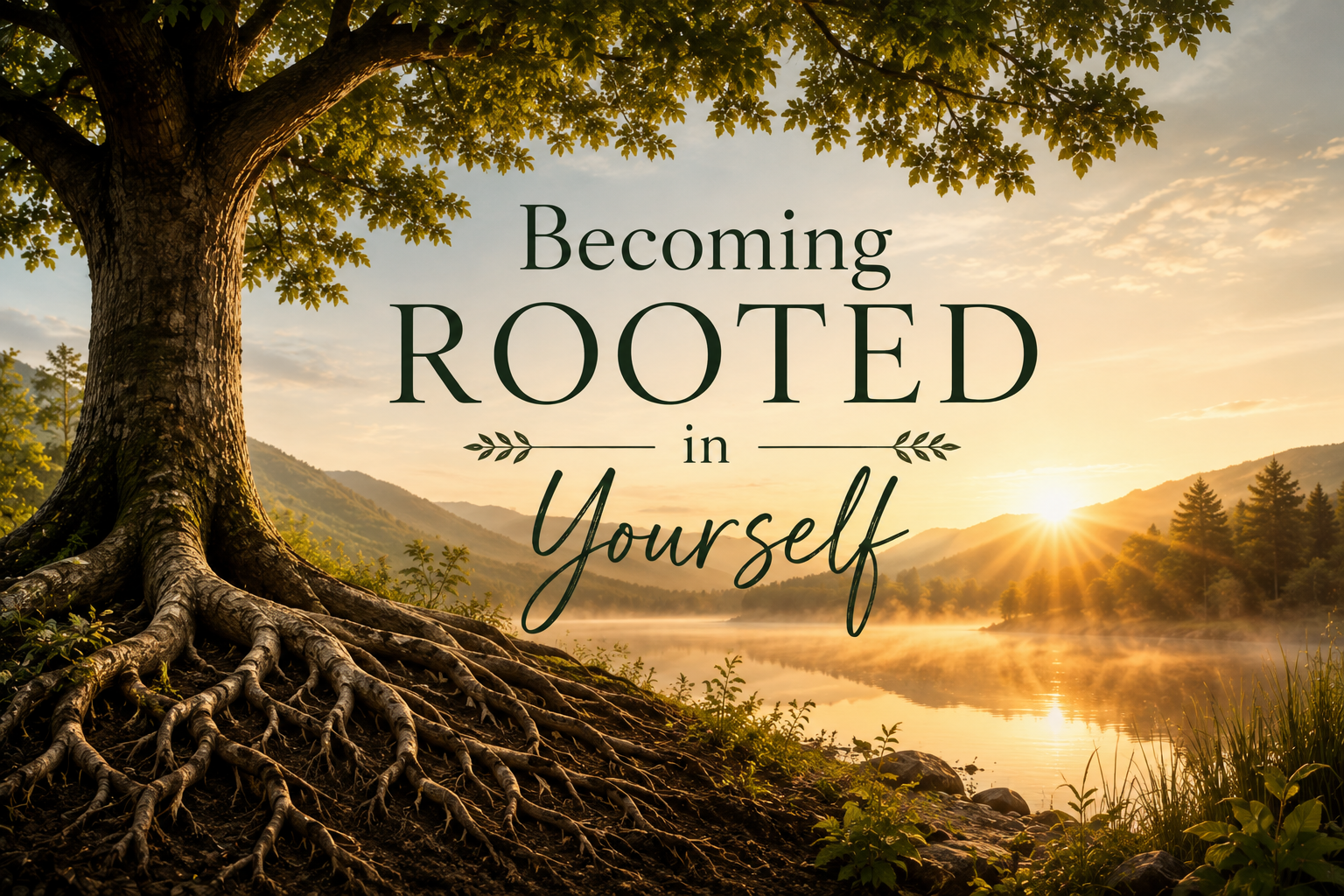
Becoming Rooted in Yourself
Learn how to become rooted in yourself through self-trust, boundaries, grounding, quiet, faith, and daily practices that build inner stability and peace.
How to Build Inner Stability, Trust Yourself, Protect Your Peace, and Live From Your Center
Becoming rooted in yourself is not becoming selfish.
It is becoming steady.
It is learning to live from your center instead of being continually pulled by expectations, reactions, pressure, comparison, guilt, fear, or the needs of everyone around you.
When you become rooted, something inside you begins to settle.
You still care.
You still love.
You still help.
You still feel deeply.
But you no longer have to lose yourself every time life becomes loud.
You begin developing an inner foundation strong enough to return to.
You know what matters to you.
You recognize what strengthens you.
You notice what drains you.
You hear your own needs more clearly.
You become more comfortable with your boundaries.
You make decisions with greater honesty.
And instead of looking outside yourself for constant permission, reassurance, or validation, you become increasingly able to stand inside your own life.
Rootedness is not hardness.
It is stability with softness.
It is strength without losing tenderness.
It is knowing where you stand while remaining open to growth.
What Does It Mean to Be Rooted in Yourself?
Being rooted means maintaining a connection with yourself even when something around you becomes unsettled.
Someone may misunderstand you without making you question everything you know about yourself.
Someone may disagree with you without requiring you to abandon your values.
A difficult day may shake you without becoming your identity.
An emotional moment may affect you without determining every decision that follows.
You may need support without believing you are powerless.
You may change your mind without losing yourself.
You may experience uncertainty without surrendering your entire inner world to fear.
Being rooted does not mean becoming unshakable.
Trees move in the wind. Roots do not prevent movement; they create enough stability for movement without uprooting the whole tree.
The same can become true within you.
Why Do We Become Disconnected From Ourselves?
Most people do not consciously decide to abandon themselves.
It happens gradually.
You learn what keeps the peace.
What earns approval.
What prevents conflict.
What makes other people happy.
What makes you useful.
What helps you belong.
What keeps life moving.
Perhaps you became the dependable one.
The strong one.
The helper.
The fixer.
The peacemaker.
The person who rarely needed anything.
You may have become exceptionally good at noticing what everyone else needed while becoming less familiar with your own inner signals.
What do I want?
What do I need?
What do I believe?
What actually feels right to me?
What am I tired of carrying?
What brings me alive?
Those questions can become surprisingly difficult when you have spent years orienting yourself around everything outside of you.
Rootedness begins by turning some of that attention homeward again.
Rootedness Begins With Knowing Yourself
You cannot become deeply rooted in a self you rarely listen to.
Begin with curiosity.
What gives you energy?
What consistently drains it?
What matters deeply to you?
What do you believe?
What kind of life feels meaningful?
What environments help you feel peaceful?
What repeatedly leaves you unsettled?
What do you genuinely enjoy?
Where are you pretending?
What have you outgrown?
What are you doing primarily because you fear disappointing someone?
These questions are not selfish.
They are clarifying.
Knowing yourself does not mean believing every impulse should be followed.
It means becoming familiar enough with your inner world that you can discern what deserves attention.
Learn to Recognize Your Own Signals
Rootedness becomes easier when you notice yourself before reaching the breaking point.
Your body and emotions can offer information long before you consciously name what is happening.
Perhaps your shoulders tighten around a certain person.
Your stomach sinks when you agree to something you do not want to do.
You become unusually tired after particular interactions.
You notice resentment building after repeatedly overcommitting.
You feel relief when something is cancelled.
None of these sensations automatically tells you exactly what decision to make.
But they are information.
Instead of immediately overriding them, become curious.
What is this reaction telling me?
What might I need?
Is something here asking for attention?
Learning to notice yourself is one way of growing roots.
Rootedness Is Different From Rigidity
Being rooted does not mean refusing to change.
Healthy roots support growth.
You can learn something new.
Change your opinion.
Admit you were wrong.
Move somewhere new.
Begin again.
Leave something behind.
Discover a new part of yourself.
Rootedness does not require you to defend an outdated version of who you are.
It gives you enough inner stability to grow without feeling that every change destroys your identity.
You can evolve and remain grounded.
Honesty Deepens Your Roots
One of the strongest forms of grounding is truth.
Not brutal honesty.
Not self-criticism.
Quiet honesty.
I am tired.
I do not want this anymore.
I need help.
I actually love this.
This relationship needs a boundary.
I have changed.
I am afraid.
I need more time.
This matters to me.
Every time you acknowledge what is true without immediately silencing it, you strengthen your relationship with yourself.
Truth gives your inner life somewhere solid to stand.
Boundaries Help Protect Your Roots
Boundaries are not punishments.
They help define where your responsibility ends and another person's begins.
A boundary may look like:
Not answering immediately.
Declining something you do not have capacity for.
Ending a disrespectful conversation.
Protecting time for rest.
Turning off notifications.
Keeping part of your life private.
Saying:
I can't do that.
I need time to think about it.
That doesn't work for me.
I can help with this much, but not all of it.
I am not available tonight.
You do not need ten paragraphs to make every boundary legitimate.
Sometimes a clear sentence is enough.
Boundaries help you remain loving without becoming endlessly available.
Stop Overexplaining Yourself
Overexplaining often happens when you know what you need but still feel responsible for making everyone else comfortable with it.
So you explain.
Then explain the explanation.
Then soften it.
Then apologize.
Then provide additional evidence.
Eventually, a simple boundary becomes a courtroom proceeding.
Rootedness sounds different.
This is what I can do.
This is what I cannot do.
This is what I have decided.
You can communicate respectfully without turning every personal choice into something another person must approve.
Rooted People Can Still Ask for Help
Self-rootedness should never become another version of hyper-independence.
Being grounded in yourself does not mean:
I need nobody.
I handle everything alone.
I never struggle.
I never lean on anyone.
Healthy rootedness allows connection.
A strong tree still receives sunlight, rain, nutrients, and support from an entire ecosystem.
People need people too.
The difference is that support becomes something you receive without surrendering your entire center.
You can ask for help and remain capable.
You can receive guidance without handing someone else ownership of your decisions.
You can love deeply without disappearing into another person.
Build Self-Trust Through Small Promises
Self-trust is rarely built through grand declarations.
It grows through evidence.
You tell yourself you will take a walk.
And you do.
You decide to pause before answering.
And you pause.
You promise yourself ten quiet minutes.
And you protect them.
You decide not to reopen a conversation tonight.
And you leave it alone.
You choose to go to bed earlier.
And you try.
Each small promise says:
I listen to myself.
I respond to myself.
I can rely on myself.
Do not begin with enormous promises.
Begin with believable ones.
Roots grow through repetition.
Create Daily Anchors
A rooted life benefits from simple practices that repeatedly bring you home.
You might begin the morning with two quiet minutes before looking at your phone.
Pray before entering the noise of the day.
Drink water.
Step outside.
Write one sentence in a journal.
Take a walk without constant stimulation.
Sit quietly before making an important decision.
Ask yourself at midday:
How am I doing?
At night:
What strengthened me today?
These practices do not need to become another performance.
They are anchors.
Small ways of remembering:
I am still here.
Protect Some Quiet
Constant input makes it difficult to hear your own inner voice.
Messages.
News.
Videos.
Opinions.
Podcasts.
Social media.
Music.
Work.
Other people's problems.
Even useful input can become overwhelming when nothing ever becomes quiet.
You do not need silence all day.
But give yourself some spaces where nothing new is entering.
Drive without turning something on.
Walk without headphones.
Sit outside.
Pray.
Look out the window.
Make coffee without checking your phone.
Let your own thoughts have enough room to finish a sentence.
Quiet can reveal what noise has been covering.
Stop Letting Every Emotion Become a Command
Being rooted does not mean suppressing emotion.
It means allowing emotions to communicate without automatically giving them authority over every decision.
Fear may say:
Run.
Anger may say:
Respond immediately.
Guilt may say:
Say yes.
Loneliness may say:
Go back.
Excitement may say:
Do it right now.
You can feel all of these without obeying them instantly.
Try:
I feel this.
I am going to give it some space before deciding what it means.
That pause can protect you from making permanent decisions inside temporary emotional weather.
Stop Measuring Yourself Through Other People
It is difficult to become rooted when your sense of self changes according to the room.
Do they like me?
Did I impress them?
Am I ahead?
Am I behind?
Did they approve?
Do they understand?
Comparison keeps sending your attention outward.
Rootedness brings some of it back.
Ask instead:
Am I living according to what I believe matters?
Am I growing?
Am I treating people well?
Am I becoming more honest?
Am I building a life that actually fits me?
That is a sturdier measurement.
Rootedness Changes Relationships
When you become more rooted, some relationships may become healthier.
You communicate more clearly.
You stop expecting people to read your mind.
You become more capable of saying no without resentment.
You can hear disagreement without immediately experiencing it as rejection.
You stop giving from obligation and begin giving more honestly.
You become less interested in controlling how everyone perceives you.
This creates room for more genuine connection.
Because real intimacy requires two people.
Not one person and another person who continually disappears.
Rootedness Changes Decision-Making
An unrooted decision often begins with:
What will everyone think?
A rooted decision may ask:
What is wise?
What is true?
What aligns with my values?
What responsibilities do I genuinely have?
What consequences need to be considered?
What choice can I live with peacefully?
What does prayer reveal when the noise settles?
Rootedness does not guarantee perfect decisions.
It helps decisions come from a clearer place.
Rootedness Helps You Return After Difficult Moments
A difficult interaction may still hurt.
A disappointment may still shake you.
Criticism may still sting.
An unexpected problem may still create stress.
Rootedness does not make you immune.
The change is in your ability to return.
Instead of remaining emotionally scattered for days, you begin finding your way back sooner.
You breathe.
You pray.
You walk.
You rest.
You talk with someone you trust.
You remember what is true.
You separate the event from your entire identity.
Recovery becomes part of rootedness.
Do Not Rush Your Roots
Much of the deepest growth in life is invisible for a while.
Roots develop underground.
There may be seasons when it seems as though nothing is changing.
But perhaps you are:
Learning to say no.
Recognizing your patterns sooner.
Becoming less reactive.
Trusting yourself more.
Resting without as much guilt.
Letting go of old expectations.
Hearing your own voice again.
These changes may not create dramatic external evidence immediately.
But they matter.
What grows beneath the surface eventually supports what becomes visible above it.
Signs You Are Becoming More Rooted
You may notice that:
You recover more quickly after being shaken.
You need less constant reassurance.
You recognize your needs sooner.
You are becoming more comfortable saying no.
You pause before reacting.
You feel less attracted to unnecessary chaos.
You explain yourself less.
You make decisions more slowly when necessary.
You can receive advice without automatically following it.
You recognize what drains and restores you.
You feel more comfortable with quiet.
You are becoming less willing to abandon yourself for approval.
You can change your mind without feeling that you have lost yourself.
Peace is becoming more valuable than performance.
Roots often grow quietly before anything visible blooms.
A Simple Rooting Practice
When you feel scattered, try this.
Place both feet on the ground.
Take a comfortable breath.
Look around and notice where you actually are.
Then ask:
What is true right now?
Not tomorrow.
Not everything that could happen.
Right now.
Then ask:
What belongs to me in this moment?
Maybe it is one decision.
One conversation.
One task.
One boundary.
One prayer.
One period of rest.
Then ask:
What can I release for now?
You do not need to carry the whole future in one moment.
Come back to what is here.
Becoming Rooted in God
There is another layer of rootedness for a life of faith.
Being rooted in yourself does not have to mean making yourself the center of everything.
It can mean becoming grounded enough to hear God without every outside voice drowning out that relationship.
Prayer becomes less about panic.
Discernment becomes less about seeking endless signs.
You begin bringing your whole self before God.
Your hopes.
Your uncertainty.
Your decisions.
Your boundaries.
Your gifts.
Your fears.
Your questions.
Your future.
Rooted faith does not require pretending you never struggle.
It gives struggle somewhere deeper to land.
You can say:
God, help me remain grounded in what is true.
Help me recognize what belongs to me and what does not.
Help me love without losing myself.
Help me grow without fear.
Help me become steady without becoming hard.
Frequently Asked Questions
What does it mean to be rooted in yourself?
Being rooted means having enough self-awareness, inner stability, values, boundaries, and self-trust to remain connected to yourself even when circumstances or other people's reactions become difficult.
How do I become more grounded in myself?
Begin by noticing your needs, values, emotions, body signals, boundaries, and patterns. Small practices such as quiet time, journaling, prayer, walking, pausing before decisions, and keeping promises to yourself can strengthen that connection.
Is being rooted in yourself selfish?
No. Healthy rootedness can support healthier relationships because it allows you to communicate more honestly, give more freely, maintain clearer boundaries, and take responsibility for your own needs and decisions.
How do boundaries help with self-trust?
Boundaries turn inner awareness into action. When you recognize a limit and honor it, you demonstrate to yourself that your needs, values, time, and energy matter.
Why do I lose myself around other people?
People may become highly focused on others because of learned patterns involving approval, conflict avoidance, caregiving, belonging, or adaptation. Recognizing the pattern creates an opportunity to respond differently.
Can I be rooted and still change?
Absolutely. Rootedness is not rigidity. A strong inner foundation can actually make growth easier because you can explore, learn, change direction, and evolve without feeling that every change threatens your identity.
How do I know if I am becoming more rooted?
You may notice less dependence on validation, stronger boundaries, clearer decision-making, greater comfort with quiet, faster recovery after difficult moments, more awareness of your own needs, and less willingness to abandon yourself simply to maintain approval.
Can faith help me become more rooted?
For many people, yes. Prayer, spiritual reflection, discernment, and a sense of relationship with God can provide a deeper foundation for identity, values, decisions, meaning, and peace.
A Prayer for Deeper Roots
God, help me become deeply rooted in truth.
Teach me to hear my own heart without making fear my guide.
Help me recognize what strengthens me, what drains me, what belongs to me, and what I am finally allowed to release.
Give me boundaries without hardness, confidence without pride, tenderness without self-abandonment, and faith without fear.
When life becomes loud, bring me back to center.
When other voices become overwhelming, help me hear Yours.
Let my roots grow deep enough to support everything beautiful You are still growing through my life.
Amen.
A Sacred Return to Yourself
Becoming rooted in yourself is not about becoming harder.
It is about becoming truer.
You are learning how to remain connected to yourself while loving other people.
How to receive guidance without surrendering discernment.
How to feel emotion without letting every feeling choose your direction.
How to rest without believing you have become lazy.
How to say no without turning your boundary into an apology.
How to change without losing your center.
How to grow without rushing.
How to stand without becoming rigid.
How to belong without disappearing.
You do not have to accomplish all of this at once.
Roots do not grow that way.
They deepen quietly.
One honest answer.
One boundary.
One prayer.
One promise kept.
One moment of choosing peace instead of performance.
One decision made from truth instead of fear.
Again.
And again.
Until something inside you becomes steadier.
Until you realize you are no longer as easily pulled away from yourself.
Until the life above the surface begins reflecting the strength growing underneath it.
Your roots may be invisible.
But they are becoming your foundation.
And from strong roots, life has room to bloom.
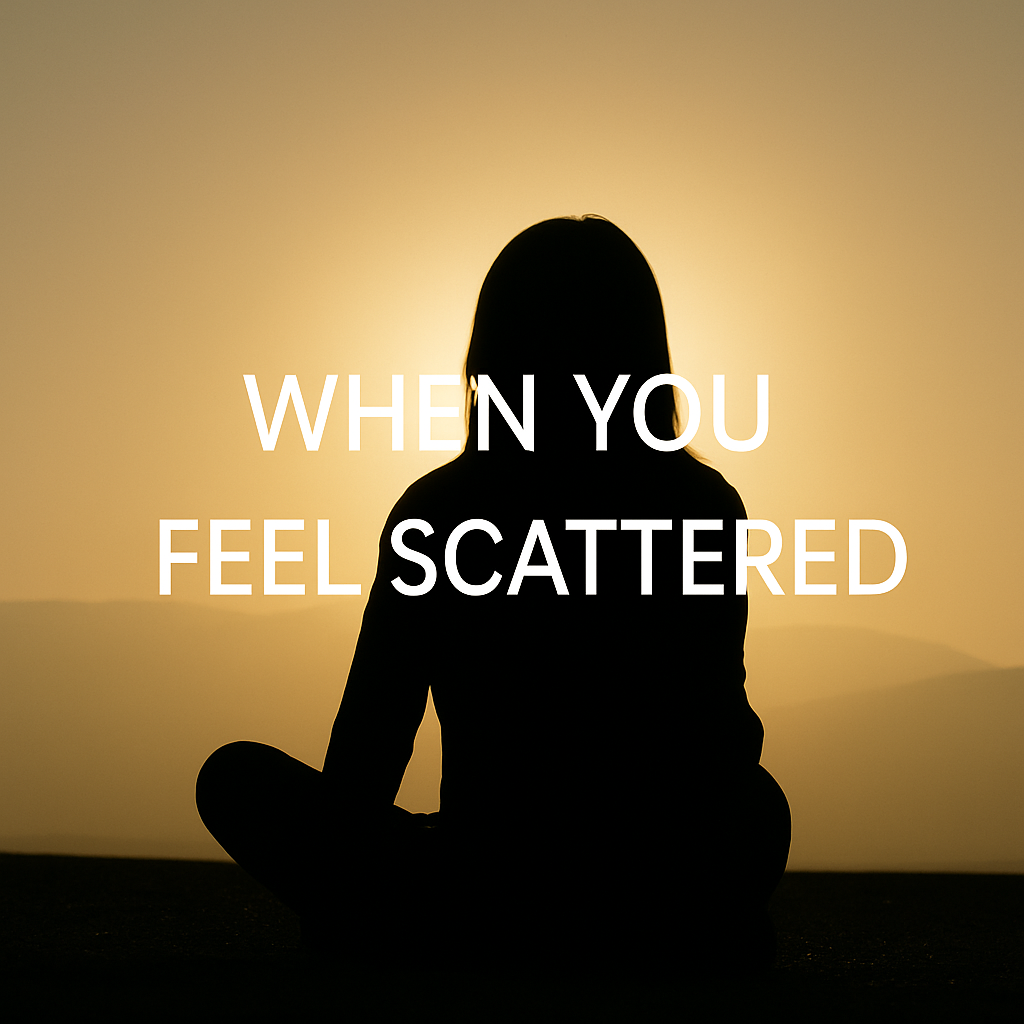
When You Feel Scattered
A calming reflection for moments when life feels overwhelming. Learn how to gather your energy, reconnect with yourself, and find inner clarity when you feel scattered.
There are days when your mind feels like a room full of open drawers.
Thoughts everywhere.
Emotions half-finished.
Energy pulled in five directions at once.
If you feel scattered, you are not failing.
You are human.
And your soul may be asking for a return to center.
Feeling scattered can happen to anyone. It does not mean you are doing life wrong. It often means your inner world has been carrying too much input, too much pressure, or too many unfinished thoughts for too long. When that happens, peace can start to feel far away, even though it is still available.
Why you may feel scattered
Feeling scattered often happens when your spirit has been overstimulated.
Too many decisions.
Too much noise.
Too many messages, opinions, and responsibilities competing for your attention.
Sometimes life is not even unusually hard. It is just constant. And your inner world needs room to catch up.
Scattered energy can also be a sign that your nervous system is searching for certainty. It jumps from thought to thought, trying to regain control. It looks for answers, solutions, and closure all at once. But peace does not come from answering everything immediately.
Peace comes from returning to yourself.
What scattered energy can feel like
When your energy is scattered, you may notice:
trouble focusing
mental overwhelm
emotional irritability
feeling behind even when you are trying
jumping from one thought to the next
difficulty praying, resting, or settling down
a sense of inner noise that will not quiet easily
These feelings are not signs that something is wrong with you.
They are signals.
They may be telling you that your body, mind, and spirit need grounding more than more pressure.
Start with a simple reset
When you feel scattered, do not try to fix your whole life in one moment.
Create clarity by taking one small grounding step.
Put both feet on the floor.
Relax your shoulders.
Unclench your jaw.
Take one slow breath in.
Exhale longer than you inhaled.
Then do it again.
This matters because your body often needs to feel safe before your mind can soften. A simple physical reset can interrupt the spiral and begin bringing your energy back into the present moment.
You do not need a dramatic breakthrough.
You need a gentle return.
Ground your body before you fix your thoughts
Sometimes people try to think their way out of feeling scattered.
But when your nervous system is overstimulated, more thinking can add more noise. This is why grounding the body first is so helpful. It helps you step out of mental spinning and back into the safety of the present moment.
You might try:
putting your hands over your heart or lower belly
taking a short walk outside
stretching your neck, shoulders, or jaw
drinking water slowly
holding a warm drink in both hands
sitting in stillness for one minute without trying to solve anything
These things may seem simple, but simple is often what helps the most.
Narrow the focus
Scattered energy usually means your attention is stretched too wide.
So make your world smaller for a moment.
Ask yourself:
What is the next right thing?
Not the next ten things.
Not everything you forgot.
Not the whole week.
Not the full future.
Just the next right thing.
Maybe it is one small task.
One call.
One email.
One glass of water.
One prayer.
One corner of a room to tidy.
Completion is grounding.
One finished thing can quiet a thousand spinning thoughts because it gives your mind a place to land.
Clear the inner noise
Sometimes the scattered feeling is not only about tasks.
Sometimes it is emotional.
It may be worry you have not named. Grief you have not given space. Pressure you have been carrying silently. Unspoken feelings often spread through your system when they are not acknowledged. They create inner clutter.
A simple way to release some of that noise is to write for two minutes.
Try finishing these sentences:
This is what I’m carrying.
This is what I’m afraid of.
This is what I need.
You do not need perfect words.
You need honesty.
When feelings stay unnamed, they often grow louder. When they are named, they begin to settle.
Return to your spirit
When you feel scattered, come back to God simply.
You do not need a long prayer.
You do not need polished words.
You do not need to feel spiritually impressive.
Try one sentence:
God, gather me back to myself.
God, hold what I cannot hold right now.
God, give me peace where my mind is noisy.
God, steady me.
Even a whispered prayer can become a doorway back to steadiness.
Prayer helps remind your spirit that you do not have to carry your whole inner world alone. Sometimes peace returns not because every problem is solved, but because you remember you are being held.
Protect your attention
Often what you need most is not more effort.
It is fewer inputs.
Your attention is holy. It shapes your inner atmosphere. If your attention is constantly being pulled outward, your spirit can start to feel fragmented. Protecting your attention is one of the most loving things you can do when you feel scattered.
That may mean:
taking a short break from scrolling
turning down noise
stepping away from other people’s urgency
saying no when your soul is already full
pausing before taking on one more thing
choosing peace over constant productivity
You are allowed to simplify.
You are allowed to slow down.
You are allowed to choose peace over pressure.
A small grounding practice for scattered days
Here is a simple grounding practice you can use anytime:
Sit down.
Put both feet on the floor.
Take three slow breaths.
Place a hand over your heart.
Say quietly, I am here. God is with me. I can take one step.
Then ask:
What do I need most right now?
Keep it simple.
That is enough.
Peace returns one moment at a time
One of the most important things to remember is that you do not have to find your center all at once.
You return to it.
One breath at a time.
One choice at a time.
One prayer at a time.
One gentle step at a time.
This is how scattered energy begins to soften. Not by force. Not by pressure. But by returning, again and again, to what is steady.
A closing reminder
When you feel scattered, do not judge yourself.
Come back to your breath.
Come back to one step.
Come back to your body.
Come back to God.
Your mind may feel messy, but your spirit still knows the way home.
You do not have to become centered all at once.
You only have to return, gently, one moment at a time.
And every gentle return strengthens your peace.
Your Soulful Pathways ↑
Discover more series pages for you in Your Soulful Pathways ↑.
If this message resonated, you may also enjoy: