

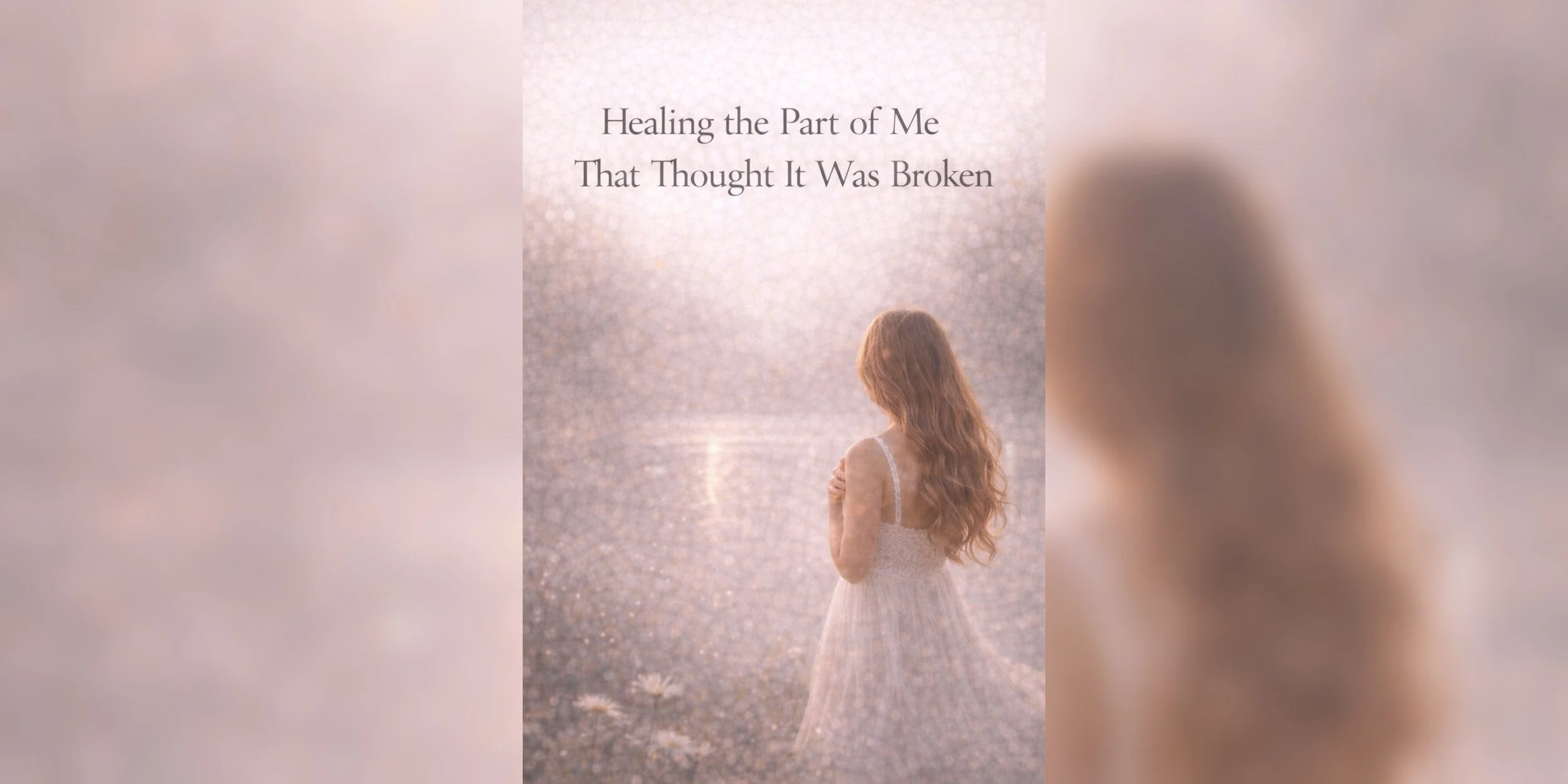
Healing the Part of Me That Thought It Was Broken
A gentle return to wholeness, offering compassion to the parts of you that learned to believe they were too much or not enough.
Nothing in me is beyond love.
The Part That Learned the Wrong Story
There’s a part of me that has believed, at different times, that something is wrong with me.
Not always in obvious ways. Sometimes it’s just a quiet feeling:
I’m too much.
I’m not enough.
I’m hard to love.
I should be different.
This part didn’t appear because I’m flawed. It appeared because something hurt, and my system tried to make sense of it.
And the story it landed on was: it must be me.
How “Broken” Can Feel
Feeling broken can look like:
over-apologizing
hiding needs
working too hard to be acceptable
shrinking feelings to avoid being a burden
assuming I’m the problem before I check the facts
I’m learning to meet these patterns with compassion. They’re signals, not shame.
What That Part Really Needs
The part of me that thinks it’s broken isn’t asking to be fixed through force. It’s asking to be met.
It needs:
reassurance
safety
gentleness
patience
a new story
It needs me to stop turning against myself.
Practice: A New Way to Respond
Name the Part With Kindness
I can say:
A part of me feels hurt right now.
Not “I am broken.”
Just: a part of me is hurting.
That small shift creates space.
Offer a True Sentence
I can offer:
“I’m here with you.”
“You don’t have to prove anything.”
“You’re allowed to feel this.”
“You are not too much.”
Truth doesn’t have to be loud. It only has to be steady.
Give the Body a Signal of Safety
A hand to the heart. A slow breath. A softer posture.
A pause before I rush to fix myself.
My body learns safety through experience.
The New Story I’m Choosing
What if the truth isn’t that I’m broken?
What if the truth is:
I was impacted.
I adapted.
I survived.
And now I’m healing.
That story holds my humanity without labeling me as defective.
A Sentence I Want to Remember
When the old belief returns, I can come back to this:
I am not broken. I am becoming whole.
And I can be gentle while I become.
Your Soulful Pathways ↑
Desktop: Hover over “Your Soulful Pathways” in the top menu to explore another series.
Mobile: Tap the menu (☰), then choose “Your Soulful Pathways.”
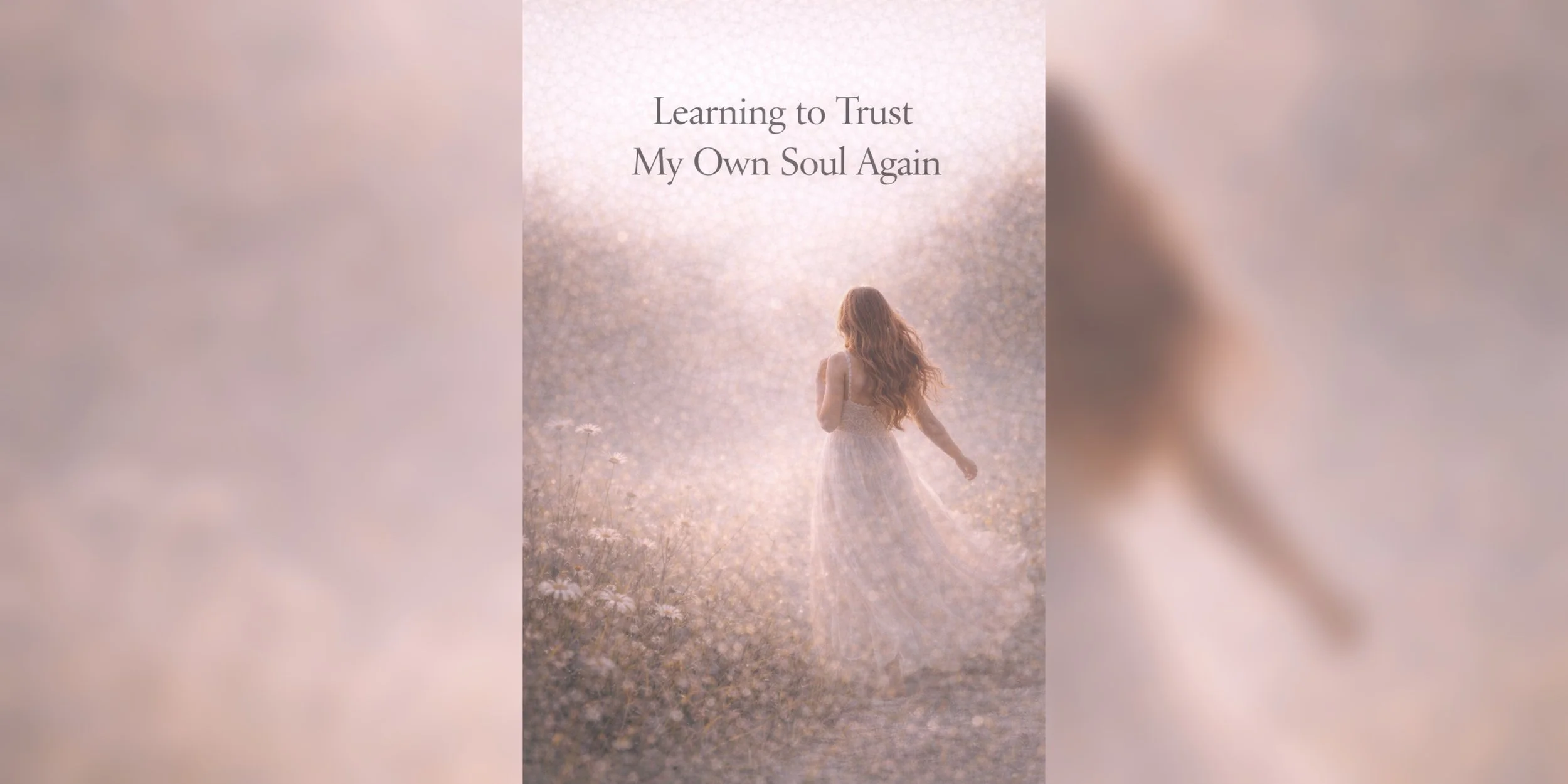
Learning to Trust My Own Soul Again
A gentle guide to rebuilding self-trust through small promises, inner listening, and steady connection with your own soul.
I can listen to myself and believe what I hear.
The Quiet Rebuilding
Trust isn’t always something I “find.” Sometimes it’s something I rebuild.
Especially if I spent a long time doubting myself, overthinking my instincts, or looking outward for the “right” answer. When that’s been my pattern, self-trust can feel unfamiliar, even when it’s what I want most.
So I’m learning to rebuild it gently, in small, believable steps.
What Self-Trust Really Is
Self-trust doesn’t mean I never make mistakes. It means I stay with myself when I do.
It means:
I listen to my inner signals
I honor my boundaries
I take myself seriously
I make choices I can respect
I repair gently when I misstep
Trust is a relationship. And I am learning to be in relationship with myself.
Where My Doubt Came From
I don’t have to blame the past to understand it. I can simply recognize that doubt can form when:
my feelings were dismissed
my intuition was questioned
I was praised for pleasing instead of being
my needs felt inconvenient
I learned to “second-guess” to stay safe
If I had to become adaptable to survive, it makes sense that certainty didn’t always feel safe.
But safety can be rebuilt.
Practice: Small Proof, Not Big Pressure
Keep One Small Promise
Self-trust grows when I do what I say I’ll do, in a way that’s kind.
A simple promise I can keep:
drink water before I push myself
take a short walk when I feel scattered
pause before I say yes
follow through on one supportive choice
Small proof is powerful.
Ask My Body
I ask:
Does this make me feel more like myself?
Do I feel clearer afterward?
Does my chest soften or tighten?
My body often knows before my mind can explain.
Trust the Gentle Yes
Sometimes my soul speaks as a soft yes, not a loud one.
A quiet pull. A calm curiosity. A sense of peace.
I’m learning not to dismiss gentle guidance just because it isn’t dramatic.
What Trust Begins to Change
When I trust myself more, life starts to feel less frantic. I stop needing constant reassurance. I stop asking everyone else to validate what I already know.
I become steadier. Softer. Clearer.
Not because life becomes perfect, but because my foundation strengthens.
A Sentence to Carry With Me
When I feel unsure, I can return to this:
I can take one true step, and trust will grow from there.
And it will.
Your Soulful Pathways ↑
Desktop: Hover over “Your Soulful Pathways” in the top menu to explore another series.
Mobile: Tap the menu (☰), then choose “Your Soulful Pathways.”
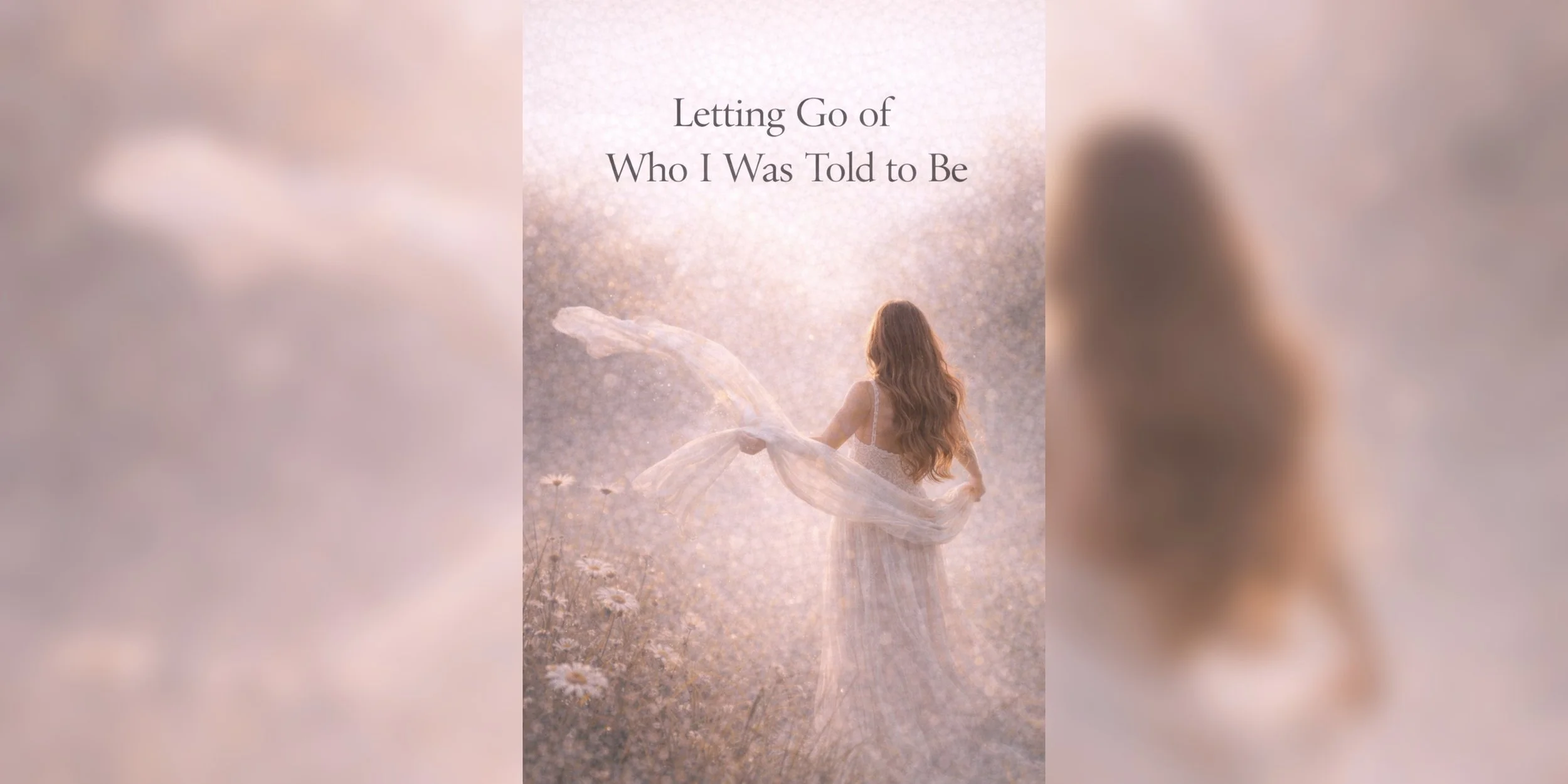
Letting Go of Who I Was Told to Be
A gentle release of old identities and expectations, making space for a truer, lighter way of being yourself.
I can release what never truly fit me.
Noticing What I’ve Been Carrying
There are identities I wore because they helped me belong. Some were handed to me gently. Some were placed on me without asking. And over time, I got so used to carrying them that I forgot to question whether they were actually mine.
I’m learning to notice the difference between:
who I truly am
andwho I became to be accepted
This isn’t about rejecting my past. It’s about telling the truth with tenderness.
How Borrowed Identities Form
Sometimes “who I was told to be” came from family expectations. Sometimes it came from culture, religion, community, or survival. Sometimes it came from the roles I learned early:
Be responsible. Be grateful. Be quiet. Be strong. Be successful. Be easy.
None of those things are wrong on their own. The heaviness begins when they become rules I’m not allowed to outgrow.
And I’m allowed to outgrow them.
The Tender Part: Grief
Letting go can feel surprisingly emotional. Not because the old identity was true, but because it was familiar.
I might grieve:
the version of me that tried so hard
the safety I felt when I followed the script
the hope that being “perfect” would make everything stable
the relationships that depended on me staying the same
Grief is not a sign I’m making a mistake. It’s a sign I’m changing with honesty.
Practice: Releasing Without Rejecting
I can let go without turning my past into an enemy.
Name What I’m Ready to Release
I ask:
Which identity feels heavy lately?
The achiever? The caretaker? The peacemaker? The one who never needs anything?
Name What It Cost Me
I ask:
What did I lose when I tried to stay inside this role?
Rest? Joy? My voice? My softness? My truth?
Name What I’m Ready to Choose Instead
I choose a new permission:
I am allowed to be real, not perfect.
I am allowed to grow beyond expectations.
I am allowed to change my mind.
I am allowed to live in a way that feels true.
What I’m Learning About Belonging
Belonging that requires me to betray myself isn’t the kind of belonging that heals me.
I’m learning to choose connection that allows breathing room. Connection that doesn’t punish authenticity. Connection that makes me feel more like myself, not less.
A Sentence to Return To
When old expectations pull at me, I can come back to this:
I can love people and still choose myself.
Letting go isn’t loss.
Sometimes letting go is the beginning of my true life.
Your Soulful Pathways ↑
Desktop: Hover over “Your Soulful Pathways” in the top menu to explore another series.
Mobile: Tap the menu (☰), then choose “Your Soulful Pathways.”
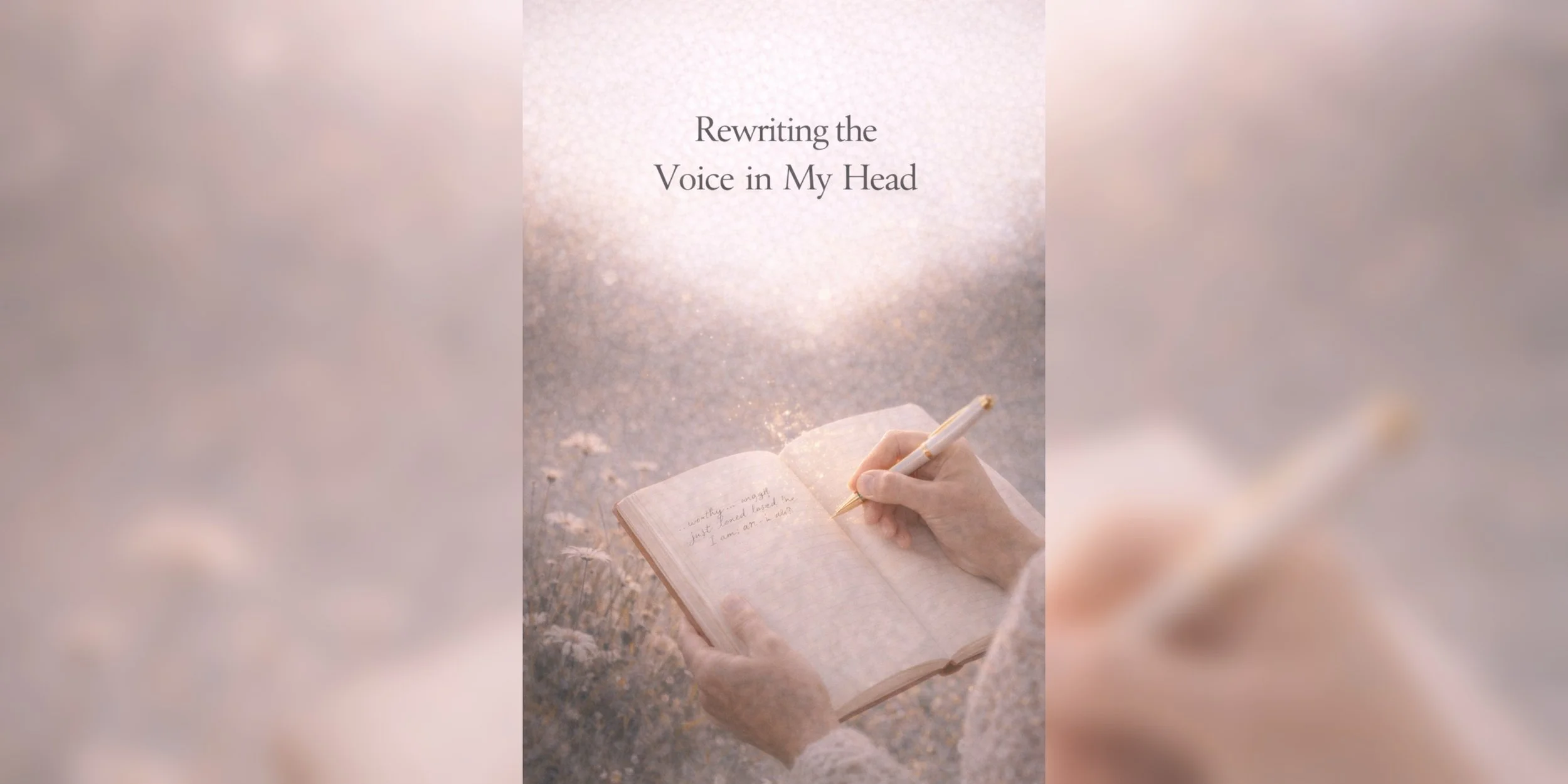
Rewriting the Voice in My Head
A gentle guide for softening inner criticism and building a kinder inner voice rooted in truth, safety, and self trust.
I can speak to myself with the tone of love.
Noticing the Inner Narrator
There’s a voice in my head that has followed me for years. Sometimes it’s quiet. Sometimes it’s sharp. Sometimes it sounds like “motivation,” but feels like pressure.
It says things like:
Why can’t you get it together?
You should be further along.
Don’t mess this up.
You’re too much.
You’re not enough.
I’m learning that I don’t have to treat this voice as truth.
I can treat it as a pattern.
And patterns can be rewritten.
How the Critical Voice Can Form
I don’t need to blame my past to understand it. I can simply recognize this: many people develop an inner critic because it once served a purpose.
Sometimes it tried to:
keep me from being rejected
keep me from making mistakes
keep me “acceptable”
keep me safe by staying small
In that sense, my inner critic isn’t evil. It’s scared. It’s protective. It’s outdated.
The Goal Isn’t Silence, It’s Safety
I’m not trying to erase every critical thought. I’m trying to create enough inner safety that the critic doesn’t run my life.
I want a new inner narrator. One that tells the truth without cruelty.
Practice: A Kinder, Truer Rewrite
Here are gentle ways I can begin.
Step 1: Name the Tone
I ask:
Is this voice speaking with love or with fear?
If it’s fear, I don’t have to obey it.
Step 2: Translate the Message
Often the critic is trying to communicate a need.
For example:
“You’re failing” might mean “I’m overwhelmed.”
“You’re not enough” might mean “I want reassurance.”
“Hurry up” might mean “I’m afraid of falling behind.”
When I translate it, I soften it.
Step 3: Replace with a True Sentence
I choose a sentence that is both kind and honest:
“I’m doing the best I can today.”
“I can take this one step at a time.”
“I’m allowed to learn.”
“I don’t need to punish myself to grow.”
Step 4: Speak to Myself Like Someone I Love
If I wouldn’t say it to someone tender, I don’t need to say it to myself.
This isn’t weakness. This is healing.
A Small Daily Ritual
I can practice one minute a day:
hand to heart, one breath, and one sentence that names what’s true.
For example:
“I’m here. I’m trying. I can be gentle with myself.”
Over time, repetition becomes reprogramming.
The New Inner Voice I’m Choosing
When the old voice gets loud, I want to remember:
I can grow without being harsh.
And with that one choice, I begin rewriting my life from the inside out.
Your Soulful Pathways ↑
Desktop: Hover over “Your Soulful Pathways” in the top menu to explore another series.
Mobile: Tap the menu (☰), then choose “Your Soulful Pathways.”
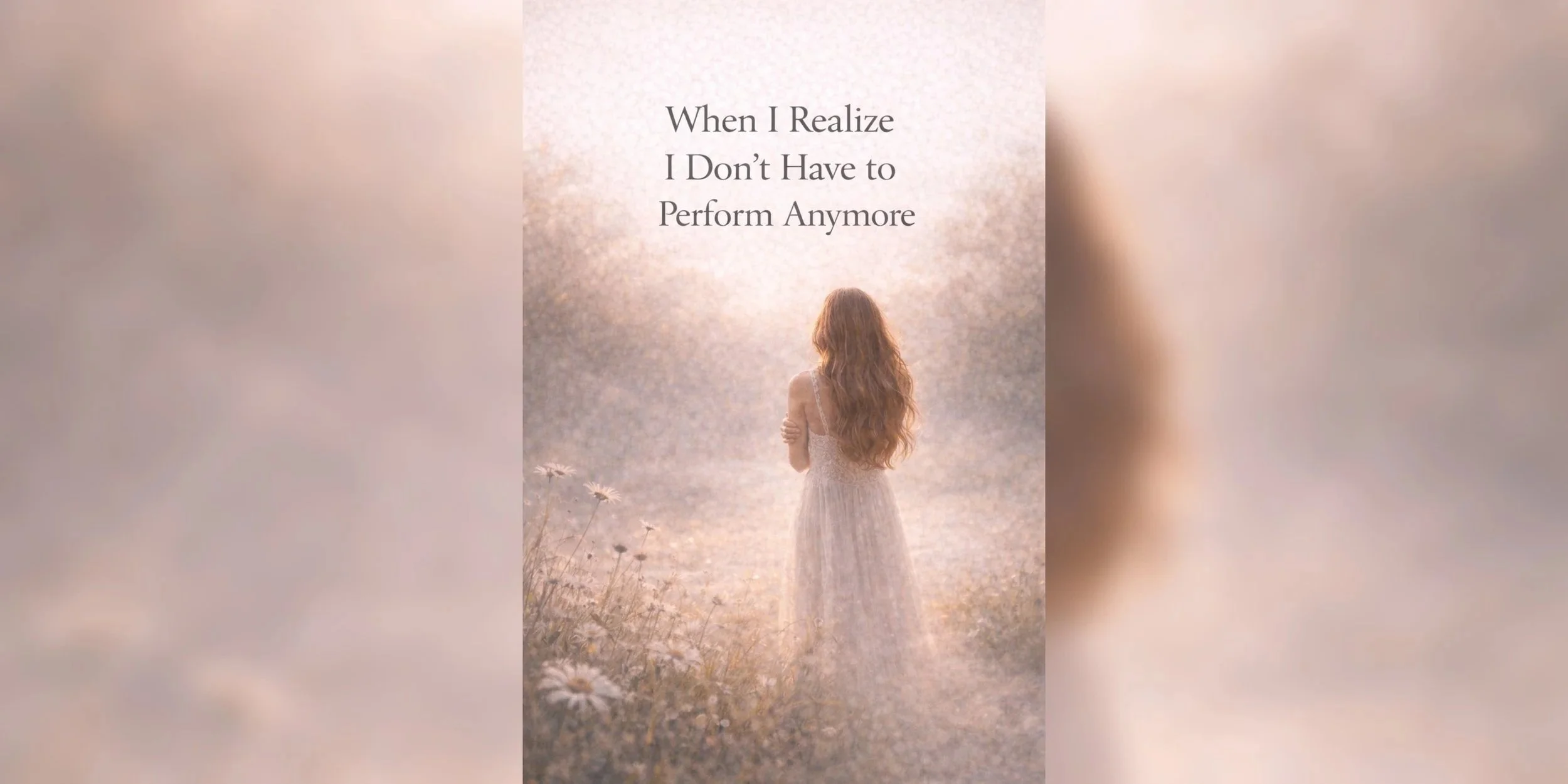
When I Realize I Don’t Have to Perform Anymore
A gentle release of roles and pressure, helping you return to authenticity, rest, and being real without fear.
I can be real and still be loved.
The Exhaustion That Tells the Truth
There is a kind of exhaustion that comes from trying to be “good” all the time.
Not good in a moral sense, but good in the way that keeps everything smooth. The way that makes me dependable. The way that keeps people pleased. The way that makes me easy to be around.
When I’m in that pattern, I’m always scanning:
Am I doing enough?
Am I disappointing someone?
Am I being too much?
Am I allowed to need?
And eventually, my body gives me a signal:
I’m tired of performing.
What Performance Can Look Like
Performance doesn’t always look like being loud or dramatic. Sometimes it looks like:
smiling when I’m overwhelmed
being the strong one when I’m hurting
staying helpful so nobody notices I’m struggling
saying yes out of fear of conflict
acting “fine” so I don’t feel like a burden
This is not me being fake. This is me trying to stay safe.
And I can honor that… while also choosing a softer way.
The Shift Toward Authenticity
When I realize I don’t have to perform anymore, it doesn’t mean I stop caring about others. It means I stop abandoning myself to keep the peace.
The shift is subtle:
I begin speaking more honestly.
I begin resting without defending it.
I begin letting people have their feelings without trying to manage them.
I begin letting my no be simple.
This is not harshness. It’s clarity.
Practice: Stepping Out of the Role
I can begin with one small step.
Name the Role I’ve Been Playing
I ask:
Which role am I tired of carrying?
The fixer? The caretaker? The calm one? The achiever?
Naming the role helps me see it clearly.
Give Myself a New Permission
I choose a permission that feels gentle and true:
I am allowed to be unsure.
I am allowed to say I need time.
I am allowed to rest.
I am allowed to change my mind.
I am allowed to be honest.
Try One Honest Moment
One honest moment is enough:
“I’m not up for that today.”
“I need a little space.”
“I’m working on not overcommitting.”
“I can’t explain it fully, but this is what I need.”
Honesty doesn’t have to be dramatic to be powerful.
What I’m Learning About Love
The more I release performance, the more I see what’s real.
Some connections deepen when I’m honest.
Some connections shift.
And while that can feel tender, it also brings peace.
Because love that requires performance is not the kind of love that lets me breathe.
I want love that meets the real me.
A Sentence to Come Back To
When I feel myself slipping into performance again, I can return to this:
I am allowed to be real.
And I am.
Your Soulful Pathways ↑
Desktop: Hover over “Your Soulful Pathways” in the top menu to explore another series.
Mobile: Tap the menu (☰), then choose “Your Soulful Pathways.”

I Don’t Have to Earn What’s Already Mine
A soothing reflection that releases performance pressure and helps you return to the quiet truth of inherent worth.
My worth is not something I win. It is something I remember.
The Belief That Keeps Me Striving
There’s a belief I’ve carried at different times in my life, even when I didn’t realize it. It sounds like this:
When I do enough, I will finally feel worthy.
Worthy of rest. Worthy of love. Worthy of peace. Worthy of being proud of myself.
It’s a tempting belief, because it gives me a clear task: do more, be better, try harder. But it also keeps me on a treadmill that never truly stops.
And I’m learning something slowly and gently:
Worth is not a wage.
How This Pattern Can Form
This isn’t about blaming anyone. It’s about noticing what my system learned.
If I was praised most when I achieved, helped, stayed strong, or stayed pleasant, my nervous system may have linked performance with safety and belonging.
So I became good at earning.
Good at proving.
Good at pushing.
Good at being the version of myself that seemed easiest to accept.
Even if nobody explicitly said “earn your worth,” my body might have learned it anyway.
The Quiet Cost of Earned-Worth Living
When I believe I have to earn my worth, certain things become hard:
Rest feels like guilt.
Joy feels like something I should justify.
Mistakes feel like identity, not learning.
Boundaries feel selfish, even when they’re necessary.
Stillness feels uncomfortable, because I’m not producing.
That’s not motivation. That’s pressure.
And pressure doesn’t heal. It only drives.
The Difference Between Growth and Worth
I can want to grow. I can learn new habits. I can improve.
But growth is not the same thing as worth.
Growth is what I practice.
Worth is what I am.
If I forget that, I start using self-improvement as a way to become “acceptable.”
And I don’t want to live like I’m an audition.
Practice: Returning to Inherent Worth
When the earned-worth voice shows up, I can meet it softly.
Rest Before I “Deserve” It
I can give myself ten minutes of rest without earning it first.
This teaches my body a new rule: rest is allowed.
Receive Without Repaying
If someone is kind to me, I can let it land.
I don’t have to rush to prove I deserve it.
Speak to Myself Like I Belong Here
I can replace:
“I should be better.”
With:
“I’m learning. I’m human. I’m allowed.”
Choose One Nourishing Thing
One small act of nourishment, done purely because it supports me:
a cup of tea, a walk, music, quiet, a pause.
Not productivity. Not performance. Support.
A Sentence That Softens the Striving
When my mind panics and says “do more,” I want to return to this:
I do not have to prove I deserve to exist.
I do not have to earn what’s already mine.
I was never meant to earn my worth.
I was meant to live from what’s already mine.
Your Soulful Pathways ↑
Desktop: Hover over “Your Soulful Pathways” in the top menu to explore another series.
Mobile: Tap the menu (☰), then choose “Your Soulful Pathways.”
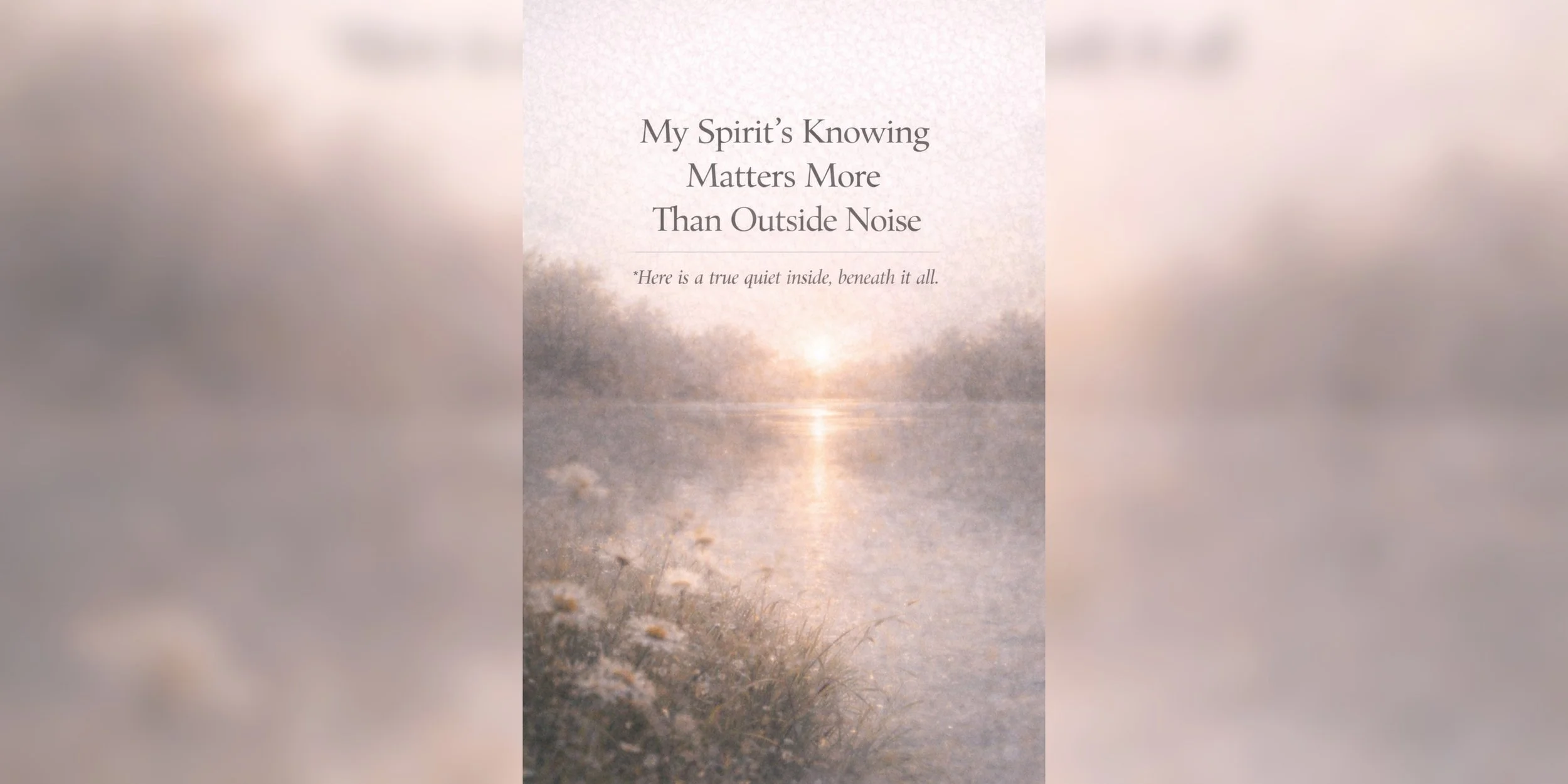
My Spirit’s Knowing Matters More Than Outside Noise
A gentle return to inner guidance, helping you trust your spirit’s quiet clarity over pressure, opinions, and overwhelm.
I don’t need louder answers. I need quieter listening.
When Everything Feels Too Loud
There are days when I can feel the world pressing in on me, not aggressively, just constantly. Opinions. Expectations. Advice. “Helpful” voices telling me what I should want, who I should be, what I should fix next.
Sometimes I don’t even realize how much of my energy is spent sorting through outside noise until I’m tired in a way rest doesn’t fully solve.
On those days, I’m learning to return to a simple truth:
My spirit has its own knowing. And it matters.
How My Inner Knowing Actually Feels
My inner knowing rarely arrives like a dramatic message. It usually feels quiet and steady, like something gently true.
It can feel like:
a calm no that doesn’t need to argue
a soft yes that brings relief into my chest
a subtle pull toward what feels life-giving
a sense of “not this” when something is misaligned
an unexpected peace when I choose what’s honest
I’m learning that I don’t have to force certainty. I only have to notice what feels sincere inside me.
The Difference Between Guidance and Noise
Outside noise has a particular flavor. It often feels urgent. It pressures me to decide quickly, prove myself, or keep up.
Inner guidance feels different. It feels:
slow enough to breathe with
clear without being harsh
steady without being loud
kind without being weak
If something feels frantic, it’s usually not my spirit. If something feels grounded, I pay attention.
Where I Learned to Doubt Myself
I notice how easy it is to question myself when I’ve spent years being rewarded for being agreeable, productive, or “easy.” I’ve learned patterns that made life smoother, but sometimes those patterns made my inner voice quieter.
And the truth is, I don’t need to shame myself for that. I can honor that those habits helped me cope.
But I can also choose to come back to myself now.
Practice: Returning to Inner Authority
When I feel overwhelmed by opinions, I can try a few gentle resets.
The Two-Voice Check
I ask:
What is the loud voice saying? (fear, urgency, people pleasing)
What is the true voice saying? (quiet, steady, simple)
The loud voice argues. The true voice knows.
Body Truth Over Mind Debate
I ask:
Does this make me feel more like myself or less?
Does my chest soften or tighten?
Do I feel clearer afterward, or scattered?
My body often tells the truth before my mind catches up.
Reduce Noise on Purpose
I’m learning that I can’t hear my spirit when I never create space.
Even one small choice helps:
ten minutes with no phone
a slow walk without consuming content
a pause before I ask for opinions
unfollowing what spikes comparison
one quiet morning a week
Keep One Promise to Myself
Self-trust grows when I keep my own word, even in small ways.
A simple promise to support myself, with clarity:
I will honor my energy and plan rest when I need it.
I will give myself enough space to choose wisely, and I’ll communicate my timing.
I will say what I mean kindly and clearly, without over-justifying.
Every time I keep a promise, my system learns: I am safe with me.
A Sentence I Want to Live By
When outside noise gets loud again, I want to remember:
My spirit’s knowing is valid, even when it’s gentle.
I don’t need to become louder to be real. I only need to become truer.
Your Soulful Pathways ↑
Desktop: Hover over “Your Soulful Pathways” in the top menu to explore another series.
Mobile: Tap the menu (☰), then choose “Your Soulful Pathways.”
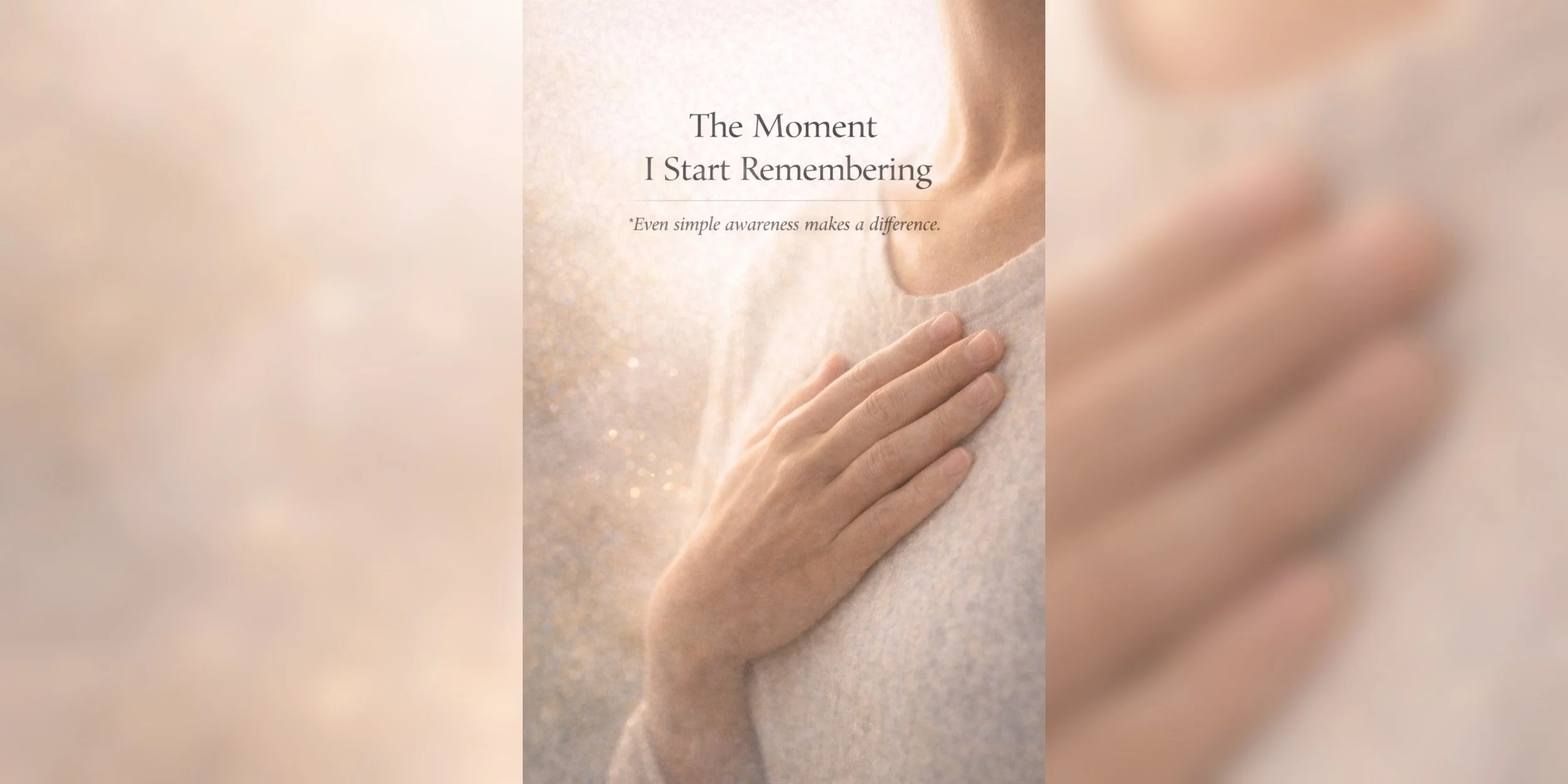
The Moment I Start Remembering
A soft reflection on the quiet shift that begins when you choose to come back to yourself with honesty and care.
It begins as a quiet decision to come back to myself.
The Subtle Shift
Remembering doesn’t always arrive as a breakthrough. For me, it often arrives as a small, tender moment where I realize:
I want to be on my own side again.
That shift can come after a season of exhaustion, overgiving, or living on autopilot. It’s the moment I notice my inner life asking for more care, more honesty, and more space to breathe.
Why It Can Feel Emotional
When I start returning to myself, feelings rise. Not because I’m doing anything wrong, but because I’m finally listening.
I may grieve:
time I spent trying to be what others needed
ways I ignored my own signals
moments I stayed quiet when I wanted to speak
I don’t need to make that grief heavy. I can let it be gentle. It’s a sign of reconnection.
Signs I’m Beginning to Remember
This shift can look simple:
I want more quiet than noise
I crave simplicity
I feel less interested in impressing
I notice my body more
I value peace over being “right”
I sense what I truly need, even if I’m not used to honoring it
These are not random changes. They are soft signs my inner self is coming closer.
A Simple Way to Begin
I don’t have to overhaul my life to be true. I can begin with one small choice that feels honest.
Practice: One Small Loyalty
I can ask myself:
What would it look like to be loyal to myself today, in one small way?
Then I choose something gentle:
a boundary that protects my energy
a pause before I respond
an earlier bedtime
a walk without my phone
saying “not today” without guilt
A Sentence to Carry With Me
If I want a calm sentence to hold onto, I can return to this:
I can move gently and still move forward.
Remembering is not a rush. It’s a return.
And returns can be quiet, steady, and beautifully real.
Your Soulful Pathways ↑
Desktop: Hover over “Your Soulful Pathways” in the top menu to explore another series.
Mobile: Tap the menu (☰), then choose “Your Soulful Pathways.”
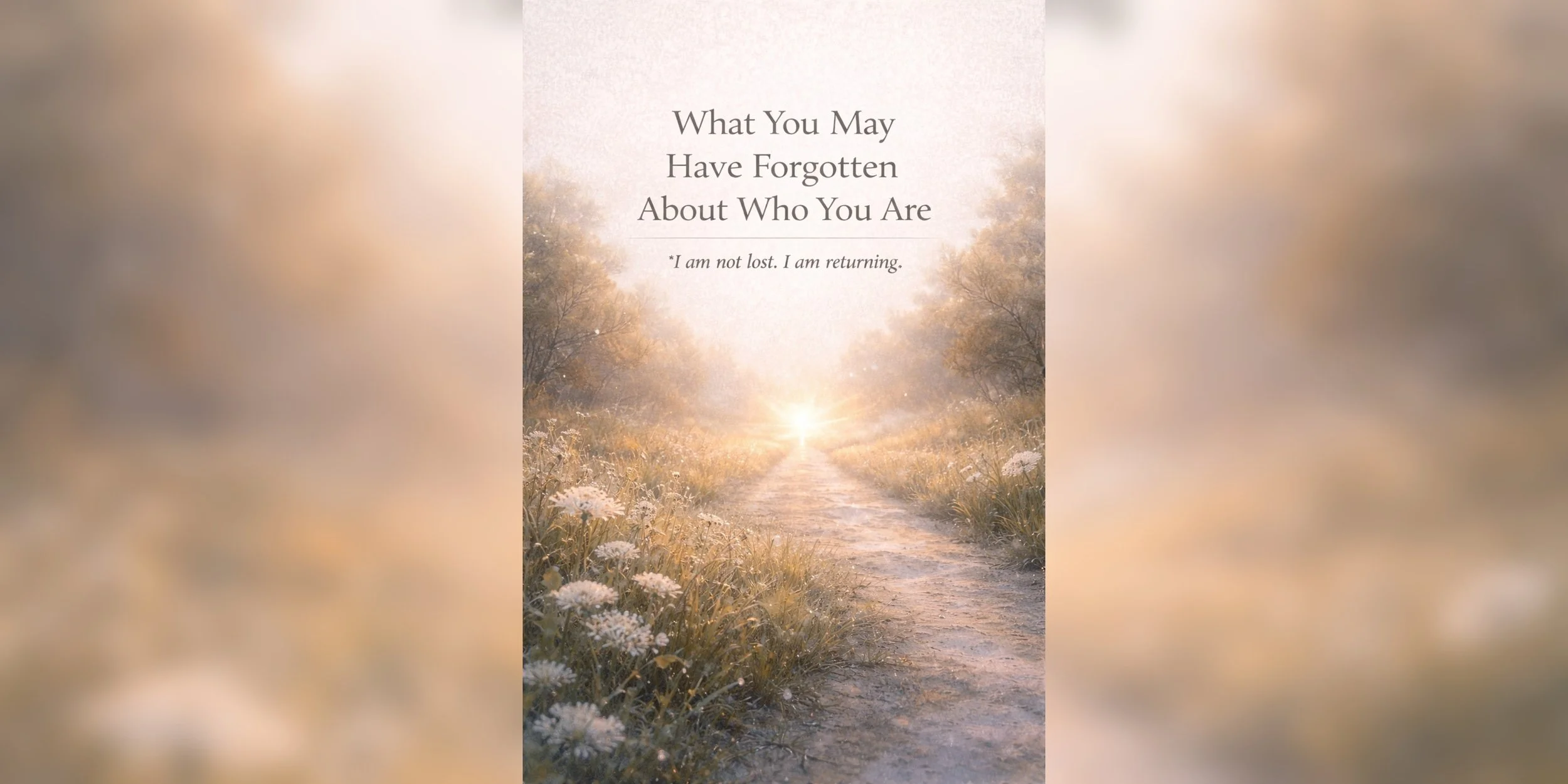
What You May Have Forgotten About Who You Are
A gentle reflection for returning to yourself, reconnecting to your inner truth, and remembering what has always been there.
I am not lost. I am returning.
A Gentle Beginning
Sometimes I don’t forget myself in one big moment. It happens quietly, in small, understandable ways. I adapt. I keep going. I try to do what’s needed. And without realizing it, I start living a little farther from my own center.
If I’ve been feeling that distance, it doesn’t mean anything is wrong with me. It usually means I’ve been navigating life, relationships, responsibilities, and expectations… and somewhere along the way, my own needs became quieter than everything else.
May these words help me come home to myself, without blame and without pressure.
How Forgetting Can Happen
I notice how easy it is to drift from myself when I’m trying to be:
easy to love
strong all the time
helpful before I’m honest
peaceful at my own expense
productive so I feel secure
“fine” even when I’m not
These patterns don’t make me weak. They make me human. Often, they began as self-protection. They helped me belong. They helped me cope. They helped me keep moving.
And when something helps me survive, it can become a habit, even when I no longer need it.
The Roles I Slip Into
Over time, I can feel myself living inside roles:
the responsible one,
the peacemaker,
the strong one,
the helper,
the one who doesn’t need much.
Roles aren’t bad. But when they become my entire identity, my deeper self starts feeling unseen, even by me.
If that’s where I am, I don’t need more self-criticism. I need more listening.
What Stays True Underneath
Here’s what I’m remembering: the real me doesn’t disappear. I don’t vanish. I simply get covered by stress, noise, and survival priorities.
My truest self is still there in the places that feel like:
a quiet relief when I choose what’s honest
a gentle no that protects my peace
warmth when I’m alone and not performing
a longing for simplicity and sincerity
a deep “this matters” feeling I can’t logically explain
That isn’t confusion. That’s my inner compass.
One Reflective Question
I can begin here, softly:
Where have I been asking myself to be smaller than I really am?
I don’t need the perfect answer today. Even noticing the question is a form of remembering.
A Small Return I Can Practice Today
One tiny act of self-respect is enough:
drink water before I handle everyone else
take one slow breath before I say yes
rest for ten minutes without earning it
speak one honest sentence, gently
do one nourishing thing without explaining it
Small returns are powerful. They teach my nervous system that it is safe to be with me.
Remembering isn’t a dramatic transformation. It’s a steady reconnection.
Your Soulful Pathways ↑
Desktop: Hover over “Your Soulful Pathways” in the top menu to explore another series.
Mobile: Tap the menu (☰), then choose “Your Soulful Pathways.”

Daily Rituals for Staying Out of the Loop
Simple daily rituals that support awareness, choice, and embodiment — even on difficult or low-energy days.
It Doesn’t Take Vigilance, It Takes Rhythm
Staying out of old loops doesn’t require constant vigilance. It requires rhythm.
Daily rituals are not about perfection or rigid discipline. They are about returning to yourself again and again. They ground awareness into ordinary life so you don’t drift back into autopilot without noticing.
A ritual is simply a repeatable way of saying: “I’m here. I’m listening. I’m choosing.”
Why Rituals Help You Stay Awake
Rituals work because they create consistency. They remind your nervous system that awareness is safe, that choice is available, and that you don’t have to disappear into habit.
These small anchors make it easier to notice:
when you’re rushing
when you’re people-pleasing
when you’re numbing
when you’re reacting from an old story
Rituals don’t prevent every loop. They help you catch it sooner and come back faster.
Simple Rituals That Anchor Presence
A ritual can be small and still powerful. Here are a few gentle options:
Morning check-in: “What do I need today?”
Body scan: relax your jaw, drop your shoulders, soften your belly
Before transitions: one deep breath before leaving a room, starting the car, opening an email
Before responding: pause and ask, “Do I want to reply from fear or from truth?”
Evening release: “What am I carrying that I can set down tonight?”
These moments anchor presence.
On Hard Days, Smaller Still Counts
On hard days, rituals may be tiny.
A single breath. A kind sentence. A moment of honesty. A hand on your heart. A pause before you push yourself again.
That still counts.
Because the goal is not intensity. The goal is return.
Soul Practice: The 3-Point Daily Anchor
Choose three simple anchors to repeat every day for one week:
Morning: Ask, “What do I need today?”
Midday: Take one slow breath and soften your body.
Evening: Name one thing you’re releasing: “I don’t have to carry this into tomorrow.”
Write your answers in one sentence each. Short is perfect. Consistency is the medicine.
A Gentle Closing
Ask yourself regularly: “What helps me stay connected to myself today?”
The goal is not to avoid loops forever. The goal is to notice sooner, return faster, and treat yourself kindly along the way.
Living consciously is not about control. It’s about relationship, with your body, your choices, and your inner truth.
You don’t fall out of alignment.
You simply return.
Your Soulful Pathways ↑
Desktop: Hover over “Your Soulful Pathways” in the top menu to explore another series.
Mobile: Tap the menu (☰), then choose “Your Soulful Pathways.”

Living from the Remembered Self, Not the Wounded Self
Shift from reacting through old wounds to living from the part of you that remembers love, worth, and belonging.
Two Inner Places We Can Live From
There are two places we can live from: the wounded self and the remembered self.
The wounded self reacts. It protects. It anticipates harm and braces for disappointment. It learned its ways honestly through moments where love felt conditional, where safety felt uncertain, or where being “too much” felt risky.
The remembered self does not deny the wounds. It simply isn’t ruled by them.
The Wounded Self: Protection That Became a Pattern
The wounded self is not your enemy. It’s a part of you that adapted.
It may show up as:
over-explaining to avoid being misunderstood
people-pleasing to keep connection
shutting down to avoid conflict
assuming the worst before it happens
staying small because it once felt safer
These responses were learned. They were intelligent in the moment. But over time, protection can become a prison, especially when it keeps you from receiving love, peace, and honest belonging.
The Remembered Self: The Part of You That Knows
The remembered self is the part of you that remembers who you were before you learned to shrink, perform, or brace.
This part of you knows:
you are loved without earning
you are allowed to take up space
you can be honest and still be safe
your worth is not a negotiation
your life is meant to be lived, not endured
The remembered self moves through life with presence instead of defense. Not because it’s never been hurt, but because it no longer lets the wound hold the steering wheel.
What It Looks Like to Live from Remembrance
Living from the remembered self doesn’t mean wounds disappear. It means they no longer drive your decisions.
You begin to notice:
you pause before reacting
you choose clarity over protection
you respond from truth instead of fear
you set boundaries without shame
you stop abandoning yourself to be chosen
This shift can feel subtle, but it changes everything.
Healing Is a Gradual Return
This happens gradually. Each time you act from self-respect instead of self-protection, you strengthen remembrance. Each time you choose alignment over approval, you come home to yourself.
Healing is not about becoming someone new. It’s about returning to who you’ve always been beneath the conditioning.
Soul Practice: Choose Remembrance in One Moment
Try this the next time you feel triggered or reactive:
Take one slow breath and place a hand on your heart.
Ask: “Is this my wounded self trying to protect me?”
Then ask: “What would my remembered self choose right now?”
Choose one small act of remembrance: pause, speak one honest sentence, soften your body, or step away instead of reacting.
You are not forcing change. You are practicing return.
A Gentle Closing
You are not broken.
You are remembering.
And the more you live from remembrance, the more your life begins to reflect the truth you’ve always carried.
Your Soulful Pathways ↑
Desktop: Hover over “Your Soulful Pathways” in the top menu to explore another series.
Mobile: Tap the menu (☰), then choose “Your Soulful Pathways.”

When Old Programming Fights Back
Understand why fear, fatigue, and self-sabotage appear during change — and how to keep going without self-judgment.
Change often feels hardest right before it becomes integrated.
As you begin rewriting your inner codes, old programming may resurface with surprising intensity. Fear, doubt, exhaustion, overthinking, or self-sabotage can appear, not because you’re failing, but because your system is adjusting.
This is a common part of healing: the old pattern gets louder when it realizes it’s being replaced.
Old Patterns Were Built for Safety, Not Fulfillment
Old patterns exist to keep you safe, not necessarily to keep you fulfilled.
When you move toward something new, your nervous system may interpret it as unfamiliar, and unfamiliar can feel unsafe, even when it’s aligned. This is why you can want change and still feel resistance at the same time.
Your system isn’t trying to ruin your progress. It’s trying to protect you the only way it knows how.
What “Fighting Back” Can Look Like
Old programming can show up in many forms, including:
Suddenly doubting what you were sure about yesterday
Feeling unusually tired or unmotivated
Picking apart your progress and focusing on what isn’t perfect
Reaching for old coping habits (numbing, overworking, people-pleasing)
Feeling like you “should” quit because it’s uncomfortable
None of these mean you’re going backward. They often mean you’re at the edge of a new level of growth.
The Question That Changes Resistance Into Healing
This is where many people turn against themselves. They push harder, criticize more, or abandon the process altogether.
But resistance is not an enemy. It’s a signal asking for reassurance.
Instead of asking, “Why am I like this?”
Try asking, “What part of me is afraid right now?”
That question moves you from shame into compassion, and compassion is what creates safety.
Gentleness Is Not Weakness, It’s Strategy
Meeting resistance with compassion keeps you moving forward. You don’t need to overpower fear, you need to include it.
Rest may be required. Slowing down may be necessary. Gentleness may be the most effective form of courage.
Growth that lasts does not come from bullying yourself into change. It comes from creating enough internal safety that change becomes sustainable.
Soul Practice: Talk to the Protective Part
Try this the next time resistance shows up:
Place a hand on your heart and breathe slowly.
Say: “I see you. You’re trying to protect me.”
Ask: “What are you afraid will happen if I change?”
Respond with reassurance: “We can go slowly. We are safe enough to take one small step.”
Choose one tiny action that honors your growth without overwhelming your system.
Tiny steps teach your body that change can be safe.
A Gentle Closing
You are allowed to move at the pace your body can trust.
Resistance doesn’t mean you’re failing. It often means you’re healing in a deeper way than you realize.
Keep going gently. The new code is learning how to live in you.
Your Soulful Pathways ↑
Desktop: Hover over “Your Soulful Pathways” in the top menu to explore another series.
Mobile: Tap the menu (☰), then choose “Your Soulful Pathways.”

Installing New Soul Codes (One Small Choice at a Time)
Learn how small, embodied choices replace old inner sentences with new soul-aligned truths that actually feel real.
New Codes Are Not “Pretty Thoughts”
Rewriting your inner codes is not about replacing negative thoughts with prettier ones. It’s about choosing new ways of relating to yourself, slowly enough that your nervous system can trust the change.
Old codes like “I can’t,” “It’s not for me,” or “I should already be past this” were installed through repetition and emotional experience. They didn’t form overnight, and they won’t dissolve through affirmations alone.
Real change is not just something you say. It’s something you live.
How Old Codes Got Installed
Old codes were built in moments that taught your system what to expect.
They came from repeated experiences: disappointment, criticism, pressure, fear, or survival. Your nervous system learned patterns that helped you cope, even if those patterns now limit you.
That means you don’t have to shame yourself for having old programming. You only have to recognize that it can be updated.
New Soul Codes Are Built Through Lived Moments
New soul codes are installed the same way the old ones were: through lived moments.
Each small choice you make becomes a line of new programming.
Resting when you’re tired instead of pushing
Speaking kindly to yourself after a mistake
Pausing before you people-please
Allowing yourself to want what you want without justification
Choosing one honest boundary instead of silent resentment
These moments may feel insignificant, but your body is listening. Your nervous system records what you repeatedly practice.
Embodiment Makes a Belief Real
Embodiment is what makes a belief real.
When your actions match your inner truth, your system begins to update. Safety replaces struggle. Trust replaces force. The “new belief” stops feeling like a concept and starts feeling like home.
You don’t need to convince yourself of your worth. You need to live in ways that reflect it.
A Better Question to Ask
Instead of asking, “What should I believe?”
Try asking, “What choice would support the version of me I’m becoming?”
That question shifts you from mental wrestling to soul-aligned action. It turns change into something practical, gentle, and real.
Soul Practice: Choose One New Code Today
Pick one area where you want to update your inner programming. Then complete this:
Old code: “”
New soul code: “”
One small action that proves it today: “__________”
Example:
Old code: “I have to earn rest.”
New soul code: “Rest supports my healing.”
Action: Take 10 minutes of quiet without explaining or apologizing.
Repeat one small action daily for a week. Consistency is what teaches safety.
A Gentle Closing
New codes settle in when they are repeated gently and consistently, not perfectly. The goal is not transformation overnight, but alignment over time.
You are not installing a new identity.
You are remembering how to live as yourself.
Your Soulful Pathways ↑
Desktop: Hover over “Your Soulful Pathways” in the top menu to explore another series.
Mobile: Tap the menu (☰), then choose “Your Soulful Pathways.”

Creating Instead of Just Existing
Discover how everyday choices become acts of creation — turning routine living into intentional, soul-aligned presence.
Creation Is Not Just for “Creative People”
Creation is often misunderstood as something reserved for artists, entrepreneurs, or visionaries. But creation is not about output. It’s about participation.
You create every day, whether you realize it or not, through your choices, your attention, your responses, and the energy you bring into ordinary moments. Your life is being shaped in real time by what you repeatedly give your presence to.
Existing Is Passive, Creating Is Intentional
Existing can feel like drifting. Creating feels like choosing.
Creating instead of just existing doesn’t mean doing more. It means choosing with awareness. It’s asking, “How do I want to show up here?” instead of defaulting to habit.
This is where inner power returns, not as control, but as clarity.
What Creation Looks Like in Everyday Life
Creation can look very simple, very human:
Speaking honestly instead of staying silent
Preparing a meal with care instead of rushing through it
Choosing rest over self-punishment
Shifting how you talk to yourself in moments of stress
Taking one small step toward what matters
Saying no to what drains you and yes to what restores you
These choices may seem small, but they change the quality of your life from the inside out.
Why Presence Changes Everything
When you’re creating, you’re present. You’re engaged. You’re responding rather than reacting. Even difficult days feel different when you’re participating consciously instead of enduring unconsciously.
This doesn’t require constant motivation or positivity. Some days, creation looks like gentleness. Other days, it looks like courage. The point is not perfection. The point is presence.
Soul Practice: The Attention Check-In
Pause once today and ask yourself:
“What am I creating with my attention right now?”
Then choose one small shift:
put your phone down for 2 minutes and breathe
speak one honest sentence
soften your body instead of clenching through stress
do one nourishing action (water, sunlight, music, prayer)
take one tiny step toward something meaningful
You don’t need to overhaul your whole day. One conscious choice is a creative act.
A Gentle Closing
Awareness turns routine into ritual. Choice turns repetition into growth.
You don’t need a new life to begin creating. You need a new relationship with the one you’re already living.
Your Soulful Pathways ↑
Desktop: Hover over “Your Soulful Pathways” in the top menu to explore another series.
Mobile: Tap the menu (☰), then choose “Your Soulful Pathways.”

You Were Not Meant to Just Get Through the Day
A compassionate invitation out of survival mode — and into a life guided by presence, meaning, and small soul-led moments.
At some point, many people quietly shift from living to enduring.
Days become something to push through. Tasks replace meaning. Scrolling replaces feeling. The goal becomes simple: make it to the end of the day without falling apart.
If this is where you are, please hear this clearly: it does not mean you’re failing. It means you’ve been carrying a lot.
What Survival Mode Really Is
This is survival mode, and it is not a personal flaw. It’s a nervous system response to prolonged pressure, emotional overload, or unmet needs. Survival mode keeps you functioning when life feels overwhelming.
It helps you do what you must do.
It helps you keep moving.
It helps you “get through.”
But it was never meant to be permanent.
The Quiet Cost of “Just Getting Through”
When survival becomes the baseline, joy starts to feel optional. Creativity feels indulgent. Rest feels earned instead of necessary.
You may still be accomplishing things, but something essential feels absent. That absence is not laziness or lack of gratitude. It’s your soul signaling that it wants to participate again.
You were not designed to live on autopilot, numbing yourself through the hours. You were designed to engage with life, not constantly at full capacity, but with presence and meaning.
How You Begin to Come Back to Yourself
Leaving survival mode doesn’t require a dramatic overhaul. It begins with tiny moments of aliveness.
A deeper breath.
One honest emotion allowed.
A small boundary that protects your energy.
A choice that nourishes instead of distracts.
You don’t have to fix your whole life today. You only have to create one small opening where your spirit can return.
Soul Practice: One Moment of Aliveness
Ask yourself softly: “What would help me feel a little more here today?”
Then choose one small action from this list:
Step outside and take 10 slow breaths
Drink water slowly and feel your body while you do
Put your hand on your heart and name one honest feeling
Do one tiny creative act (write a sentence, play a song, light a candle)
Say no to one thing that drains you
Rest for 15 minutes without explaining why
Do not grade yourself. Just return.
Safety Returns From the Inside Out
Survival mode loosens when safety returns, not only external safety, but internal permission to feel, choose, and exist beyond obligation.
Your system begins to soften when it realizes you’re not abandoning yourself anymore. That’s how your life becomes yours again.
A Gentle Closing
You don’t need to earn your life back.
You’re allowed to inhabit it.
Your Soulful Pathways ↑
Desktop: Hover over “Your Soulful Pathways” in the top menu to explore another series.
Mobile: Tap the menu (☰), then choose “Your Soulful Pathways.”

My Spirit’s Knowing Matters More Than Outside Noise
A gentle return to inner authority — learning to trust your soul’s knowing over opinions, expectations, and external pressure.
Many people don’t struggle because they lack intuition. They struggle because they were taught not to trust it.
Over time, outside voices grow louder than the quiet knowing within. Advice, trends, expectations, and opinions begin to crowd out the subtle signals of the soul. Eventually, you may find yourself asking everyone else what feels right, while ignoring the one voice that has always known.
This isn’t a personal failure. It’s conditioning.
What Inner Knowing Actually Feels Like
Your spirit’s knowing is not loud. It doesn’t argue or compete. It doesn’t pressure or rush.
It often arrives as:
a calm recognition you can’t fully explain
a bodily “yes” or “no”
a sense of alignment that doesn’t need justification
a peaceful clarity that settles your nervous system
Fear feels urgent. Knowing feels steady.
When You’ve Been Overruled for Years
When you’ve been overruled for years by authority figures, systems, relationships, or even survival needs, reconnecting with your knowing can feel unfamiliar.
You may doubt it. Question it. Dismiss it as impractical or selfish.
This is not because your knowing is wrong. It’s because you were trained to outsource trust.
And if you’ve been rewarded for ignoring yourself, it can feel risky to start listening again. But listening is how you come back to your truth.
Permission Is the First Rewrite
Rewriting this code begins with permission:
permission to pause before reacting
permission to feel before deciding
permission to let your body and spirit weigh in alongside logic
Ask yourself gently:
“What feels true for me, beneath the noise?”
You don’t need certainty to trust yourself. You only need honesty.
Inner knowing doesn’t promise comfort. It promises congruence. And congruence creates peace, even when choices are difficult.
Soul Practice: The “Beneath the Noise” Check
Try this when you feel pulled by opinions or pressure:
Put one hand over your heart or belly.
Take three slow breaths (longer exhale than inhale).
Ask: “If no one else had an opinion, what would I choose?”
Notice your body’s response: open or tight, calm or rushed.
Choose one small action that honors what you felt, even if it’s simply pausing.
Small acts of trust rebuild the pathway.
Strengthening the Signal
The more you honor your inner voice in small ways, the clearer it becomes.
Choosing rest when you’re tired.
Saying no without explanation.
Following curiosity instead of obligation.
Taking one step toward what feels clean and true.
Each time you listen, you strengthen the signal.
A Gentle Closing
Your spirit has been speaking all along.
This is simply the moment you decide to listen again.
Your Soulful Pathways ↑
Desktop: Hover over “Your Soulful Pathways” in the top menu to explore another series.
Mobile: Tap the menu (☰), then choose “Your Soulful Pathways.”

Waking Up Inside Your Own Program
Learn how to move from being inside old patterns to witnessing them — and how awareness restores choice in everyday moments.
The Moment You Realize You’ve Been Here Before
There is a moment, often quiet, when something inside you wakes up and says, “I’ve been here before.” Not in memory, but in pattern. Same feeling. Same reaction. Same outcome.
That moment is powerful because it’s the moment you stop living on autopilot and start living with awareness.
What It Means to “Wake Up”
Waking up inside your own program doesn’t mean the pattern disappears immediately. It means you’re no longer fully inside it.
You become the witness instead of the reflex.
This shift is subtle but life-changing. When you’re inside the program, everything feels automatic. Emotions move fast. Thoughts feel urgent. Choices feel limited. But when awareness enters, time slows, even for one breath.
Signs You’re Stepping Out of Autopilot
Awareness often shows up like this:
You notice the urge before the action.
You feel the emotion before the story.
You sense the choice before the habit.
This is not about control. It’s about presence.
You don’t need perfect mindfulness or spiritual mastery. Waking up happens in ordinary moments: when you pause before replying, when you feel your body tighten, when you notice the familiar pull to self-abandon, people-please, shut down, or over-explain.
The Question That Changes Everything
Instead of asking, “What’s wrong with me?”
Try asking, “What’s happening in me right now?”
That question moves you out of judgment and into curiosity. It reminds you that you are not the program, you are the awareness noticing it.
And awareness is where your freedom begins.
When Old Patterns Get Louder
At first, this awareness may feel uncomfortable. Old patterns don’t like being seen. They may grow louder before they soften.
That doesn’t mean you’re going backward. It means the light is reaching places that were once automatic.
When you keep noticing without shaming yourself, the nervous system learns a new option: pause.
Soul Practice: The 3-Part Pause
Try this the next time you feel the old program activate:
Name it: “This is a familiar pattern.”
Breathe: one slow inhale, longer exhale.
Choose one small shift: soften your shoulders, delay your reply, drink water, step away for a minute, or speak one honest sentence.
Each time you pause, you build a new pathway.
A Gentle Closing
Each time you notice without reacting, you create space. And inside that space lives choice.
Choice to respond differently.
Choice to rest instead of push.
Choice to speak truth instead of habit.
You don’t have to change everything at once. Awakening happens one noticing at a time.
You are not late to your life.
You are arriving.
Your Soulful Pathways ↑
Desktop: Hover over “Your Soulful Pathways” in the top menu to explore another series.
Mobile: Tap the menu (☰), then choose “Your Soulful Pathways.”

The Codes You Inherited (And How They Run Your Life)
Explore how inherited beliefs from family, culture, and experience quietly shape your choices — and how awareness loosens their grip.
Before you ever chose your beliefs, many of them were chosen for you.
They arrived through words spoken casually, expectations never explained, and emotional atmospheres you learned to read before you learned to speak. These are your inherited codes, the silent sentences that run beneath your thoughts and guide your decisions without asking permission.
What “Inherited Codes” Sound Like
Inherited codes don’t usually announce themselves. They whisper. They show up as hesitation, guilt, over-giving, self-doubt, or the feeling that something is wrong even when nothing is.
They often sound like:
“I’m too much.”
“I should be grateful, not honest.”
“Love has conditions.”
“It’s safer not to want.”
“If I rest, I’m failing.”
“If I speak up, I’ll lose connection.”
These sentences can feel like “truth,” but many of them are just old programming.
Where These Codes Come From
These codes come from family systems trying to survive. From cultural rules about success, worth, and belonging. From religious frameworks that sometimes confused fear with devotion. From moments of pain where your nervous system learned: “This is how I stay safe.”
None of this makes you weak. It makes you human.
What you learned was often shaped by the needs and fears of the people around you. And as a child, you didn’t have the power to question it. You only had the power to adapt.
How Inherited Codes Run Your Life
The challenge isn’t that you inherited these codes. It’s that no one told you they weren’t permanent.
When unexamined, they quietly steer your choices. They influence who you love, what you tolerate, how big you allow your life to become, and how much joy you let yourself receive.
They can make you:
apologize for having needs
stay in dynamics that cost you your peace
shrink your dreams before you even try
confuse anxiety with “intuition”
chase approval as proof of worth
A code can run your life simply because it’s familiar.
Awareness Is How the Spell Breaks
Awareness begins when you start listening to the sentences that repeat in moments of stress or decision.
Not to argue with them, but to recognize their origin.
Ask gently:
“Is this voice protecting me… or limiting me?”
“Did I choose this belief, or did I absorb it?”
“Who taught me this, and what did it cost me?”
When you name a code, you loosen its authority. It can no longer run silently in the background. It must stand in the light.
Soul Practice: Identify, Origin, Update
Choose one repeating sentence you notice in yourself.
The code: Write the sentence exactly as it appears.
The origin: Ask, “Where did I learn this?”
The update: Replace it with a truer sentence.
Example:
Code: “It’s safer not to want.”
Update: “It is safe to want what is aligned for me.”
Read your updated sentence once a day for a week. Let your nervous system learn something new.
A Gentle Closing
You don’t need to erase your past to rewrite your future. You simply need to remember that what was learned can be unlearned, and what was inherited can be updated.
You are allowed to outgrow the rules that kept you small.
Your Soulful Pathways ↑
Desktop: Hover over “Your Soulful Pathways” in the top menu to explore another series.
Mobile: Tap the menu (☰), then choose “Your Soulful Pathways.”

Seeing the Loop You’re In
A compassionate look at the inner loops that shape your reactions, habits, and choices — and how awareness begins change without shame.
When Repetition Starts to Feel Heavy
Most of us don’t realize we’re living inside a loop until something in us grows tired of repeating the same feelings, the same reactions, the same quiet disappointments.
A loop isn’t a failure. It’s not weakness. It’s simply the mind and nervous system doing what they learned to do to keep you safe. What once protected you can become what keeps you stuck, not because you’re broken, but because the pattern is familiar.
What a “Loop” Really Is
A loop is autopilot living.
It’s reacting before you’ve chosen.
It’s saying “yes” when your body says “no.”
It’s numbing, scrolling, pushing through, or shrinking without knowing why.
Loops often look like:
repeating the same relationship dynamics
getting triggered in the same situations
falling into the same self-talk
avoiding the same feelings, again and again
The loop isn’t your identity. It’s a learned pathway.
Where Loops Come From
These loops are often built long before we’re conscious enough to question them. They form through childhood experiences, emotional survival, family dynamics, and moments where we learned what was “allowed” and what wasn’t.
The loop becomes familiar, and familiarity can feel safer than the unknown, even when it hurts. This is why people can stay in patterns they don’t even like. The nervous system prefers the predictable.
Awareness Is Not a Command to Change
Seeing the loop doesn’t mean you have to fix it right away. Awareness is not a command to change. It’s an invitation to notice.
Notice when your shoulders tense.
Notice when your thoughts rush to self-blame.
Notice when you disconnect instead of feeling.
This noticing is not judgment. It’s witnessing.
Why Kindness Breaks Loops Faster Than Force
Many people try to break loops with force: positive thinking, discipline, pressure to “do better.”
But loops don’t dissolve through punishment. They soften through kindness and curiosity. When you see the loop without shame, you create space between who you are and what you’ve been repeating.
That space is powerful.
In that space, you realize:
“I am not broken. I am patterned.”
And patterns can change.
Soul Practice: The 10-Second Loop Pause
Try this the next time you feel the familiar pull:
Pause and take one slow breath.
Name it gently: “This feels like an old loop.”
Ask: “What am I trying to protect myself from right now?”
Choose one small shift: soften your jaw, drop your shoulders, take a sip of water, step away for a moment.
You don’t have to rewrite your whole life in one moment. You only have to return choice to yourself.
A Gentle Closing
Awareness is the first rewrite, not because it fixes everything, but because it returns power to you.
You are not late.
You are not failing.
You are waking up inside your own life.
Your Soulful Pathways ↑
Desktop: Hover over “Your Soulful Pathways” in the top menu to explore another series.
Mobile: Tap the menu (☰), then choose “Your Soulful Pathways.”

When You Need to Reset Your Spirit
A soothing guide for the days when you feel spiritually exhausted, offering gentle steps to reset, realign, and begin again with grace.
When Your Spirit Feels Tired
There are days when your spirit simply feels… tired.
Not just physically exhausted, but emotionally worn, spiritually frayed, and stretched beyond what feels manageable. On those days, pushing harder doesn’t help. What you really need is a reset, a gentle spiritual recalibration.
A spirit reset is not about becoming a different person overnight. It’s about coming back to yourself.
The Power of Naming What You Need
Start by admitting it: “I need a reset.”
That honesty alone can bring relief. You don’t have to pretend you’re fine when everything inside you feels scattered. Naming your need is a form of self-respect. It tells your inner world: I’m listening now.
Think of this as a soft reboot for your soul, not a judgment, not a failure, just a return.
Five Gentle Steps to Recalibrate
1) Clear a little space.
If possible, step away from noise for a few minutes: a room, a car, a walk outside. Even a brief moment away from screens and obligations gives your spirit air again.
2) Come back to your breath.
Slow, intentional breathing tells your body: We’re safe enough to rest now.
Inhale peace. Exhale the tension you’ve been holding.
3) Release the day to something bigger.
Quietly hand the weight you’re carrying to God:
“I can’t hold all of this alone. Please help me reset, realign, and see more clearly.”
You are not bothering Heaven with this request. You are partnering with it.
4) Do one kind thing for your spirit.
Make tea, listen to a song that comforts you, sit in the sun, journal a page, or read a few lines that remind you of hope. You don’t need a perfect ritual. You just need one loving action.
5) Choose one small next step.
A reset doesn’t require solving your whole life. Ask: “What is the next gentle thing I can do?”
Maybe it’s resting. Maybe it’s sending one honest message. Maybe it’s ending the day earlier than usual.
Soul Practice: A 2-Minute Soft Reboot
Try this anytime you feel scattered:
Put one hand on your heart.
Take five slow breaths (longer exhale than inhale).
Whisper: “I return to myself.”
Ask: “What do I need most right now, comfort, clarity, or rest?”
Choose one small action that matches your answer.
Small resets done often create a life that feels safer to live inside.
A Gentle Closing
When you need to reset your spirit, remember: you are not failing. You are responding to an inner signal that you’ve reached the edge of what you can carry alone.
You are worthy of a life where your spirit doesn’t have to struggle just to keep up.
Let this be your permission slip to pause, breathe, and begin again, with more grace for yourself than before.
Your Soulful Pathways ↑
Desktop: Hover over “Your Soulful Pathways” in the top menu to explore another series.
Mobile: Tap the menu (☰), then choose “Your Soulful Pathways.”